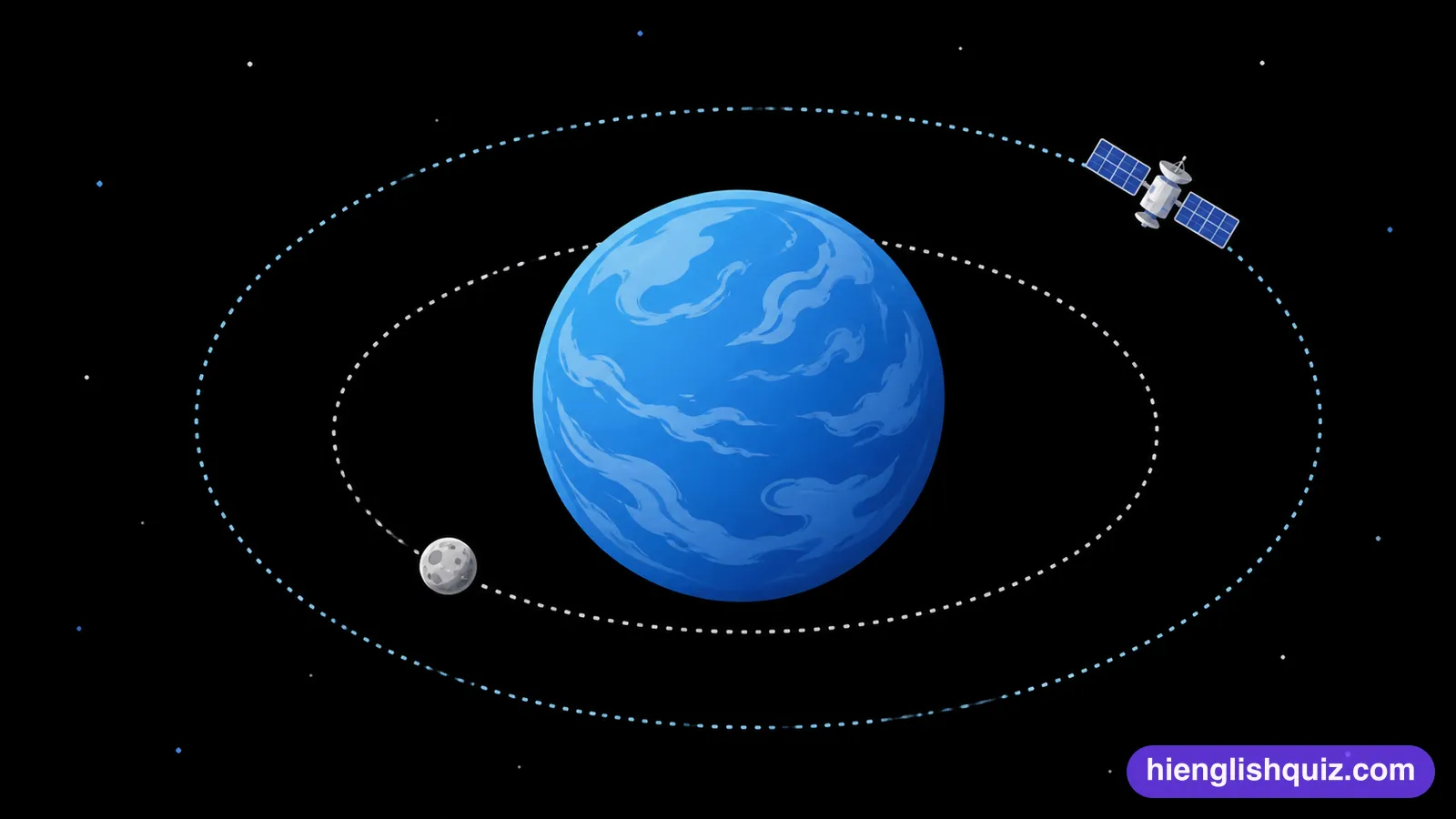
cosmic
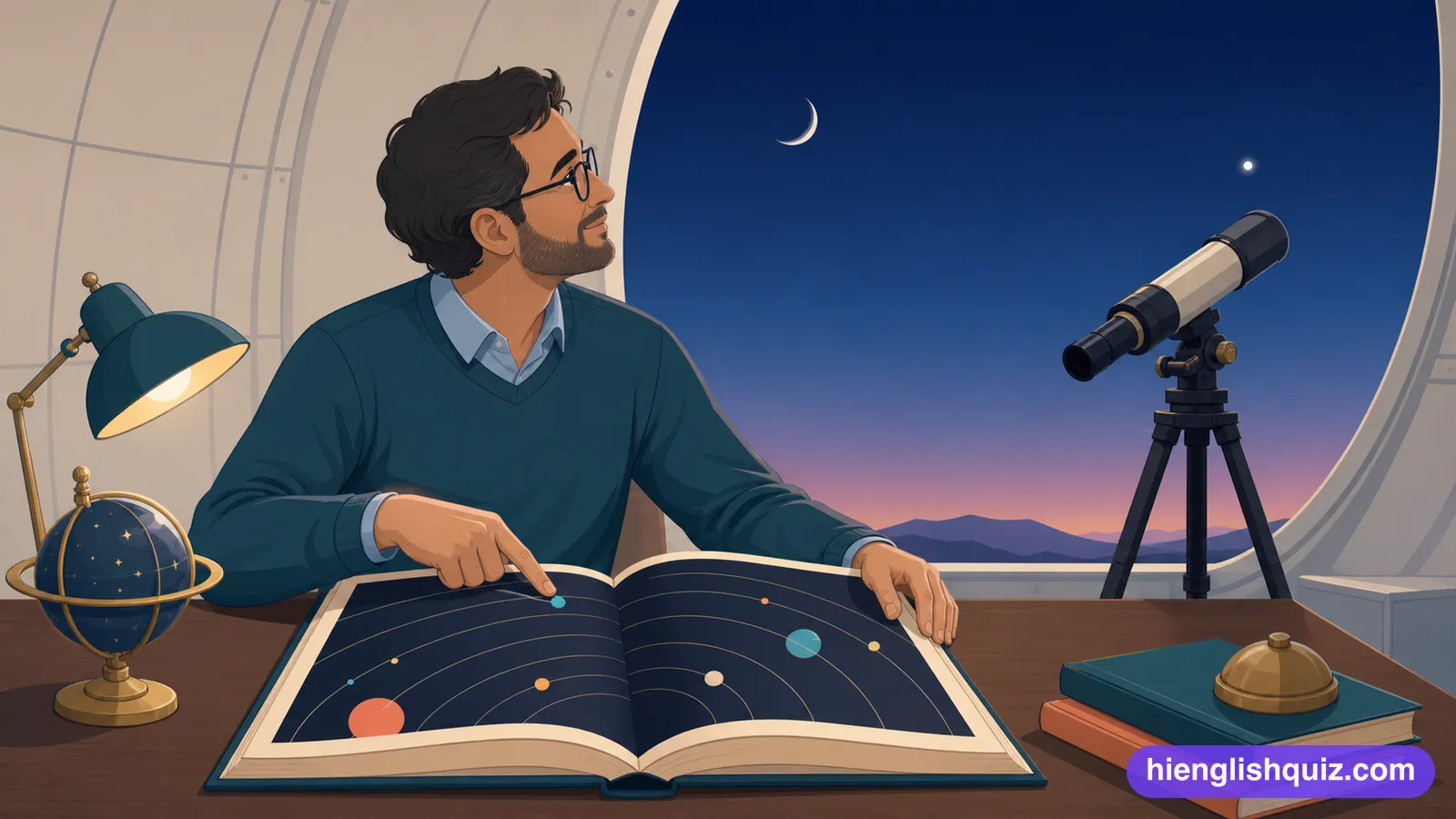
/ˈkɑzmɪk/Relating to the whole universe, especially the vast space far beyond our own world.
Example: Astronomers picked up a burst of cosmic radiation last night.
 Hi EnglishQuiz
C120 words · Advanced
Space vocabulary such as trajectory, exoplanet and astrophysics, plus parallax, spectroscopy and solar wind. Words for describing astronomy as a science.
Relating to the whole universe, especially the vast space far beyond our own world.
Example: Astronomers picked up a burst of cosmic radiation last night.
The curving path an object follows through the air or through space after being launched.
Example: Engineers adjusted the rocket's trajectory with a short engine burn.

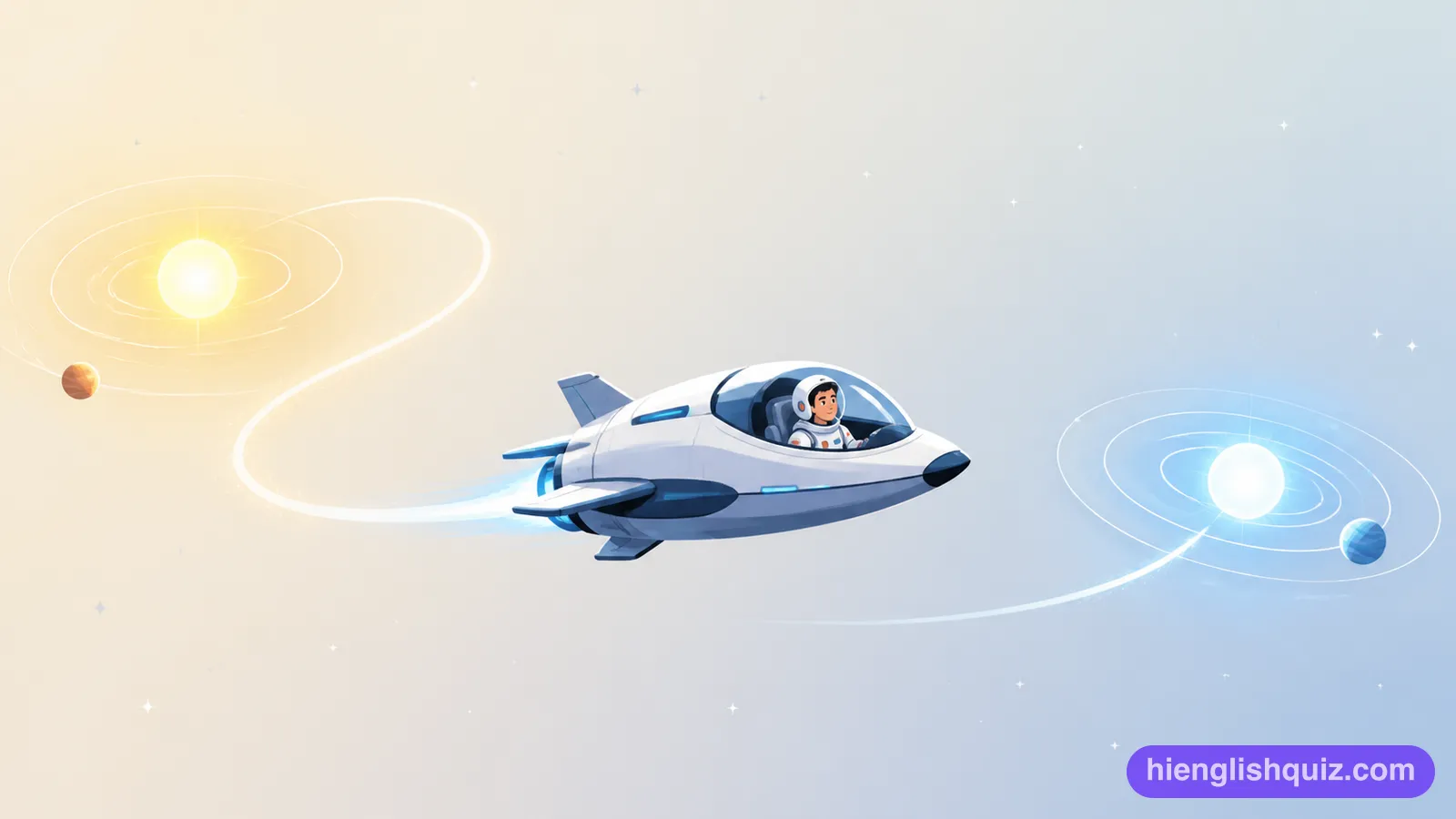
Relating to the space between stars.
Example: The mission is designed for interstellar travel far beyond our solar system.
Coming from or existing outside the Earth or its atmosphere.
Example: Scientists are searching for signs of extraterrestrial life.
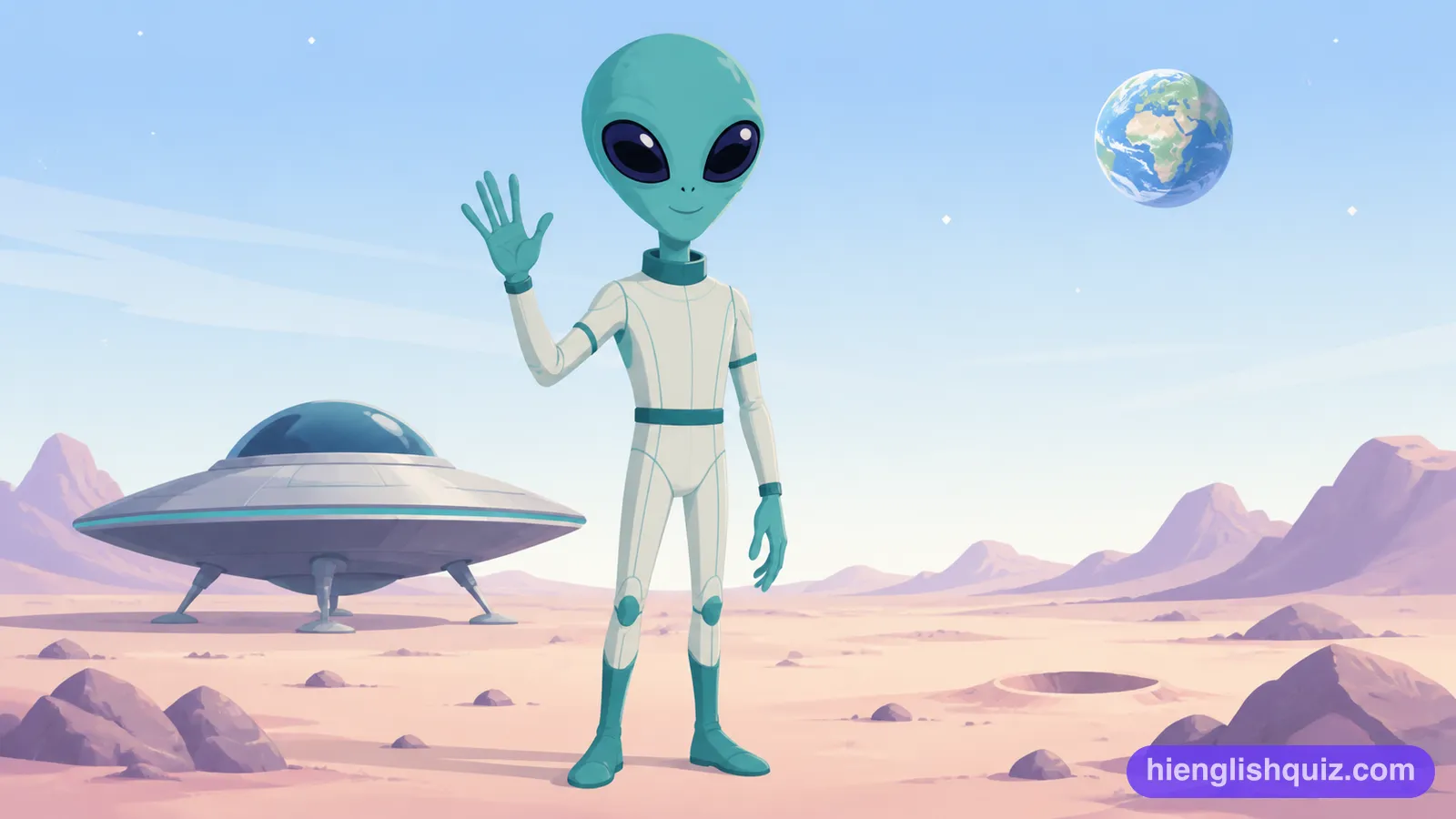
Relating to the force of gravity.
Example: The moon's gravitational pull causes the ocean tides.

A planet that orbits a star outside our own solar system.
Example: Astronomers discovered a new exoplanet that might support life.
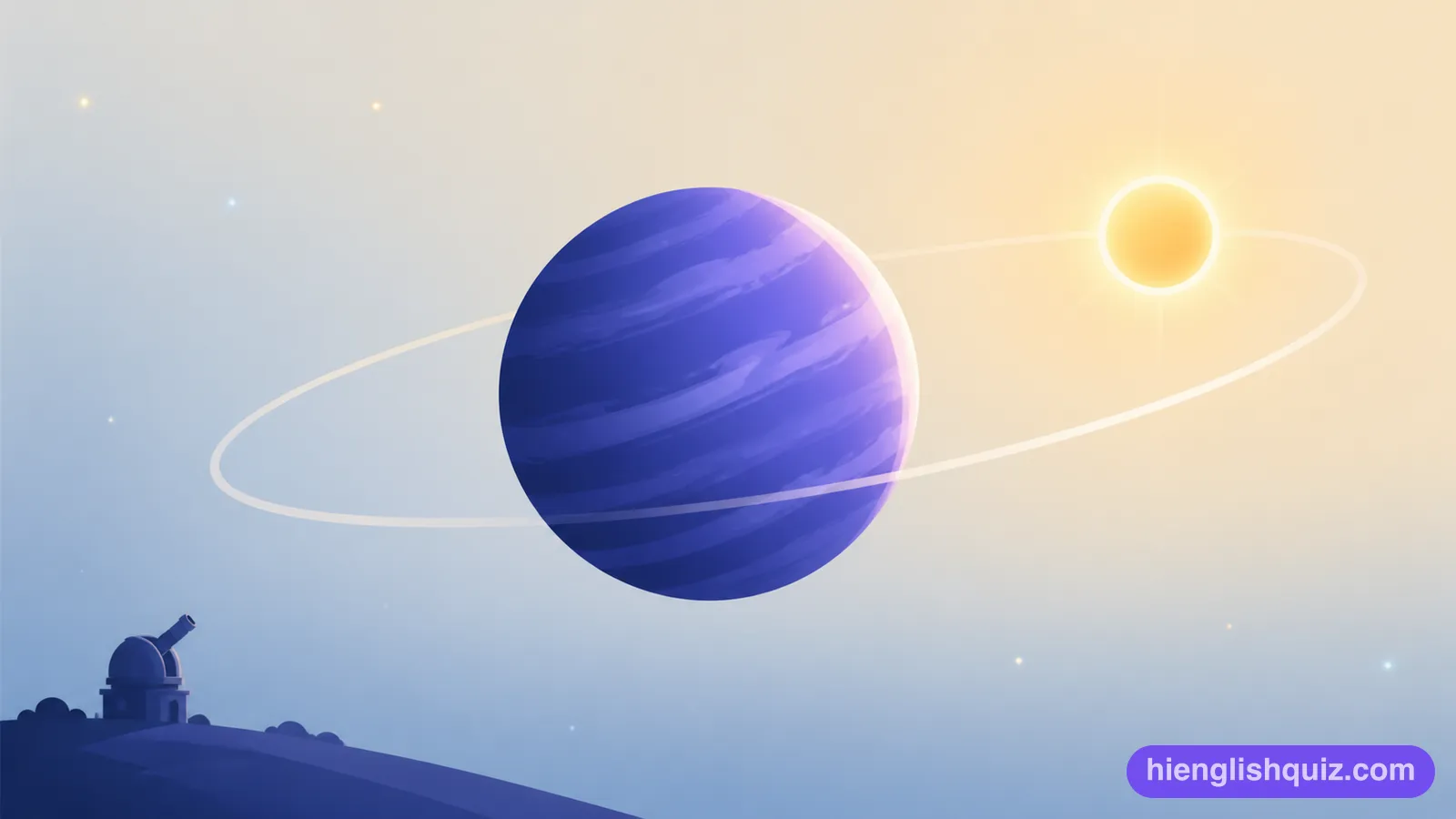
An unmanned spacecraft sent to explore and gather information about space.
Example: The probe sent back images of the planet's surface.
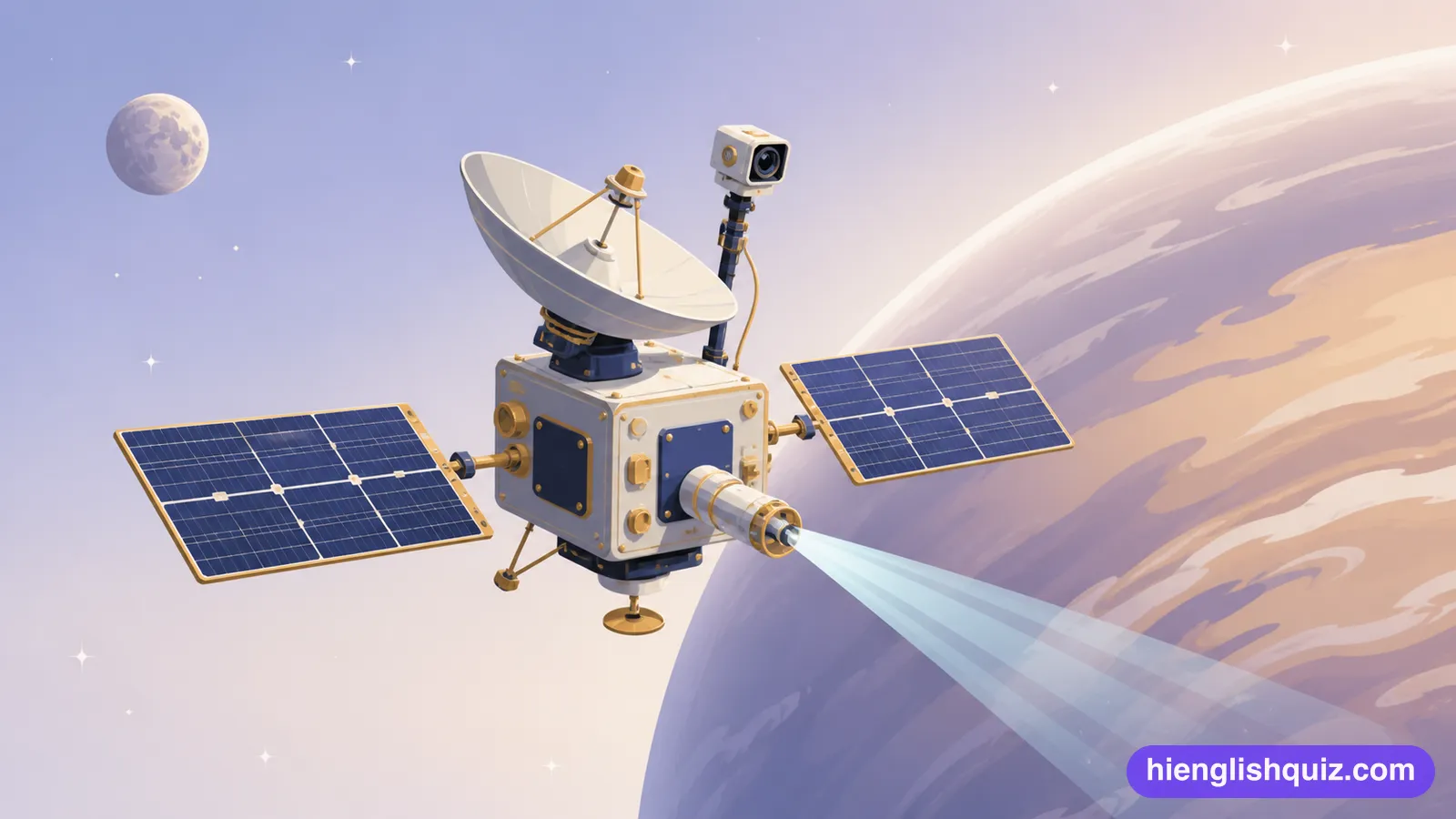
The force that pushes or drives something, such as a rocket, forward.
Example: The new engine gives the rocket much greater propulsion.

Relating to the curved path an object follows around a planet, star, or moon.
Example: The satellite reached its correct orbital position after launch.
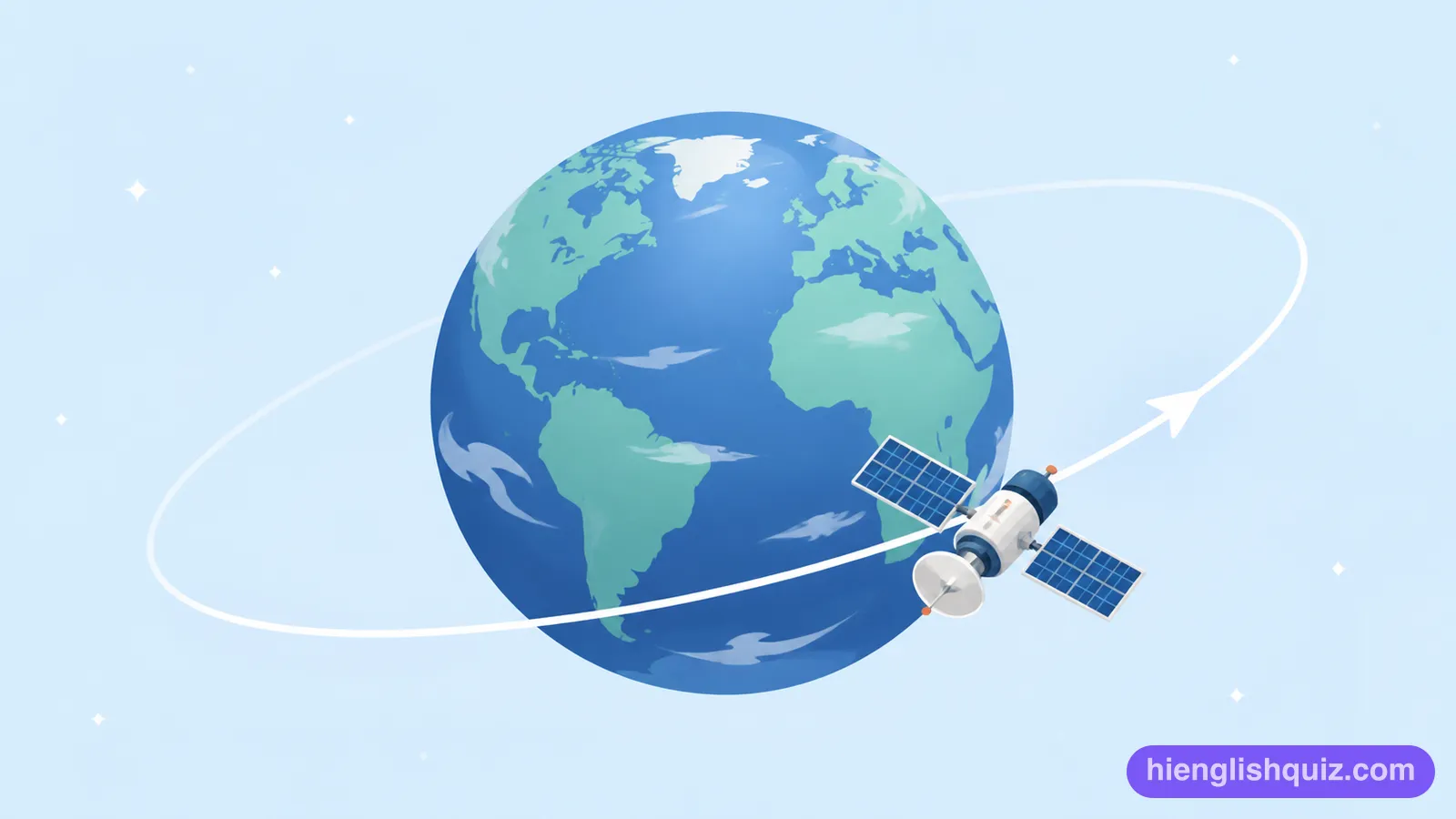
The branch of science that studies the physical nature of stars, planets, and the universe.
Example: She studies astrophysics at university.
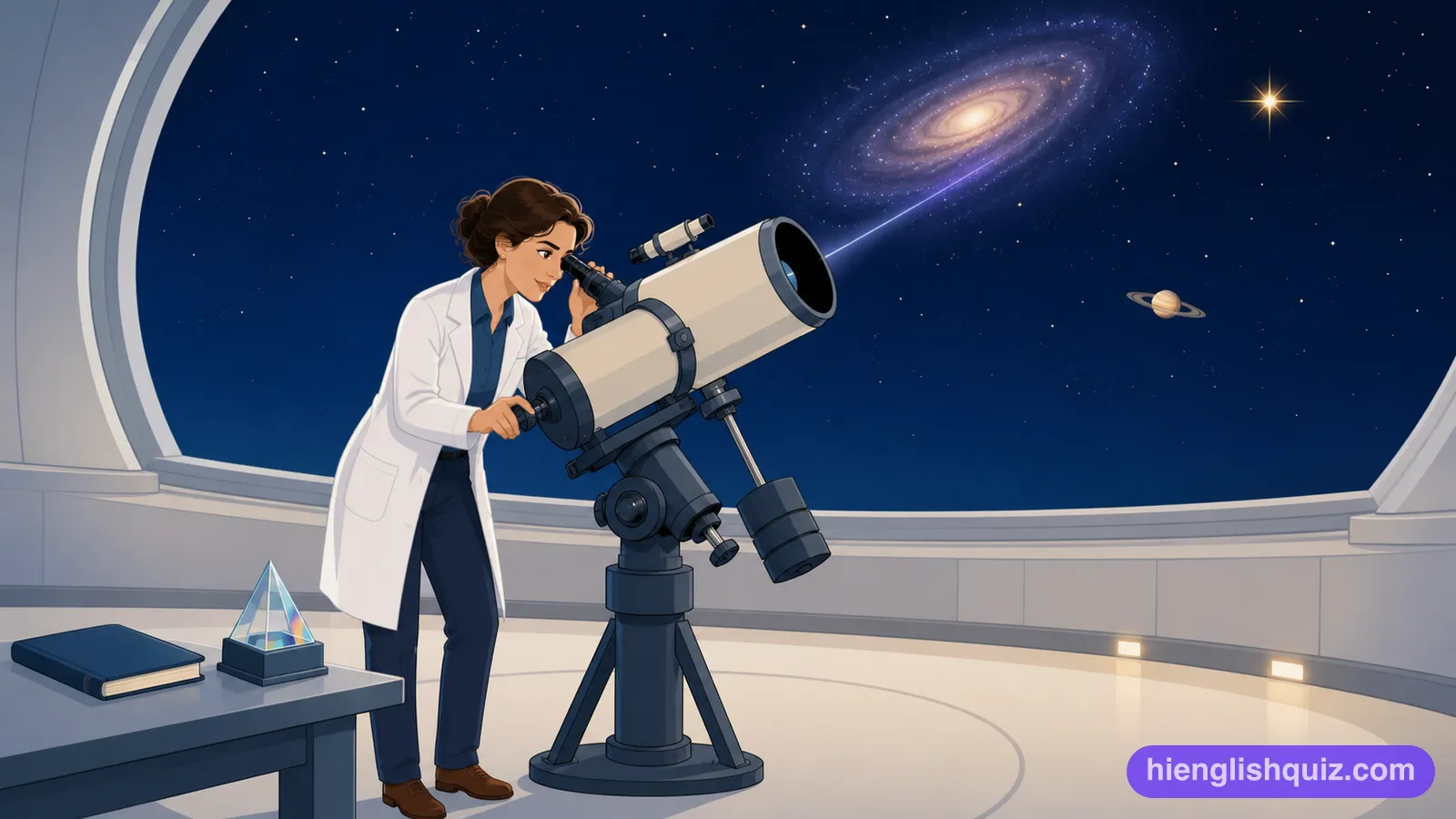
The point in an orbit closest to the sun.
Example: The comet is brightest at perihelion and then fades fast.
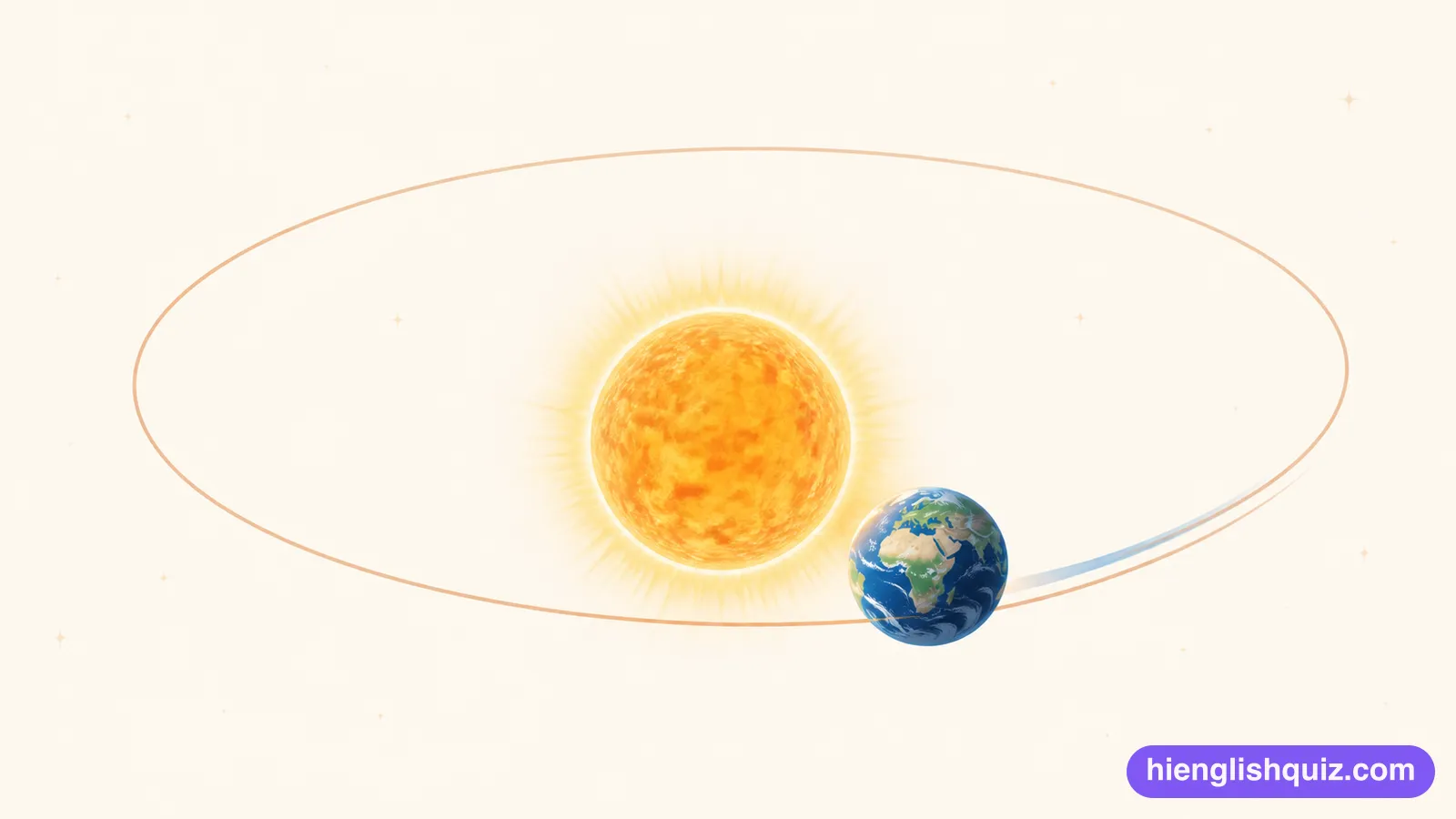
The apparent shift of an object when viewed from two places.
Example: Parallax is how the first stellar distances were measured.

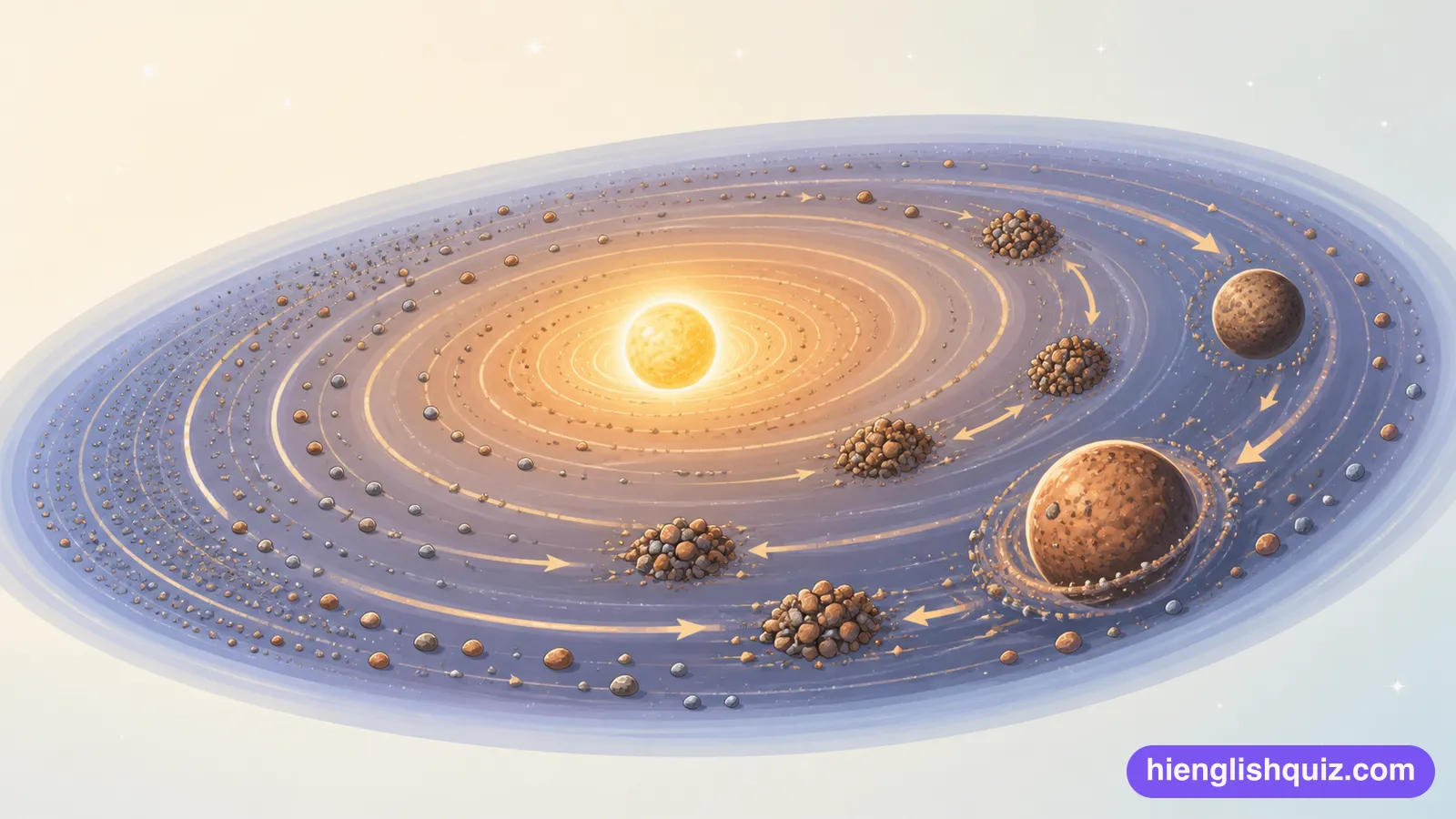
The gradual building up of matter by gravity.
Example: Planets form by slow accretion over millions of years.
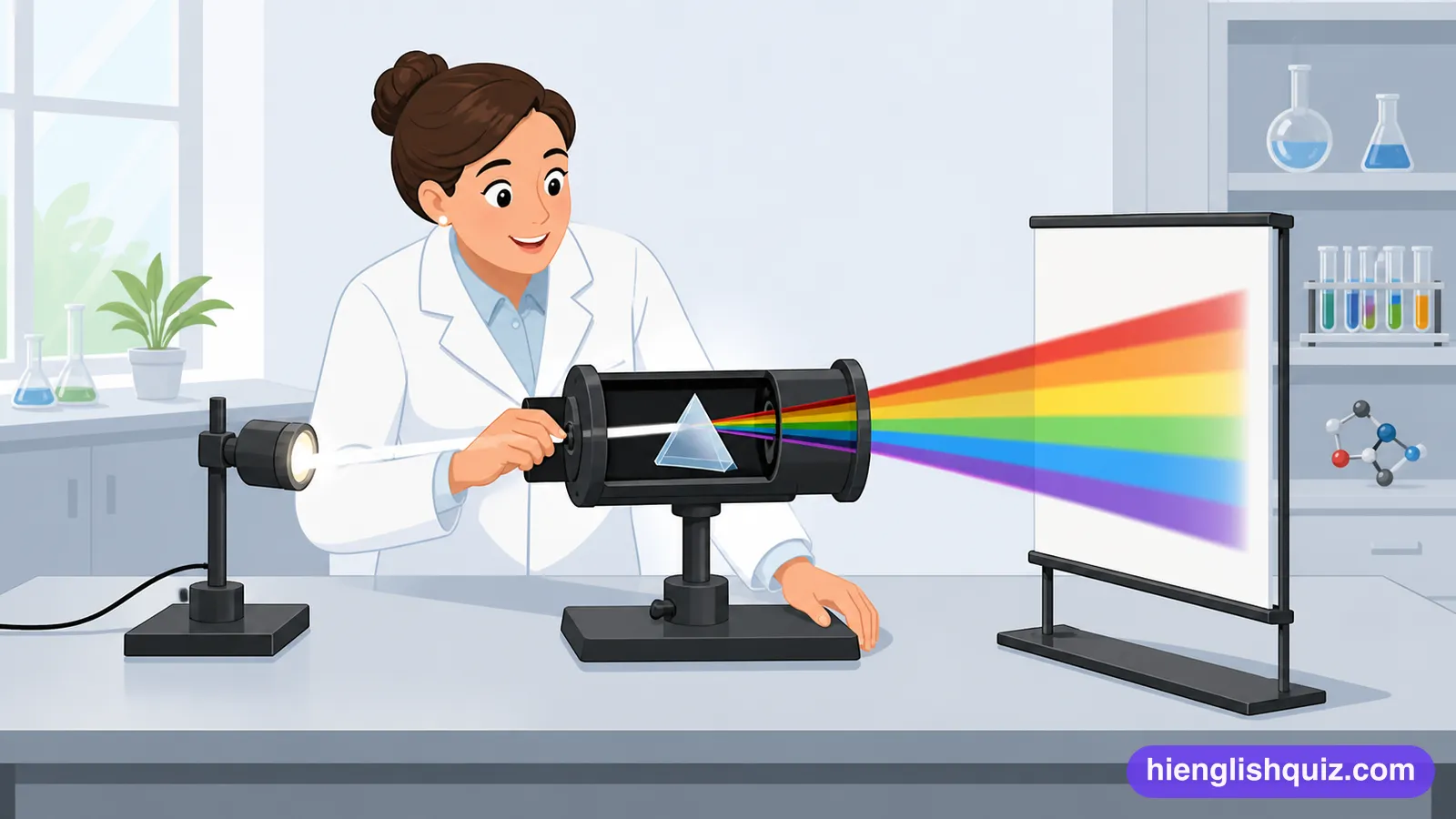
The study of light to find out what something is made of.
Example: Spectroscopy tells you the composition of a star you can never reach.
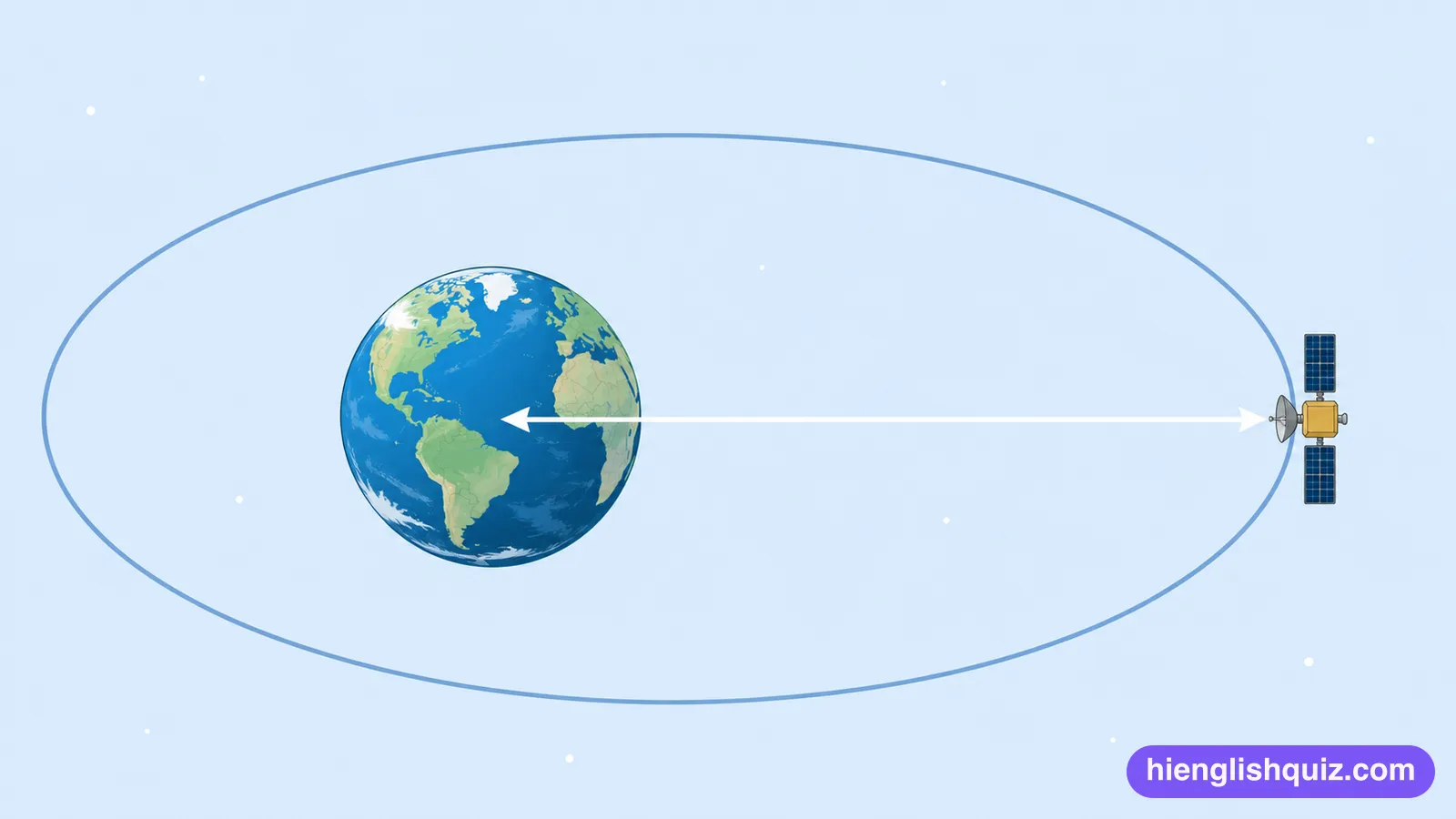
The point in an orbit furthest from the Earth.
Example: The satellite is slowest at apogee and fastest at the other end.
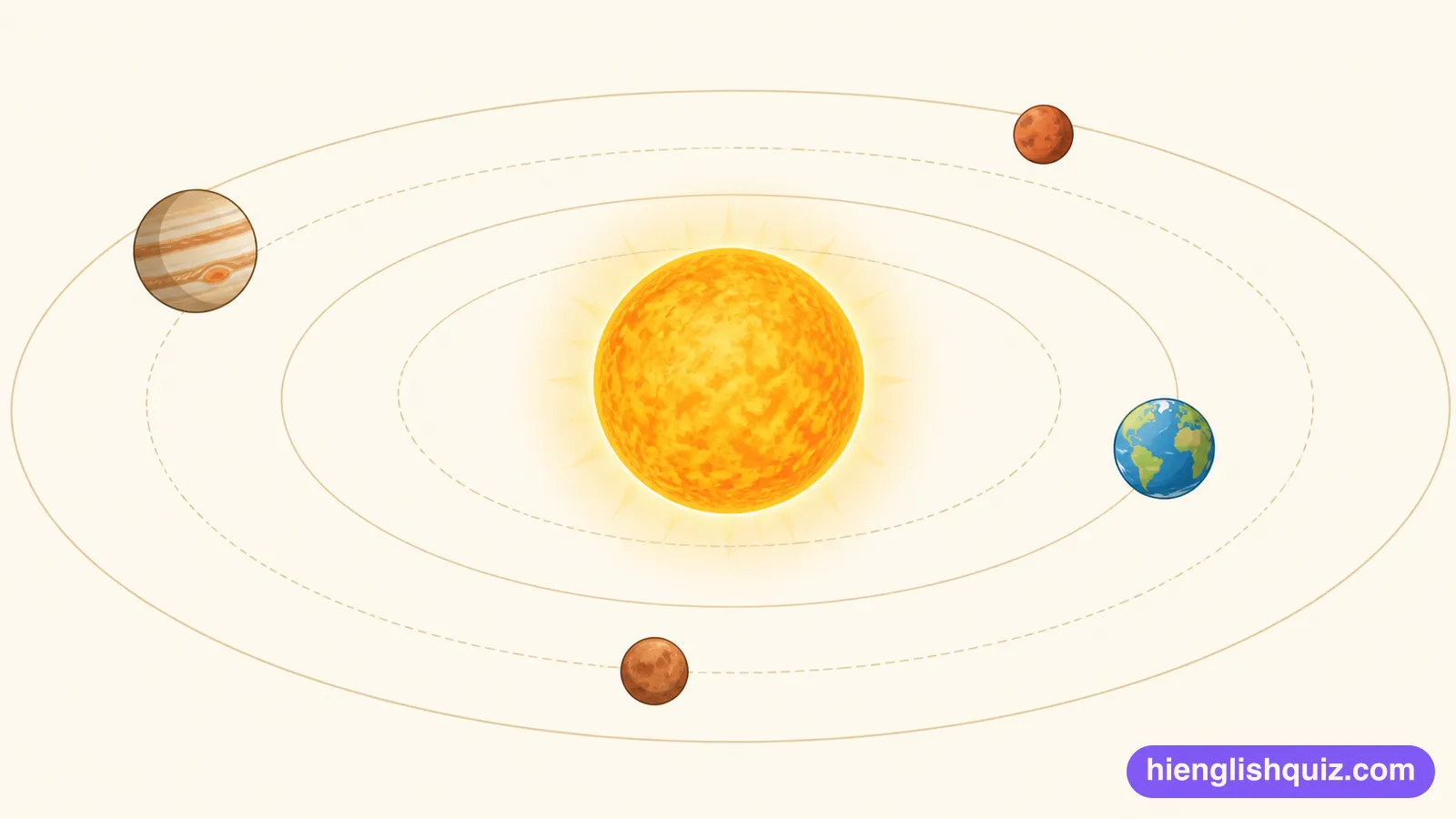
Having the sun at the centre.
Example: The heliocentric model took a century to be accepted.
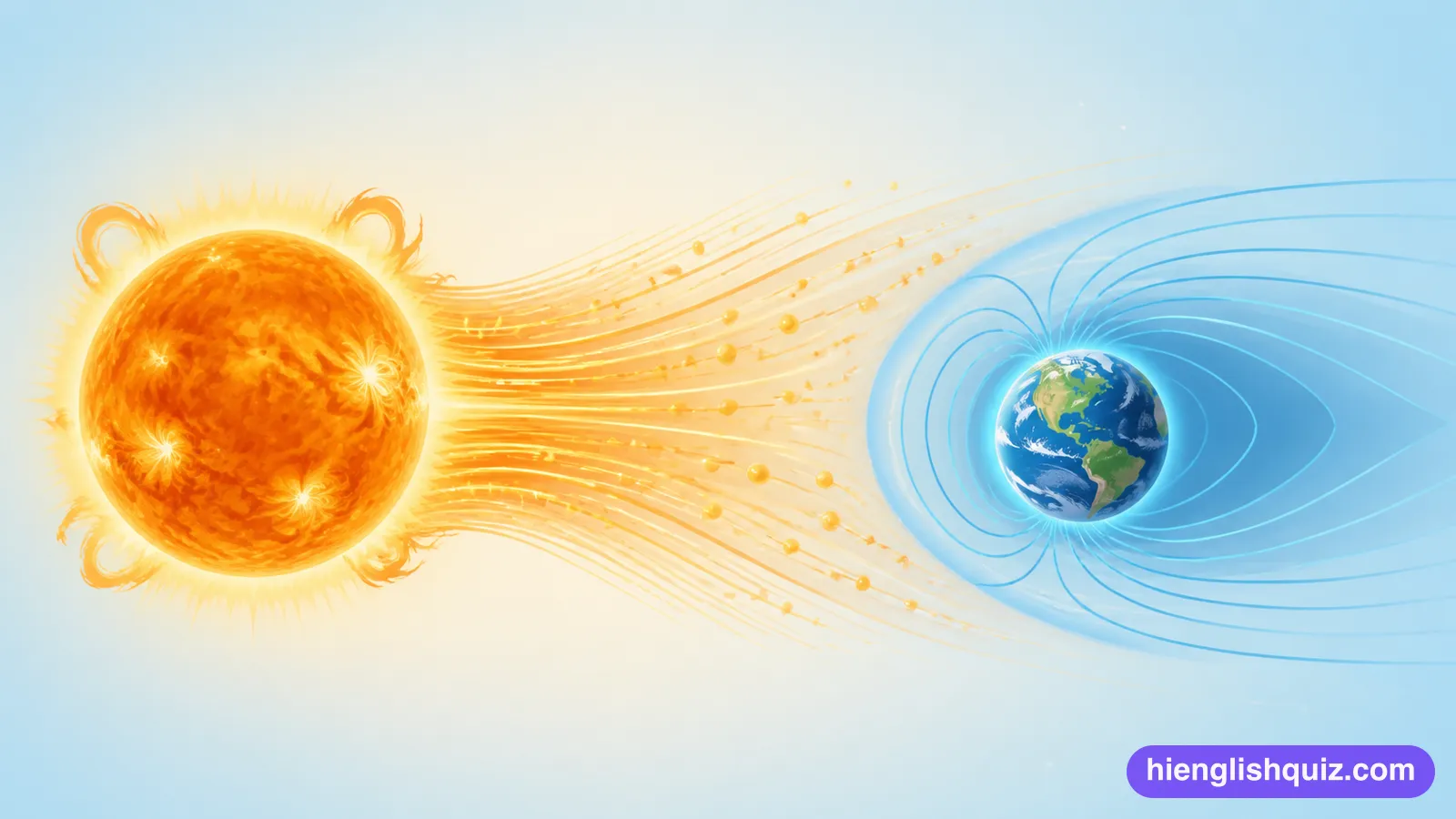
The stream of particles flowing out from the sun.
Example: The solar wind shapes the tail of every comet.
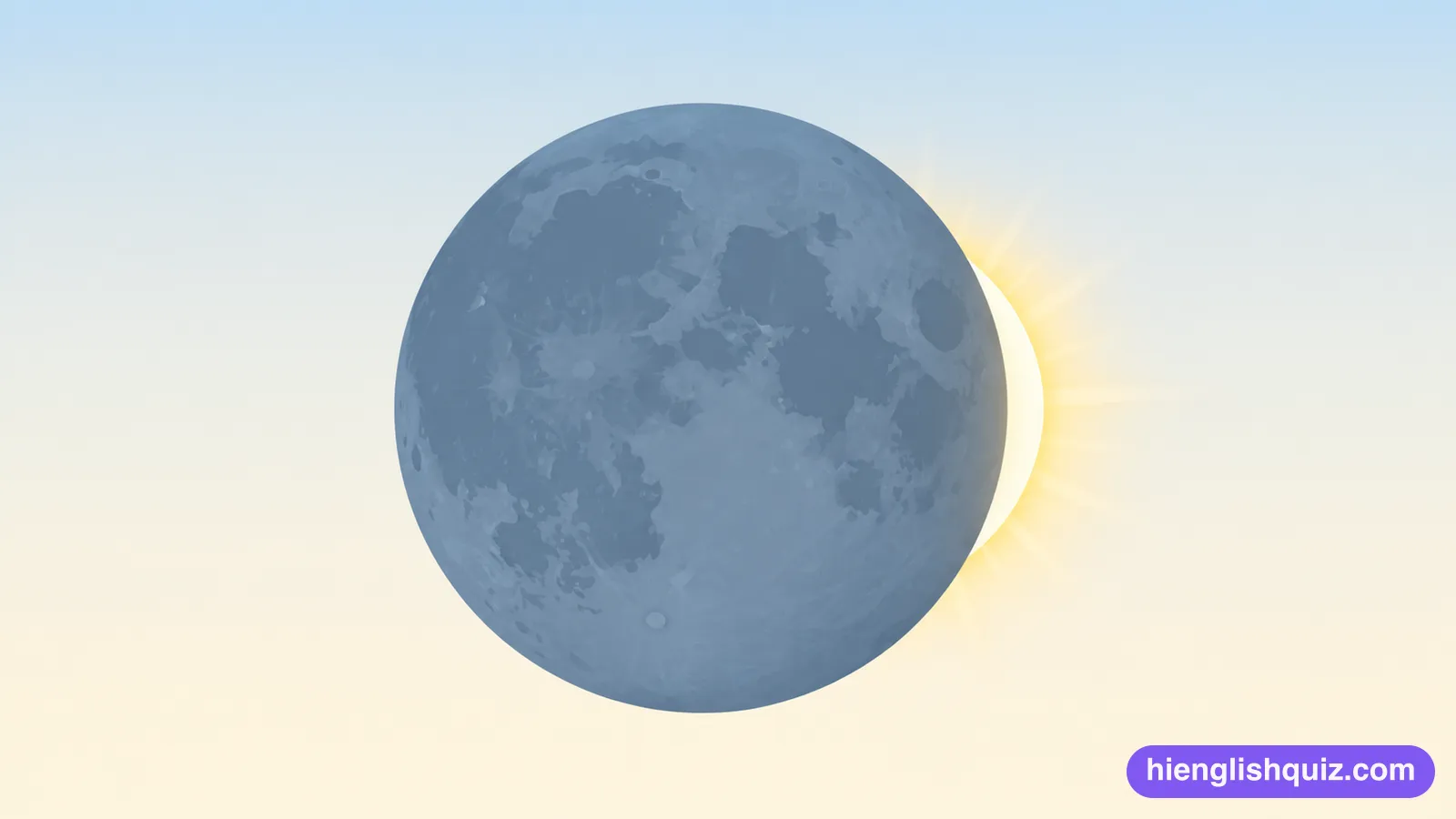
The passing of one body in front of another.
Example: The occultation lasted eleven seconds and was recorded from three sites.
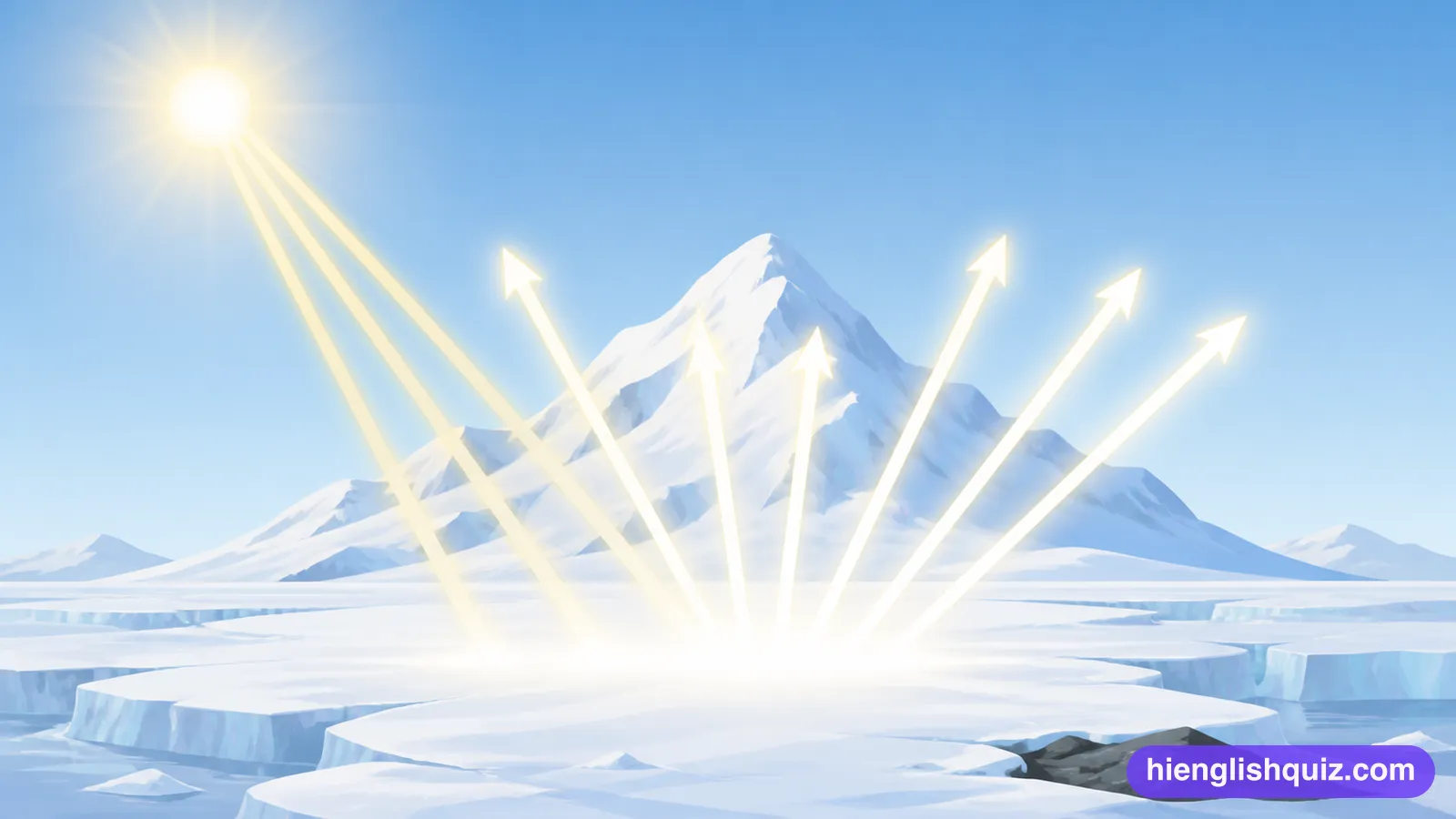
The proportion of light a surface reflects.
Example: Ice has a high albedo, which is why melting speeds itself up.
A table giving the future positions of a body in space.
Example: Every observatory works from the same ephemeris.