orbit
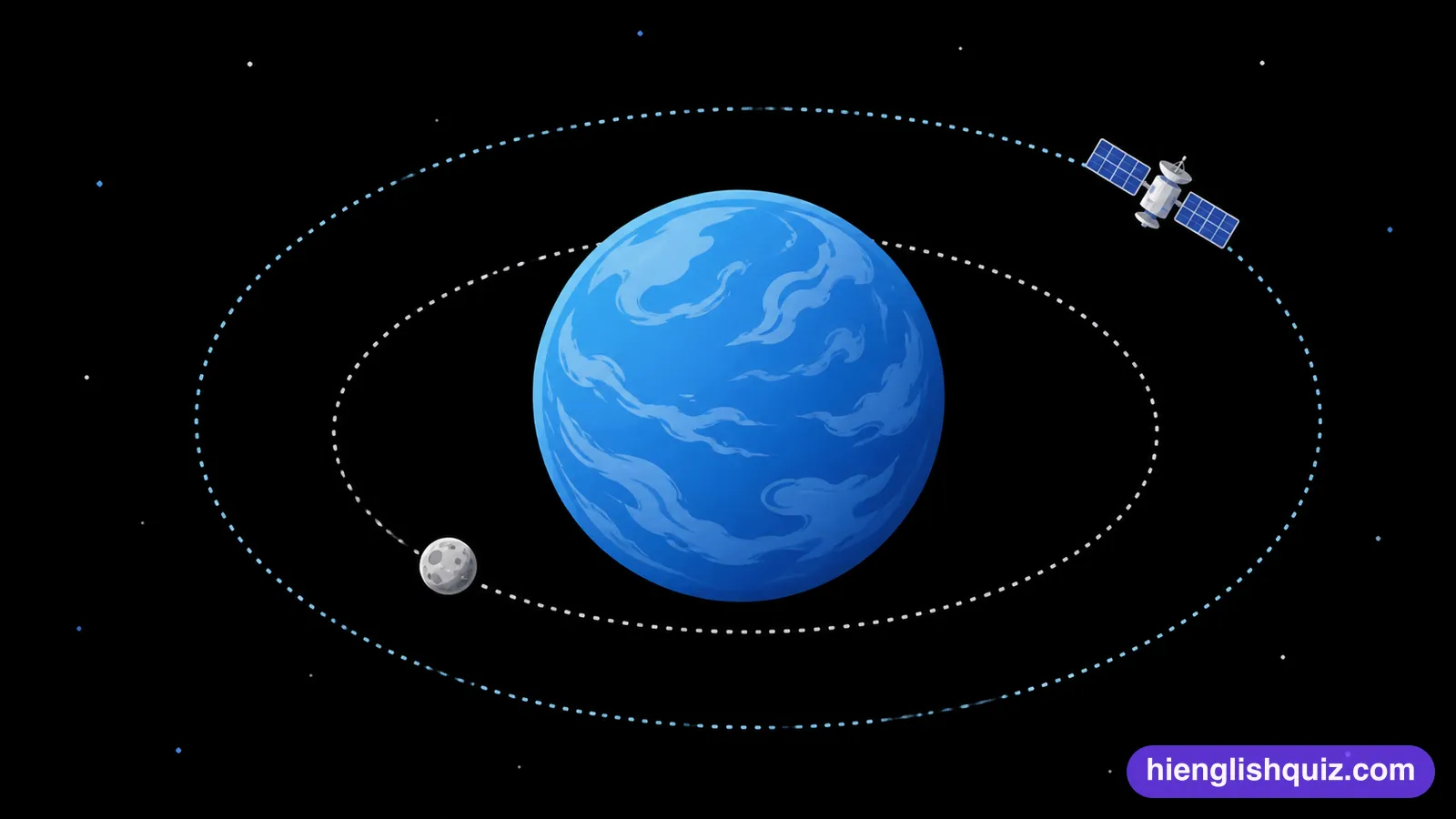
/ˈɔrbət/The curved path one object in space follows as it travels around another.
Example: The station completes an orbit of Earth every ninety minutes.
 Hi EnglishQuiz
B216 words · Upper-intermediate
Space vocabulary such as orbit, eclipse and galaxy, plus constellation, atmosphere and light-year. Words for describing astronomy and space missions.
The curved path one object in space follows as it travels around another.
Example: The station completes an orbit of Earth every ninety minutes.
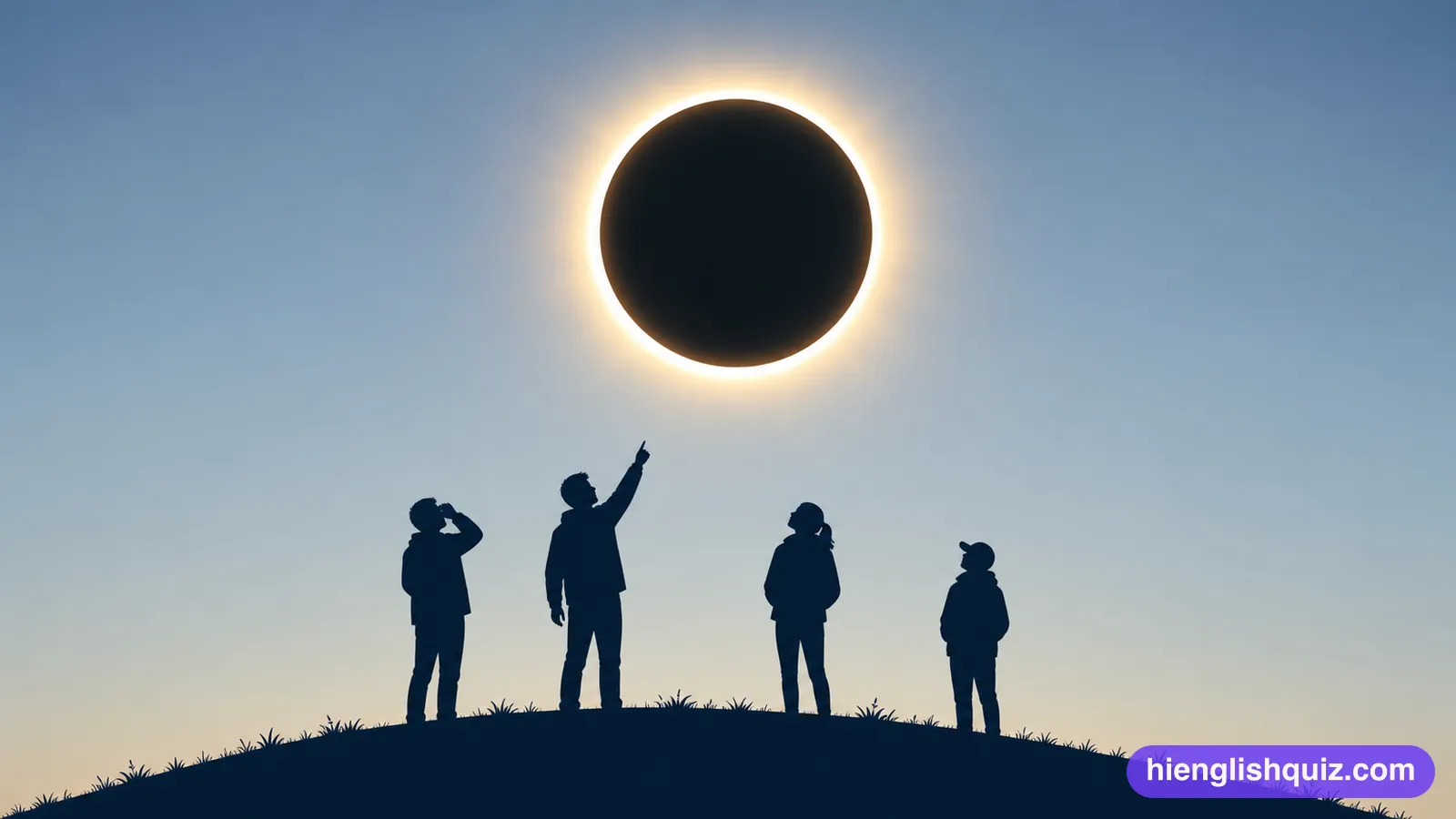
The short time when one object in space blocks the light from another.
Example: Crowds watched the eclipse through special dark glasses.
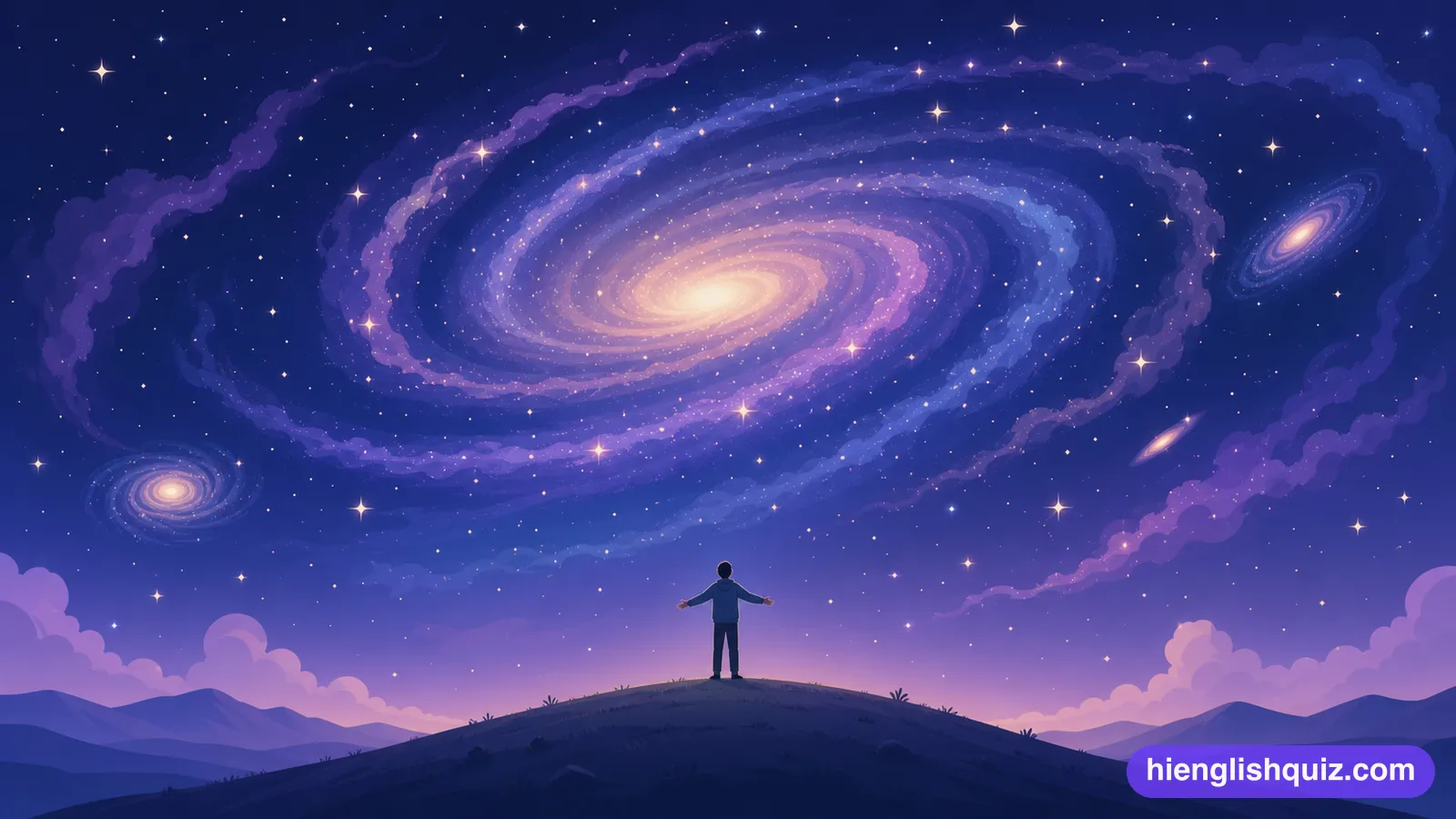
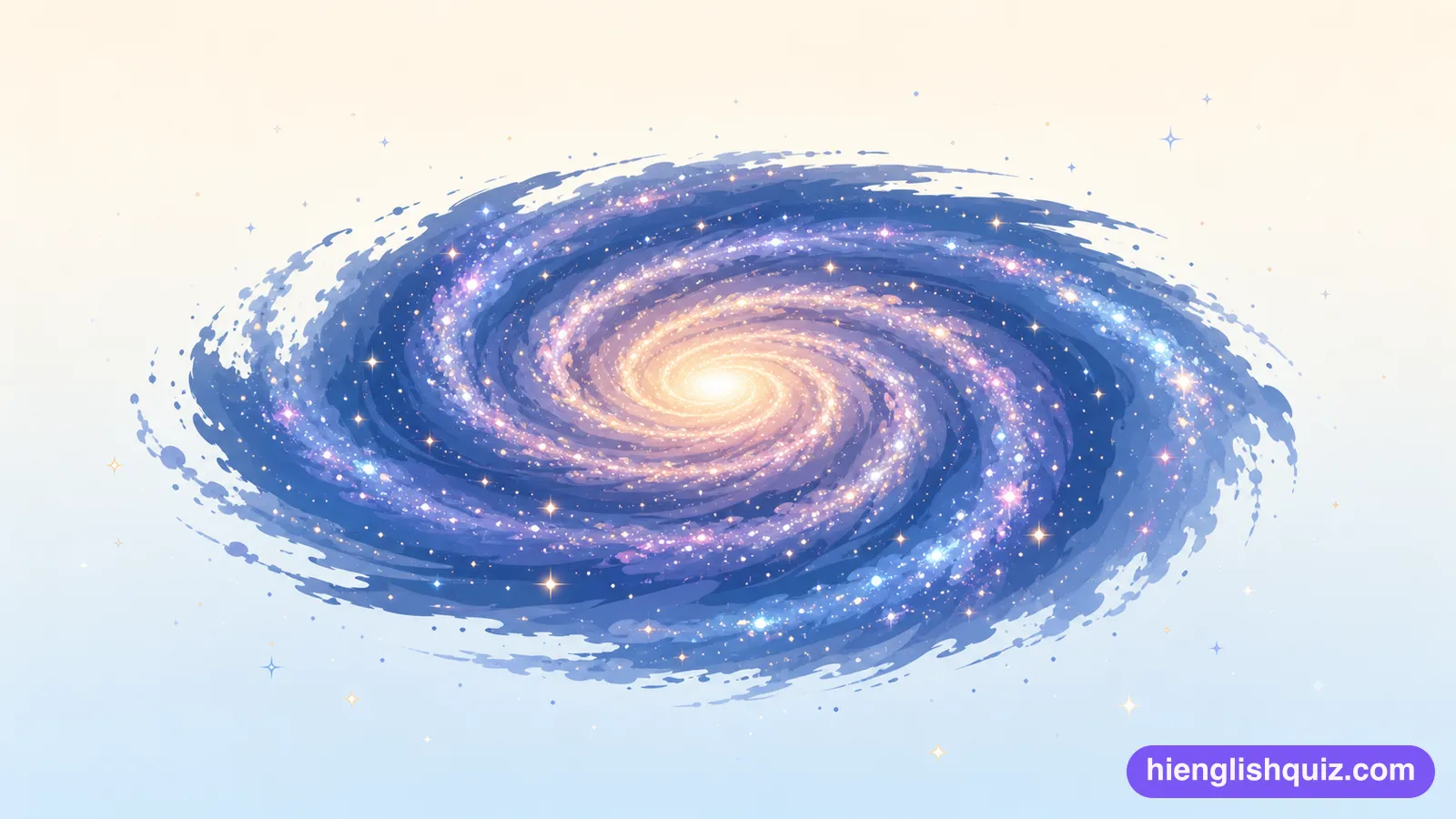
A very large group of millions of stars, gas and dust held together in space.
Example: Our Sun is just one star in a huge galaxy.
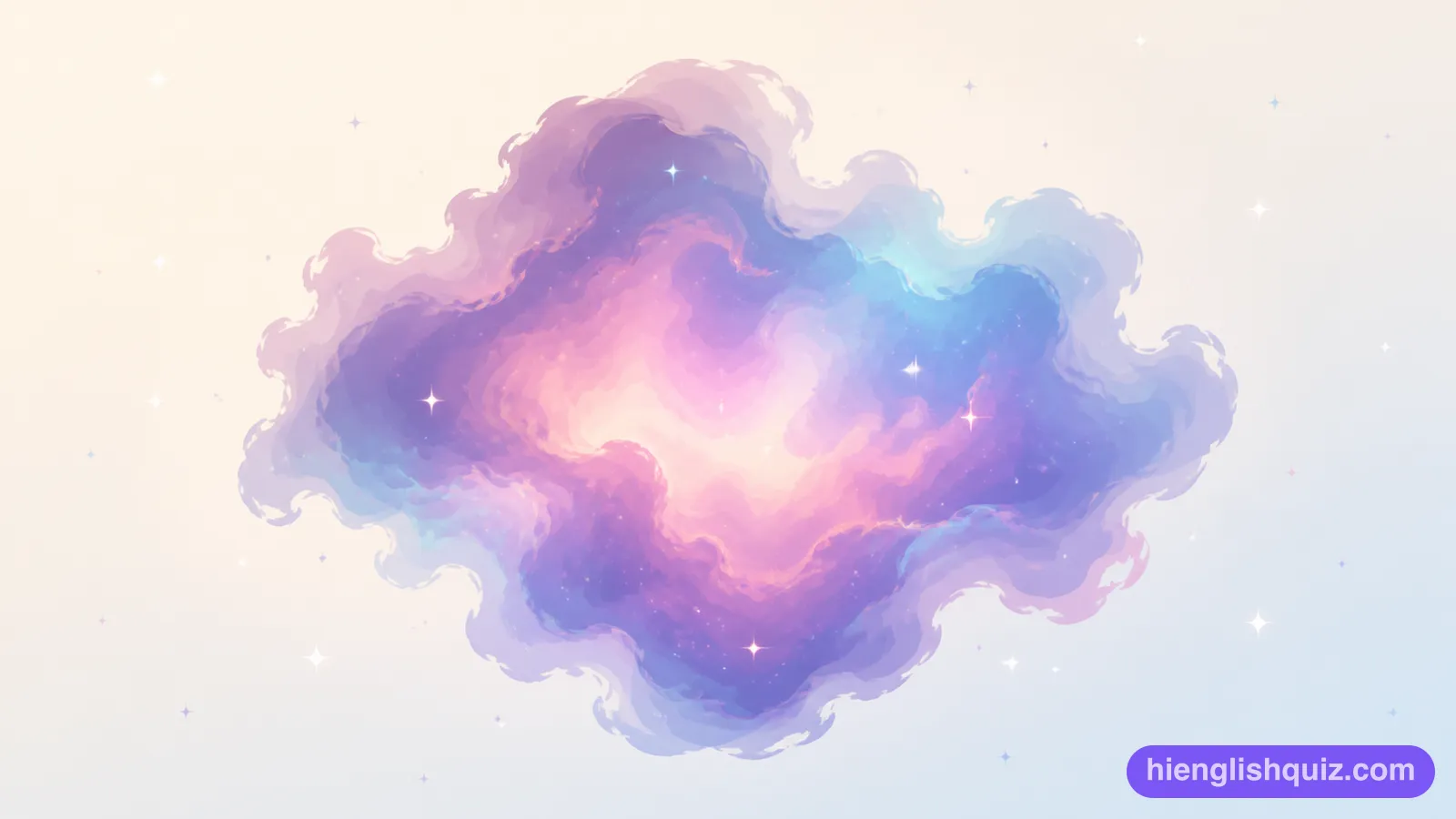
A huge cloud of gas and dust in space, often where new stars are formed.
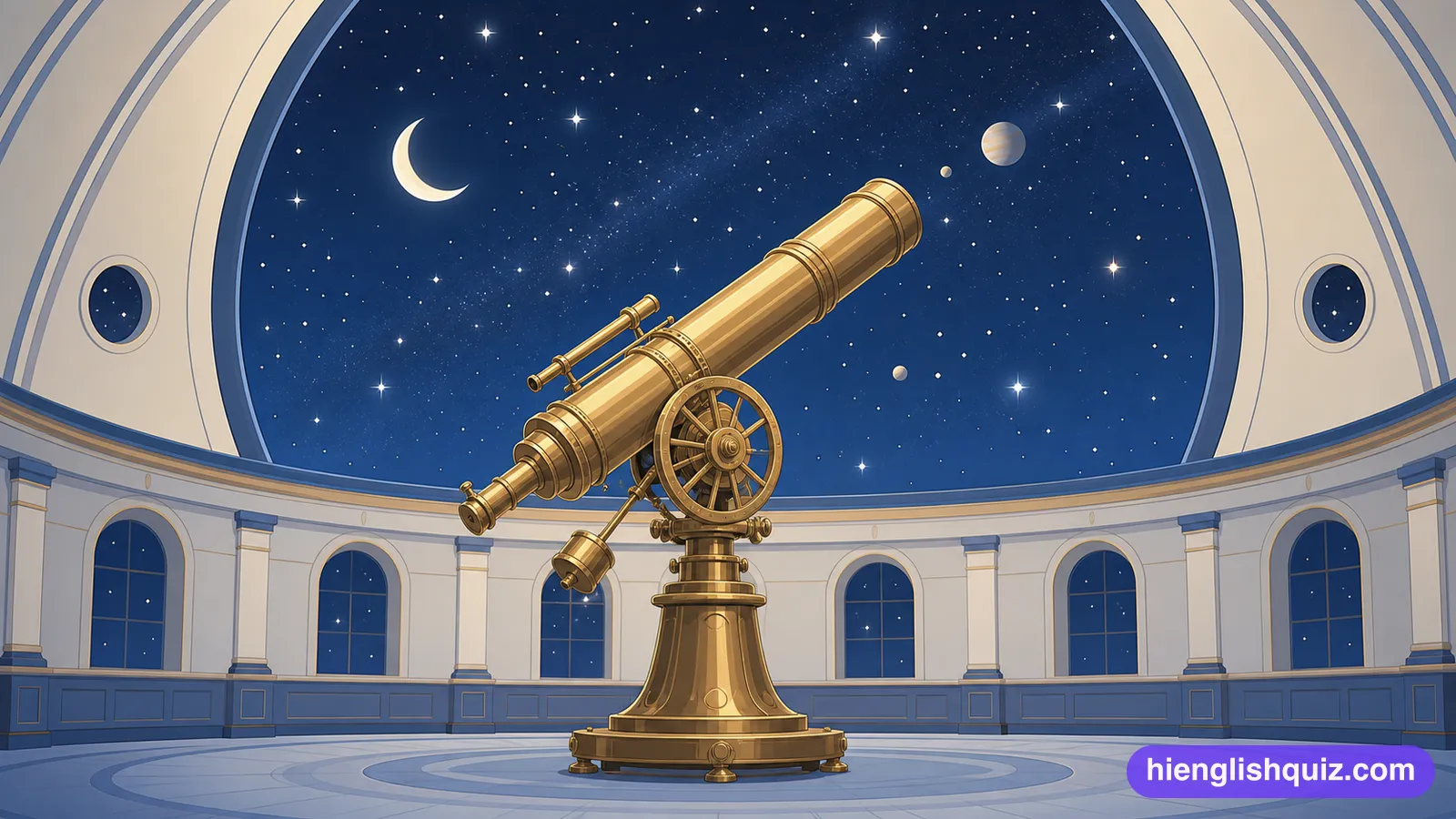
Example: The telescope captured a colourful image of a distant nebula.
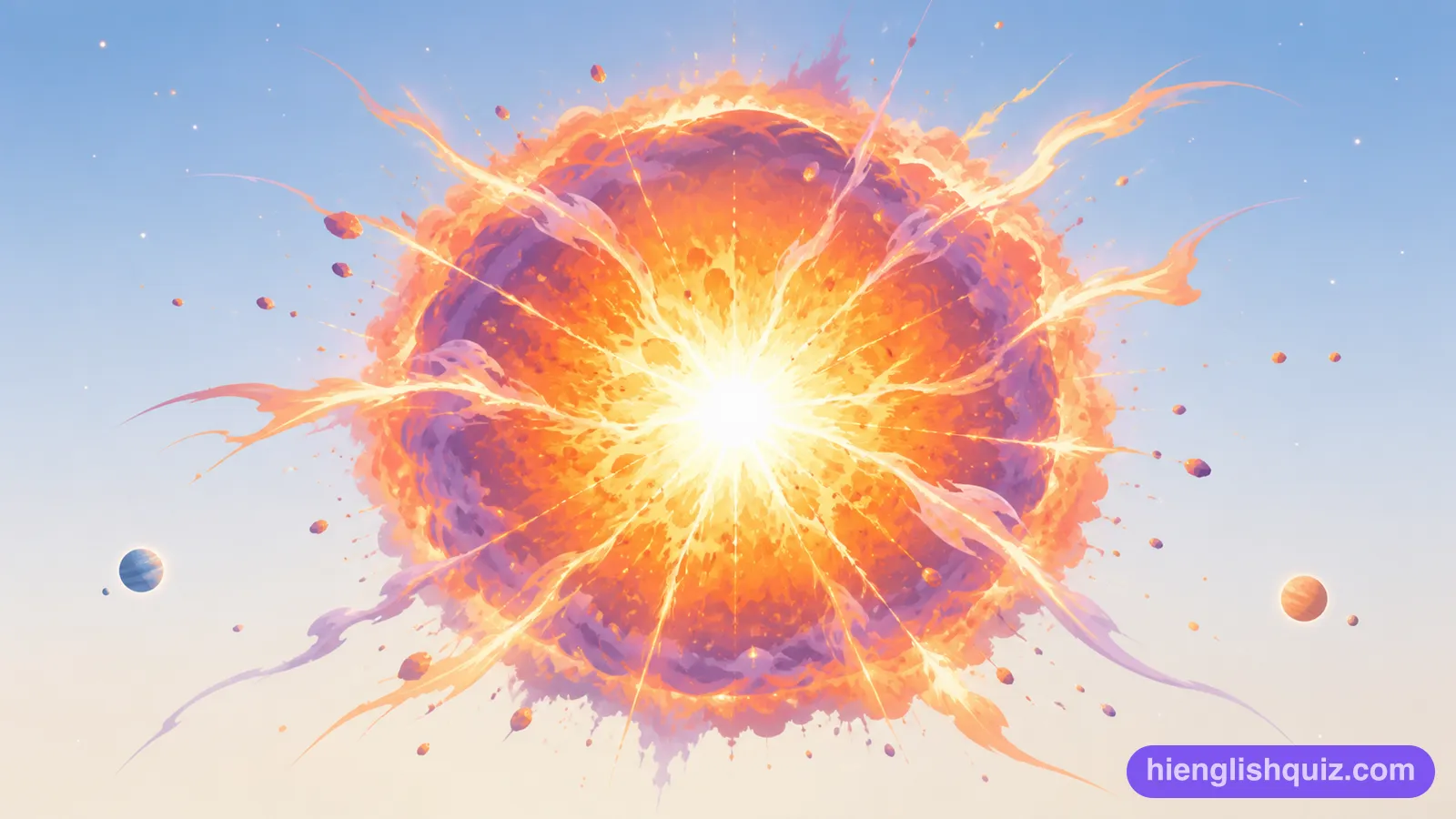
A massive explosion that happens when a large star reaches the end of its life.
Example: The bright light in the sky was actually a distant supernova.
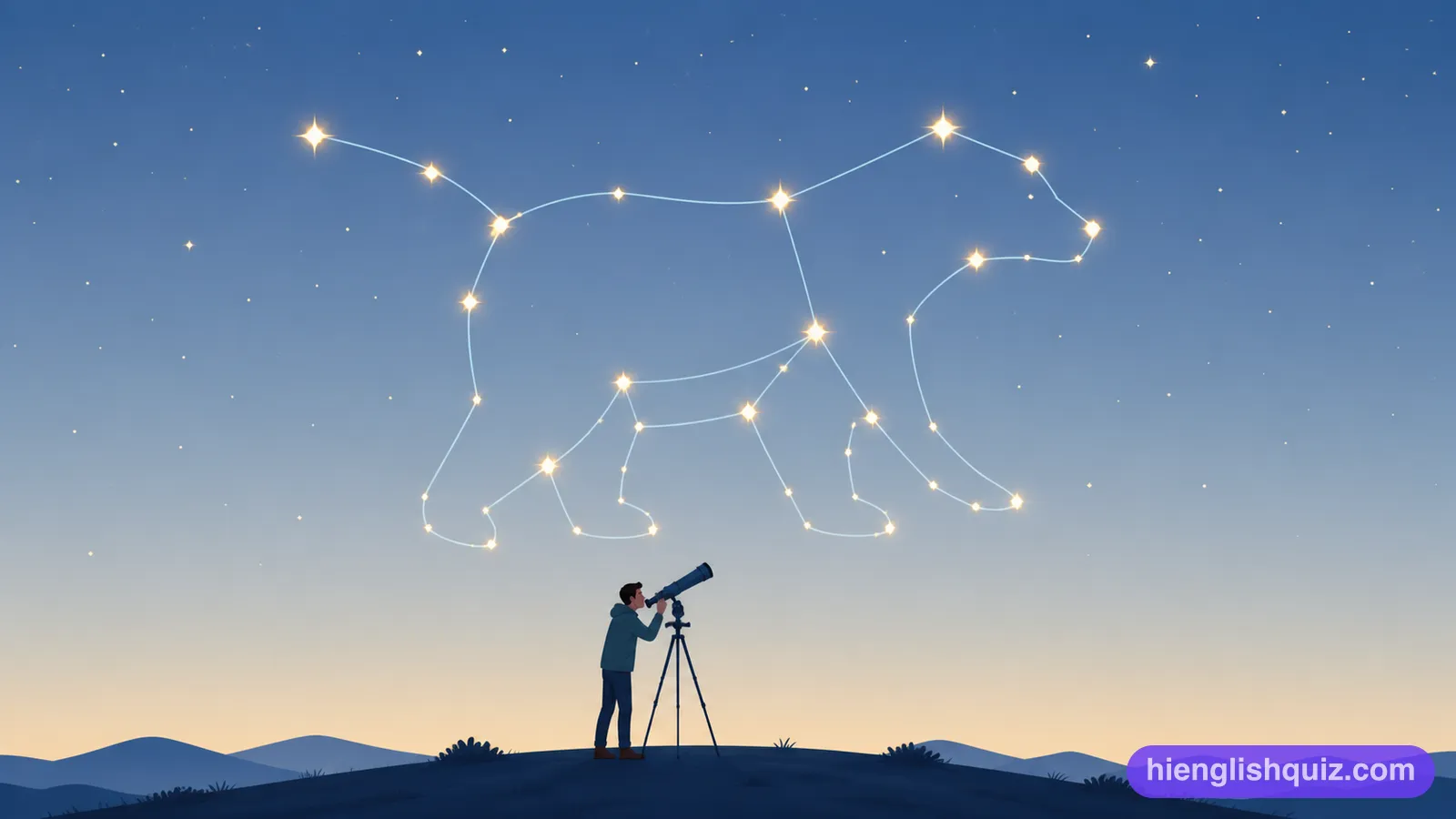
A group of stars that forms a recognisable pattern in the sky.
Example: You can find the North Star using this constellation.
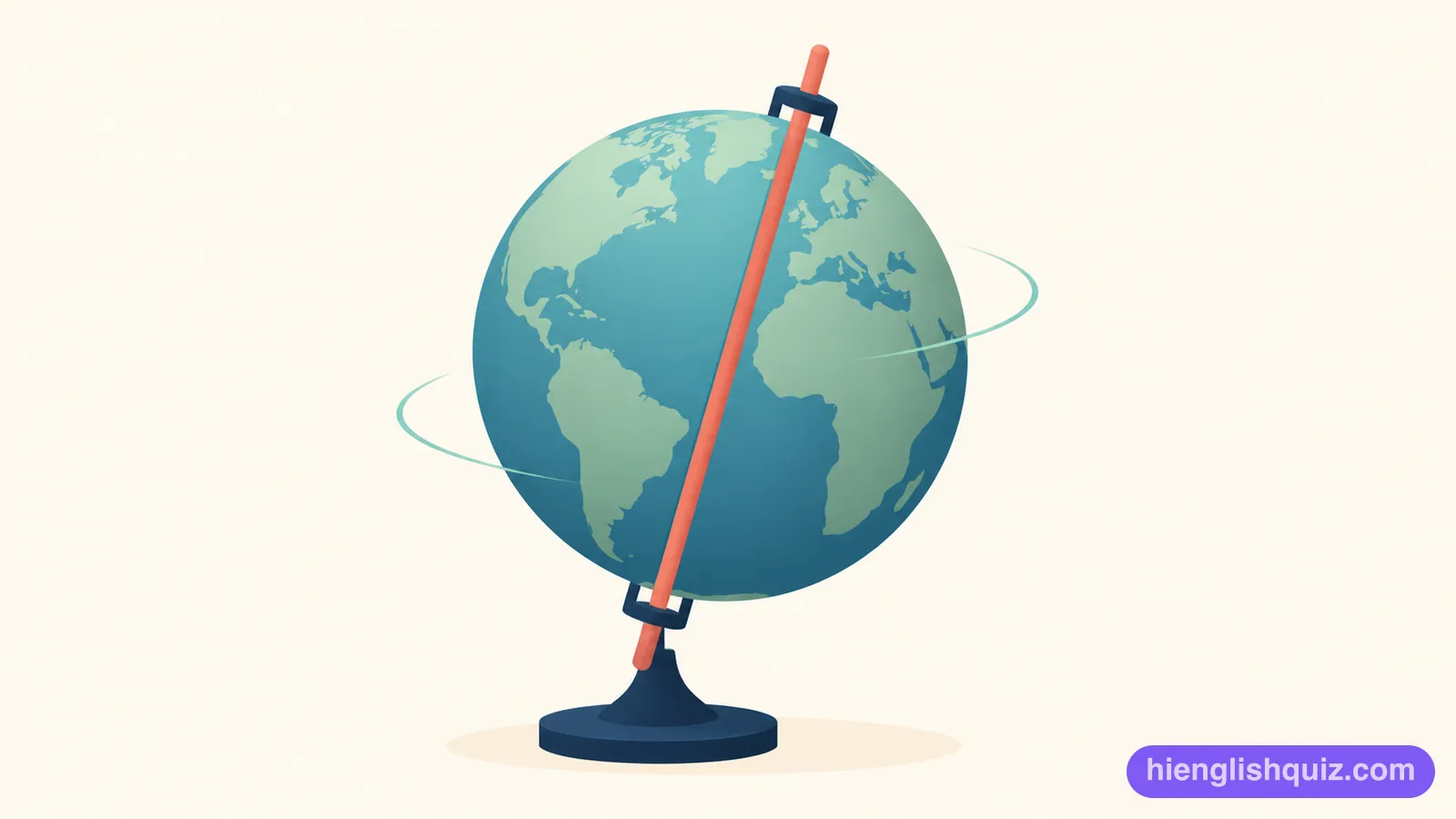
An imaginary line through the centre of a planet, around which it spins.
Example: The Earth's axis is slightly tilted.
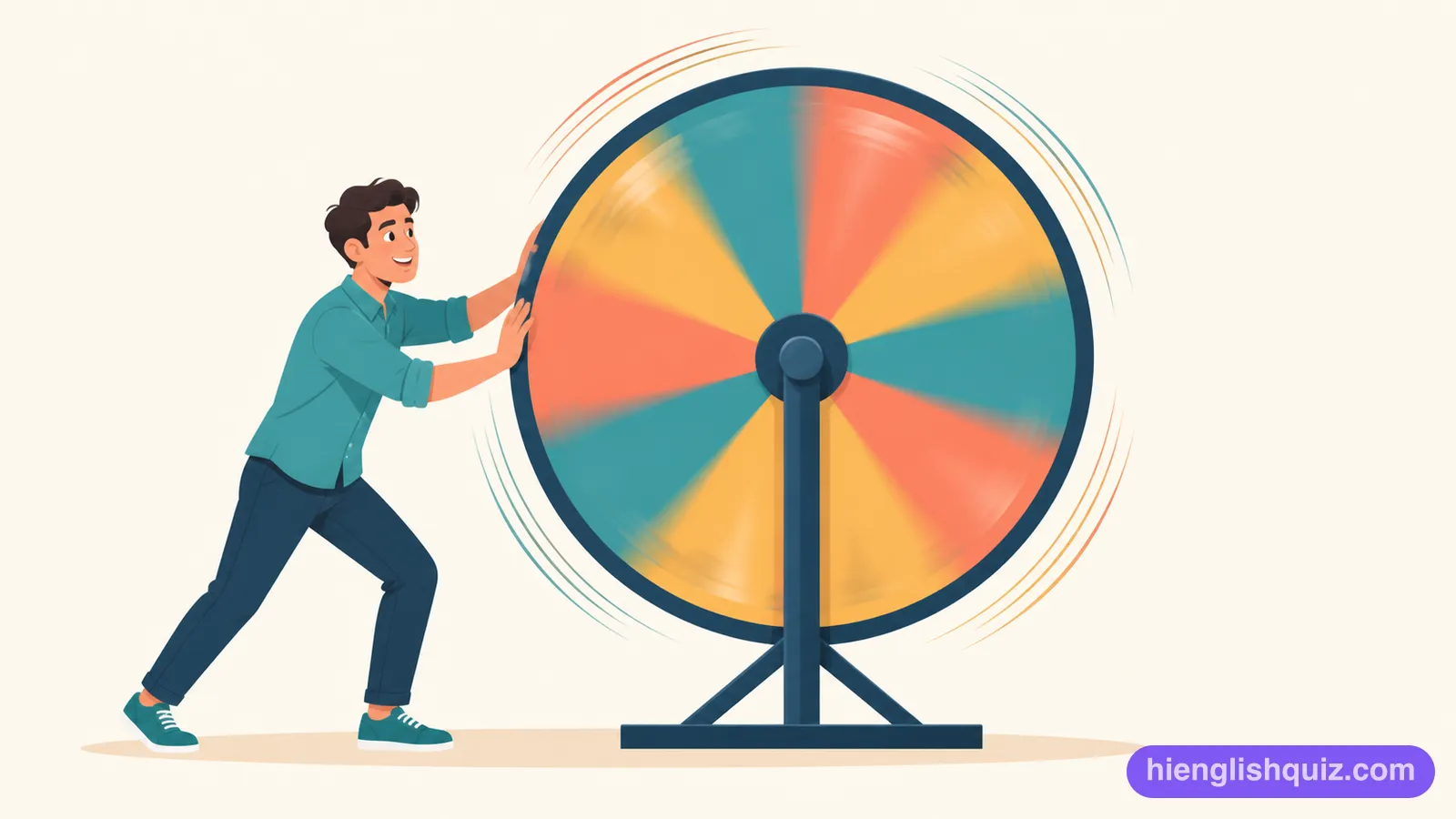
One complete turn of a planet or object around its own axis.
Example: A full rotation of the Earth takes twenty-four hours.
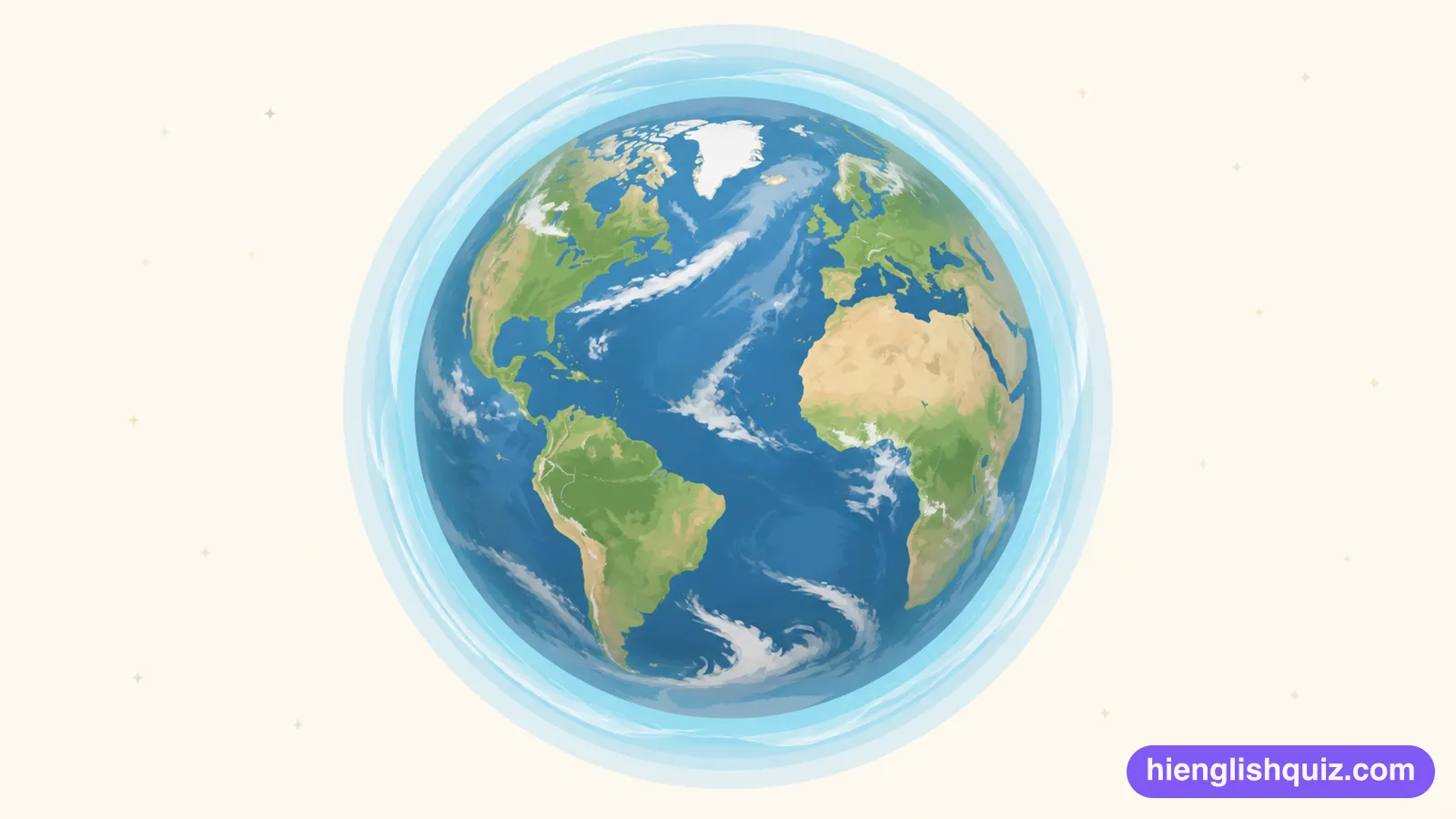
The layer of gases that surrounds a planet.
Example: Earth's atmosphere protects us from harmful radiation.
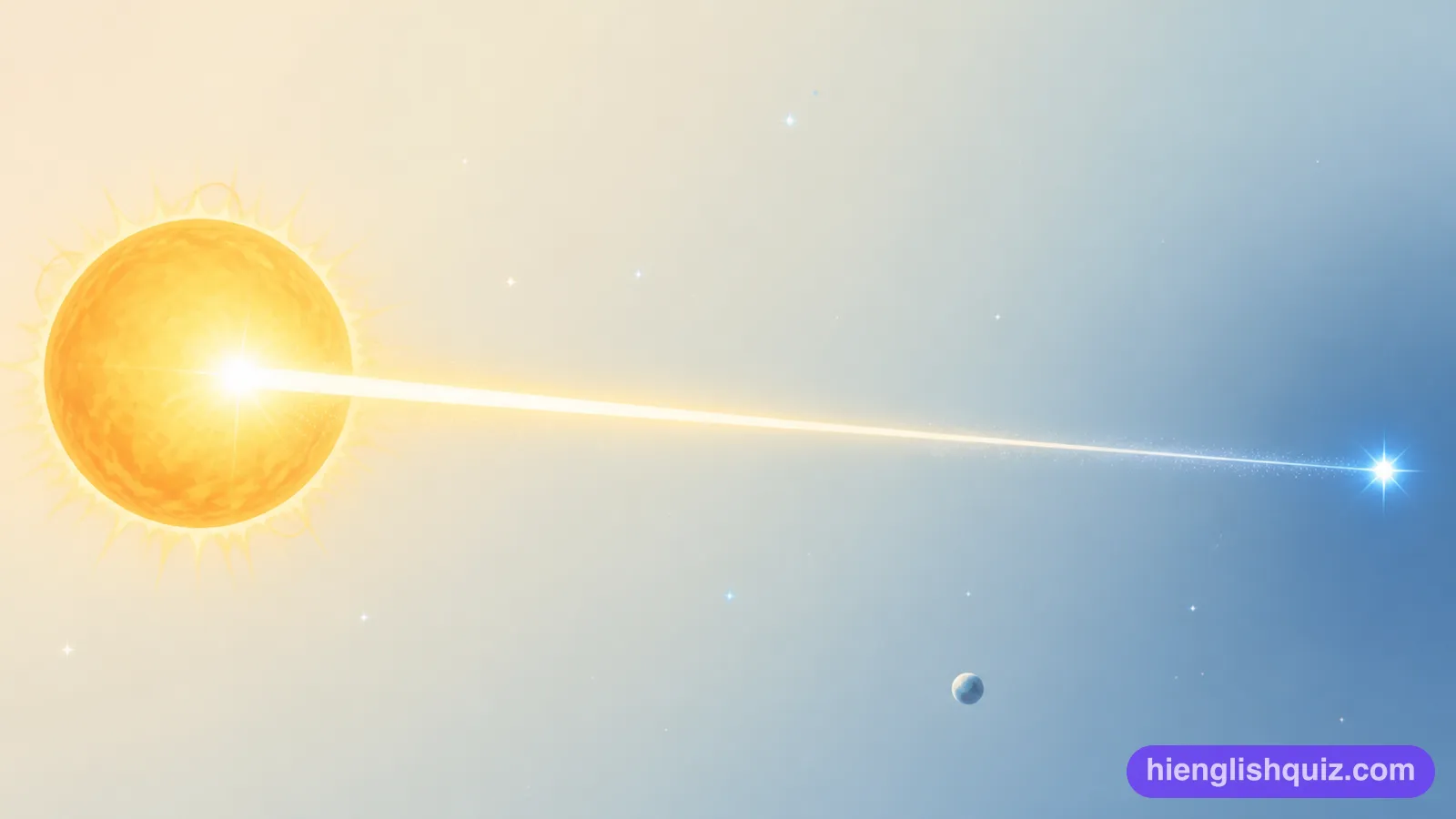
A unit used to measure huge distances in space, equal to the distance light travels in one year.
Example: The nearest star is more than four light-years away.
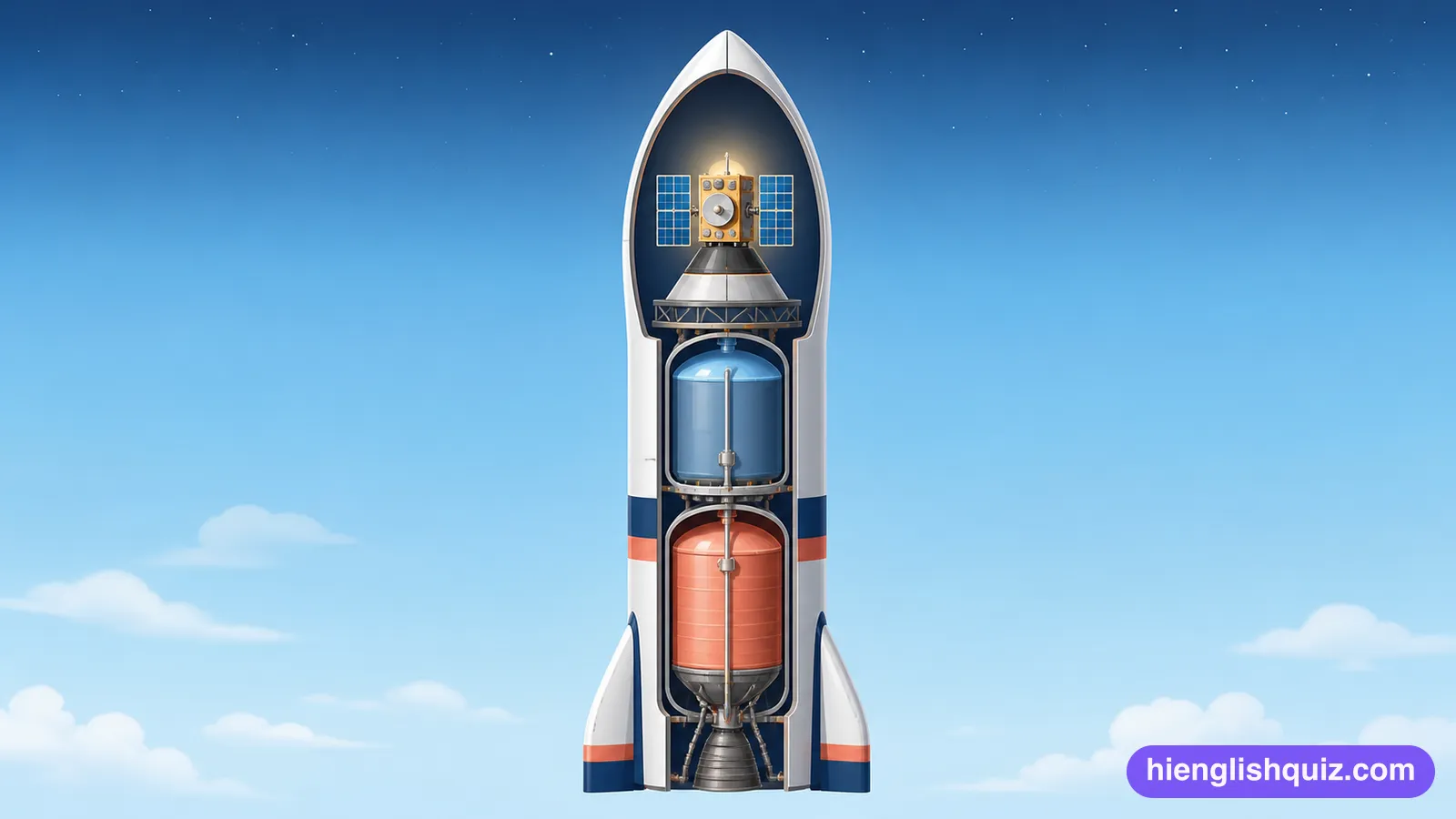
The equipment or cargo a rocket carries.
Example: The payload was two satellites and a small telescope.
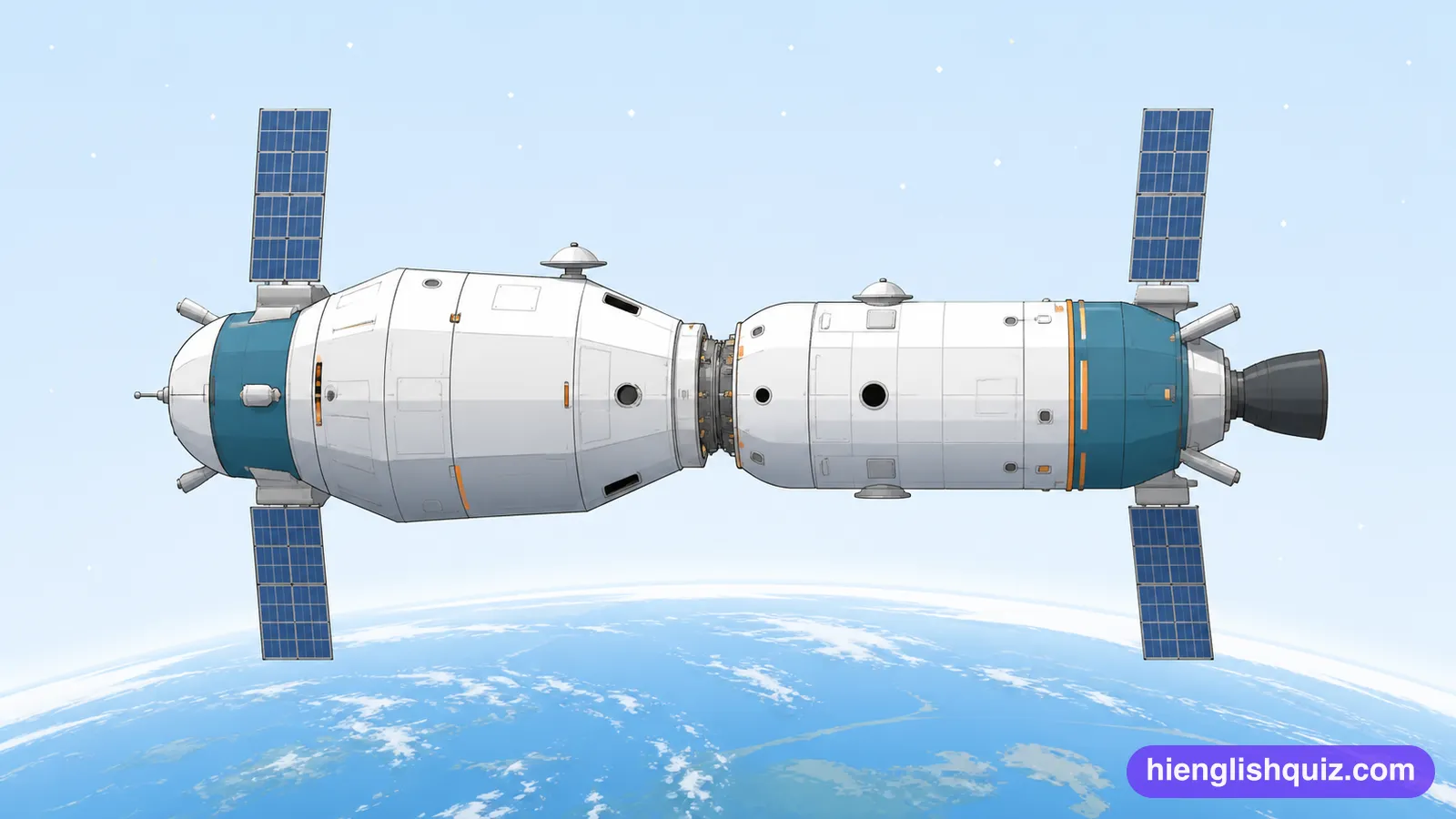
The joining of one spacecraft to another.
Example: The docking took four attempts over two days.
The condition of having no apparent weight.
Example: Six months of weightlessness costs a crew a great deal of bone.

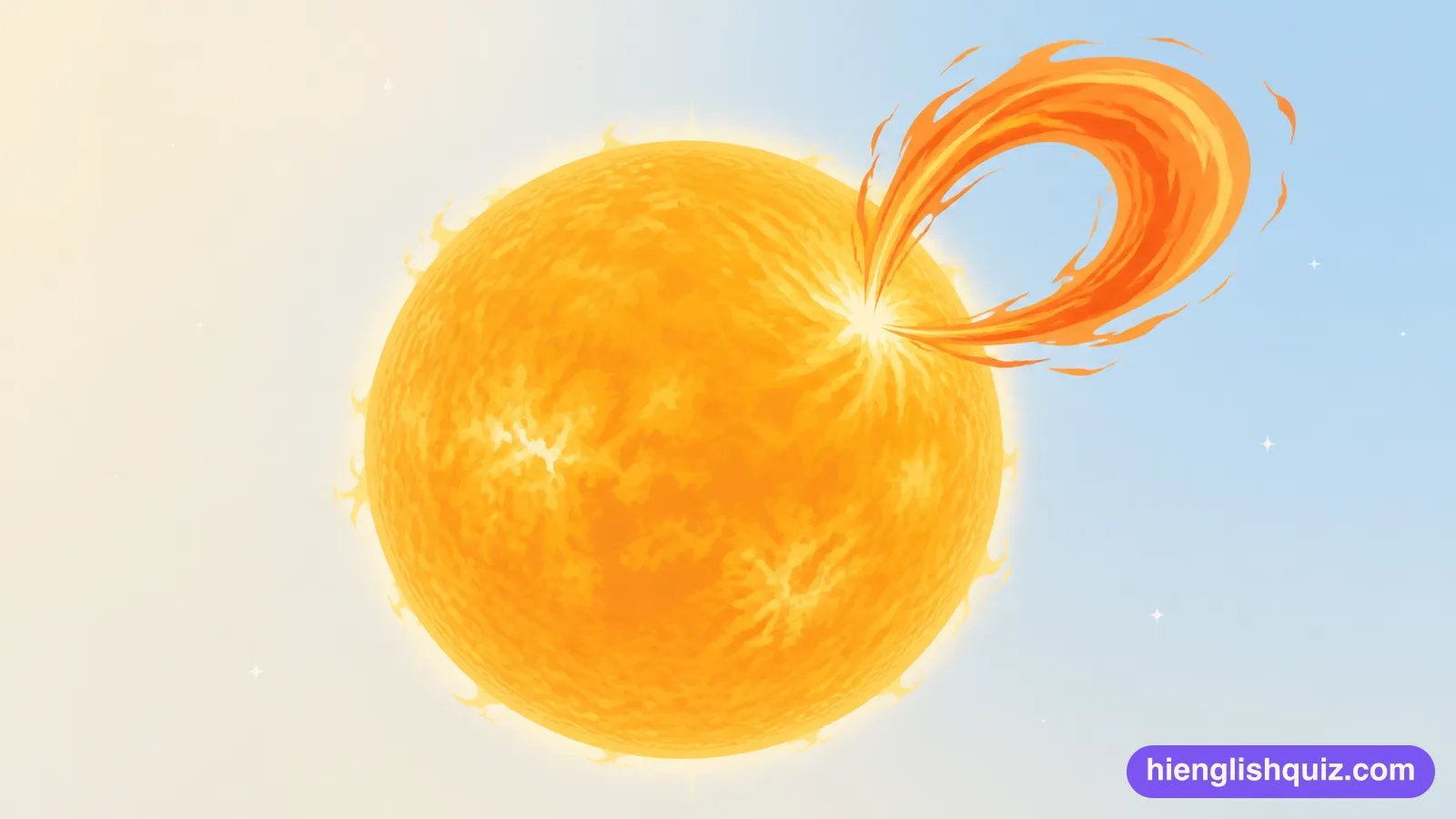
A sudden burst of energy from the surface of the sun.
Example: A solar flare knocked out radio across half the planet.
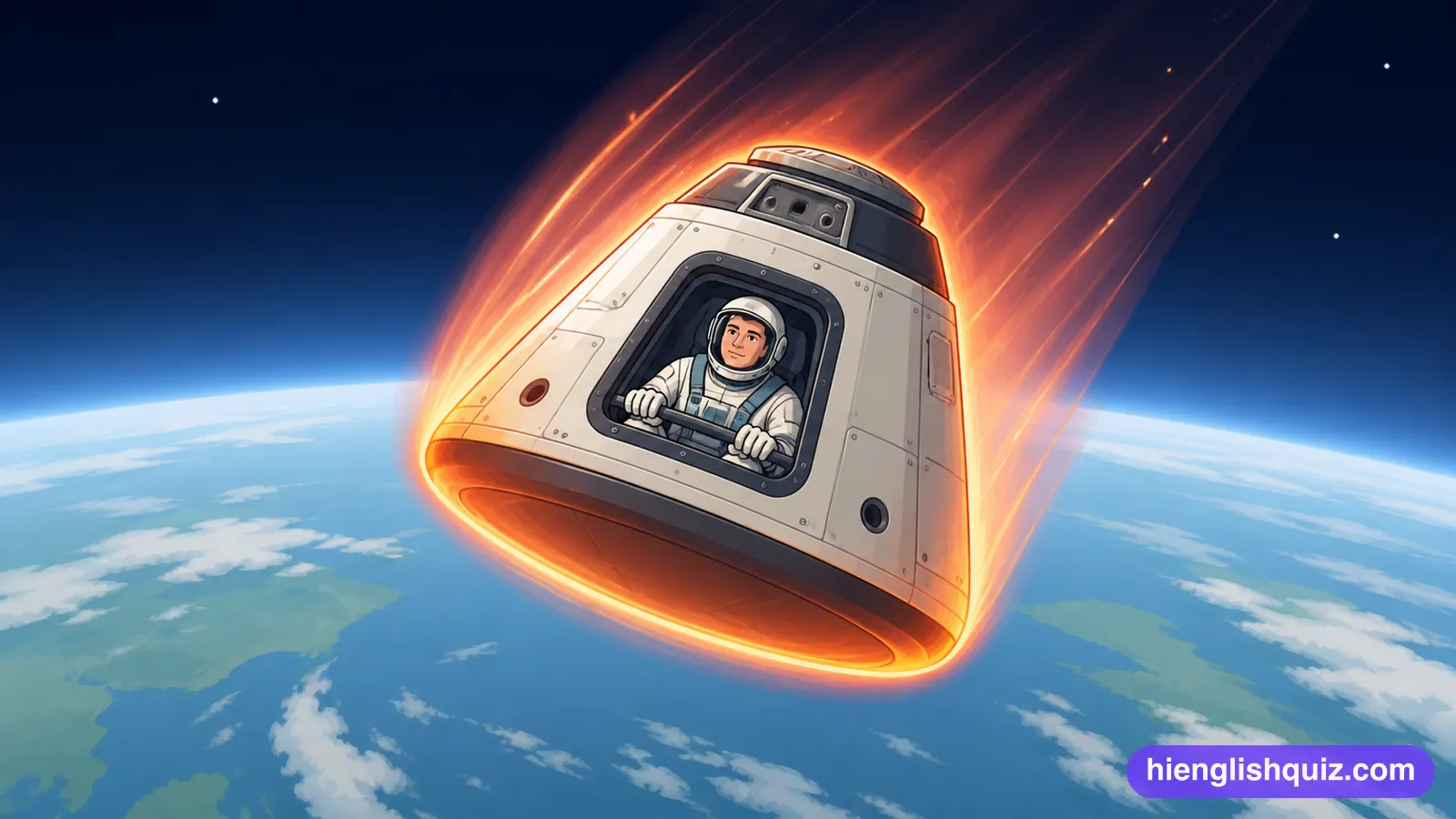
The return of a spacecraft into the atmosphere.
Example: Re-entry is the part of the flight nobody enjoys.
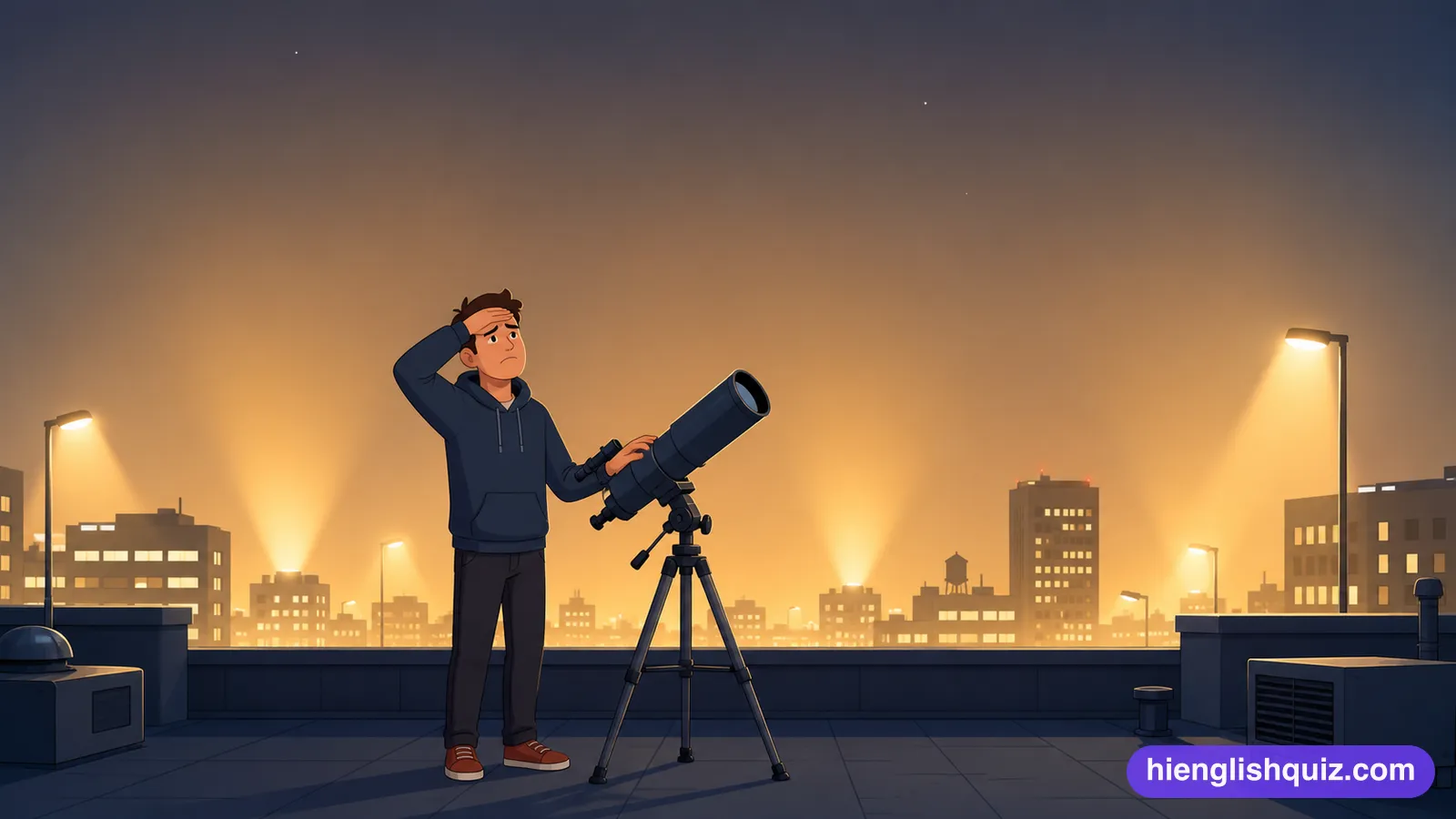
Brightness from towns that makes the night sky hard to see.
Example: Light pollution has taken the Milky Way from most of Europe.