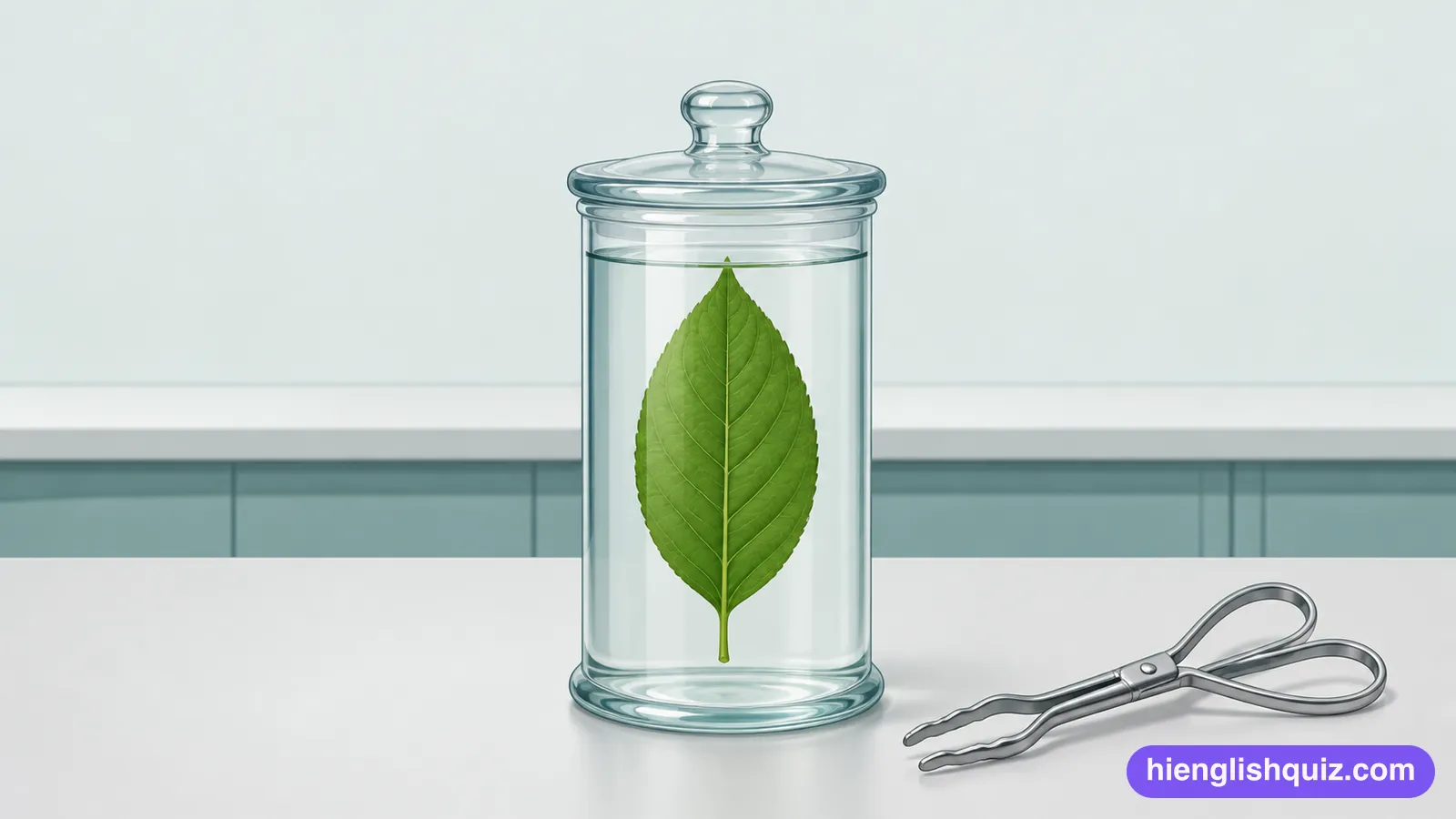
specimen
/ˈspɛsəmən/A small sample of something collected so that it can be studied or tested.
Example: The scientist placed the blood specimen under the lens.
 Hi EnglishQuiz
B220 words · Upper-intermediate
Science vocabulary such as specimen, beaker and bunsen burner, plus estimate, accurate and margin of error. Words for describing lab work and its results.
A small sample of something collected so that it can be studied or tested.
Example: The scientist placed the blood specimen under the lens.
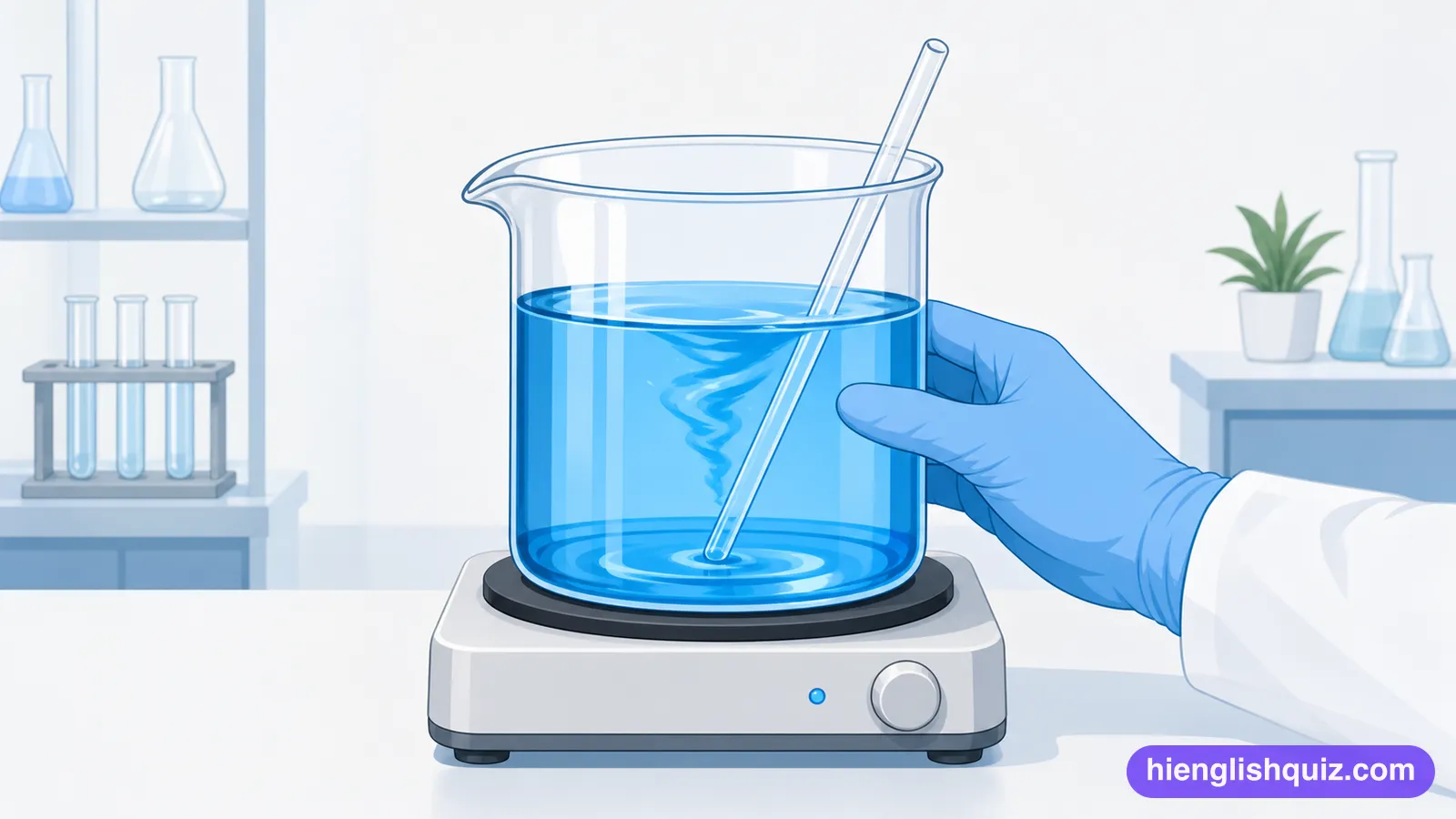
A wide glass cup with a lip for pouring, used in a lab for heating and mixing.
Example: Heat the beaker slowly and keep stirring the mixture.
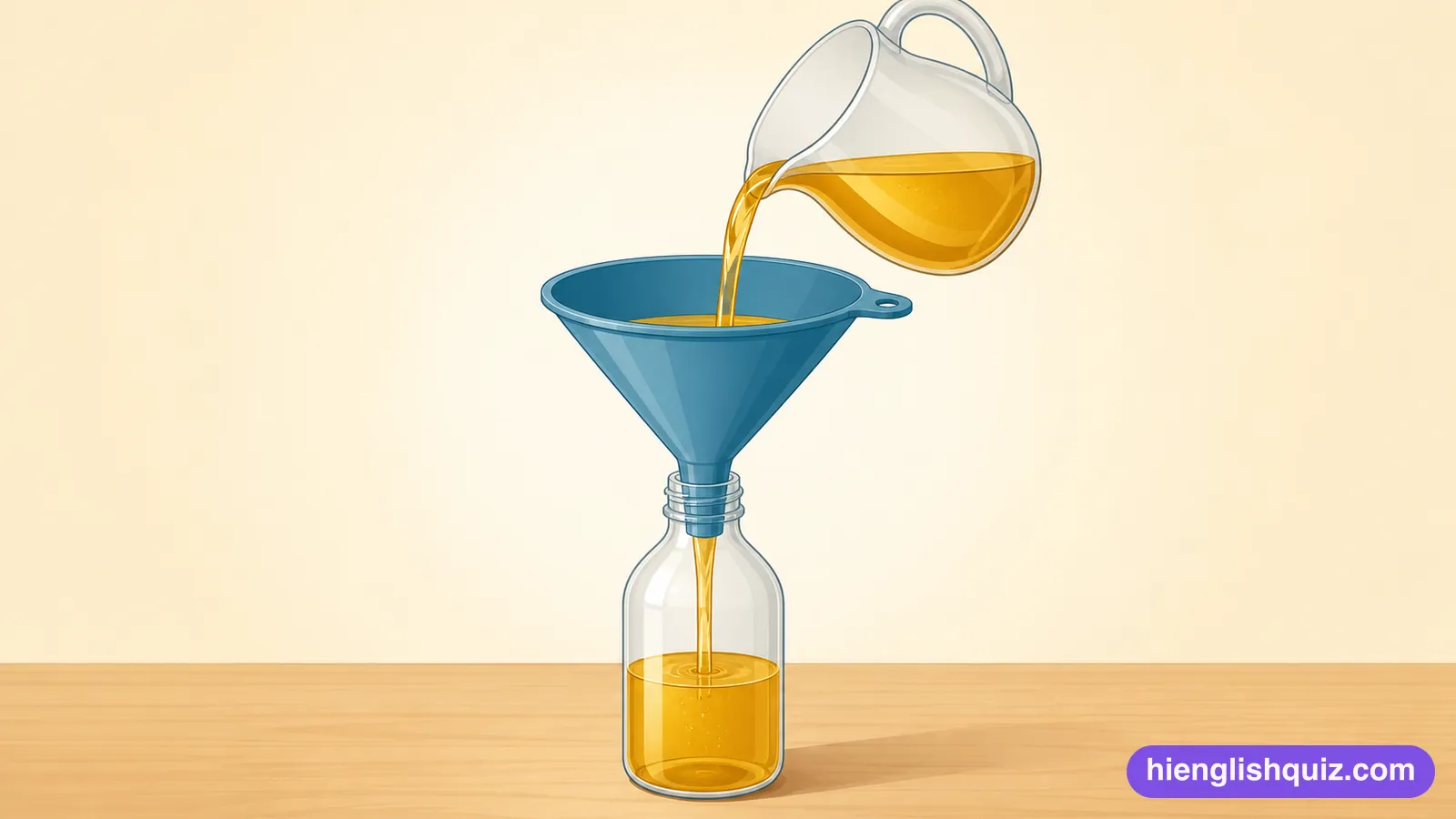
A cone shaped tool with a narrow tube at the bottom for pouring into small openings.
Example: Use a funnel so you do not spill the oil.
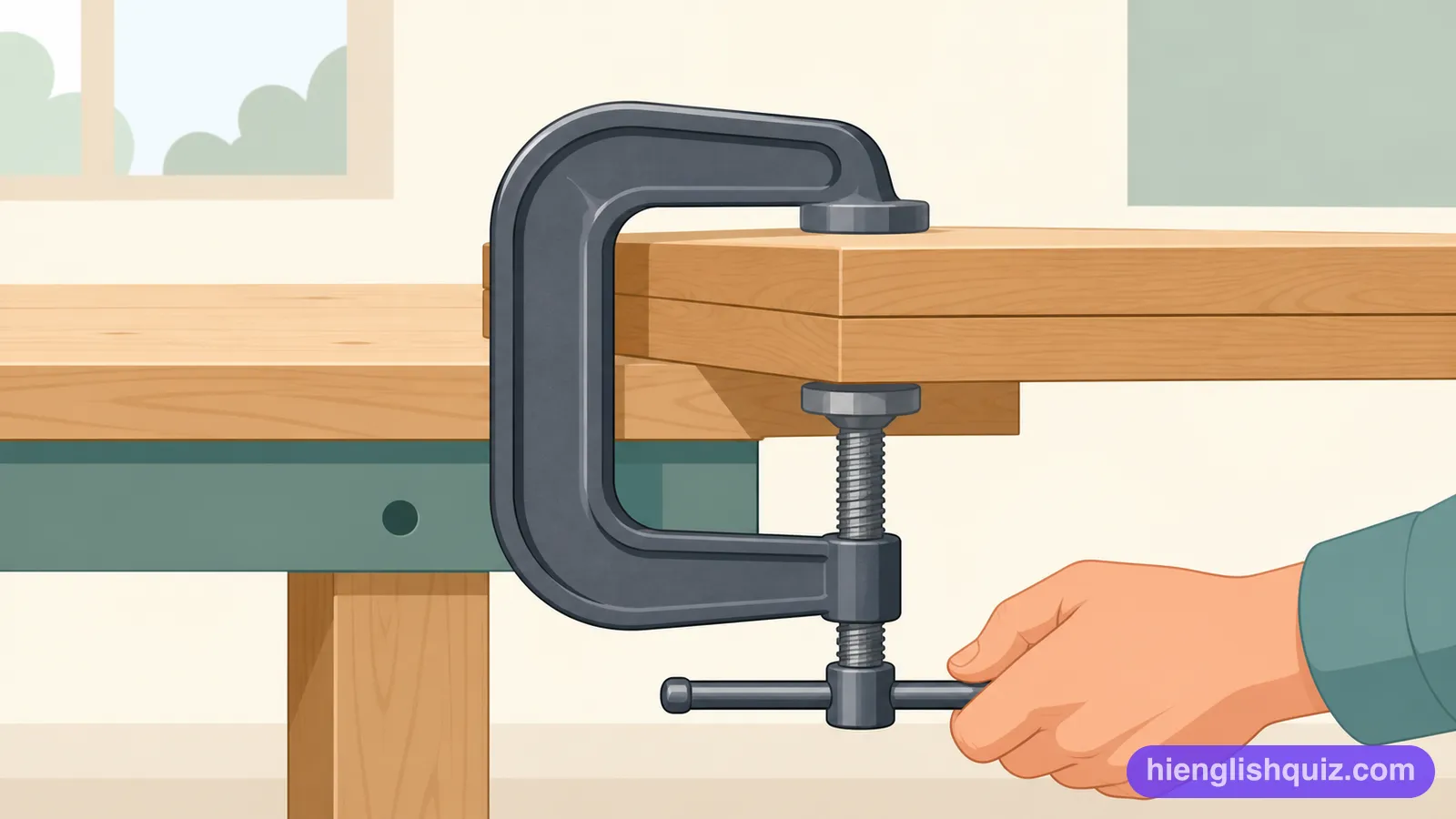
A tool used to hold something tightly and firmly in place during an experiment.
Example: The flask was held steady with a metal clamp.
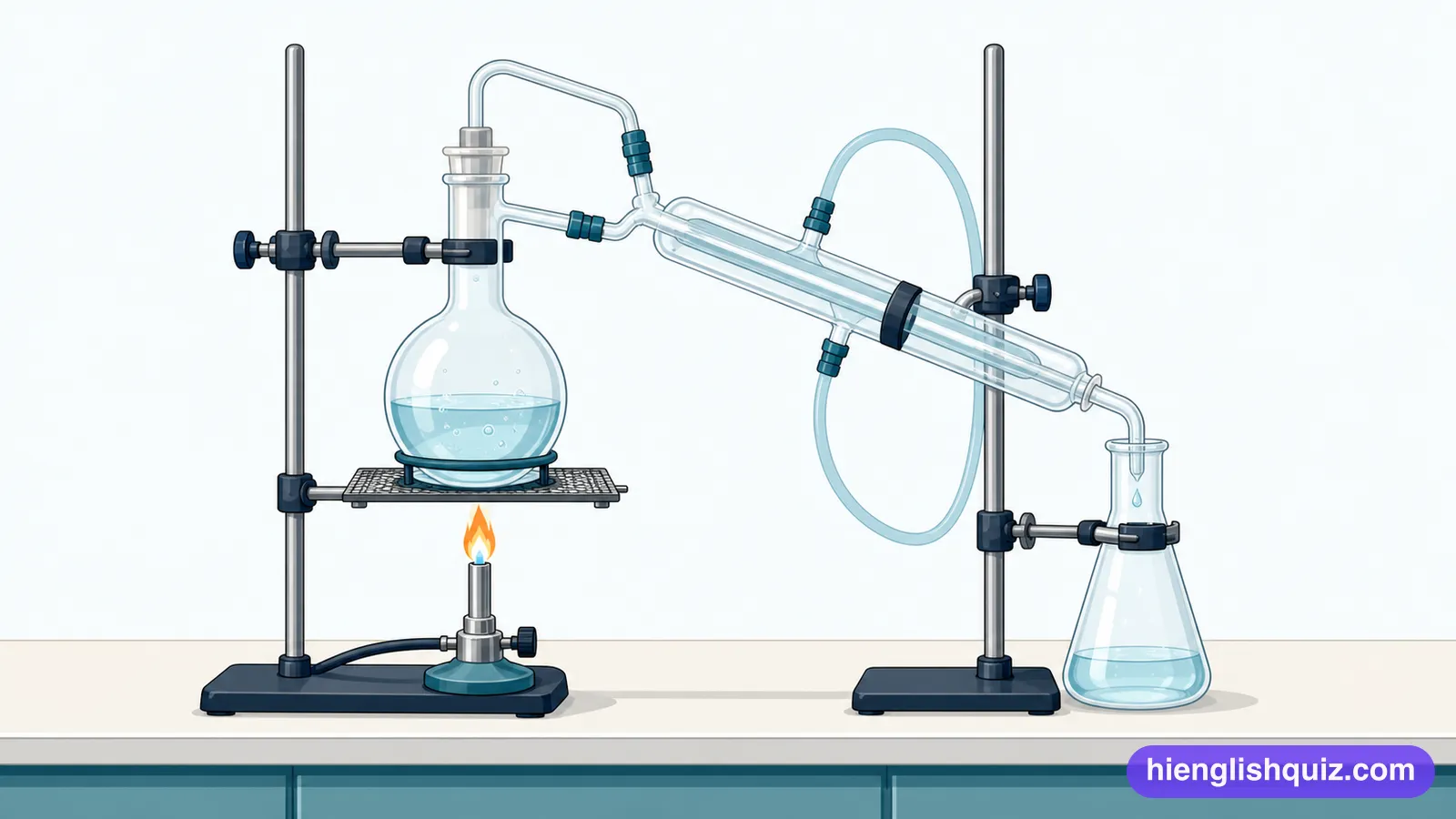
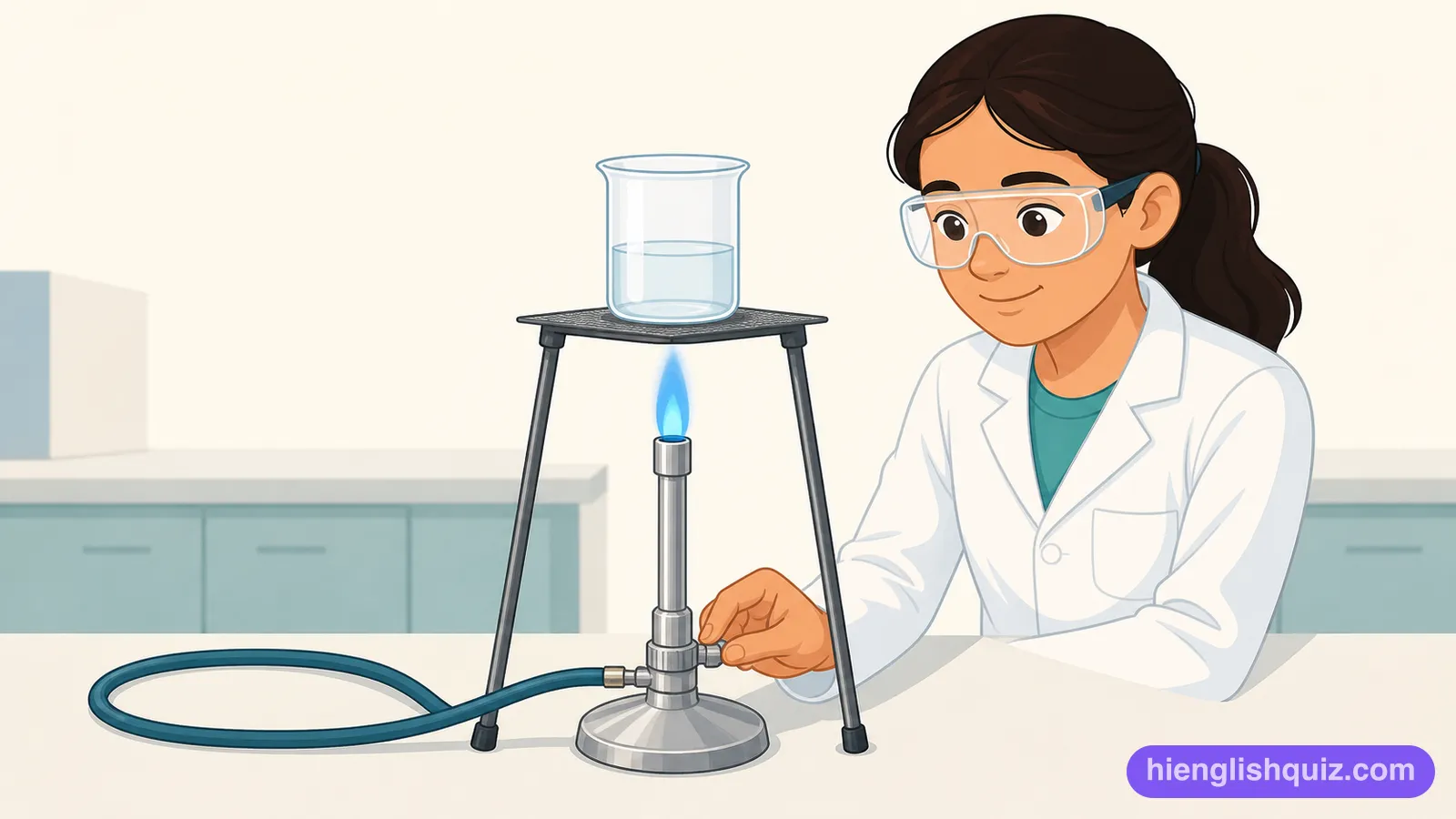
A small gas burner used in a laboratory to heat substances safely.
Example: She lit the bunsen burner to heat the liquid.
A special paper used to separate solid particles from a liquid as it passes through.
Example: The mixture was poured through filter paper to remove the sand.

A special paper that changes colour to show whether a liquid is an acid or a base.
Example: Litmus paper turned red when dipped in the acid.

A small glass or plastic tube with a rubber top, used to add liquid one drop at a time.
Example: Use the dropper to add exactly three drops of the solution.

A tool with two long arms joined at one end, used for picking up or holding hot or dangerous objects.
Example: He used tongs to lift the hot beaker off the burner.

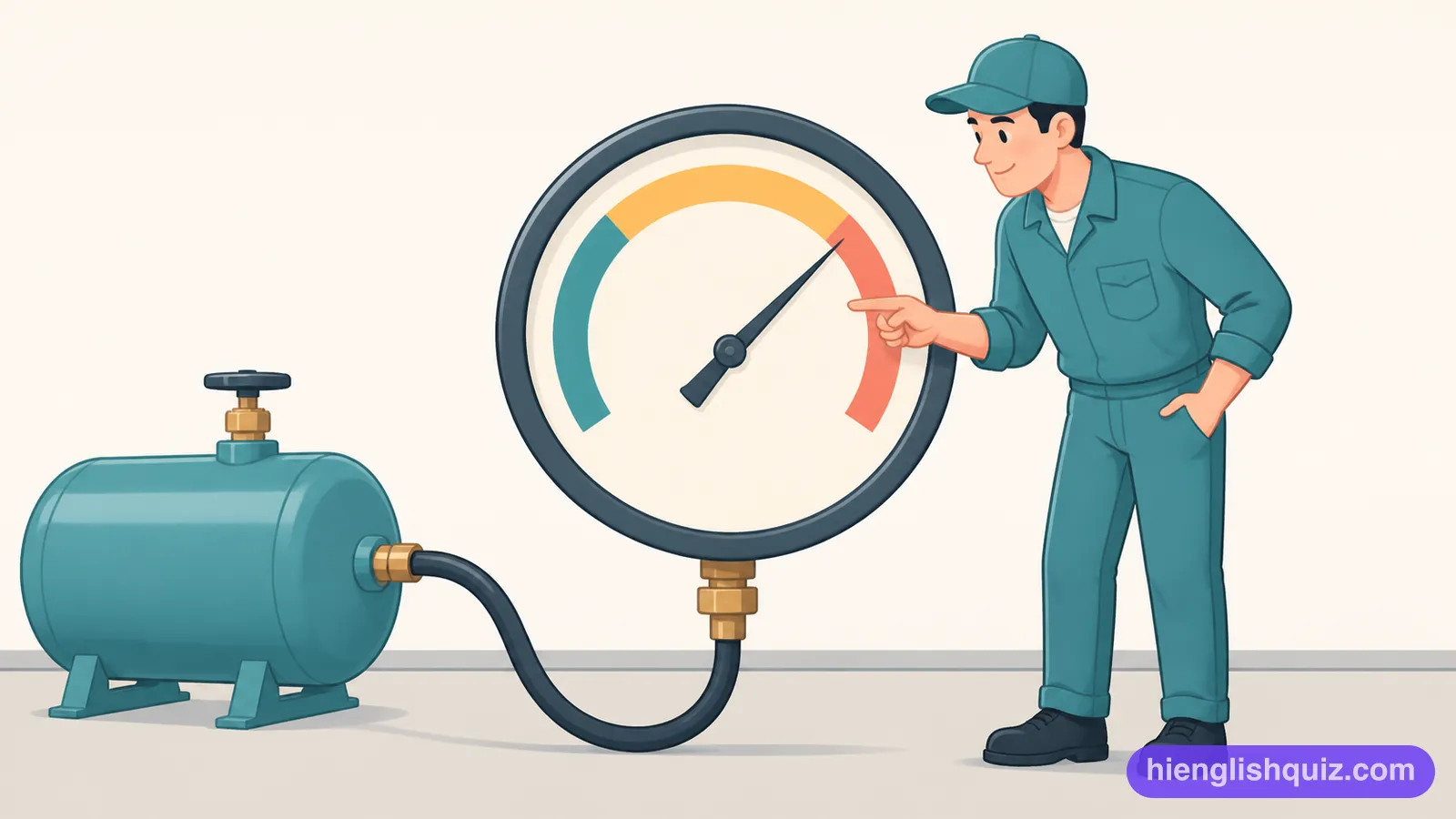
An instrument used to measure and show the amount, level, or pressure of something.
Example: The pressure gauge showed the tank was nearly full.
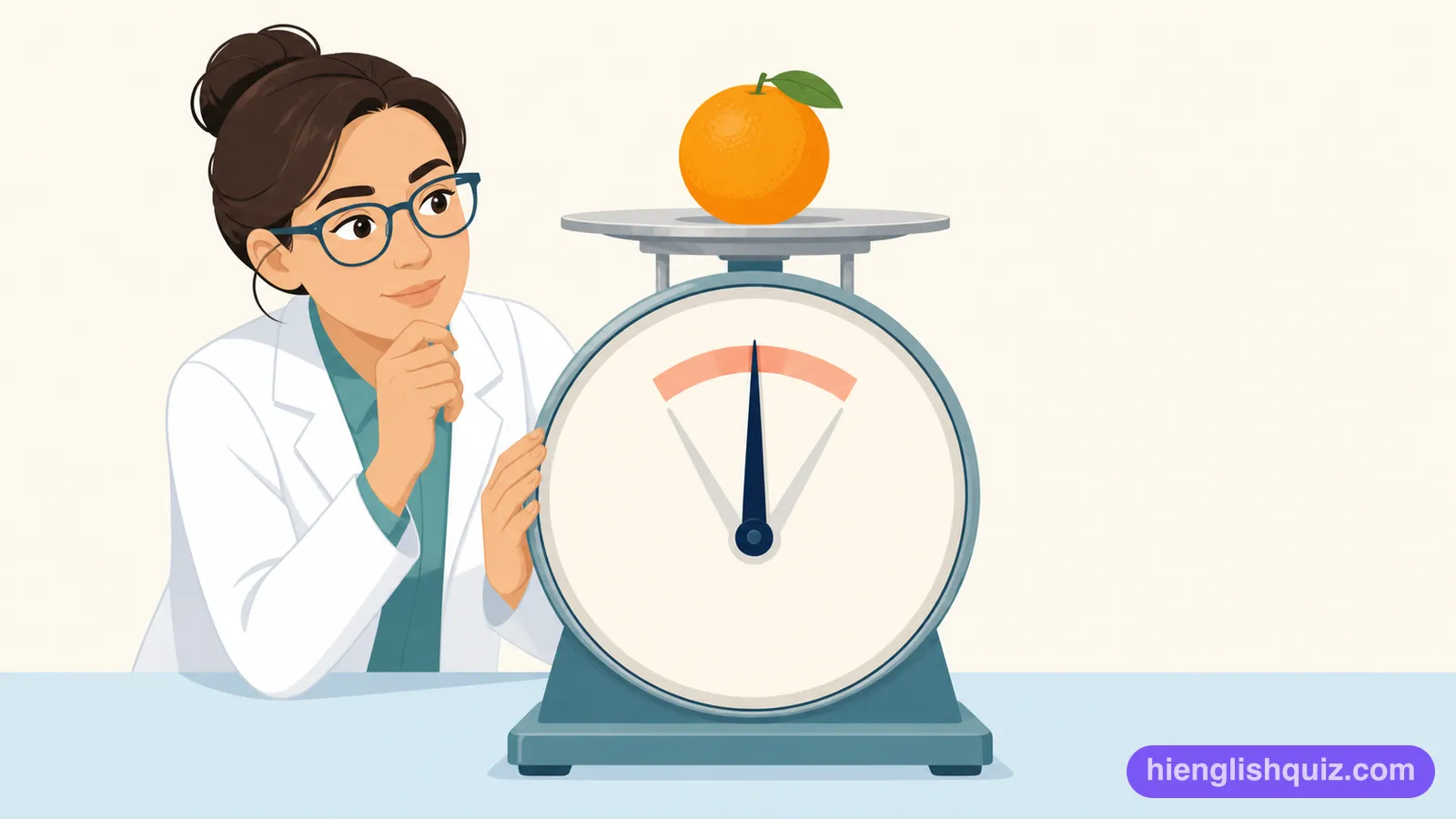
A rough amount you work out by judgement rather than by counting exactly.
Example: My estimate was about fifty people at the meeting.

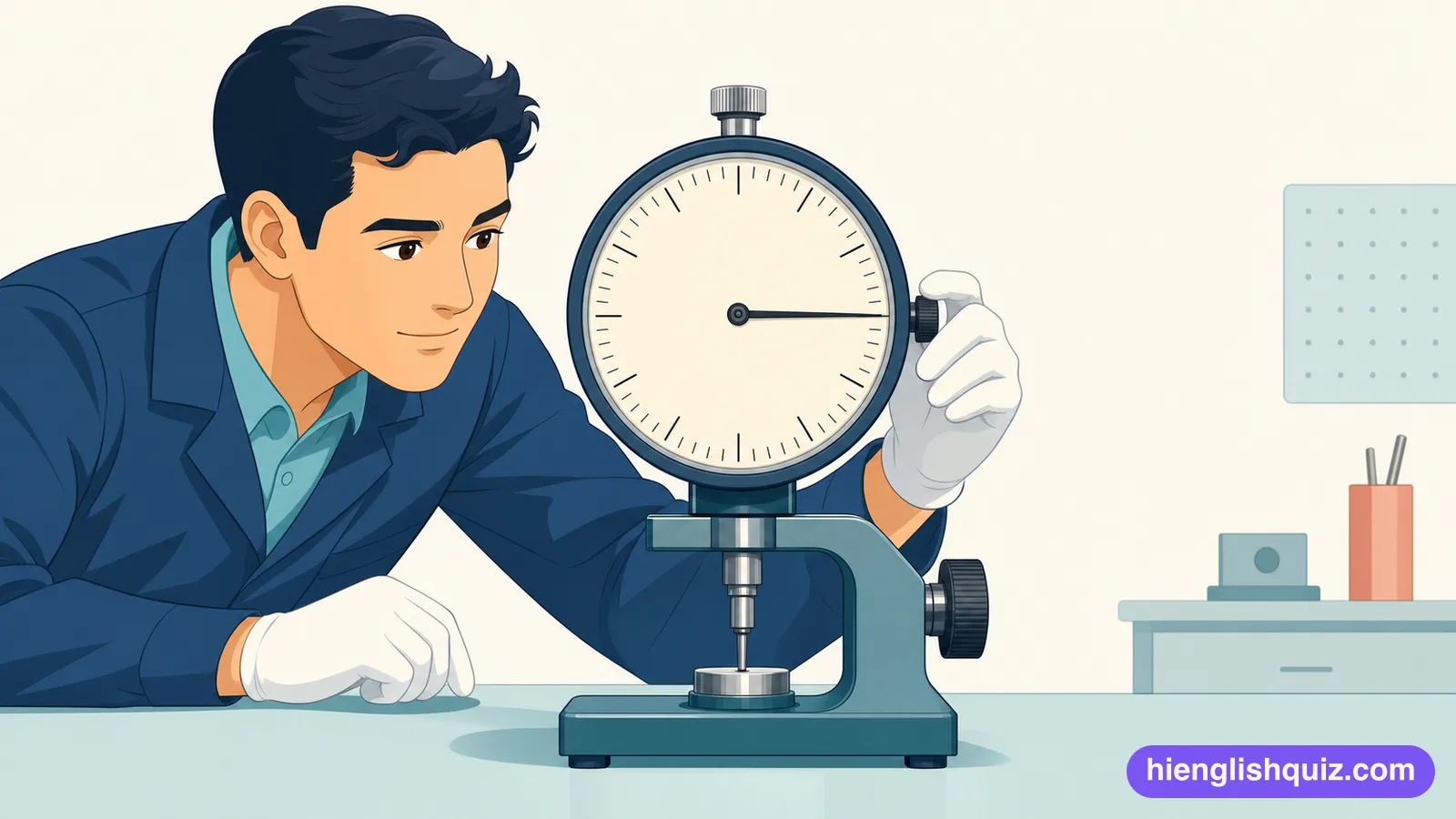
Exactly right, with no mistakes, because it was checked or measured with care.
Example: The scales are not very accurate when they are cold.
A set of questions asked to many people so that their answers can be counted and compared.
Example: Two thousand people took part in our online survey.

The middle value in a set of numbers when they are arranged in order.
Example: The median salary was lower than the average because of a few very high earners.

The value that appears most often in a set of numbers.
Example: The mode of the test scores was seventy, since more students got that mark than any other.
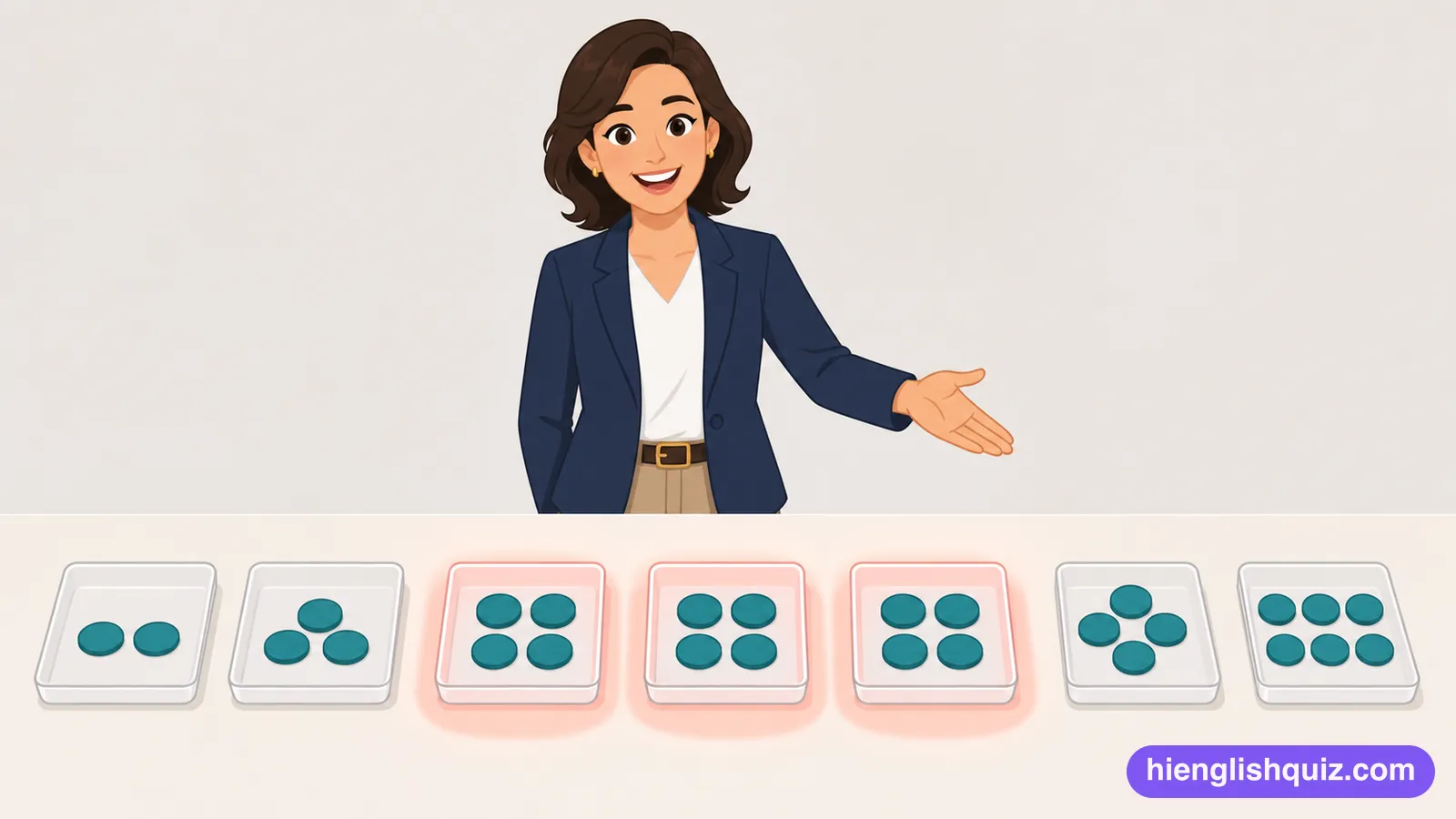
How much a value differs from the average or expected amount.
Example: A large deviation from the normal reading suggested a fault in the machine.

The small amount by which a result might be wrong, expected in any measurement or survey.
Example: The poll has a margin of error of three percent.
The amount or number of one thing when compared to the whole.
Example: A large proportion of the students passed the exam.
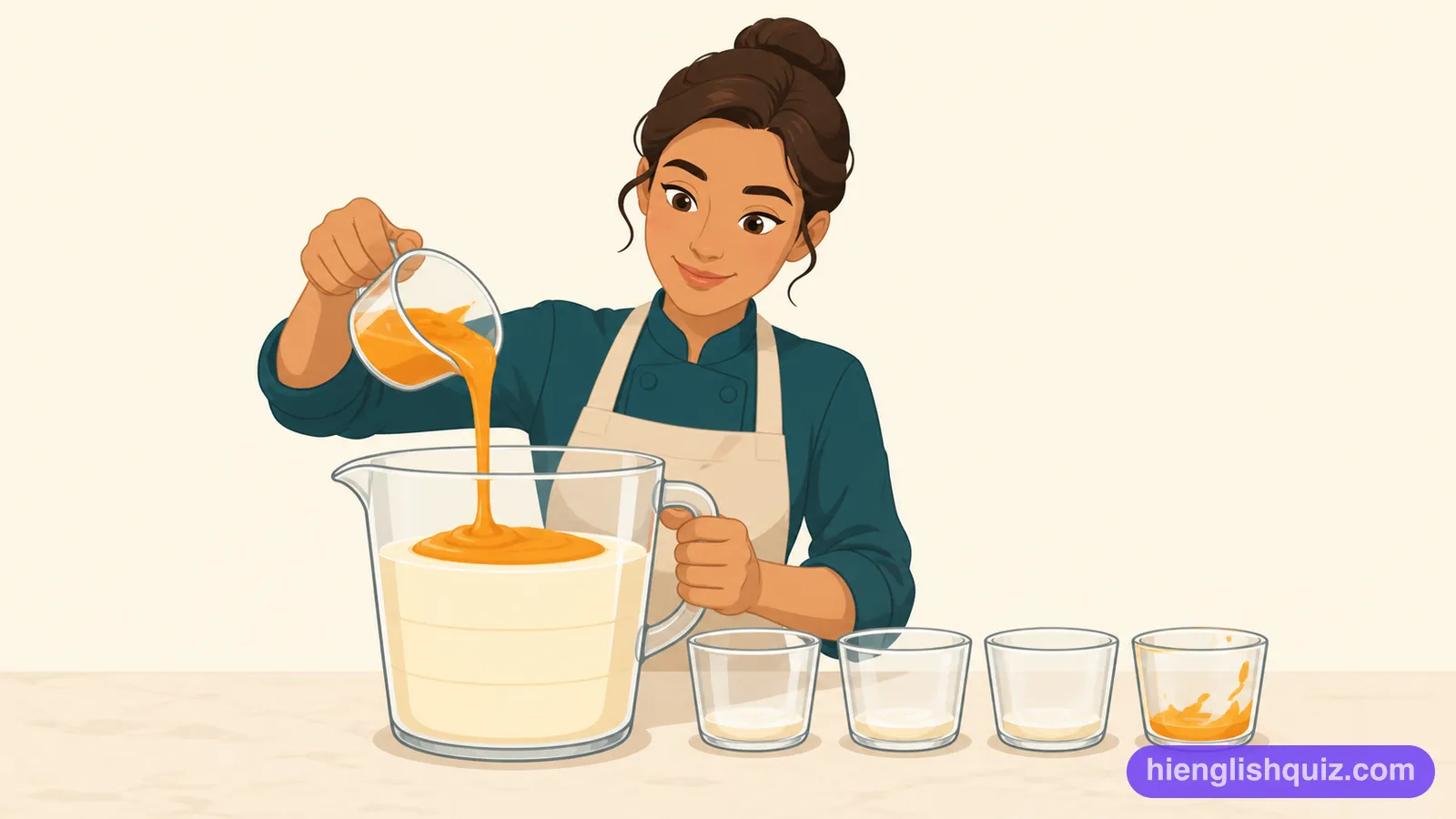
Large or important enough to be noticed or to matter.
Example: There was a significant improvement in the results this year.

The level or point at which something starts to happen or change.
Example: The temperature must reach a certain threshold before the reaction starts.