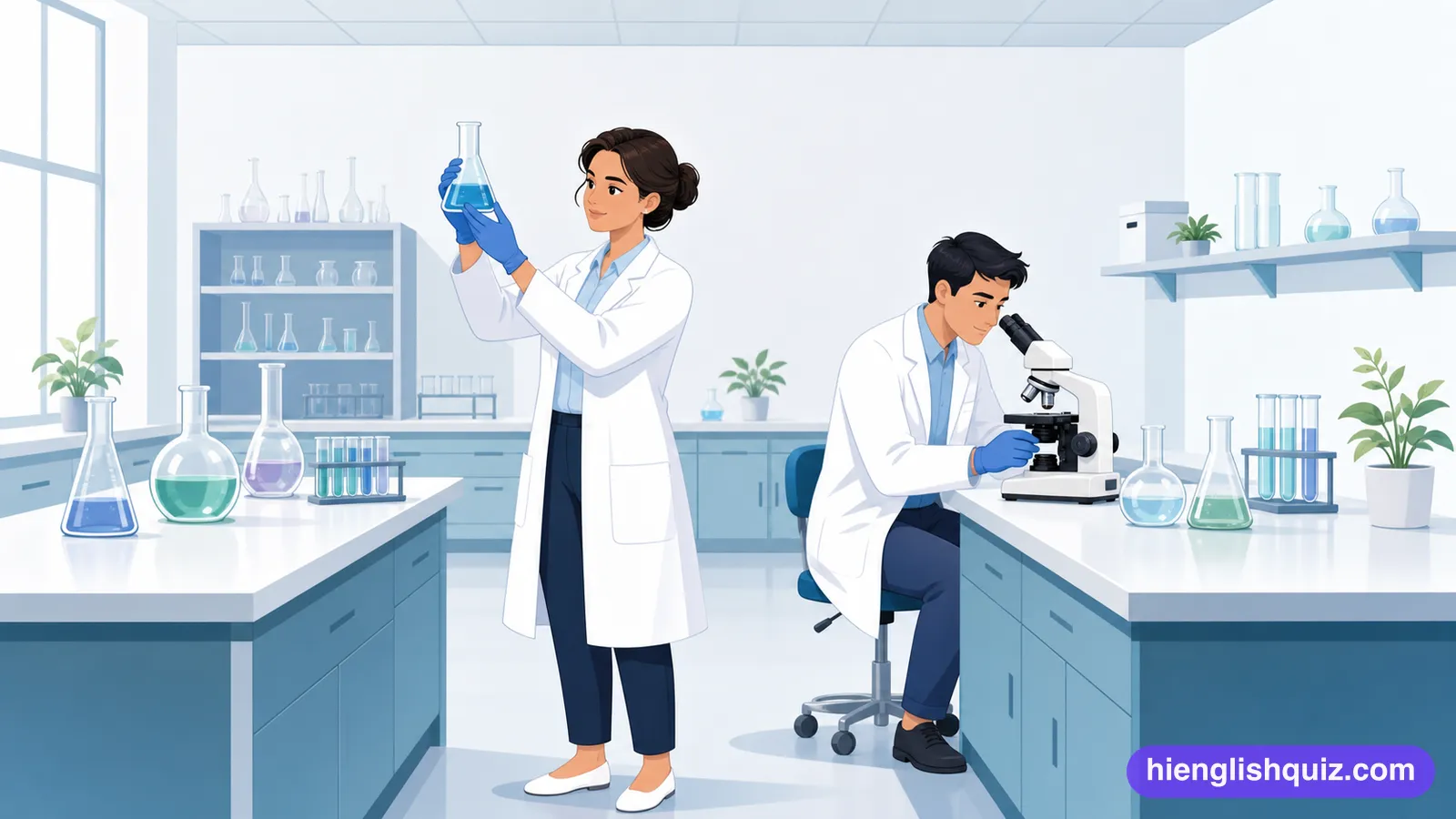
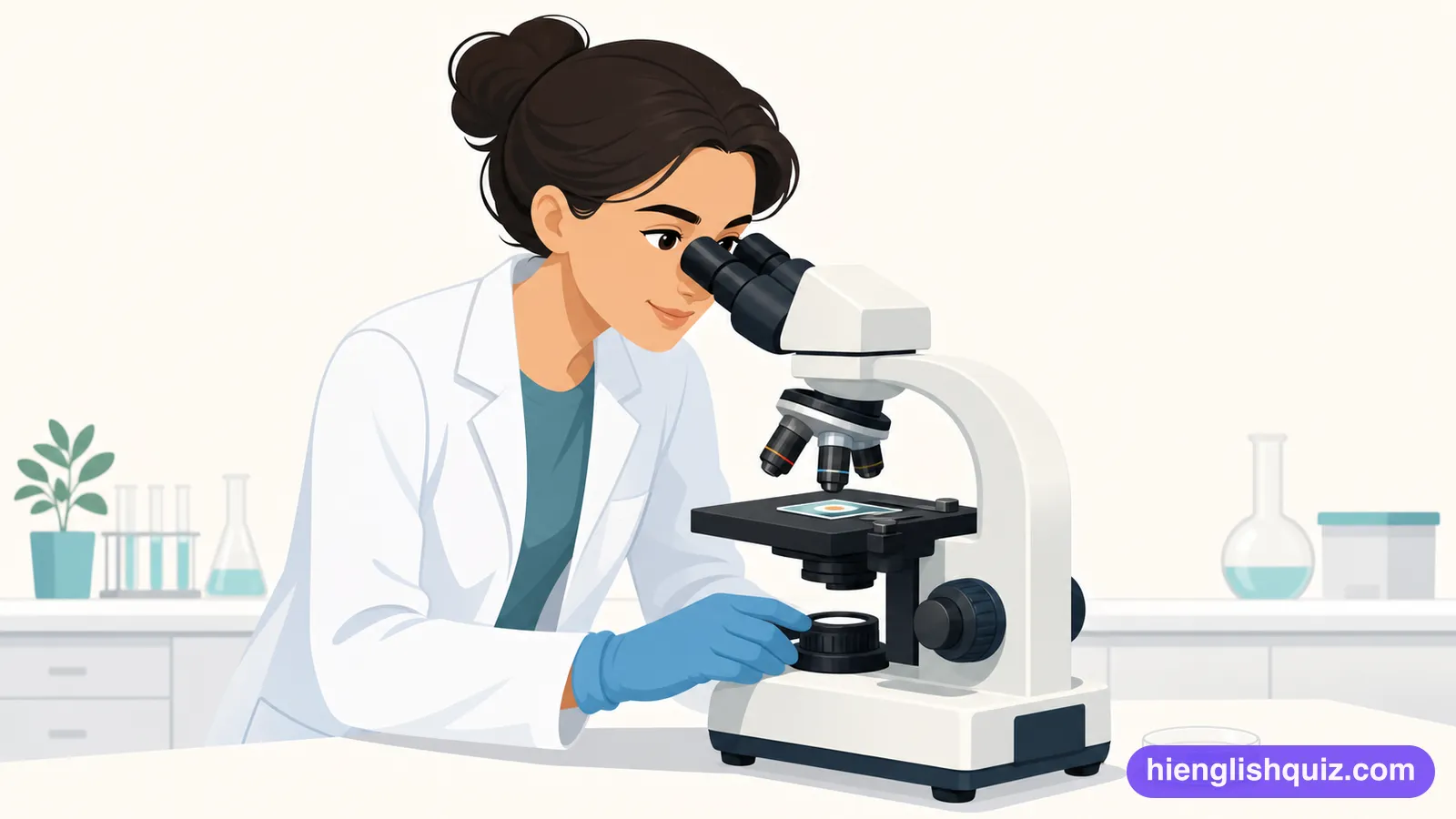
microscope
/ˈmaɪkrəˌskoʊp/A tool in a laboratory that makes very small things look much bigger.
Example: Under the microscope, the drop of water was full of tiny creatures.
 Hi EnglishQuiz
B116 words · Intermediate
Science lab vocabulary such as microscope, flask and pipette, plus sample, average and graph. The words for setting up and recording a school experiment.
A tool in a laboratory that makes very small things look much bigger.
Example: Under the microscope, the drop of water was full of tiny creatures.
Tight glasses with side pieces that protect the eyes from splashes and dust.
Example: Put your goggles on before you open that bottle.

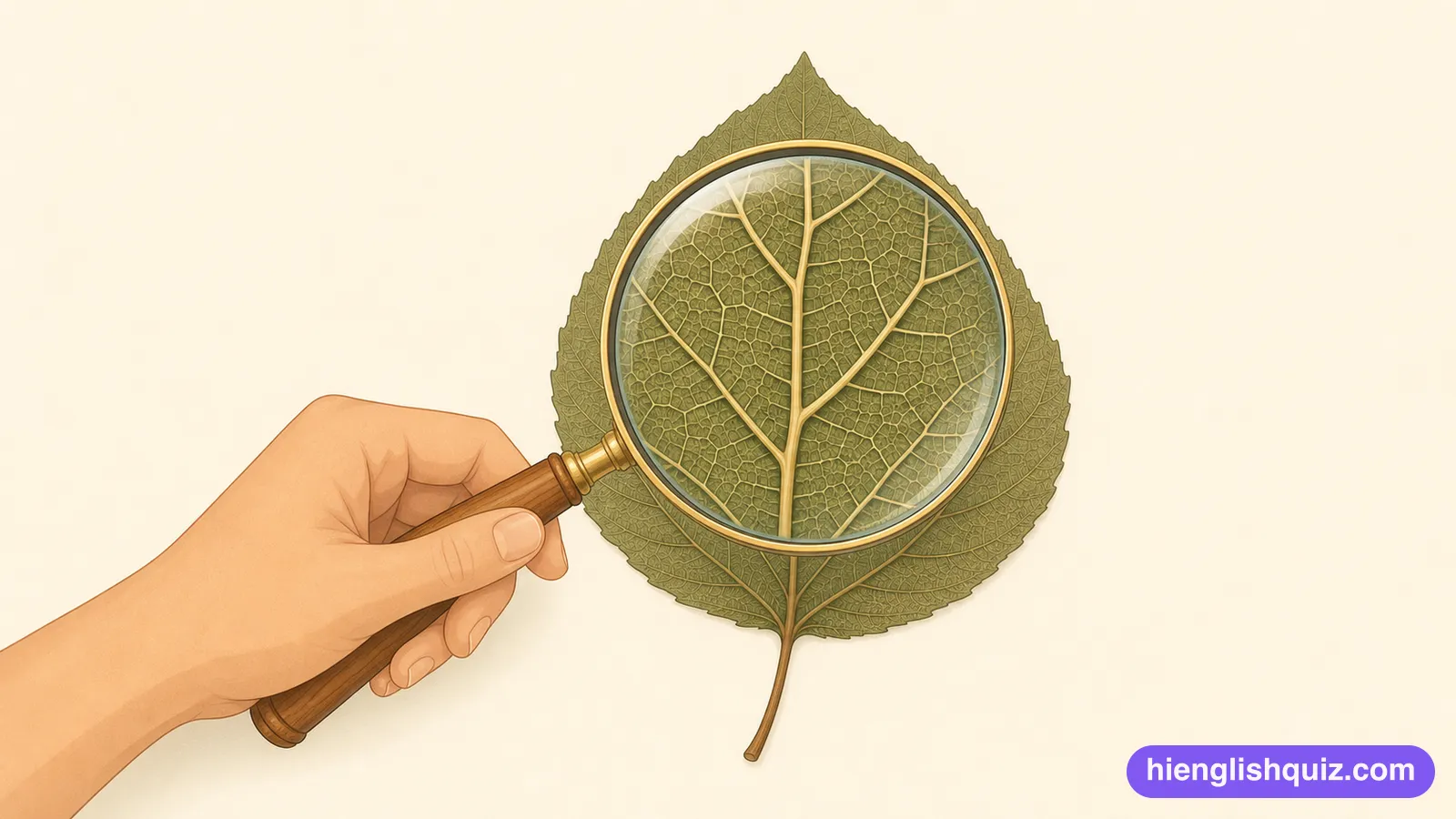
A round lens with a handle that makes small things look bigger when you hold it close.
Example: He used a magnifying glass to study the insect's wings.
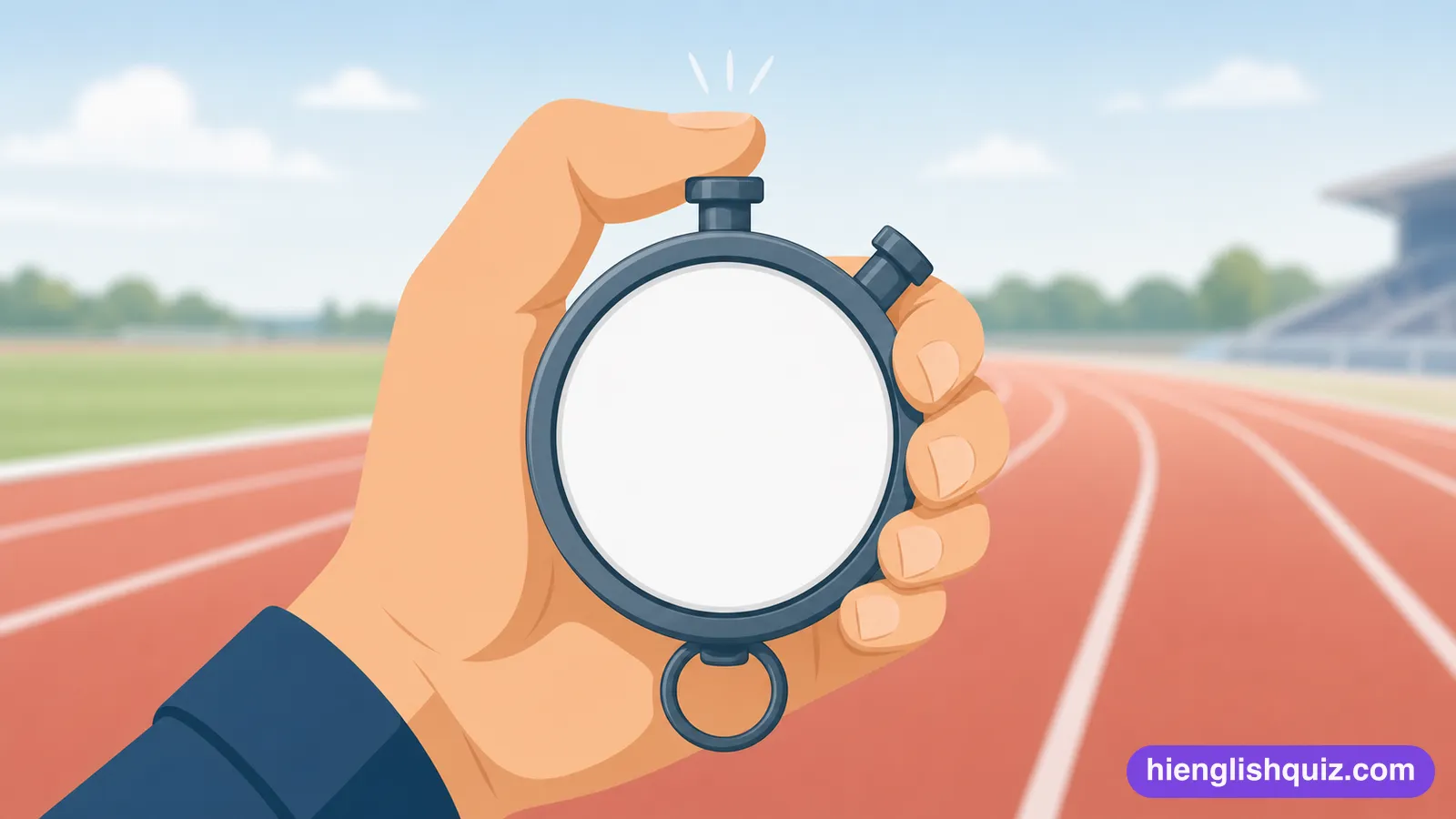
A small device that you start and stop to time exactly how long something takes.
Example: I start the stopwatch as soon as the runner moves.
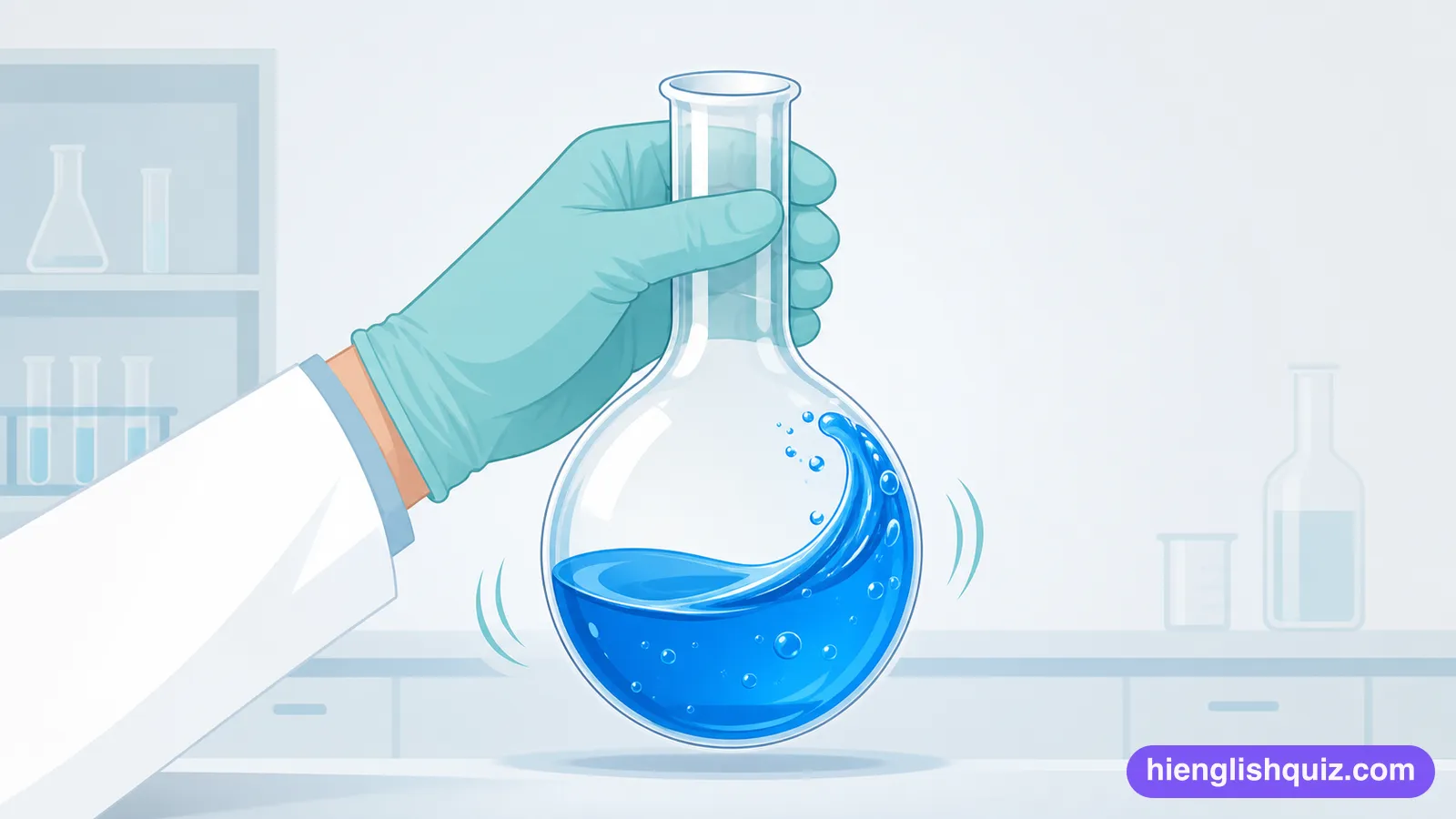
A glass container with a wide round bottom and a narrow neck, used in a laboratory.
Example: He swirls the blue liquid gently in the flask.
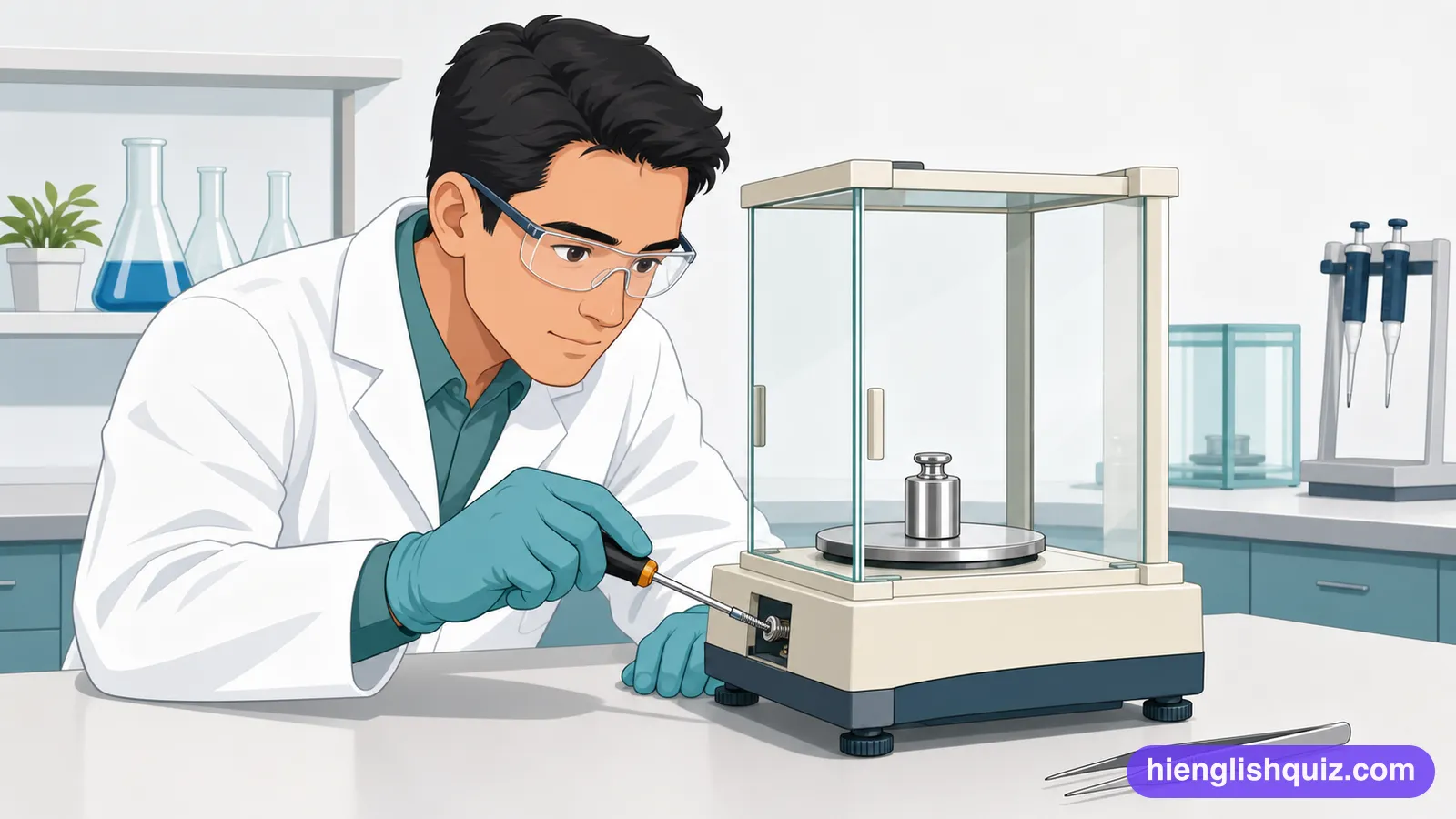
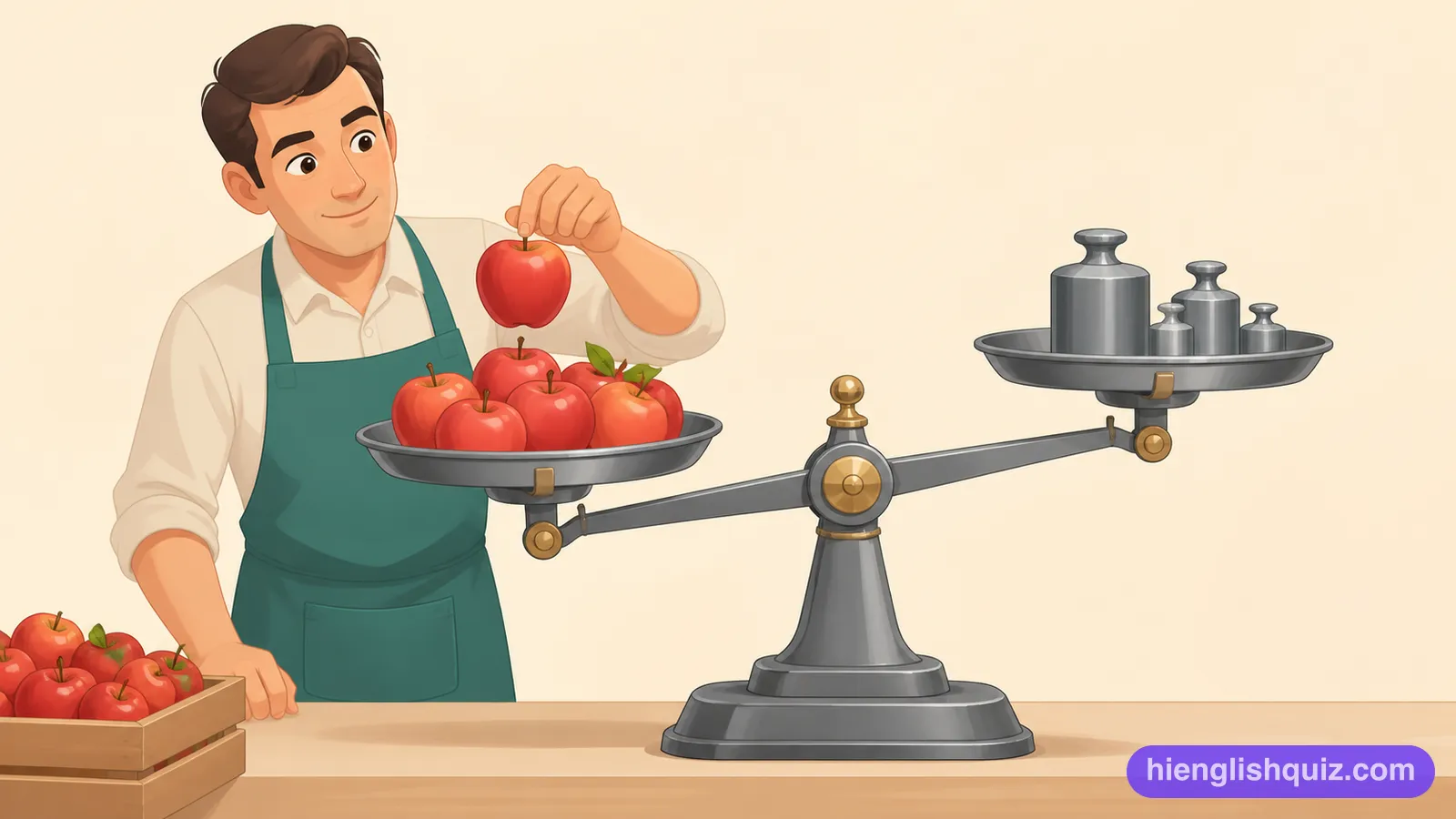
A machine or device used to measure how heavy something is.
Example: Put the powder on the scale to check its weight.
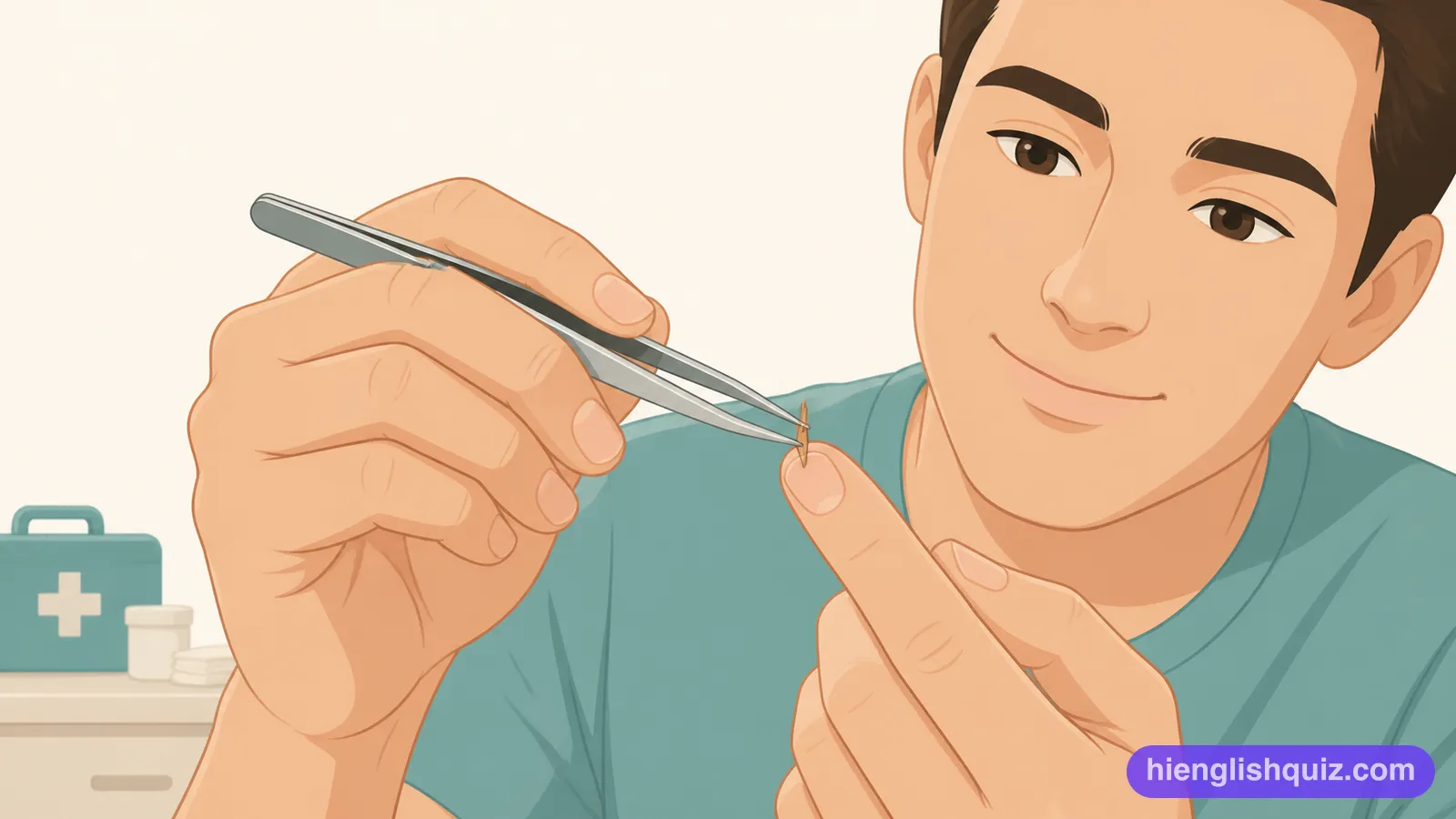
A small tool with two thin arms, used for picking up very small objects.
Example: She used tweezers to pick up the tiny insect.
A thin tube used to measure and move small, exact amounts of liquid.
Example: The scientist used a pipette to add exactly one drop.

A piece of clothing worn over the front of the body to protect your clothes during an experiment.
Example: Put on your lab apron before you start.

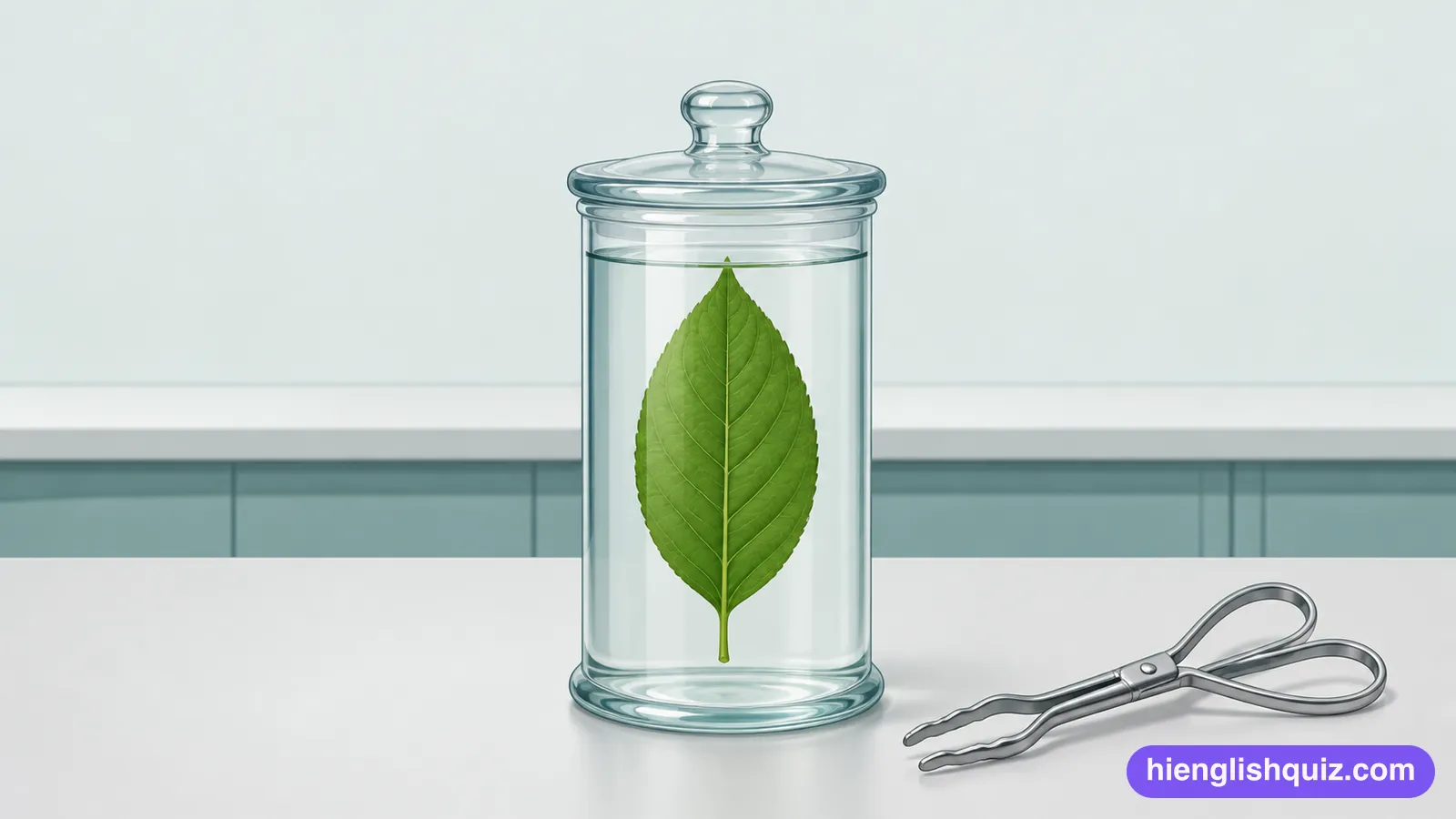
A small amount of something, taken to be tested or examined.
Example: The doctor took a blood sample for testing.
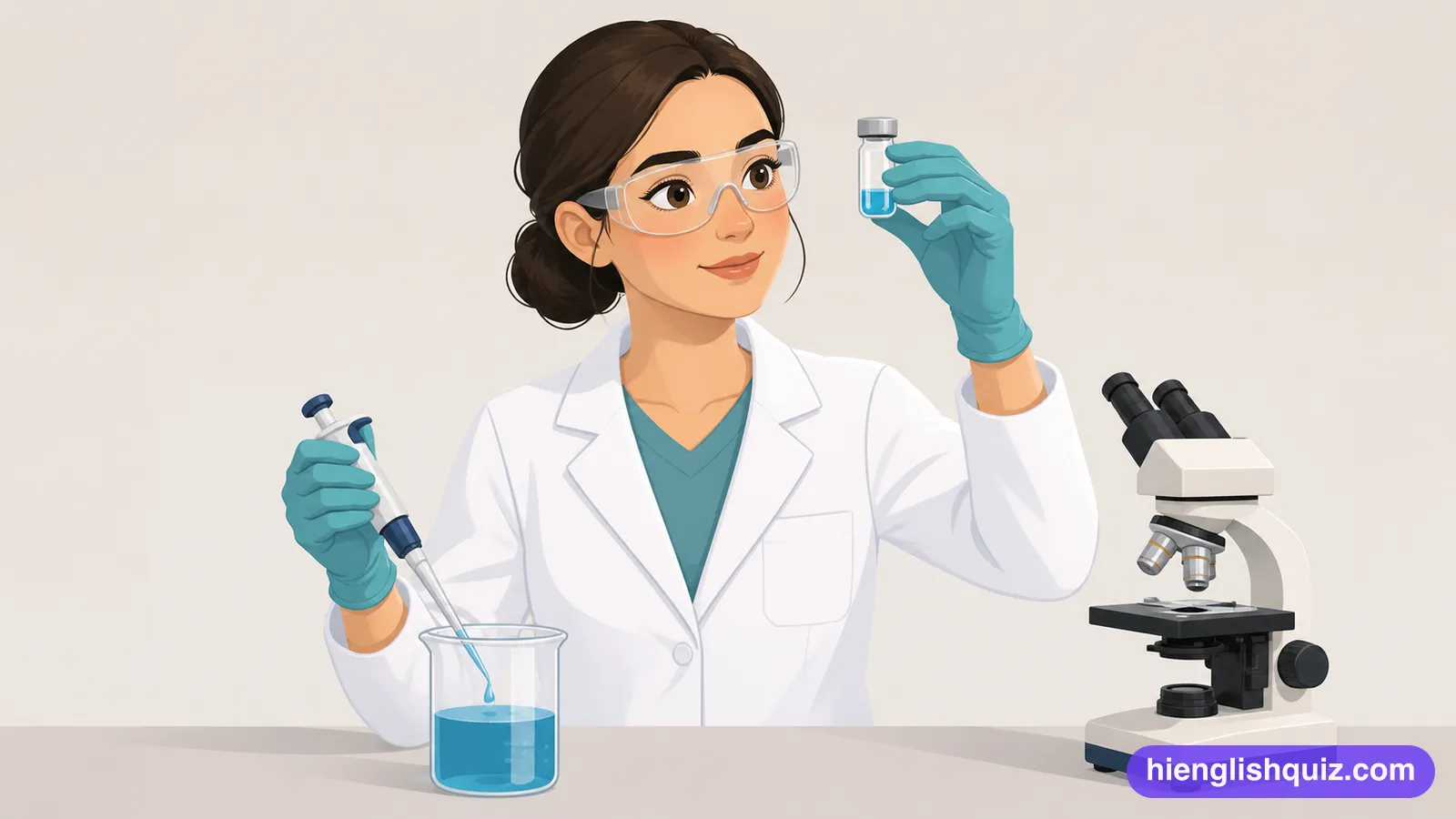
The middle result you get by adding all the amounts and dividing by how many there are.
Example: The average for the class was slightly higher this term.

A drawing with lines or bars that shows how amounts change or compare.
Example: The graph shows sales rising every month since March.

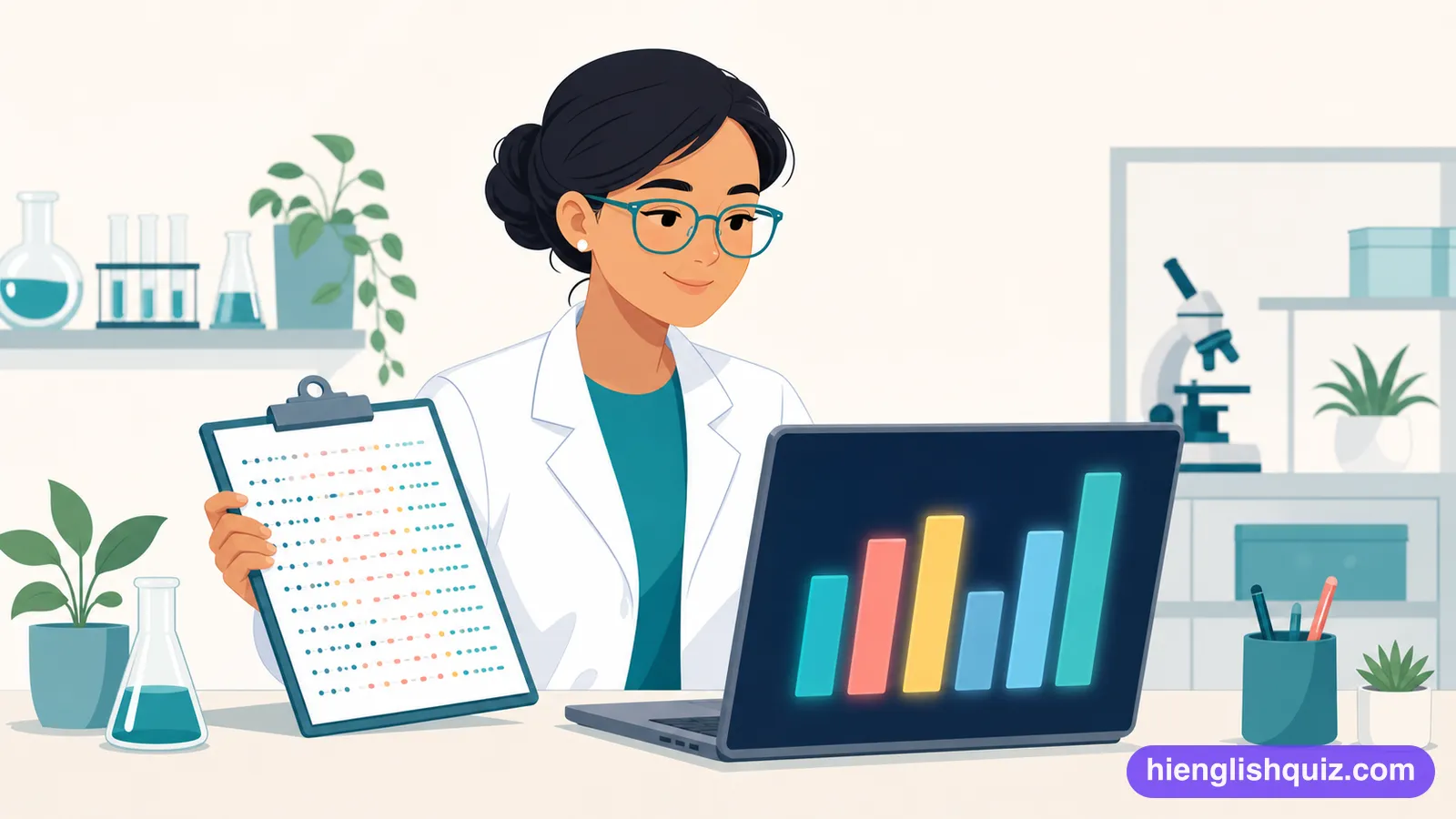
Facts and numbers that are collected together so they can be studied.
Example: We store all the data from the survey in one file.
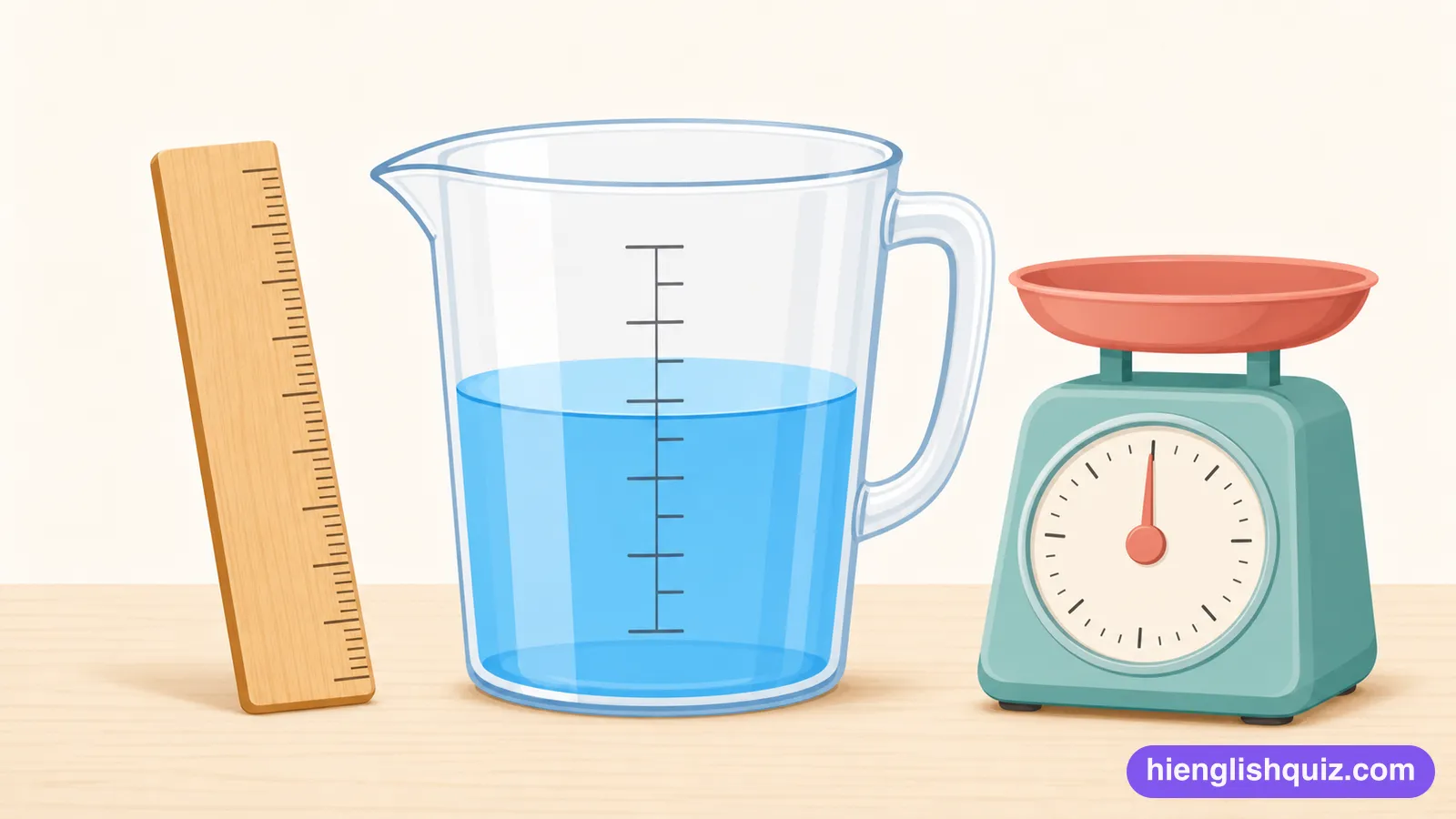
A fixed amount, such as a metre or a litre, that people use for measuring.
Example: Always write the unit next to the number you record.
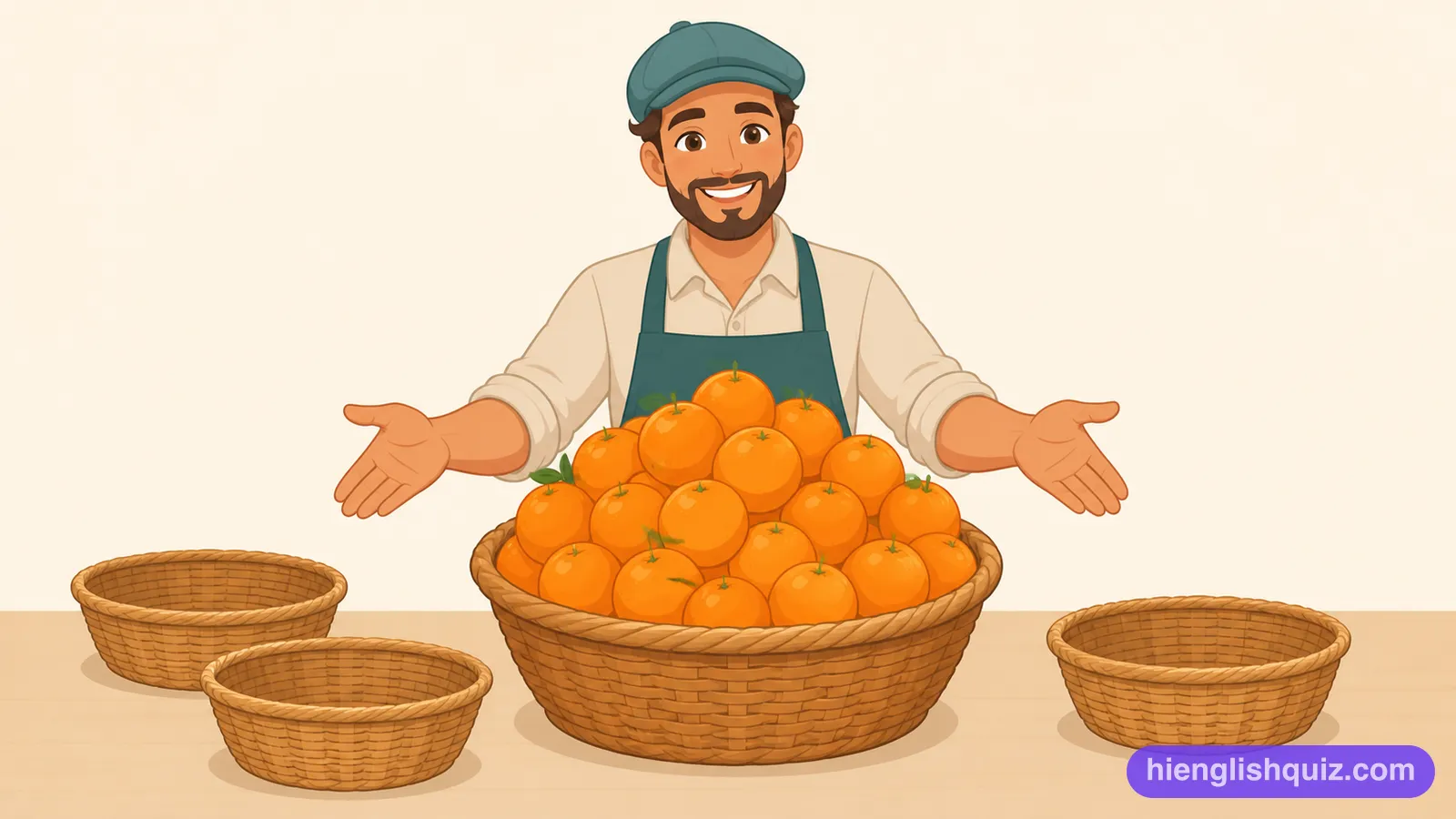
The complete amount of something when everything is added together.
Example: The total number of students in the class is thirty.
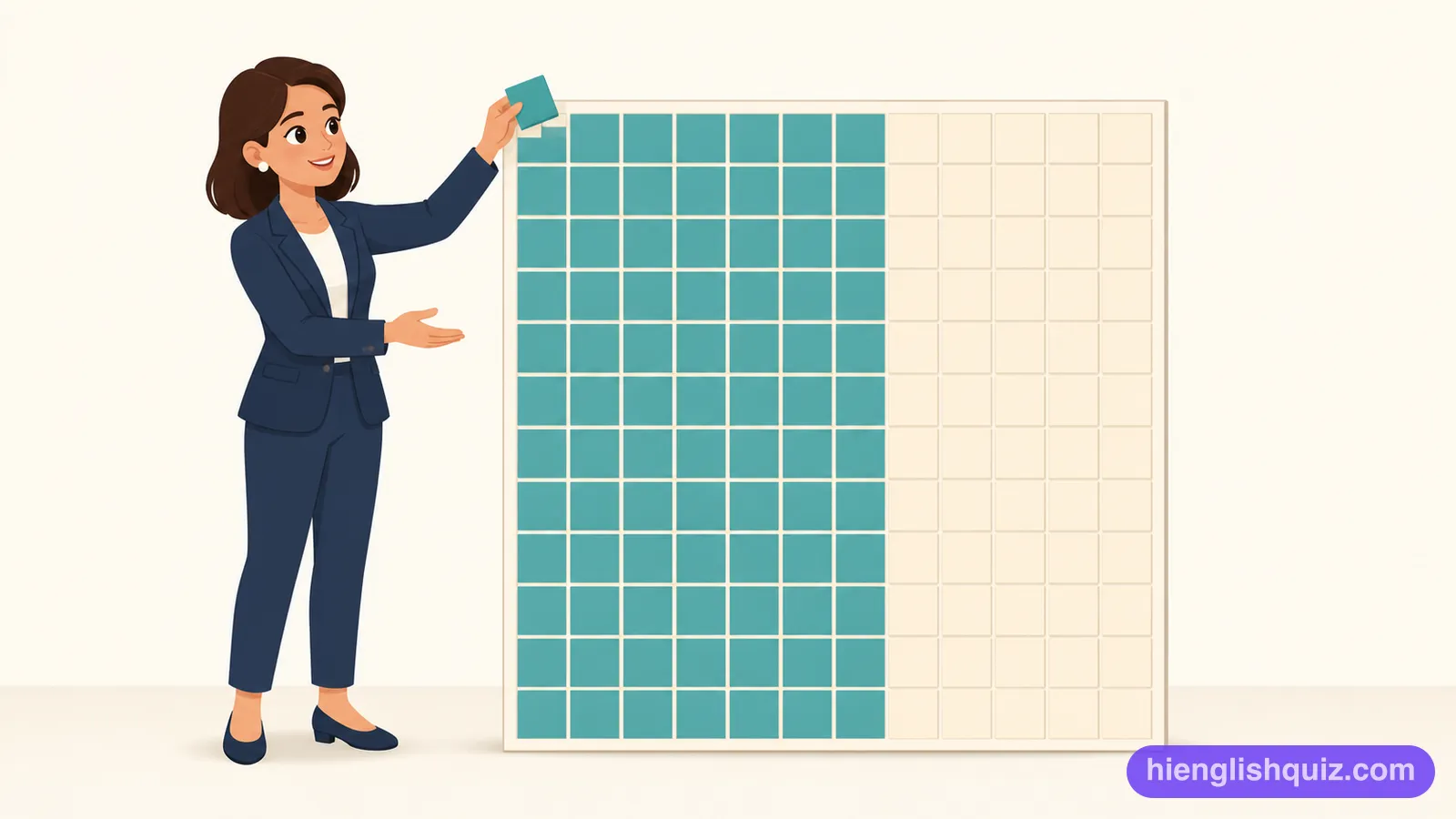
An amount shown as part of a hundred, often using the symbol %.
Example: Only a small percentage of the sample gave a positive result.