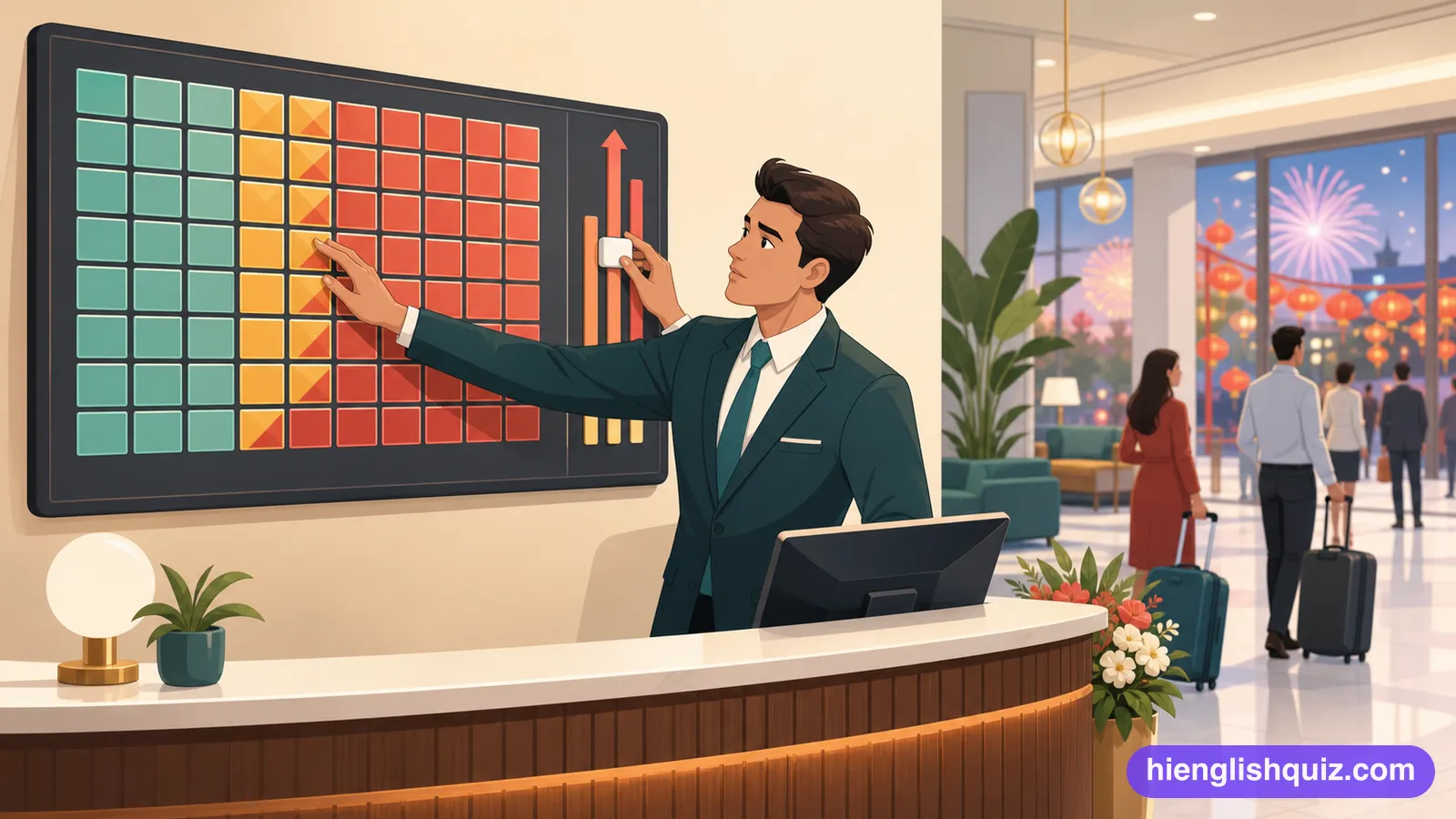
night audit
The overnight process of checking and reconciling a hotel's financial transactions from the day, and preparing reports for the next morning.
Example: The night audit turned up a small error in that day's charges.

 Hi EnglishQuiz
C120 words · Advanced
Advanced hospitality vocabulary for hotel operations, including the night audit, revenue management, the average daily rate and the service recovery a front office team practises.
The overnight process of checking and reconciling a hotel's financial transactions from the day, and preparing reports for the next morning.
Example: The night audit turned up a small error in that day's charges.
The head waiter who manages a restaurant's dining room and greets guests.
Example: The maître d' showed us to our table.

The overall strategy of coordinating price, availability and marketing across every booking channel to earn the most total income for a hotel.
Example: Revenue management decides how room prices change day to day.

A record of a visitor's preferences and past stays, used to personalise their experience.
Example: Staff checked her guest profile and had her favourite pillow ready.

The typical price paid for a hotel room over a given period.
Example: The average daily rate rose during the festival week.

The department of a hotel responsible for reservations, check-in and guest services.
Example: The front office handled the group's late check-in.

A physical inspection of a property, room by room, to check its condition or readiness.
Example: The manager did a walk-through before the inspectors arrived.

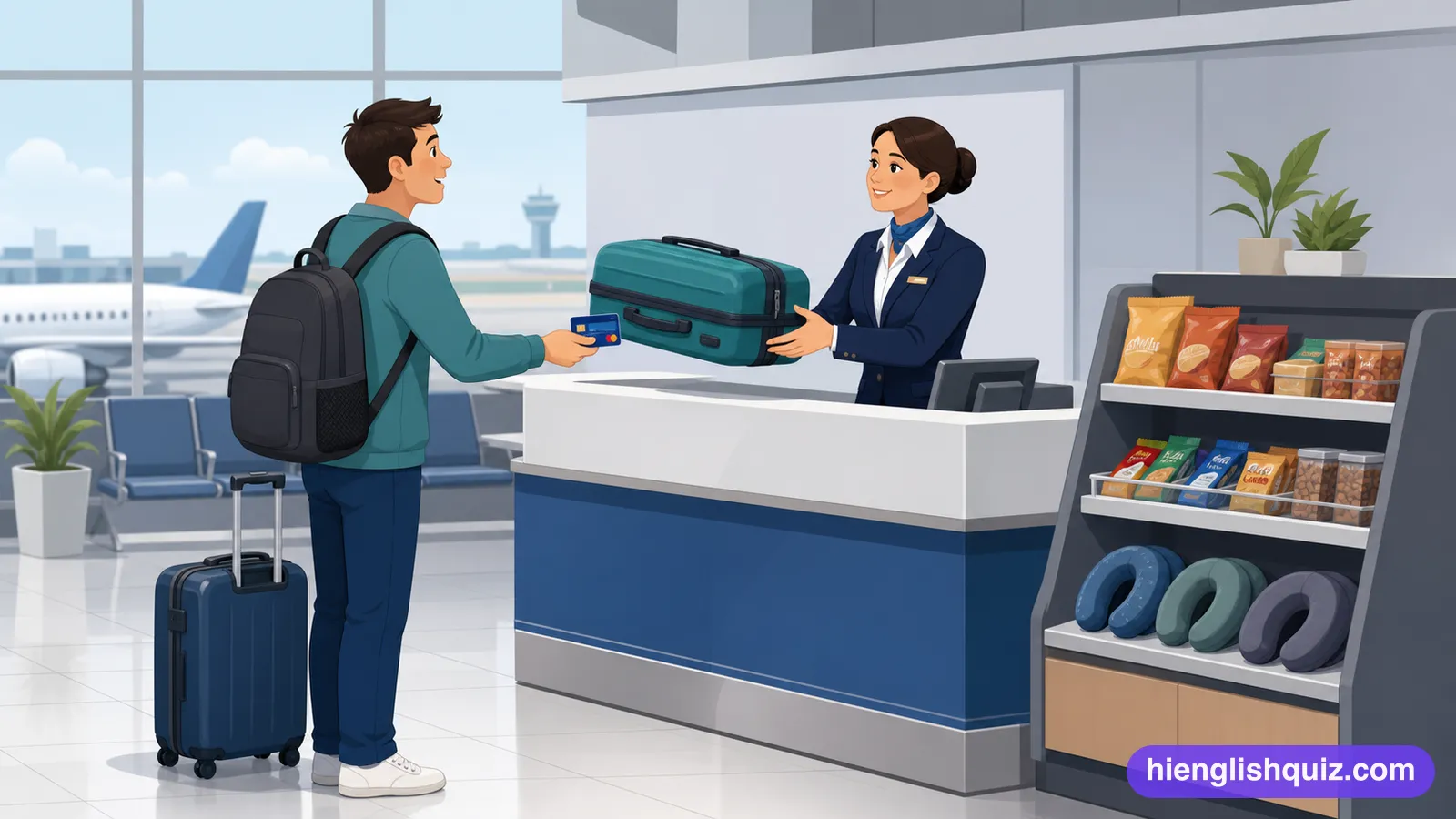
Extra income a travel or hospitality business earns from add-on services, not its main price.
Example: Baggage fees are a major source of ancillary revenue for budget airlines.
A stop and wait between two flights or buses on the same journey.
Example: We had a six-hour layover in Istanbul before our connecting flight.

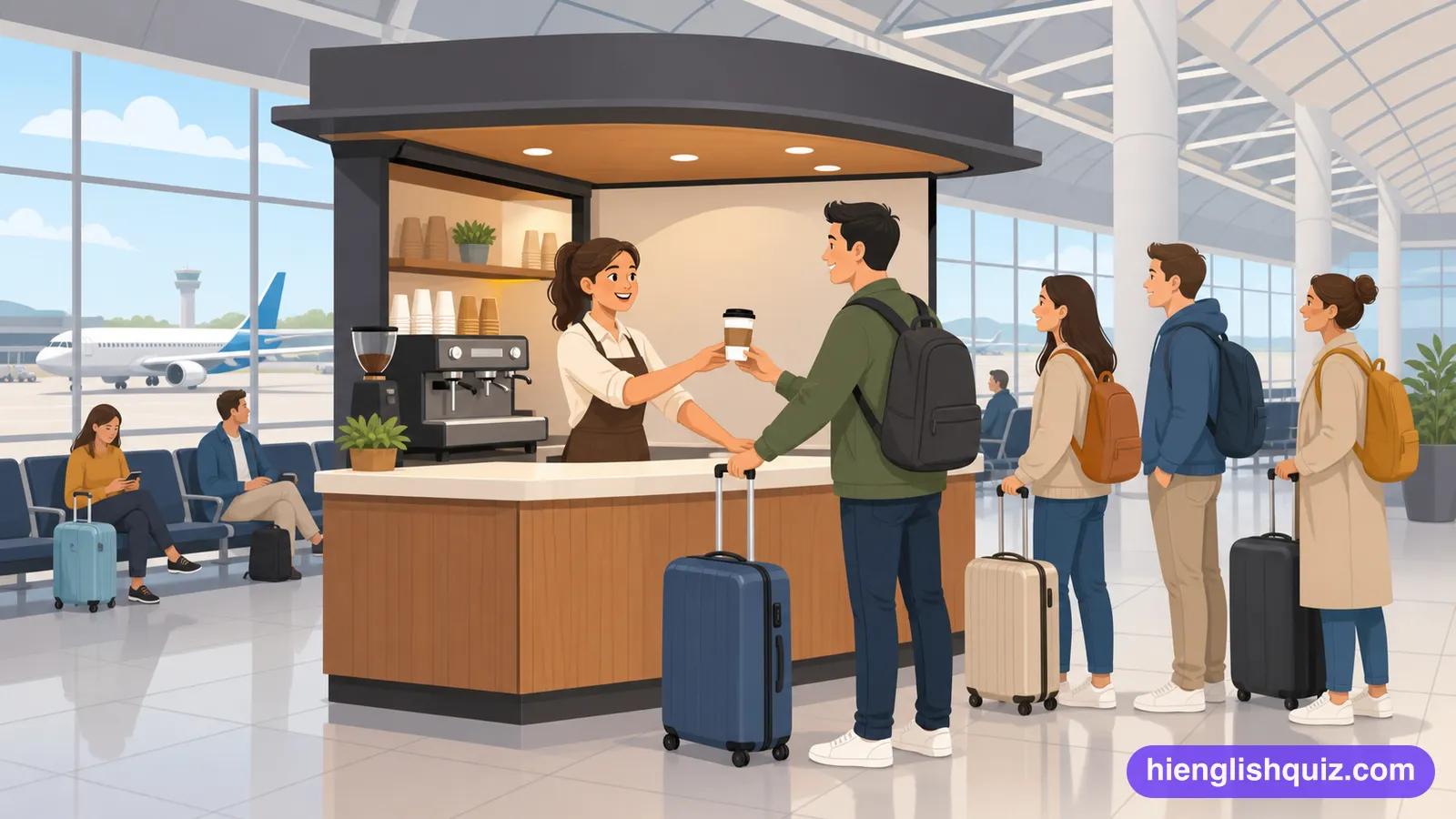
The right to run a small business, such as a shop or stall, inside a larger venue.
Example: The airport awarded a coffee shop concession near the main gate.
All income from a room, including food and extras, not just the rate.
Example: Total revenue per room tells the owners more than the rate ever did.

How many nights a guest books on average.
Example: A longer length of stay is worth more than a higher rate.

The route through which a room or trip is sold.
Example: Every distribution channel takes a different commission.

An extra payment to an agent for exceeding a target.
Example: The commission override was worth more than the base rate.

Putting things right after a guest has had a bad experience.
Example: Good service recovery turns a complaint into a regular customer.

The whole sequence from booking to departure and after.
Example: The guest cycle has nine points where something can go wrong.

What ingredients cost as a share of the price charged.
Example: A food cost percentage over thirty-five ends most restaurants.

Opening quietly to a small number of guests first.
Example: The soft opening found four problems the plans had missed.

Organising how a whole place handles its visitors.
Example: Destination management is what stops a town being eaten by its own success.

The way trade rises and falls at different times of year.
Example: Seasonality in that resort means eight weeks pay for the year.