par stock
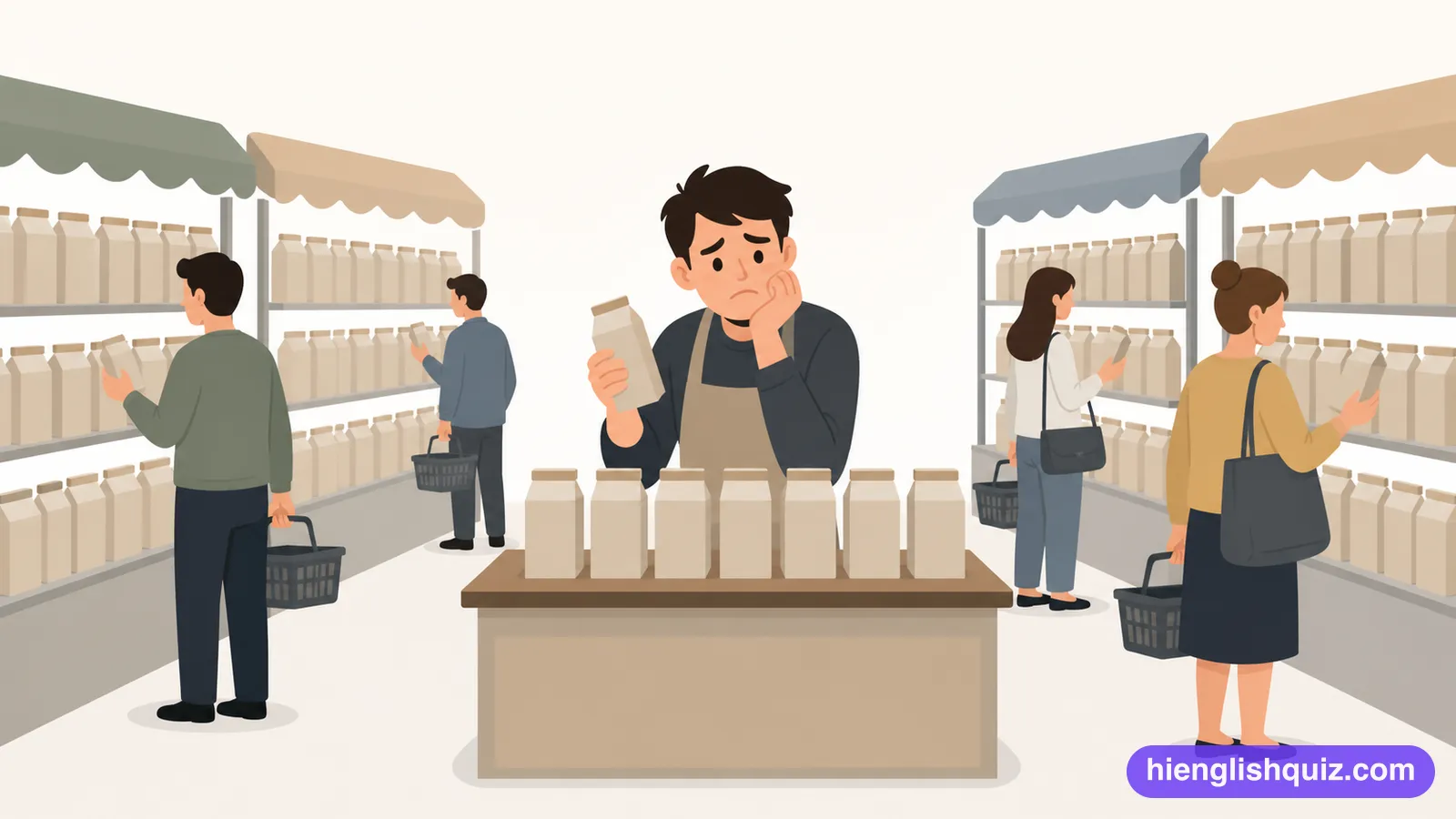
The standard quantity of linen, toiletries or other supplies that should always be kept ready in a hotel department.
Example: Housekeeping checks the par stock of towels every morning.

 Hi EnglishQuiz
C222 words · Proficient
Expert hospitality vocabulary for performance and sustainable tourism, including the guest satisfaction score, revenue per available room, overtourism and a destination's carrying capacity.
The standard quantity of linen, toiletries or other supplies that should always be kept ready in a hotel department.
Example: Housekeeping checks the par stock of towels every morning.
Describes a room, meal or service given to a guest free of charge, often to build goodwill.
Example: The manager comped their dessert after the long wait.

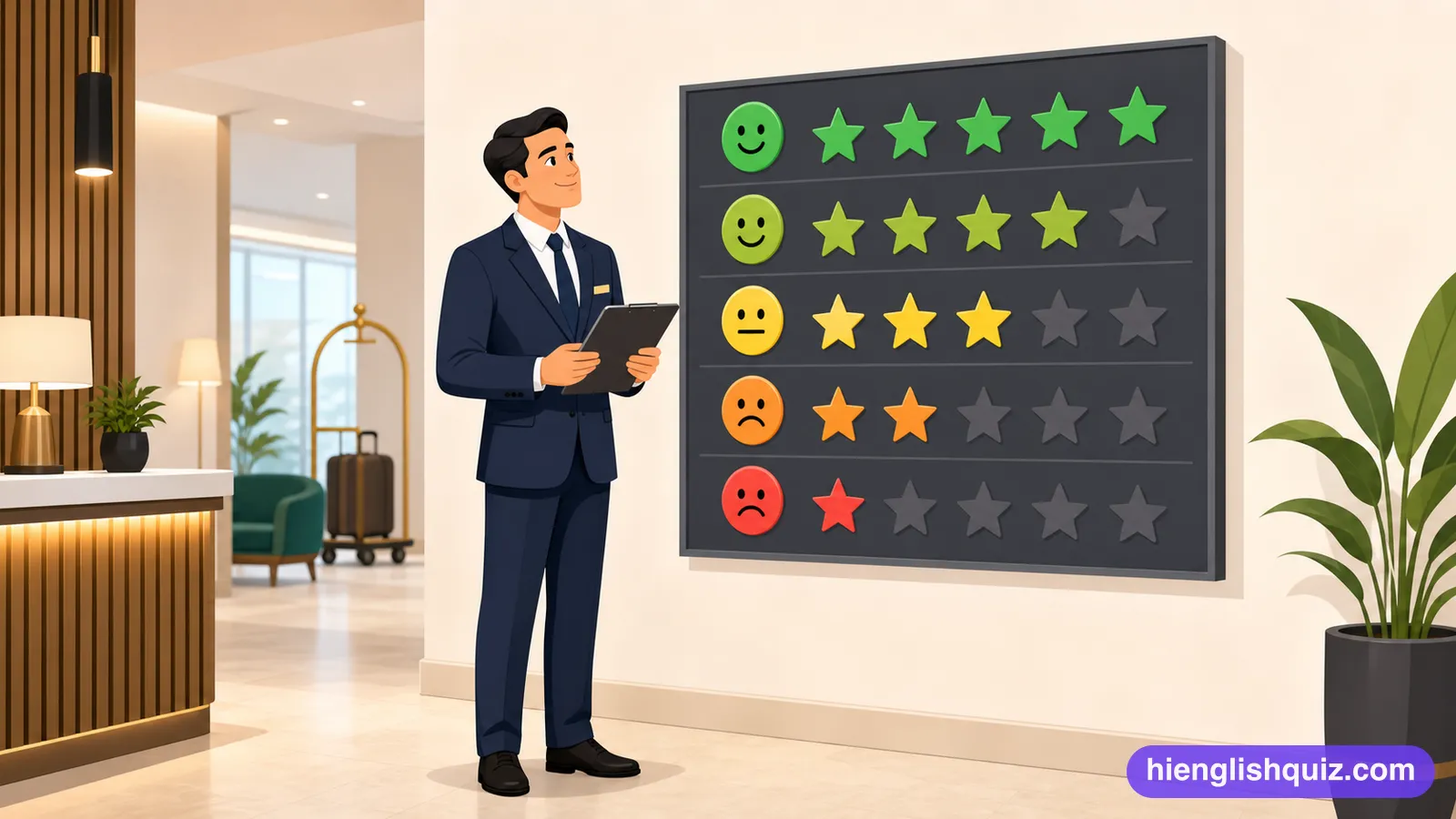
A numerical rating based on visitor feedback, used to measure and compare the quality of a hotel or restaurant's service.
Example: Management reviews the guest satisfaction score every week.
A hotel's income measured against every space it has available to sell, whether occupied or not, combining occupancy and price into one figure.
Example: Revenue per available room rose even though fewer guests checked in.

An extra fee added for a special request or upgrade beyond the standard price.
Example: There is a small upcharge for a room with a sea view.

An especially attentive, high standard of personal care given to guests, down to the smallest detail.
Example: The suite guests receive white glove service throughout their stay.

The ability of a hotel or restaurant to keep guests coming back rather than choosing a competitor.
Example: The loyalty programme was designed to improve guest retention.

A measure of how likely customers are to recommend a business to others.
Example: The hotel chain tracks its net promoter score every quarter.

The average number of nights guests stay at a hotel.
Example: The resort's average length of stay rose to five nights in summer.

When an airline stops a passenger with a valid booking from boarding, usually because it sold too many tickets.
Example: Volunteers who accepted denied boarding received a travel voucher.

An approach where everyone is responsible for standards.
Example: Total quality management lasted eleven months and one general manager.

The idea that people pay for experiences rather than goods.
Example: The whole refurbishment was pitched at the experience economy.

Visitor numbers so high that a place is damaged by them.
Example: Overtourism emptied the old town of everyone who lived there.
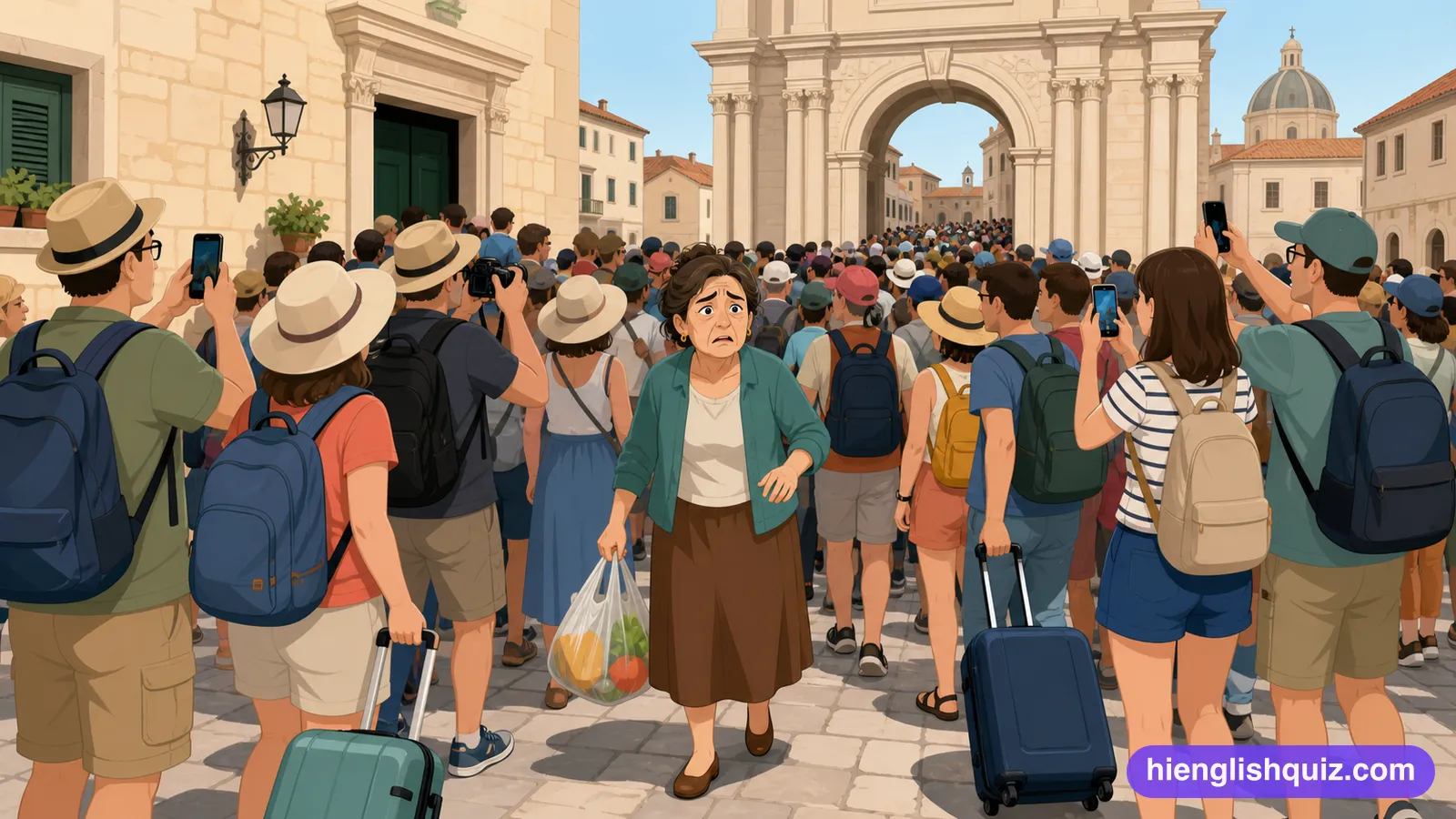
How many visitors a place can take without being spoiled.
Example: The carrying capacity of that path was exceeded every summer weekend.

Tourist money that leaves the local economy immediately.
Example: Leakage on all-inclusive holidays runs to eighty per cent.
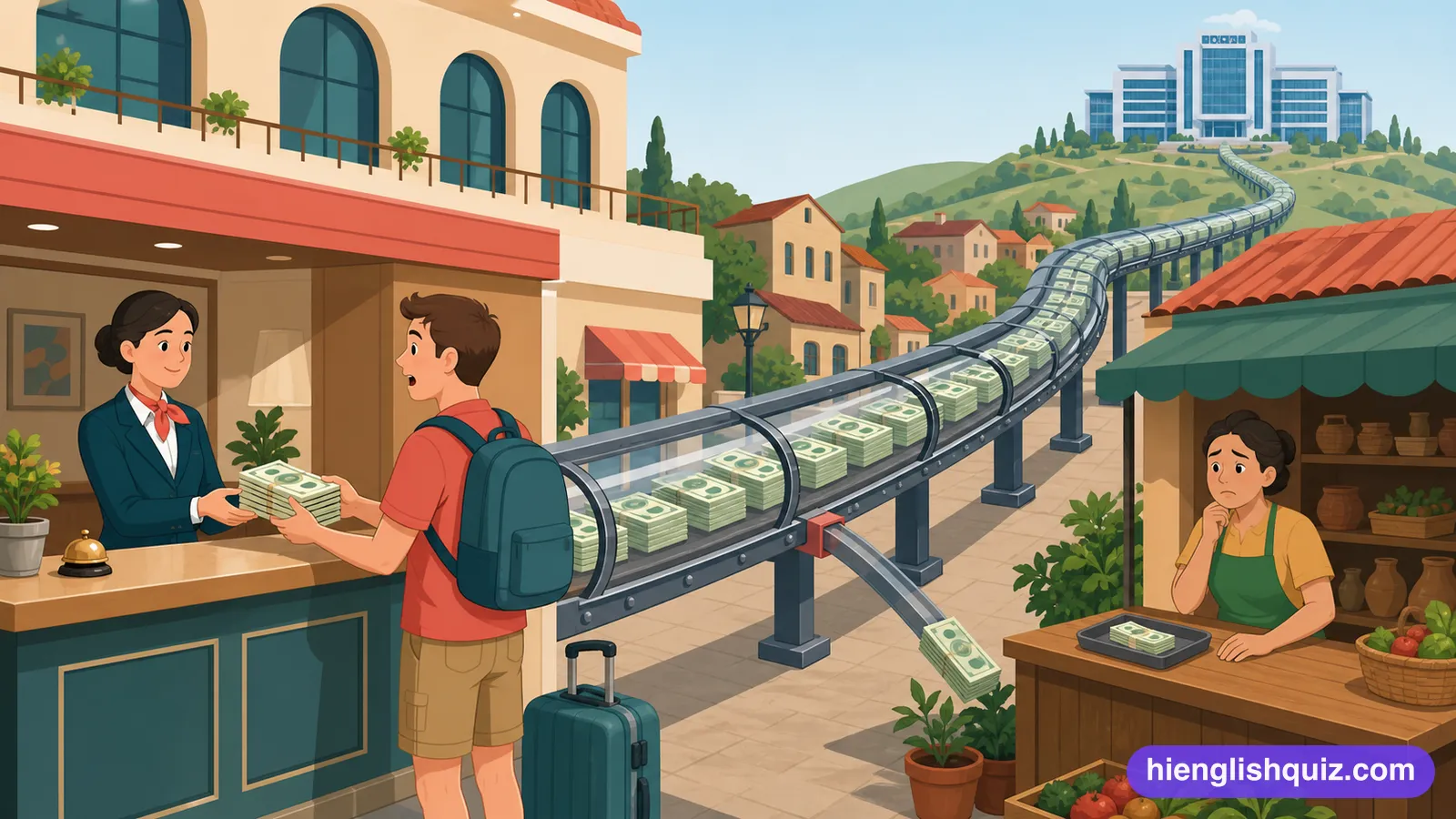
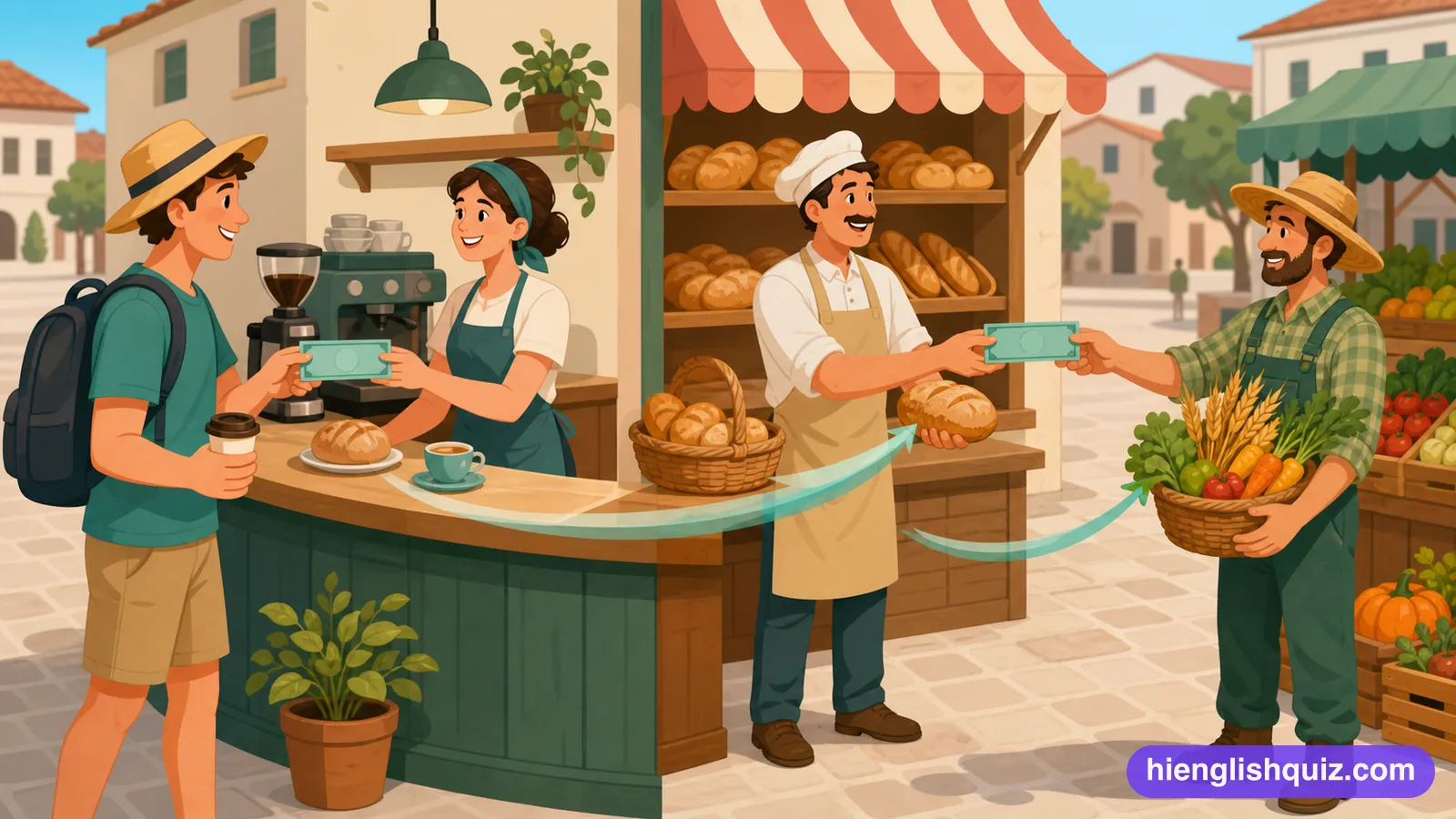
The way one pound spent circulates through a local economy.
Example: The multiplier effect is the argument every festival makes.
Visiting places associated with death or disaster.
Example: Dark tourism raises questions no marketing department wants.

An environmental label that means far less than it appears.
Example: The greenwashed certification cost two hundred pounds and no inspection.

Working out which marketing actually produced a booking.
Example: Attribution of demand is guesswork dressed up as a dashboard.

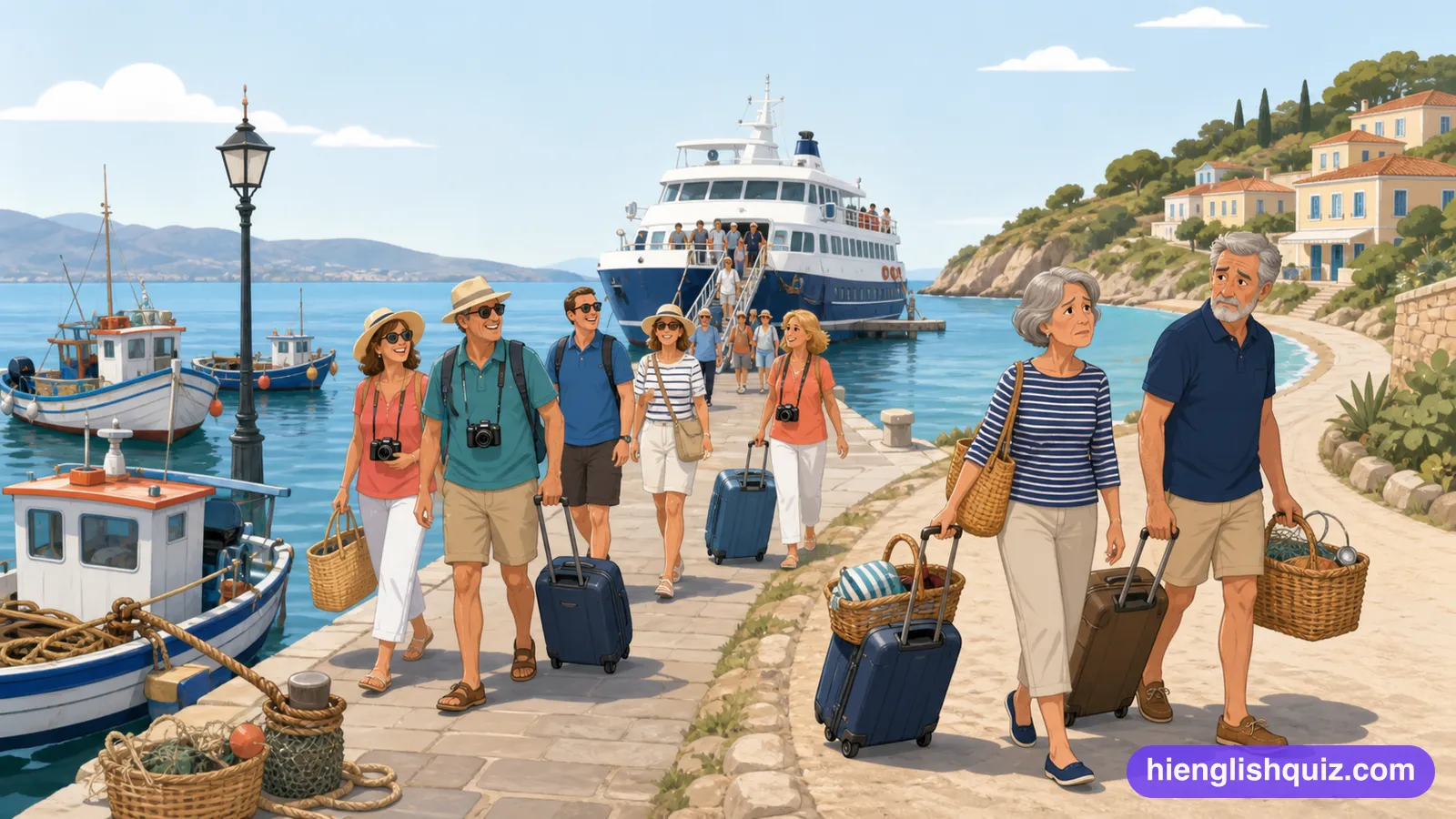
New visitors driving away the ones who came before.
Example: The festival's displacement effect cost more nights than it created.
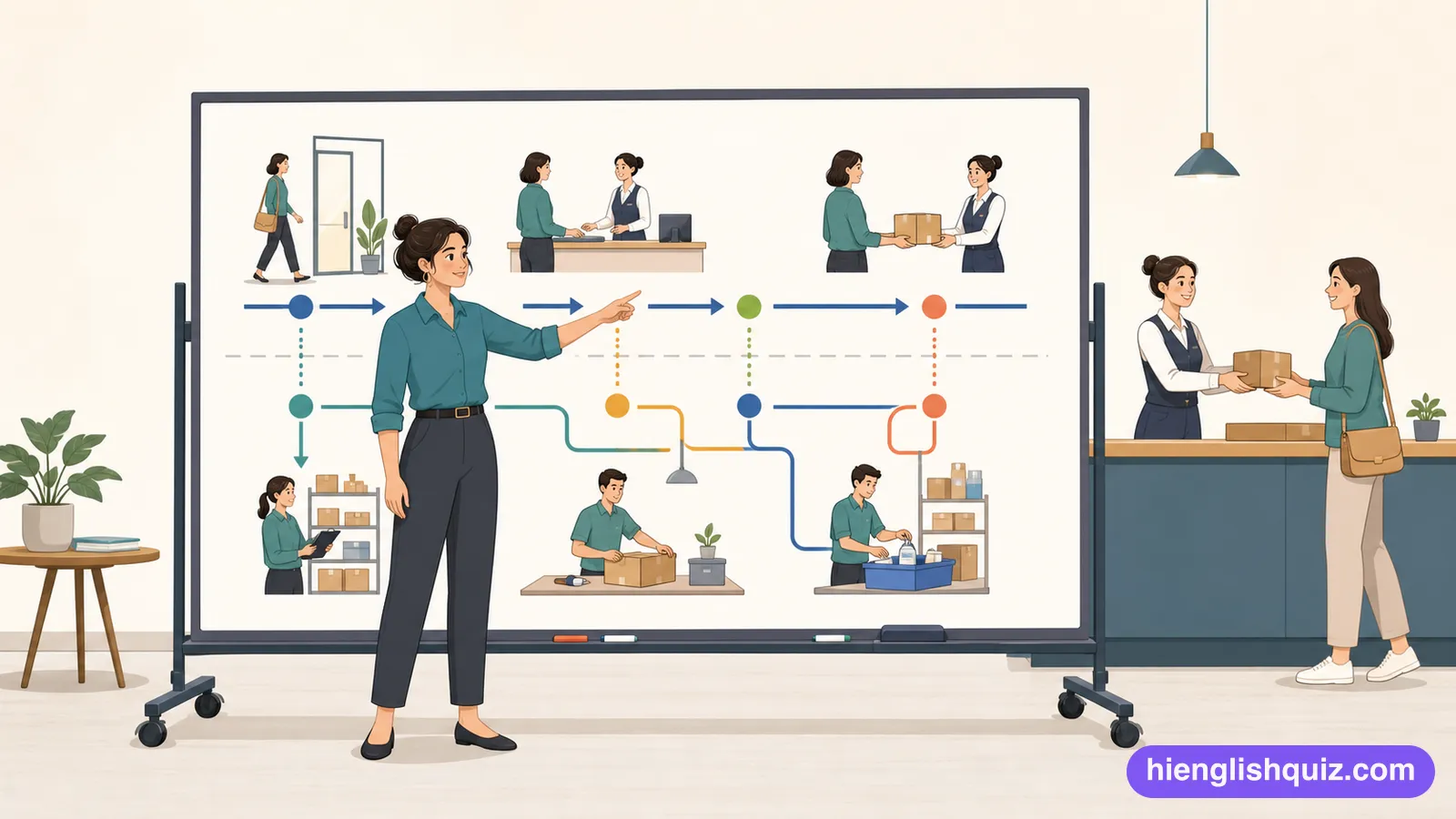
A detailed map of every step in delivering a service.
Example: The service blueprint showed four handovers nobody had documented.
The effort of managing your feelings as part of a job.
Example: Emotional labour is what actually exhausts front-of-house staff.