permaculture
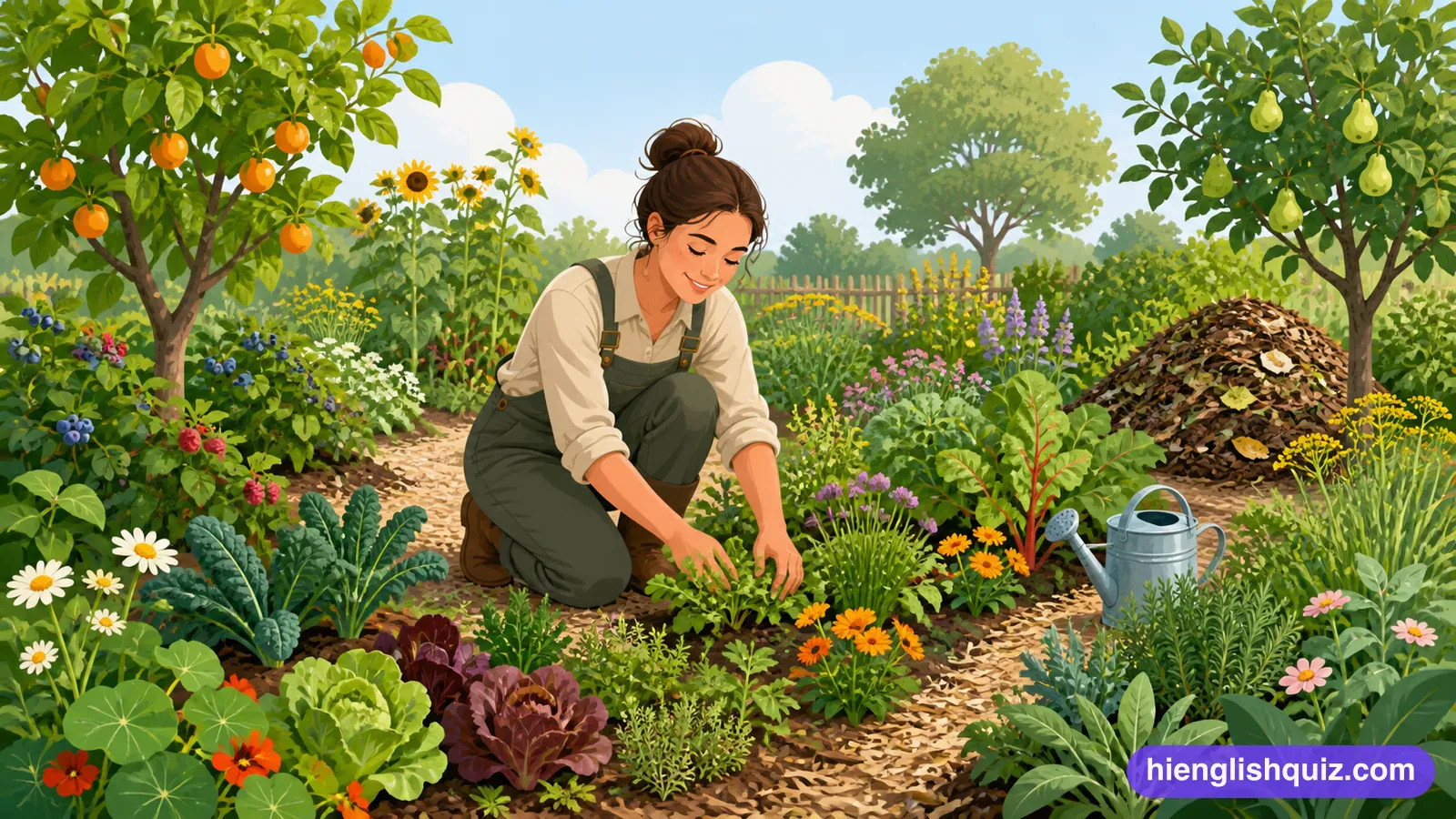
A farming approach designed to work with natural ecosystems so land stays productive without depleting resources.
Example: The community farm follows permaculture principles.
 Hi EnglishQuiz
C222 words · Proficient
Expert agriculture vocabulary for environmental farming science, including permaculture, carbon sequestration, regenerative agriculture and the mycorrhizal network and terroir behind soil health.
A farming approach designed to work with natural ecosystems so land stays productive without depleting resources.
Example: The community farm follows permaculture principles.
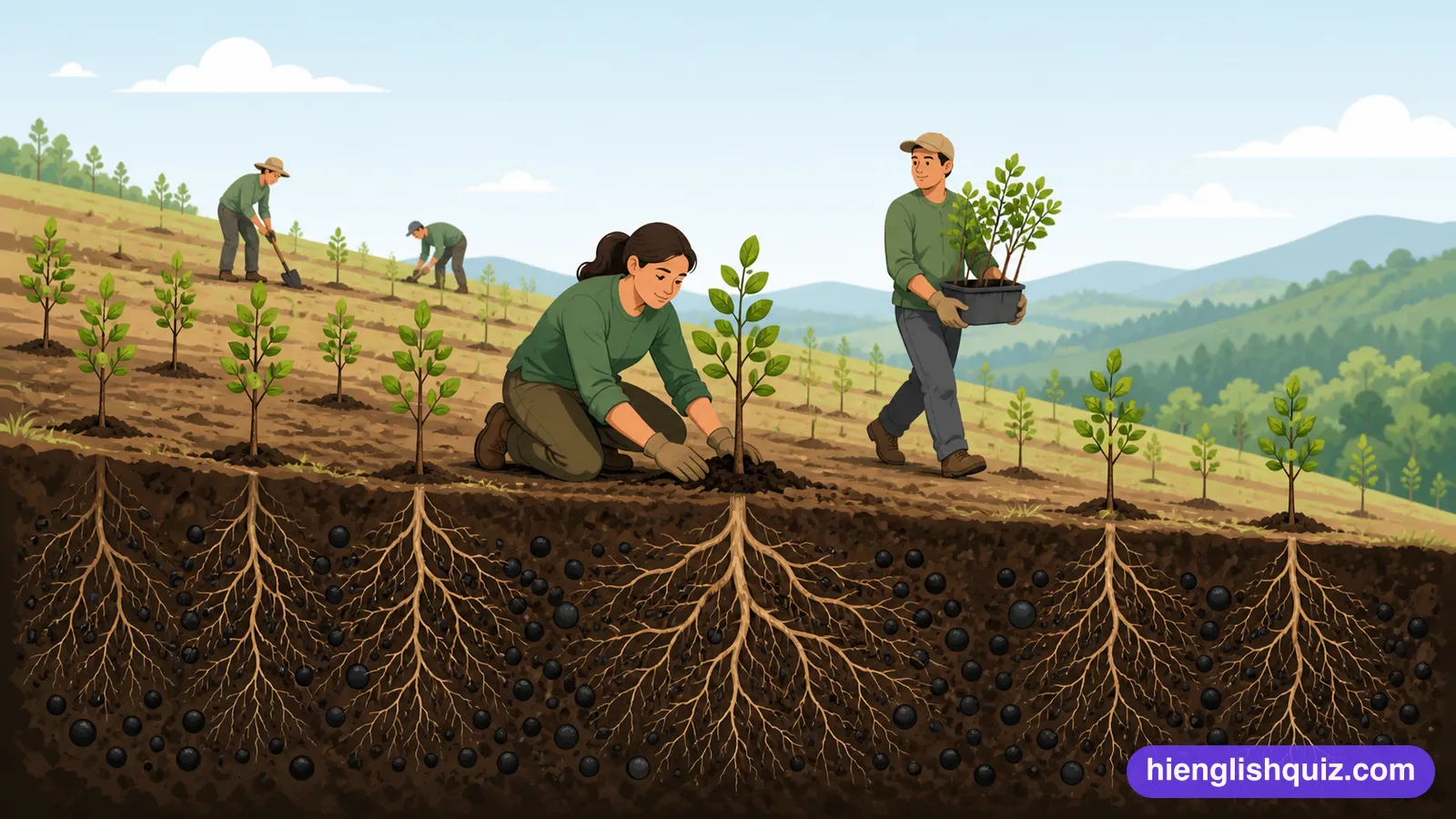
The process of capturing and storing greenhouse gas, often in soil, trees or the ocean, to reduce its effect on climate.
Example: Restoring the forest increased carbon sequestration in the region.
A system that lets companies buy and sell permits to release a certain amount of greenhouse gas.
Example: Emissions trading gave factories a financial reason to pollute less.

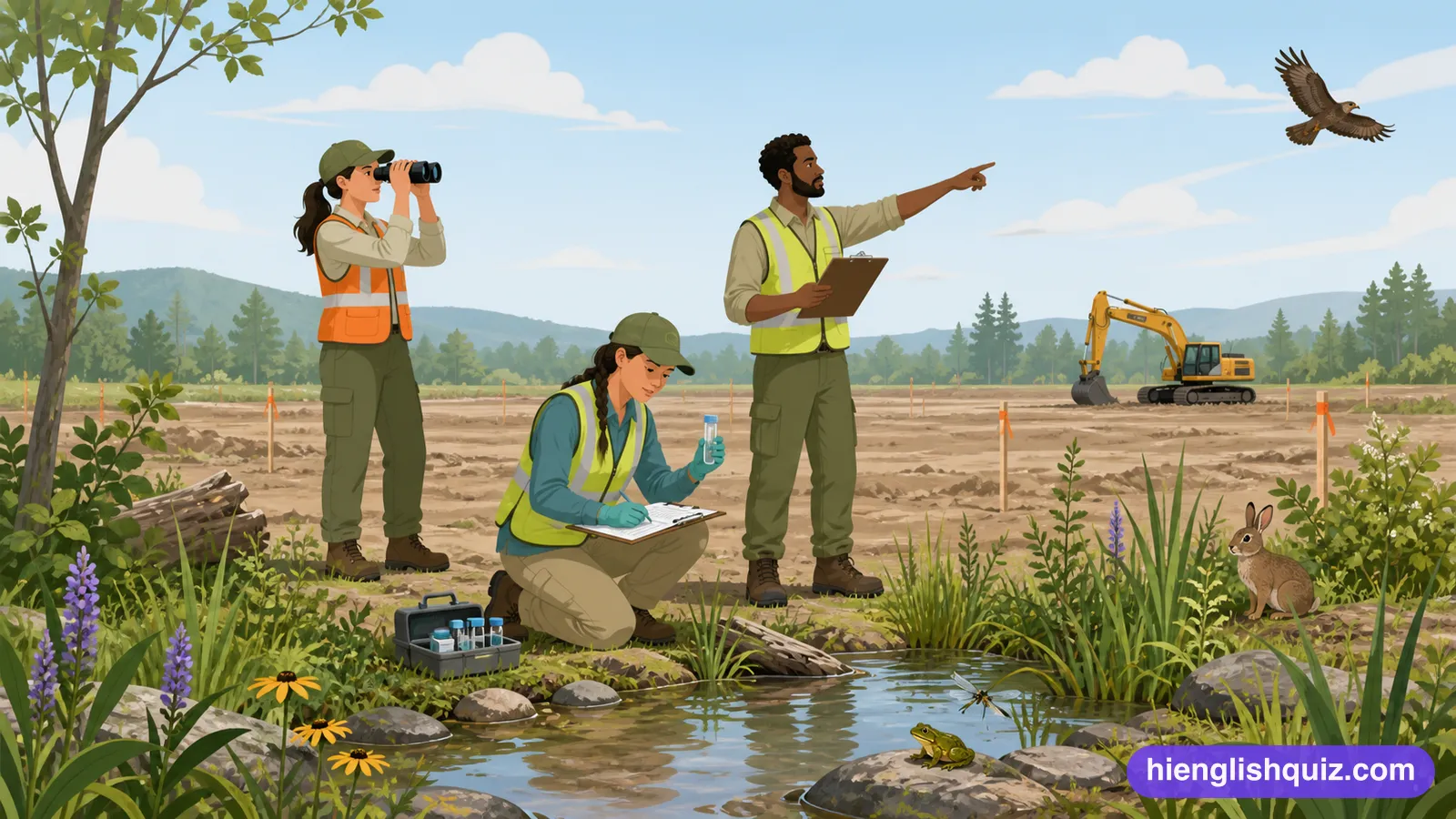
A formal study of how a proposed project would affect the local environment before it is approved.
Example: The dam could not proceed without an environmental impact assessment.
A legal agreement that permanently limits how a piece of land can be used, in order to protect it.
Example: The family placed the woodland under a conservation easement.

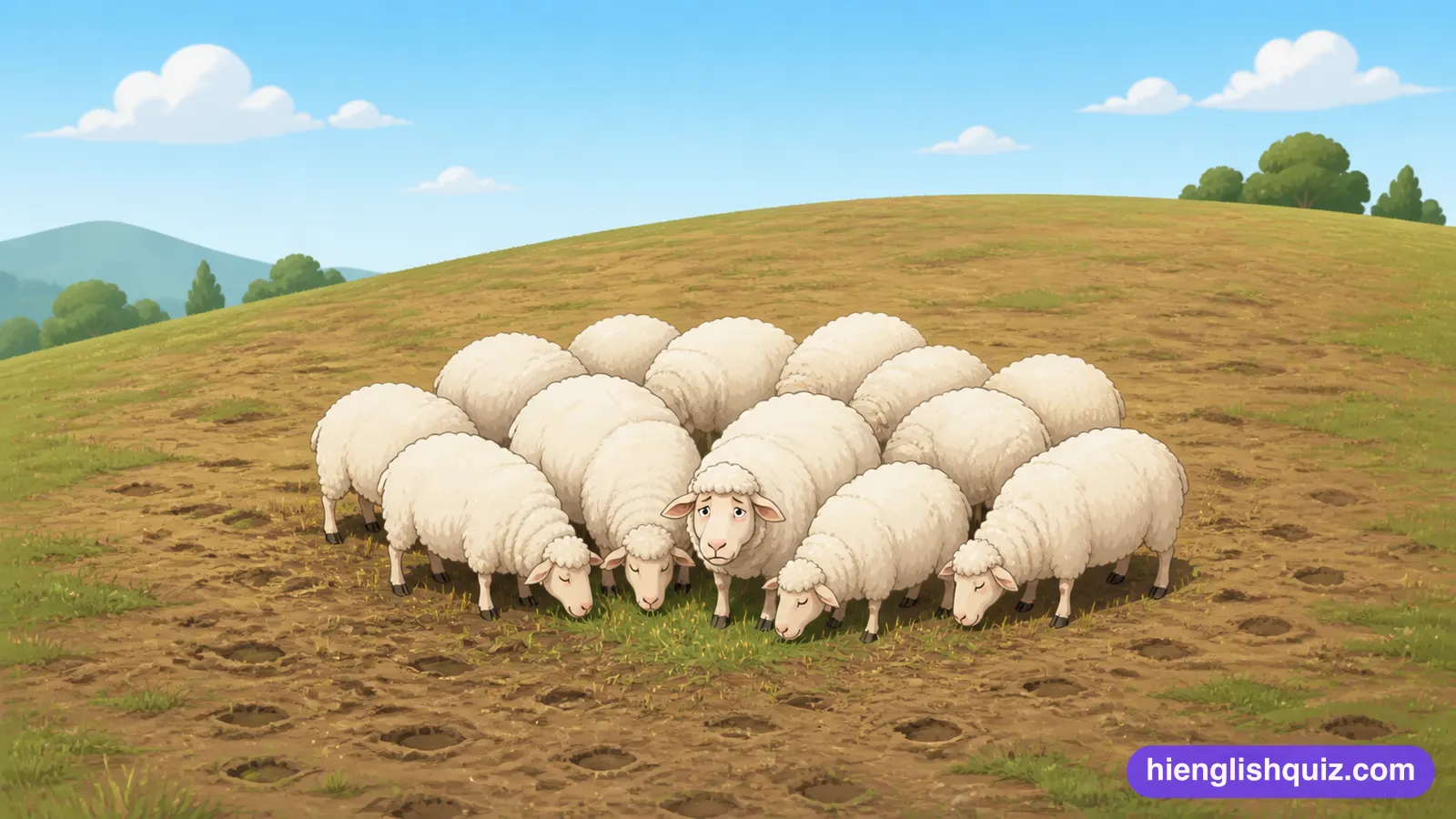
Allowing too many animals to feed on land, damaging the grass and soil.
Example: Overgrazing left the hillside almost bare of grass.
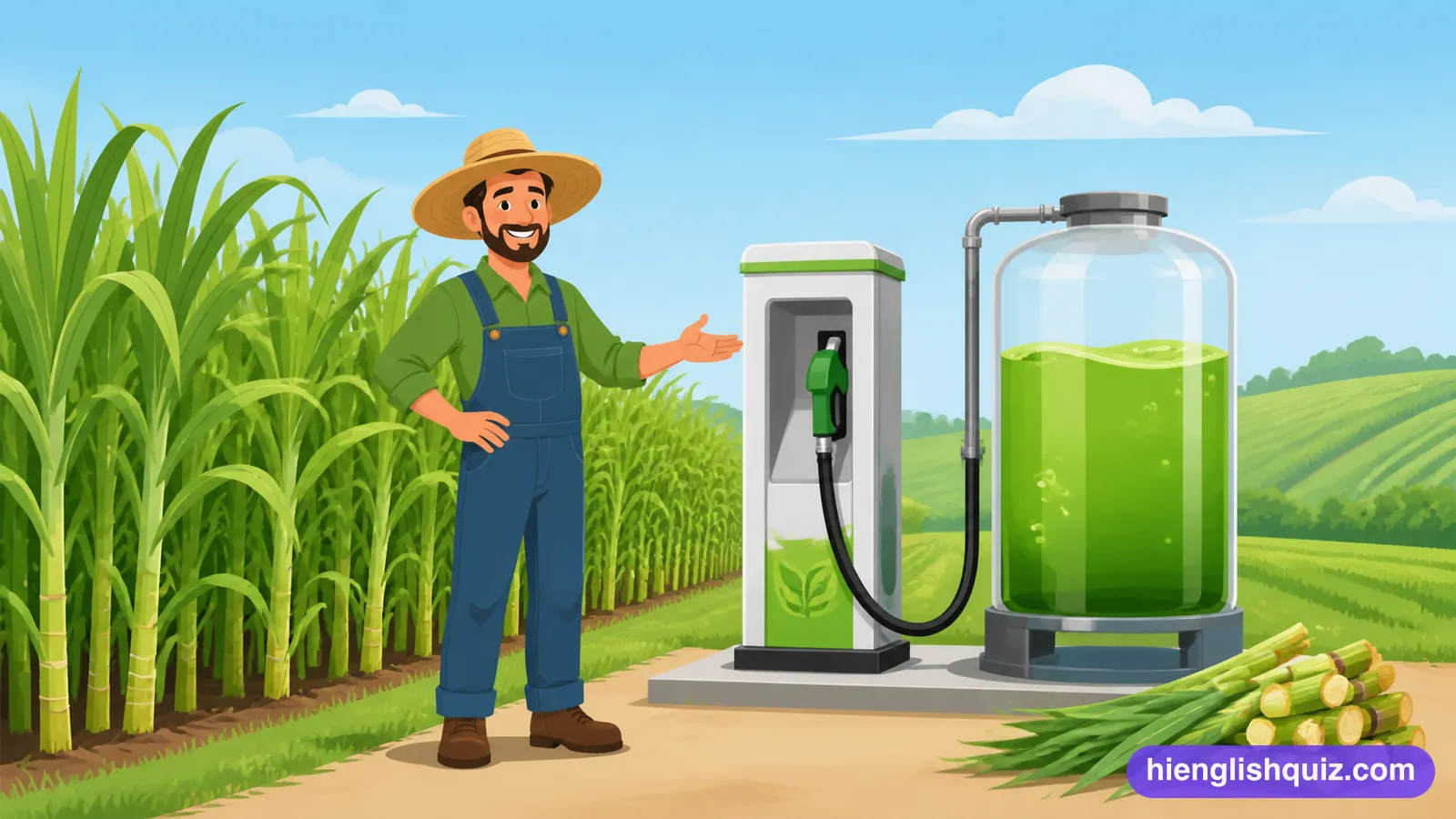
Fuel made from plants or organic waste, rather than fossil fuels.
Example: The farm grows crops specifically to produce biofuel.
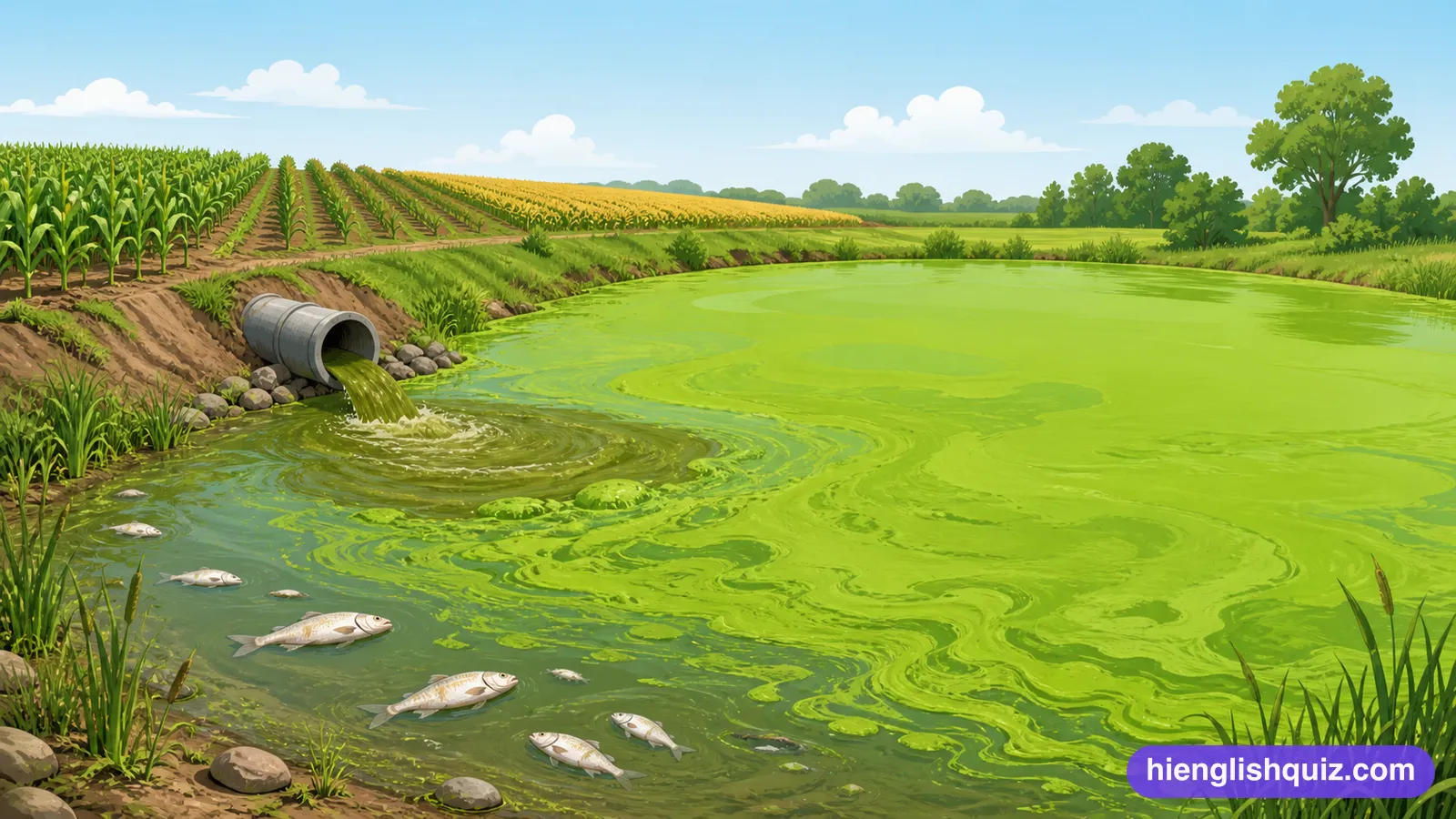
Excess nutrients in water causing algae to grow and oxygen levels to drop.
Example: Fertiliser runoff caused eutrophication in the lake, killing many fish.
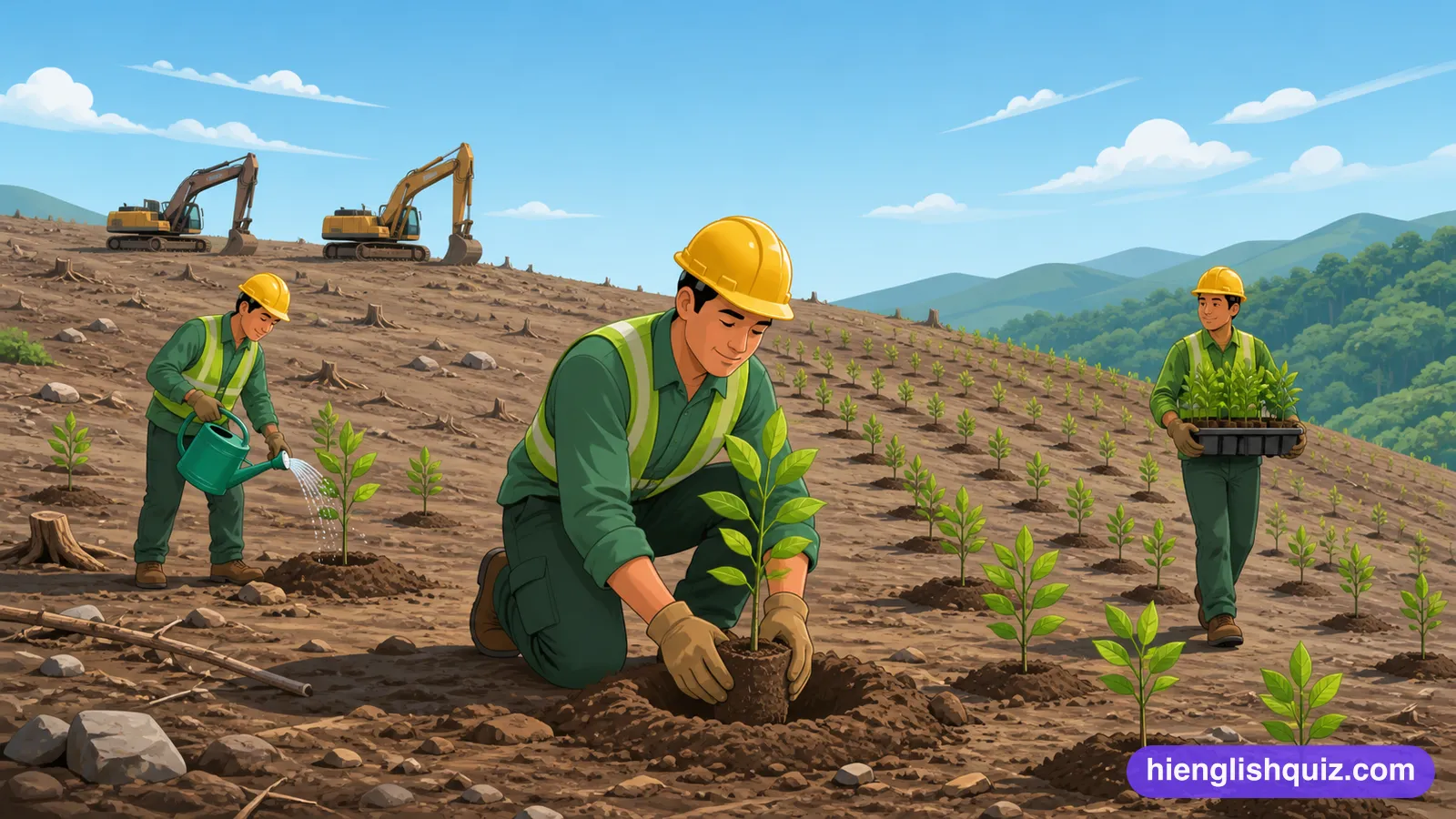
Planting trees on land that had no forest before.
Example: The government launched an afforestation project on the old mining land.
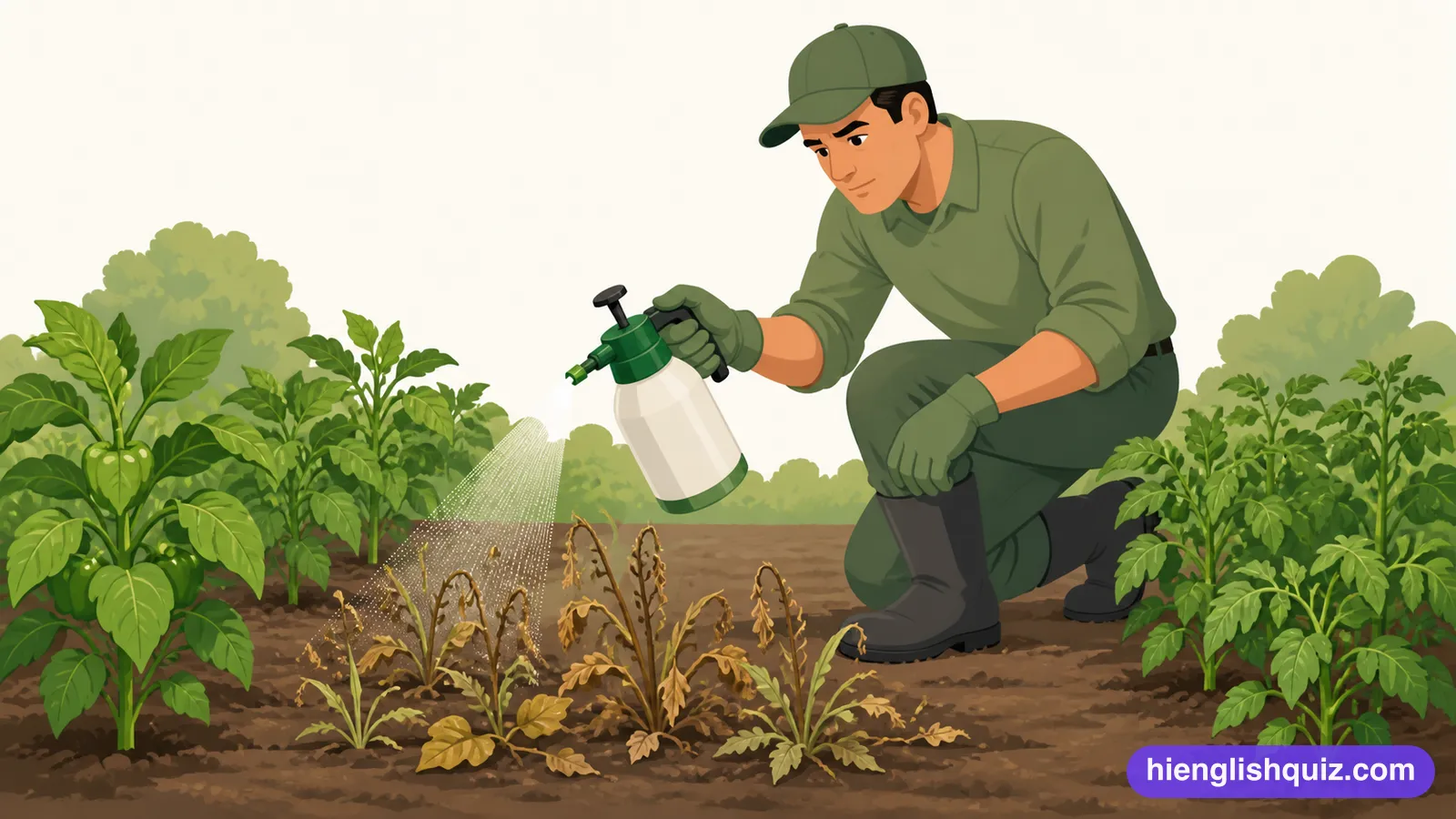
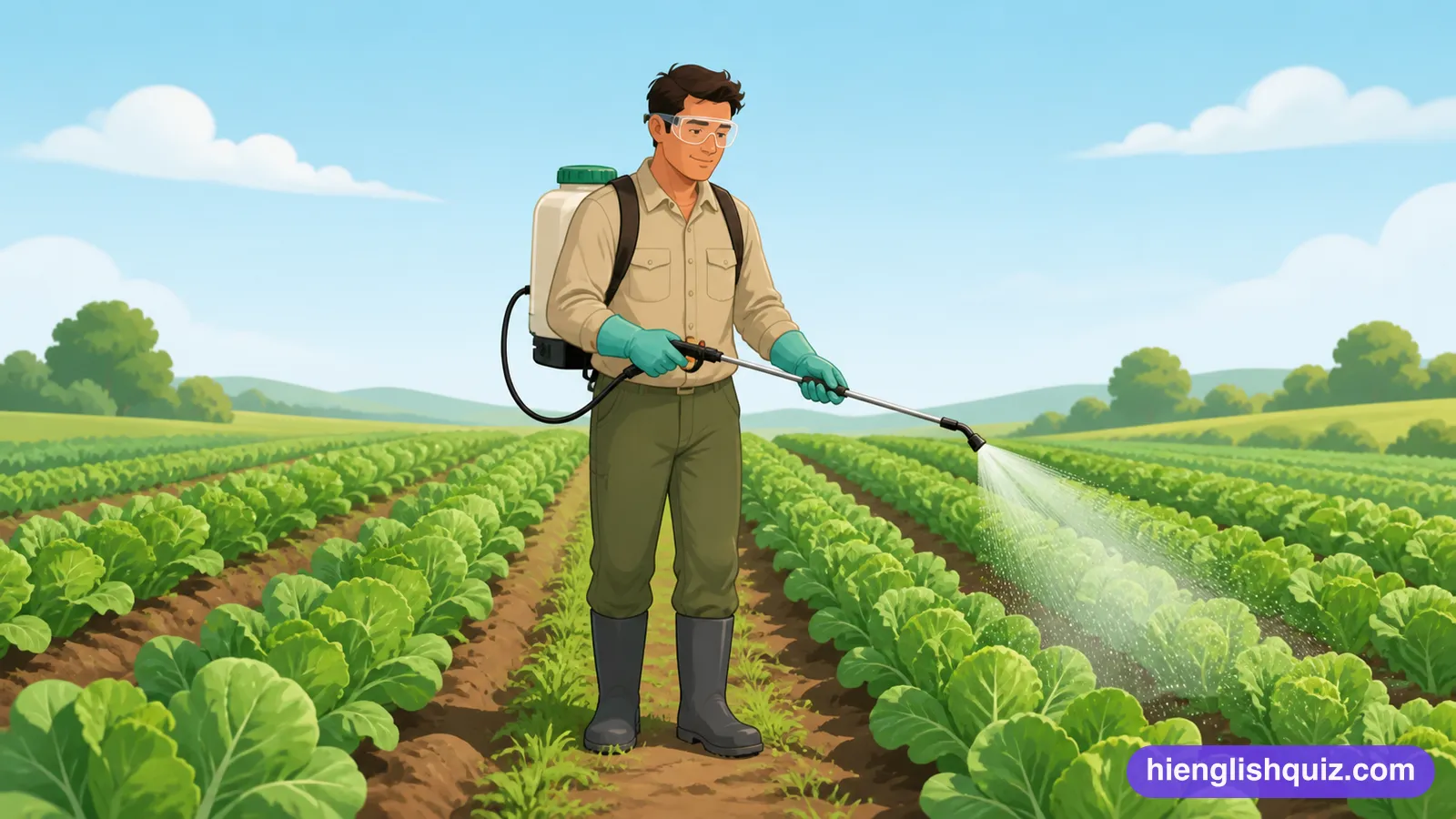
A substance made from living organisms, such as bacteria or fungi, used to control crop pests.
Example: The farm switched to a biopesticide to avoid chemical residue on crops.
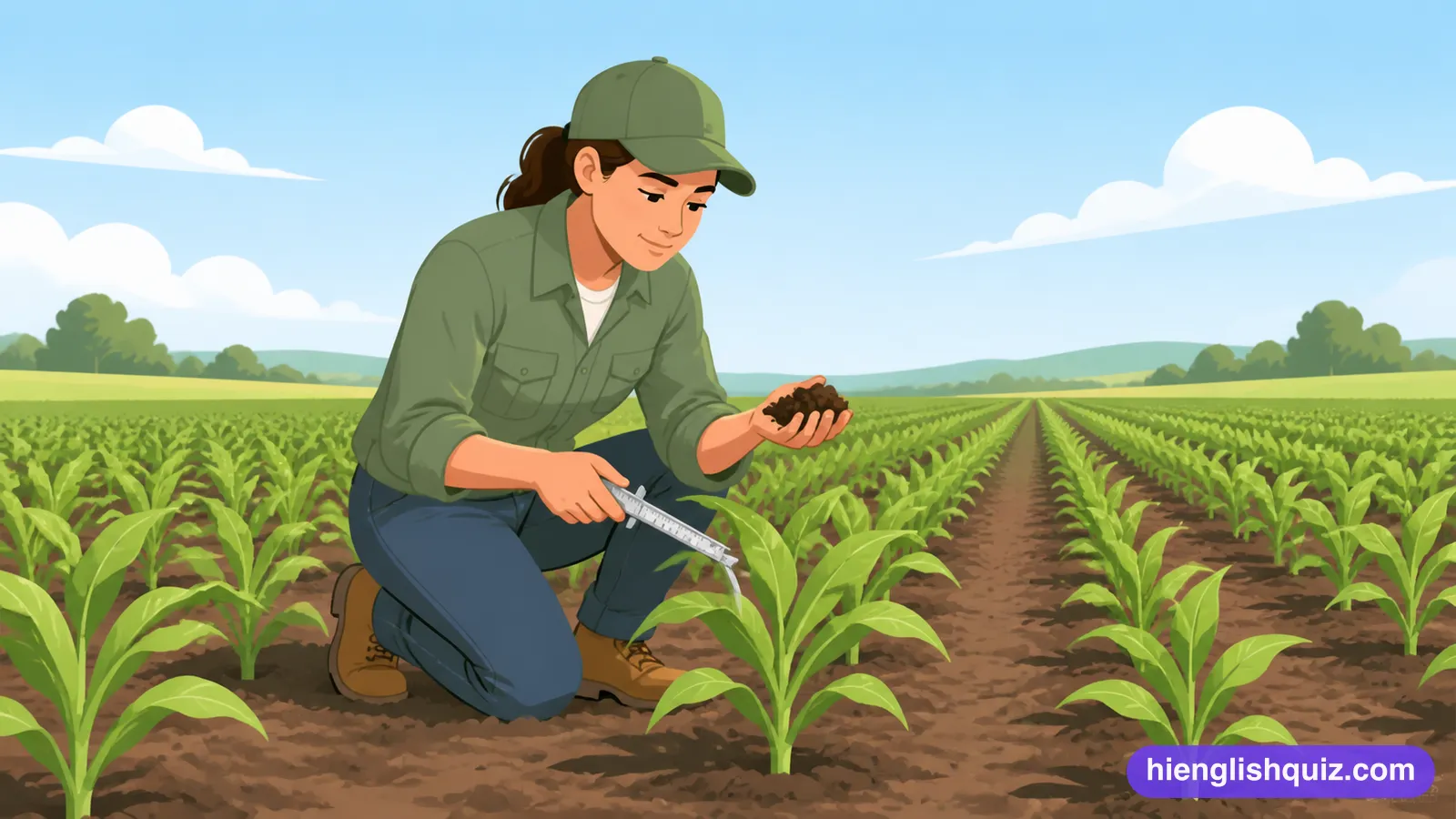
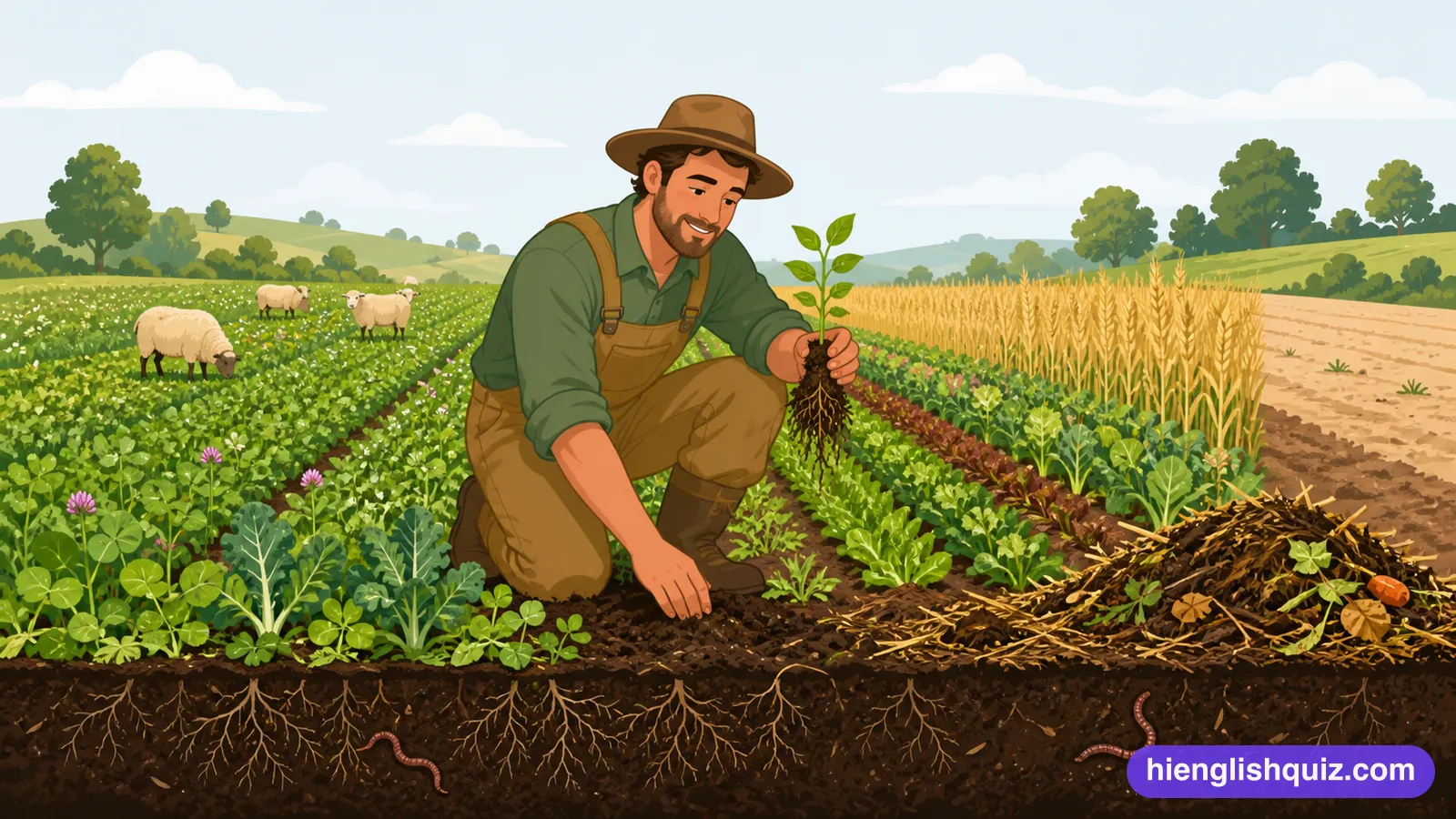
Farming that improves soil and ecosystems rather than depleting them.
Example: Regenerative agriculture took four years to show in the yield figures.
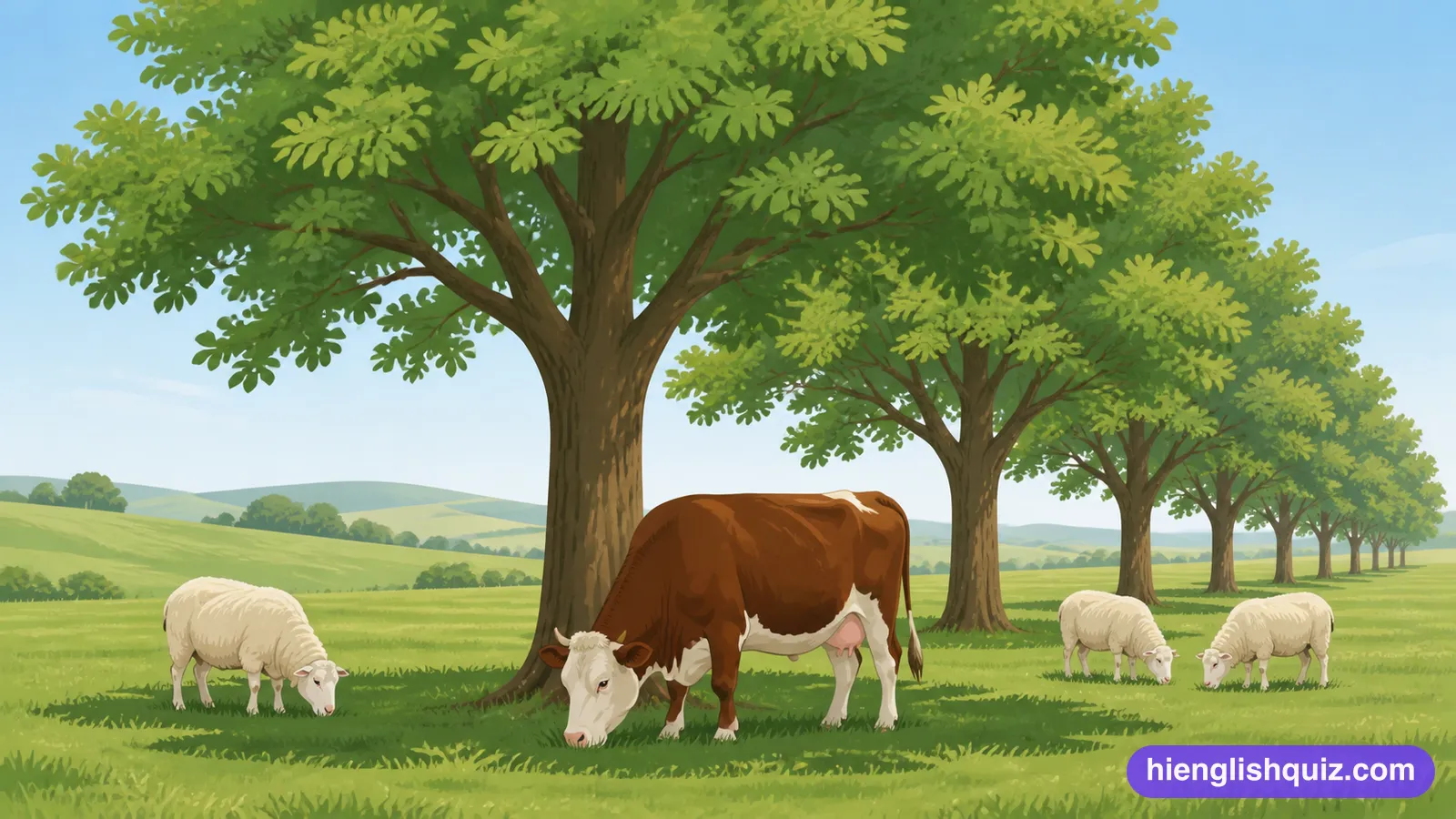
Combining trees and grazing animals on the same land.
Example: Silvopasture gave shade, timber and the same stocking rate.
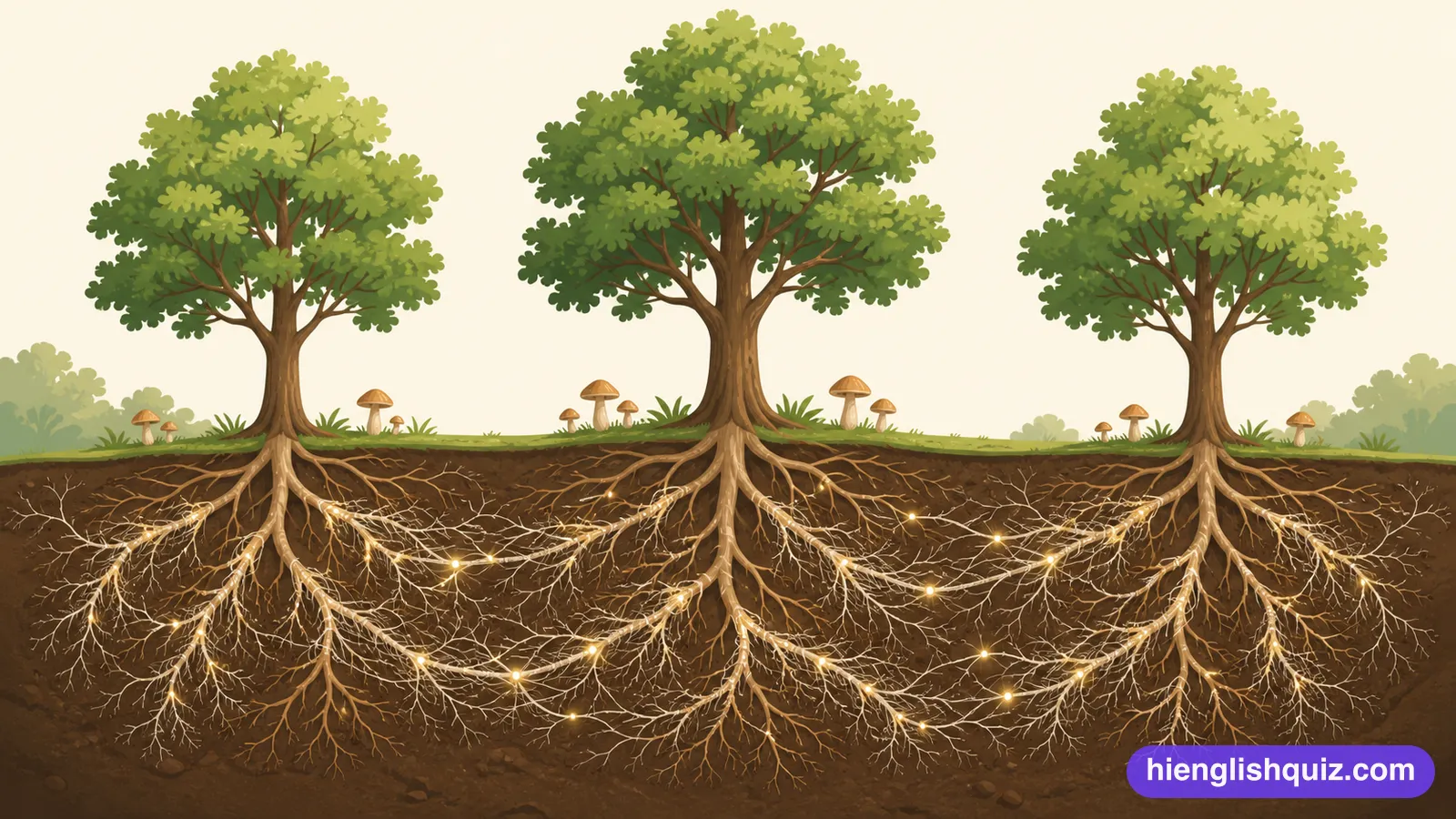
The fungal threads linking plant roots underground.
Example: Ploughing destroys the mycorrhizal network faster than it rebuilds.
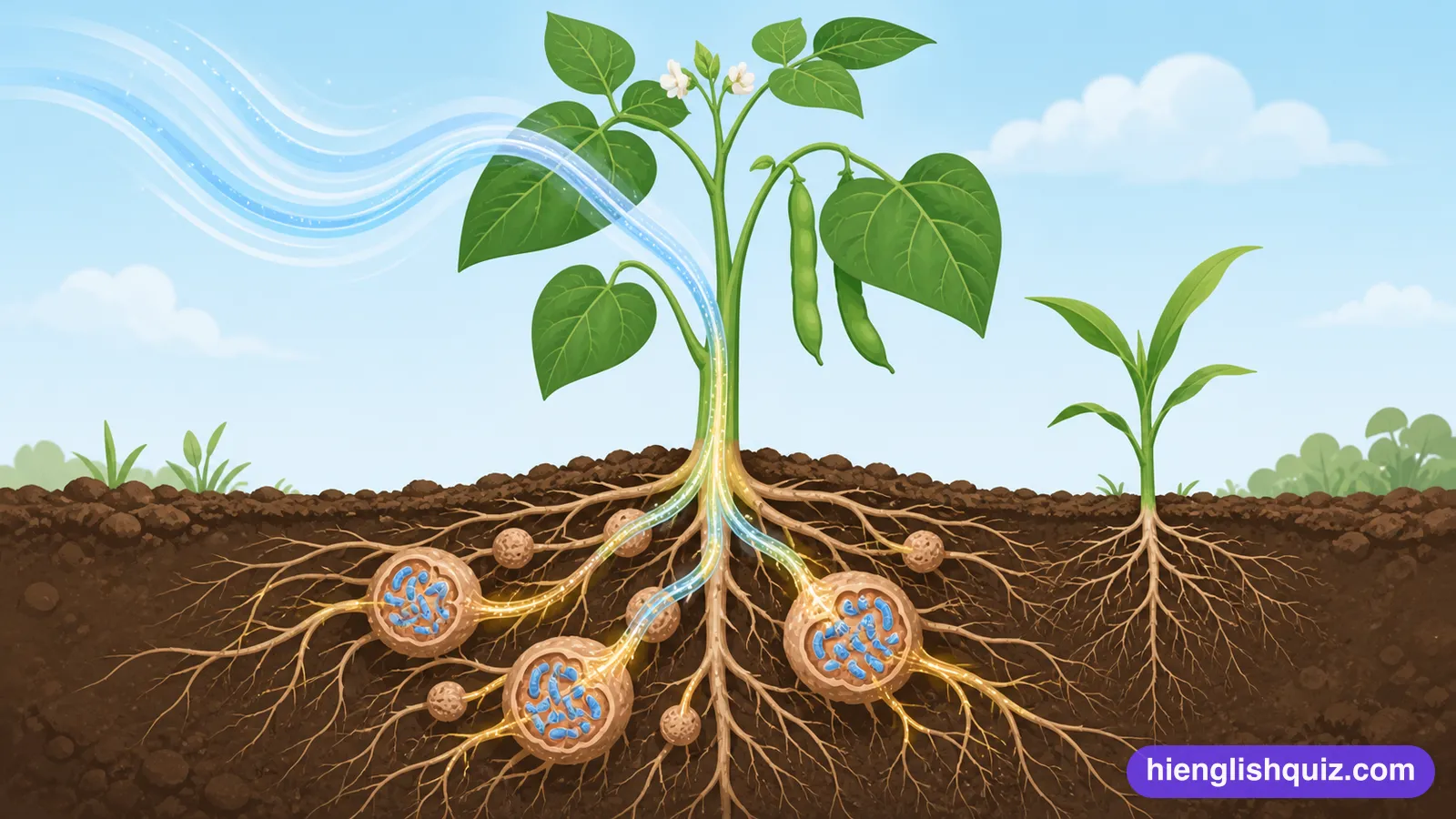
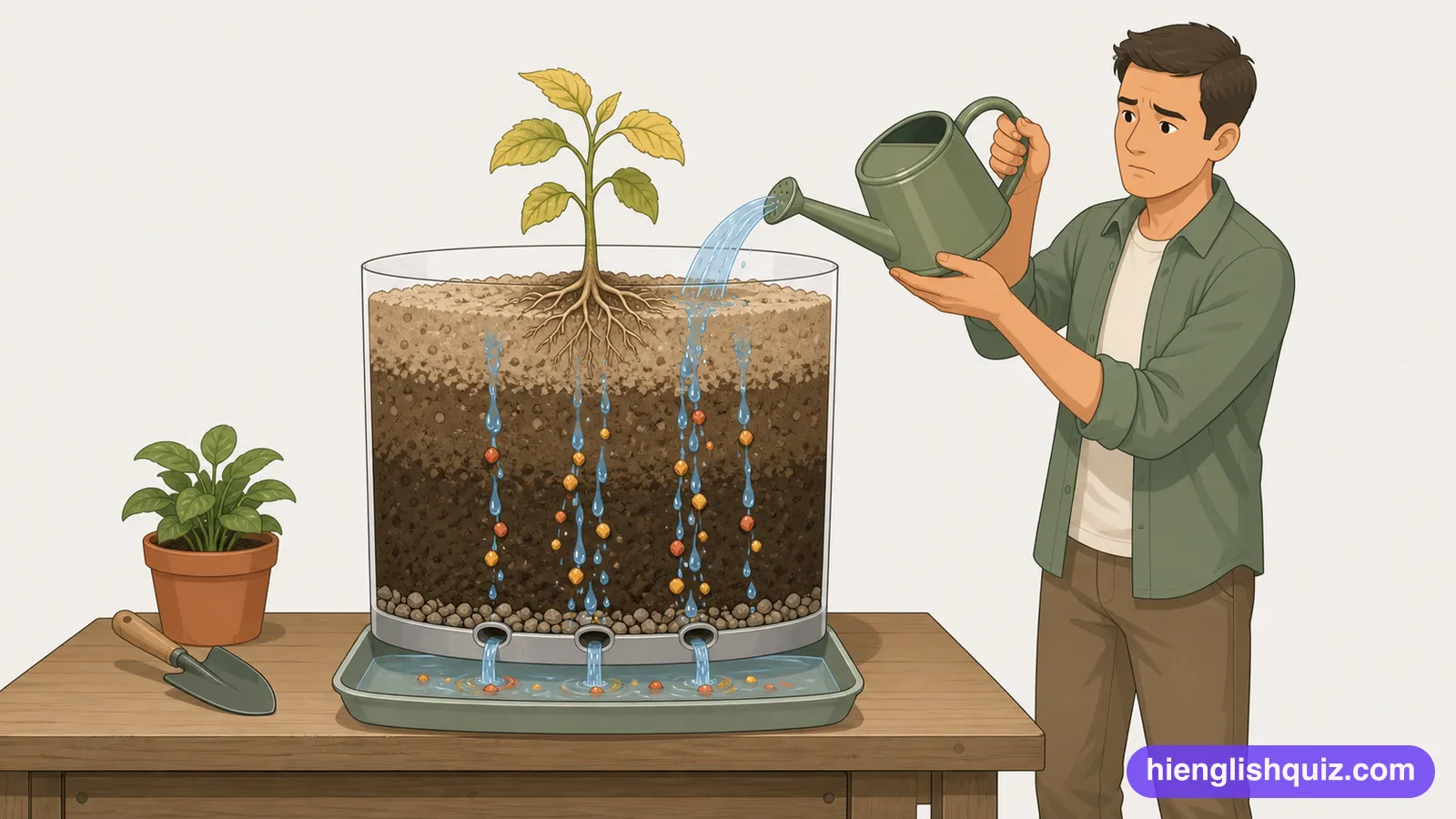
The way certain plants capture nitrogen from the air.
Example: Clover does the nitrogen fixation that the fertiliser bill used to.
The washing of nutrients down through soil and out of reach.
Example: Leaching after a wet winter takes most of the autumn application.
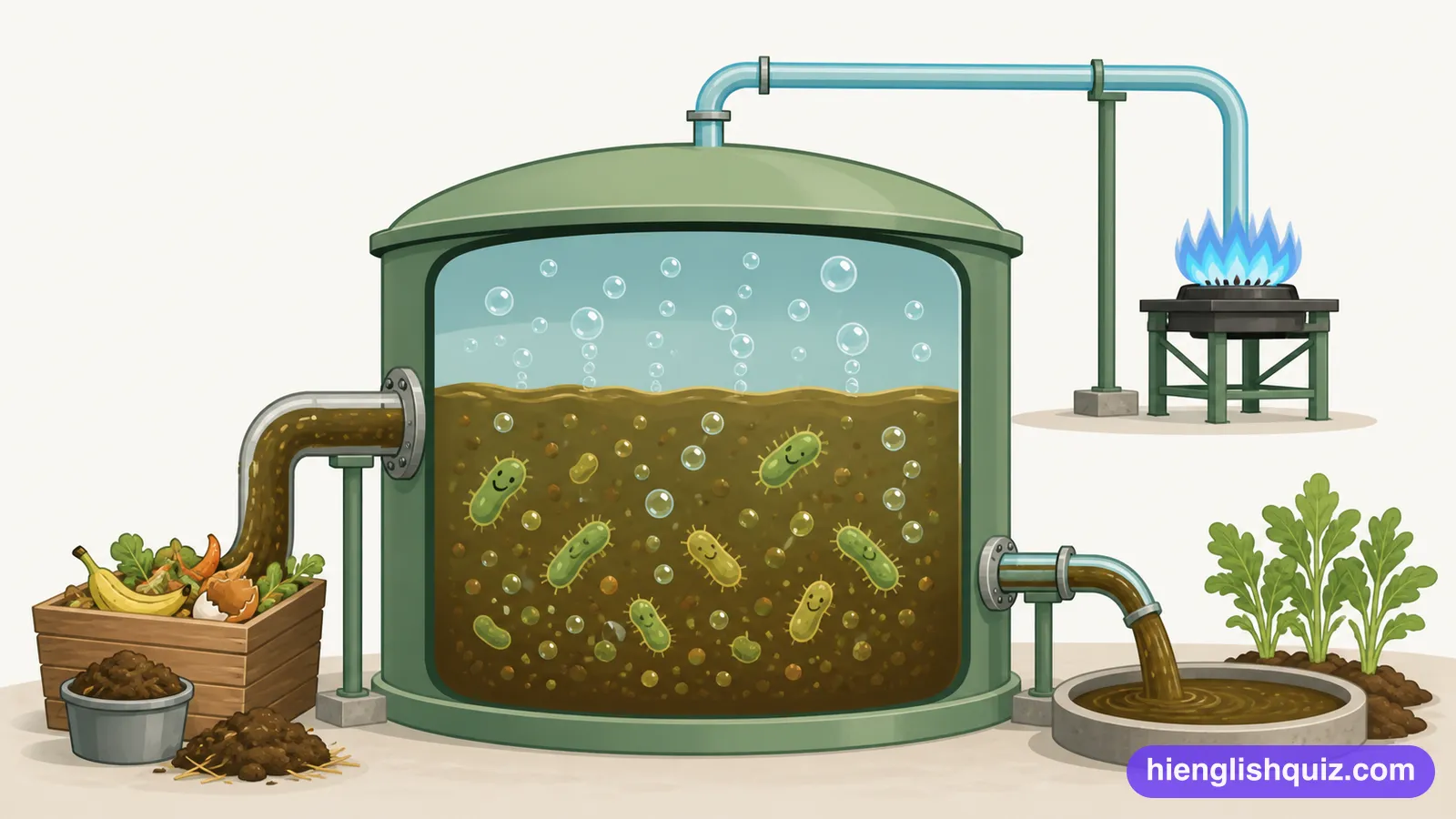
Breaking down waste without oxygen to make gas and fertiliser.
Example: Anaerobic digestion turned the slurry problem into an income.
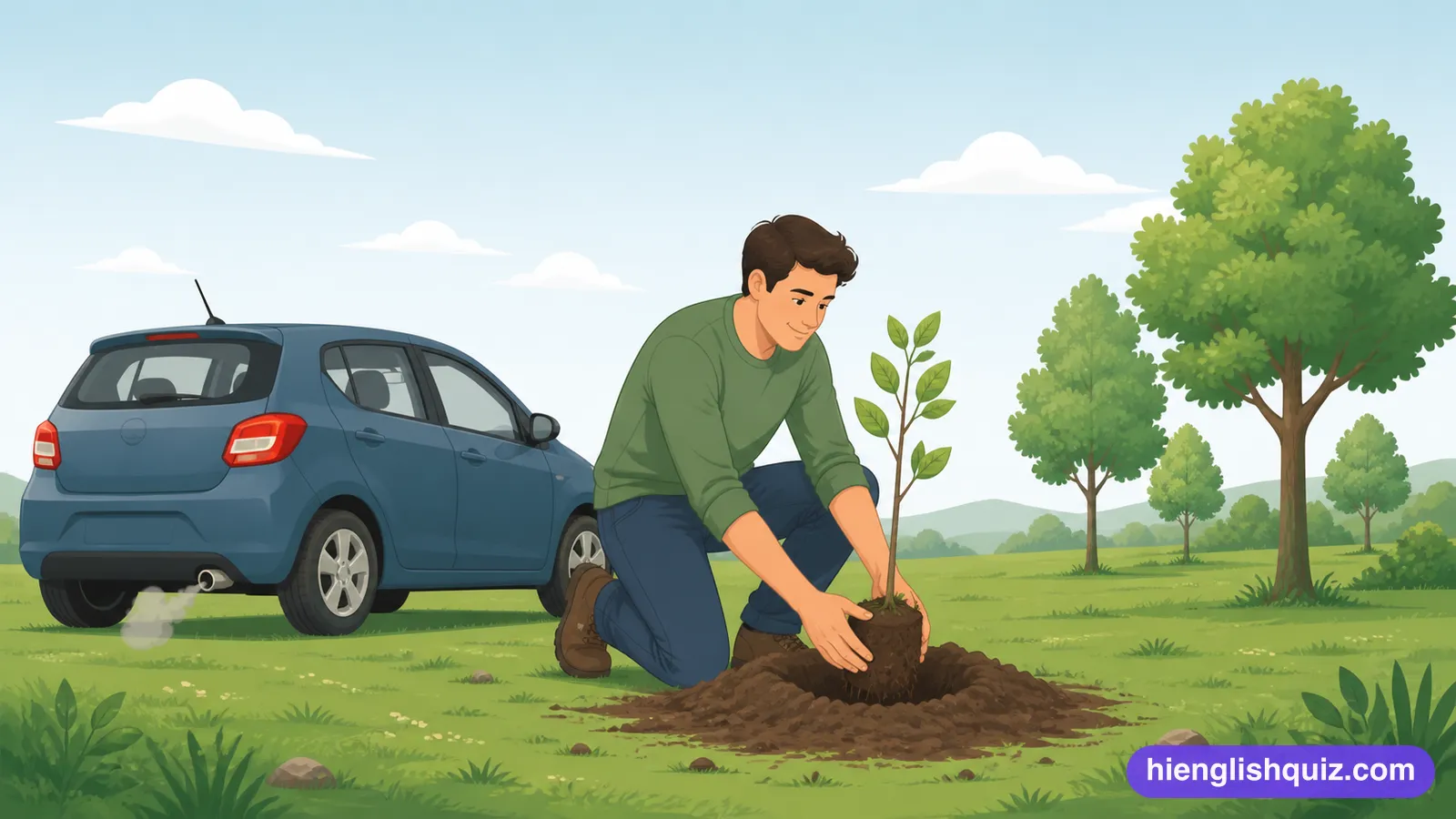
Paying for emissions to be reduced somewhere else.
Example: Carbon offsetting is easier to sell than actually emitting less.
Paying landowners for the environmental benefits their land provides.
Example: Payment for ecosystem services finally valued the flooding the farm prevented.

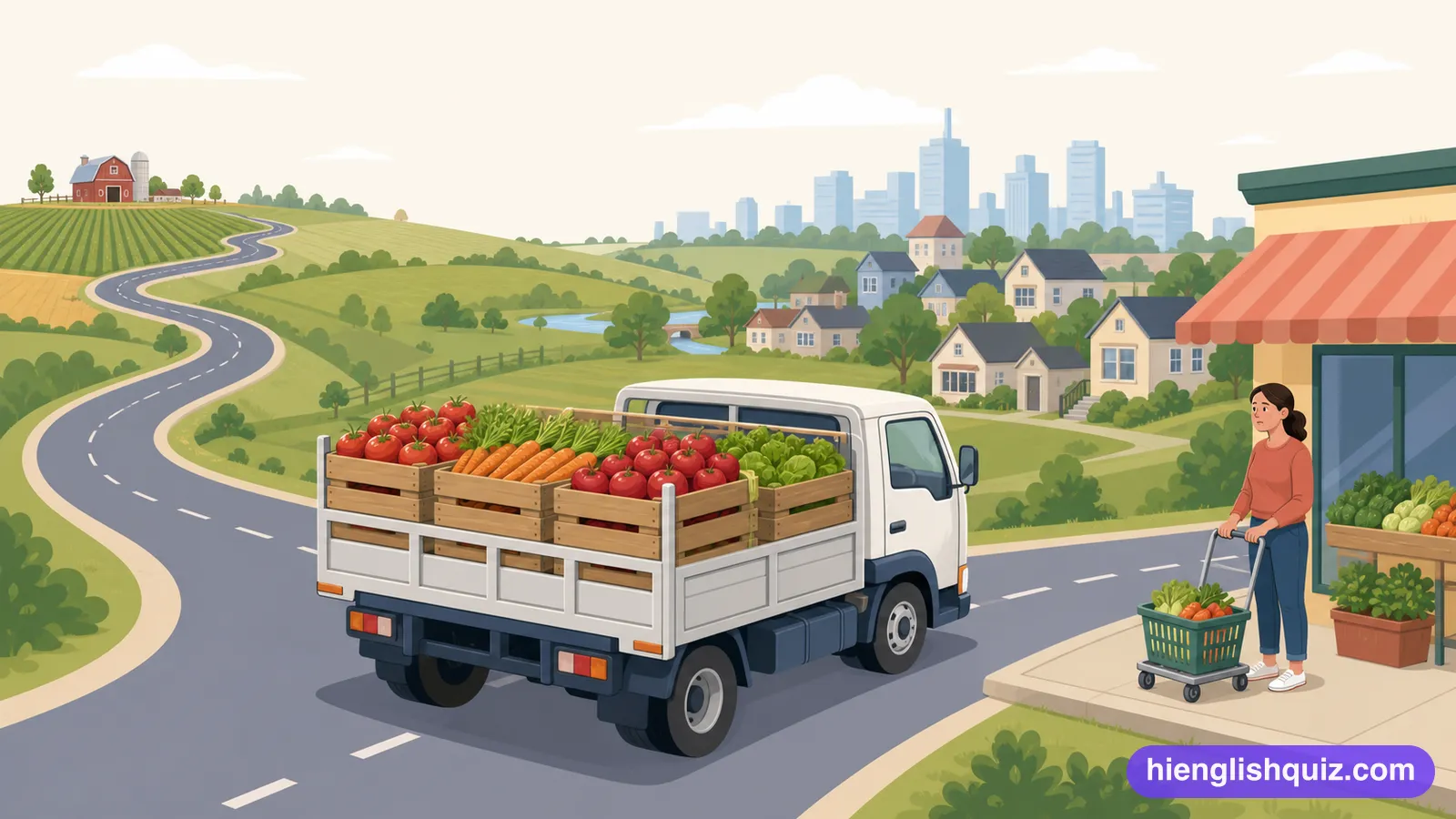
The distance food travels from producer to consumer.
Example: Food miles turned out to matter less than how the food was grown.
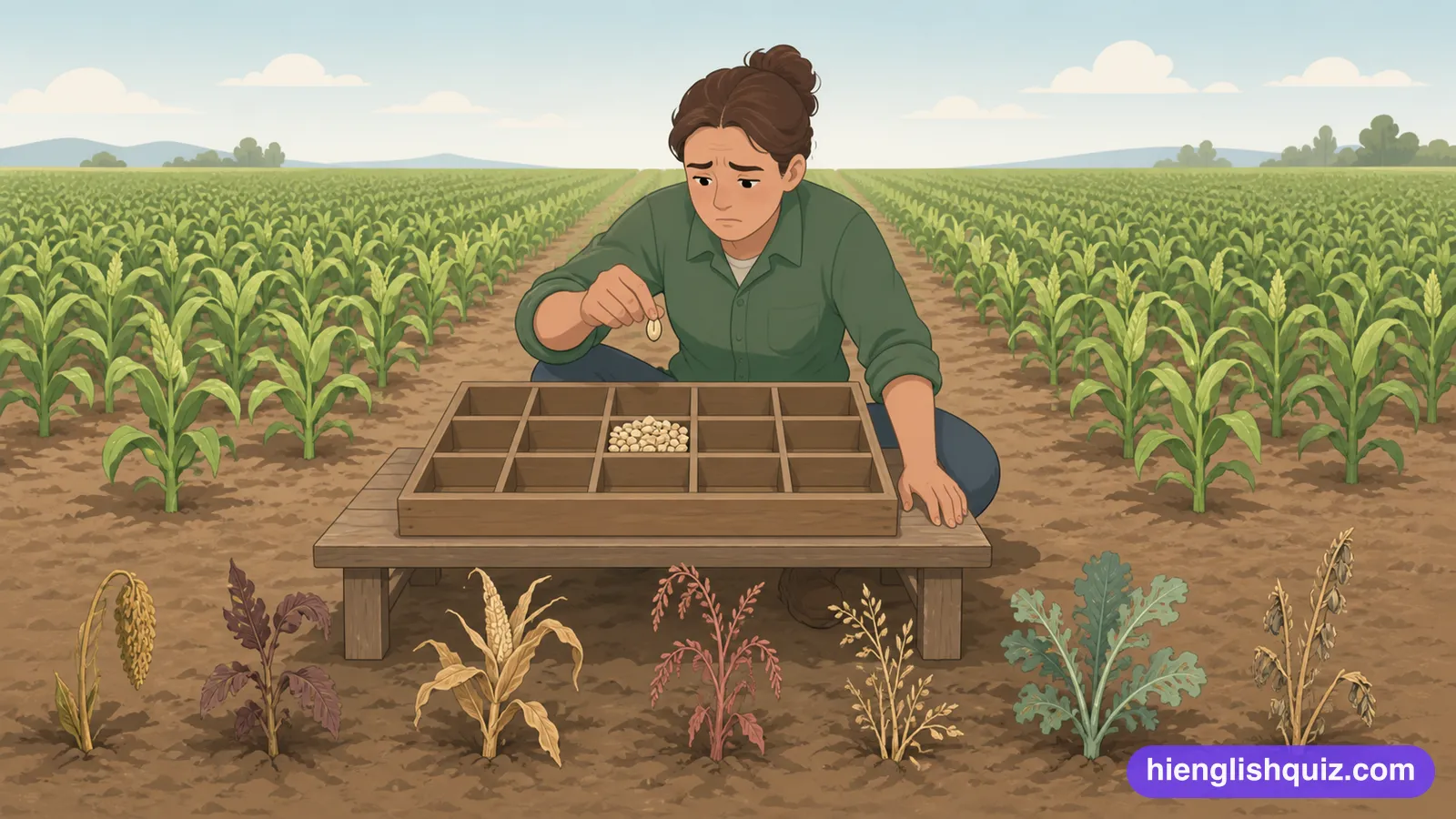
The loss of variety within crop or livestock species.
Example: Genetic erosion leaves a whole crop vulnerable to one disease.
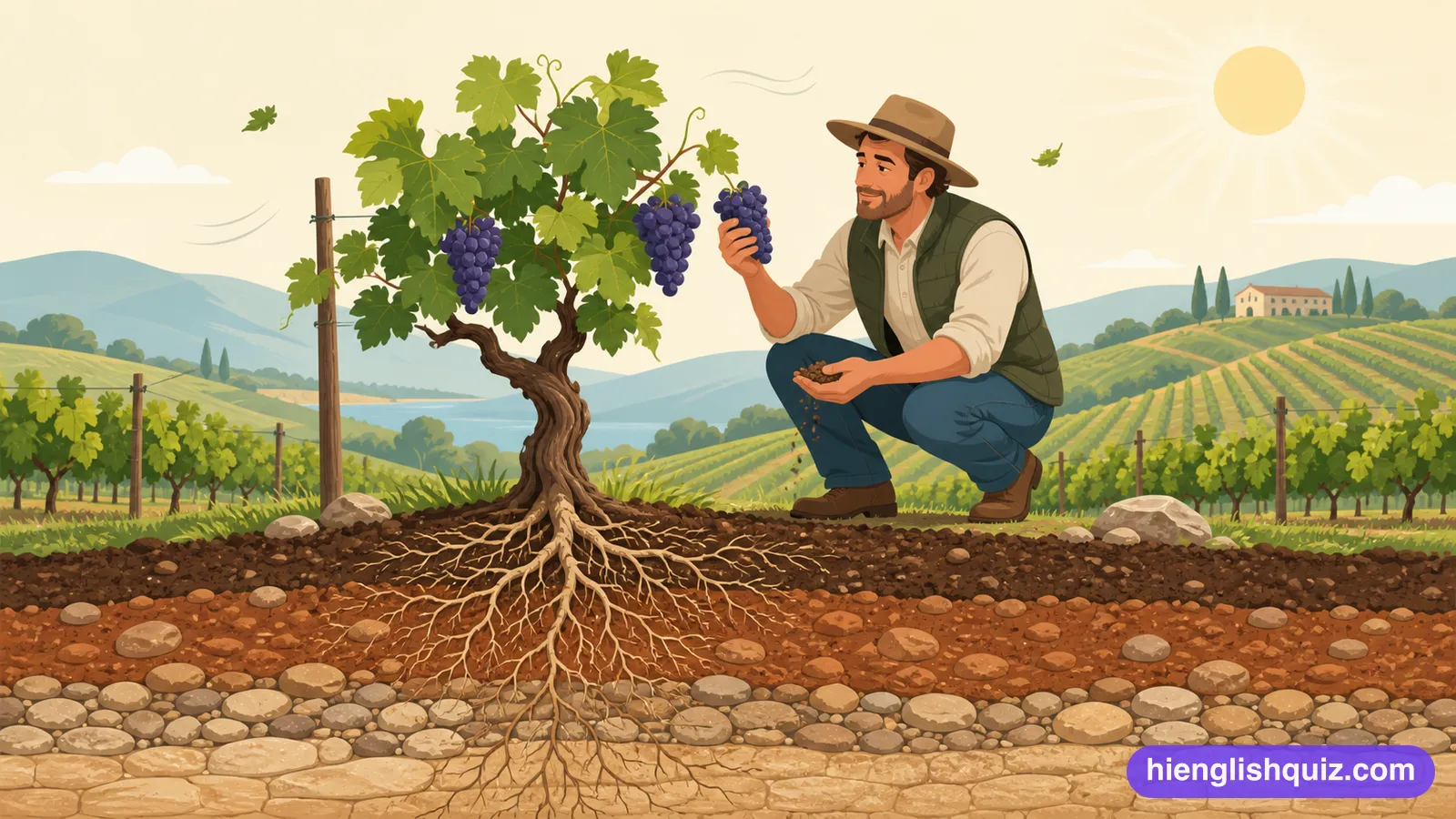
The way soil, climate and place shape the character of a product.
Example: Terroir is the only word that captures why the same grape differs.
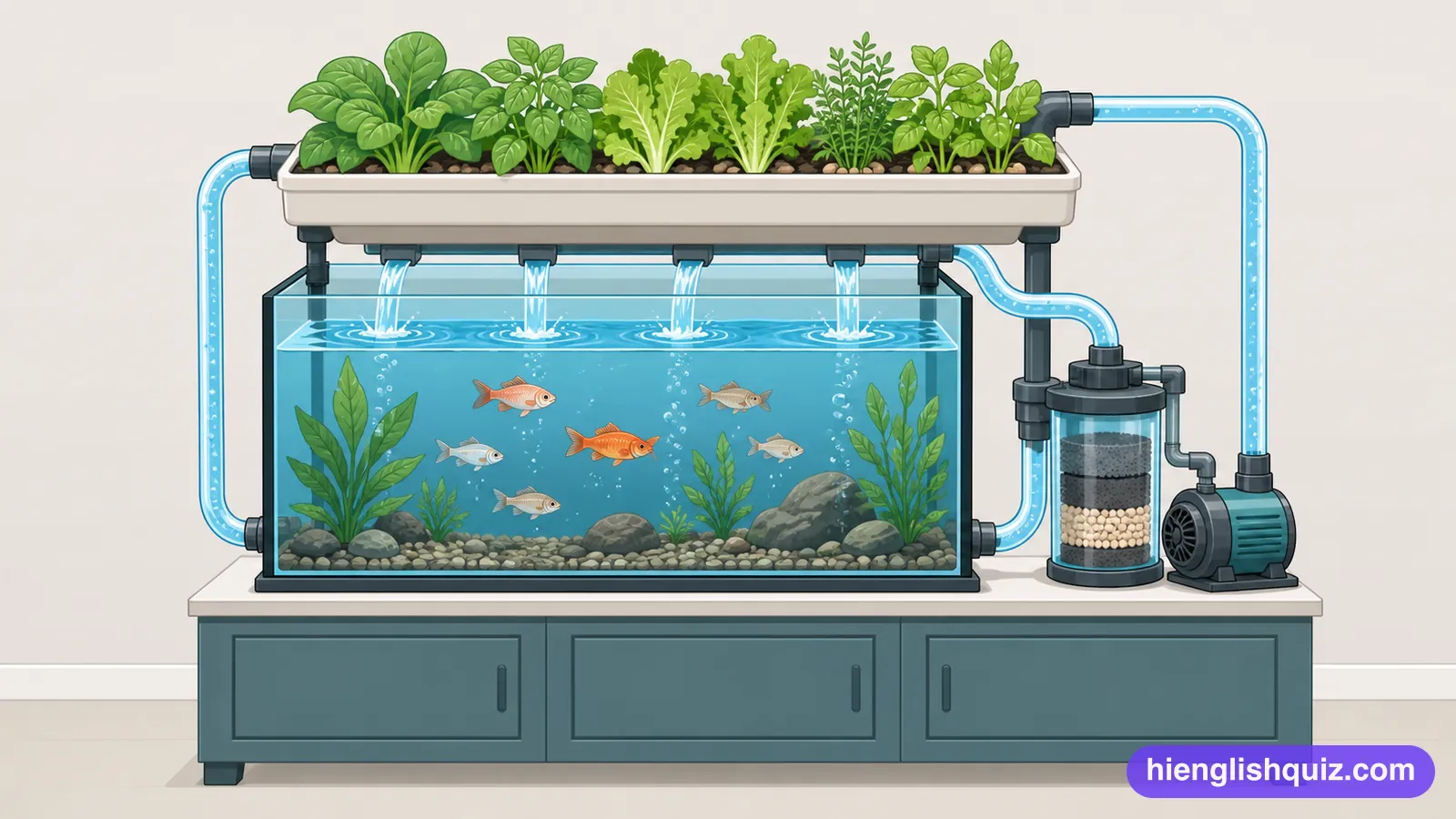
A system where waste from one part feeds another.
Example: The whole farm ran as a closed-loop system with almost no inputs.