agronomy
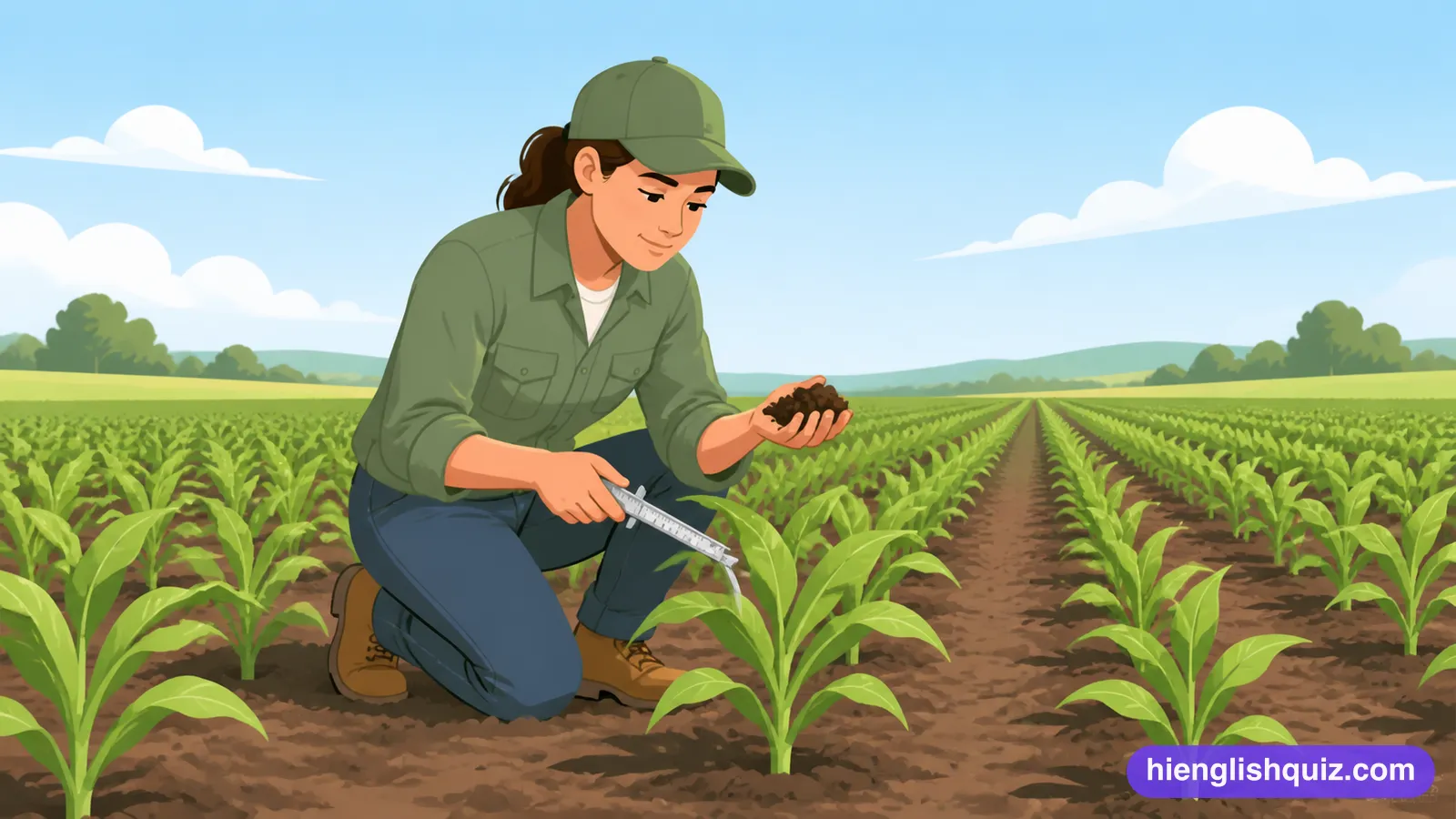
/əˈɡrɑnəˌmɪ/The science of soil management and crop production.
Example: She studied agronomy before taking over the family farm.
 Hi EnglishQuiz
C120 words · Advanced
Advanced agriculture vocabulary for sustainable farming methods, including agronomy, precision agriculture, agroforestry and the hydroponics and integrated pest management replacing older techniques.
The science of soil management and crop production.
Example: She studied agronomy before taking over the family farm.
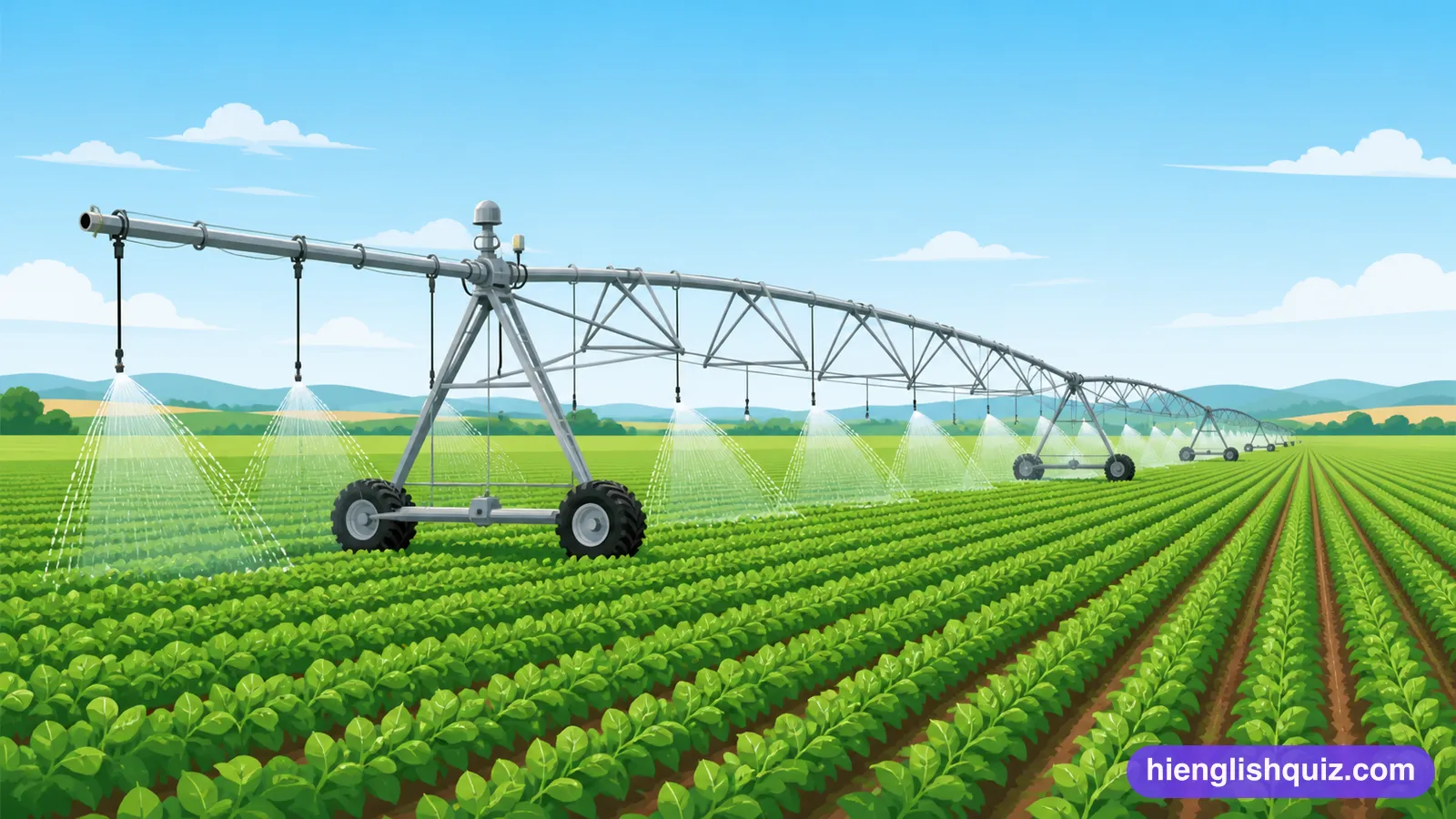
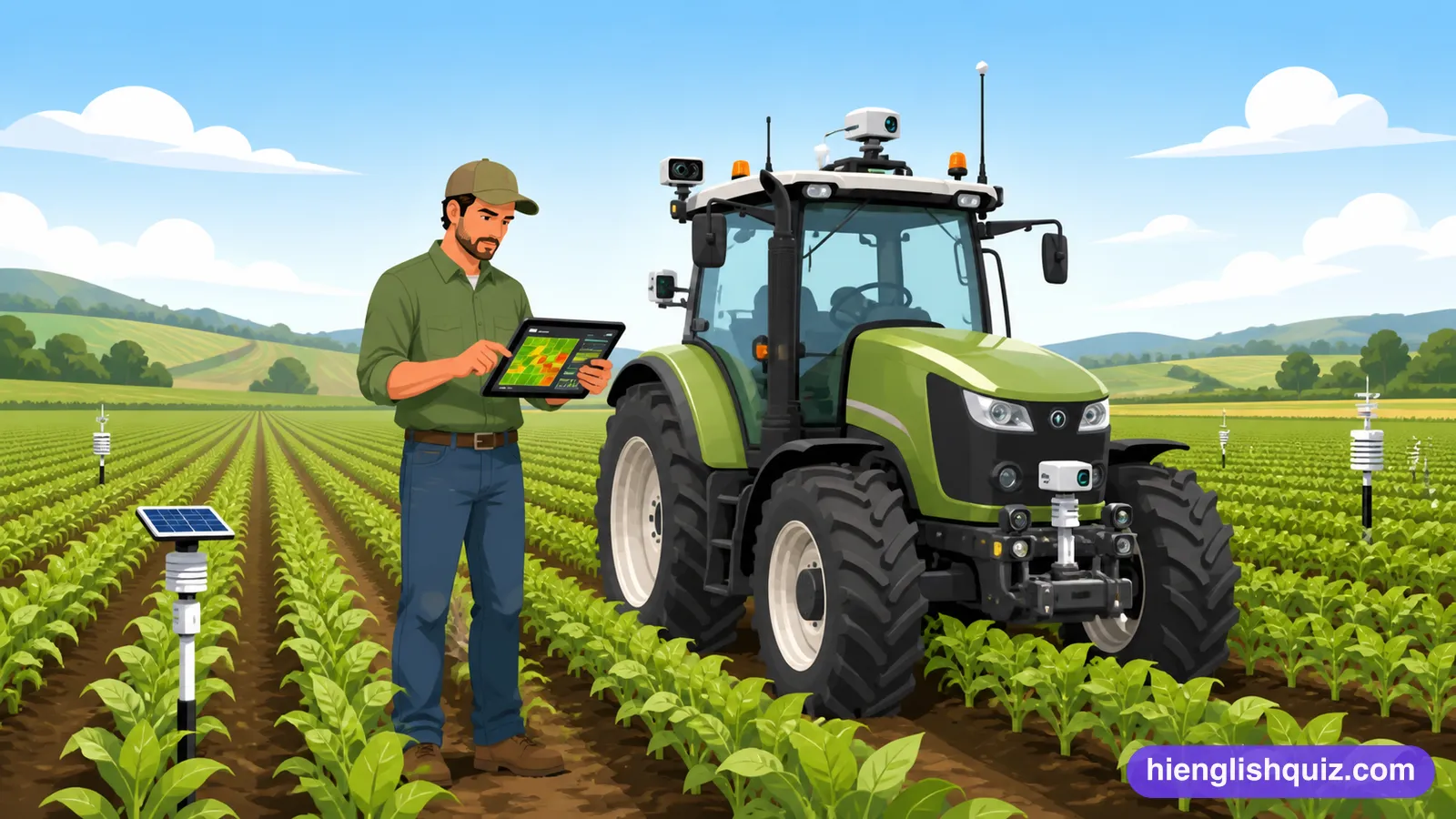
The use of technology such as GPS and sensors to manage crops and soil more accurately.
Example: Precision agriculture let the farm cut fertiliser use by a third.
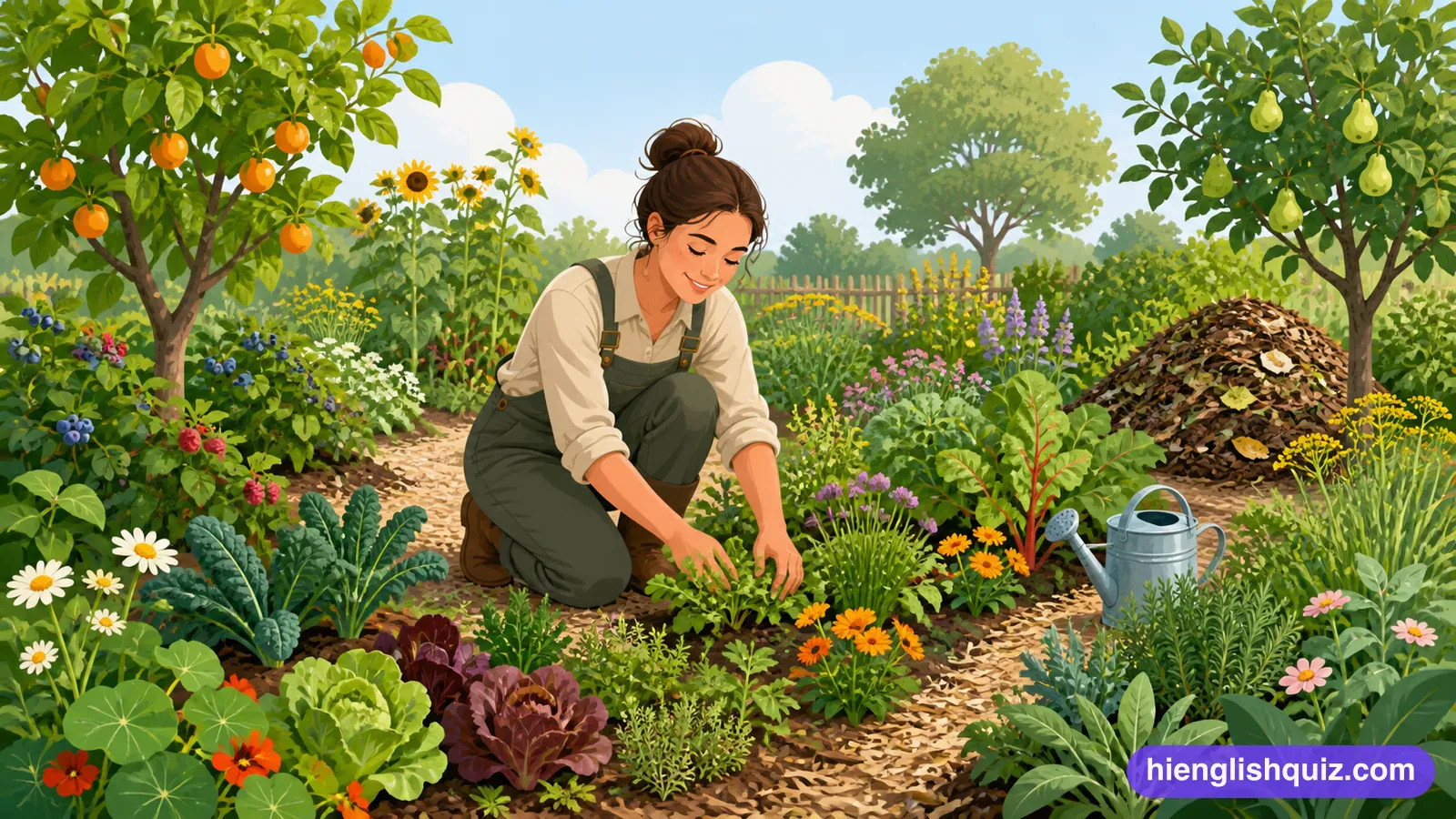
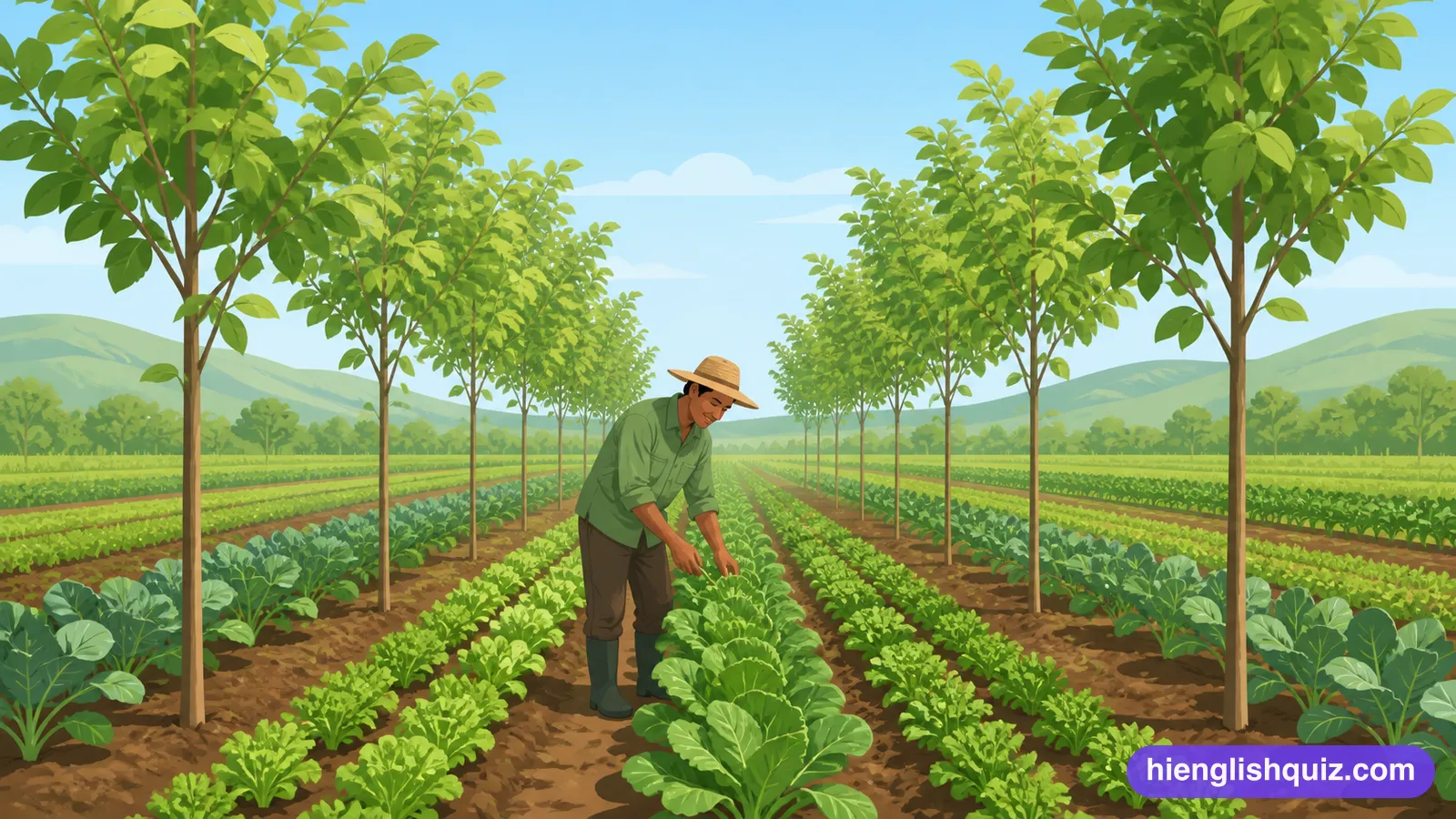
A farming method that combines growing crops or raising animals with planting trees on the same land.
Example: Agroforestry gave the farm both shade and an extra crop.
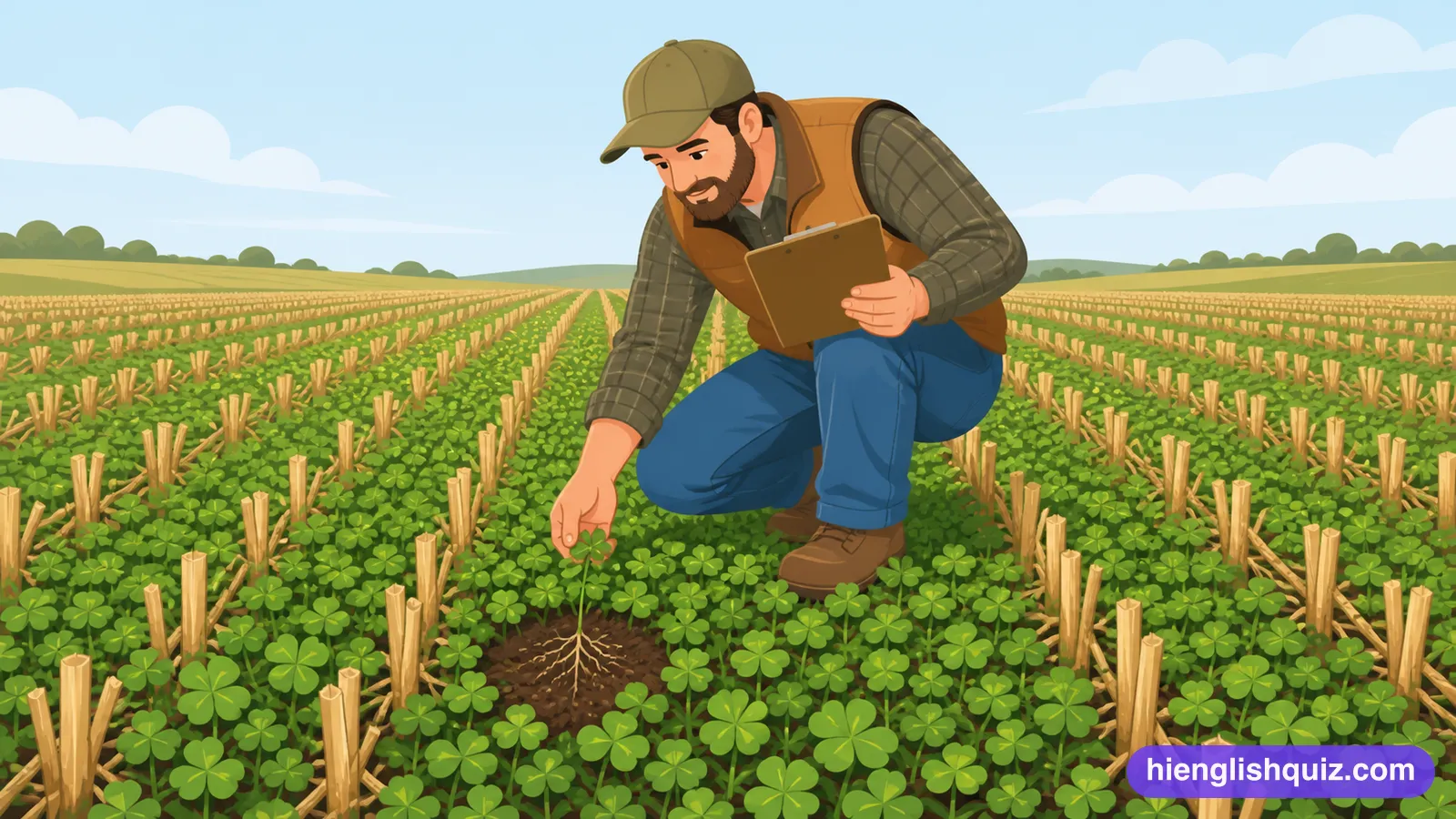
A plant grown mainly to protect and improve the soil, rather than to be harvested and sold.
Example: The field grows a cover crop of clover over winter.
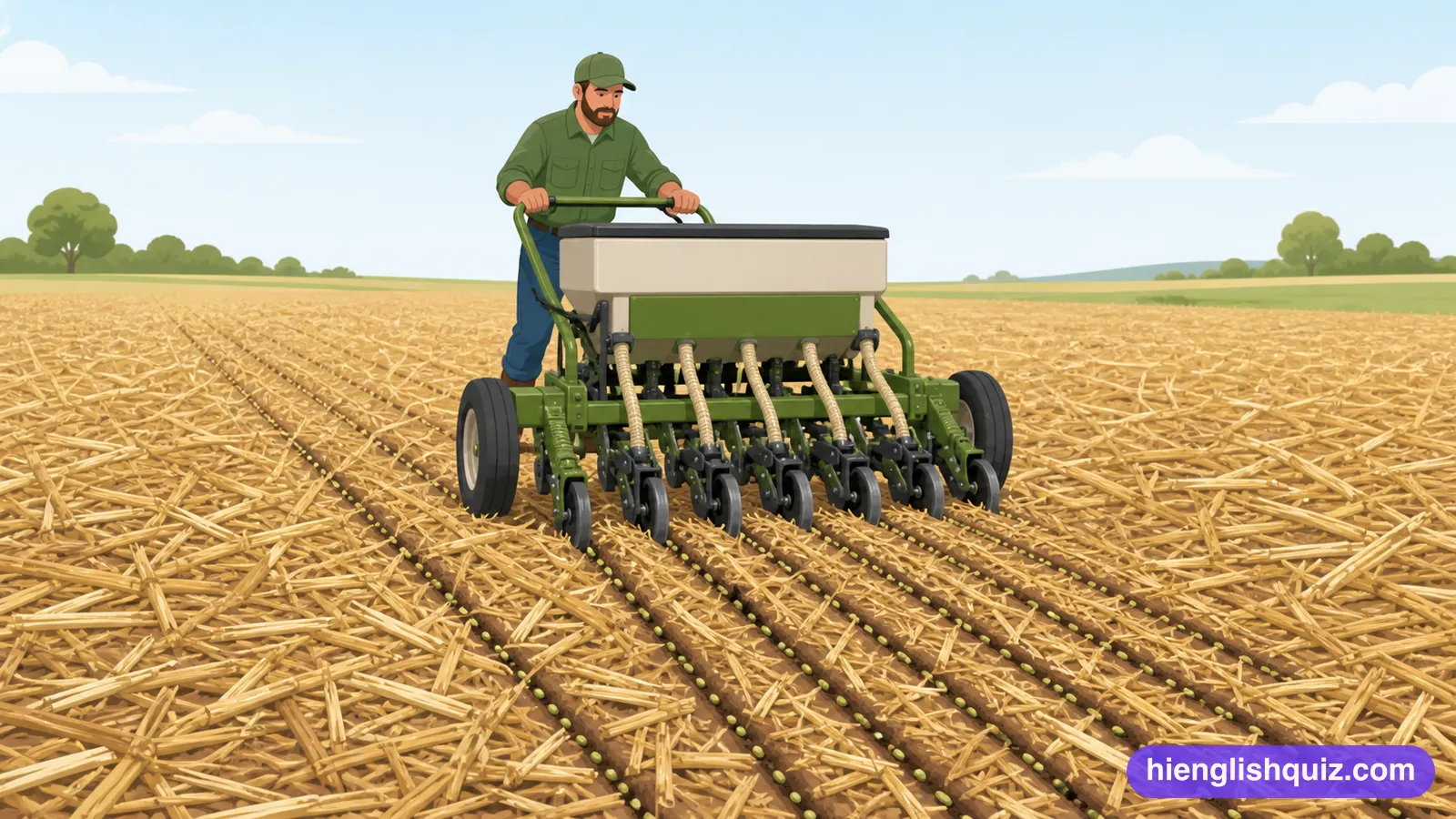
A method of growing crops without ploughing the soil, to reduce erosion and preserve its structure.
Example: No-till farming left the soil's structure undisturbed for years.
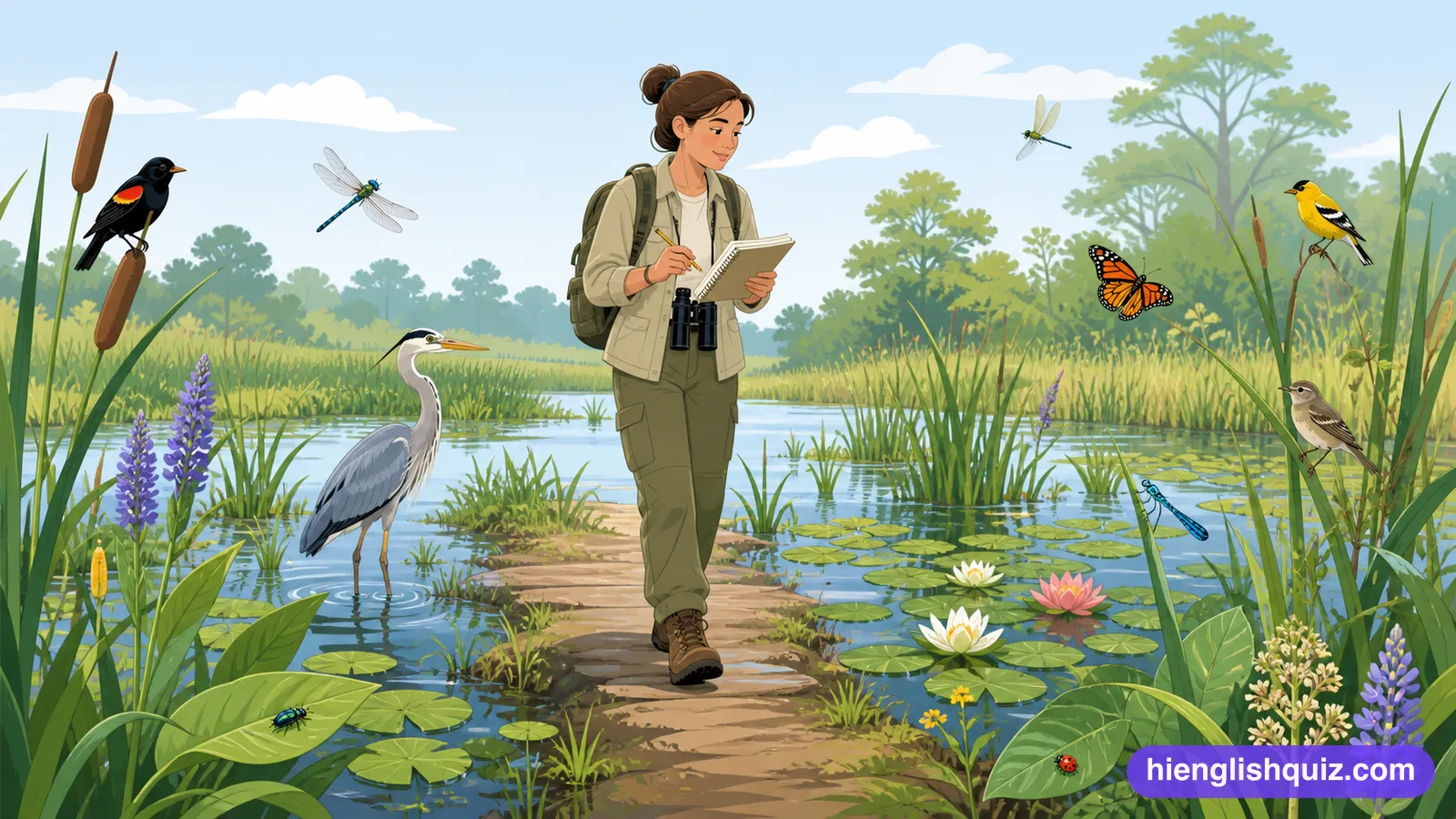
The variety of plant and animal life in a particular habitat or on Earth as a whole.
Example: The wetland project aimed to restore local biodiversity.
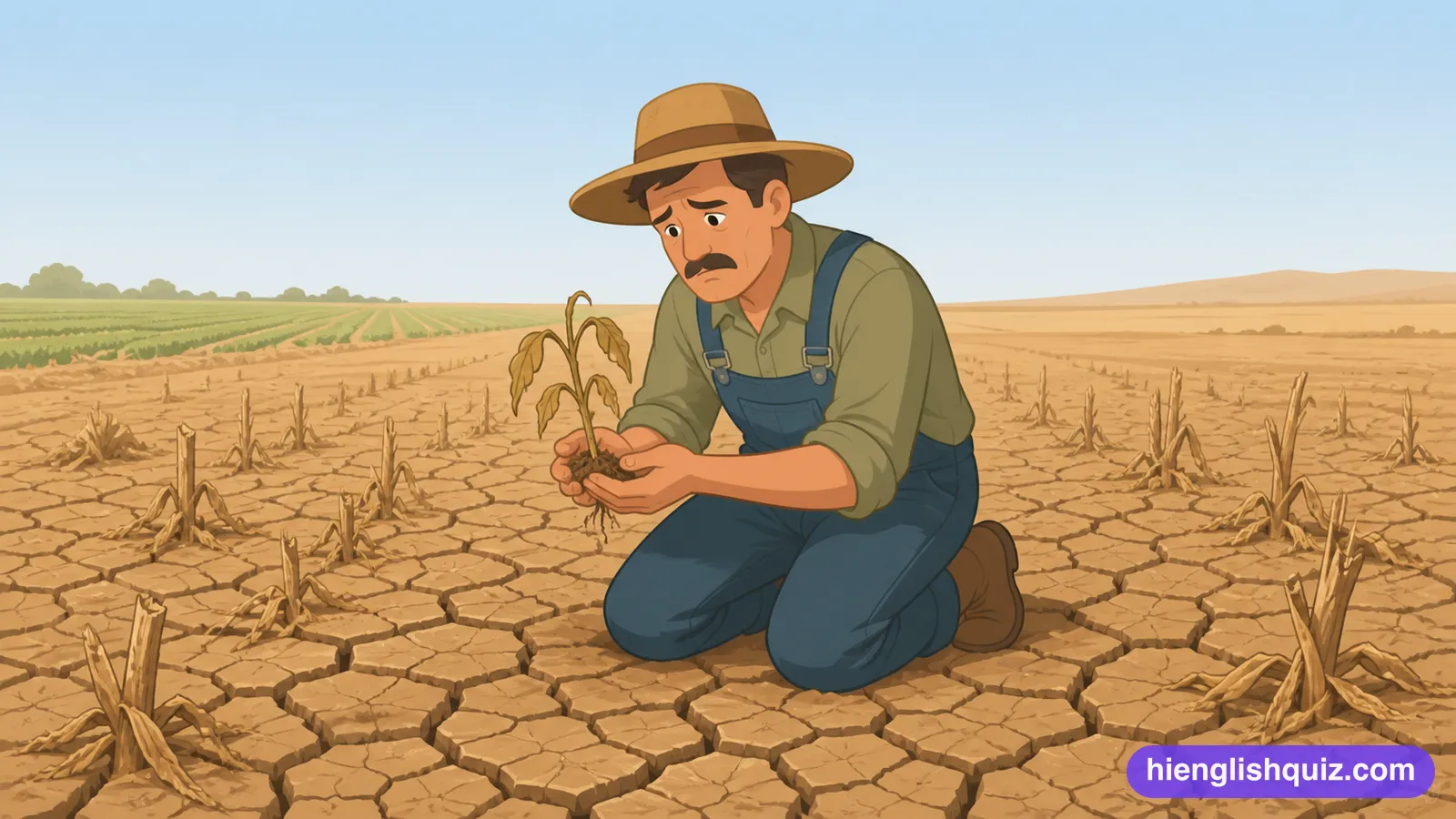
The process by which fertile land gradually turns into desert, often due to drought or poor farming.
Example: Desertification has made large areas of the region unfarmable.
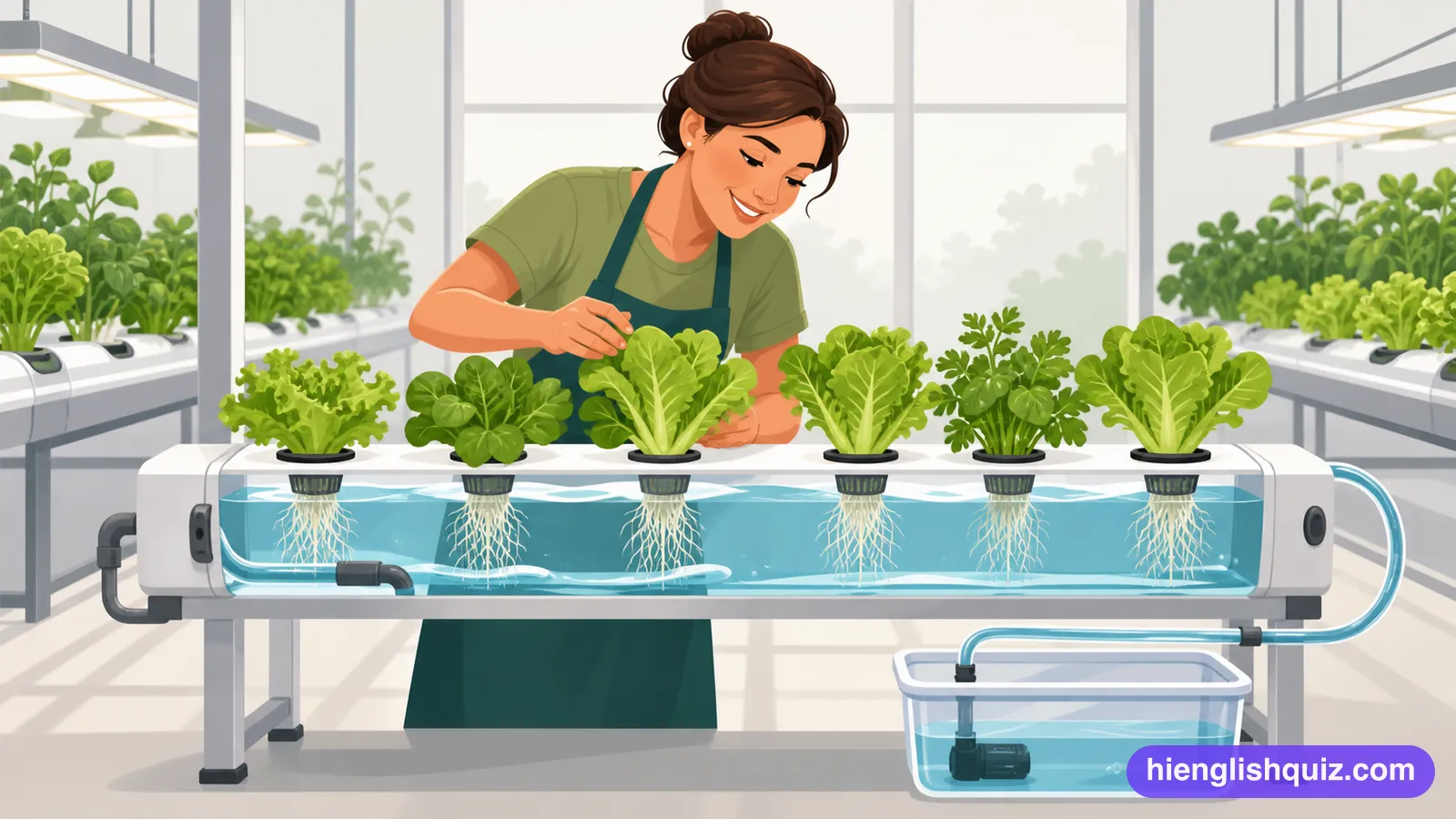
A way of growing plants in water with added nutrients, without soil.
Example: The vertical farm uses hydroponics to grow lettuce indoors year-round.
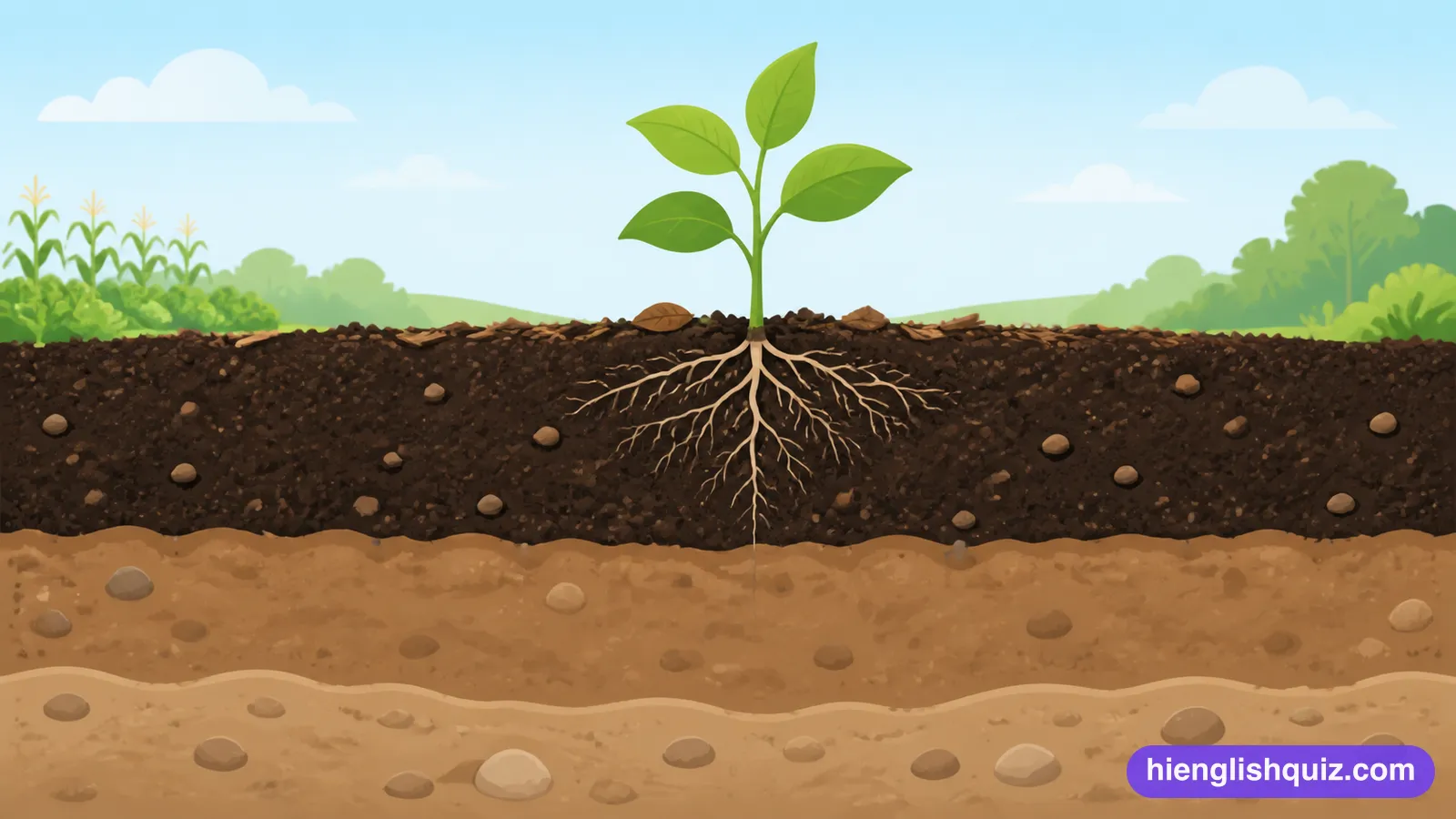
The upper layer of soil where most plant roots grow.
Example: Years of neglect had washed away the farm's fertile topsoil.
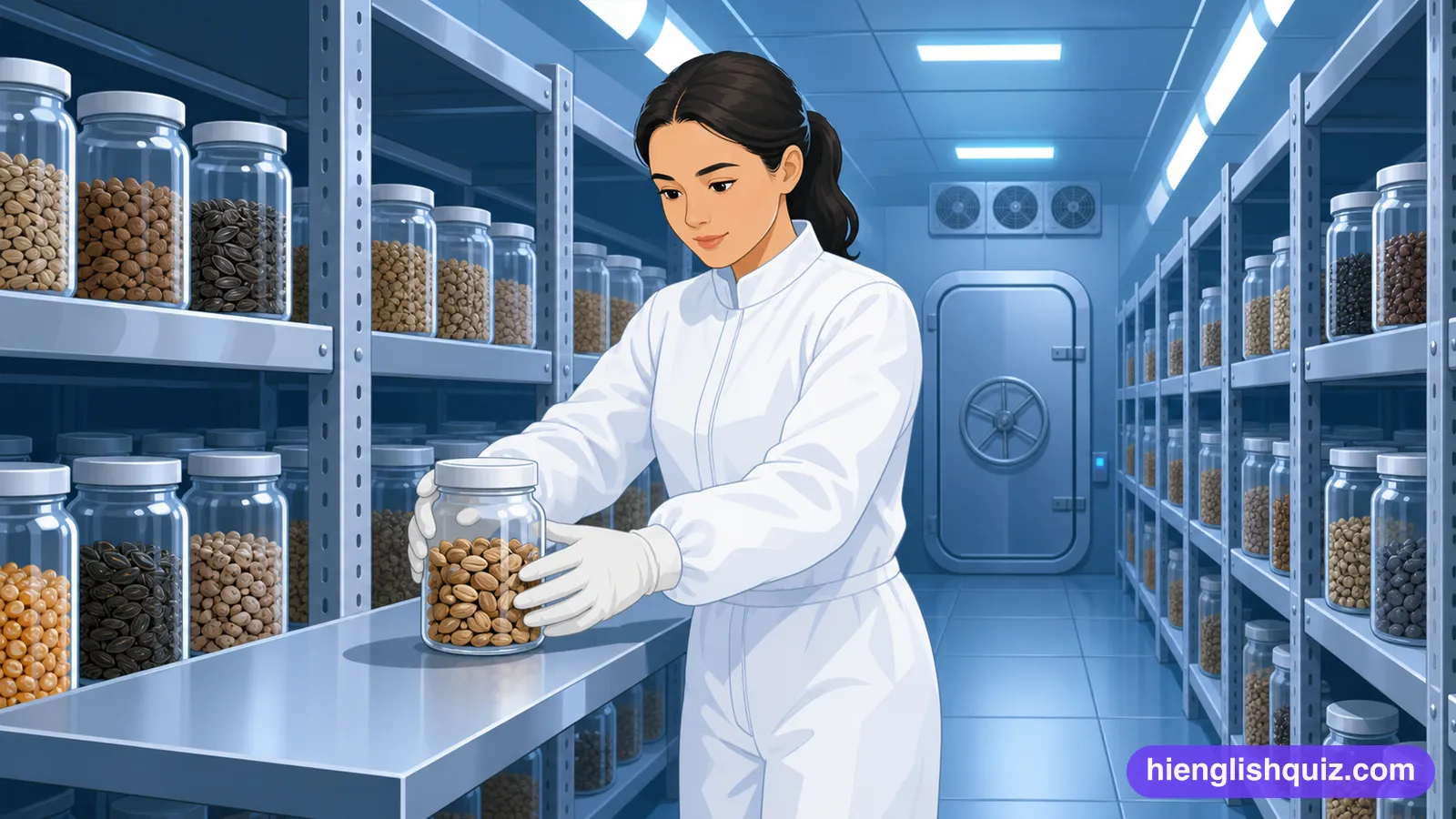
A place that stores seeds safely for future planting or research.
Example: Scientists store rare seeds in a global seed bank in Norway.
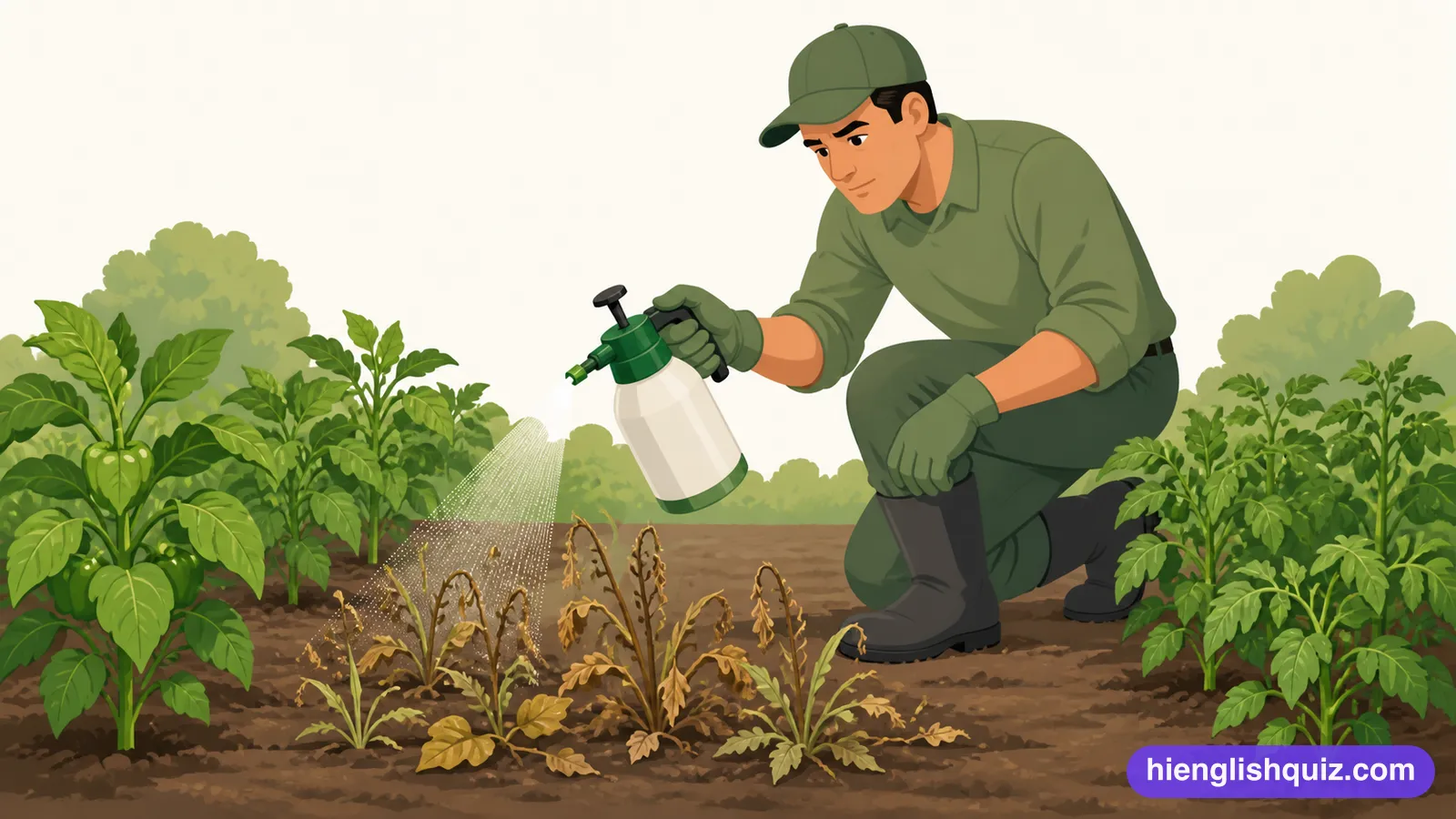
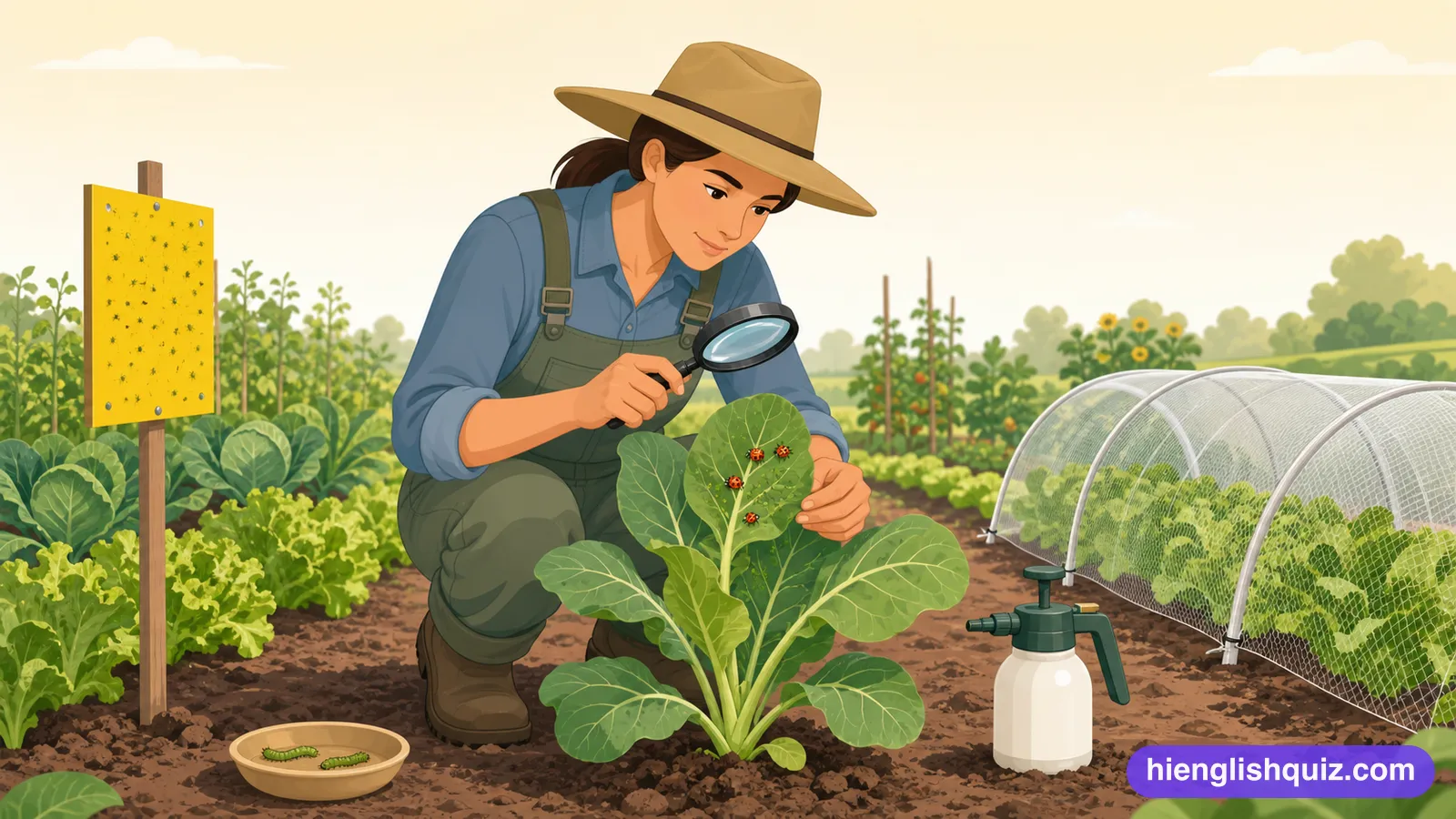
Controlling pests with several methods rather than chemicals alone.
Example: Integrated pest management cut the spray bill by two thirds.
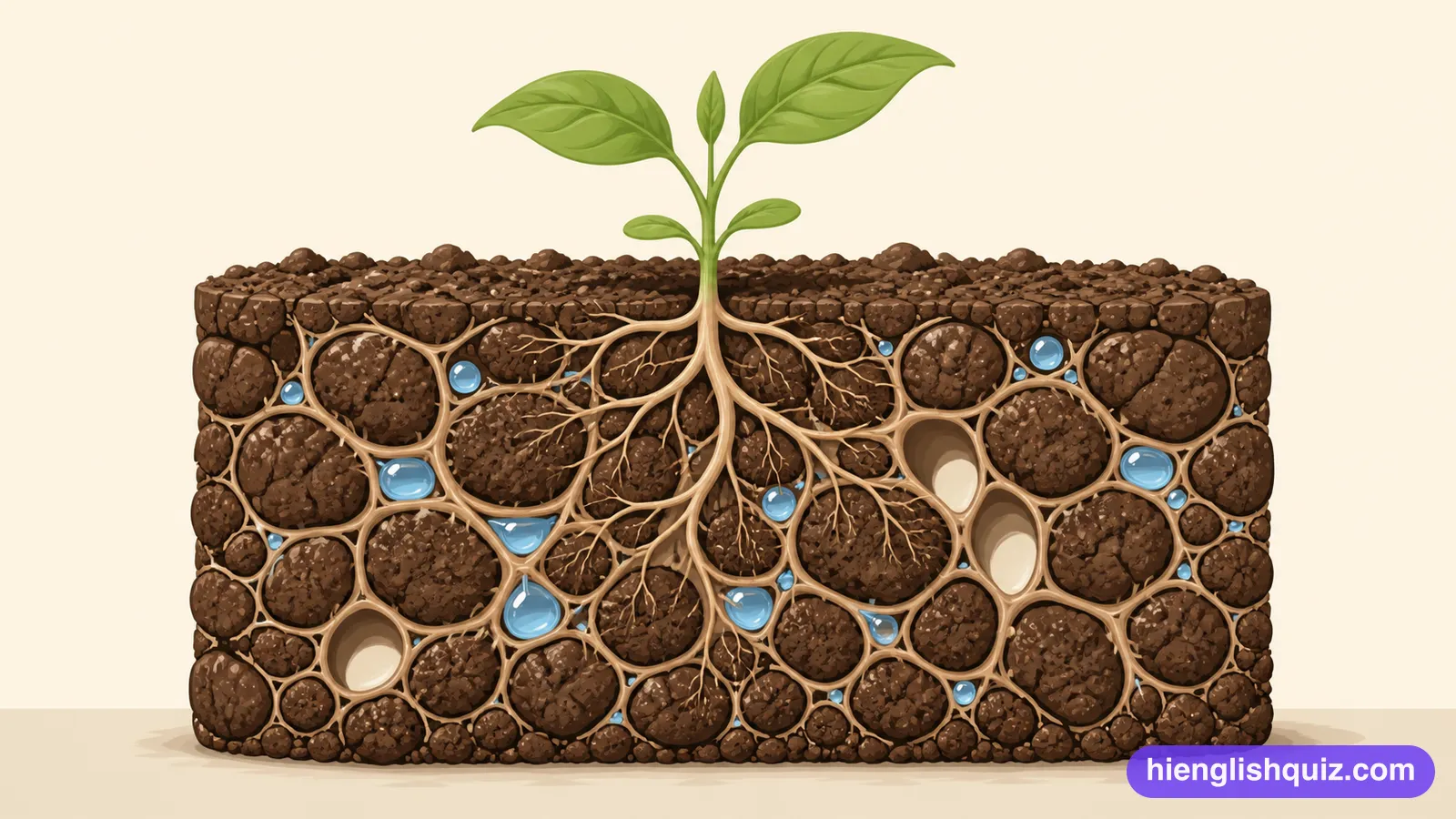
The way soil particles group together and hold air and water.
Example: Heavy machinery destroyed the soil structure in a single wet autumn.
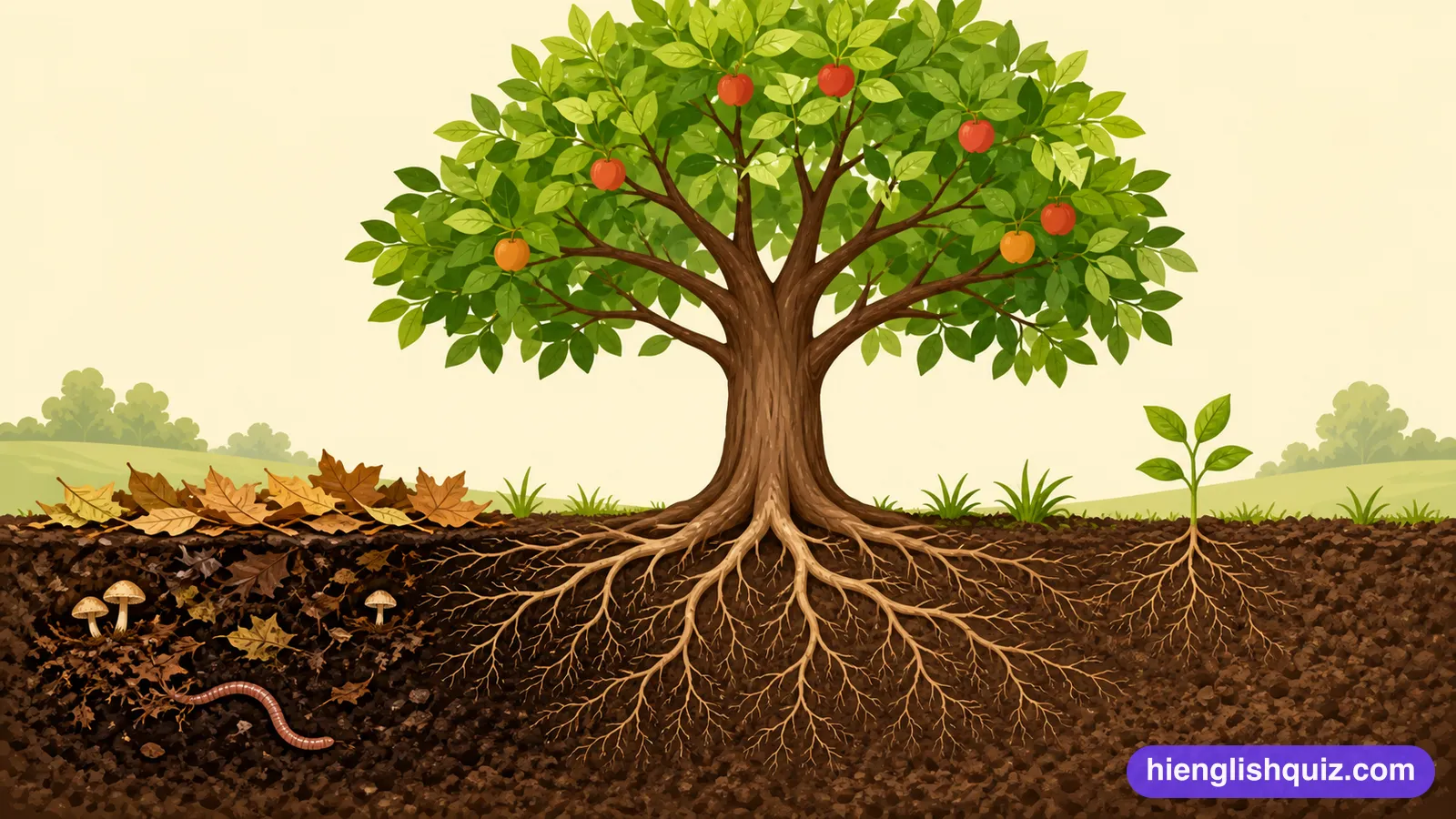
The movement of nutrients between soil, plants and animals.
Example: Nutrient cycling on that farm was closed by design.
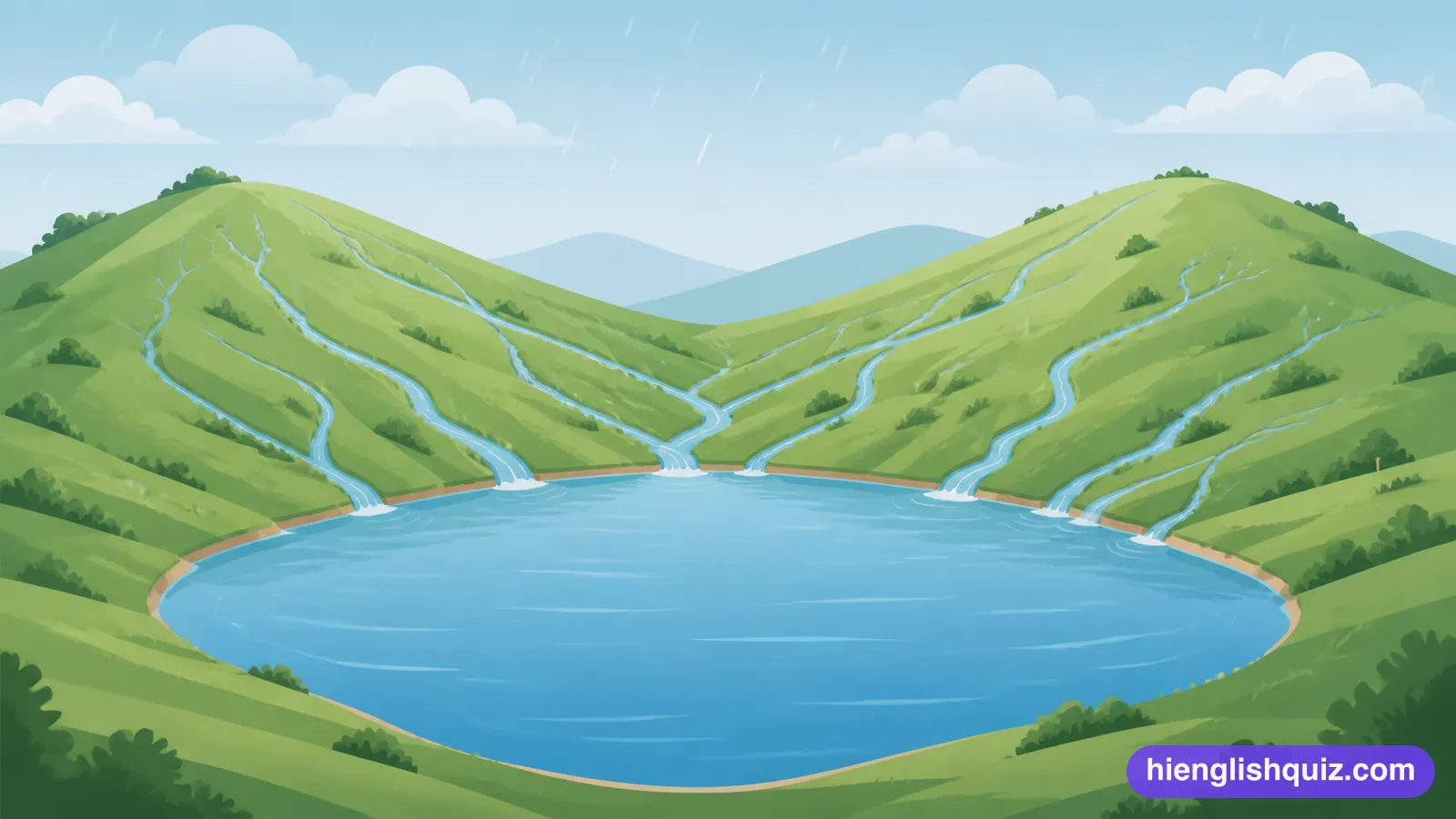
The whole area of land that drains into one river.
Example: The catchment above the reservoir is entirely arable.
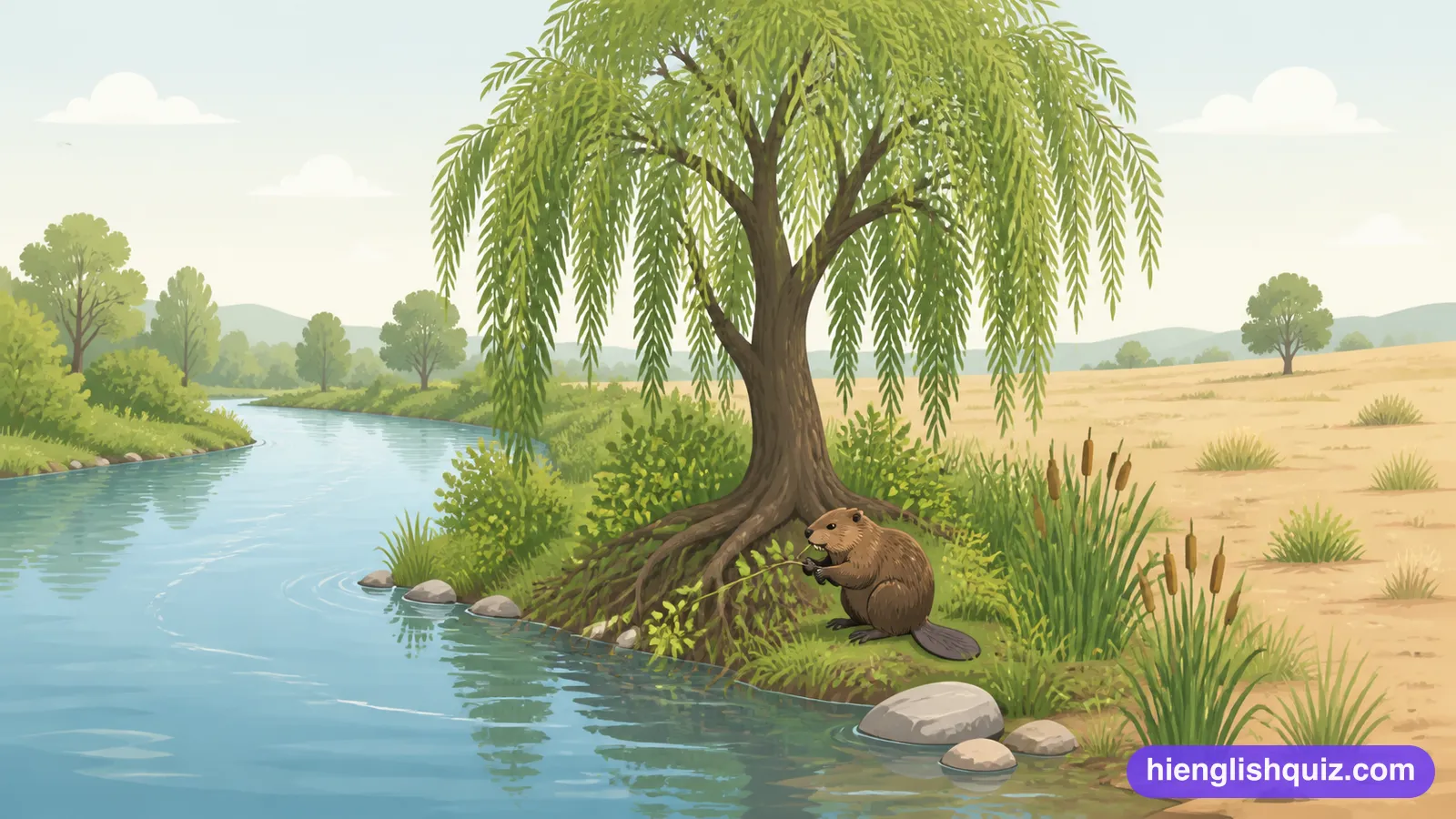
Relating to the banks of a river.
Example: The riparian strip was fenced off and the water cleared within a year.
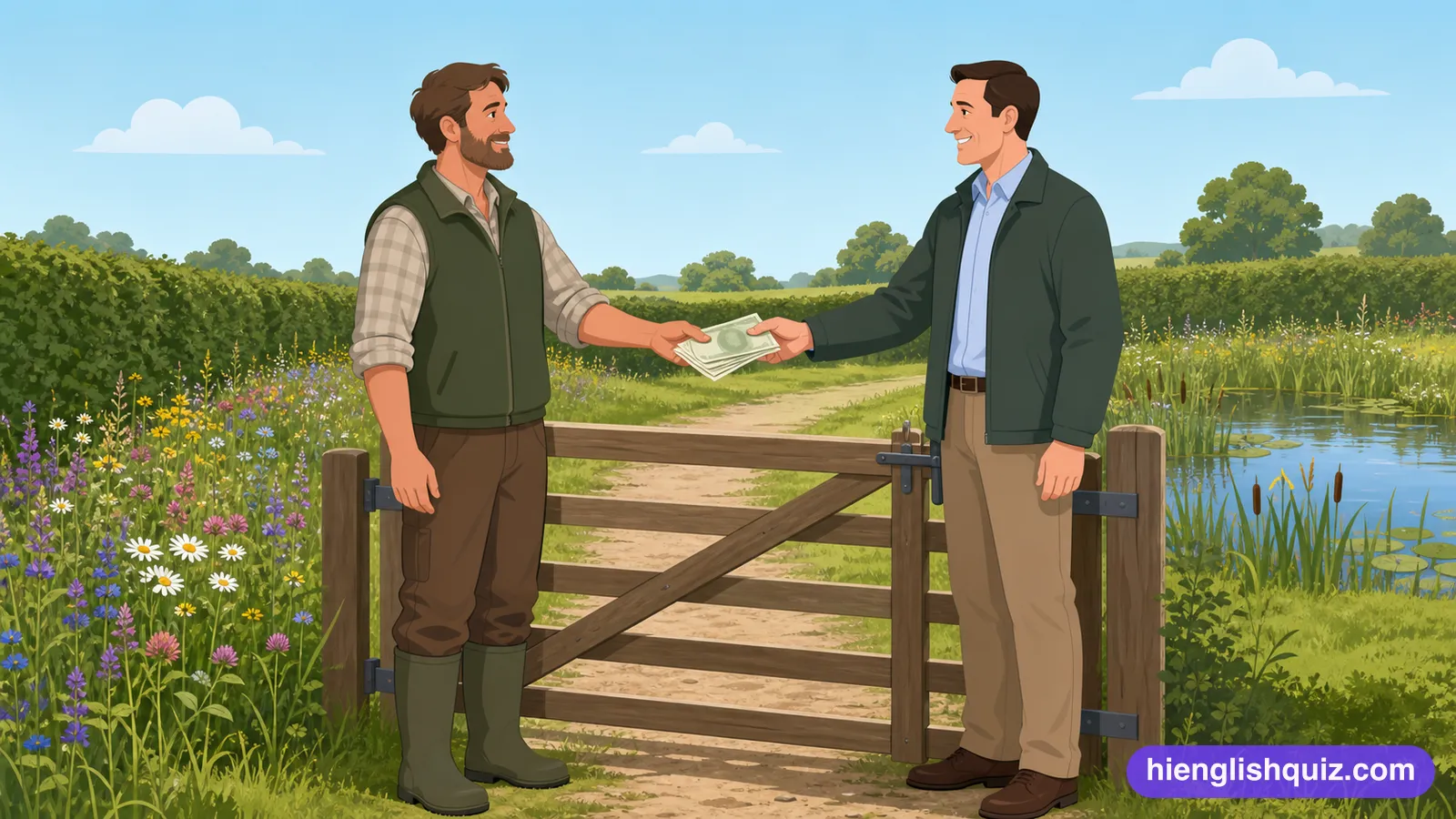
A payment for managing land in an environmentally good way.
Example: The stewardship scheme paid better than the crop did.
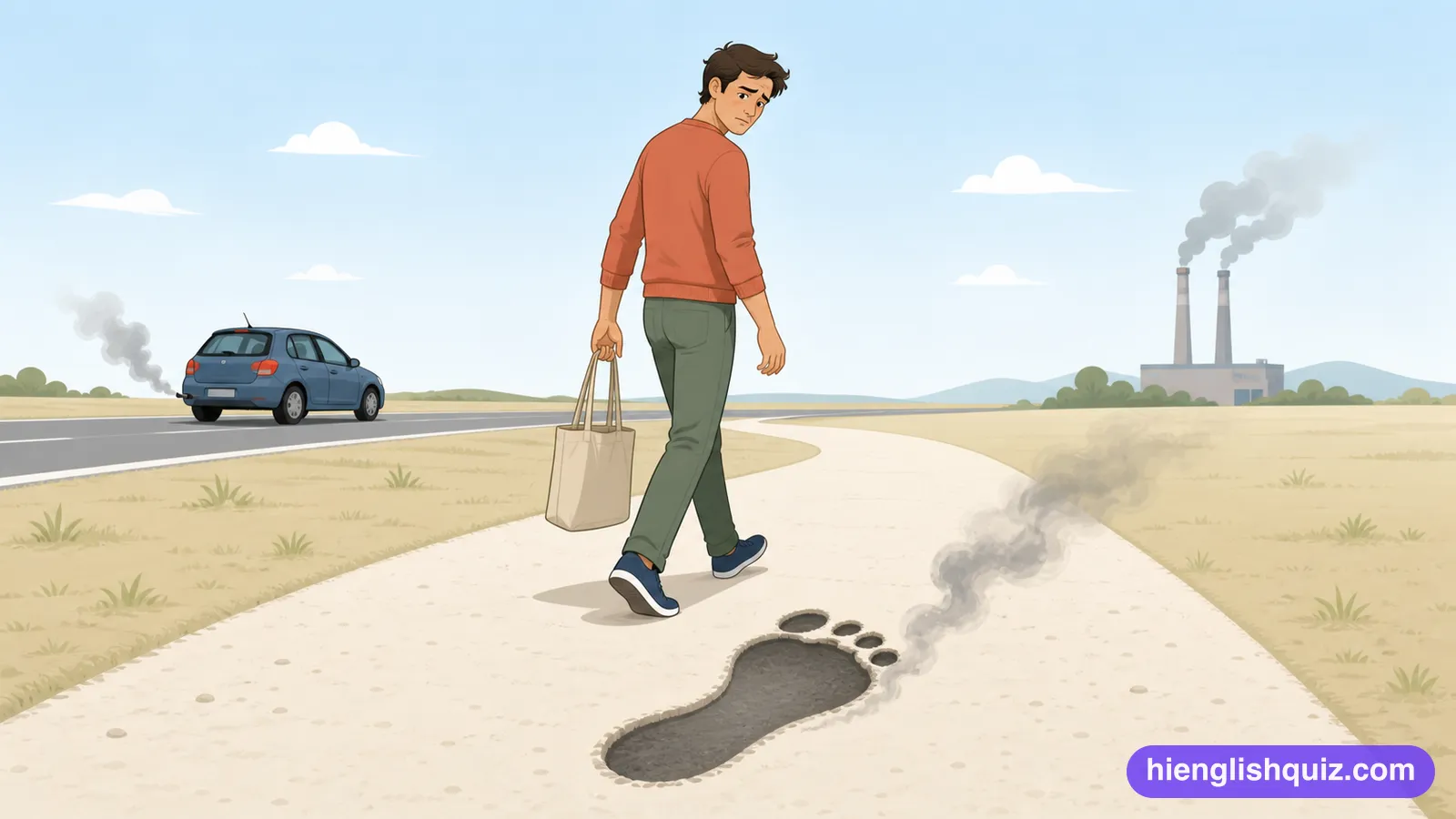
The total greenhouse gas produced by an activity.
Example: Their carbon footprint halved when the herd did.
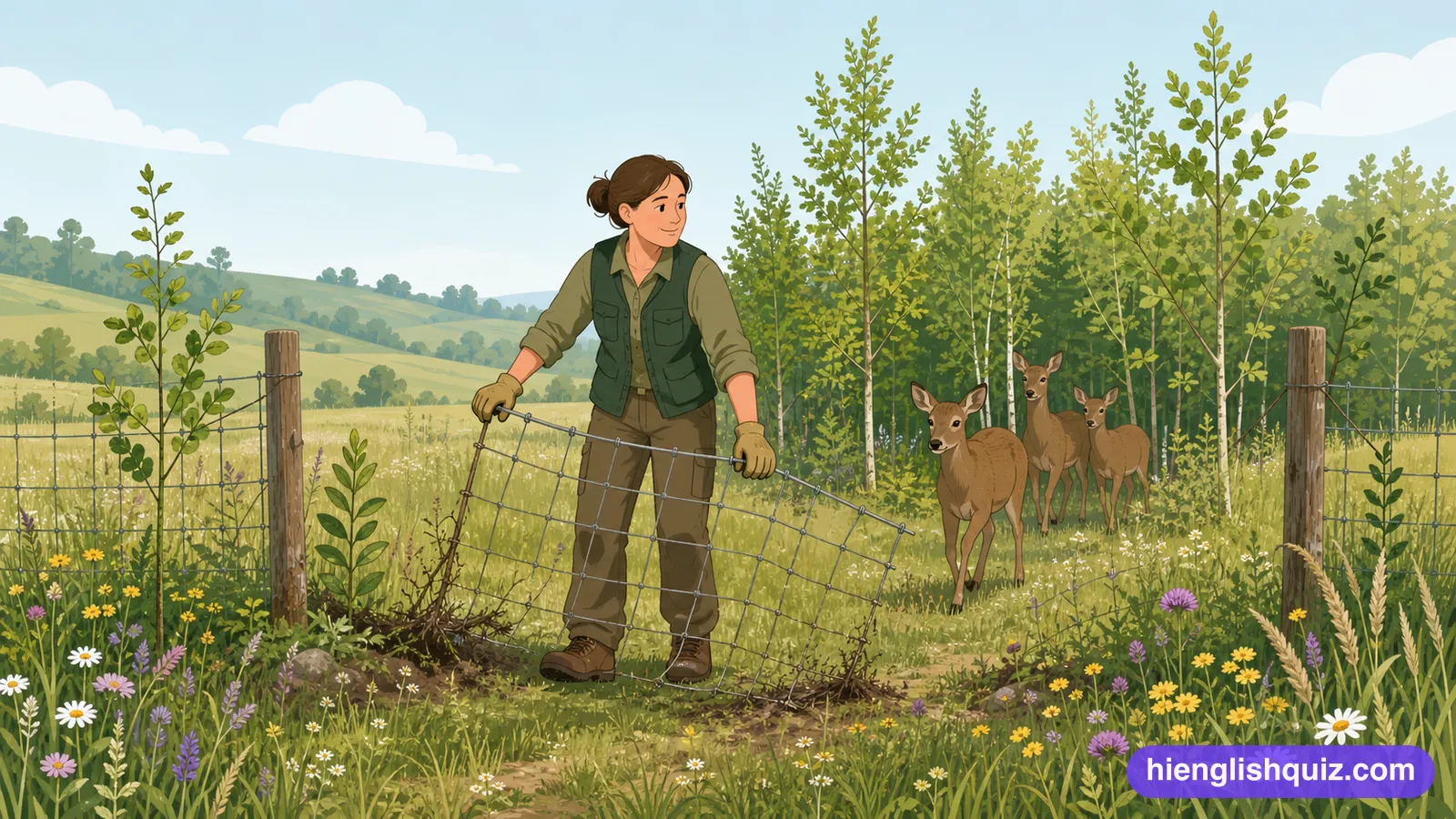
Letting land return to a natural state with little management.
Example: Rewilding the top hundred acres was the least popular decision.
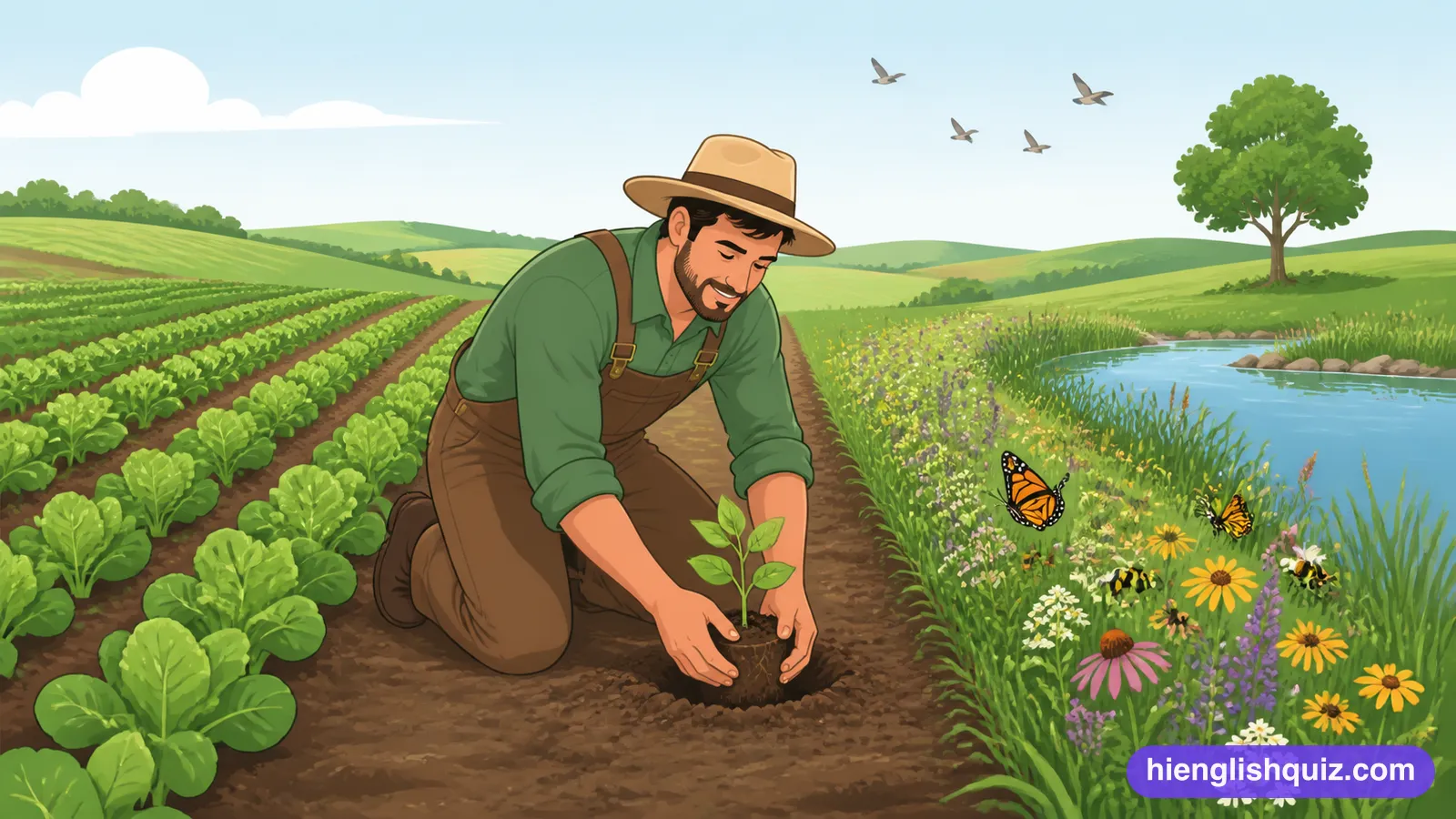
Farming policy aimed at protecting the countryside.
Example: Every agri-environment payment came with eleven pages of conditions.
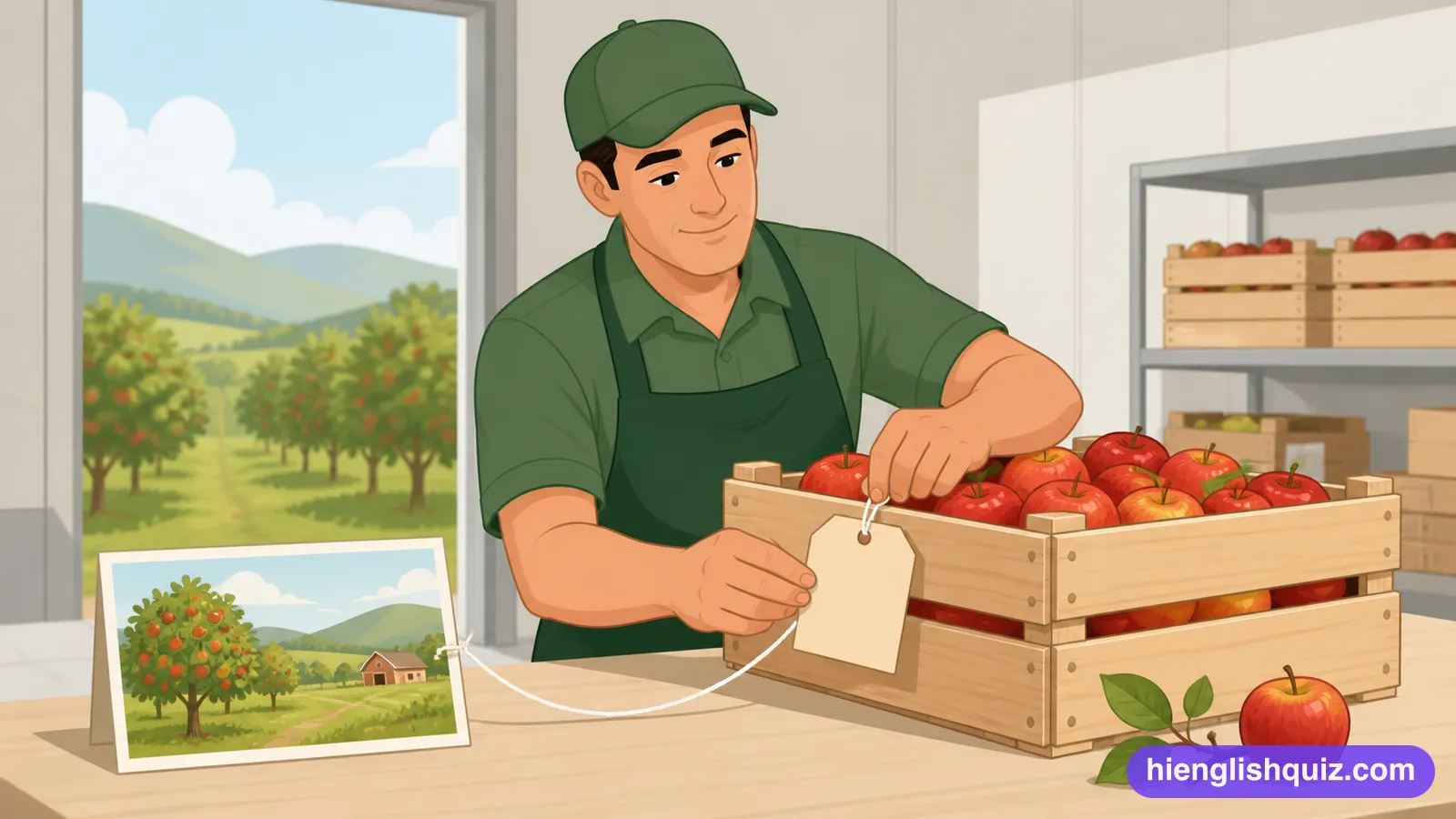
Marking food with where it actually came from.
Example: Provenance labelling is what the small producers wanted most.