air traffic control
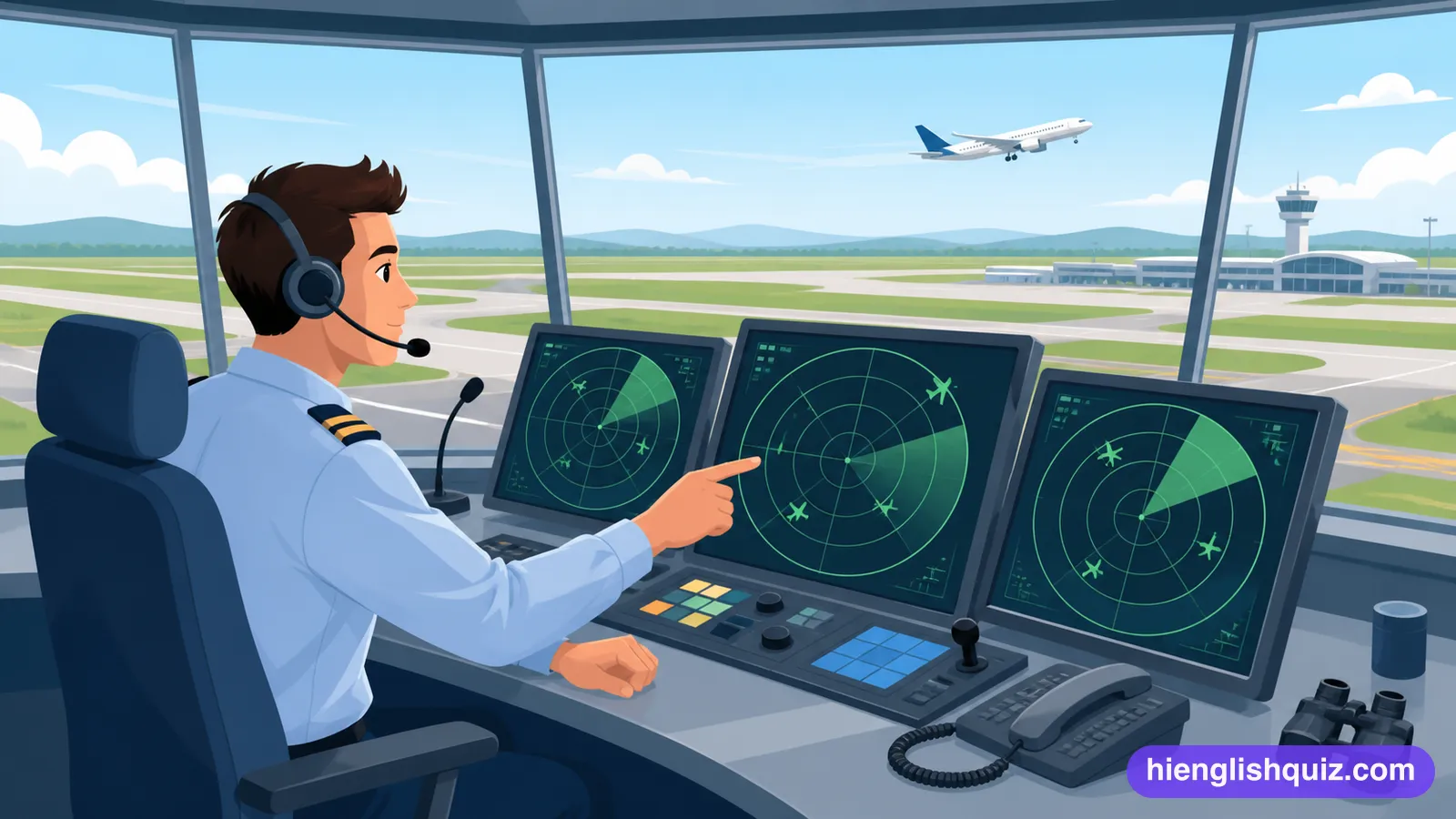
The service that directs aircraft movements to keep flights safe and organised, especially near airports.
Example: Air traffic control cleared the plane for landing.
 Hi EnglishQuiz
C120 words · Advanced
Advanced aviation and maritime vocabulary for operations, including air traffic control, a taxiway or go-around, the starboard side of a ship and the standard operating procedure crews follow.
The service that directs aircraft movements to keep flights safe and organised, especially near airports.
Example: Air traffic control cleared the plane for landing.
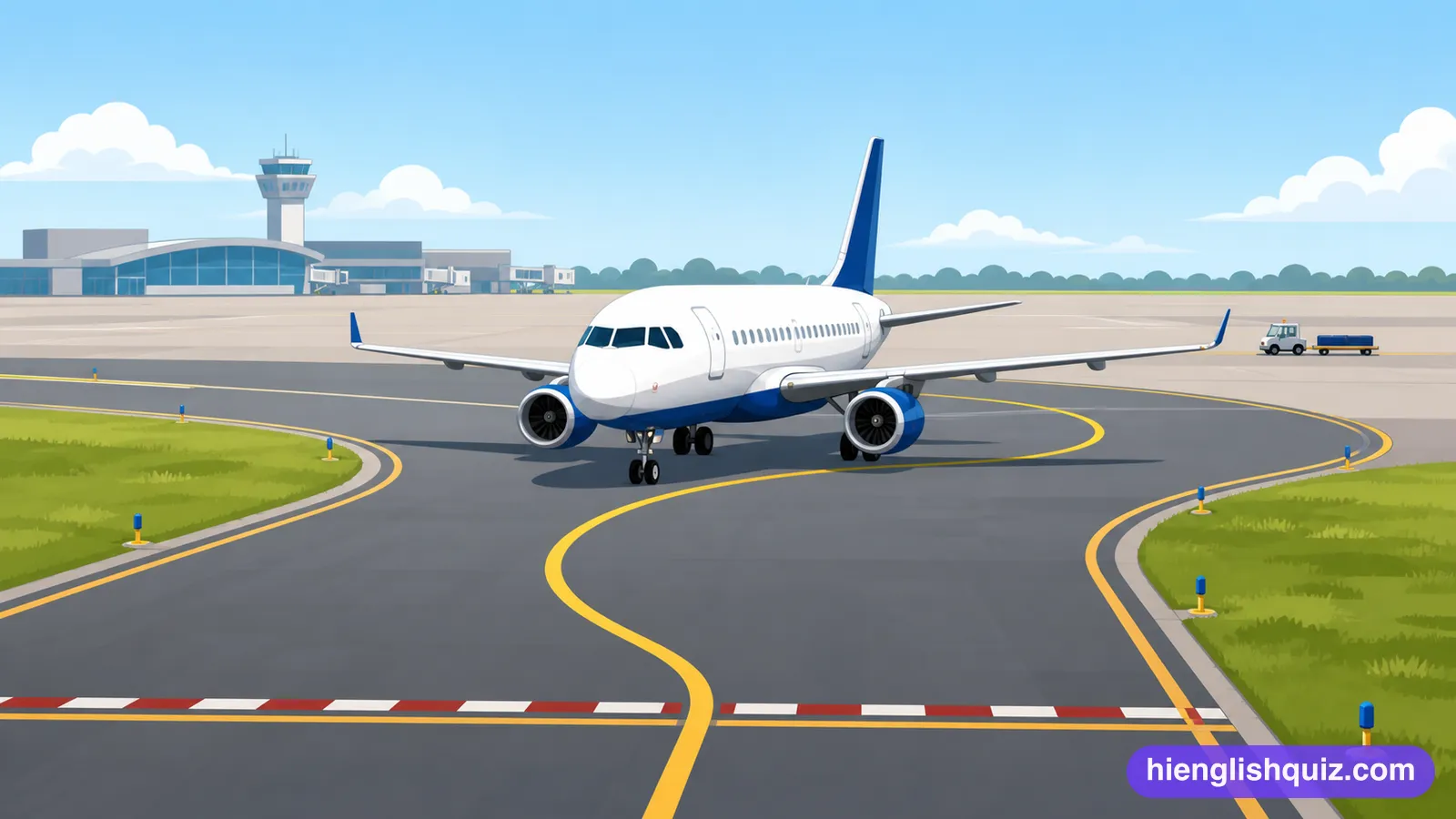
A path at an airport that aircraft use to move between the runway and the terminal.
Example: The plane waited on the taxiway for its turn to depart.
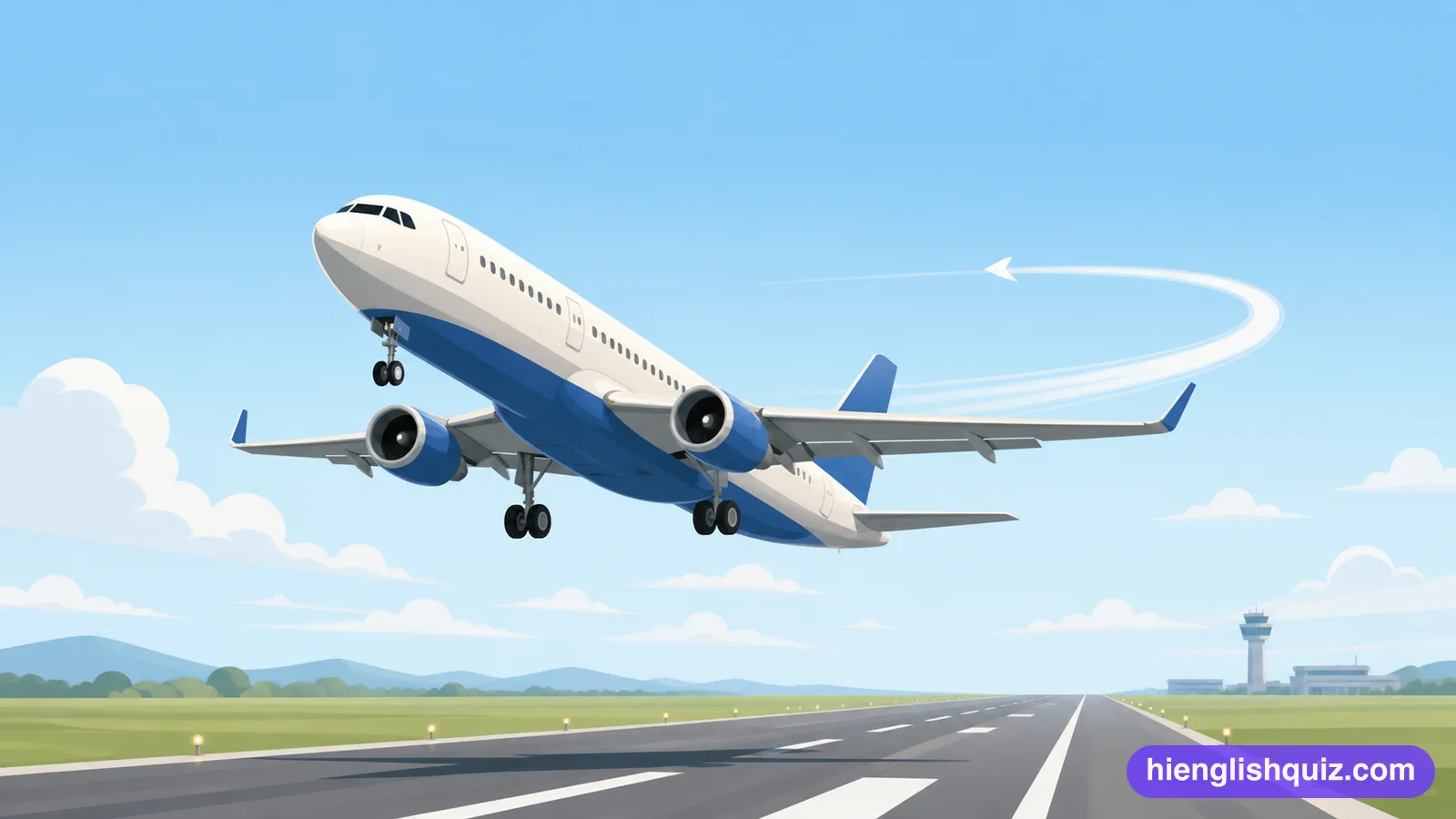
A manoeuvre in which a pilot aborts a landing and climbs back up to try again.
Example: The pilot performed a go-around after the runway wasn't clear.
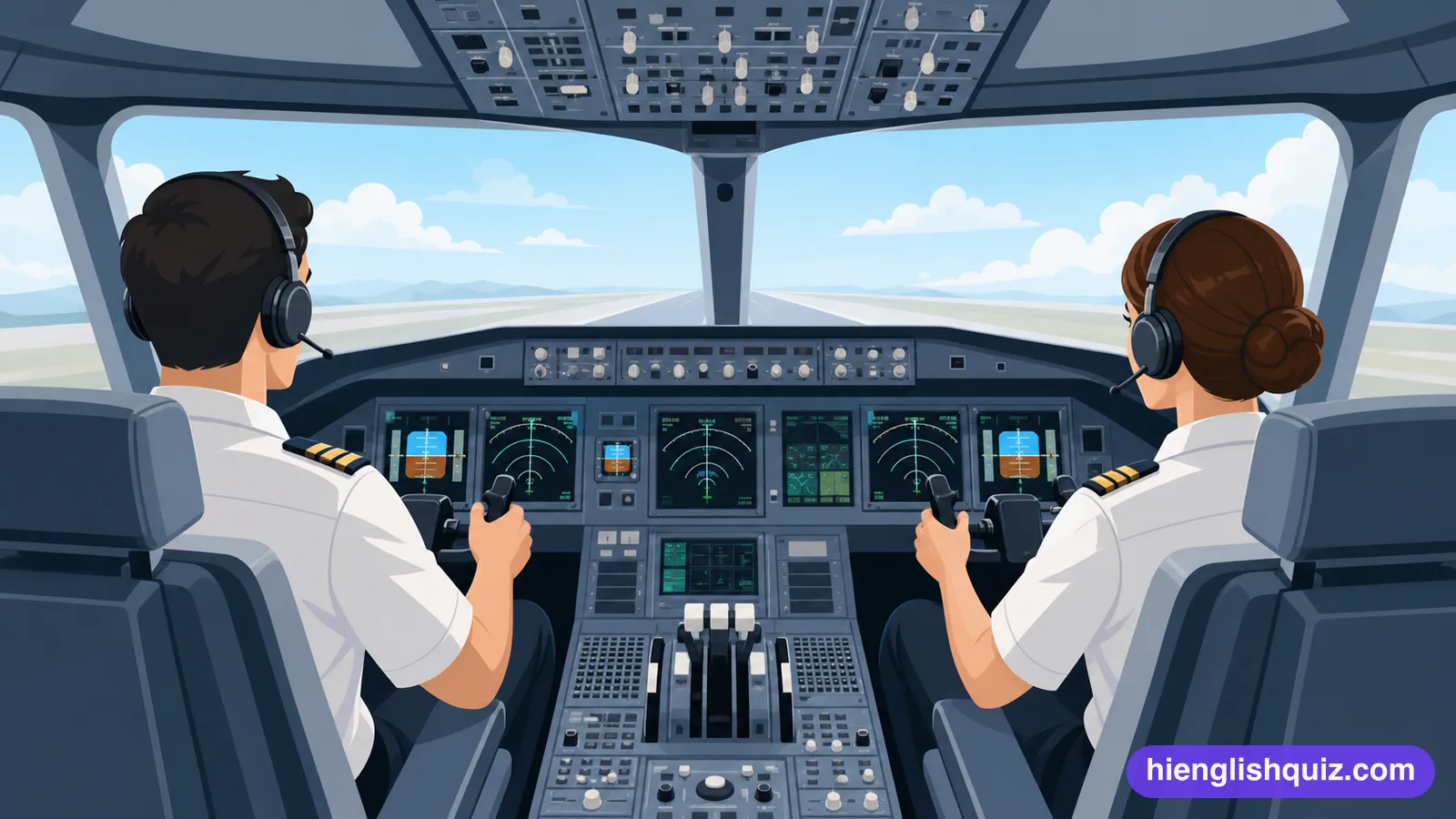
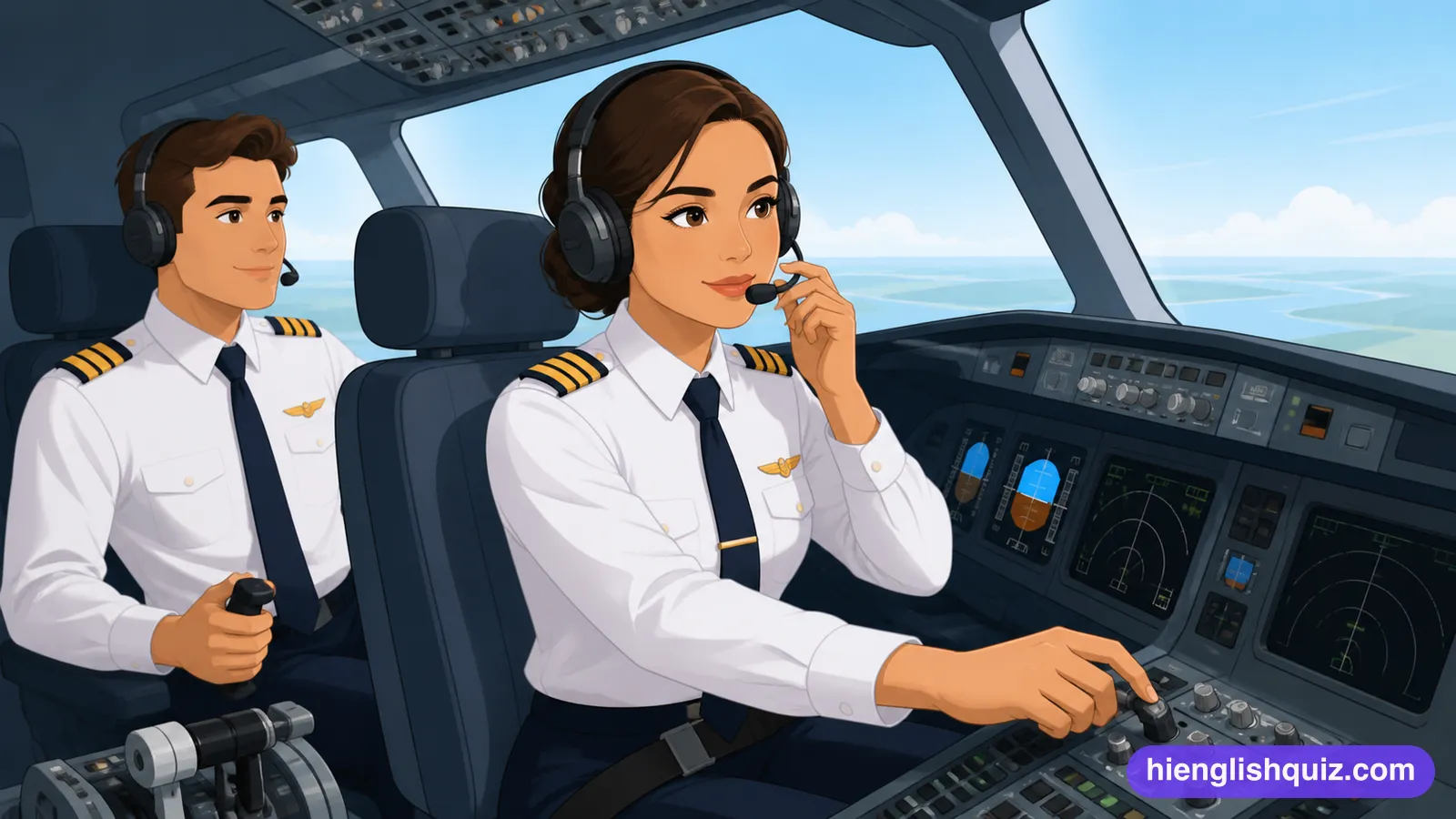
The second-in-command pilot on a commercial aircraft, who assists the captain.
Example: The first officer handled the radio while the captain flew.
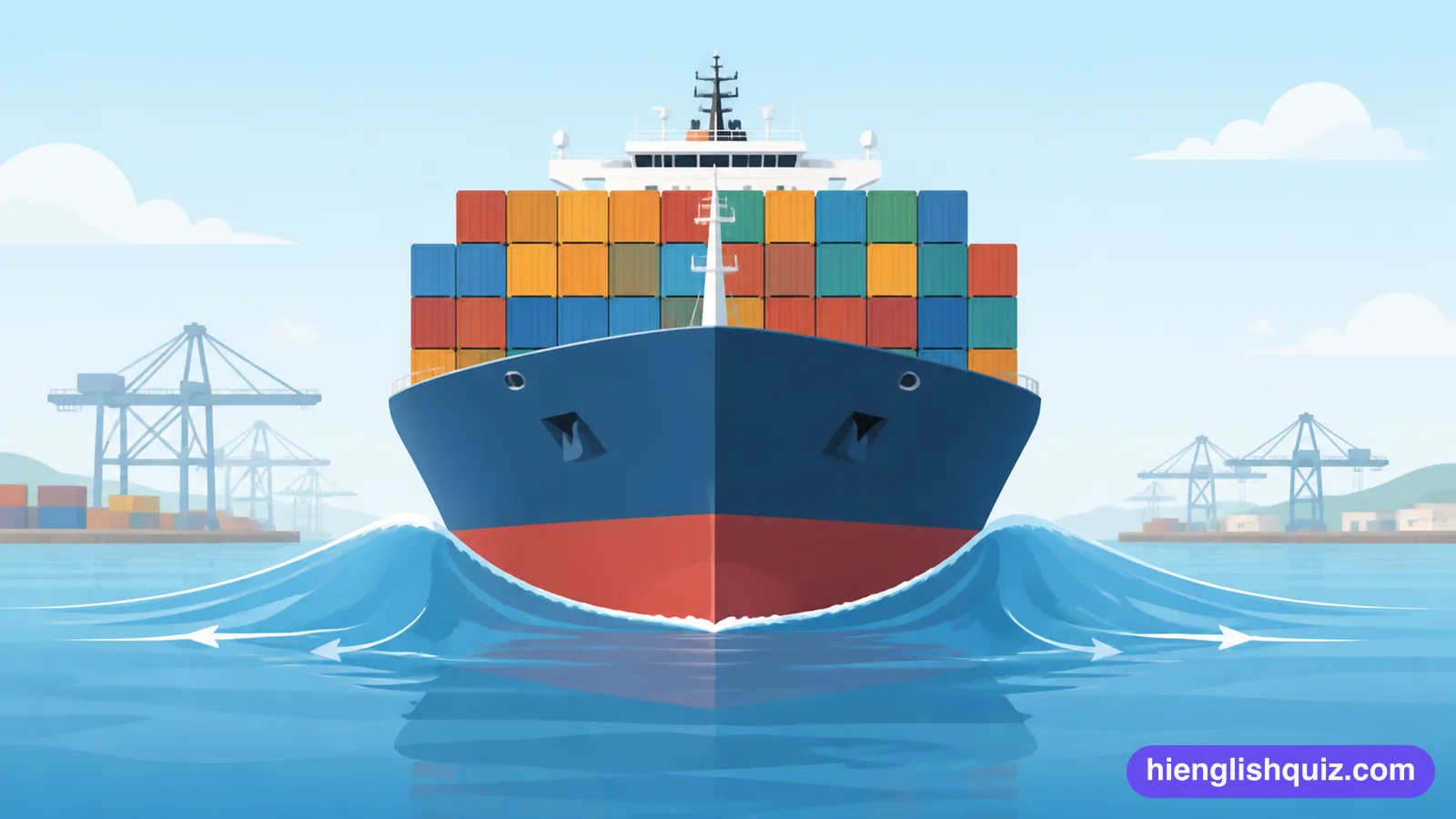
The weight of water that a ship pushes aside, used to measure its size.
Example: The cargo ship has a displacement of over fifty thousand tonnes.
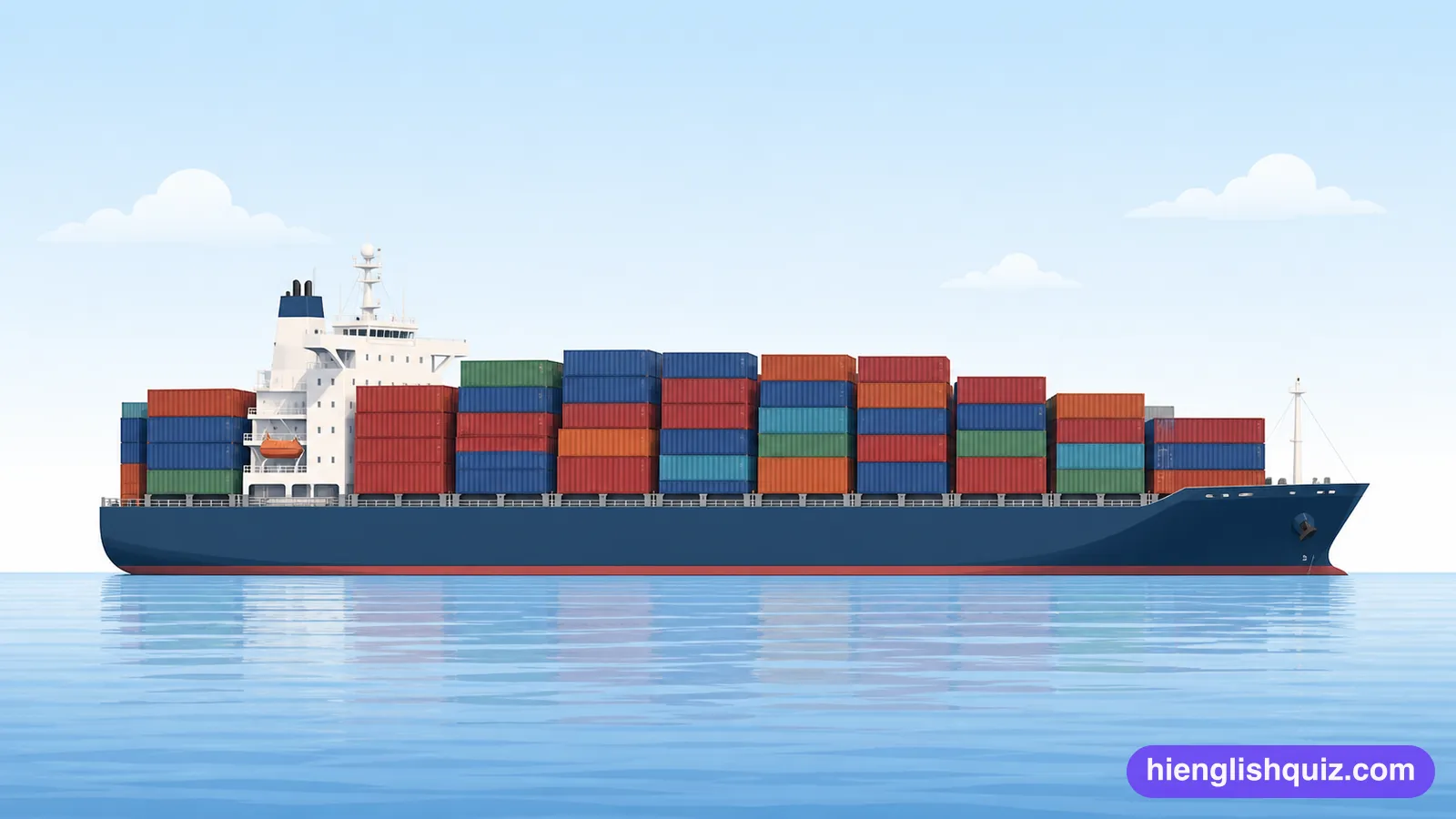
The distance between a ship's waterline and its upper deck, which affects how much water it can safely take on.
Example: Loading too much cargo reduced the ship's freeboard dangerously.
The front part of a ship.
Example: Waves crashed over the bow in the storm.
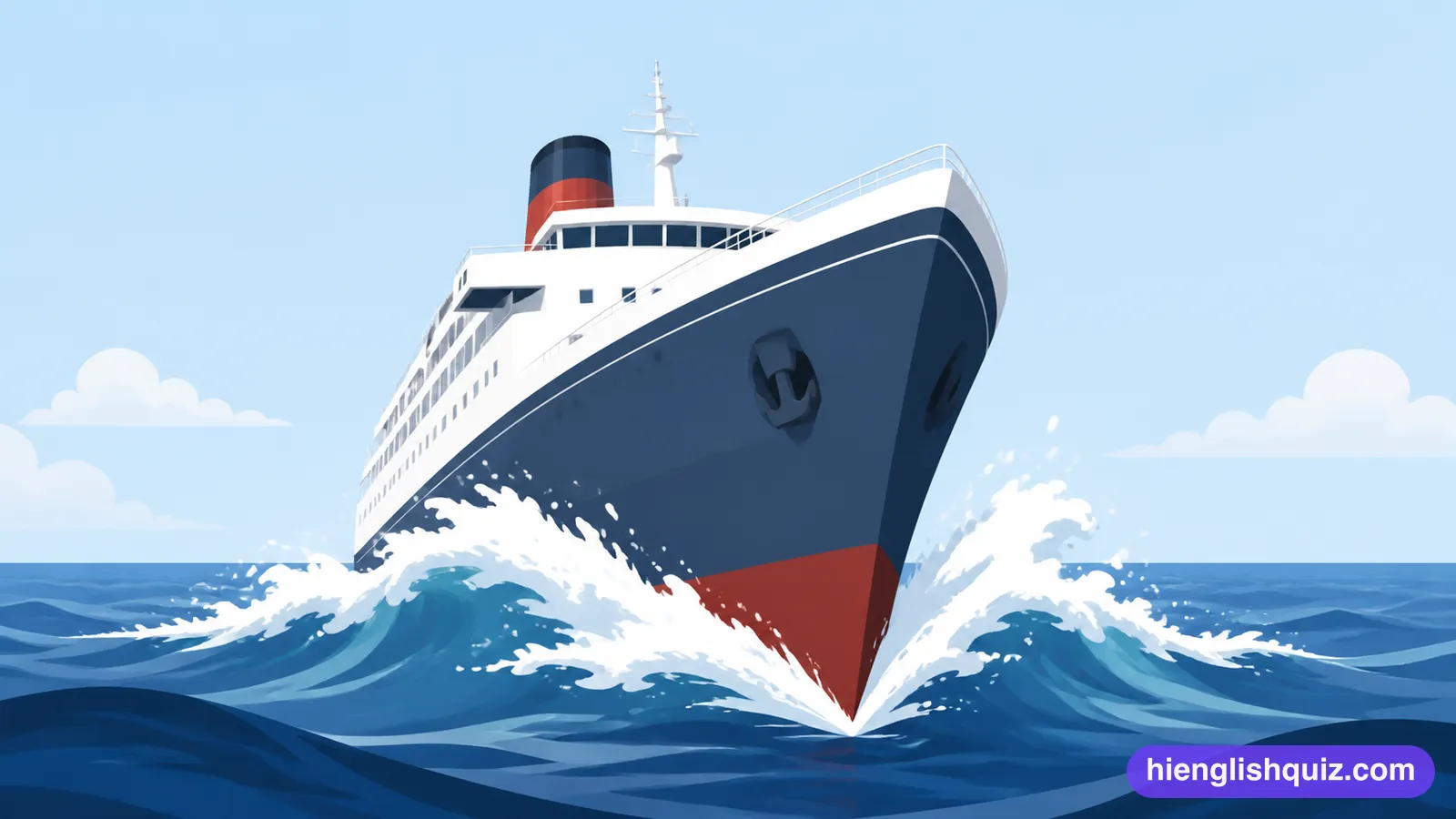
The right-hand side of a ship or aircraft, facing forward.
Example: The captain ordered a turn to starboard to avoid the reef.
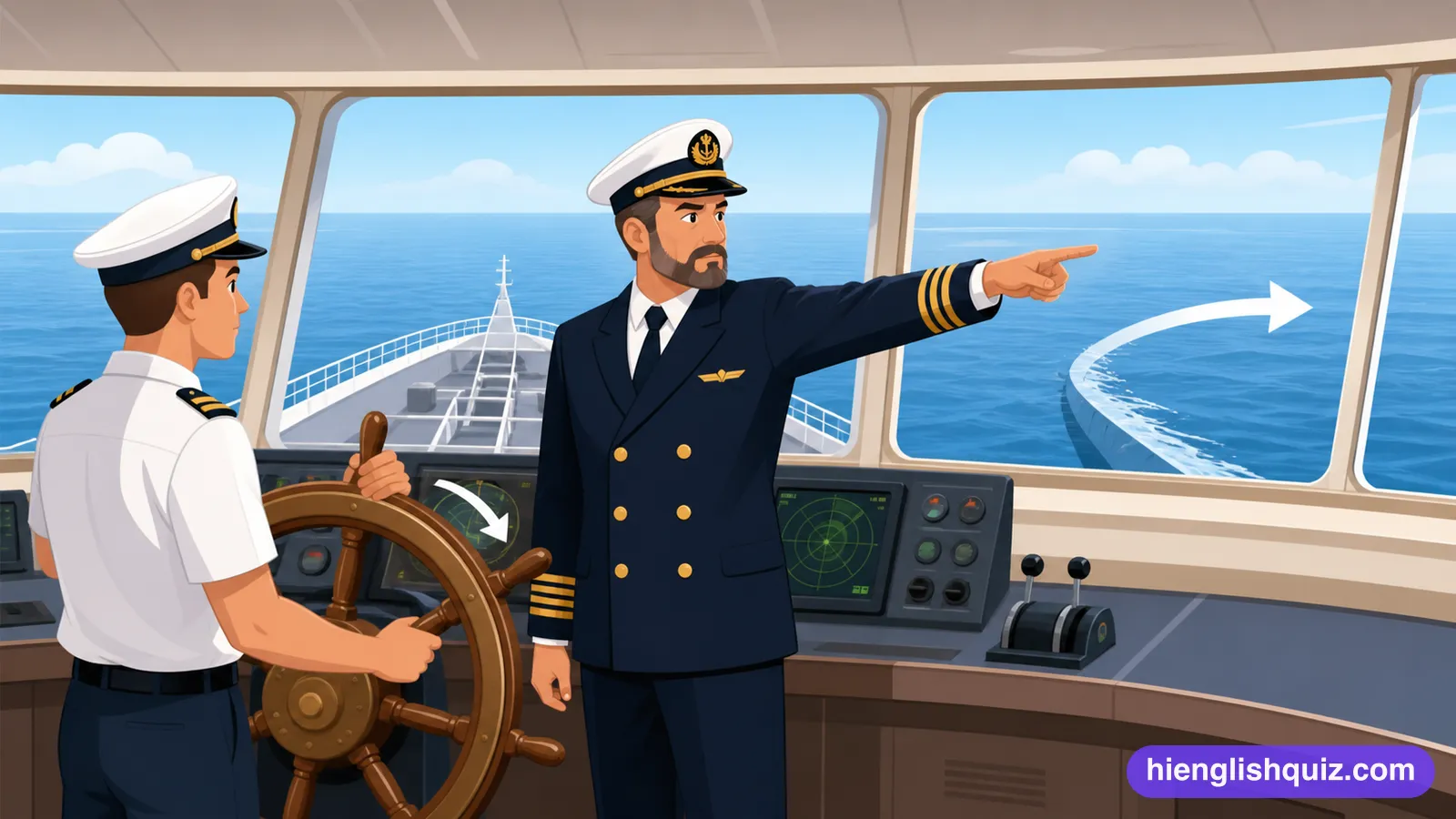
The trail of disturbed water left behind a moving boat.
Example: Fish jumped out of the boat's wake as it sped away.
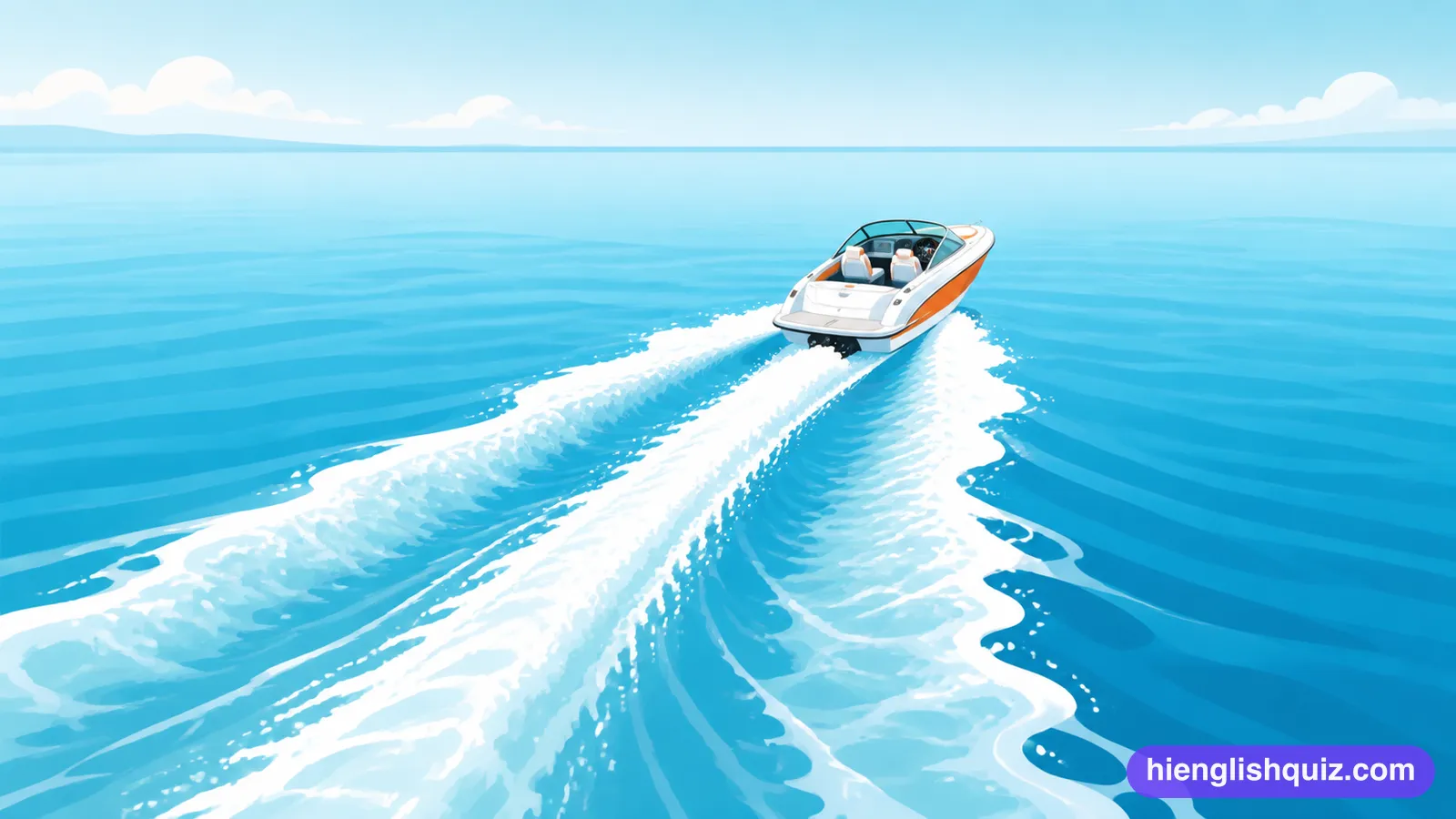
To adjust an aircraft's controls so it flies level without constant effort.
Example: The pilot used the switch to trim the aircraft for cruise.
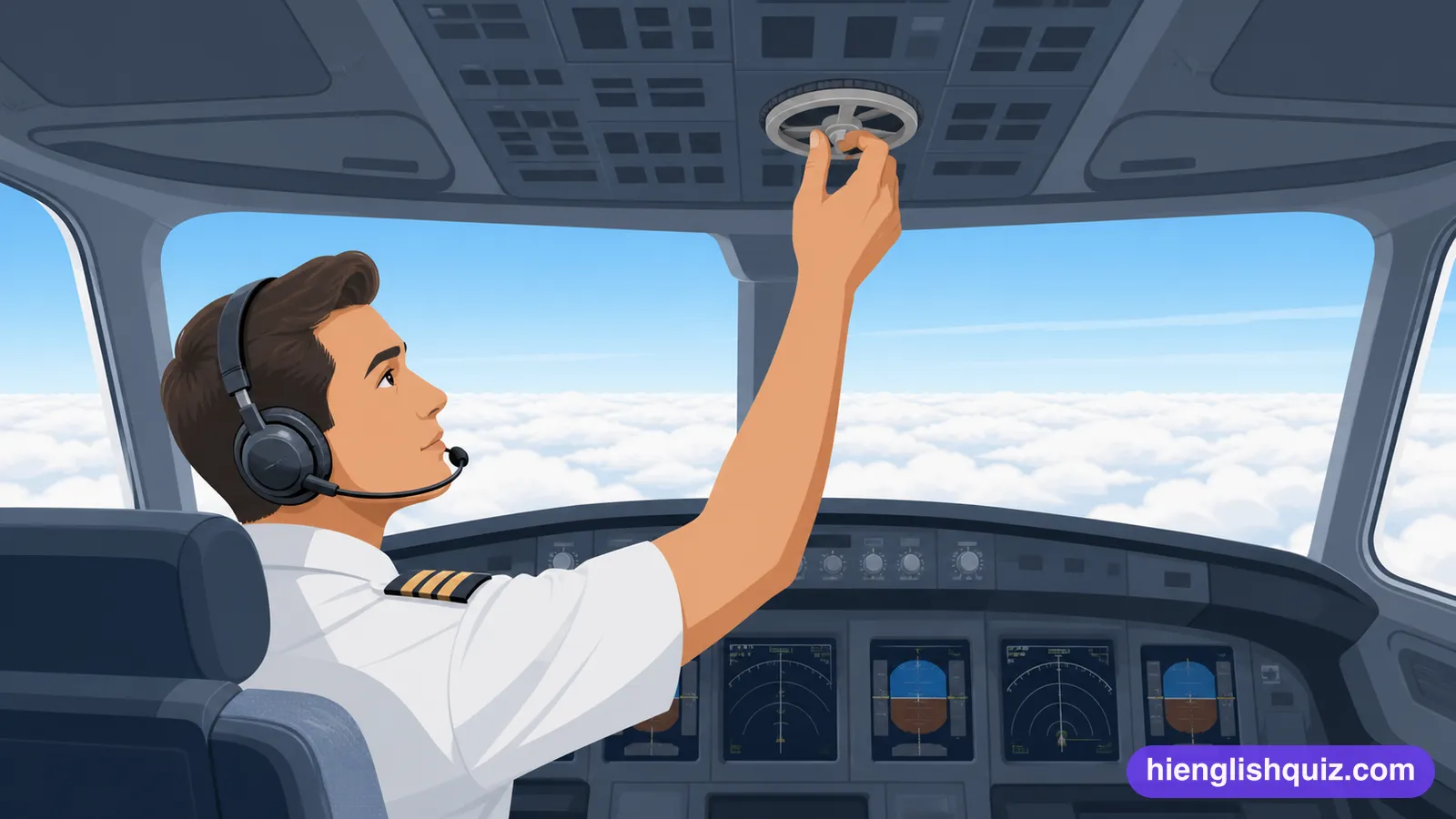
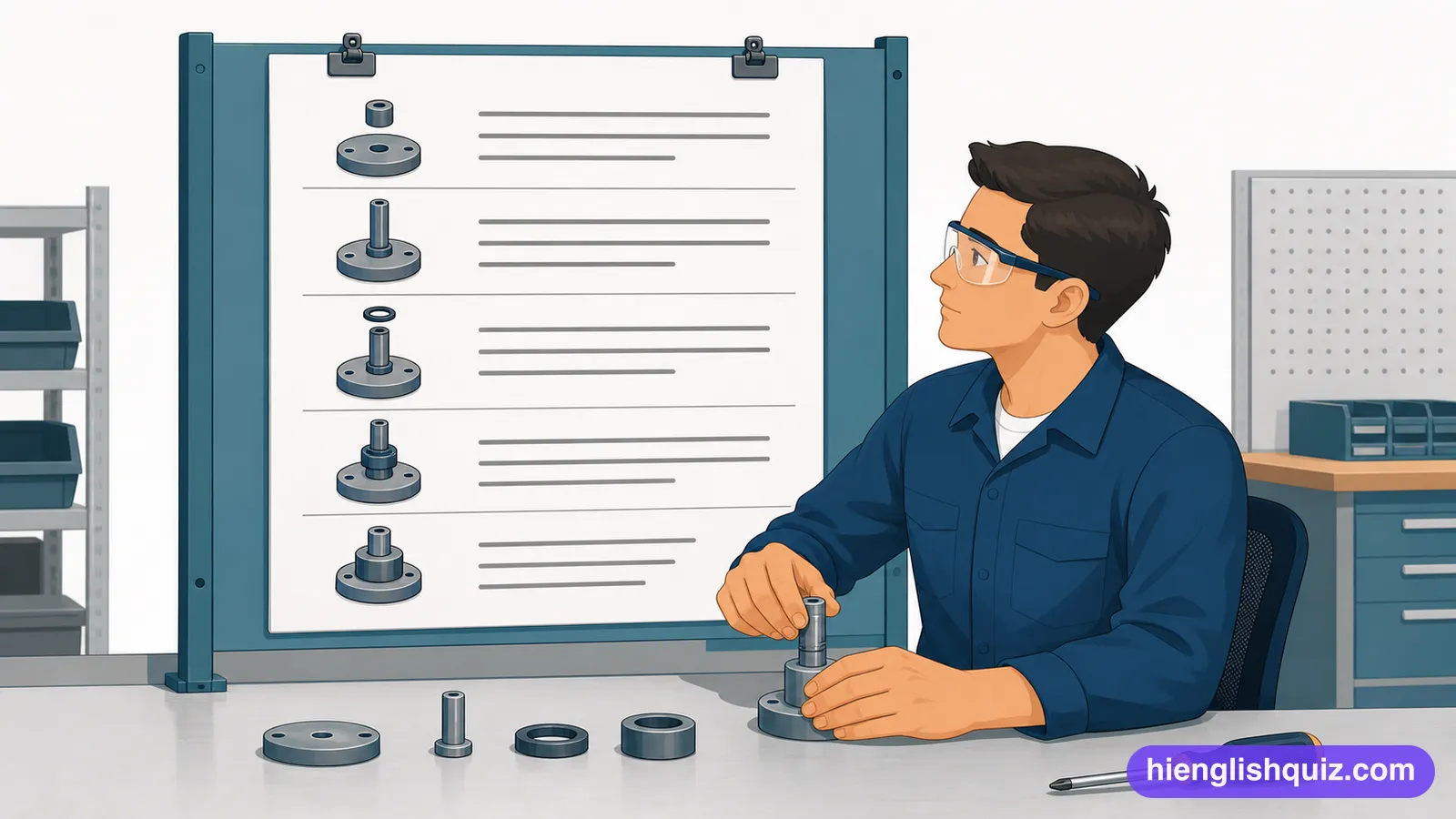
The written routine that must be followed for a task.
Example: The standard operating procedure existed and nobody had read it.
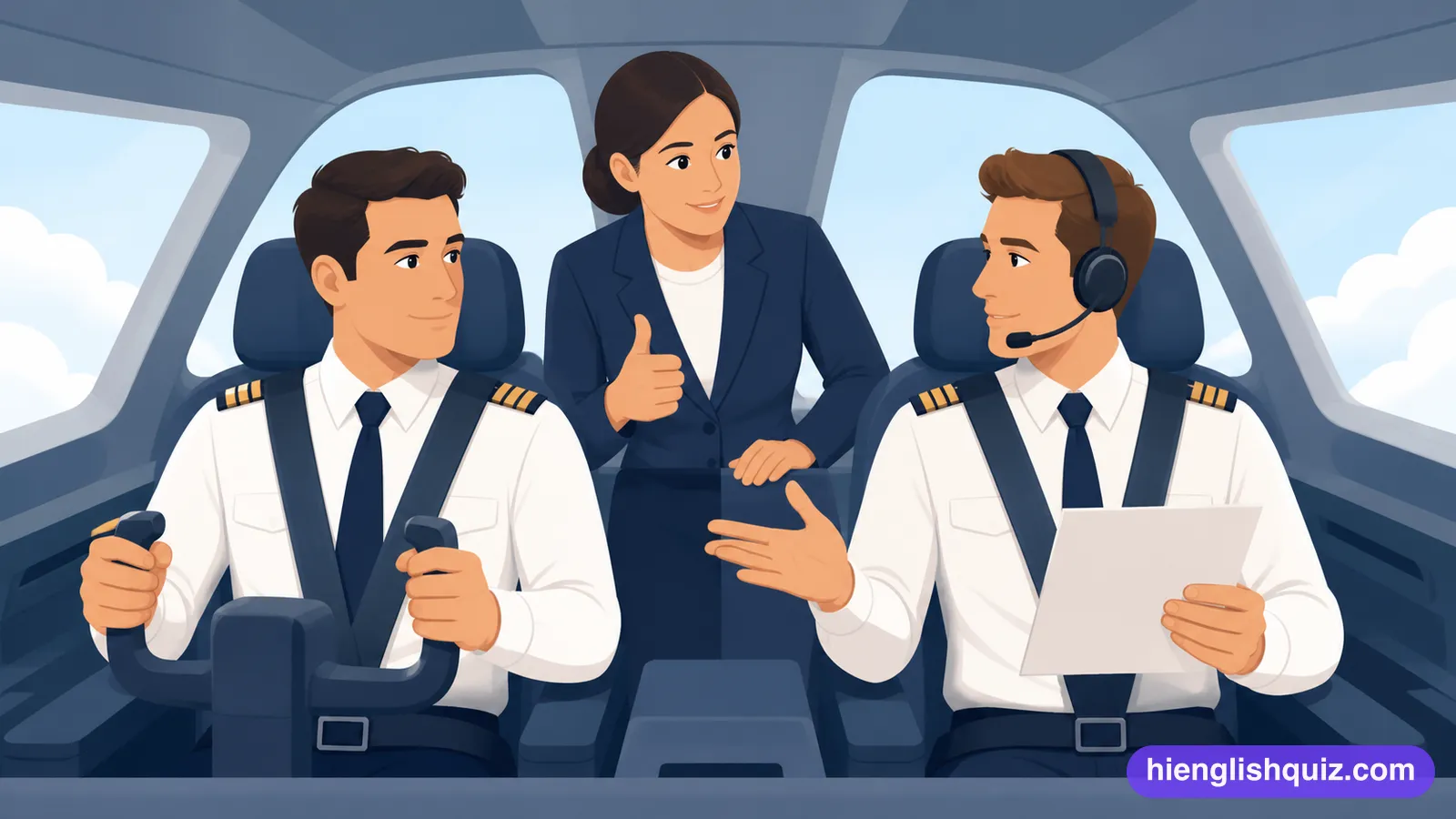
Training in how a crew communicates and shares decisions.
Example: Crew resource management turned the junior's doubt into a question.
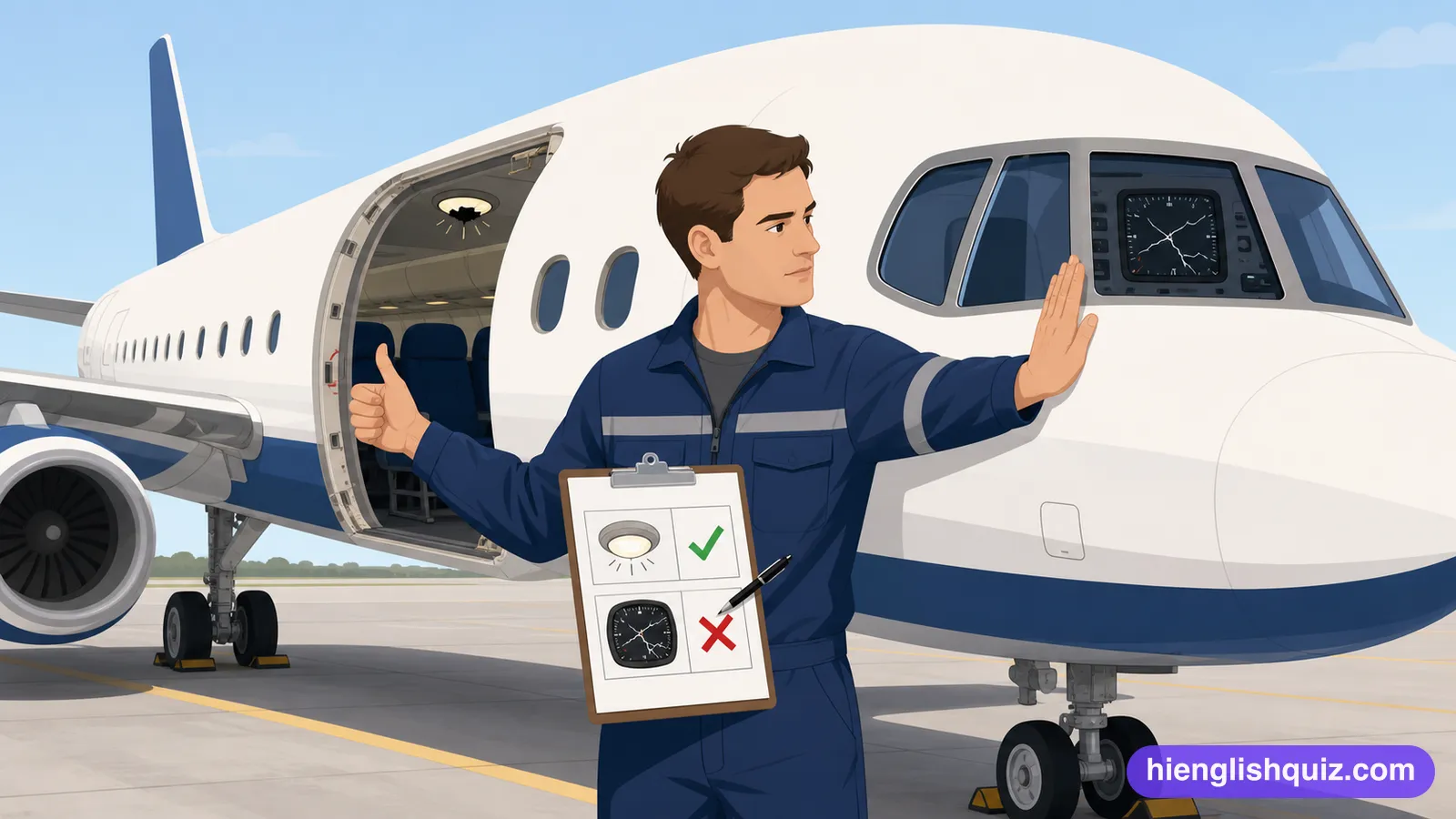
The list of what may be broken and still allow a flight.
Example: The minimum equipment list allowed it, and the captain did not.
The trade-off between how much you carry and how far you go.
Example: Payload range decided the routing more than the schedule did.
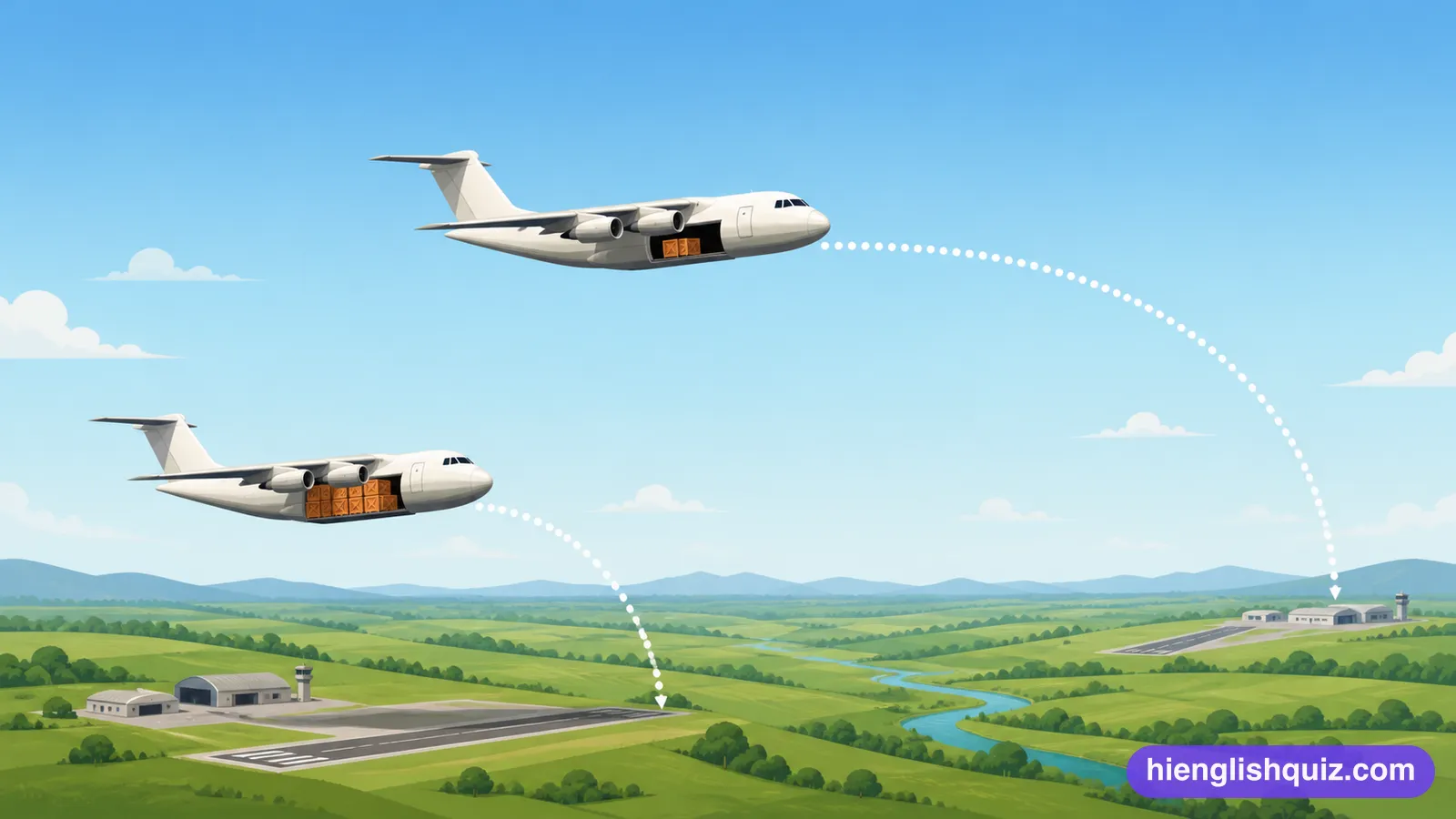
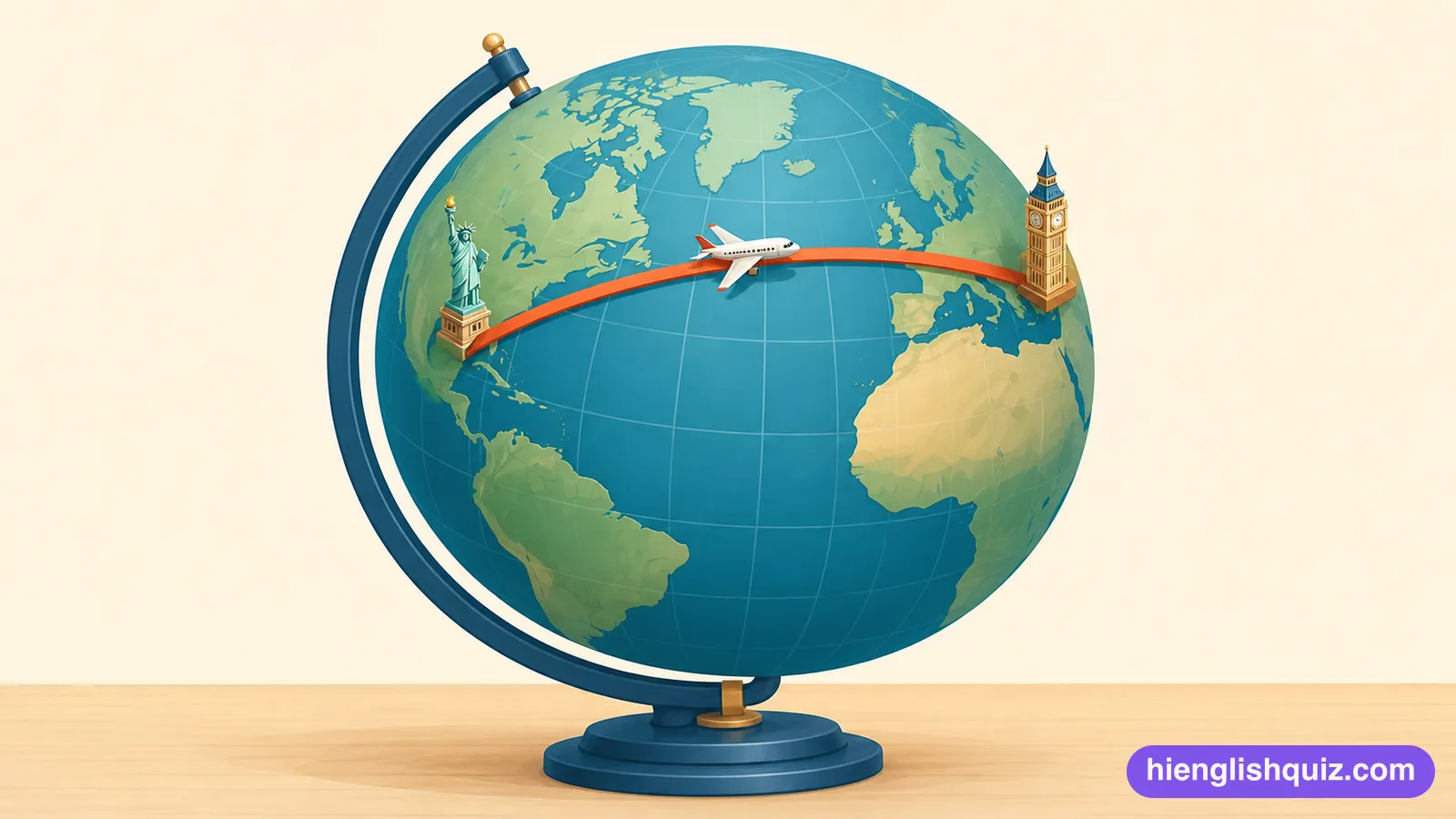
The shortest path between two points on the globe.
Example: The great circle route looks wrong on every flat map.
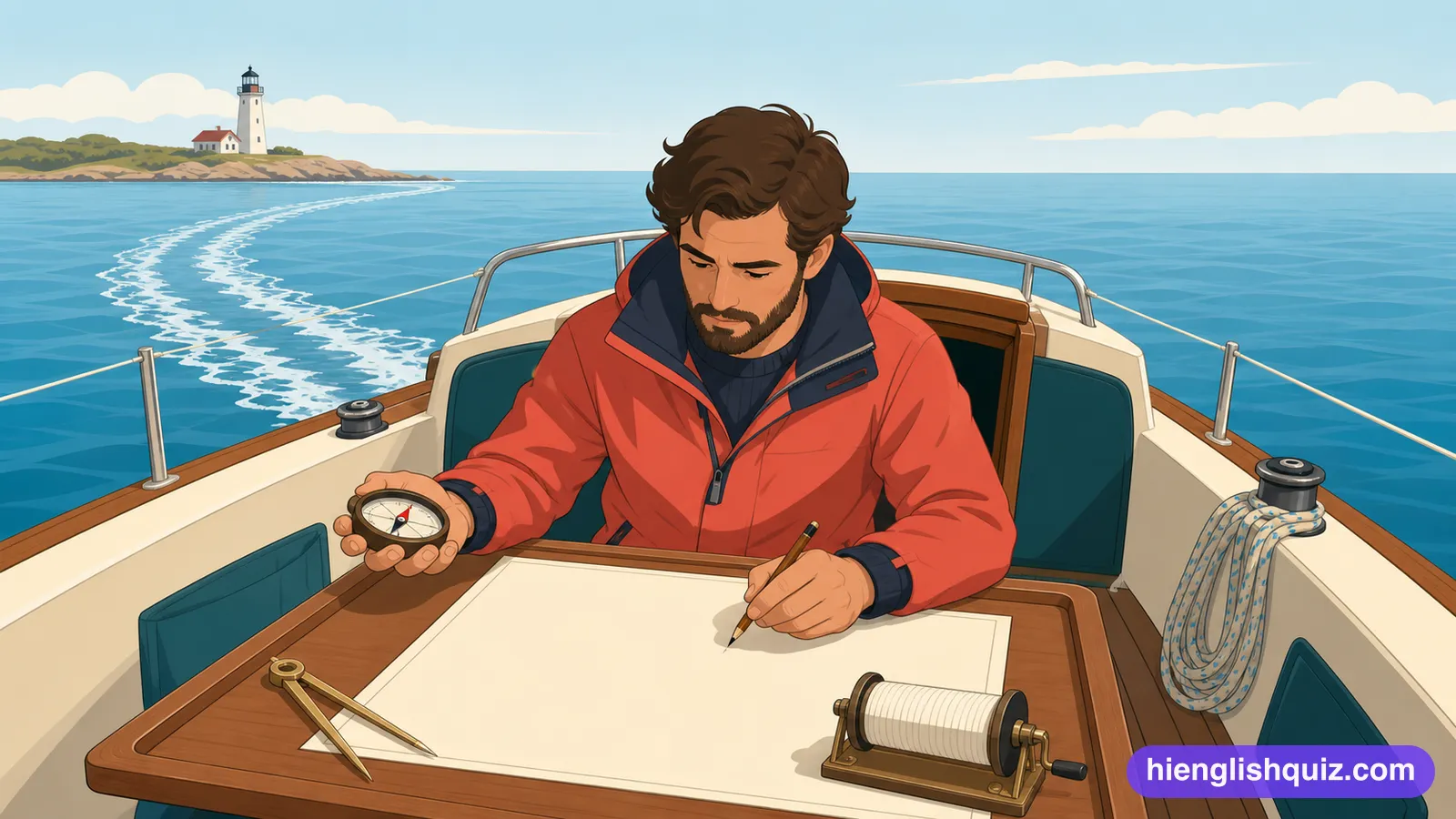
Working out position from speed, heading and time elapsed.
Example: Dead reckoning got them within four miles with no instruments.
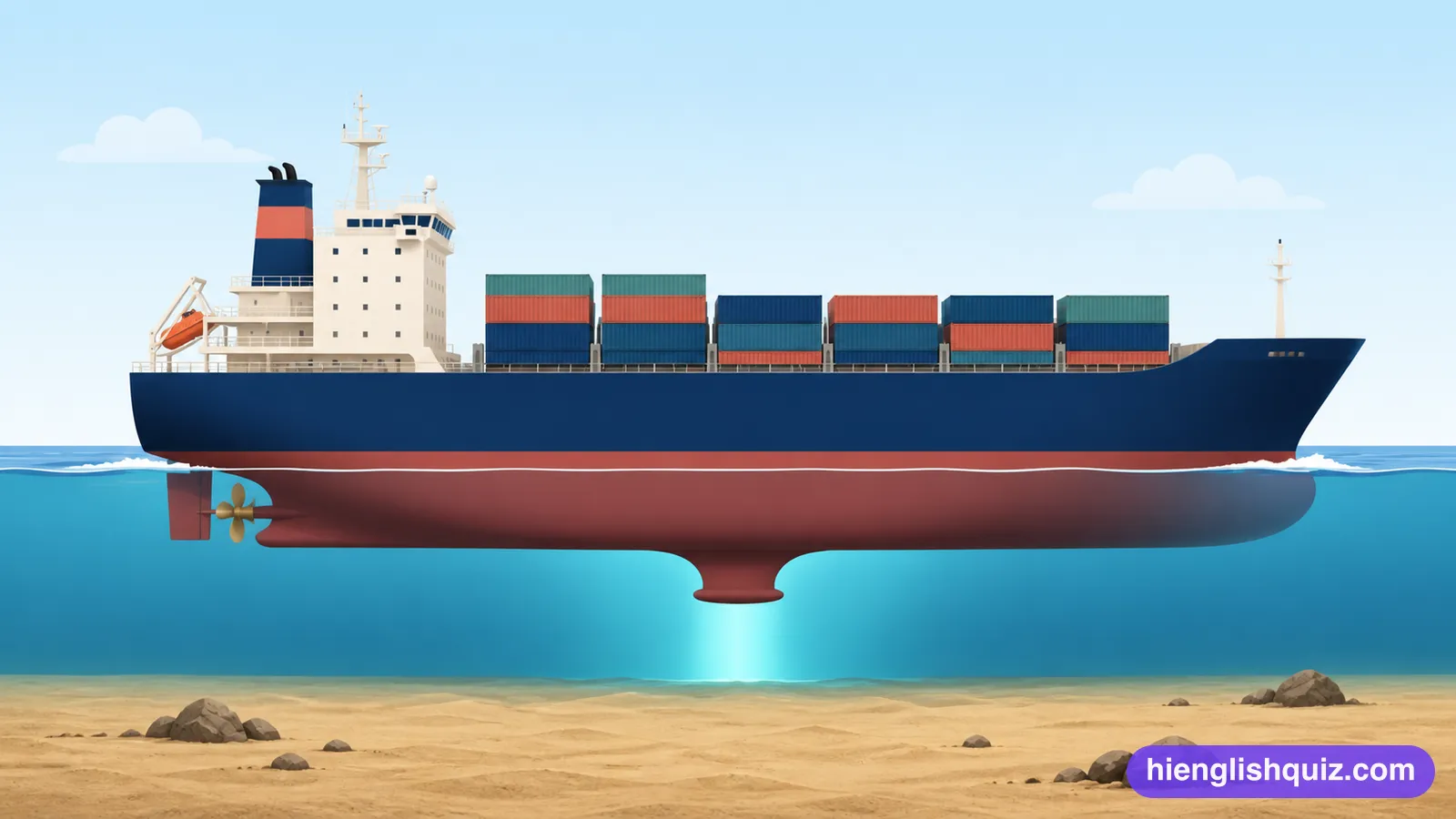
The water left between the bottom of a ship and the seabed.
Example: Under keel clearance was half a metre at the worst of the tide.
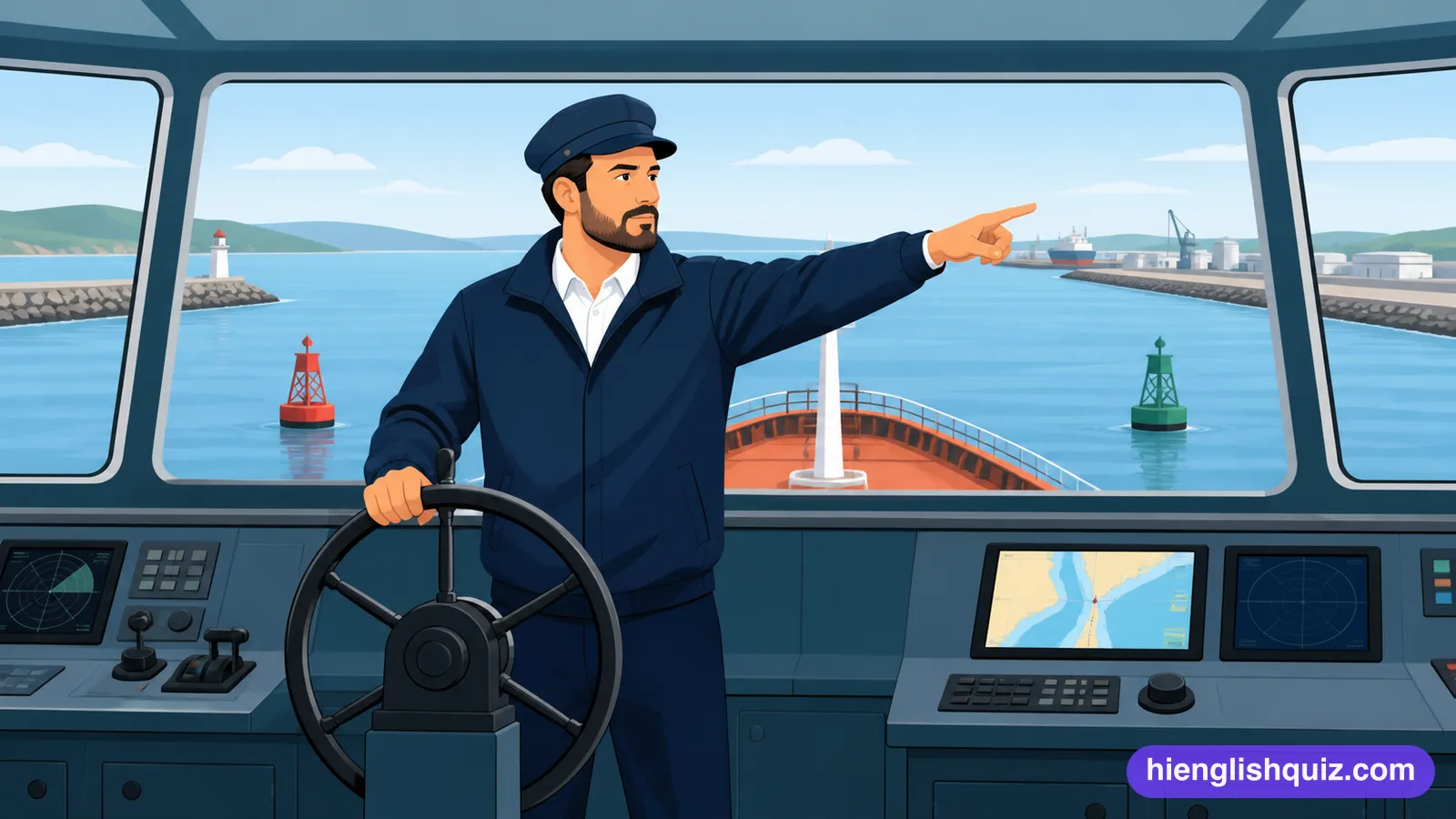
The guiding of a ship into port by a local expert.
Example: Pilotage is compulsory in that estuary for anything over eighty metres.
A fee for keeping a ship or container longer than allowed.
Example: The demurrage charge exceeded the value of the cargo.
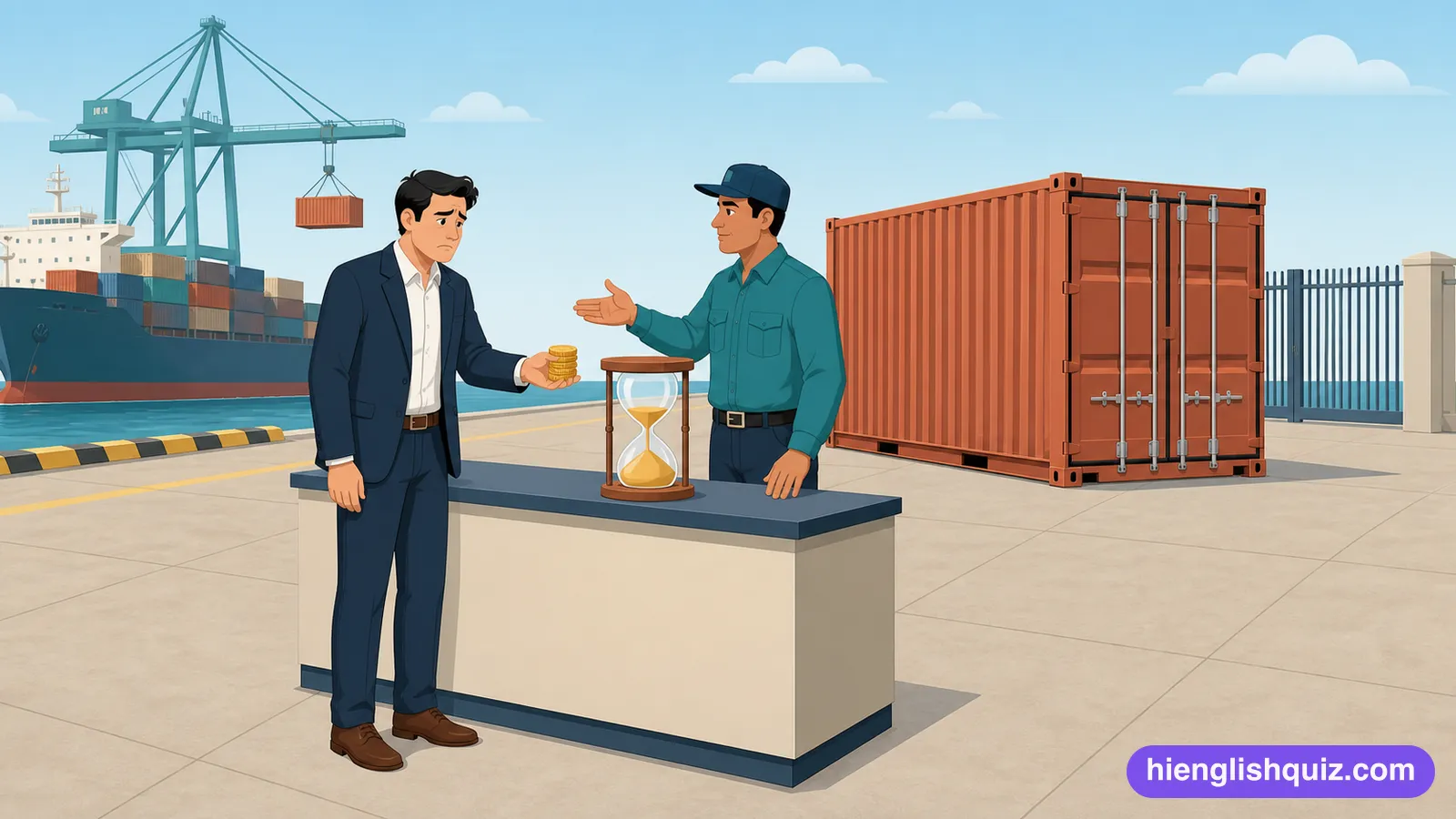
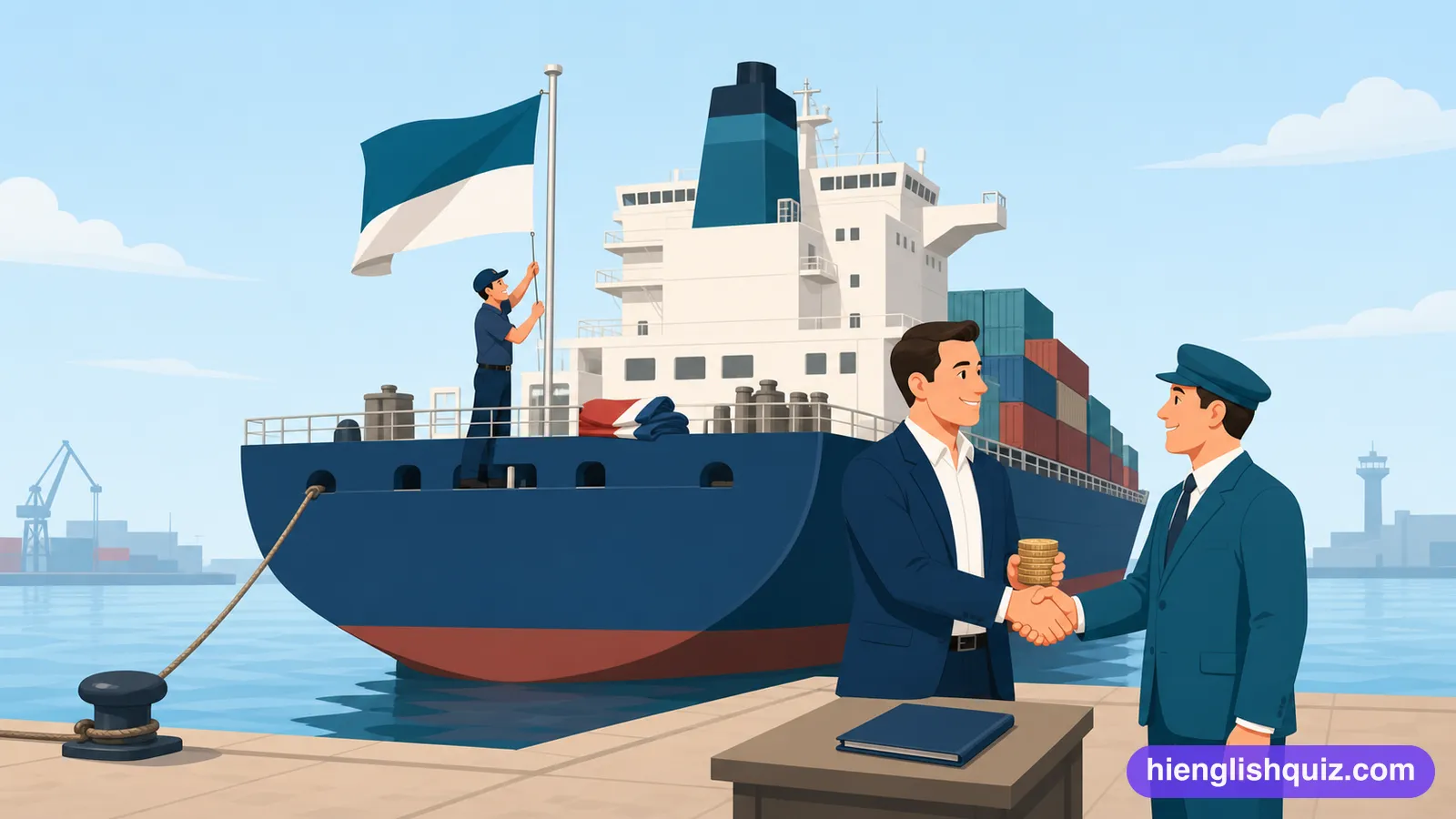
Registering a ship in another country for cheaper regulation.
Example: A flag of convenience saved the owner far more than the crew cost.