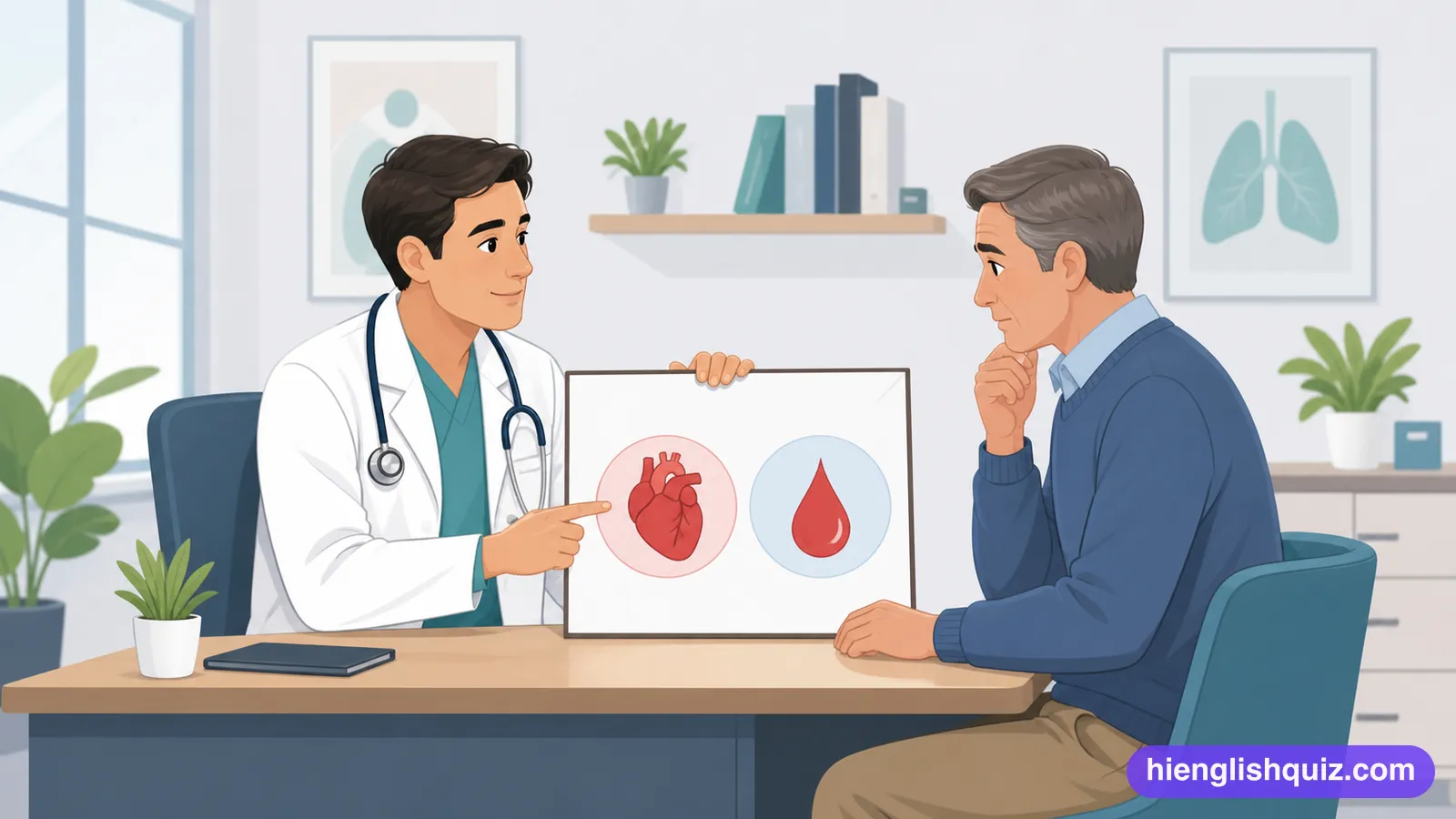
comorbidity
The presence of one or more additional health conditions alongside a patient's main illness.
Example: Diabetes is a common comorbidity in heart patients.
 Hi EnglishQuiz
C120 words · Advanced
Advanced healthcare vocabulary for diagnosis and clinical standards, including comorbidity, epidemiology, a differential diagnosis and the titration and clinical governance behind patient care.
The presence of one or more additional health conditions alongside a patient's main illness.
Example: Diabetes is a common comorbidity in heart patients.
Describes an illness or injury caused by medical treatment itself.
Example: The infection was iatrogenic, caught during the surgery.

The branch of medicine that studies how diseases spread and can be controlled in populations.
Example: She studied epidemiology to track the outbreak's spread.

A list of possible conditions that could explain a patient's symptoms, before the true cause is confirmed.
Example: The doctor's differential diagnosis included three possible conditions.

An approved list of medicines that doctors in a hospital or health system are allowed to prescribe.
Example: The new drug was not yet on the hospital's formulary.

To slowly adjust the dose of a medicine until the right effect is reached.
Example: The doctor will titrate the dosage over several weeks.

Illness or the rate of disease in a population, as opposed to death.
Example: Smoking increases morbidity from lung disease.

Describes a disease that doctors are legally required to report to health authorities.
Example: Measles is a notifiable disease in most countries.

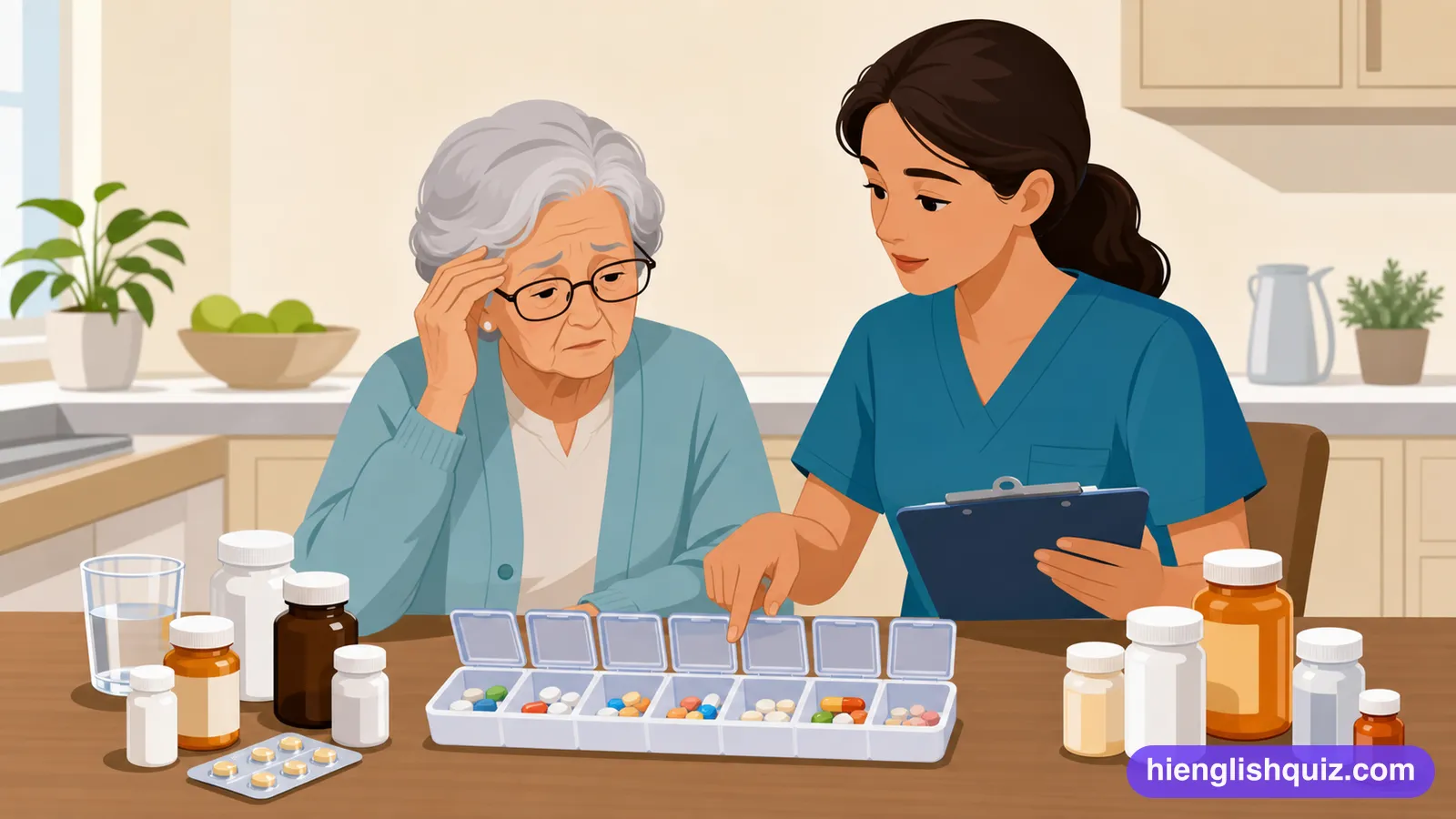
When a patient is taking many different medicines at the same time.
Example: Polypharmacy in elderly patients increases the risk of drug interactions.
A measure of how severe or urgent a patient's condition is.
Example: Nurses are assigned by patient acuity, with the sickest getting the most staff.

A standard sequence of care for a particular condition.
Example: The clinical pathway was rewritten after the audit.

A judgement of whether a patient can decide for themselves.
Example: A capacity assessment has to be recorded, not assumed.

A harmful response to a drug or treatment.
Example: One adverse reaction in eleven thousand doses was reported.

The range and complexity of the patients a service treats.
Example: Their case-mix explained most of the difference in outcomes.

The system for maintaining and improving quality of care.
Example: Clinical governance meetings became the only place anything was recorded.

Adjusting a dose gradually to find the right amount.
Example: Titration took six weeks and two hospital visits.

How well a test detects people who do have a condition.
Example: High sensitivity and low specificity produced a great many false alarms.

How well a test correctly rules out people who do not have a condition.
Example: Poor specificity sent forty healthy people for a biopsy.

An instruction that a patient should not be revived.
Example: The do not resuscitate note had not been transferred with the file.

Patients staying in hospital because no other care is available.
Example: Bed blocking cost more than the community places would have.