syndication
/ˌsɪndɪˈkeɪʃən/The sale of the same article, photo or programme to several different publications or broadcasters.
Example: The comic strip runs in syndication across dozens of newspapers.

 Hi EnglishQuiz
C120 words · Advanced
Advanced media vocabulary for journalism ethics and practice, including syndication, a retraction, libel and the fact-checking and editorial independence a newsroom depends on.
The sale of the same article, photo or programme to several different publications or broadcasters.
Example: The comic strip runs in syndication across dozens of newspapers.
A public statement withdrawing or correcting something a publication previously reported as fact.
Example: The magazine printed a retraction after the story was proven false.

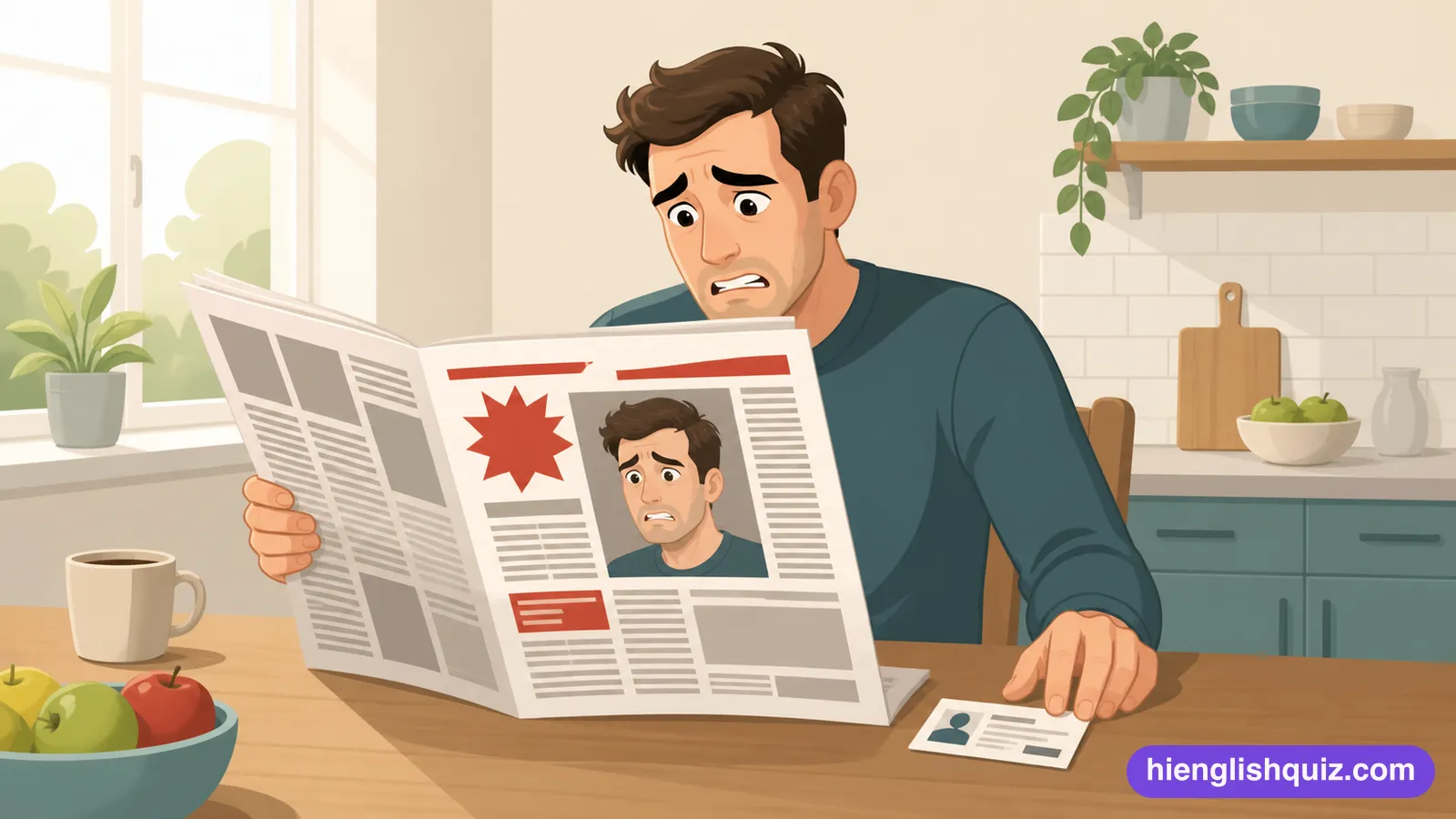
A false written or published statement that damages someone's reputation.
Example: The actor sued the tabloid for libel.
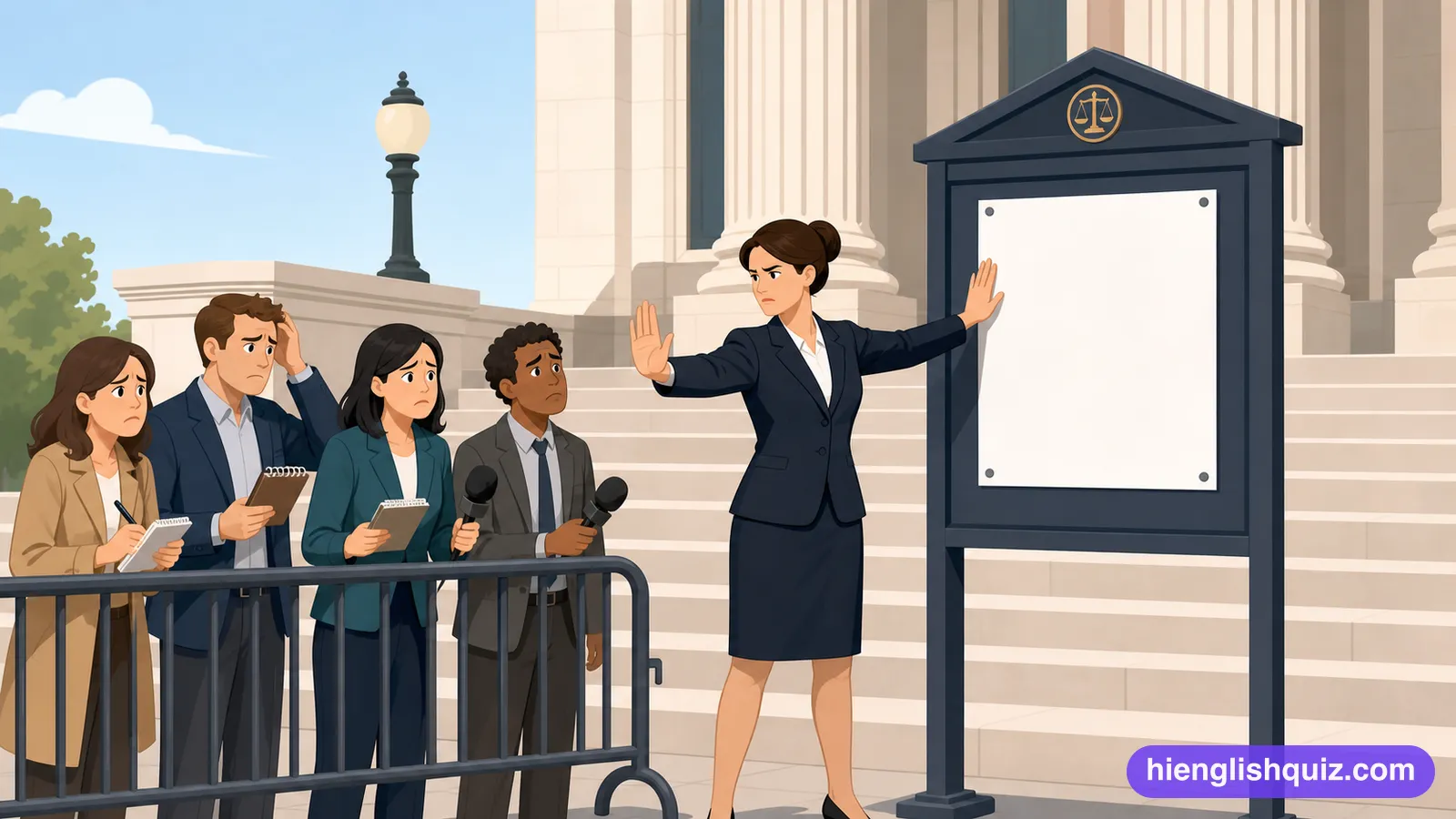
A court ruling that prevents the media from reporting certain details of a case.
Example: A gag order stopped the press from naming the witness.
The process of verifying that claims in a news story are accurate before it is published.
Example: Fact-checking caught two errors before the article went to print.

A screen that displays a script for a presenter to read while looking directly at the camera.
Example: The news anchor read smoothly from the teleprompter.

Narration recorded separately and added to a video or broadcast, without the speaker appearing on screen.
Example: A calm voiceover guided viewers through the documentary.

When news coverage unfairly favours one side, opinion or group over another.
Example: Viewers on both sides accused the channel of media bias.
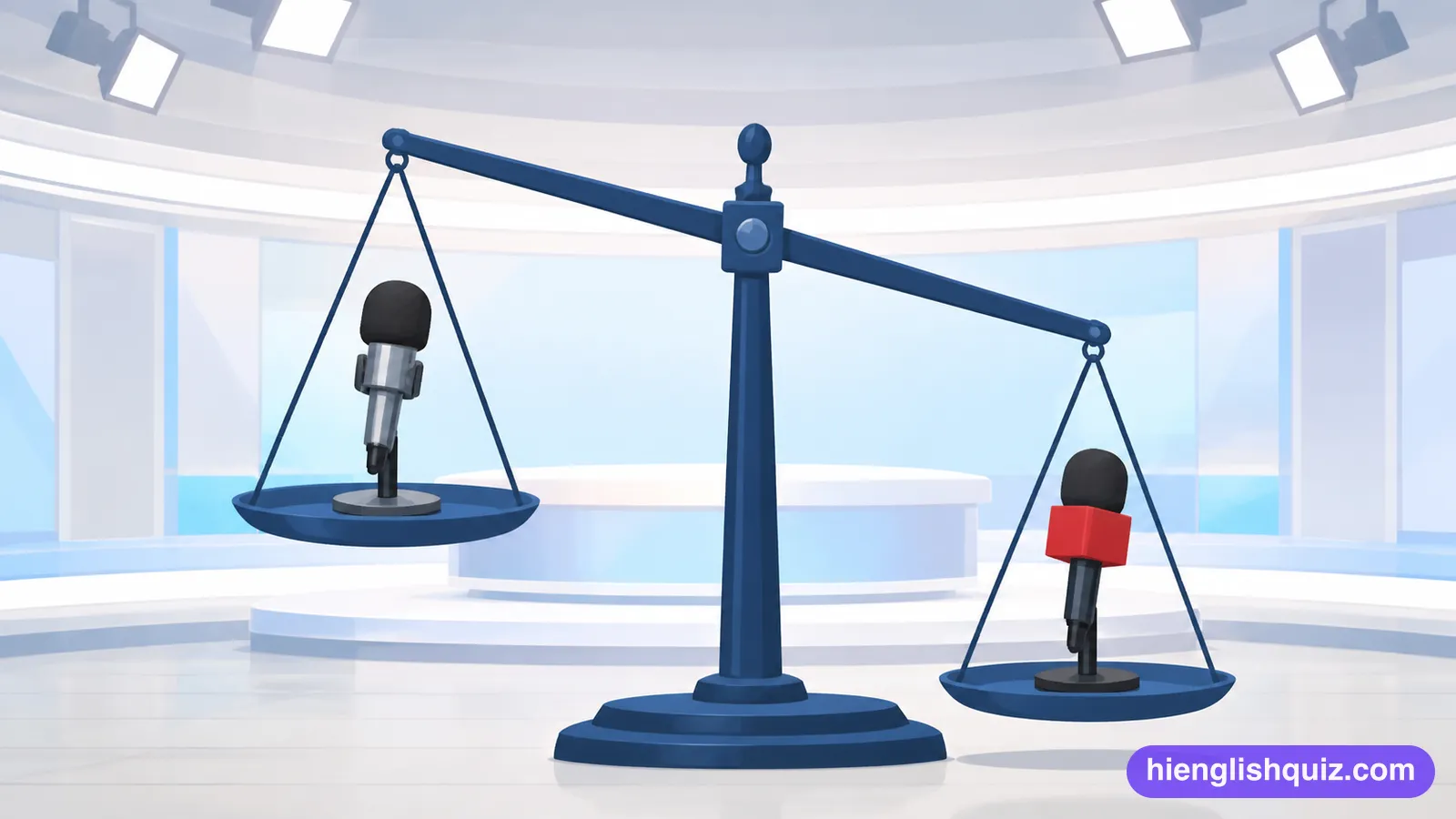
Controlling which information or stories reach the public, often done by editors.
Example: Social media has reduced traditional gatekeeping by newspaper editors.

An event where journalists are invited, often with costs paid, to help promote something.
Example: The actors did a press junket in five cities to promote the film.

Freedom to report without interference from owners or advertisers.
Example: Editorial independence survives until the first serious advertiser complains.

The chance for someone criticised to respond publicly.
Example: The right of reply was granted on page nineteen.

The argument that publishing something served the public good.
Example: The public interest defence was tested and it held.

The duty not to reveal who gave you information.
Example: Source protection is the one principle nobody in that newsroom would trade.

The criteria that decide what counts as a story.
Example: News values explain the running order better than any policy does.

Short background written to bring a reader quickly up to date.
Example: The pass notes were better read than the piece they introduced.

The number of different people who saw something.
Example: Reach was enormous and engagement was almost nil.

How many of the people who saw something acted on it.
Example: An engagement rate of nought point four per cent is normal and still depressing.

The rules a publication follows on spelling and usage.
Example: The style guide has ruled on that hyphen since 1974.

The short introductory paragraph under a headline.
Example: The standfirst did more work than the first four paragraphs.