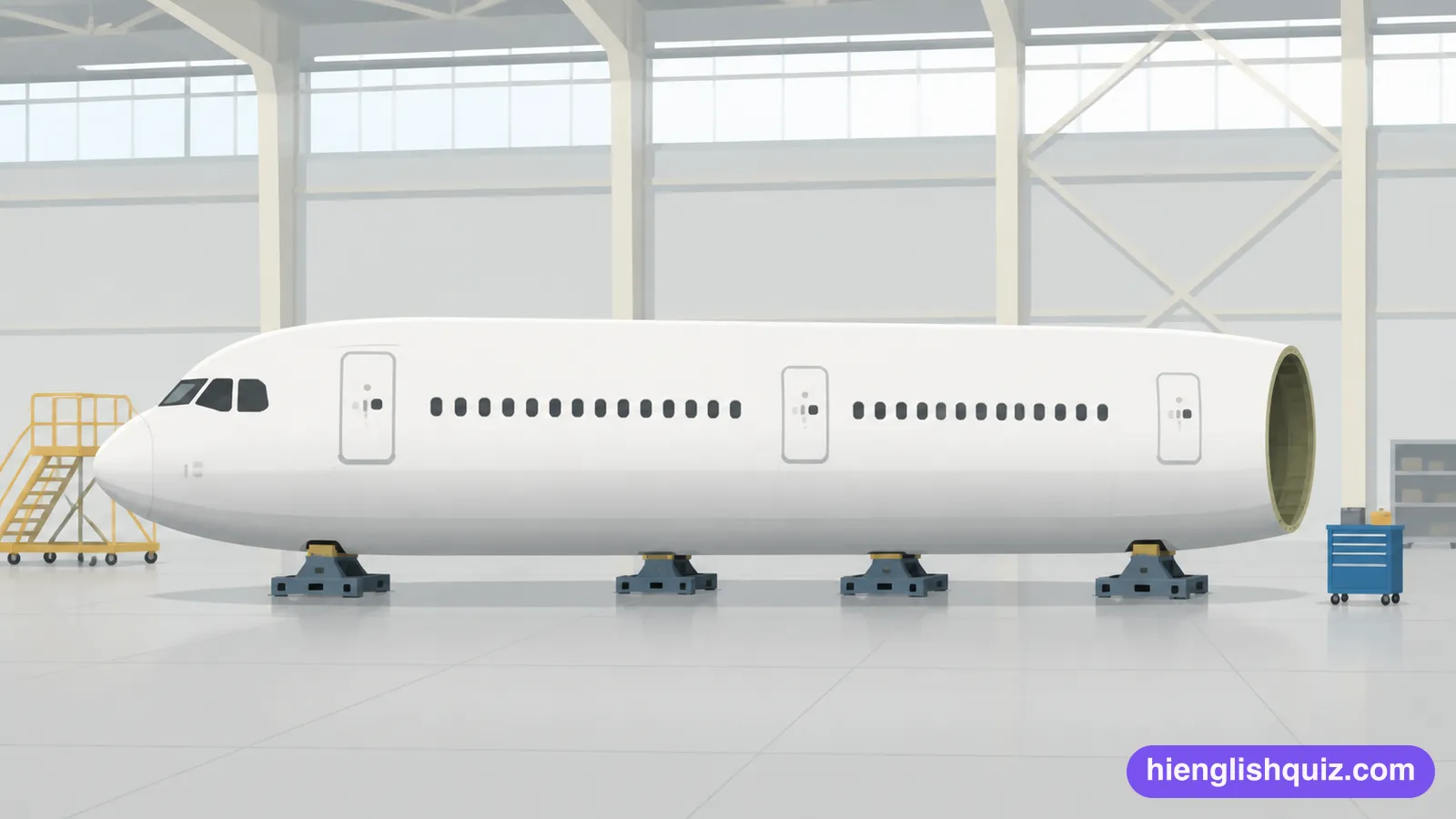
fuselage
/ˈfjusəˌlɑdʒ/The main body of an aircraft, which holds the crew, passengers and cargo.
Example: A dent appeared in the fuselage after the collision with a bird.
 Hi EnglishQuiz
B216 words · Upper-intermediate
Aviation and maritime vocabulary for how aircraft and vessels operate, including the fuselage, altimeter and transponder of a plane, and the ballast and hull of a ship.
The main body of an aircraft, which holds the crew, passengers and cargo.
Example: A dent appeared in the fuselage after the collision with a bird.
An instrument that measures an aircraft's height above the ground or sea level.
Example: The altimeter showed they were still climbing.
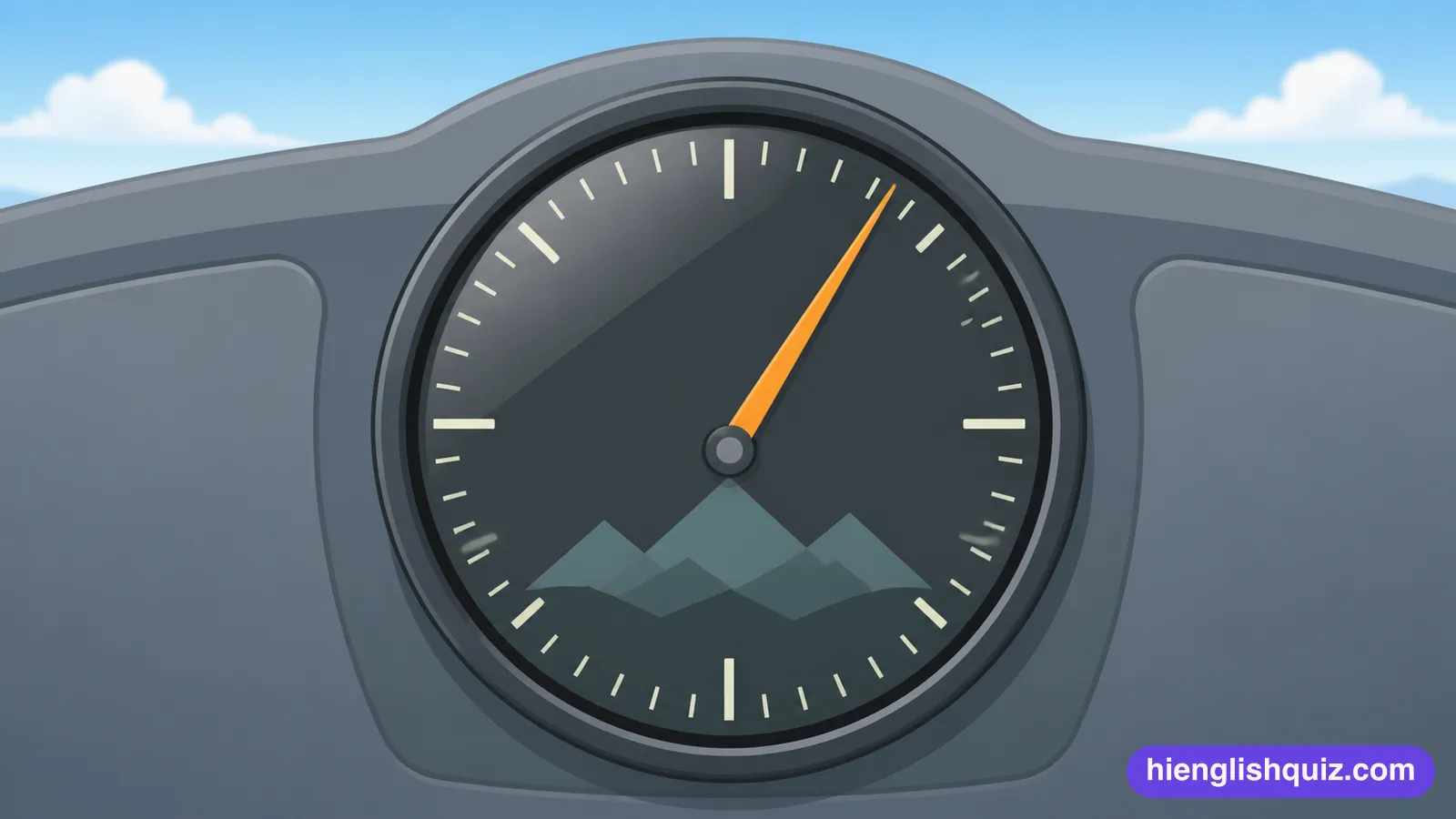
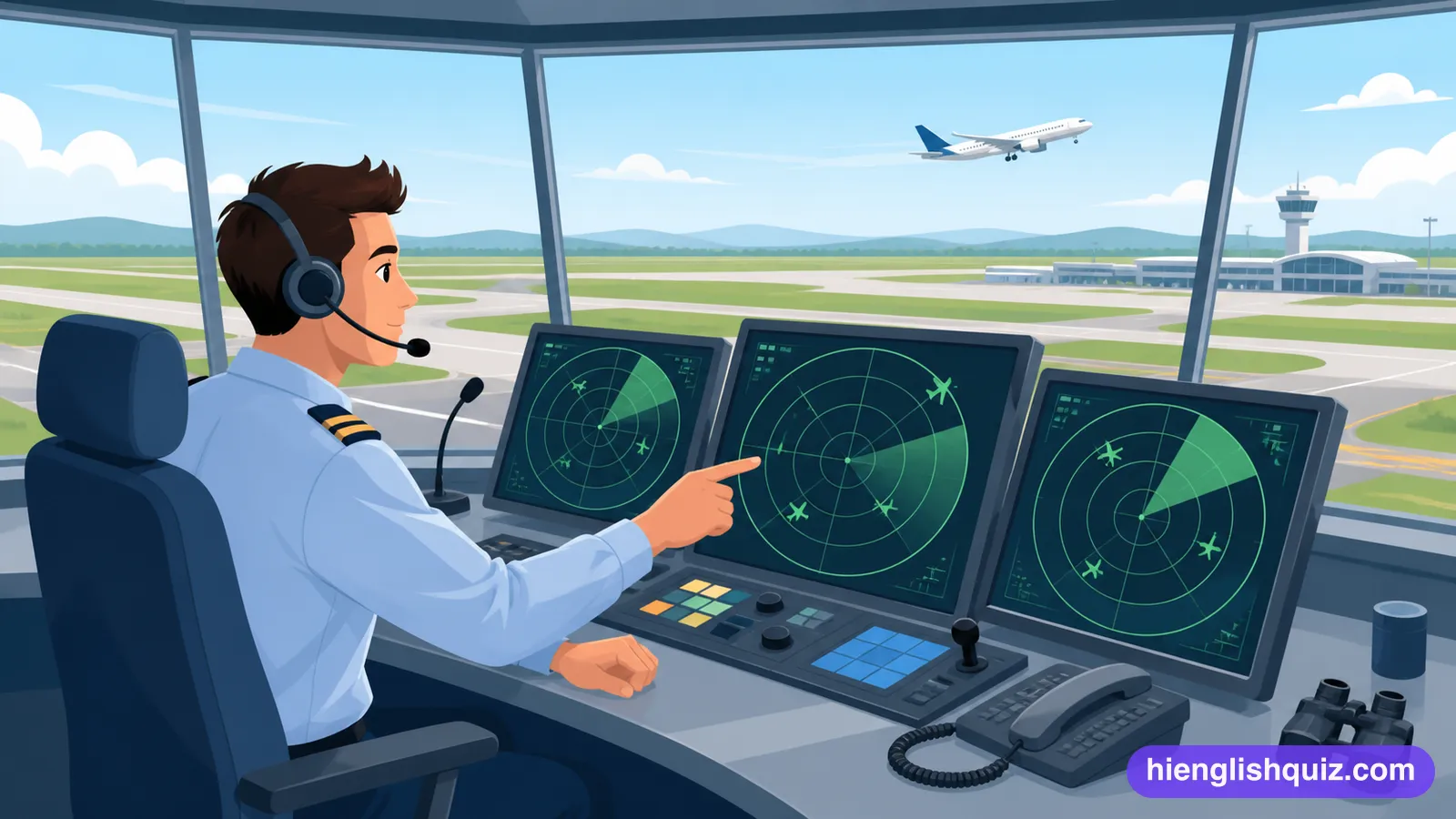
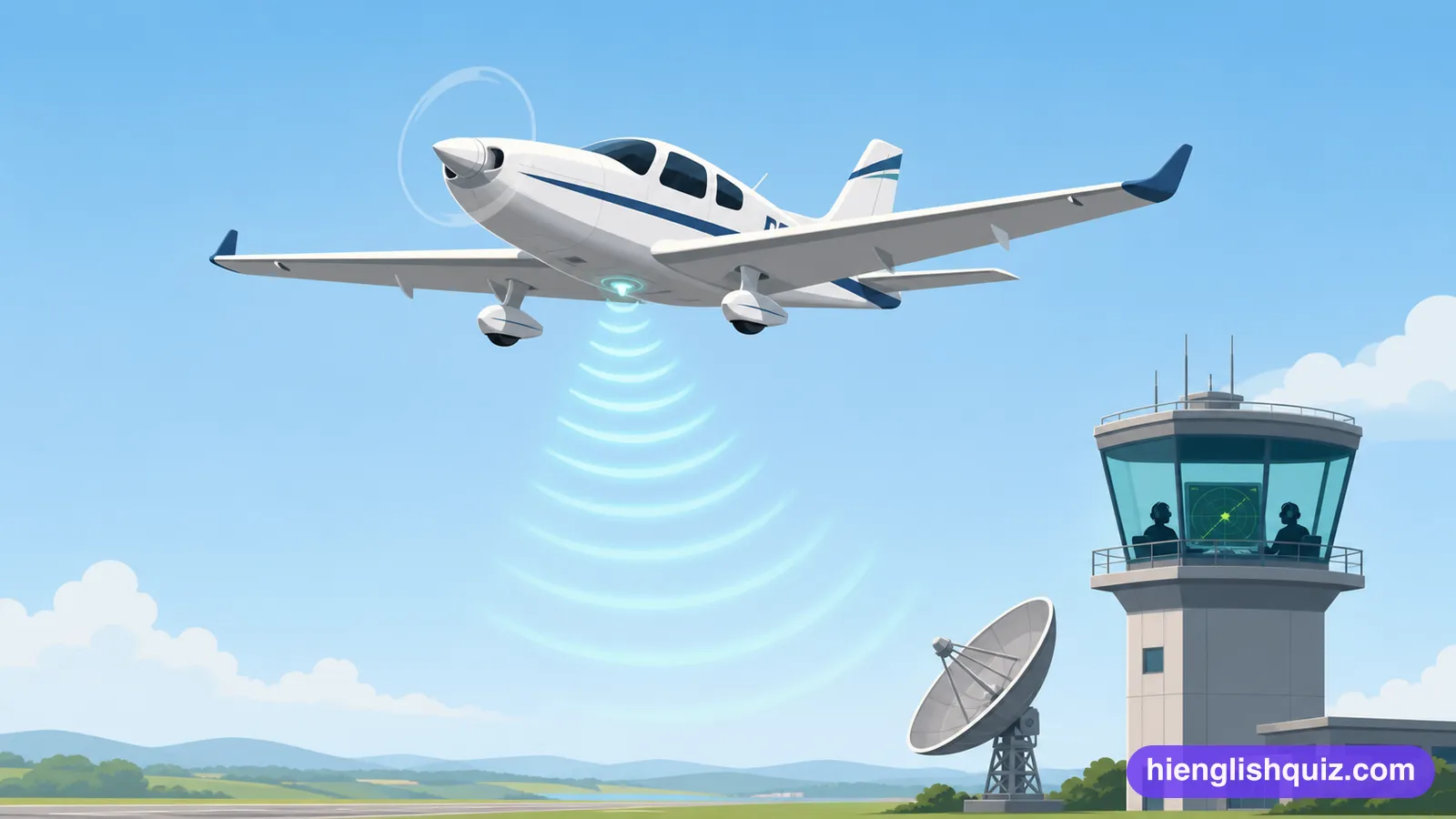
A device on an aircraft that sends signals to help air traffic control track its position.
Example: Controllers lost the plane briefly when its transponder failed.
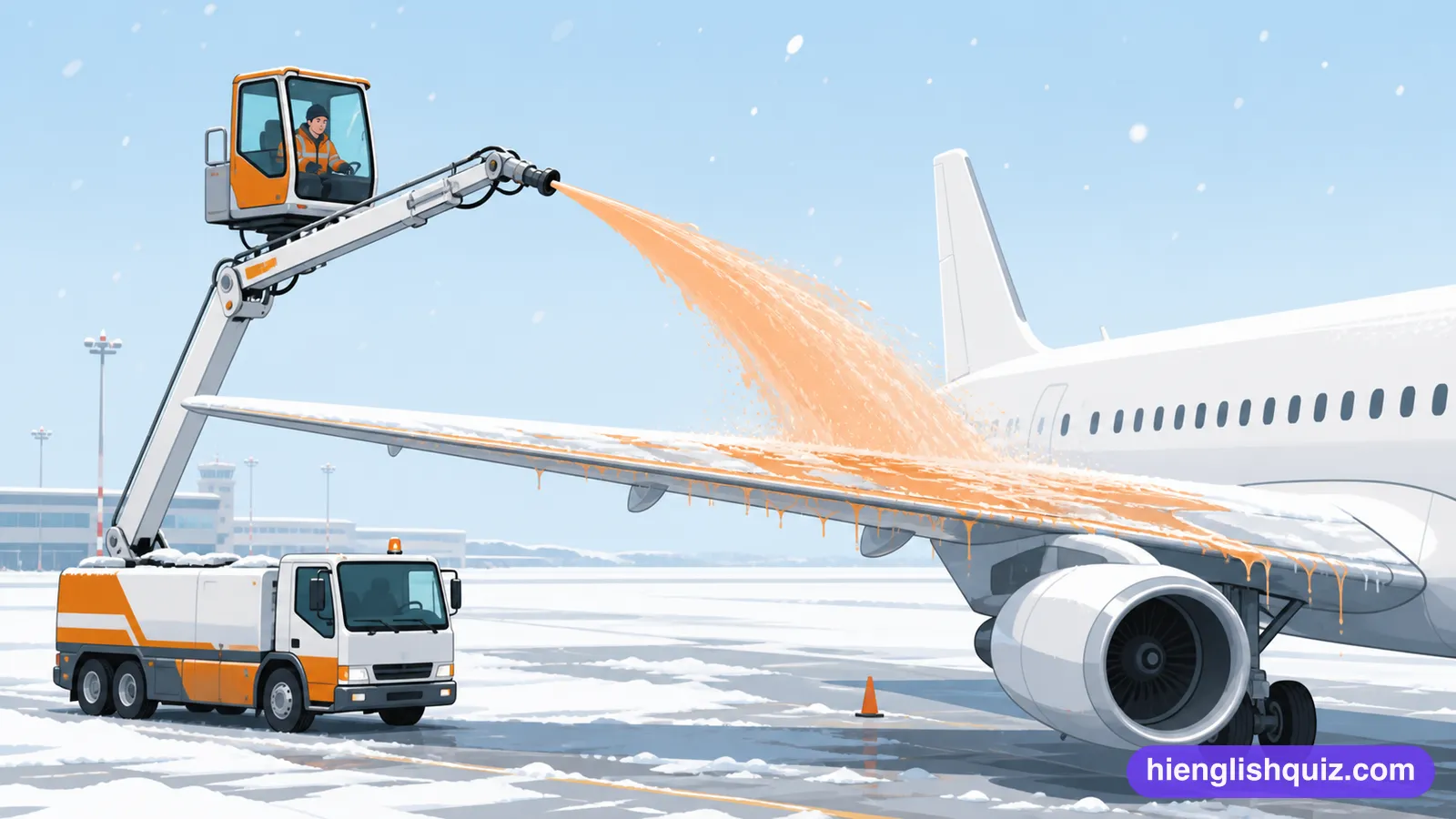
The process of removing ice from an aircraft's surface before it can safely take off.
Example: The flight was delayed for de-icing in the cold weather.
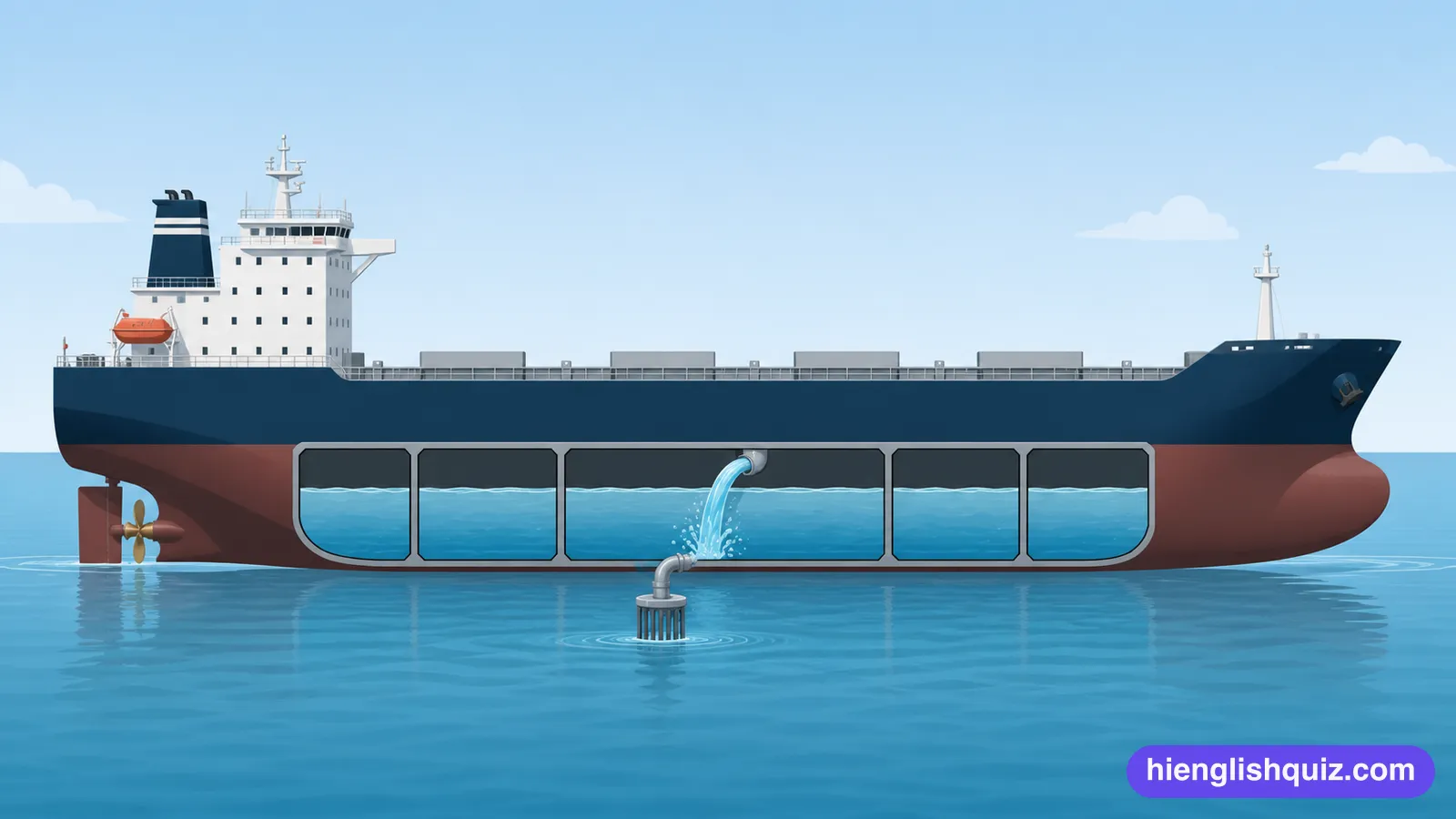
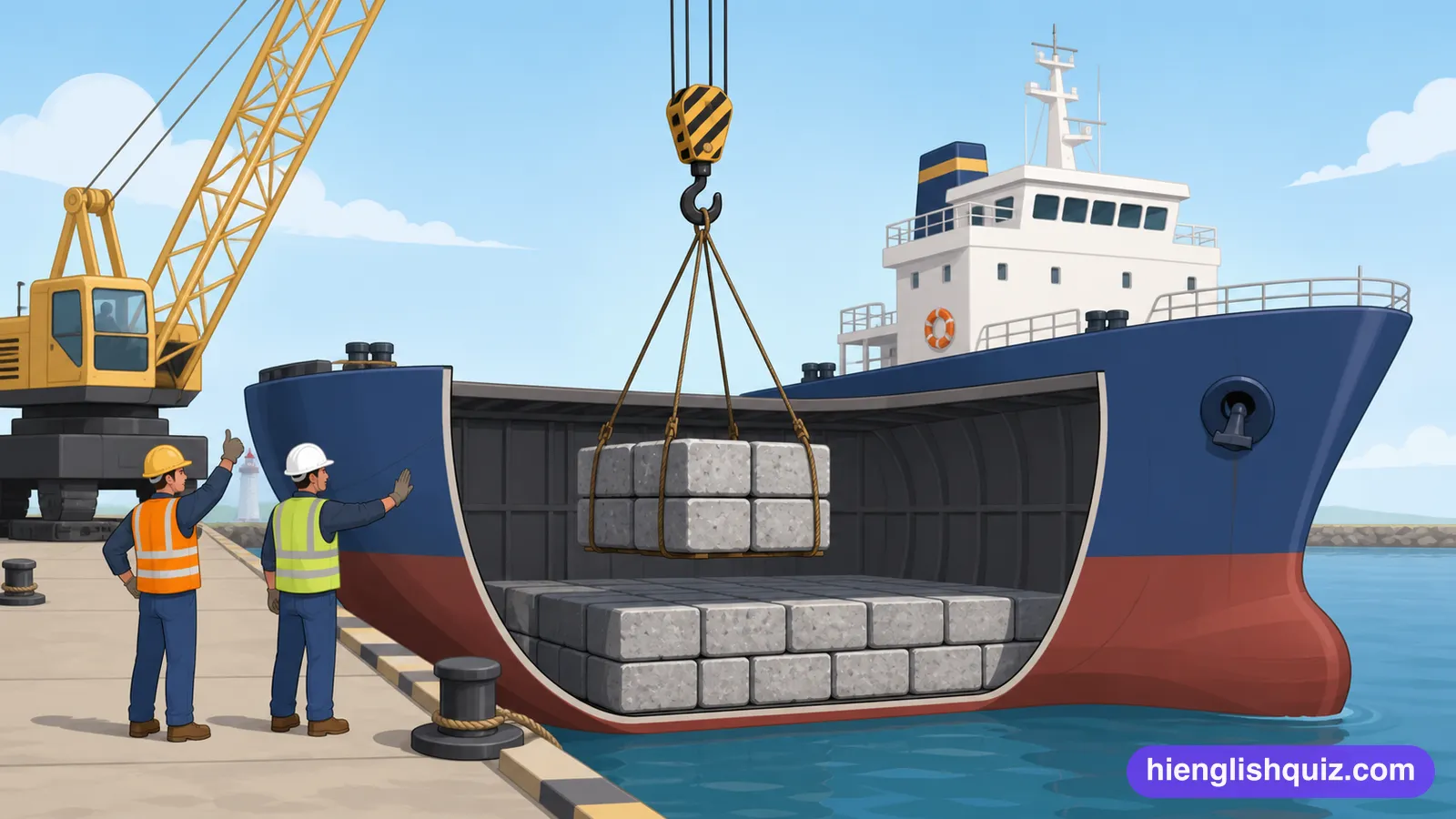
Heavy material carried in a ship to keep it stable and balanced.
Example: The ship took on extra ballast before the rough crossing.
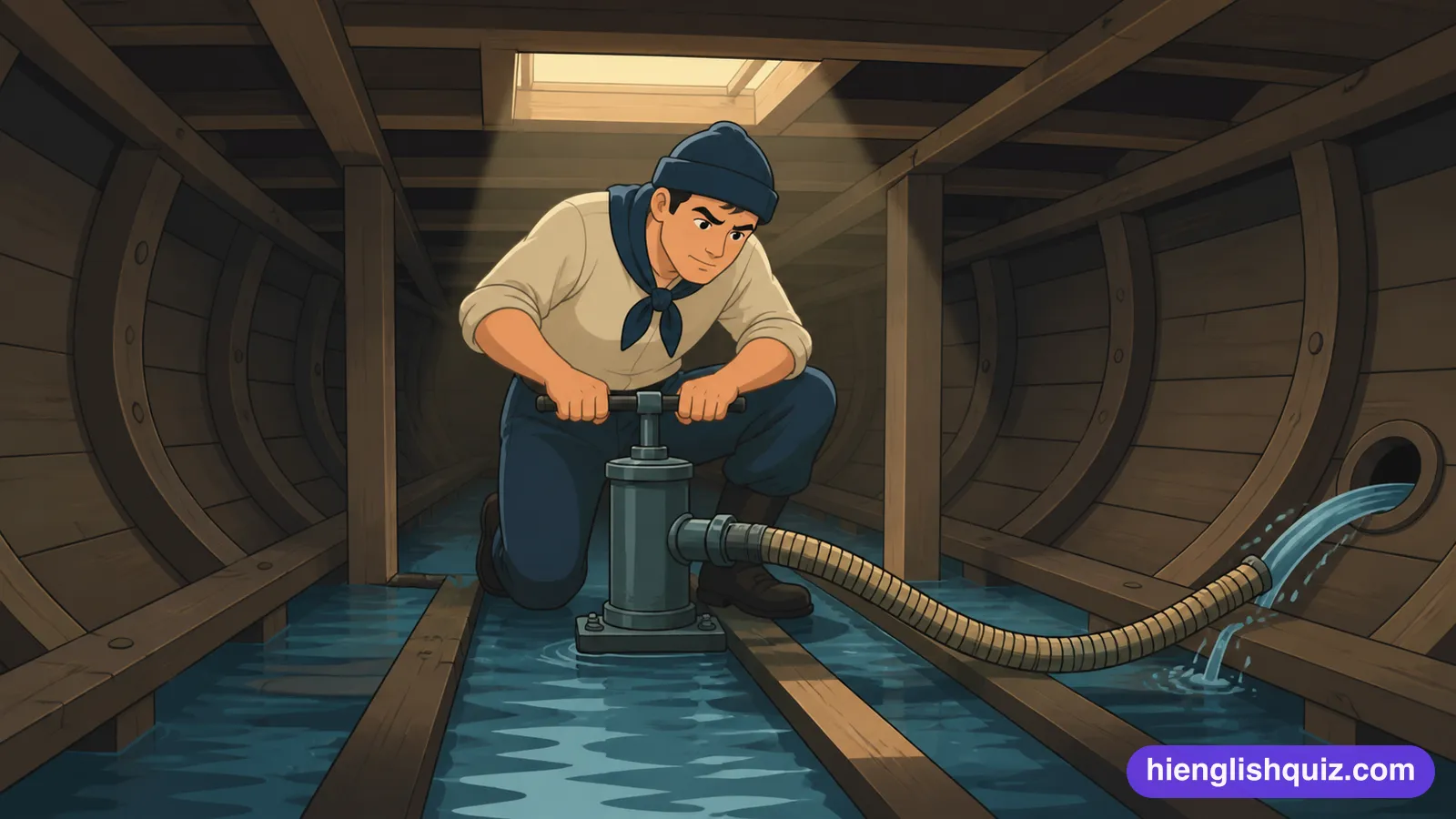
The lowest part of a ship's hull, where water collects and must be pumped out.
Example: The pump kept the bilge clear of seawater.
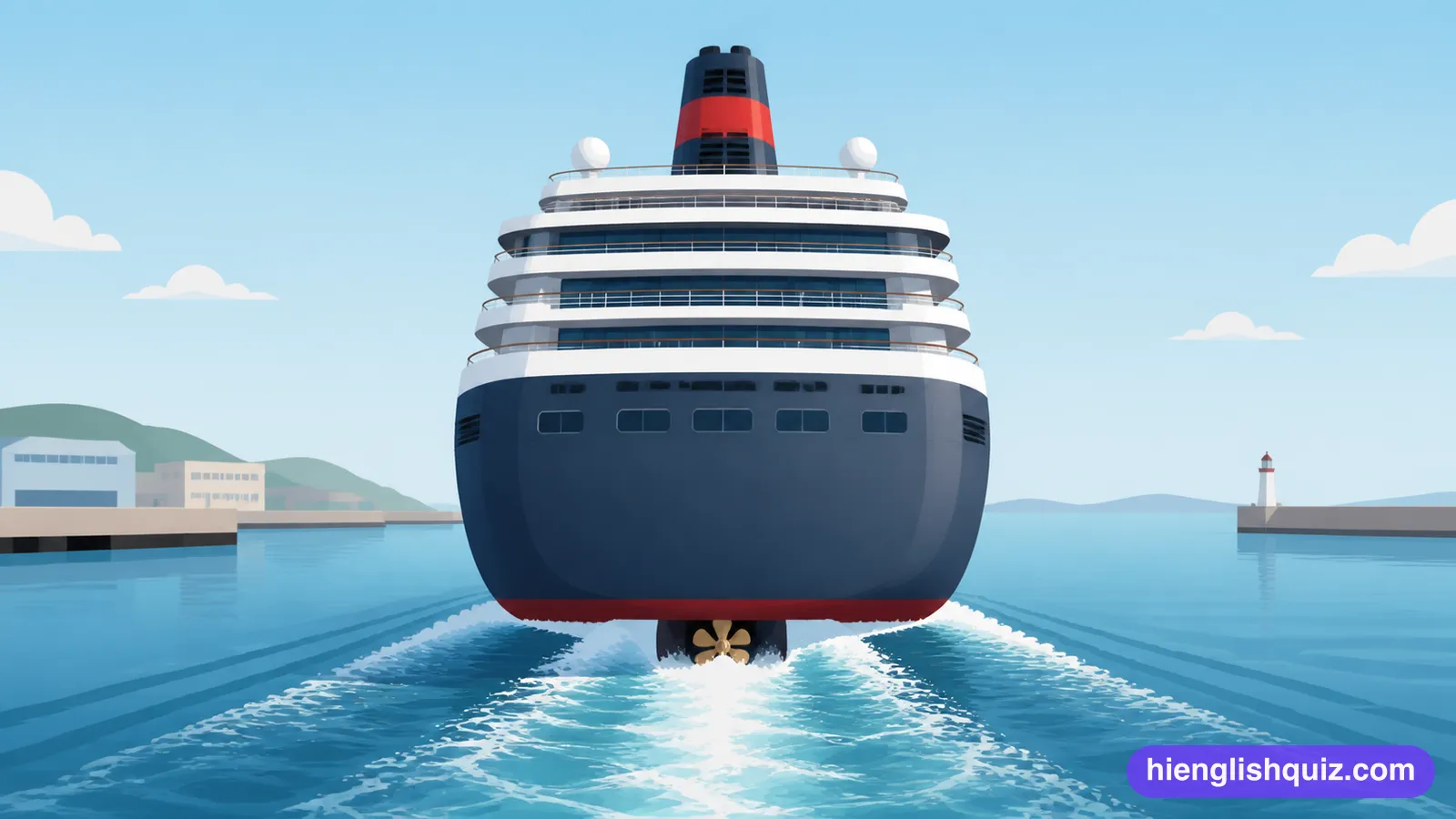
The rear, or back, part of a ship.
Example: Passengers waved from the stern as the ship left port.
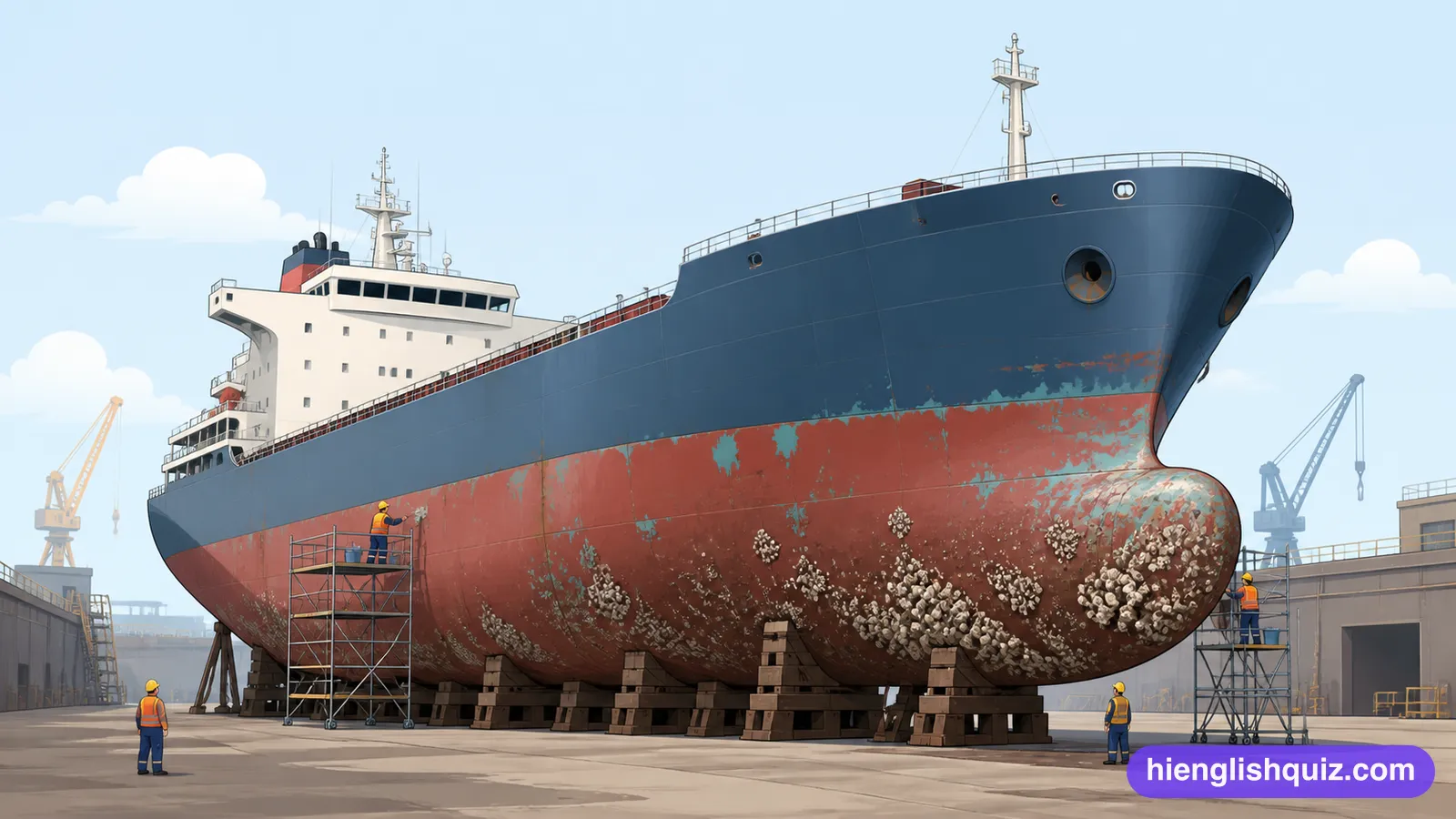
The main outer body of a ship or boat.
Example: Barnacles had grown thick on the ship's hull.
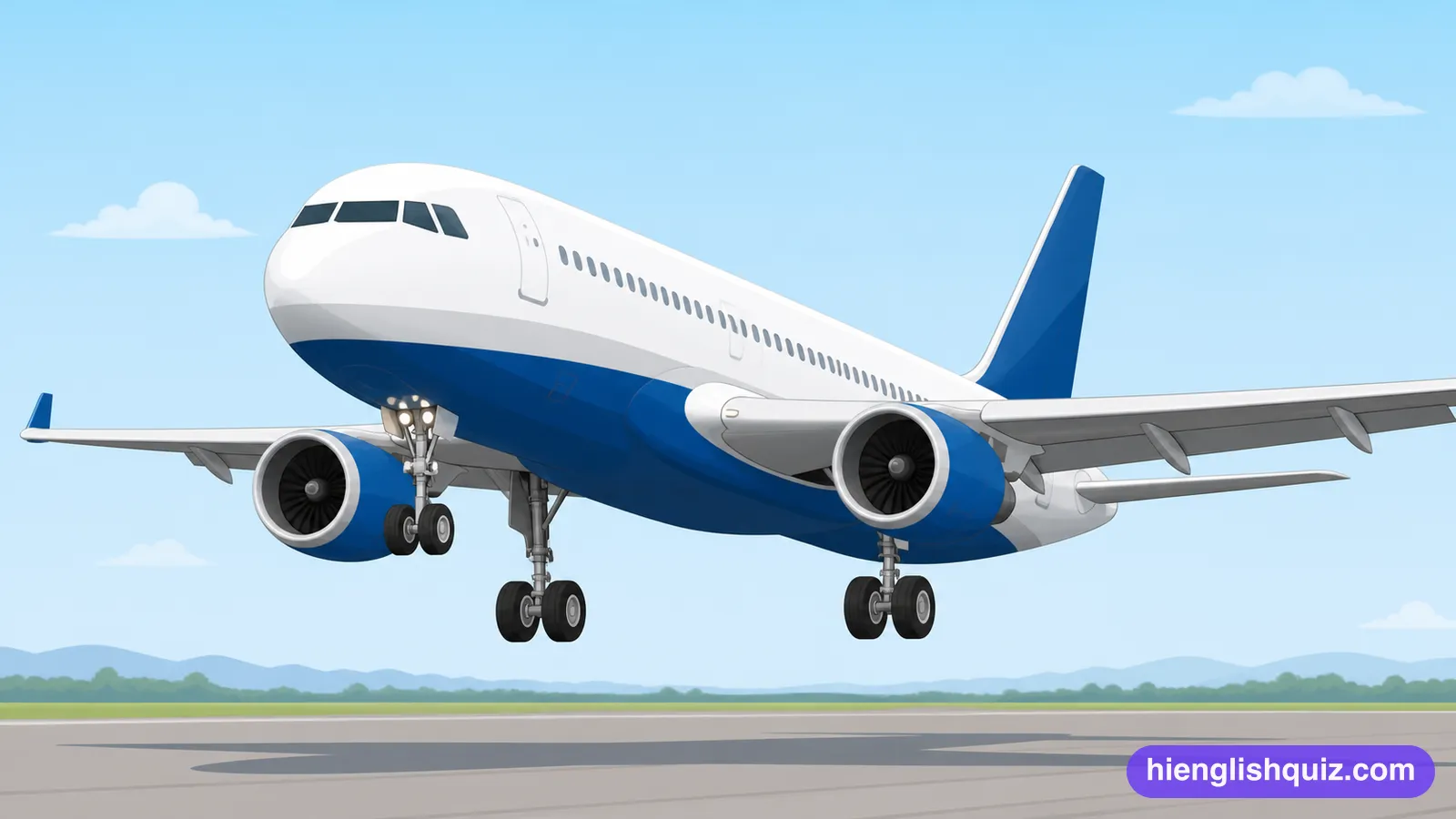
The wheels and supports a plane uses to land and taxi.
Example: The pilot lowered the landing gear before final approach.
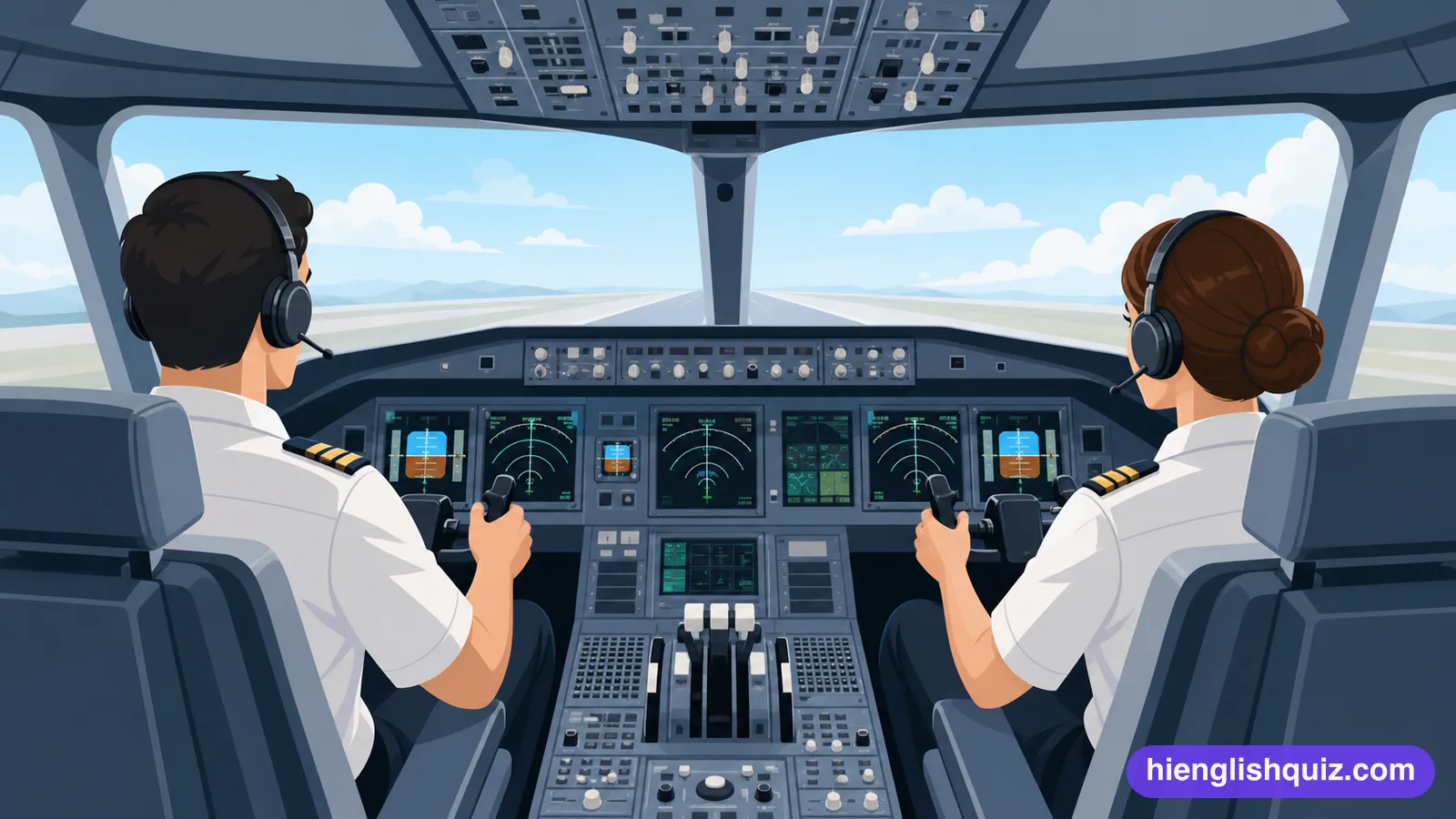
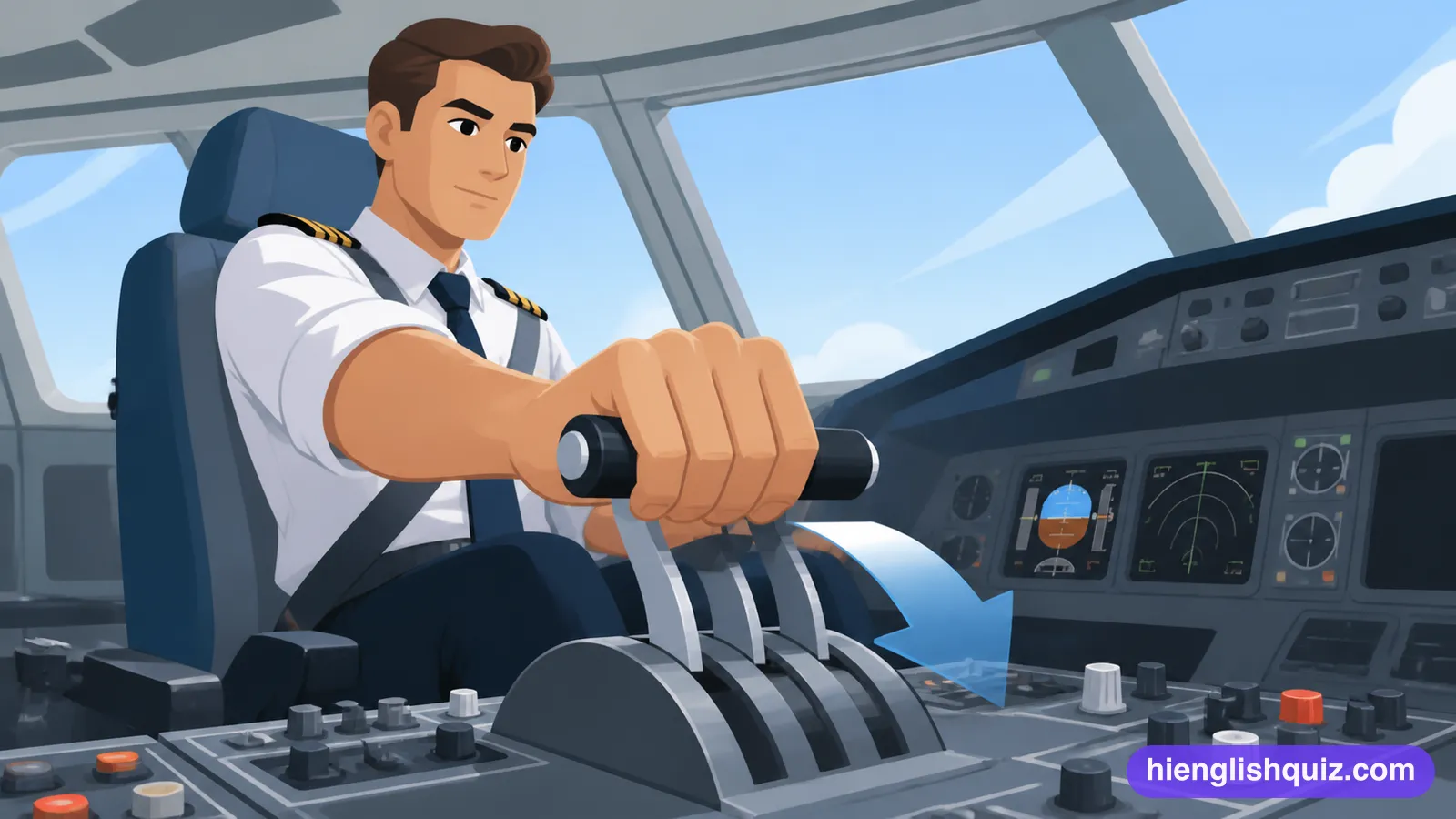
A control that increases or decreases an engine's power.
Example: She pushed the throttle forward to gain more speed.
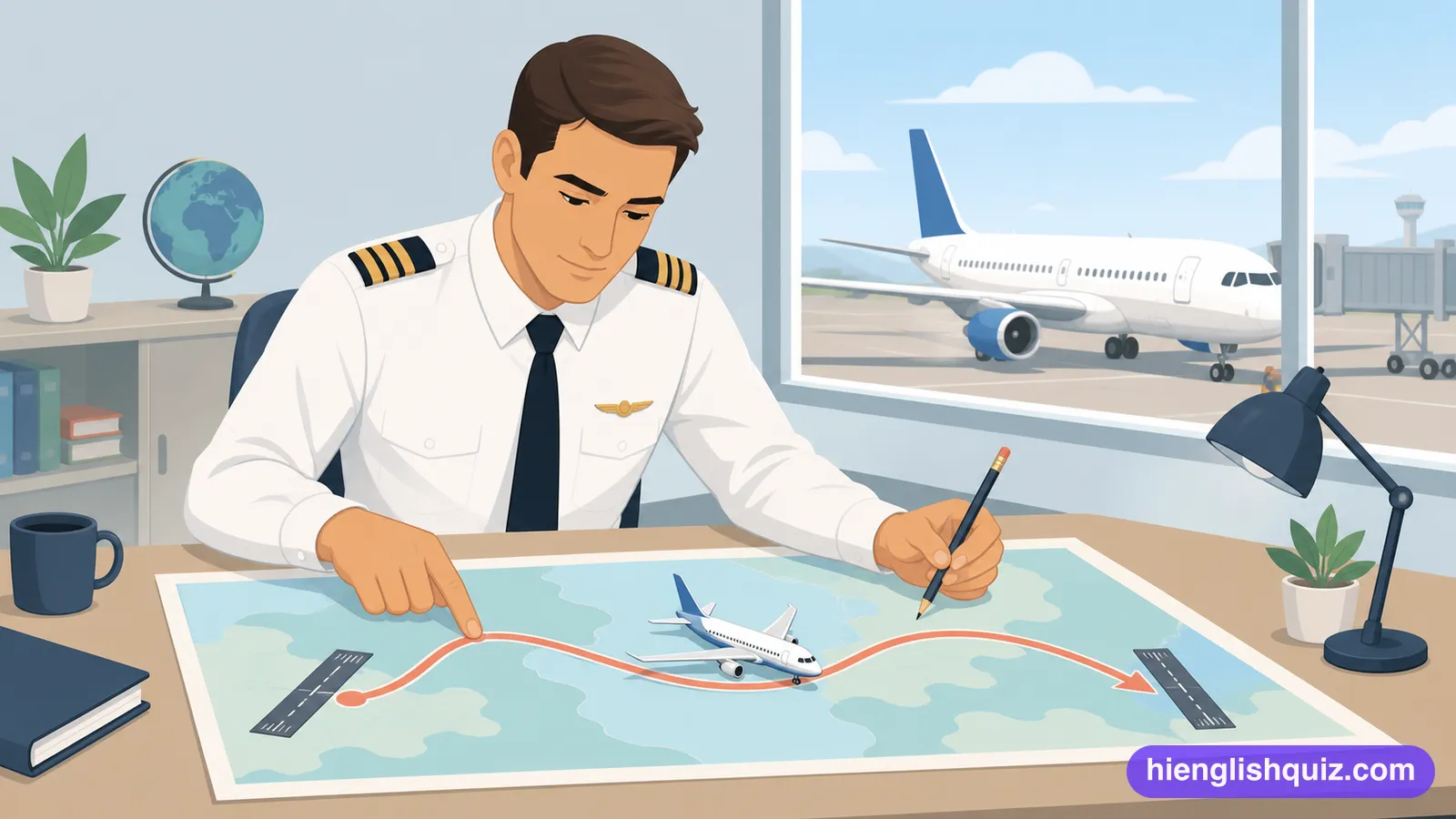
The route and details filed before an aircraft departs.
Example: The flight plan was refiled twice because of the weather.
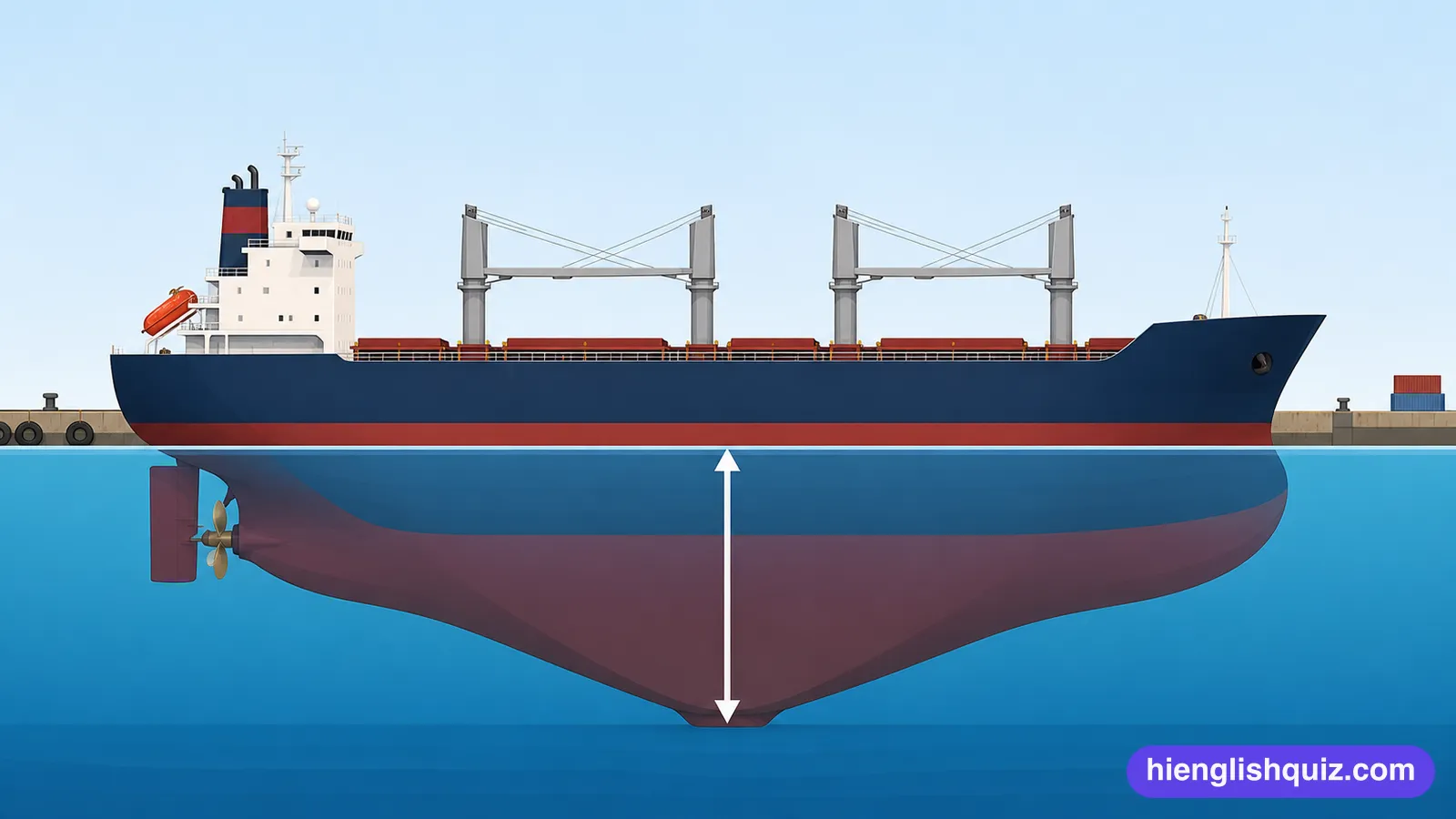
How deep a ship sits in the water.
Example: Her draught is too great for that harbour at low tide.
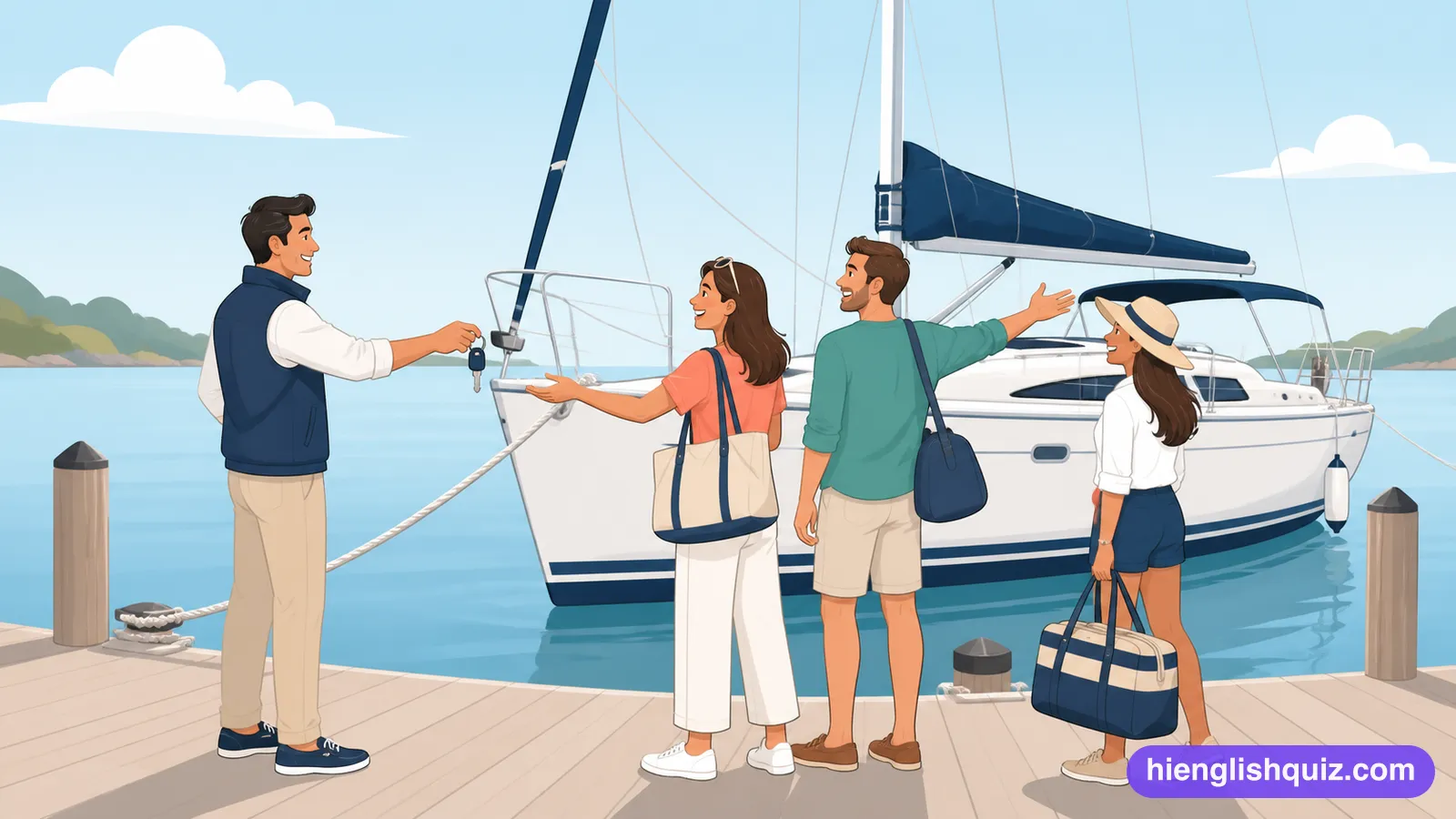
The hiring of a whole aircraft or ship.
Example: The charter cost less than forty scheduled tickets.
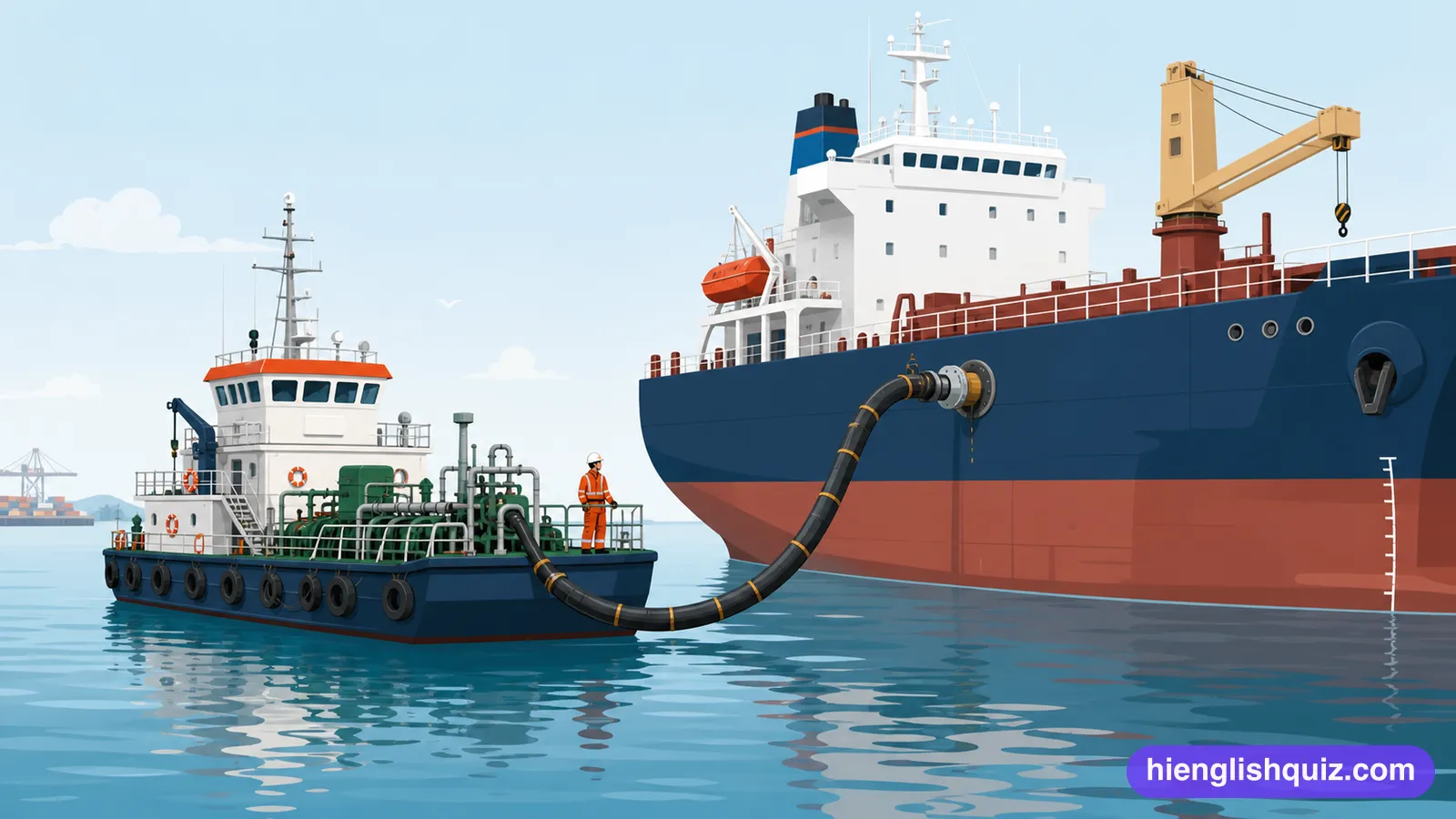
The supplying of fuel to a ship.
Example: Bunkering takes eleven hours and has to be booked.
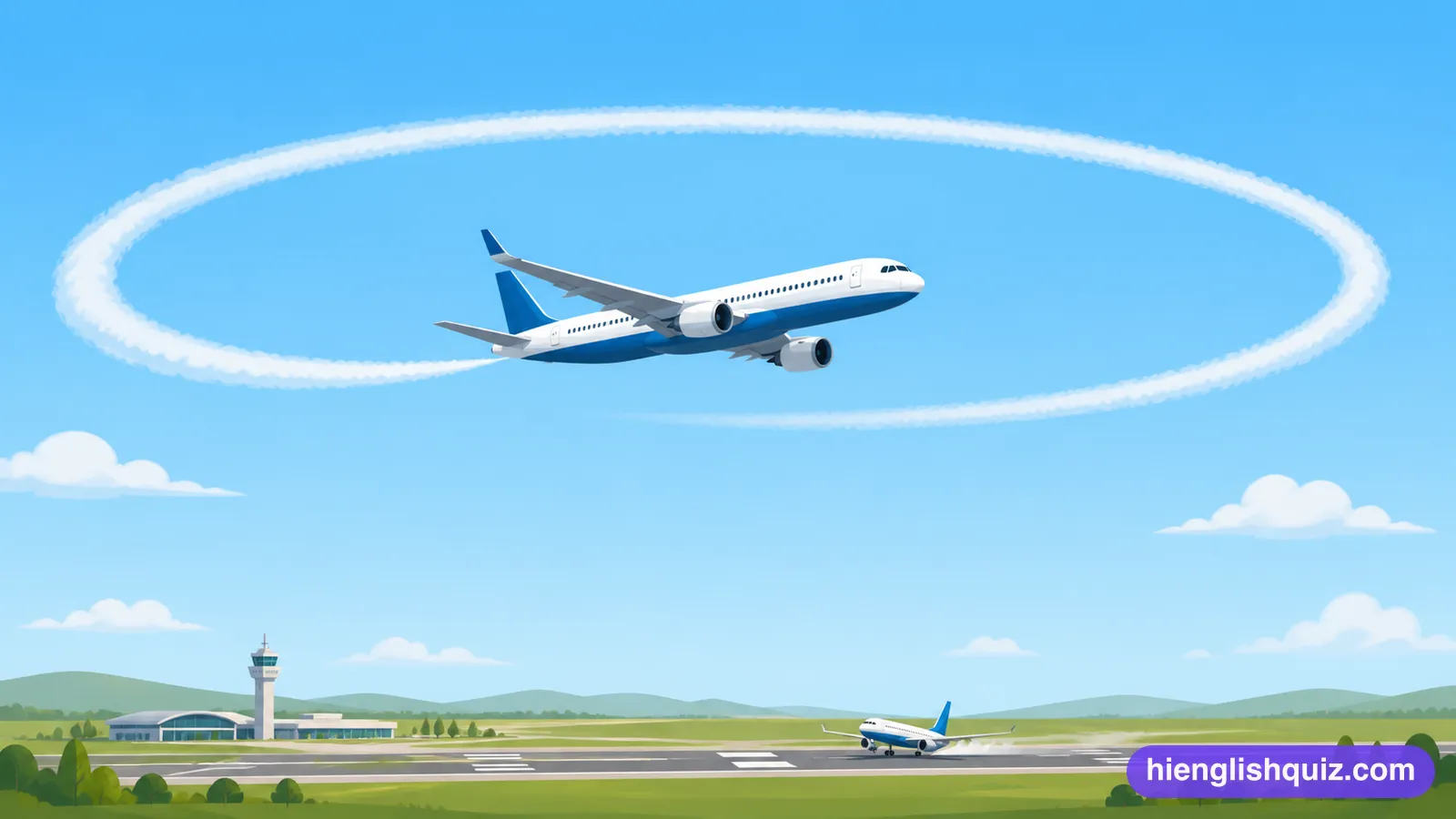
A circular route flown while waiting to land.
Example: Forty minutes in a holding pattern burned the reserve fuel.
Water taken on board to keep a ship stable.
Example: Ballast water has to be treated before it is discharged.