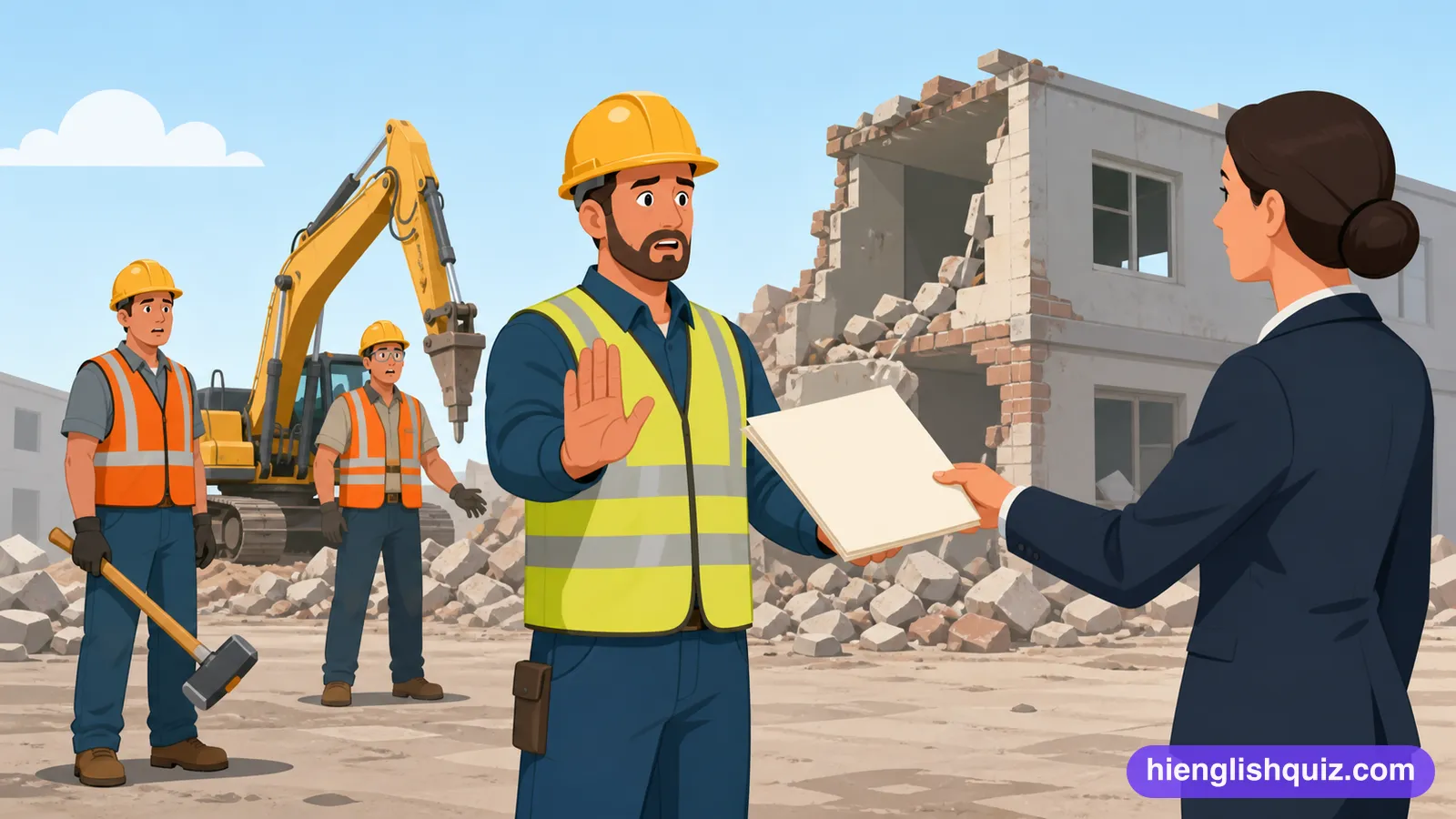
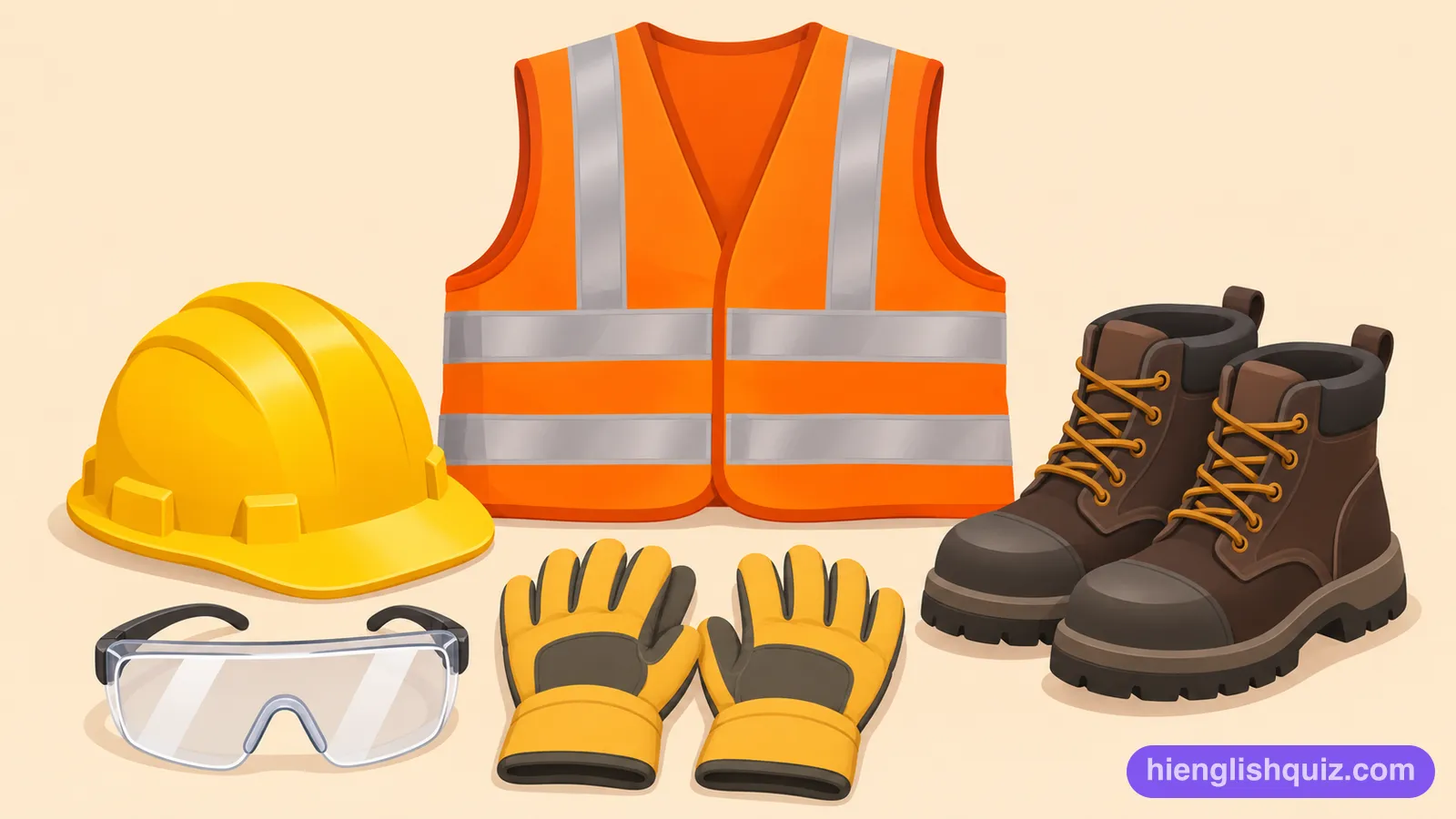
tolerance
/ˈtɑlərəns/The acceptable amount that a measurement can vary from the exact size without being rejected.
Example: The part was rejected for falling outside its tolerance.
 Hi EnglishQuiz
B216 words · Upper-intermediate
Engineering vocabulary for working with machinery and materials, including tolerance, torque, calibration and the hydraulic systems, welds and alloys a technician handles.
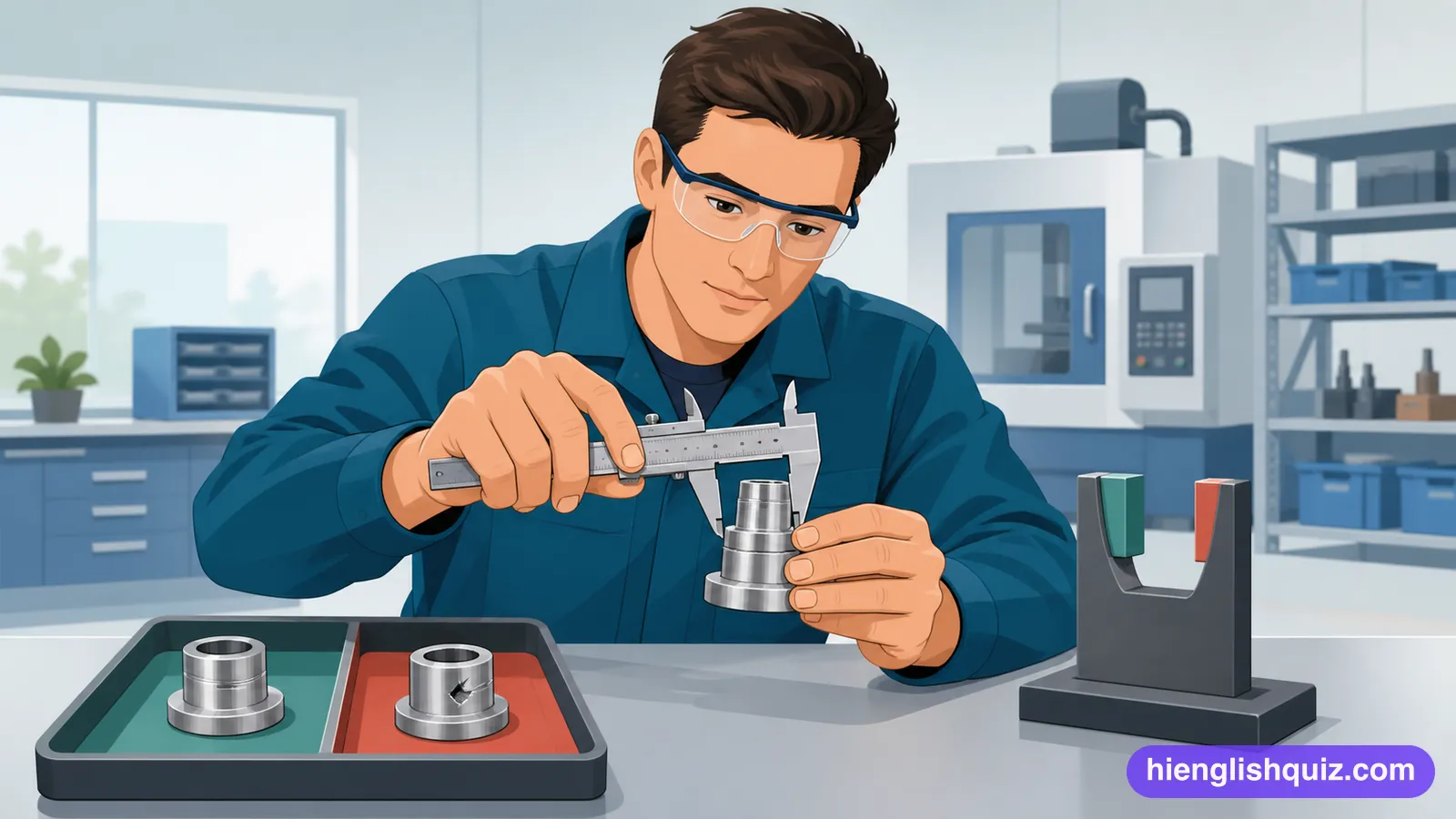
The acceptable amount that a measurement can vary from the exact size without being rejected.
Example: The part was rejected for falling outside its tolerance.
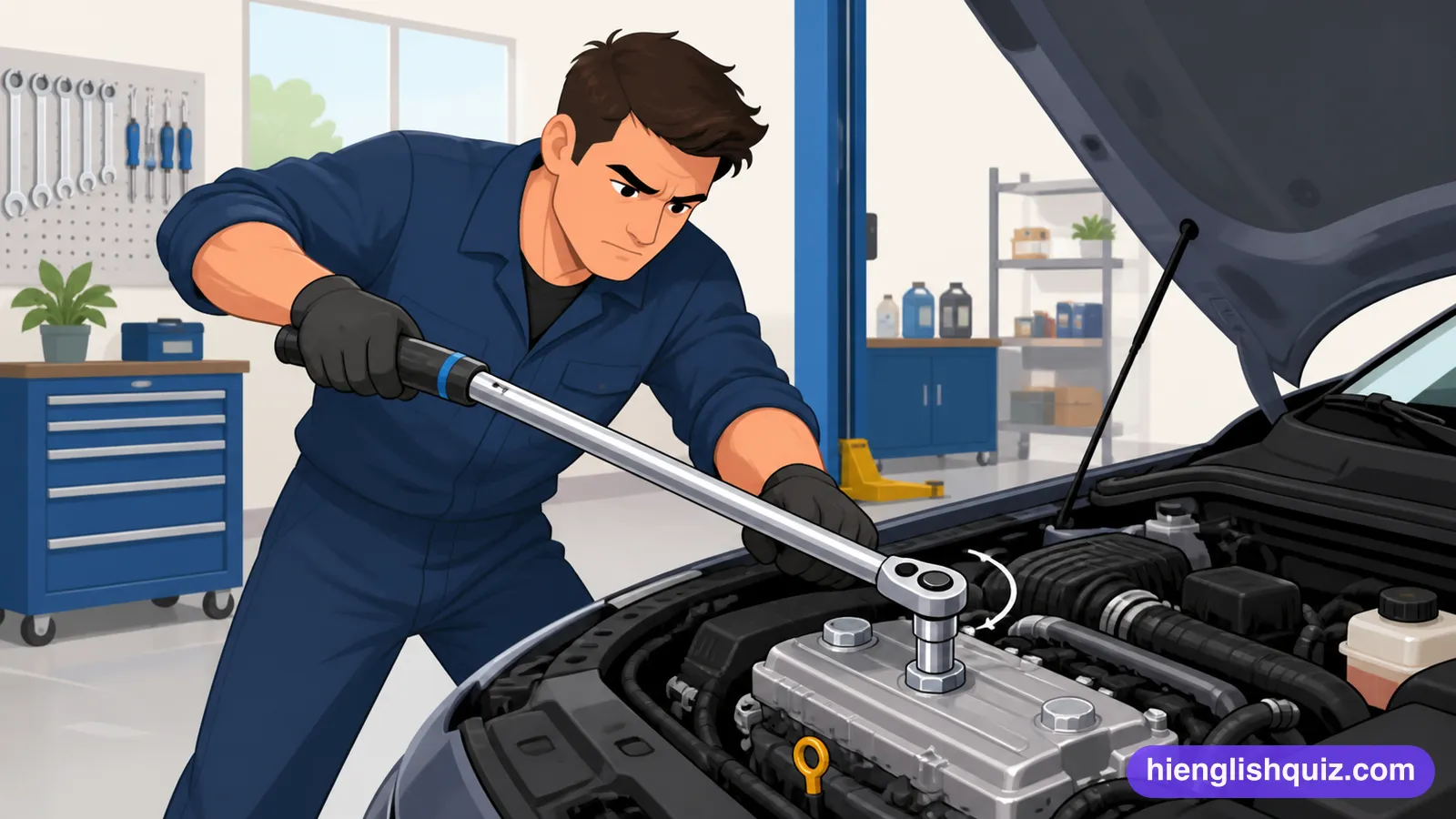
A twisting force that makes something rotate, such as a bolt or a wheel.
Example: The mechanic tightened the bolt to the correct torque.
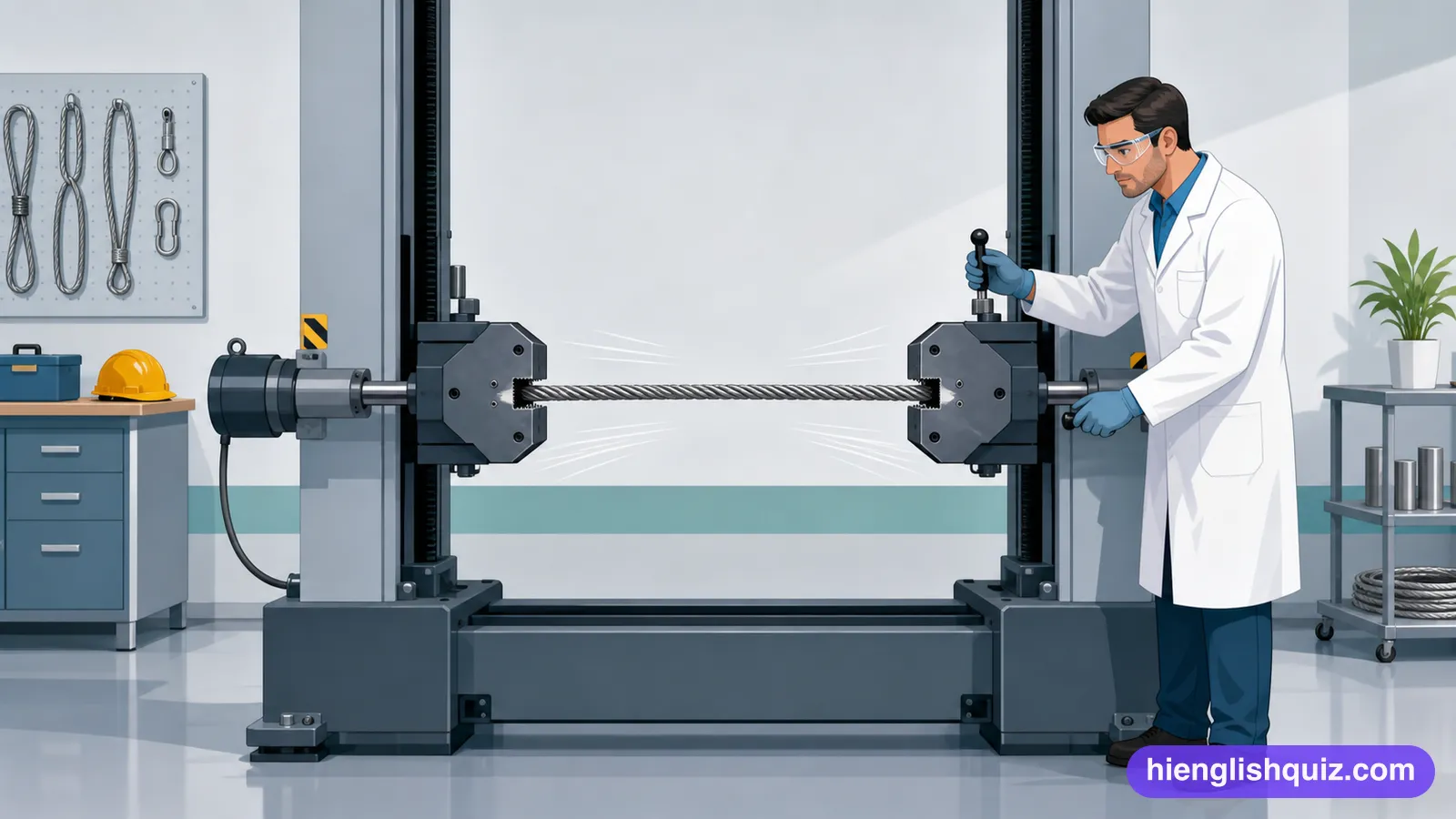
The process of adjusting an instrument so its measurements are accurate.
Example: The scale needed calibration before the test began.

Powered by the pressure of a liquid moving through pipes or cylinders.
Example: A hydraulic arm lifted the car off the ground.
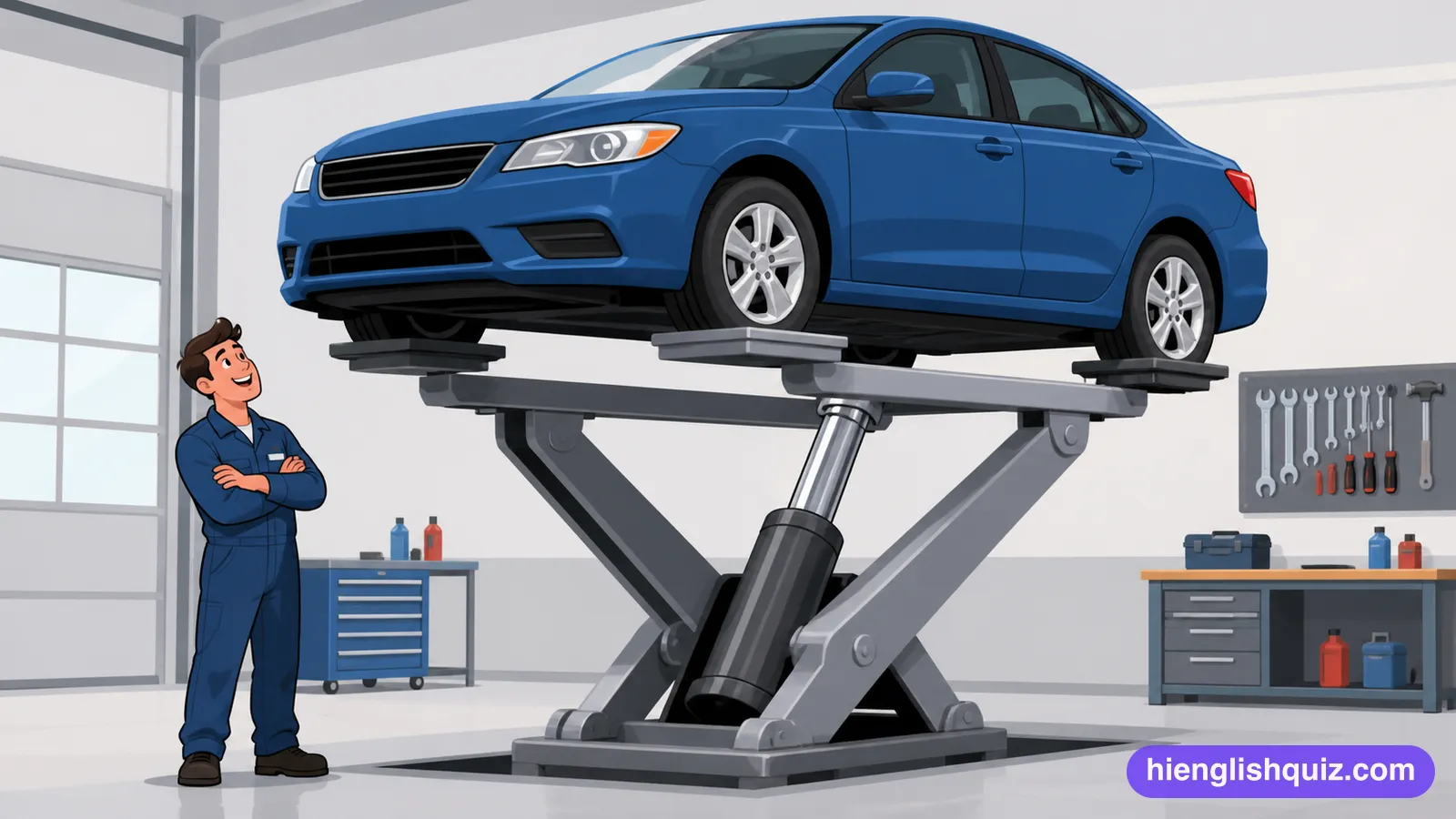
Powered by air or gas under pressure.
Example: The pneumatic drill broke through the concrete quickly.
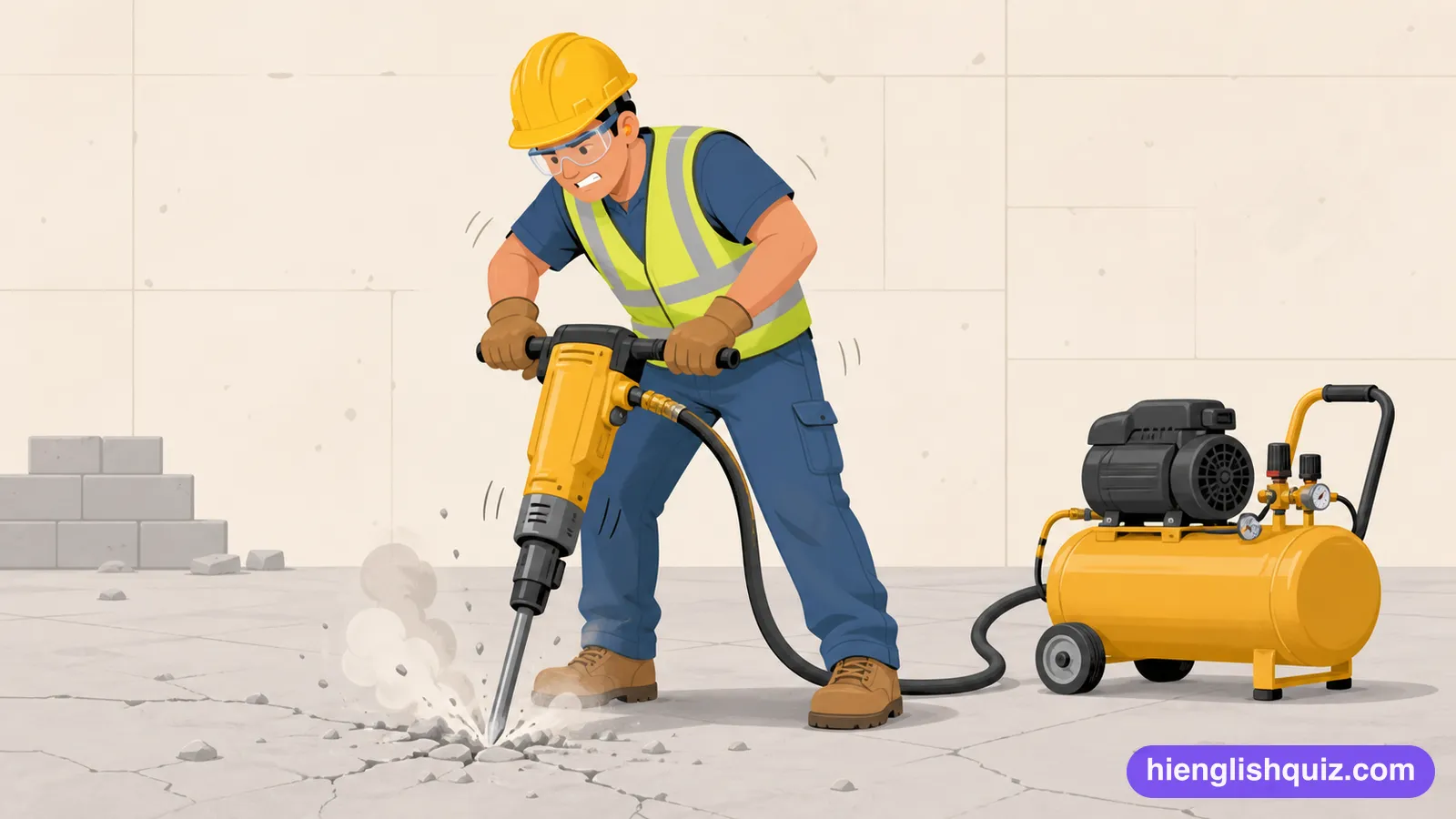
To join two pieces of metal together by heating them until they melt and fuse.
Example: The technician used a torch to weld the two pipes together.
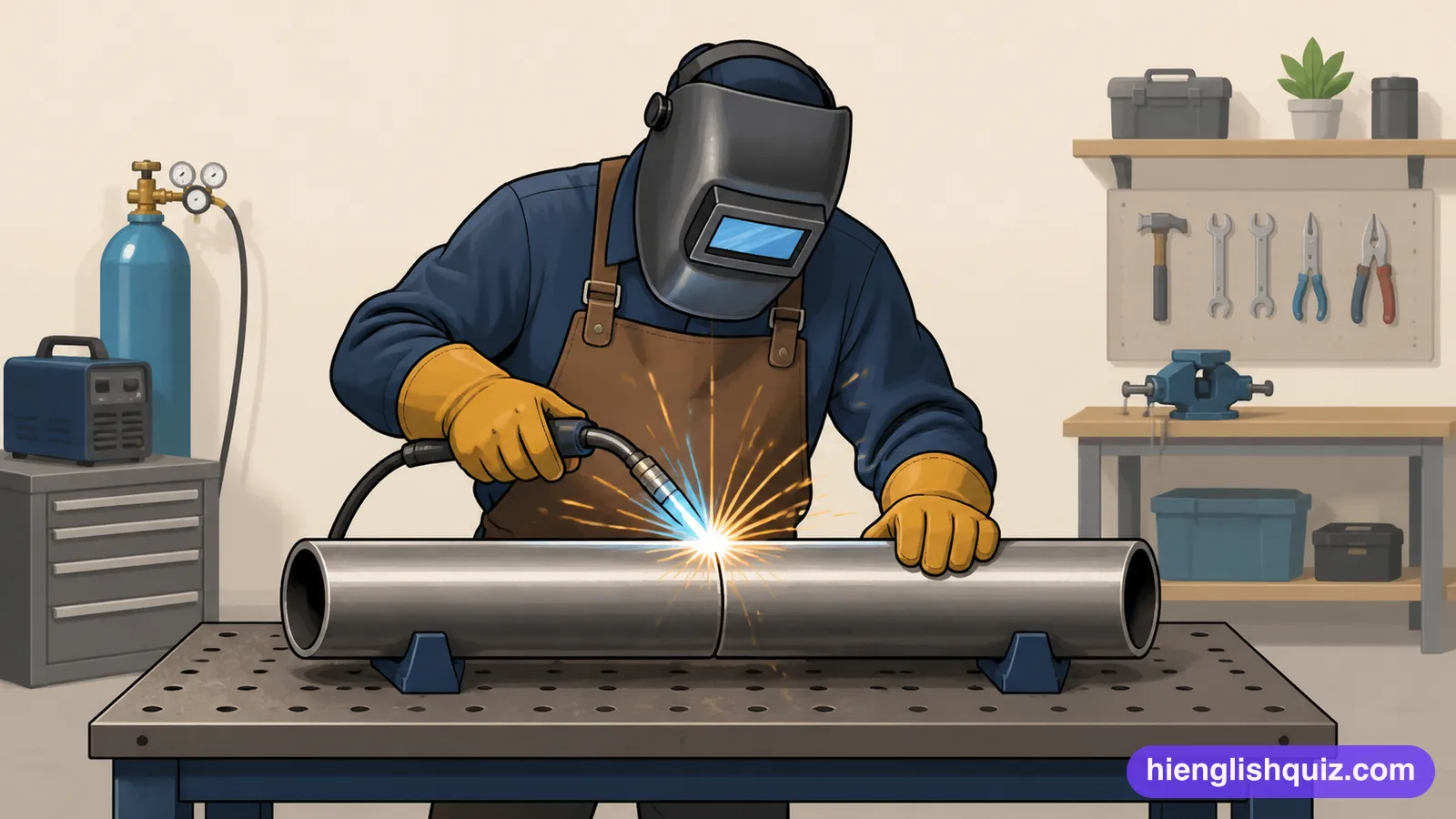
A machine that spins a piece of material so it can be cut or shaped evenly.
Example: He shaped the metal rod on the lathe.
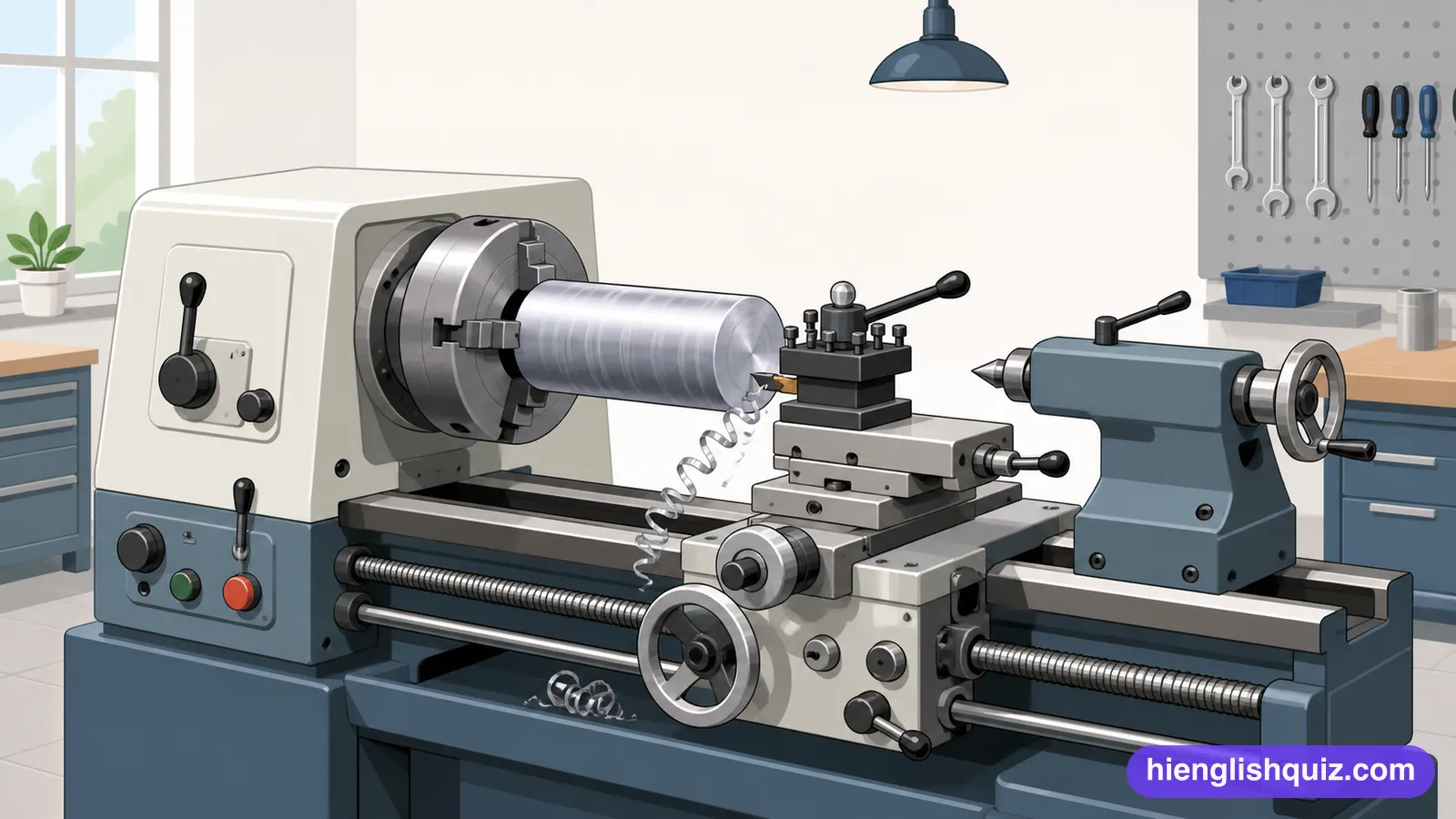
A tool or dial that measures an amount, such as pressure or thickness.
Example: The fuel gauge showed the tank was almost empty.

A metal made by mixing two or more different metals together.
Example: Bronze is an alloy of copper and tin.
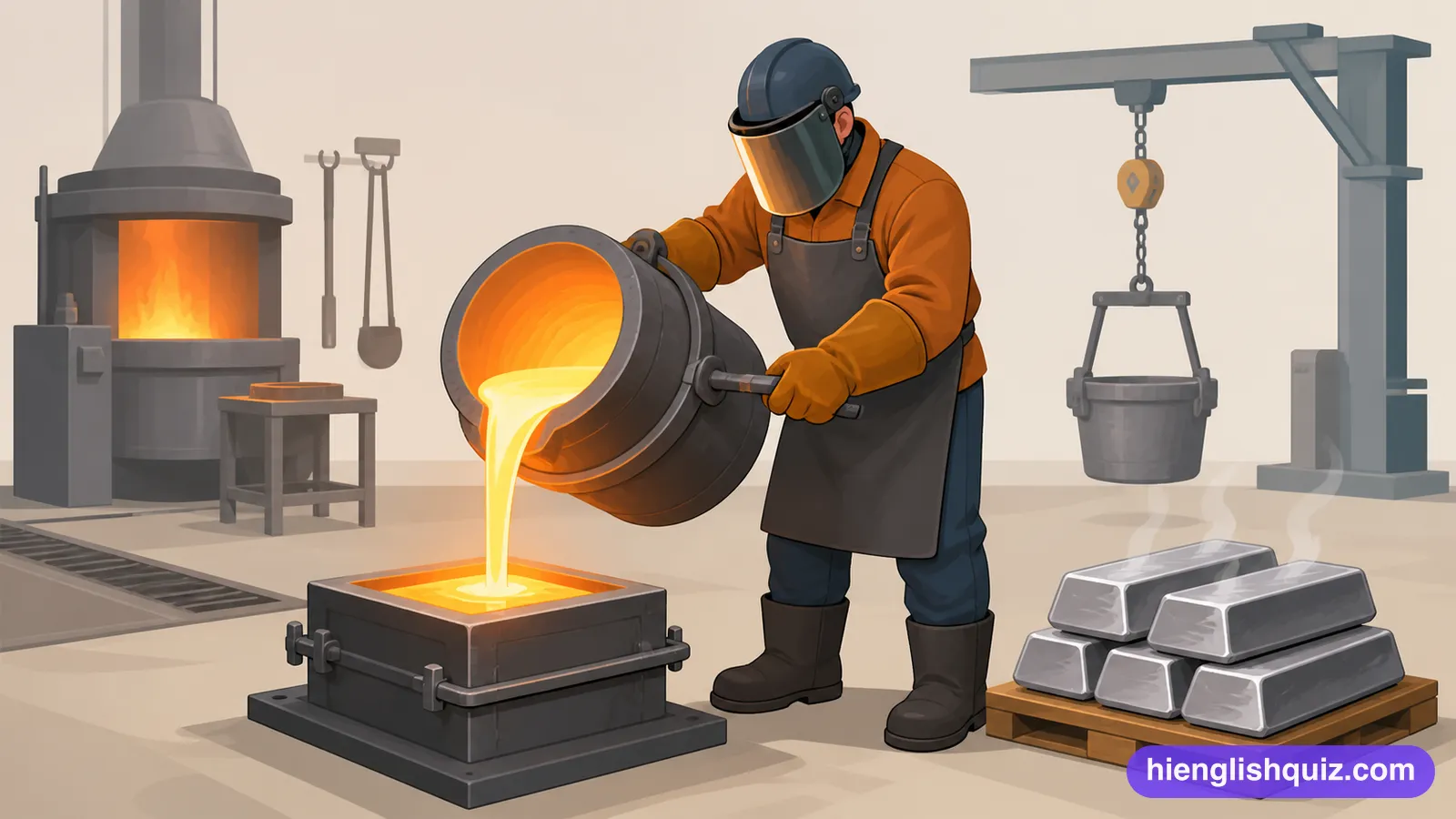
Shaping a material by pouring it in liquid form into a mould and letting it set.
Example: The factory uses casting to make thousands of identical metal parts.
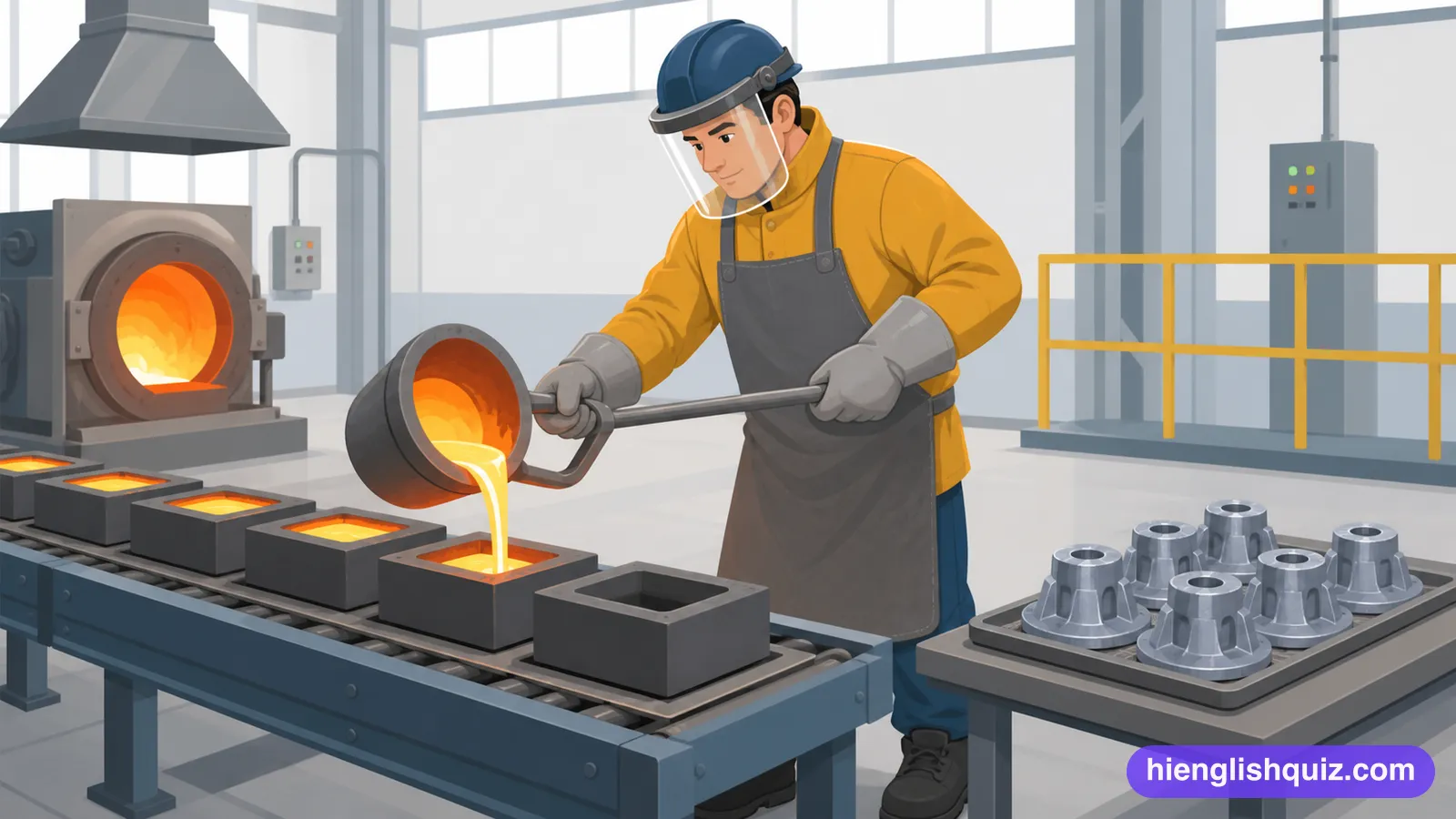
Shaping metal by cutting it with a machine.
Example: Machining the housing takes eleven minutes a unit.
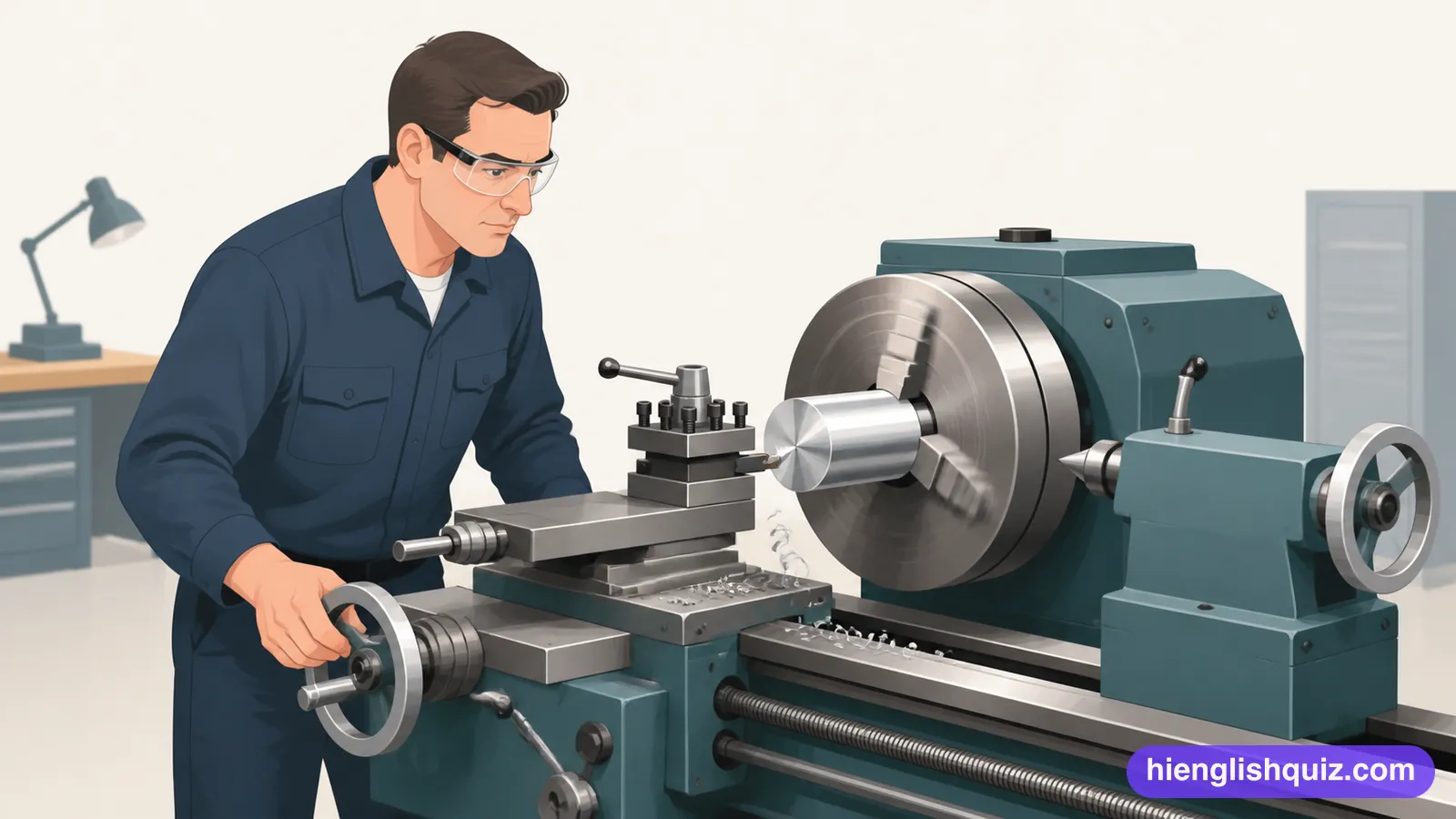
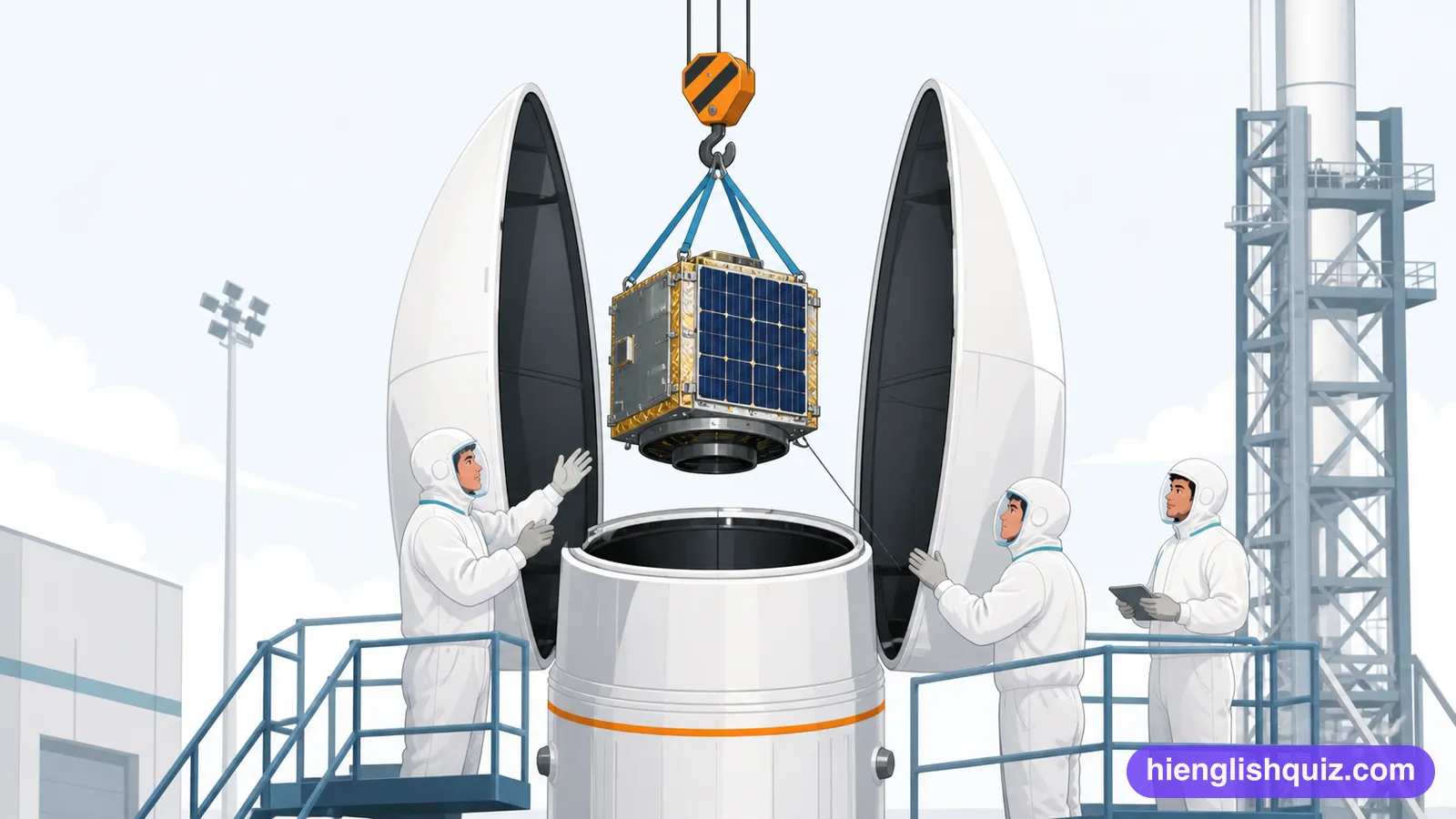
A device that holds a part in exactly the right position.
Example: One new jig halved the reject rate.
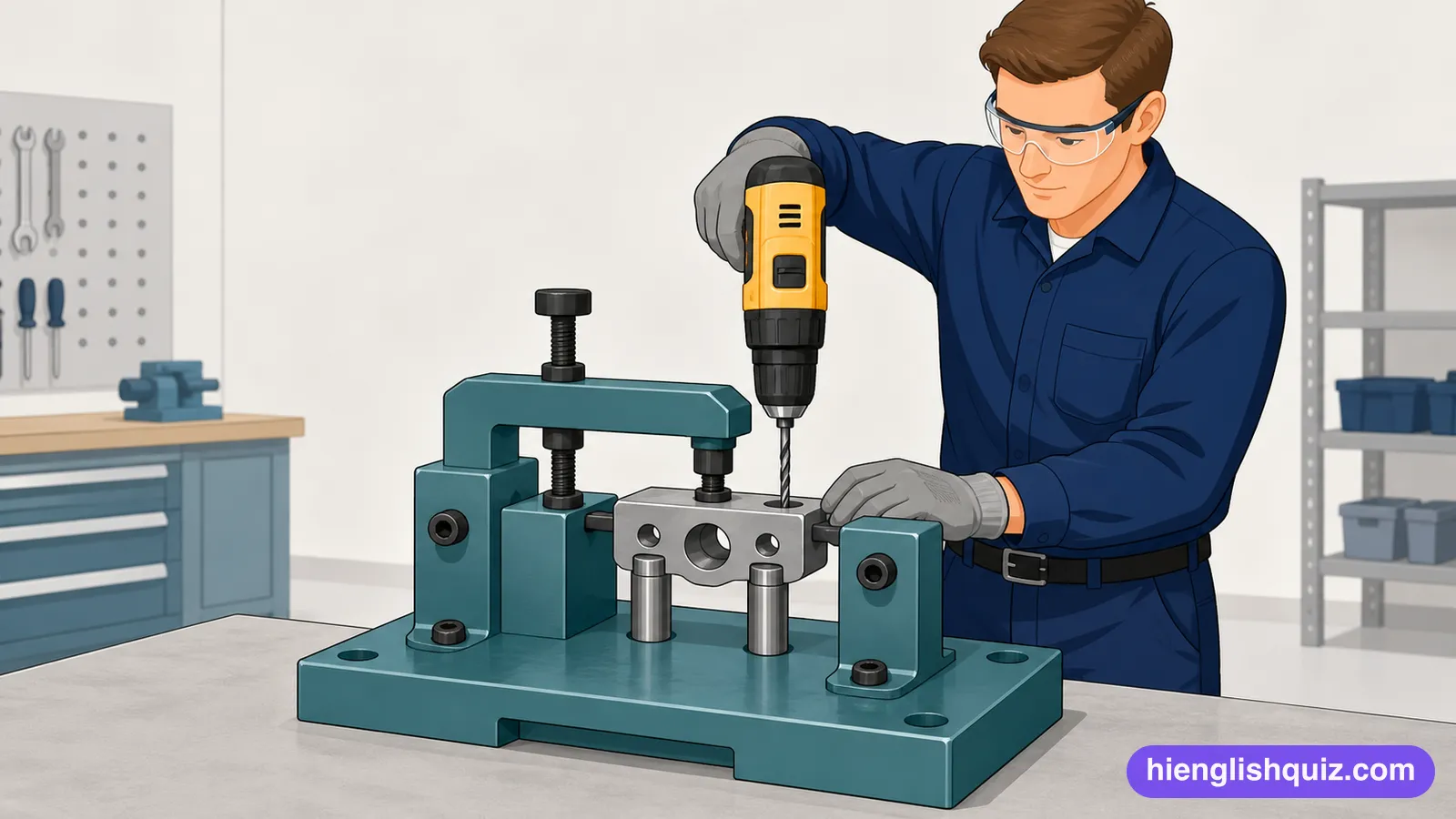
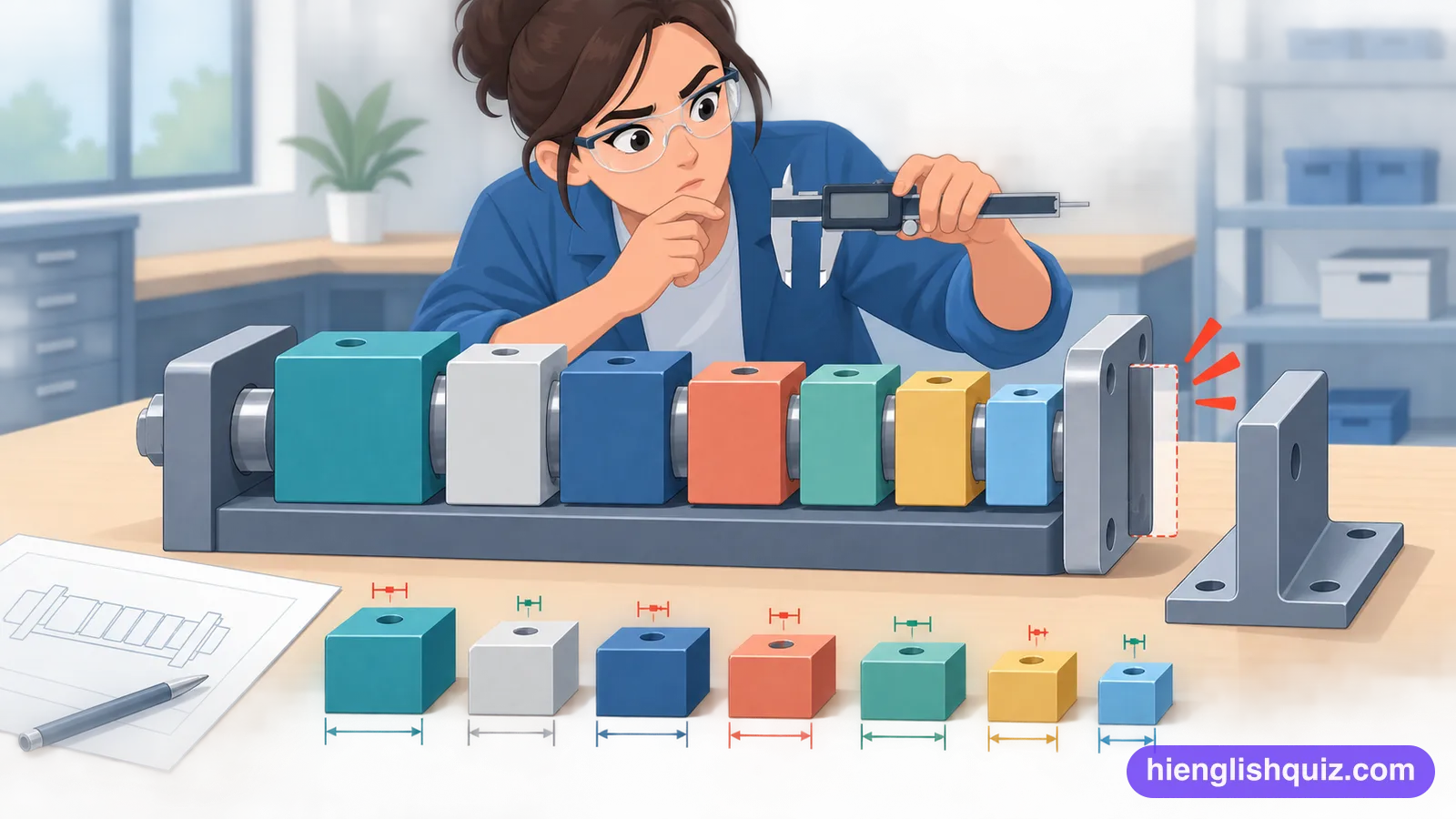
The way small permitted errors add up across an assembly.
Example: The tolerance stack was what made the door refuse to close.
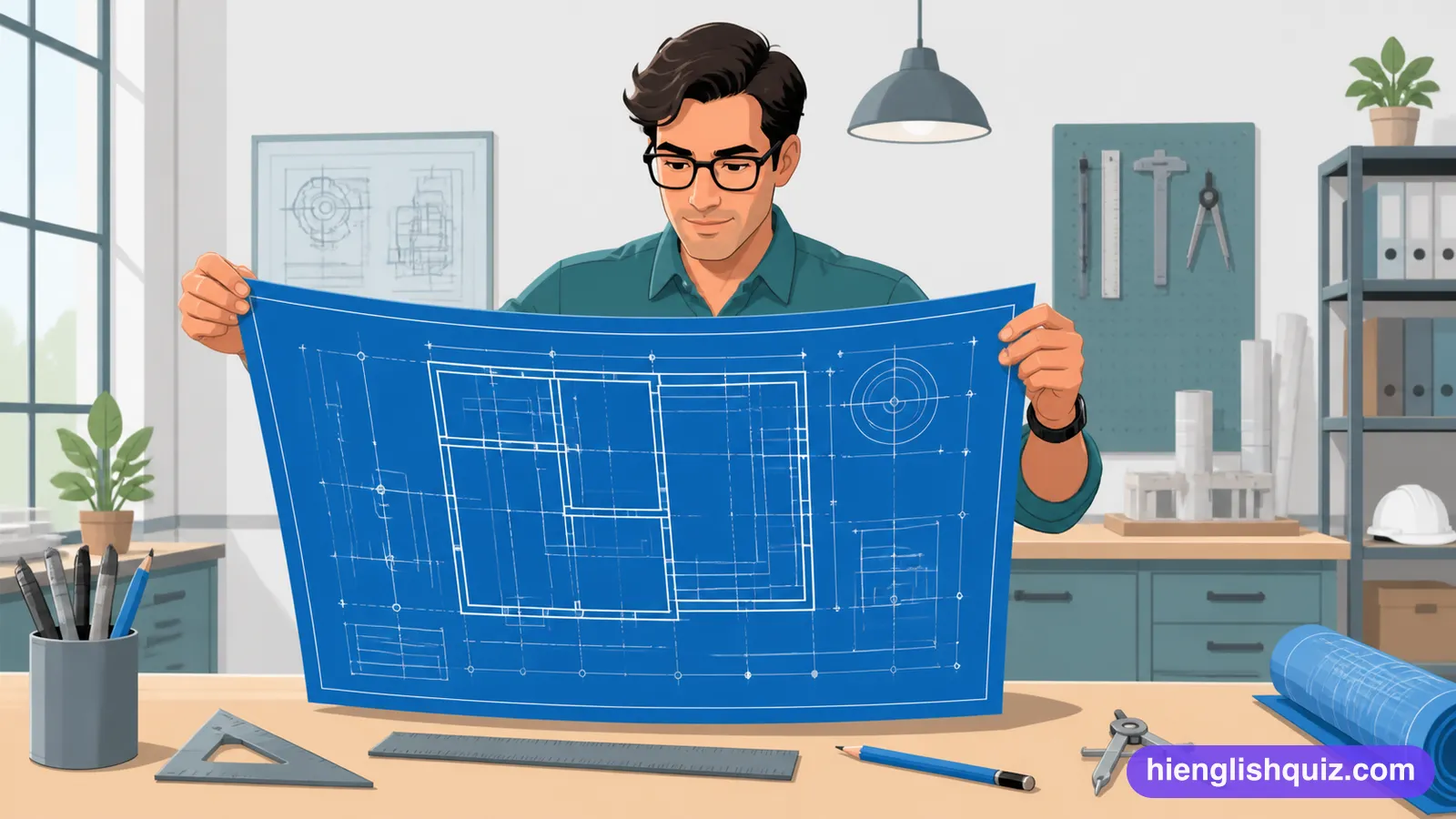
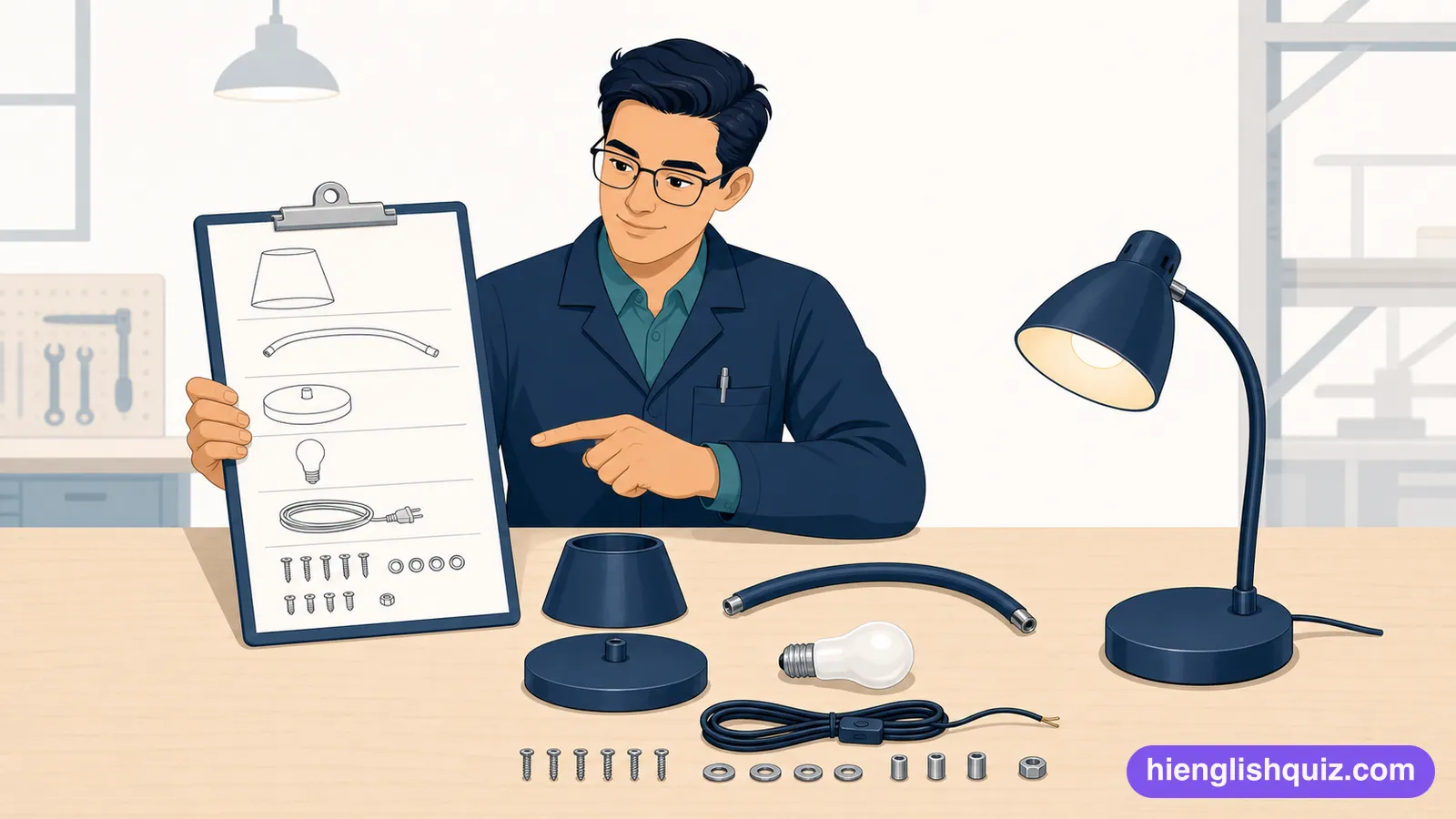
The full list of parts needed to make something.
Example: The bill of materials ran to two hundred lines.
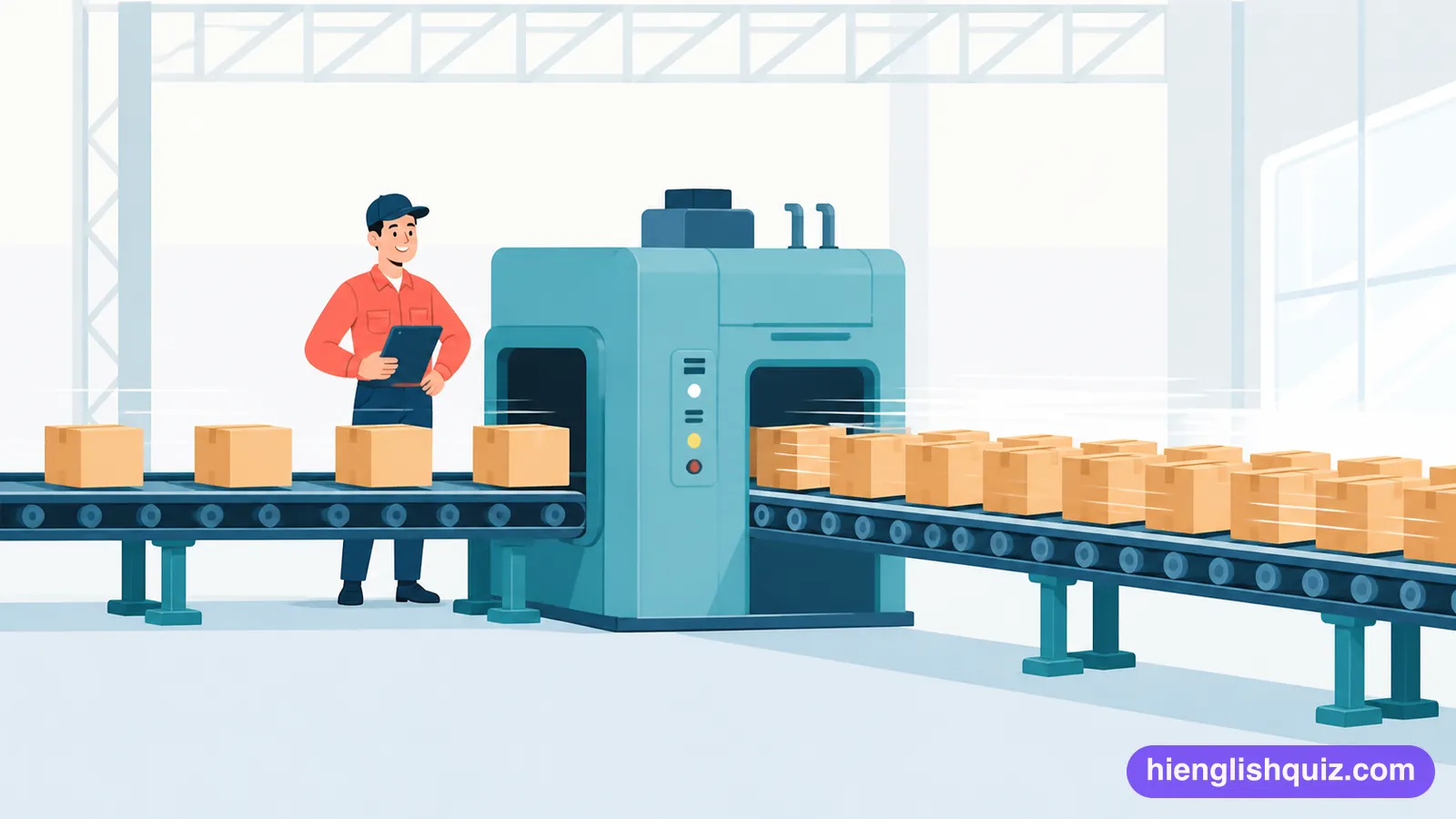
How many units a process completes in a given time.
Example: The throughput rate rose once the second oven was installed.
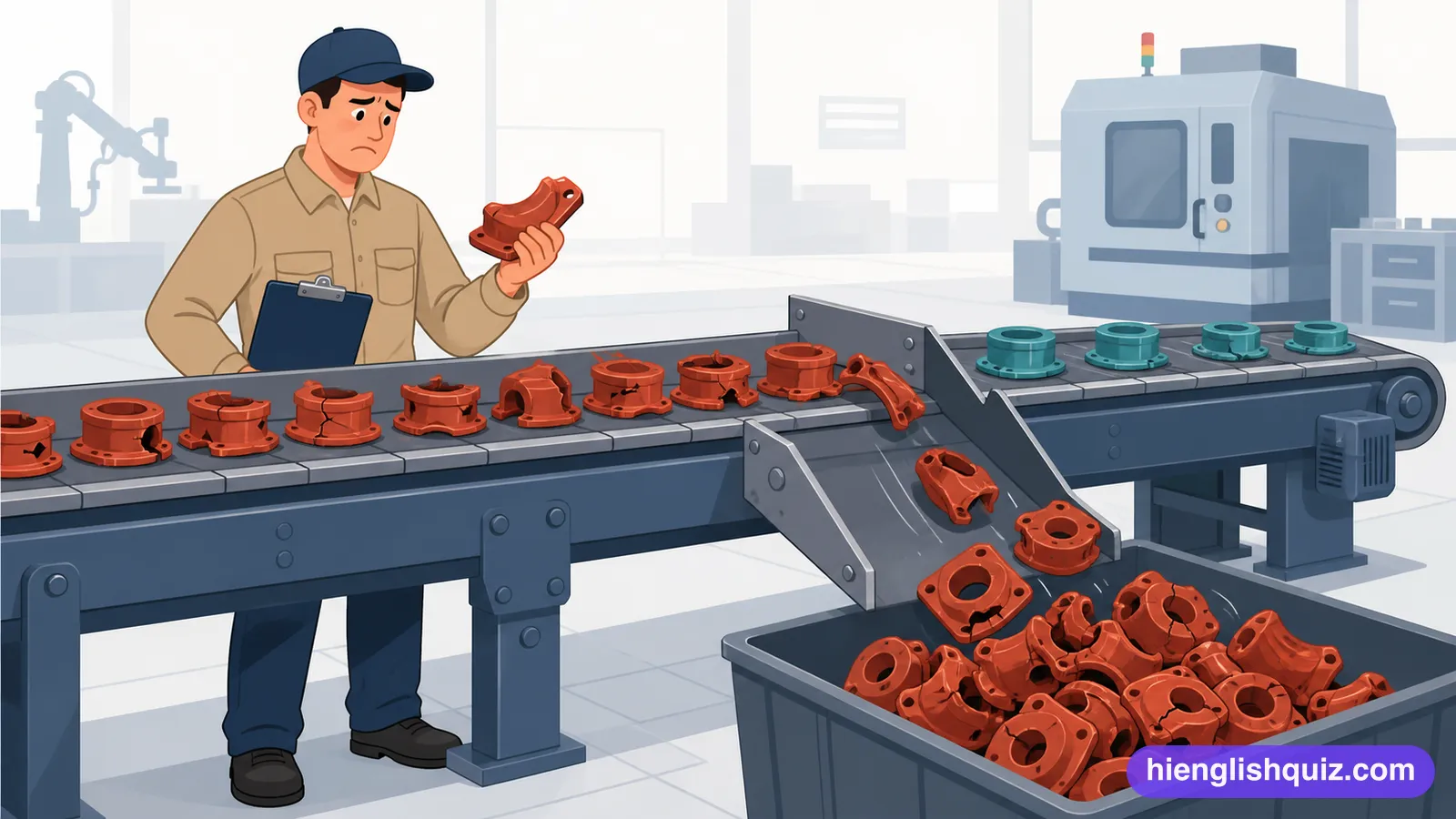
The proportion of production that has to be thrown away.
Example: A scrap rate of six per cent was quietly accepted for years.