fiduciary
/fəˈduʃiˌɛri/Relating to a legal duty to manage someone else's money honestly and in their best interest.
Example: The manager broke his fiduciary duty by misusing client funds.

 Hi EnglishQuiz
C222 words · Proficient
Expert-level business vocabulary for corporate governance and decision-making, including fiduciary duty, insolvency, a hostile takeover and the groupthink behind boardroom mistakes.
Relating to a legal duty to manage someone else's money honestly and in their best interest.
Example: The manager broke his fiduciary duty by misusing client funds.
A legal process in which an independent manager takes control of a struggling company's assets.
Example: The retailer was placed into receivership after months of losses.

A large company made up of several smaller, often unrelated, businesses.
Example: The conglomerate owns businesses in food, media and finance.

The state of being unable to pay debts as they fall due.
Example: Rising costs pushed the firm towards insolvency.

The process of closing a company and selling its assets to pay off its debts.
Example: The factory went into liquidation after losing its main client.

The sale of part of a business, such as a subsidiary or division.
Example: The divestiture of its retail arm raised needed cash.

The strategy of expanding into new markets or products to spread business risk.
Example: The firm's diversification into software paid off.

Buying a company by going directly to shareholders, against the wishes of its leaders.
Example: The firm fought off a hostile takeover by a rival group.

Buying a company mostly with borrowed money, using the company's own assets as security.
Example: Investors financed the leveraged buyout with a large bank loan.

A large payment guaranteed to a top executive if they lose their job after a takeover.
Example: The outgoing CEO left with a golden parachute worth millions.

The loss caused when managers act in their own interest, not the owners'.
Example: The whole bonus scheme was an attempt to reduce agency cost.

The difficulty of making someone act on your behalf faithfully.
Example: Every outsourcing contract is a principal-agent problem in disguise.

Taking bigger risks because someone else carries the loss.
Example: Guaranteeing the debt created a textbook moral hazard.

The way early decisions constrain everything that follows.
Example: Path dependency explains most of what looks like stupidity in that structure.

The accumulated knowledge held by an organisation's people.
Example: Three retirements wiped out the institutional memory of a decade.

Knowledge people have but cannot easily write down.
Example: Tacit knowledge is what walks out of the door on a Friday.

Spare capacity that lets an organisation absorb shocks.
Example: Cutting all the organisational slack made the next crisis fatal.

Choosing the first option that is good enough rather than the best.
Example: The committee was satisficing and calling it strategy.

A group agreeing too readily and suppressing doubts.
Example: The minutes are a case study in groupthink and nobody dissented.

Continuing with something only because of what has already been spent.
Example: Four more years of the sunk cost fallacy followed that decision.
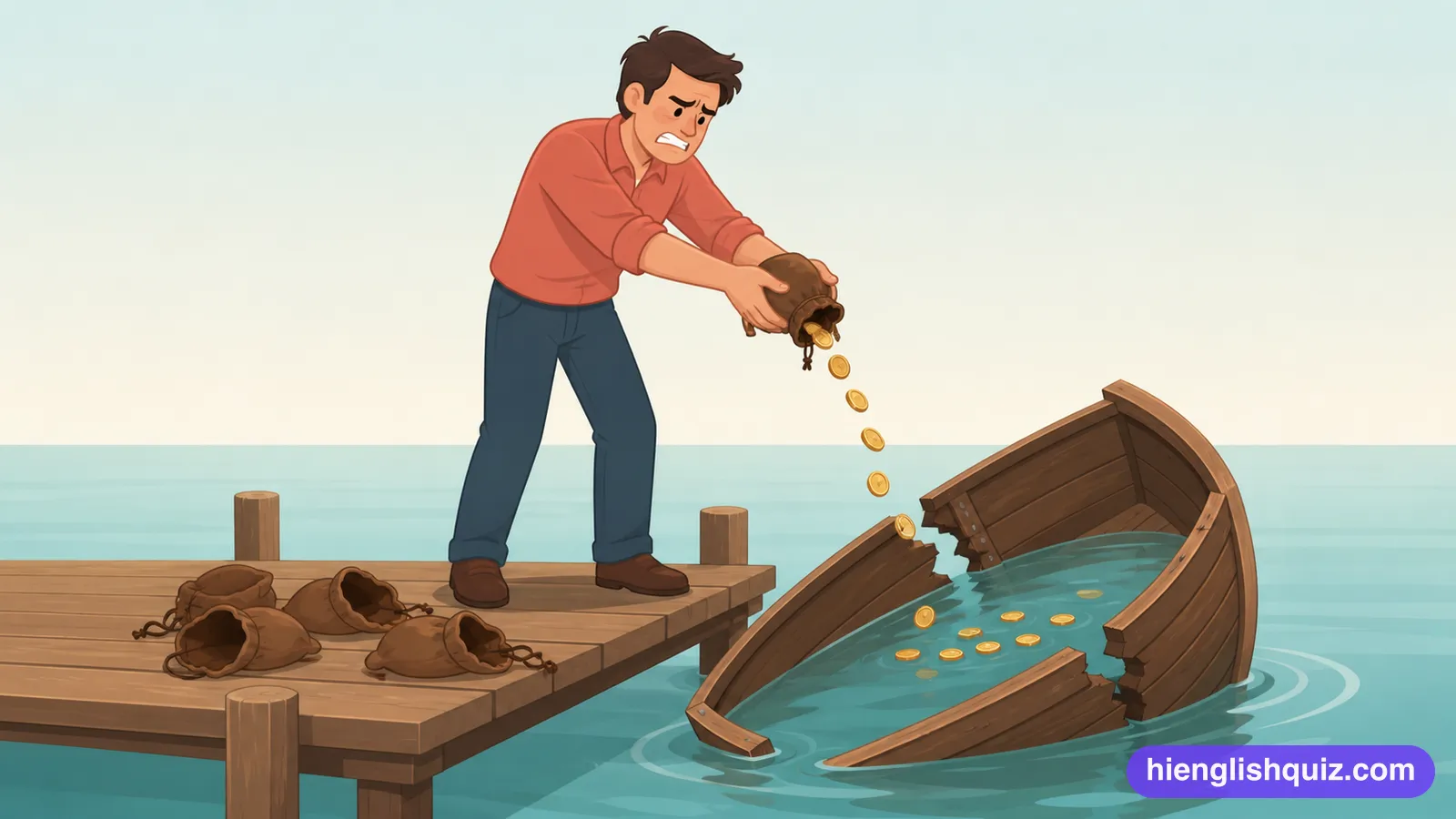
Drawing conclusions only from the cases that survived.
Example: The whole strategy rested on survivorship bias and a good anecdote.

The taking over of a regulator by the industry it regulates.
Example: Bureaucratic capture is slow and nobody ever signs anything.