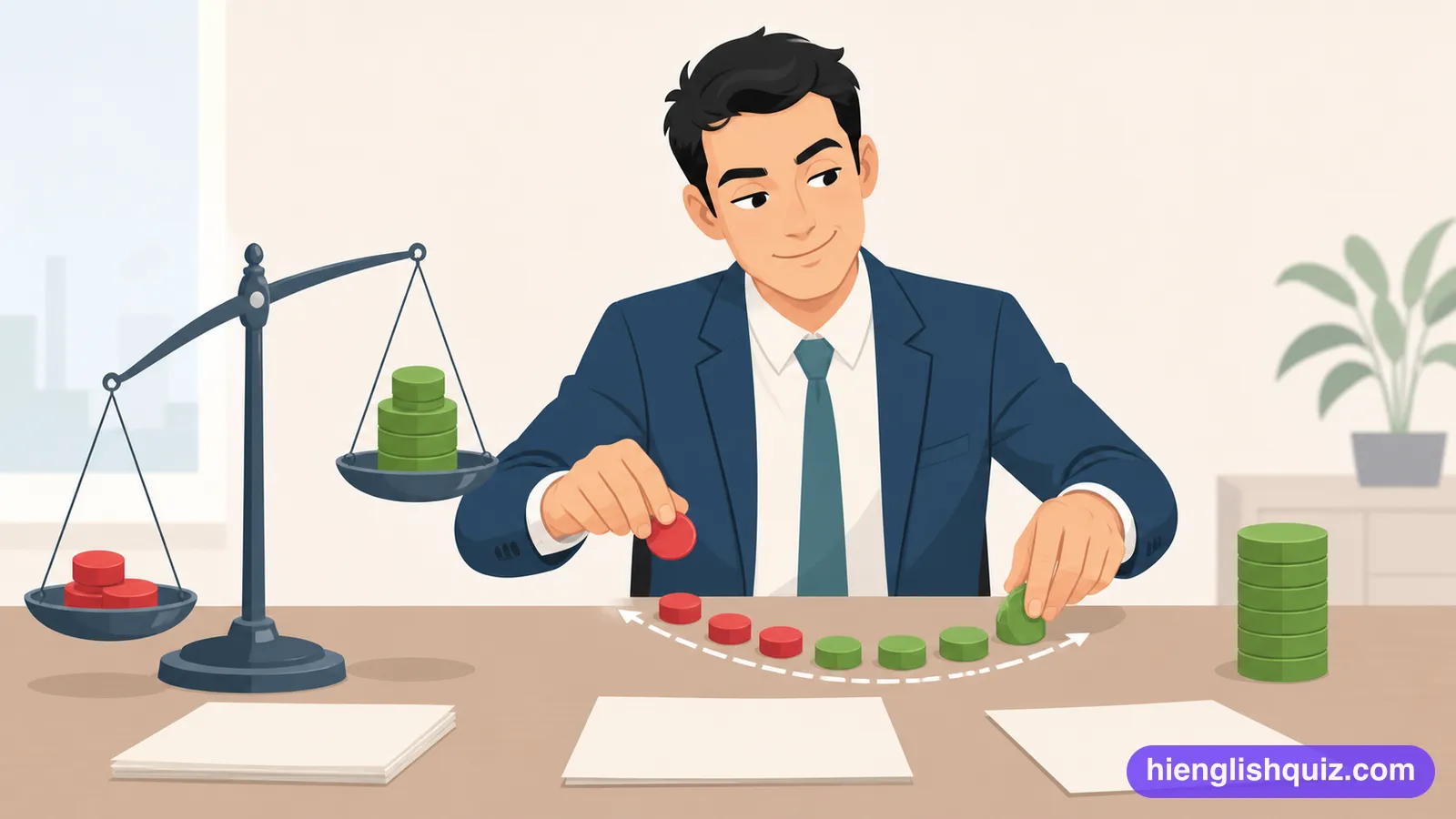
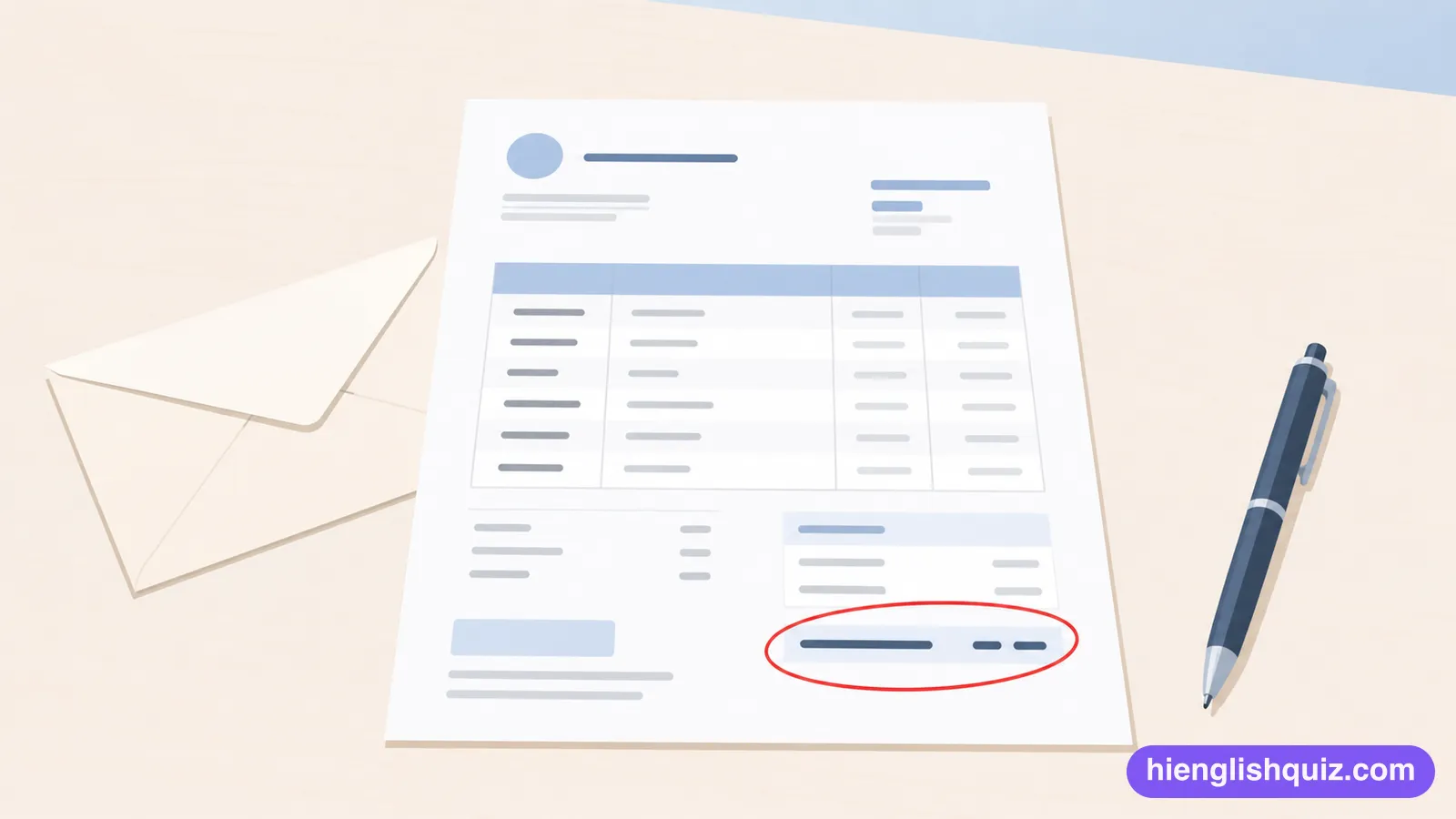
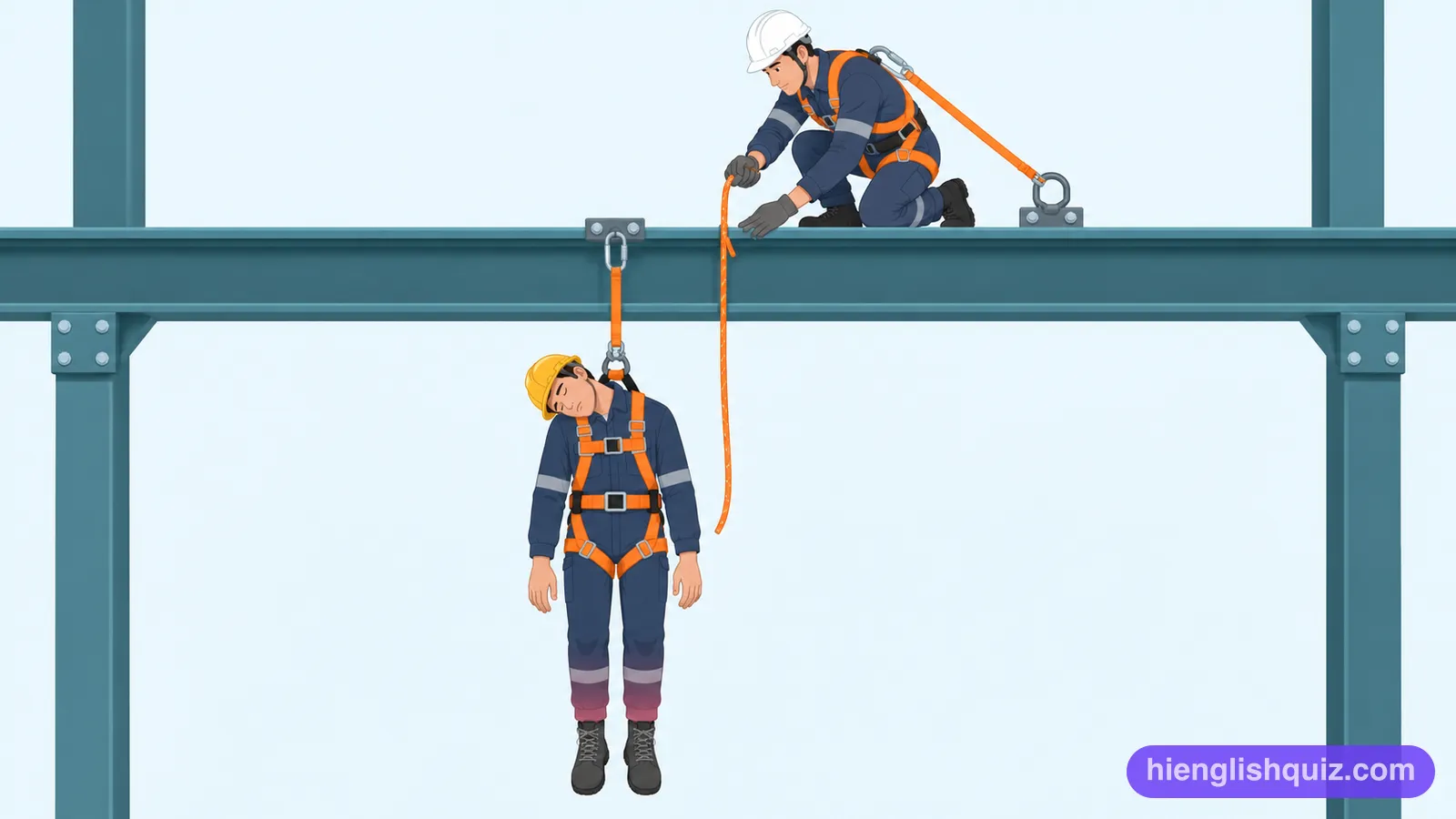
tranche
/træntʃ/One portion of a larger sum of money, loan or investment, released in stages.
Example: The first tranche of funding arrived in January.

 Hi EnglishQuiz
C222 words · Proficient
Expert finance vocabulary for markets and risk, including arbitrage, derivatives, securitization and the yield curve that traders watch every day.
One portion of a larger sum of money, loan or investment, released in stages.
Example: The first tranche of funding arrived in January.
The practice of buying and selling the same asset in different markets to profit from a price difference.
Example: Traders used arbitrage to profit from the price gap between markets.

An investment made to reduce the risk of losing money on another investment.
Example: The airline bought fuel contracts as a hedge against rising prices.

A financial contract whose value depends on the price of another asset.
Example: The fund used a derivative to bet on falling interest rates.

Relating to the calculation of financial risk, especially for insurance and pensions, using statistics.
Example: The pension fund relies on actuarial calculations to set contributions.

Describes financial analysis used to investigate fraud or a crime.
Example: A forensic review uncovered years of hidden losses.

A company's ability to pay all of its long-term debts.
Example: Investors questioned the bank's solvency after the losses were revealed.

Turning a group of loans or debts into tradable financial securities.
Example: The bank used securitization to sell bundles of mortgage debt to investors.

A formal recognition that an asset's value has permanently dropped below its recorded value.
Example: The company recorded an impairment after the factory's value fell sharply.

Legally replacing one party in a contract with a new party, who takes on the same rights and duties.
Example: Through novation, a new supplier took over all the original contract's obligations.

Valuing an asset at what it would fetch today.
Example: Mark to market turned a paper profit into a paper disaster overnight.
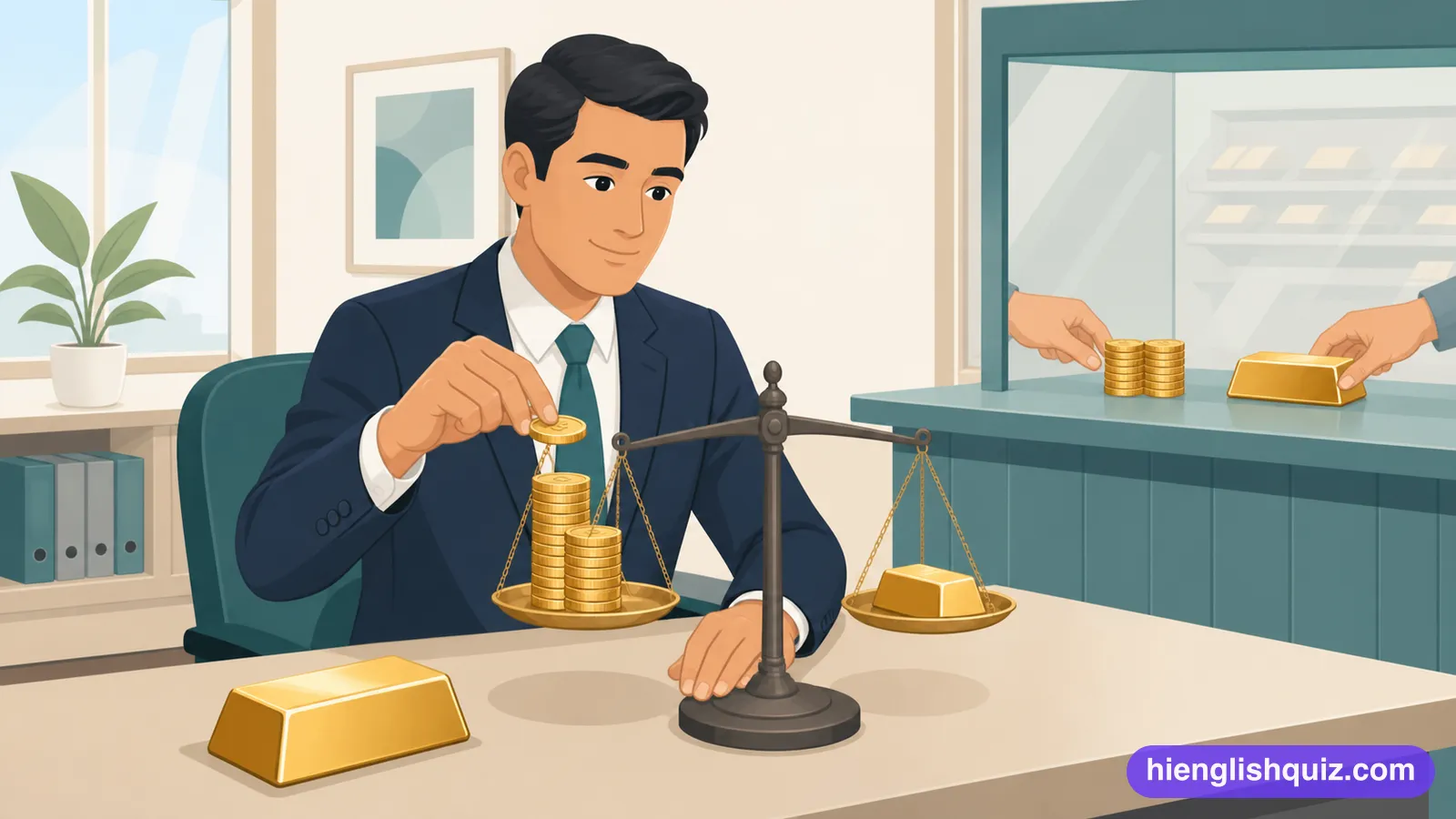
Held in a way that keeps it out of the main accounts.
Example: The obligations were off-balance-sheet and entirely legal.

Borrowing that is repaid only after other debts are settled.
Example: Subordinated debt paid a good rate for an obvious reason.

Failing to meet a condition attached to a loan.
Example: One covenant breach made the whole facility repayable on demand.

The prices charged between parts of the same company.
Example: Transfer pricing moved the profit to wherever the tax was lowest.

A write-down when an acquisition proves worth less than paid.
Example: The goodwill impairment was larger than the original purchase price.

A measure of how much an investment moves with the market.
Example: A beta above one means it amplifies whatever the market does.
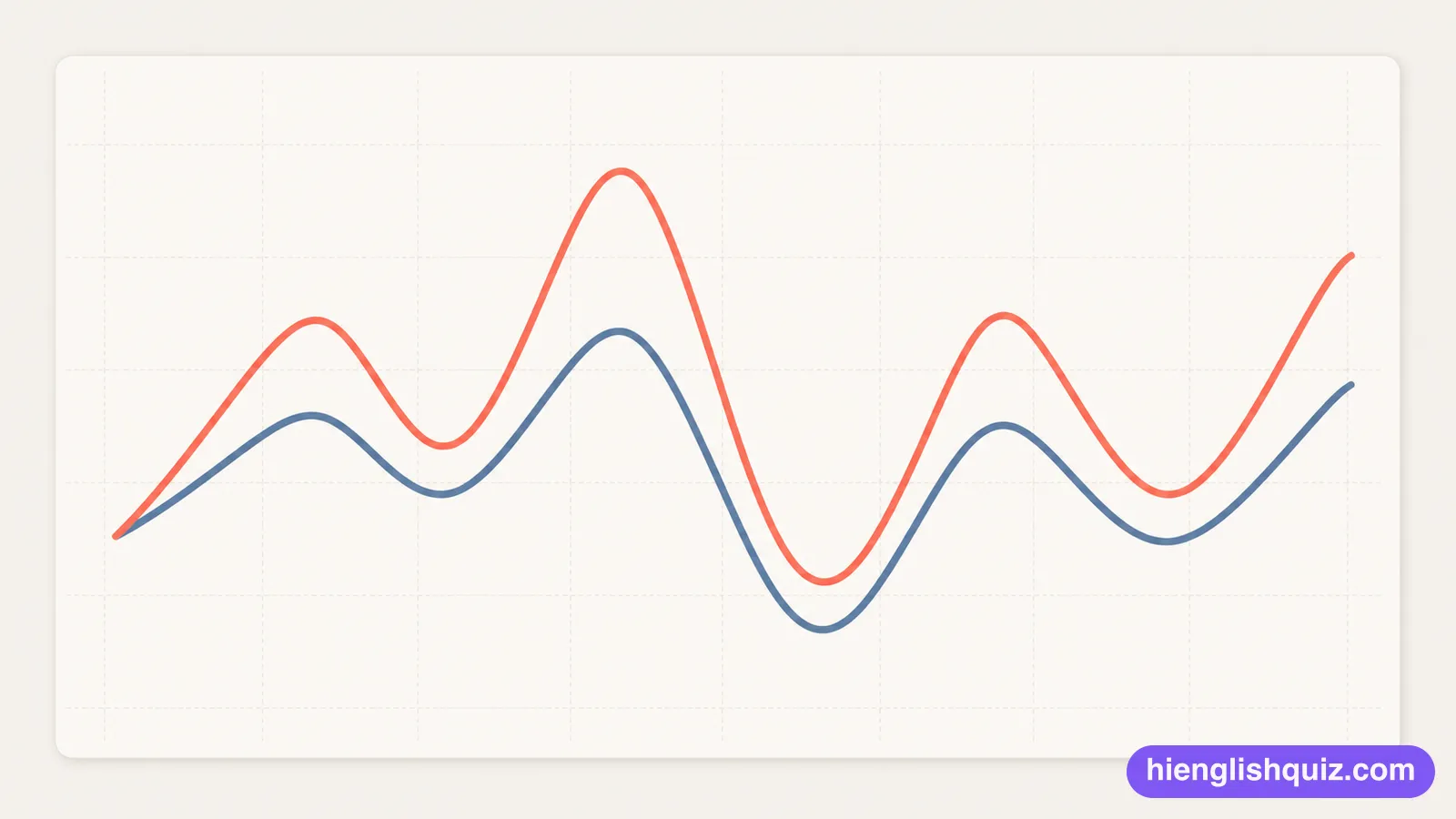
The relationship between interest rates and how long money is lent for.
Example: An inverted yield curve is the signal everyone watches and nobody heeds.

One hundredth of one per cent.
Example: Twenty-five basis point moves are what central banks live by.

An auditor's warning that a company may not survive the year.
Example: A going concern qualification closes more doors than the losses do.

Arranging accounts to look better at the reporting date.
Example: Some window dressing at the year end is normal and still dishonest.

Using accounting rules to present a misleading picture.
Example: Creative accounting stayed just inside the standards for eleven years.