sentient
Able to feel and to be aware of its own experience, not merely to calculate.
Example: Nobody seriously claims the chatbot is sentient yet.

 Hi EnglishQuiz
C222 words · Proficient
Artificial intelligence vocabulary such as neural network, deep learning and overfitting, plus tokenisation, distillation and scaling law. Words for discussing how AI models are built.
Able to feel and to be aware of its own experience, not merely to calculate.
Example: Nobody seriously claims the chatbot is sentient yet.
A computing system of connected units, loosely modelled on the brain, that learns from examples.
Example: They trained a neural network on millions of photographs.
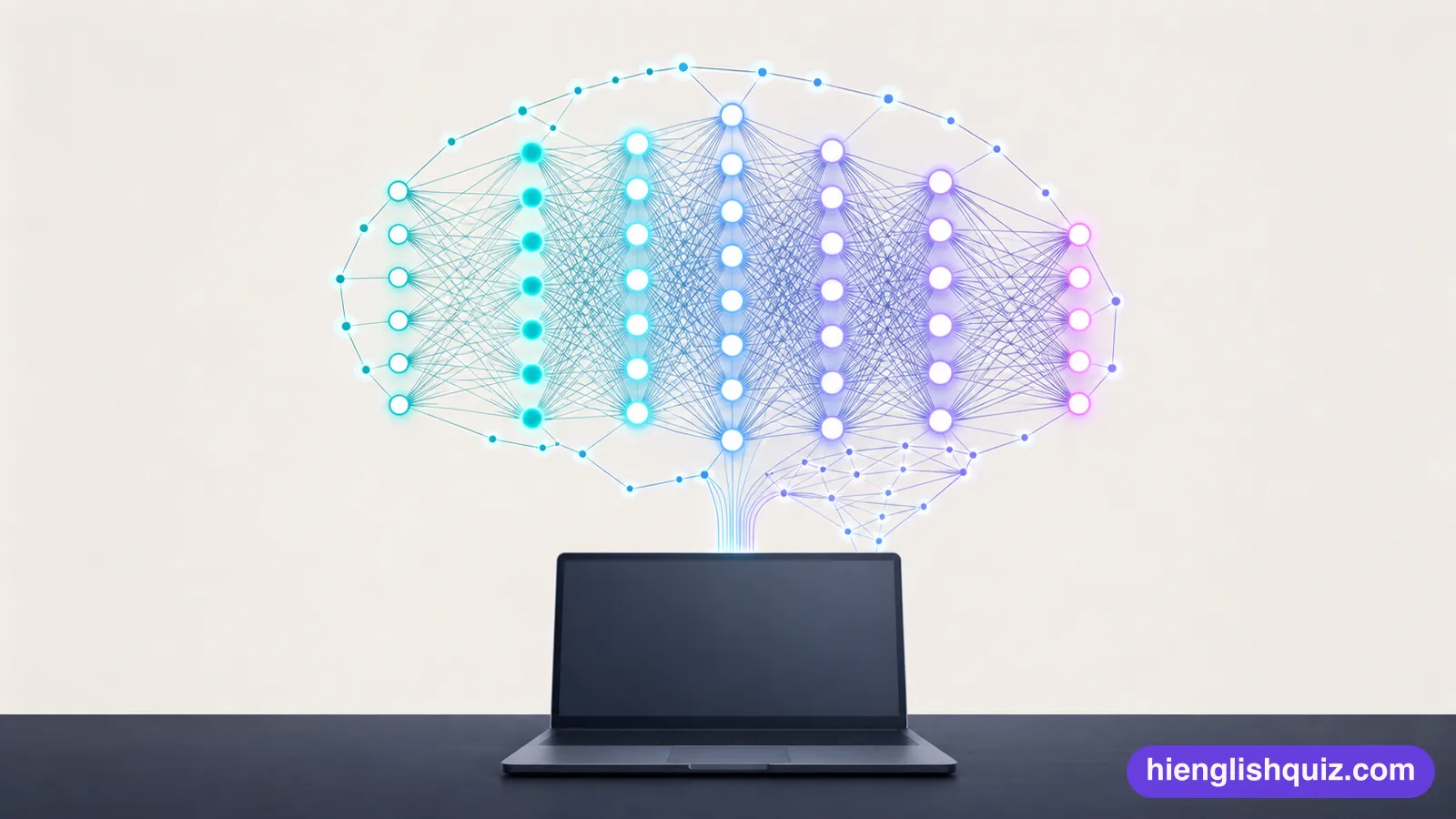
A method of machine learning that uses many connected layers to study huge amounts of data, loosely based on the brain.
Example: Deep learning allowed the program to recognise thousands of objects.
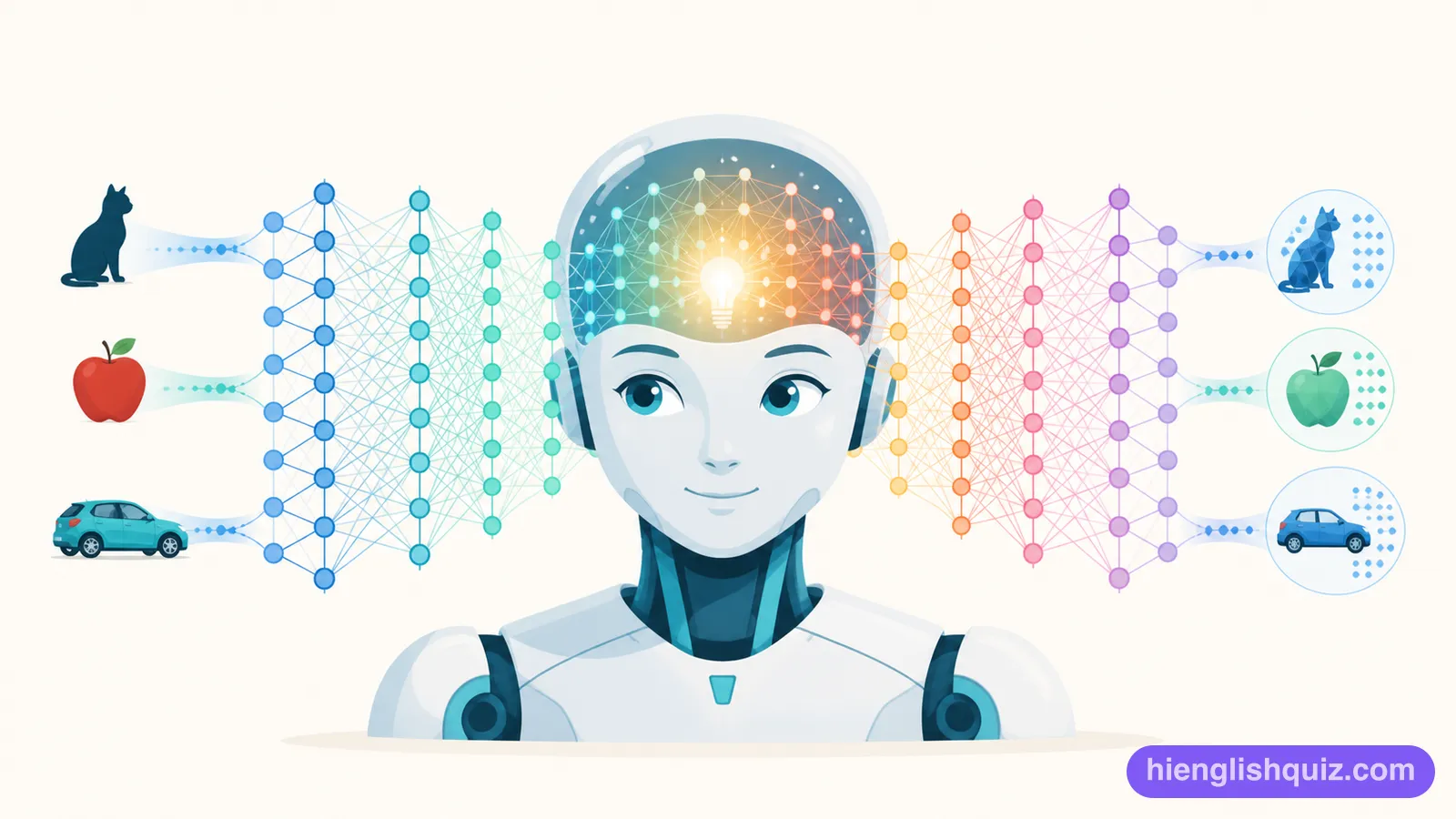
When an AI program confidently produces false or made-up information as if it were true.
Example: The chatbot can sometimes hallucinate facts that never happened.
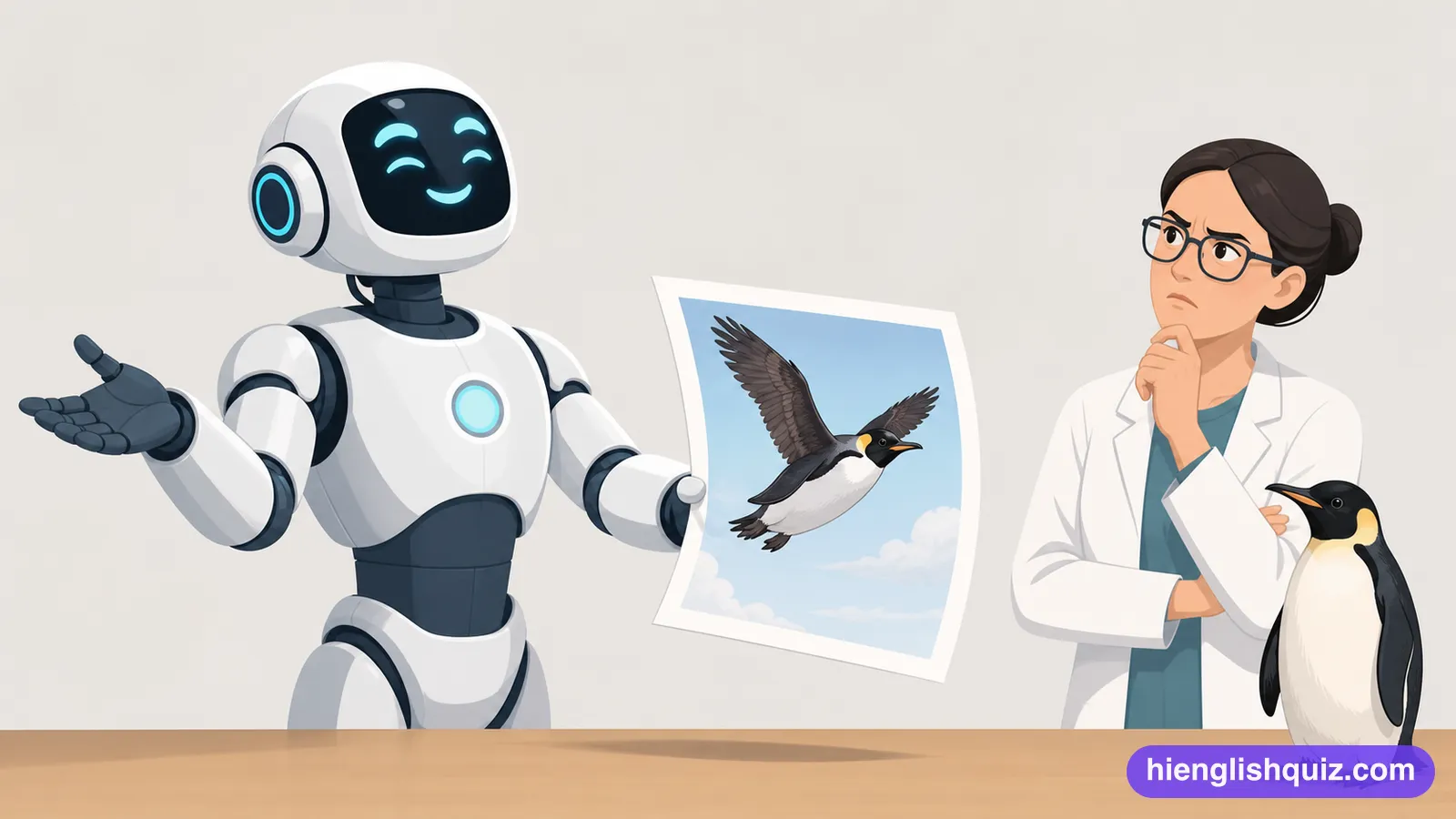
A fault where a model learns its training examples too closely and then performs badly on new, unseen data.
Example: Overfitting made the model useless on real customer data.
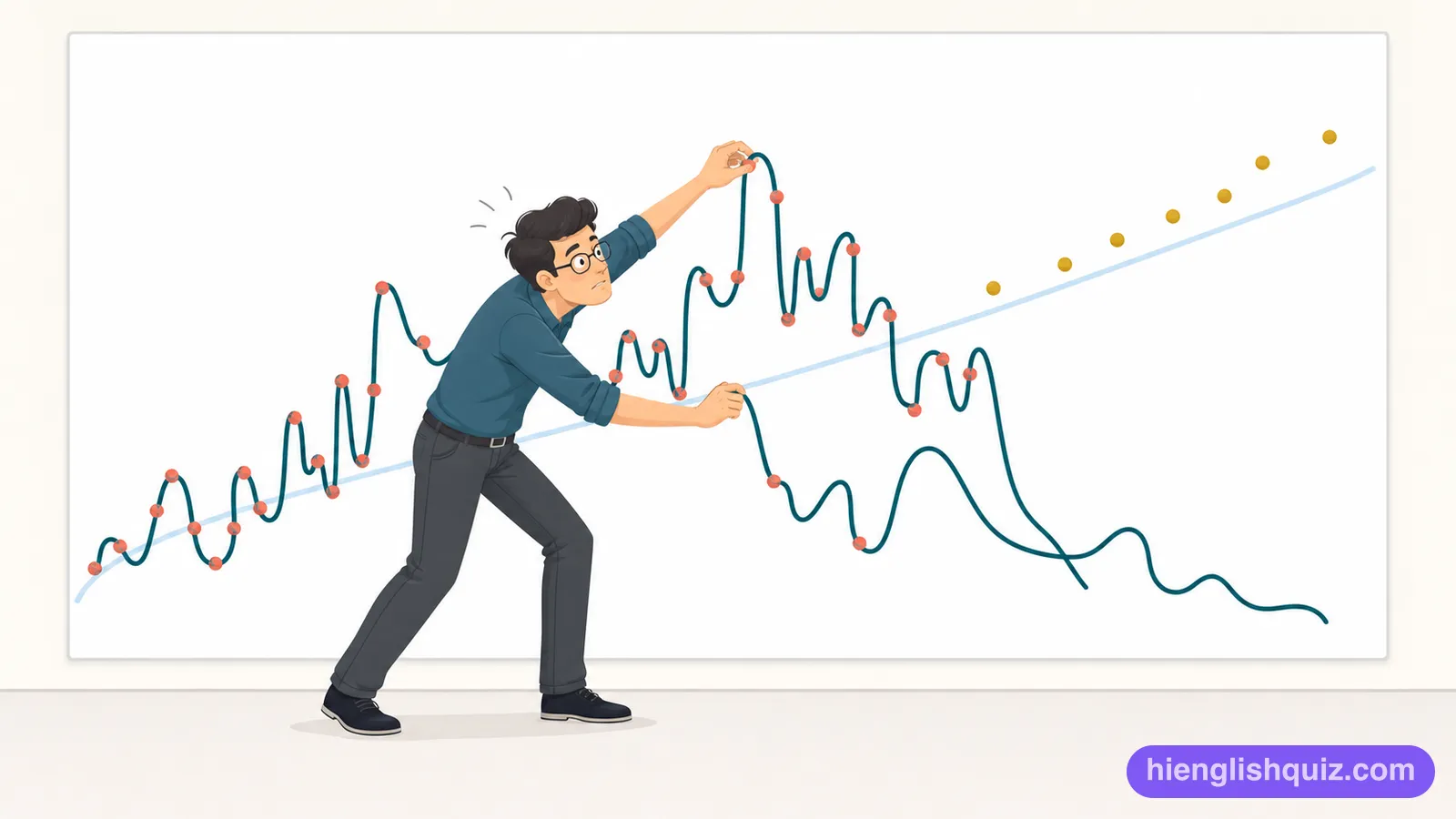
To make small adjustments to an already-trained model so that it performs better on a specific task.
Example: Engineers fine-tune the model using a smaller, specific dataset.

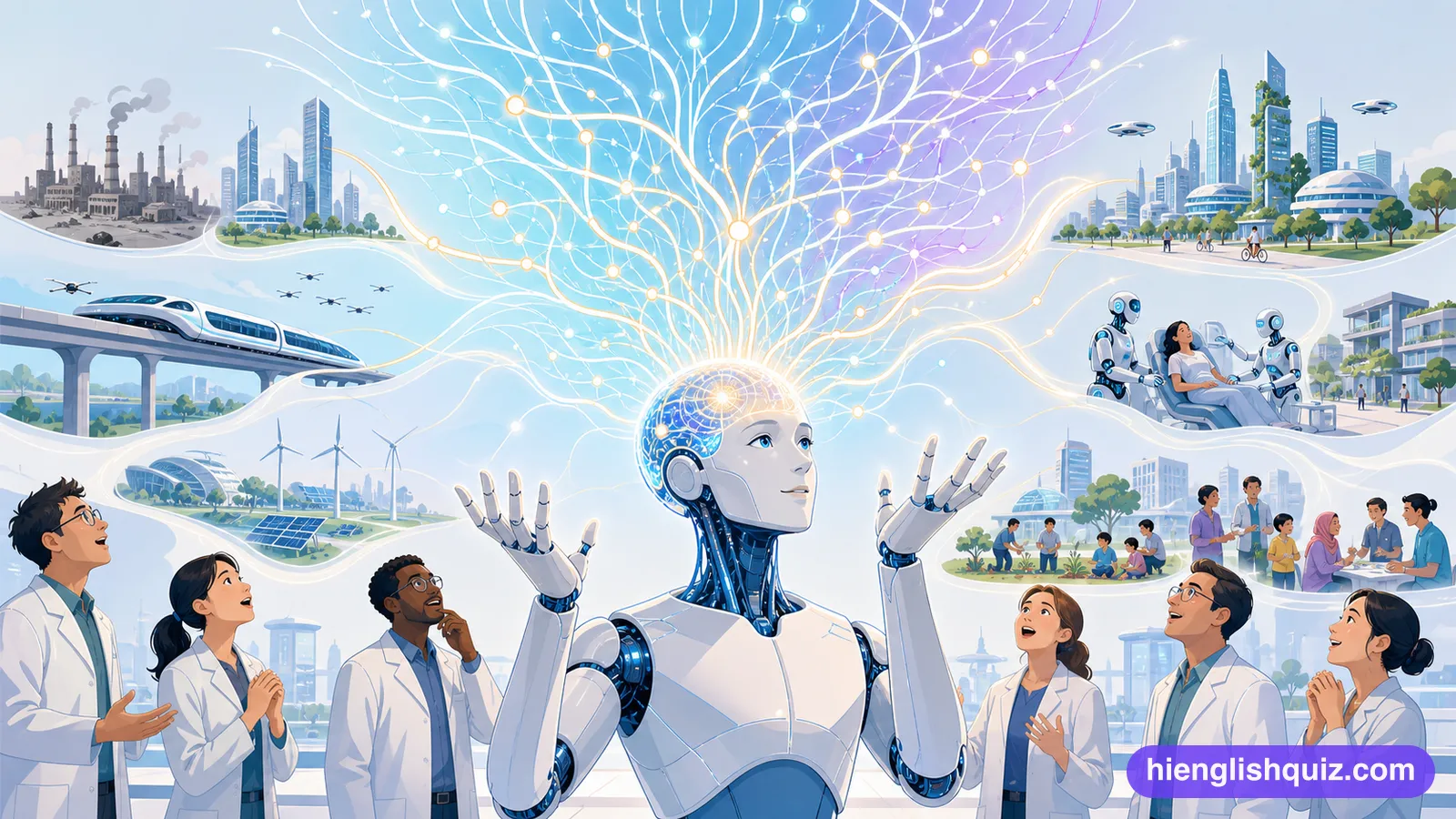
A predicted point in the future when machine intelligence would surpass human intelligence and change society completely.
Example: Some scientists doubt the singularity will ever really happen.
A test in which a person tries to tell whether they are talking to a machine or another human.
Example: The chatbot is said to have passed the turing test in one trial.

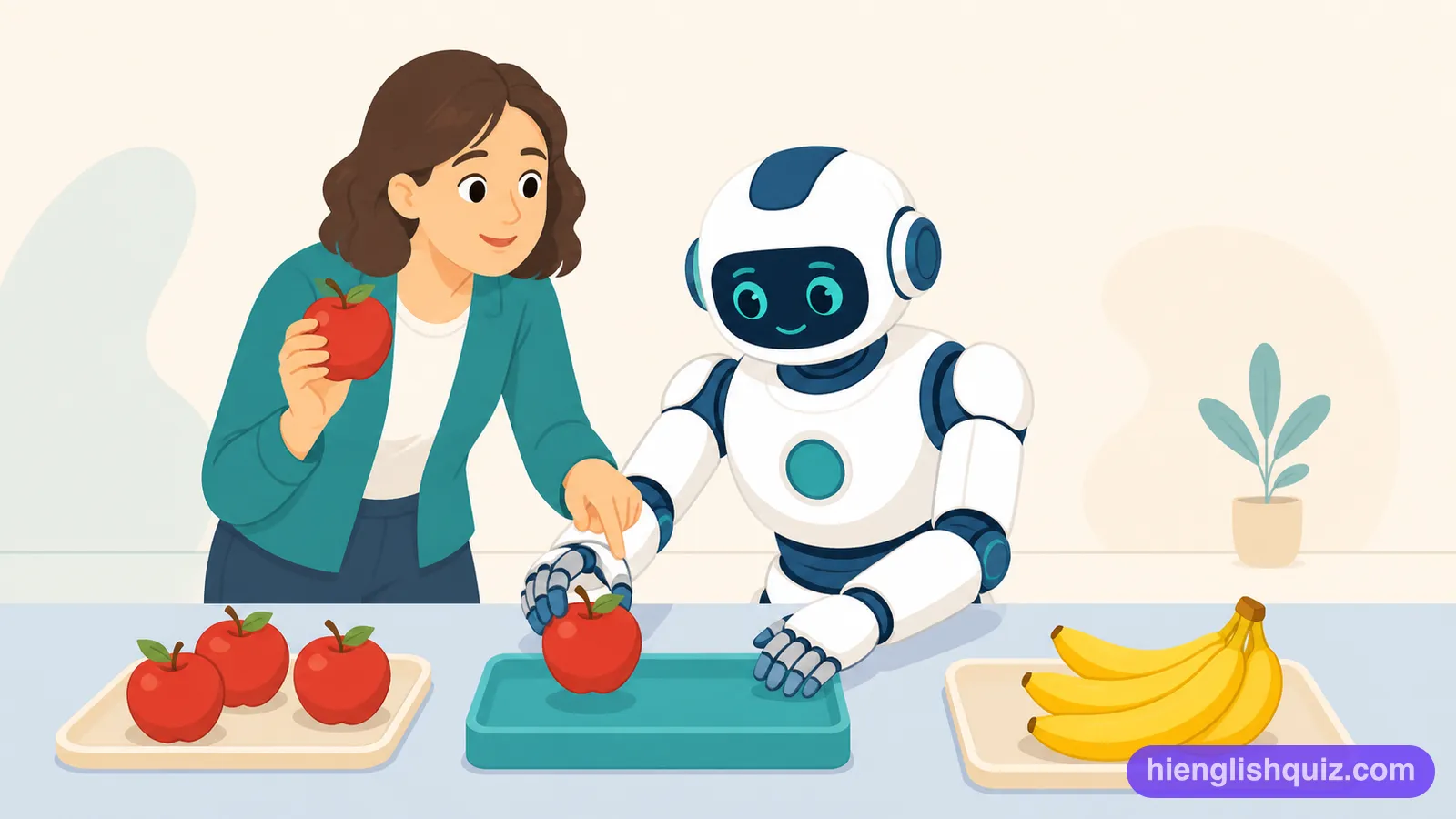
A way of training a model using data that has already been labelled with the correct answers.
Example: Supervised learning needs thousands of correctly labelled examples.
A system whose inner workings are hidden, so that even experts cannot fully explain how it reached a decision.
Example: Critics worry that the algorithm behaves like a black box.
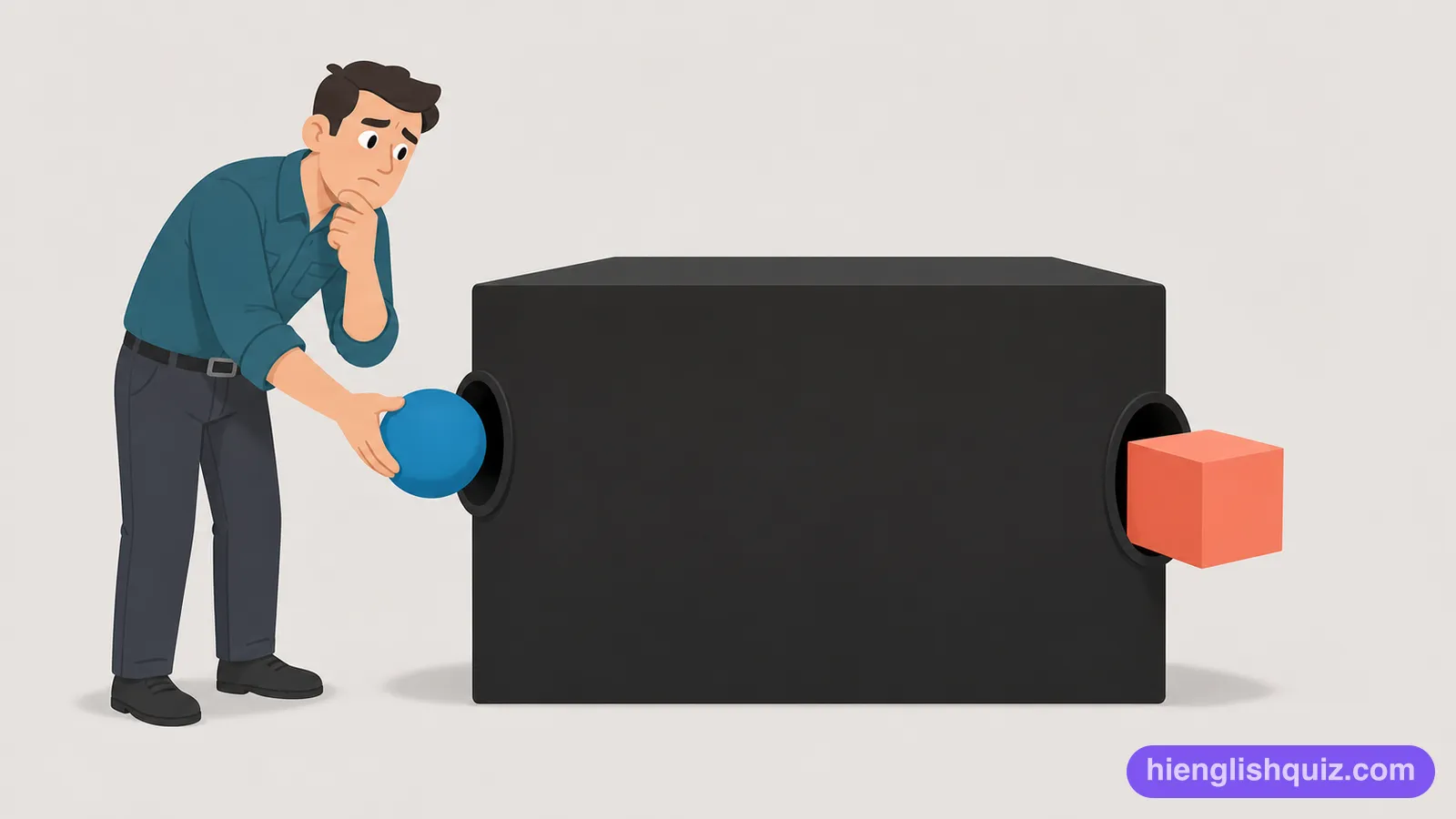
Involving randomness rather than a fixed rule.
Example: The process is stochastic, so the same input never gives the same answer twice.

A representation of meaning as a list of numbers.
Example: Every word becomes an embedding before anything else happens.
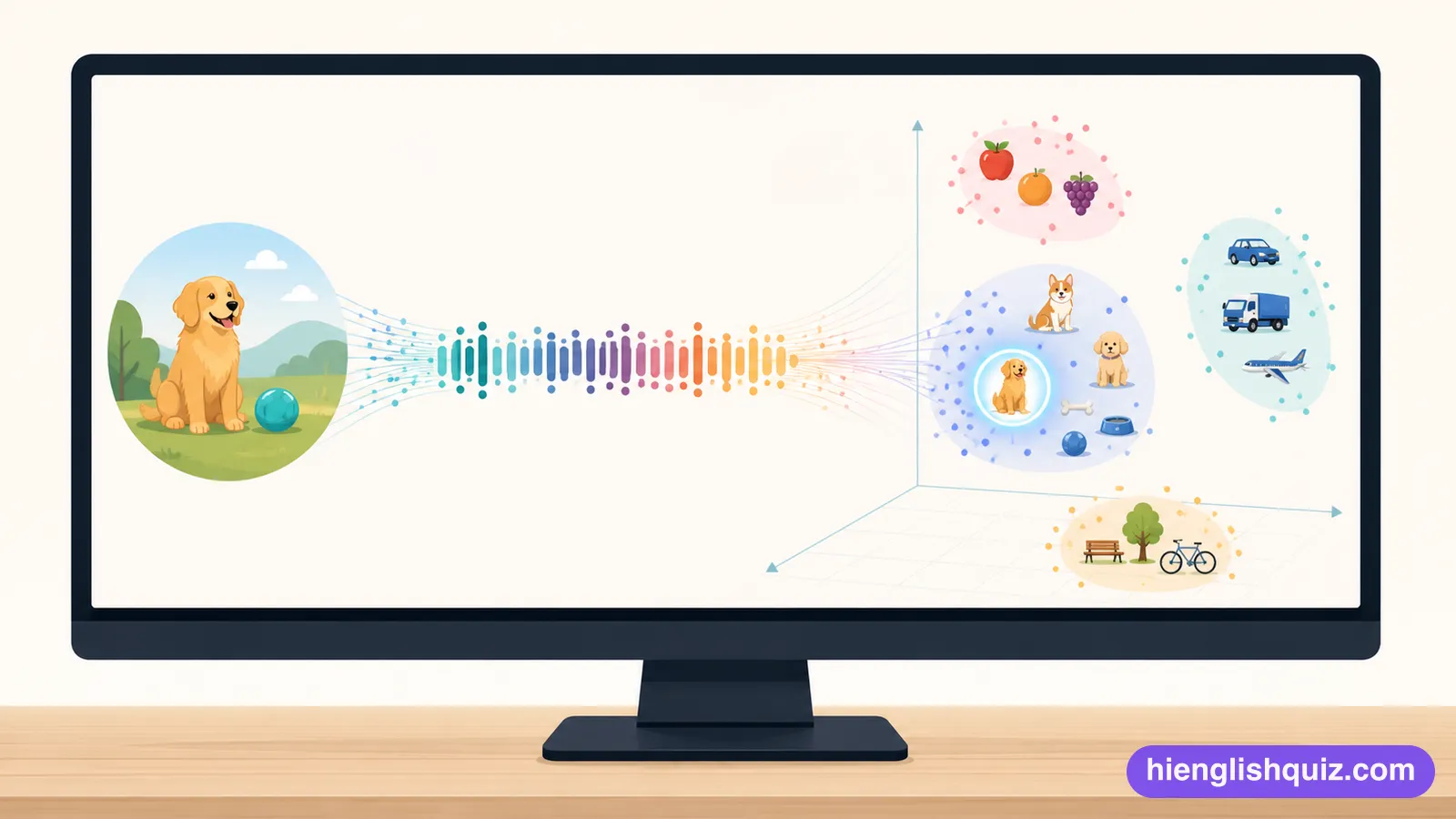
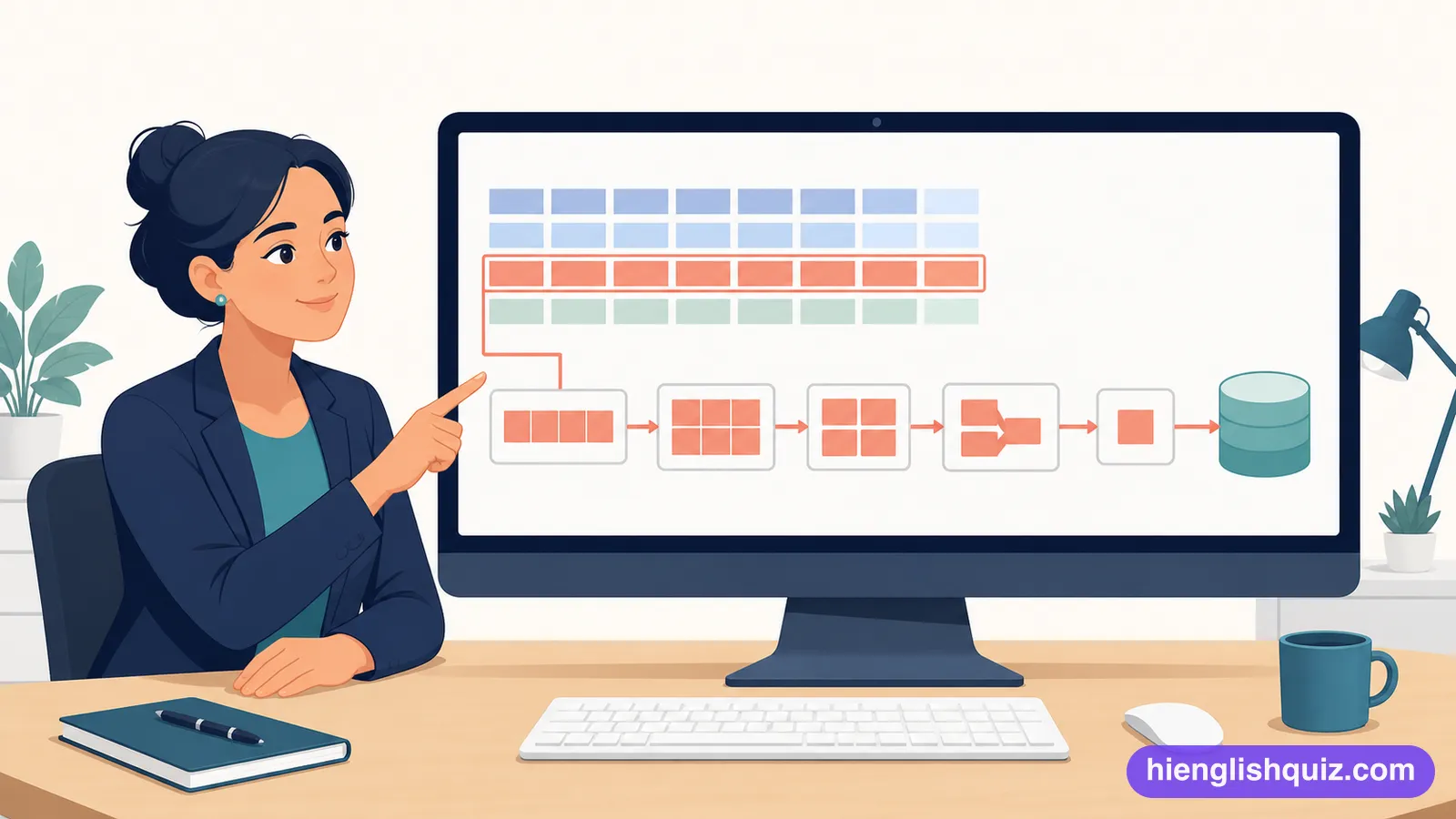
The splitting of text into the units a system processes.
Example: Bad tokenisation is why it cannot count letters.

The training of a small system to imitate a large one.
Example: Distillation gets you most of the quality at a tenth of the cost.

The reducing of precision so a system runs on smaller hardware.
Example: Quantisation put the whole thing on a phone.

The work of making a system behave as its designers intend.
Example: Half the field now calls itself alignment research.

Appearing only once a system passes a certain size.
Example: Nobody predicted the emergent behaviour at that scale.

Able to be understood by a person examining it.
Example: A model that is accurate but not interpretable is useless in court.

Trained across many devices without gathering the data centrally.
Example: A federated approach keeps the records on the hospital's own machines.

The full record of where data came from and what was done to it.
Example: No provenance chain means no defence when someone sues.
An answer a system invents that sounds right and is not.
Example: One hallucination in a legal filing ended a career.

The observed relationship between a system's size and how well it performs.
Example: Every scaling law eventually meets a wall nobody predicted.