dangerous
/ˈdeɪndʒərəs/The opposite of safe — likely to hurt you.
Example: Don't swim there — the current is dangerous.

 Hi EnglishQuiz
A212 words · Elementary
Everyday opposites vocabulary for common adjectives — dangerous, noisy, dirty and busy — the basic pairs learners use to describe places, objects and people.
The opposite of safe — likely to hurt you.
Example: Don't swim there — the current is dangerous.
The opposite of wet — with no water on it.
Example: Make sure the paint is completely dry before you touch it.

The opposite of cold — having a high temperature.
Example: Be careful, the pan is really hot.

The opposite of thin — with a large distance between its two sides.
Example: He wrapped himself in a thick blanket.

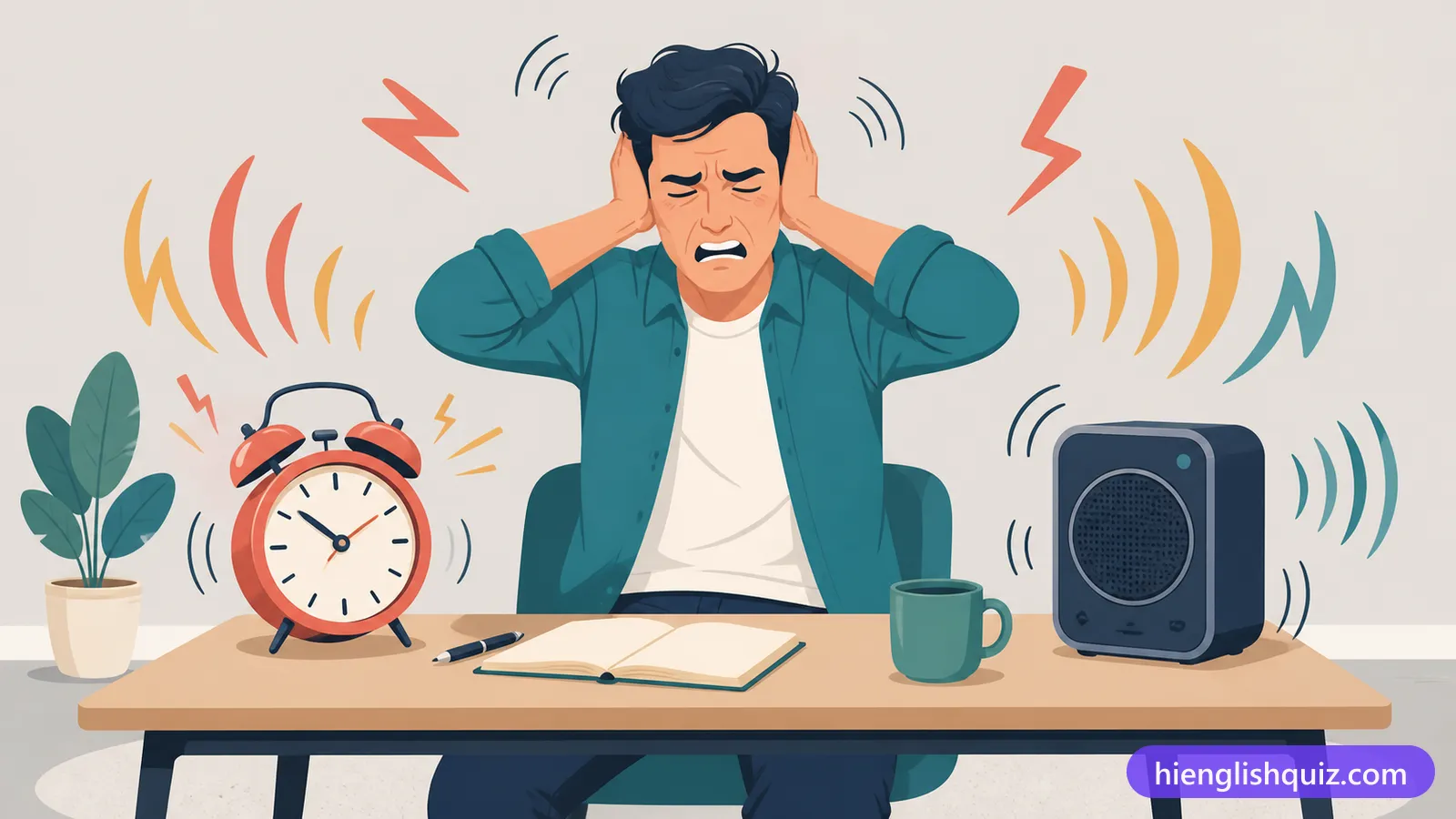
The opposite of peaceful — making a lot of sound.
Example: The kids next door are so noisy on weekends.
The opposite of old — new in style, design, or technology.
Example: They live in a modern apartment near the station.

The opposite of rich — having very little money.
Example: They were too poor to buy new clothes.

The opposite of clean — covered in mud, dust, or stains.
Example: His shoes were dirty after the football match.

The opposite of public — only for one particular person or group, not everyone.
Example: That's a private matter between me and my sister.

The opposite of narrow — measuring a lot from one side to the other.
Example: The river is too wide to swim across safely.

The opposite of dirty — with no marks or dust anywhere on it.
Example: The kitchen floor is clean for about an hour a day.

The opposite of deserted — full of people, or with a great deal to do.
Example: The station is busy until about half past nine.