covert
/ˈkoʊvərt/The opposite of open — done secretly, without anyone else finding out.
Example: The agency ran a covert operation for months.

 Hi EnglishQuiz
C120 words · Advanced
Everyday opposites vocabulary for precise pairs — covert and overt, transient and enduring — practising words like lucid, opaque and robust.
The opposite of open — done secretly, without anyone else finding out.
Example: The agency ran a covert operation for months.
The opposite of brief — lasting a long time, seemingly forever.
Example: Their friendship proved enduring, even after decades apart.

The opposite of transparent — impossible to see through, or hard to understand clearly.
Example: Thick curtains kept the windows completely opaque.

The opposite of harmonious — full of conflict and disagreement.
Example: The meeting ended on a discordant note, with nobody agreeing.
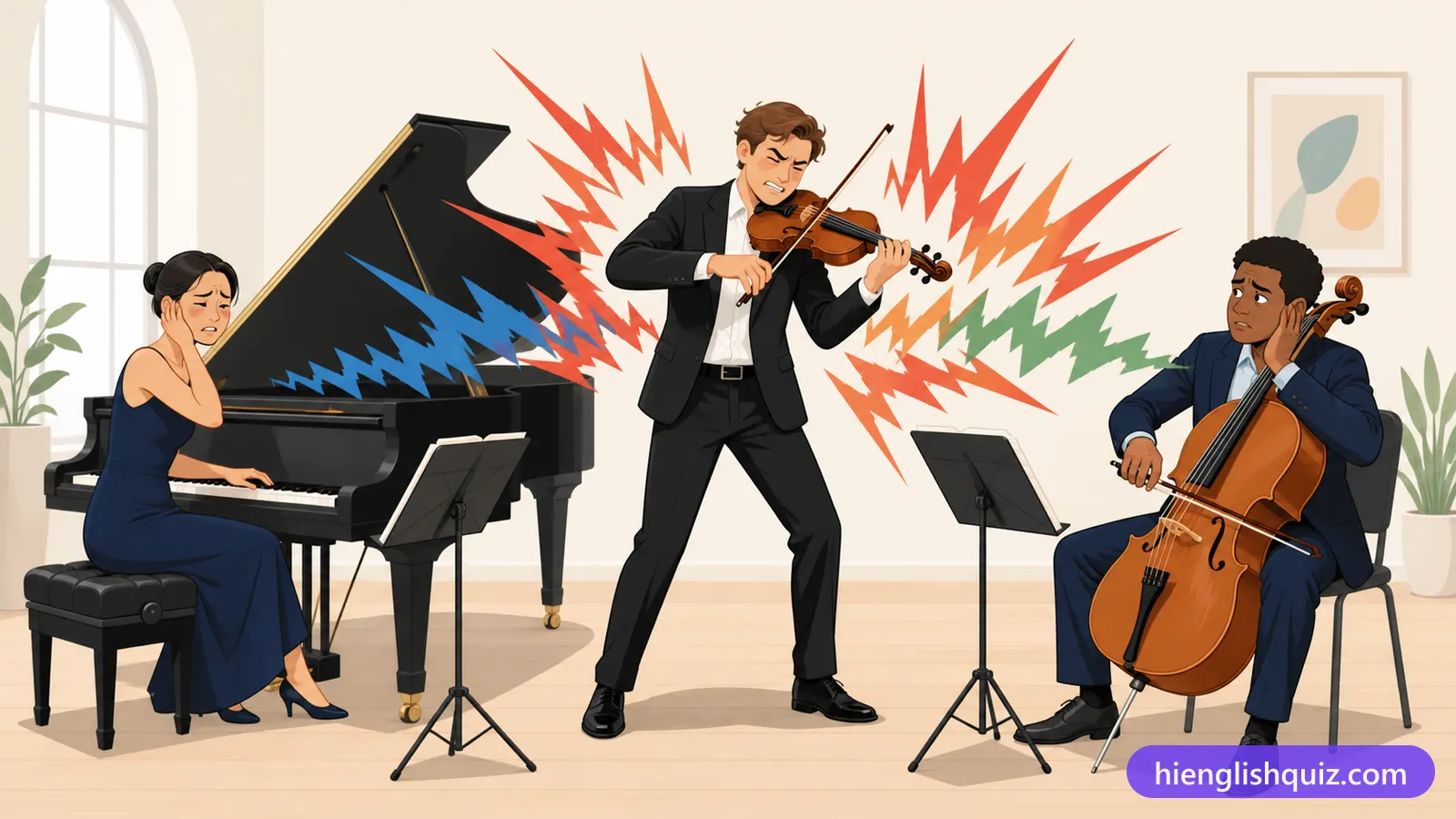
The opposite of tactful — abrupt and unfriendly in a way that seems rude.
Example: The waiter's brusque manner put us off returning.

The opposite of cautious — acting suddenly, without thinking things through.
Example: His impetuous decision to quit cost him the promotion.

The opposite of hidden — done openly, without any attempt to conceal it.
Example: There was overt hostility between the two rival gangs.

The opposite of enduring — lasting only for a short time before disappearing.
Example: Fame in this industry can be surprisingly transient.

The opposite of discordant — friendly and free of serious disagreement.
Example: The couple reached an amicable agreement about the house.

The opposite of impetuous — careful and sensible, thinking ahead before acting.
Example: It would be prudent to save some money before the trip.

The opposite of flowing — not moving or developing at all.
Example: The water was stagnant and the whole pond smelled of it.

The opposite of manifest — present but not yet visible or active.
Example: The fault was latent in every unit built that year.

The opposite of obvious — understood by only a very few people.
Example: The rules of the club are gloriously arcane.

The opposite of fragile — strong and unlikely to break or fail.
Example: The design is robust enough to survive a winter outdoors.

The opposite of steadfast — changing your feelings very often.
Example: Public taste is fickle and nobody plans around it.

The opposite of peripheral — so important that everything depends on it.
Example: The second witness proved pivotal to the whole case.

The opposite of confusing — clear and easy to follow first time.
Example: His explanation was lucid in a way the report never was.

The opposite of robust — very weak and easily doubted.
Example: The connection between the two events is extremely tenuous.

The opposite of industrious — lazy and unwilling to make any effort.
Example: An indolent afternoon in the shade was the whole plan.

The opposite of central — not important to the main question.
Example: The objection was peripheral and took an hour to answer.