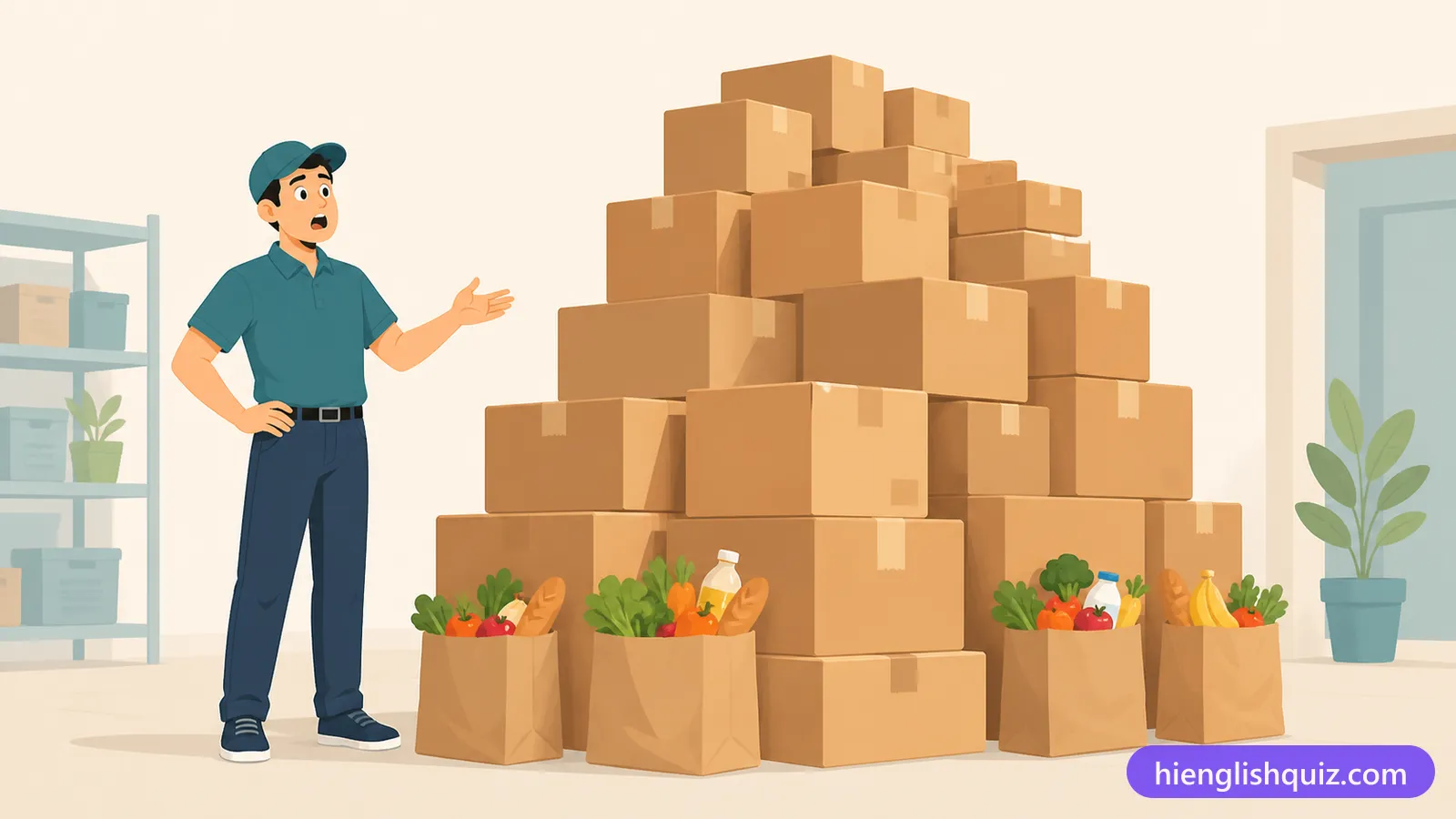
abundant
/əˈbʌndənt/The formal word for a lot, used about a large and generous supply.
Example: The region has abundant natural resources.

 Hi EnglishQuiz
B216 words · Upper-intermediate
Everyday opposites vocabulary for more precise pairs — genuine and fake, compulsory and voluntary — practising words like abundant, meagre and murky.
The formal word for a lot, used about a large and generous supply.
Example: The region has abundant natural resources.
The opposite of optional — a rule that everyone must follow.
Example: Wearing a seatbelt is compulsory in most countries.

Another word for real — not fake or copied.
Example: She gave a genuine apology, not just empty words.

The opposite of accept — to refuse to take or agree to something.
Example: The committee decided to reject the proposal.

Another word for the same — when two things match exactly, with no difference at all.
Example: The twins wore identical outfits to the party.

The opposite of natural — made by people, not occurring naturally.
Example: The cake was full of artificial flavouring.

The opposite of compulsory — done because you choose to, not because you must.
Example: Attendance at the meeting is voluntary.

Another word for abundant — used in everyday writing about supplies or resources.
Example: Fresh fruit was plentiful at the summer market.

The opposite of identical — clearly different or separate from something else.
Example: The two proposals are distinct, even though they sound similar.

The opposite of genuine — made to look real, but not actually true or original.
Example: She was wearing a fake designer handbag.

The opposite of generous — much too small an amount to be enough.
Example: The pension was meagre even by the standards of the time.

The opposite of famous — known or understood by very few people.
Example: He quoted an obscure poet nobody in the room recognised.

The opposite of refined — simple and roughly made, without any care.
Example: The map was crude but it got everyone to the right field.

The opposite of strict — not punishing someone as much as expected.
Example: The magistrate was unusually lenient given the record.

The opposite of sparse — packed very closely together with no gaps.
Example: The fog was so dense that the ferry did not sail.

The opposite of transparent — dark and impossible to see through.
Example: The water was too murky to see the bottom at all.