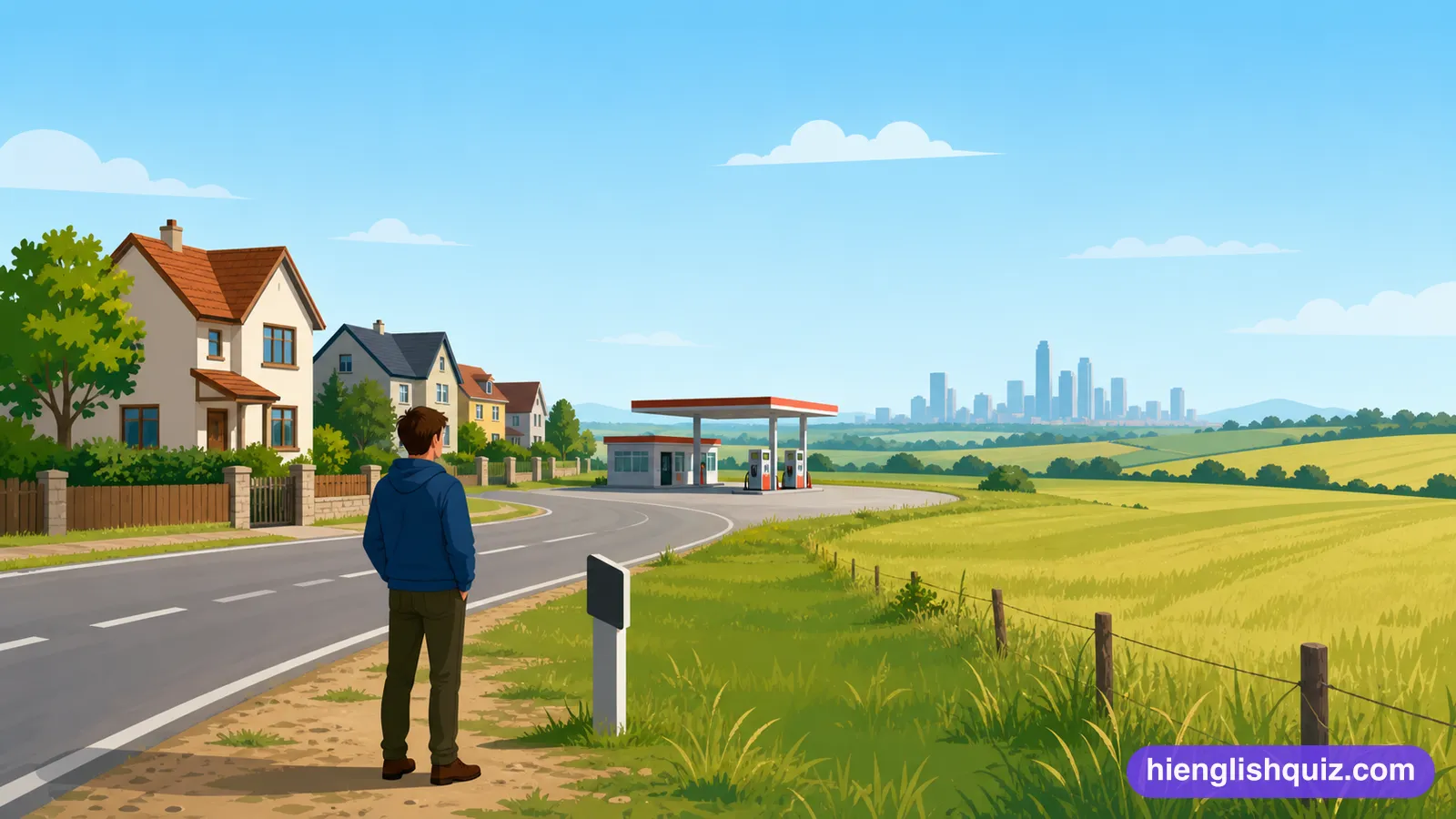
outskirts
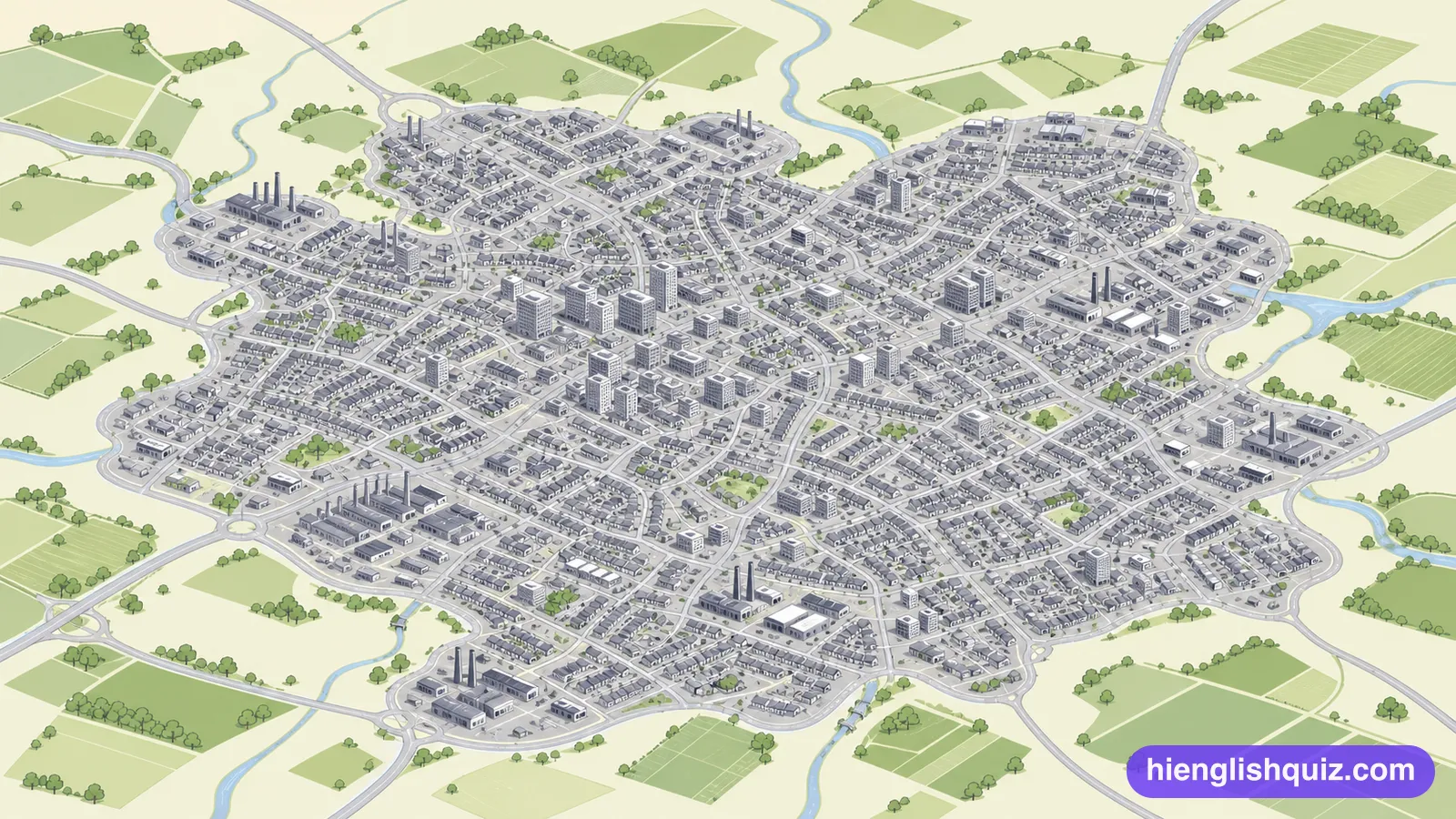
/ˈaʊtˌskɜrts/The outer parts of a town, furthest from the centre.
Example: They live on the outskirts, about twenty minutes by bus.
 Hi EnglishQuiz
C122 words · Advanced
City vocabulary for how cities grow and change, including gentrification, urbanisation and the inner city, plus a bustling cityscape and a derelict facade.
The outer parts of a town, furthest from the centre.
Example: They live on the outskirts, about twenty minutes by bus.
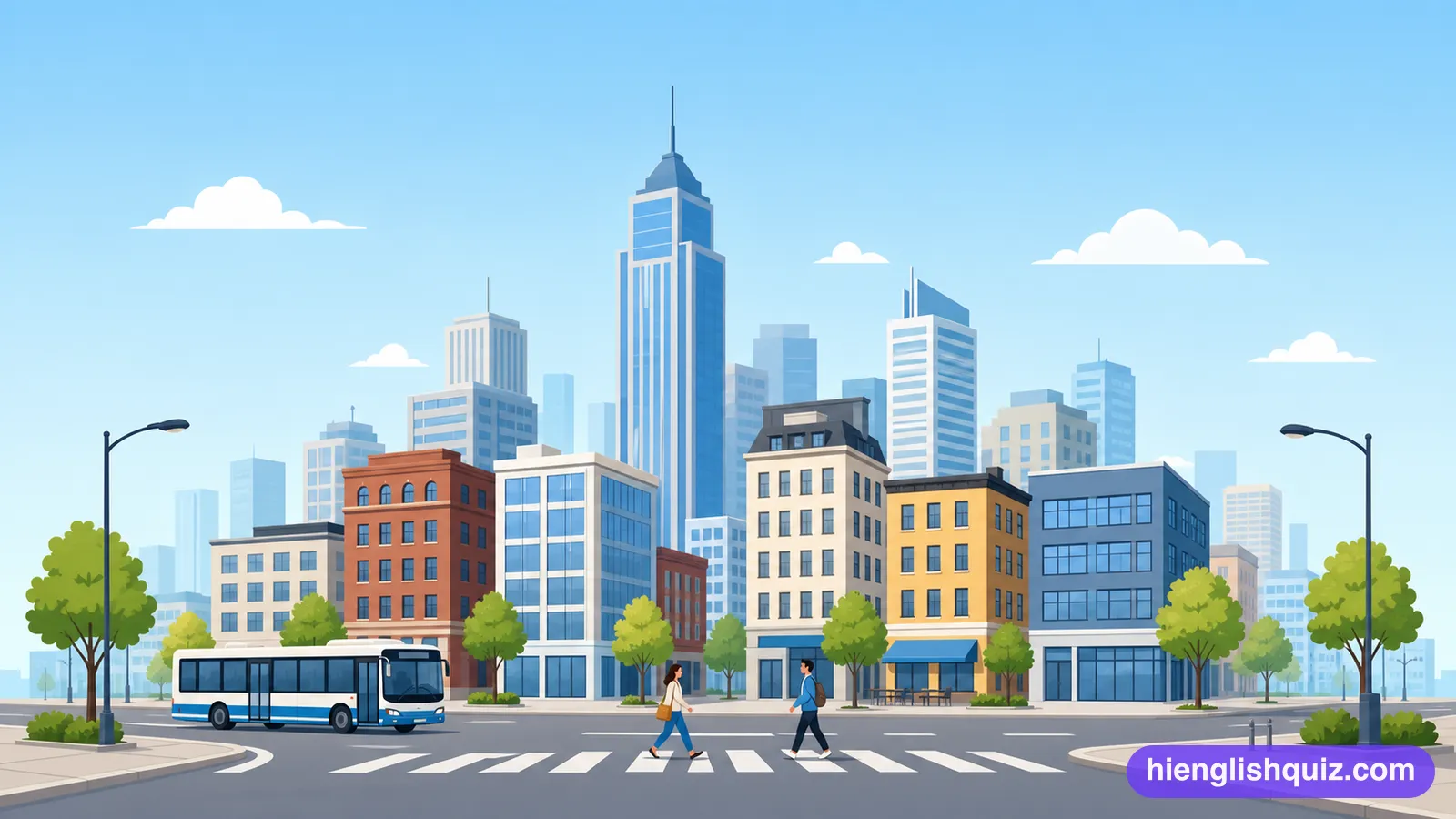
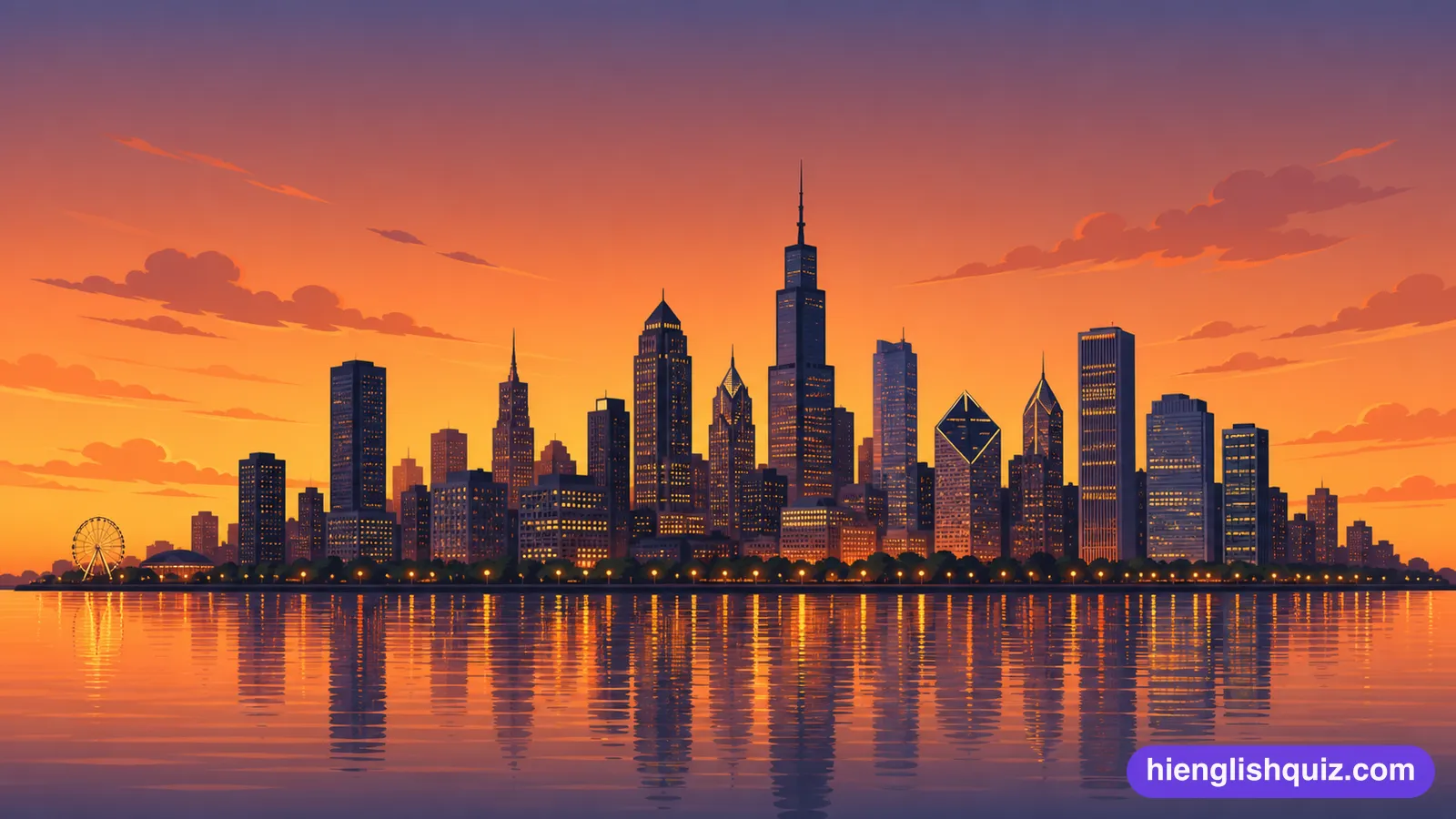
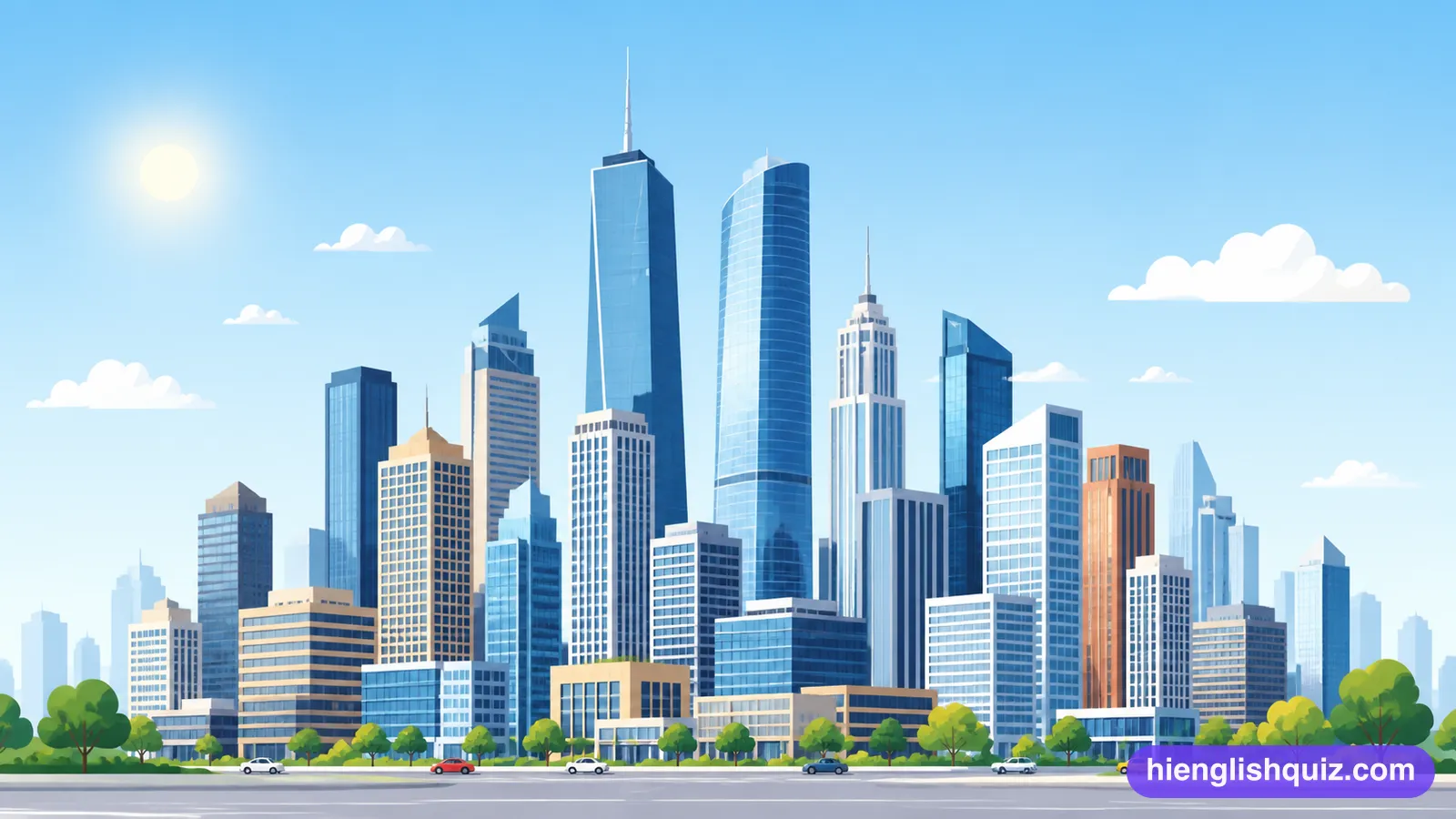
The shape that a city's tall towers make against the horizon, seen from far away.
Example: The skyline looks amazing from the far side of the river.
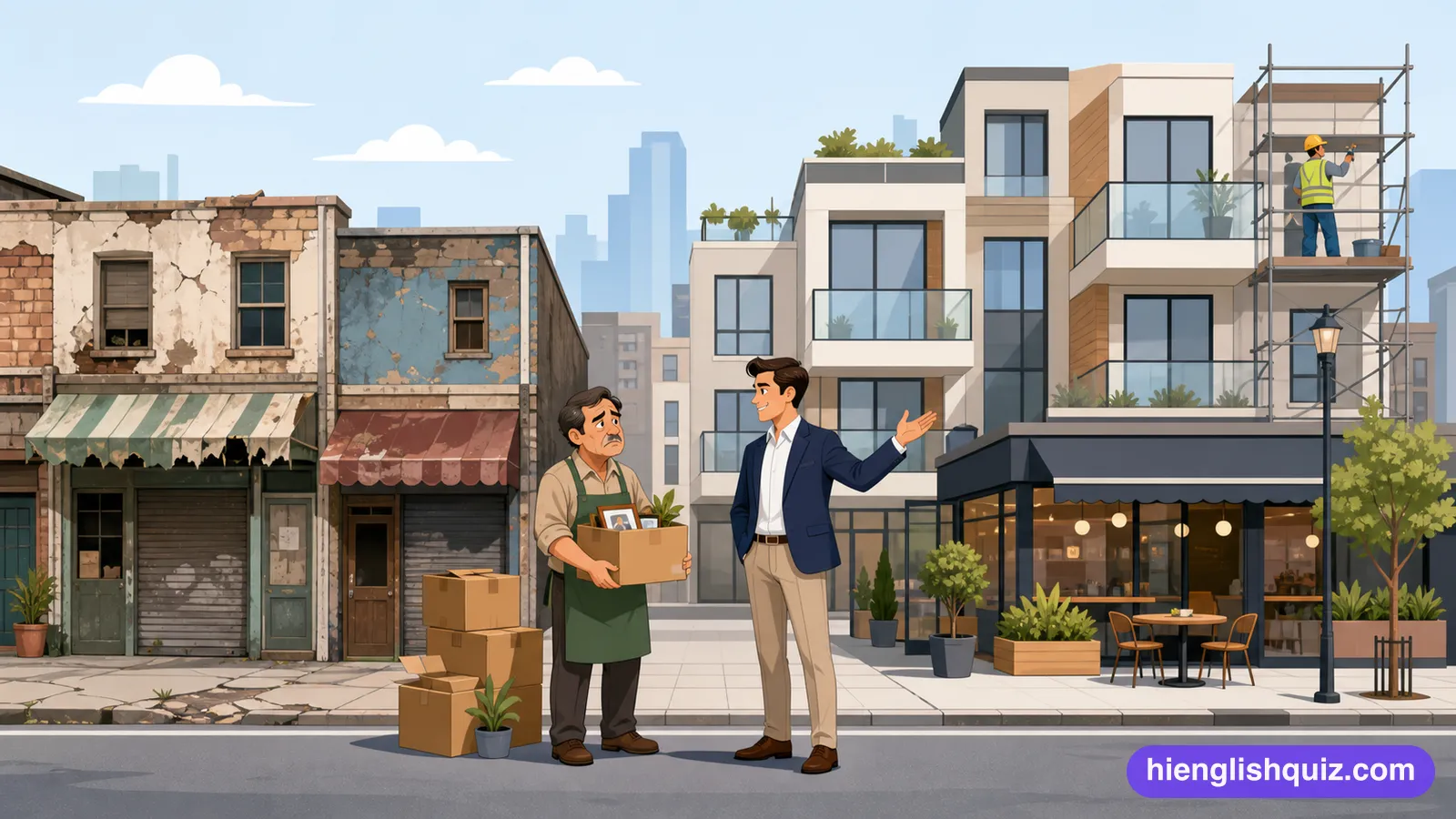
The slow change in a poorer area as wealthier people move in and prices rise.
Example: Gentrification has pushed most of the old families out of the area.
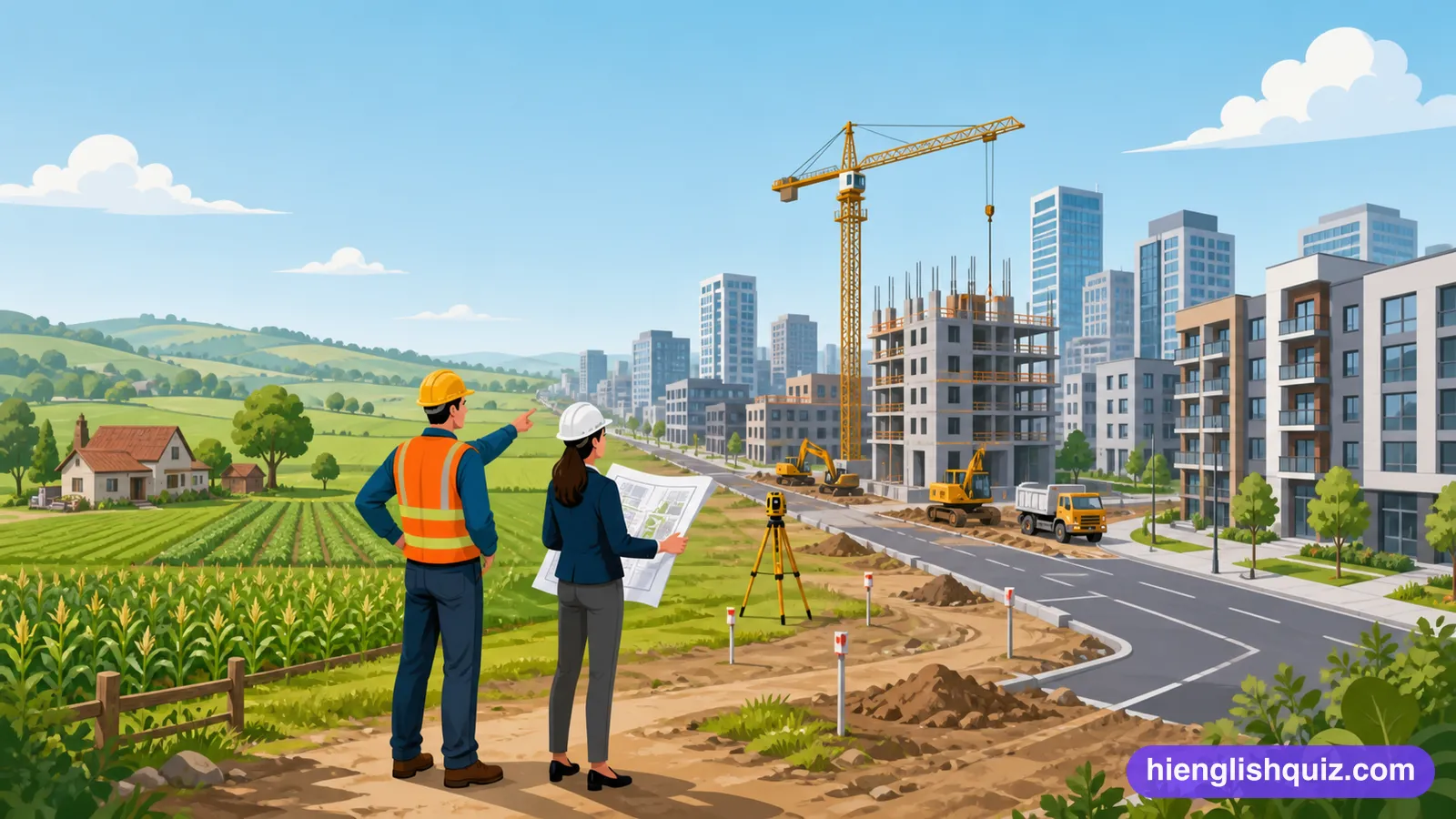
The process by which more and more people come to live in cities.
Example: Rapid urbanisation has changed the country's landscape.
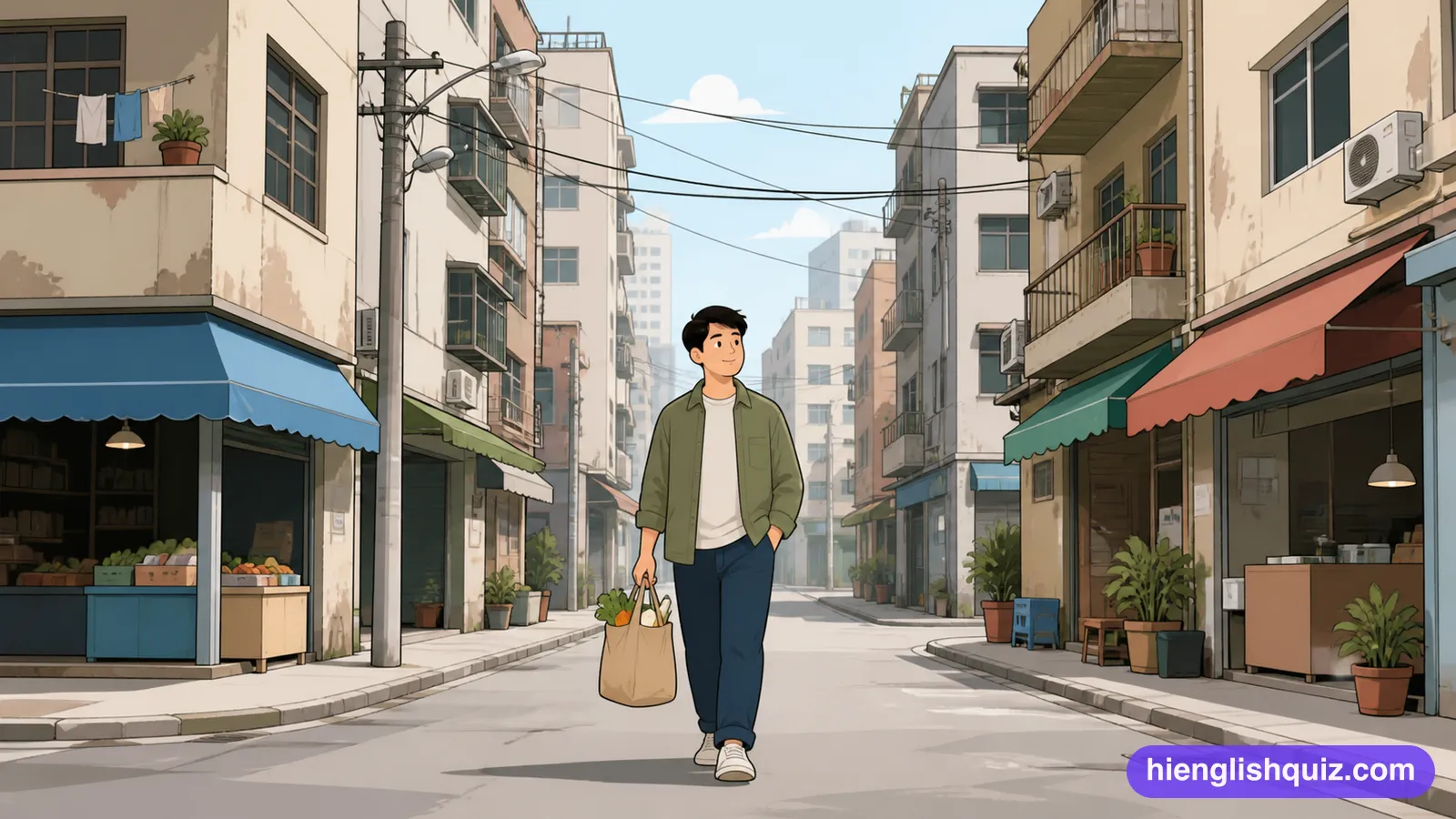
The central, often poorer, part of a big urban area.
Example: Crime rates are often higher in the inner city.
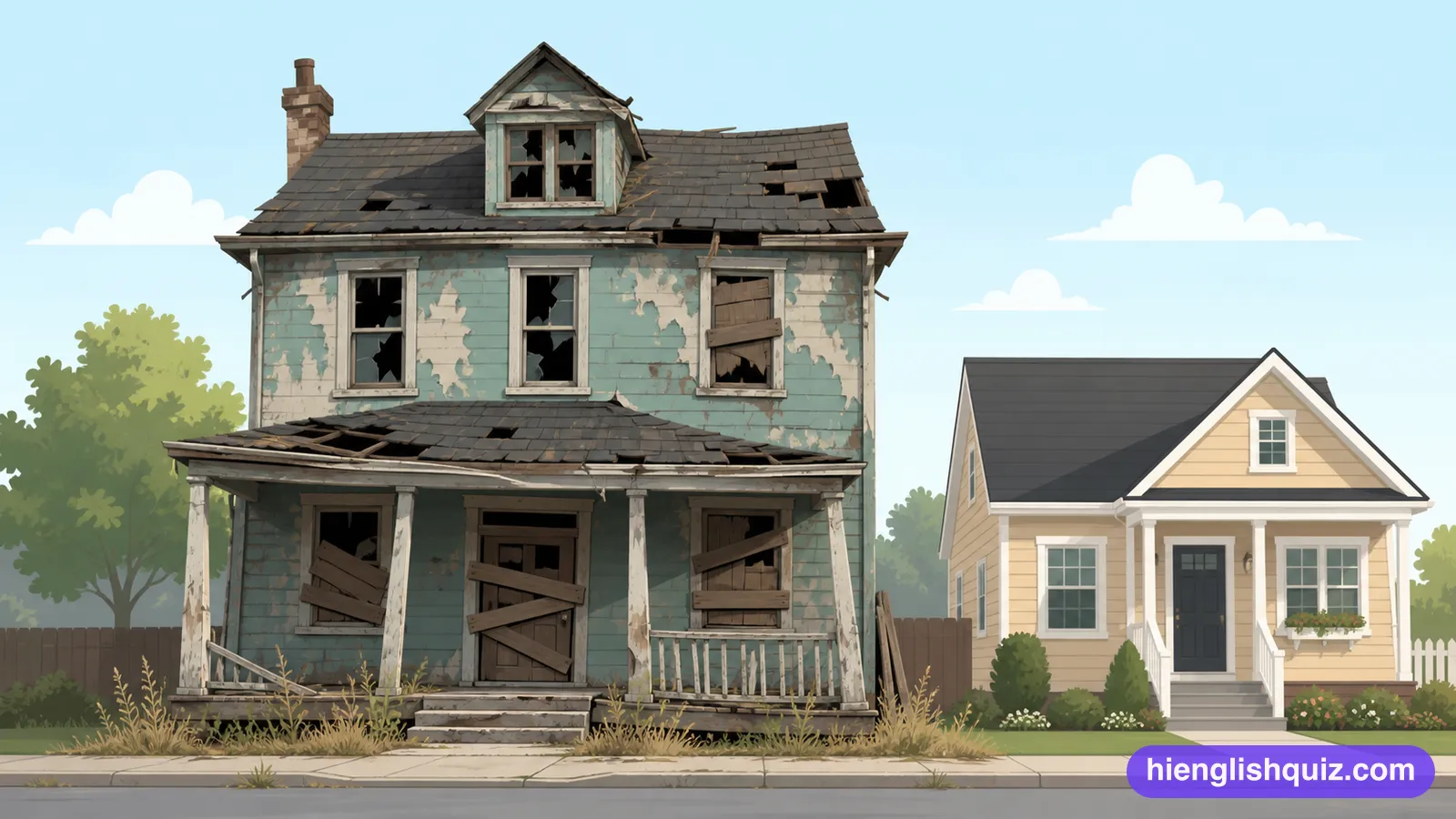
Old and in bad condition because of a lack of care.
Example: The dilapidated warehouse was finally demolished.
Having a lot of money and a comfortable lifestyle.
Example: They moved to a more affluent part of town.

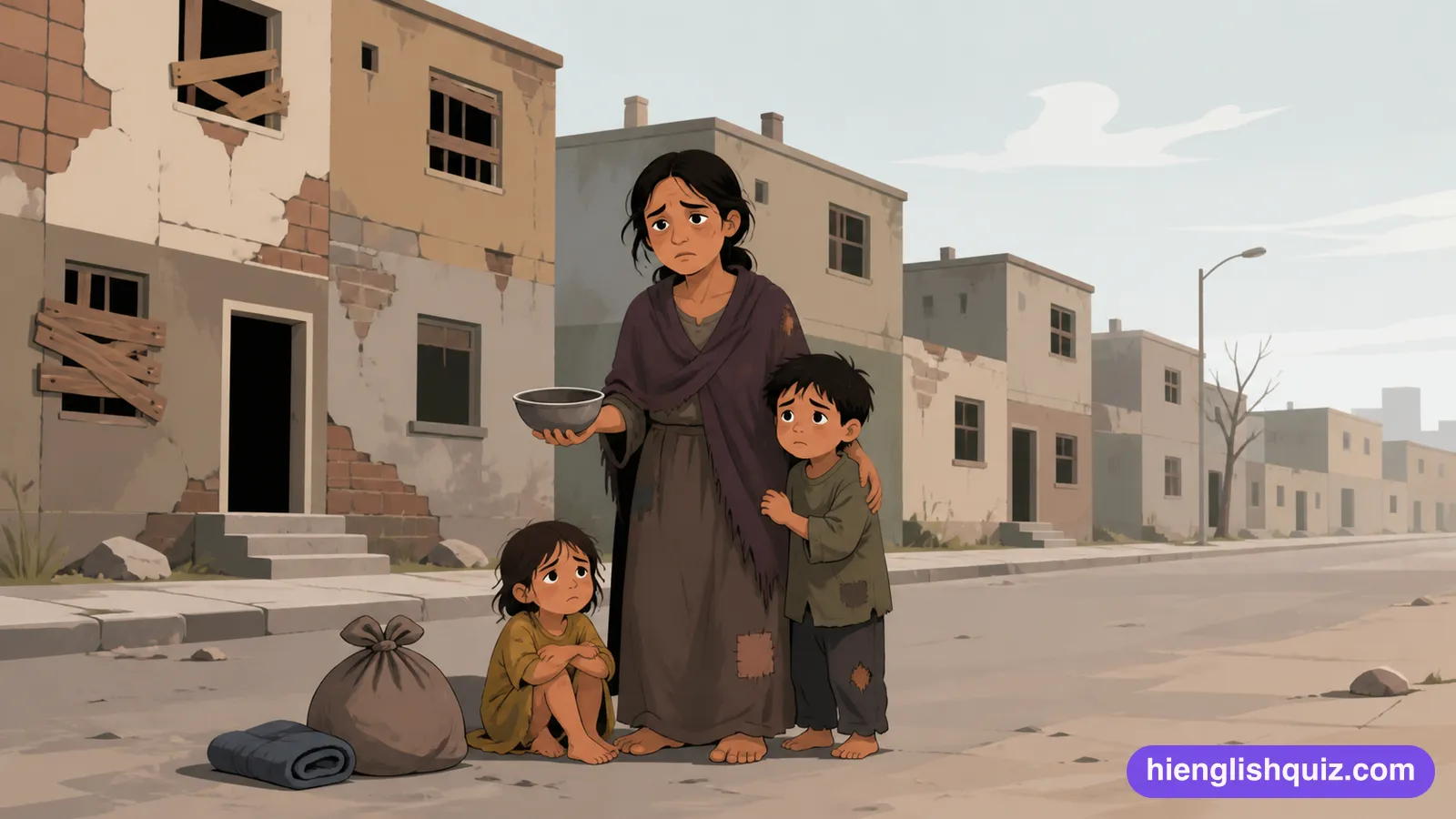
Lacking money, good housing, or opportunities.
Example: The charity works in some of the city's most deprived areas.
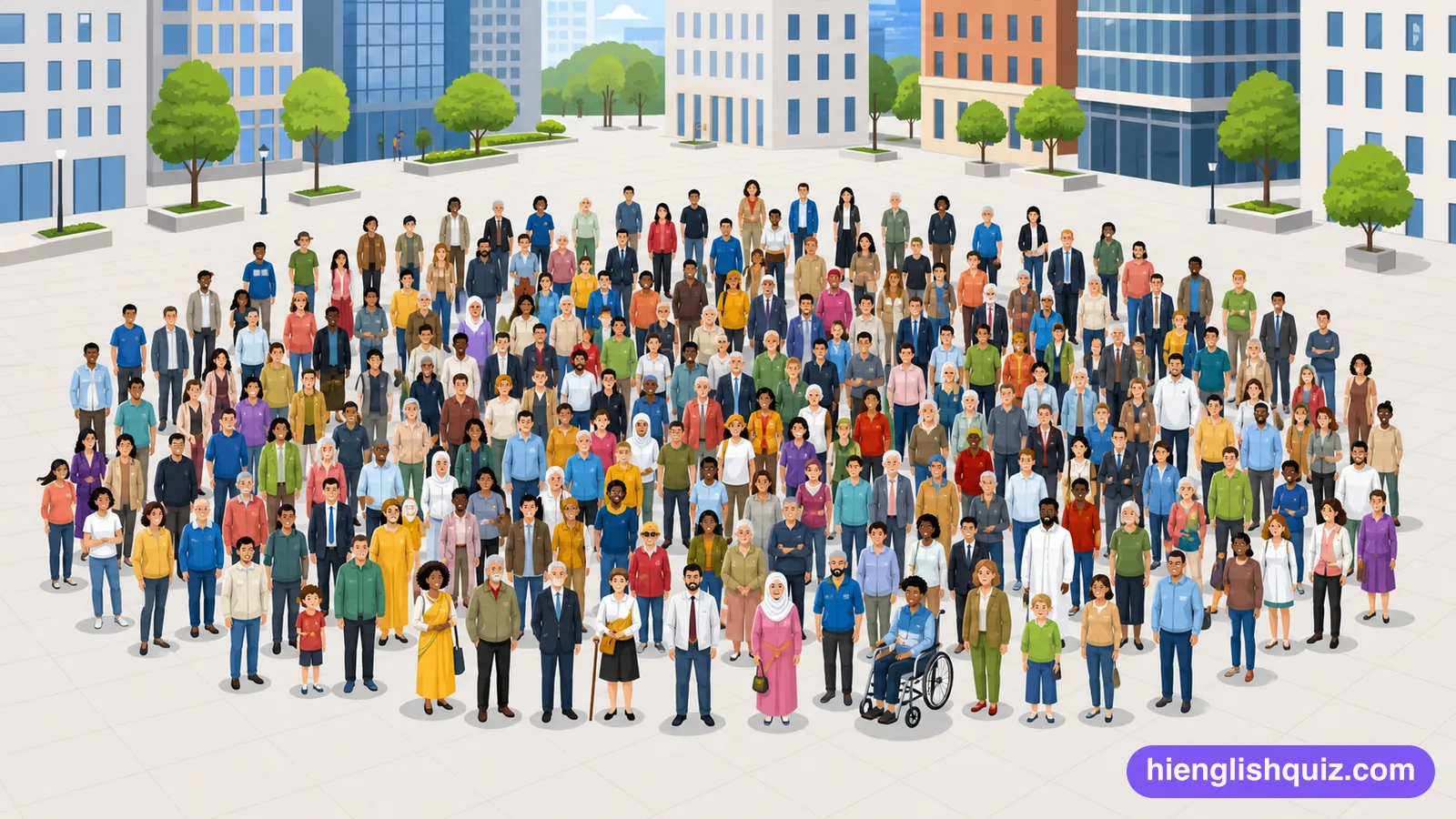
A place where different cultures and people mix and blend together.
Example: New York has long been called a cultural melting pot.

A wide view of a city, especially of its buildings.
Example: From the hotel roof, we admired the whole cityscape.
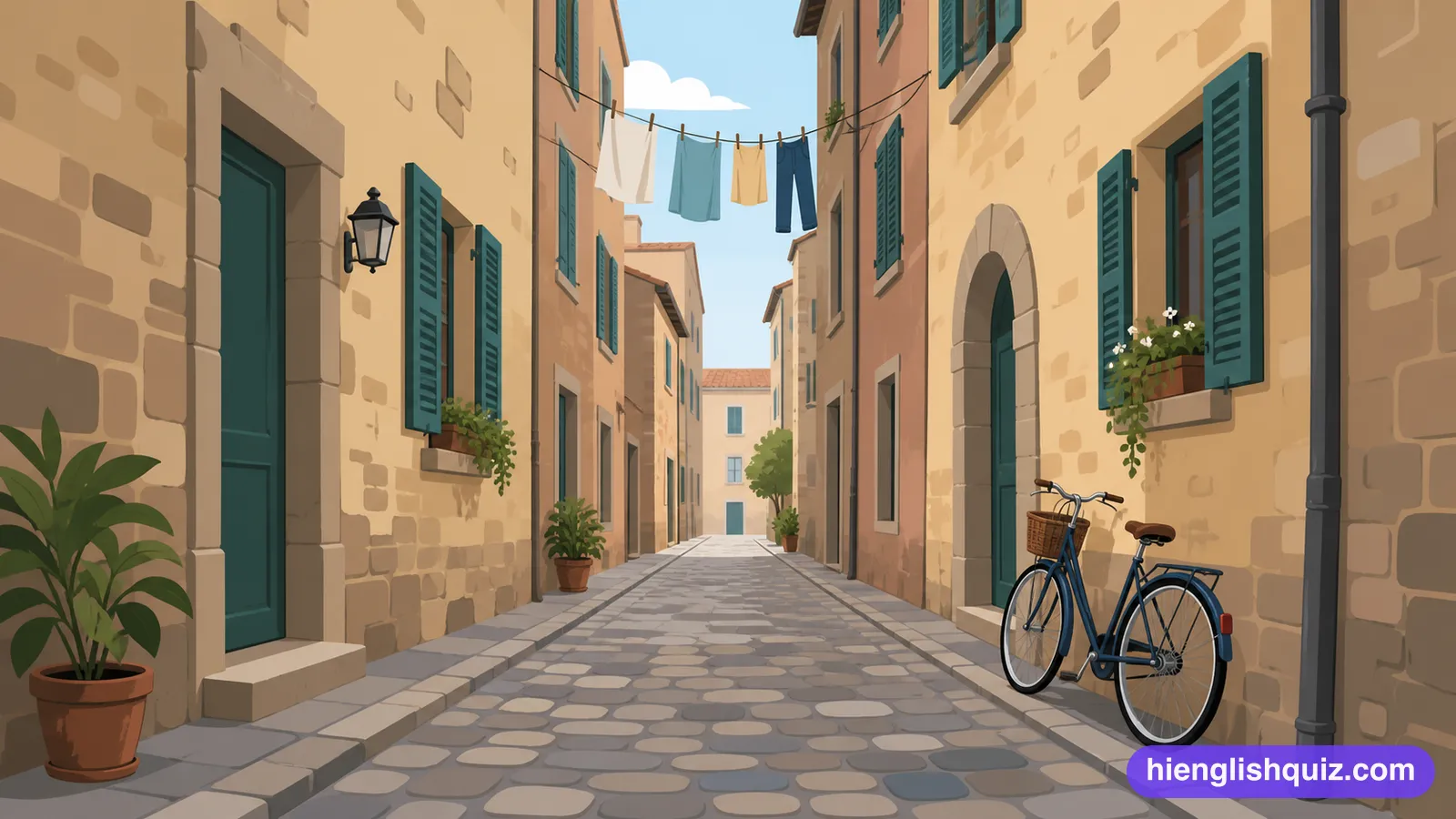
A very narrow path or lane running between or behind buildings in a town.
Example: The cafe hides down a dark alleyway behind the market.
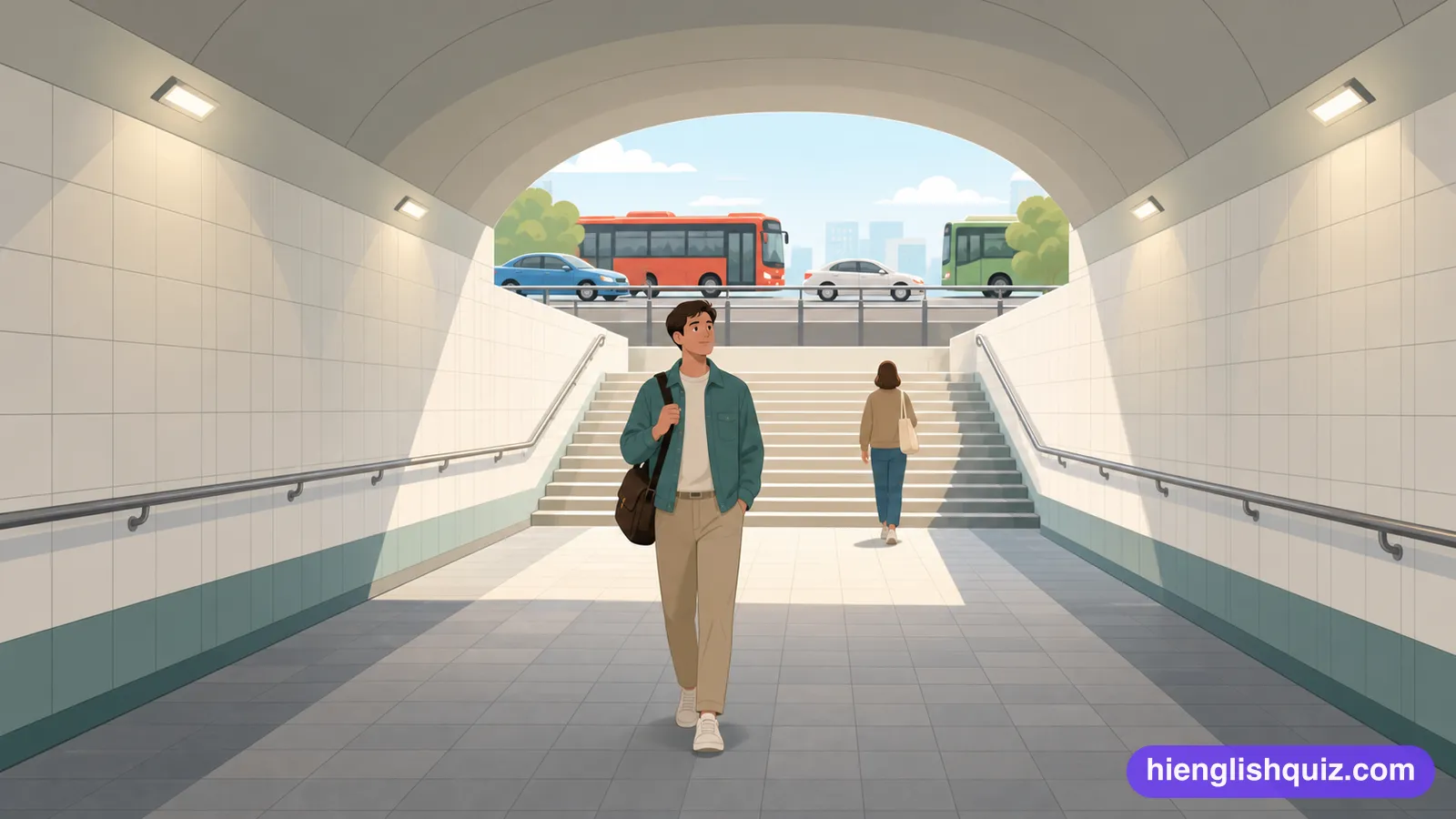
A walkway or road built beneath a busy road or railway so people can cross safely.
Example: Take the underpass and you come out by the museum.
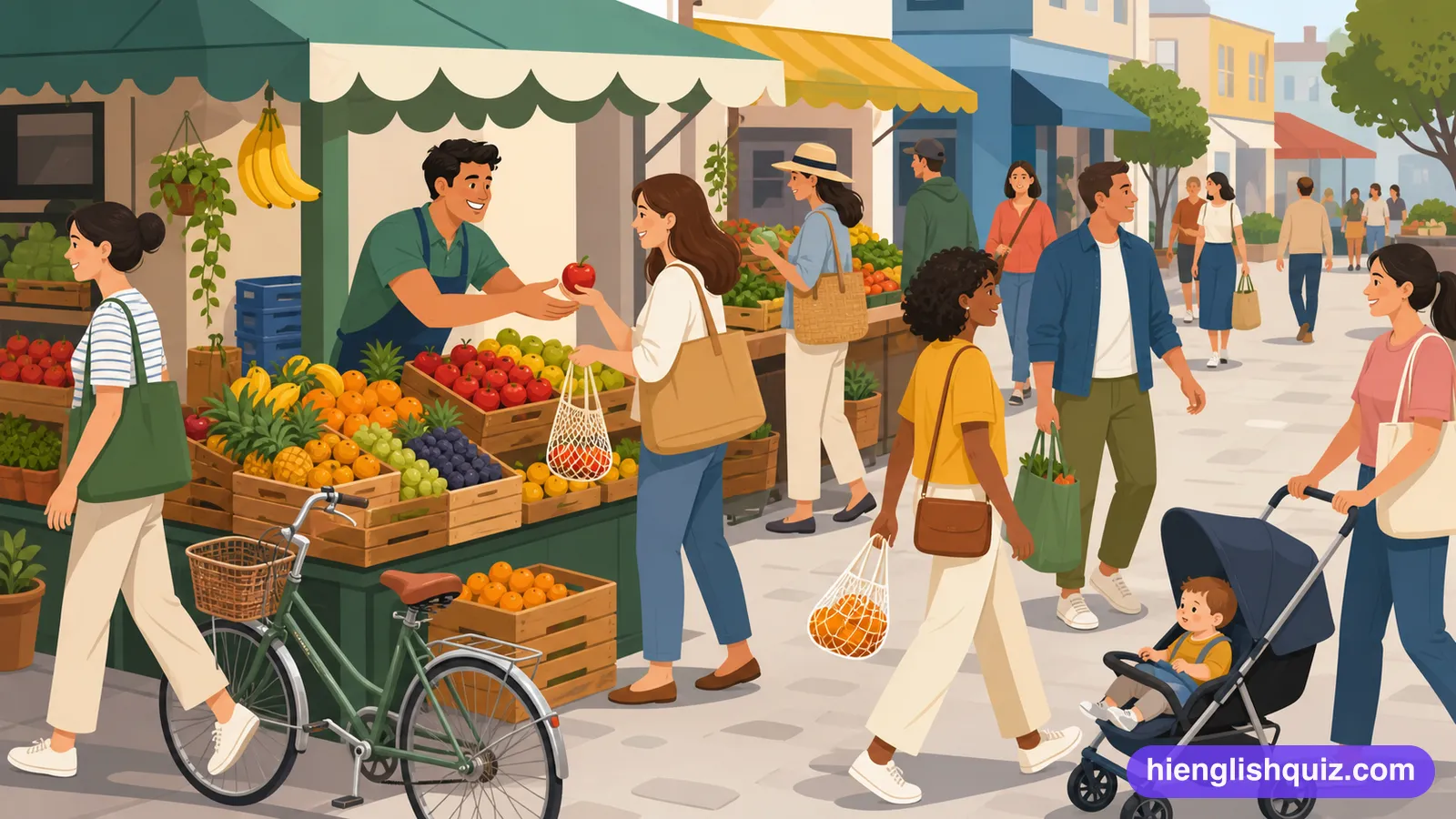
Crowded with people and full of noisy activity.
Example: The old town square was bustling with shoppers on Saturday morning.
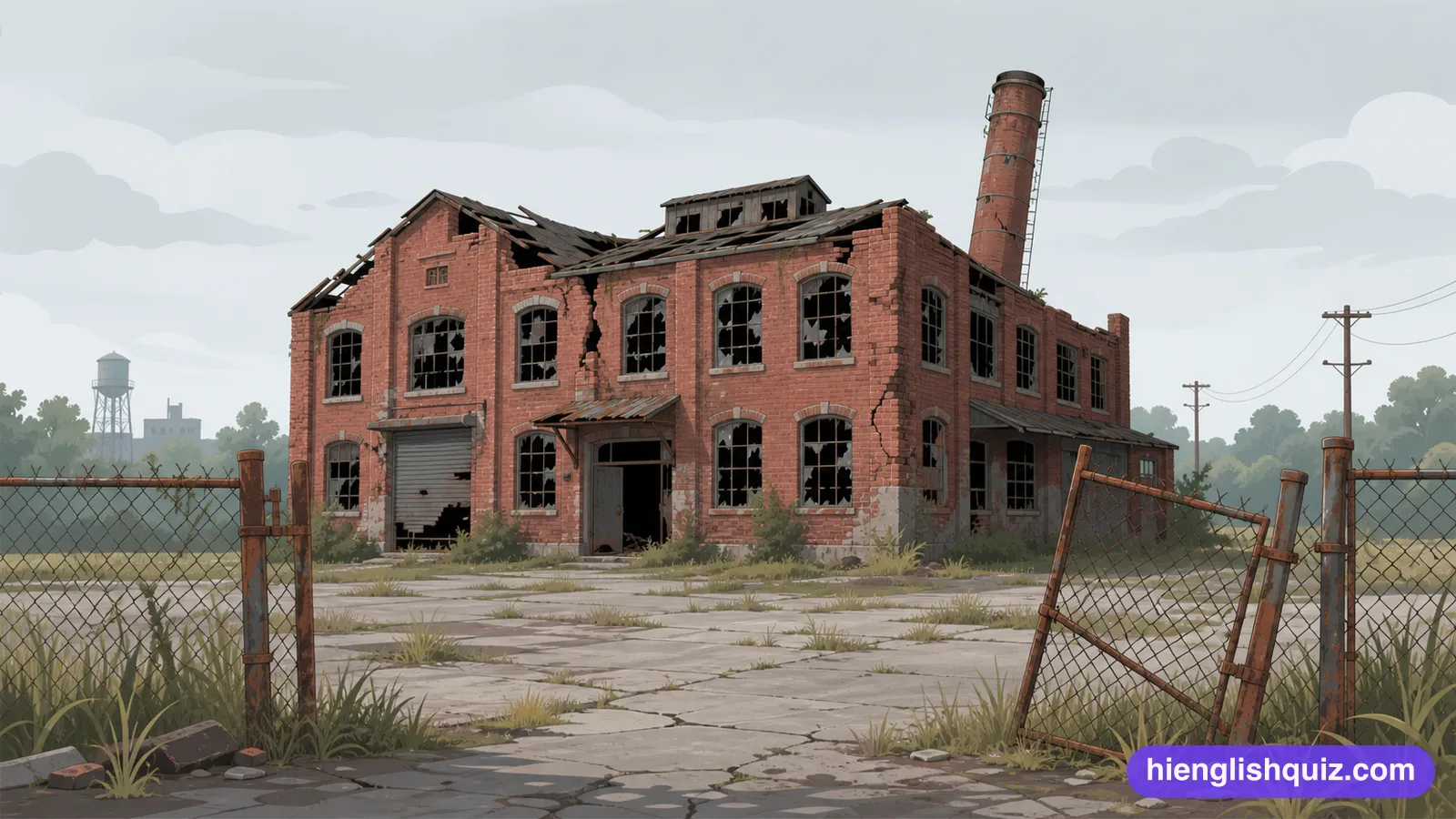
Left empty for years and now in very bad condition, with broken windows and doors.
Example: They want to turn the derelict factory into flats.
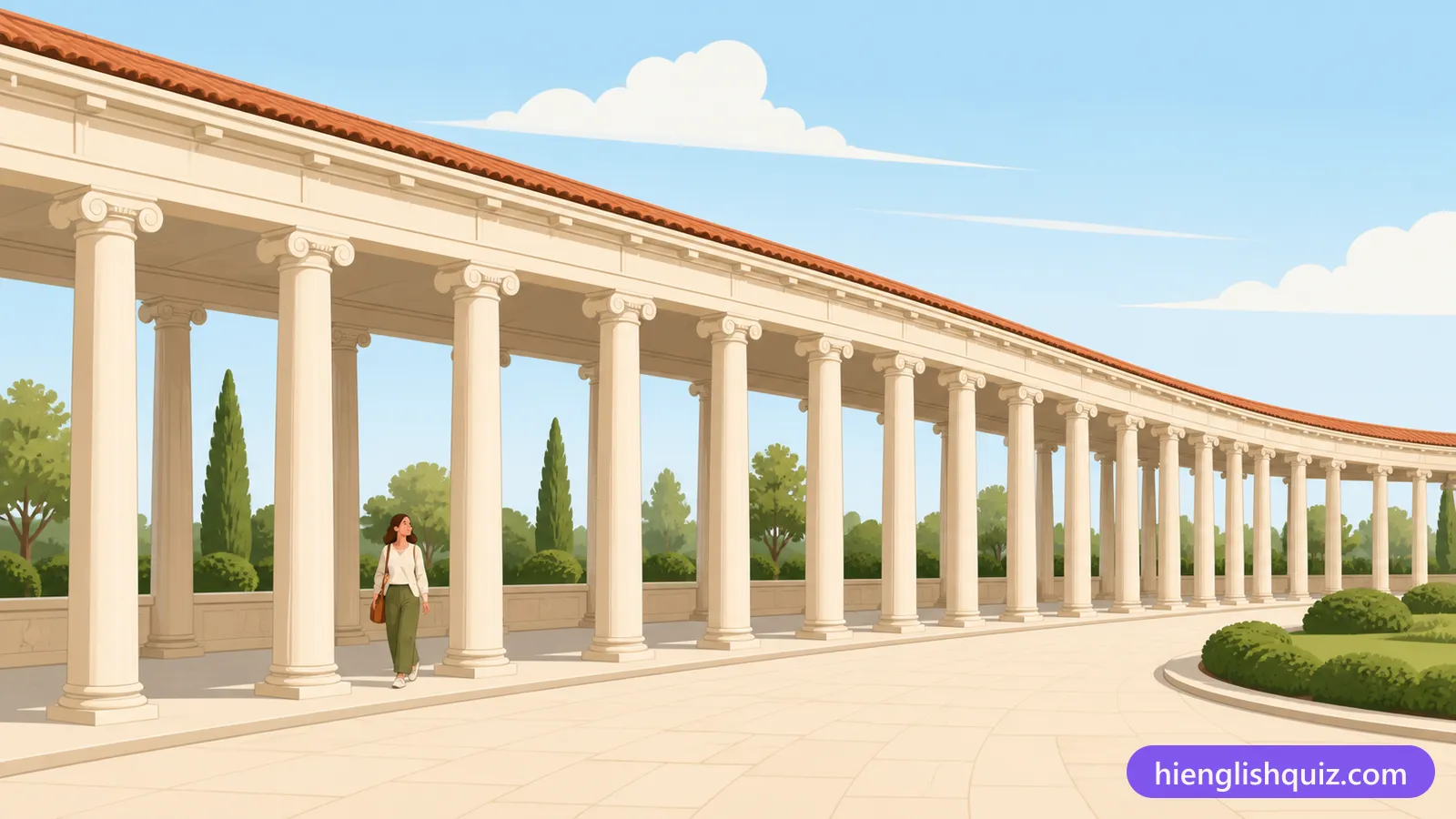
A row of columns supporting a roof, along the front of a building.
Example: Shoppers sheltered from the rain under the colonnade.
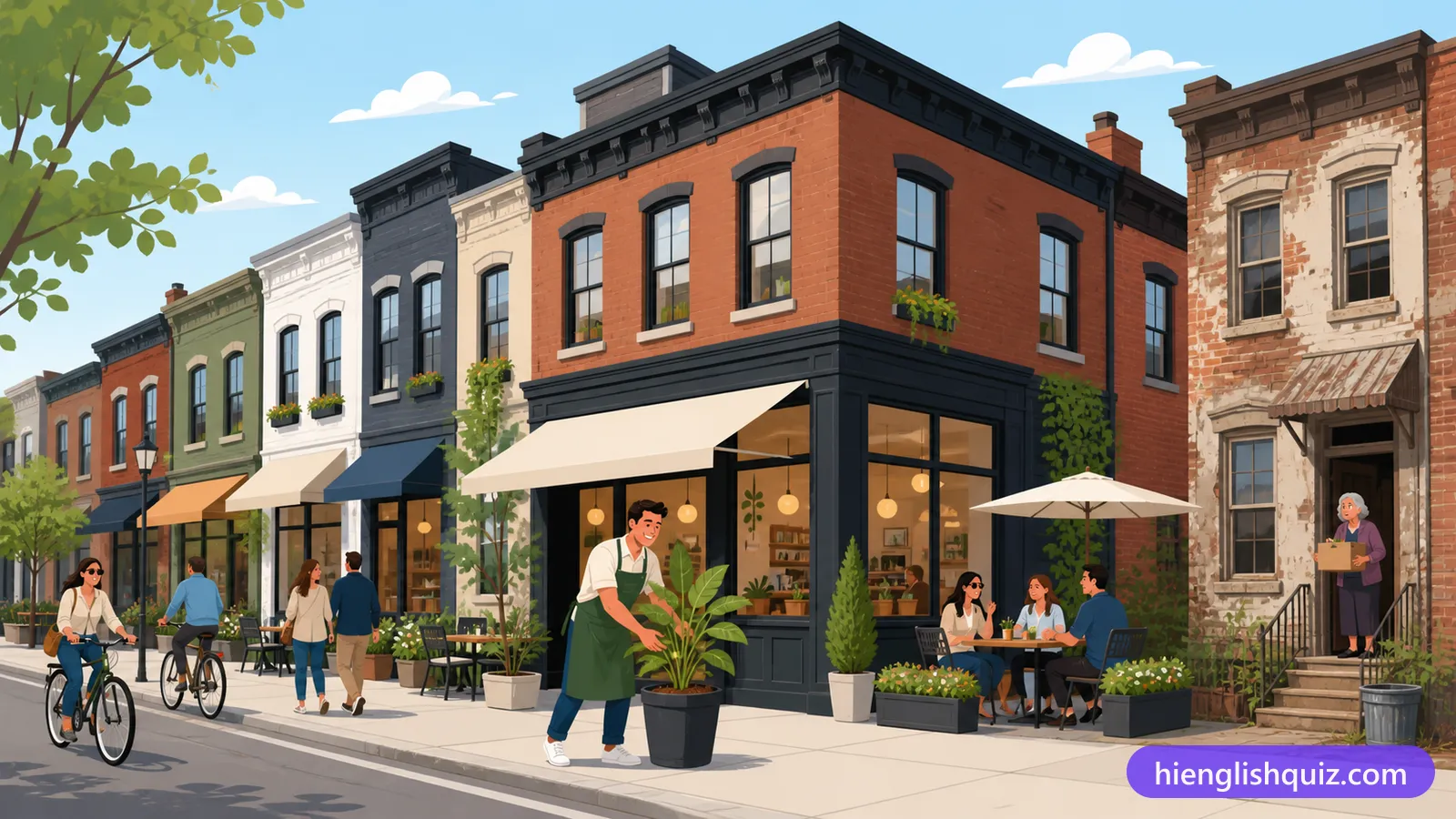
Changed by wealthier people moving in and making a previously poor area smarter and pricier.
Example: The once-cheap neighbourhood is now completely gentrified.
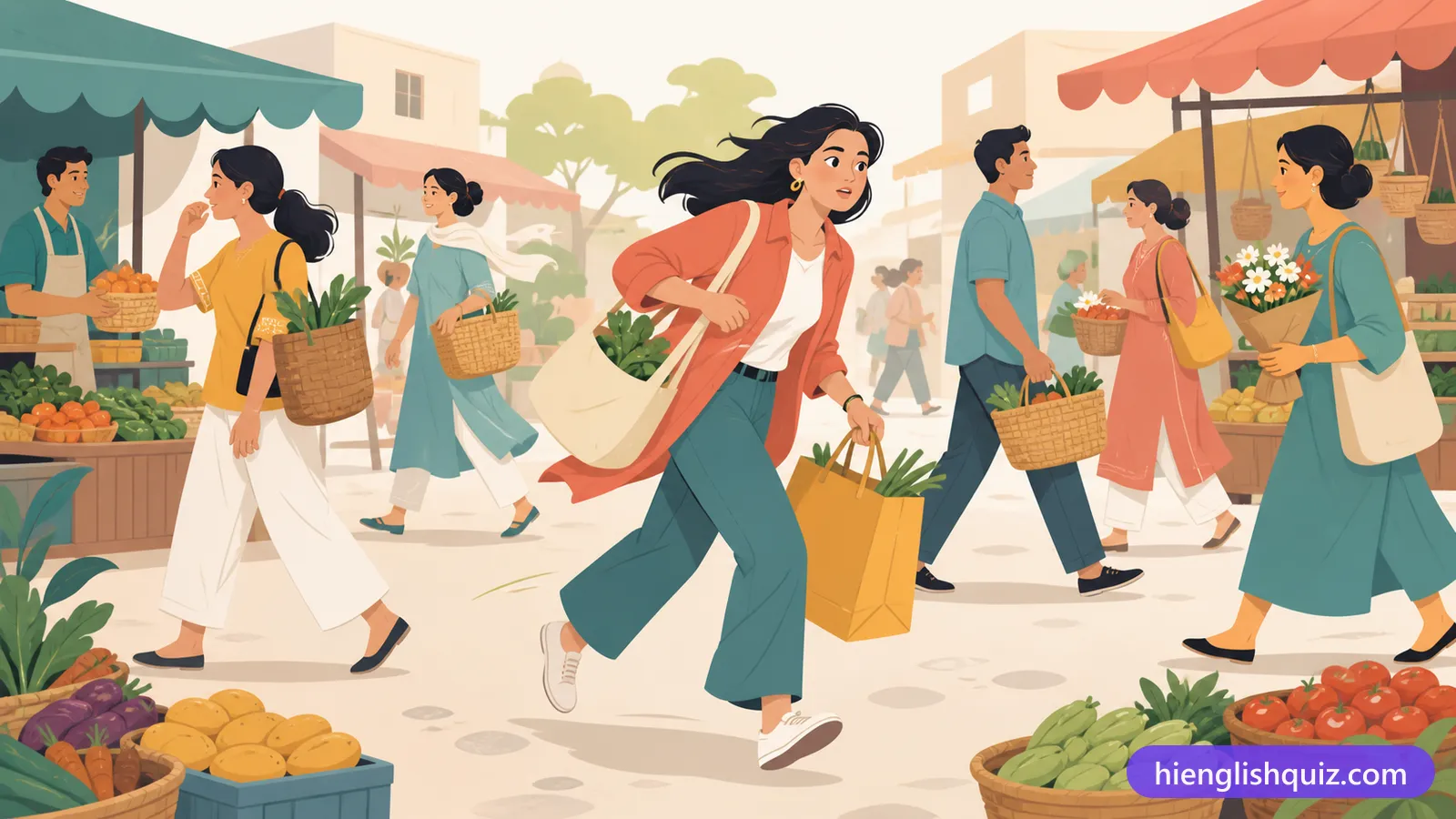
The busy, noisy activity of a crowded place.
Example: She missed the hustle and bustle of the market after moving to the countryside.
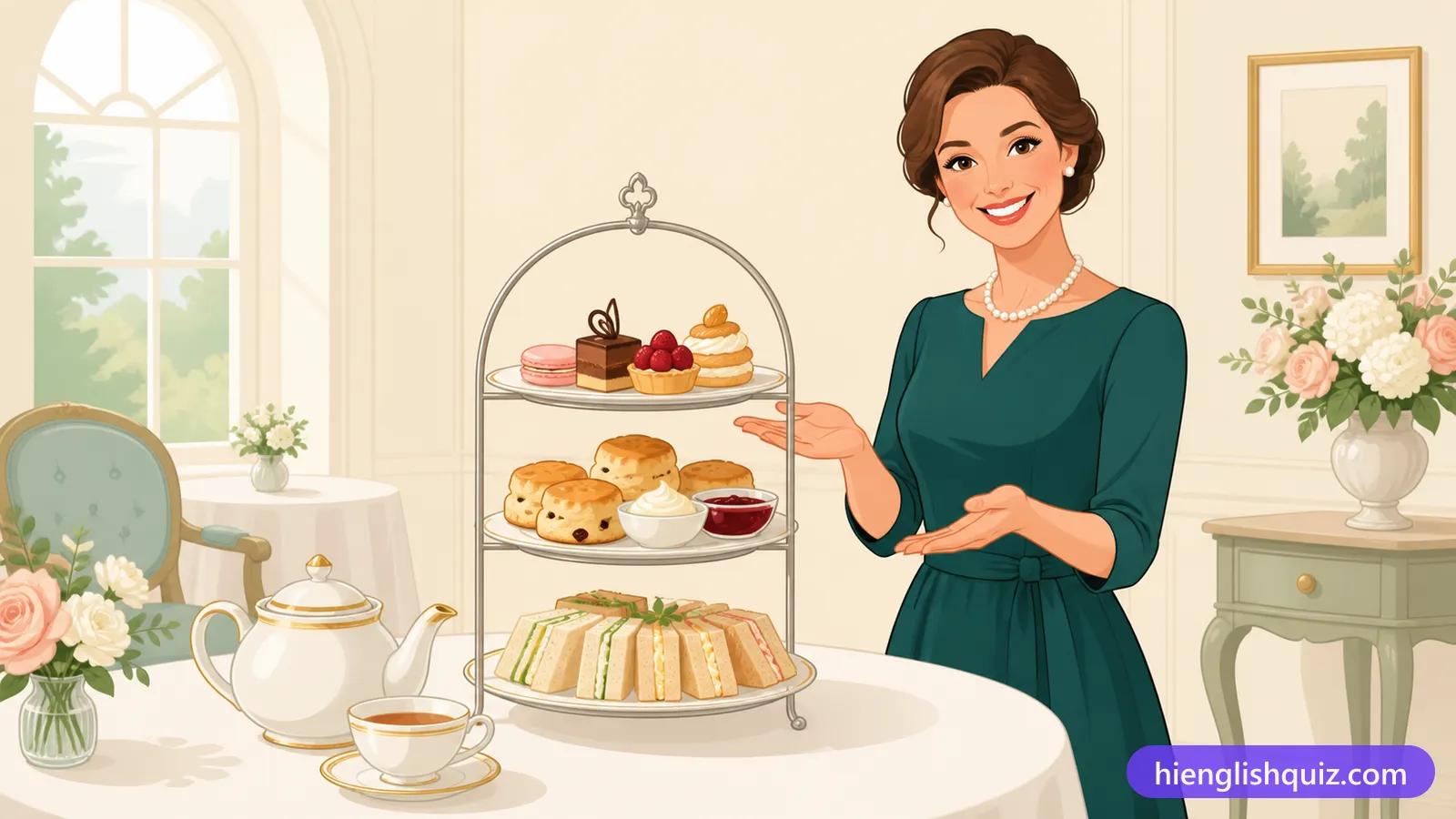
Representing the most perfect or typical example of a quality or type.
Example: The little tea room felt like the quintessential English cafe.
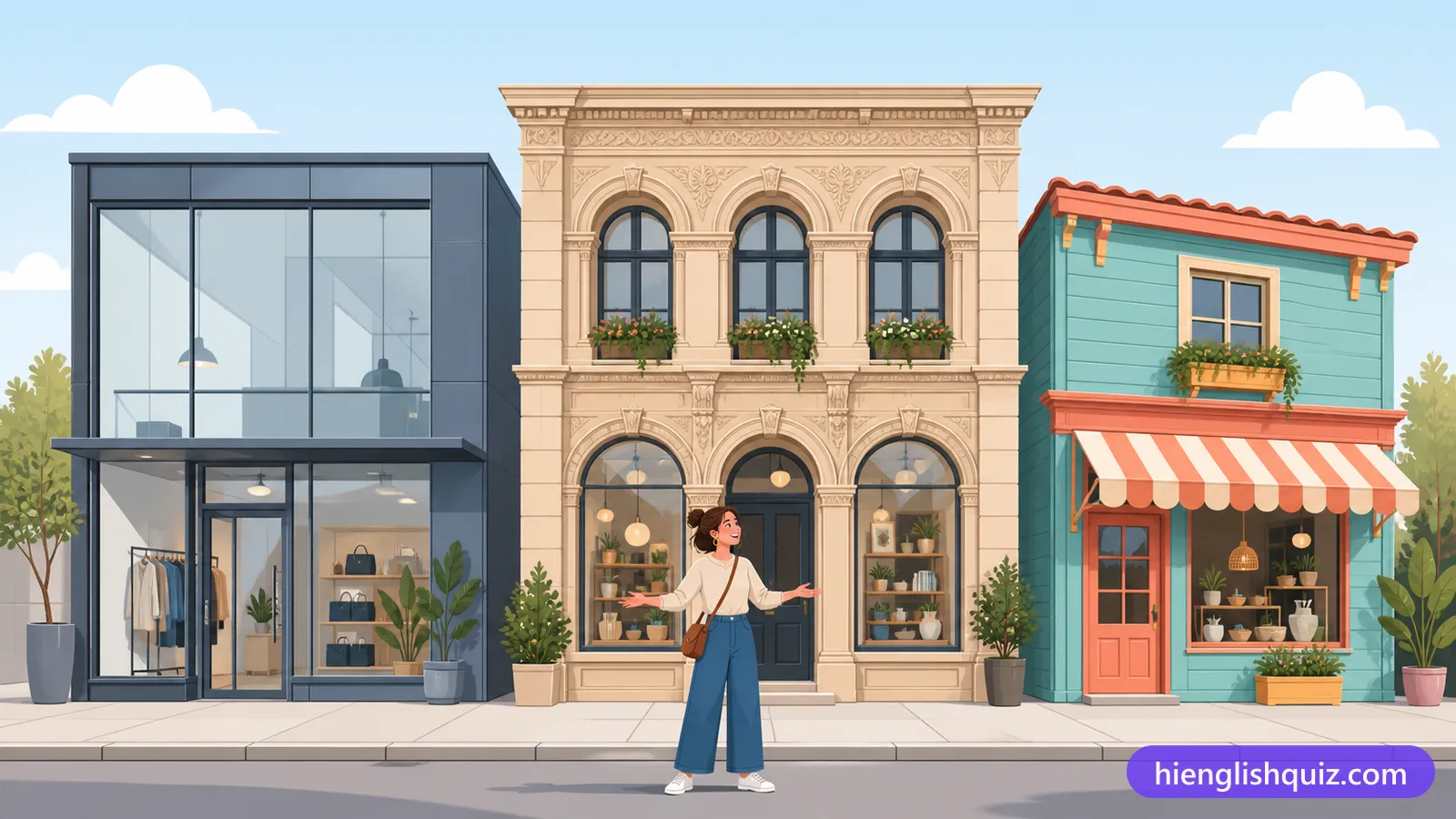
Made up of a mixture of many different styles or ideas.
Example: The street has an eclectic mix of shops and cafes.
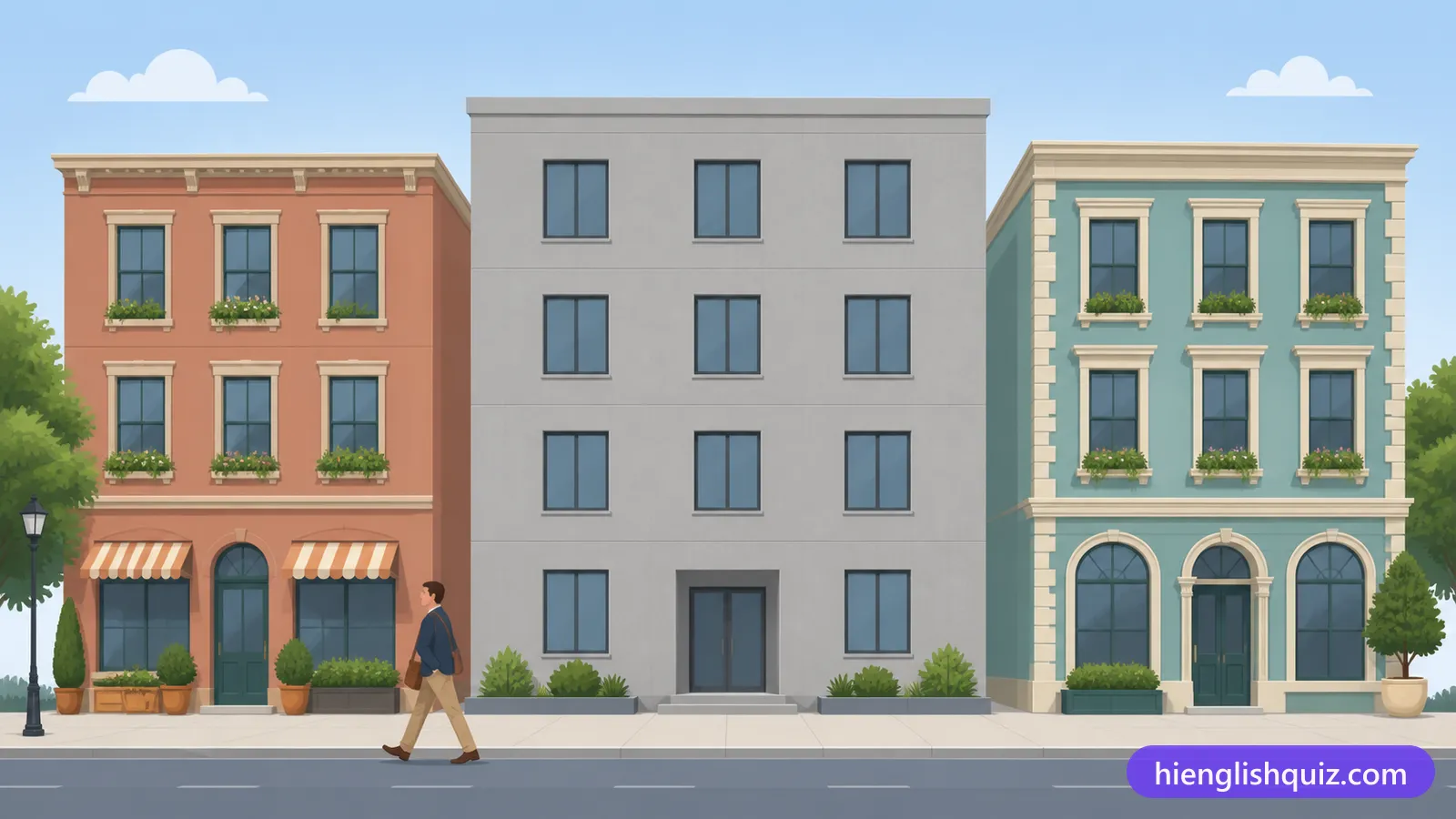
Having no special or interesting features; ordinary.
Example: The office was in a nondescript grey building.
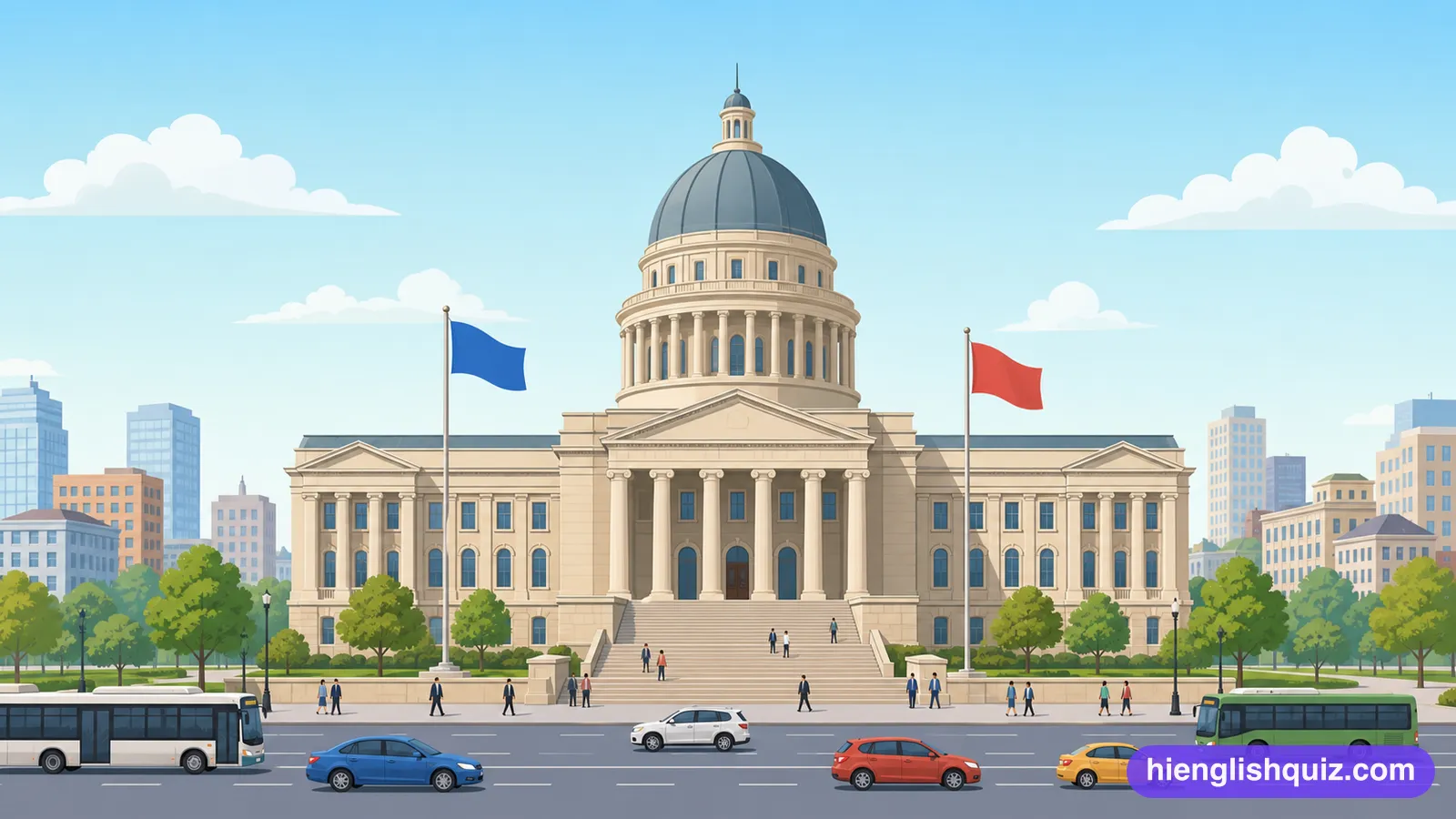
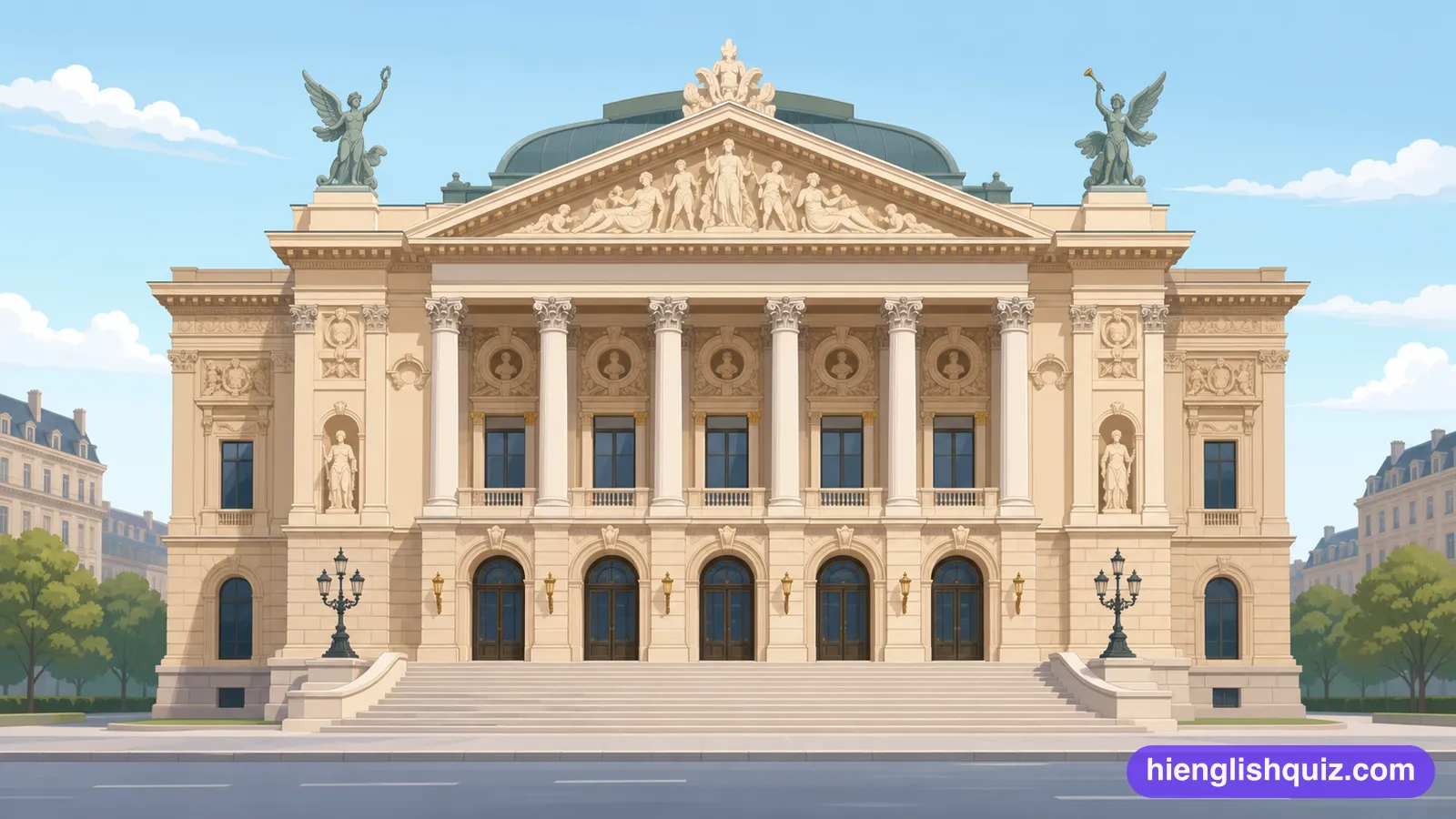
The front outside wall of a large building, especially a grand or decorated one.
Example: The facade of the theatre is covered in carved stone.
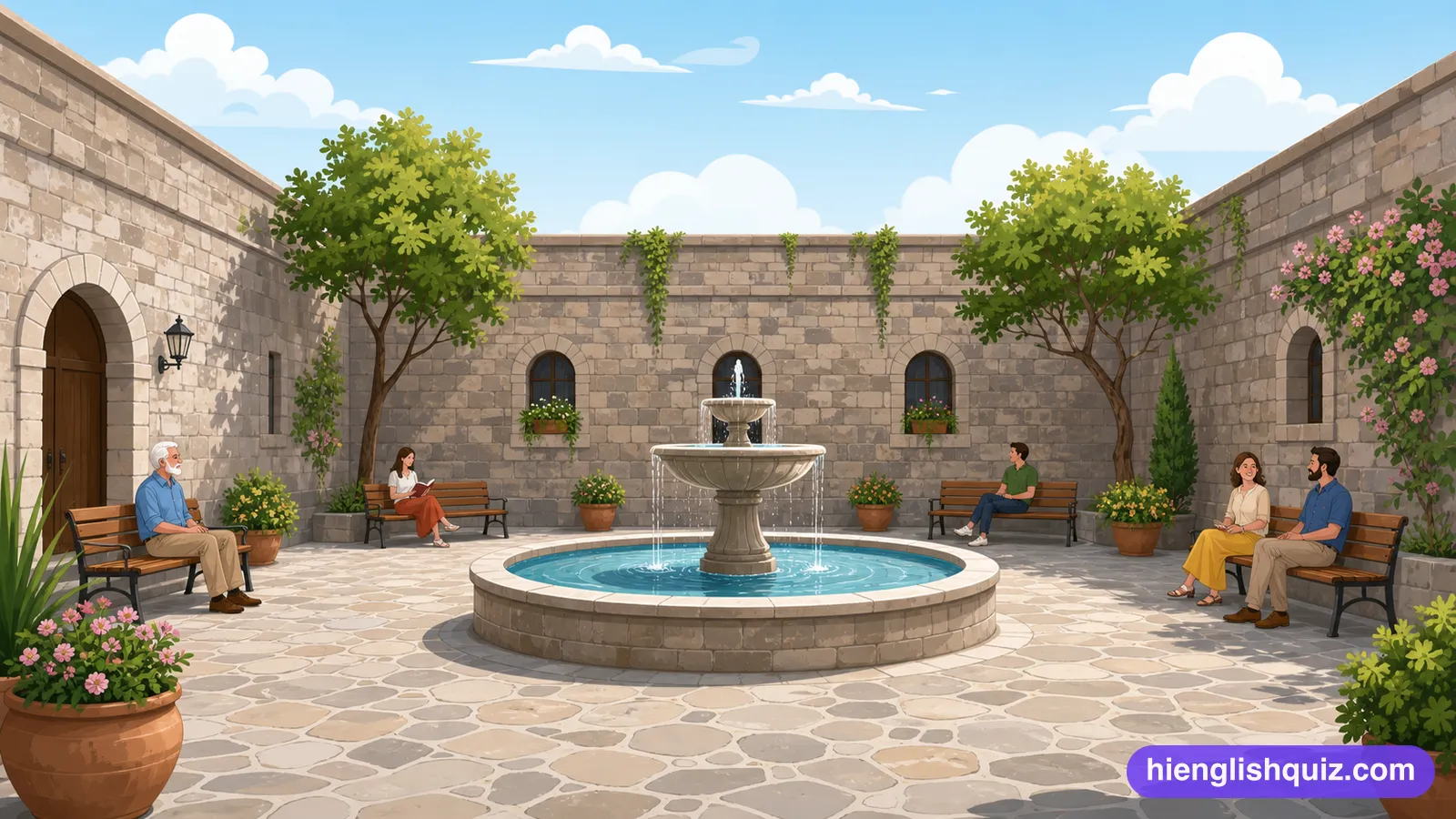
An open space with no roof, enclosed by the walls of a building or several buildings.
Example: Students eat lunch in the courtyard behind the library.