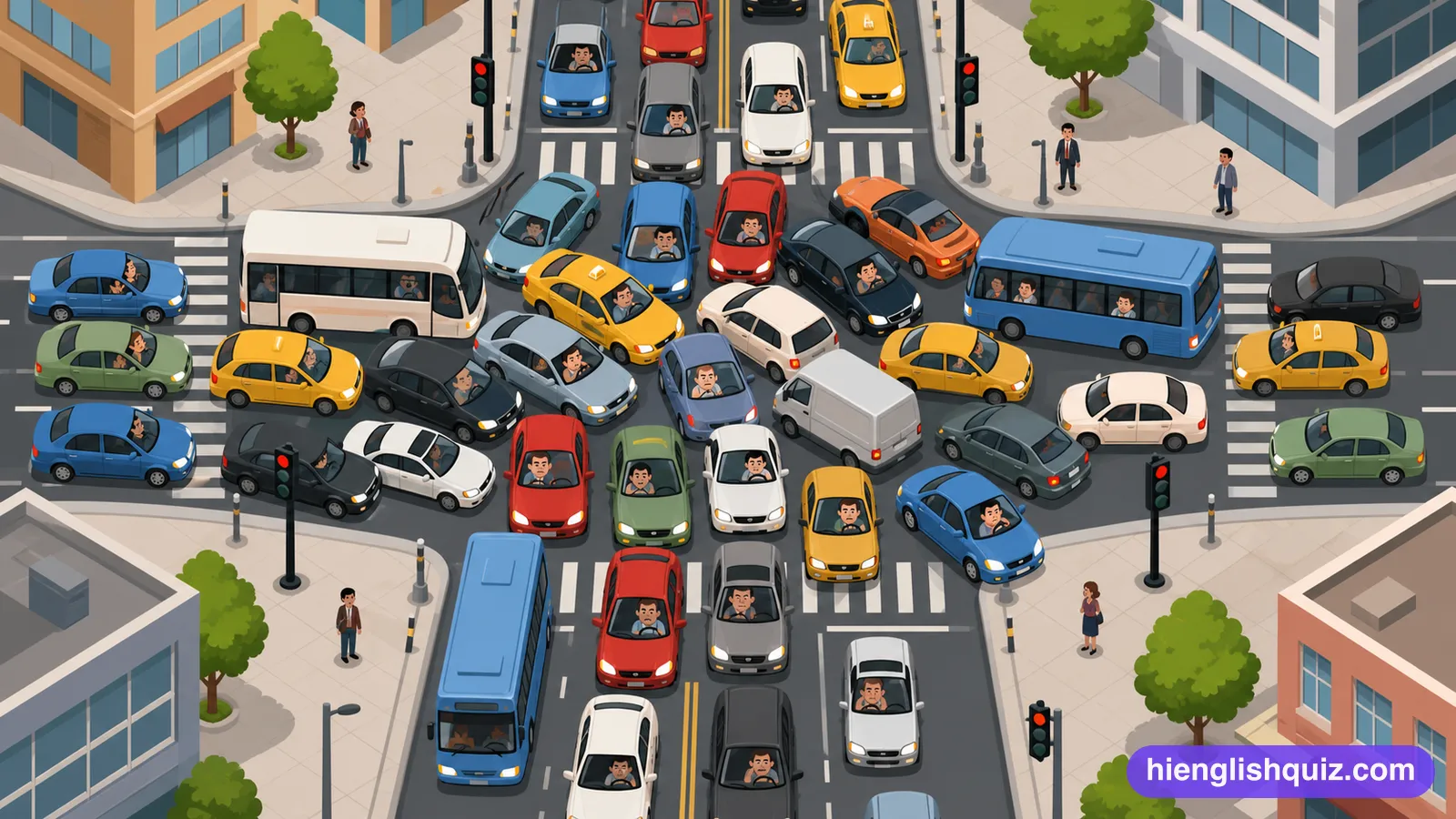
congestion
/kənˈdʒɛstʃən/Too much traffic in one place for anything to move freely.
Example: The city charges drivers to reduce congestion in the centre.
 Hi EnglishQuiz
B220 words · Upper-intermediate
City vocabulary for how a city is planned and rebuilt, including congestion, regeneration and infrastructure, plus a district, a suburb and a cobbled alley.
Too much traffic in one place for anything to move freely.
Example: The city charges drivers to reduce congestion in the centre.
One particular part of a city, with its own name and character.
Example: The old district near the river is full of galleries.
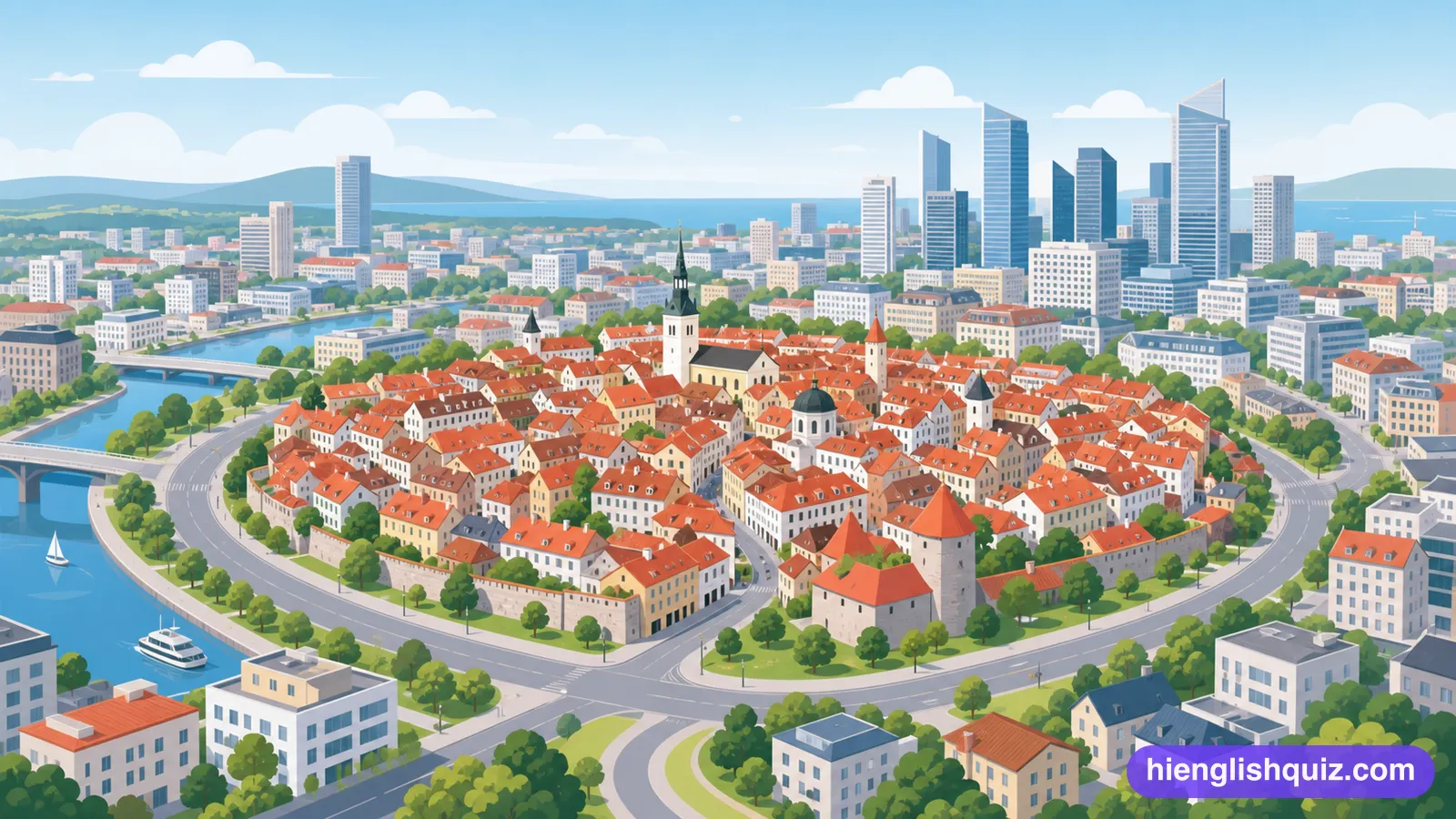
Connected with a city or big town rather than with open country.
Example: Many young people prefer busy urban life.
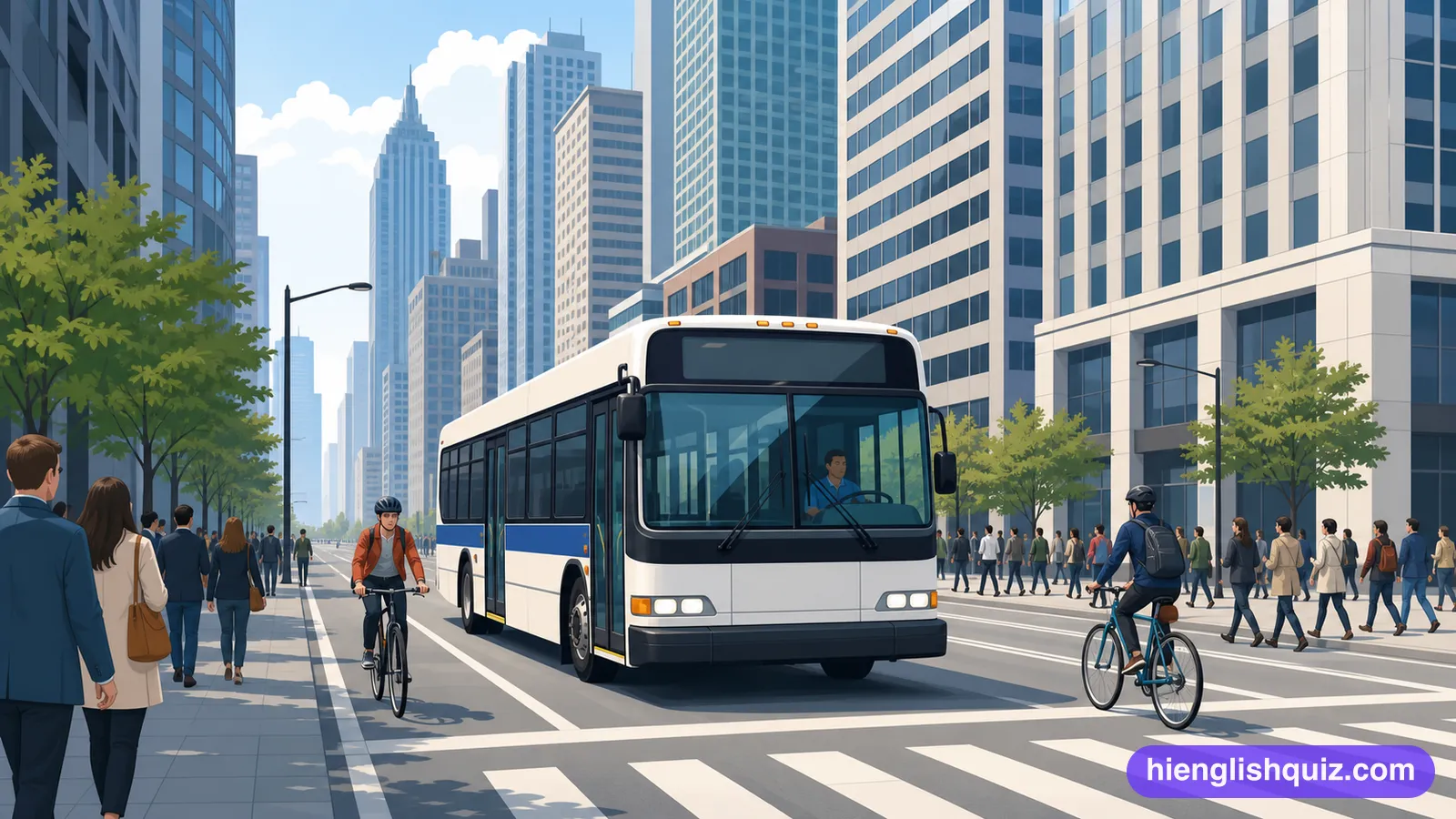
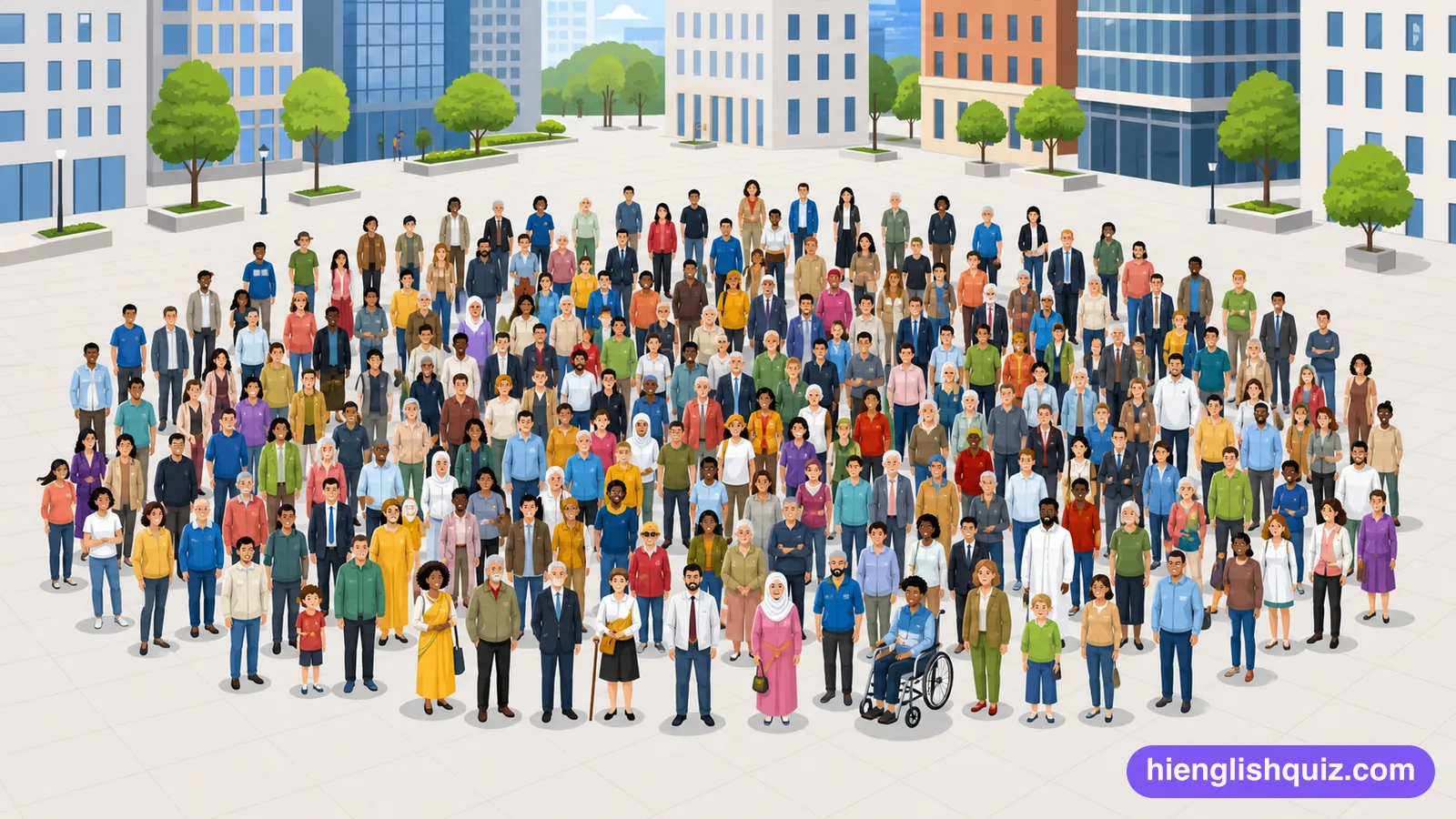
Containing people and influences from many different countries.
Example: London is a truly cosmopolitan city.
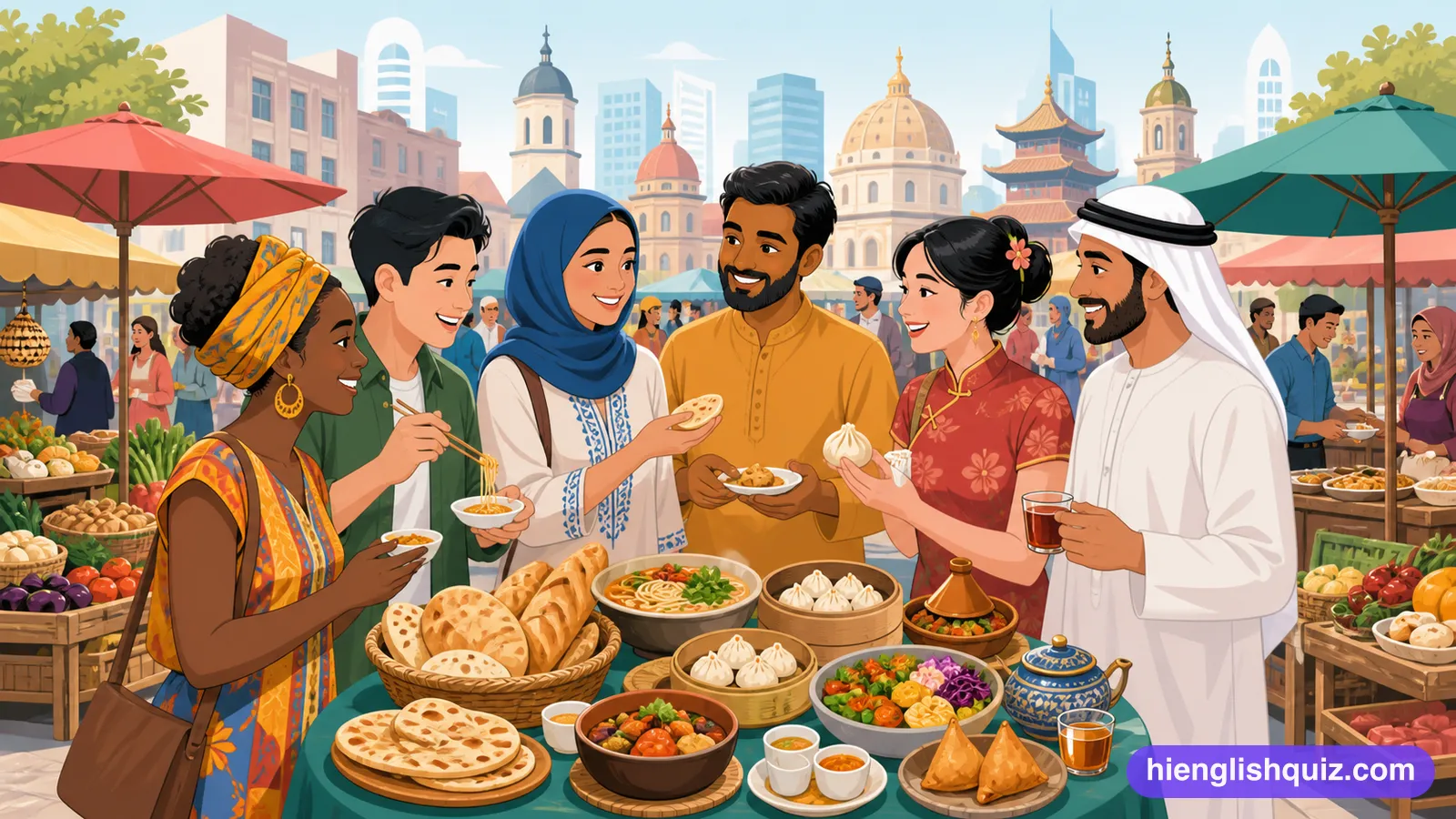
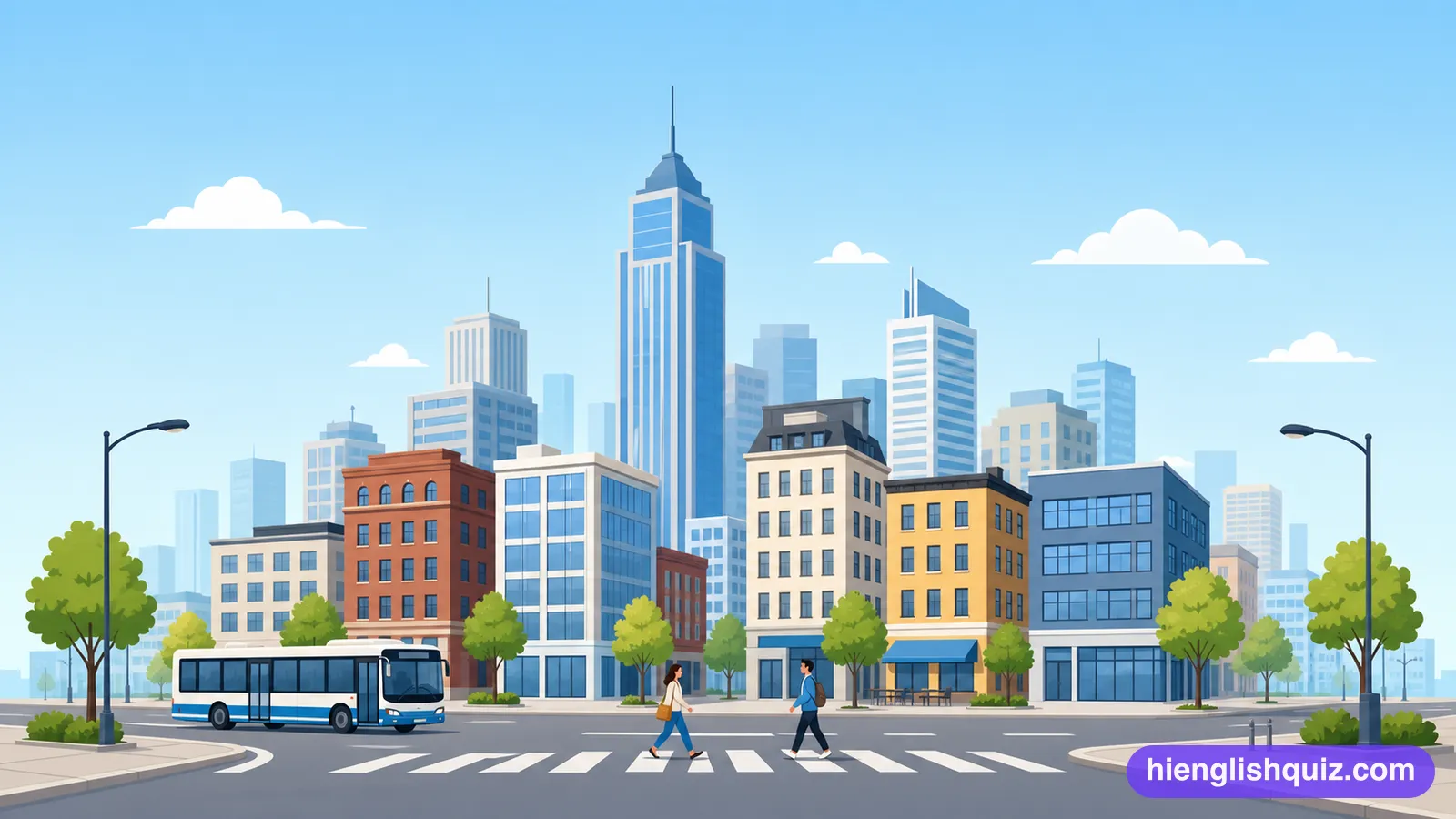
Relating to a large, busy city.
Example: The metropolitan area includes several smaller towns.
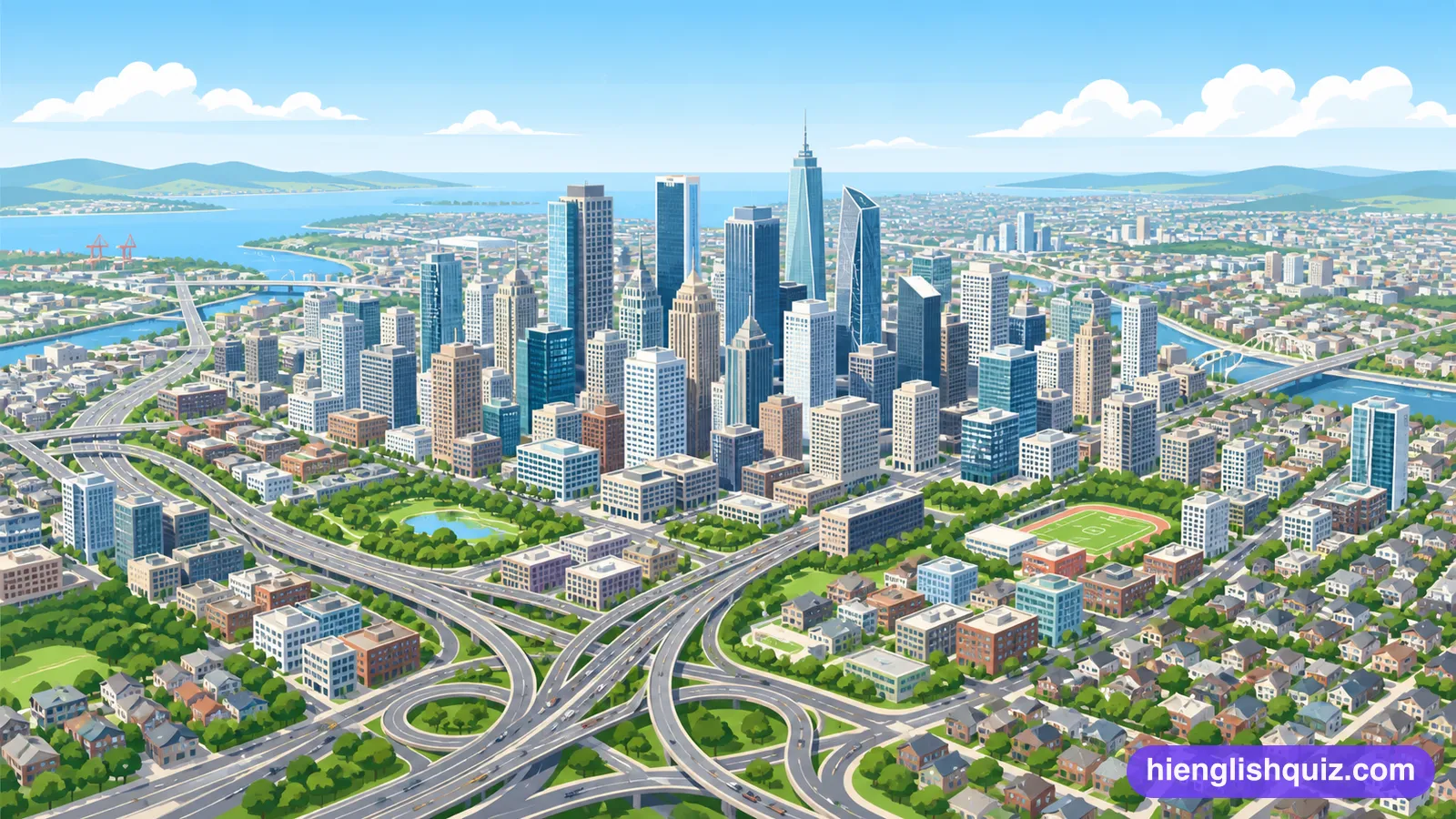
The basic systems and structures a city needs to function, such as roads and power.
Example: The city invested heavily in public transport infrastructure.
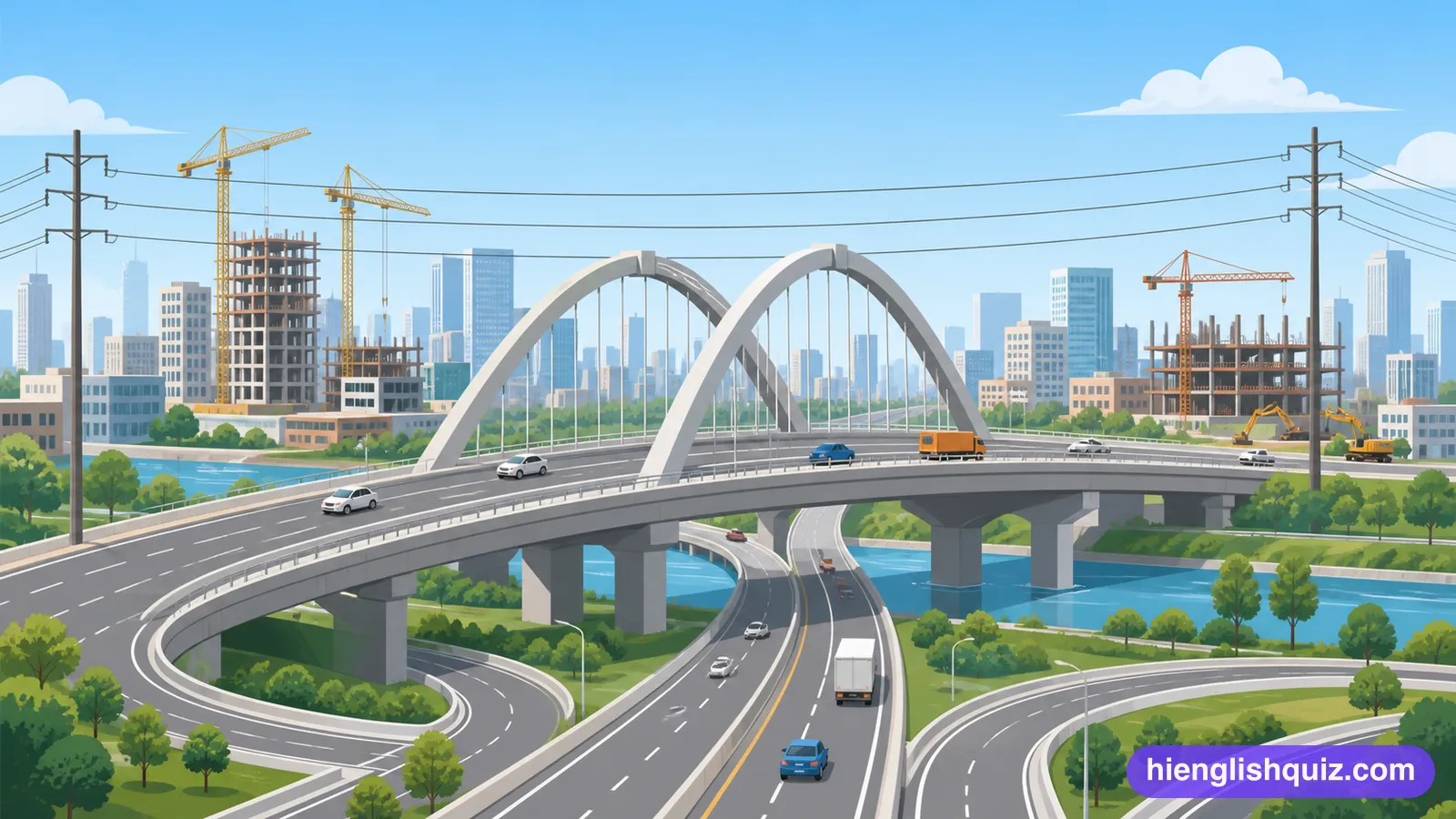
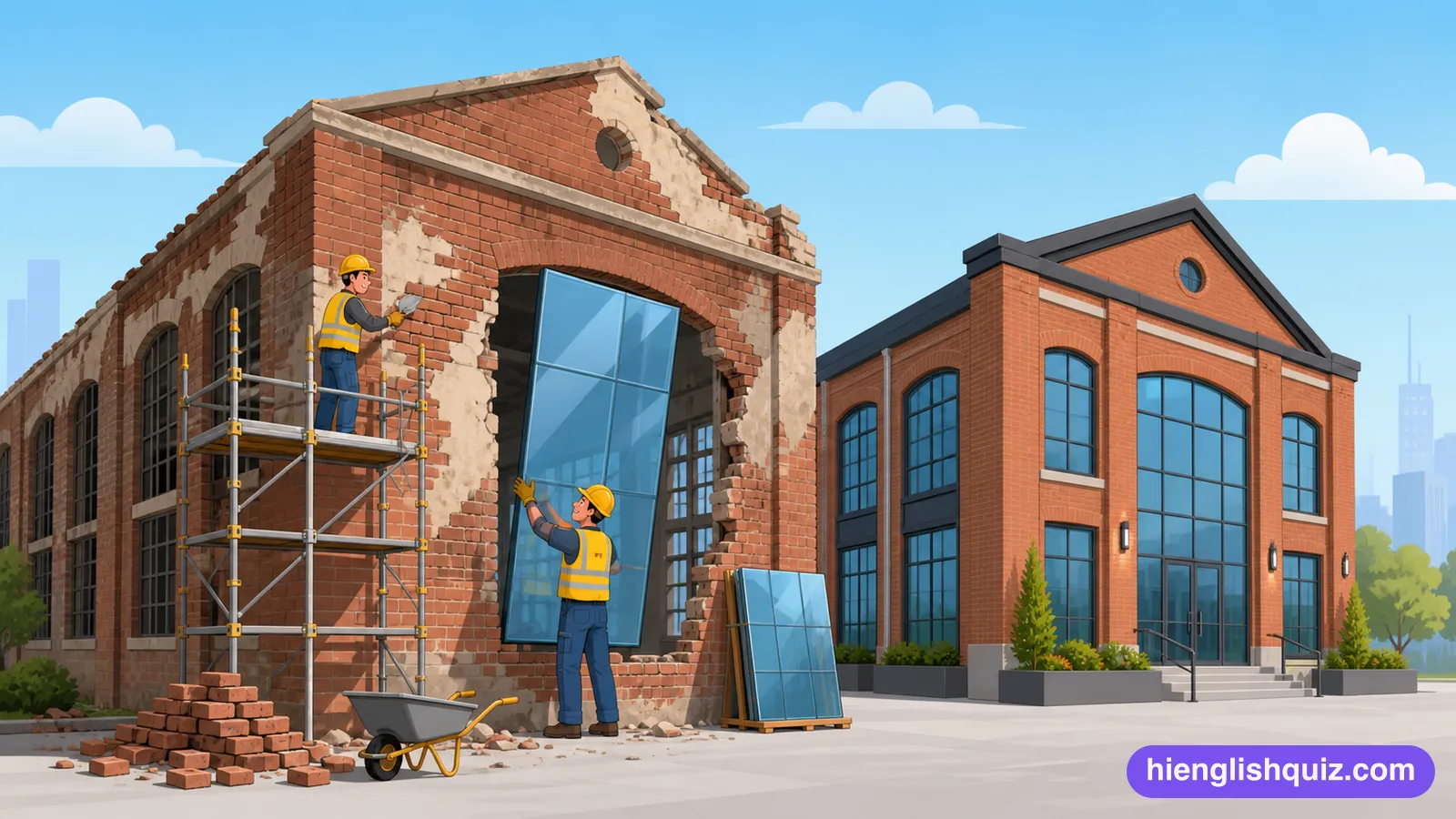
The process of improving a run-down area, usually by rebuilding it.
Example: The old docks underwent major regeneration.
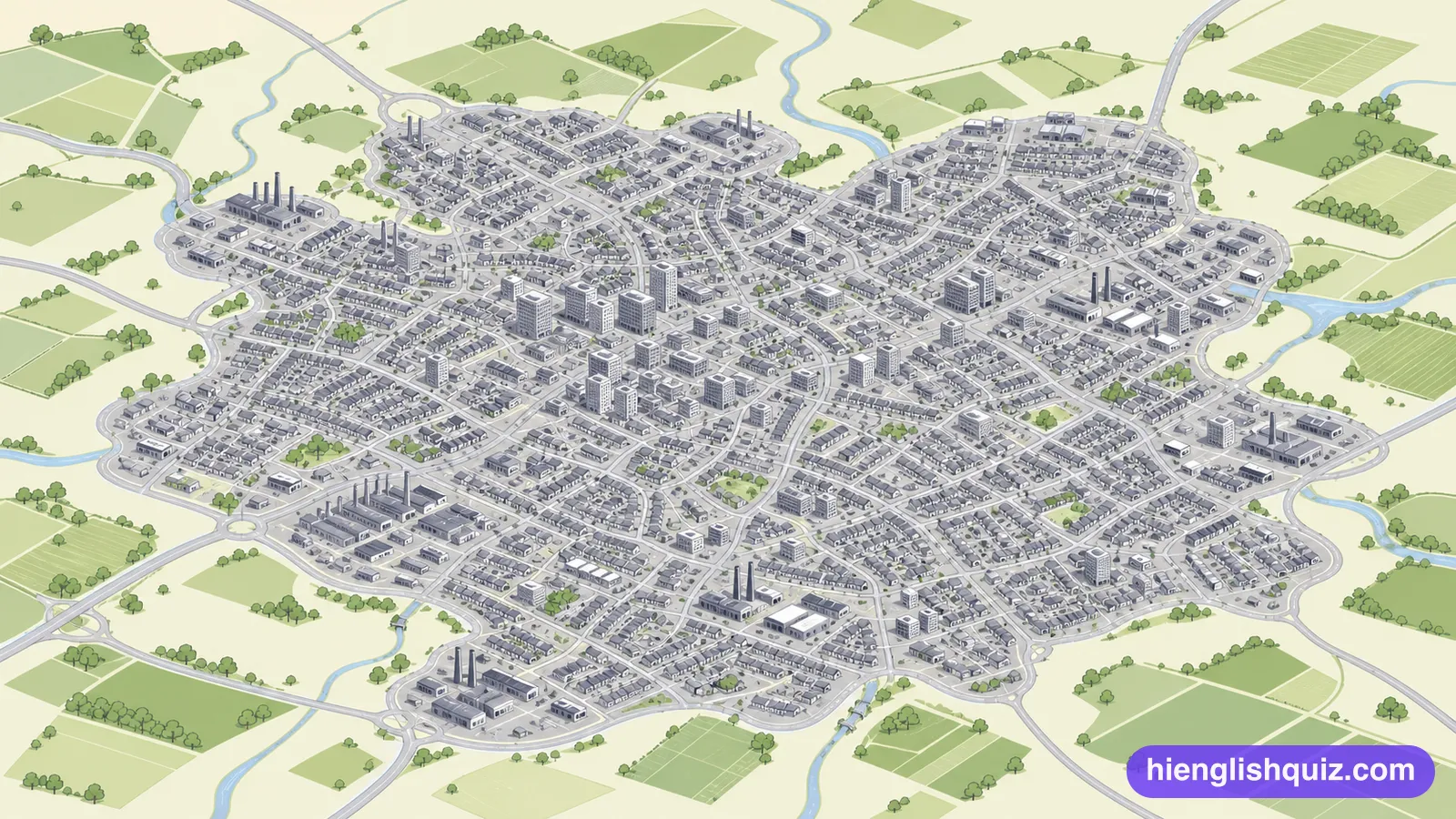
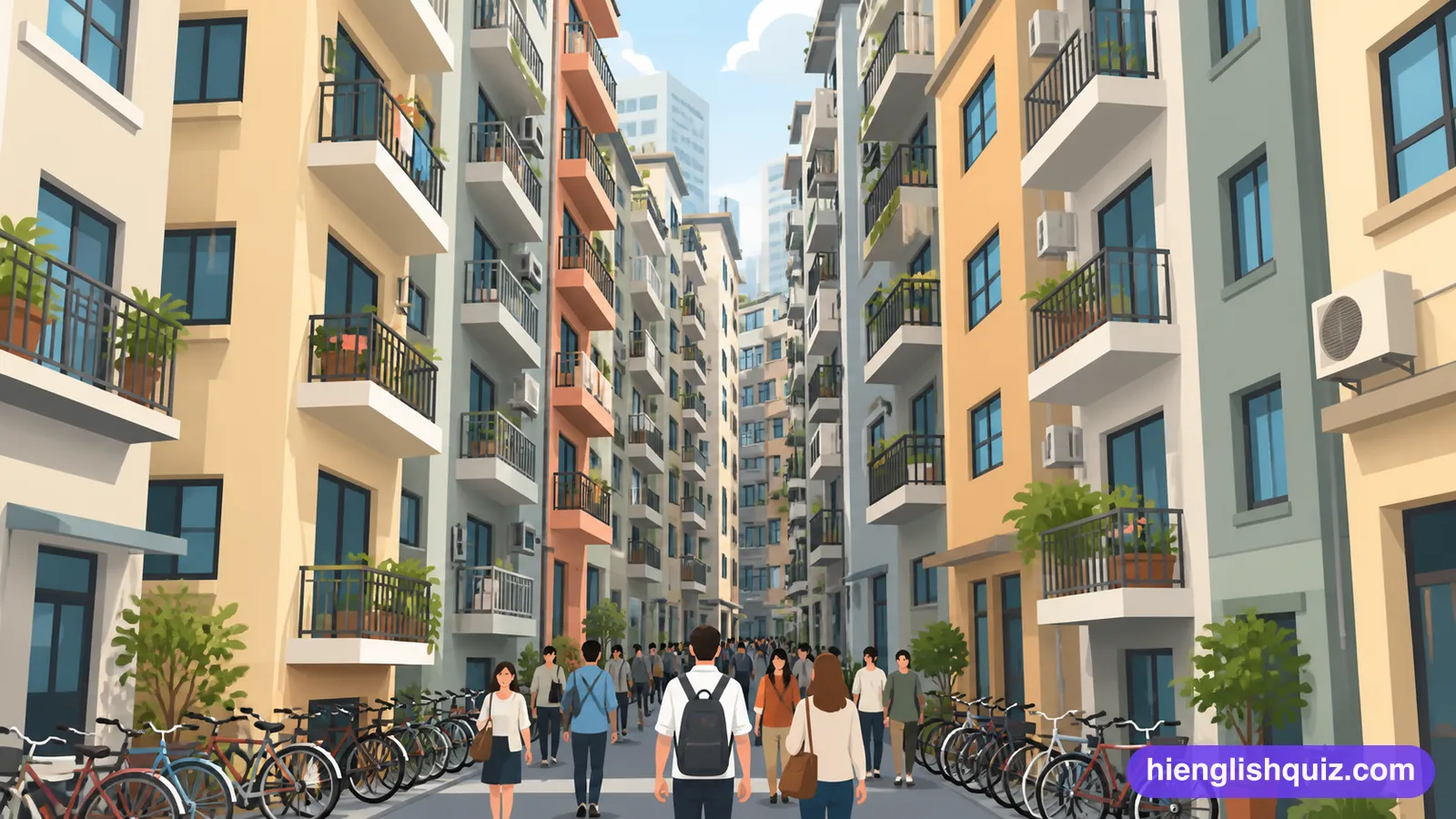
How closely packed people or things are within a space.
Example: The city centre has a very high population density.
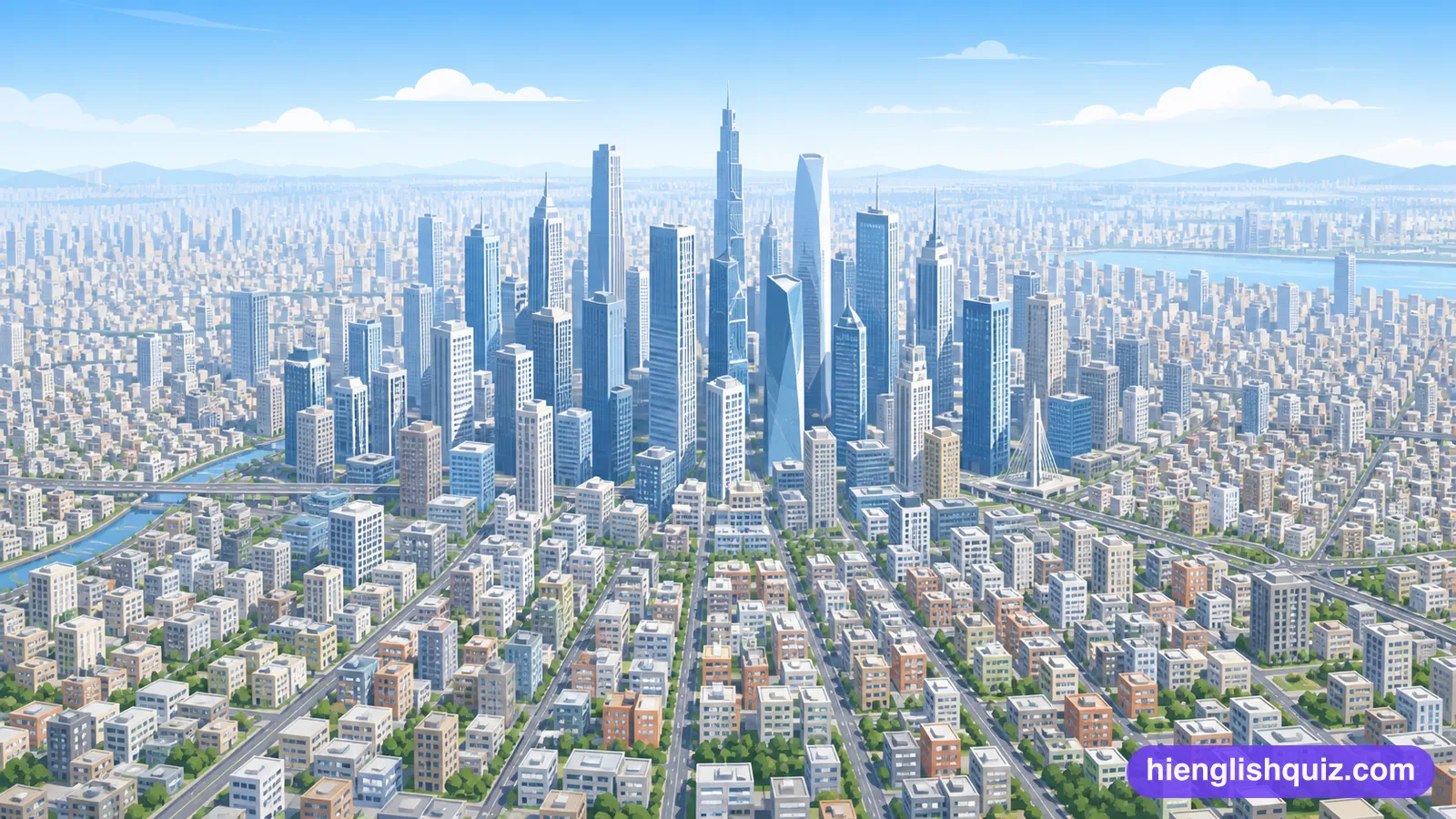
An extremely large urban centre, usually with a population of over ten million.
Example: Tokyo is often described as the world's biggest megacity.
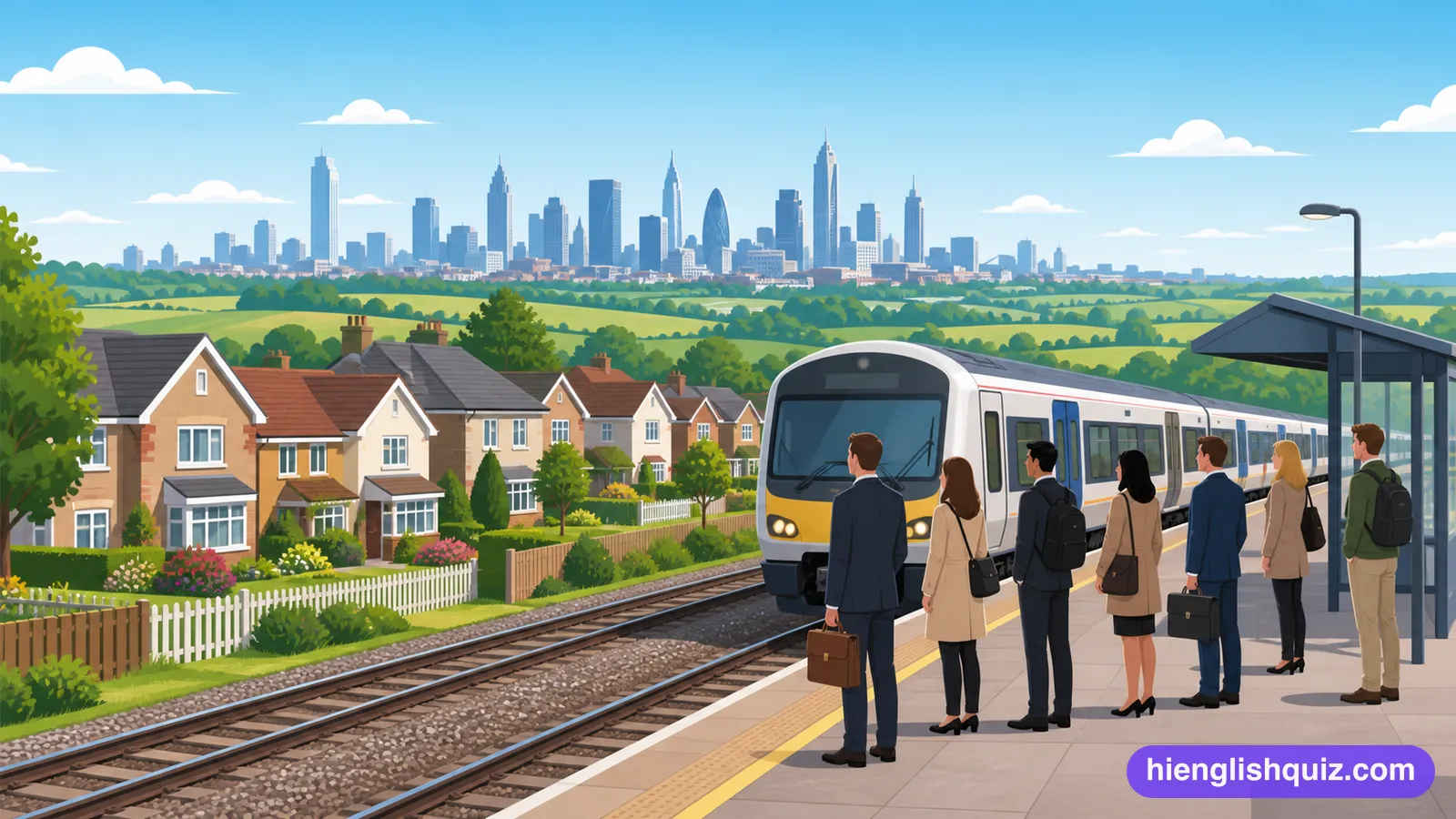
The area around a big city where people live and travel in to work.
Example: They bought a house in the commuter belt outside London.
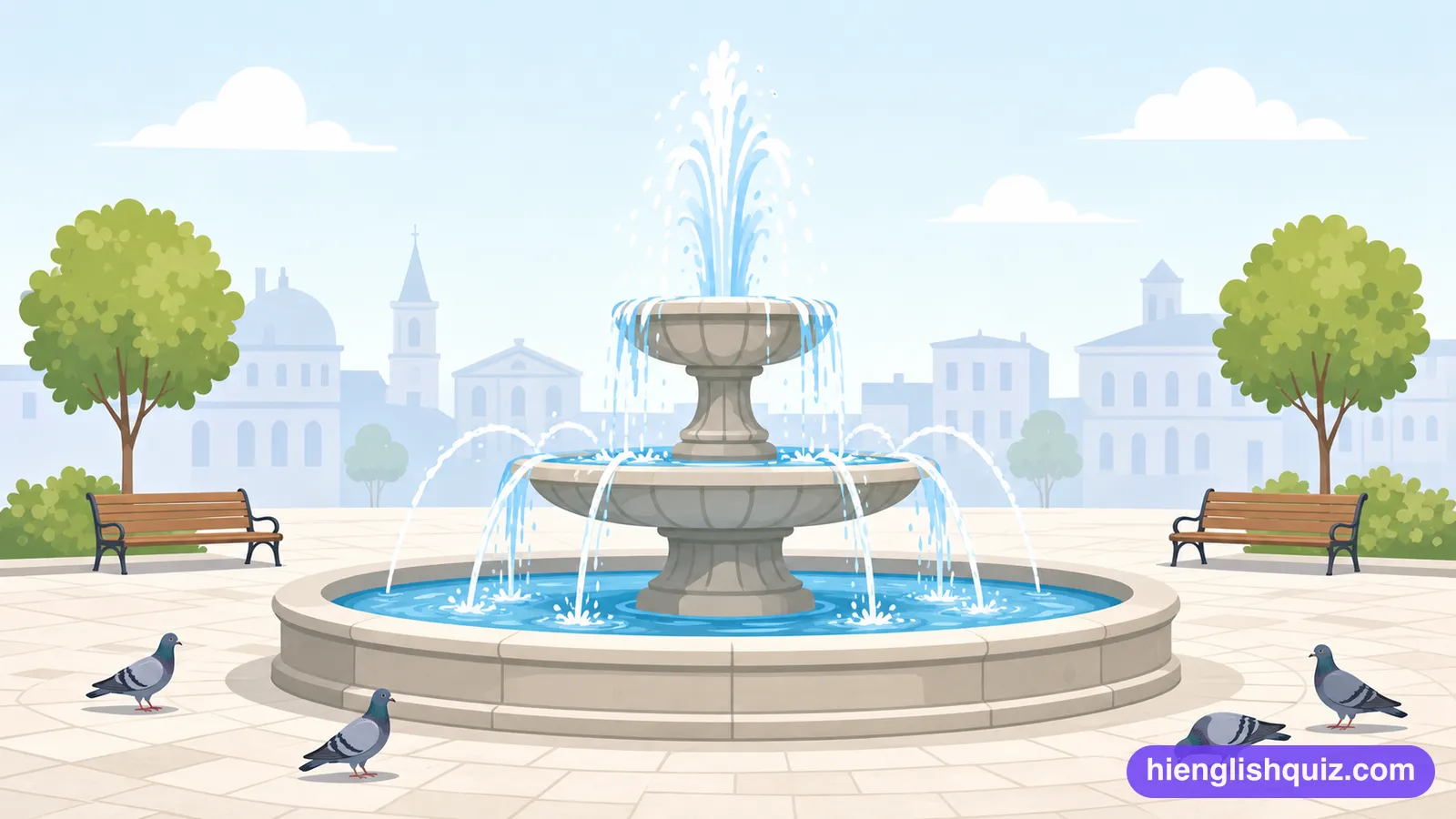
A stone structure in a square or park that pushes water up into the air.
Example: Children were throwing coins into the fountain.
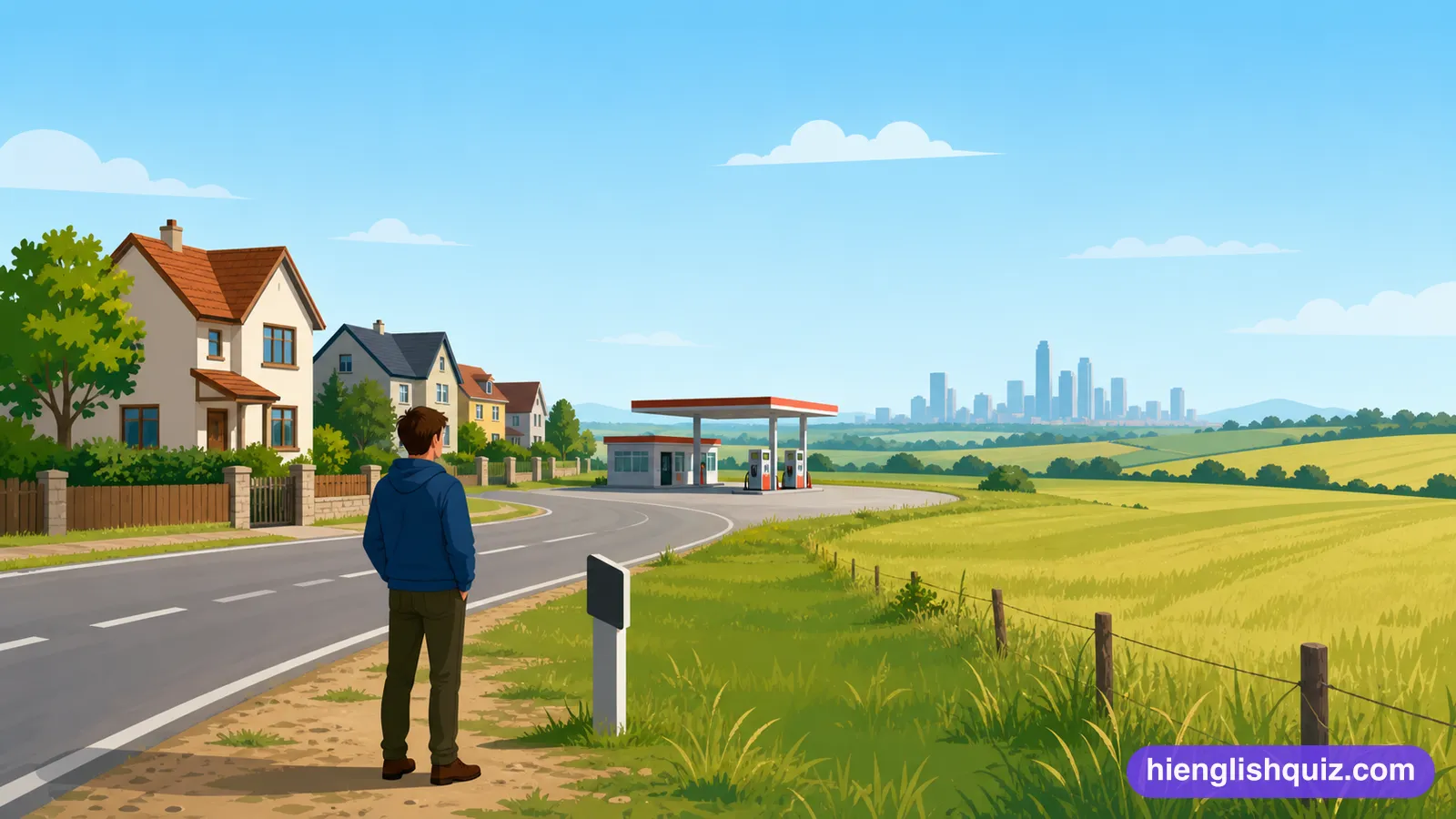
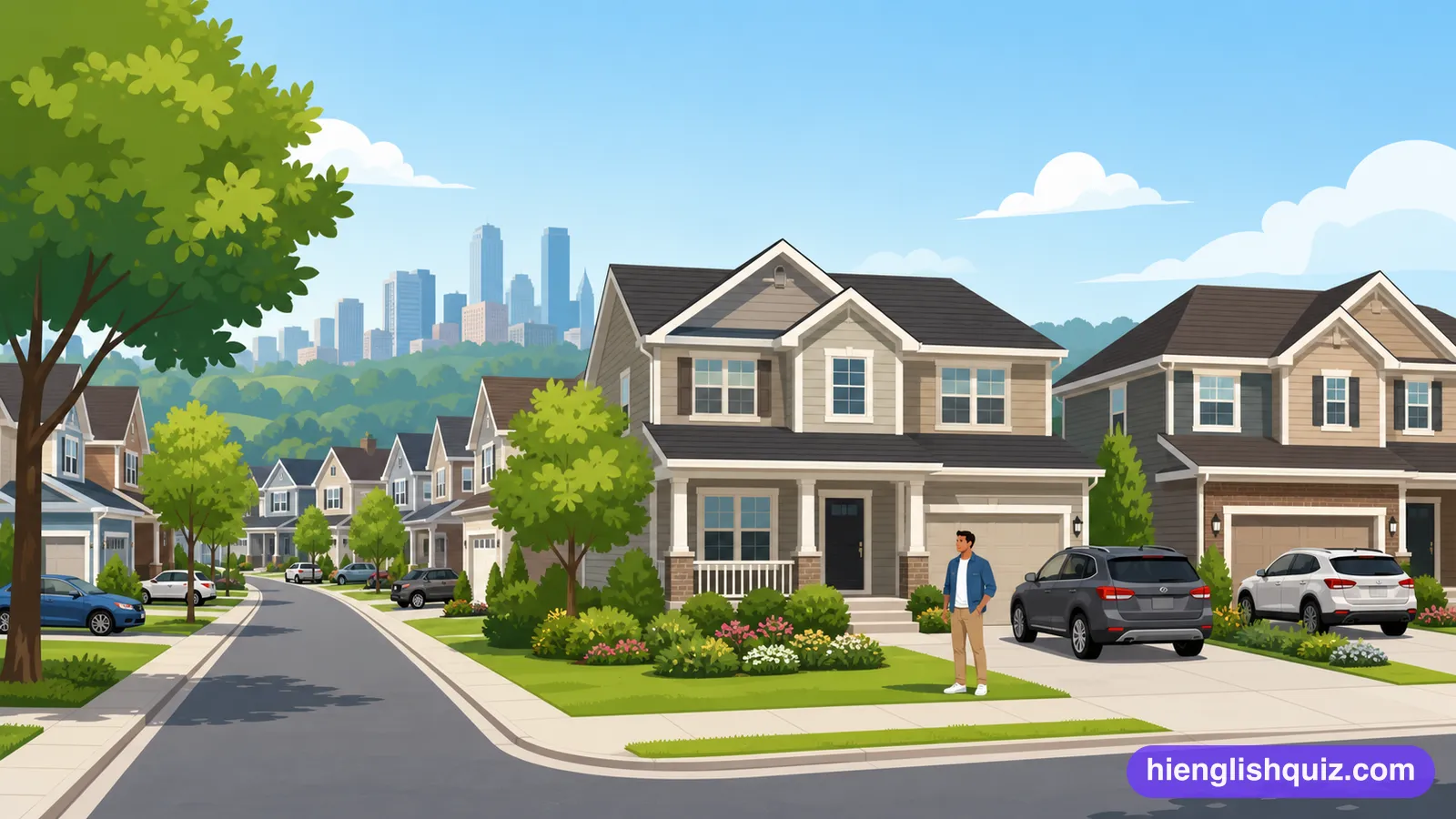
A residential district on the outer edge of a city.
Example: They moved to a quiet suburb when the baby arrived.
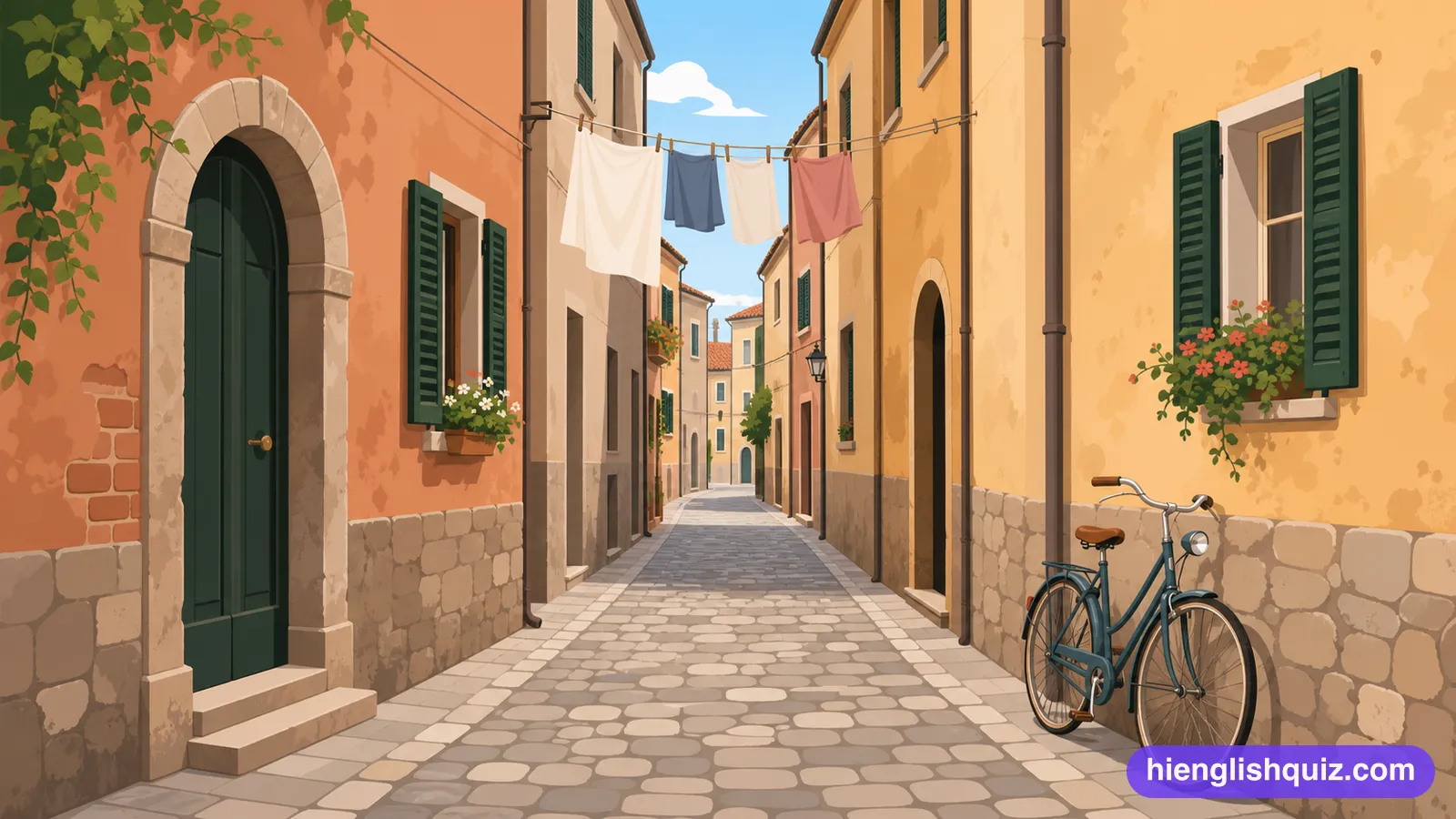
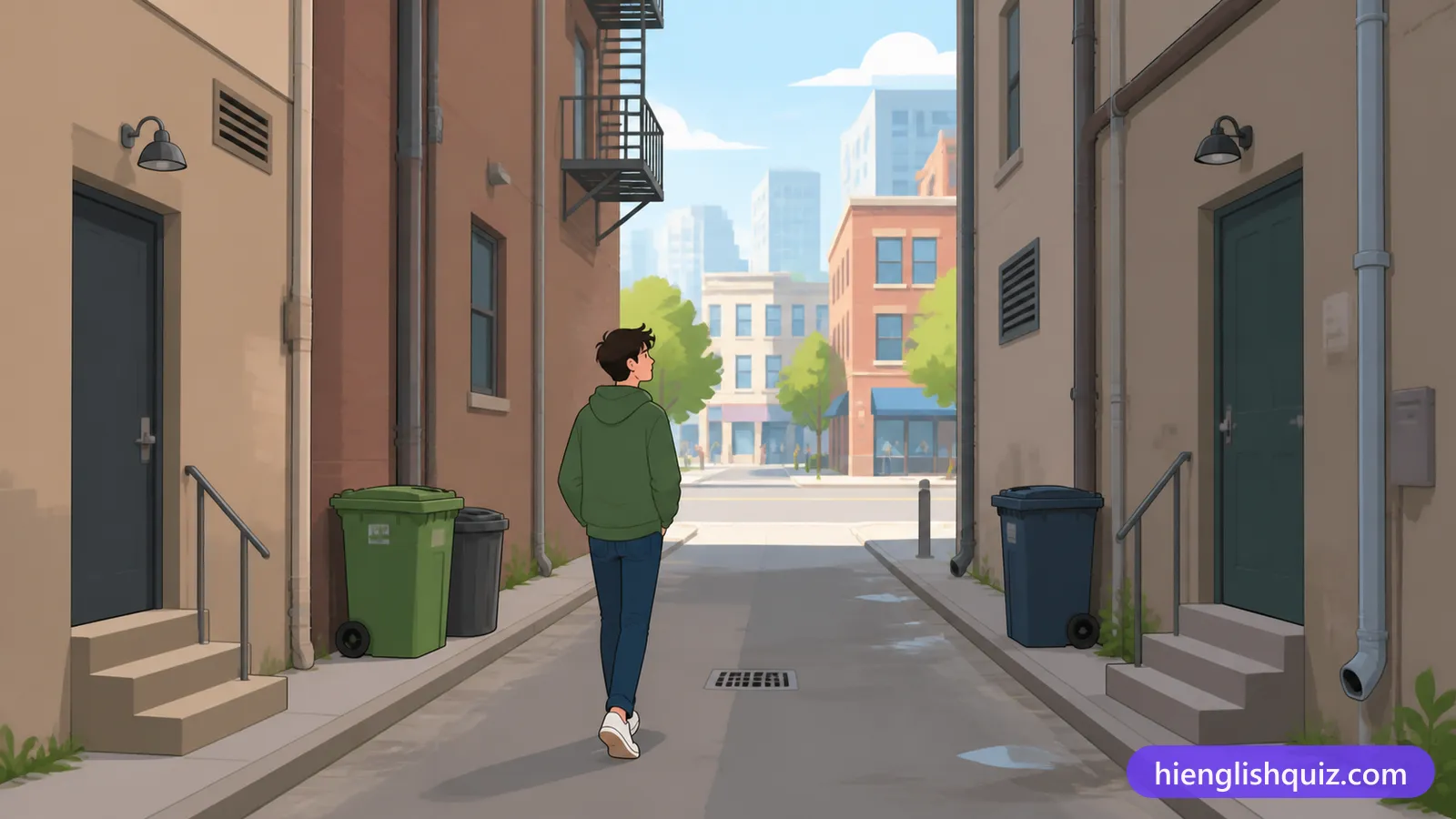
A very narrow street between buildings, often with no room for cars.
Example: A tiny café hides down that dark alley.
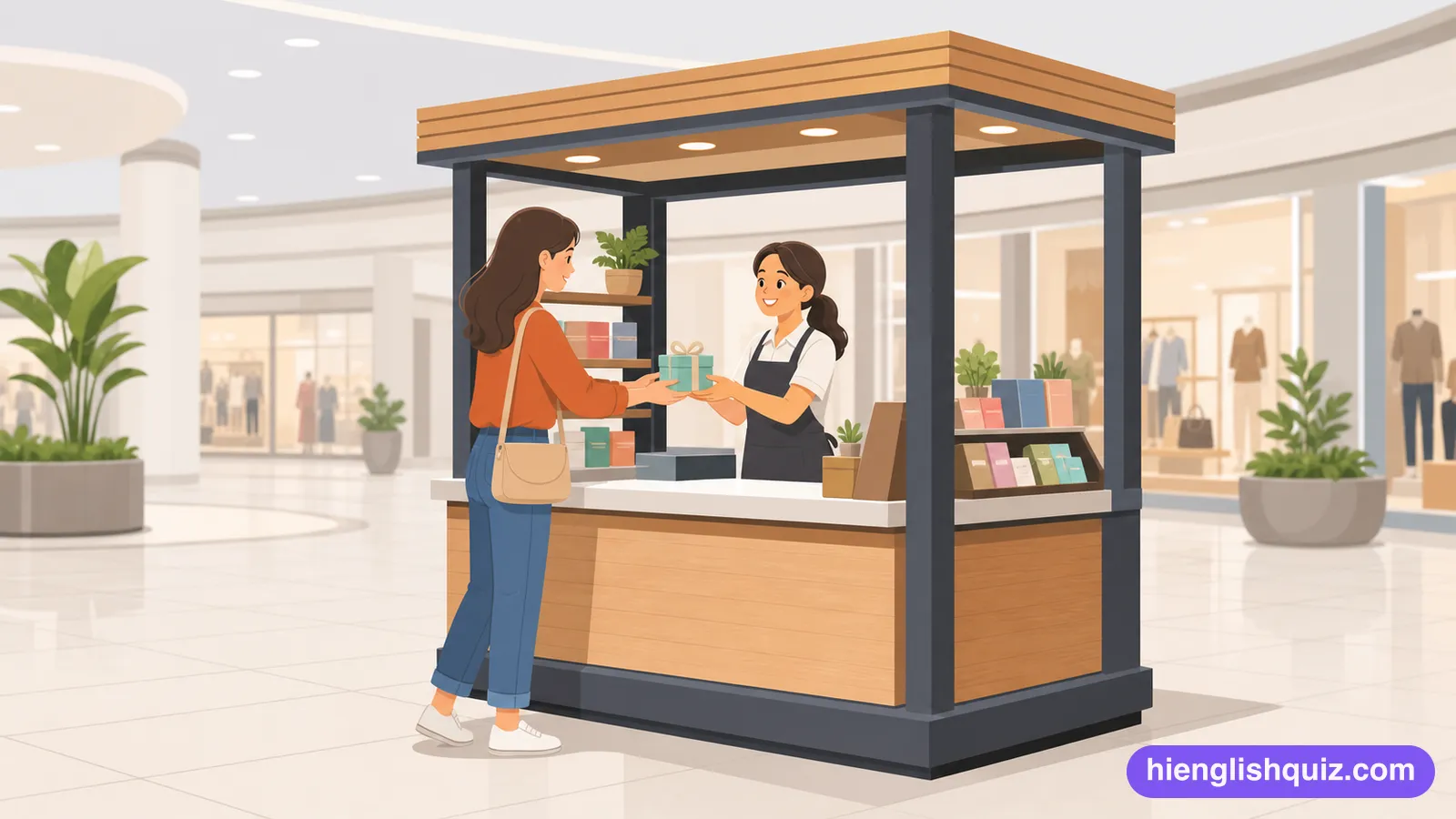
A very small shop or stand in a street selling drinks, papers or tickets.
Example: He grabbed a coffee from the kiosk outside the station.
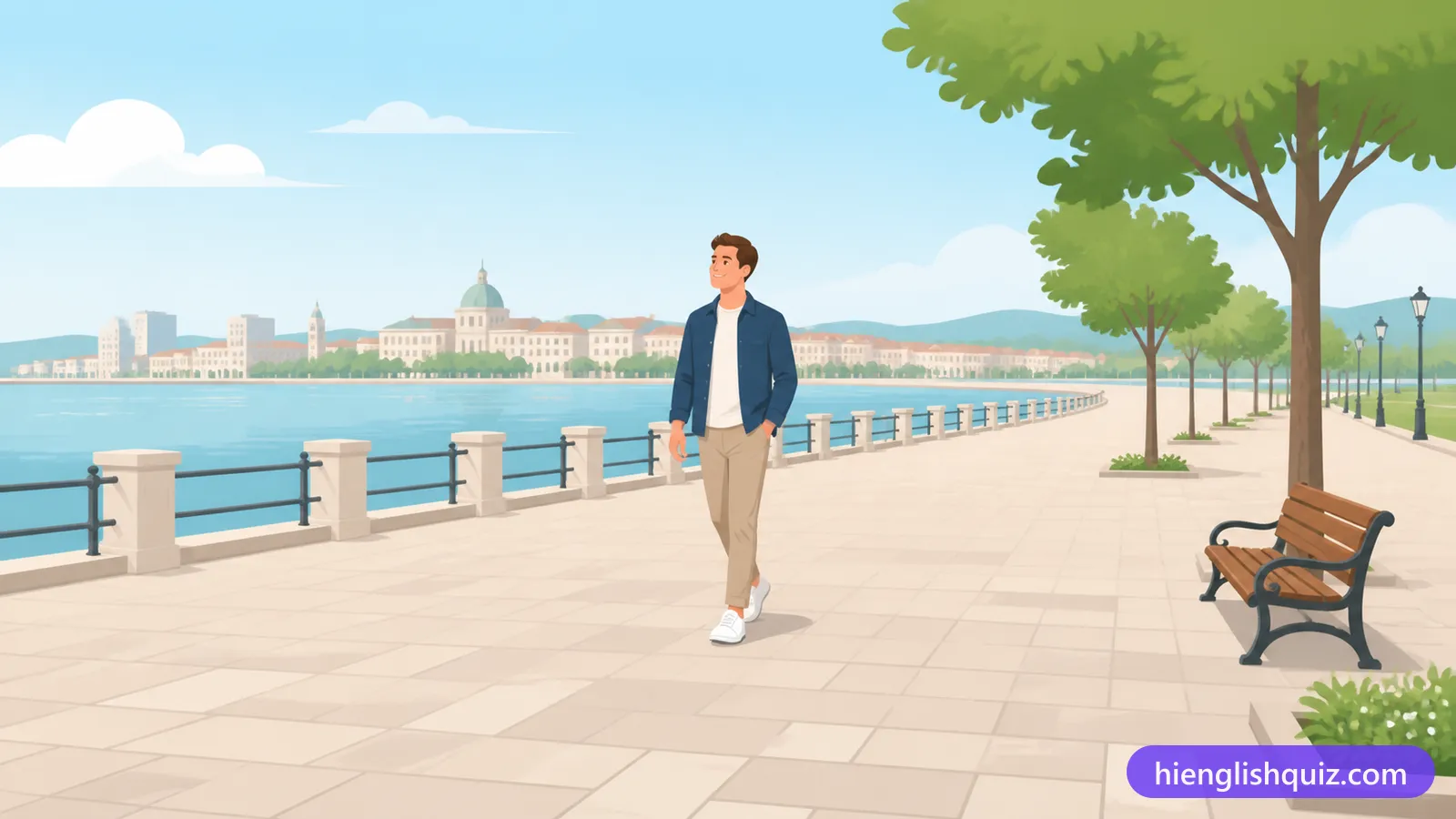
A long, open path or road, often along the seafront, for walking.
Example: We strolled along the esplanade at sunset.
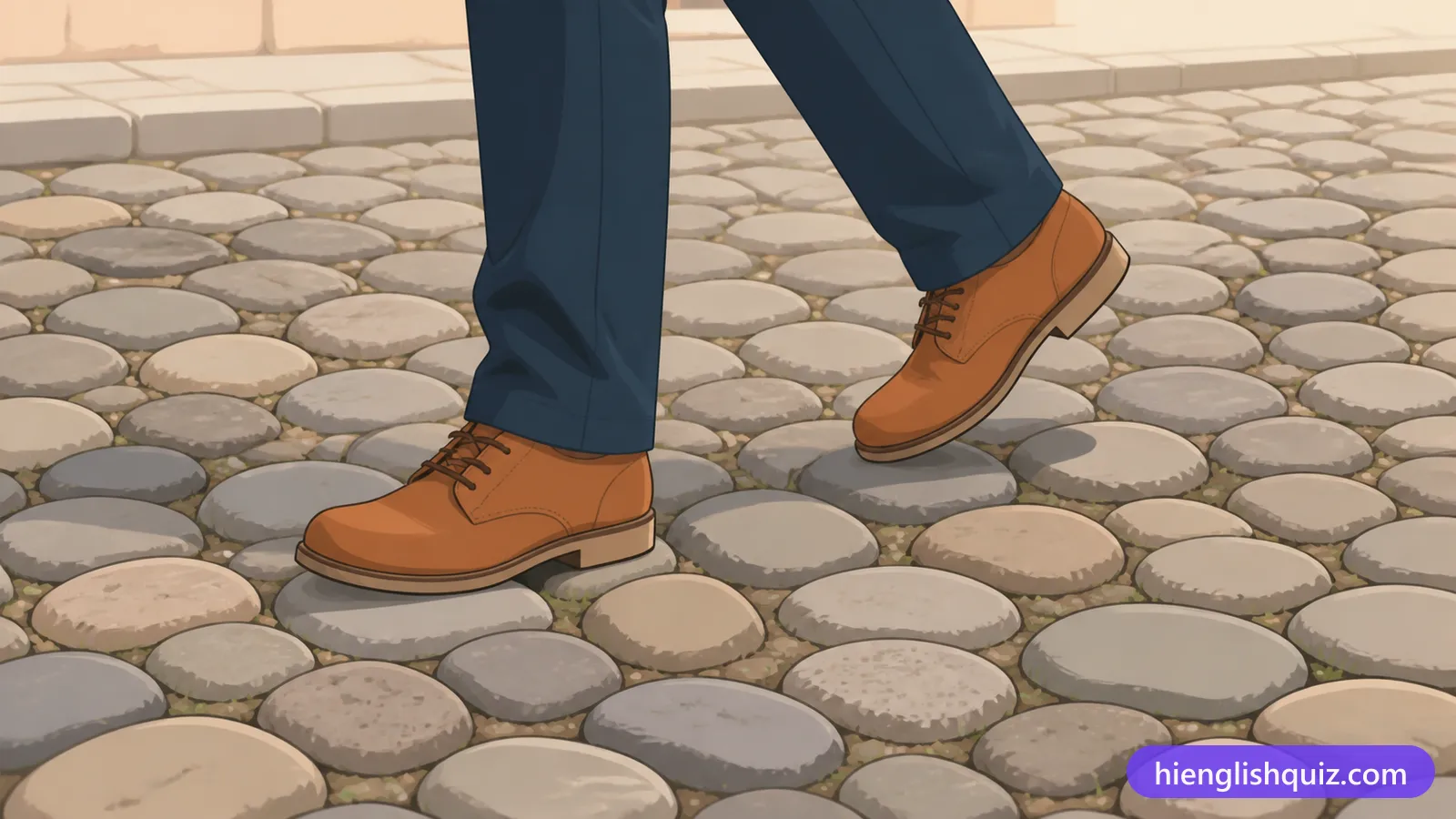
Made of small round stones set into the ground, typical of old streets.
Example: We walked carefully over the cobbled streets in high heels.
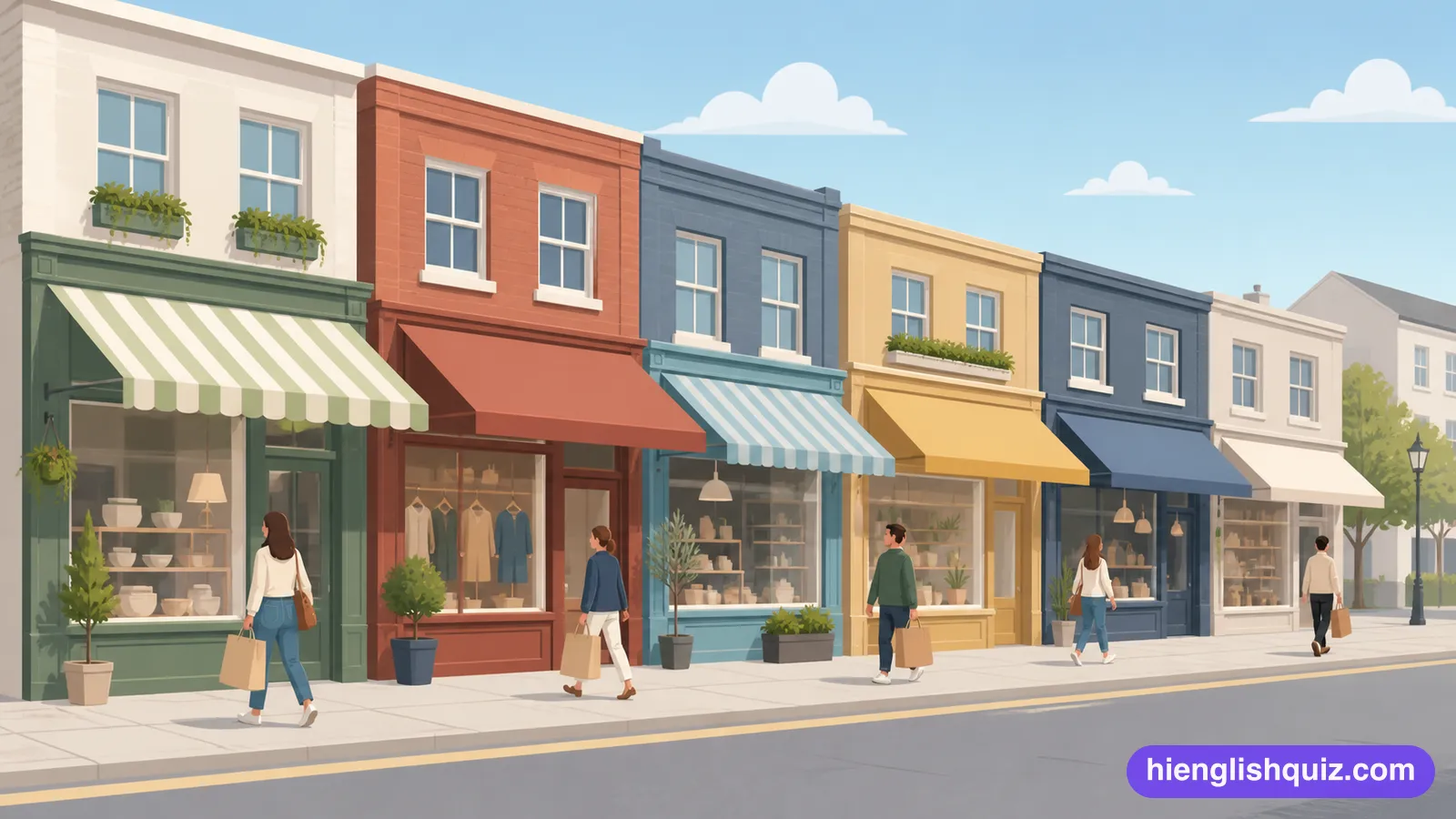
A row of shops along a street.
Example: There's a small parade of shops near the station.
A small, quiet road away from the main roads of a town.
Example: We found a great little cafe down a backstreet.
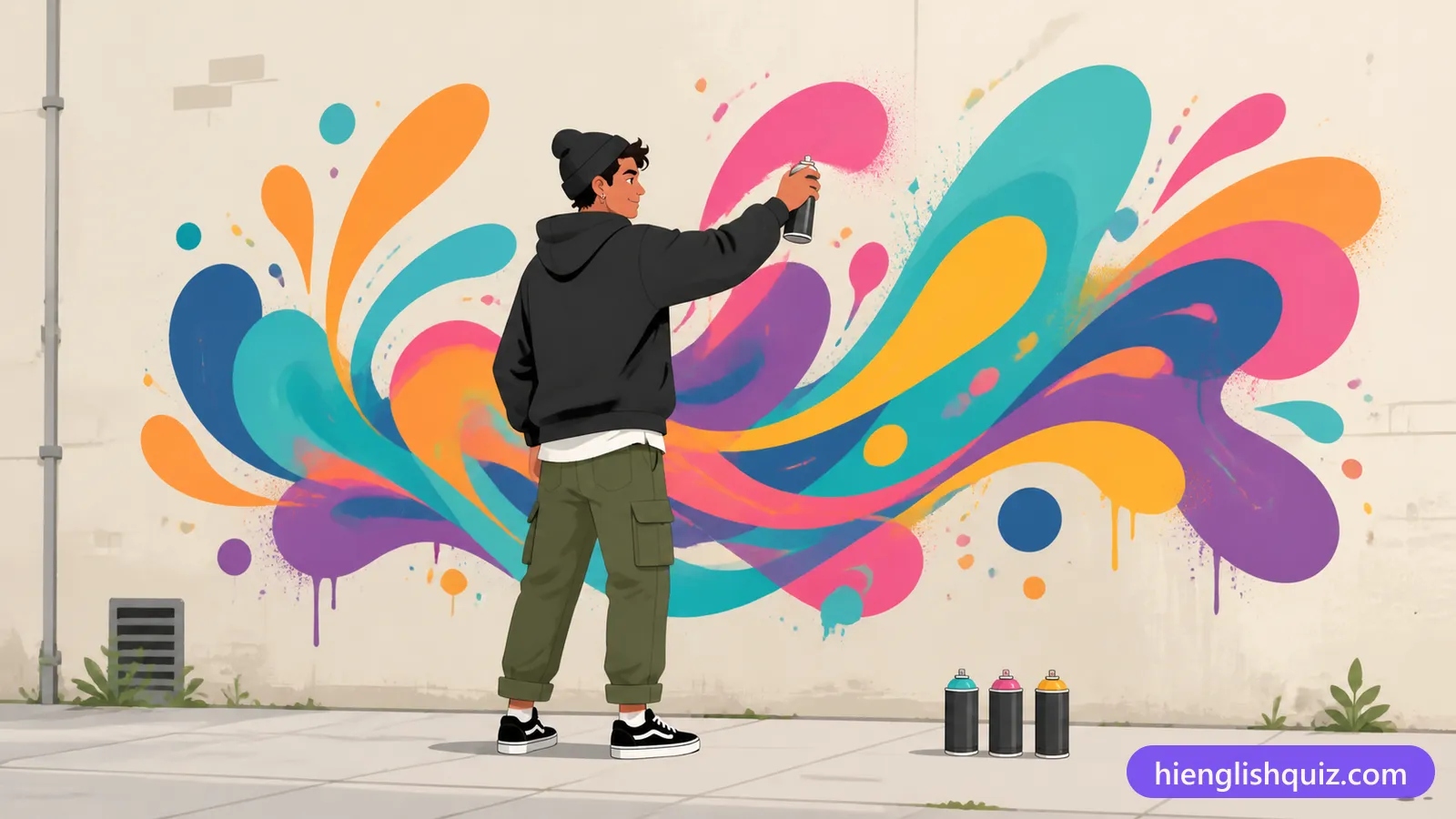
Words or pictures drawn illegally on walls in public places.
Example: Colourful graffiti covered the old factory wall.
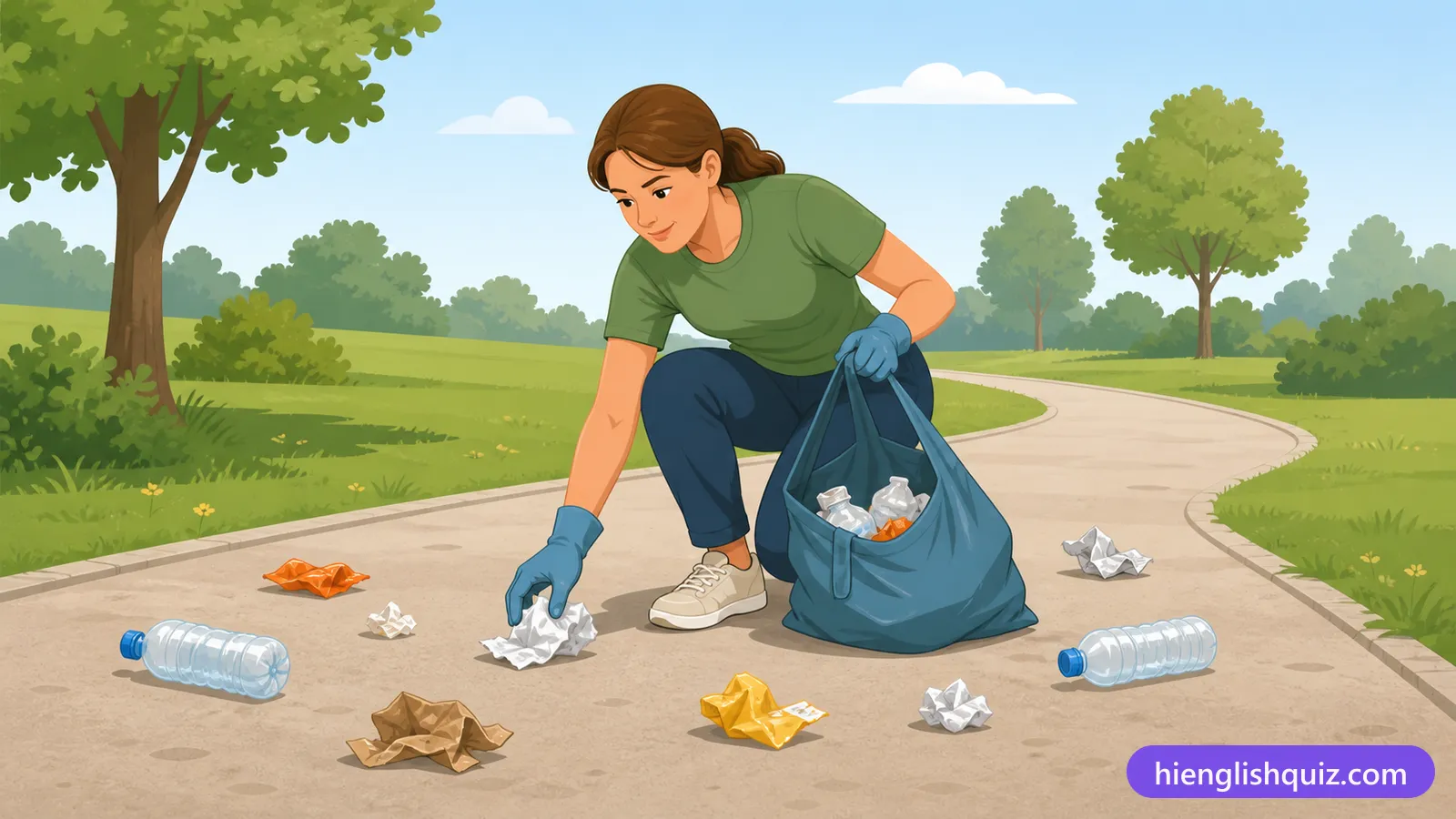
Rubbish, such as paper or bottles, left in a public place.
Example: Volunteers picked up litter from the riverbank.