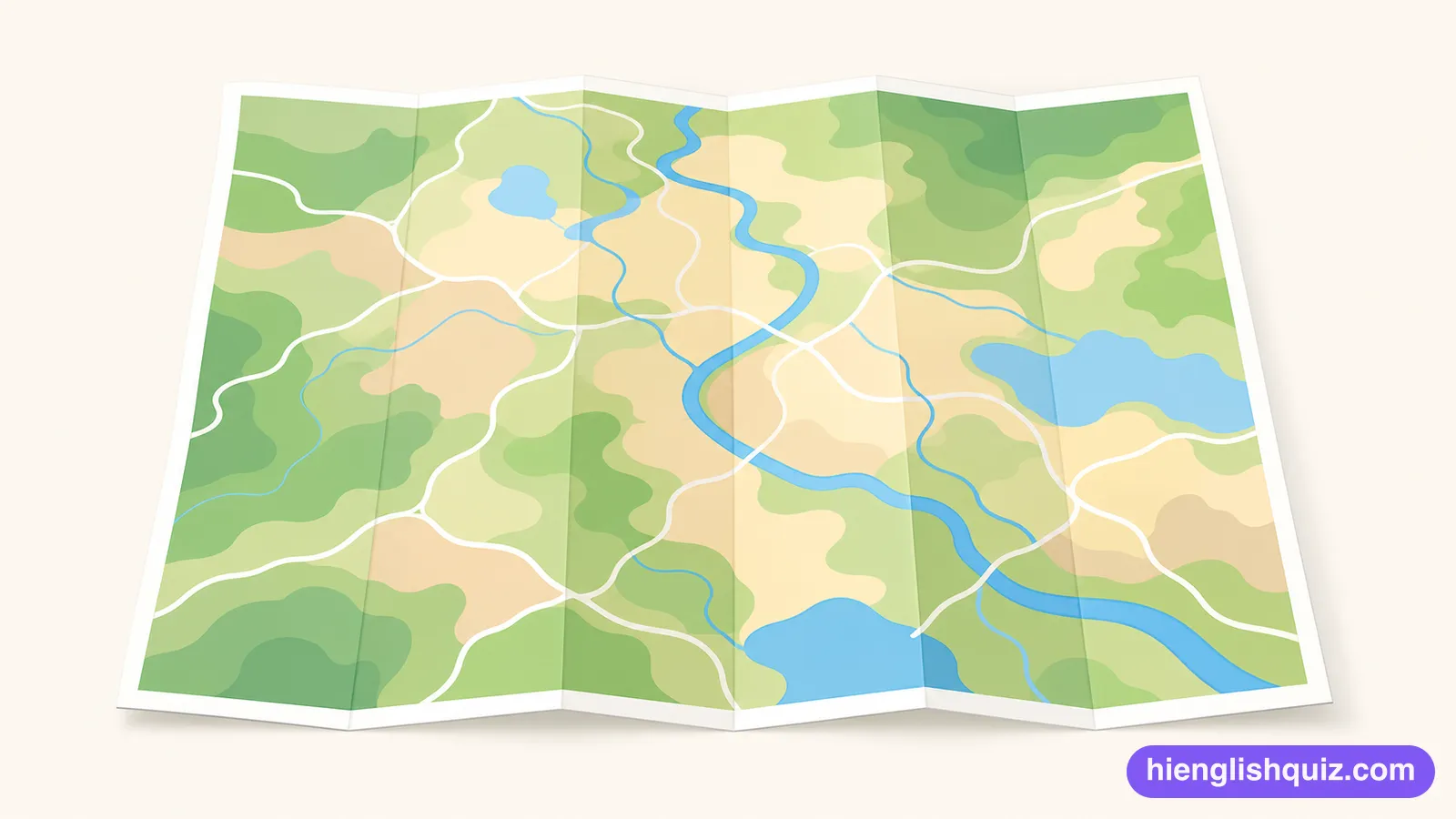
atlas
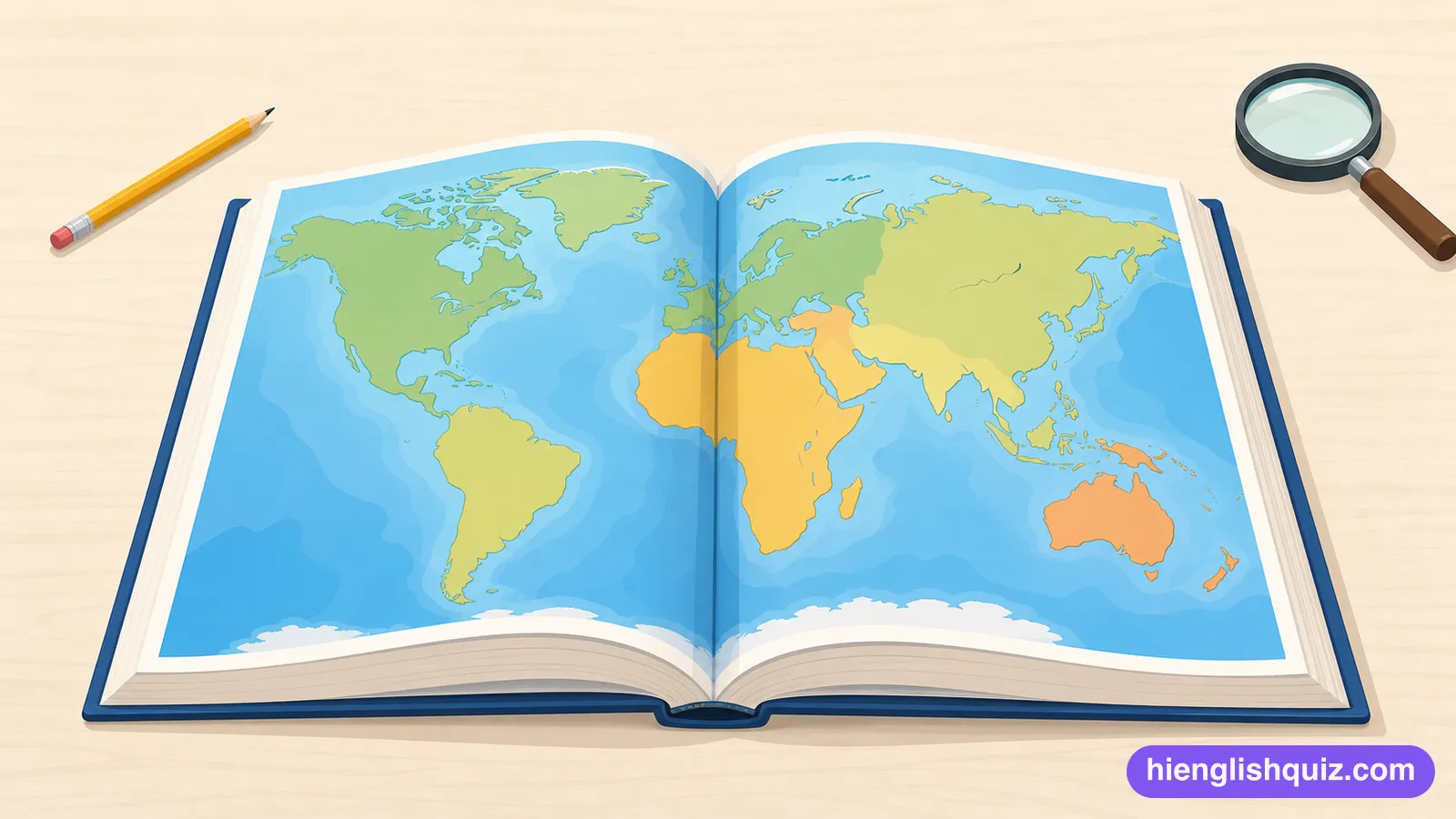
/ˈætləs/A book of maps of countries, cities and oceans, bound together.
Example: She pulled a dusty atlas off the shelf to find Peru.
 Hi EnglishQuiz
B220 words · Upper-intermediate
Map-reading vocabulary for reading a map properly, including scale, coordinates and a reference point, plus a signpost, a shortcut and a cul-de-sac.
A book of maps of countries, cities and oceans, bound together.
Example: She pulled a dusty atlas off the shelf to find Peru.
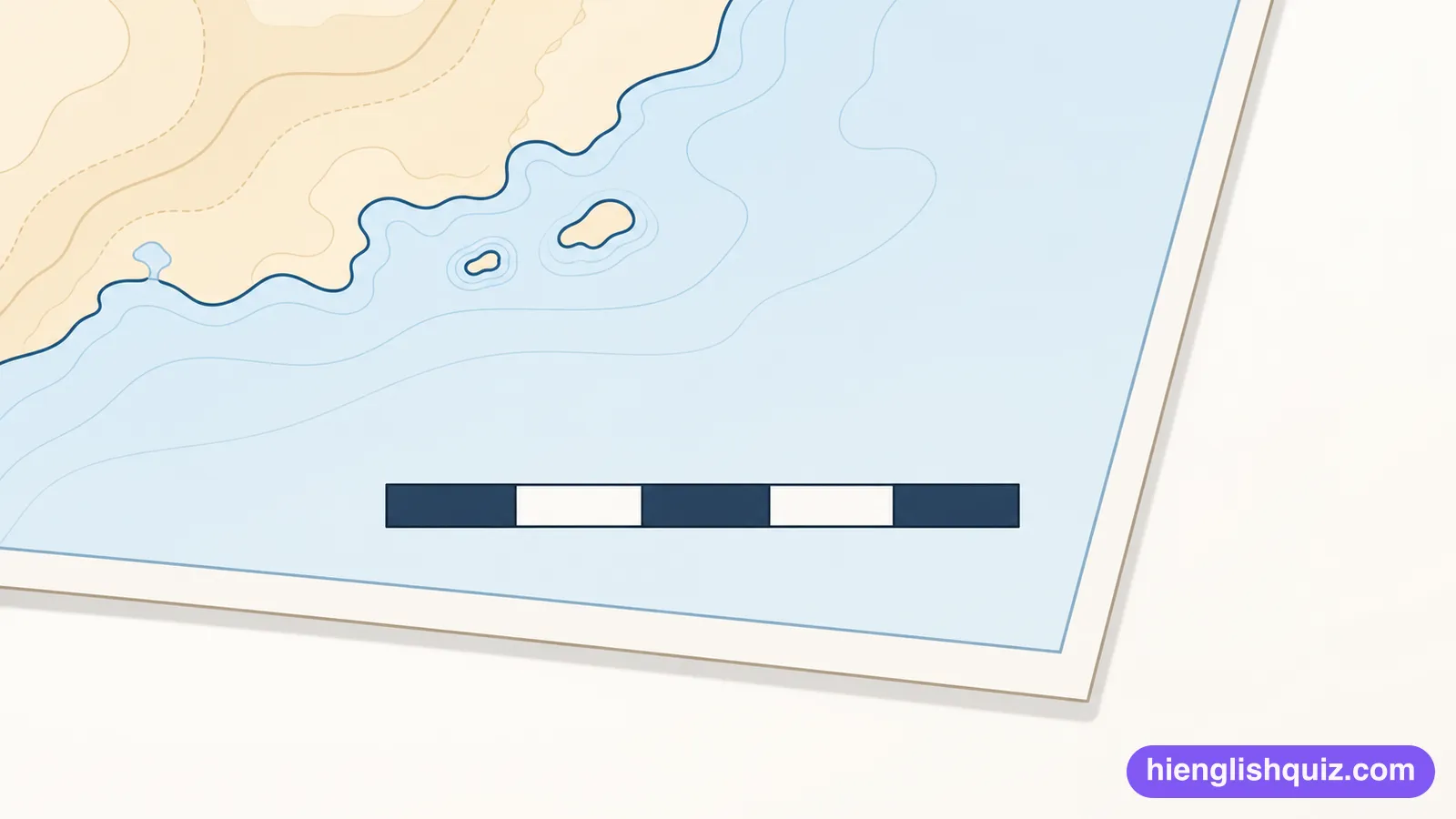
The relation between a length on a map and the real length on the ground.
Example: Check the scale before you guess how far it is.
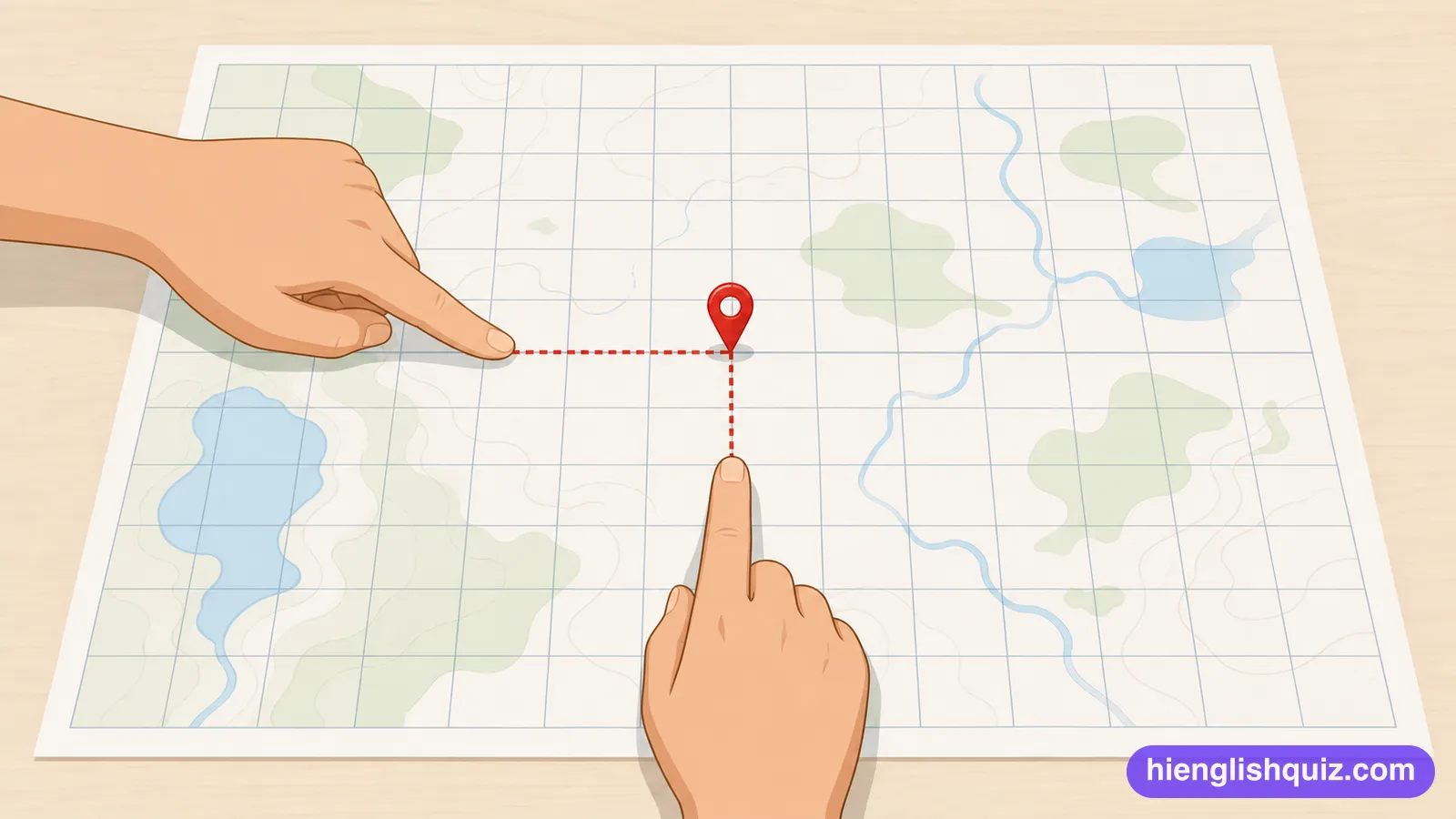
A pair of numbers that show the exact position of a place on a map.
Example: She typed the coordinates into her phone's map app.
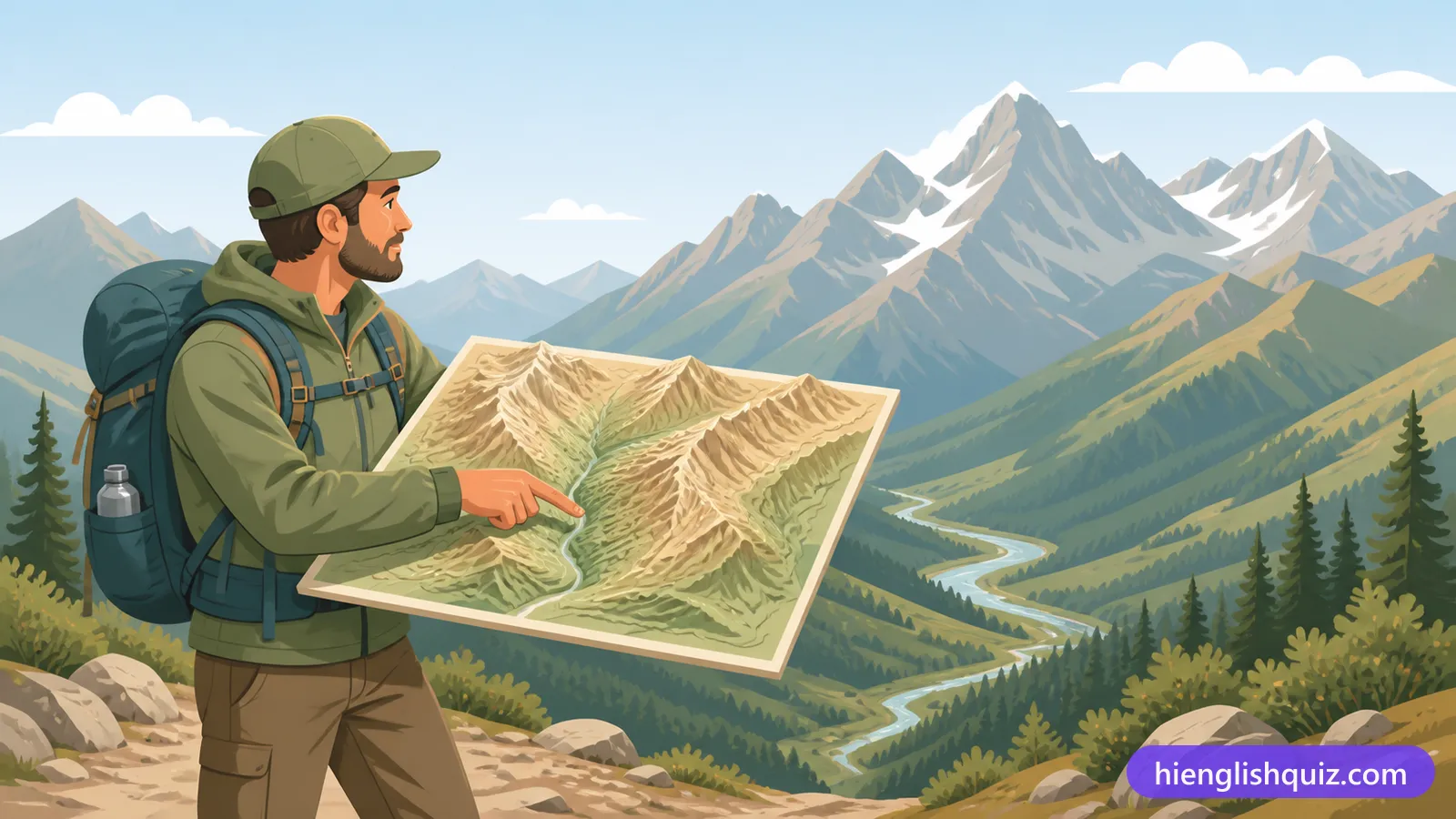
Relating to the physical features of an area, like hills and rivers.
Example: Hikers should carry a detailed topographical map.
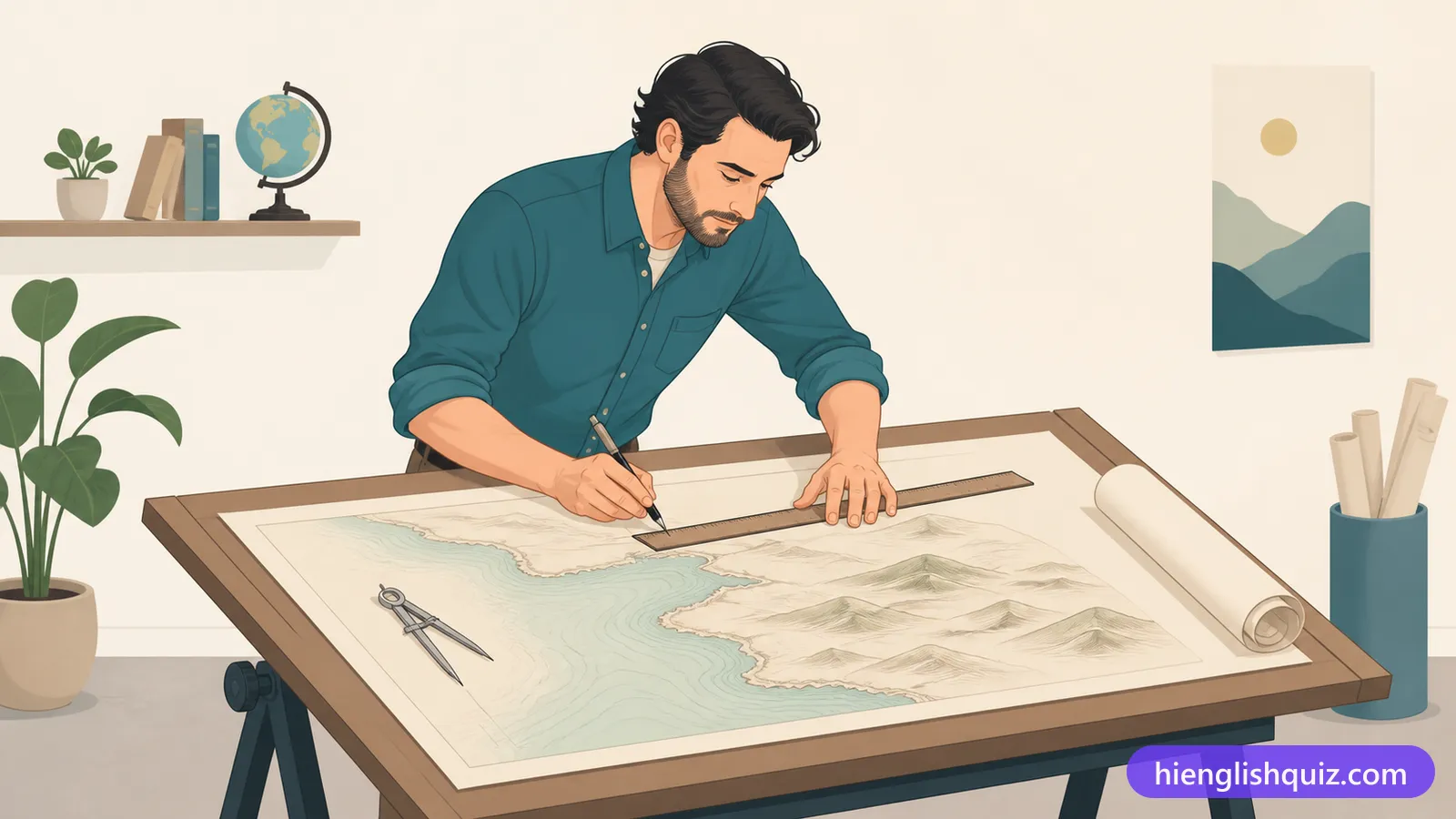
A person who makes maps.
Example: The old map was drawn by a skilled cartographer.
A method of showing the curved surface of the Earth on a flat map.
Example: This world map uses a different projection to the usual one.
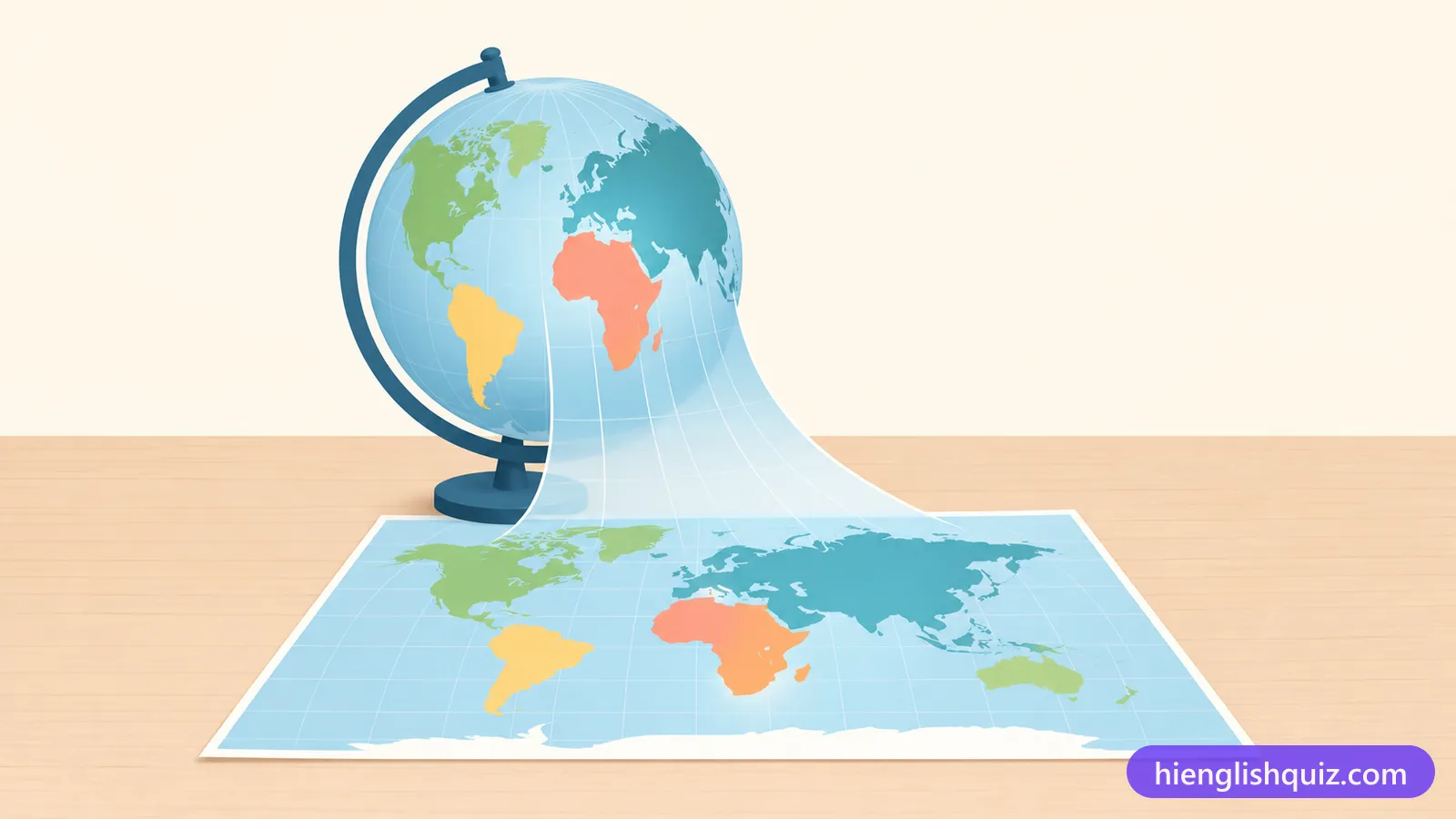
A fixed spot used to measure or compare positions.
Example: Use the church tower as a reference point.
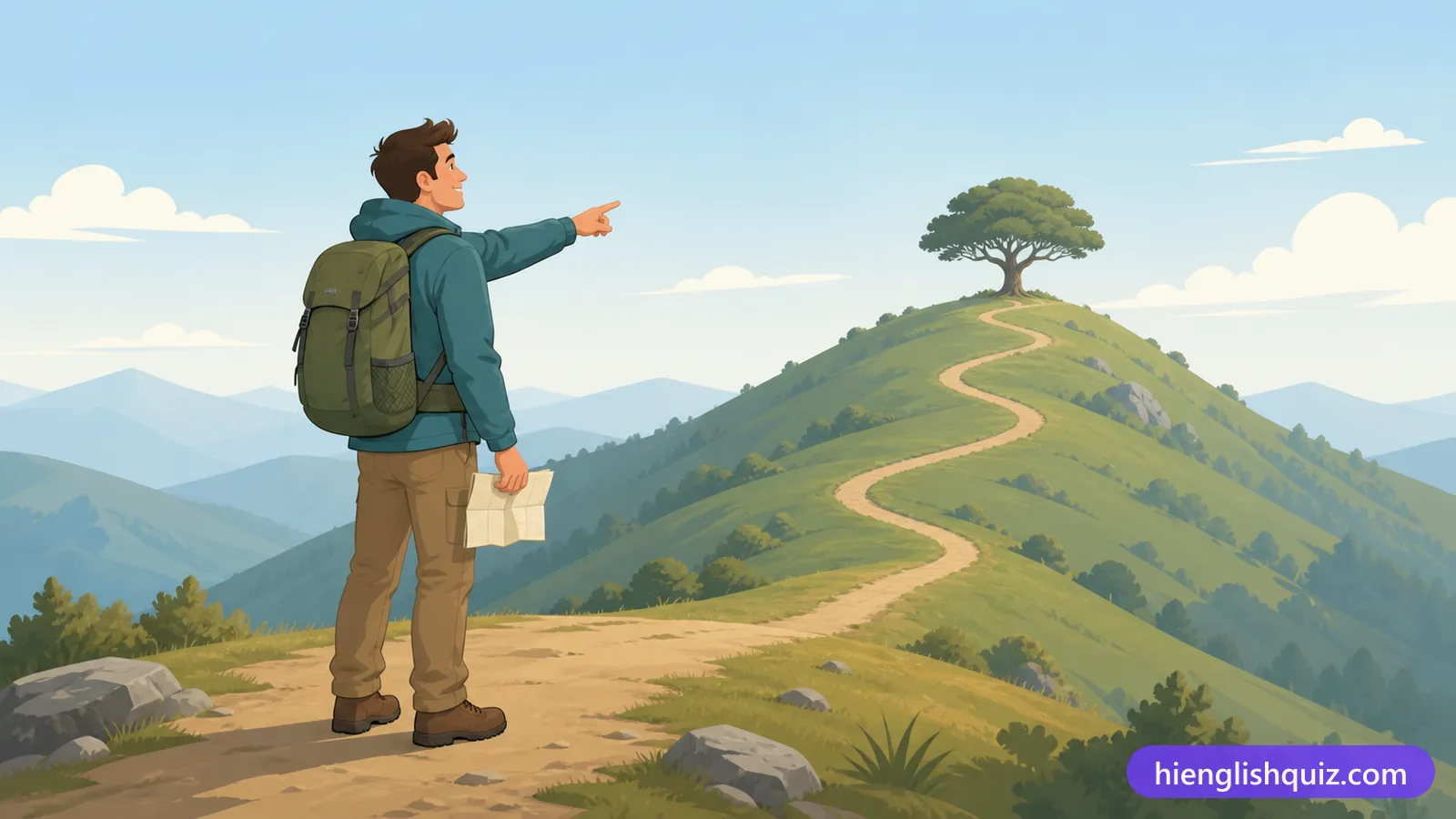
The differences in height of the land in an area.
Example: The map's shading shows the relief of the mountains.
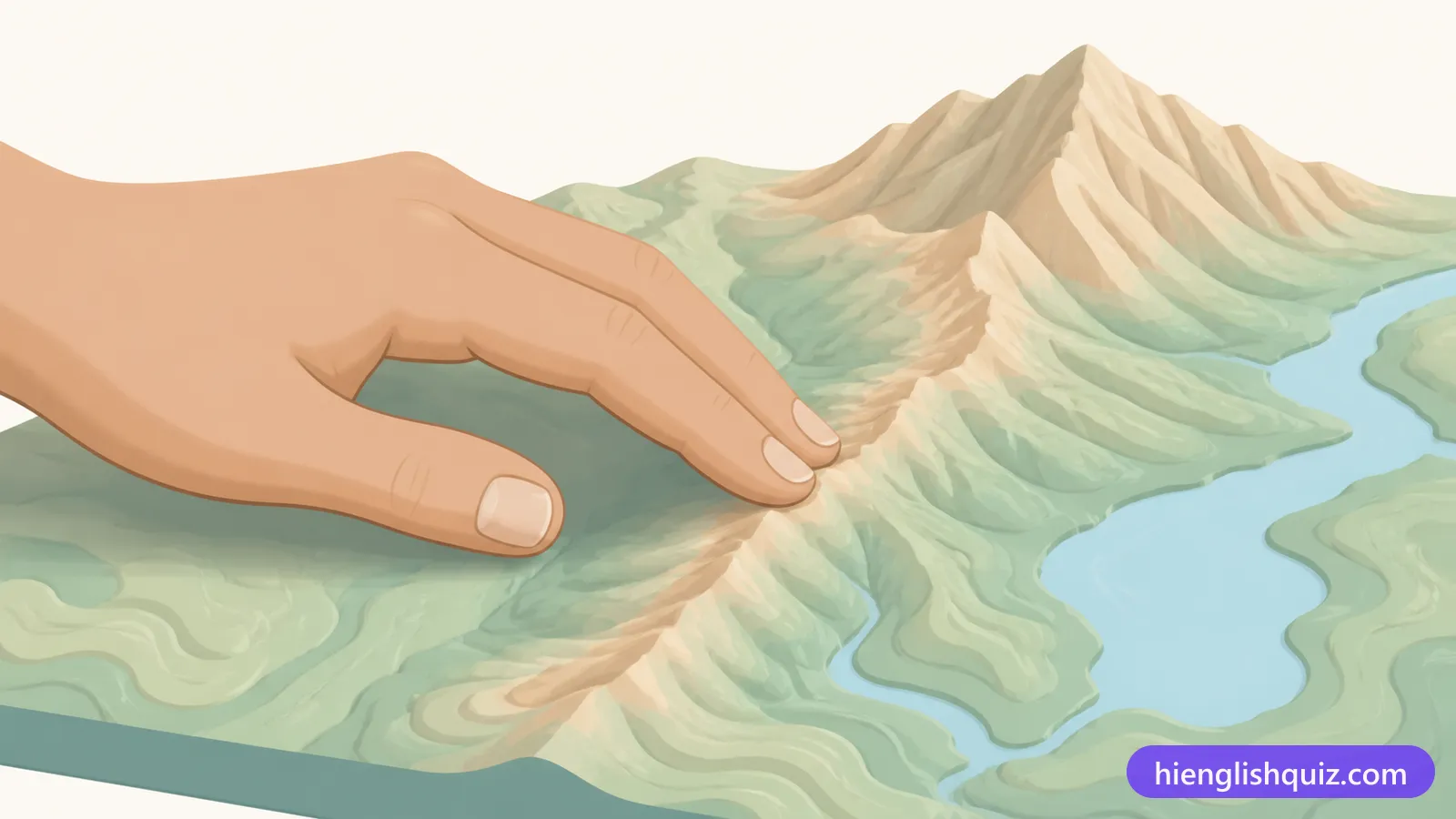
Pictures of the Earth's surface taken from cameras in space.
Example: Farmers now use satellite imagery to check their fields.
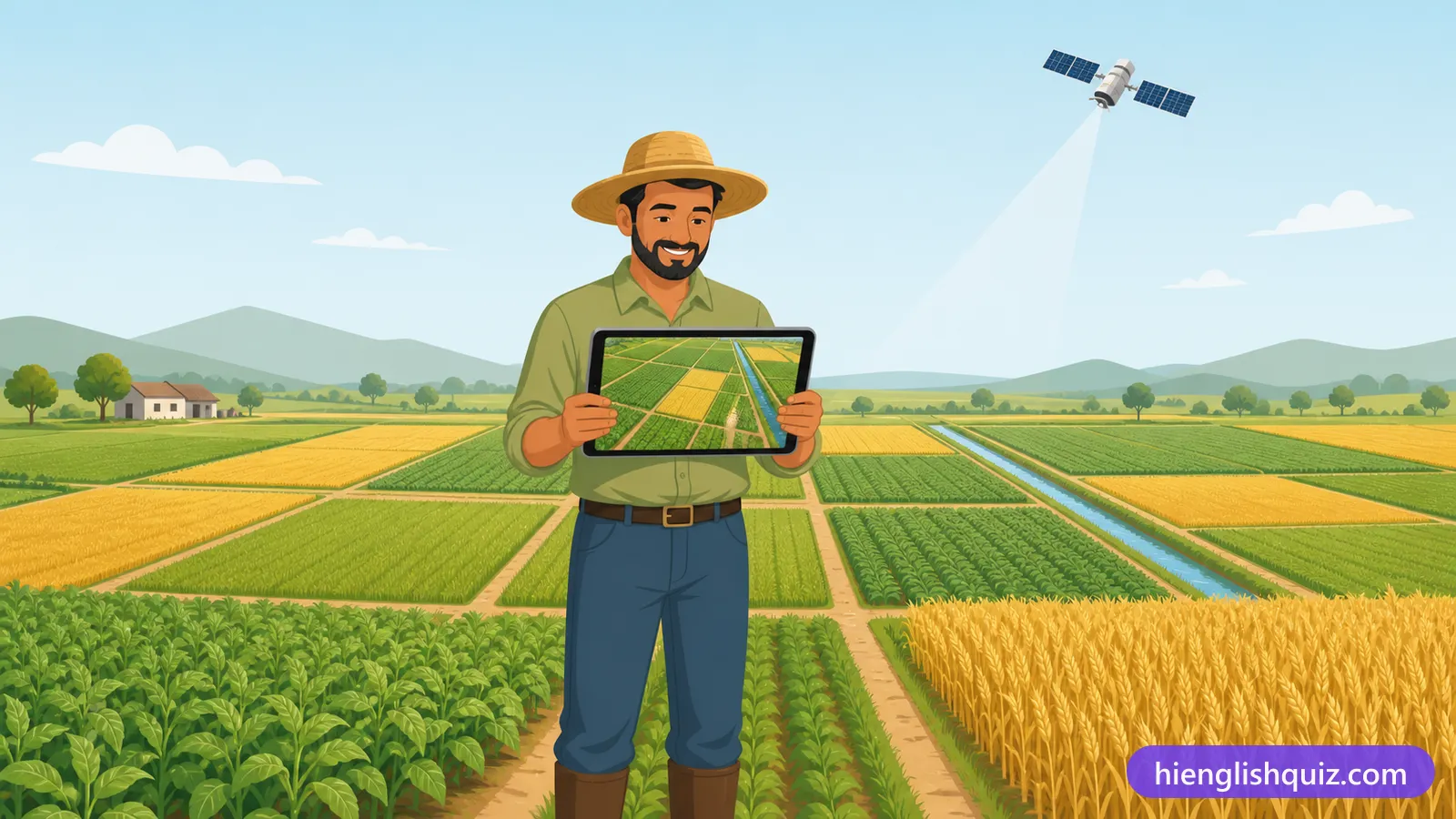
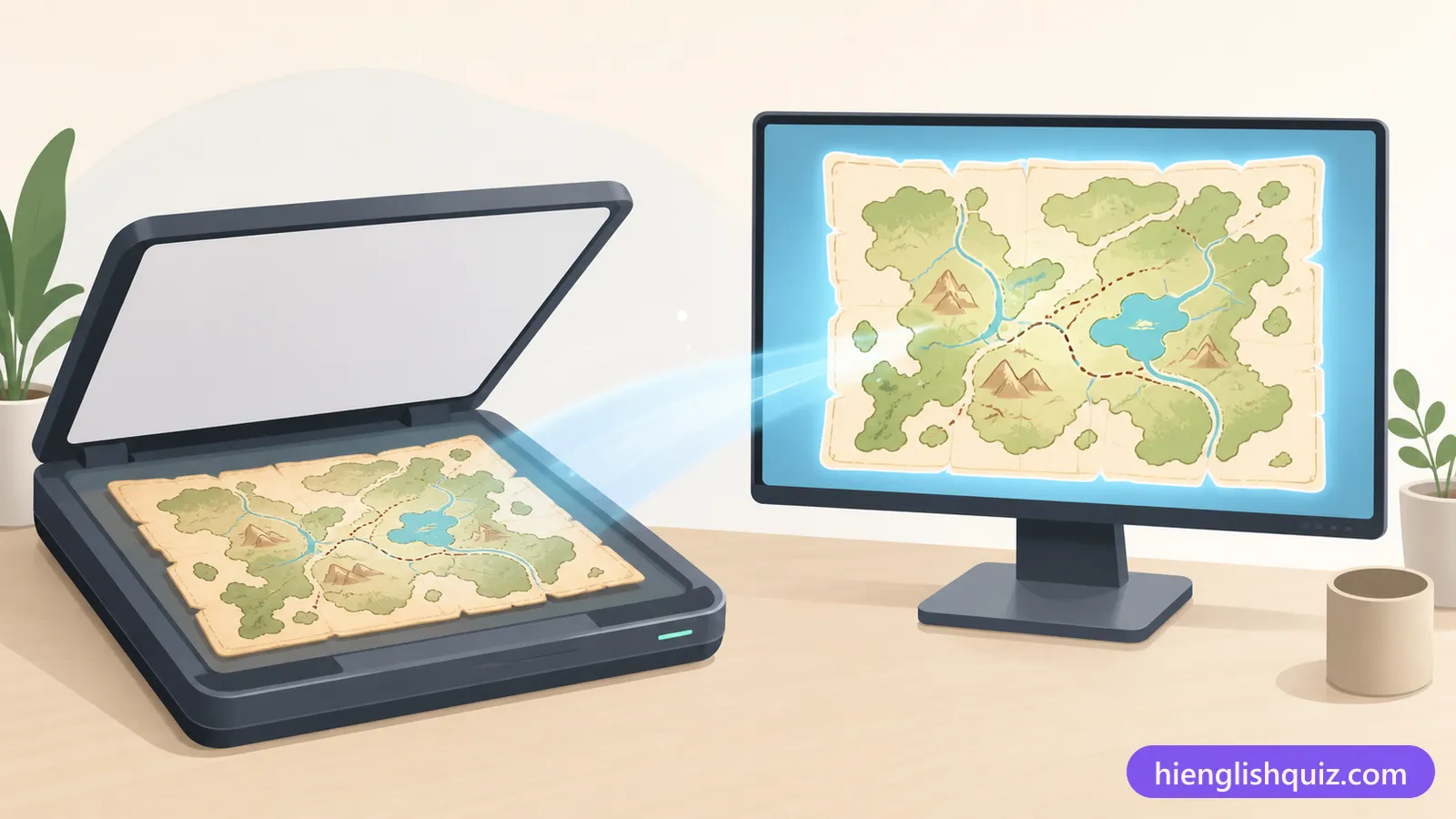
Converted into a computer-readable form instead of paper.
Example: The old paper maps have all been digitised.
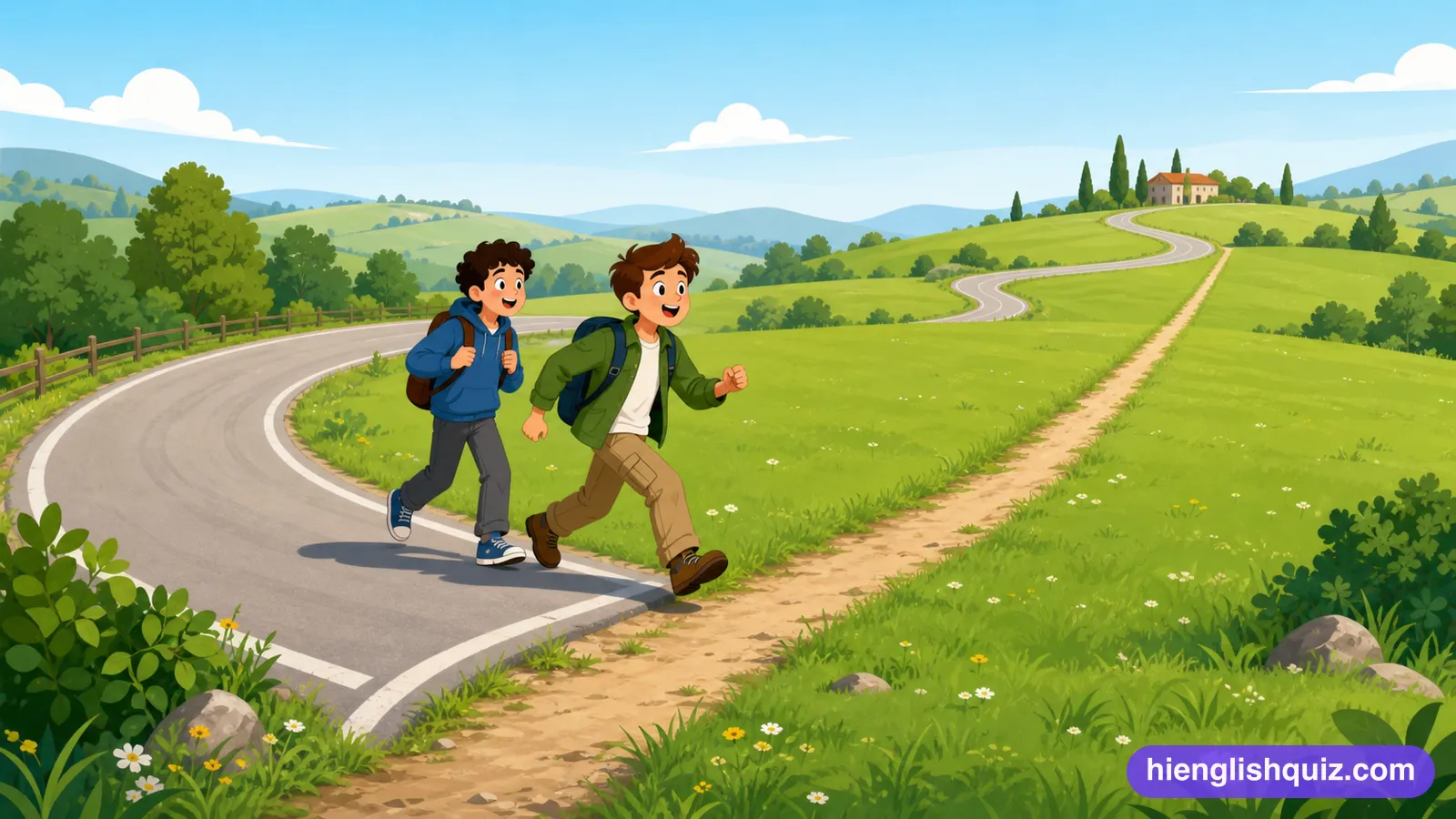
A quicker way to get somewhere than the usual road or path.
Example: We took a shortcut through the park and arrived early.
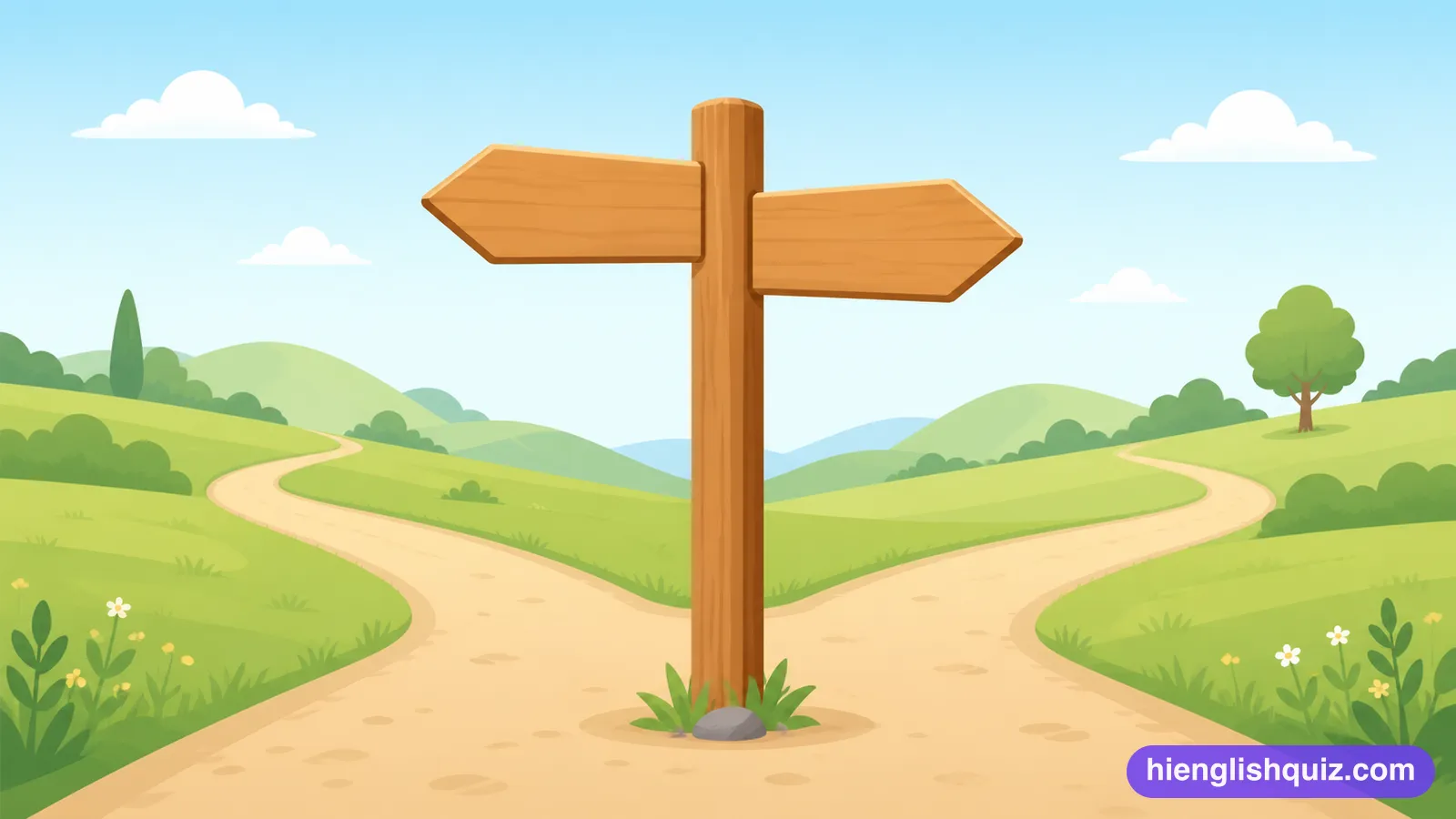
A tall post beside a road with flat arms pointing the way to nearby places.
Example: Follow the wooden signpost towards the waterfall.
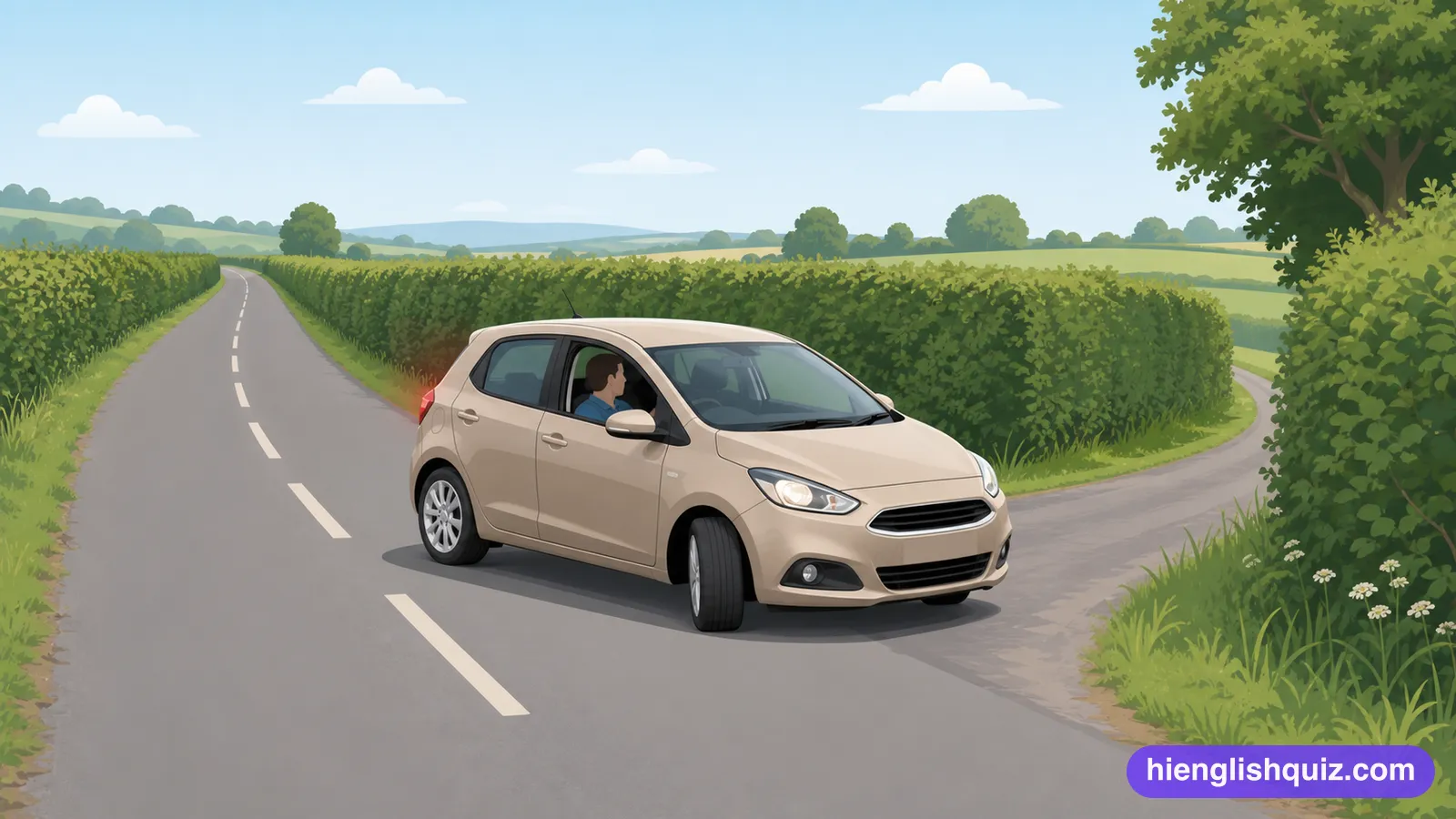
A side road leading off the one you are driving along.
Example: Take the second turning after the church.
A street that is closed at one end, with only one way in or out.
Example: Their house is on a quiet cul-de-sac.
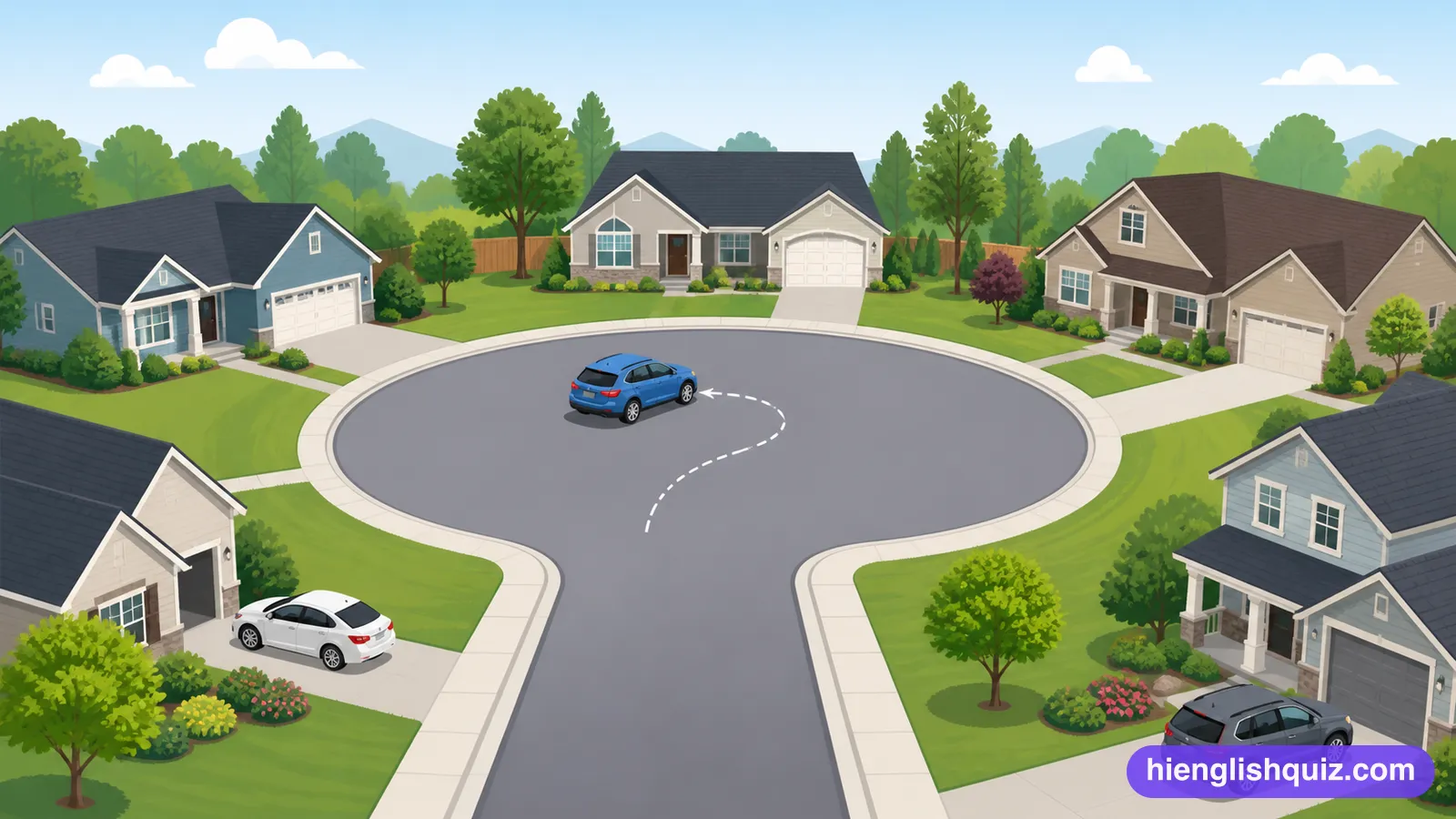
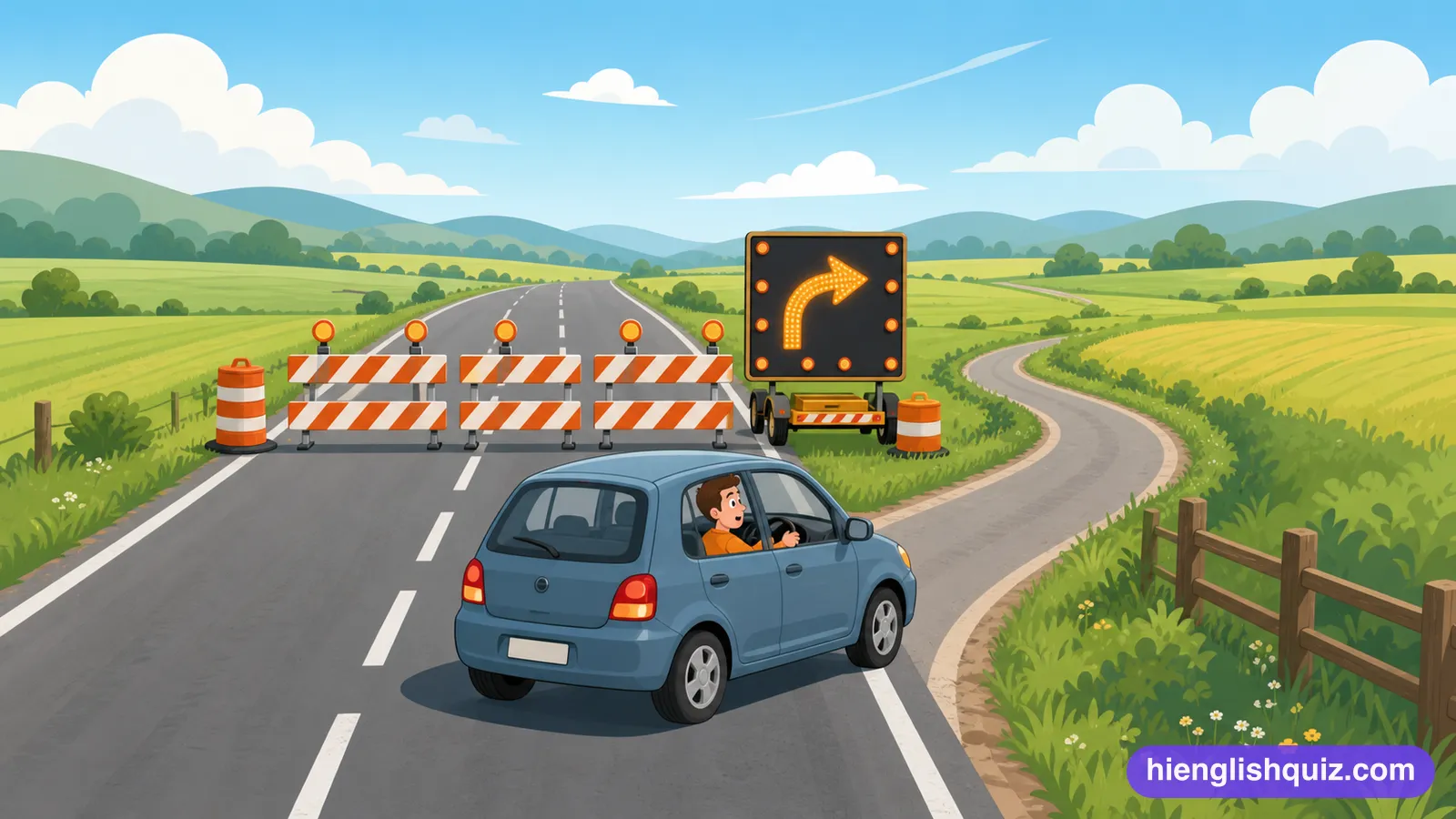
To go back along the same route you just came from.
Example: We had to backtrack after taking a wrong turning.
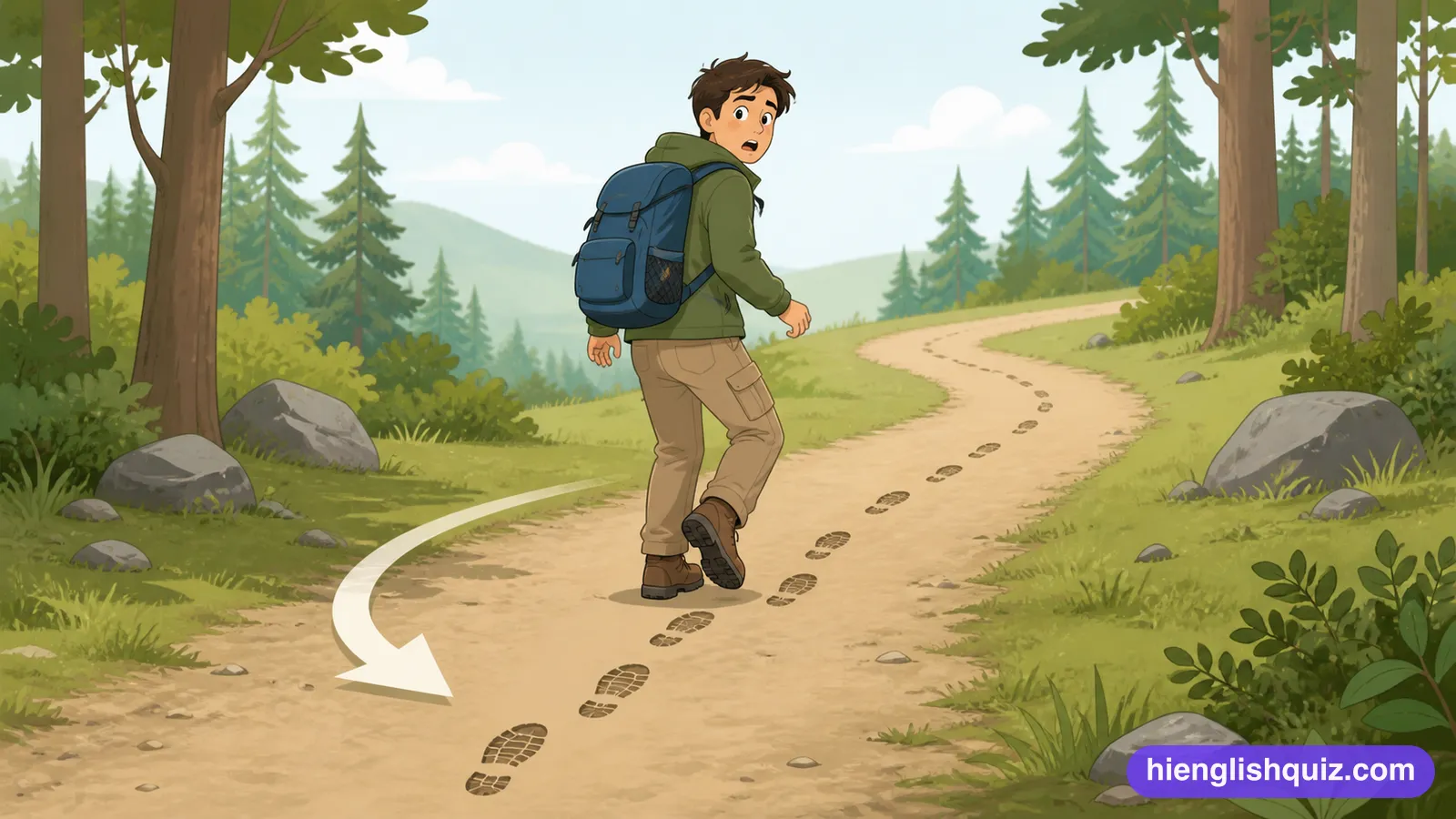
To travel back over the same route you have just taken.
Example: She had to retrace her steps to find her lost phone.
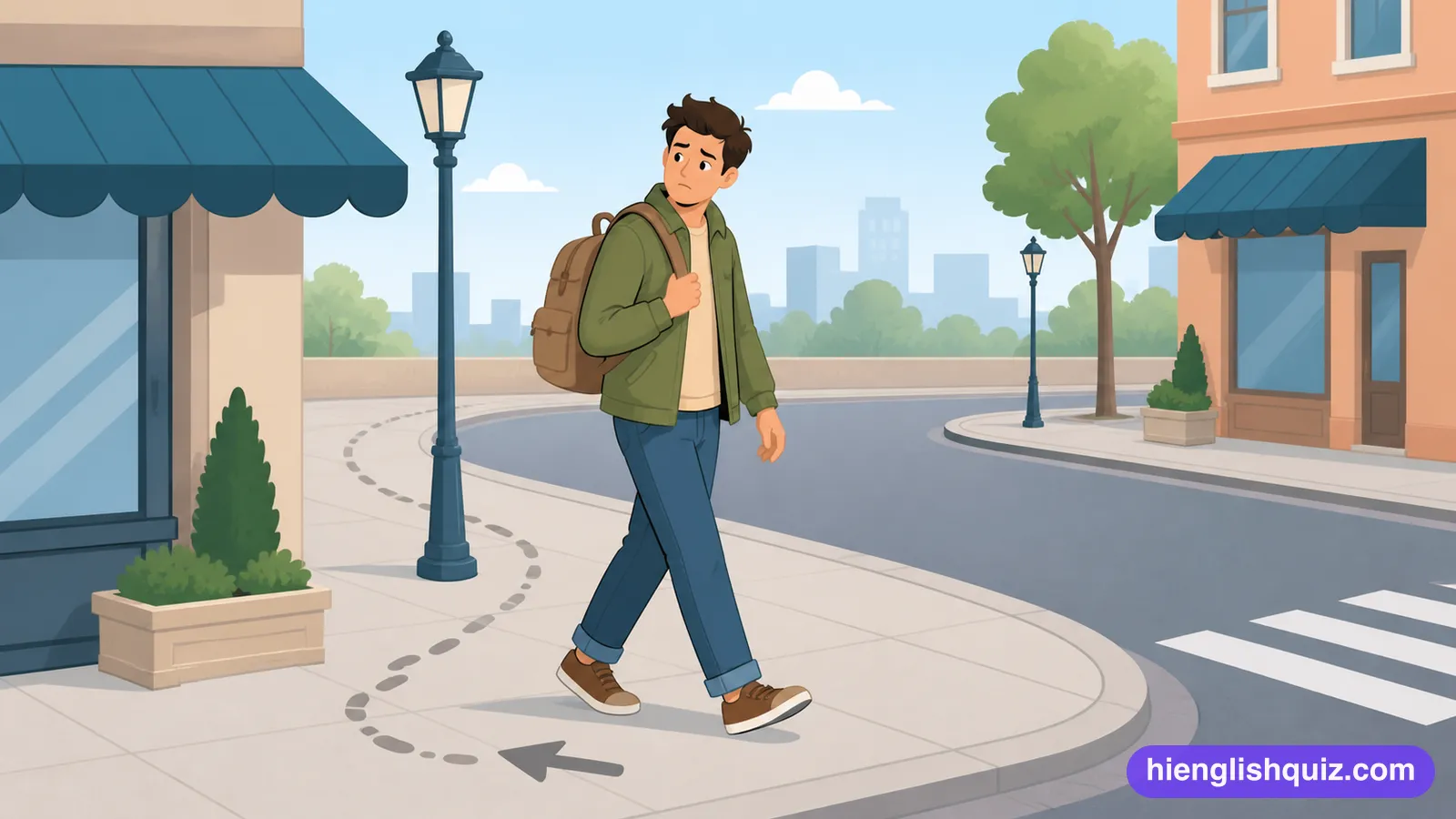
A sense of knowing where you are and which direction to go.
Example: I completely lost my orientation inside the huge shopping mall.
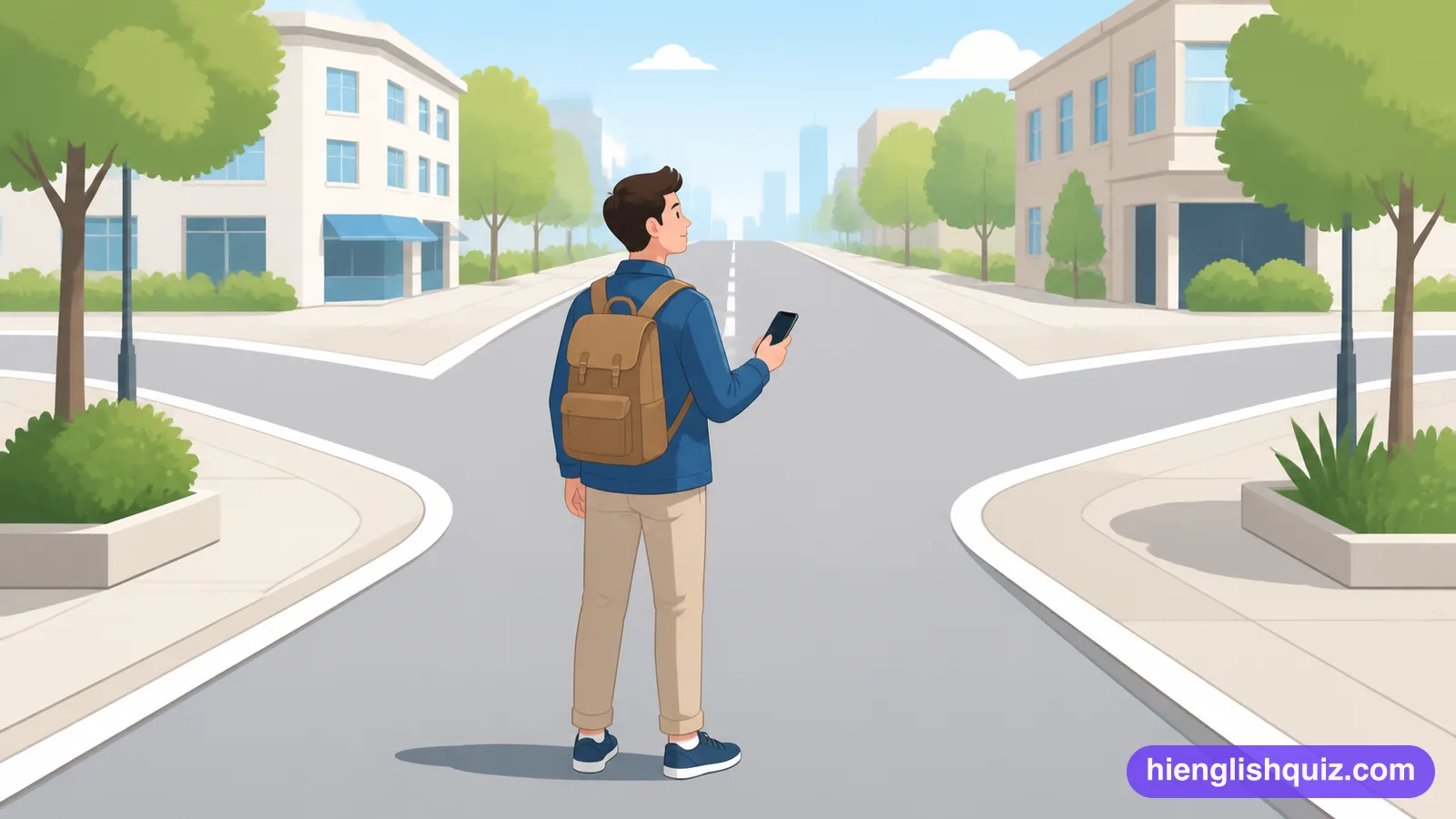
Confused about where you are or which way to go.
Example: He felt completely disoriented after leaving the crowded station.
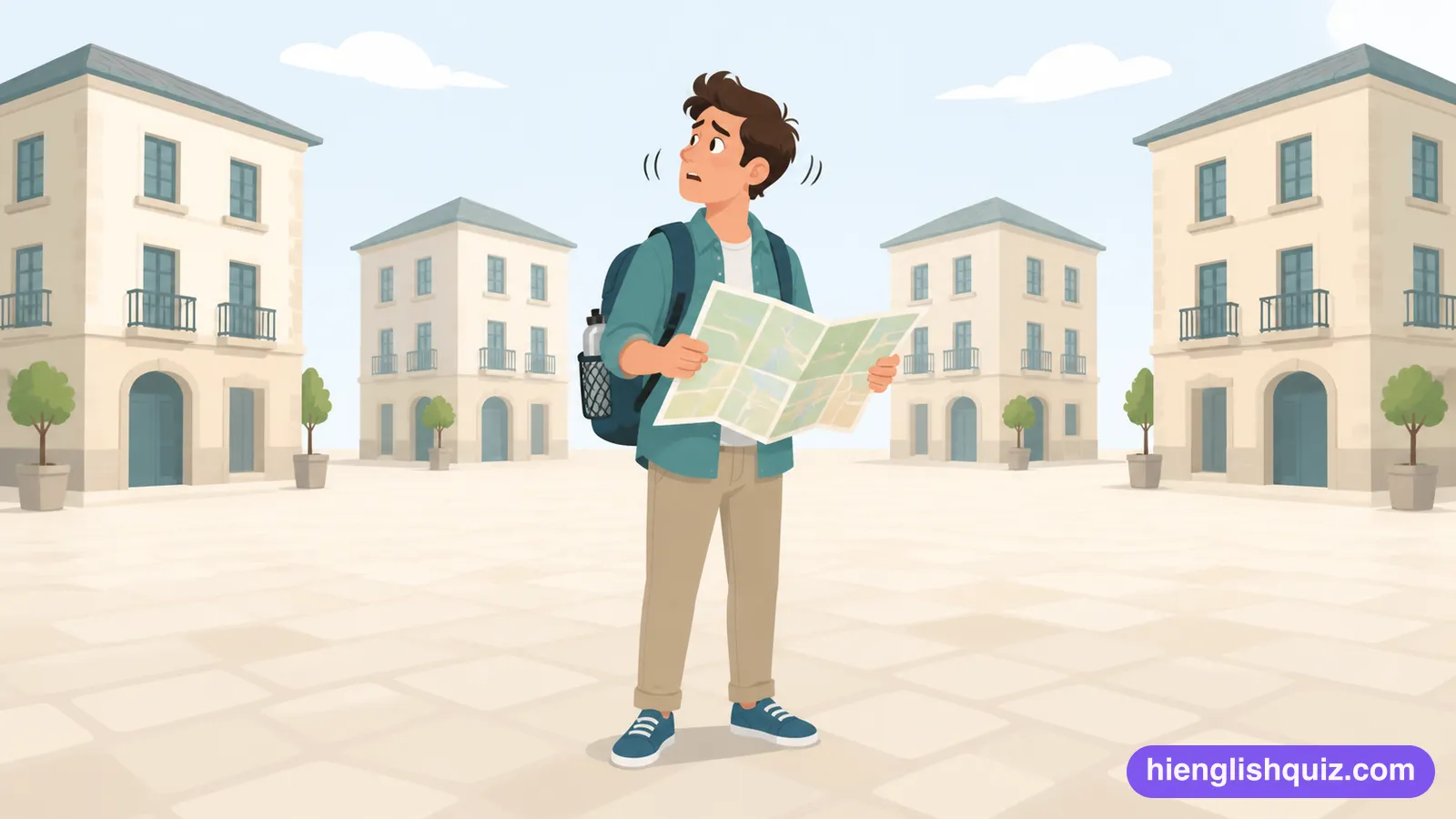
Closed to cars and open only to people walking.
Example: The city centre becomes fully pedestrianised on weekends.

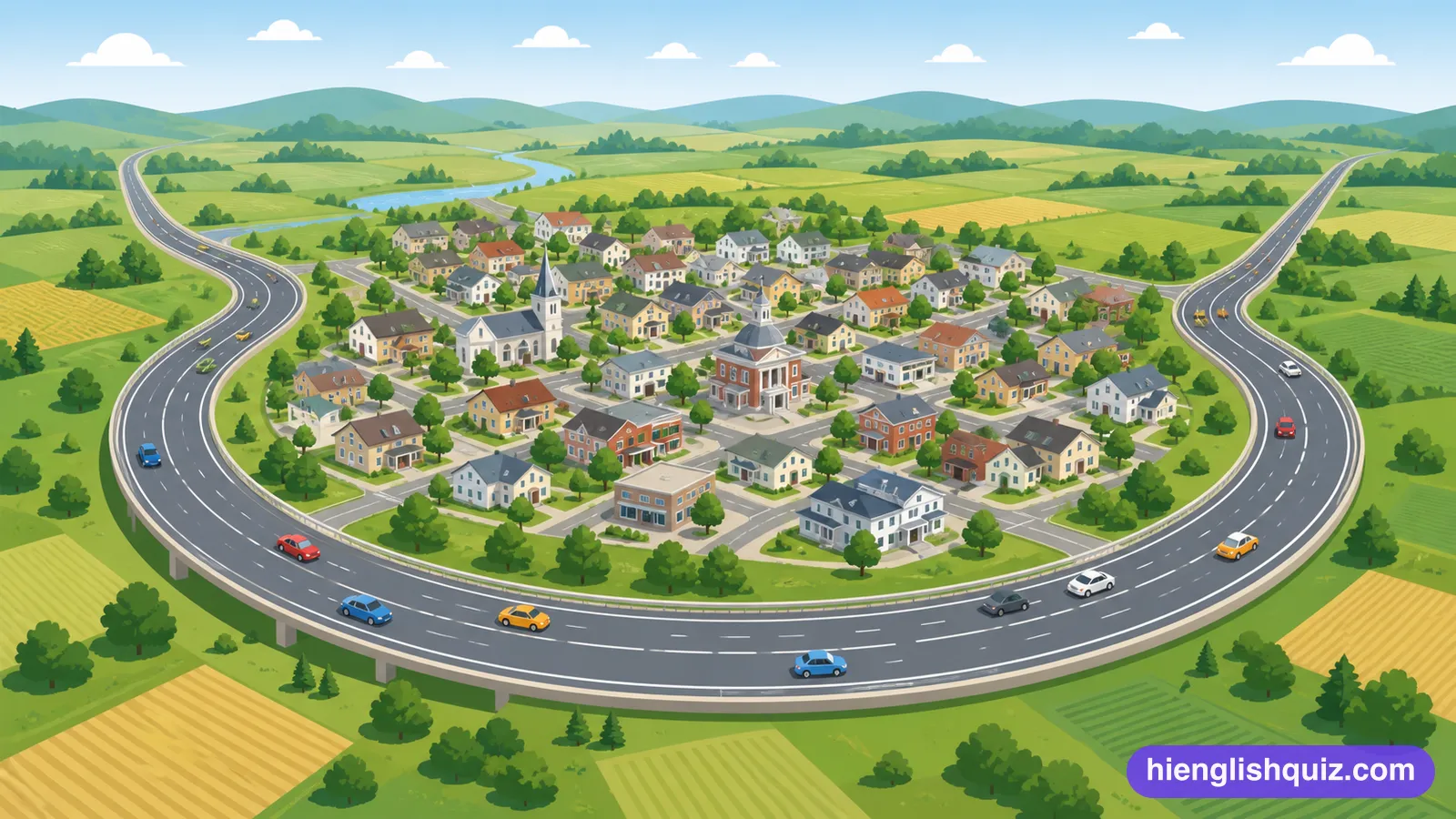
A road built to go around a busy town instead of through it.
Example: Take the bypass to avoid the town centre traffic.