estoppel
- Nghĩa tiếng Việt
- Cấm phản ngôn
- Định nghĩa tiếng Anh
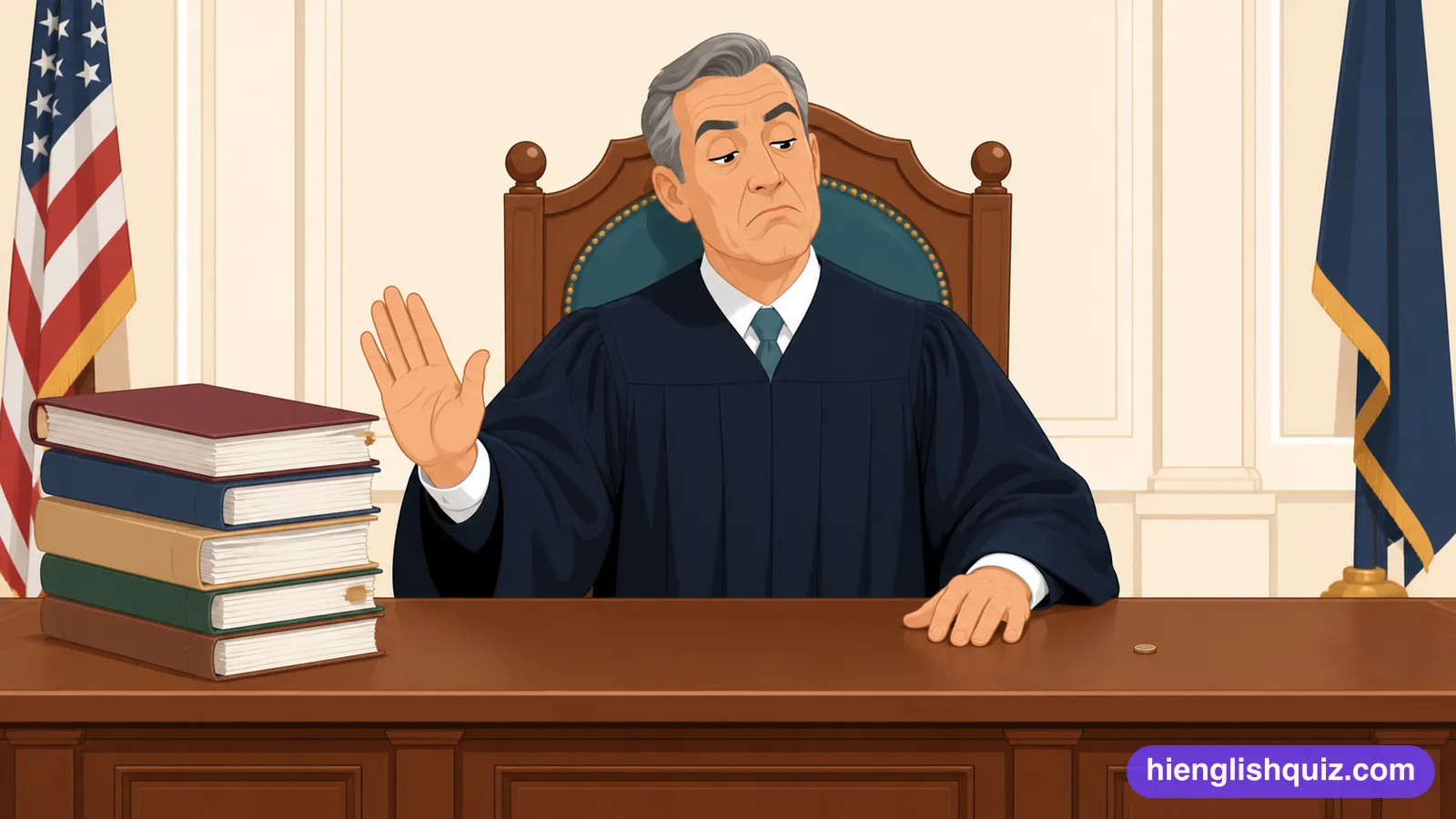
- A legal rule that stops someone from arguing something that contradicts what they previously said or did.
Ví dụ: The doctrine of estoppel stopped him from denying the earlier agreement.

 Hi EnglishQuiz
C222 từ · Thành thạo
Từ vựng pháp lý chuyên sâu về án lệ và trách nhiệm pháp lý, gồm estoppel, prima facie case, mens rea và vicarious liability trong luật học hiện đại.
Ví dụ: The doctrine of estoppel stopped him from denying the earlier agreement.
Ví dụ: The report assessed each driver's culpability for the crash.

Ví dụ: The photographs gave prima facie evidence of the damage.

Ví dụ: The lawyer presented exculpatory evidence in his client's defence.
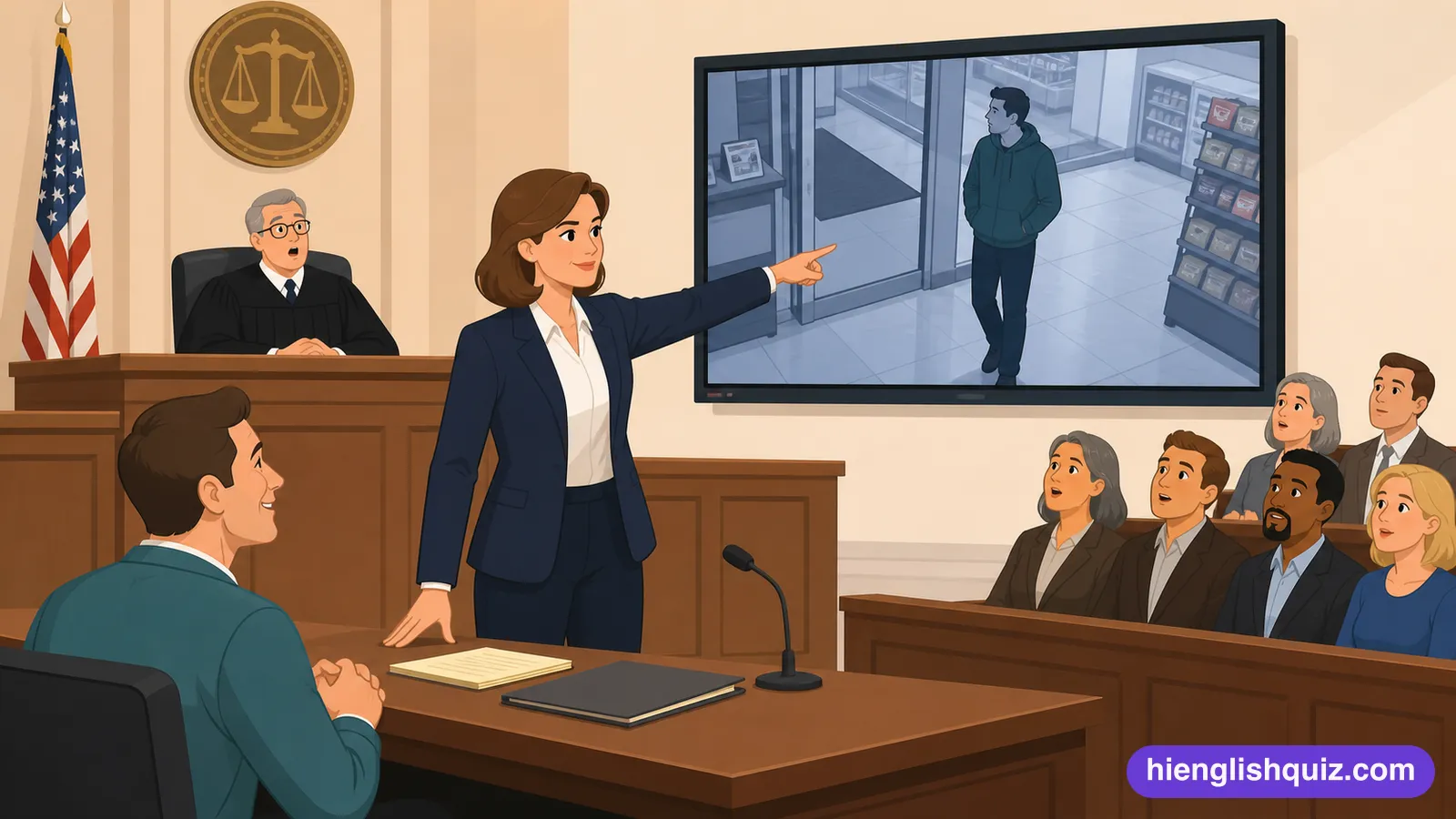
Ví dụ: The audit uncovered evidence of financial malfeasance.

Ví dụ: The industry has become increasingly litigious in recent years.

Ví dụ: The professor specialises in constitutional jurisprudence.
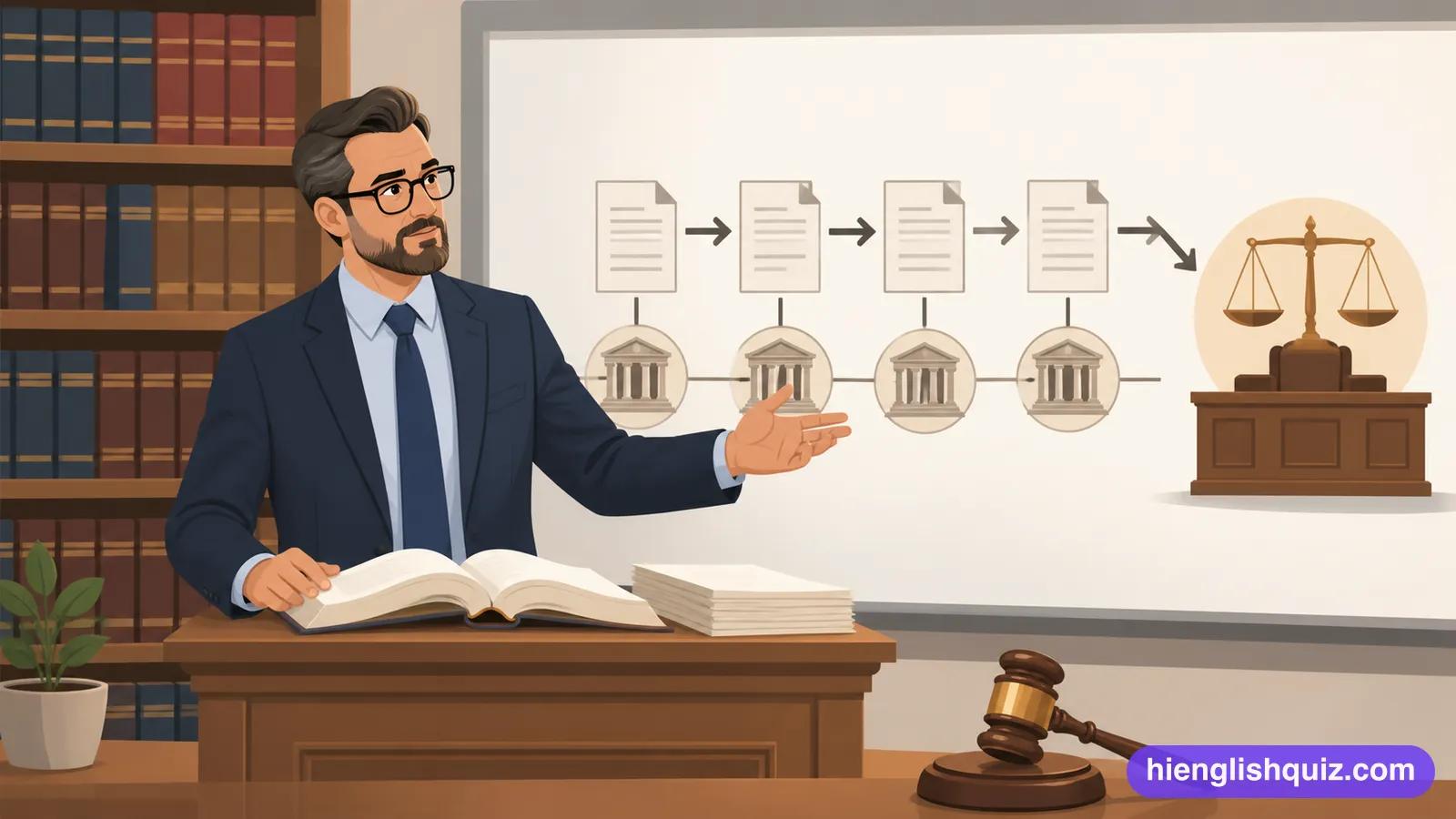
Ví dụ: The judge dismissed the second lawsuit under res judicata.
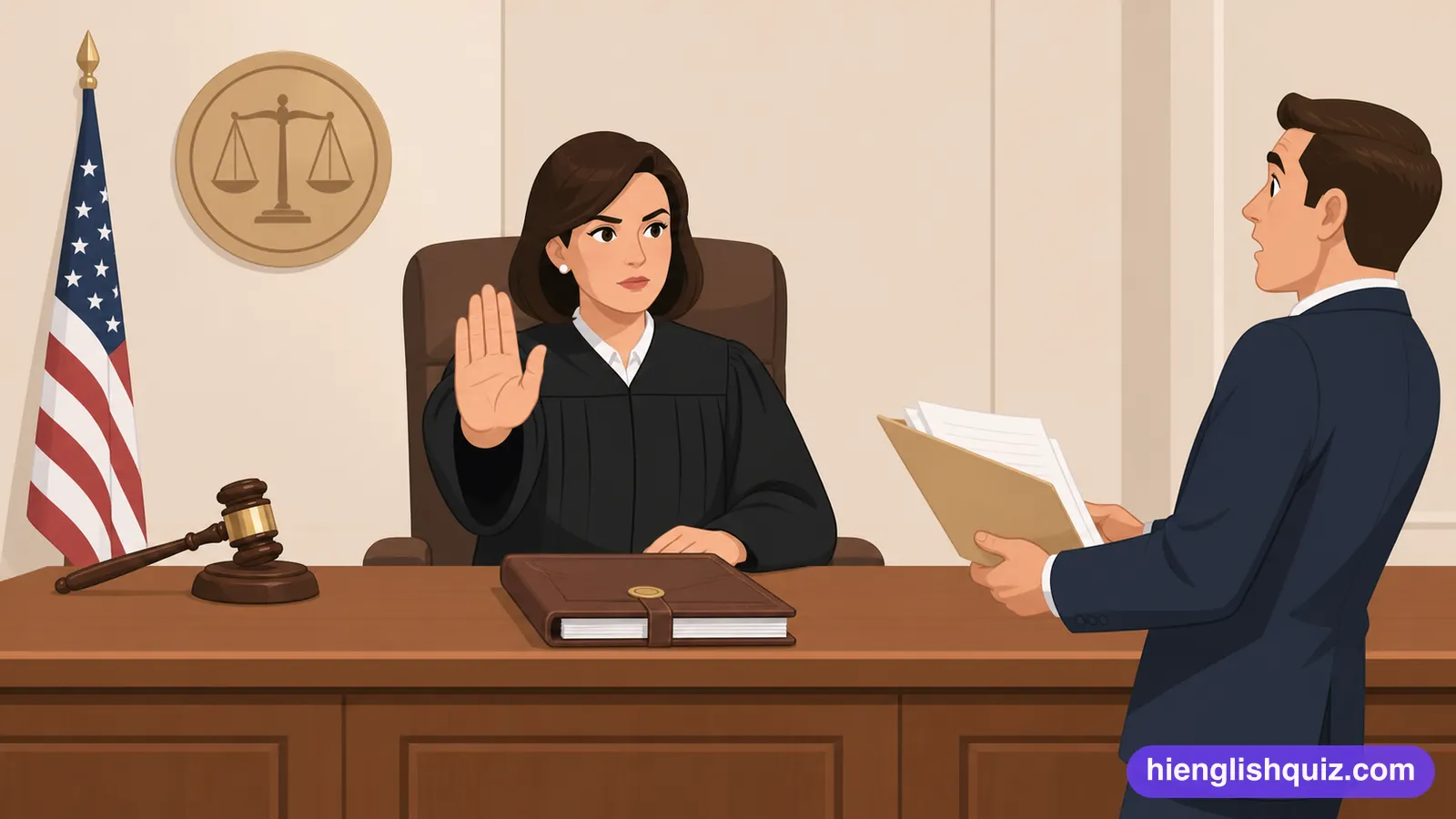
Ví dụ: The judge's recusal meant a new judge had to be assigned.
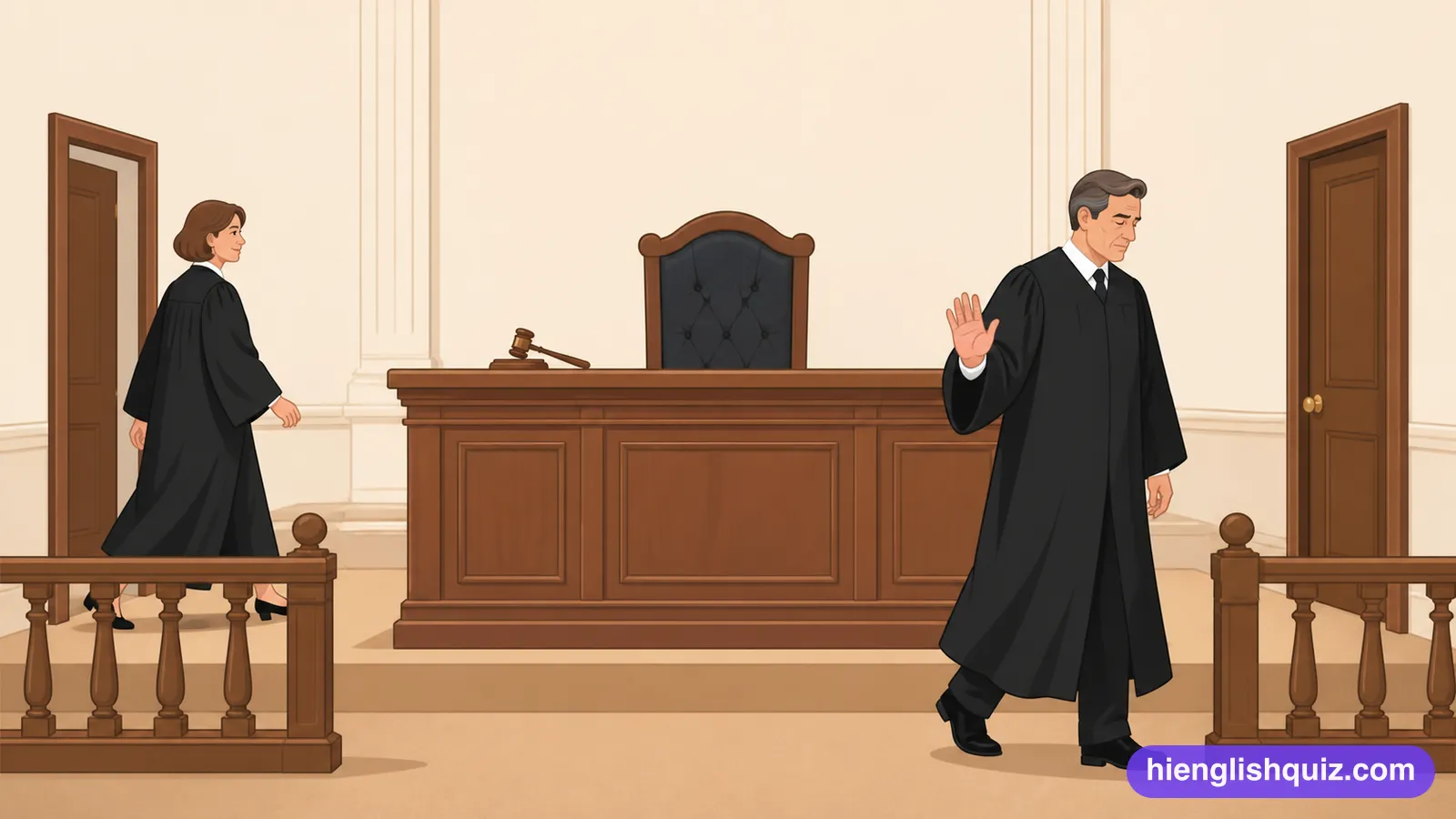
Ví dụ: Several universities filed an amicus curiae brief supporting the appeal.
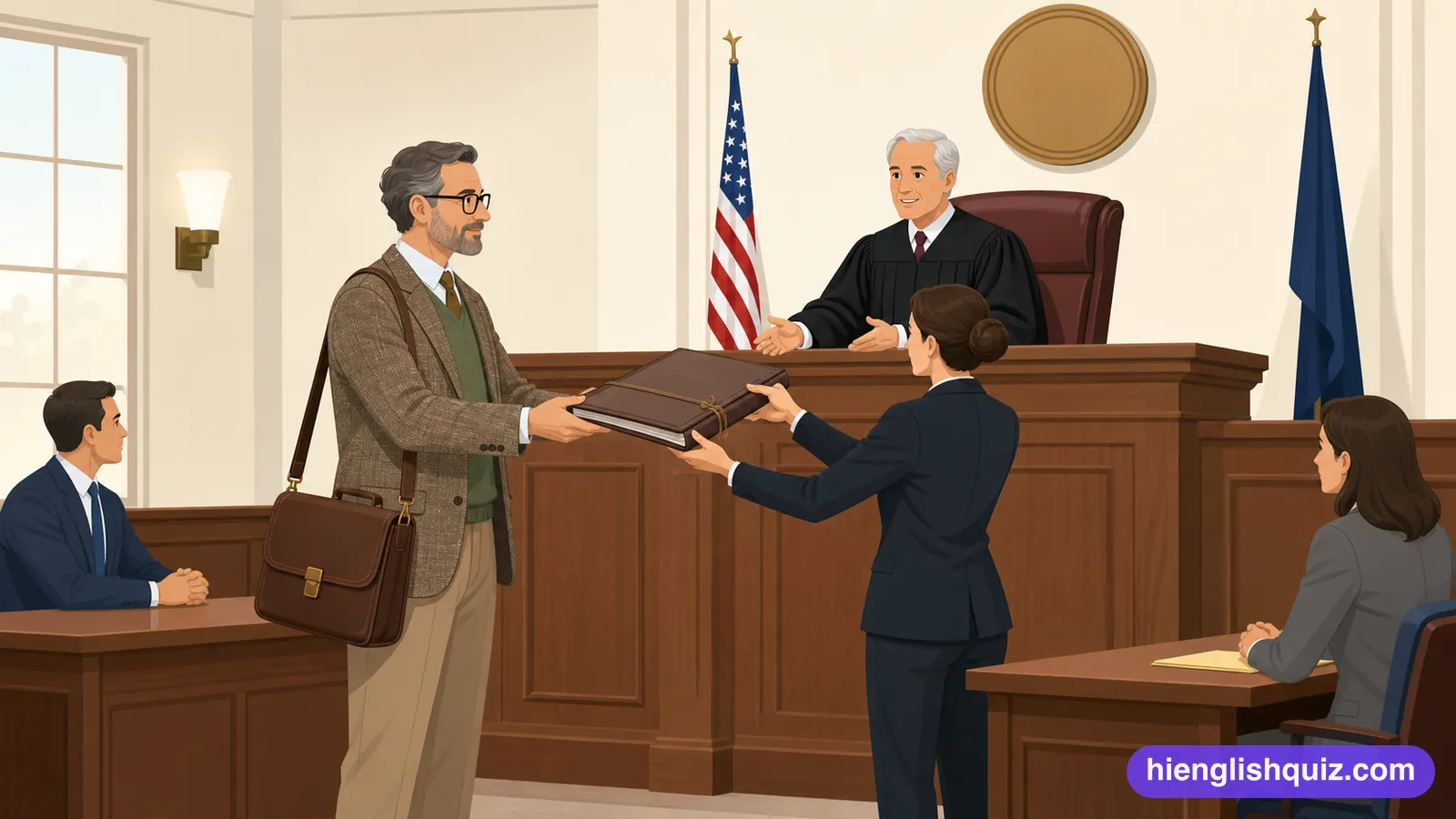
Ví dụ: The decision was ultra vires and had to be taken again properly.

Ví dụ: Without mens rea the prosecution had nothing.

Ví dụ: Both the actus reus and the intention had to be proved.

Ví dụ: Under strict liability the intention makes no difference at all.

Ví dụ: Vicarious liability put the whole claim onto the company.

Ví dụ: The defence of laches succeeded after eleven years of silence.

Ví dụ: Subrogation meant the insurer sued in the customer's name.

Ví dụ: Privity of contract stopped the tenant suing the builder directly.

Ví dụ: The debt was sold without recourse and the discount showed it.

Ví dụ: Planning consent was a condition precedent to the whole purchase.

Ví dụ: Liquidated damages were fifteen hundred pounds a week and enforceable.

Ví dụ: The overpayment was de minimis and the argument was not.