rebar
/ˈriˌbɑr/- Nghĩa tiếng Việt
- Cốt thép
- Định nghĩa tiếng Anh
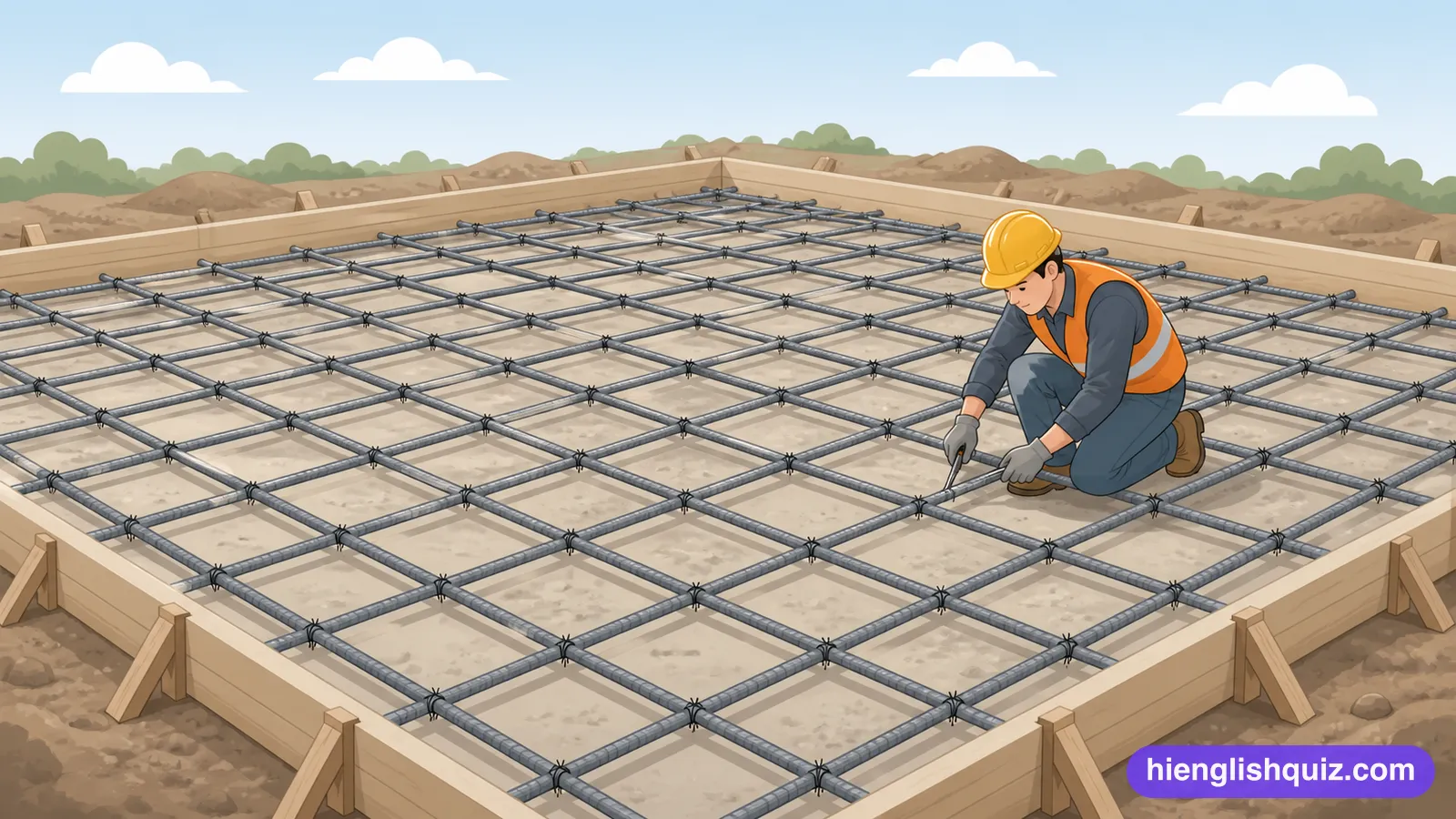
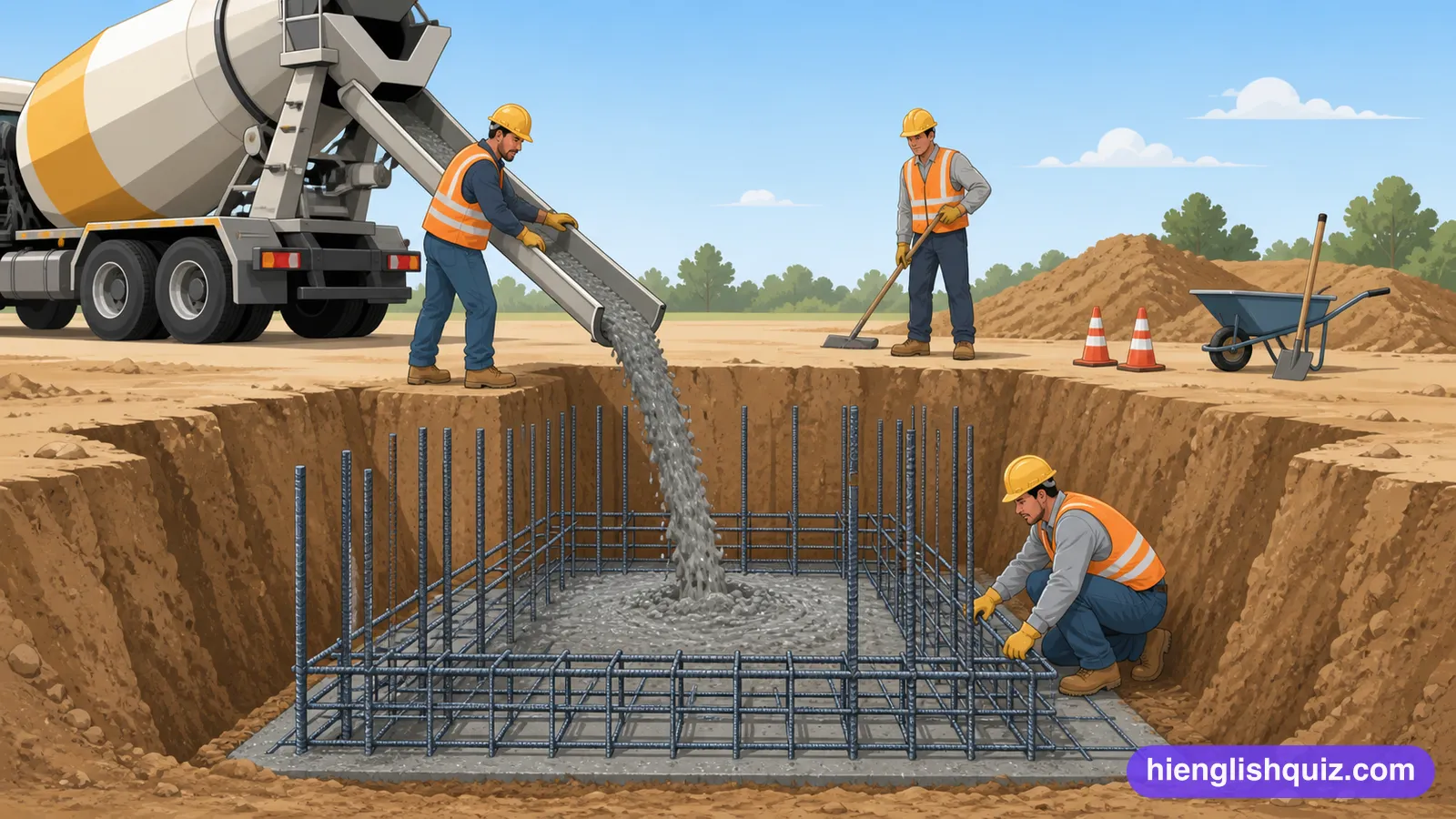
- Steel rods used inside concrete to make it stronger.
Ví dụ: Workers laid rebar before the concrete was poured.
 Hi EnglishQuiz
C222 từ · Thành thạo
Từ vựng xây dựng chuyên sâu về thiết kế kết cấu và bền vững, gồm rebar, excavation, substructure và superstructure của tòa nhà, cùng embodied carbon đằng sau biophilic design.
Ví dụ: Workers laid rebar before the concrete was poured.
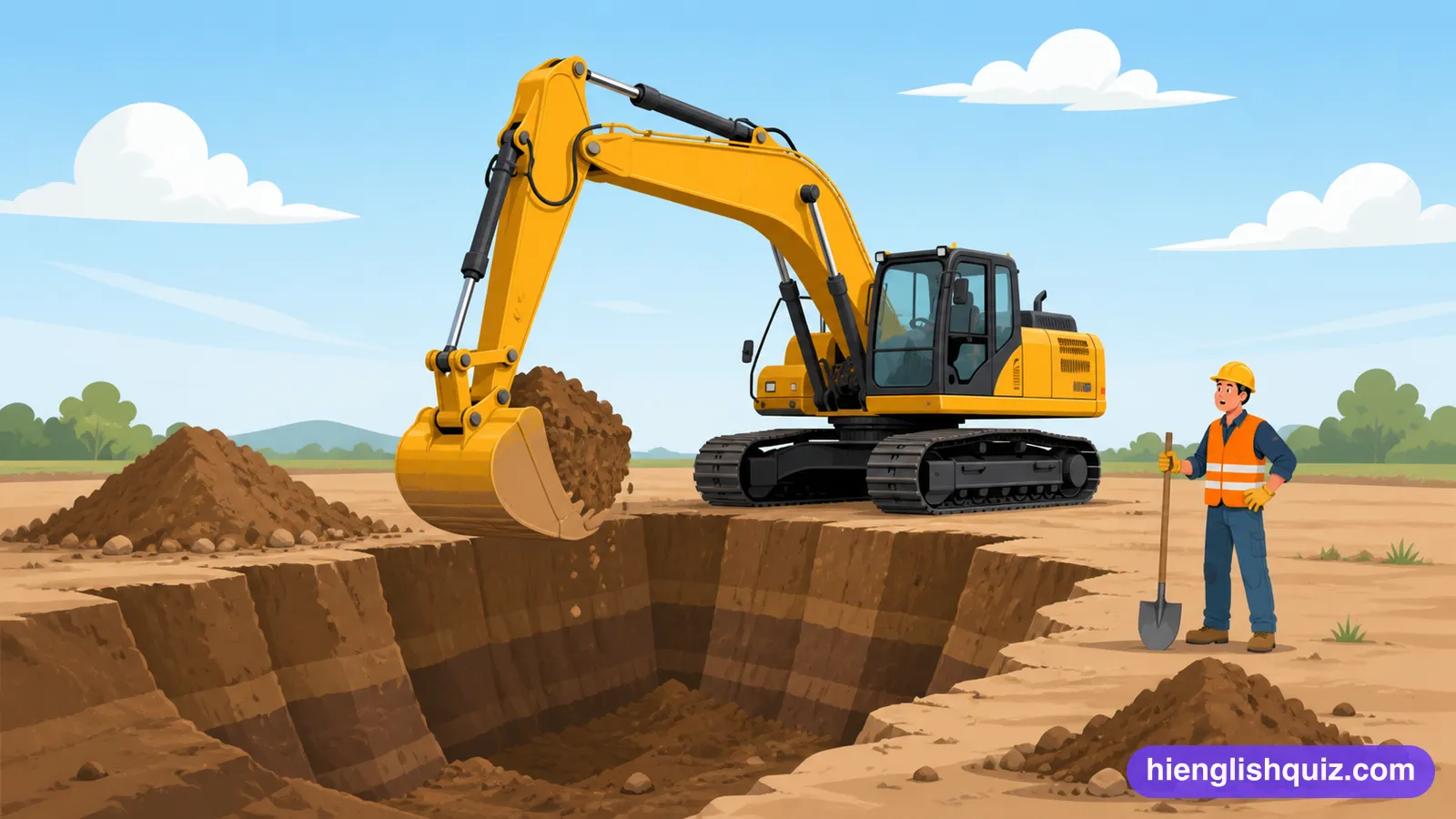
Ví dụ: Excavation revealed old Roman remains beneath the site.
Ví dụ: The substructure had to be redesigned after the survey.
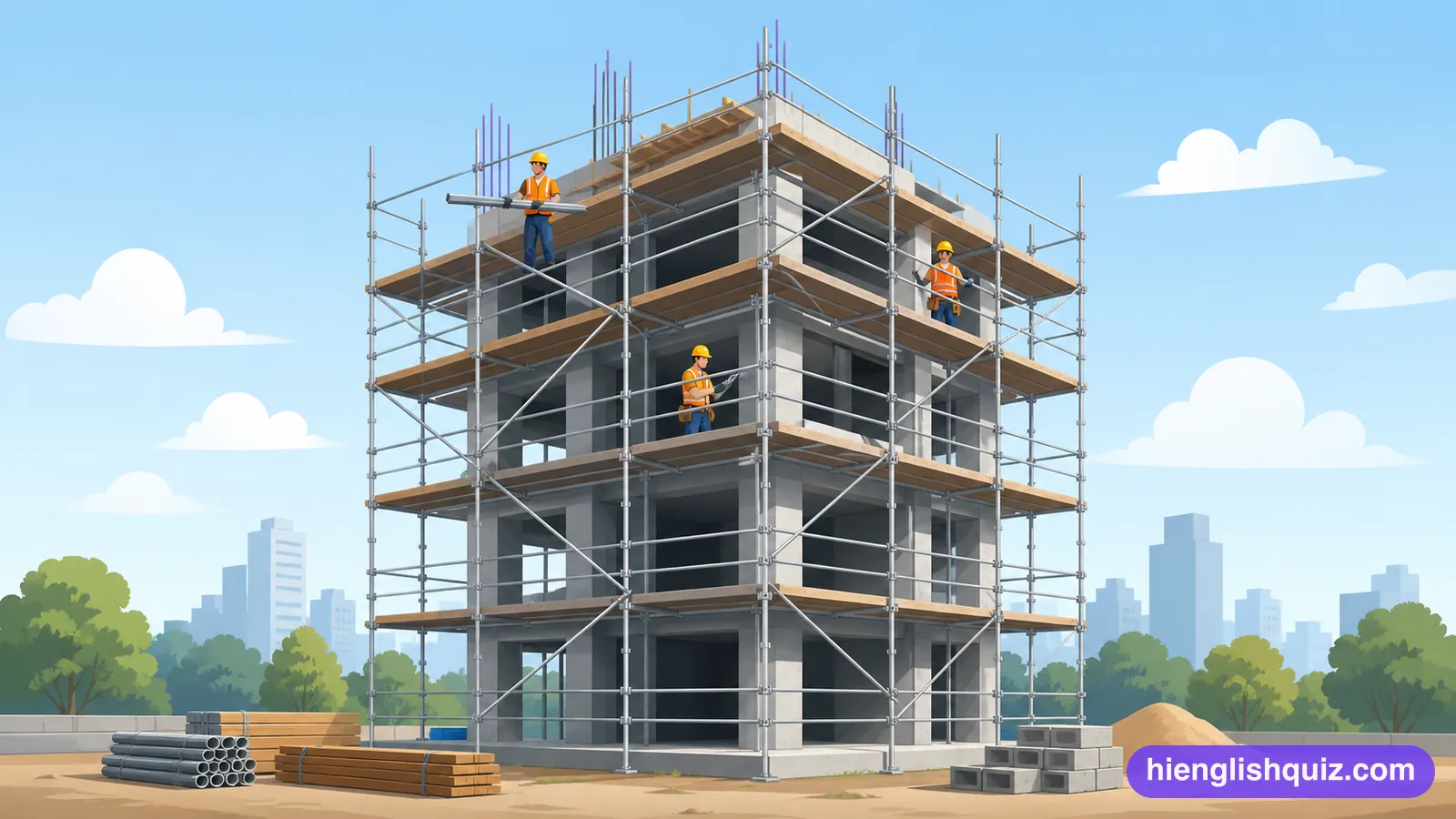
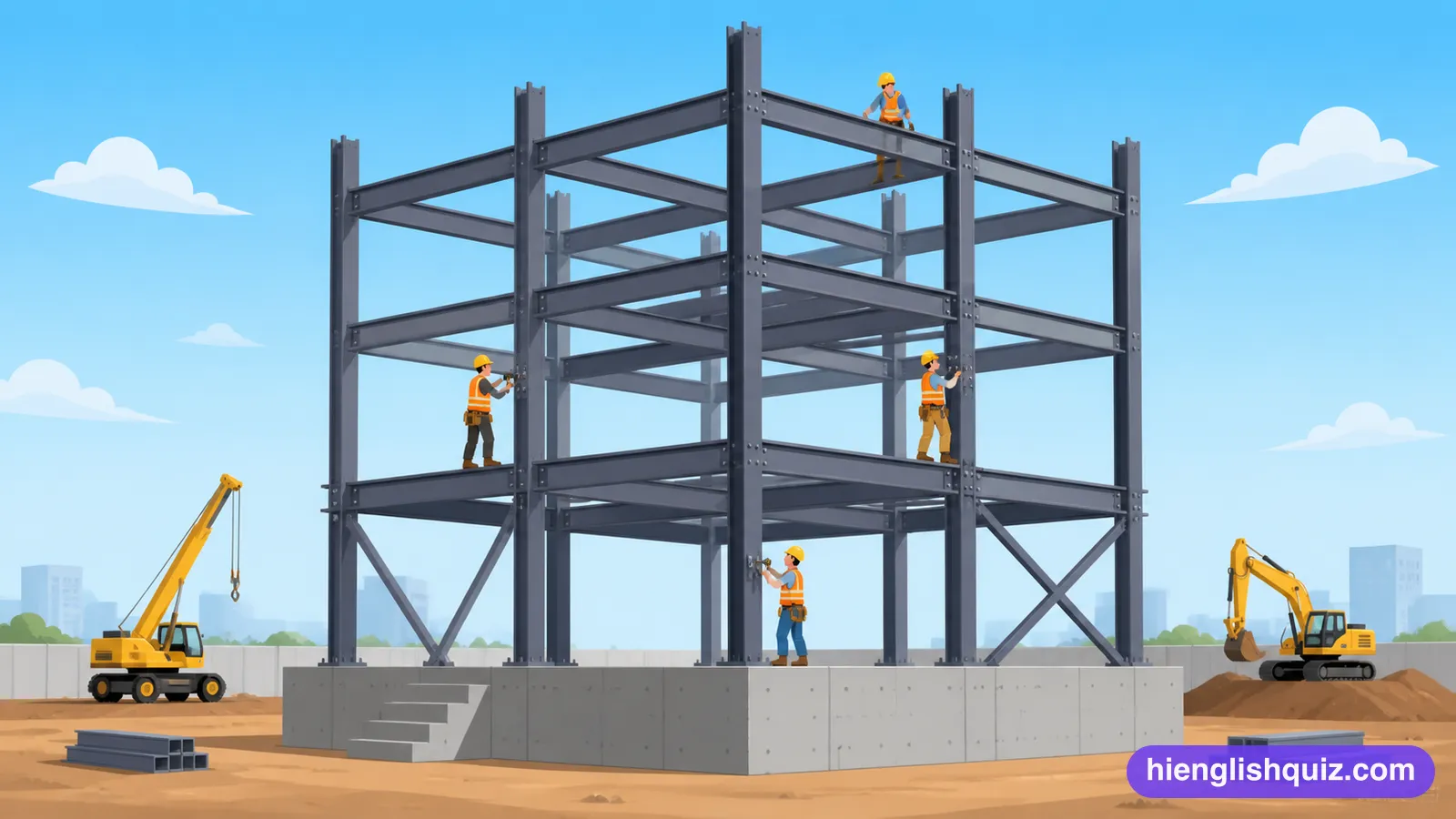
Ví dụ: Steel beams form the superstructure of the new tower.
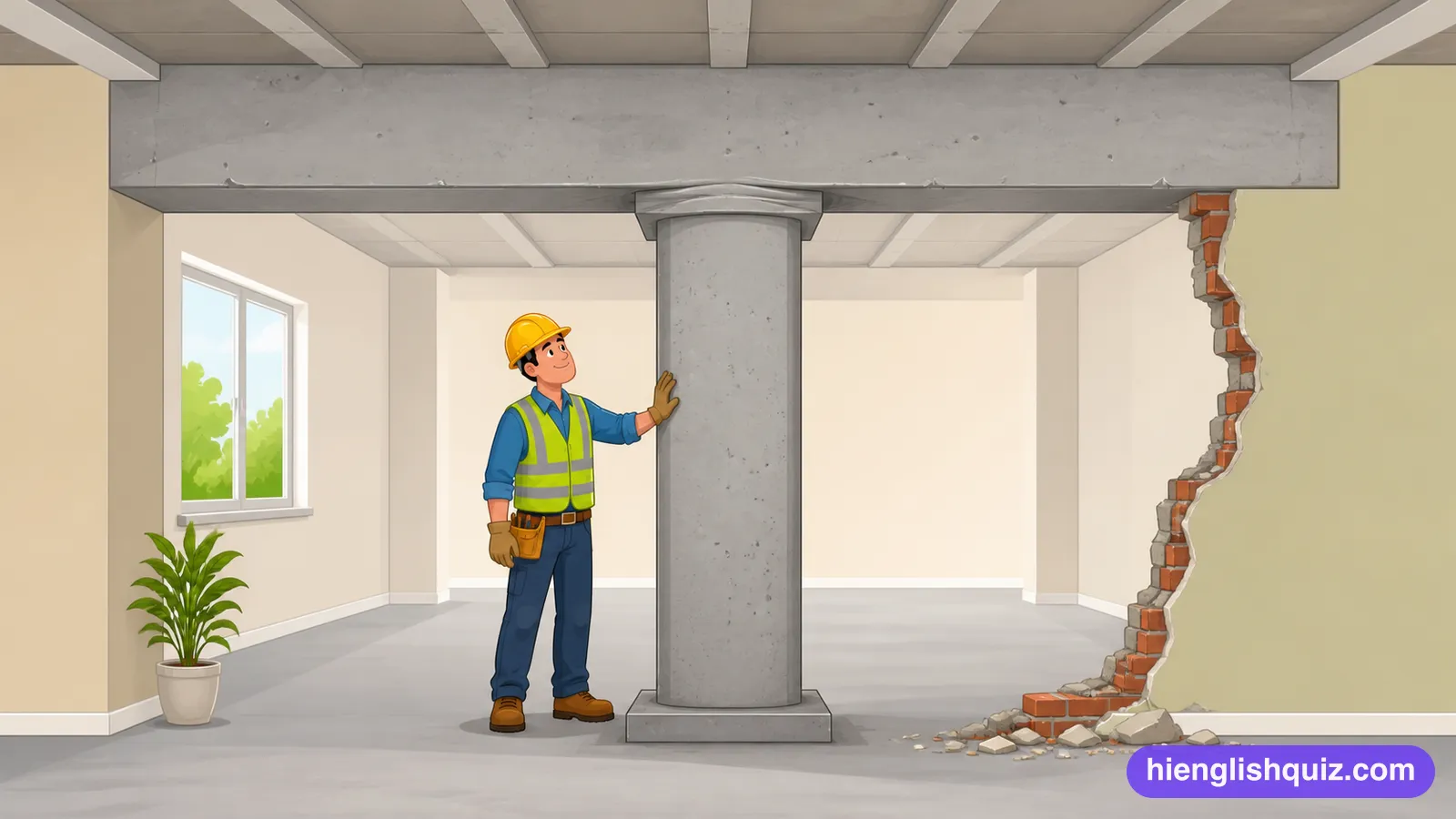
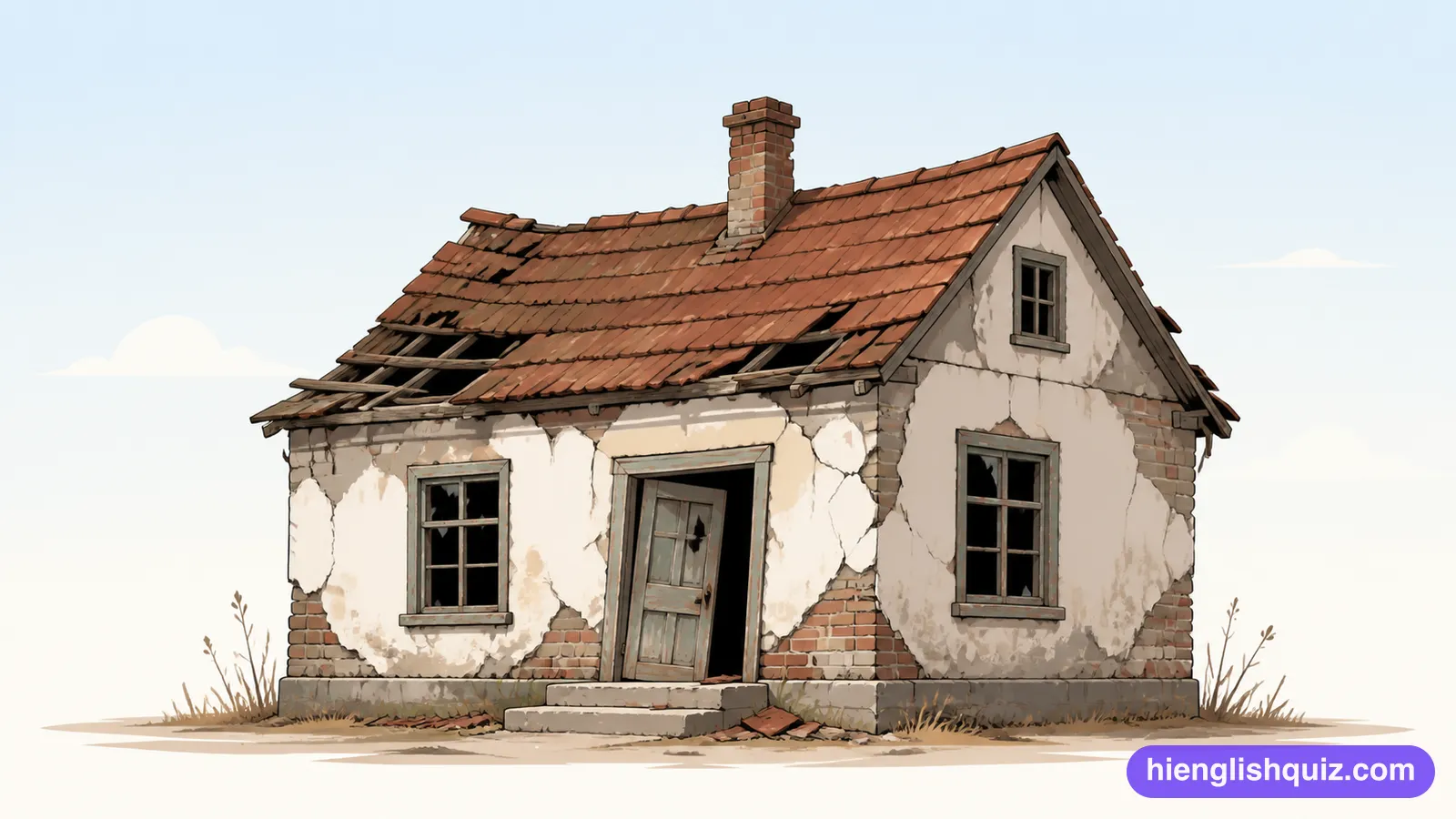
Ví dụ: Years of dilapidation left the roof close to collapse.
Ví dụ: Glass curtain walls cover the entire office tower.

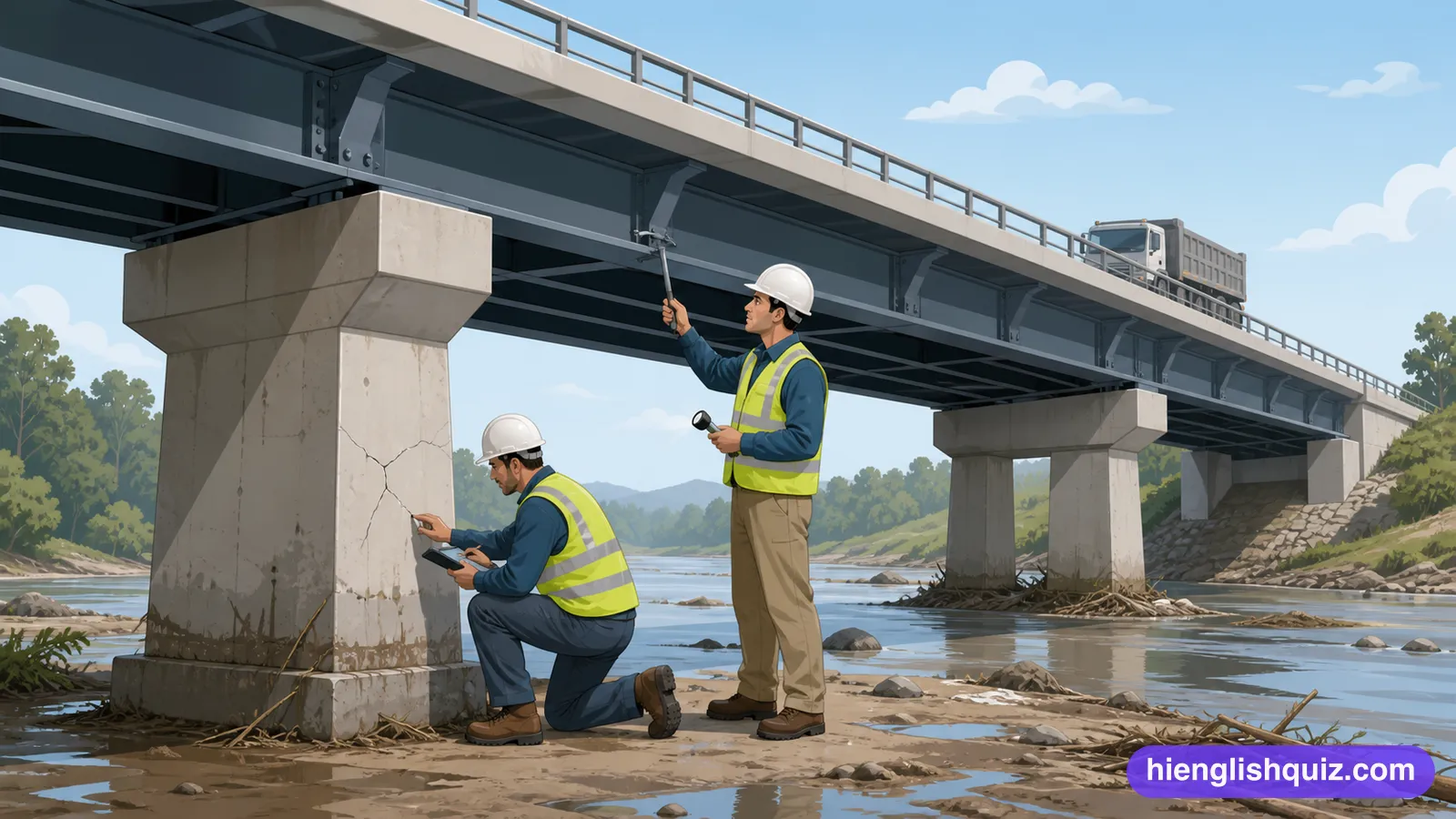
Ví dụ: Engineers checked the bridge's structural integrity after the flood.
Ví dụ: Building the extension required the neighbour's agreement about the party wall.

Ví dụ: The architect praised the building's careful fenestration and natural light.

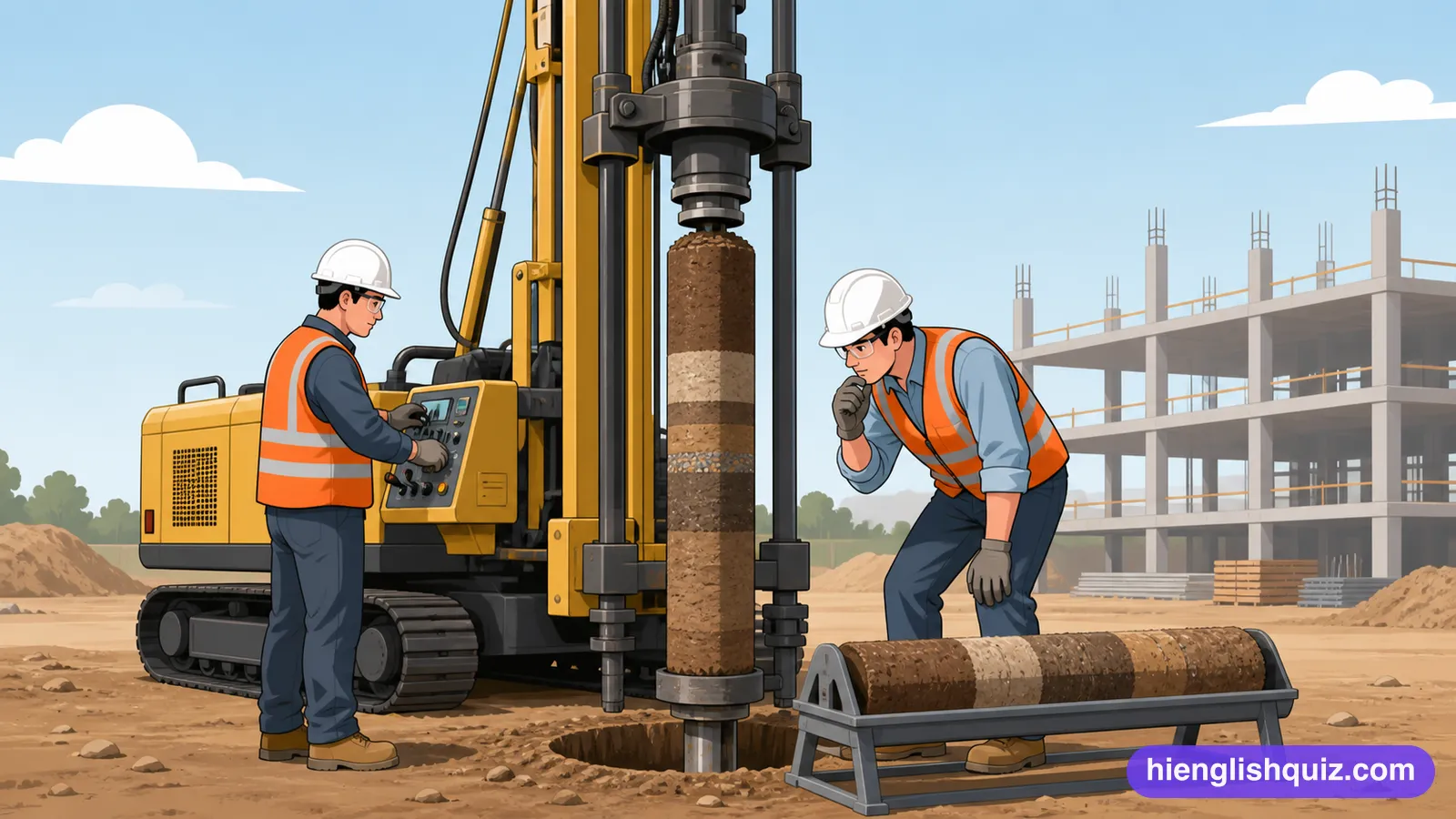
Ví dụ: A geotechnical survey confirmed the ground could support the new tower.
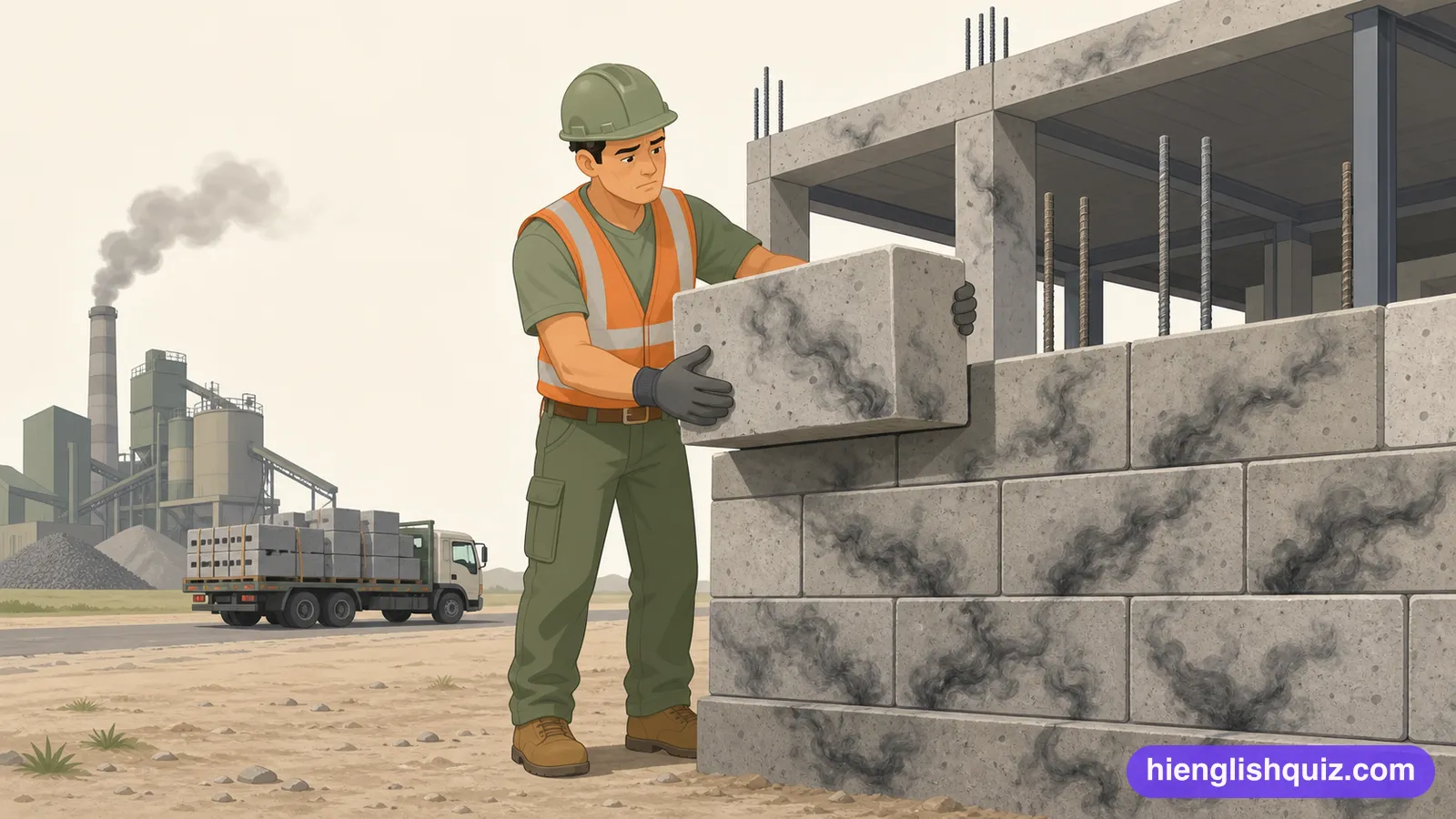
Ví dụ: Embodied carbon now outweighs the operational figure on a new build.
Ví dụ: Whole-life costing made the expensive cladding the cheap option.

Ví dụ: The brise soleil cut the cooling load by a third.

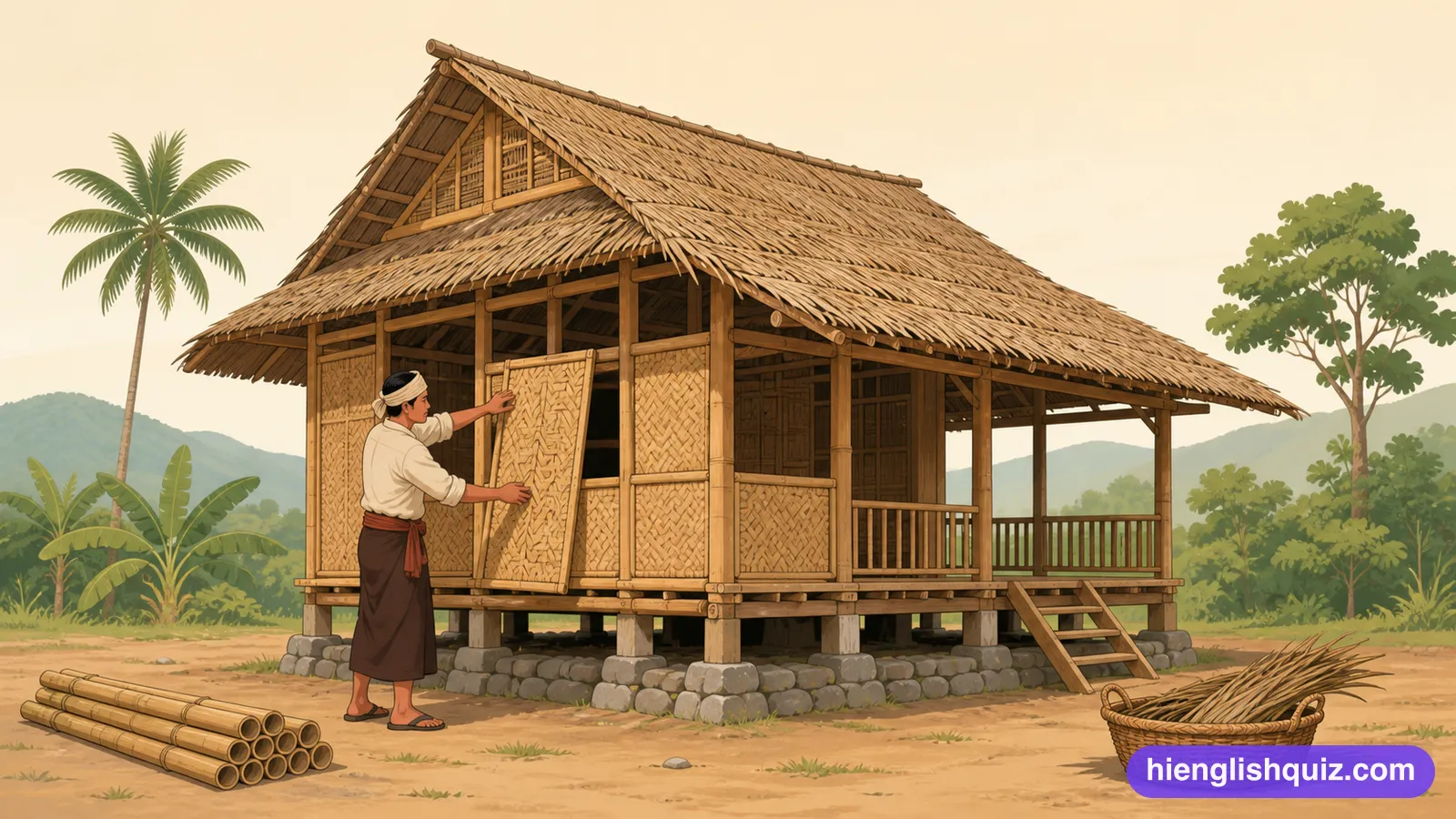
Ví dụ: The vernacular architecture of that valley is slate and nothing else.
Ví dụ: Adaptive reuse of the mill produced ninety flats and one argument.

Ví dụ: Passive design removed the need for air conditioning entirely.

Ví dụ: Sick building syndrome closed the whole floor for a fortnight.

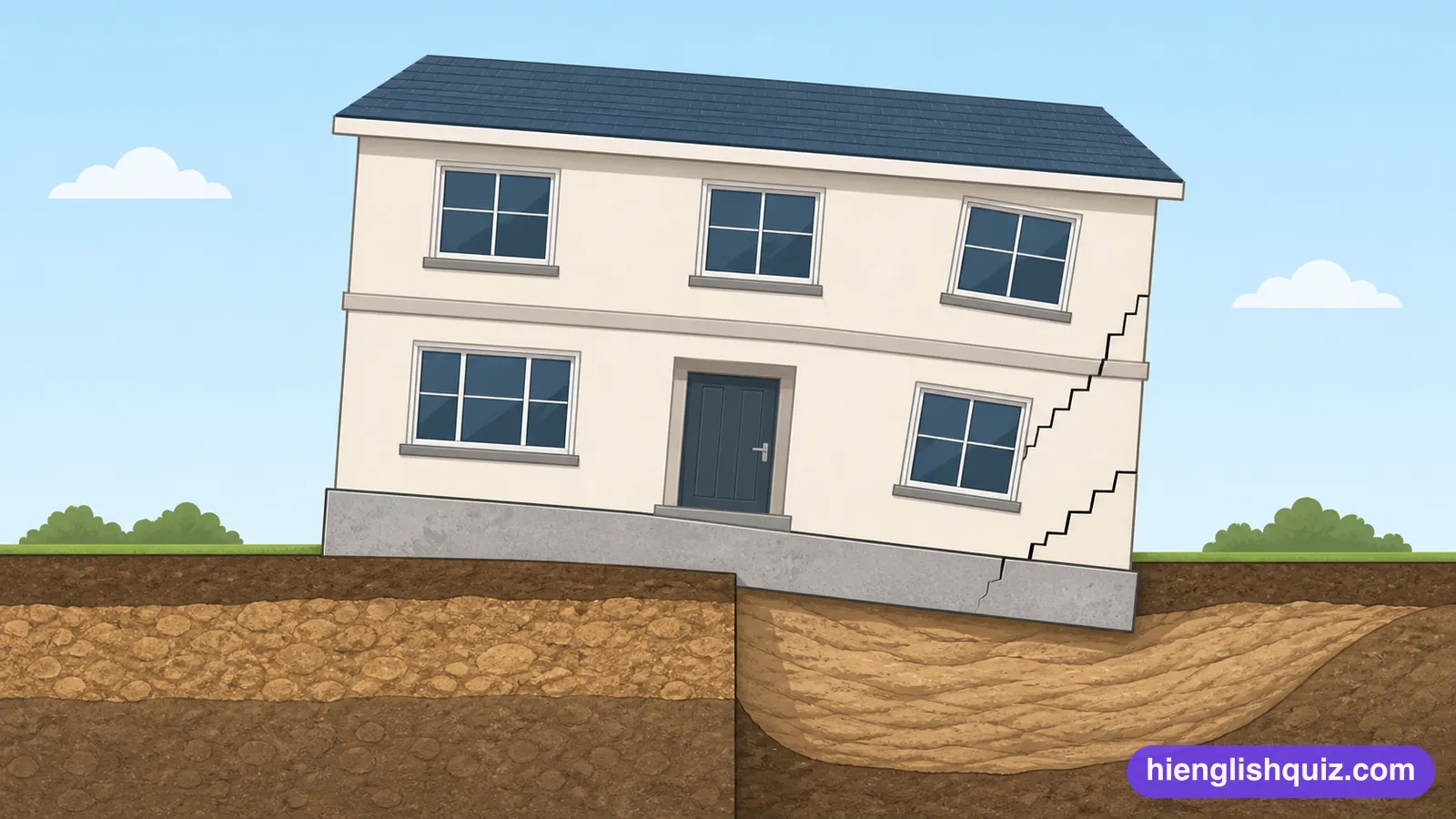
Ví dụ: Differential settlement put a crack the width of a finger through the wall.
Ví dụ: A three-day charrette produced more than nine months of correspondence.

Ví dụ: The wayfinding was so poor that staff drew their own maps.

Ví dụ: Biophilic design turned out to be cheaper than the wellness consultant.

Ví dụ: They paved the desire line rather than fencing it, for once.