selvedge
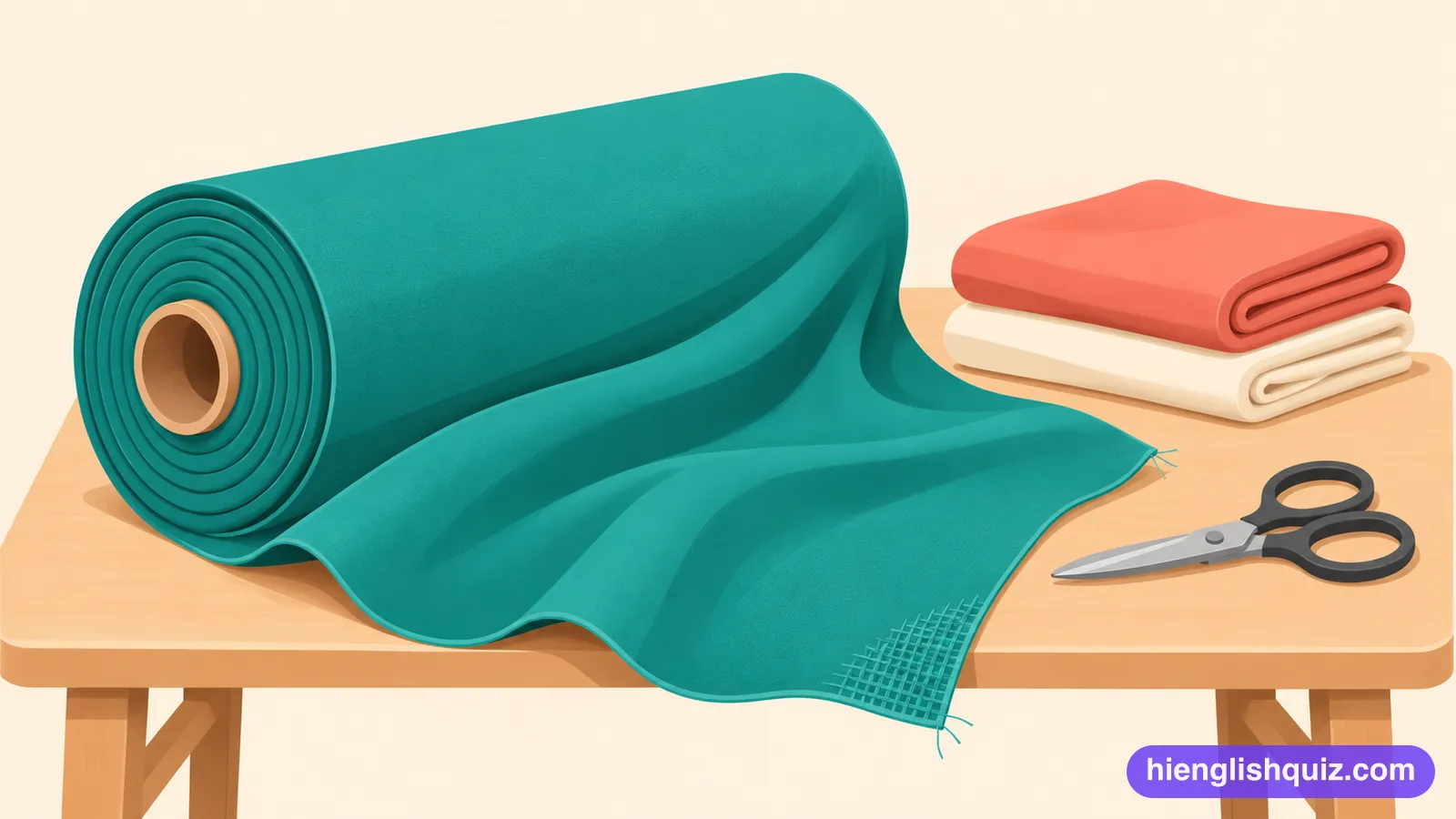
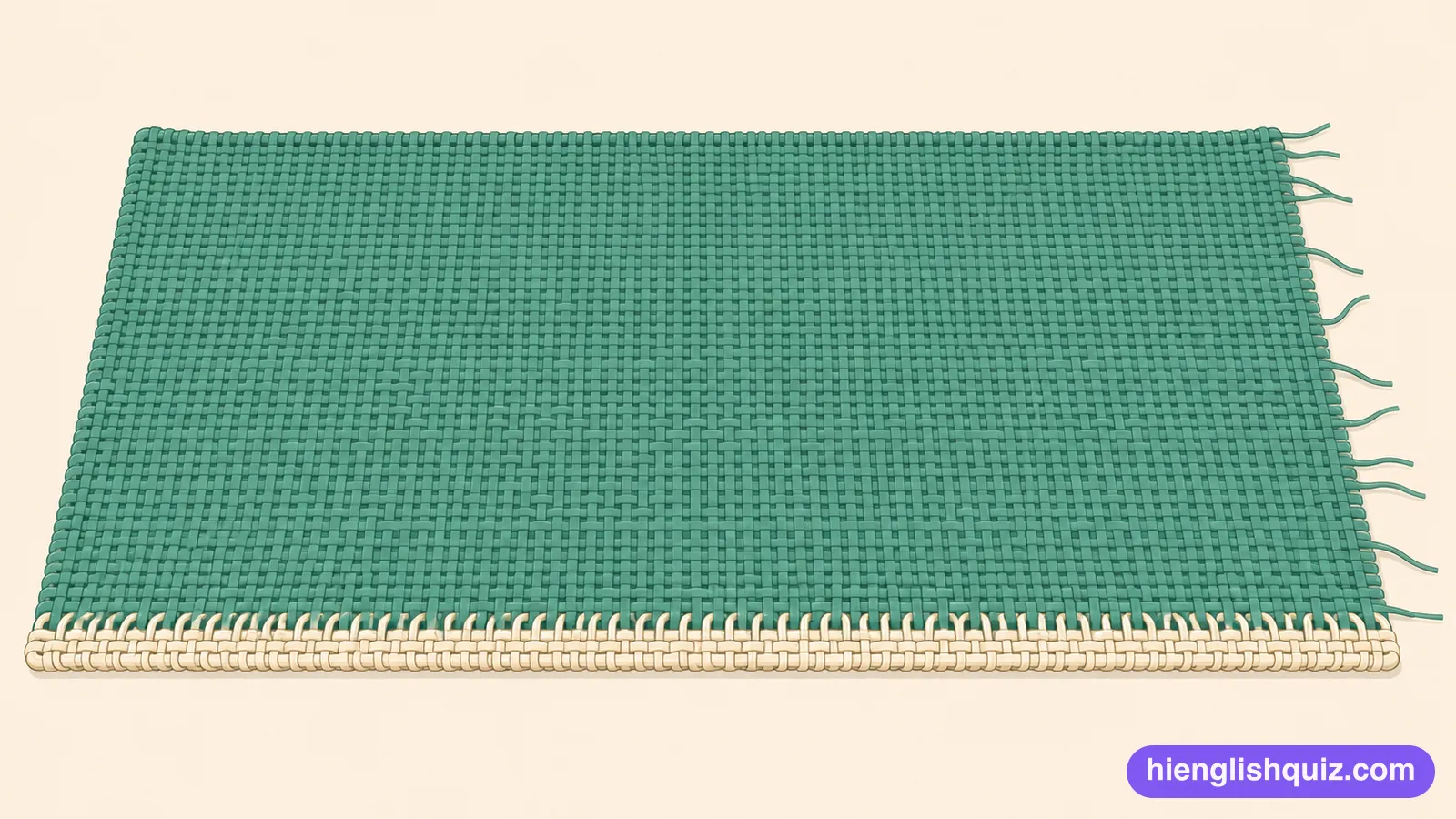
The finished edge woven along each side of a fabric, which stops it from coming apart.
Example: Check that the selvedge is straight before you lay the pattern pieces.
 Hi EnglishQuiz
C224 words · Proficient
Specialist vocabulary for fibre processing and cloth finishing, from retting, carding and the spinneret to fulling, mercerization and calendering, plus weaves such as twill, jacquard and dobby.
The finished edge woven along each side of a fabric, which stops it from coming apart.
Example: Check that the selvedge is straight before you lay the pattern pieces.
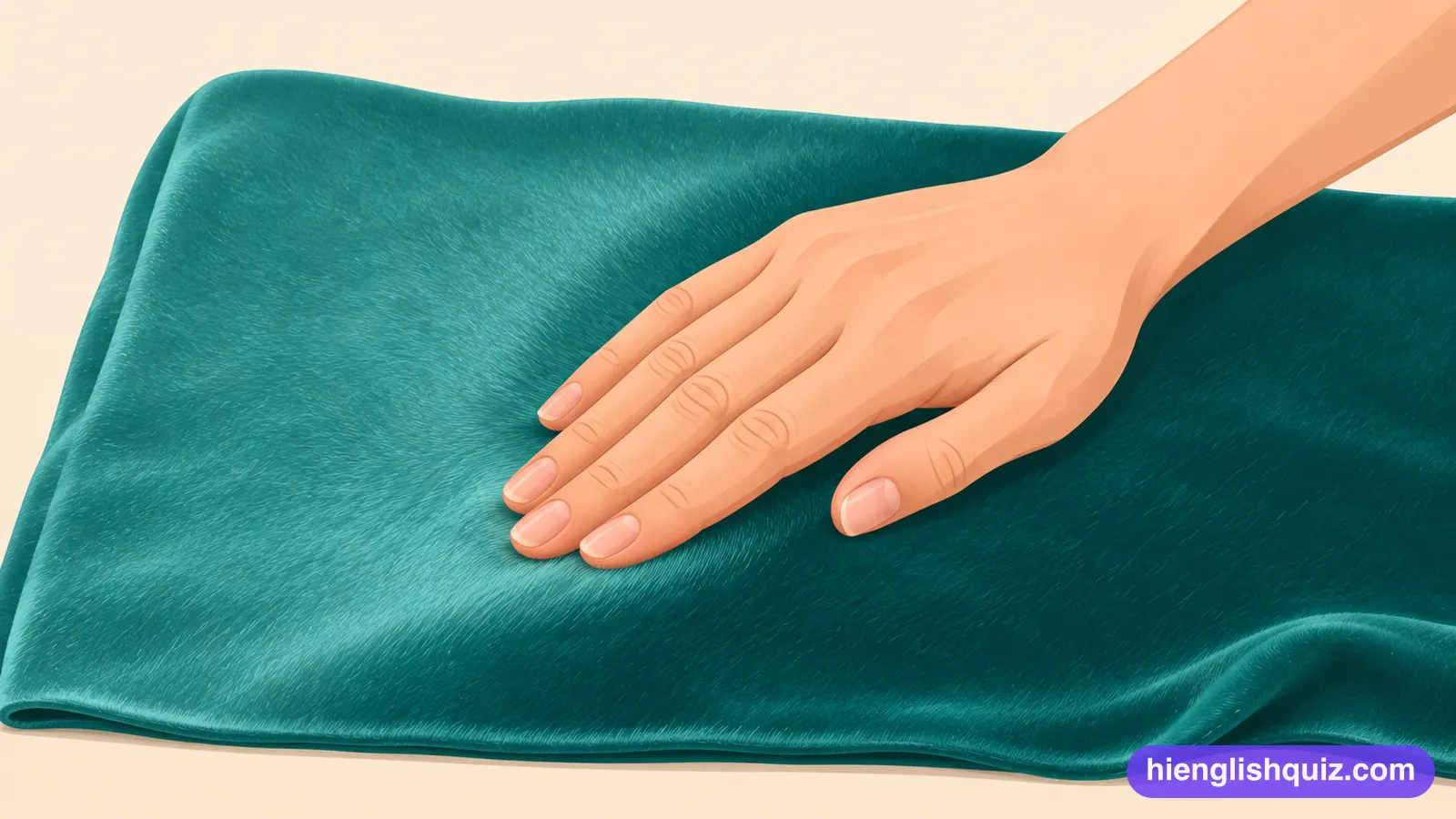
The soft raised surface of short fibres on some cloth, which looks different when stroked in opposite directions.
Example: All the pieces must face the same way, or the nap will look uneven.
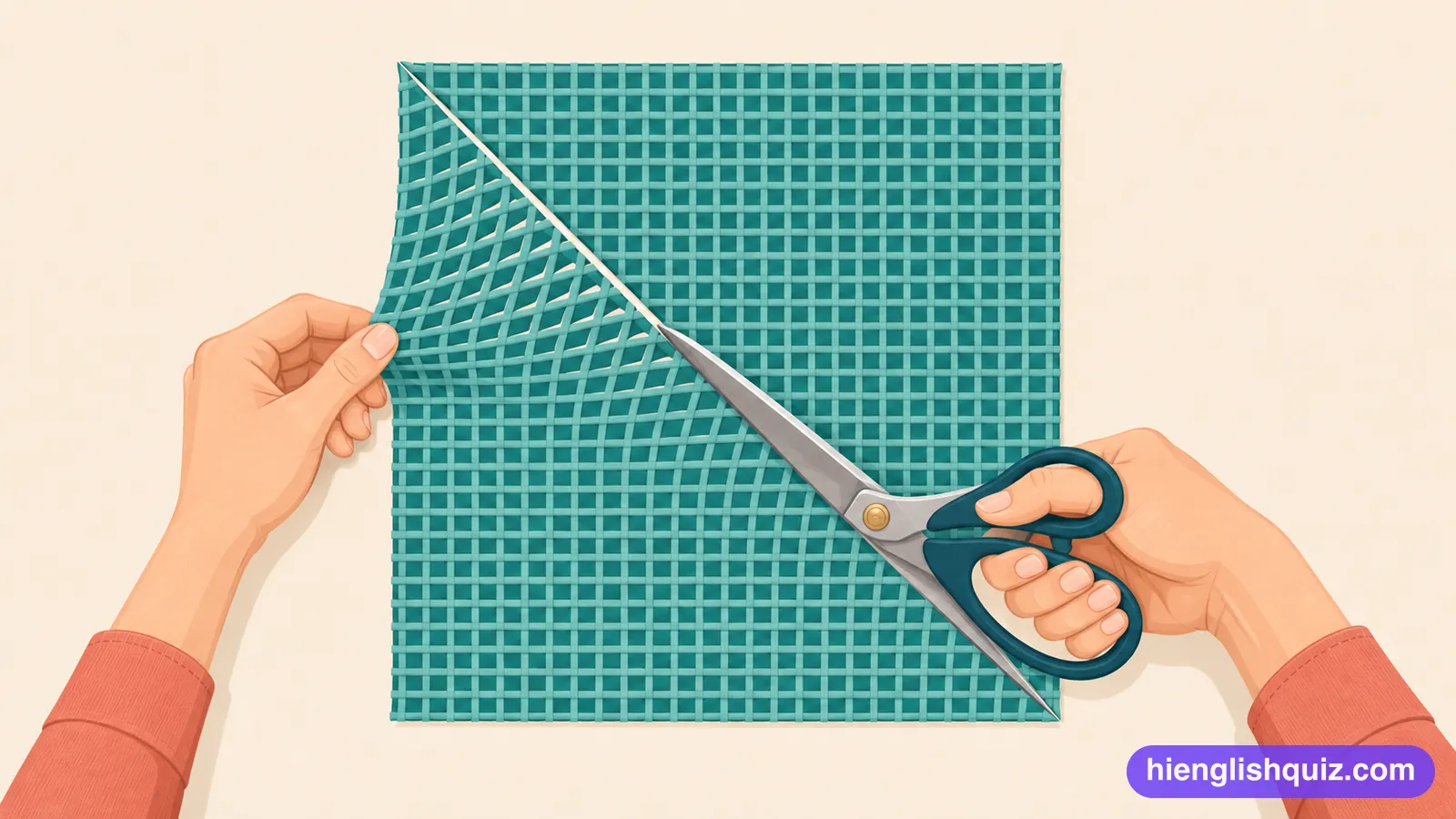
The diagonal direction across woven cloth, at forty-five degrees to its threads, where it stretches most.
Example: She cut the skirt on the bias so it would drape softly.
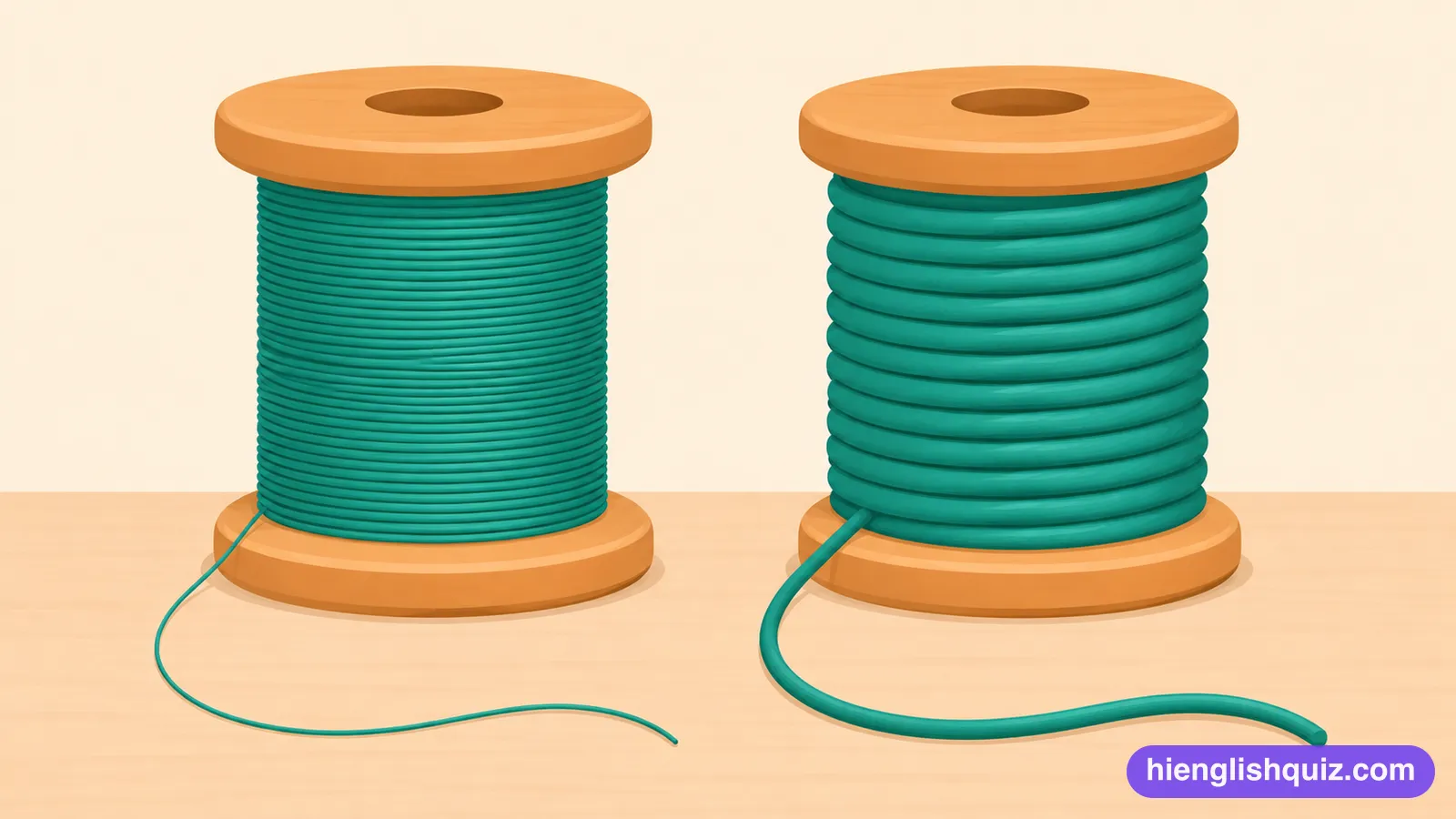
A unit that shows how thick a single thread or fibre is, based on its weight over a fixed length.
Example: Sheer stockings usually have a much lower denier than winter tights.
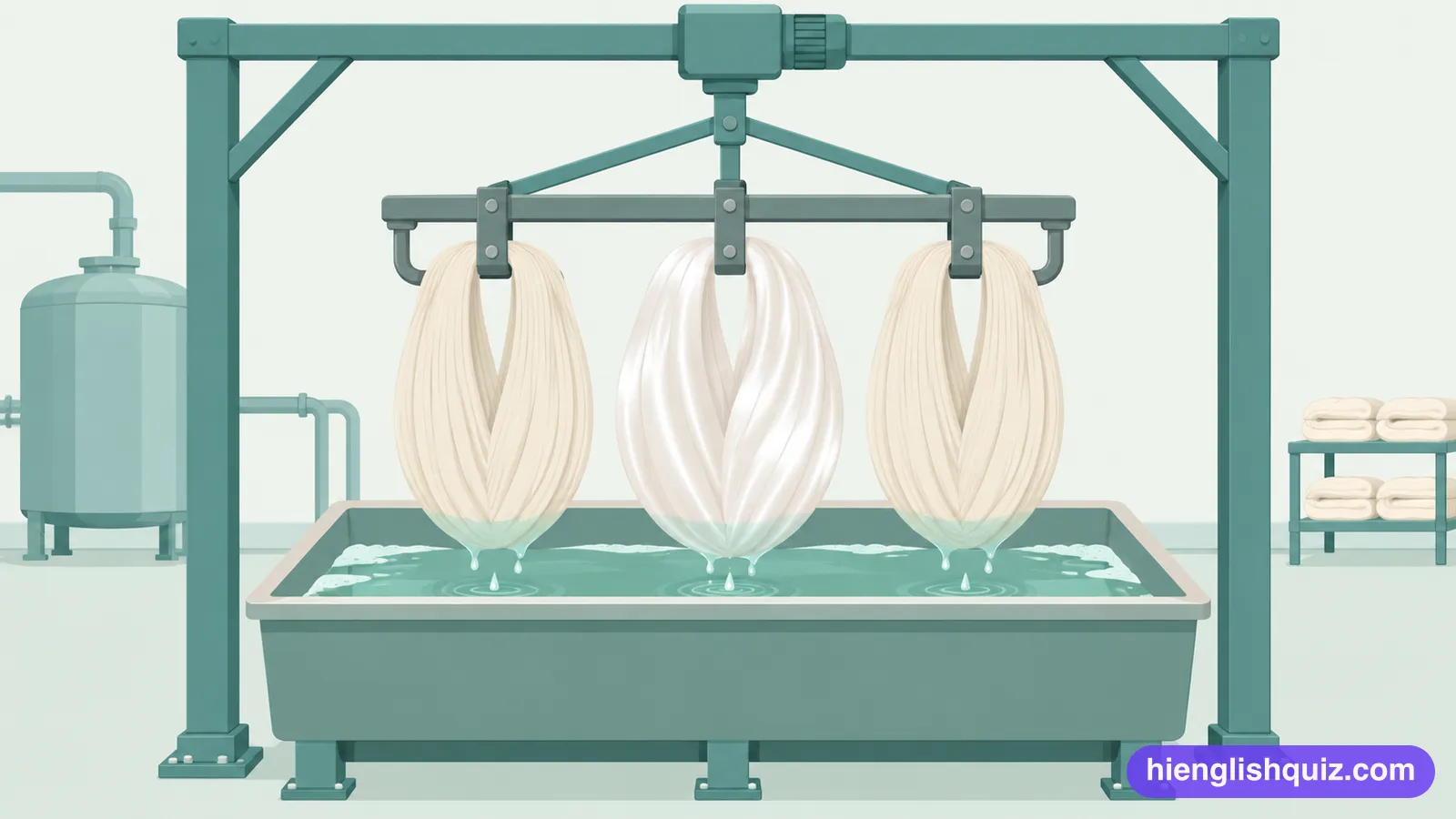
A treatment that soaks cotton in strong alkali so it becomes stronger, shinier and takes dye better.
Example: Mercerization gives these cotton shirts their glossy finish and deep, even colour.
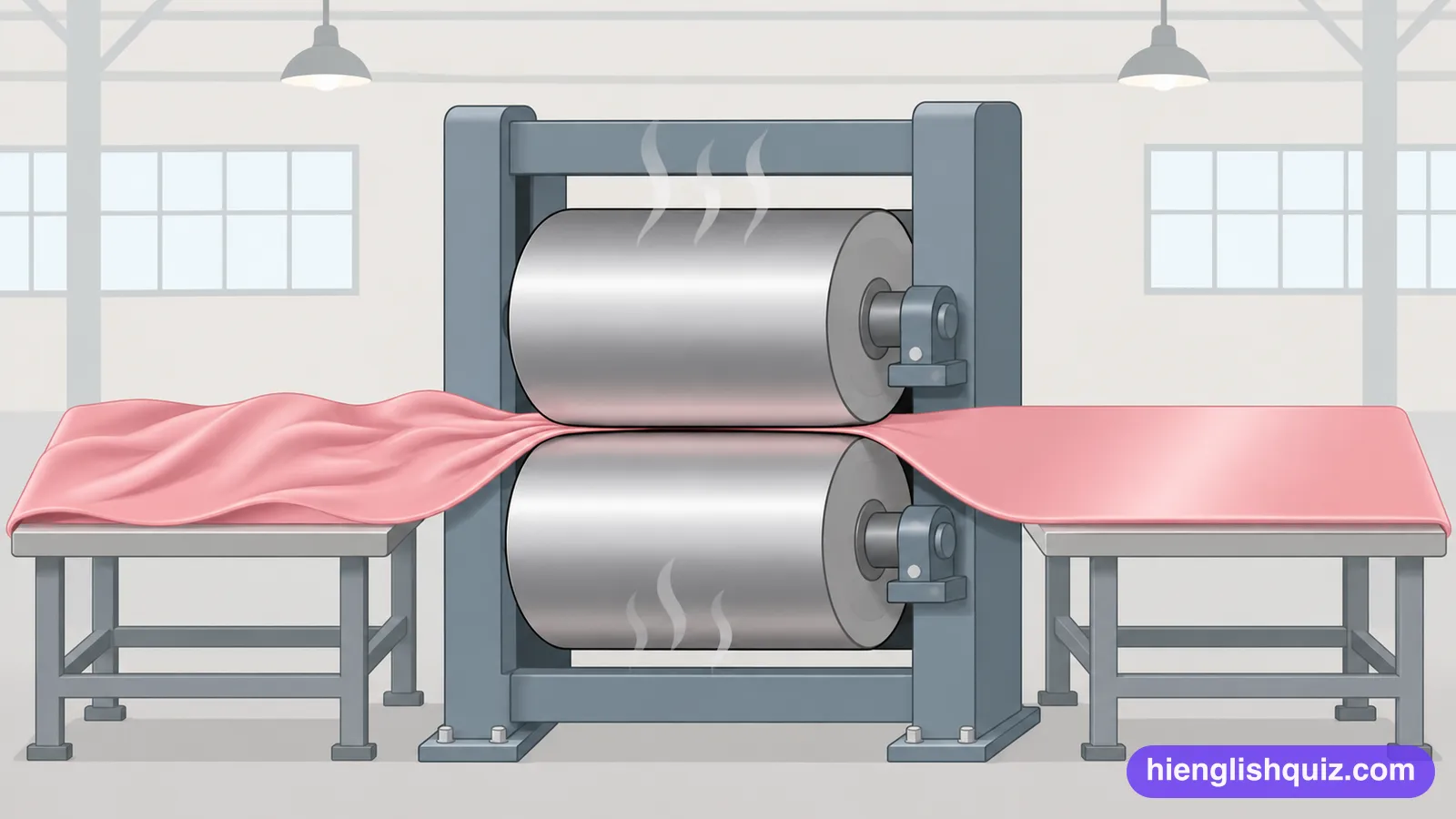
Passing cloth between heated rollers under pressure to make it smooth, flat and glossy.
Example: After calendering, the cotton comes off the line flat and slightly shiny.
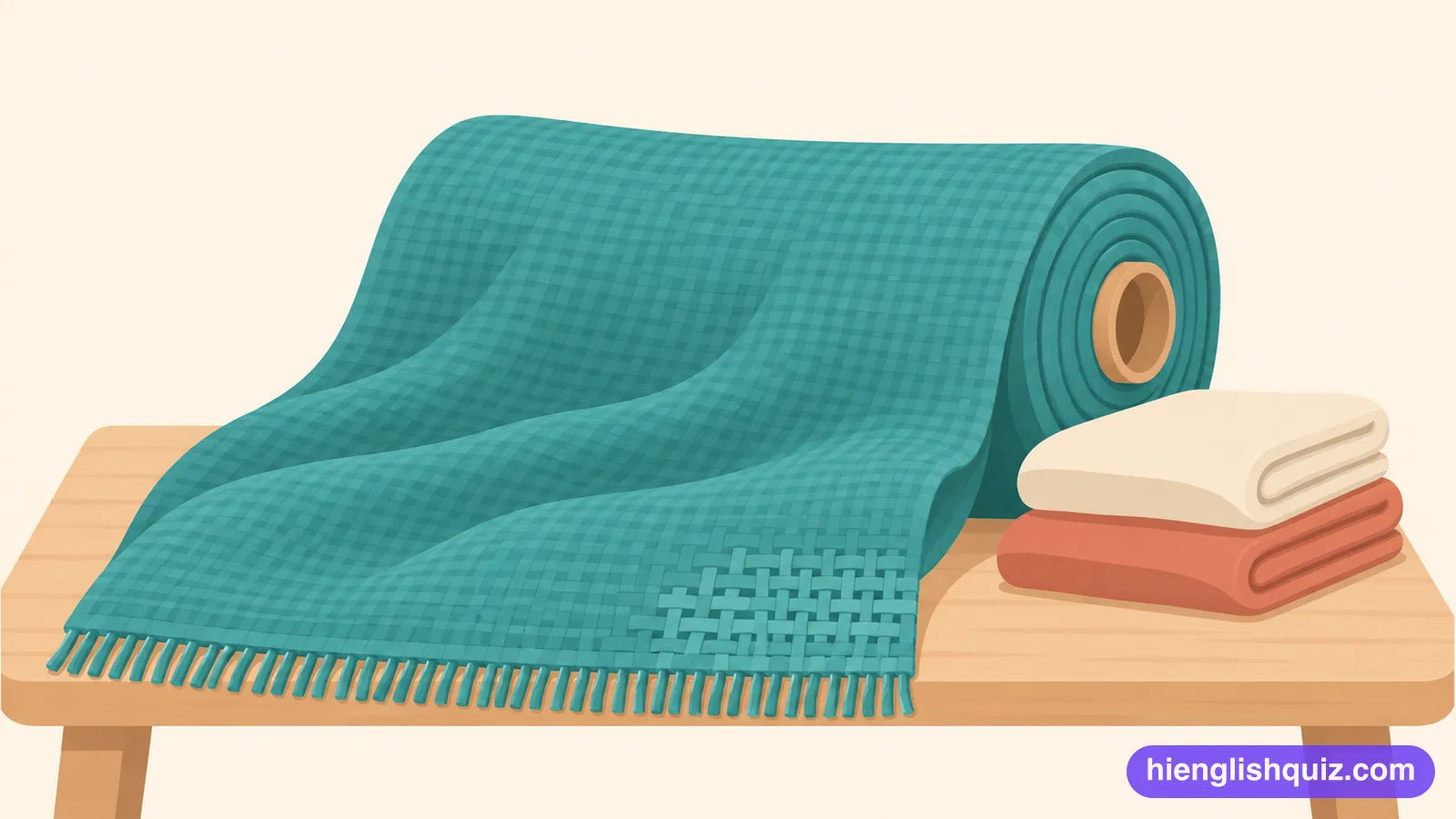
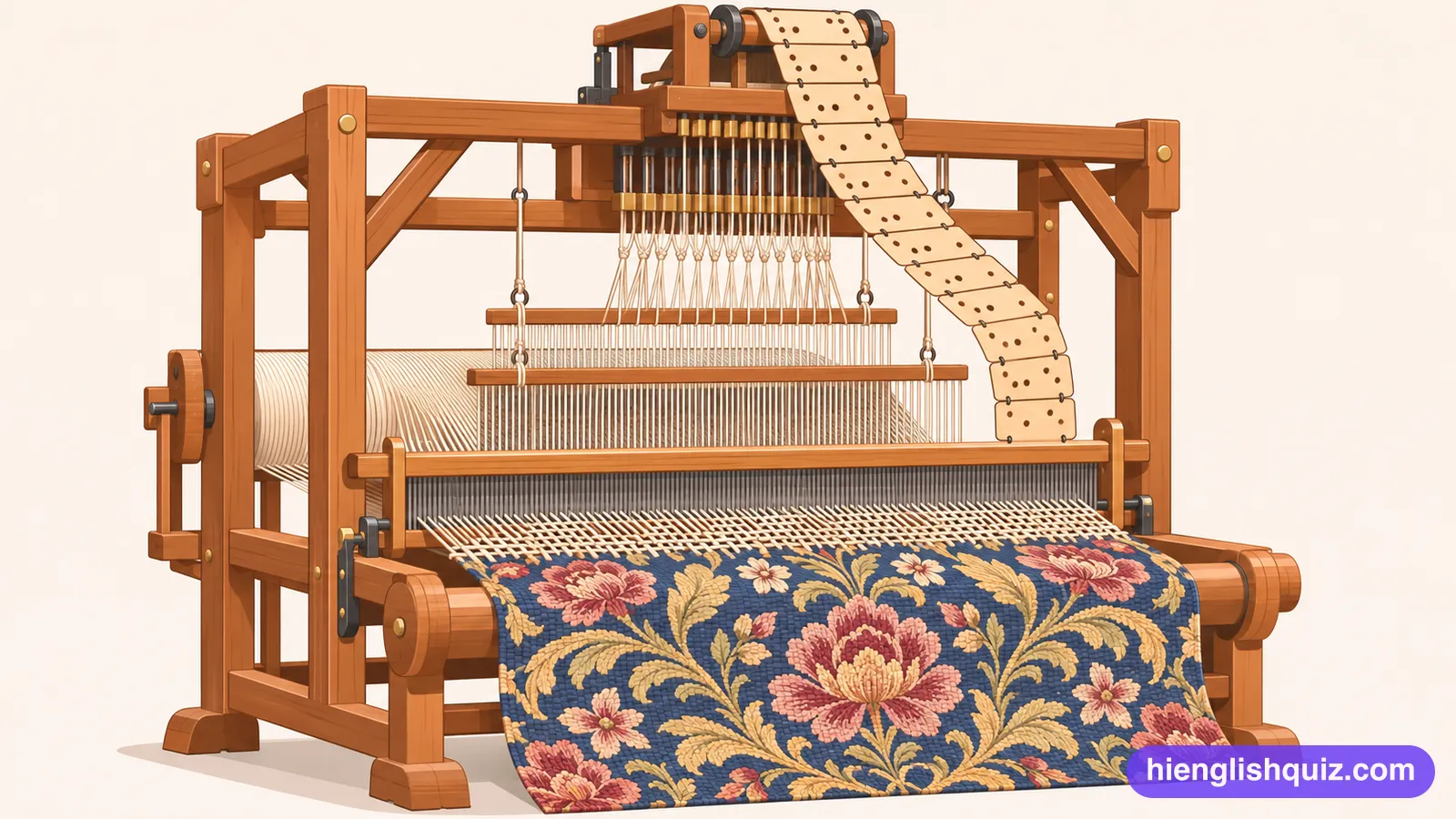
A fabric with a complex woven-in pattern, made on a loom that controls each lengthwise thread separately.
Example: The curtains are a heavy jacquard with a floral pattern woven into them.
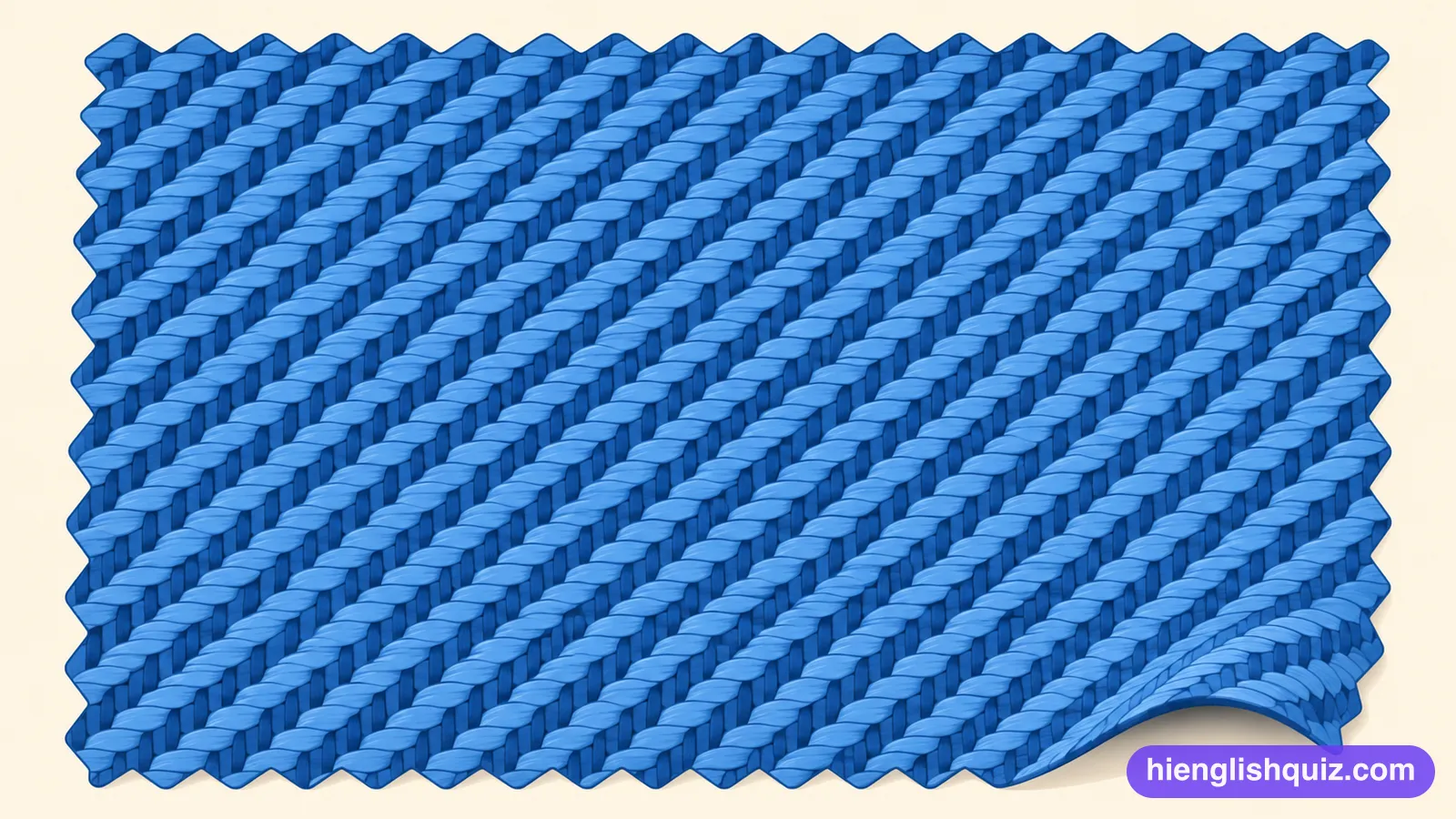
A woven fabric with fine diagonal lines on its surface, made by passing each thread over two or more others.
Example: The work trousers are made of strong cotton twill that rarely creases.
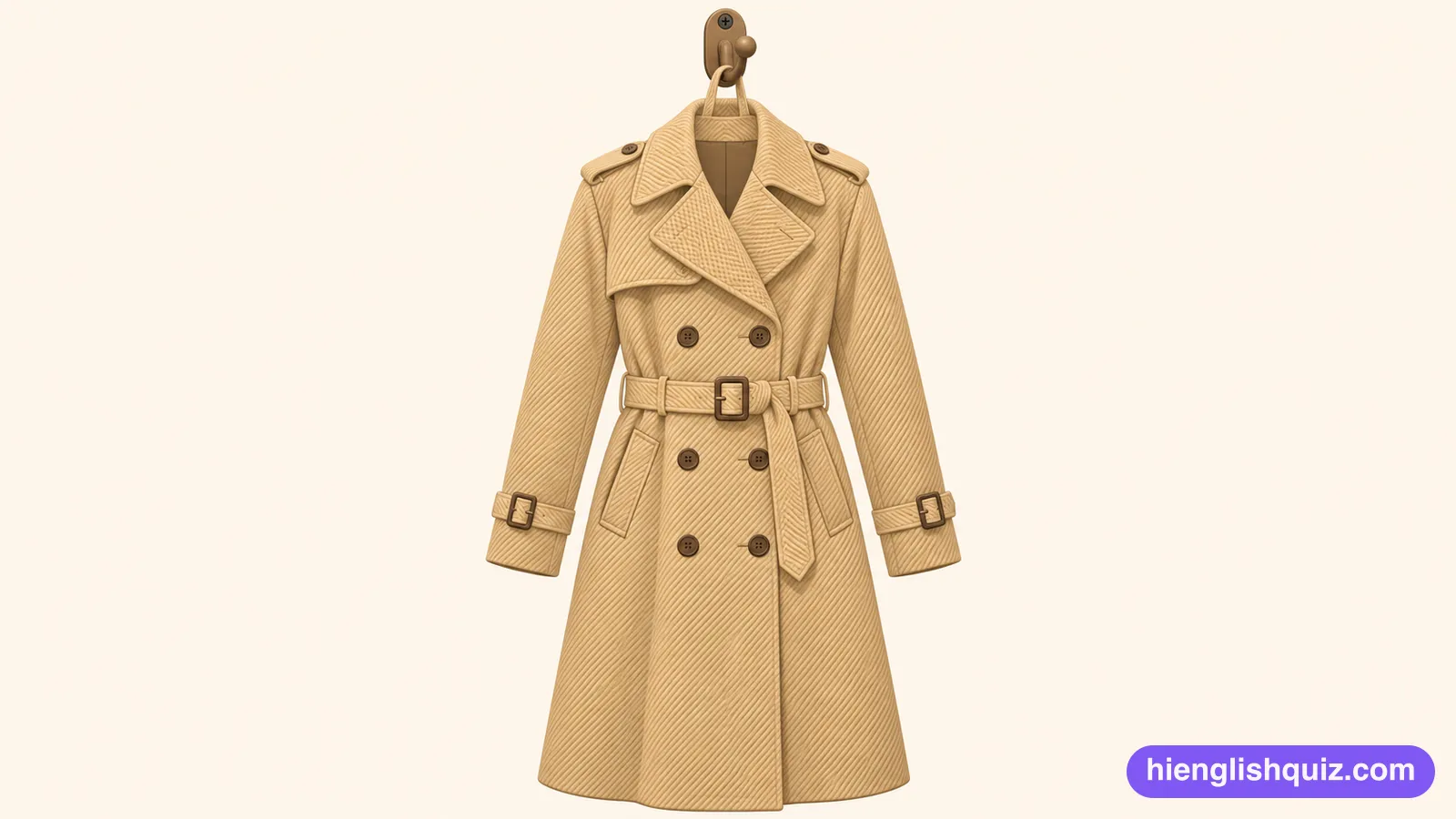
A tough, tightly woven fabric with fine diagonal ribs, used for raincoats and suits.
Example: His old gabardine coat kept out the rain on the long walk home.
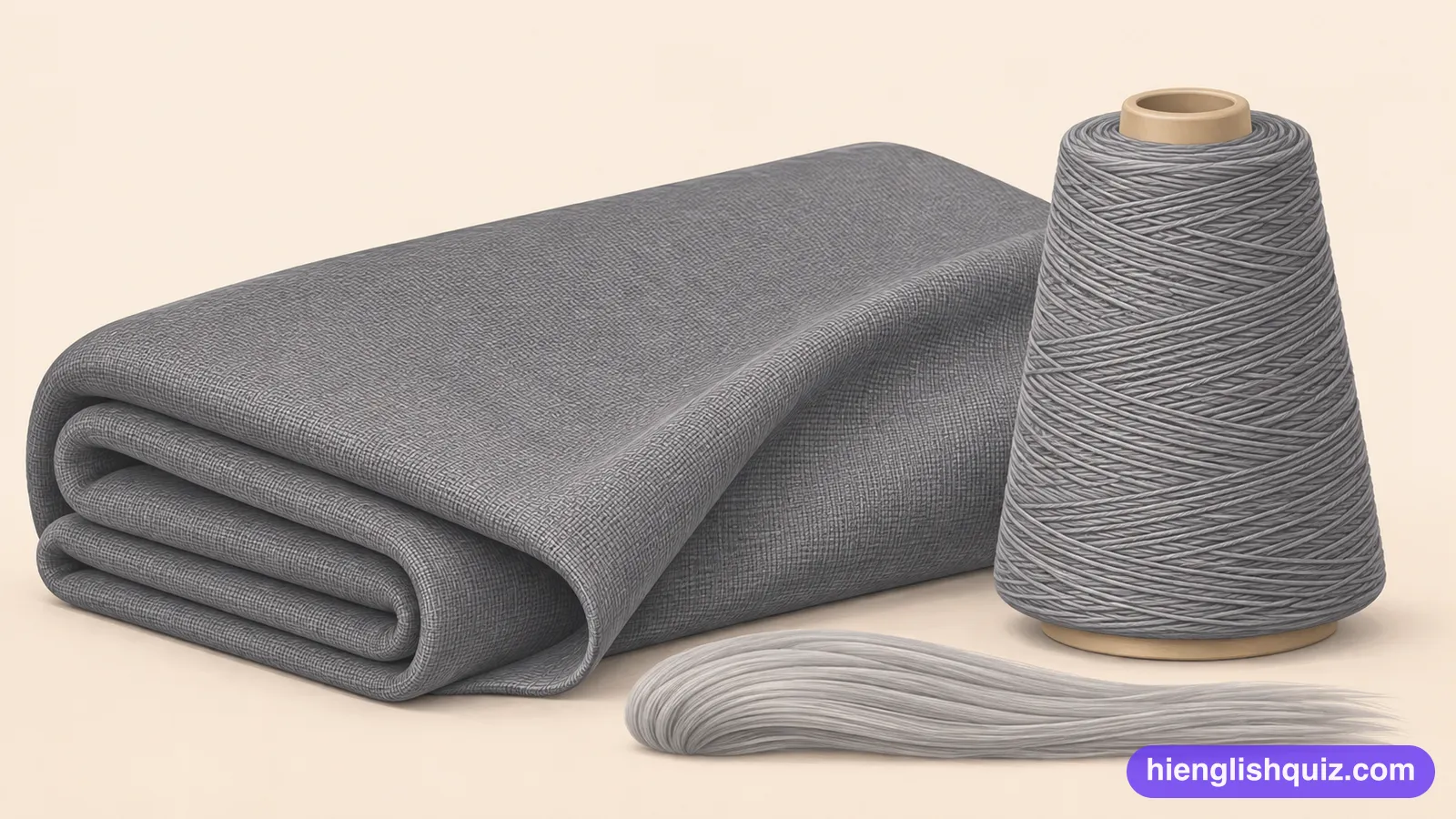
A smooth, hard-wearing wool cloth or yarn made from long fibres combed straight before spinning.
Example: His navy worsted suit held its crease through the whole journey.
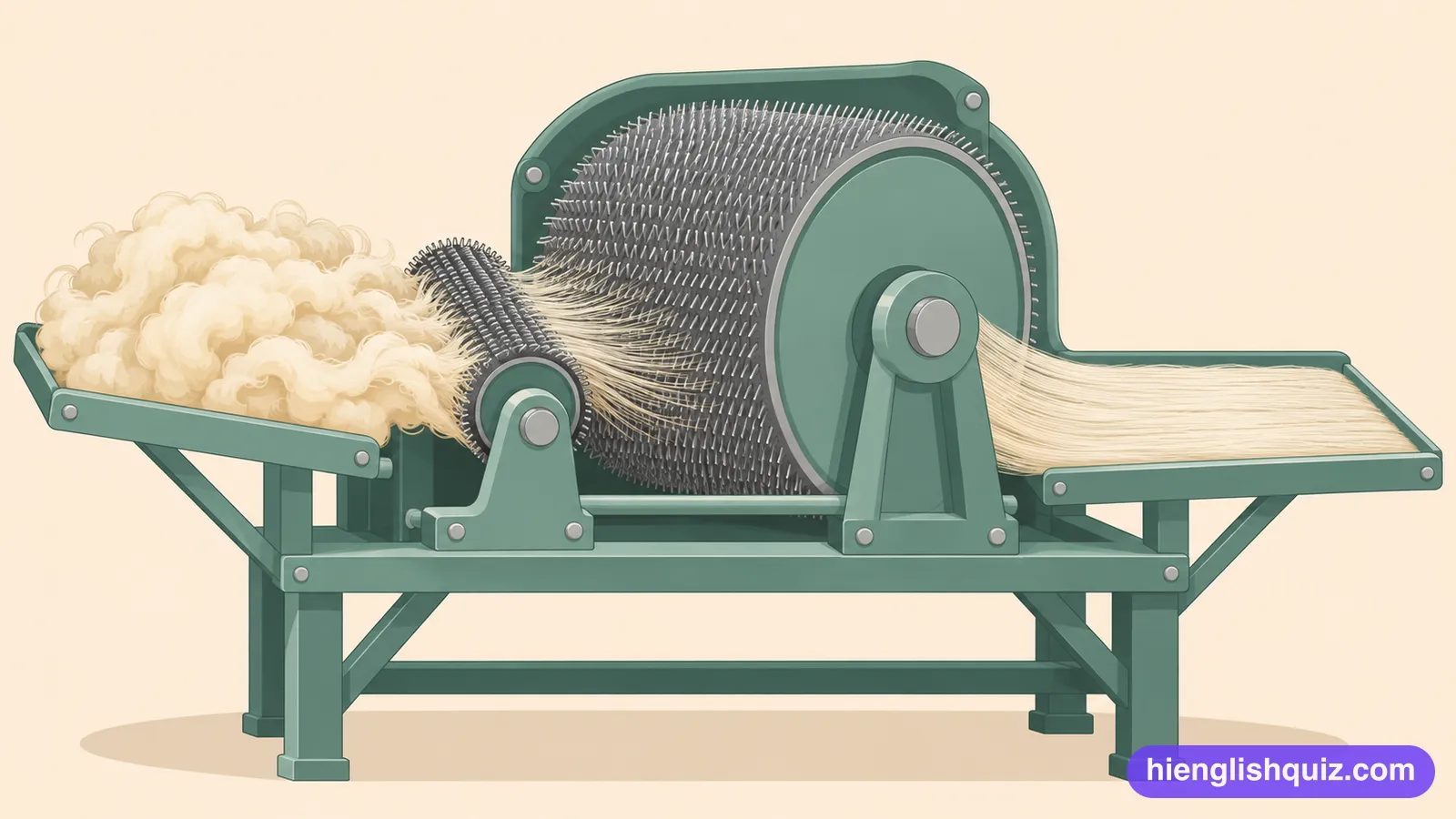
Brushing raw fibres between surfaces with wire teeth to untangle them and line them up before spinning.
Example: Carding turns the tangled raw wool into soft, even sheets of fibre.
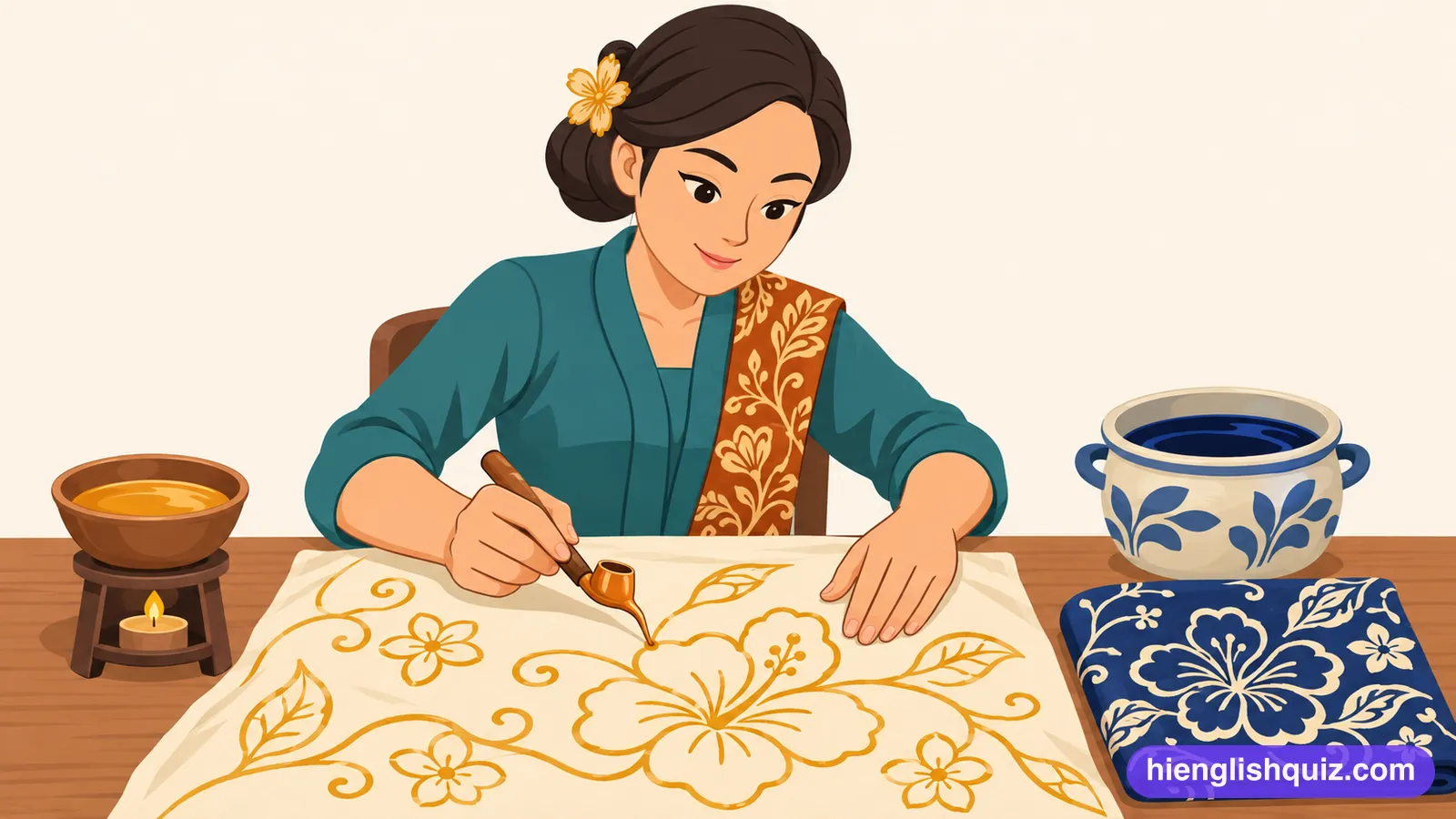
Cloth with a pattern made by covering parts of it with wax before dyeing it.
Example: She wore a bright batik scarf that she bought at the market.
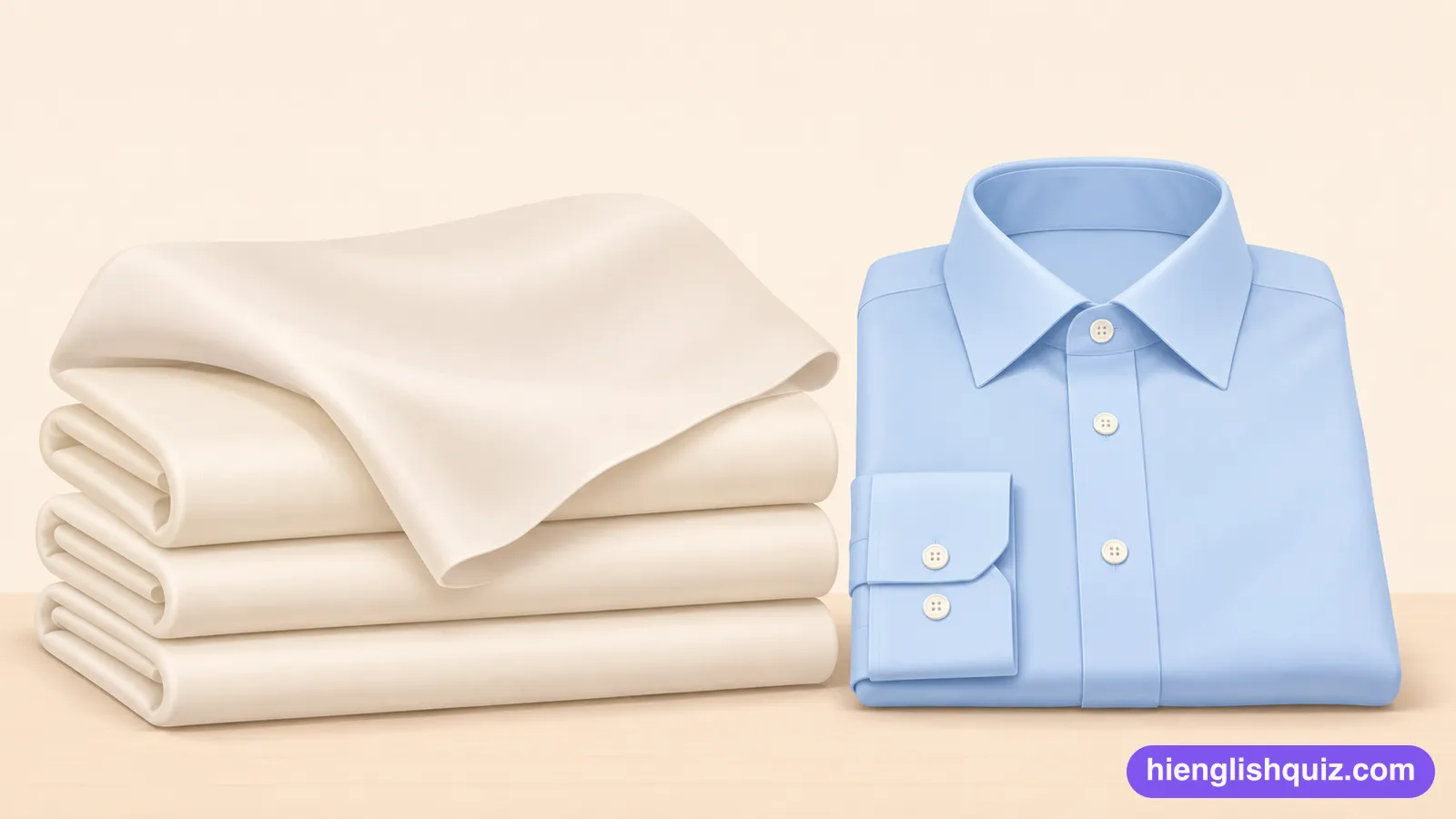
A smooth, tightly woven cotton or wool fabric with a fine finish, often used for dress shirts.
Example: His crisp white broadcloth shirt looked smart under the dark jacket.
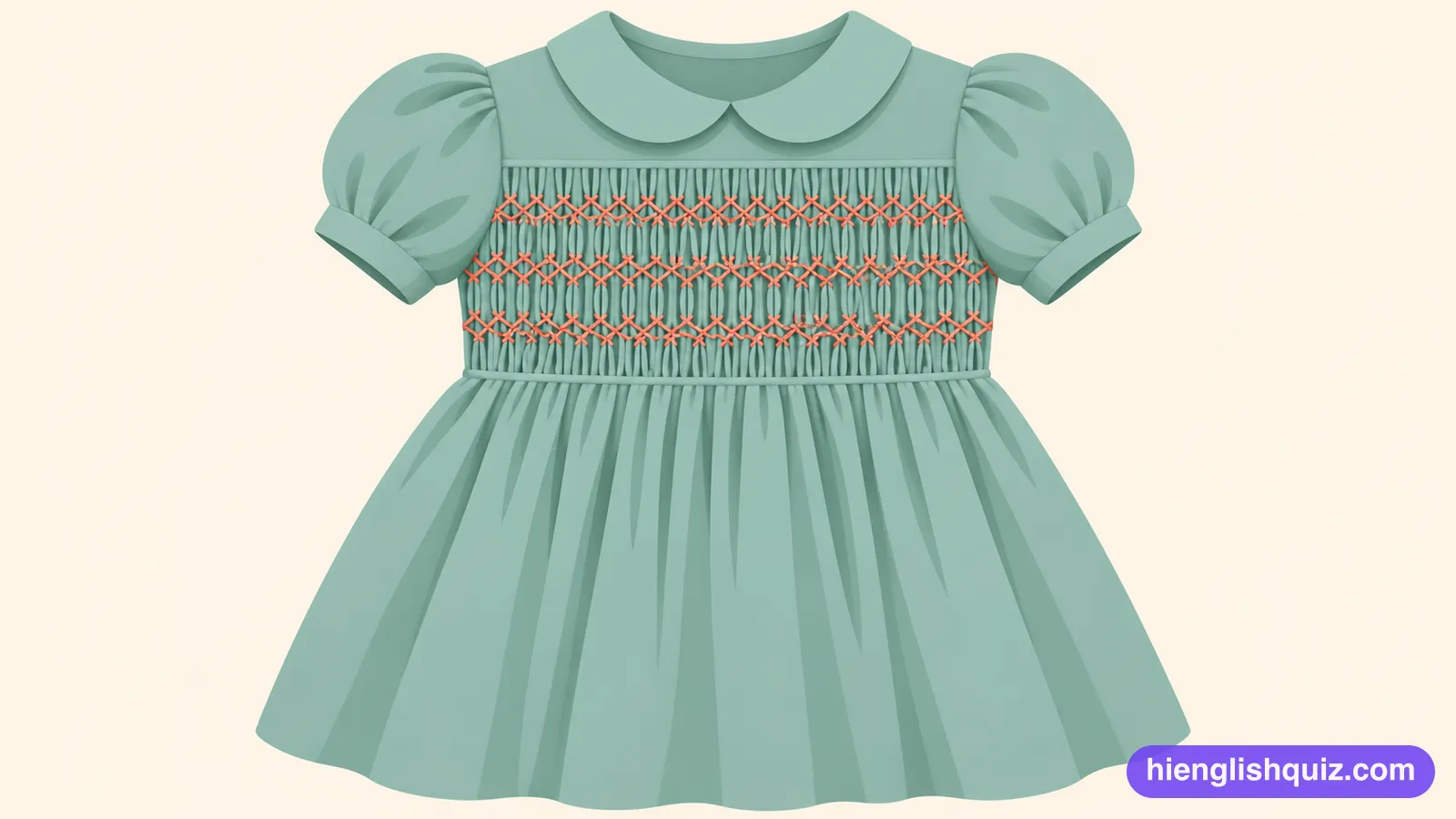
Decoration made by gathering cloth into tight folds and holding them with rows of small decorative stitches.
Example: The little dress had delicate smocking across the chest.
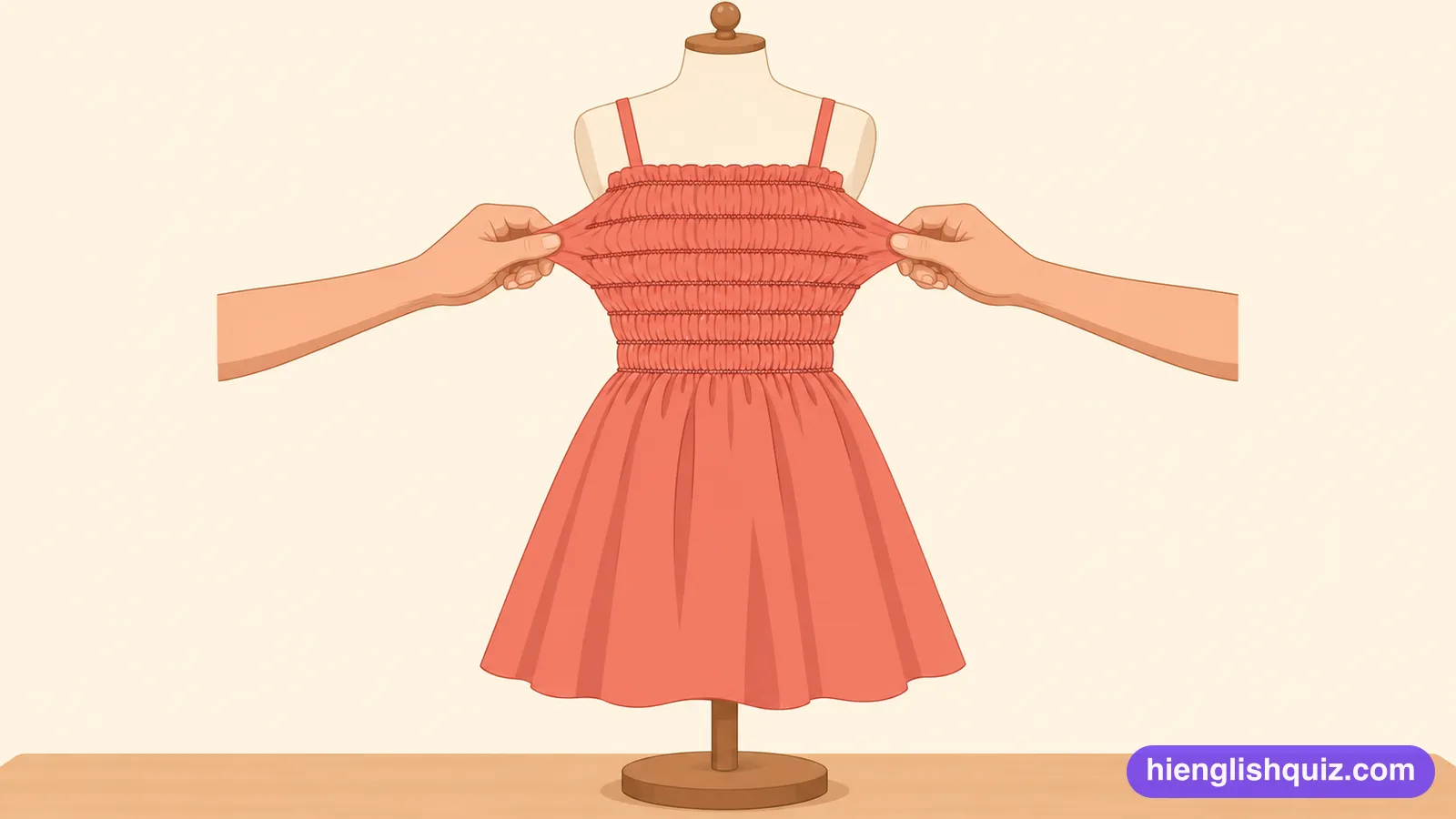
Gathering cloth into several parallel rows with elastic thread so that it stretches and fits closely.
Example: The sundress has shirring at the waist, so it fits without a zip.
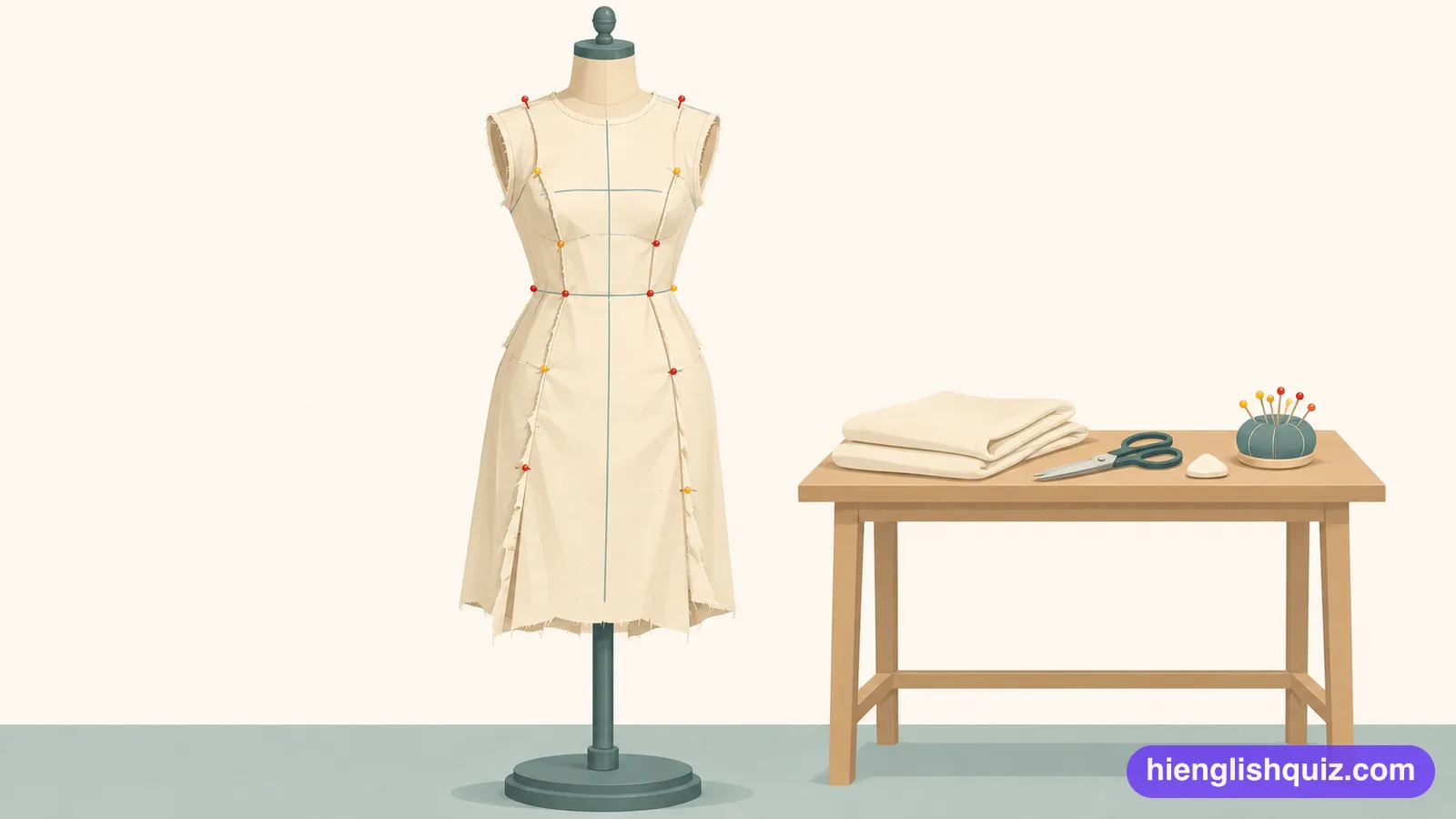
A plain, cheap cloth used to make a trial copy of a garment before cutting the final fabric.
Example: The designer fitted a toile on the model before cutting the silk.
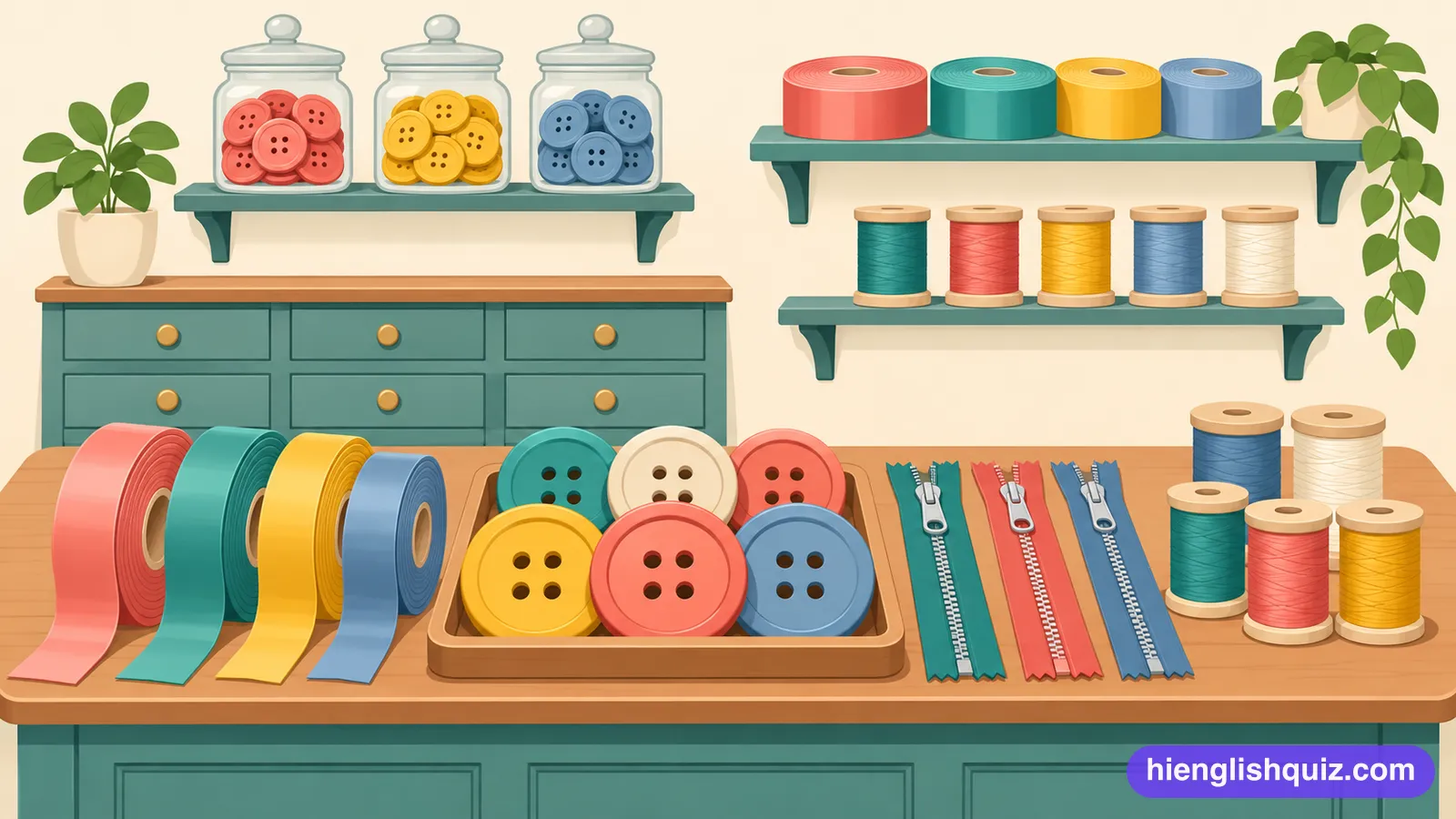
Small sewing goods such as buttons, ribbons and zips, or the shop that sells them.
Example: I need to pop into the haberdashery for some buttons and ribbon.
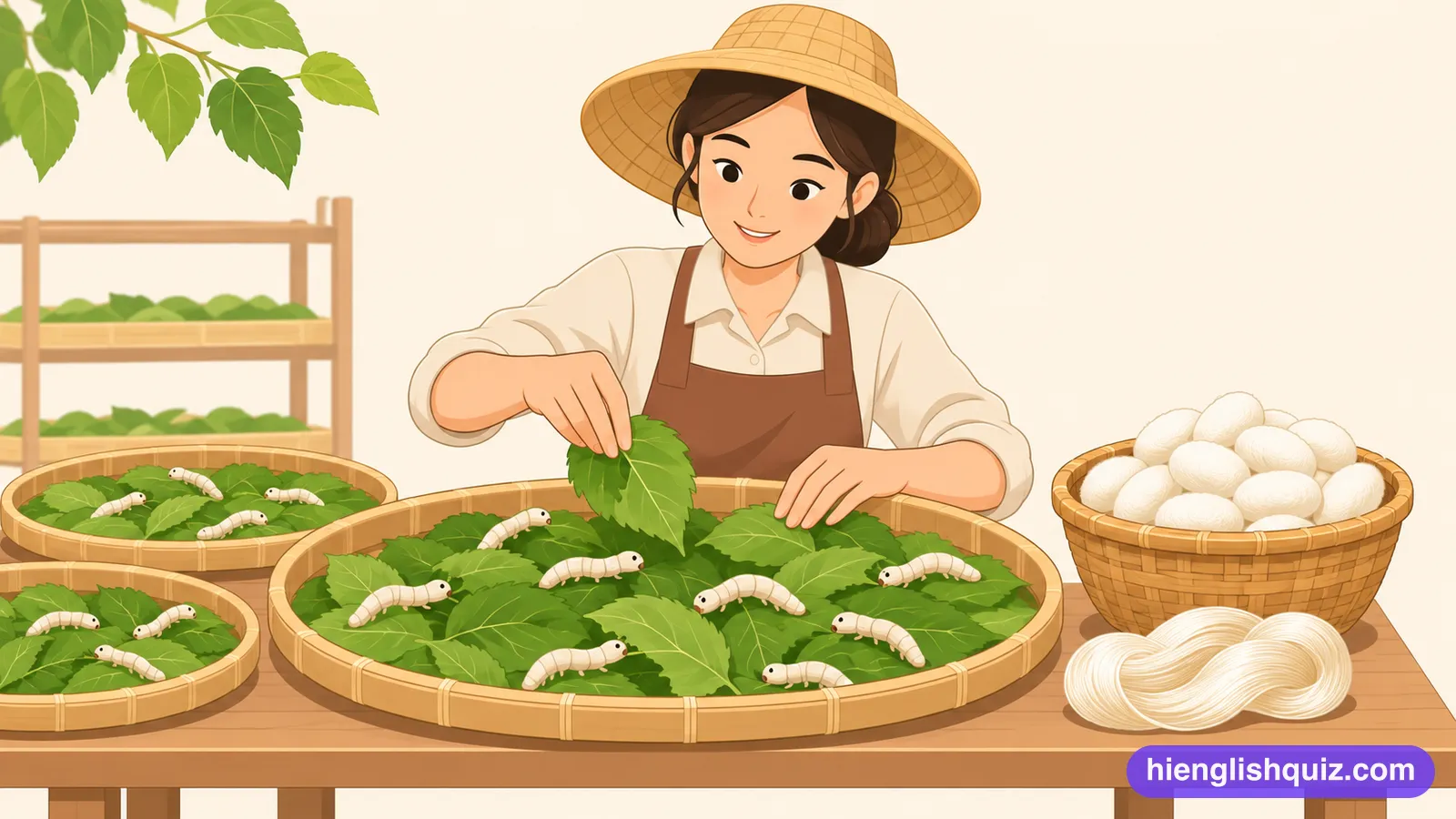
The farming of silkworms to produce raw silk.
Example: Villages in the region have practised sericulture for many centuries.
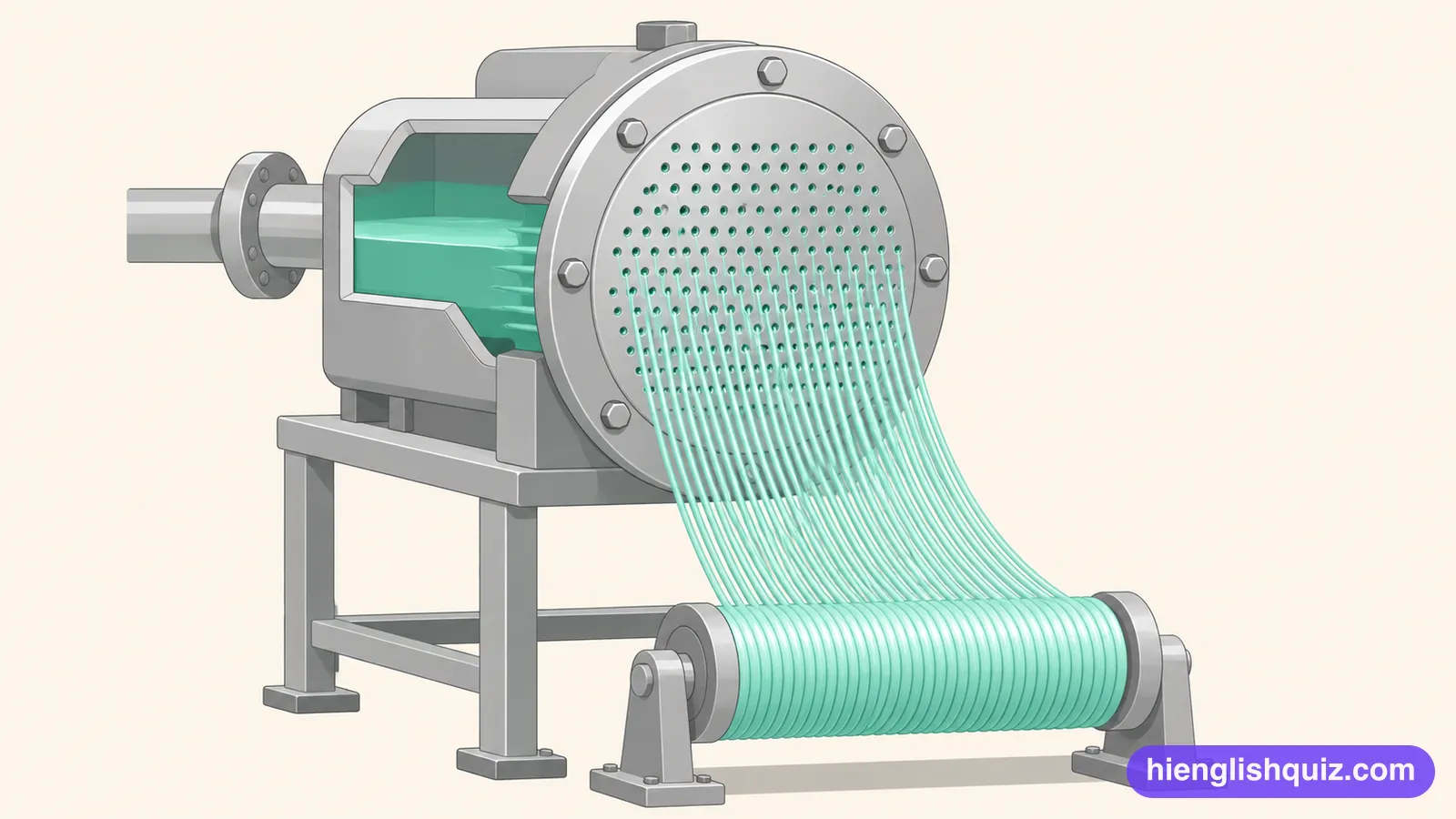
A plate with tiny holes through which liquid material is pushed to form man-made fibres.
Example: Molten polymer is forced through each spinneret to form a fine filament.
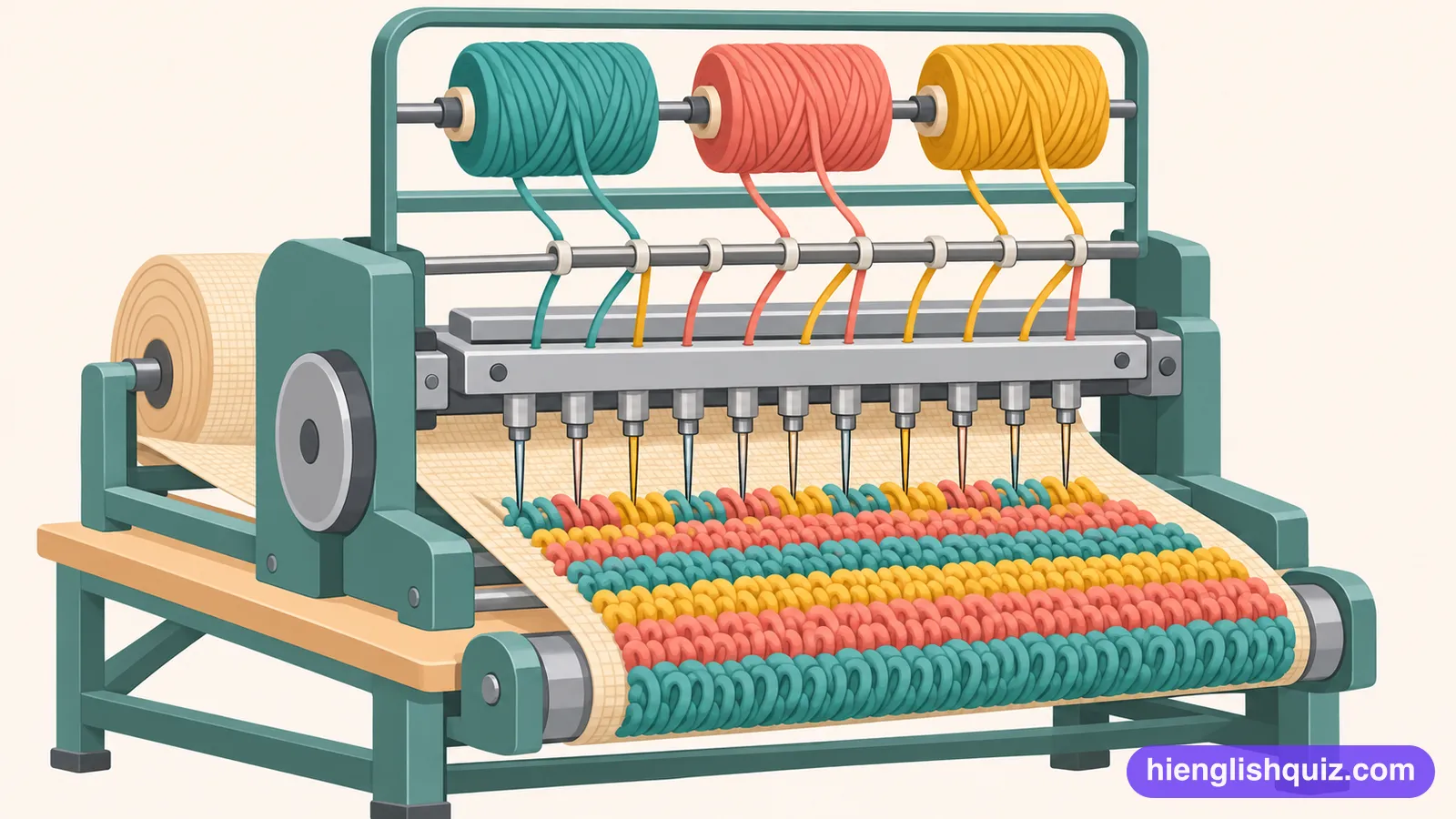
Making carpet by pushing loops of yarn through a backing cloth with needles.
Example: Most modern carpets are made by tufting rather than weaving.
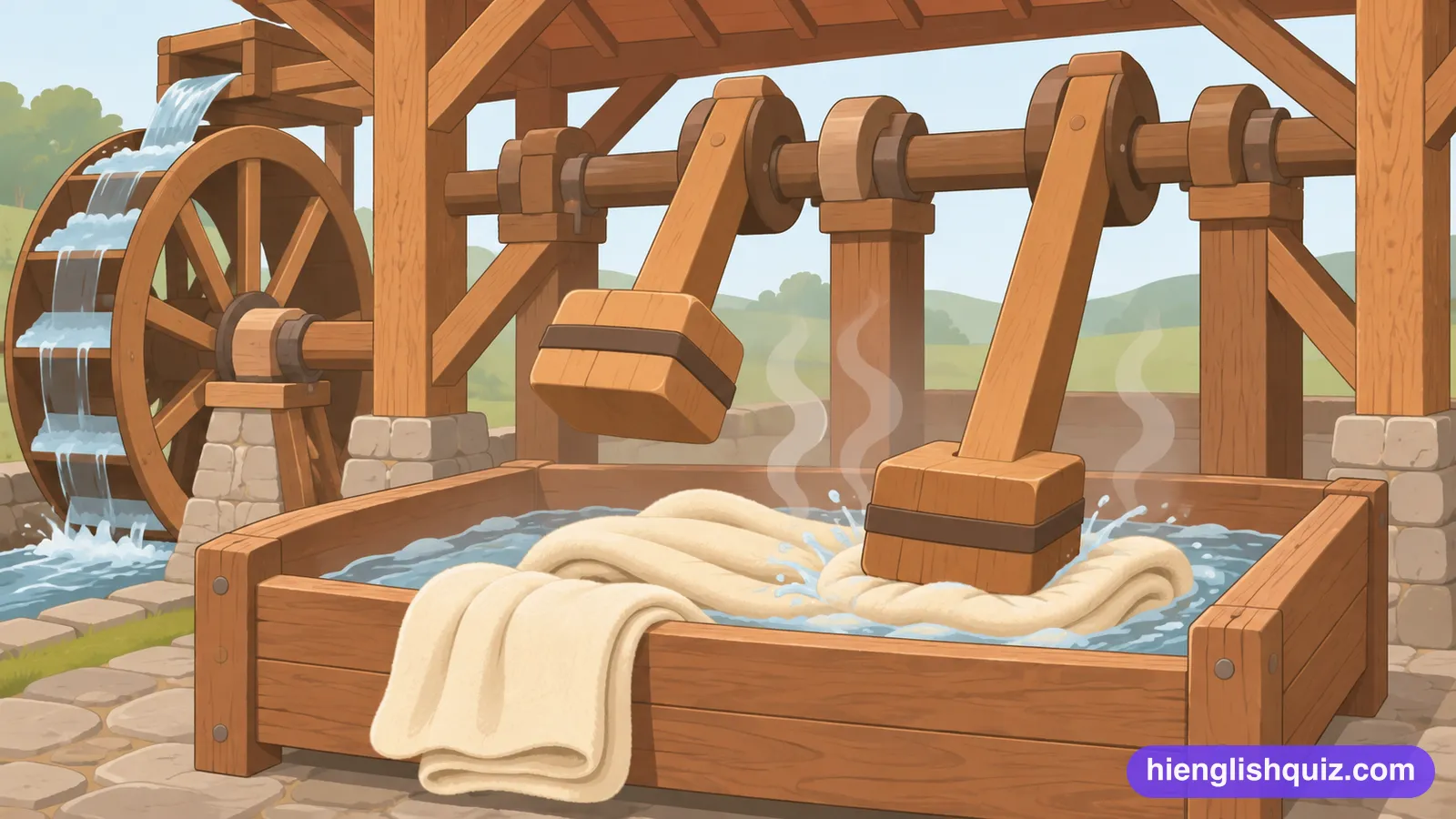
Washing and pressing wool cloth with moisture and heat so it shrinks and becomes thicker and denser.
Example: Blankets that go through fulling come out soft, heavy and warm.
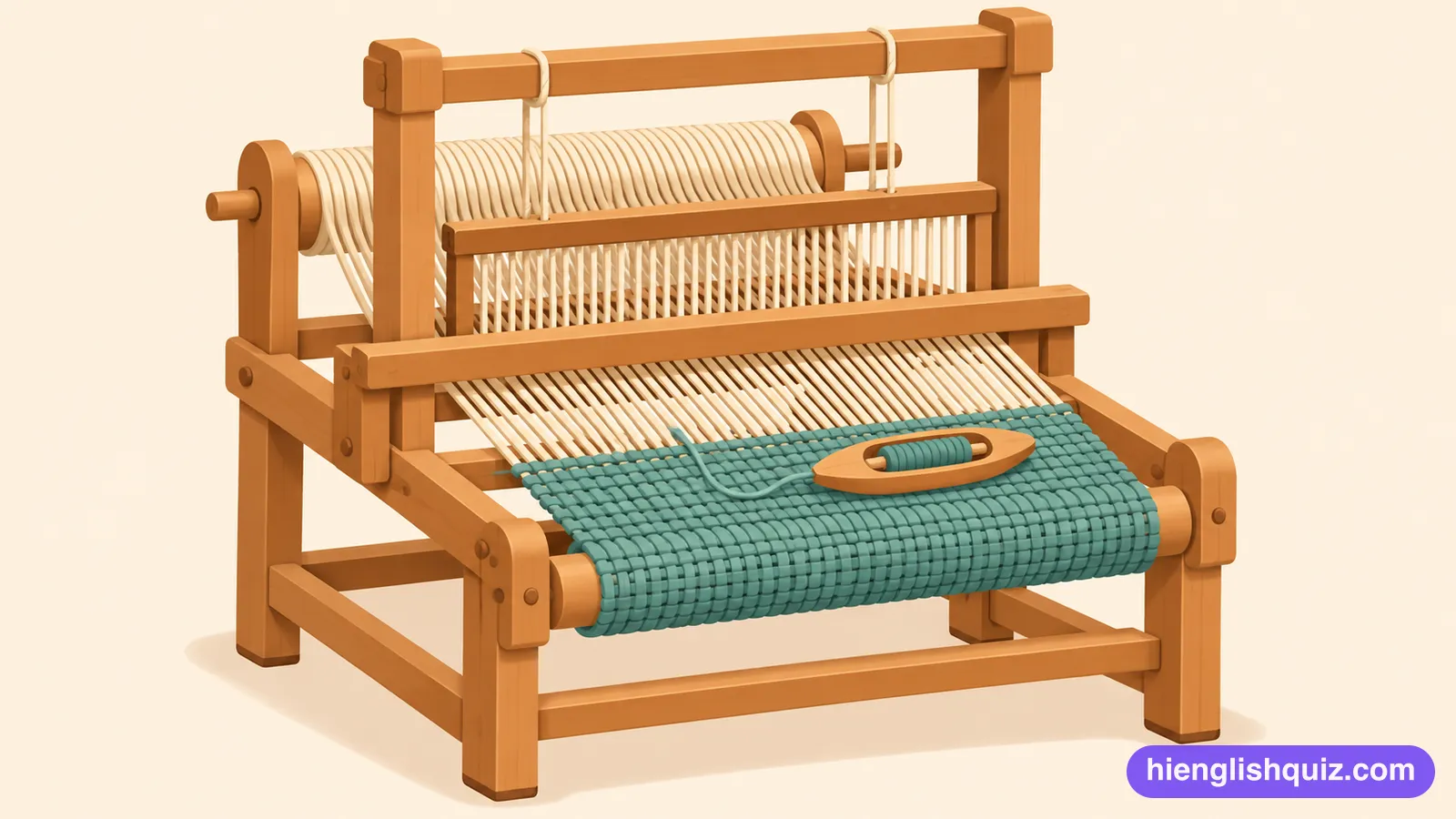
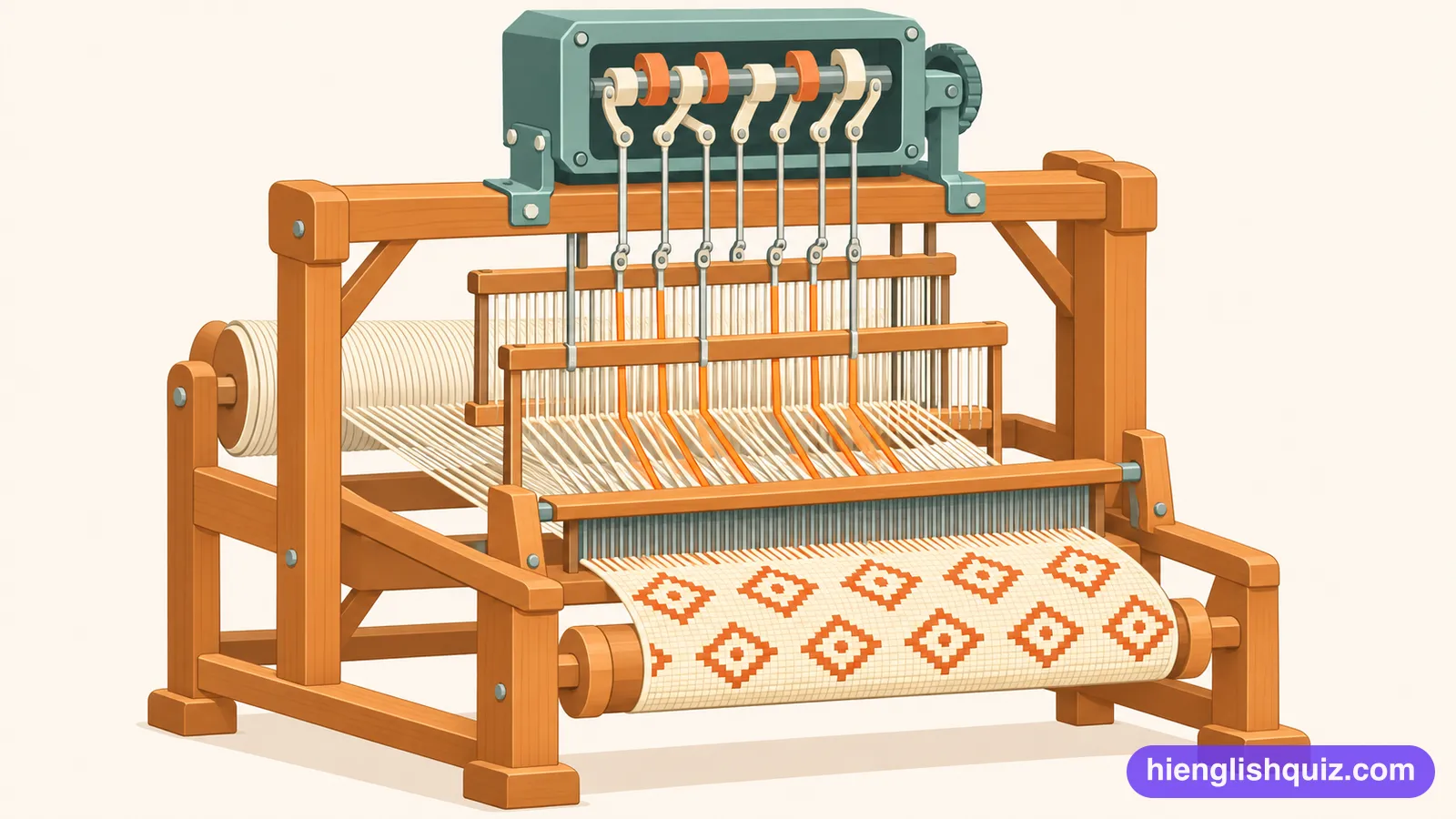
A loom device that lifts chosen threads to weave small, regular geometric patterns.
Example: Our mill uses a dobby to add tiny diamonds to its shirt fabric.
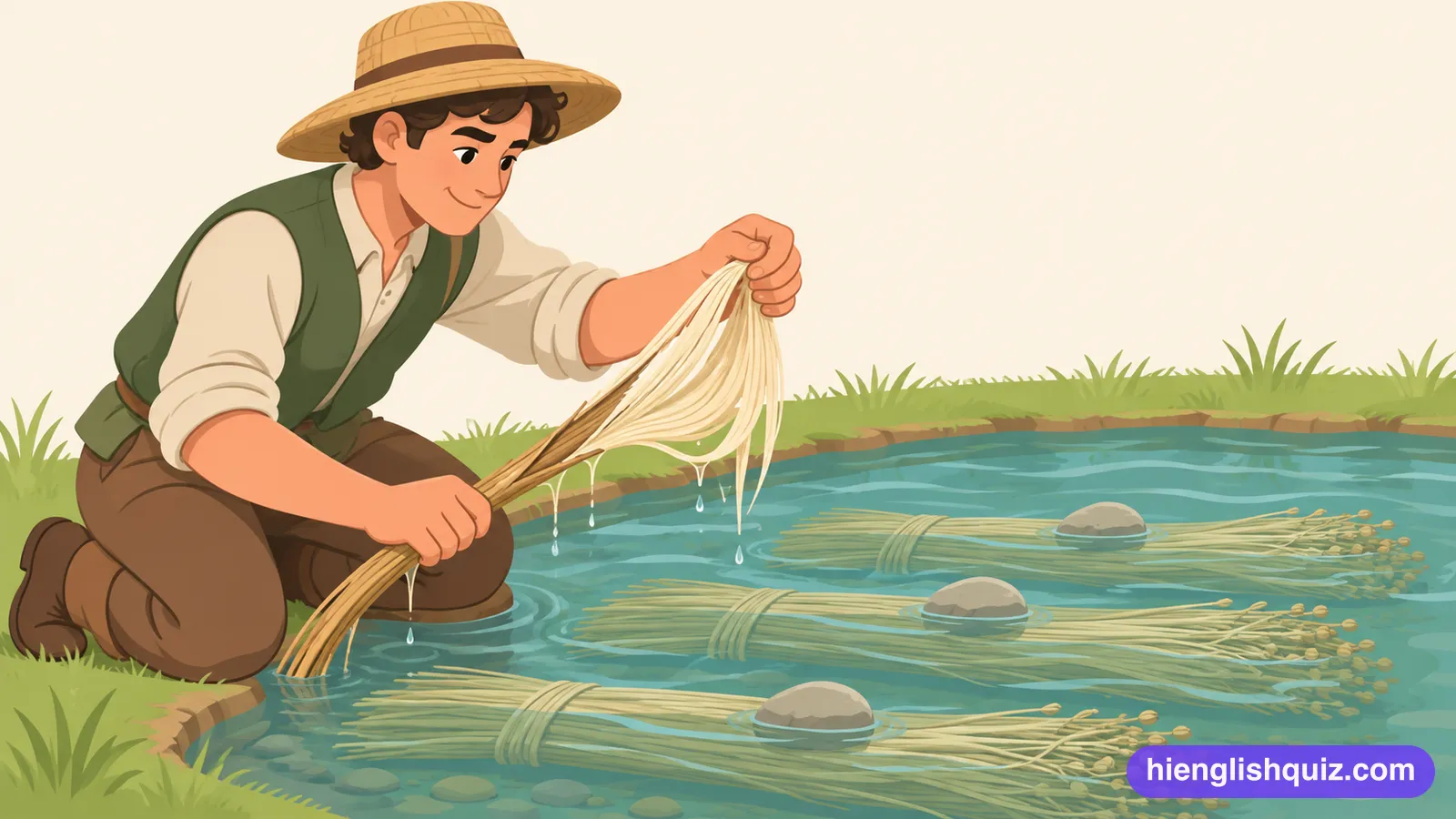
Soaking harvested plant stalks in water until the fibres inside loosen from the woody stems.
Example: Retting the flax in the river took about two weeks.
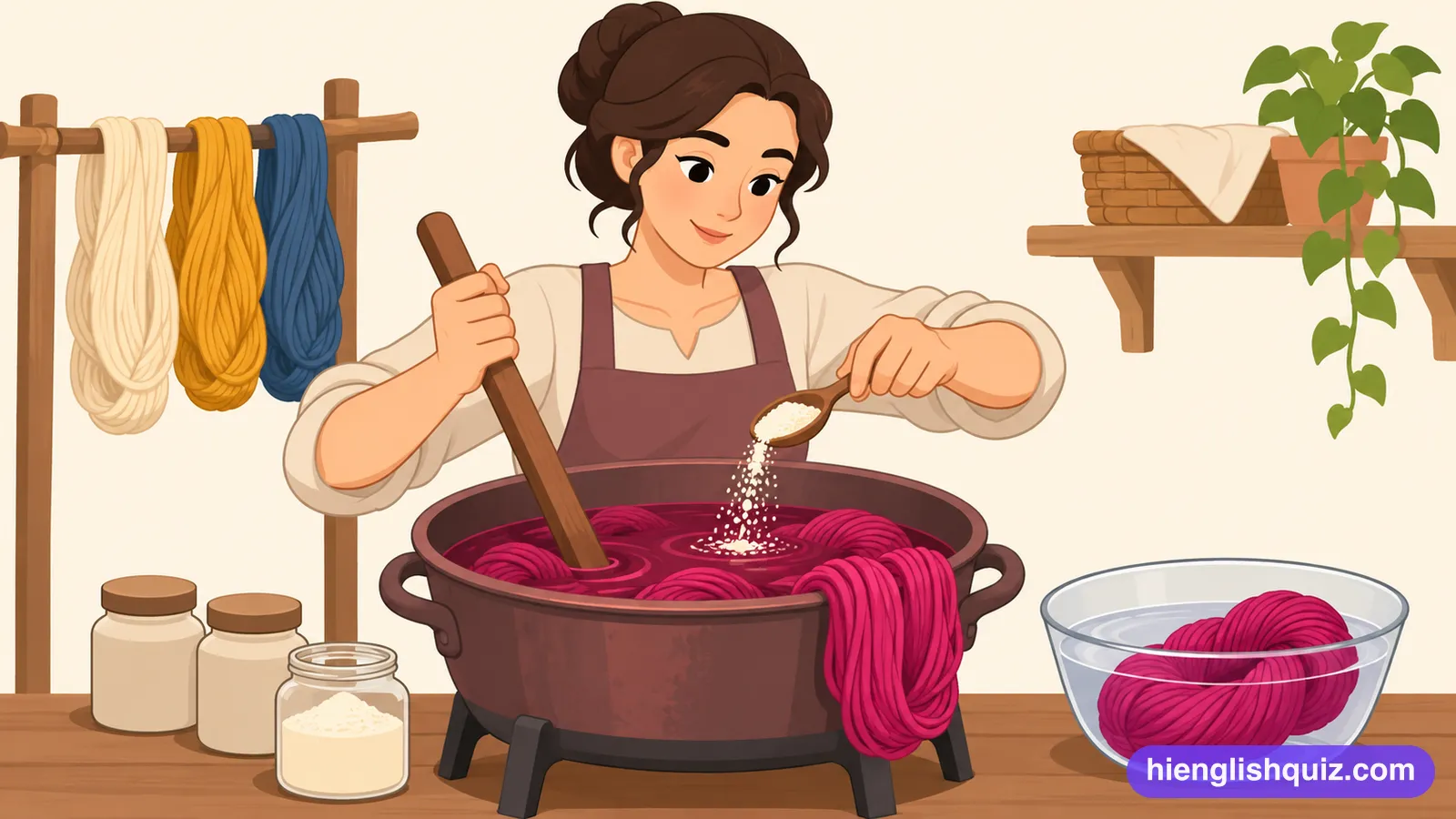
A substance used to fix dye in cloth so that the colour does not wash out.
Example: The dyer added a mordant to the bath to fix the colour.