audition
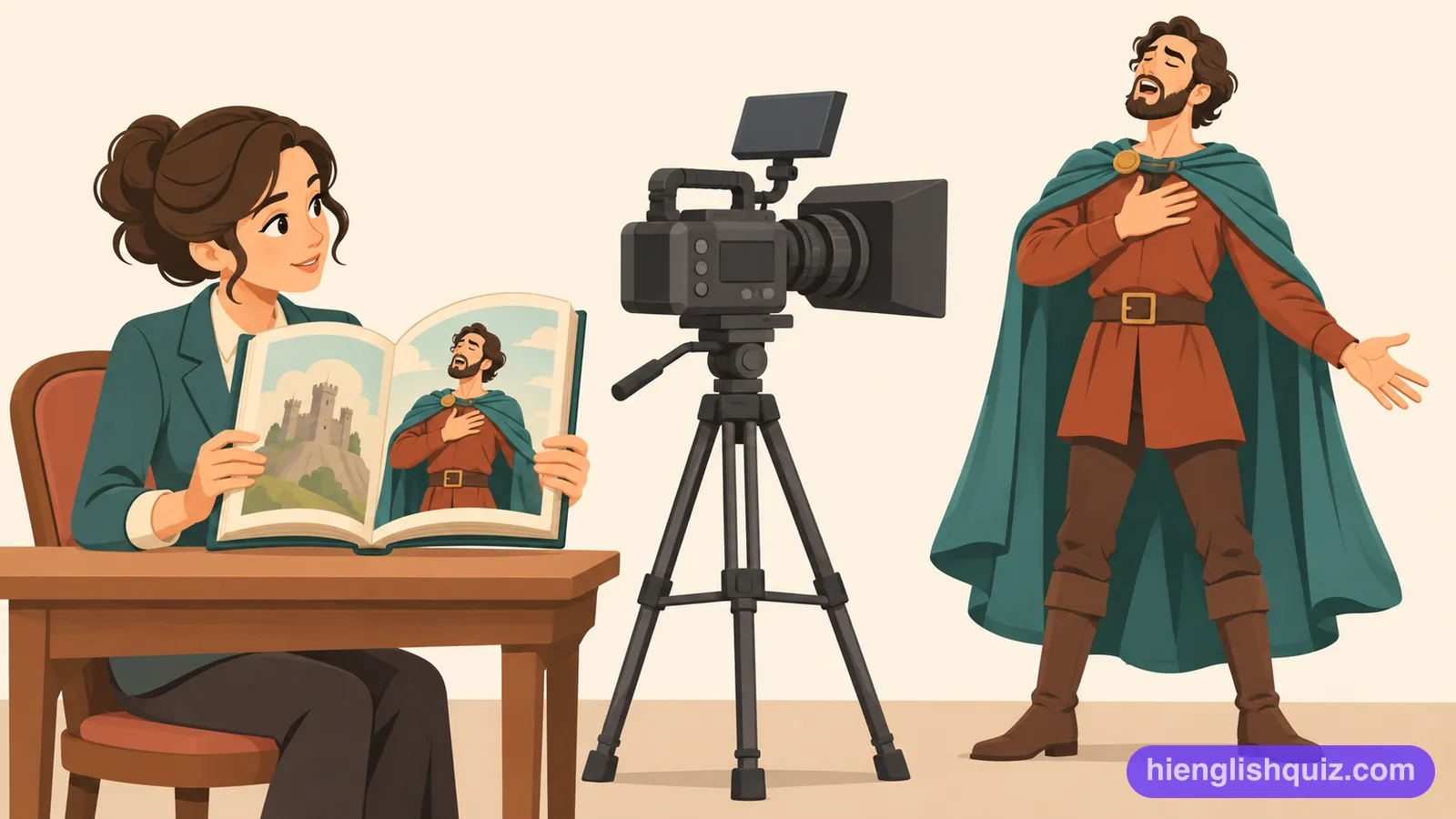
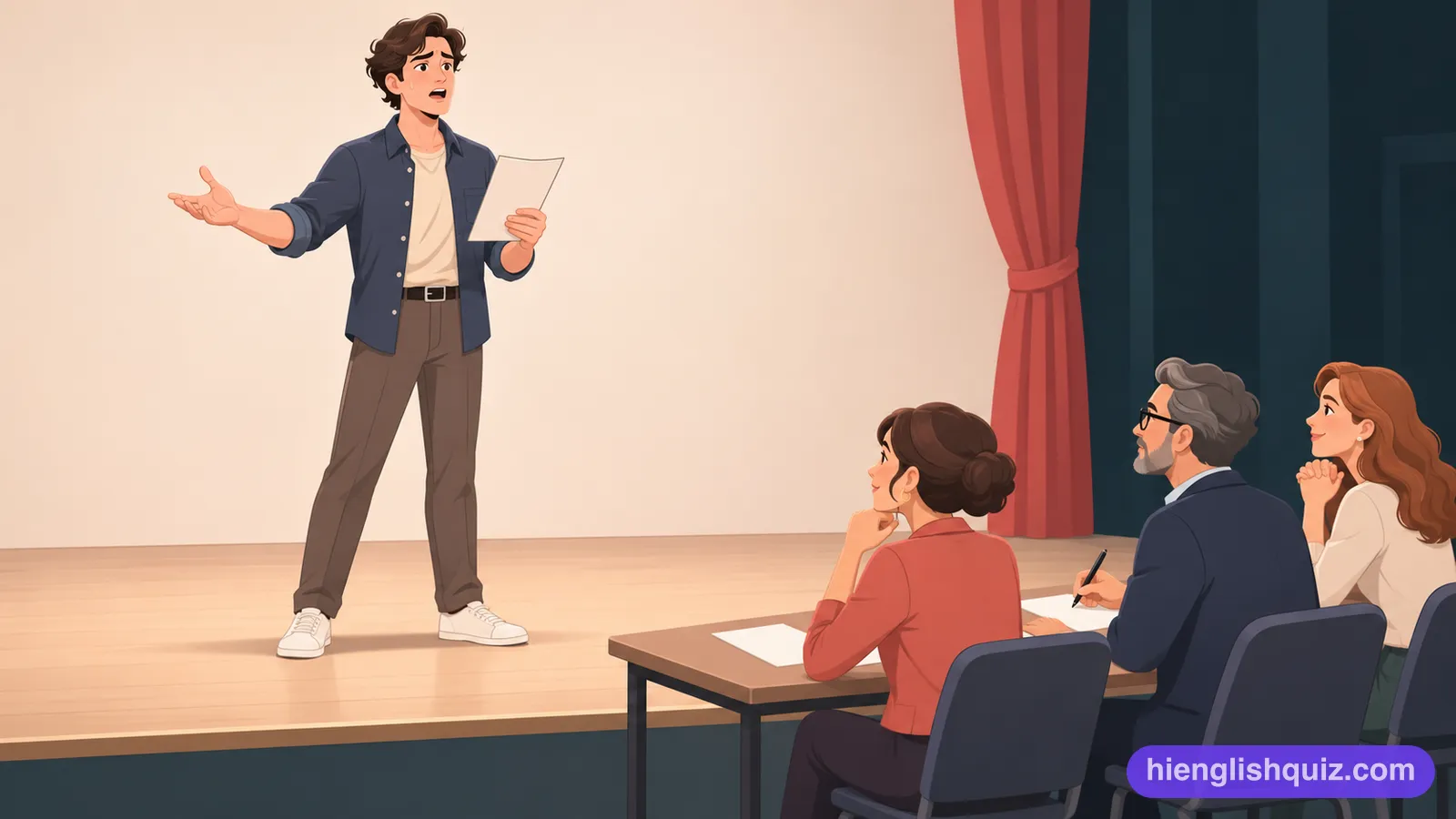
/ɑˈdɪʃən/A short test where a performer shows their skill to try to get a part in a show or film.
Example: She was very nervous before her audition for the school musical.
 Hi EnglishQuiz
C222 words · Proficient
Theatre vocabulary for life on and behind the stage, from the understudy and stagehand in the green room to the soliloquy, the farce and the curtain call at a matinee.
A short test where a performer shows their skill to try to get a part in a show or film.
Example: She was very nervous before her audition for the school musical.
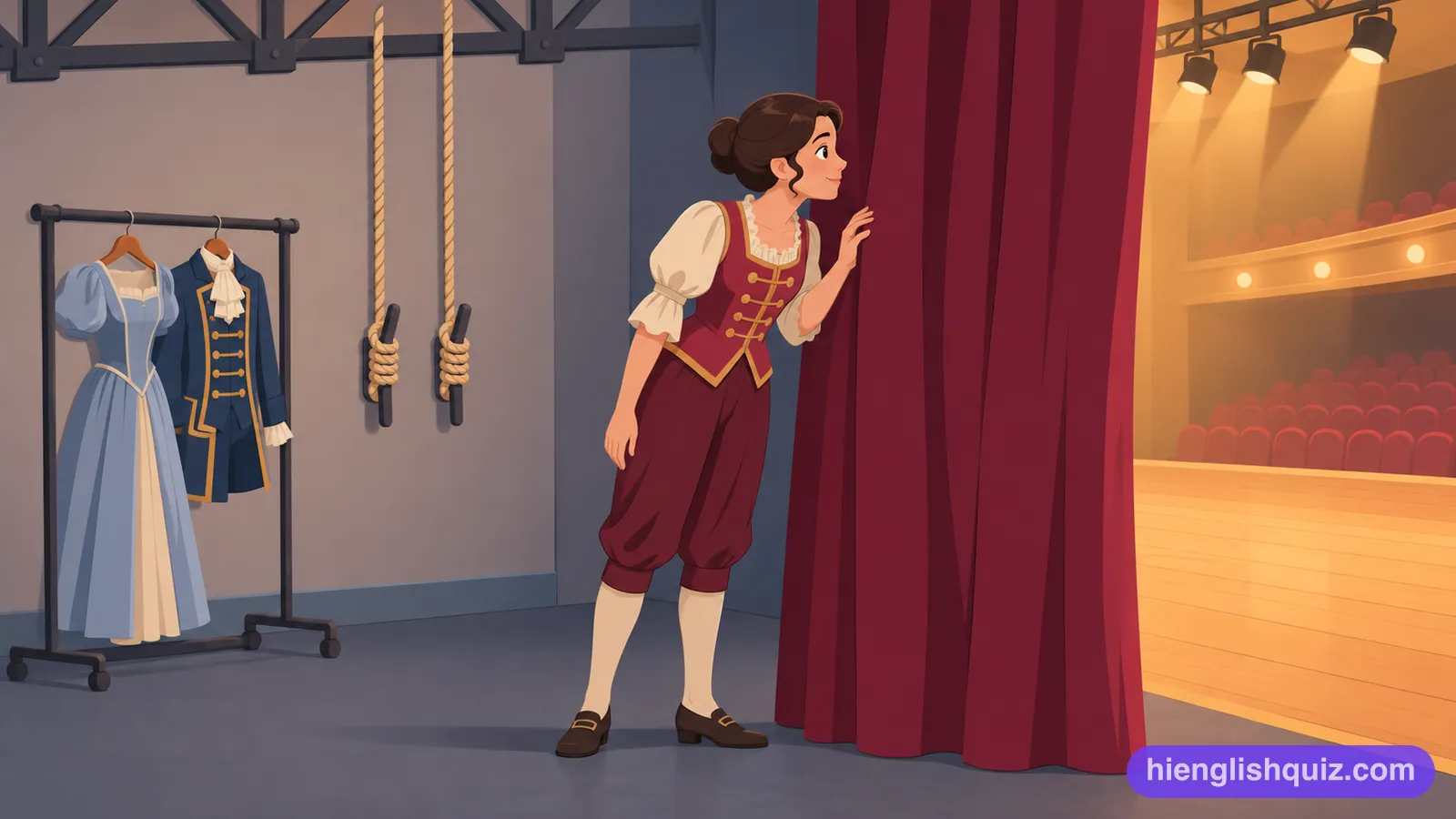
In or to the area behind the part of a theatre where the actors perform, hidden from the audience.
Example: The actors waited backstage until it was time for their entrance.
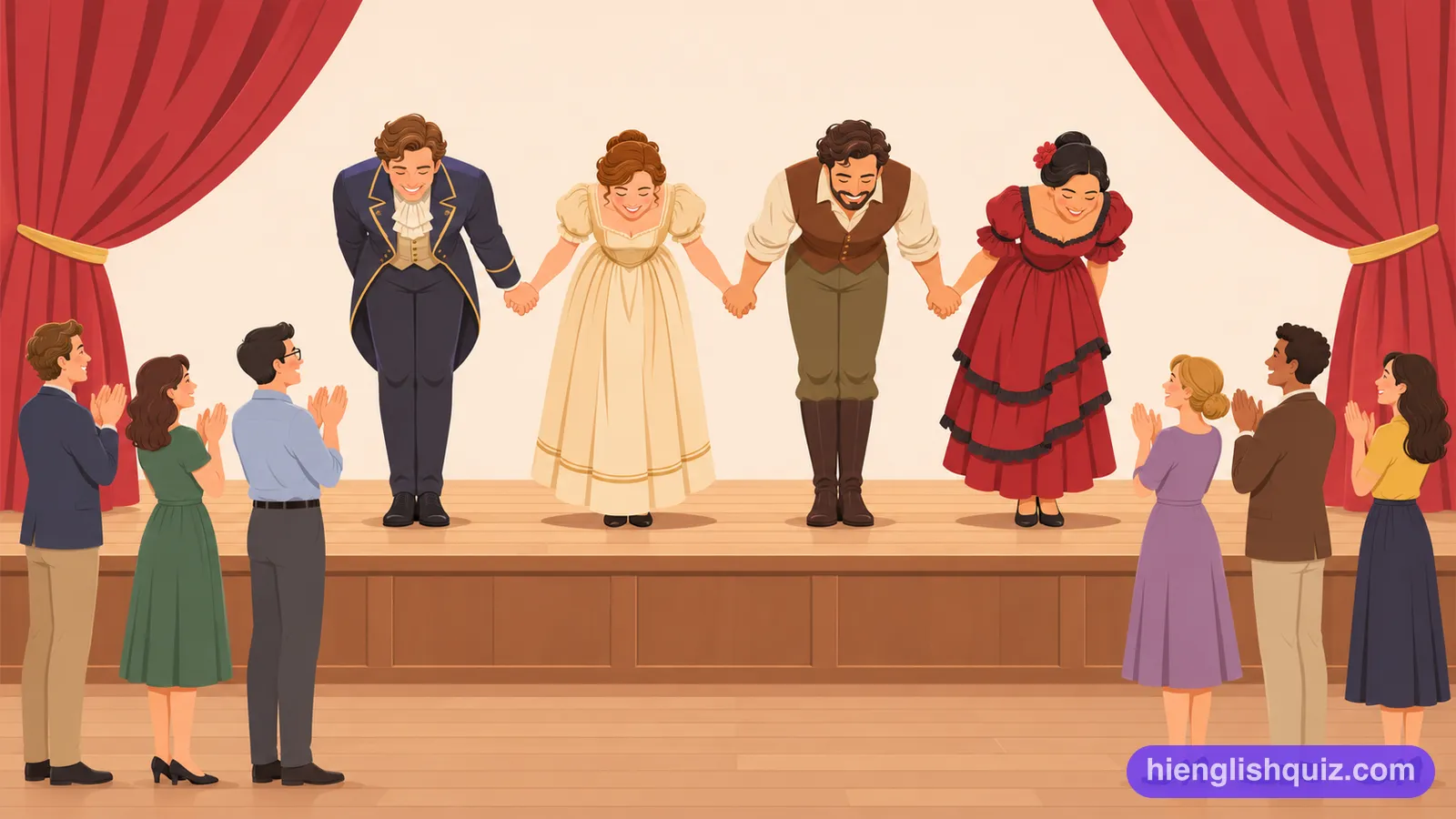
The moment at the end of a show when the performers come out to be clapped for.
Example: The whole cast held hands for the curtain call and bowed.
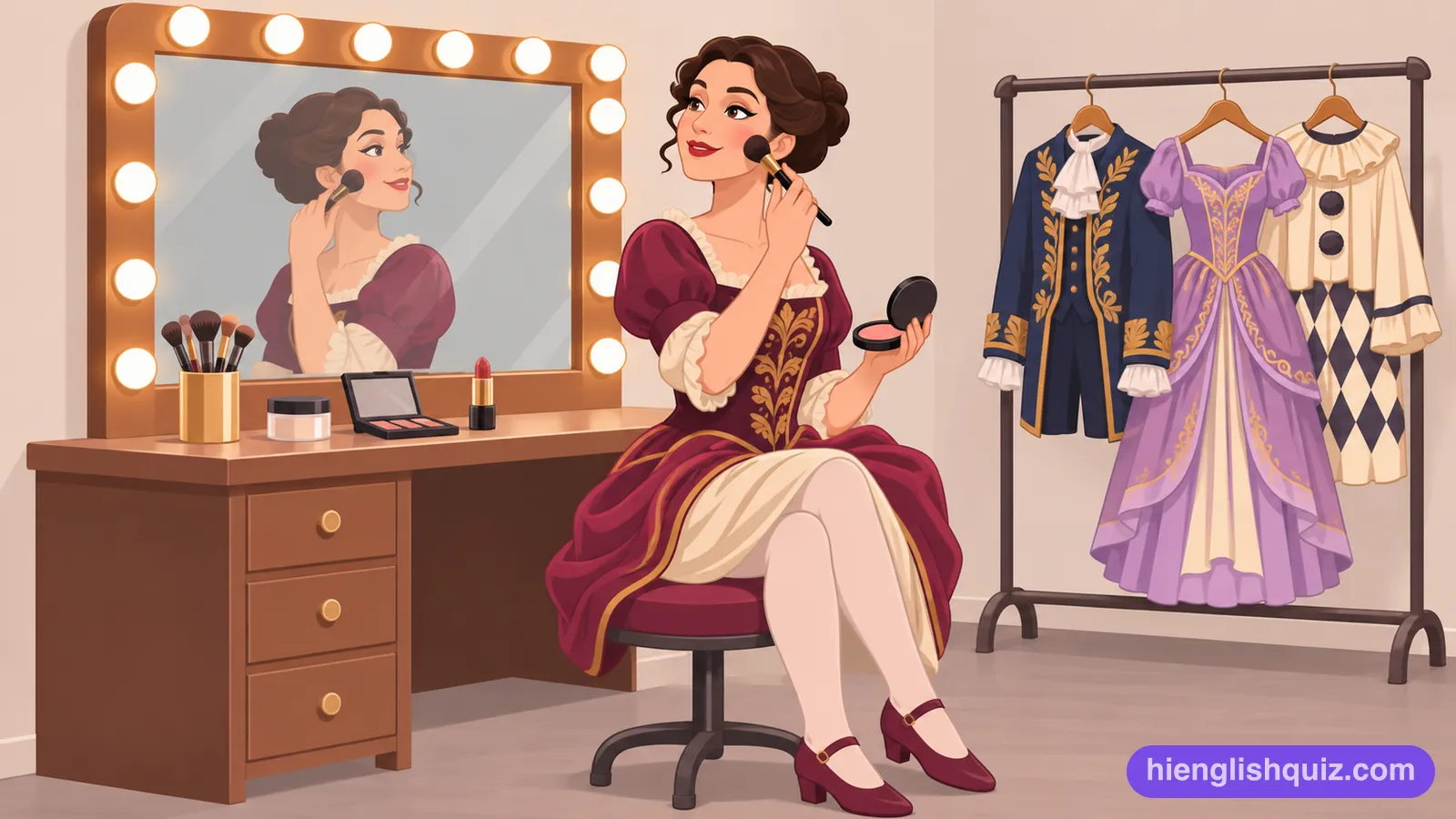
A private space in a theatre where performers get ready and change their clothes before a show.
Example: He sat in his dressing room and checked his costume once more.
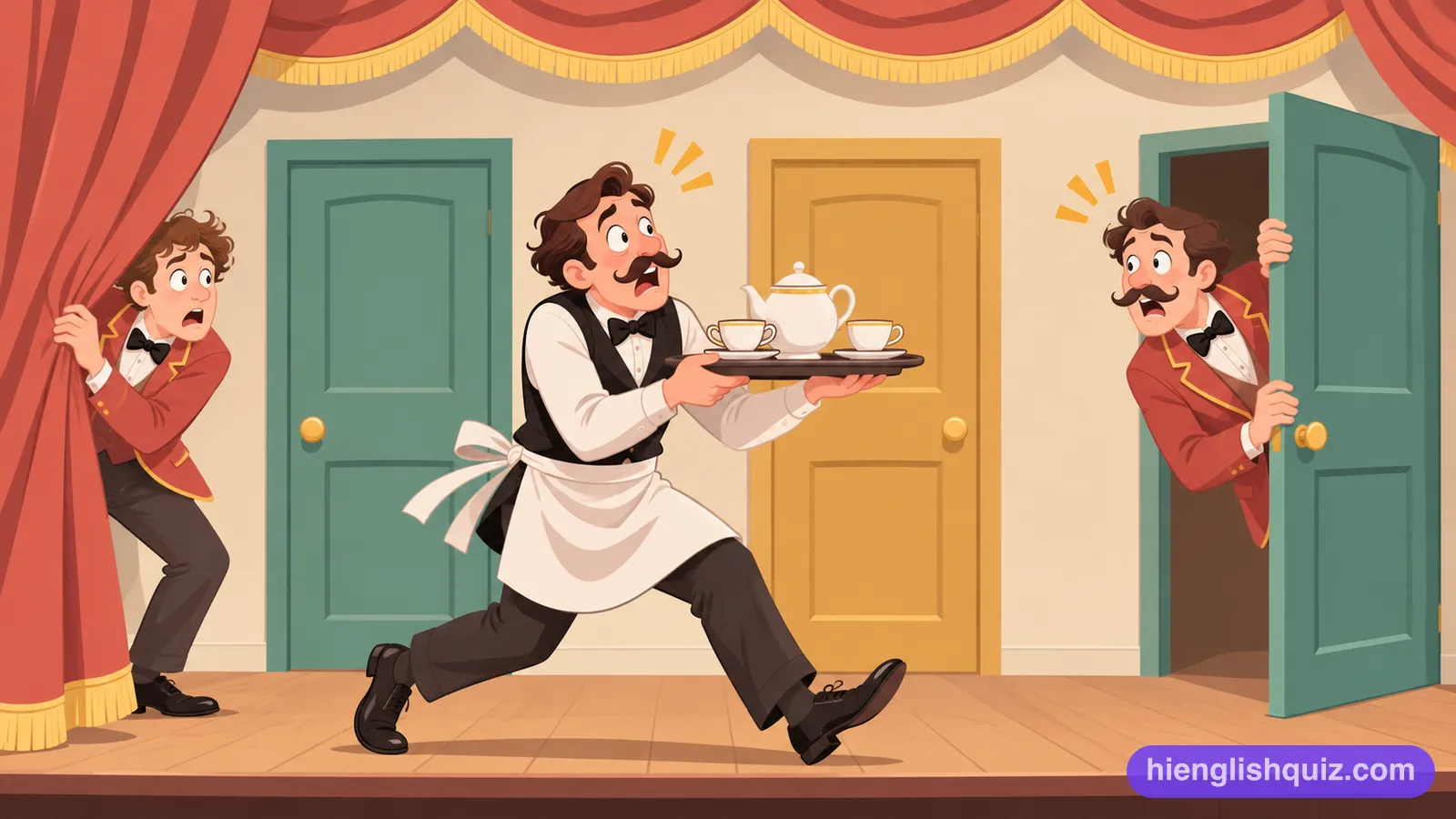
A play or film with a ridiculous plot, mistaken identities and a lot of fast, silly action.
Example: The theatre is putting on a farce with slamming doors and people hiding in cupboards.
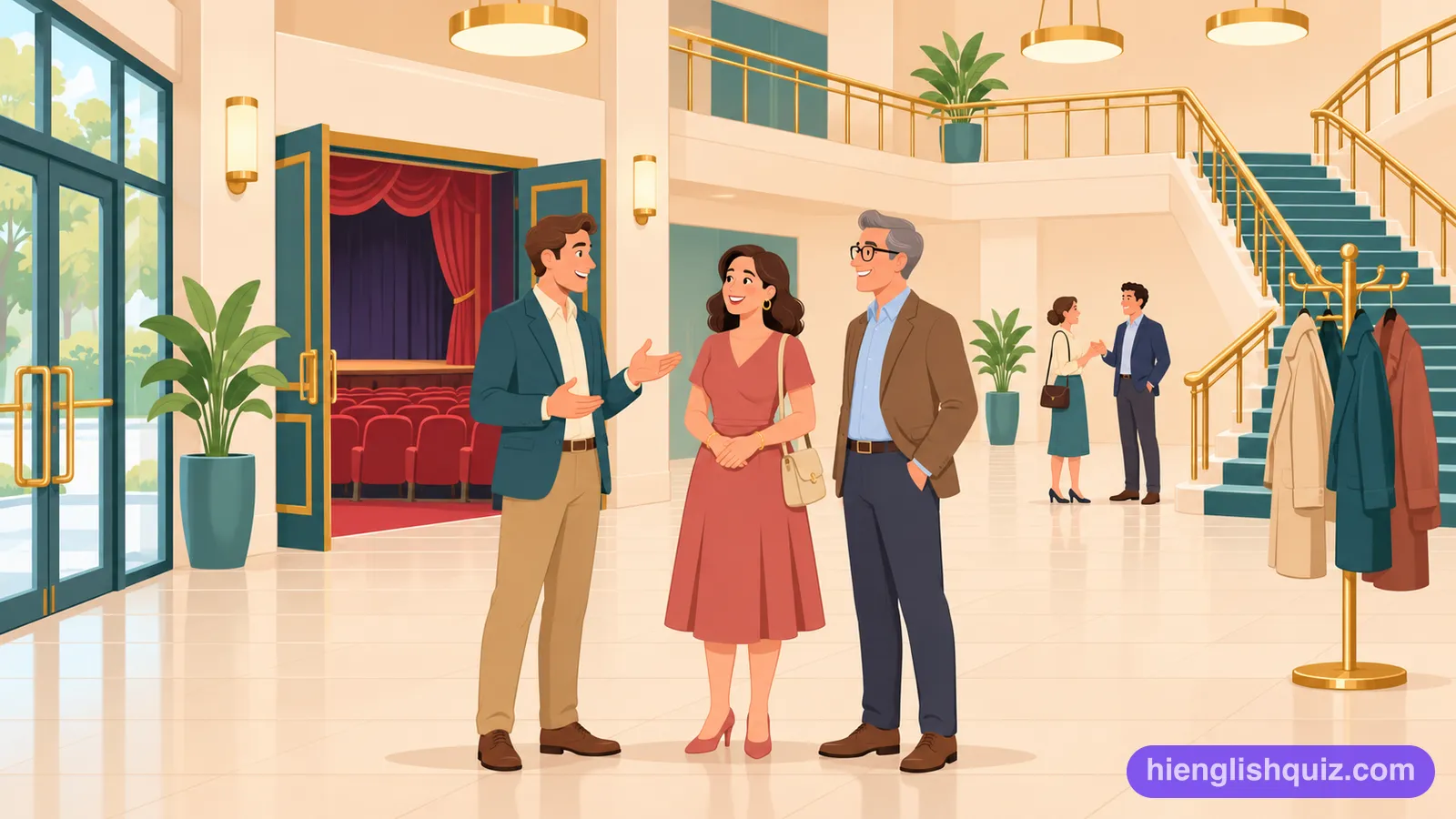
The large open area just inside the entrance of a theatre or cinema, where people wait.
Example: Let's meet our friends in the foyer before the film starts.
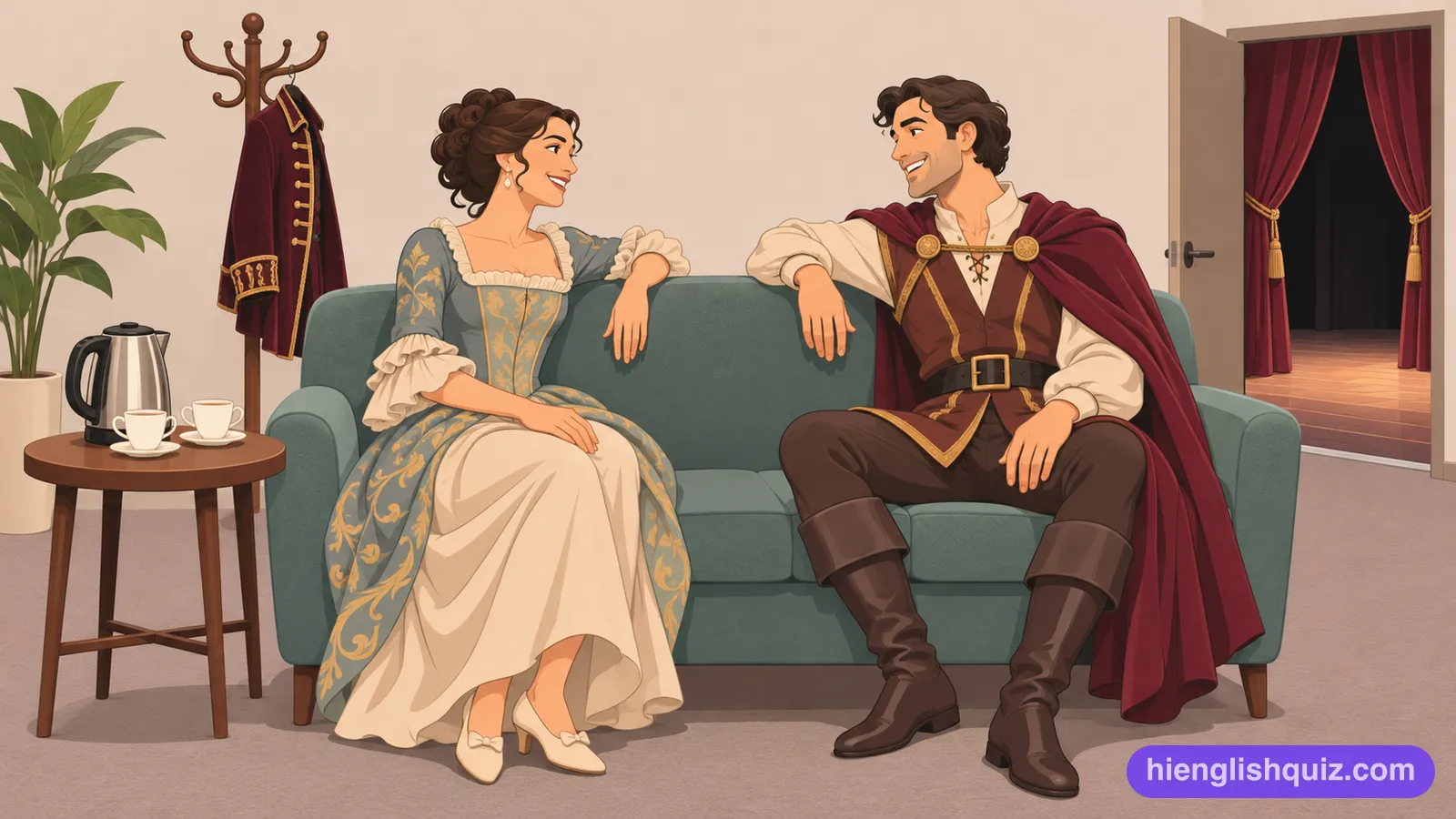
A shared lounge in a theatre where performers wait and relax when they are not on stage.
Example: The actors drank tea in the green room while they waited for their turn.
A show or film that is put on in the afternoon, not in the evening.
Example: We're taking the children to a matinee because it finishes early.
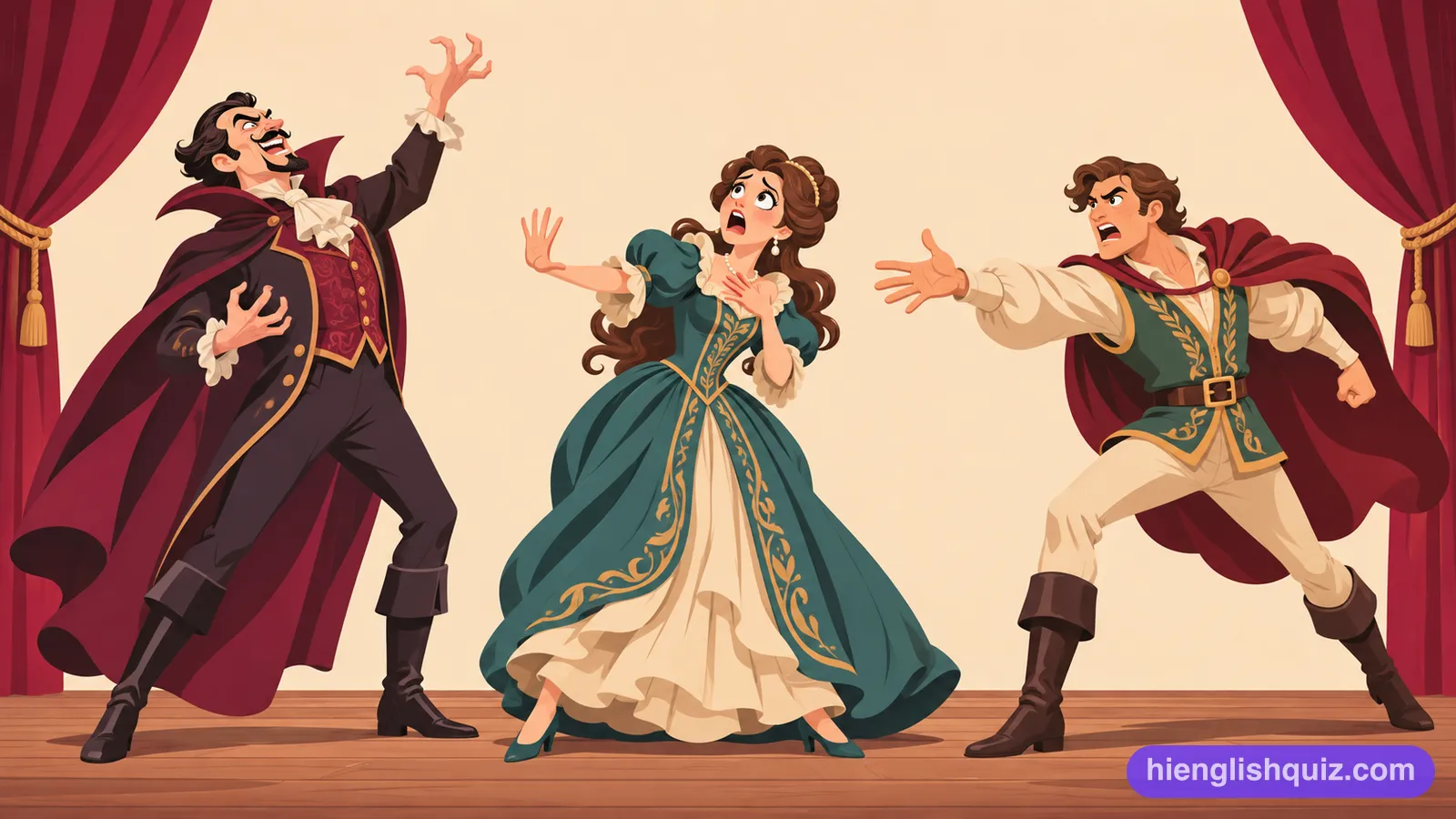
A story or play in which the events and feelings are much stronger and more exaggerated than in real life.
Example: The old film was a melodrama full of tears and sudden shocks.
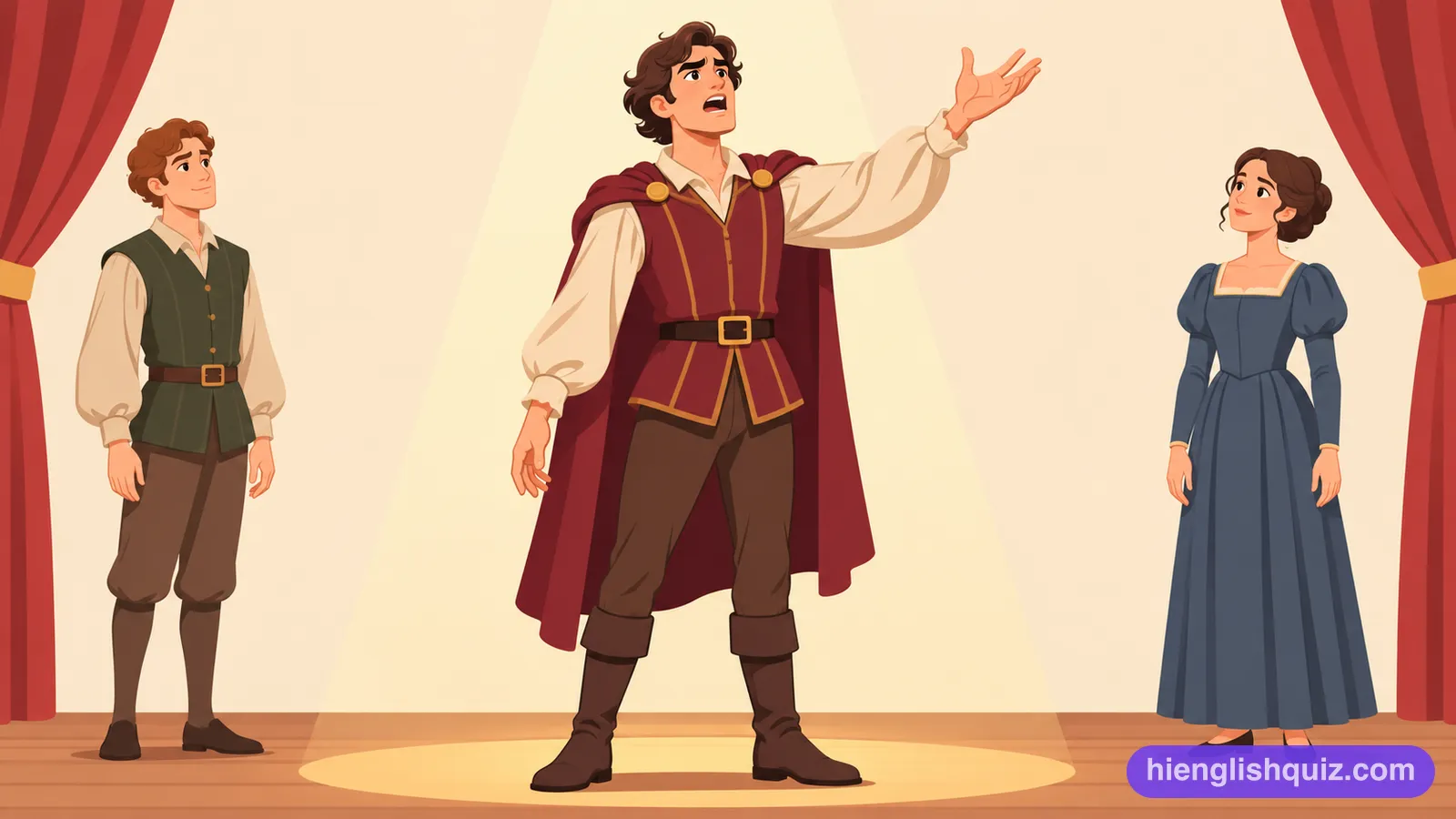
A long speech by one actor on stage or screen, spoken to others.
Example: Her angry monologue in the second act left the audience silent.
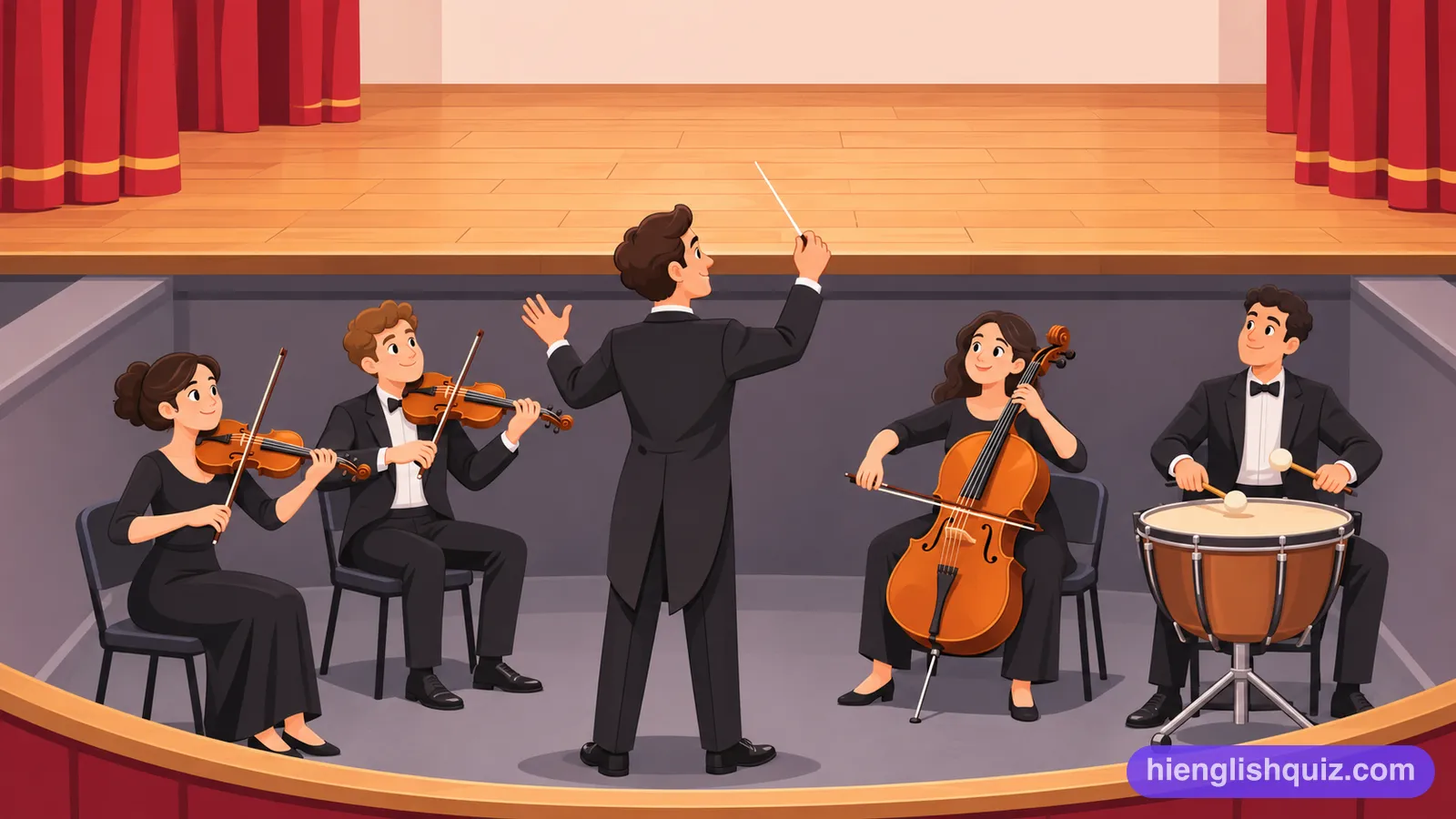
The low space in front of a stage where the musicians sit and play during a show.
Example: The violins were barely visible in the orchestra pit below the stage.
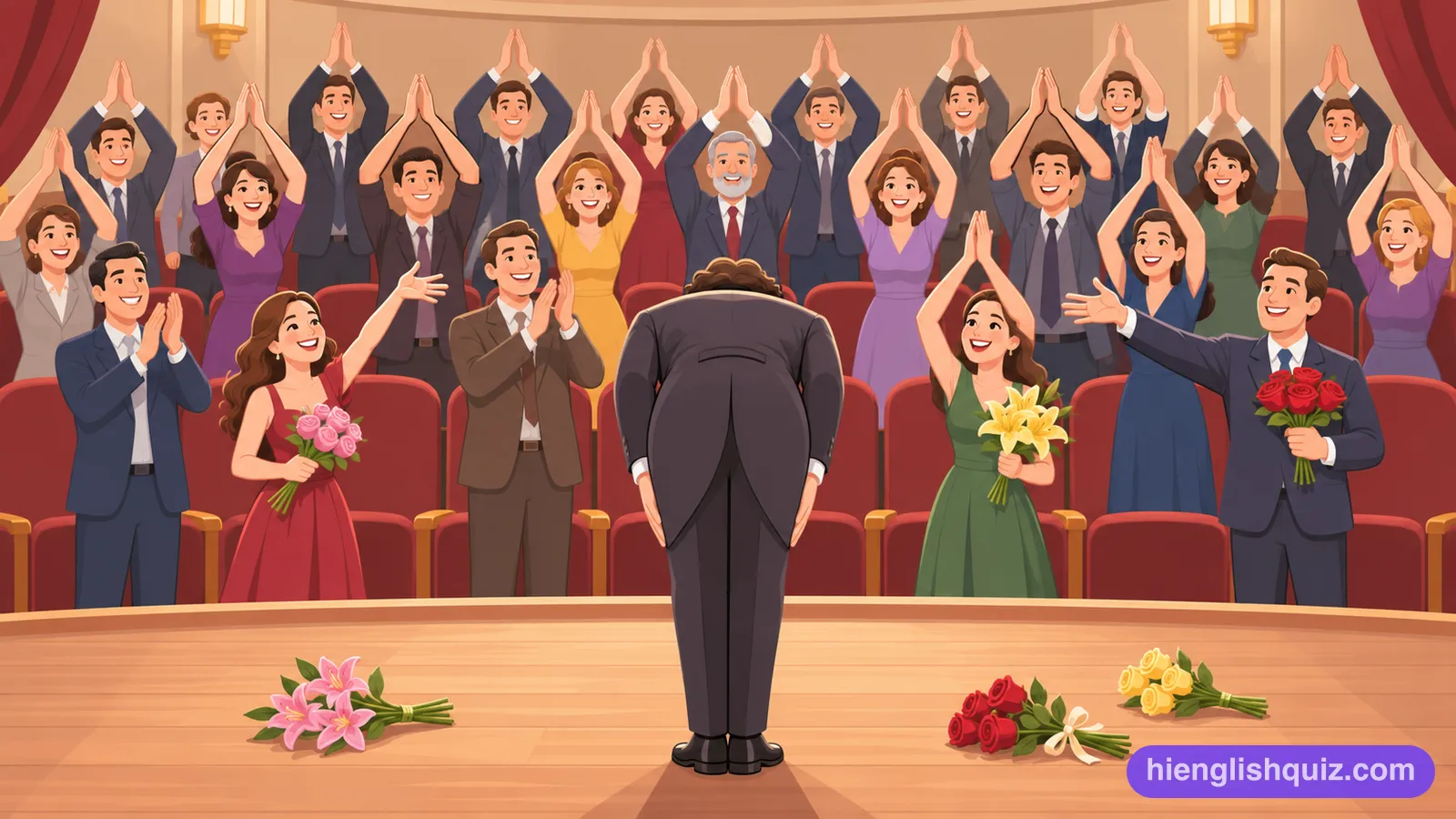
Long, loud clapping from an audience to show they enjoyed something very much.
Example: The actors received a standing ovation at the end of the play.
A funny British stage show for families, with songs, jokes and a well-known fairy tale.
Example: We've been to the pantomime every Christmas since we were small.
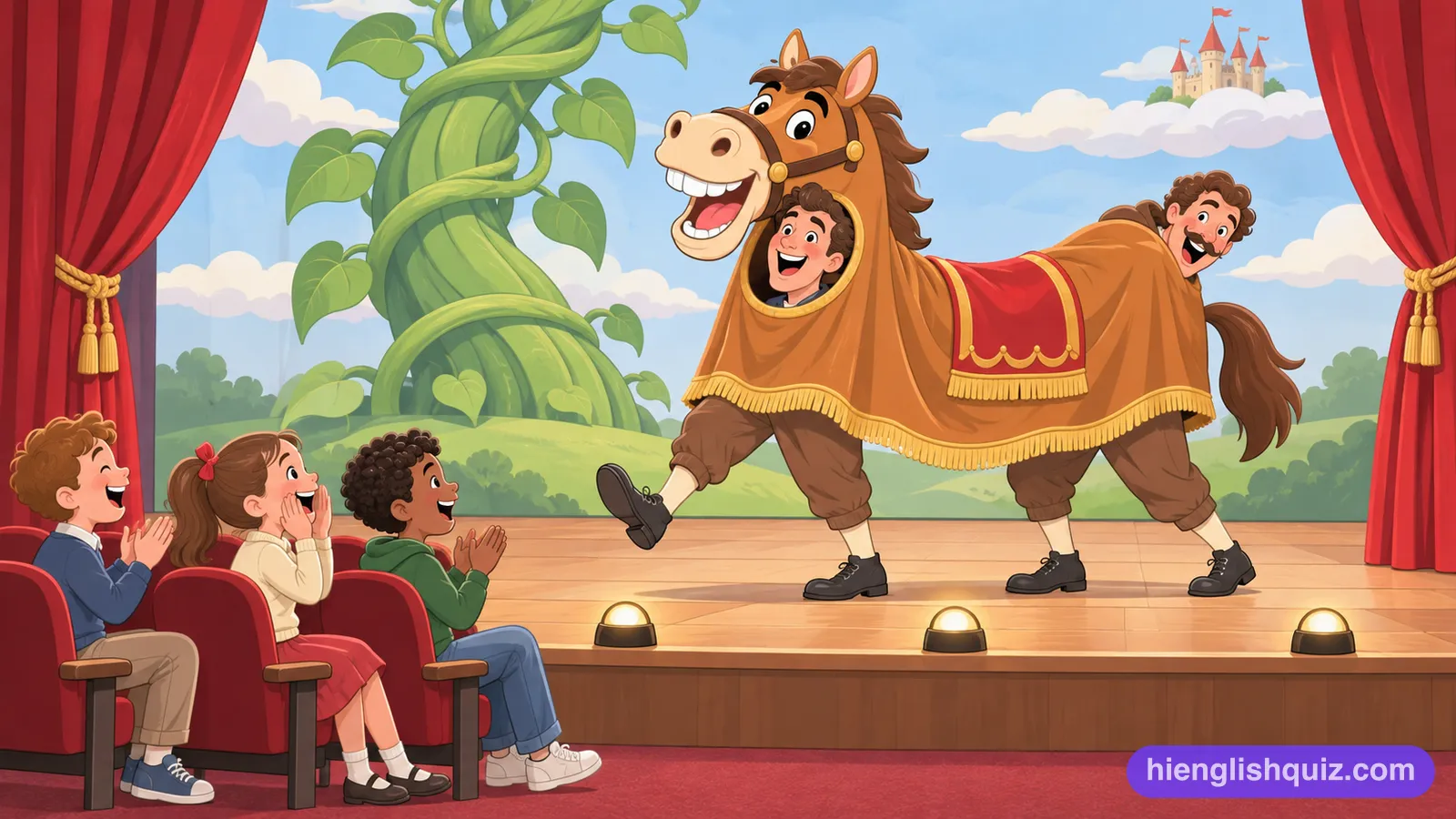
A short speech or scene at the beginning of a play or film that introduces the story.
Example: Before the first act, one actor speaks a short prologue to the audience.
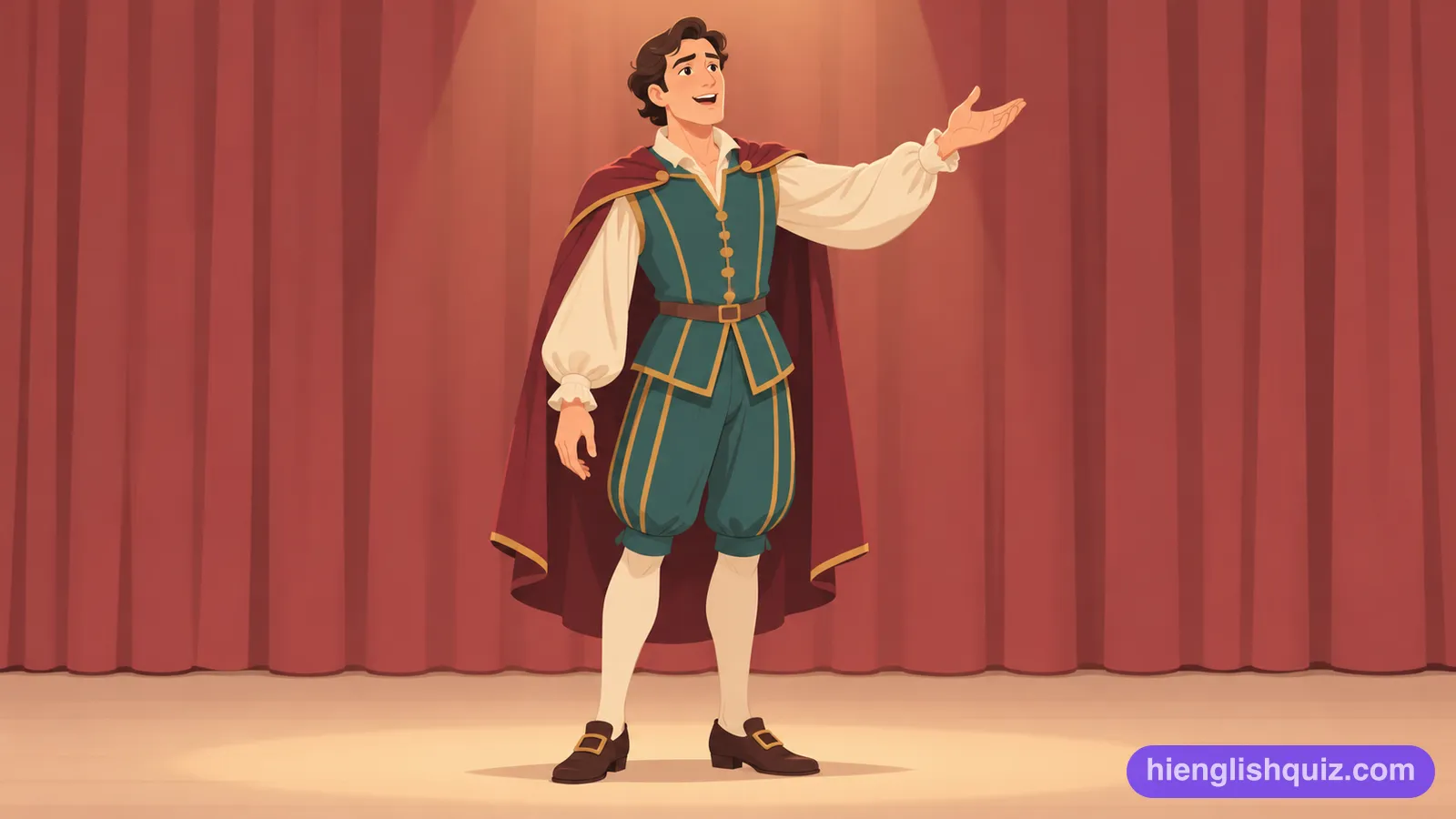
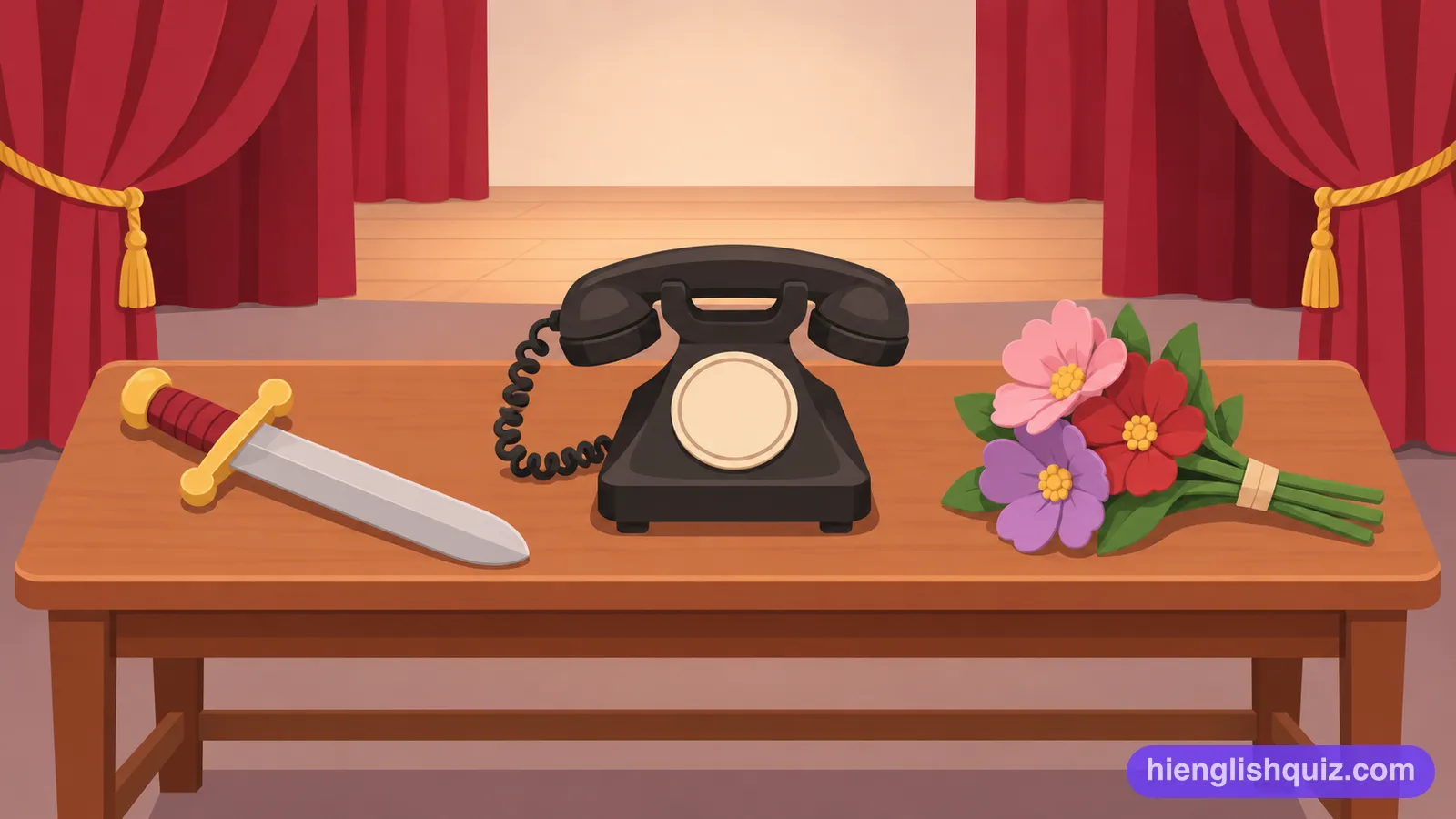
An object that actors use on stage or in a film, such as a sword or a phone.
Example: The sword wasn't real; it was just a plastic prop.
The main character in a story, film or play.
Example: The protagonist has to choose between love and duty.
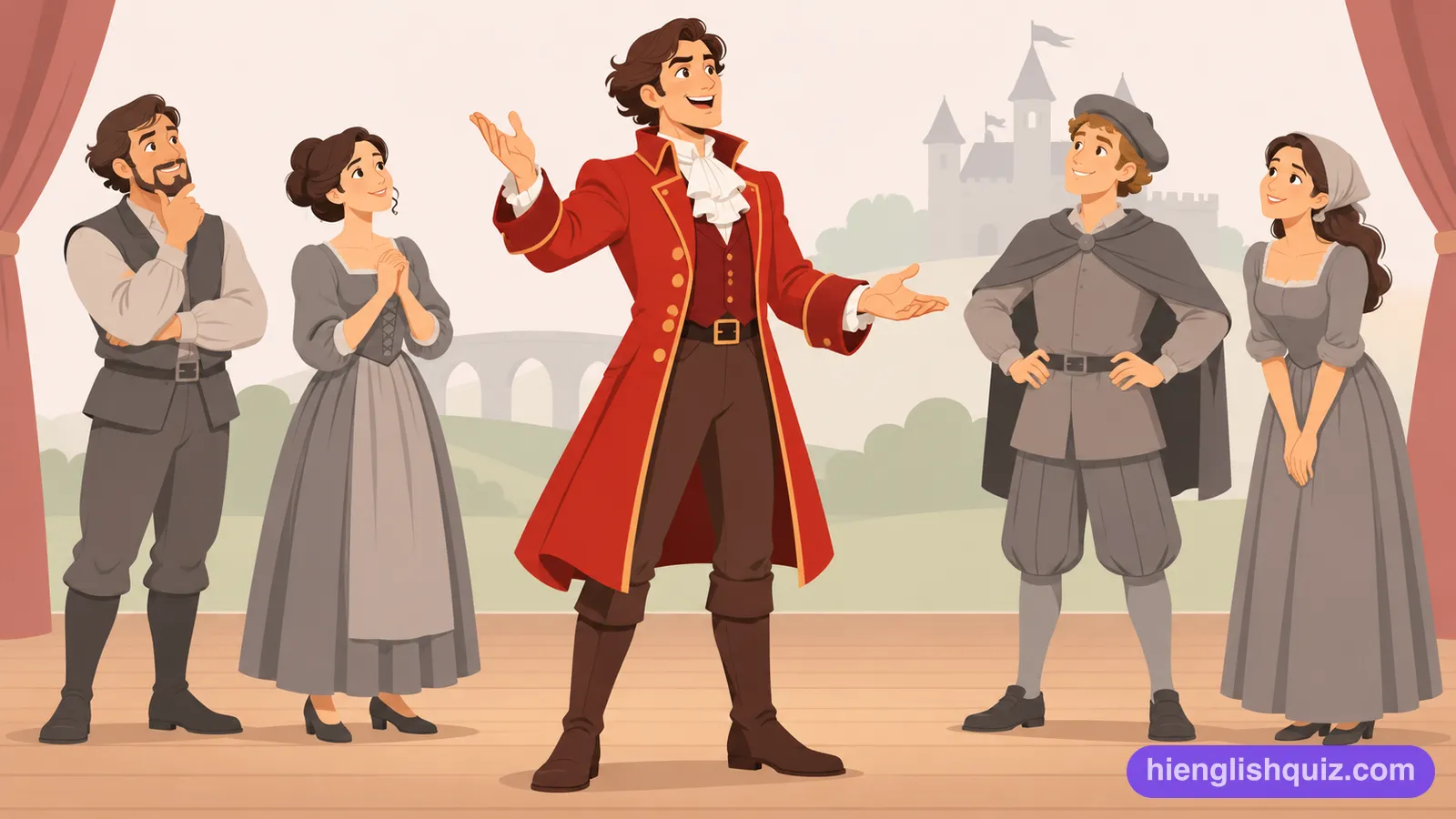
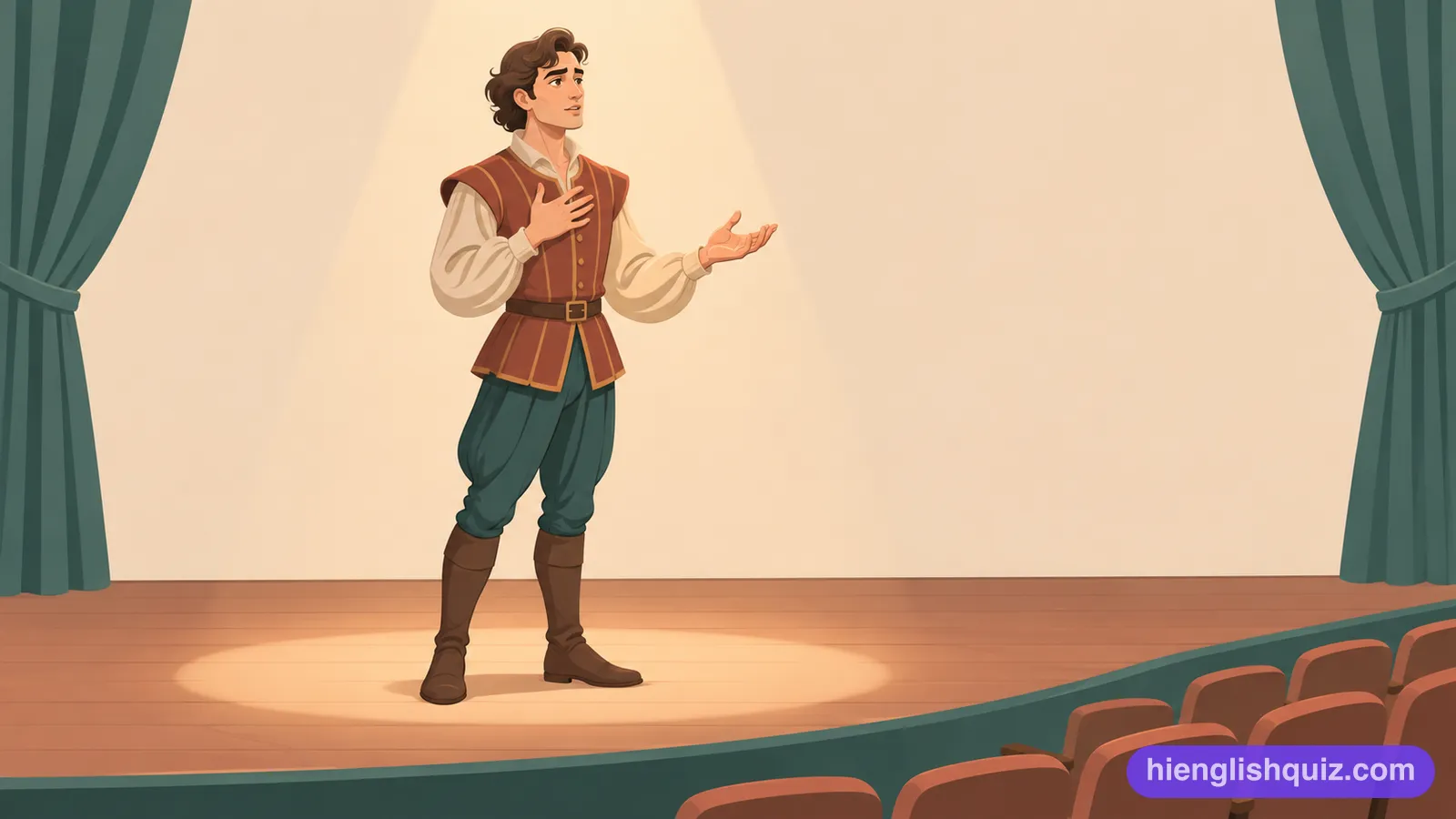
A speech in a play where a character alone on stage says their private thoughts aloud.
Example: In her soliloquy, the queen admits she never trusted her brother.
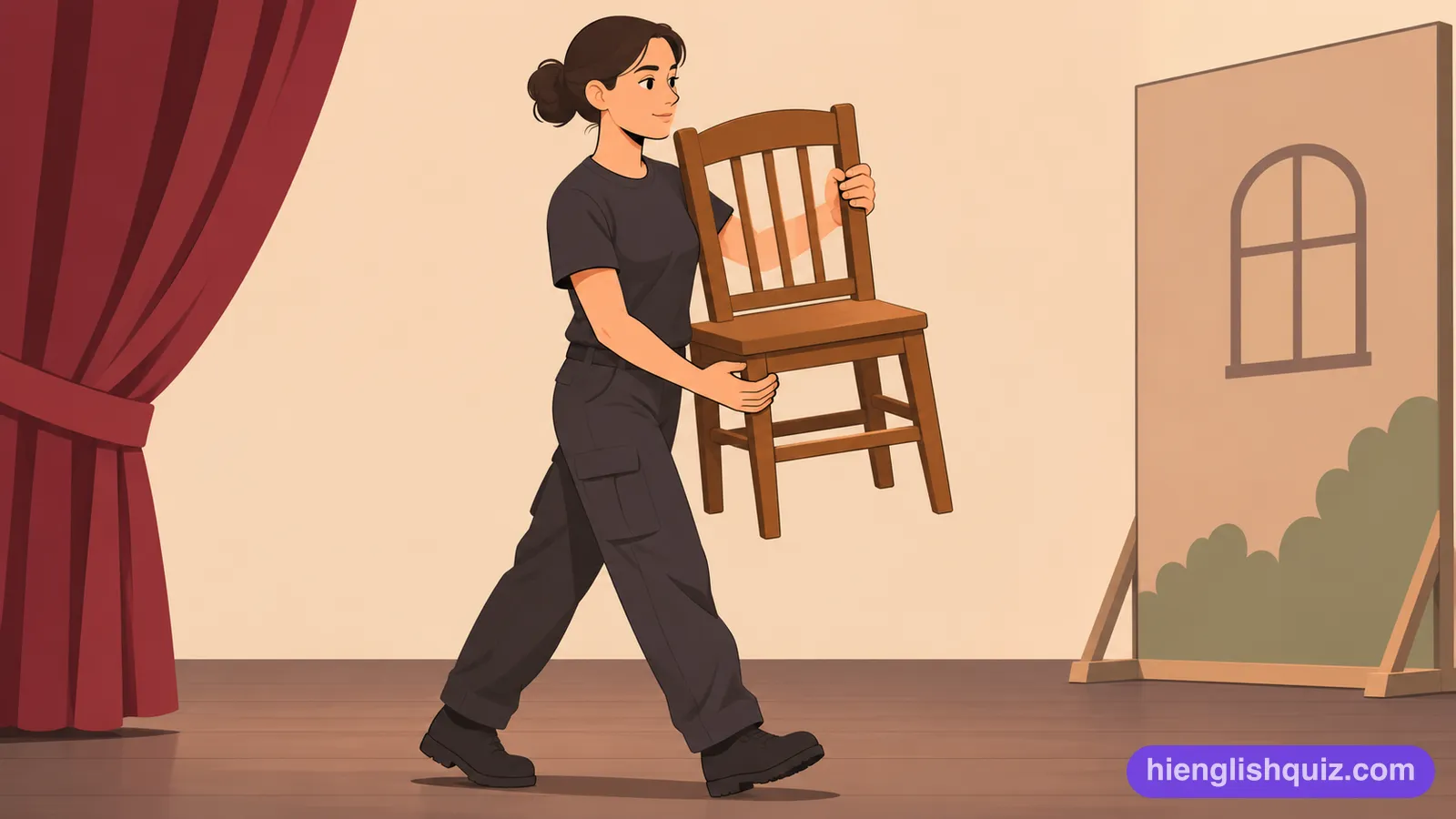
A person who moves scenery and equipment in a theatre during a show.
Example: A stagehand quickly carried the chair off between scenes.
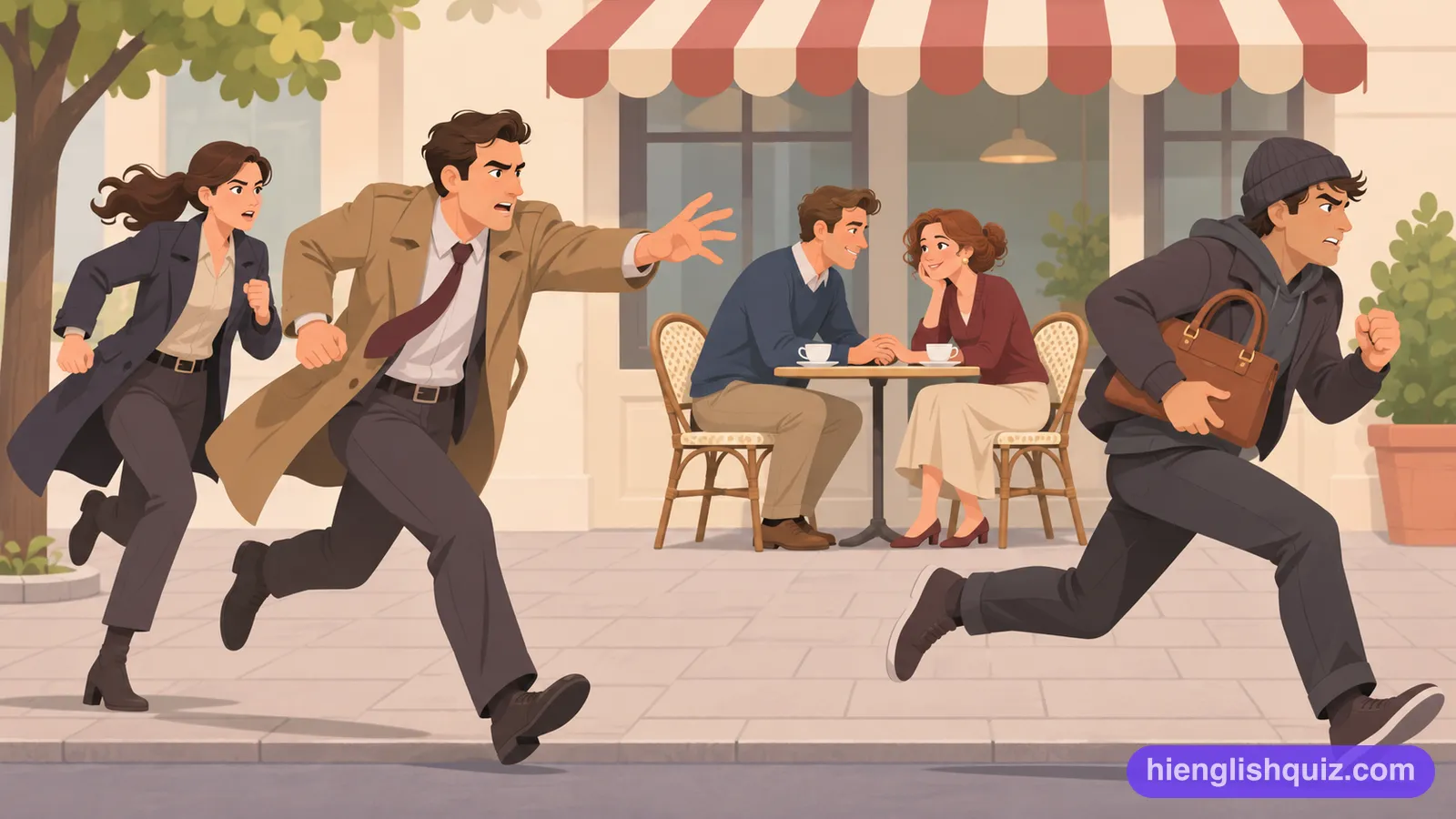
A smaller story inside a play or film, separate from the main one.
Example: The subplot about the brother's secret job was interesting.
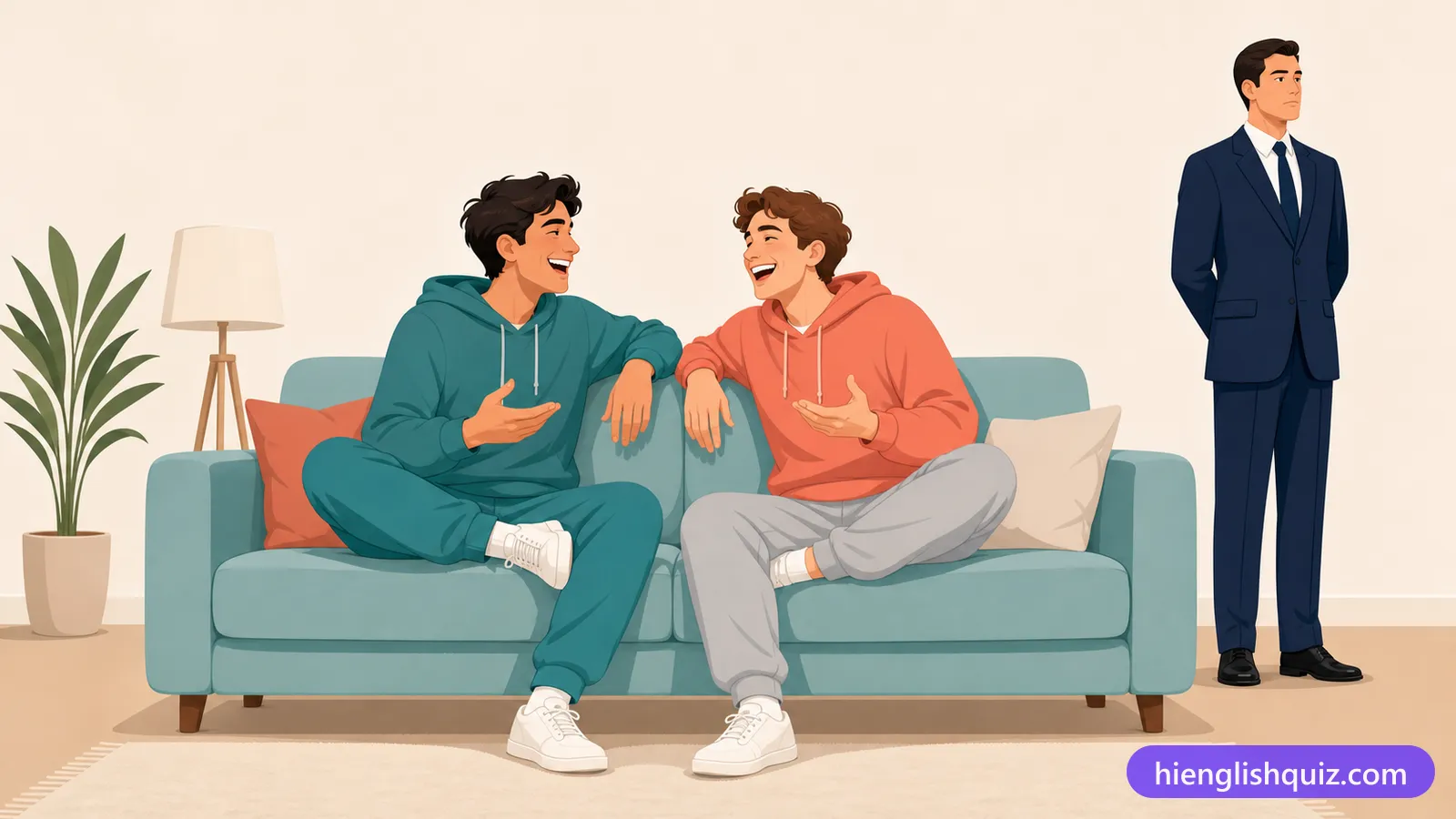
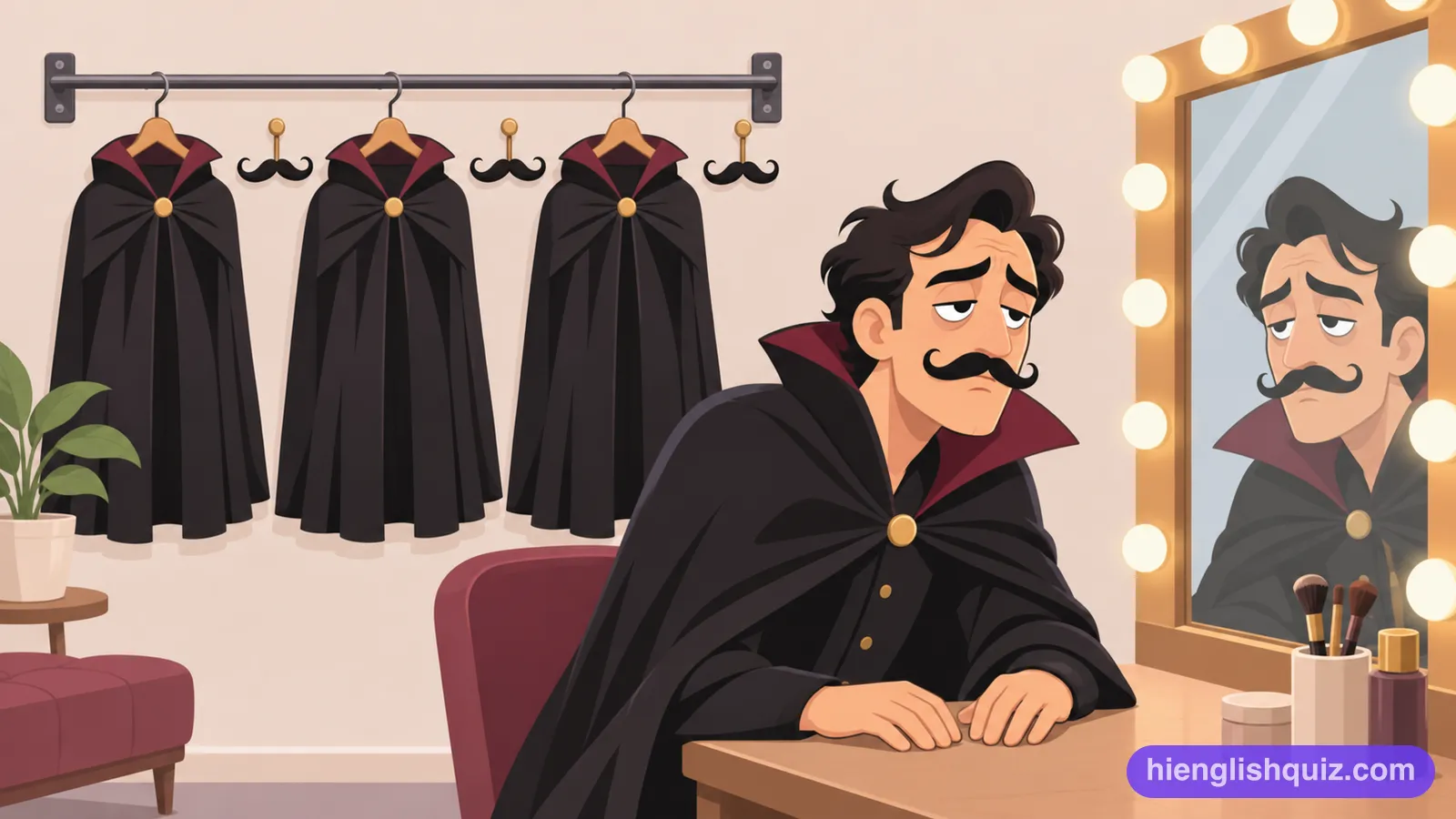
To keep giving an actor the same kind of character to play.
Example: He was typecast as a villain after his first big role.
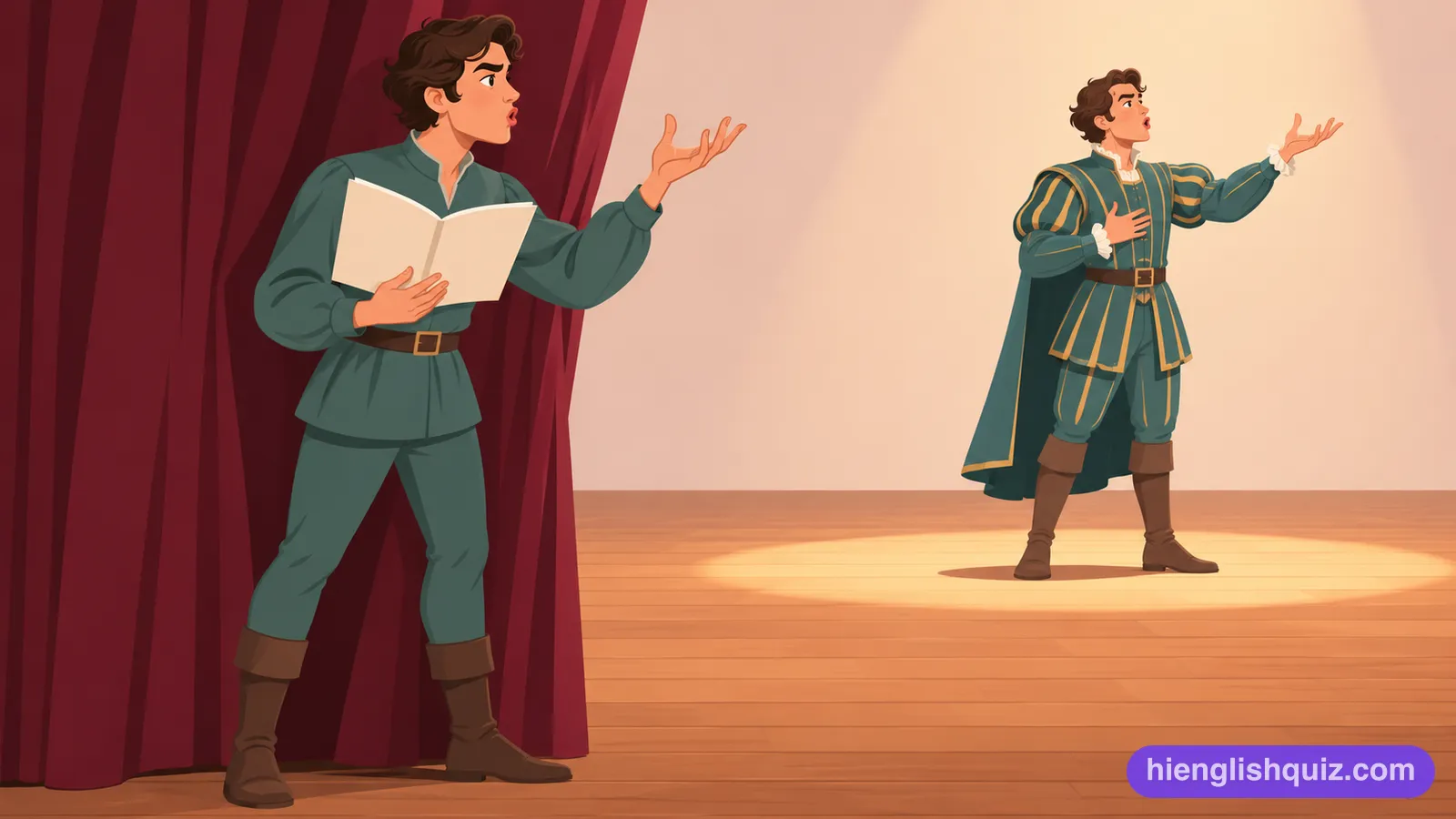
A performer who learns another actor's part so they can take it if that actor is ill.
Example: When the lead actor caught a cold, his understudy took over for a week.
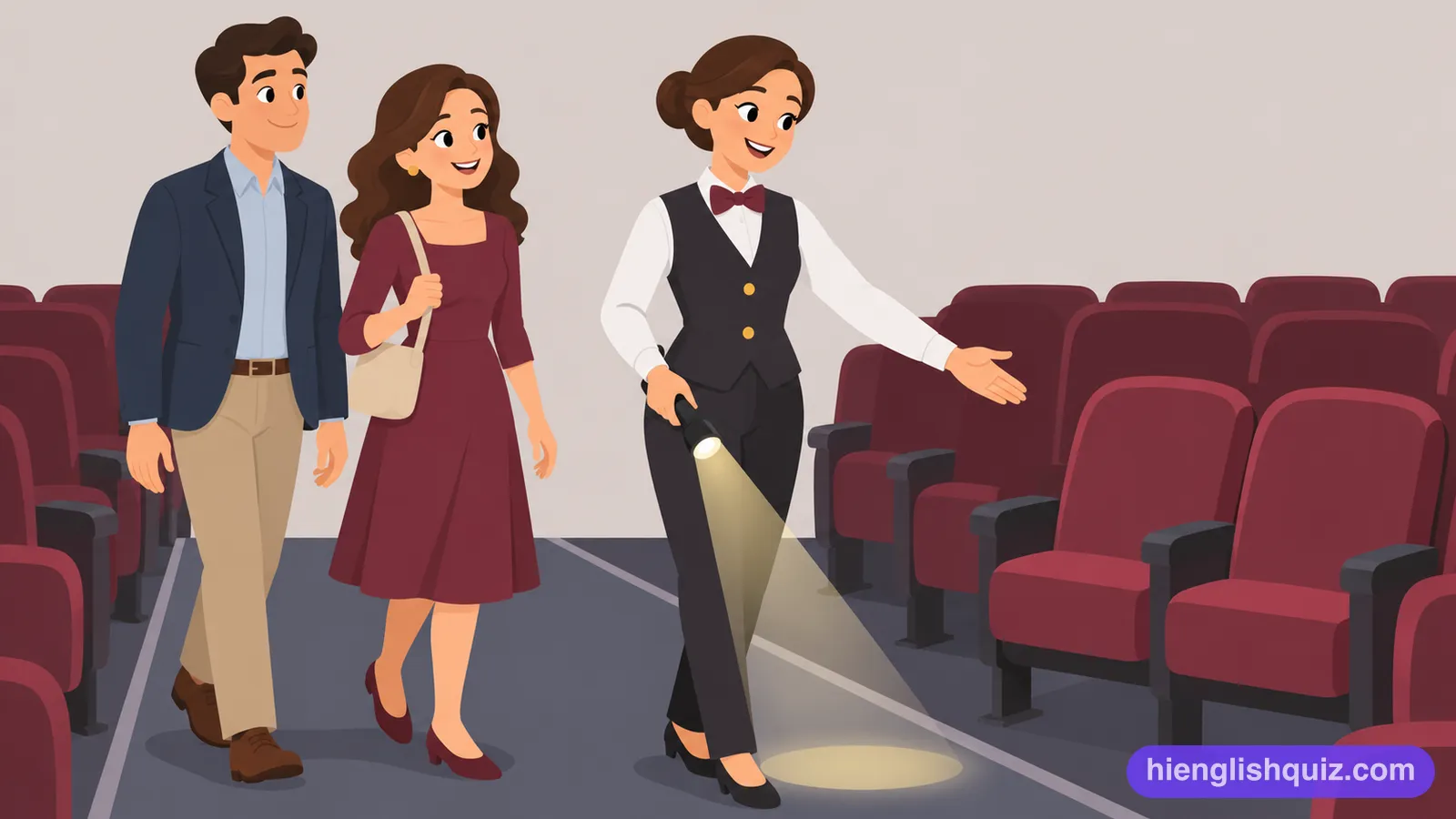
A person who shows people to their seats in a theatre or cinema.
Example: The usher pointed us to our seats with a small torch.