colloquial
/kəˈloʊkwiəl/Used in relaxed everyday speech rather than in careful formal writing.
Example: His writing is too colloquial for a formal report.

 Hi EnglishQuiz
C222 words · Proficient
Ways of Learning vocabulary for language study at scale, including etymology, phonology and neologism, plus learning analytics and credentialing.
Used in relaxed everyday speech rather than in careful formal writing.
Example: His writing is too colloquial for a formal report.
The origin of a particular word and the way its form and meaning have changed over time.
Example: The etymology of "salary" goes back to Roman payments in salt.

A language used for communication between people who do not share a first language.
Example: English is often used as a lingua franca at international conferences.
The study of meaning in language, including how words and sentences convey meaning.
Example: The debate was really about semantics, not the actual facts.

The study of how words are formed from smaller parts, such as prefixes and suffixes.
Example: Understanding morphology helps you guess what an unfamiliar word means.

The study of the sound patterns and systems used in a particular language.
Example: English phonology includes sounds that don't exist in her first language.
The everyday language spoken by ordinary people in a particular place, rather than a formal or official one.
Example: The poem was written in the local vernacular rather than formal English.

The complete set of words known and used by a person or found in a particular language or subject.
Example: Medicine has its own specialised lexicon.

A newly invented word or expression that has recently come into use.
Example: 'Selfie' was once a neologism before it entered every dictionary.

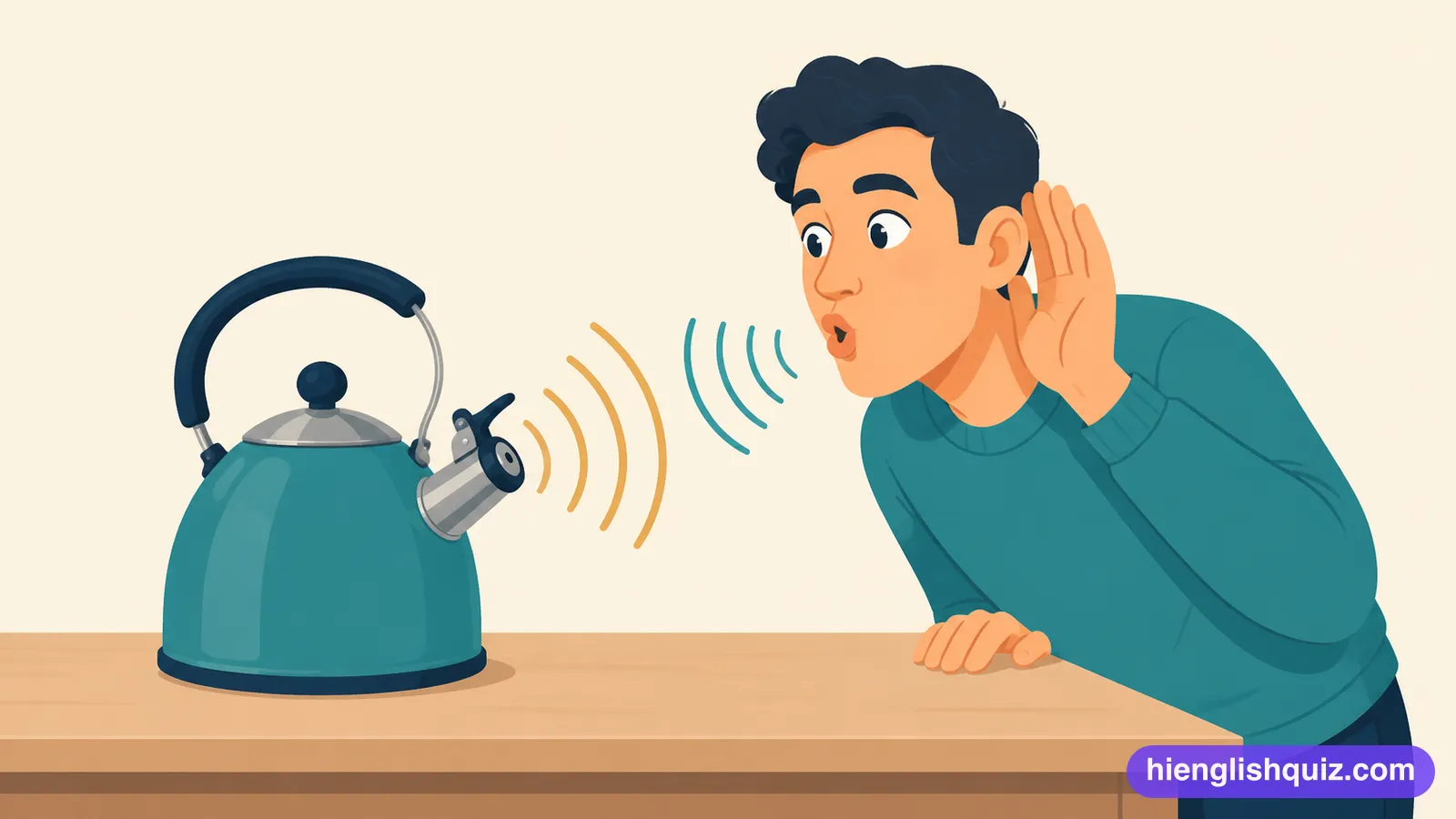
The use of words that sound like the noise they describe, such as 'buzz' or 'bang'.
Example: 'Sizzle' is a classic example of onomatopoeia.
Someone who speaks several languages well.
Example: A polyglot receptionist handled four nationalities before nine o'clock.

Describing lessons you complete whenever you like rather than at one fixed live time.
Example: The course is asynchronous, so watch the videos anytime.

The theory and practice of teaching adult learners, as distinct from teaching children.
Example: The course design was based on principles of andragogy.

A free online course, open to a huge number of learners at once, usually run by a university.
Example: Millions of people have taken a MOOC on introductory programming.

The collection and study of data about learners in order to understand and improve how they learn.
Example: Learning analytics showed that most students dropped off after week three.

The skills needed to find, use and evaluate information using computers and the internet effectively.
Example: The programme aims to improve digital literacy among older adults.

The official process of confirming that someone has completed a course and awarding proof of it.
Example: The platform added credentialing so learners could show employers their certificates.

Adjusting the content or pace of a course to fit each individual learner's needs.
Example: The software uses personalisation to suggest exercises based on your weak areas.

The ability of a course or system to serve far more learners without a large increase in cost or effort.
Example: One advantage of a MOOC is its scalability to millions of learners.

Describes a course where learners move forward once they prove they can do a skill, rather than after a fixed amount of time.
Example: The programme uses a competency-based model, so students progress at different speeds.

The process by which education becomes available to very large numbers of people rather than a small group.
Example: MOOCs have driven the massification of higher education worldwide.

Teaching delivered in very short pieces, often a few minutes each.
Example: The app rebuilt the whole course around microlearning modules.