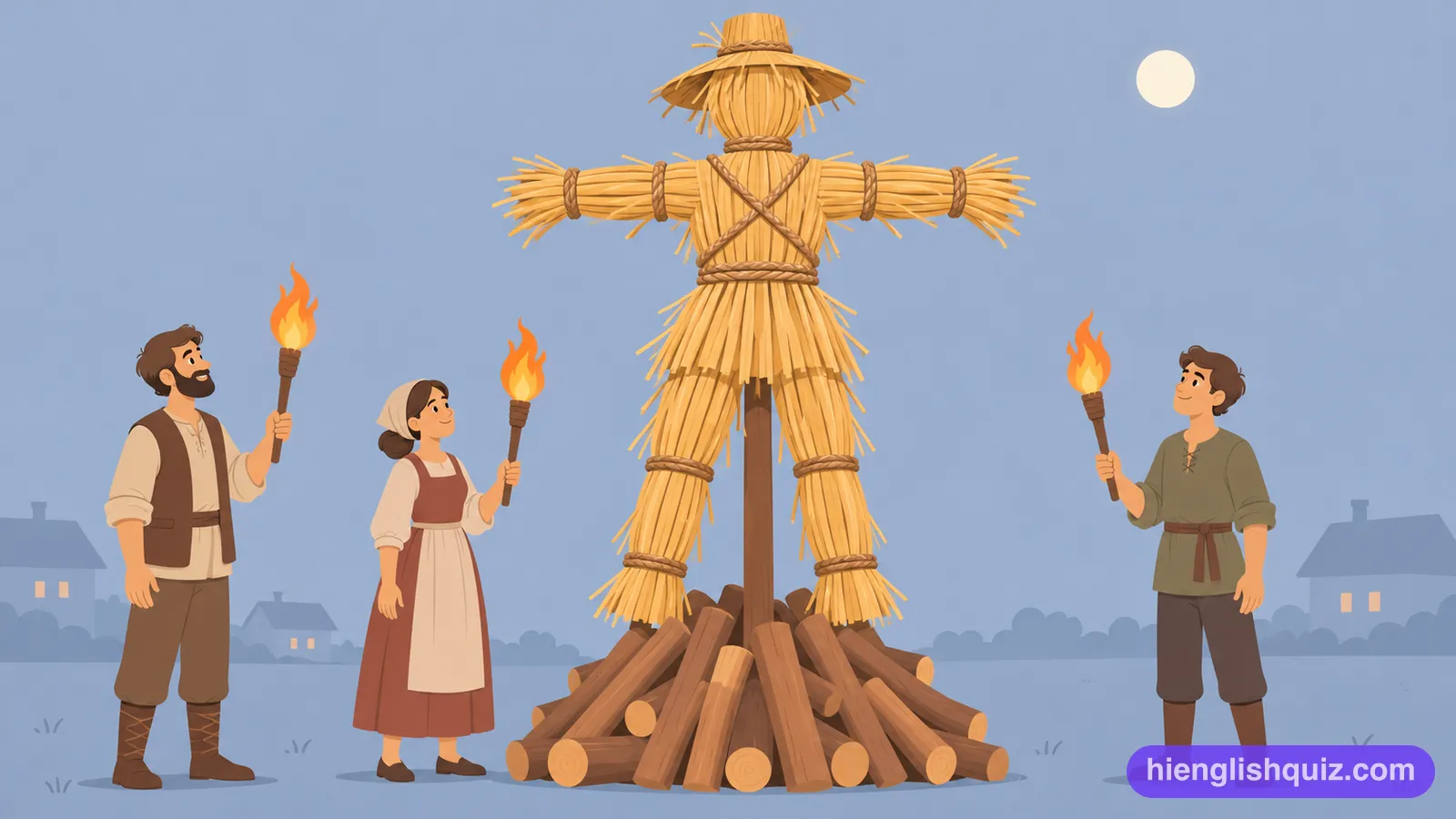
effigy
/ˈɛfɪdʒi/A model of a person, often made to be paraded through the streets or burned.
Example: On Bonfire Night, villagers burn an effigy on top of the fire.
 Hi EnglishQuiz
C216 words · Proficient
Festival vocabulary for old customs and formal celebration language, including first-footing, wassail, Epiphany and Saturnalia, plus yuletide, pomp and conviviality.
A model of a person, often made to be paraded through the streets or burned.
Example: On Bonfire Night, villagers burn an effigy on top of the fire.
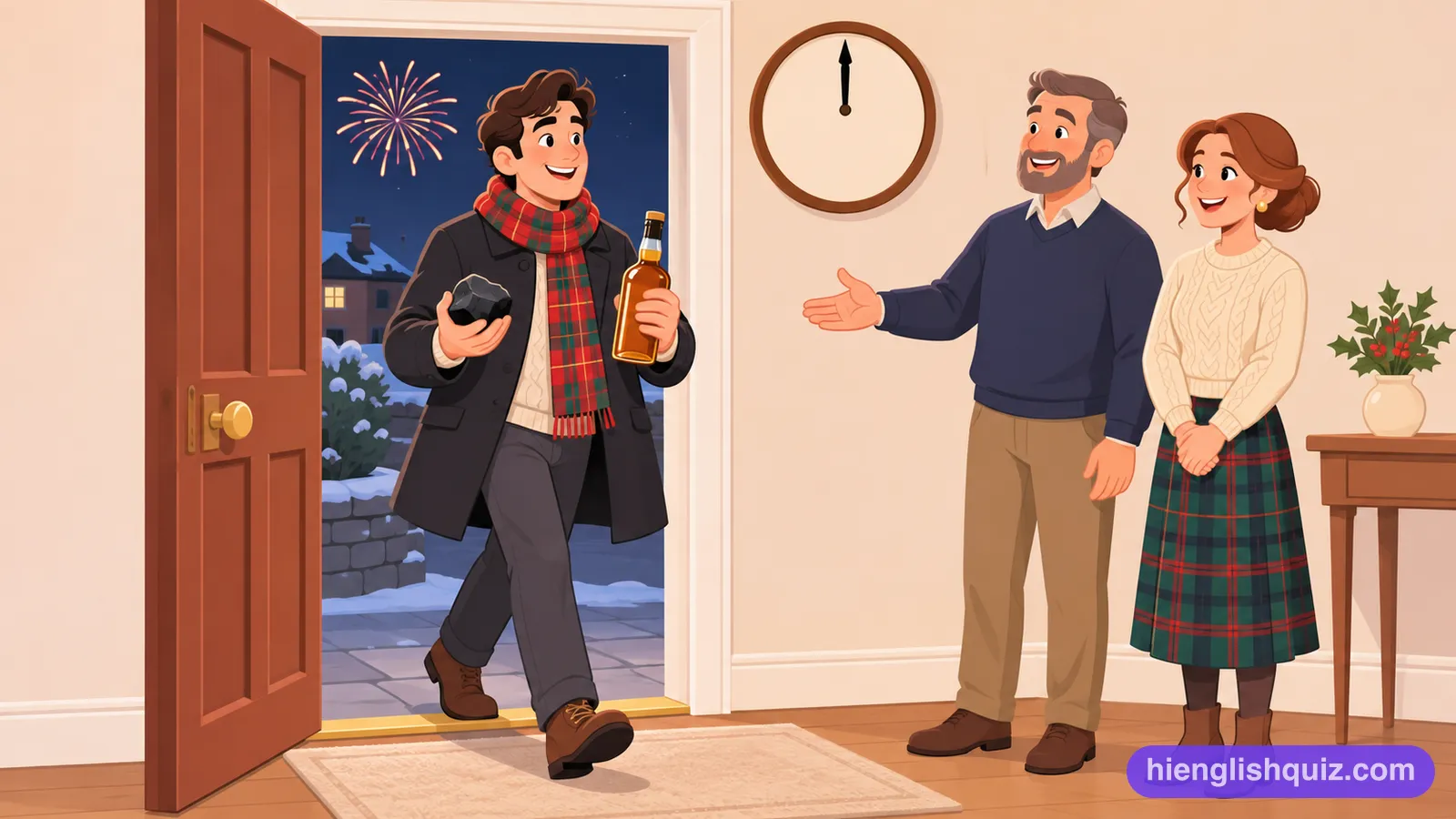
The Scottish custom of being the earliest visitor to cross a doorway after midnight on New Year's Eve, bringing luck.
Example: Our neighbour arrived with coal and whisky for the traditional first-footing.
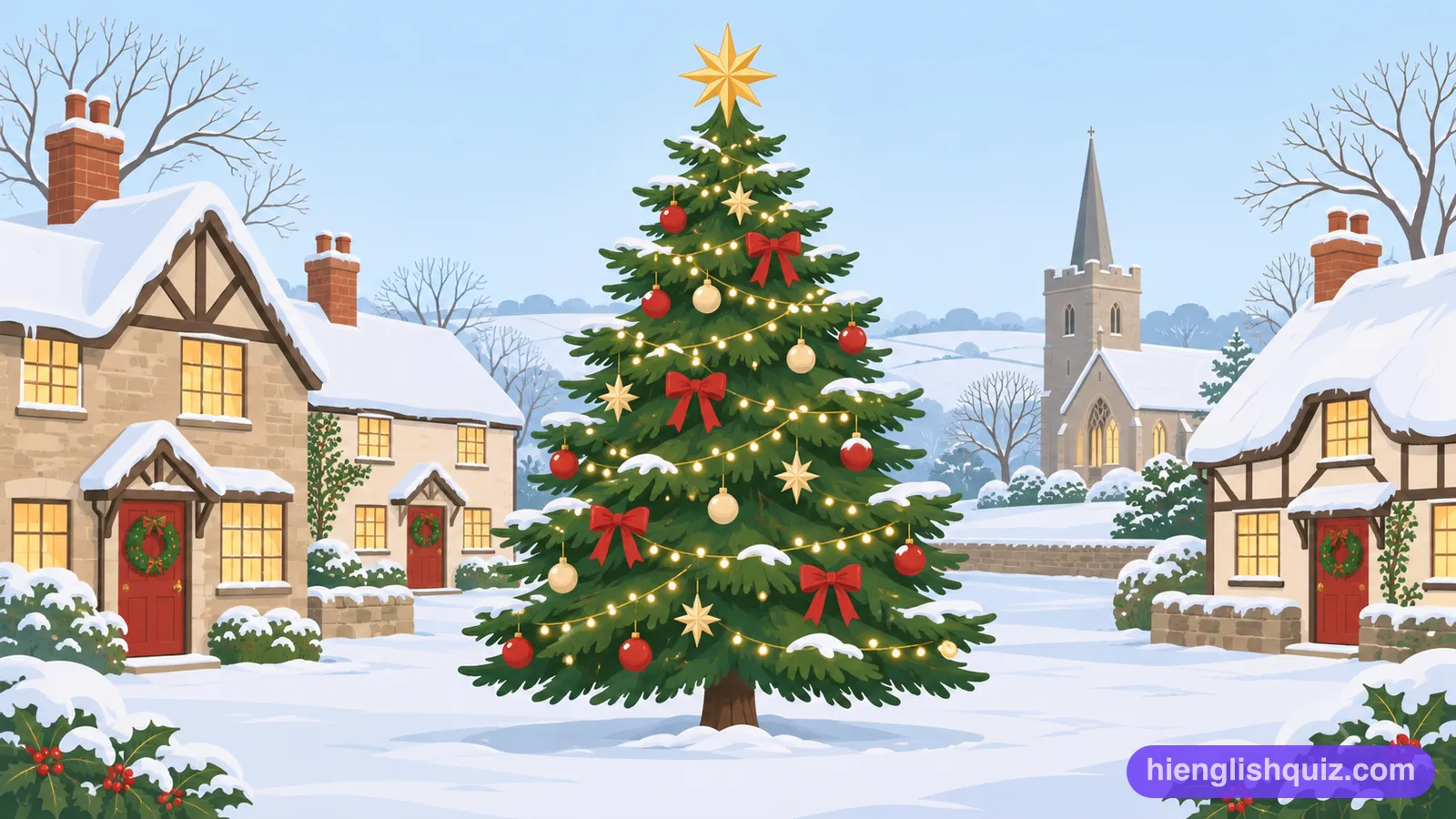
The traditional Christmas season, a word from old and poetic English.
Example: The village hall fills with singing every yuletide.
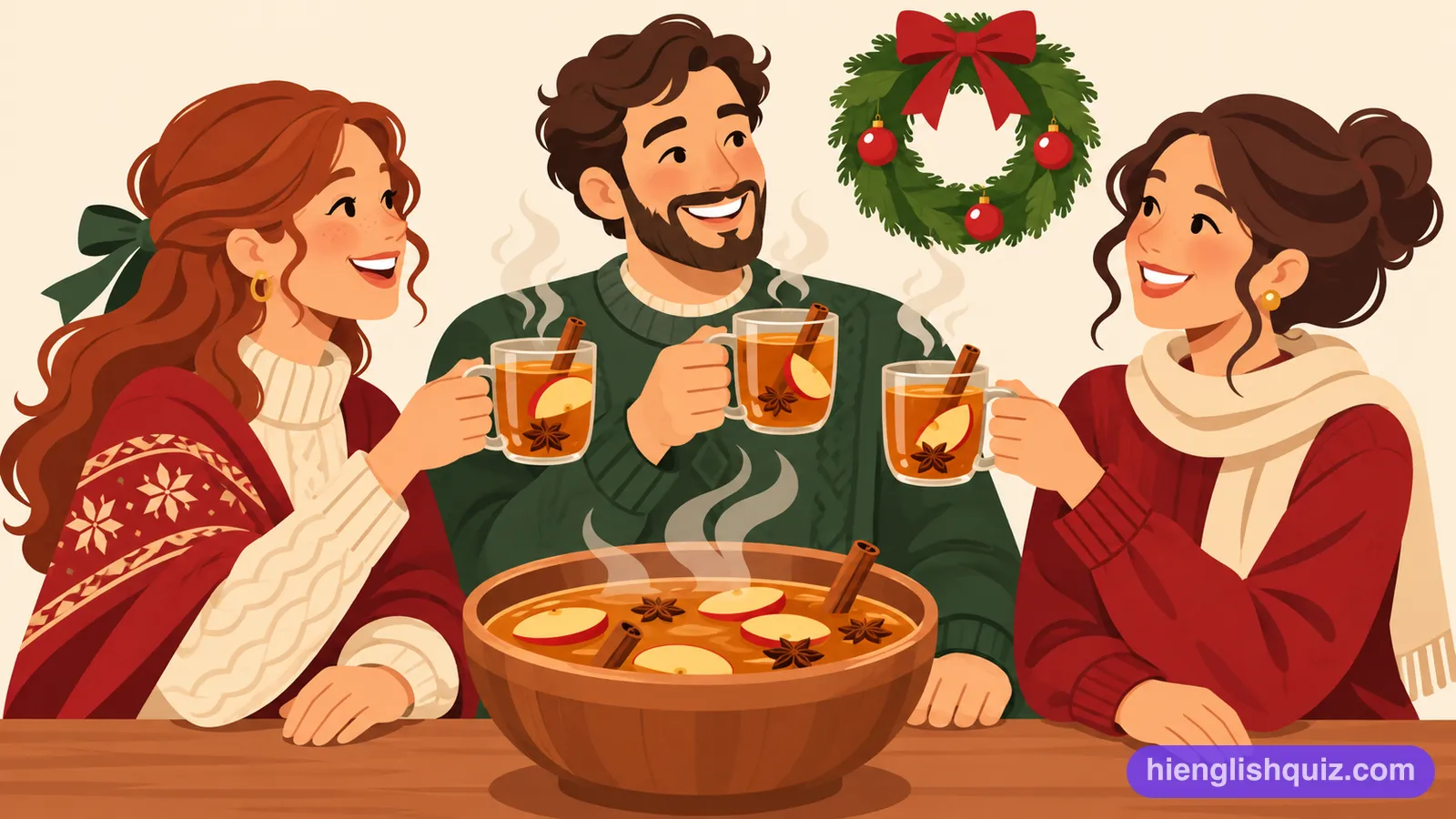
A hot spiced drink, often ale or cider, shared at Christmas to toast good health.
Example: We passed round a steaming bowl of wassail after the carol service.
The Christian festival on 6 January, marking the visit of the three kings to the baby Jesus.
Example: Many people take their Christmas decorations down on the eve of Epiphany.
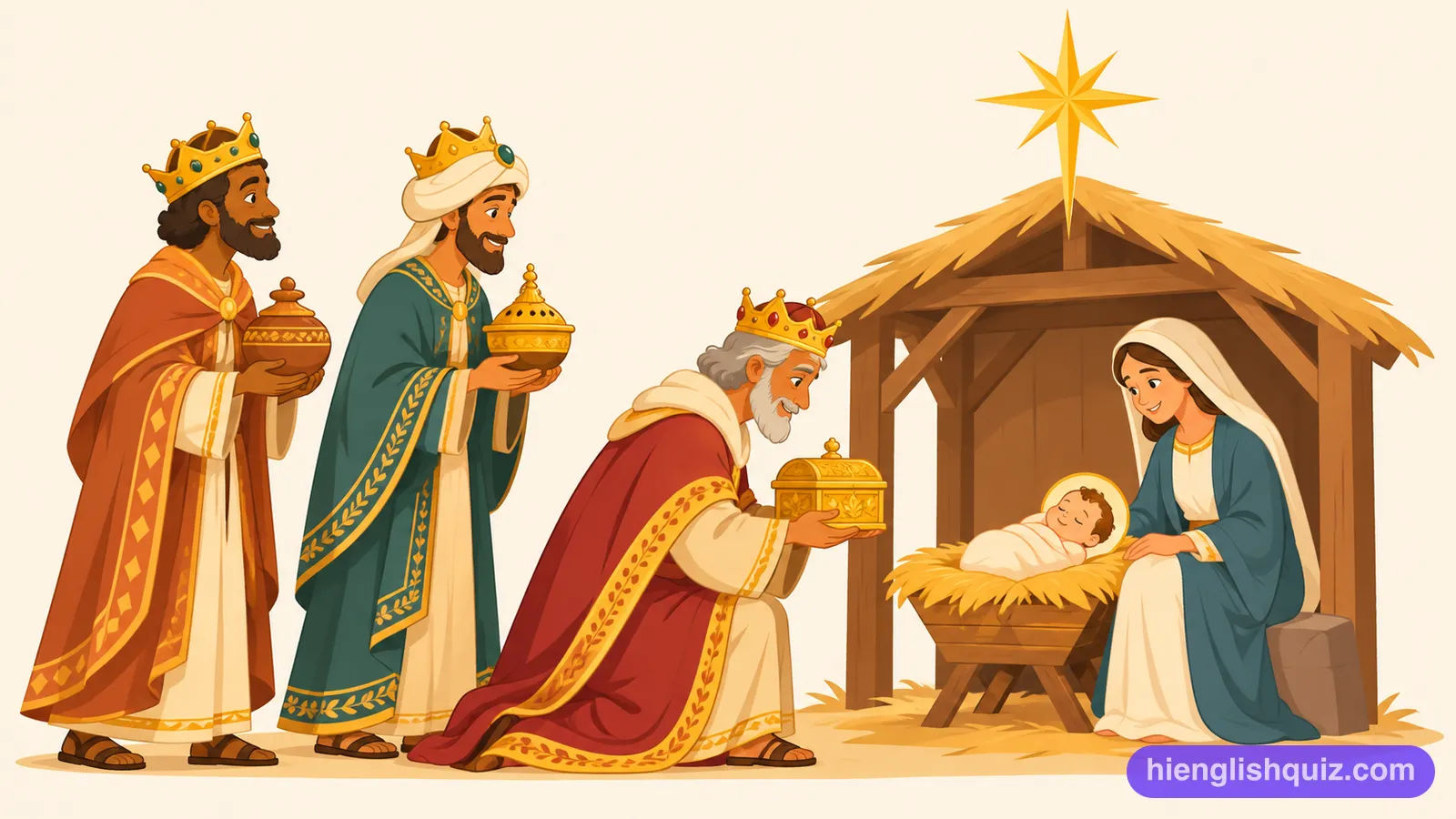
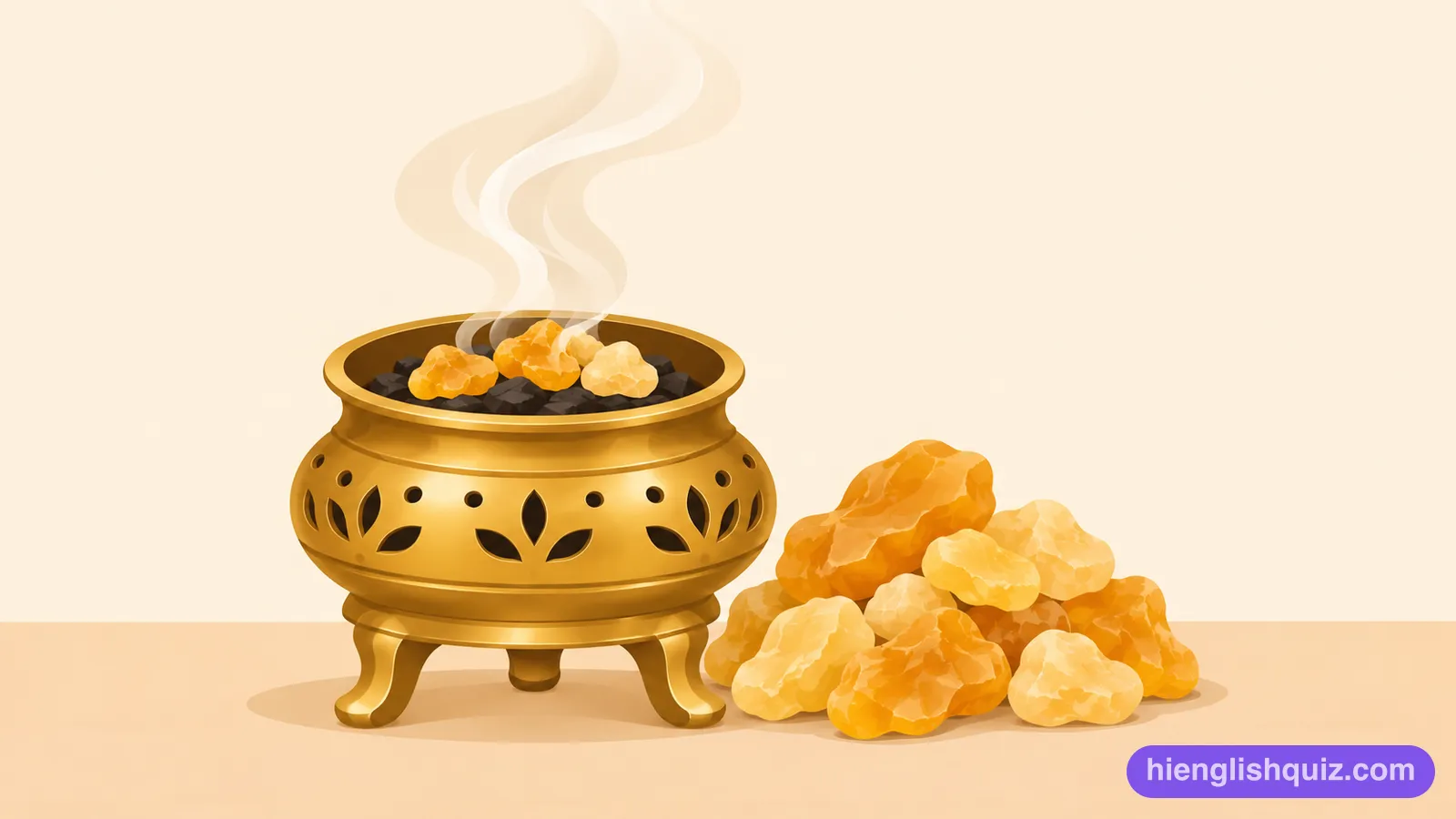
A sweet-smelling gum from a tree, burned for its smoke; one of the gifts brought to the baby Jesus.
Example: The church smelled of candle smoke and frankincense on Christmas morning.
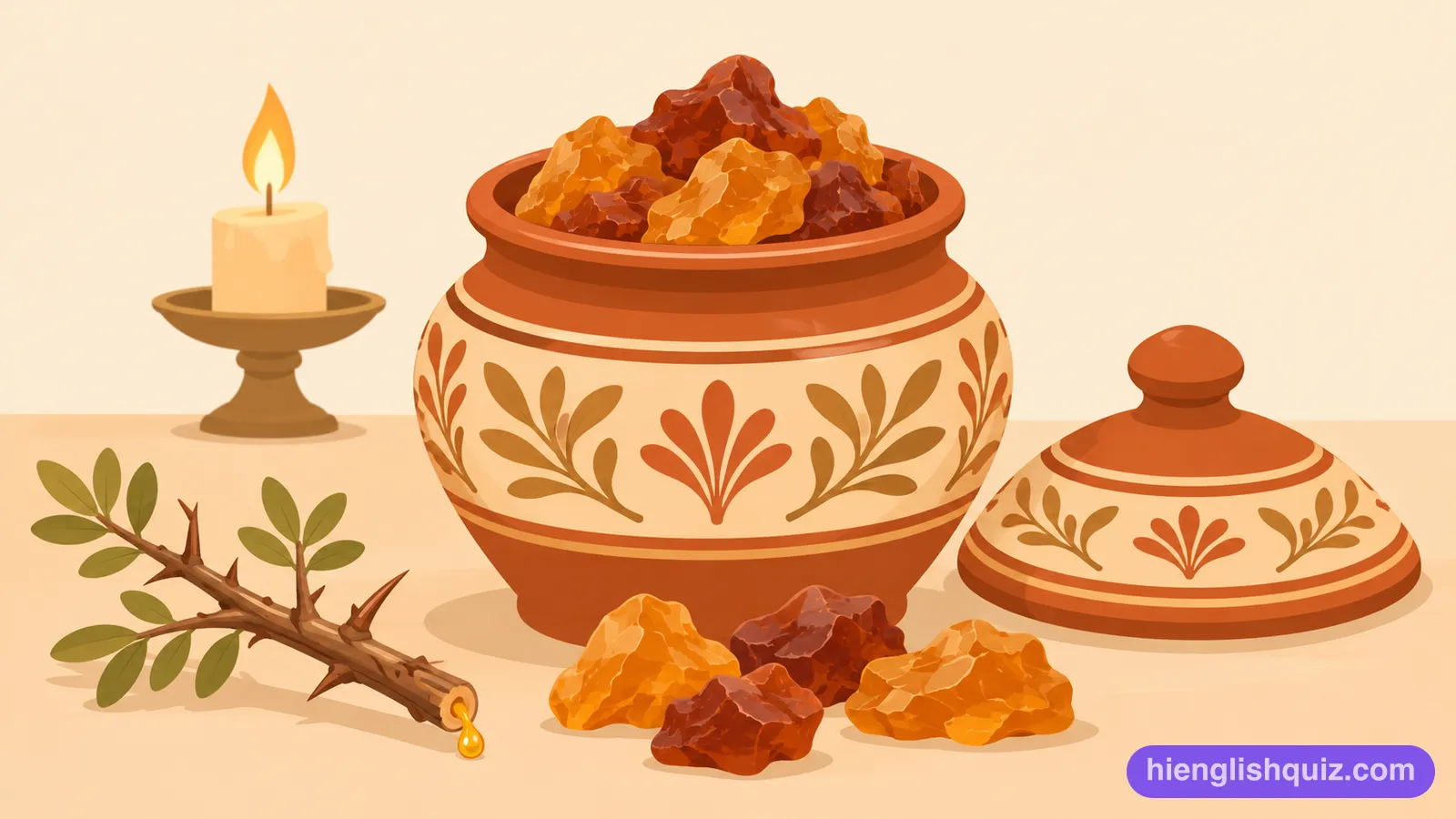
A bitter, scented gum from a tree, used in perfume and ointments and given as a gift at the first Christmas.
Example: In the nativity play, a shy boy carried a jar of myrrh.
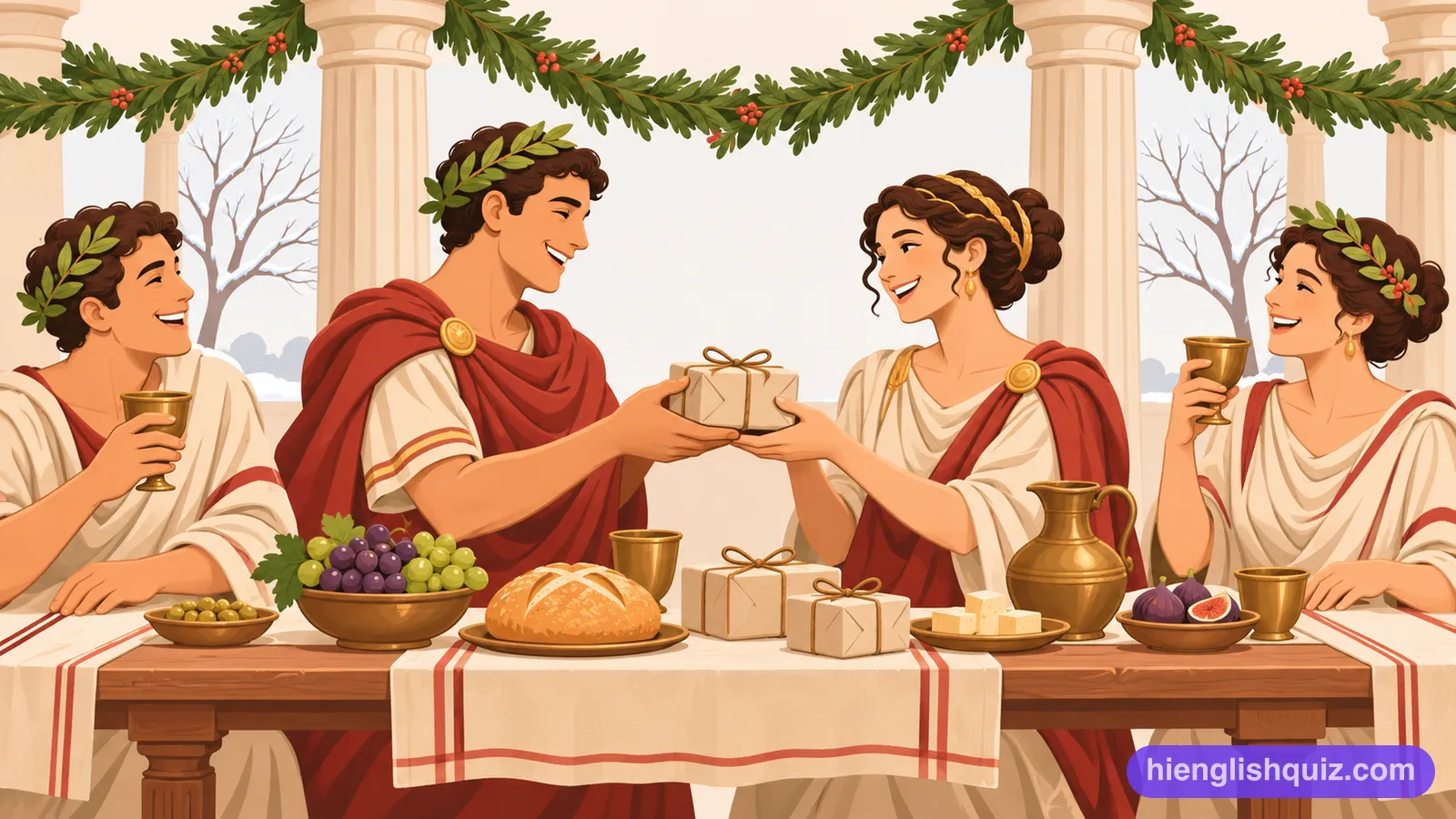
An ancient Roman midwinter festival of feasting and gift-giving, linked to later Christmas customs.
Example: Our teacher said the Romans gave presents during Saturnalia long before Santa existed.
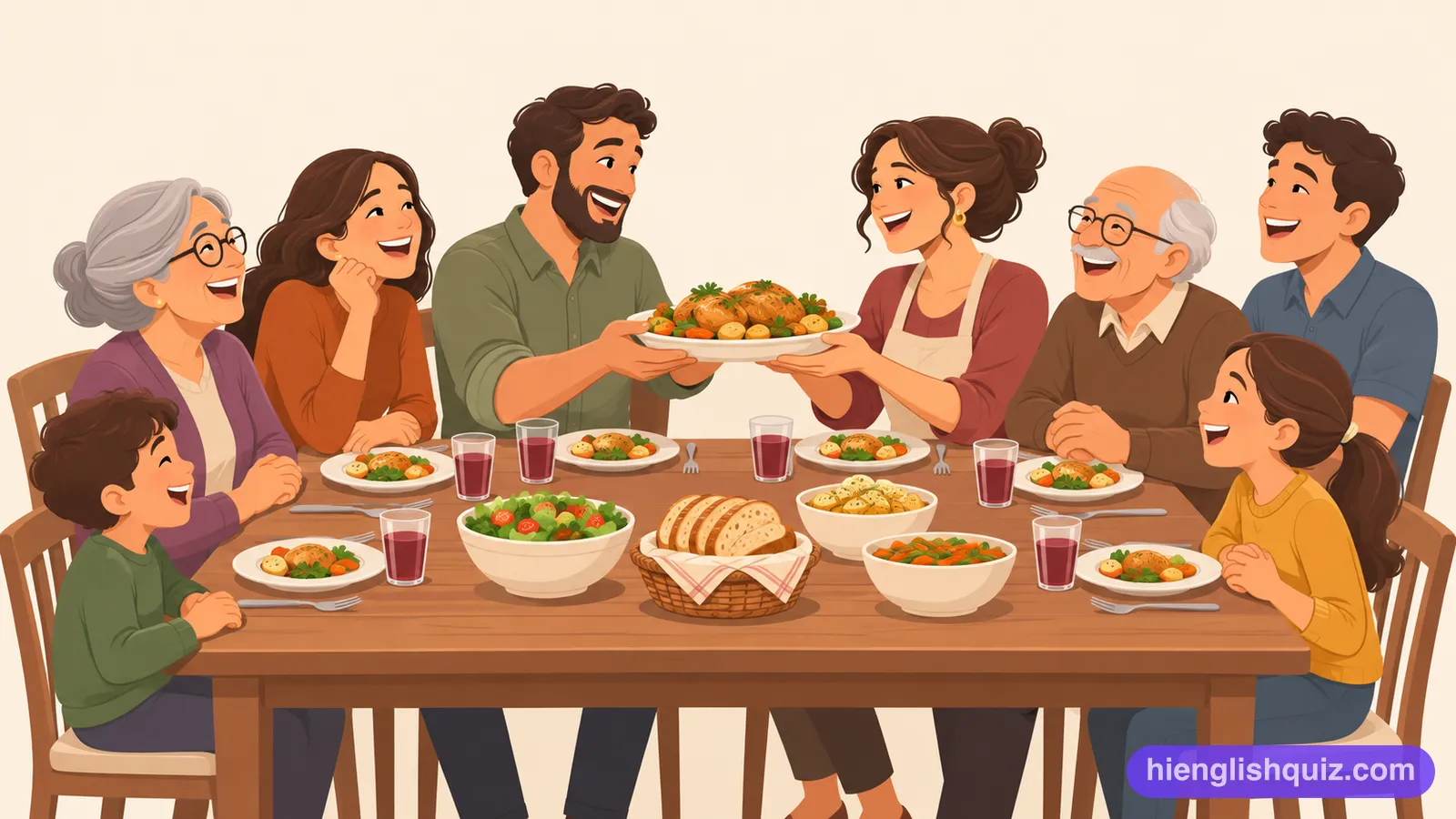
A warm, friendly feeling among people enjoying food and drink together.
Example: The long table, the wine and the conviviality made the New Year dinner special.
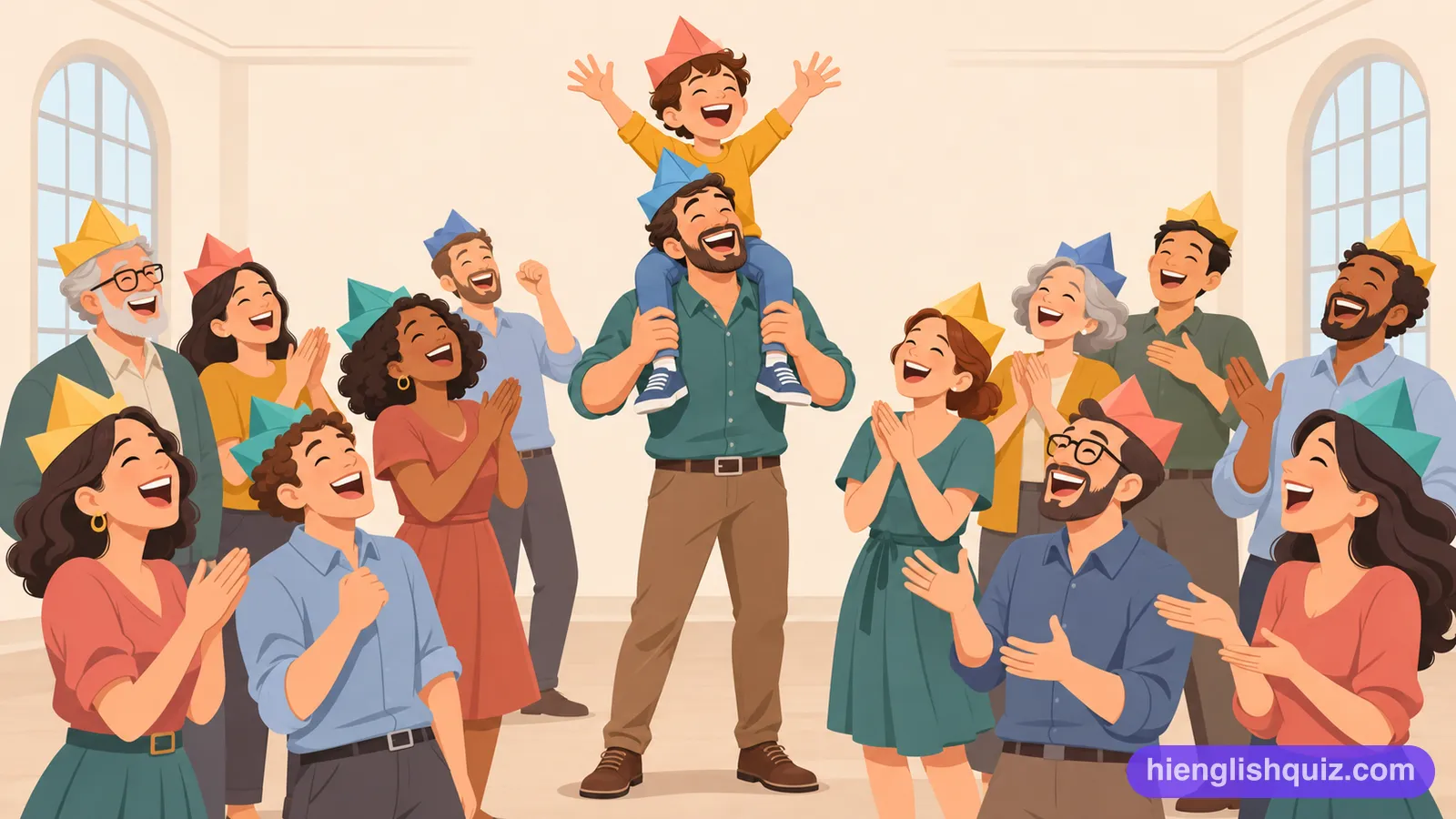
Cheerful, noisy fun and good humour, especially at a party or festival.
Example: Loud laughter and jollity filled the village hall on Boxing Day.
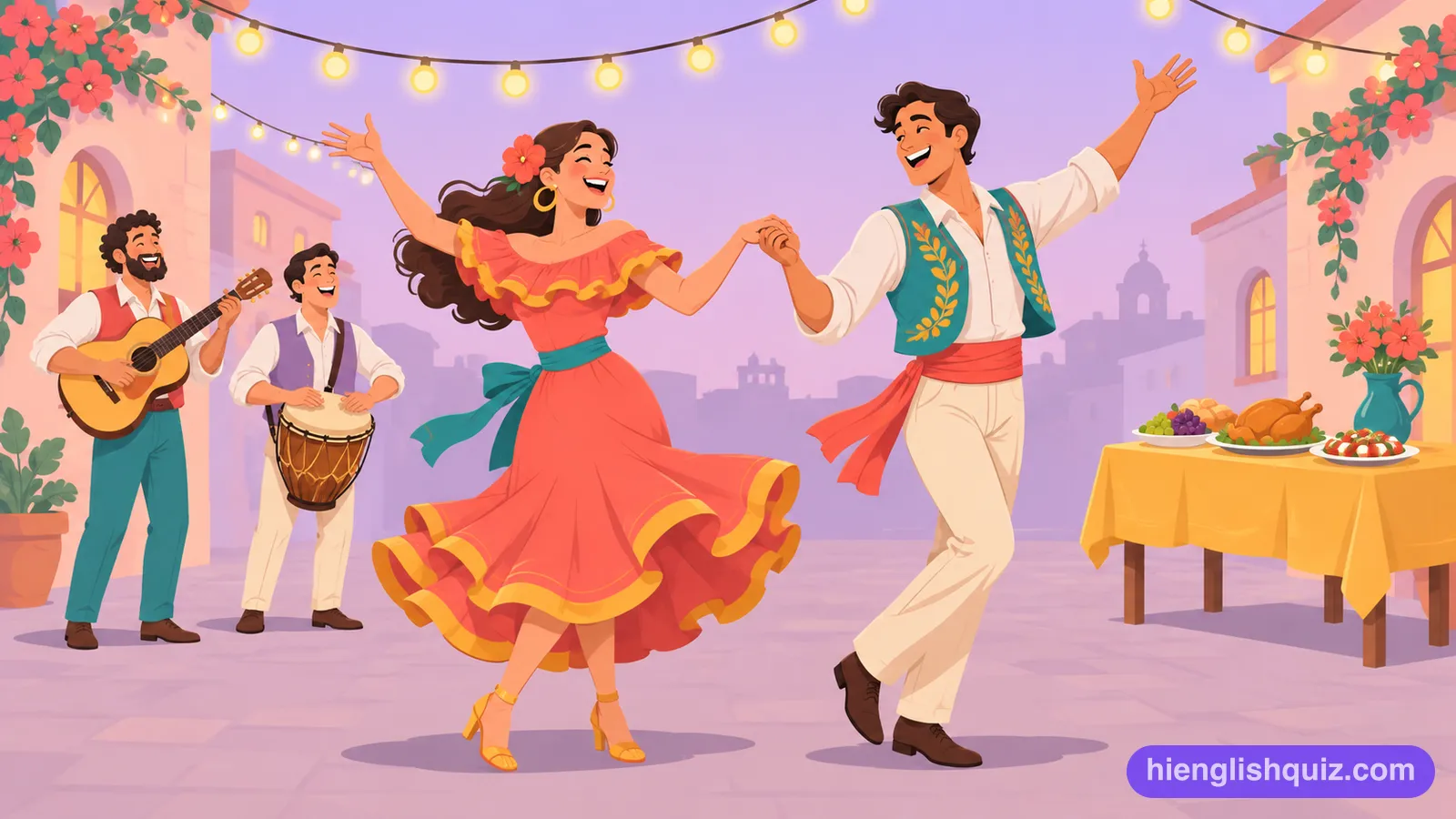
Connected with a feast or festival; joyful and celebratory.
Example: The streets had a festal air, with music and lights on every corner.
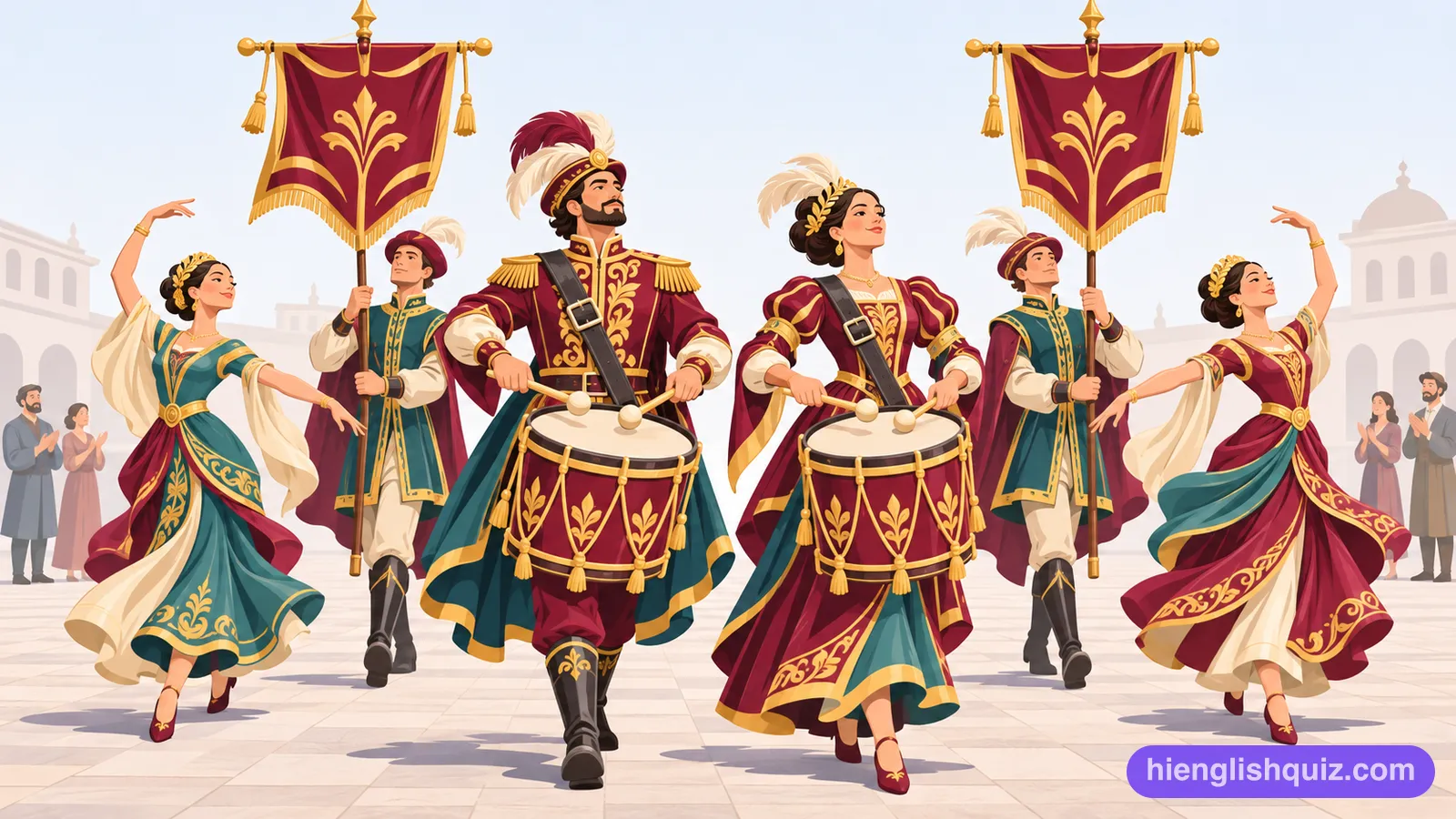
Grand, impressive display and ceremony at a public event.
Example: The Mid-Autumn parade passed with great pomp, drums and silk banners.
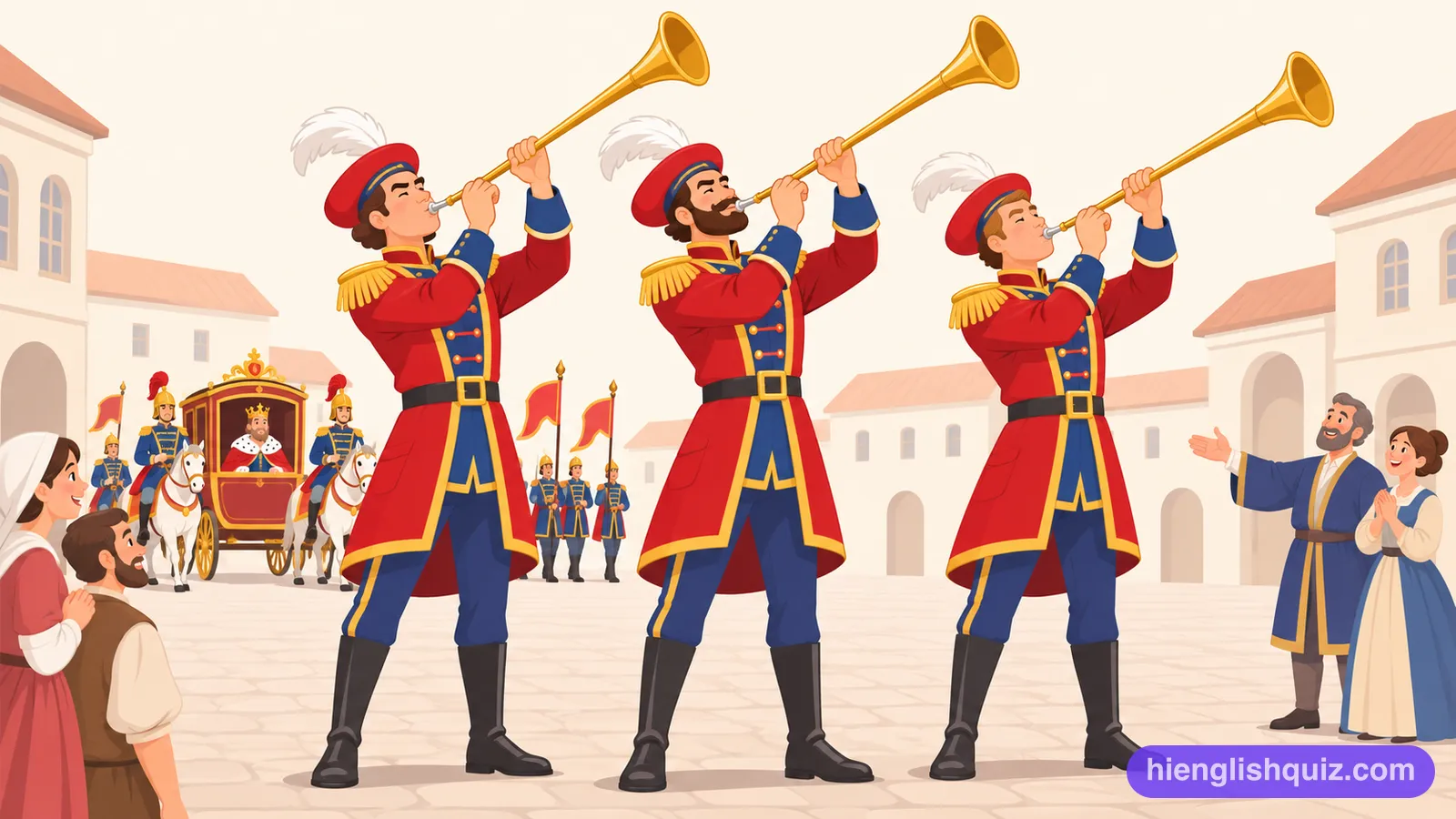
A short, loud burst of trumpet music announcing an important arrival or event.
Example: Trumpets played a fanfare as the carnival procession entered the square.
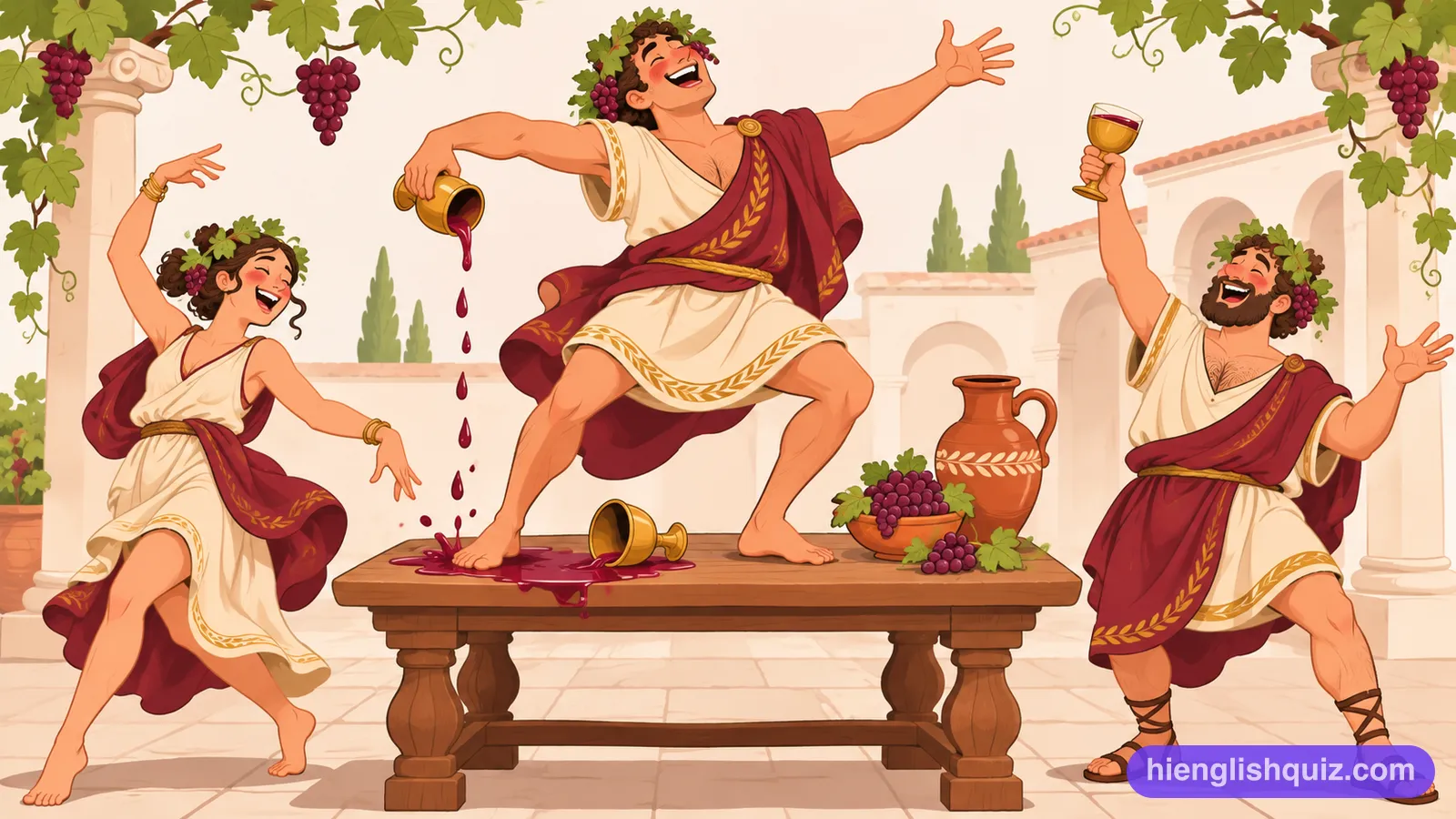
A wild, drunken party, originally one honouring the Roman god of wine.
Example: The office party had turned into a drunken bacchanal by midnight.
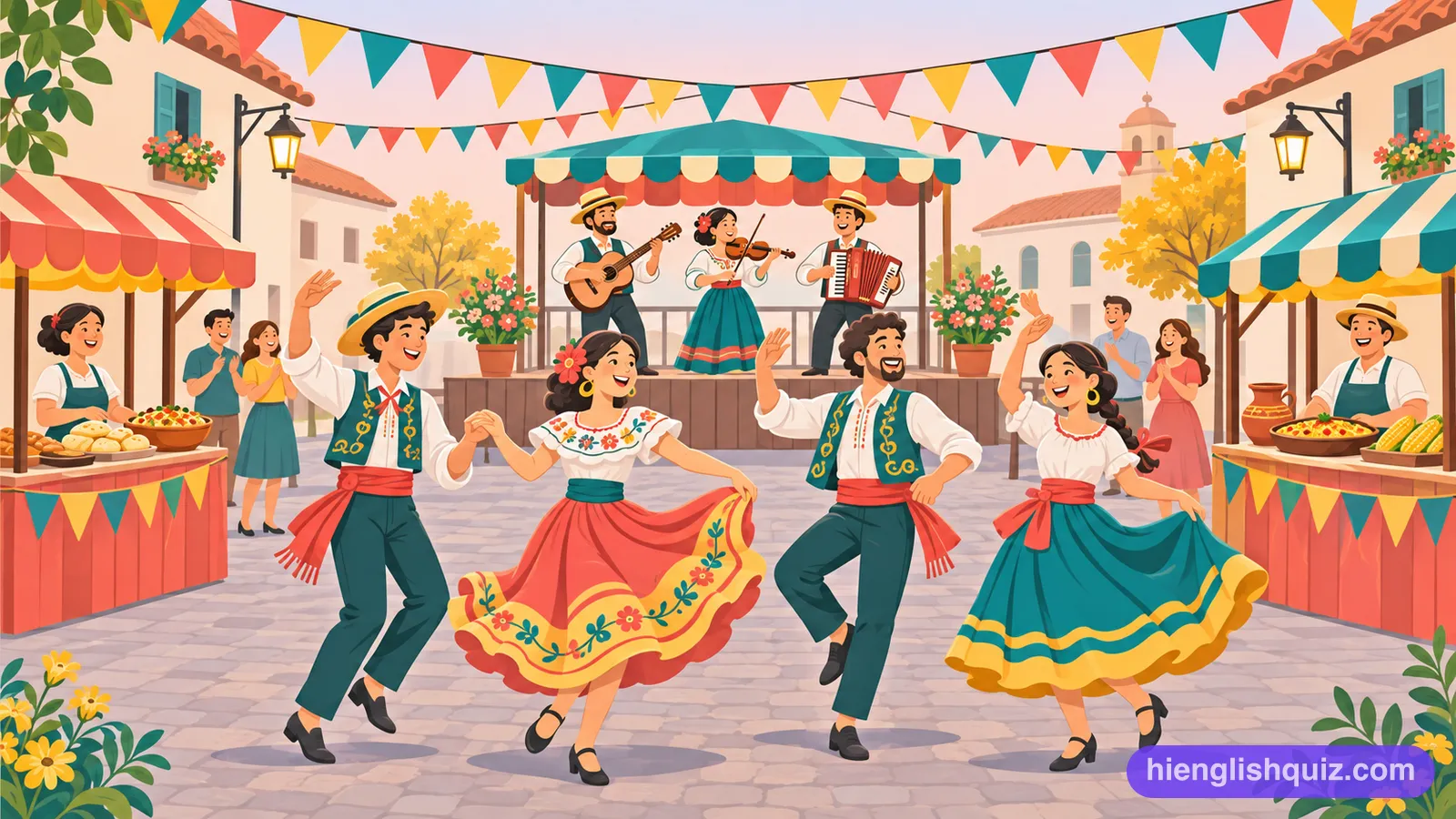
Lively festive activity such as dancing, singing and drinking.
Example: The merrymaking in the square went on until the early hours.
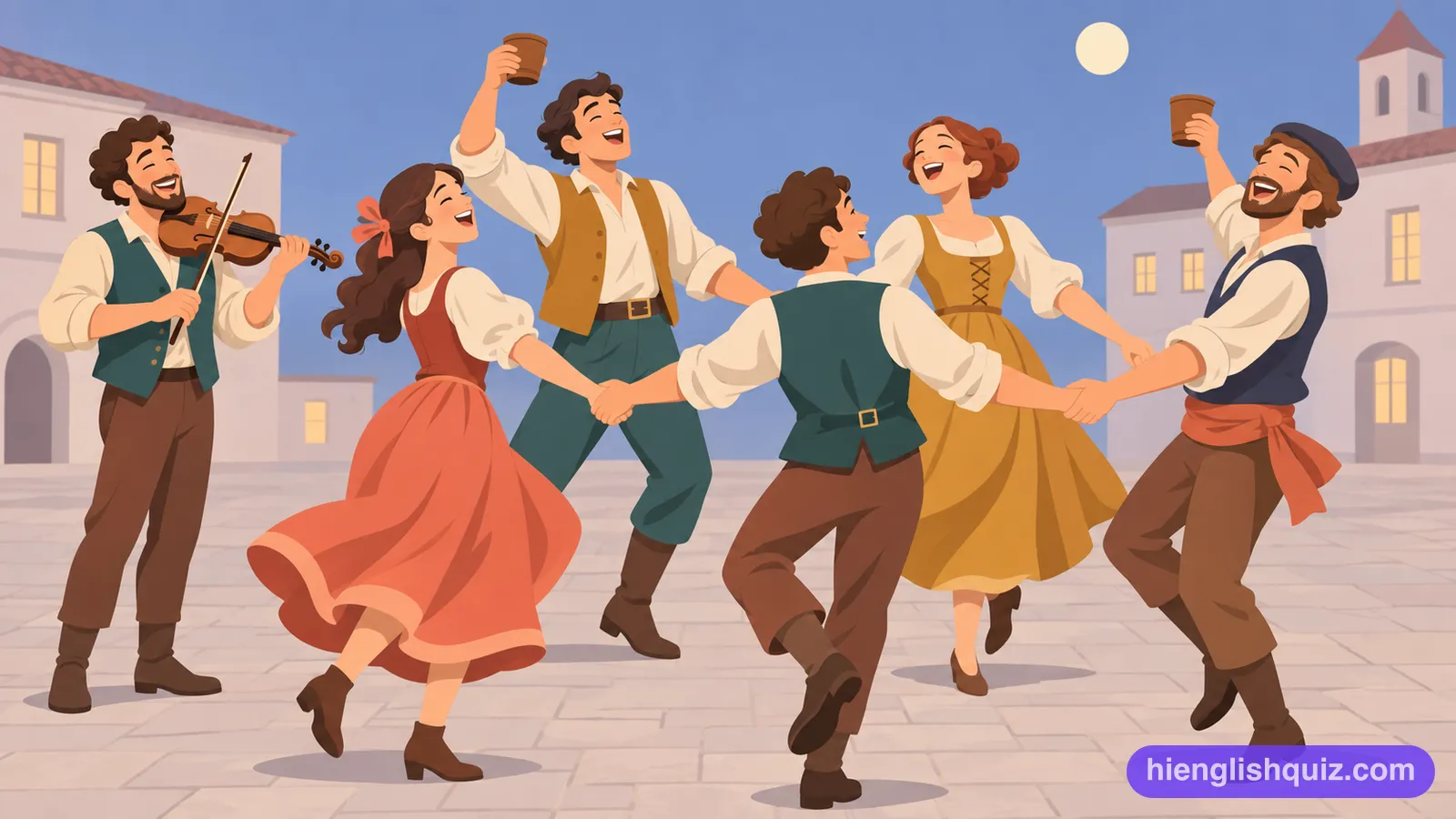
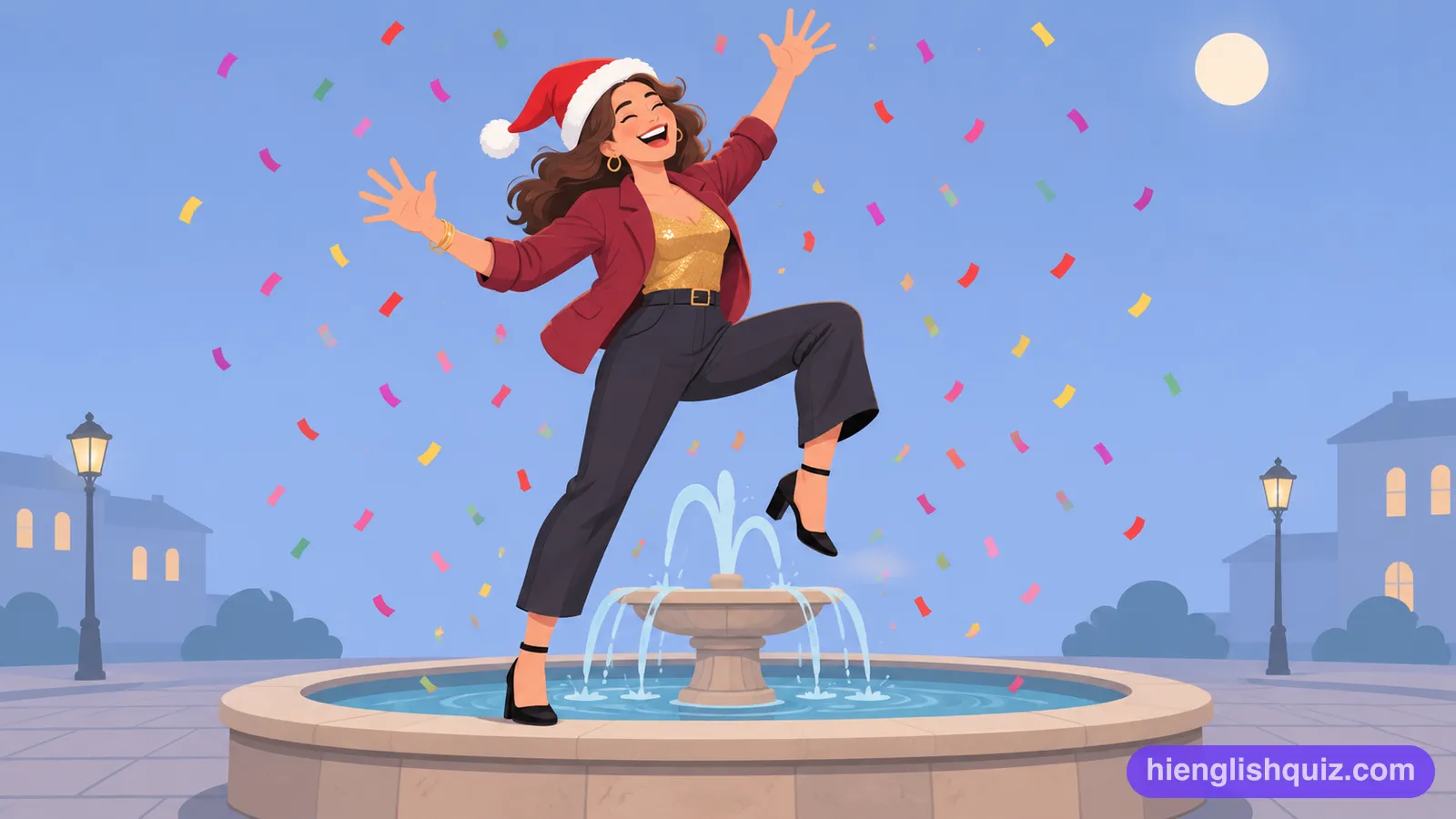
A person who takes part in noisy, cheerful celebrations.
Example: One reveller in a Santa hat danced on the fountain at midnight.