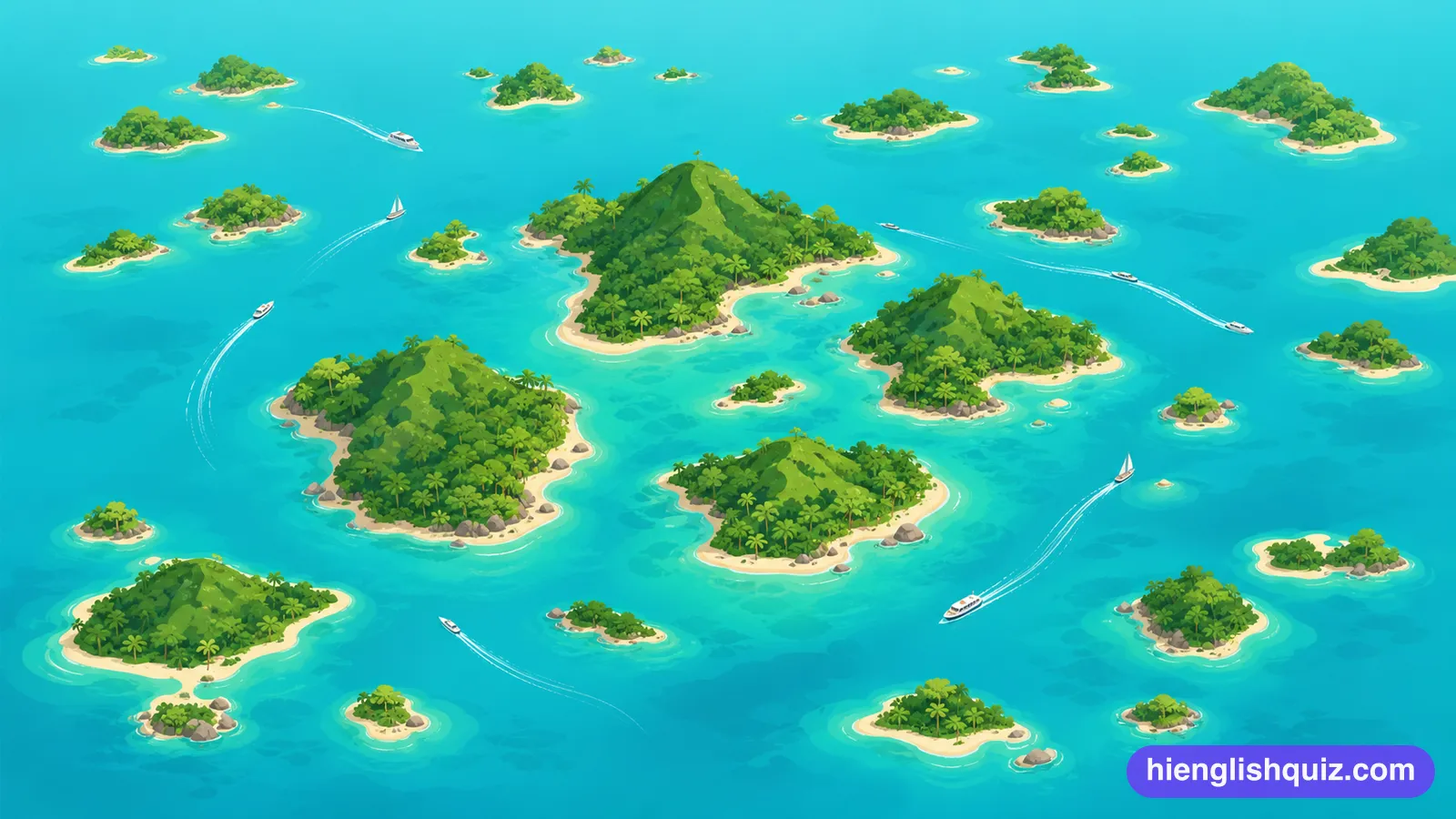
archipelago
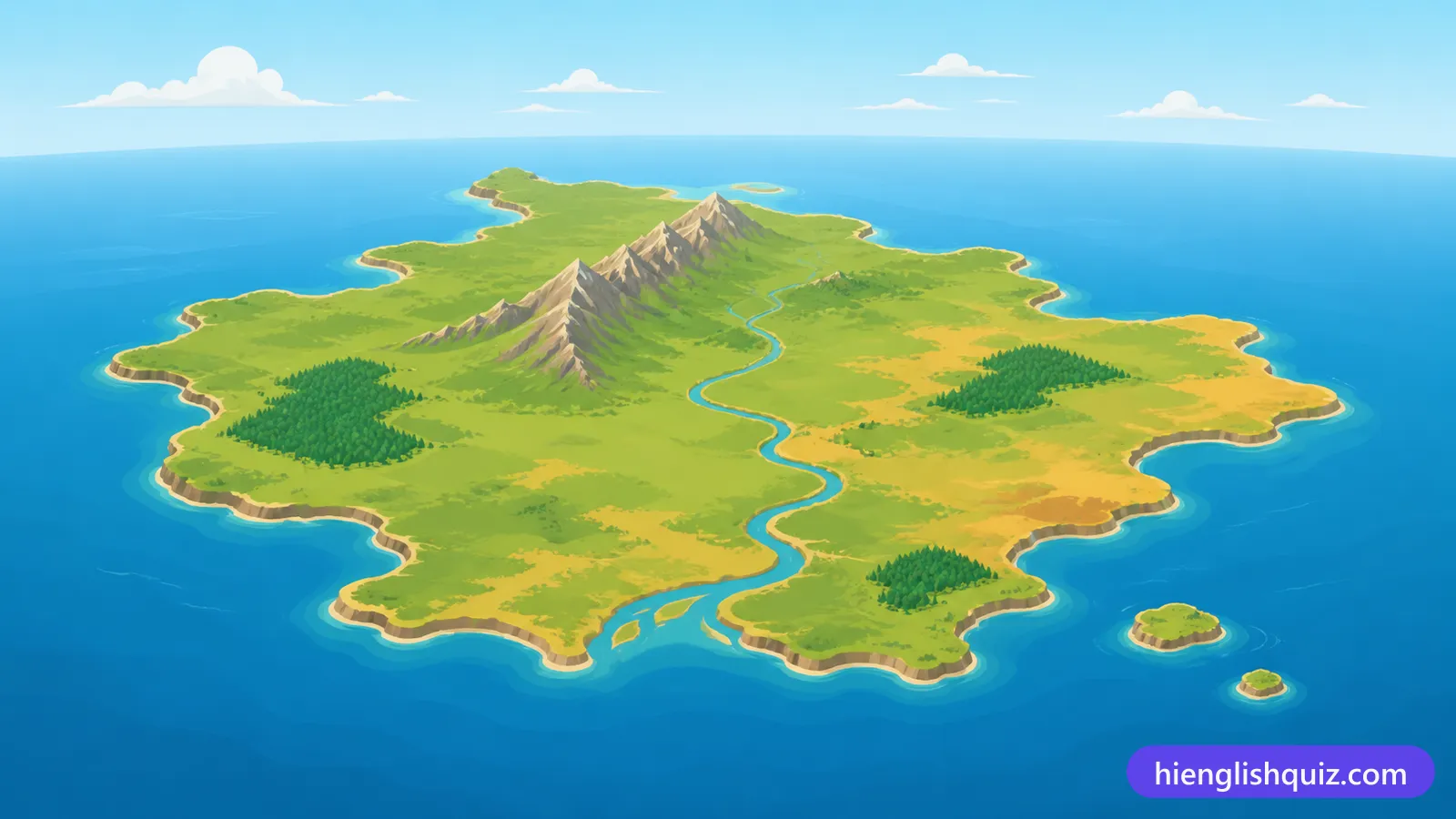
/ˌɑrkəˈpɛləˌɡoʊ/A large group of many islands lying close together in the same stretch of sea.
Example: The archipelago has over three hundred islands, most of them empty.
 Hi EnglishQuiz
C223 words · Proficient
Countries and continents vocabulary for borders and power, including a principality, an emirate and a buffer state, plus annexation, partition and geopolitical realpolitik.
A large group of many islands lying close together in the same stretch of sea.
Example: The archipelago has over three hundred islands, most of them empty.
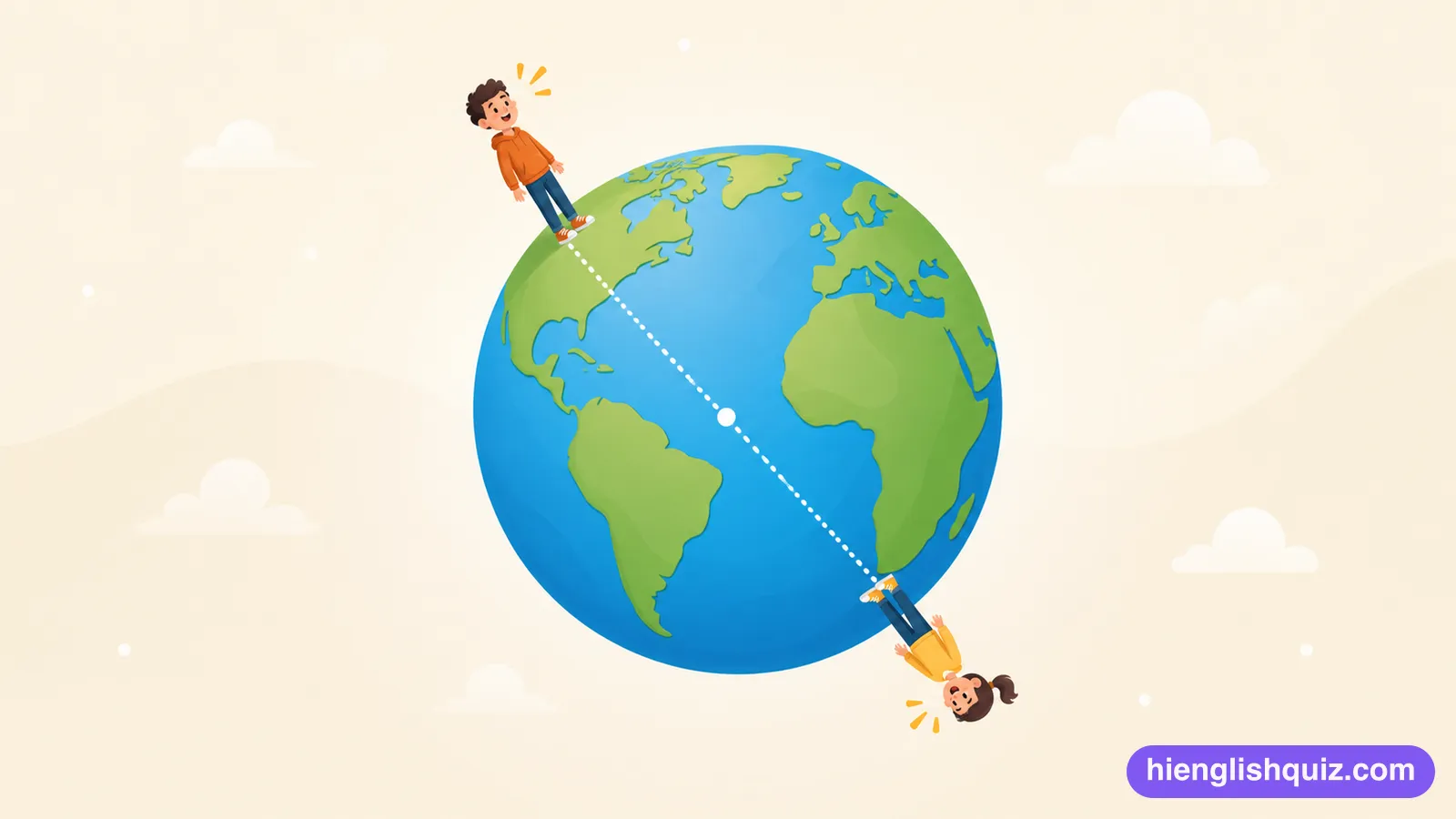
The part of the world lying exactly opposite your own, on the far side of the earth.
Example: He moved to the antipodes for a job in Wellington.
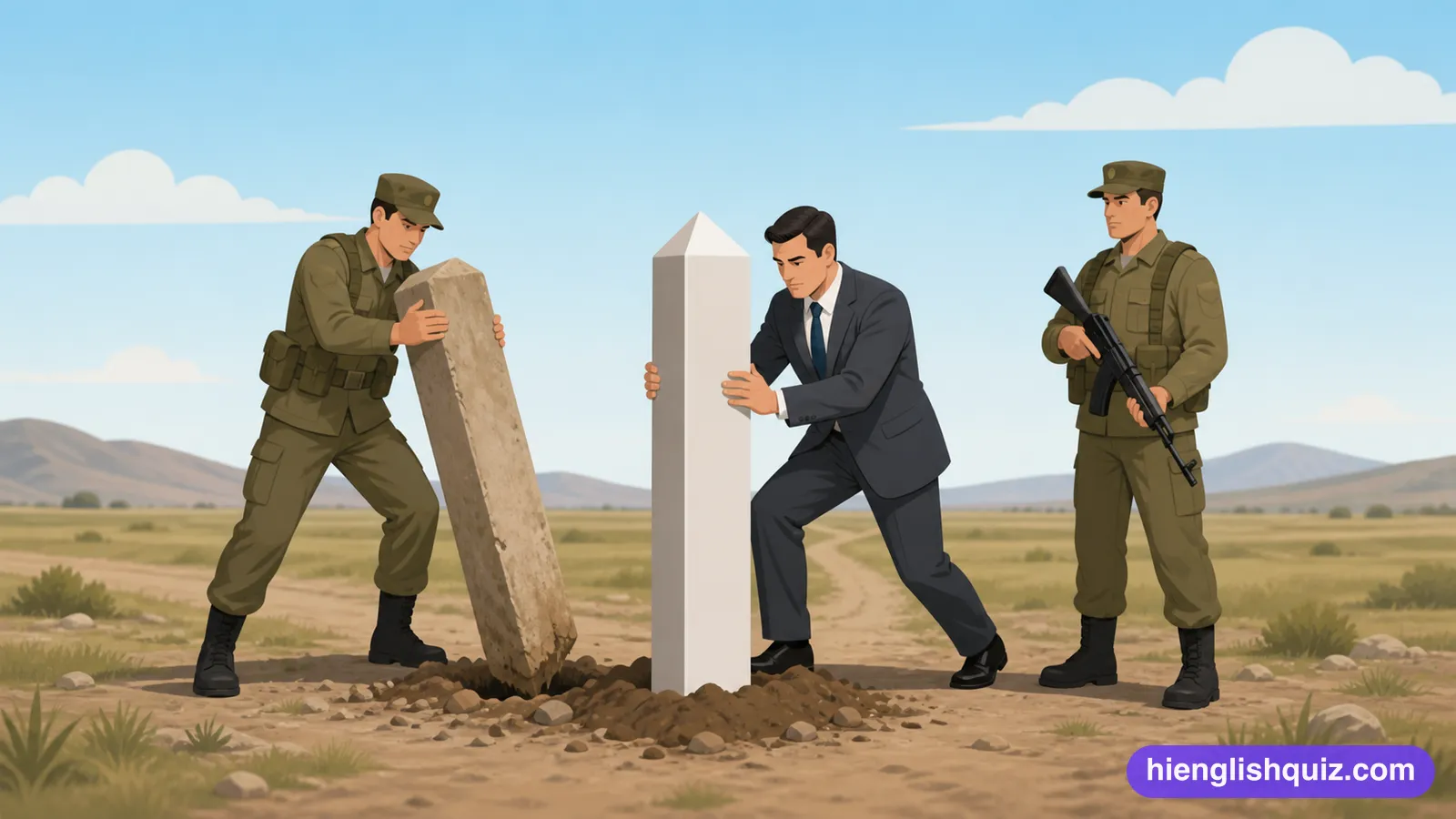
To take control of a territory, often by force, and add it to your own country.
Example: The empire annexed the small kingdom in 1890.
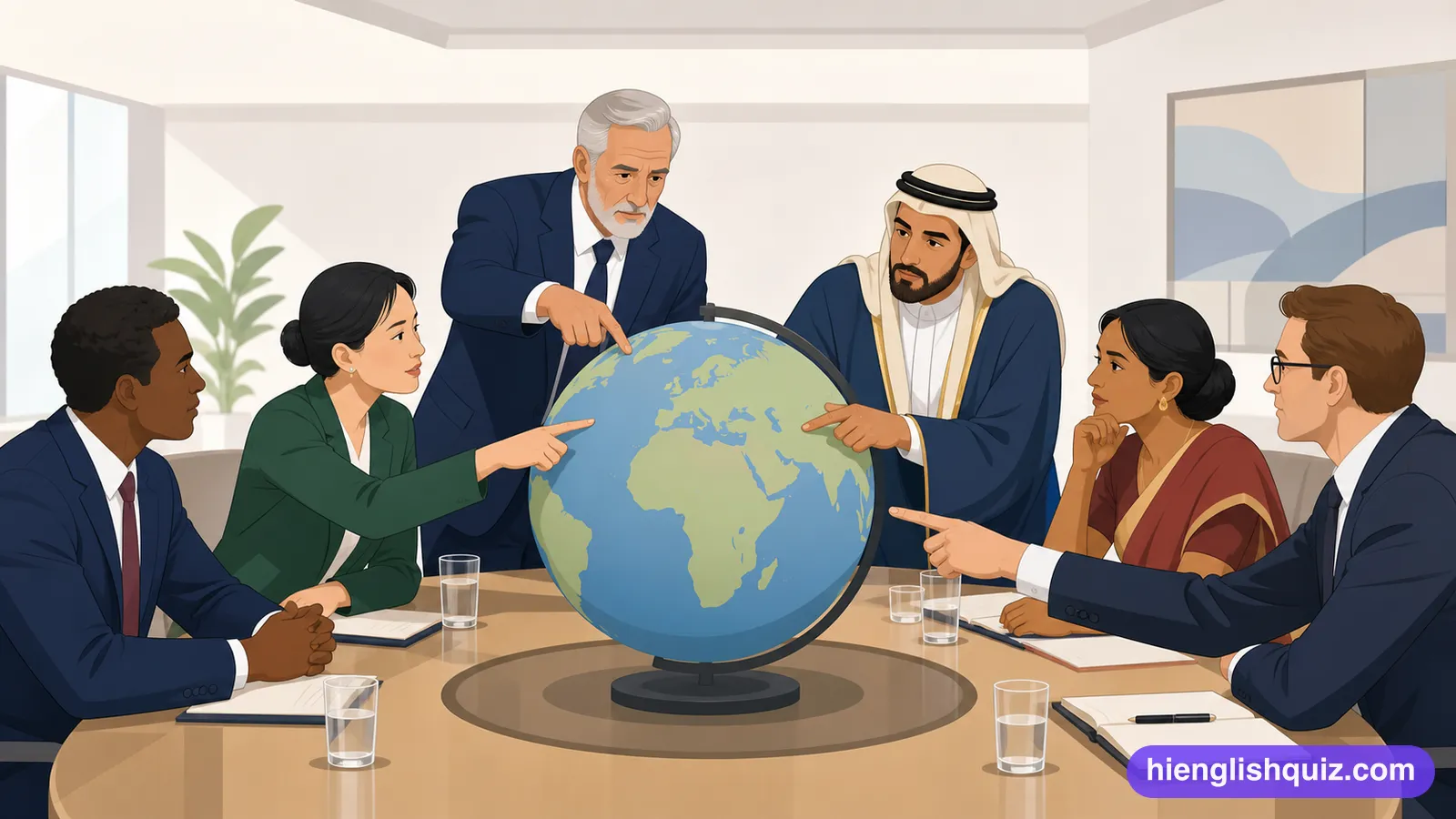
Relating to politics as shaped by geography and international relations.
Example: The strait has huge geopolitical importance.
Involving or operating across more than one country.
Example: The company runs a transnational supply chain.
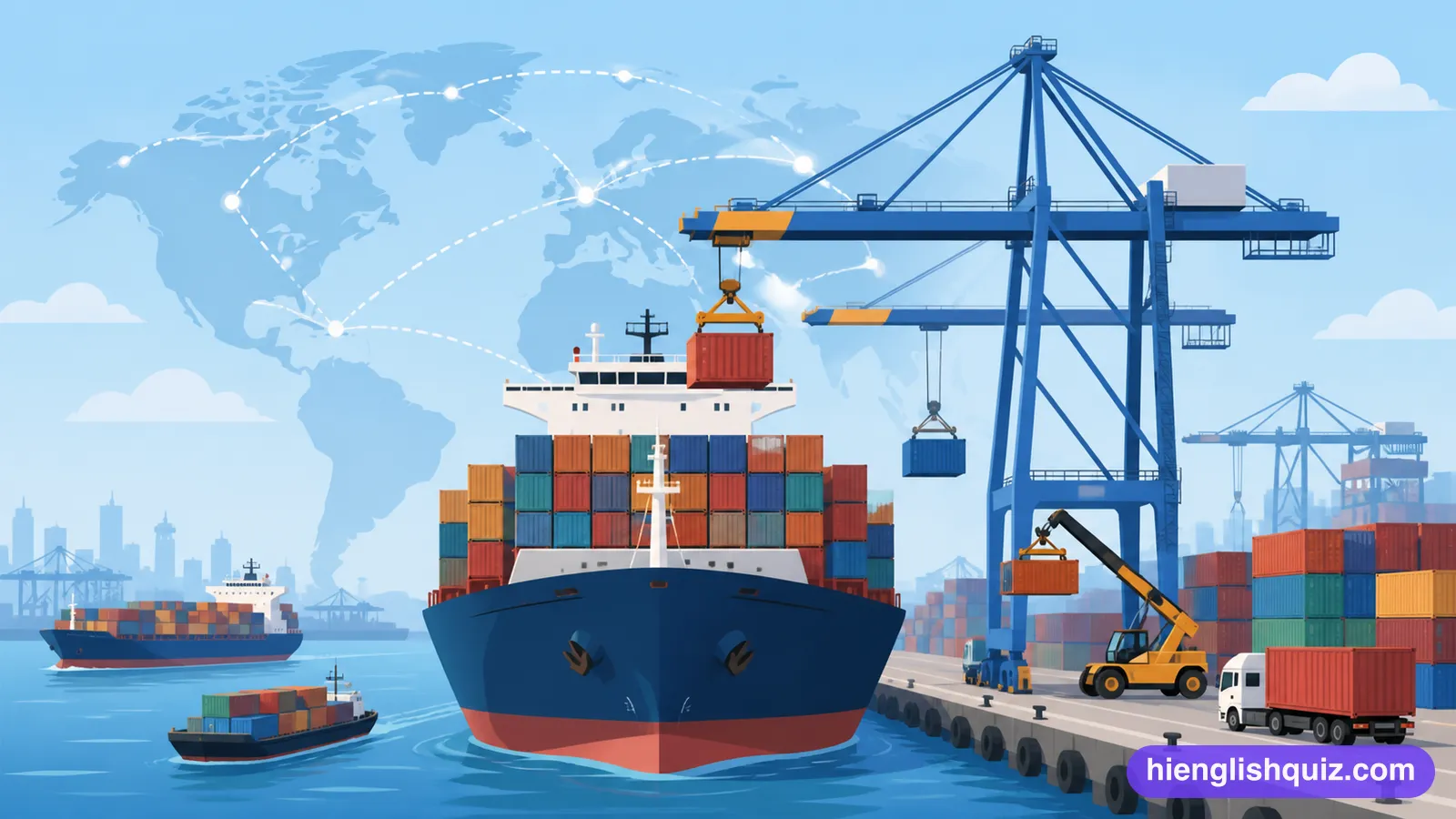
The leading or dominant influence of one country or group over others.
Example: The empire held hegemony over the region for centuries.
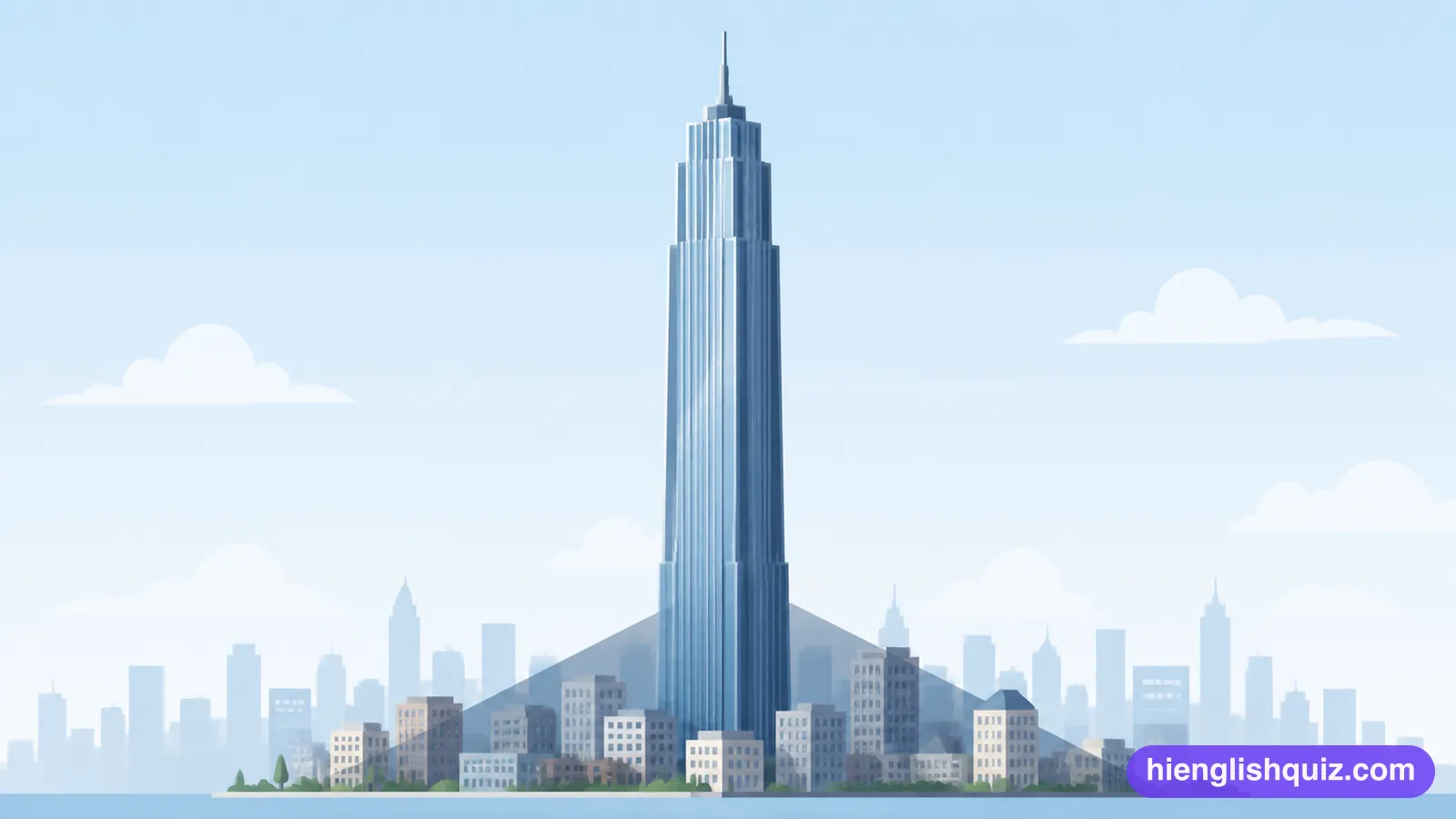
A narrow strip of land connecting two larger areas of land, with water on both sides.
Example: Panama sits on a narrow isthmus between two oceans.
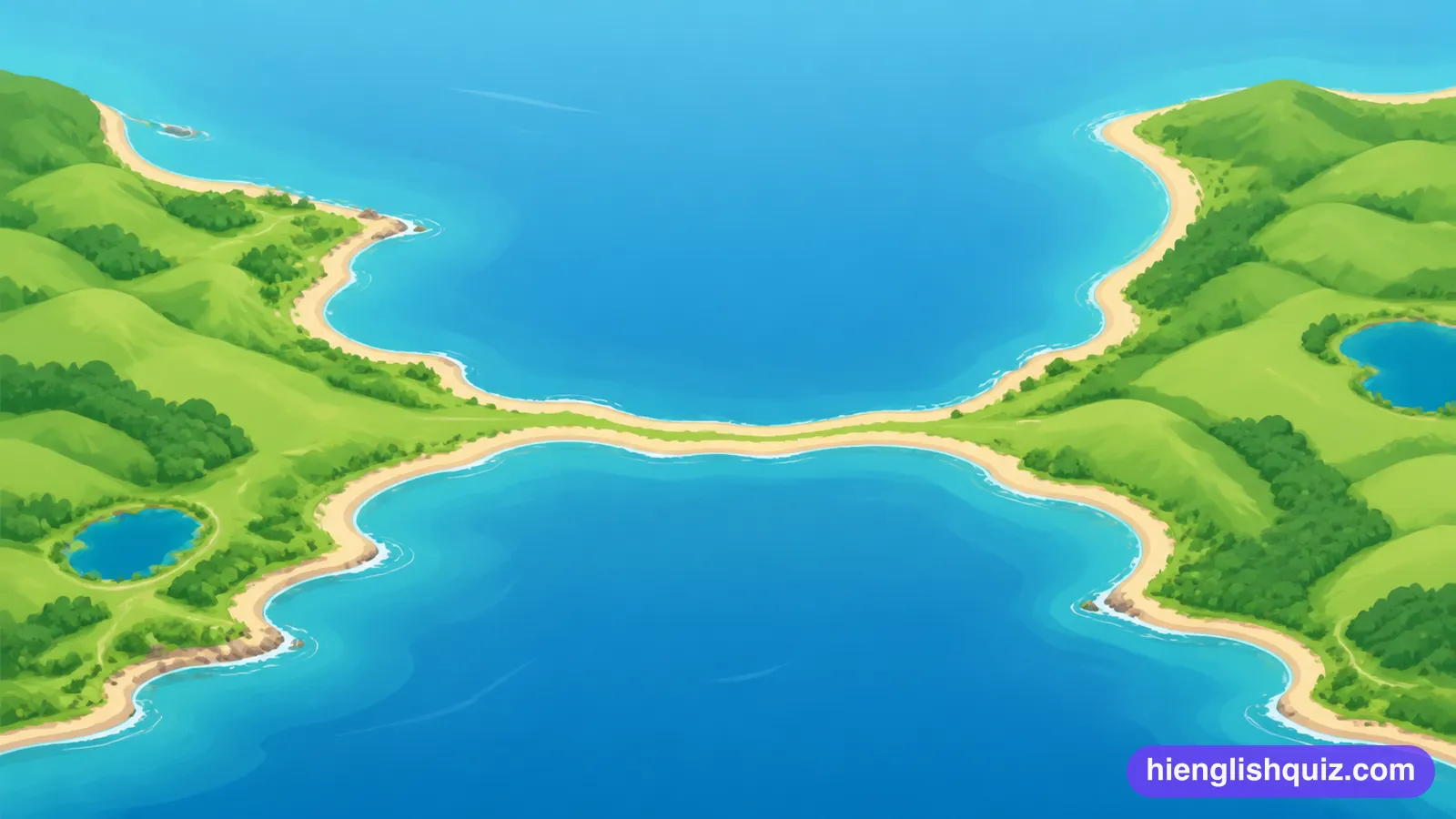
Having power or influence that goes beyond the boundaries of one country.
Example: The EU acts as a supranational body on trade rules.
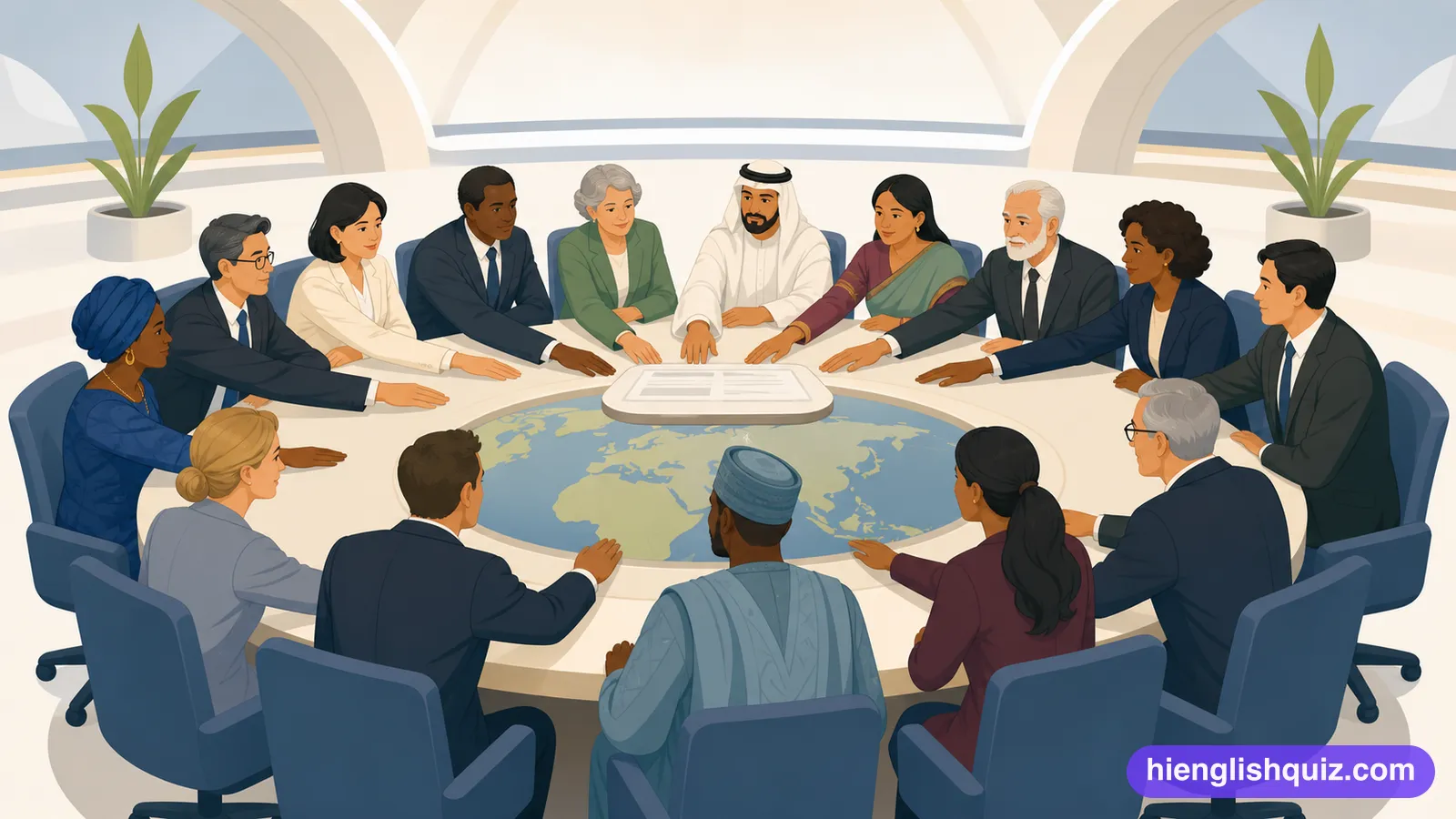
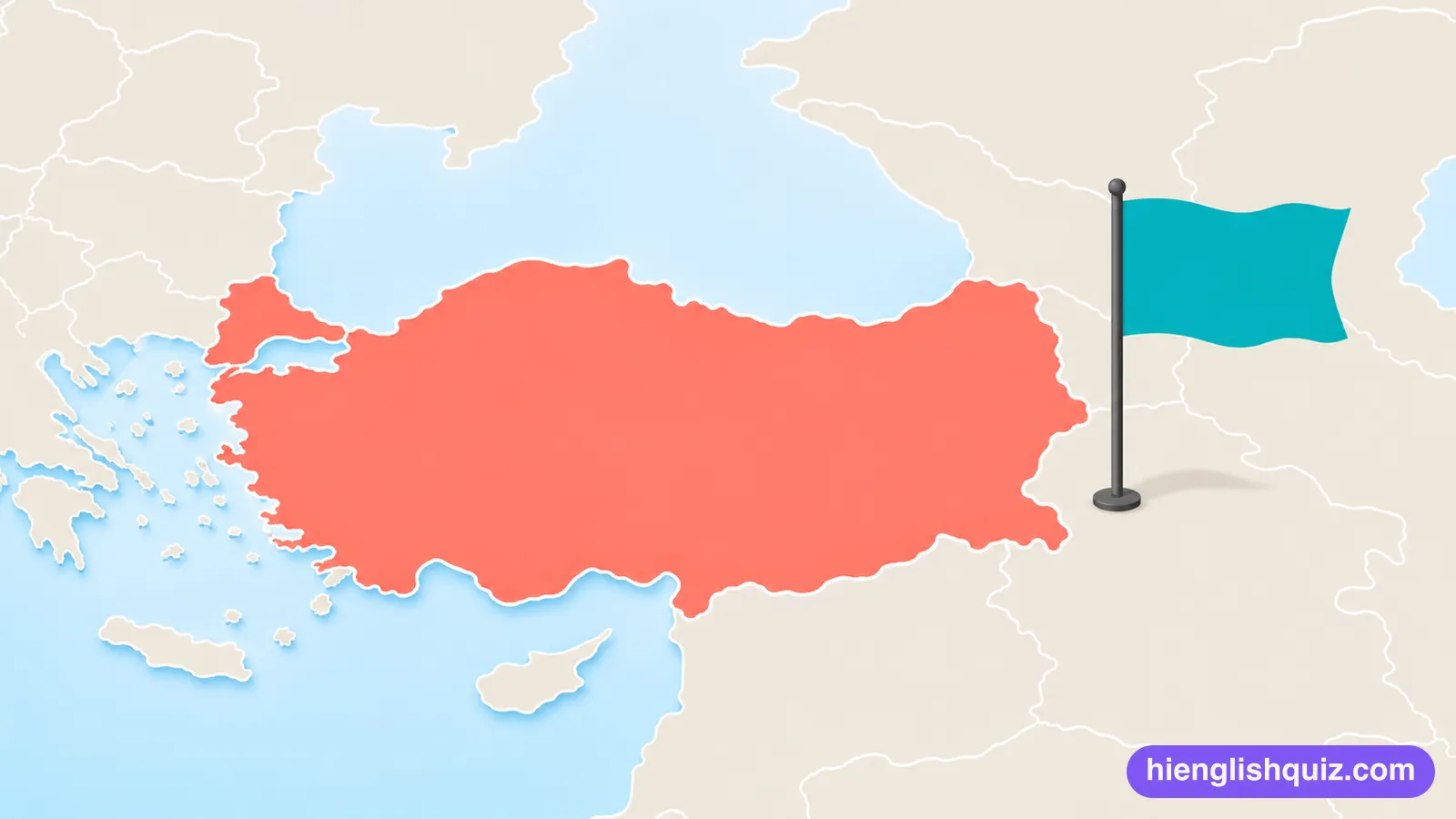
A small piece of a country's territory that is separated from the main part by another country.
Example: Kaliningrad is a Russian exclave on the Baltic Sea.
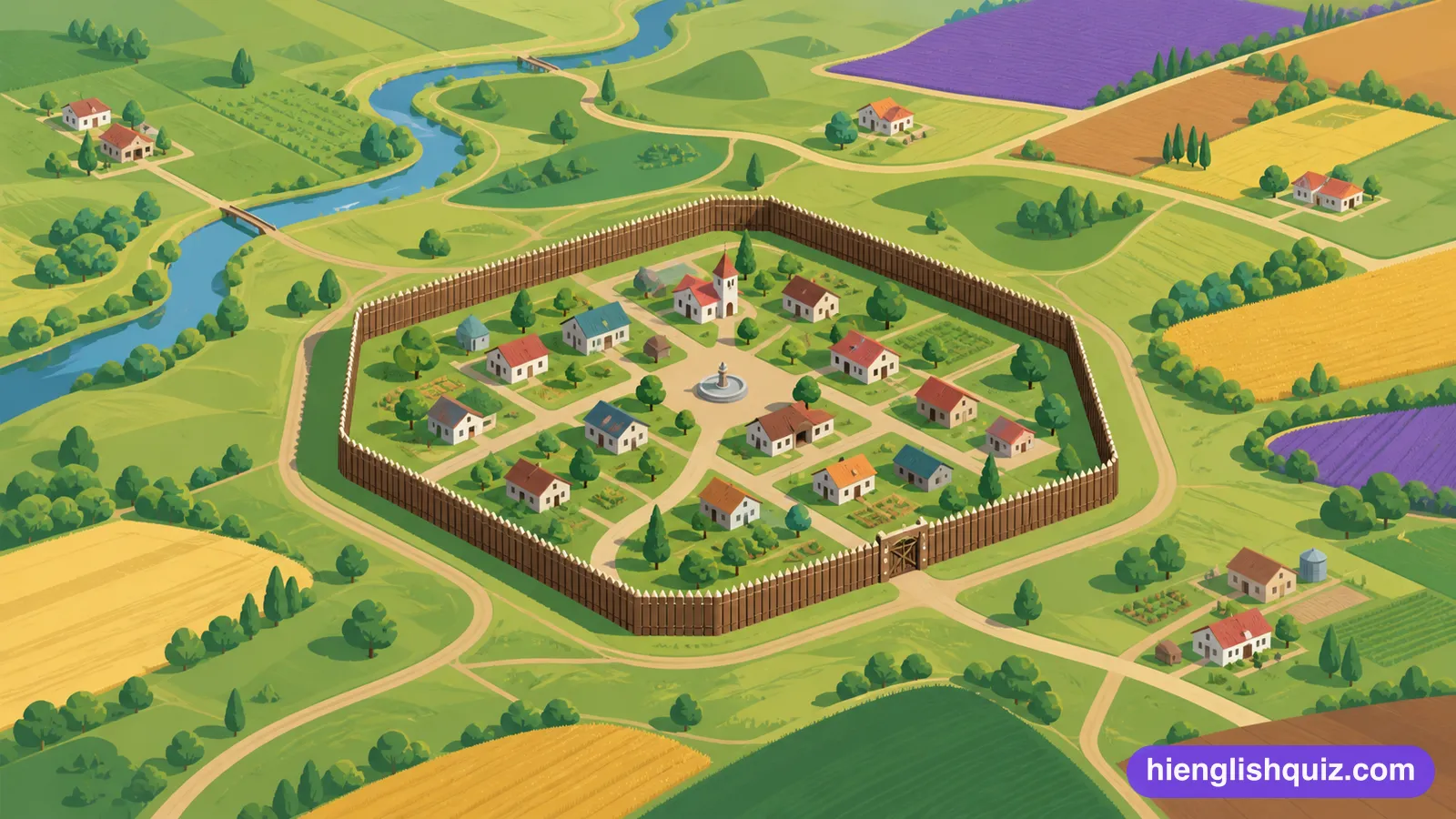
A country that is very small in land area or population.
Example: Monaco is one of the smallest microstates in the world.
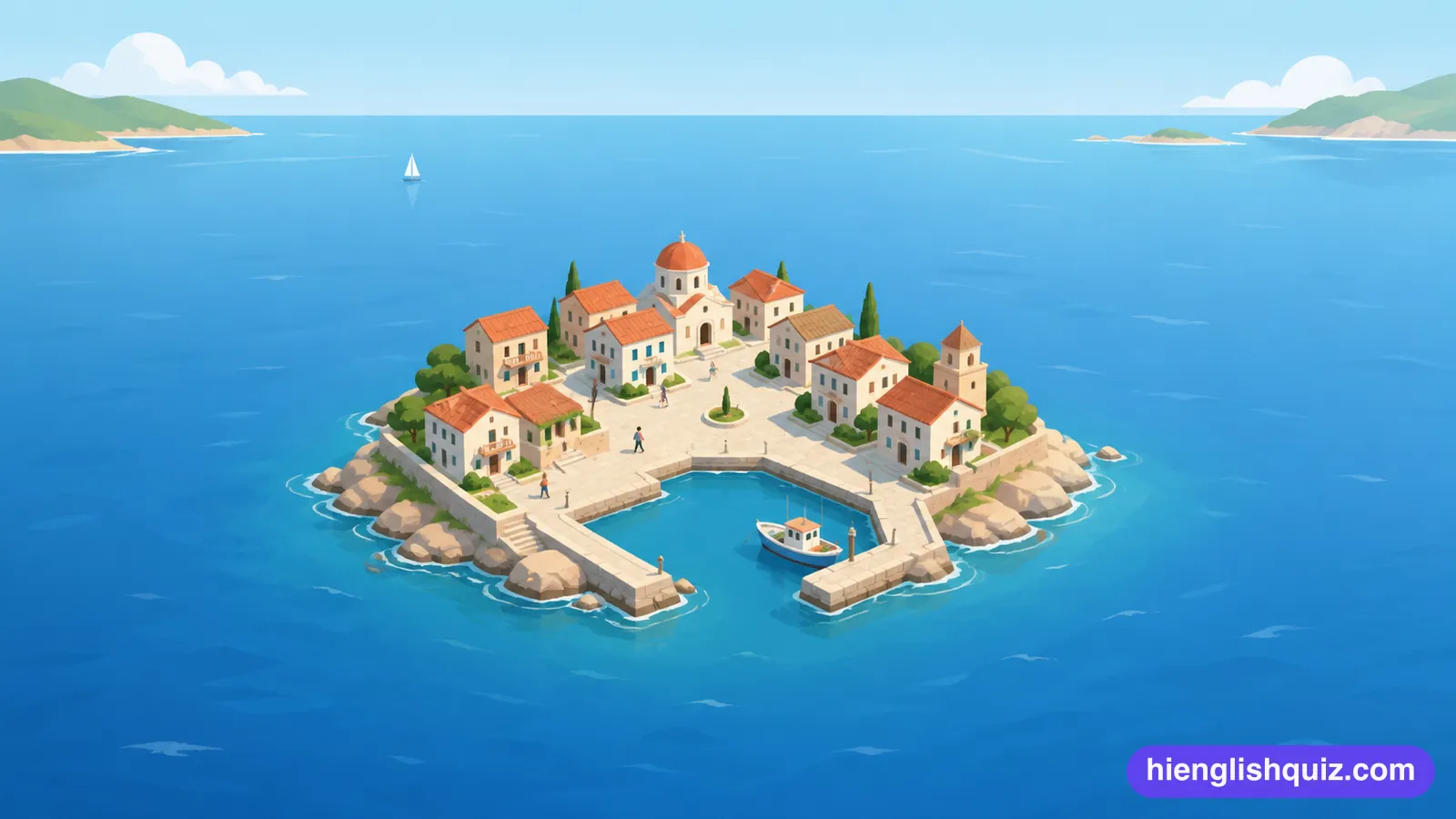
A small country ruled by a prince.
Example: The principality has a population smaller than a market town.
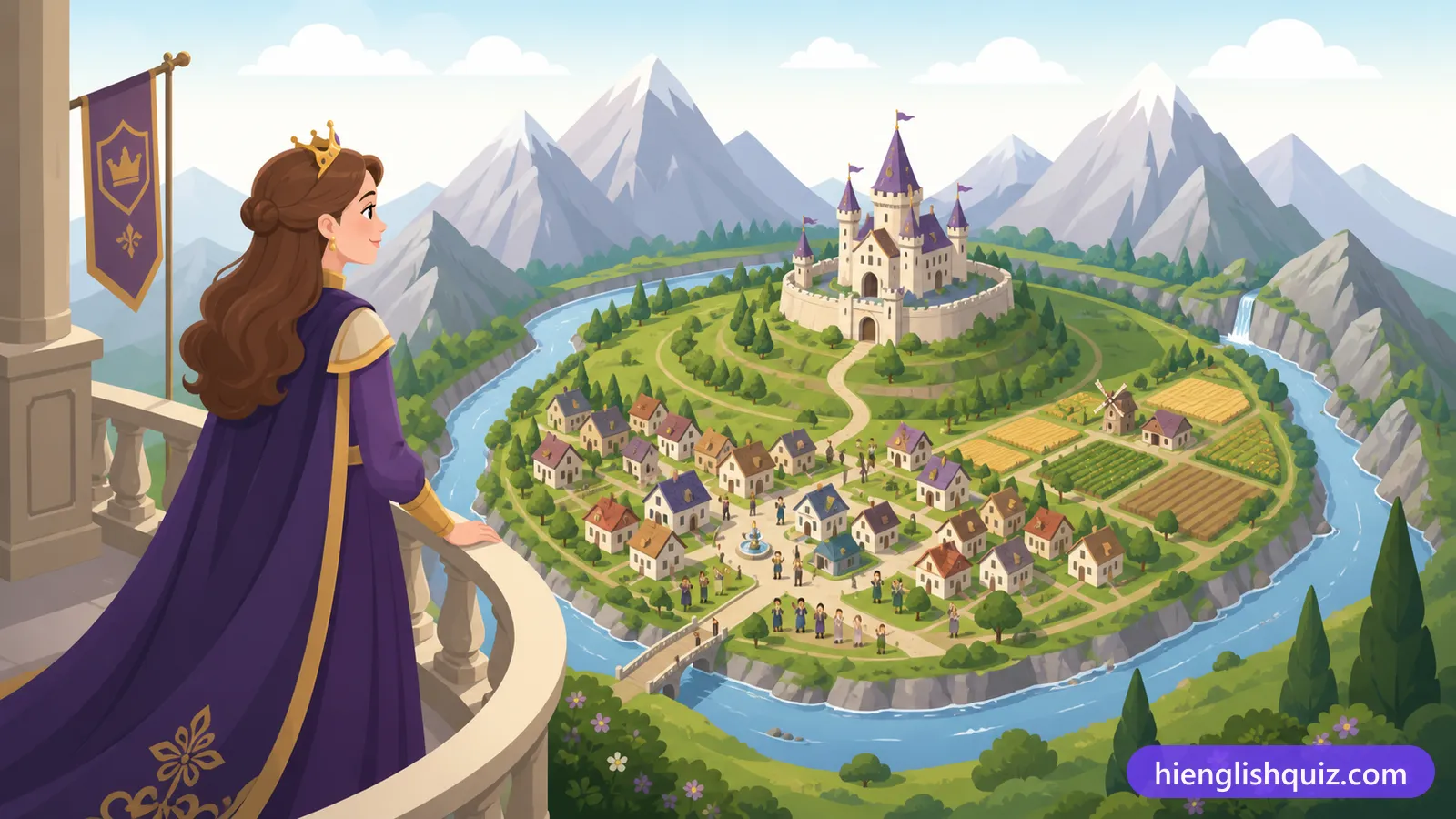
A country or state ruled by an emir.
Example: Each emirate keeps control of its own resources.
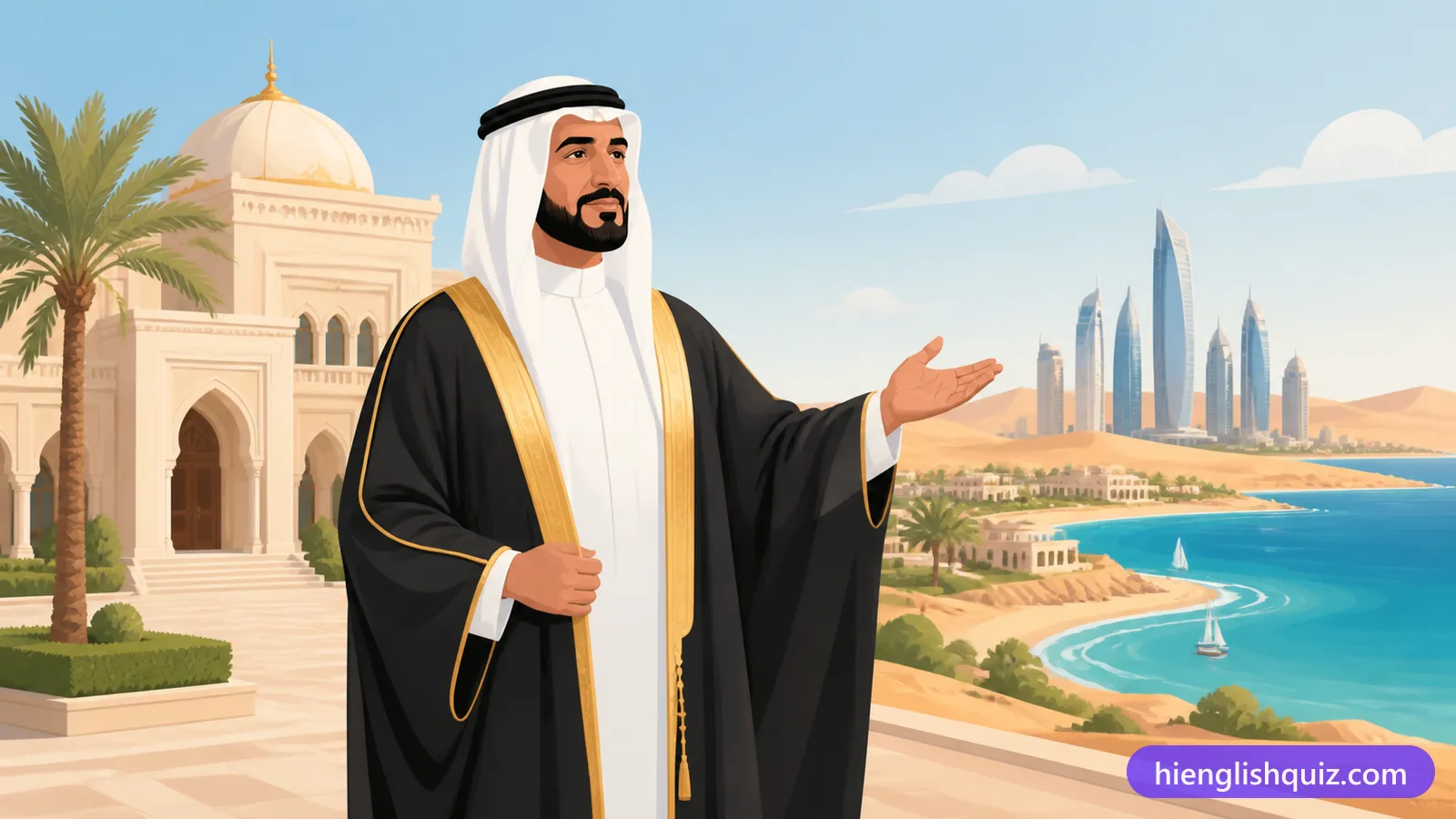
A country ruled by a sultan.
Example: The sultanate predates every border drawn around it.
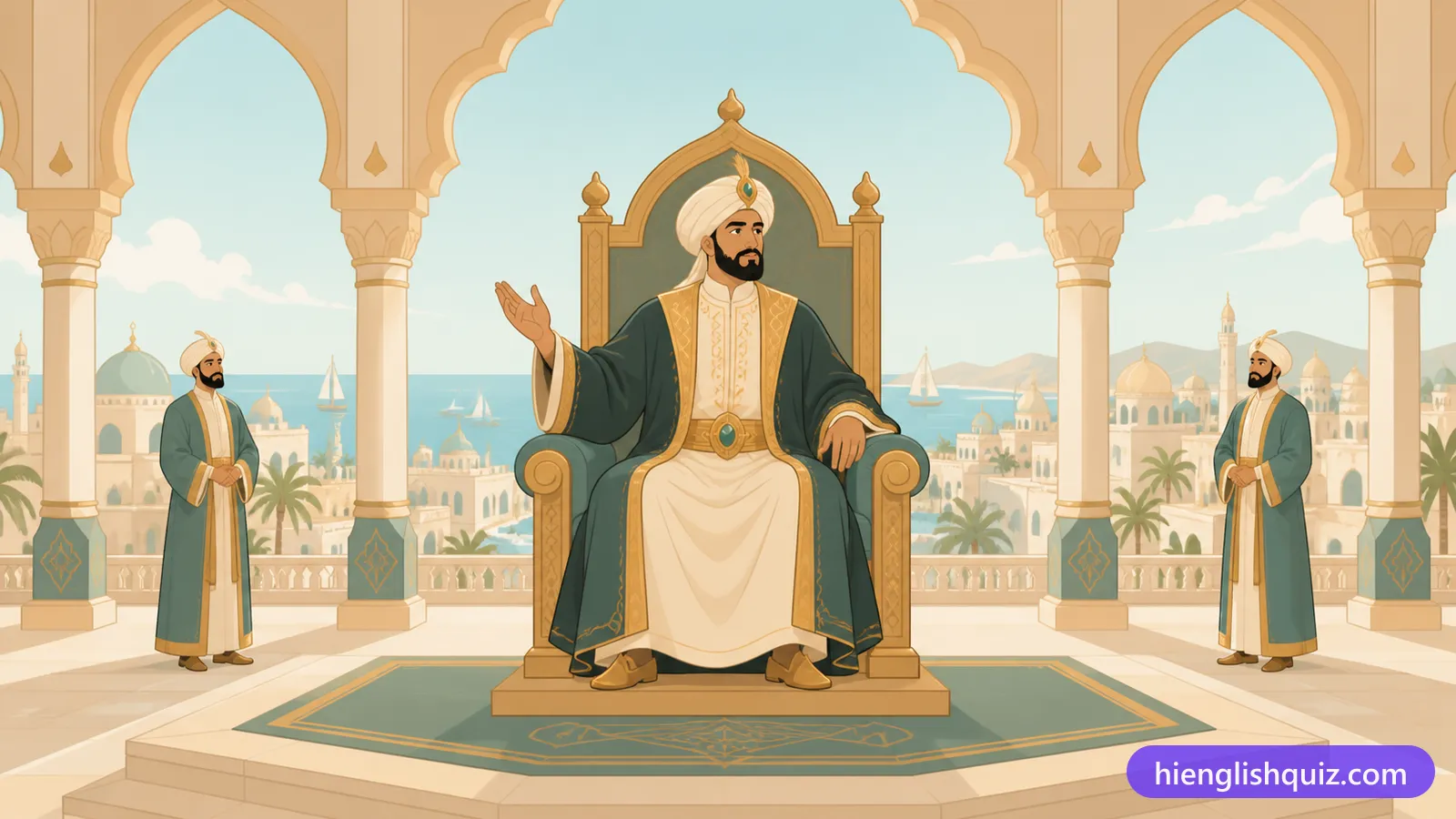
An organised society with a government of its own.
Example: The city functioned as an independent polity for four centuries.
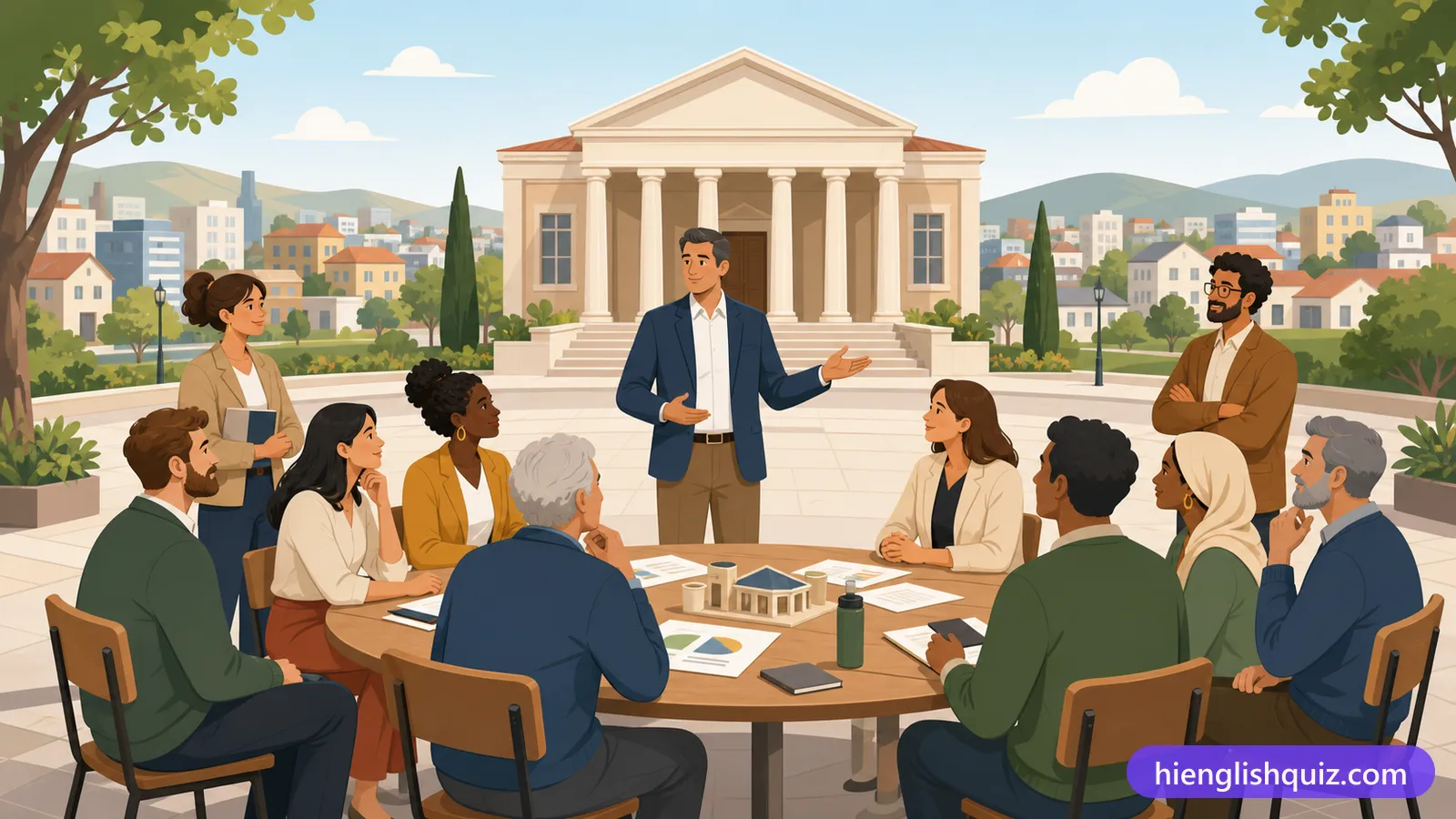
The division of a country into two or more separate states.
Example: Partition displaced more people than the war that preceded it.

The taking of territory by one country from another.
Example: The annexation was never recognised by the assembly.
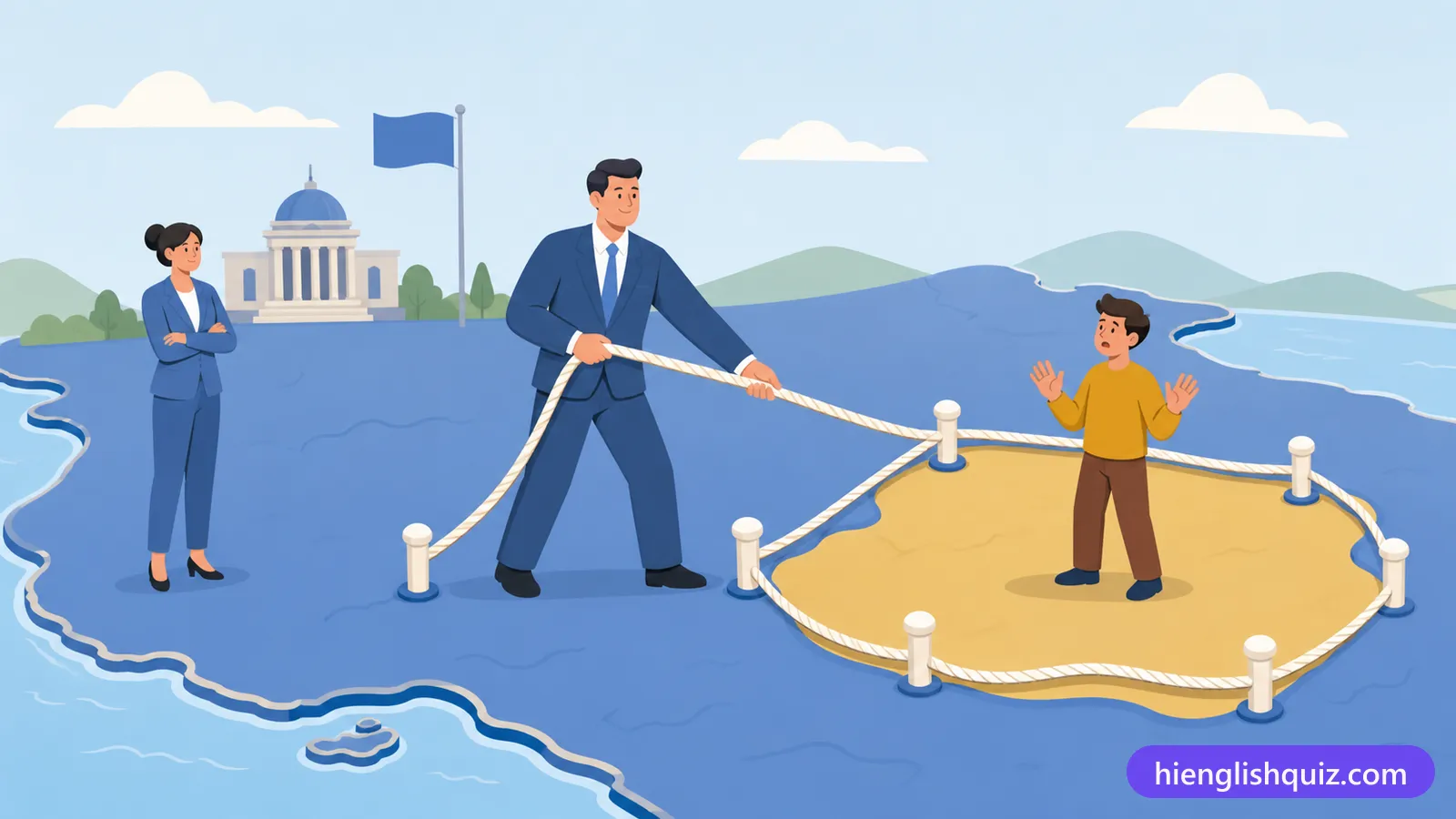
A small country lying between two rival powers.
Example: Its whole history is that of a buffer state between empires.

Outside the legal power of the country you are standing in.
Example: Embassy grounds are treated as extraterritorial in practice.
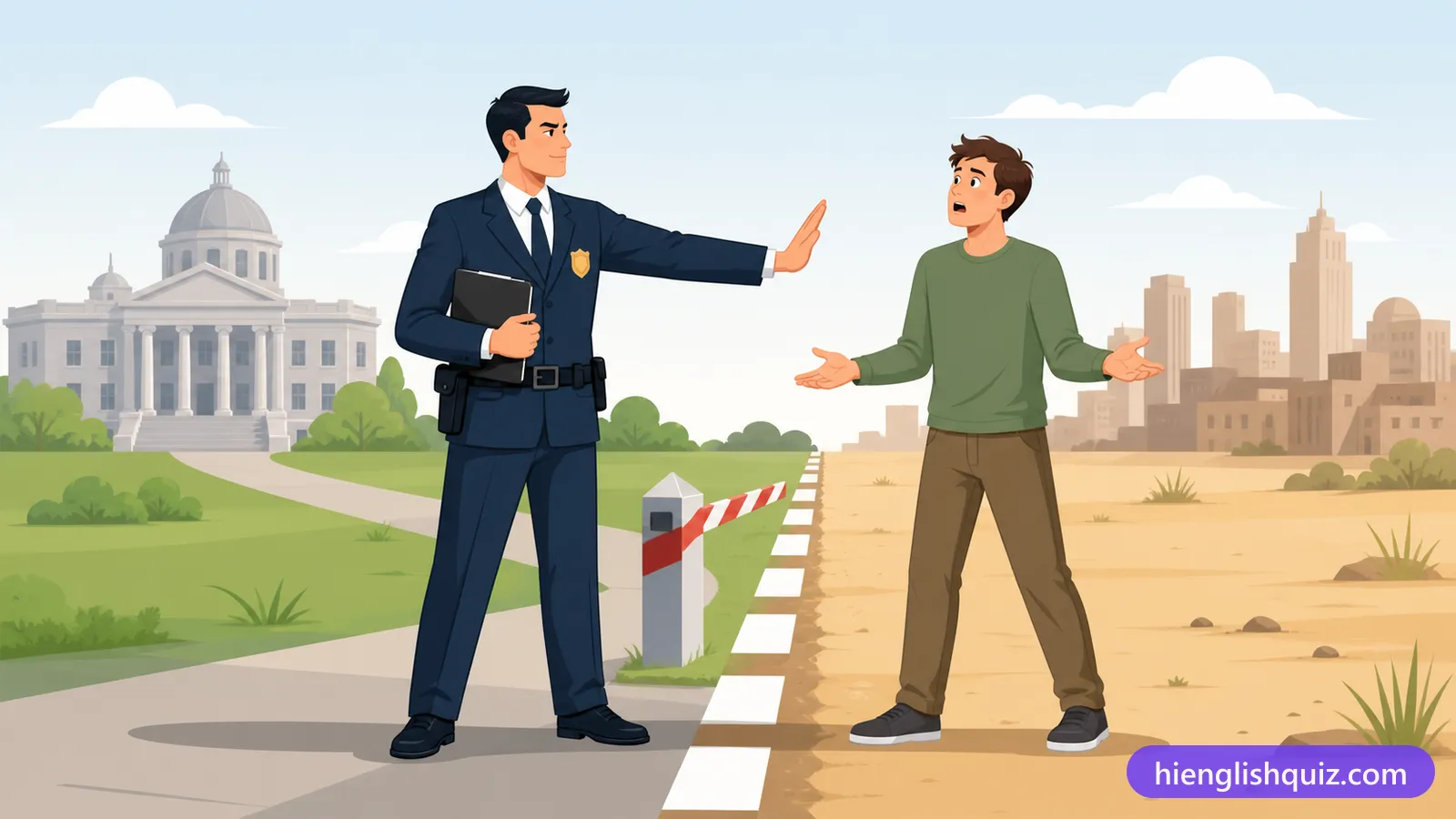
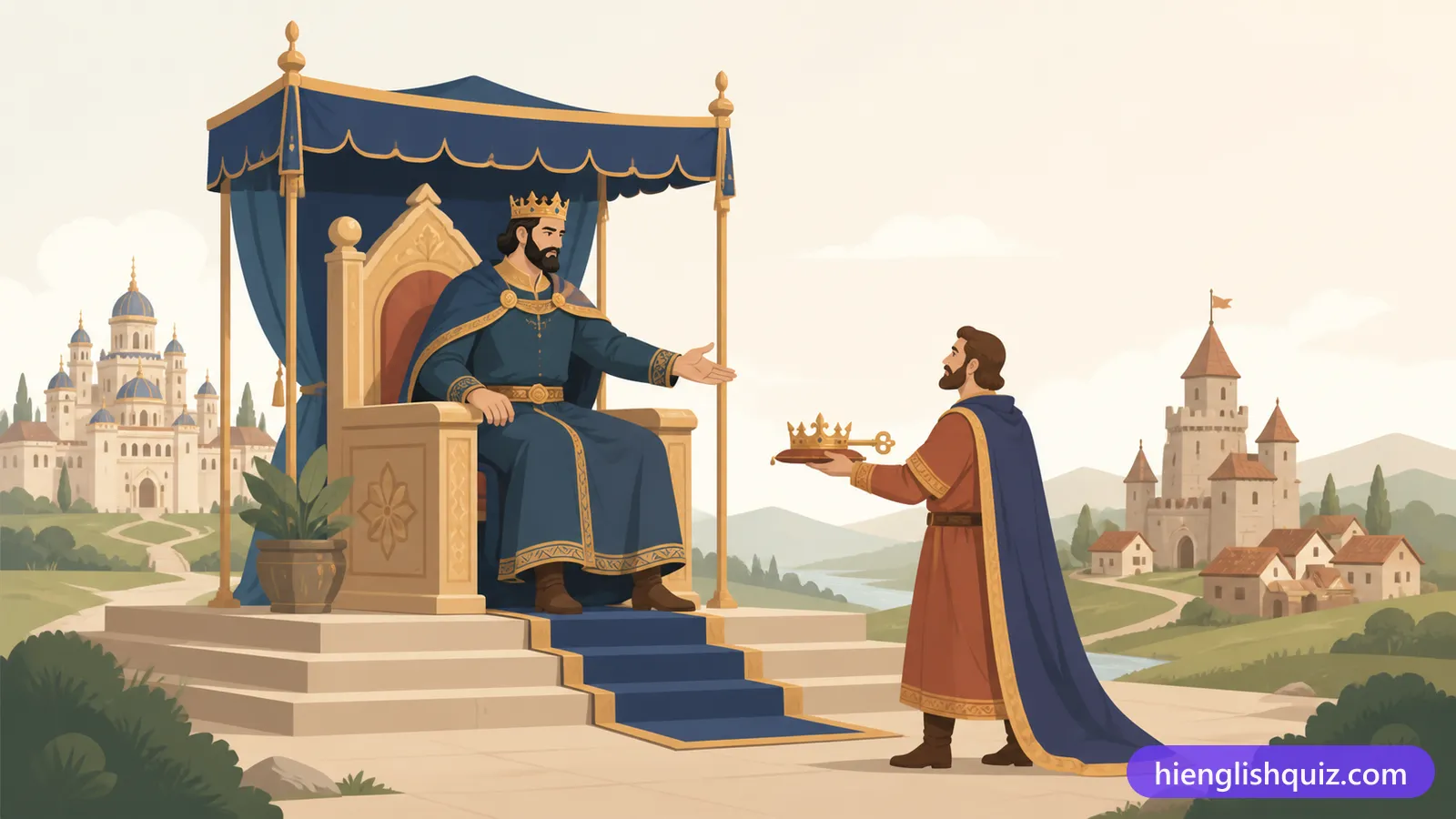
Control by one country over the foreign affairs of another that governs itself.
Example: The treaty left suzerainty with the empire and everything else local.
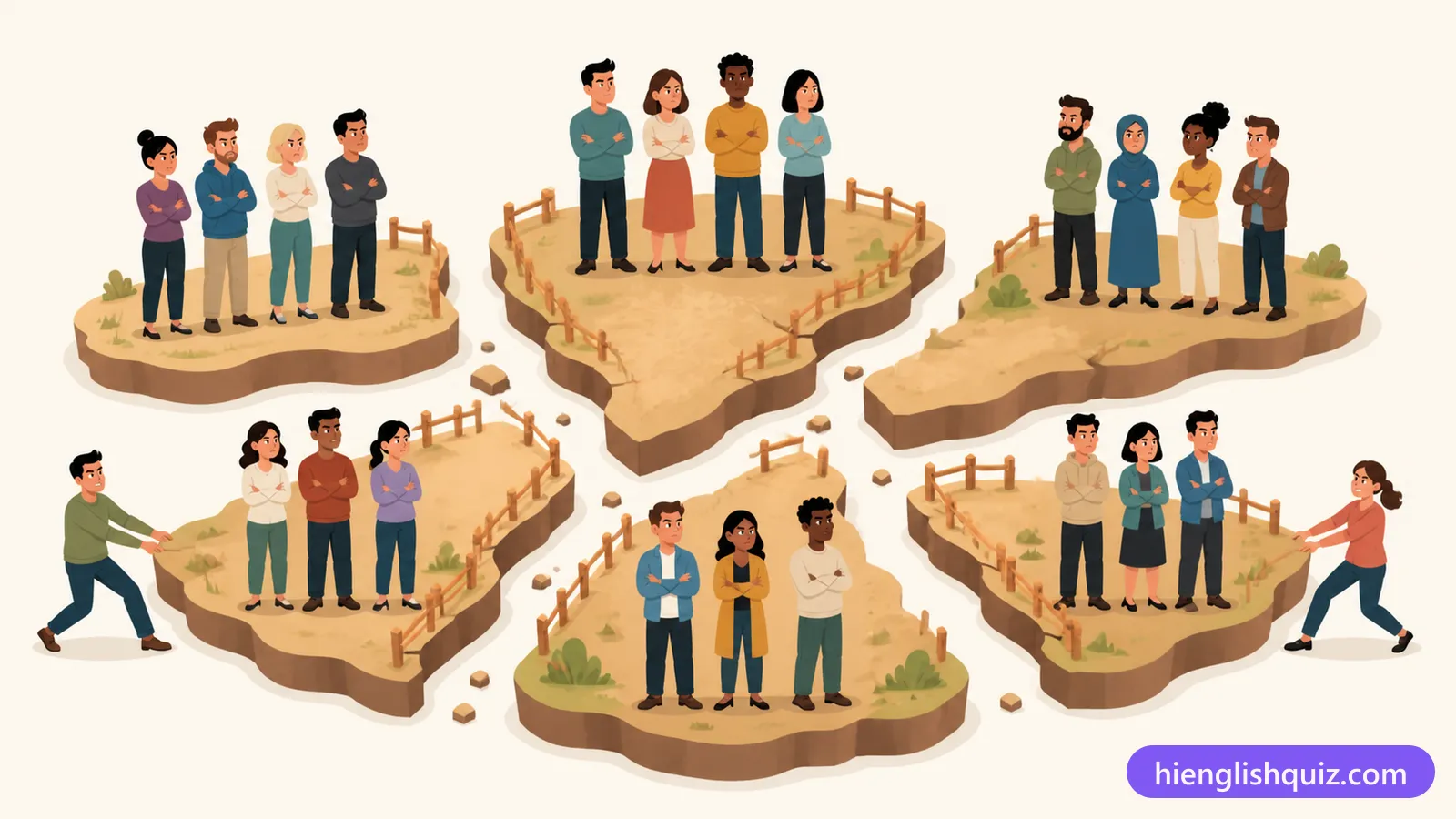
To break a region up into small hostile states.
Example: Everyone warned that the plan would balkanise the whole province.
Politics based on practical power rather than on principle.
Example: The chapter reads as pure realpolitik with the moral language stripped out.

The skill of governing a country and managing its relations with others.
Example: The memoir is admired more for its statecraft than its prose.

A very large continuous area of land.
Example: The single landmass broke apart long before any of this was named.