sustenance
/ˈsʌstənəns/Food and drink thought of simply as what keeps a body going.
Example: They had walked all day with almost no sustenance.

 Hi EnglishQuiz
C222 words · Proficient
Nutrition vocabulary for expert-level discussion of diet and health, covering sustenance, satiety and the macronutrients and micronutrients that fortify a pescatarian's meal against malnutrition.
Food and drink thought of simply as what keeps a body going.
Example: They had walked all day with almost no sustenance.
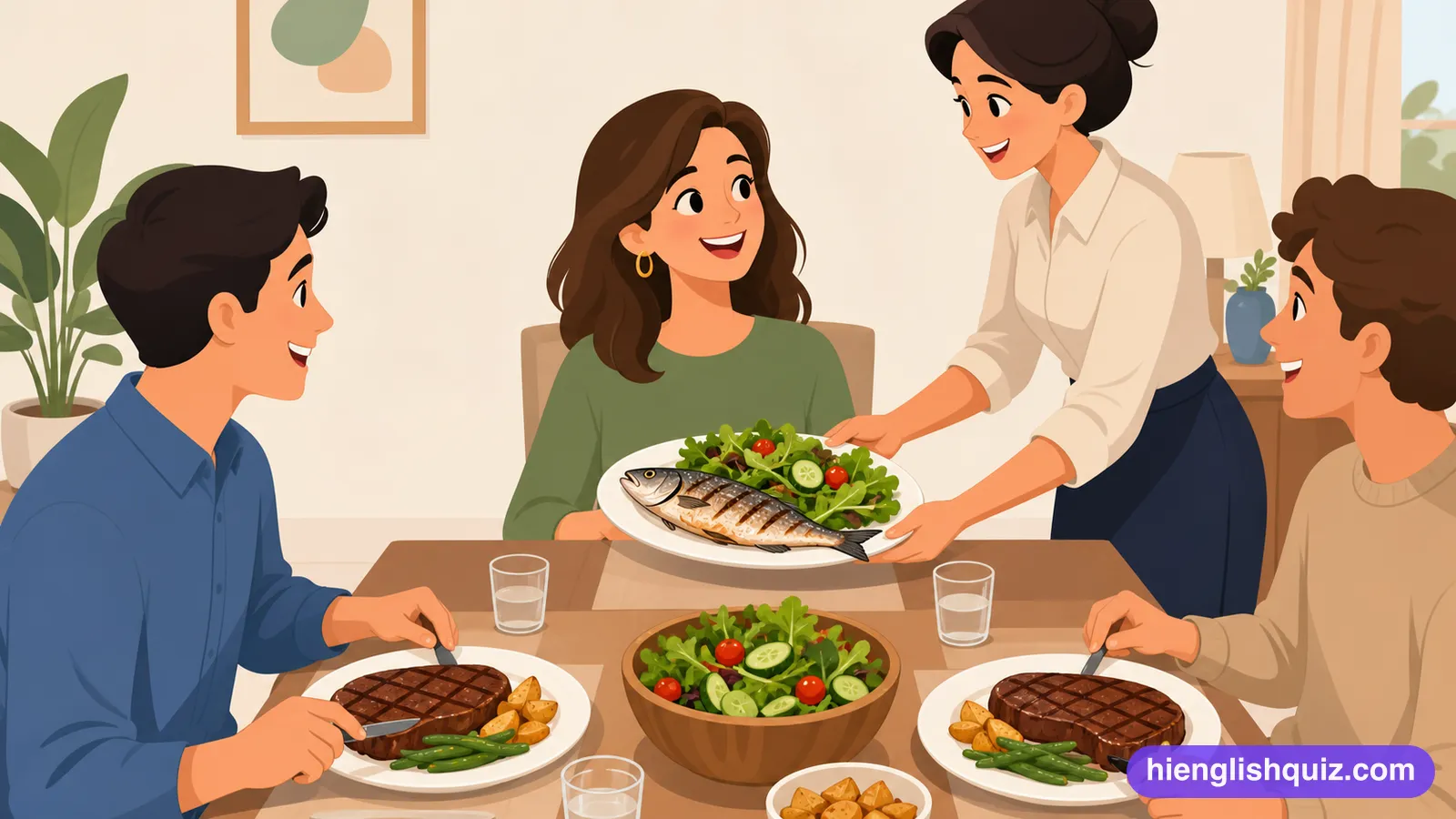
Eating fish and seafood but no meat from animals or birds.
Example: I've been pescatarian for about five years now.
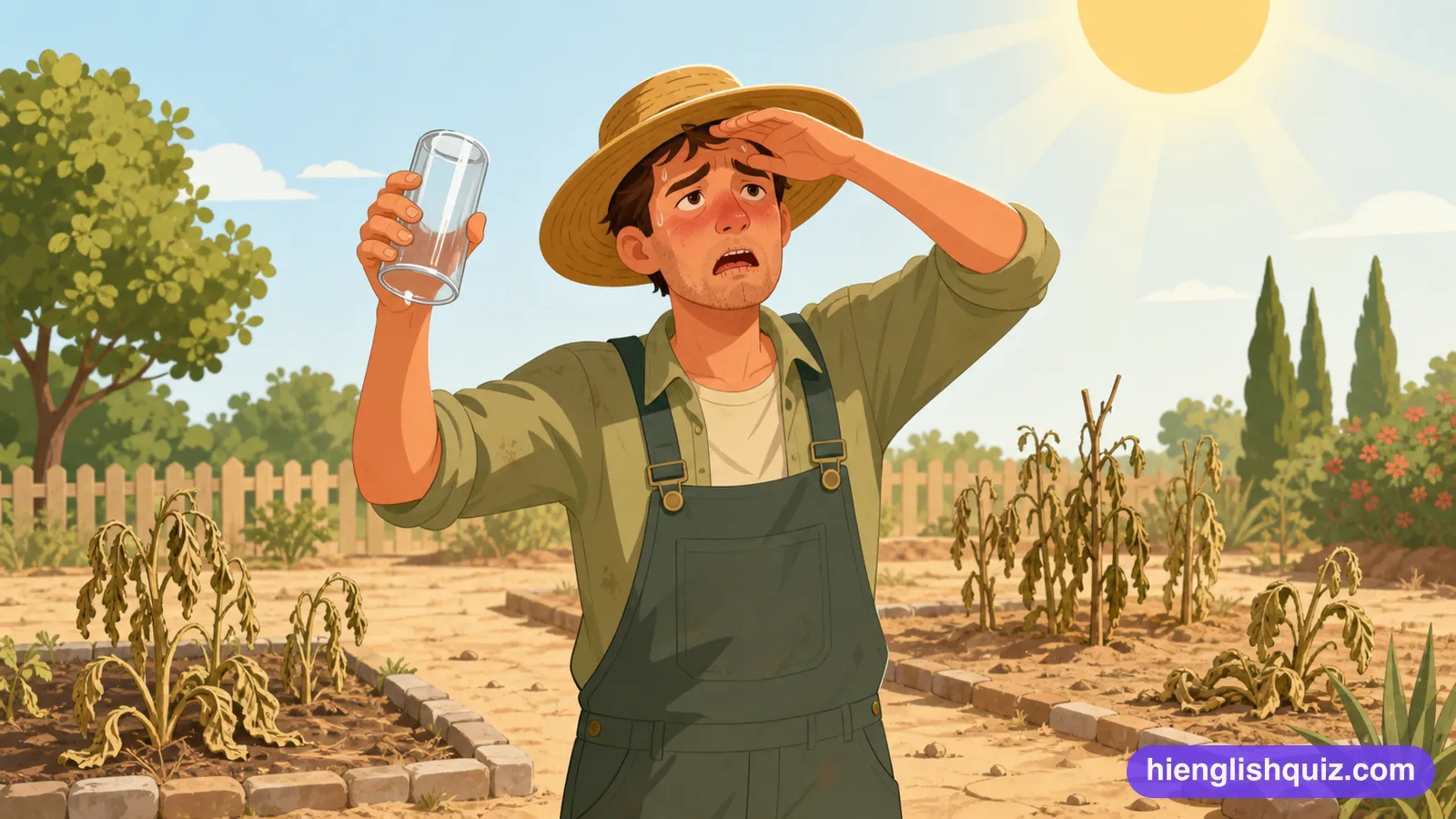
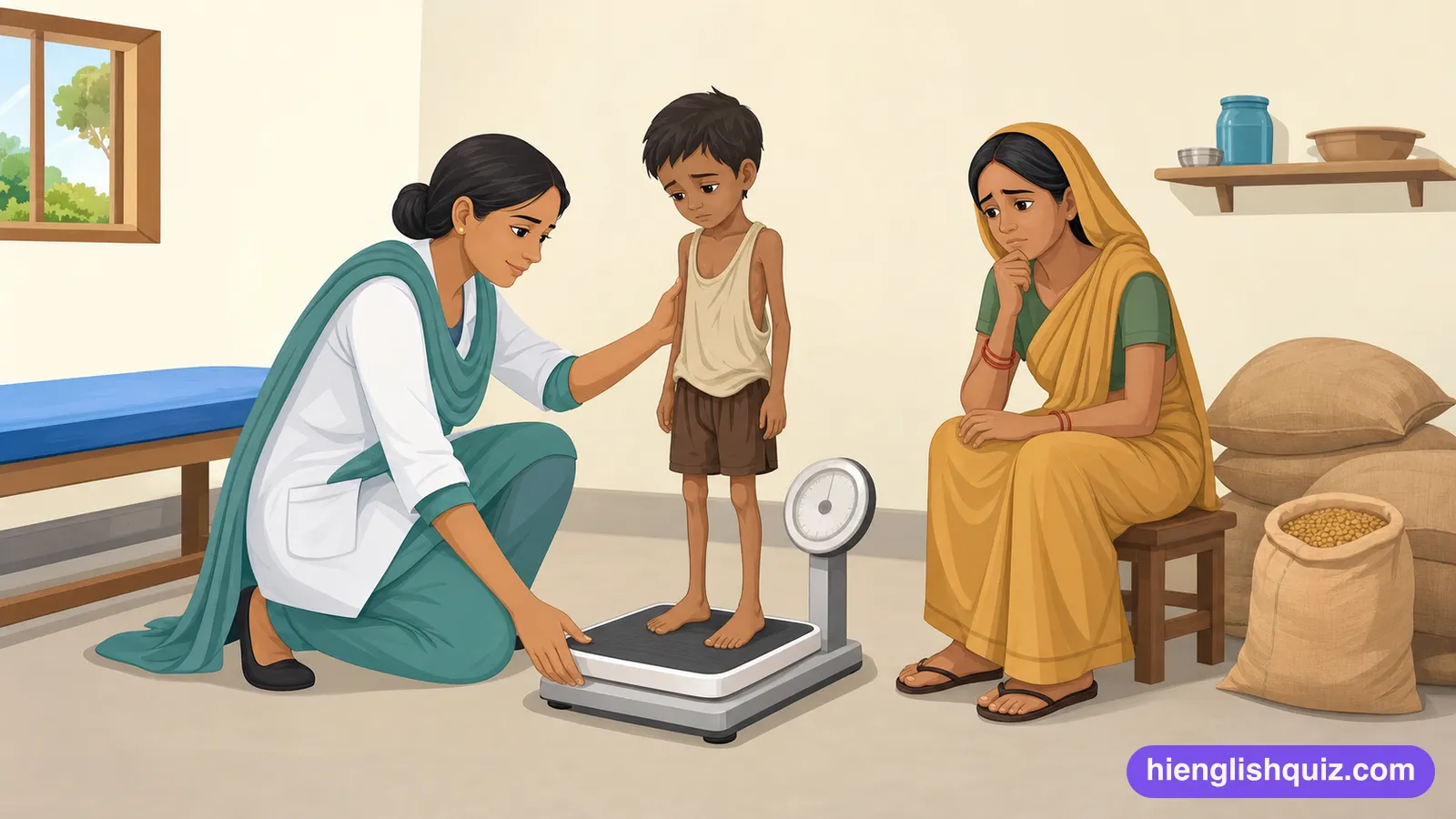
Serious ill health caused by not getting enough food, or not enough of the right kinds of it.
Example: The charity treats children suffering from malnutrition.
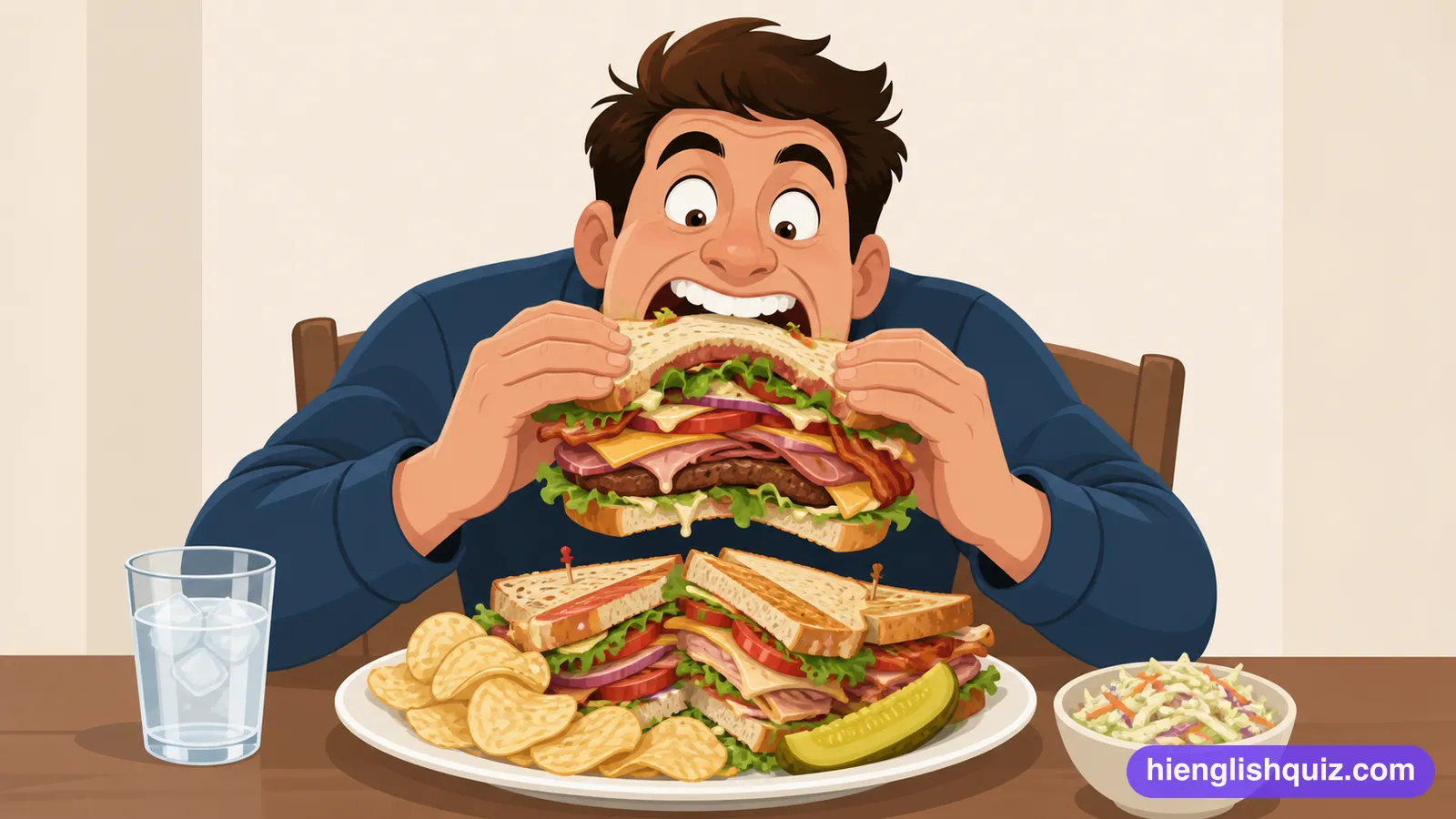
To eat something very fast and greedily, in only a few big bites.
Example: Don't wolf down your lunch at your desk every day.

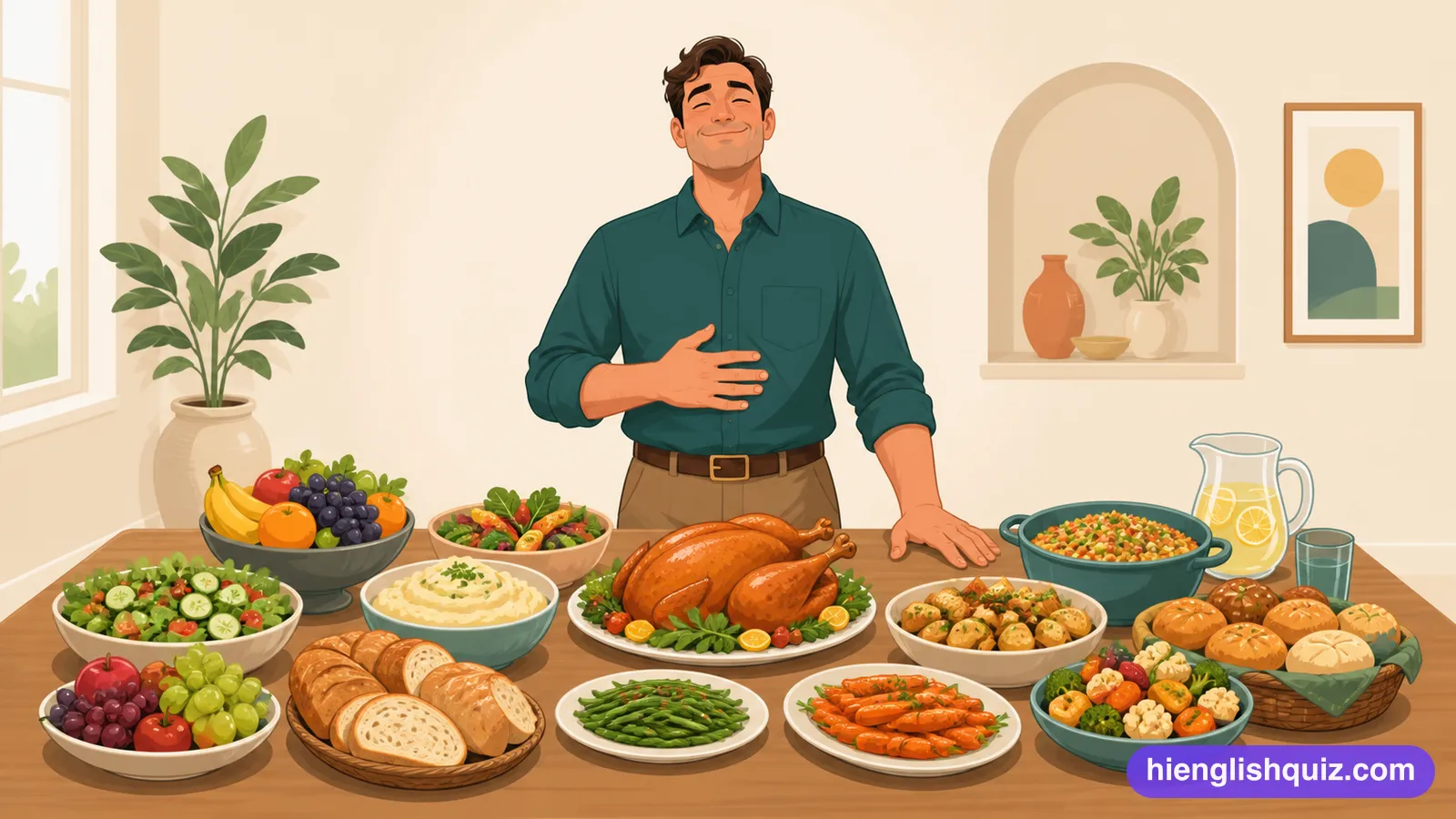
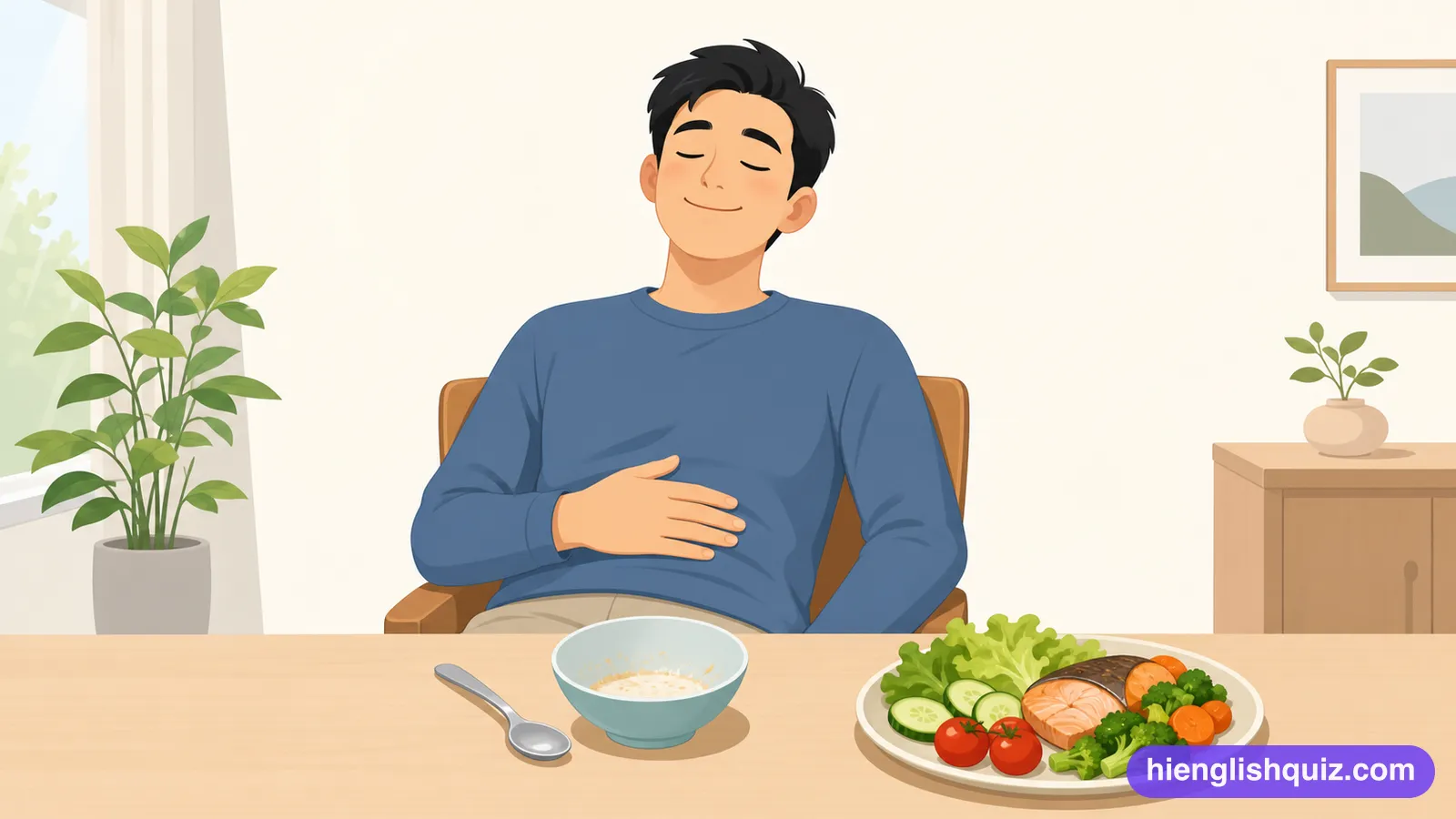
The pleasant feeling of being full that stops you wanting any more food.
Example: Protein at breakfast gives a stronger sense of satiety until lunch.
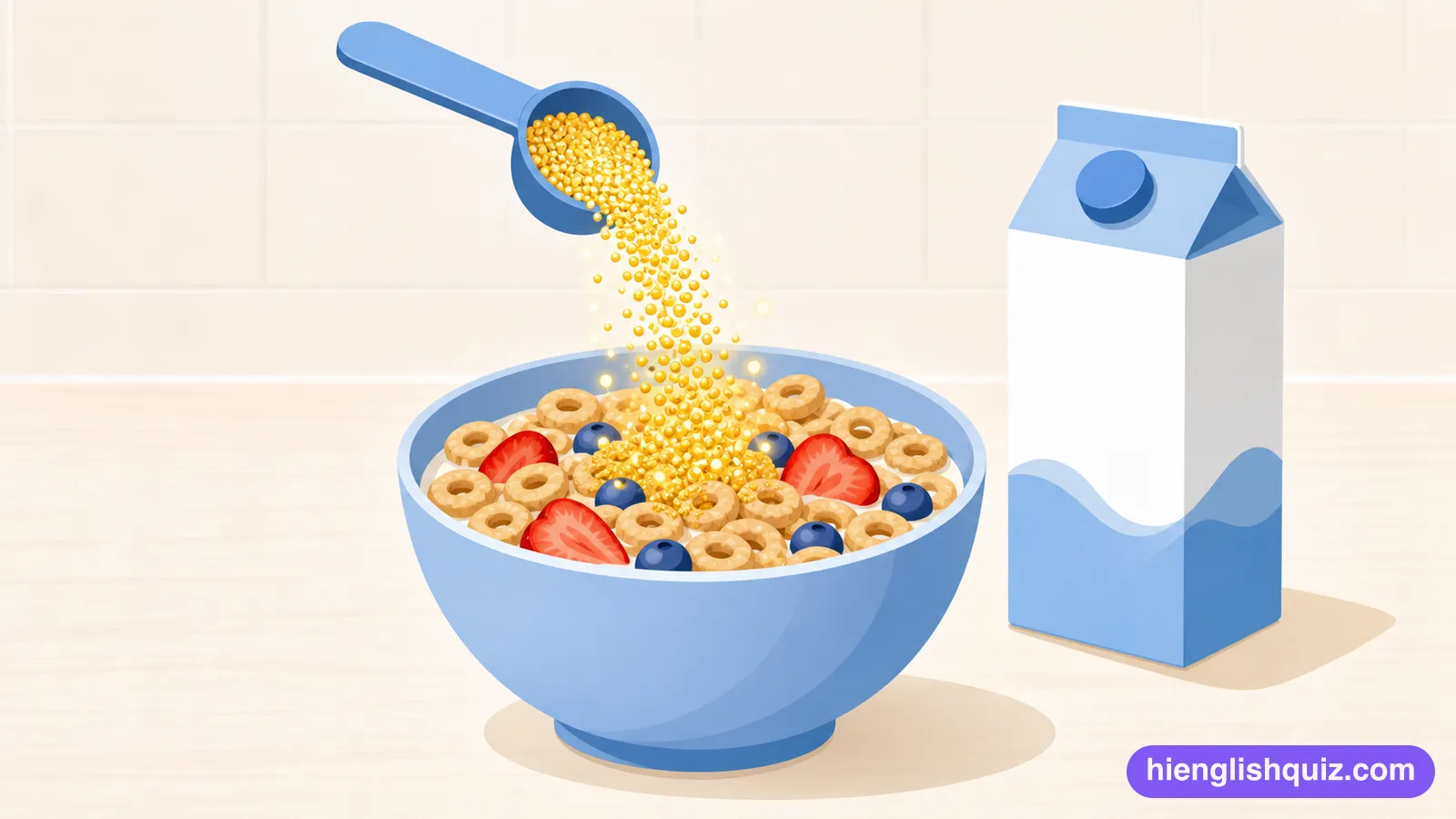
Made with extra vitamins or minerals added to it so that it is healthier.
Example: She buys fortified cereal because the children need more iron.
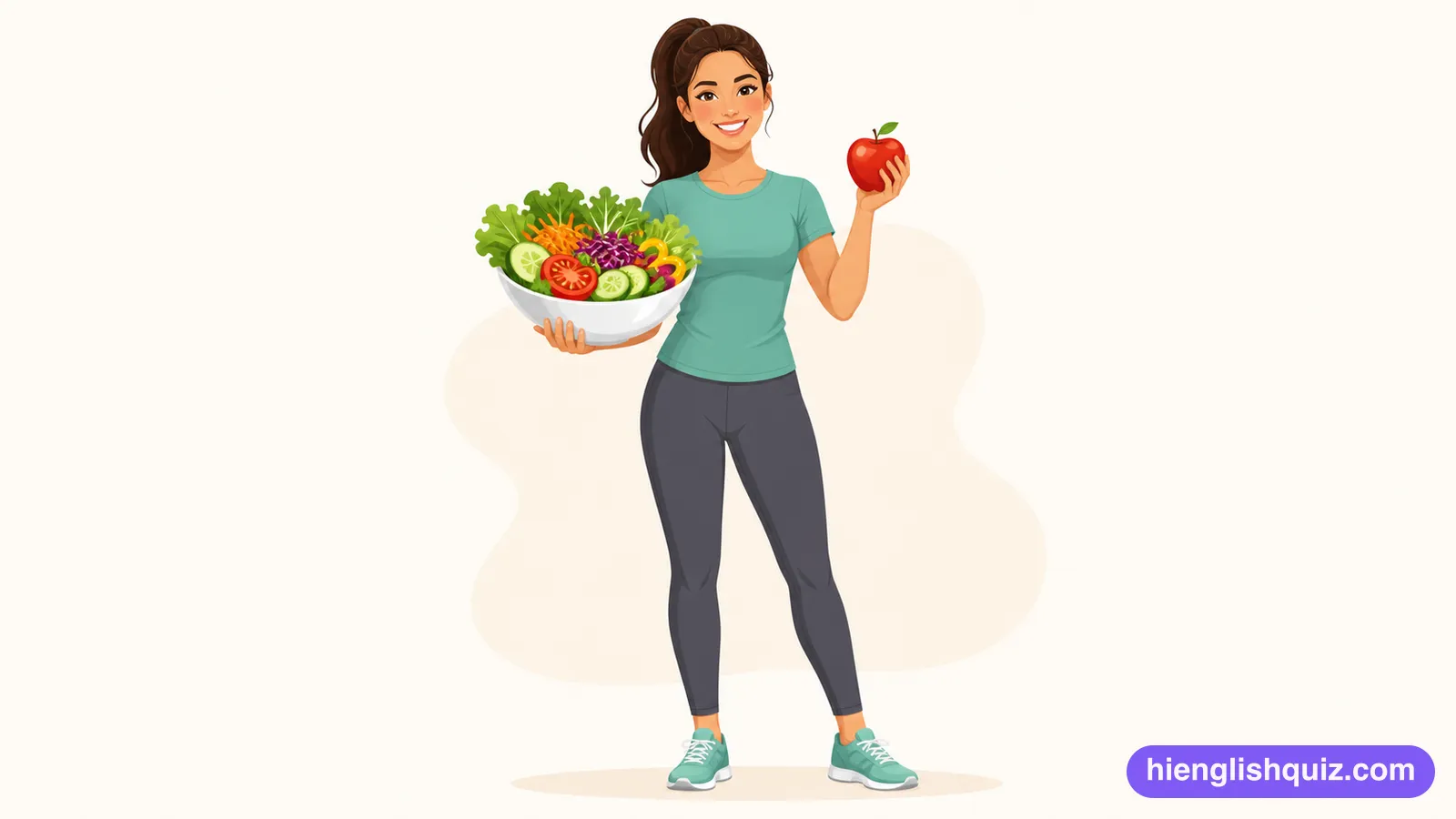
a substance the body needs in large quantities, such as protein, fat or carbohydrate.
Example: Protein is an important macronutrient for muscle growth.
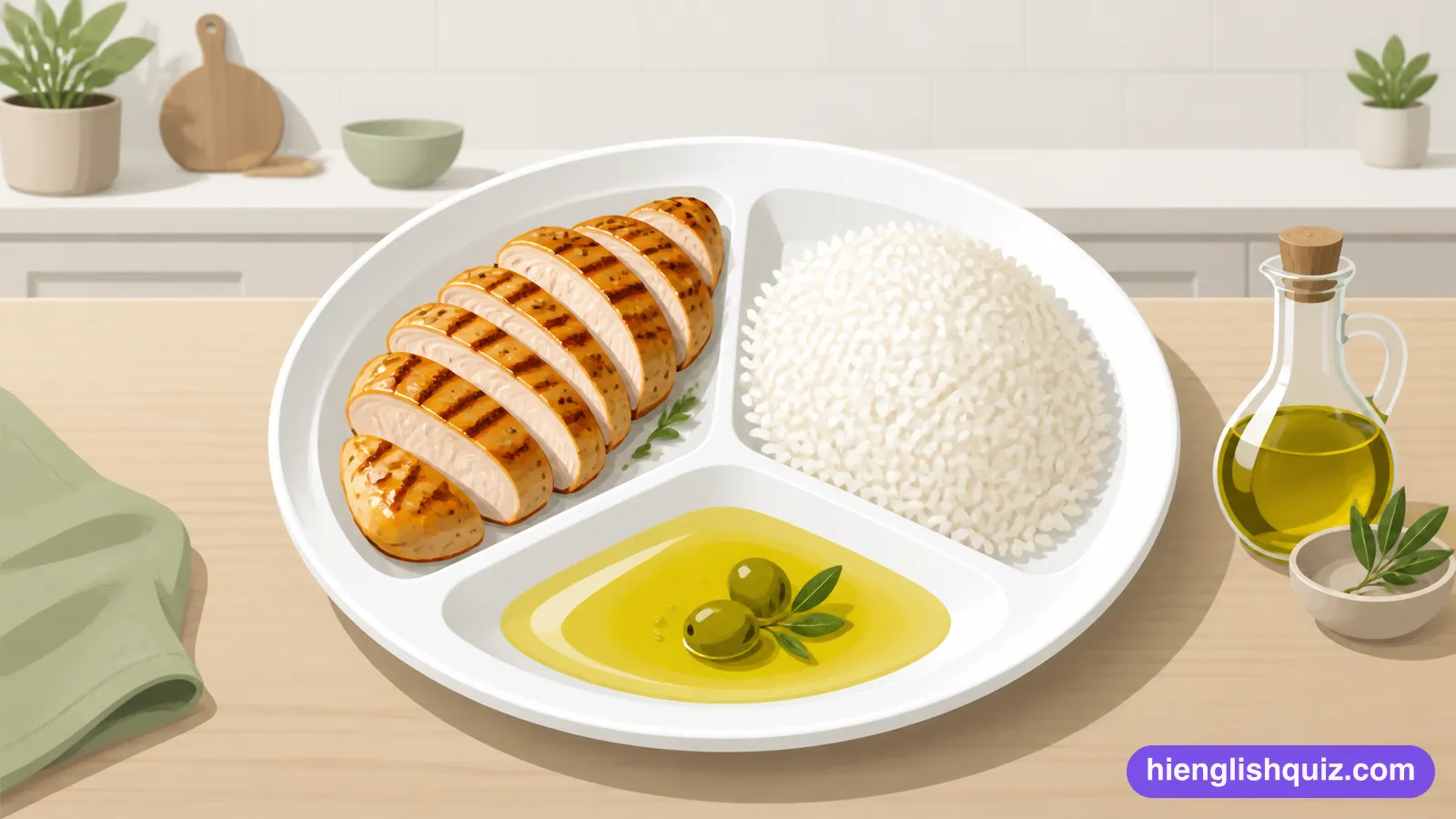
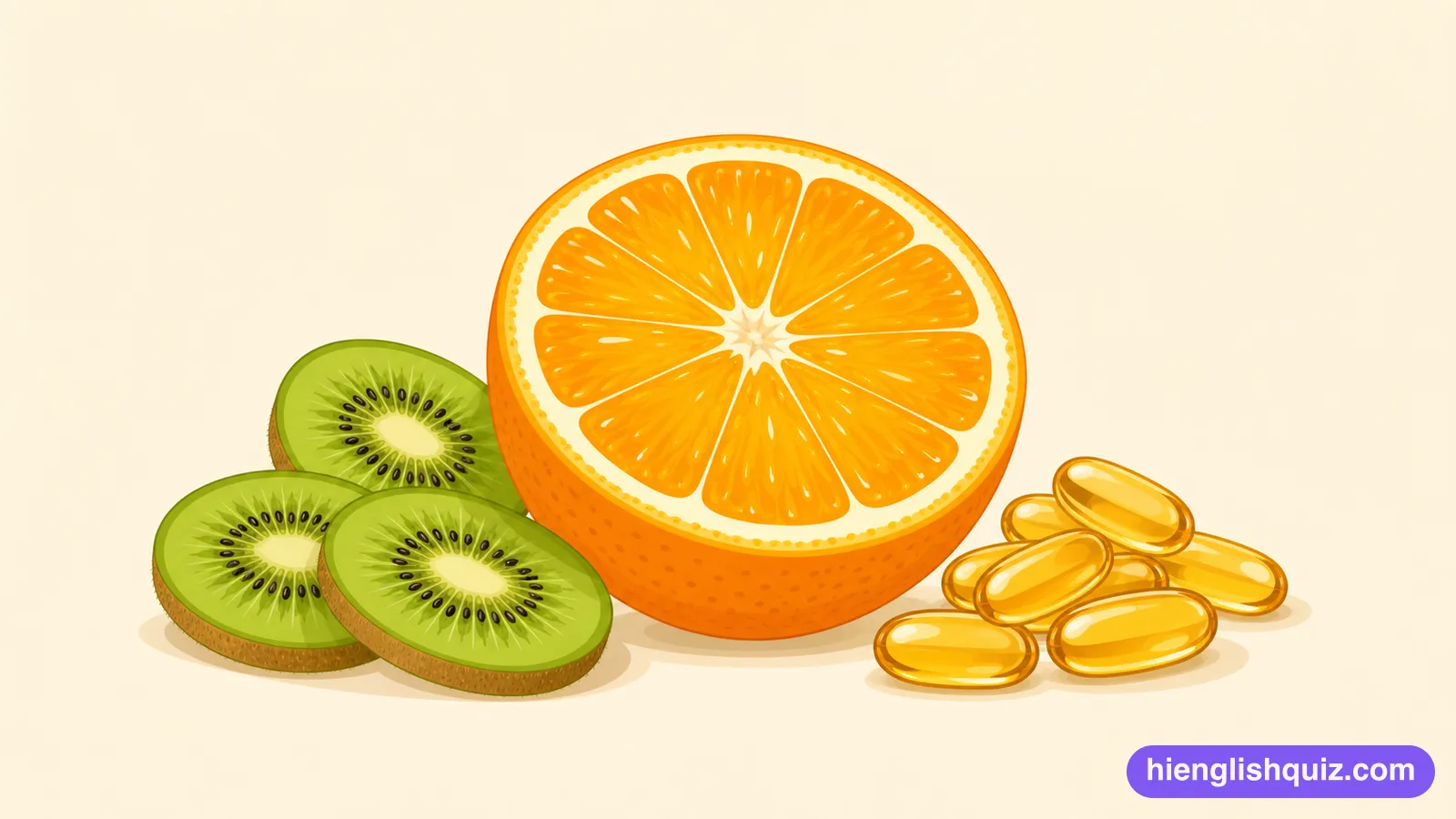
a substance the body needs only in small quantities, such as a vitamin or mineral.
Example: Iron is a micronutrient found in red meat.
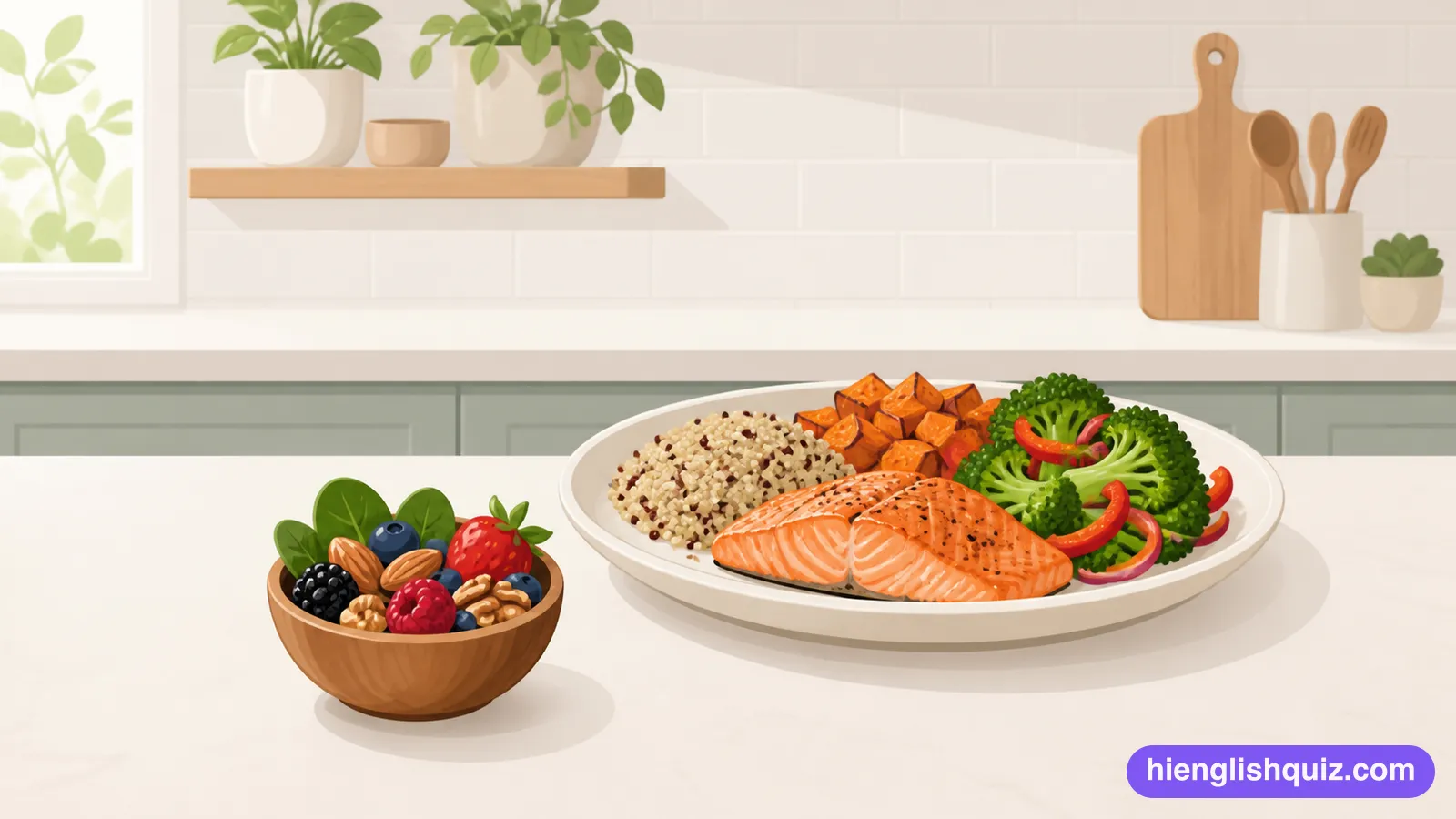
the community of bacteria living in a person's digestive system that affects their health.
Example: A varied diet supports a healthy gut microbiome.
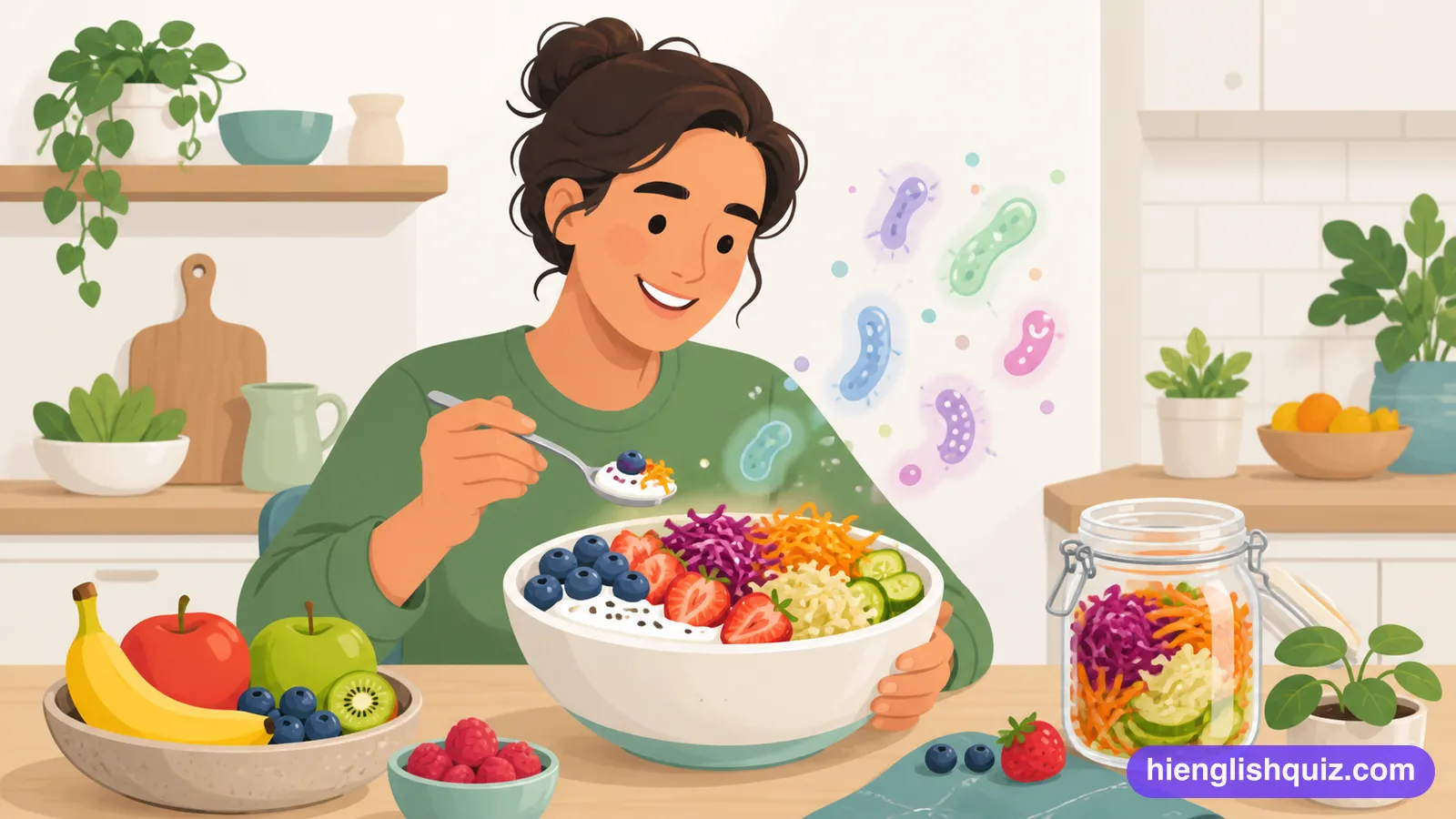
extremely thin, usually because of severe lack of food.
Example: The stray dog looked emaciated and weak.
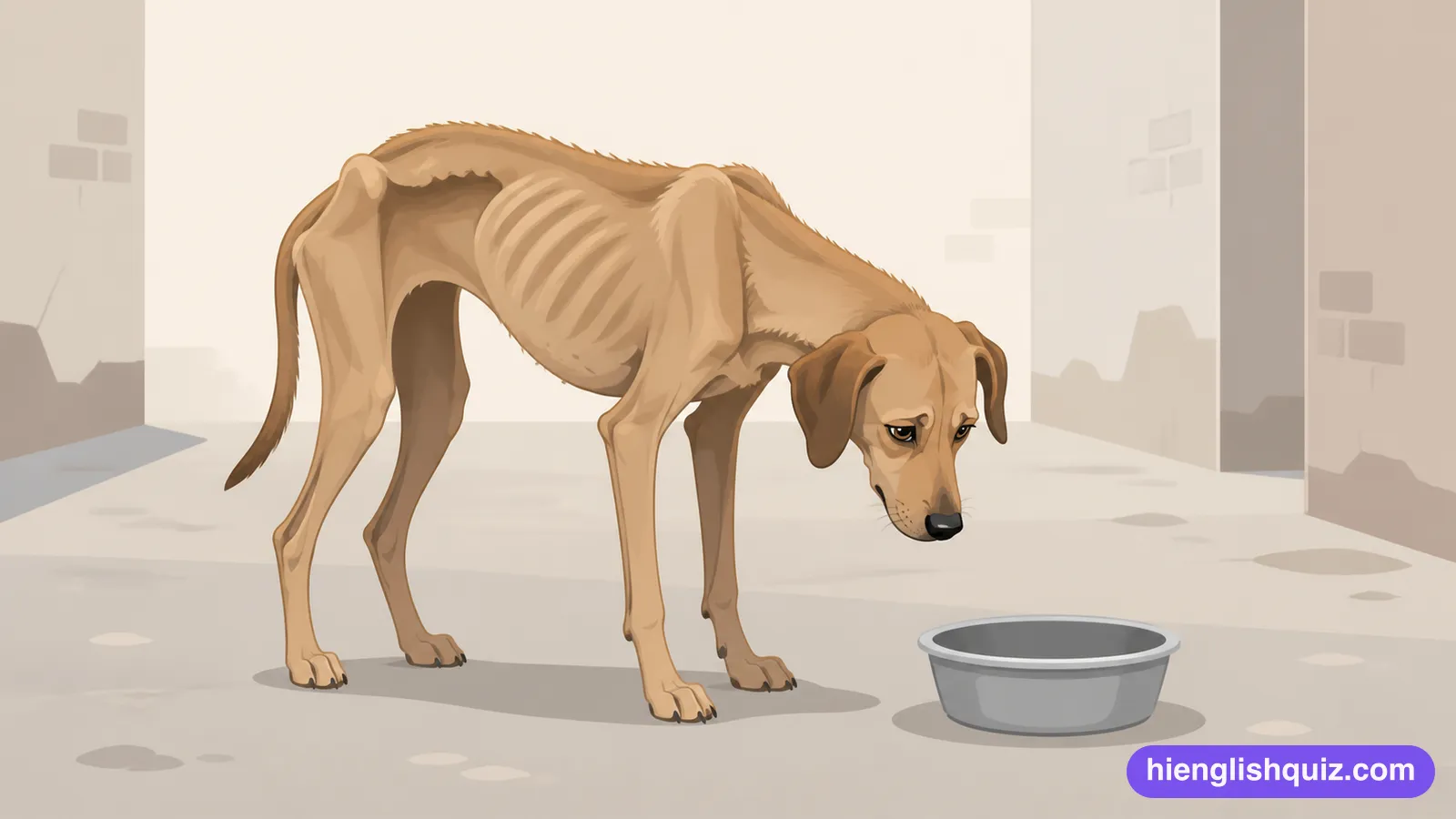
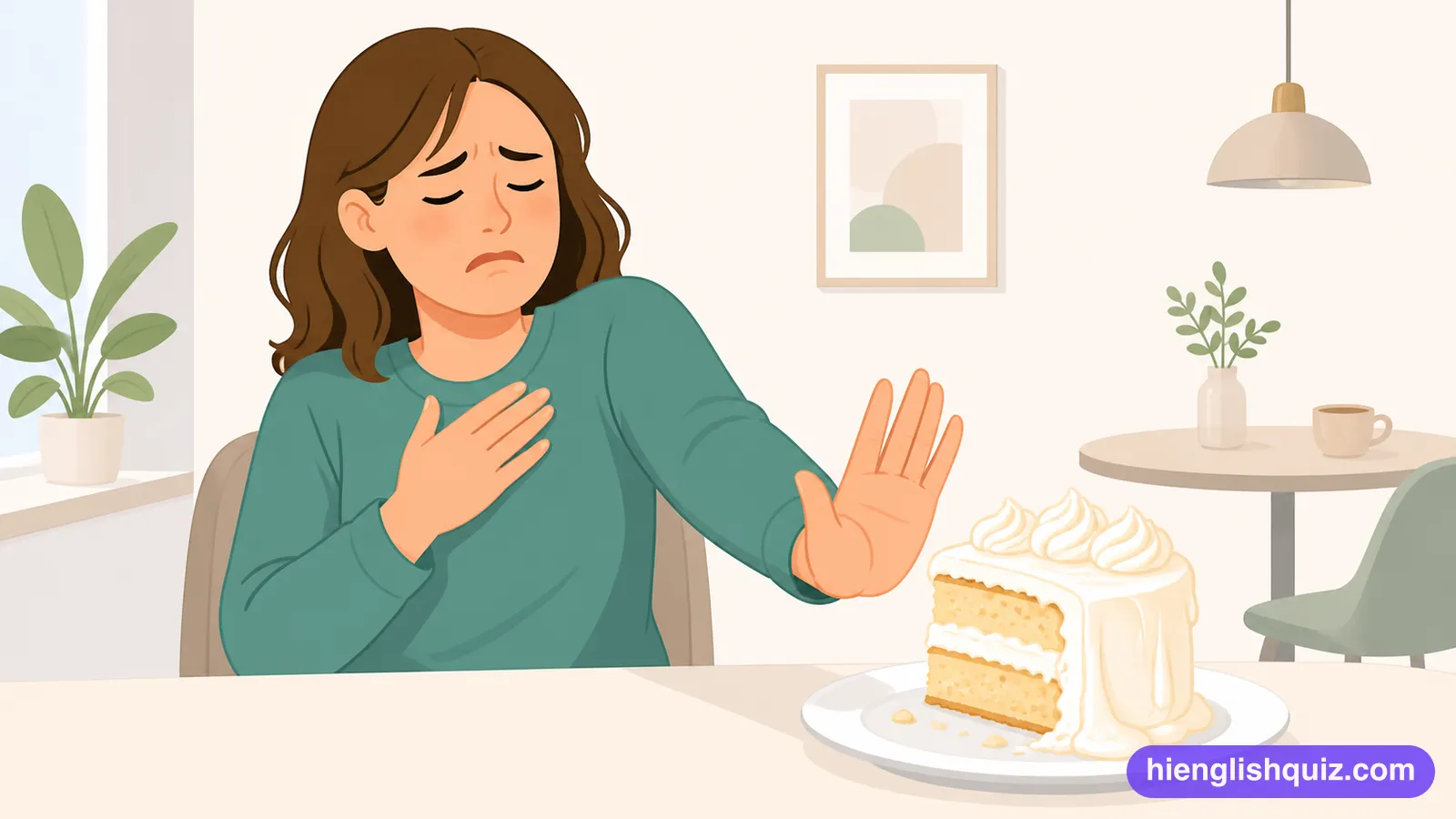
To satisfy hunger completely.
Example: Two courses were enough to satiate even the largest appetite.

Relating to the amount of energy in food.
Example: The caloric value is printed per hundred grams.
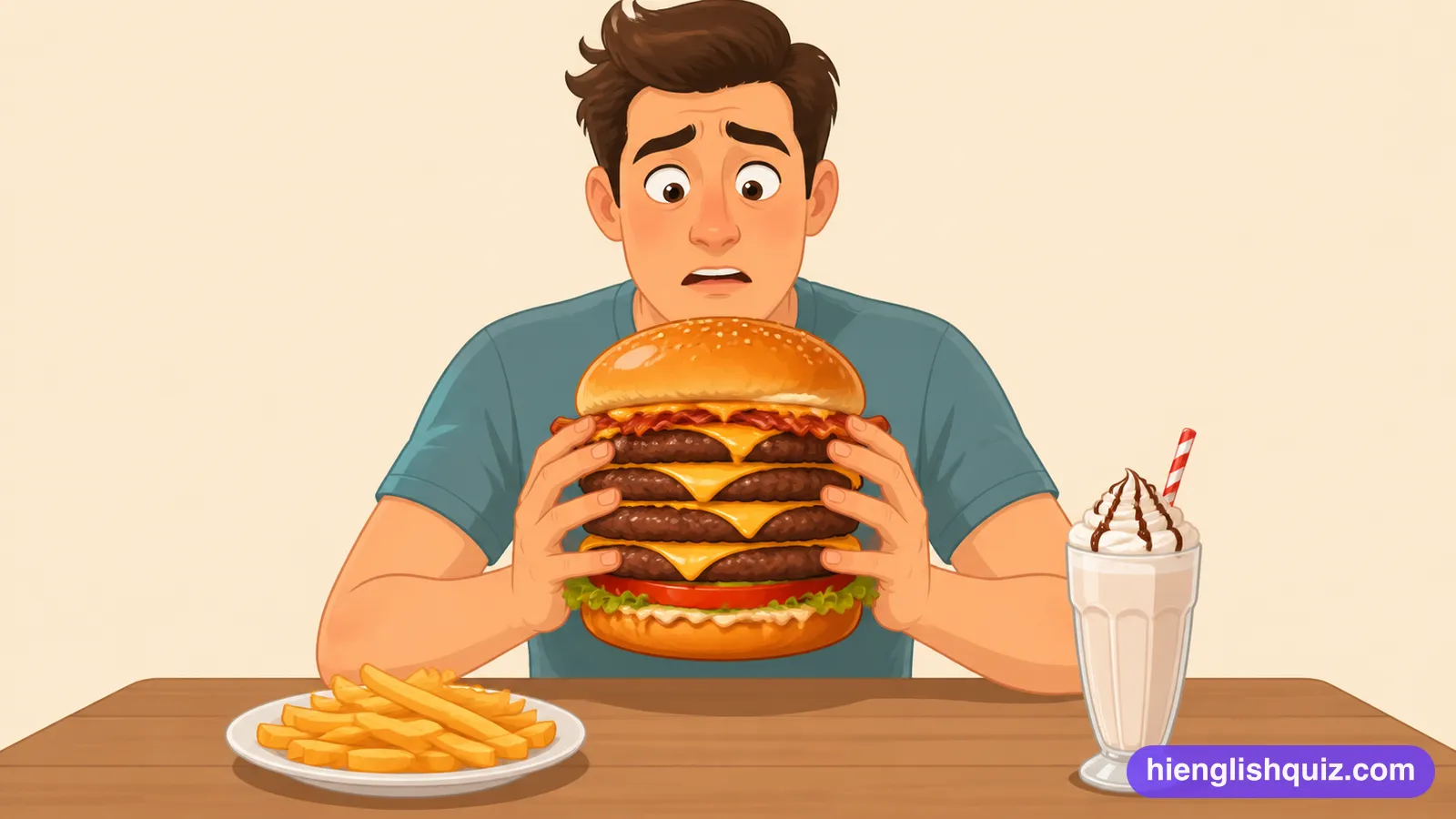
Containing or consisting of protein.
Example: The residue turned out to be proteinaceous rather than fatty.
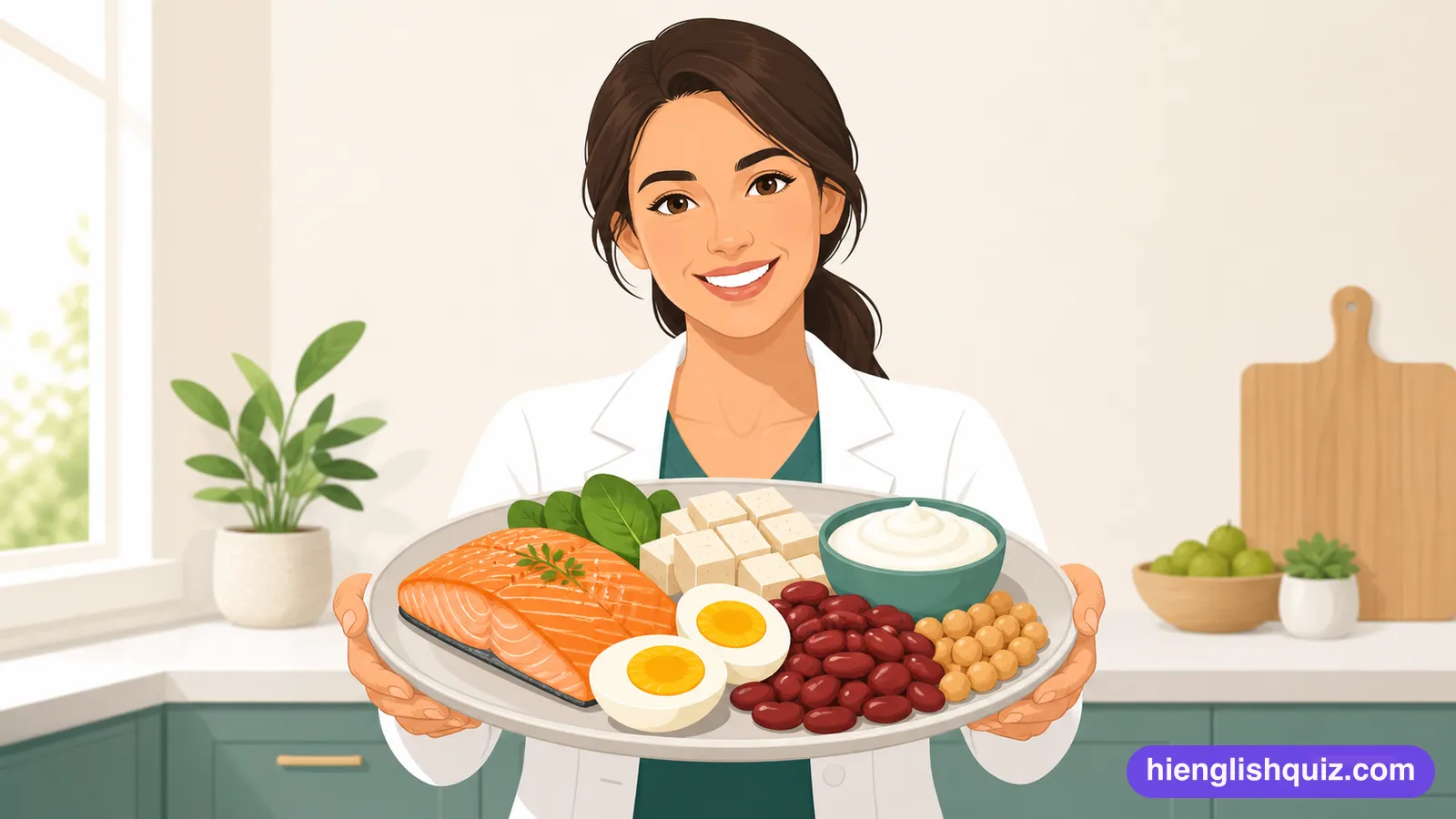
To take food into the body and use it.
Example: The body cannot assimilate iron without vitamin C.
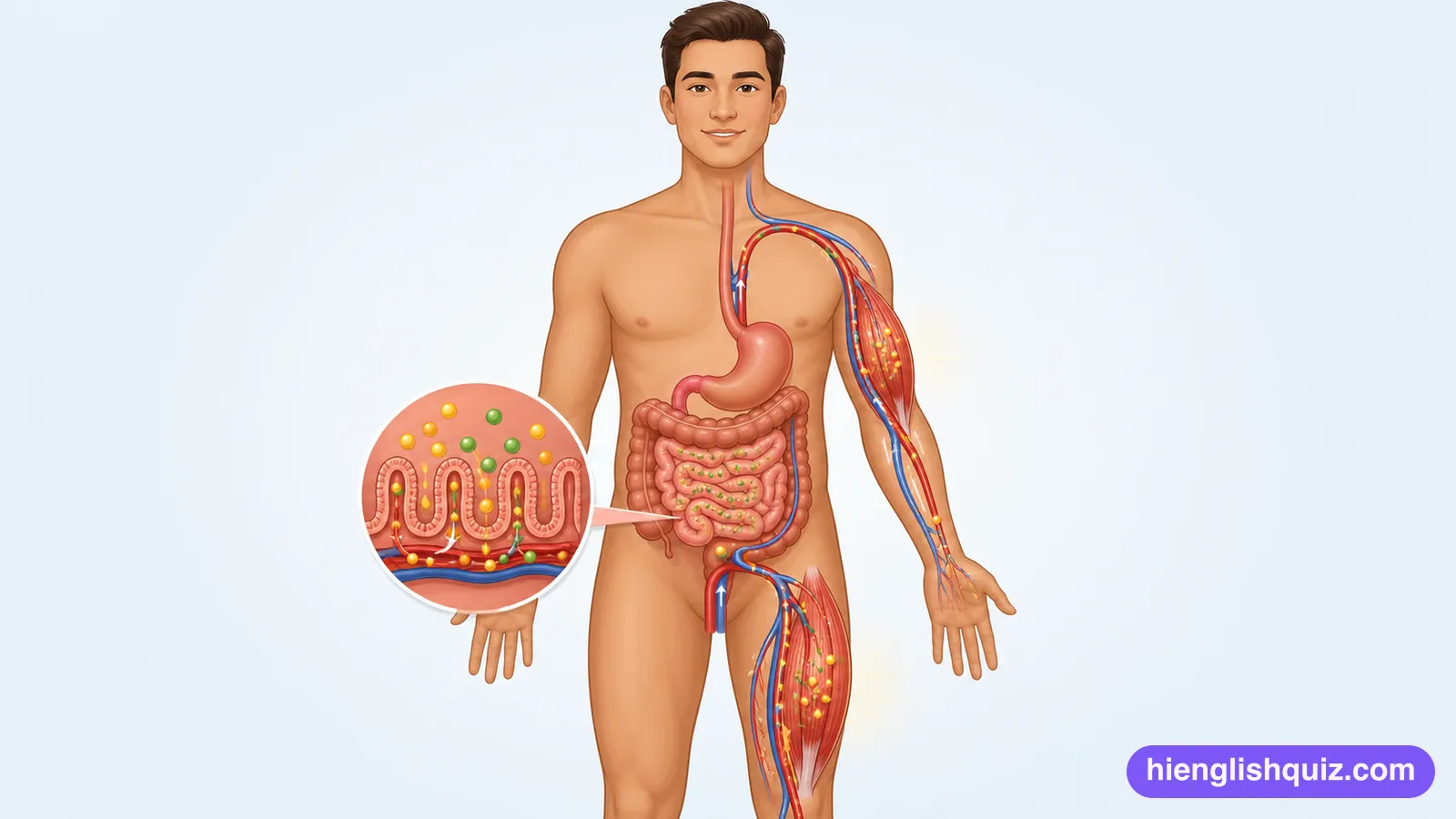
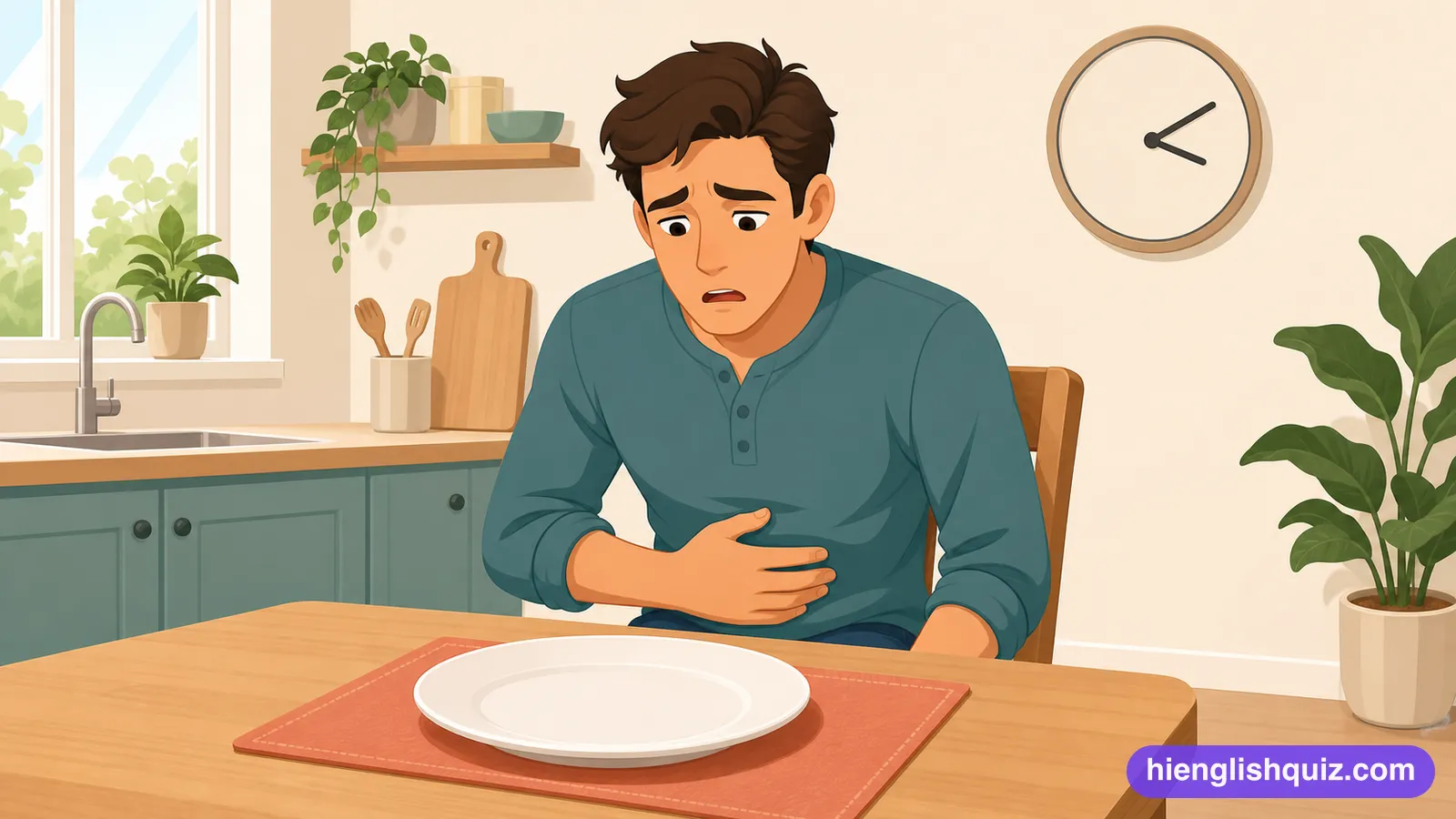
Extreme weakness caused by lack of food.
Example: The report attributed three deaths to inanition rather than disease.
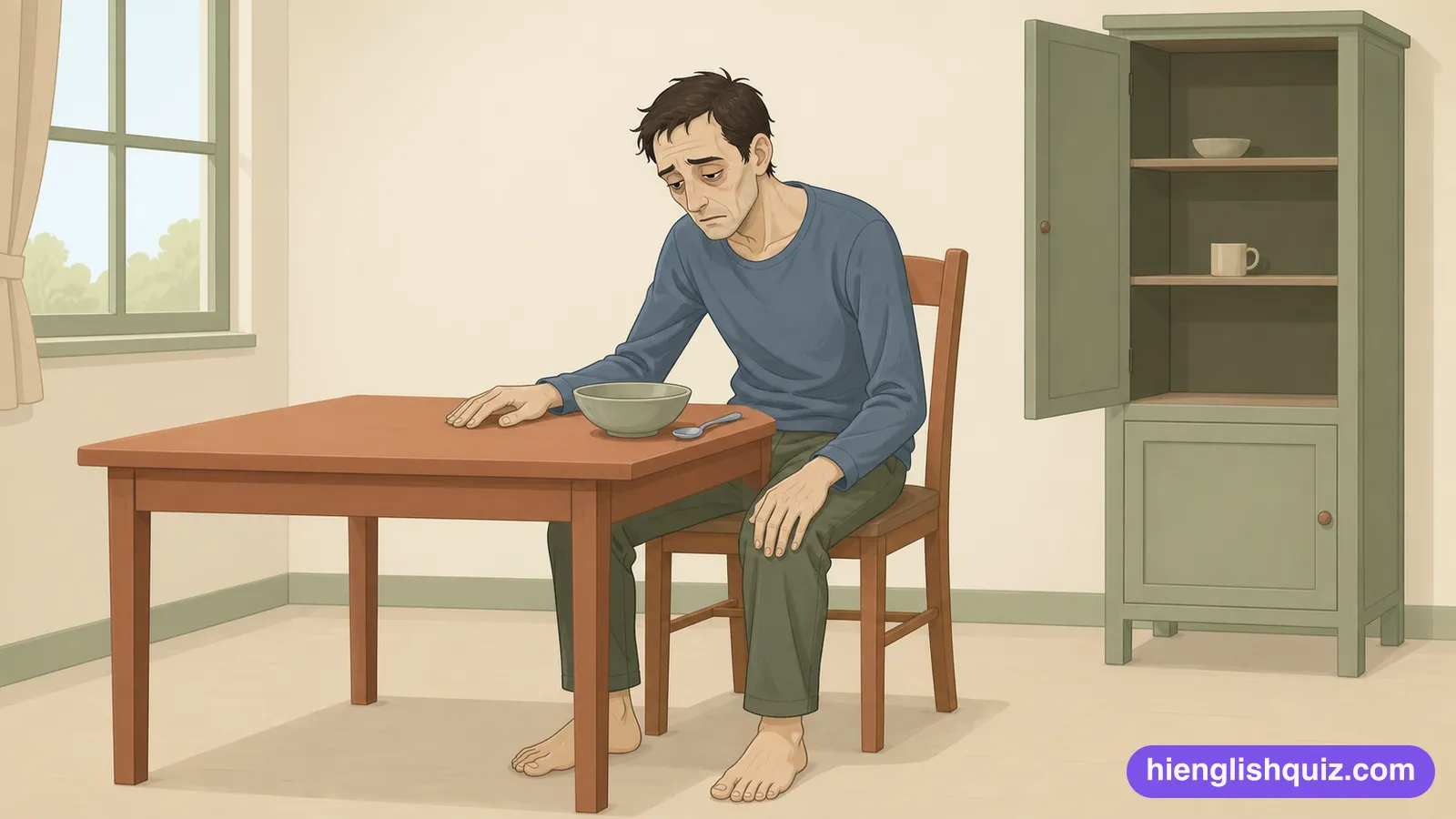
A meal.
Example: A simple repast of bread, olives and cheese was laid out.

Food and drink, especially a supply of it.
Example: The manifest lists victuals for forty men for six weeks.

Something that can be eaten.
Example: Every comestible in the cabin had been sealed in tin.
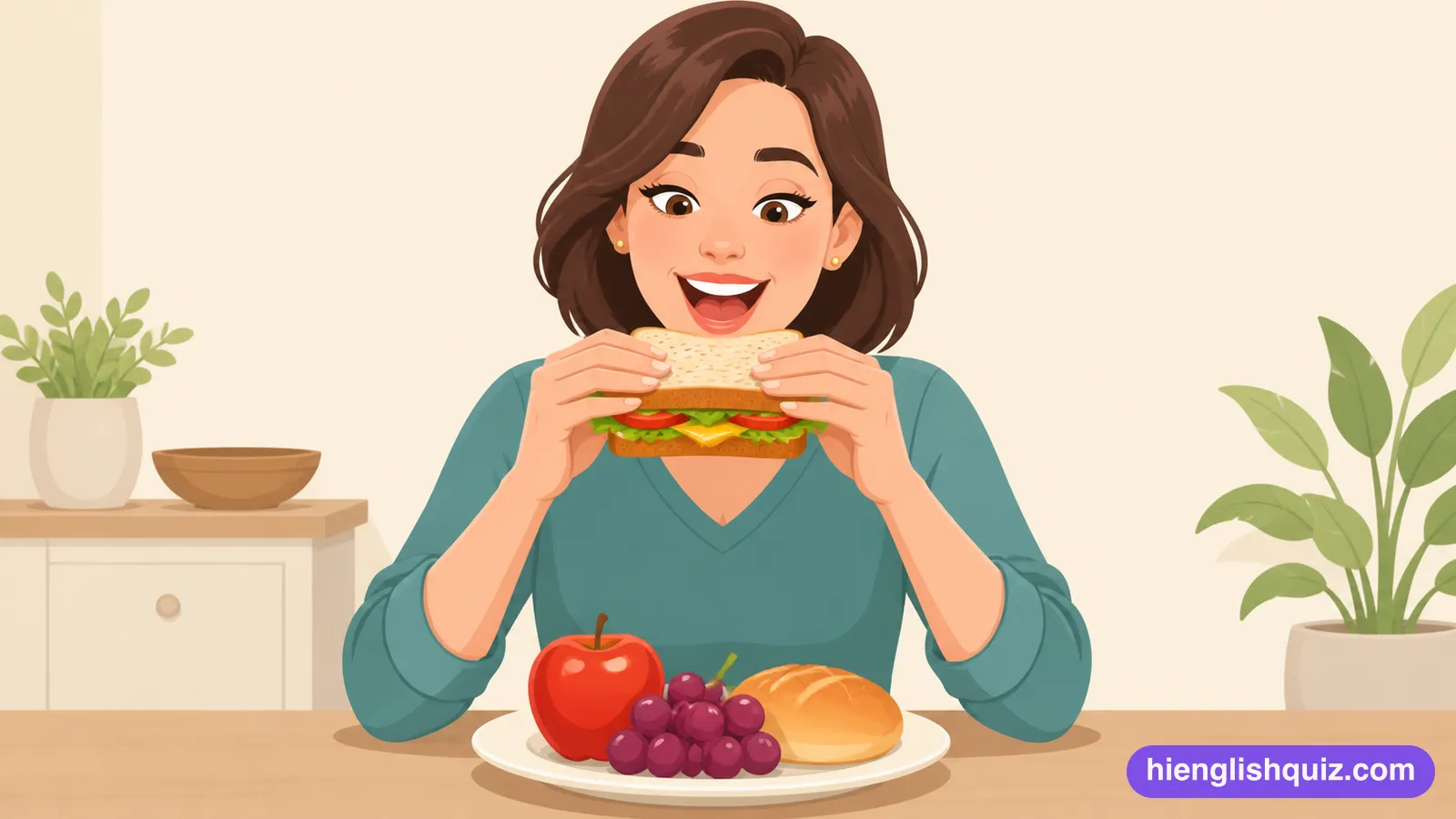
Too much of something, especially food.
Example: A surfeit of rich food left the whole party unwell.
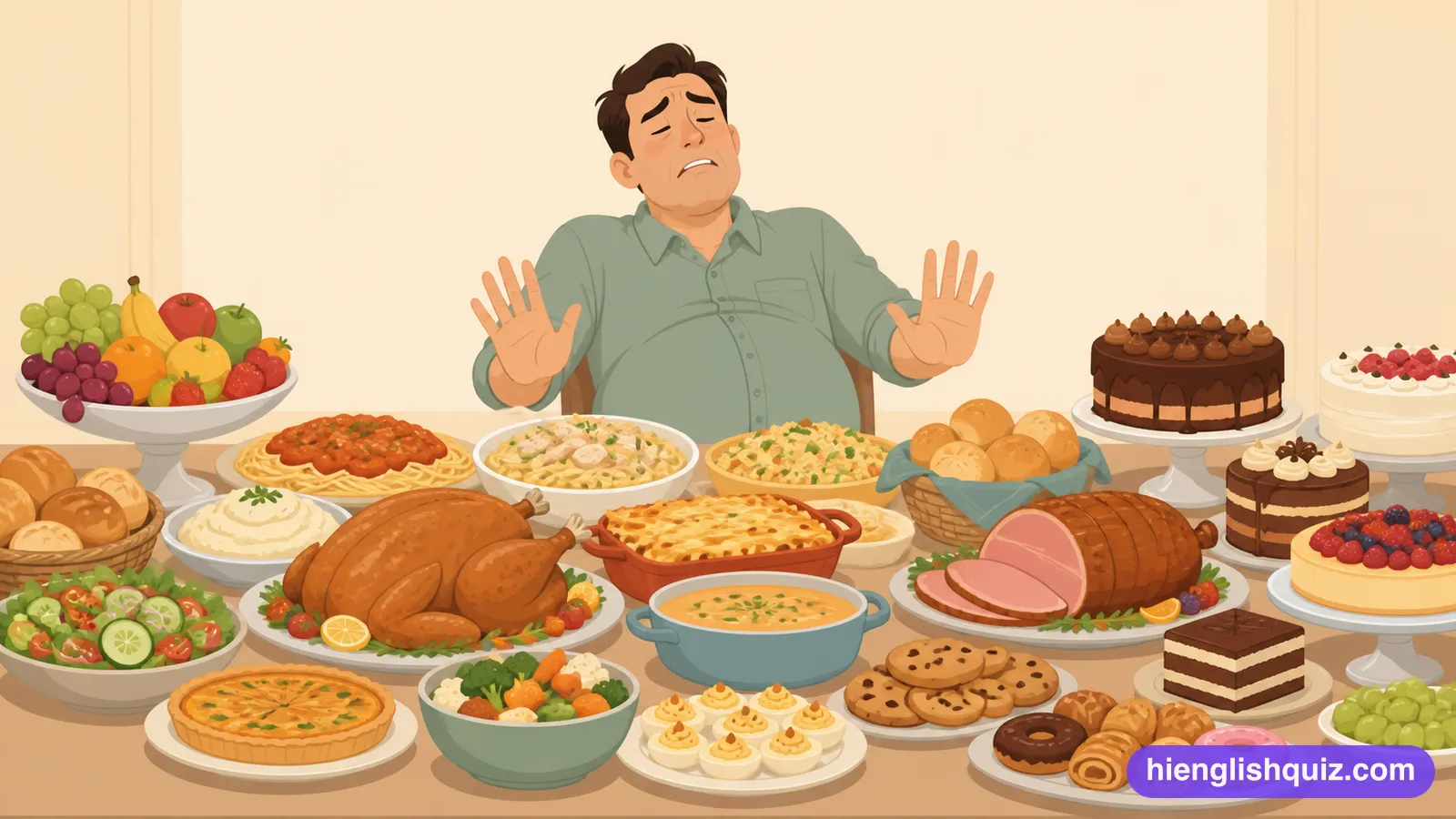
Relating to the sense of taste.
Example: The essay treats memory as a largely gustatory thing.
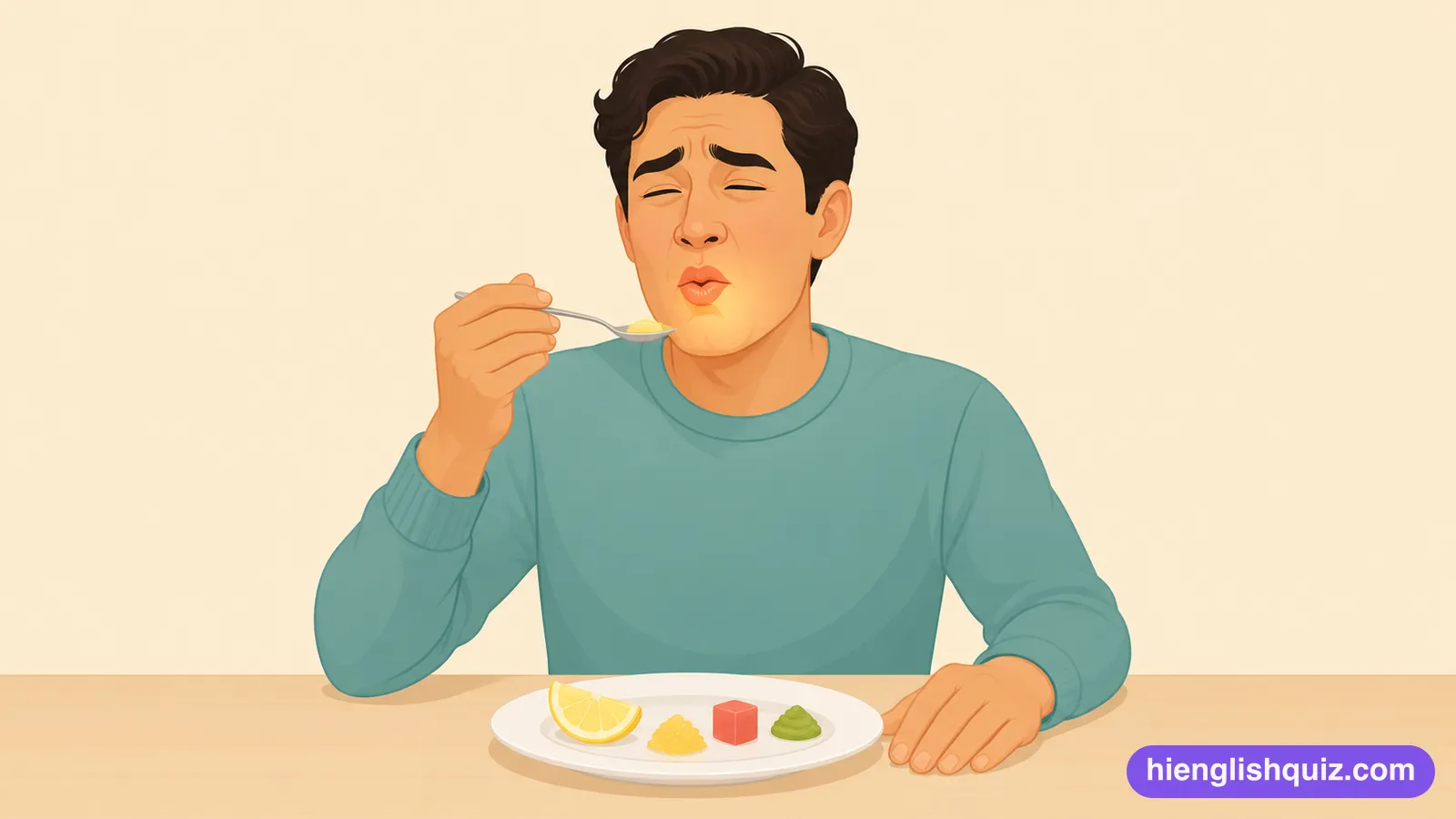
Something that provides what the body needs to grow.
Example: There is little nutriment in white bread beyond the energy.
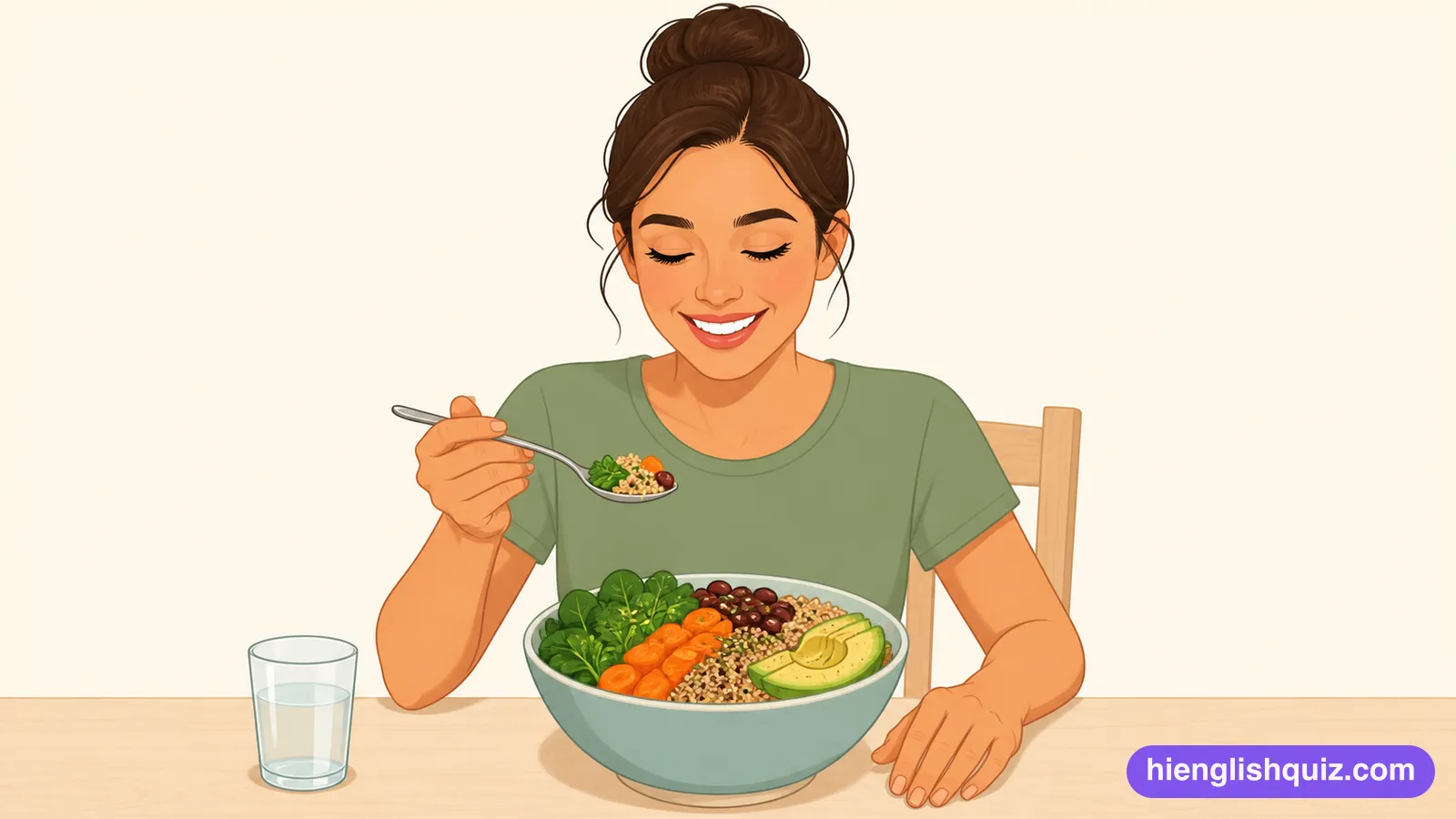
Having eaten so much that you could not eat any more.
Example: Replete and half asleep, nobody moved from the table for an hour.