referral
/rɪˈfɜrəl/When your family doctor sends you on to a hospital specialist for further care.
Example: My GP wrote me a referral to a skin clinic.

 Hi EnglishQuiz
C120 words · Advanced
Doctors and hospitals vocabulary for medicine as a process, including a referral, a biopsy, a consultation and physiotherapy, alongside the dosage and sterile technique that come after.
When your family doctor sends you on to a hospital specialist for further care.
Example: My GP wrote me a referral to a skin clinic.
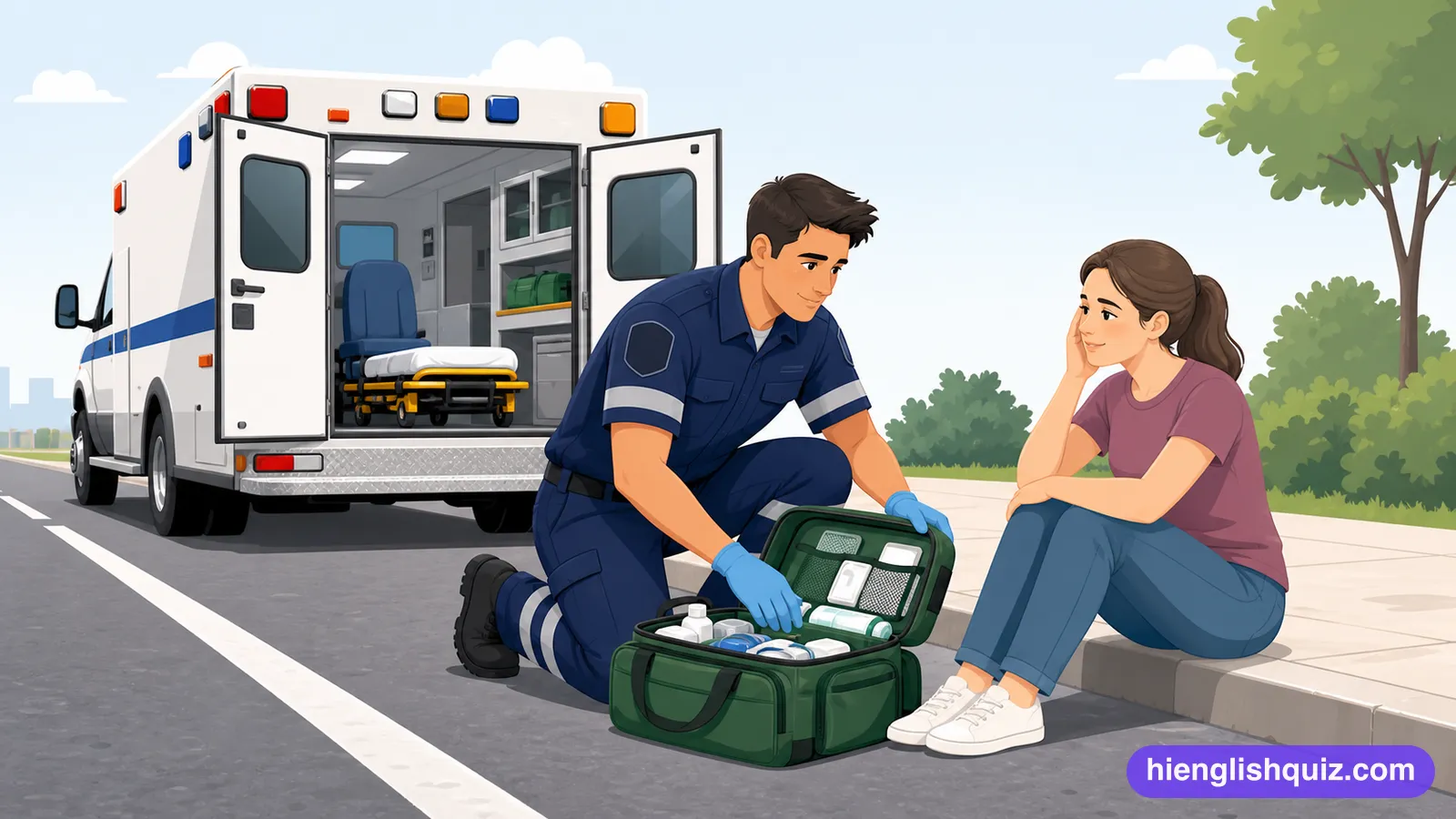
A trained worker who gives emergency care at the scene and in the ambulance.
Example: A paramedic reached the crash site within four minutes.
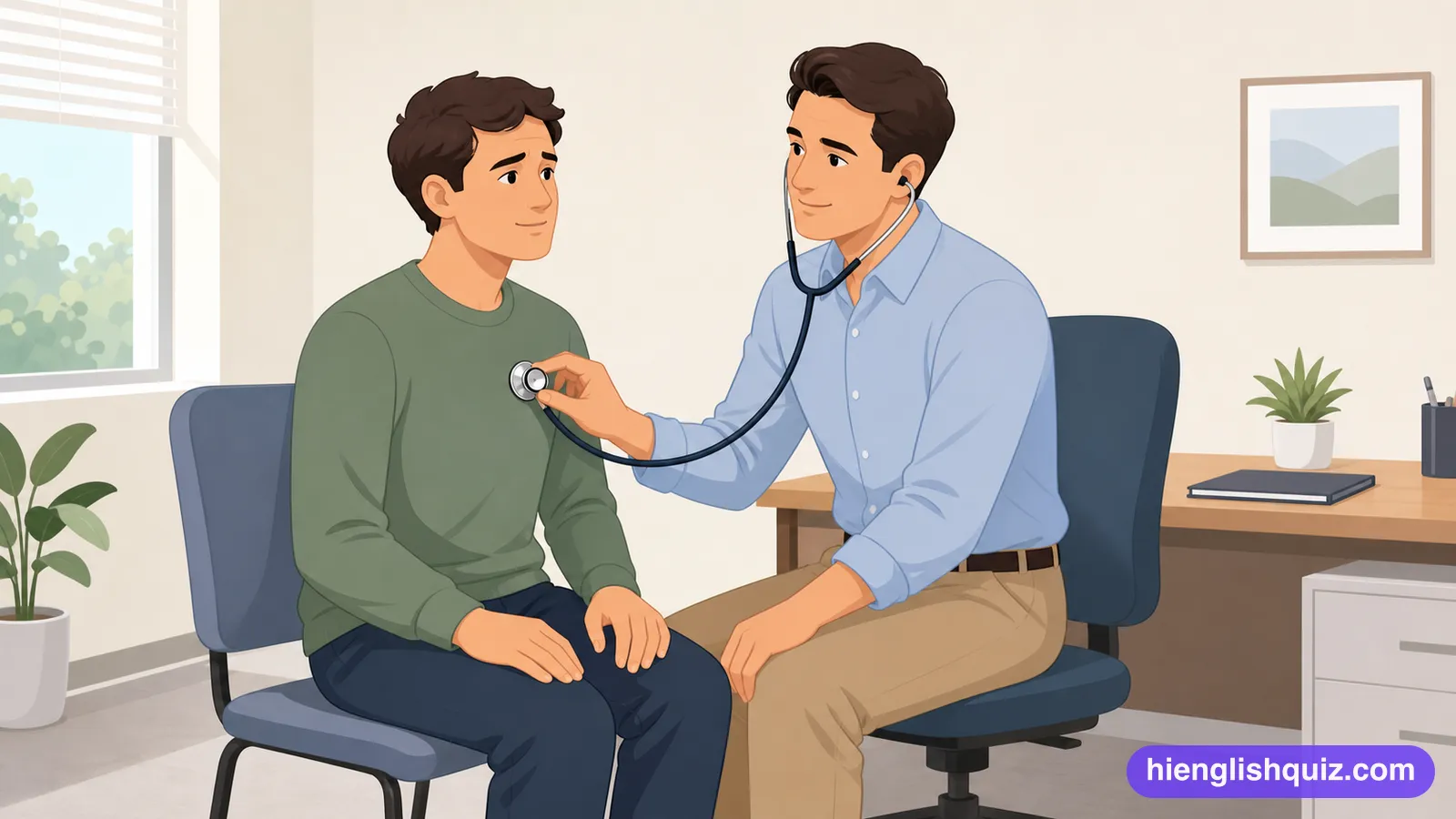
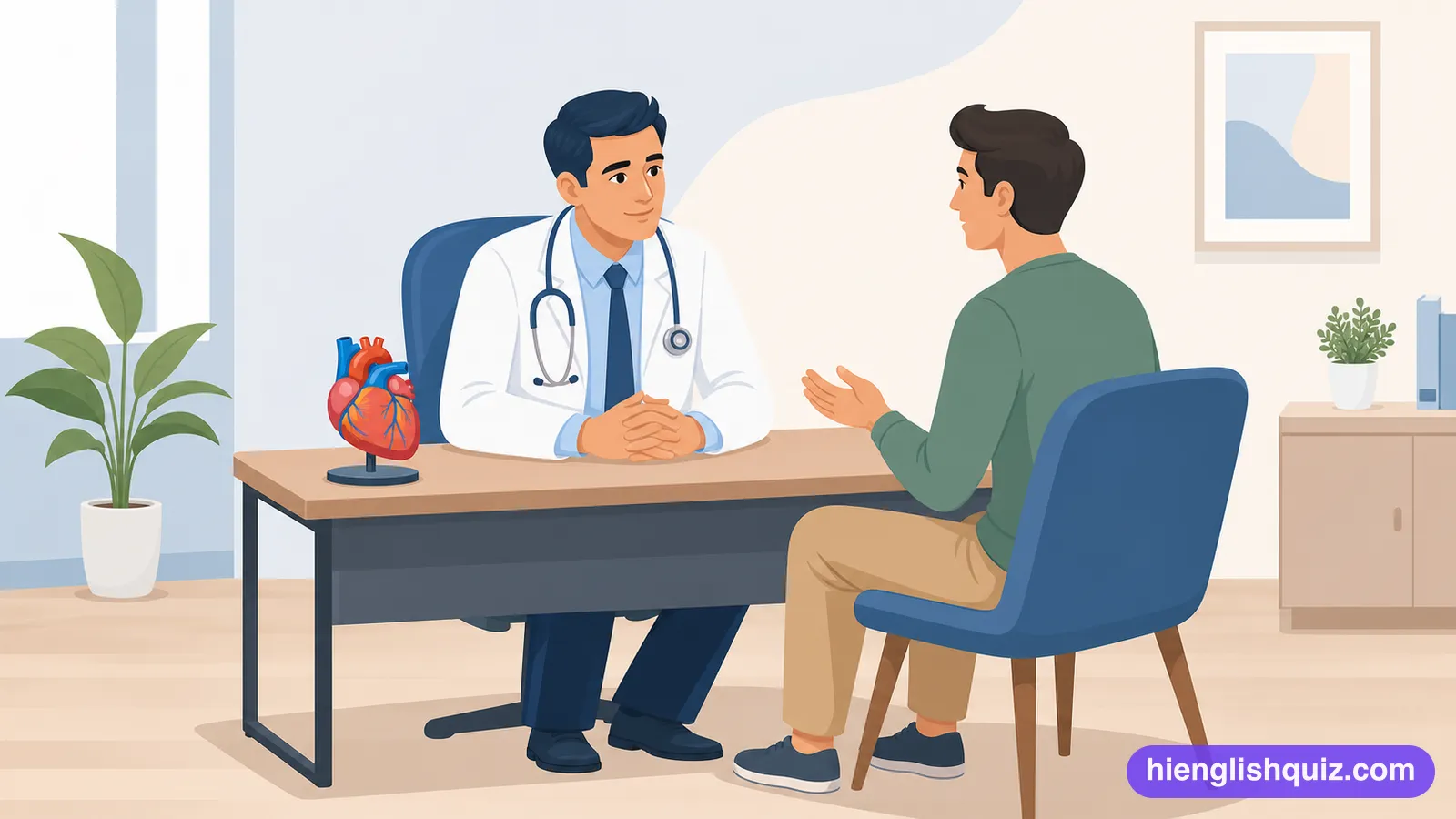
A booked meeting in which a doctor listens to your problem and advises you.
Example: The first consultation costs sixty pounds and lasts half an hour.
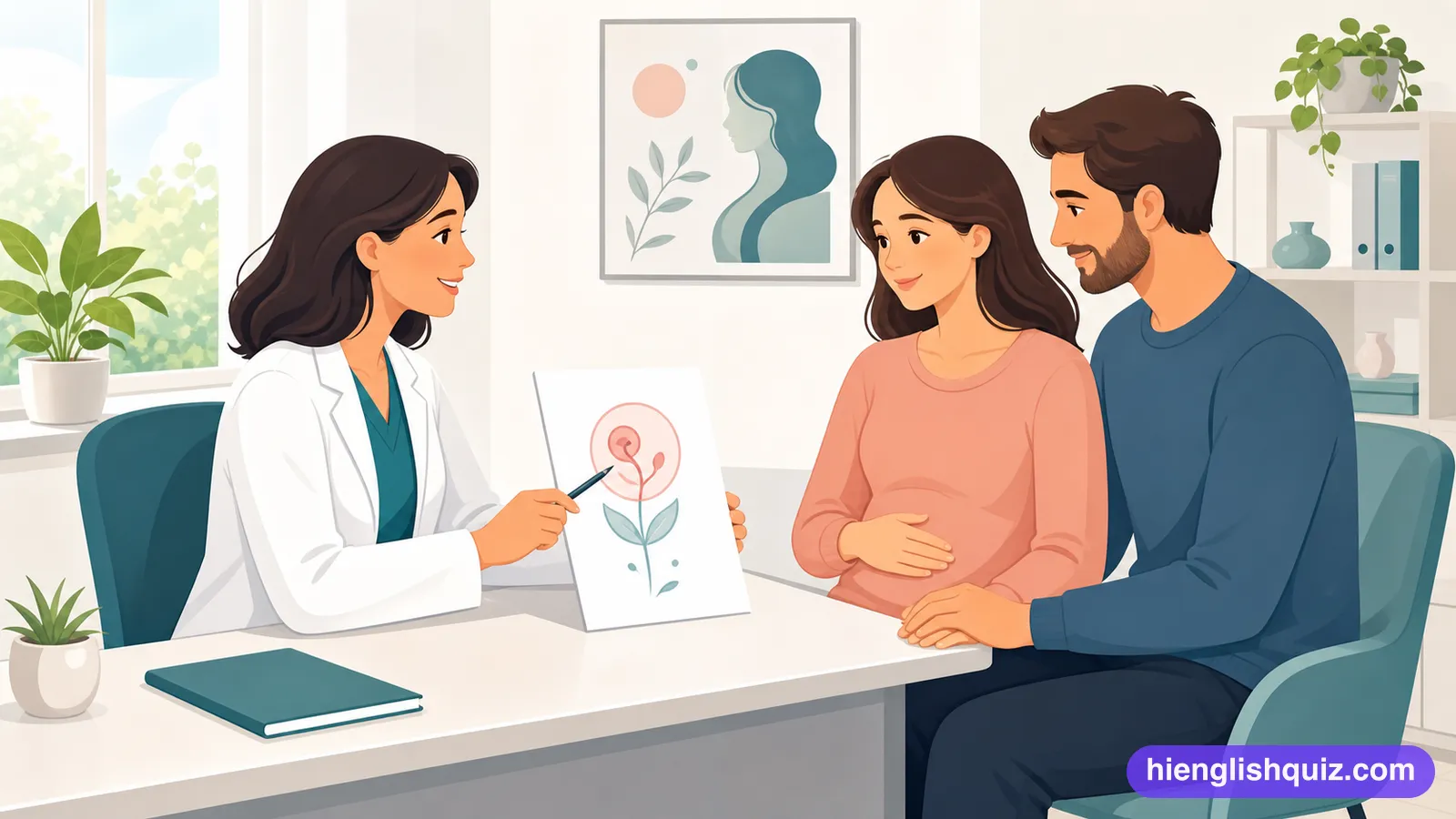
The ability of a person or animal to produce babies or young.
Example: Smoking can reduce fertility in both men and women.
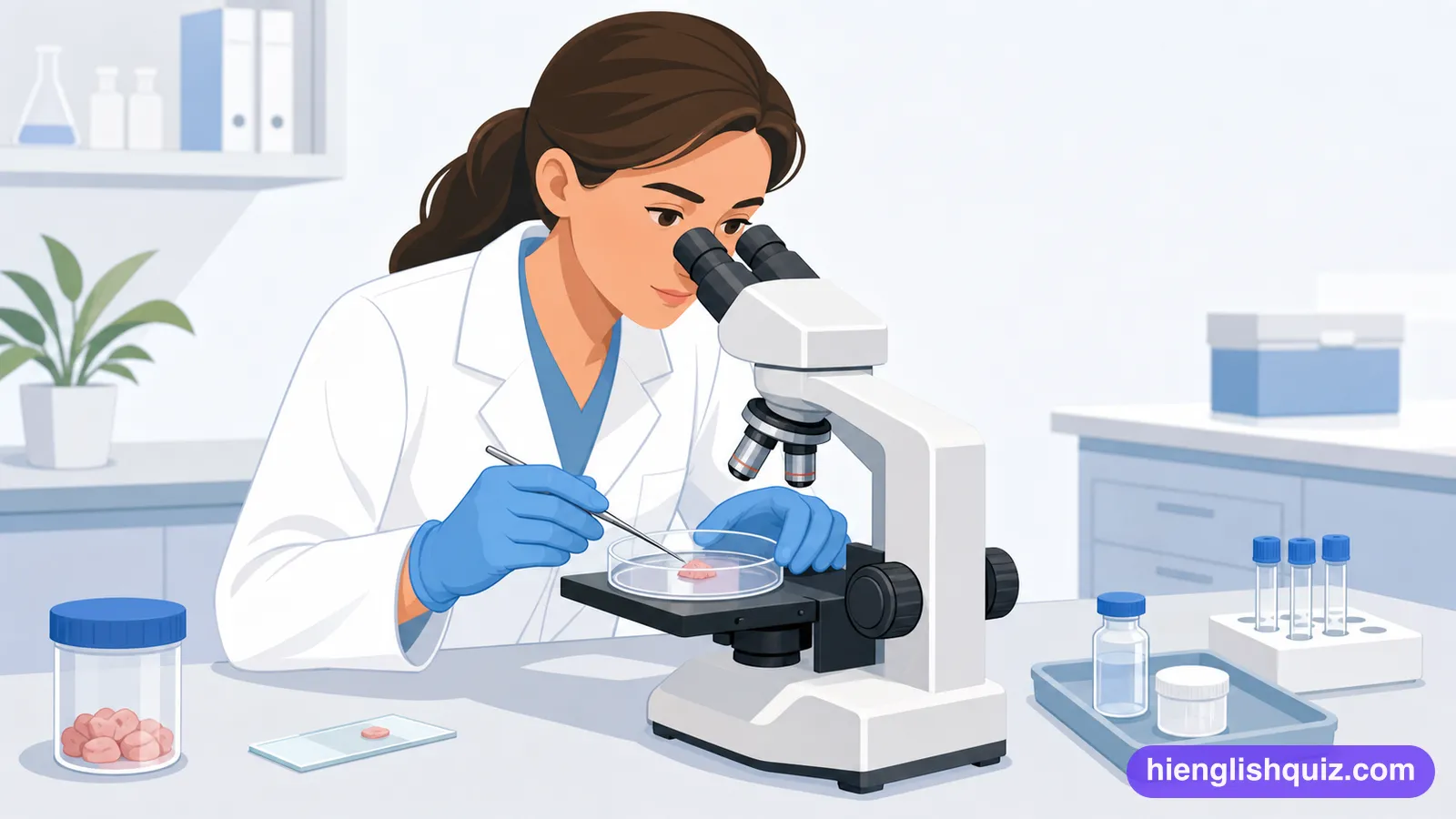
The removal of a small piece of body tissue so that it can be tested.
Example: The doctors ordered a biopsy to rule out cancer.
Testing healthy people in order to find a disease early, before any signs appear.
Example: The screening programme invites everyone over sixty for a test.
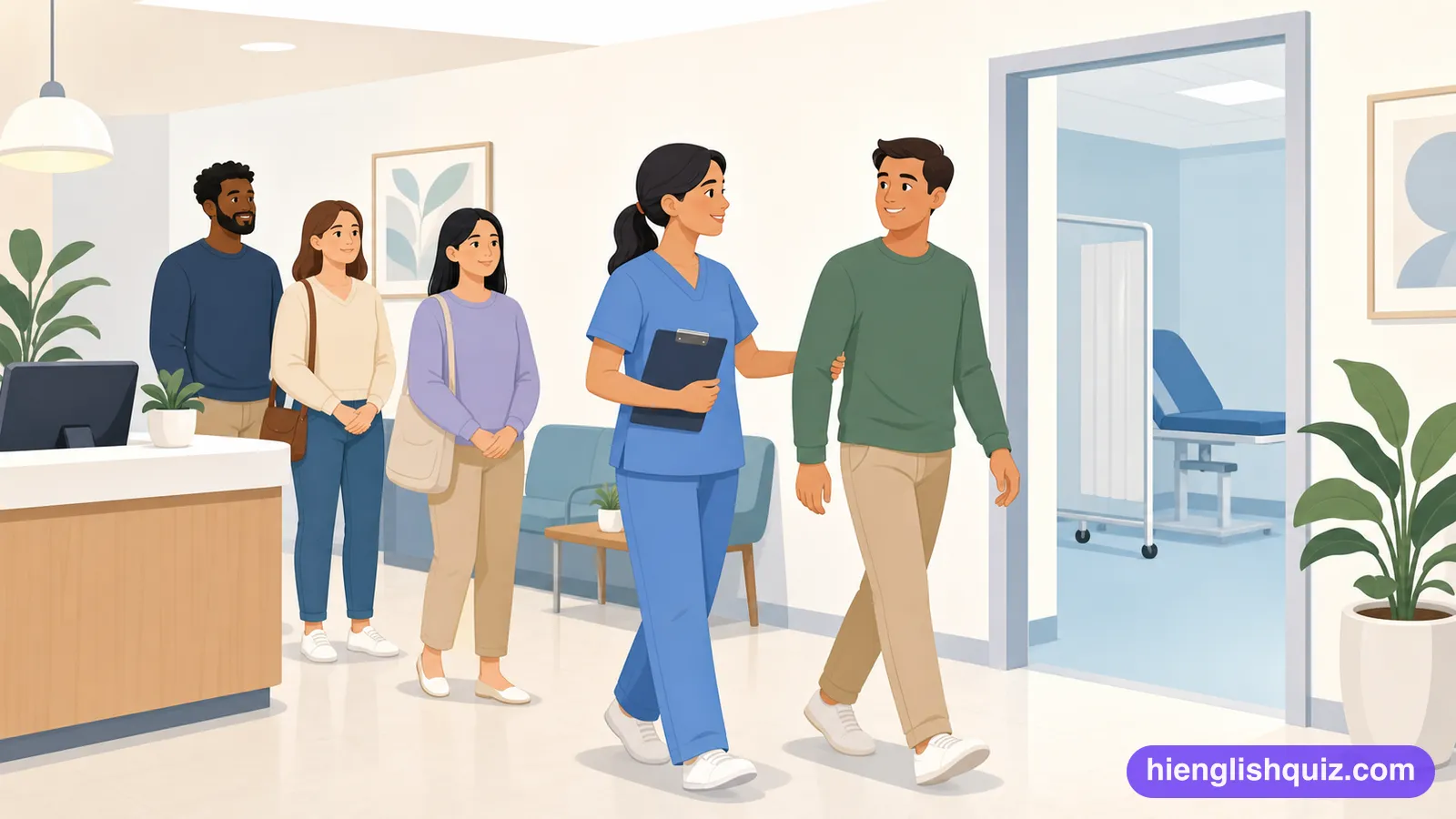
Treatment of injury with exercises and massage rather than with drugs.
Example: After the operation she needed physiotherapy twice a week.
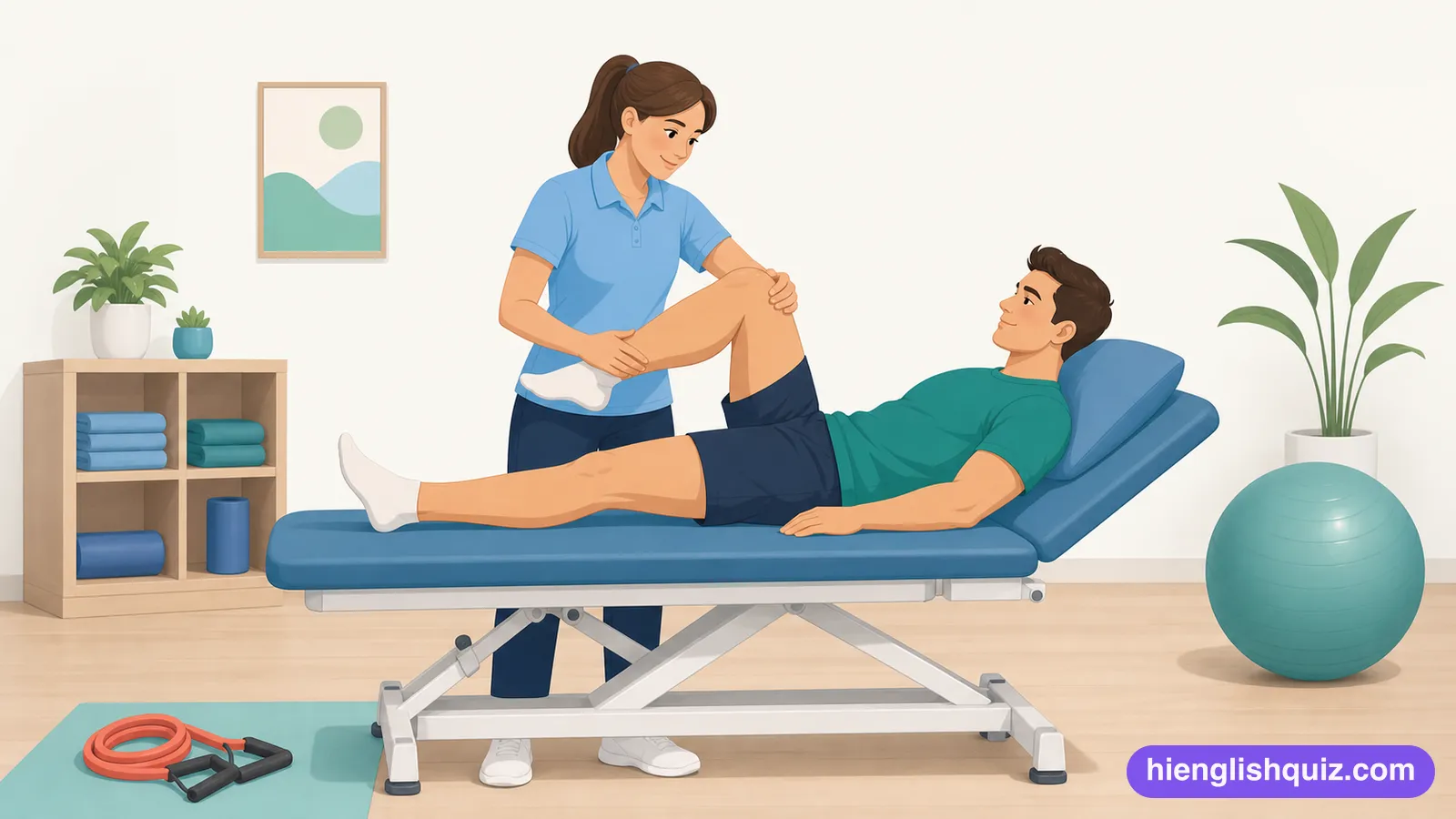
To take someone into hospital so that they can stay there and be treated.
Example: She was admitted to hospital with severe chest pain.
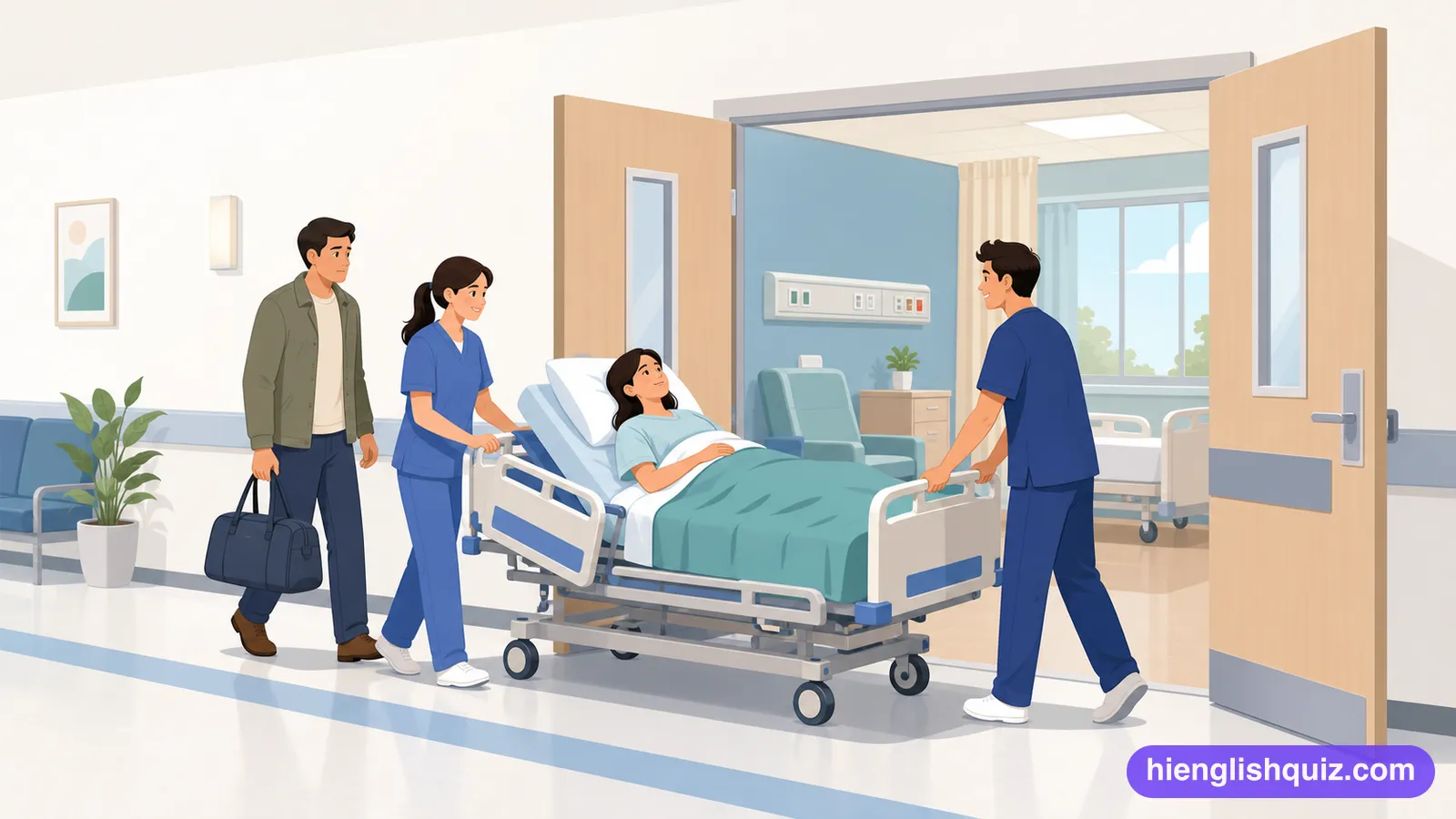
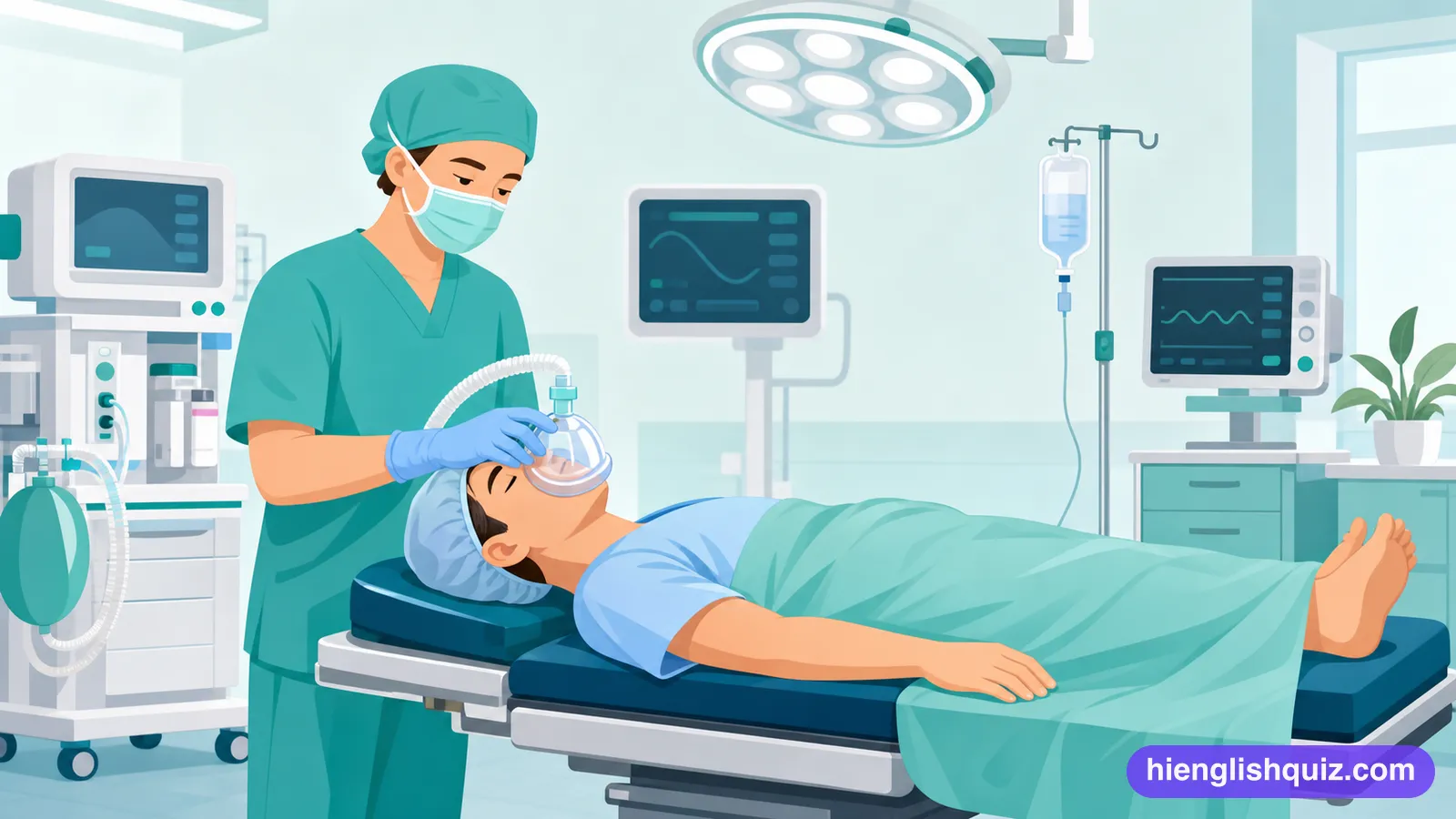
A doctor who gives patients drugs to make them unconscious or numb before an operation.
Example: The anaesthetist explained the risks before the surgery began.
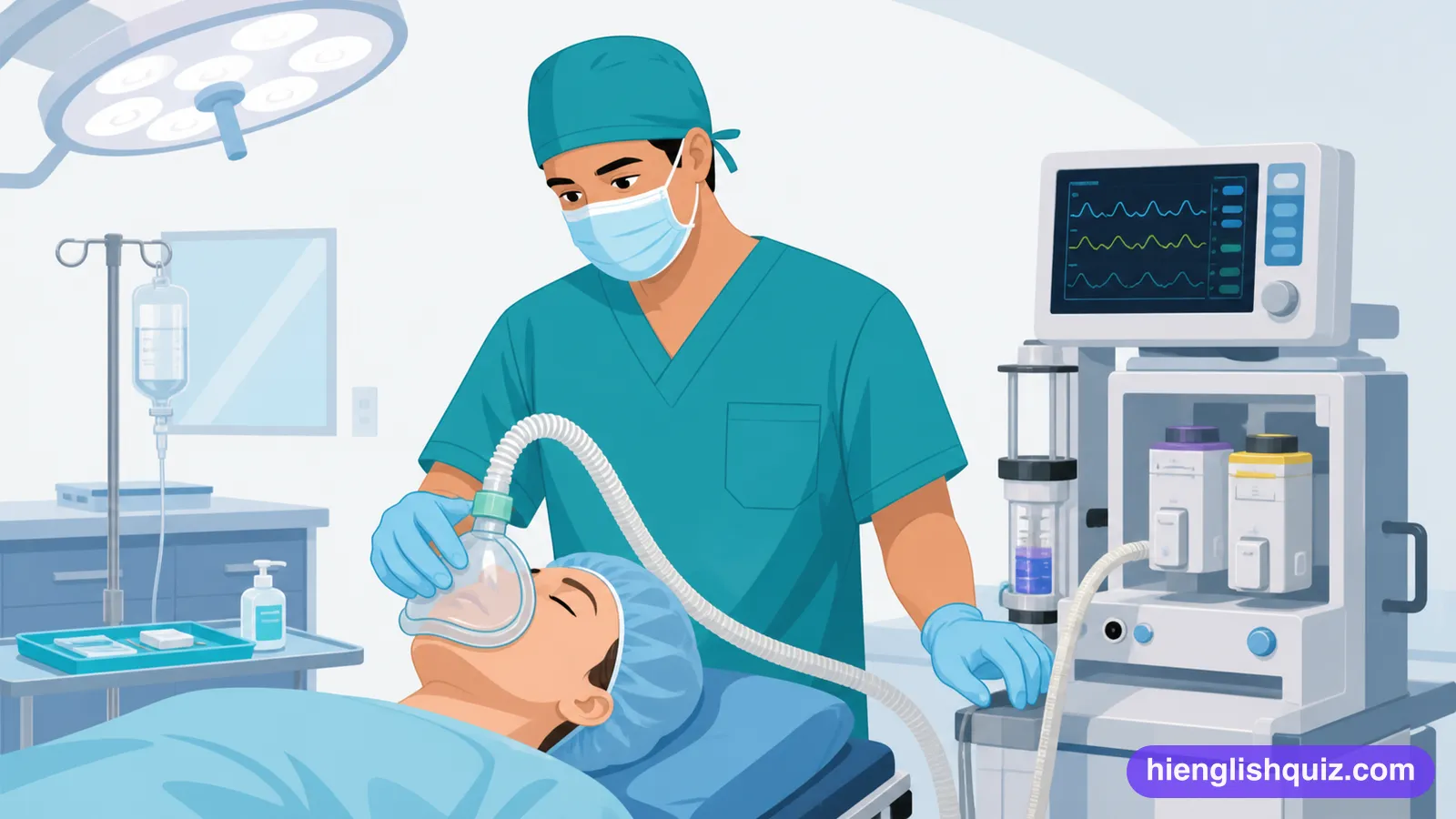
Relating to the medical care of old people.
Example: She works in the geriatric ward, caring for elderly patients.
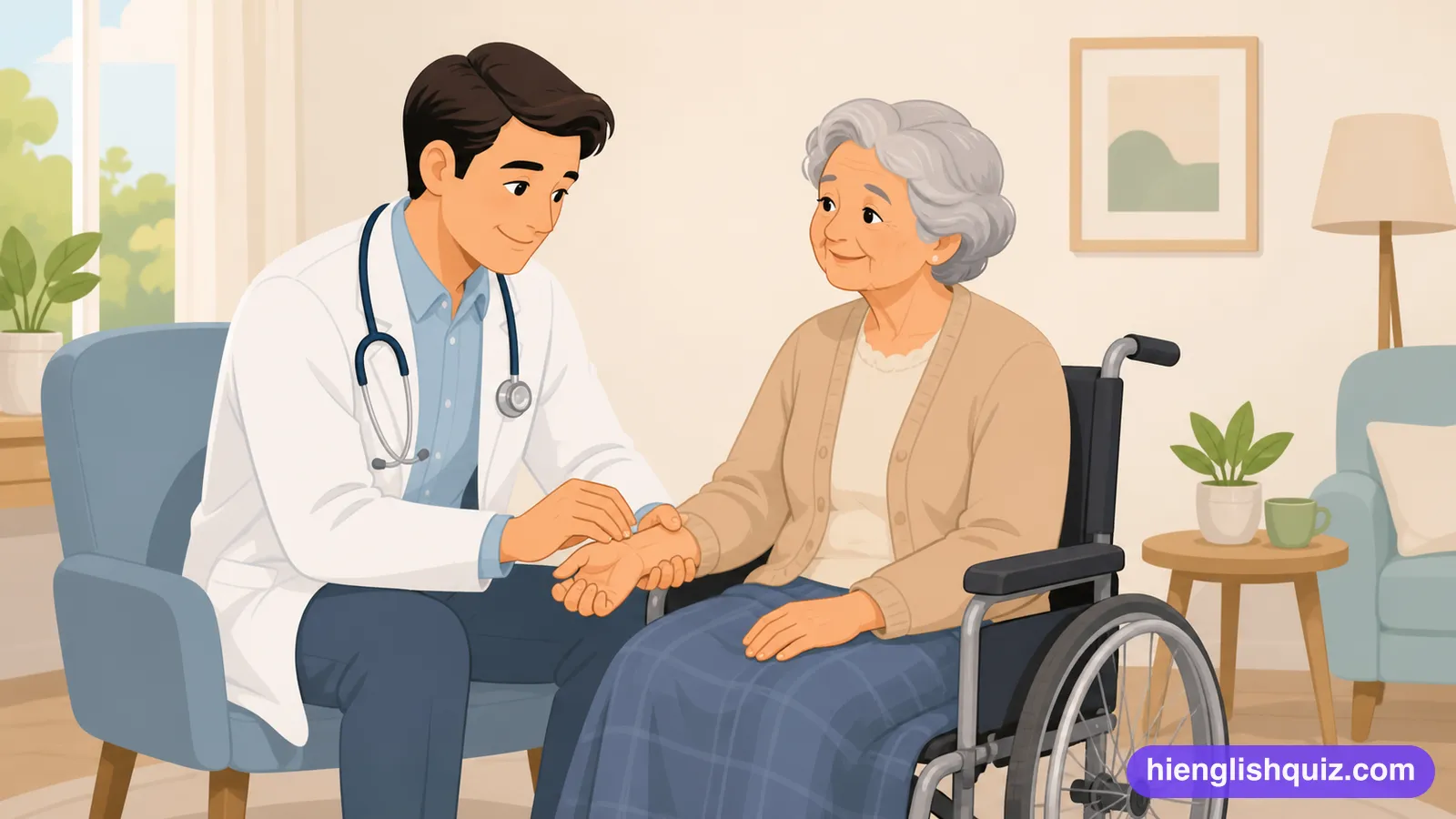
The exact amount of a drug to take and how often to take it.
Example: Check the dosage carefully before giving it to a child.
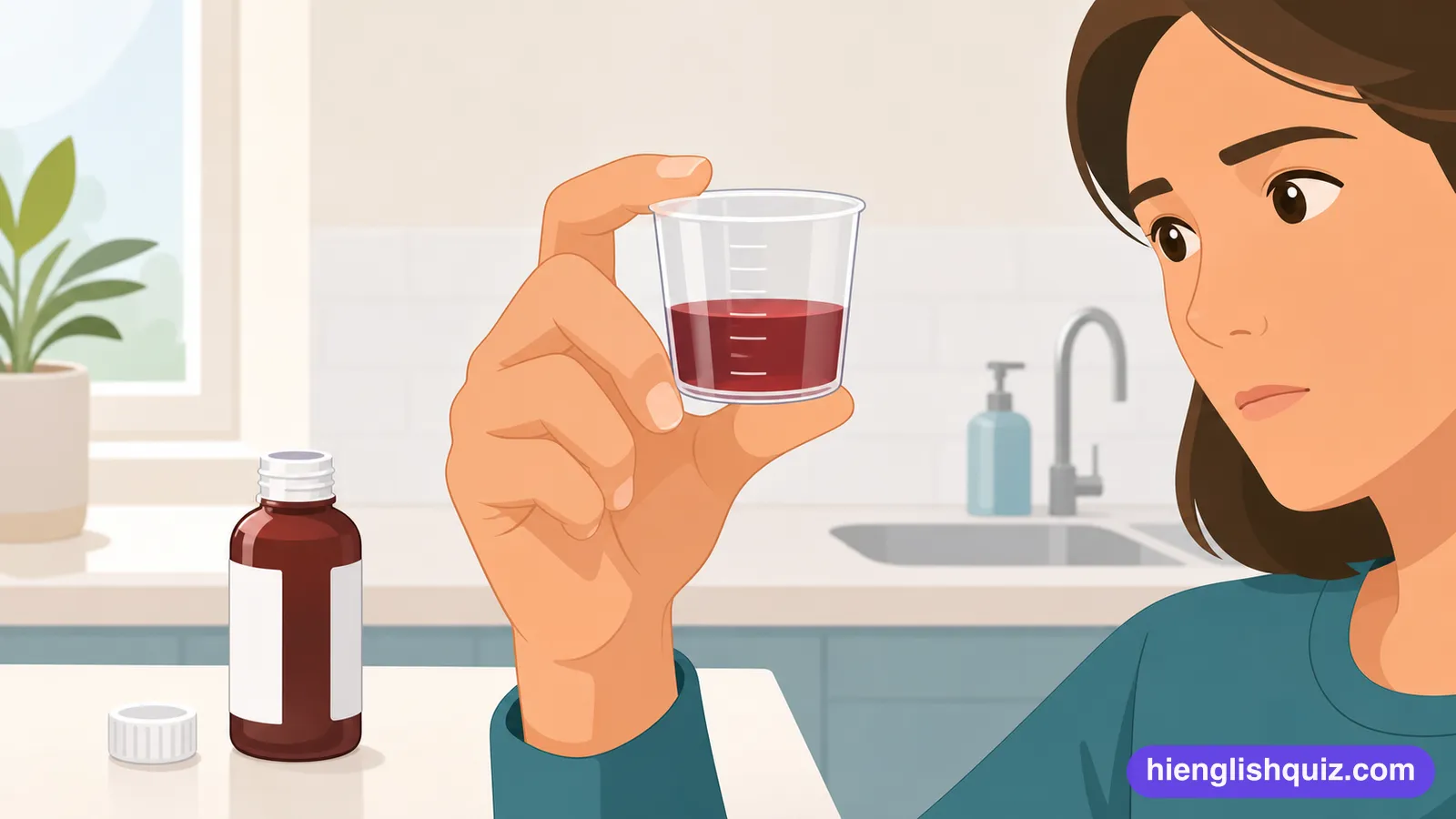
A drug that kills bacteria and clears infections, but is useless against a virus.
Example: An antibiotic won't touch a cold, because that's a virus.
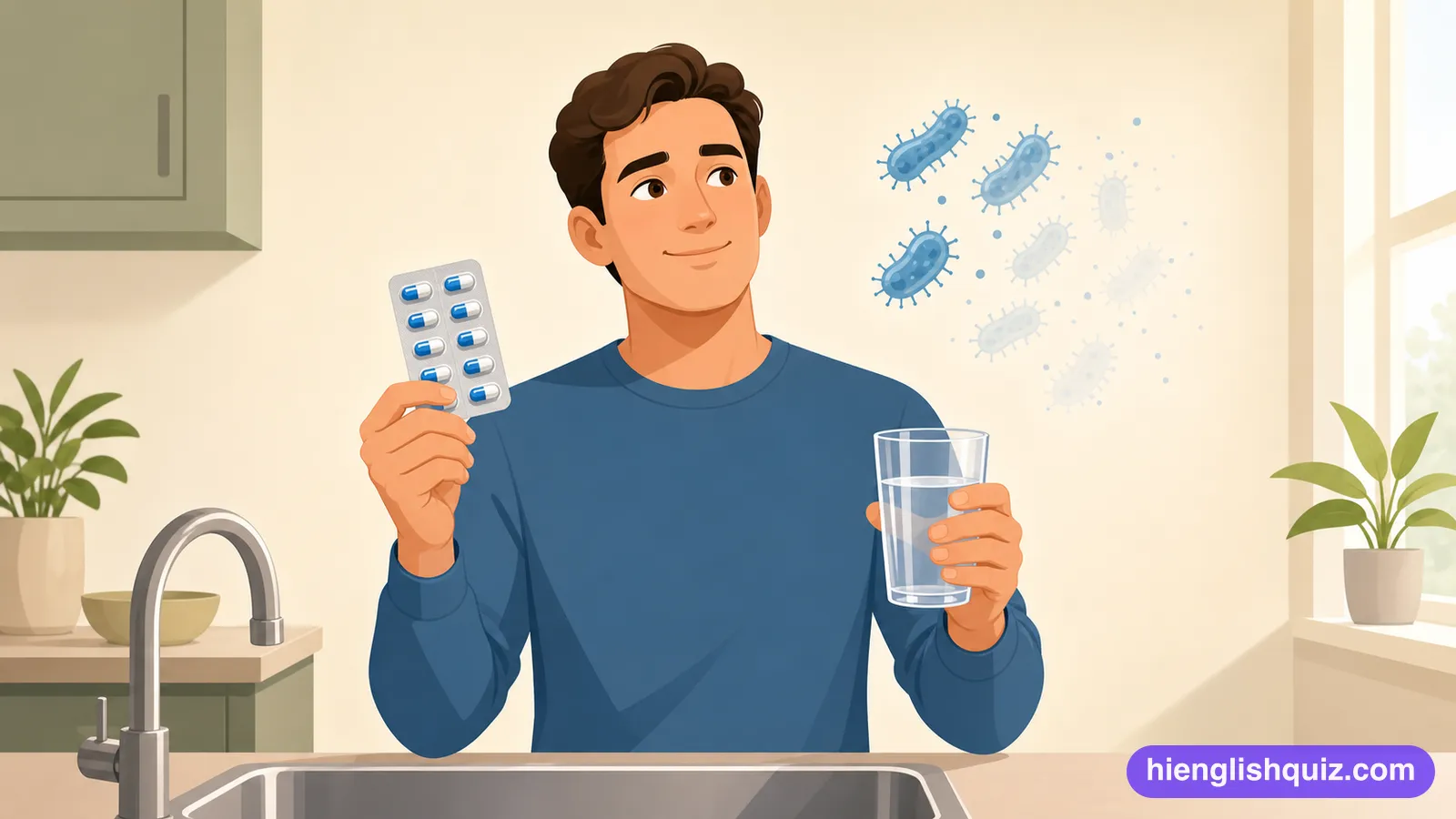
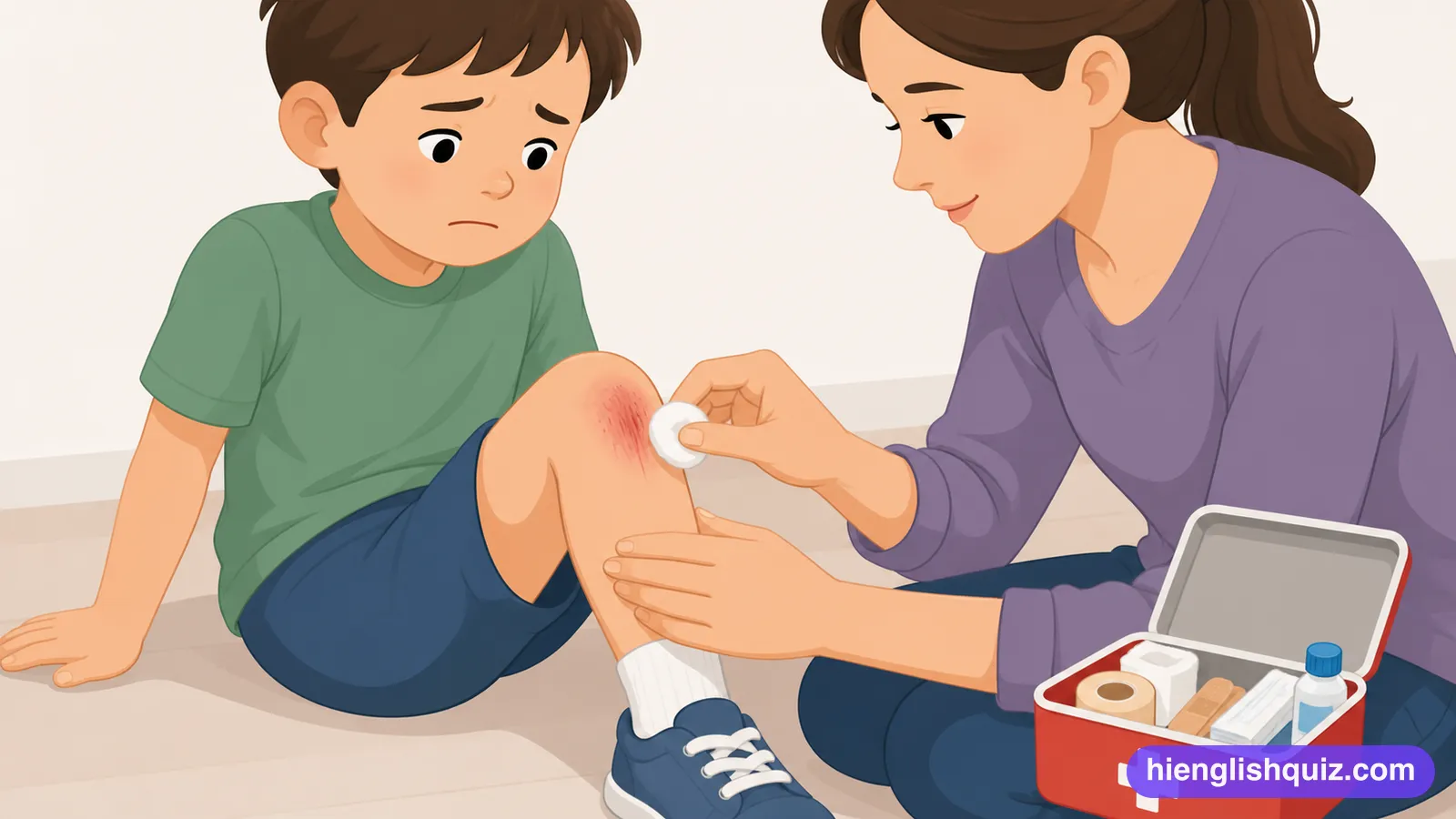
A liquid or cream put on a cut to kill germs and stop infection.
Example: Dab some antiseptic on the cut before you cover it.
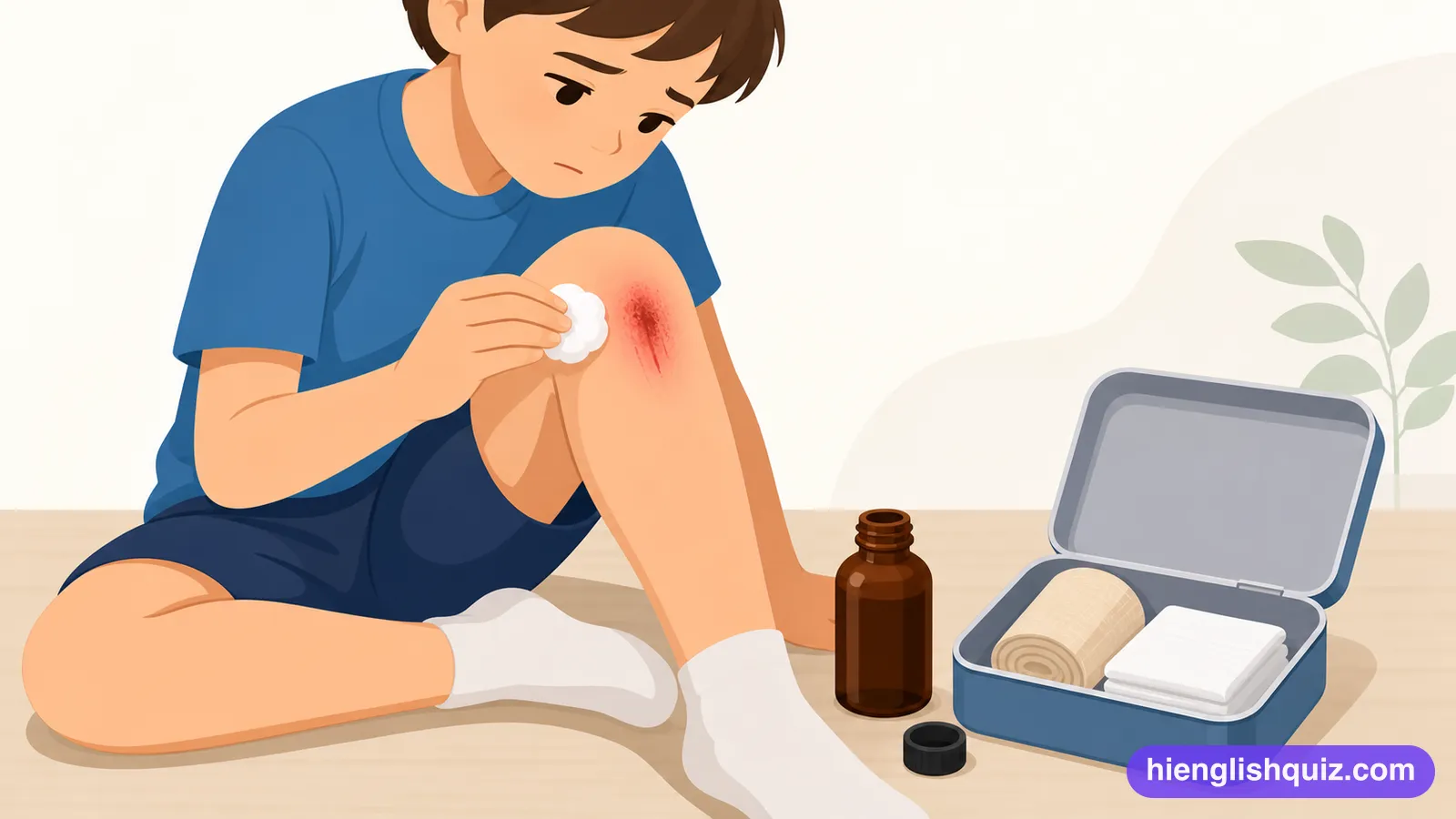
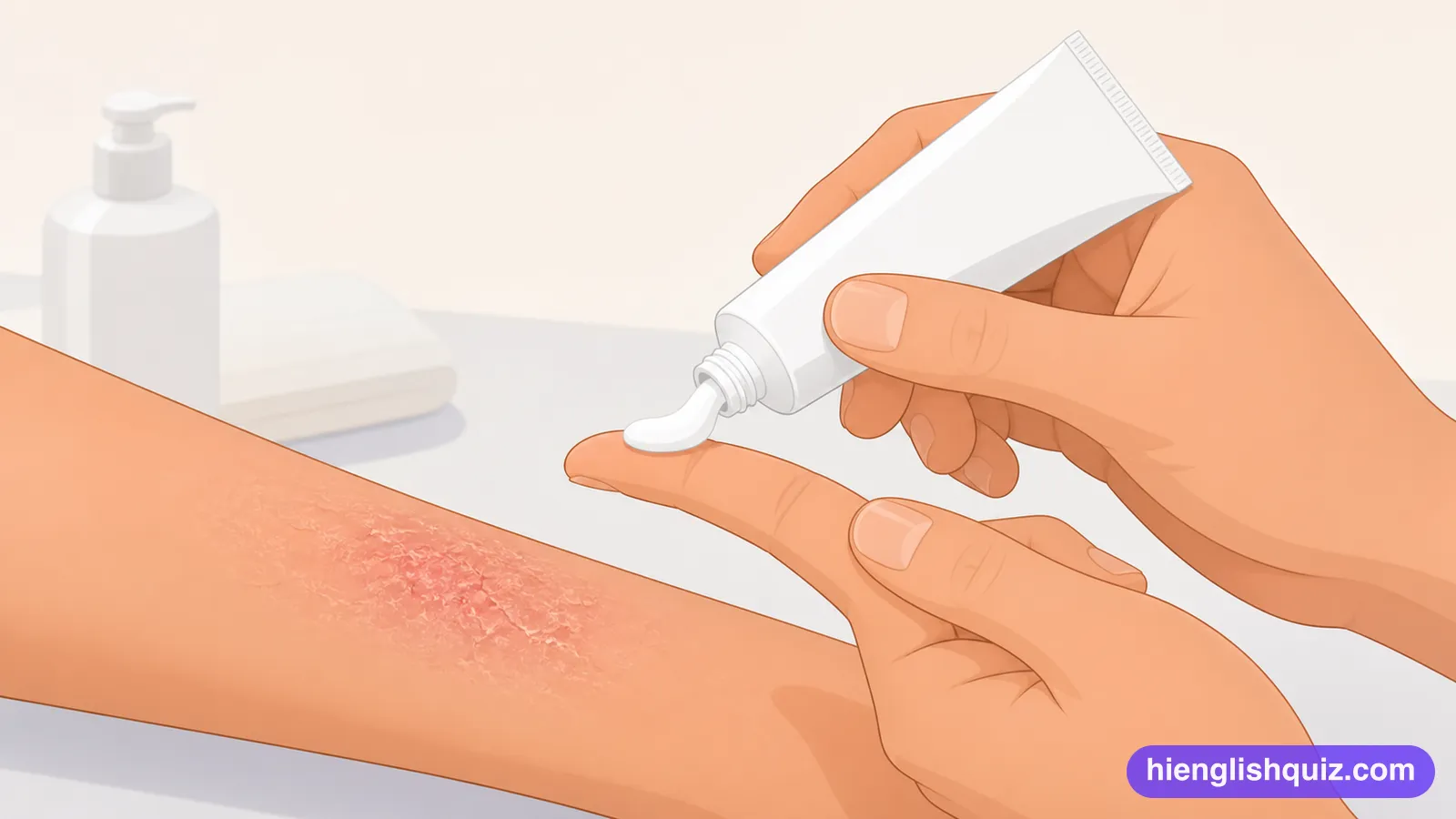
A thick, greasy cream you rub into the skin to soothe or heal it.
Example: The pharmacist recommended an ointment for the dry patches.
A drug that stops you feeling pain during an operation.
Example: They gave her a local anaesthetic before stitching the cut.
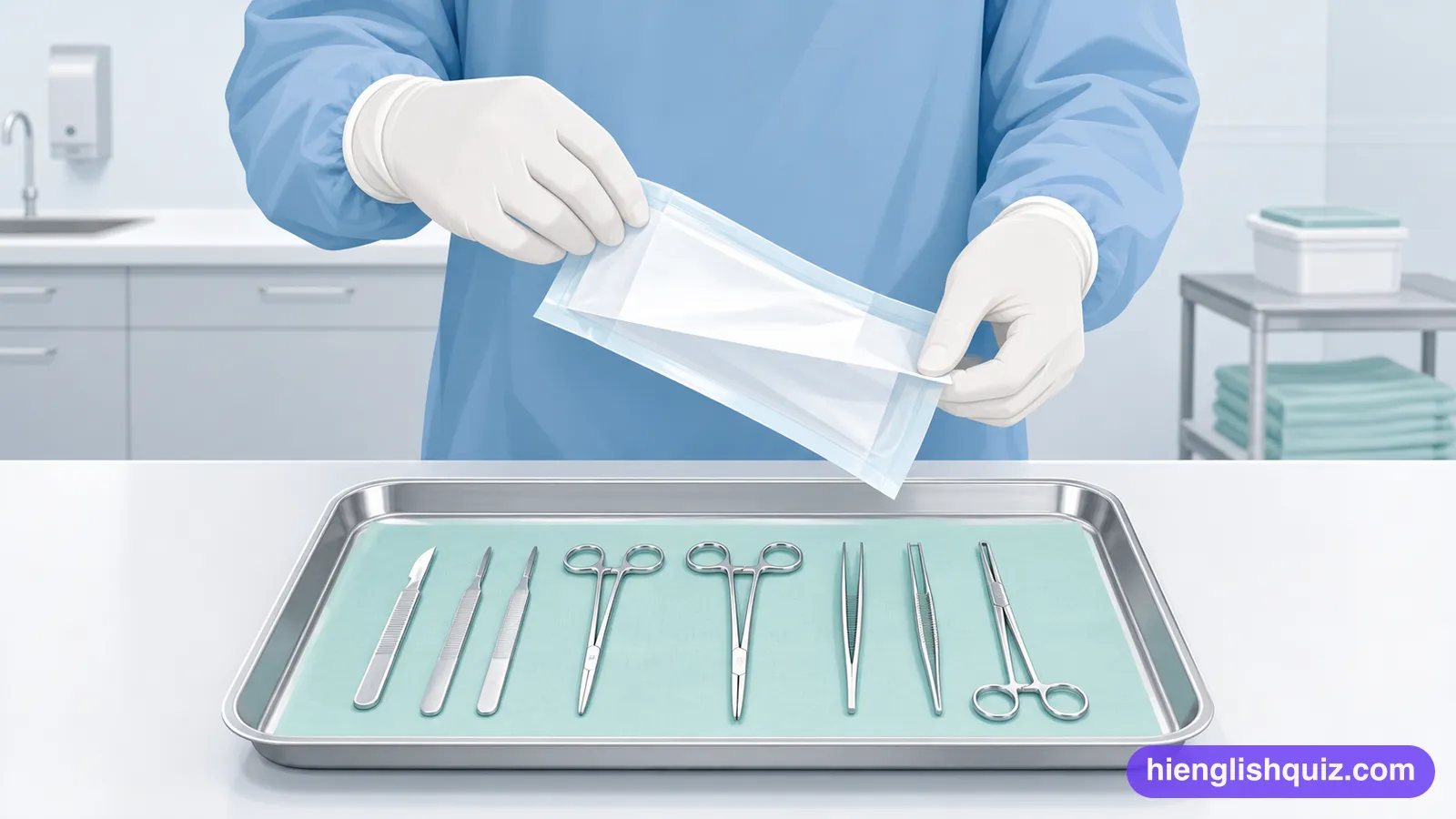
Completely clean and free from germs.
Example: The nurse opened a sterile dressing from its sealed pack.
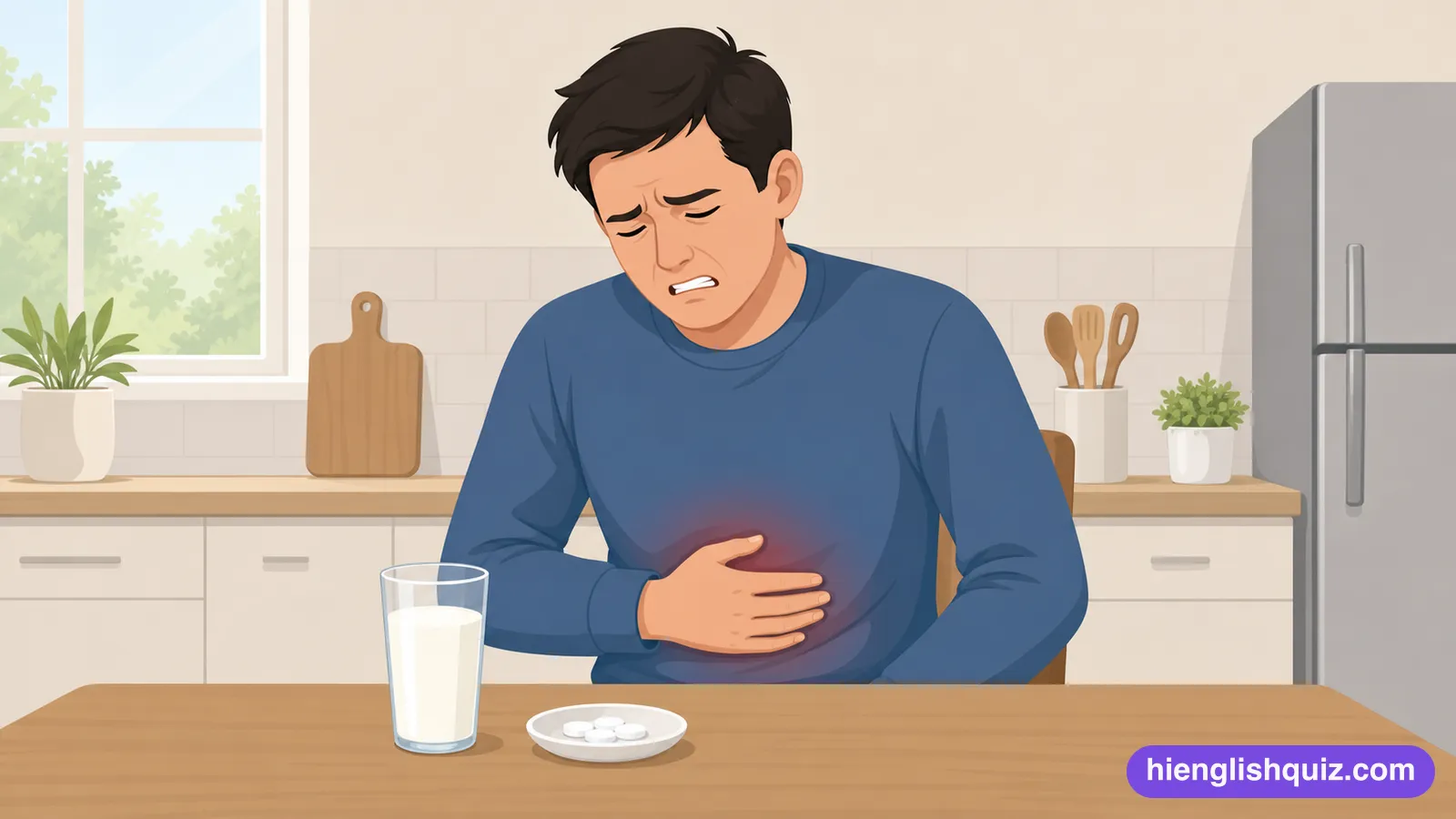
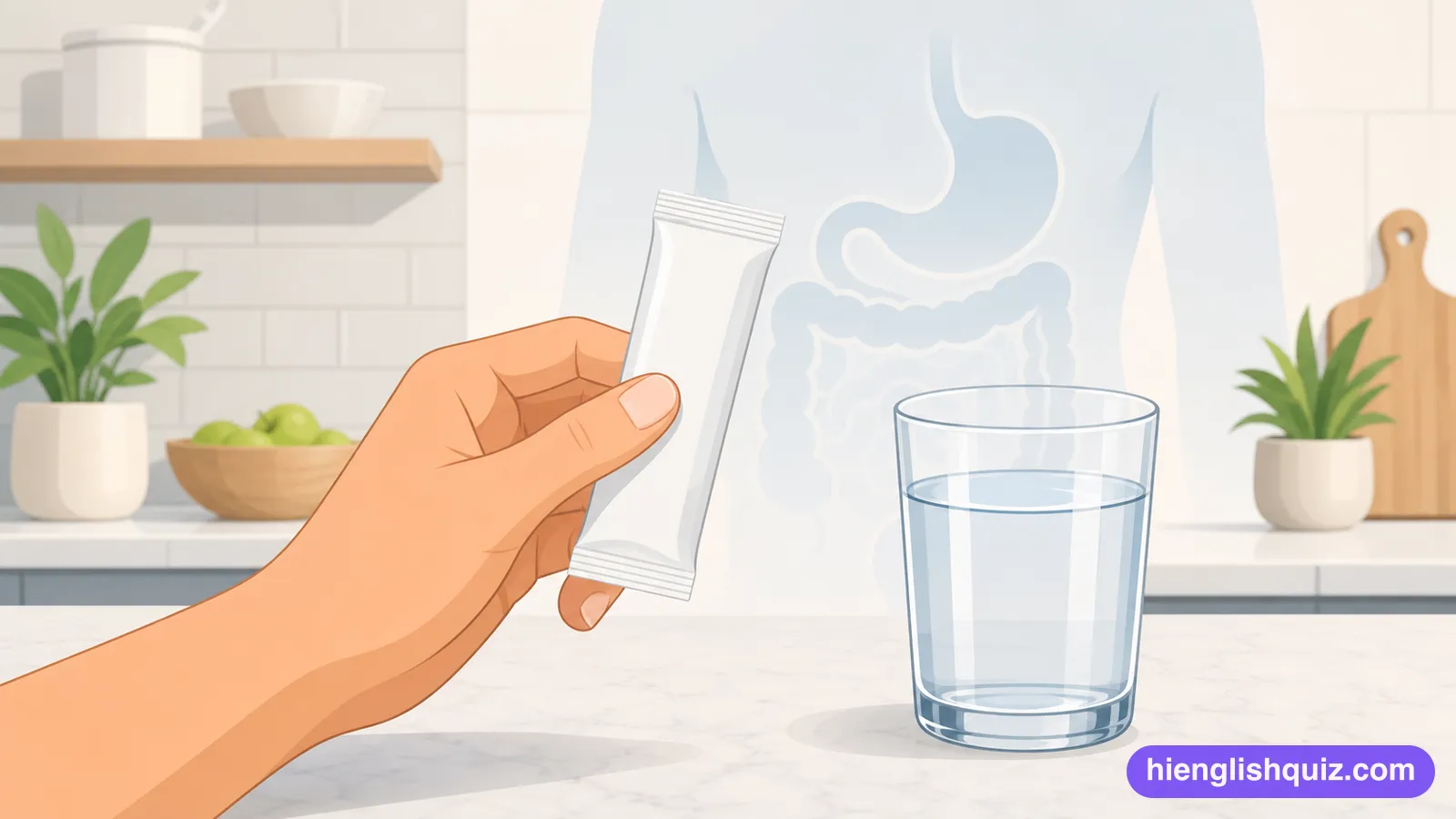
A medicine taken to help you empty your bowels when that is difficult.
Example: The doctor suggested a mild laxative for a few days.
To give someone a drug or treatment directly, for example as an injection.
Example: Only a trained nurse may administer this drug.
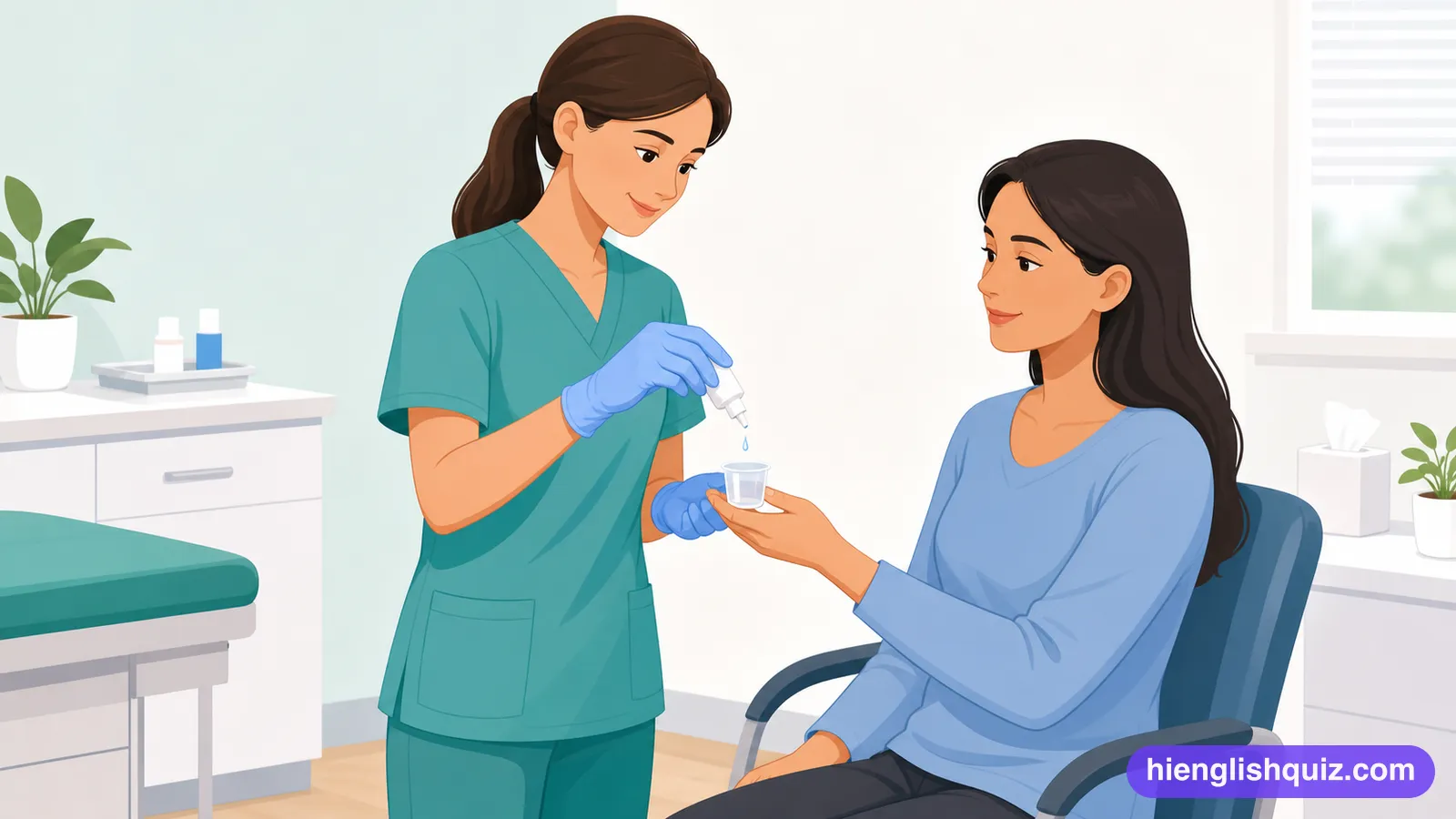
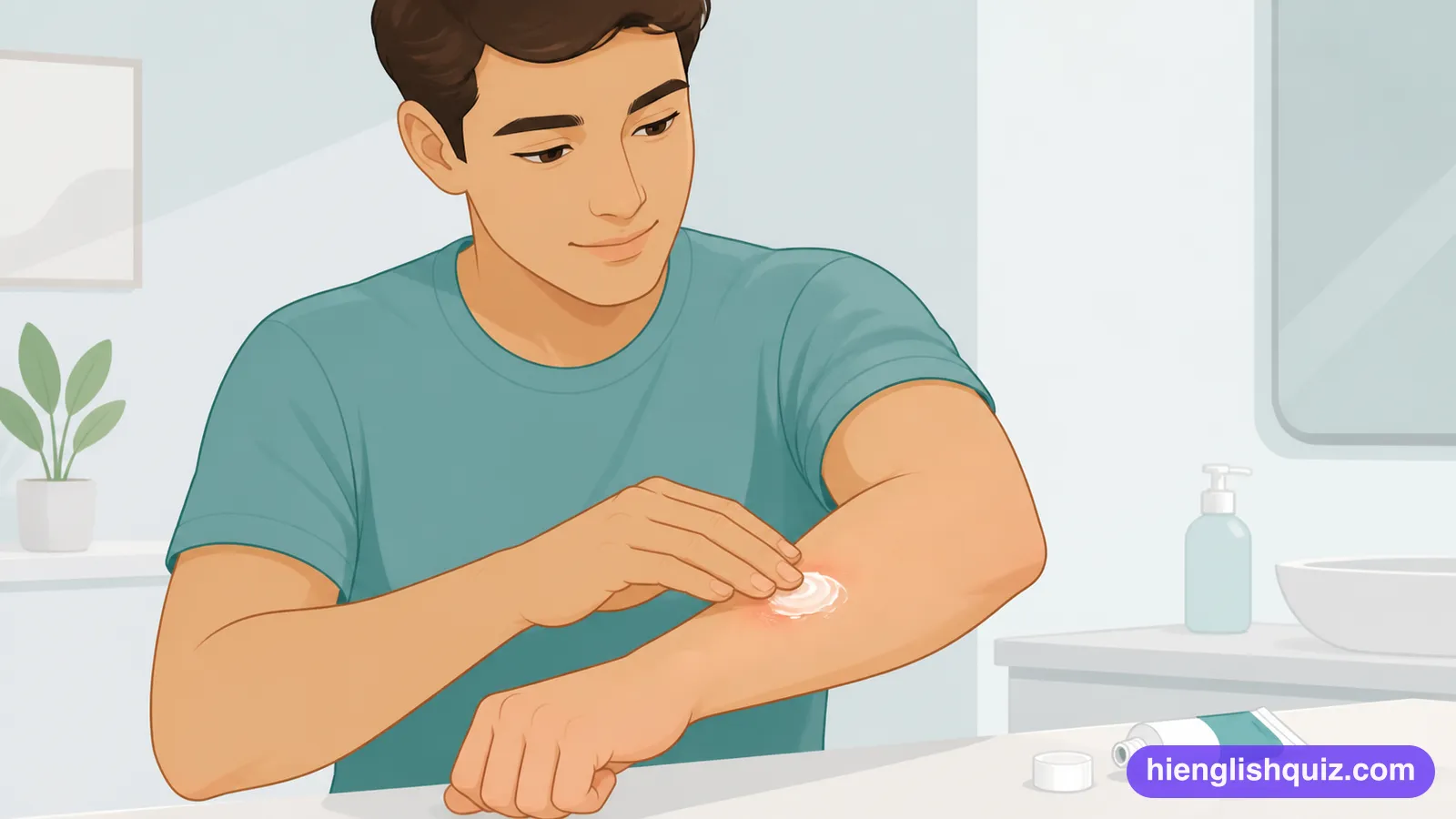
Describing medicine that is applied directly onto the skin rather than swallowed.
Example: The doctor prescribed a topical cream for the rash.
Describing a medicine sold without a brand name, containing the same ingredients as the branded version.
Example: The pharmacy offered a cheaper generic version of the drug.