GP
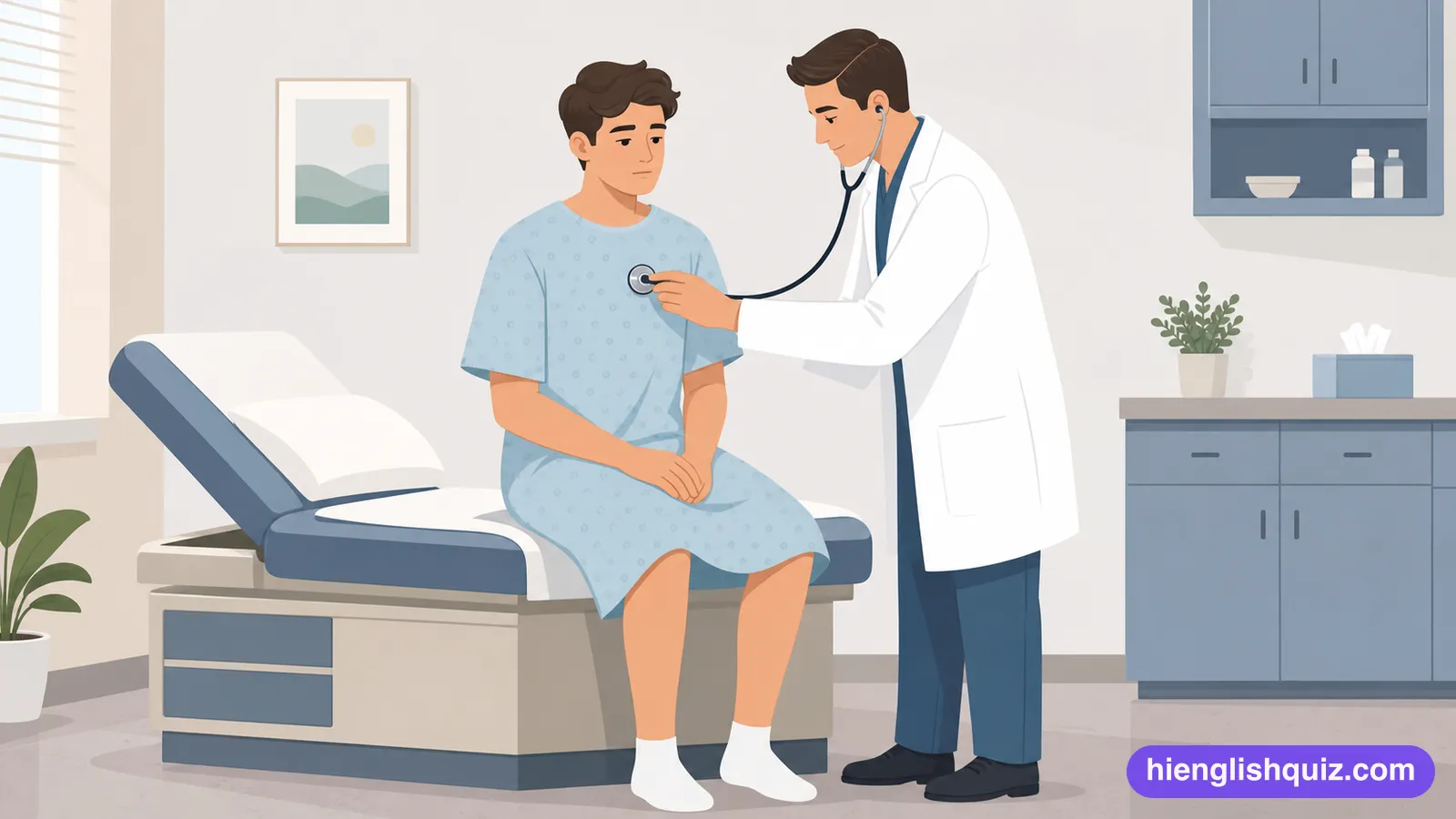
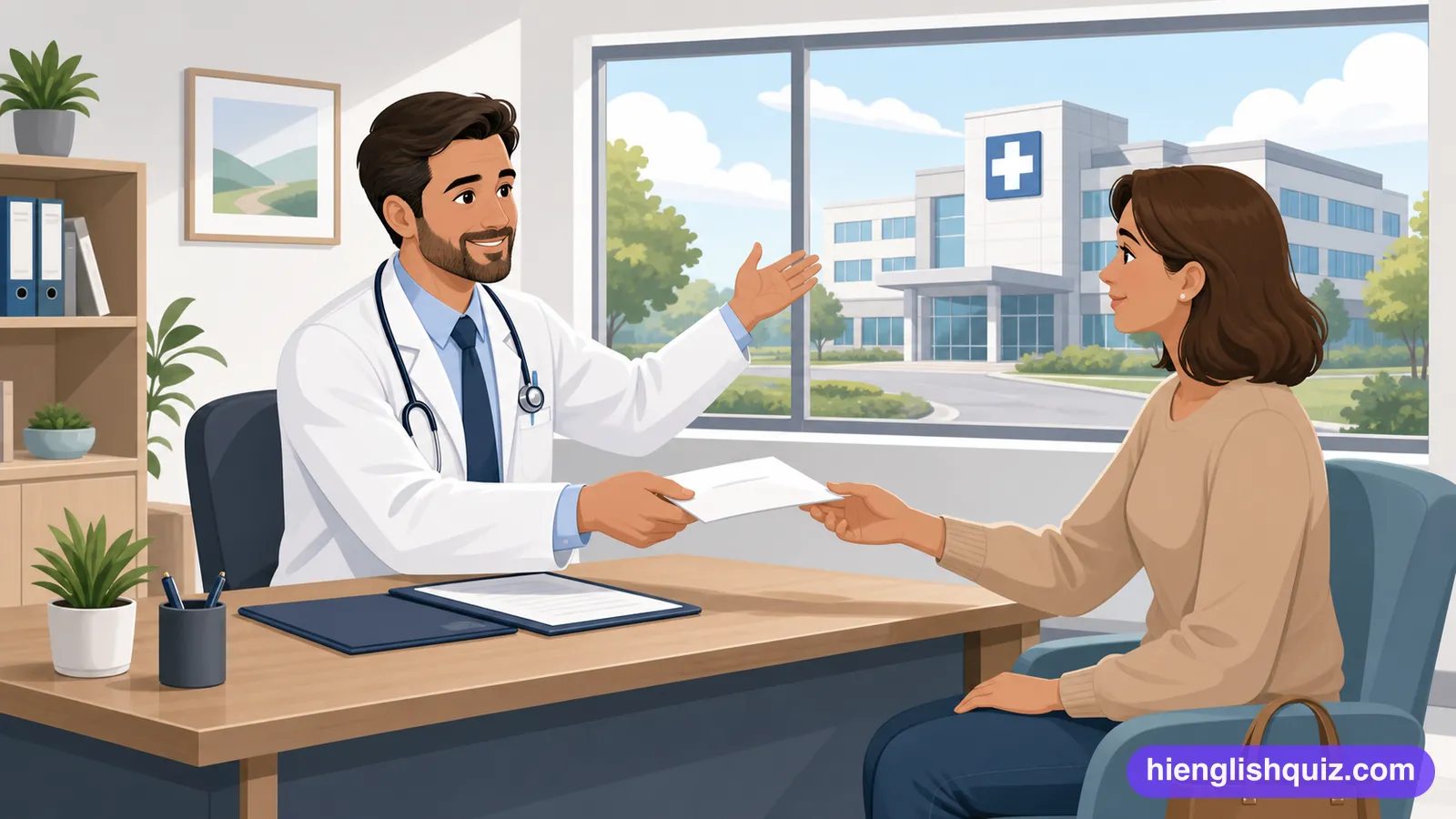
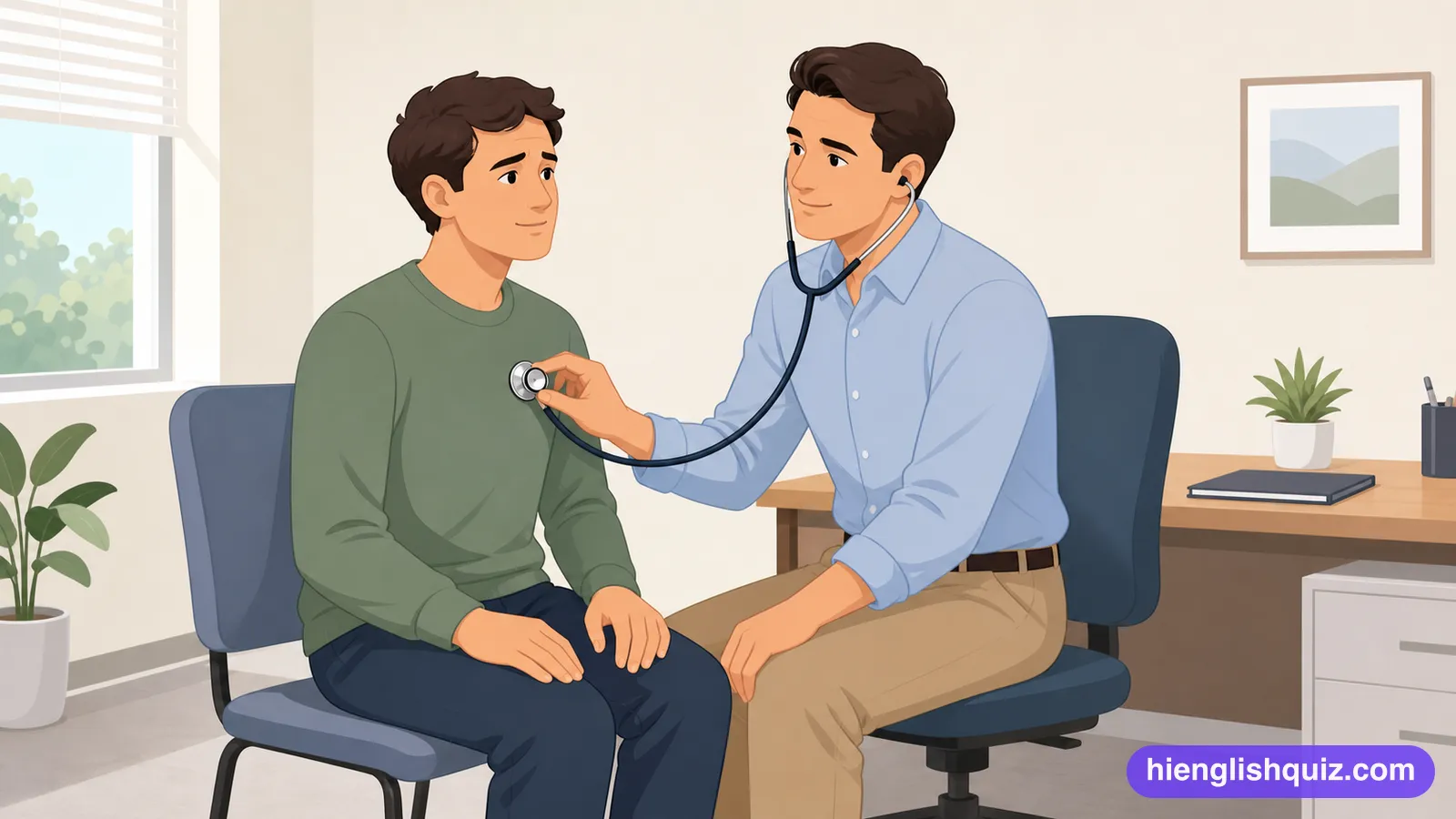
The local doctor you see first about most everyday health problems.
Example: I'll ask my GP about the results next week.
 Hi EnglishQuiz
B220 words · Upper-intermediate
Doctors and hospitals vocabulary for a hospital stay, including a ward, a surgeon, a diagnosis and being discharged, plus the antibiotics and prescriptions that follow.
The local doctor you see first about most everyday health problems.
Example: I'll ask my GP about the results next week.
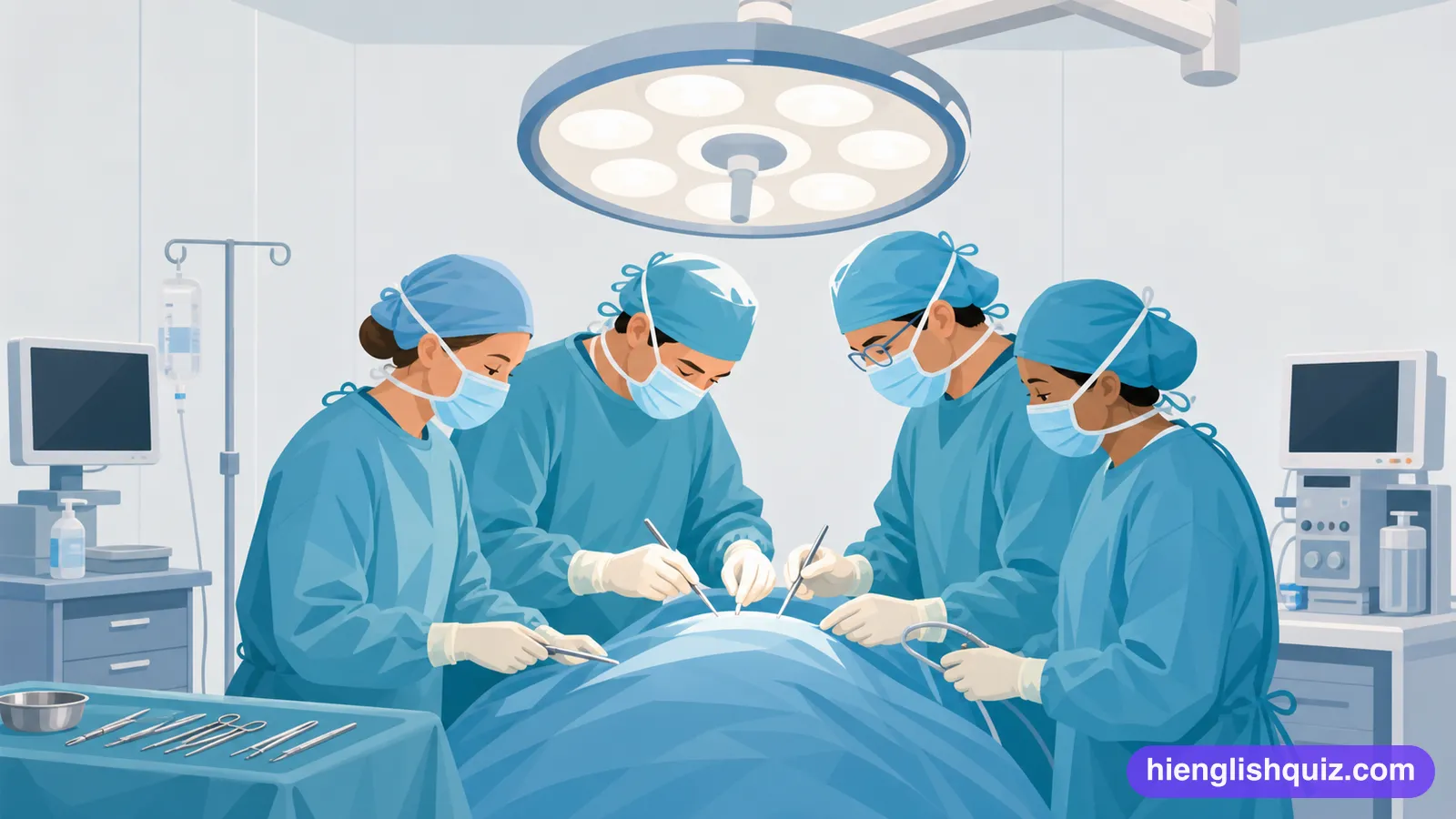
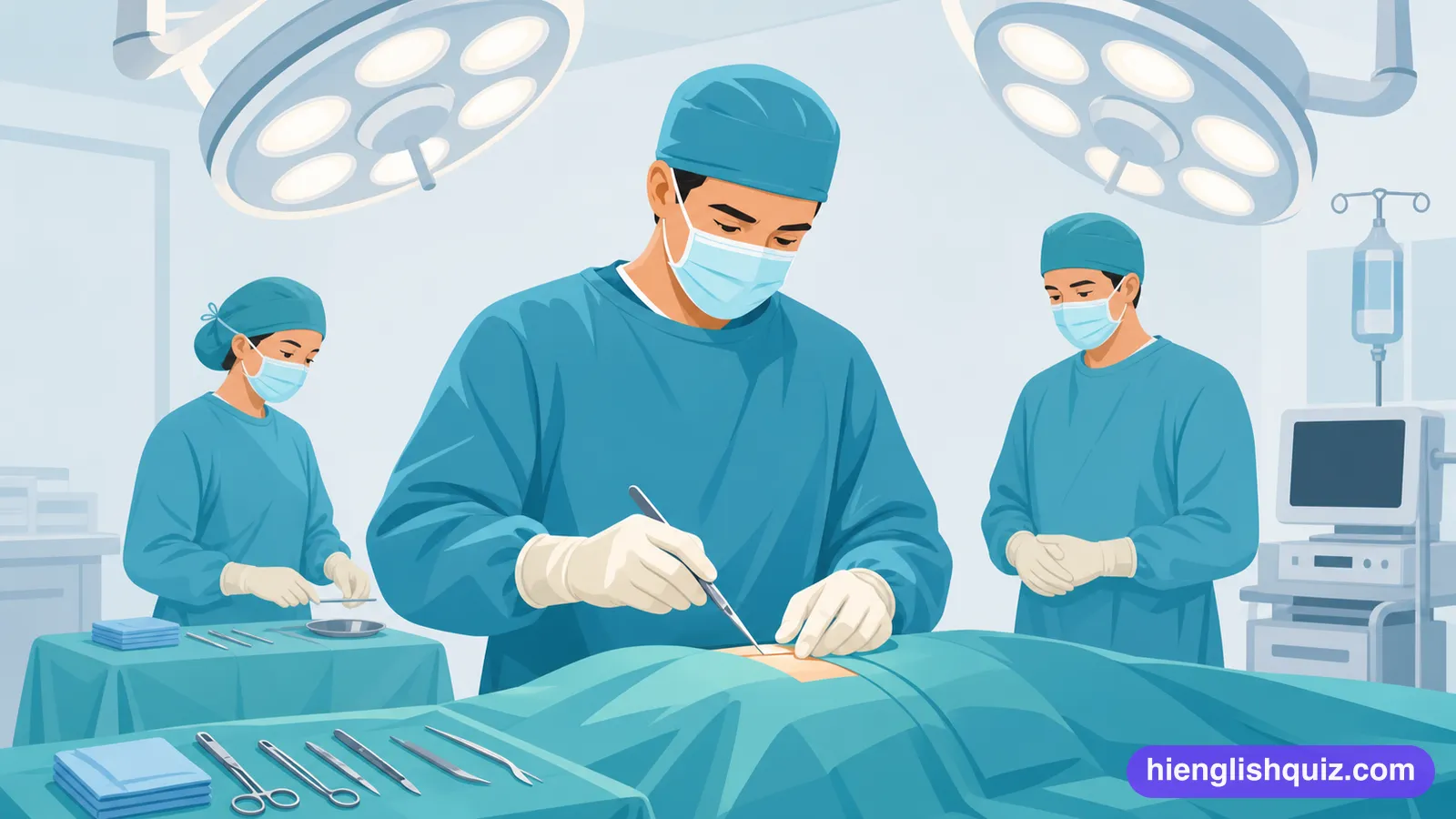
A doctor trained to cut into the body to repair or remove something.
Example: The surgeon explained the operation very clearly.
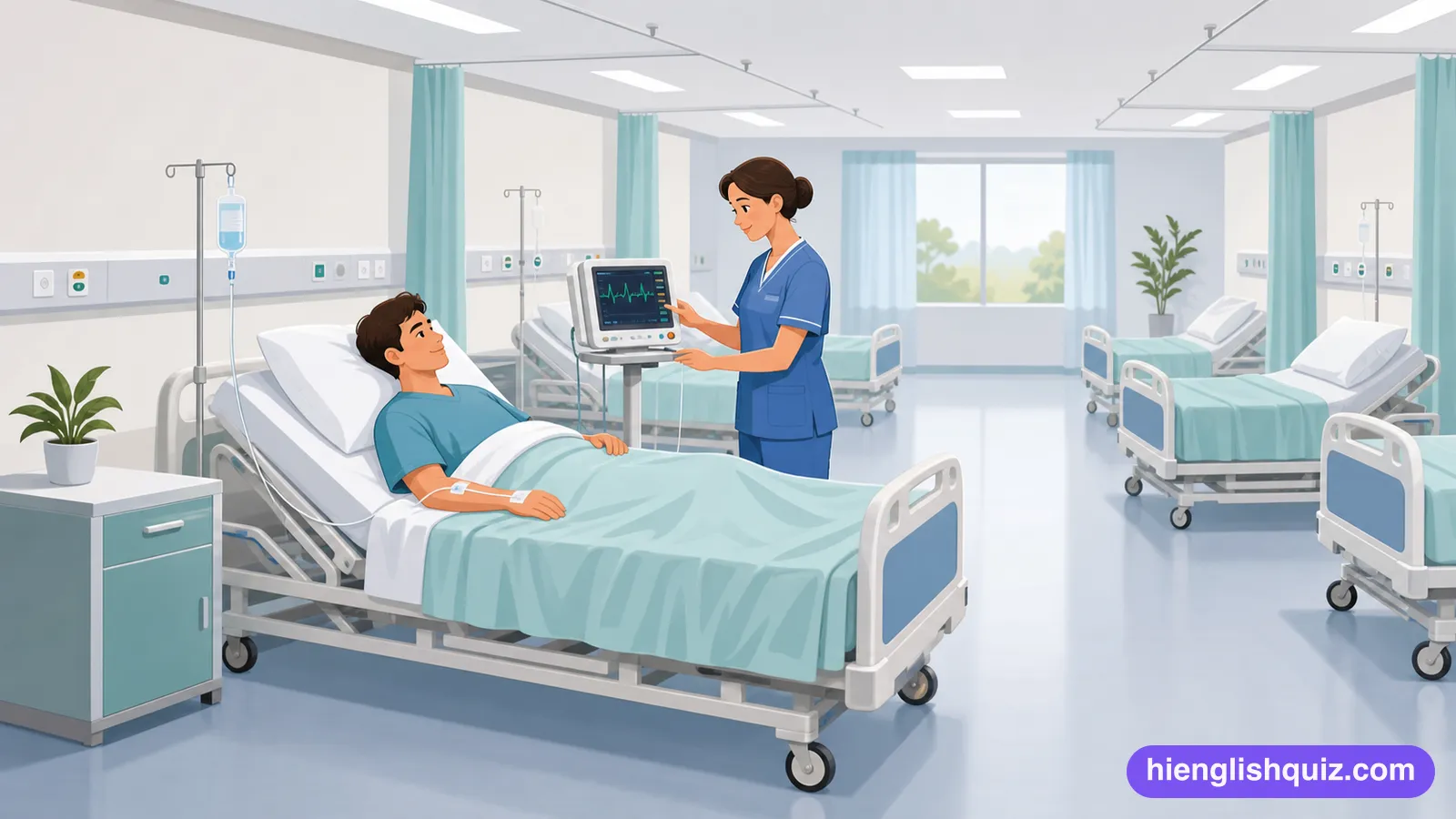
A large room in a hospital where several patients stay in beds.
Example: She spent three nights on the children's ward.
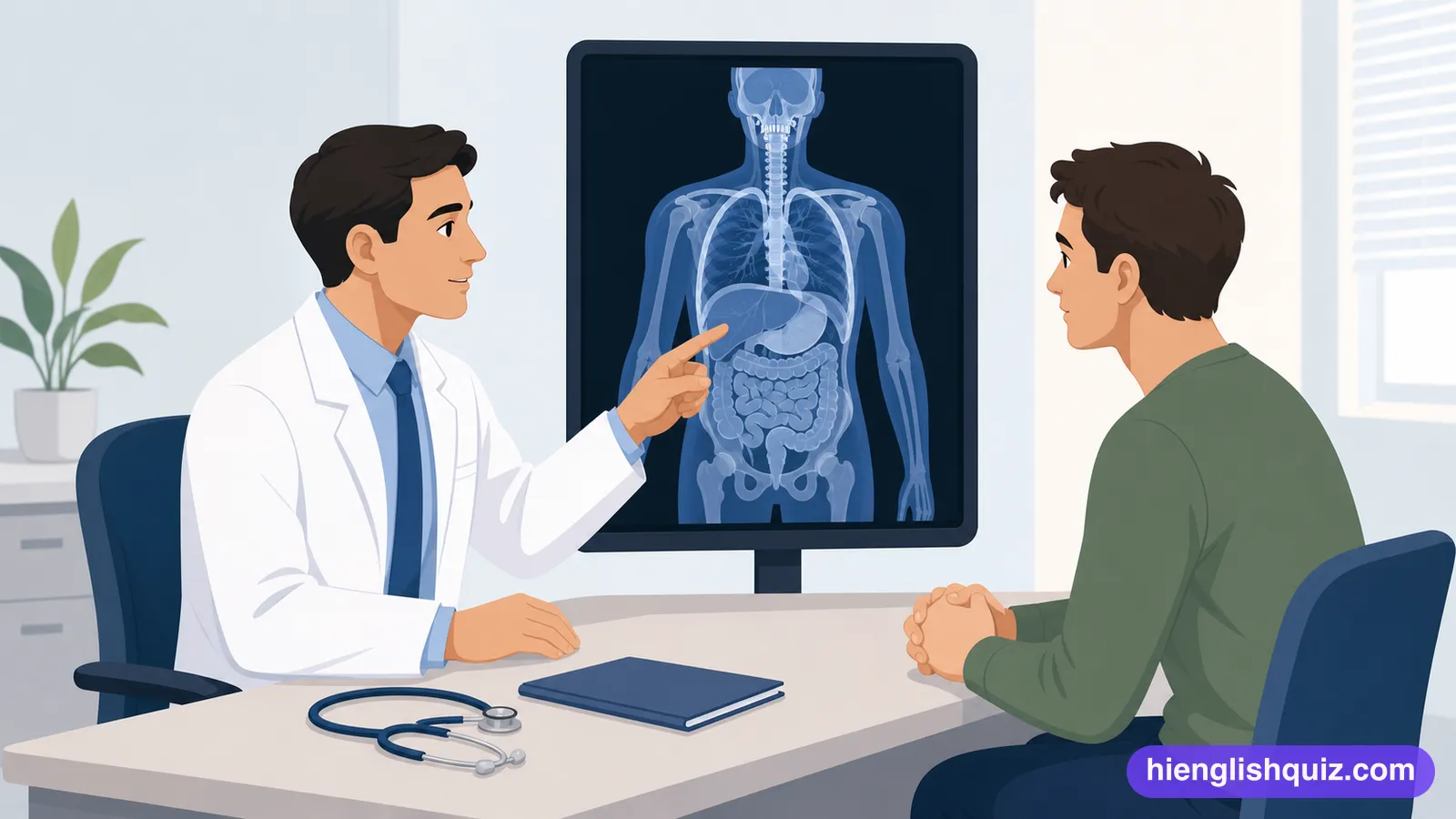
The doctor's decision about what illness someone has, made after tests.
Example: It took months to get a clear diagnosis.
To officially let a patient leave hospital because they are well enough.
Example: They discharged her two days after the operation.

The hospital department where very seriously ill patients are watched all the time.
Example: He spent a week in intensive care after the crash.
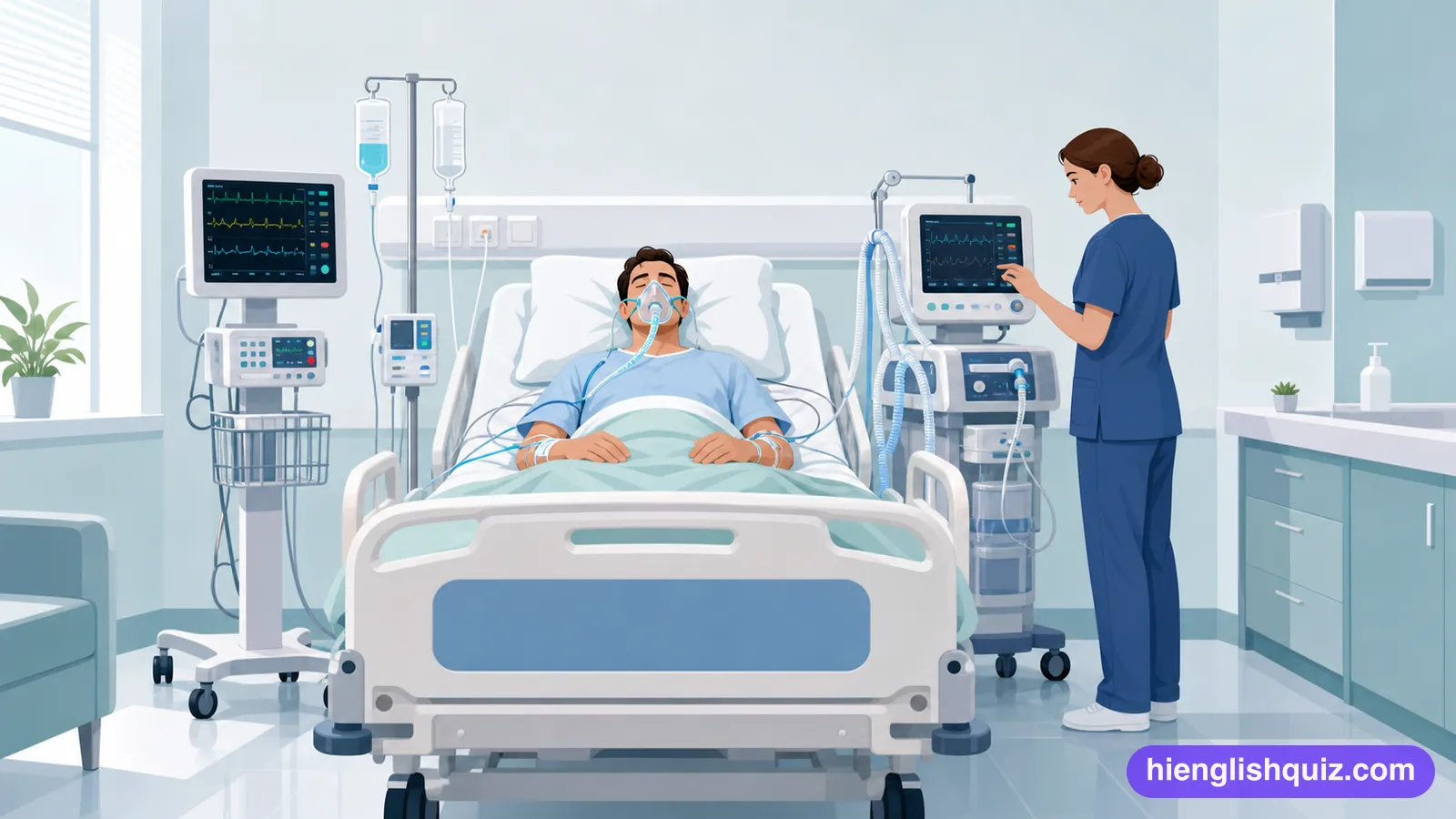
A patient who stays in hospital overnight while receiving treatment.
Example: After the operation, she stayed on as an inpatient for a week.
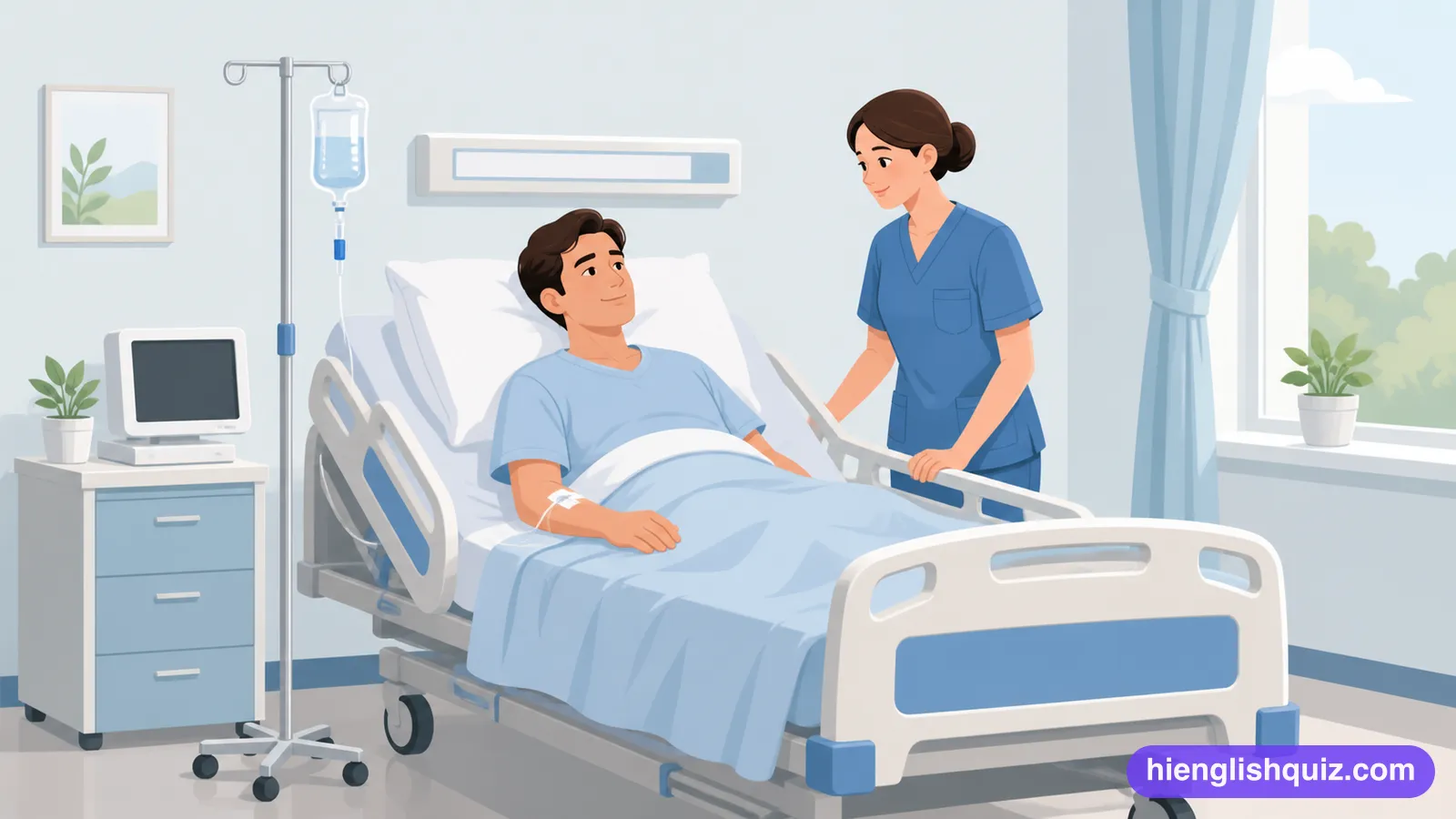
A formal word for a doctor, especially one who treats illnesses rather than performing operations.
Example: The physician listened carefully to her symptoms.
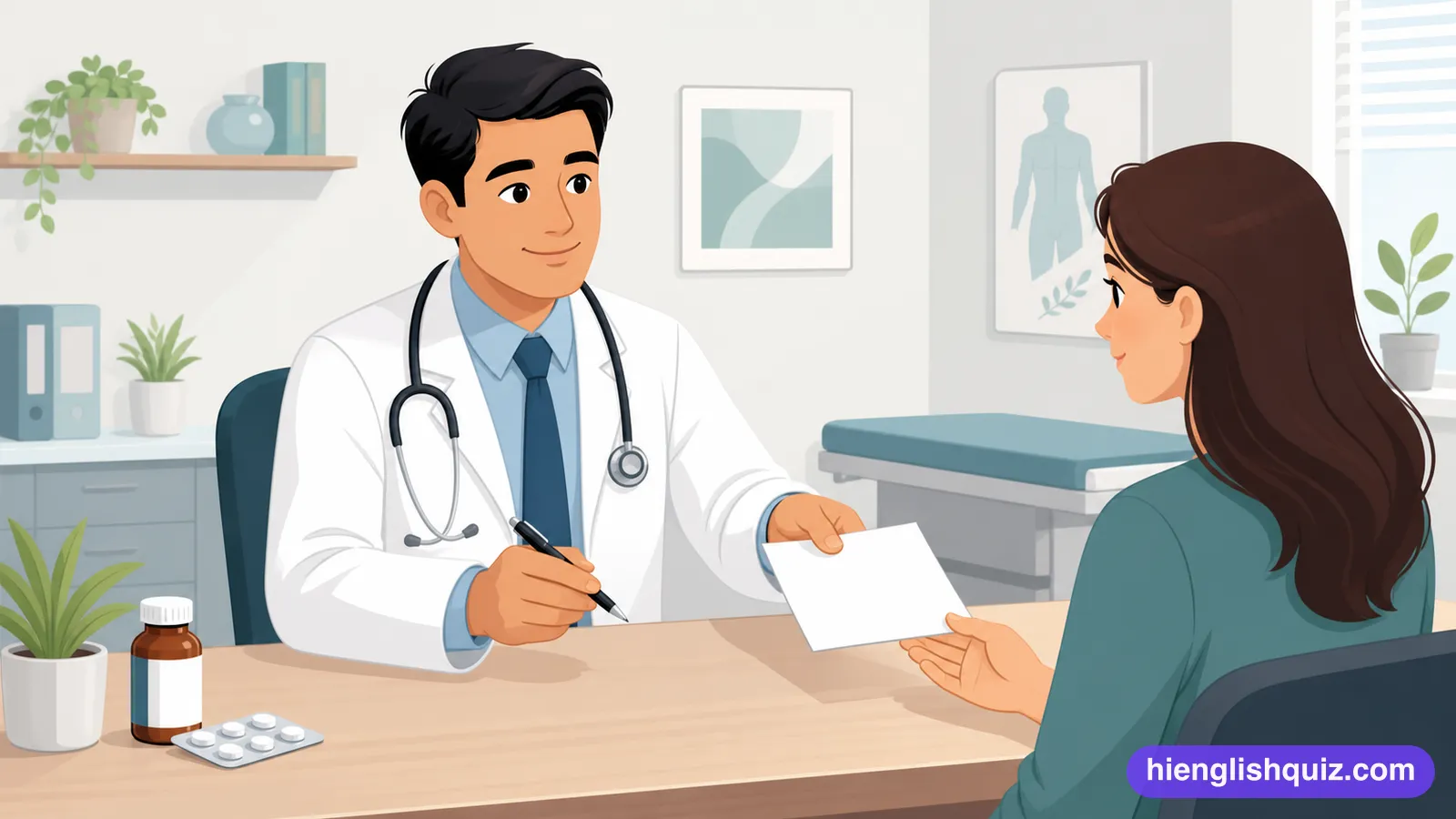
To officially tell a patient what medicine or treatment they should have.
Example: The doctor prescribed antibiotics for the infection.
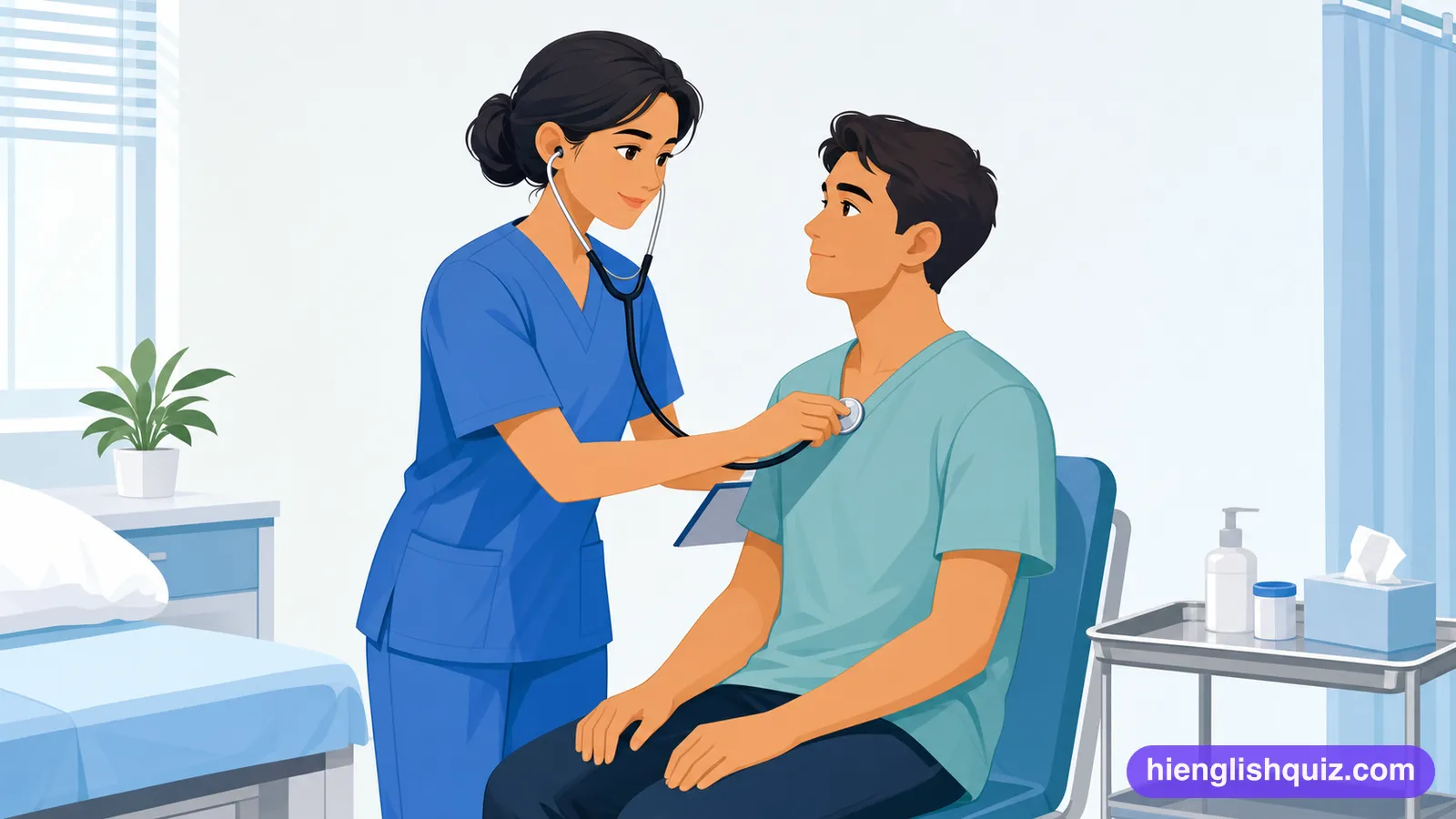
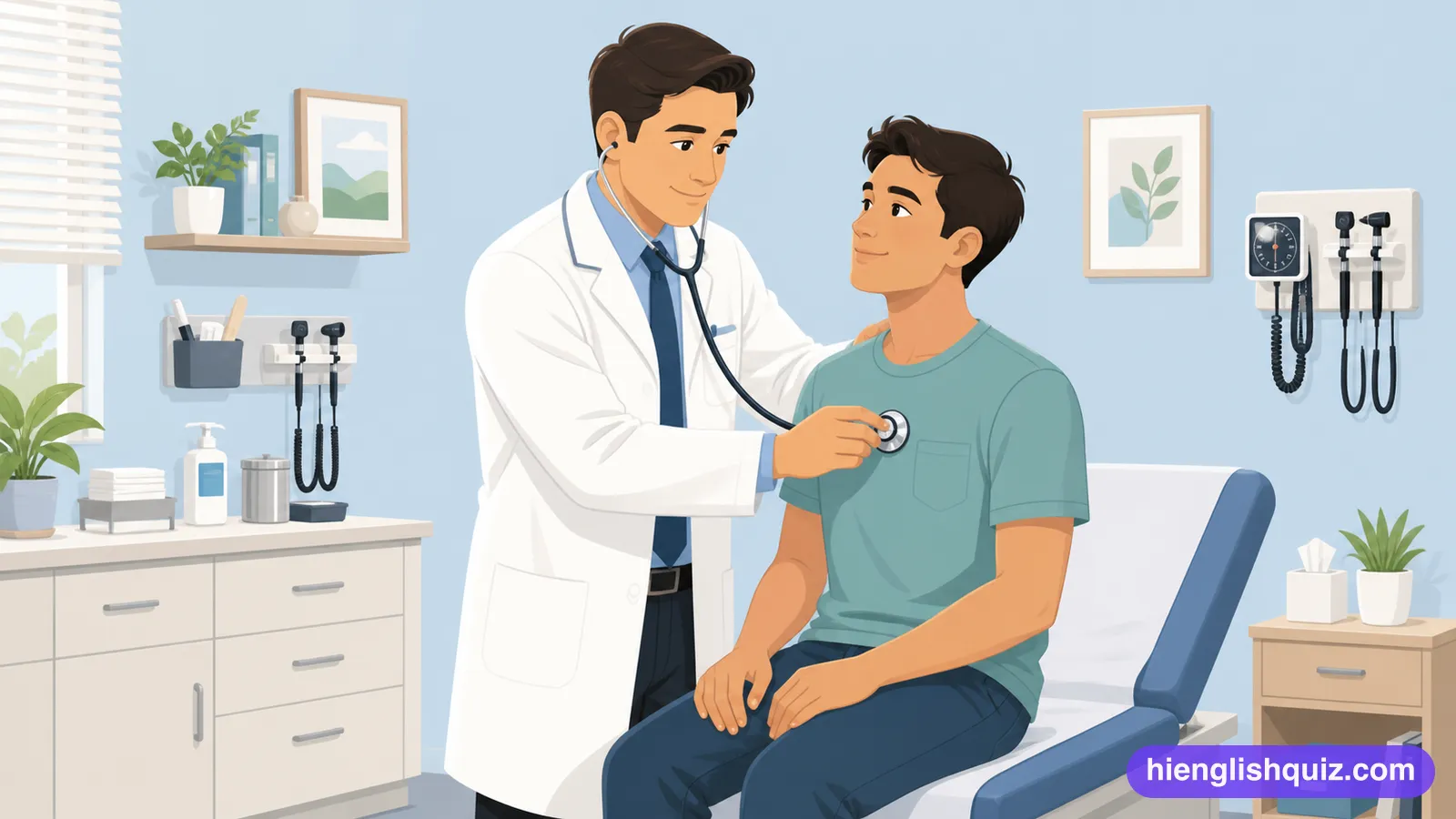
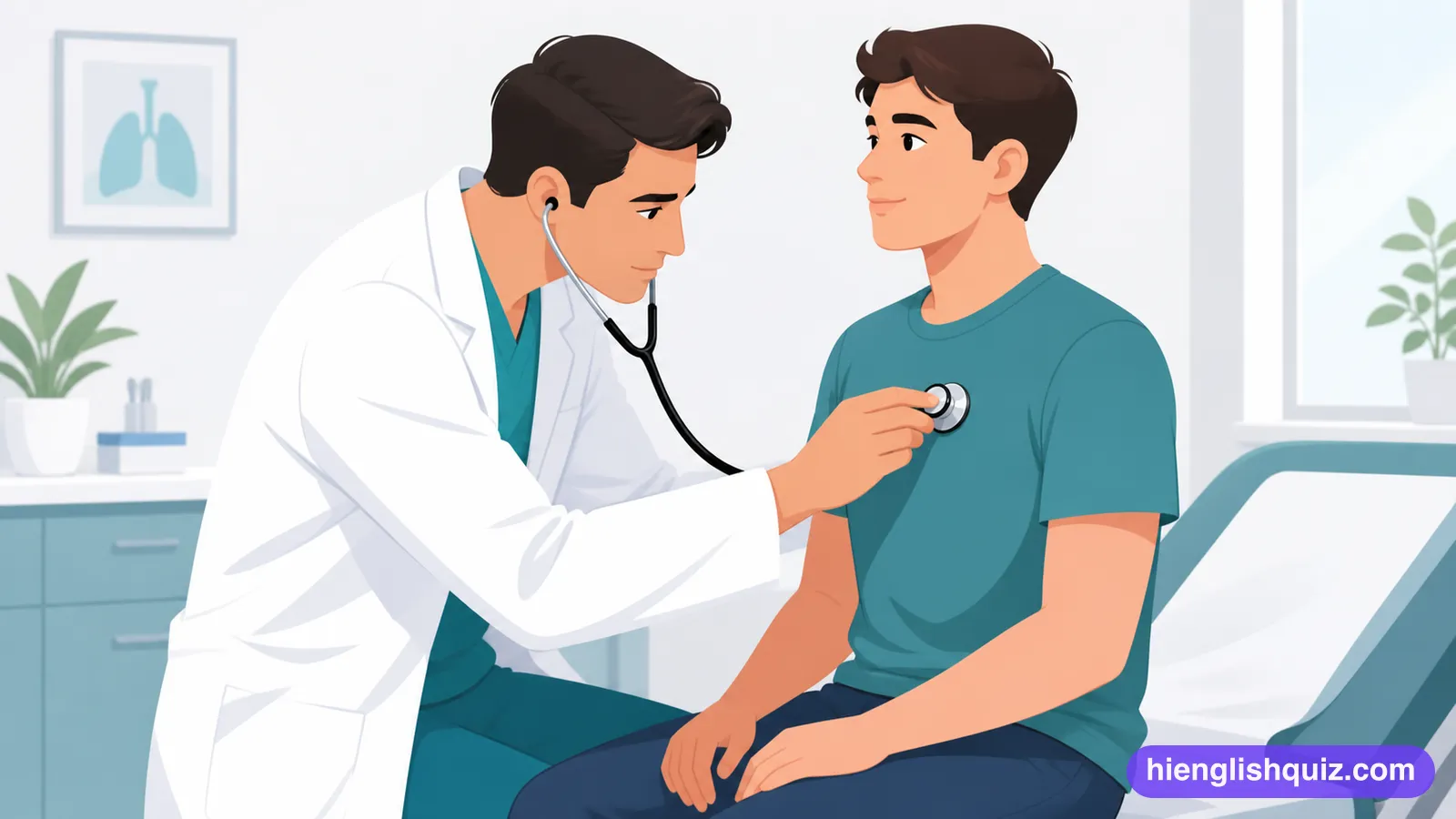
To look closely at a patient's body to check for signs of illness or injury.
Example: The doctor examined her throat with a small light.
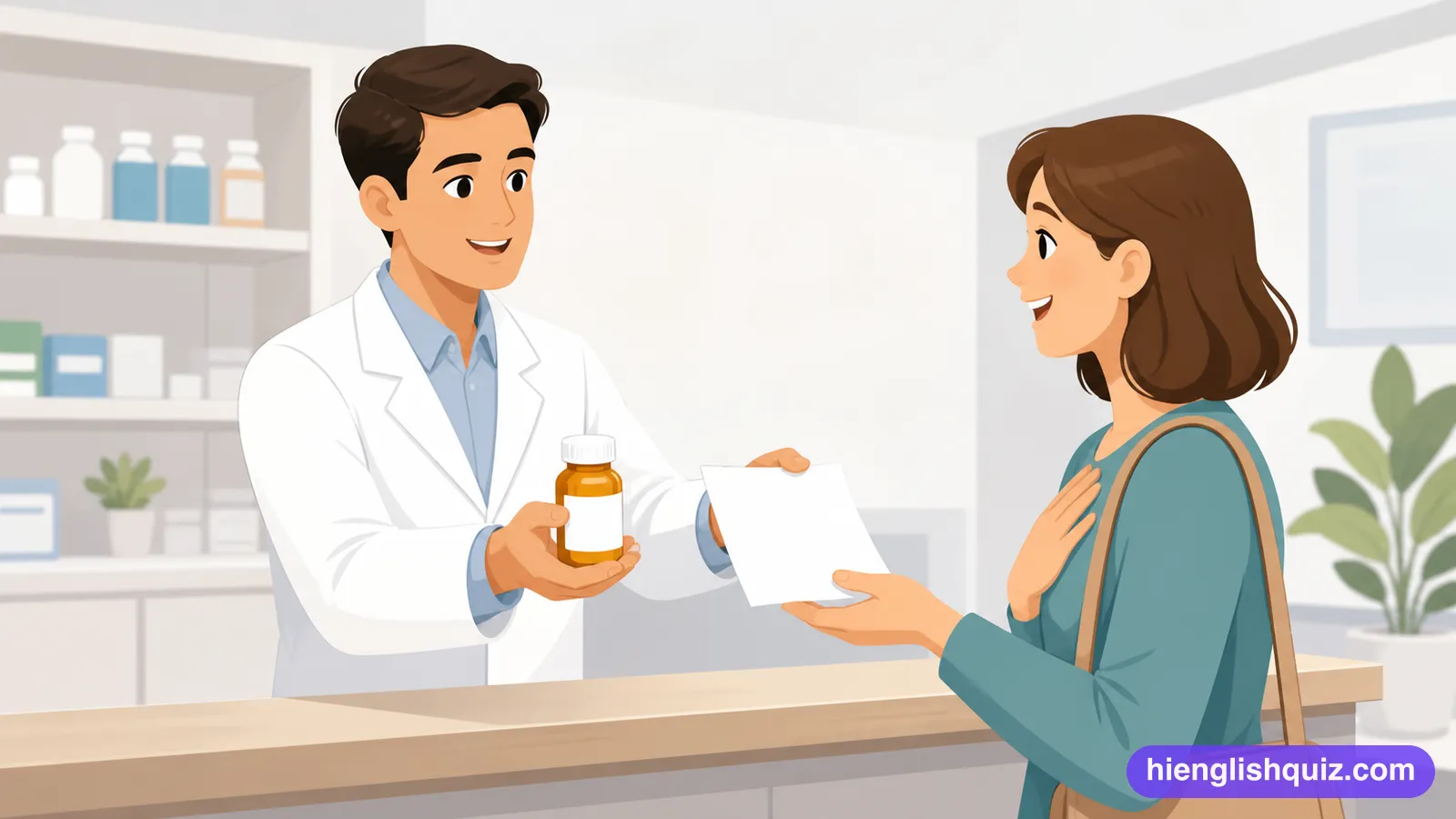
A written note from a doctor that lets you get a particular medicine.
Example: The pharmacist wouldn't sell it to me without a prescription.
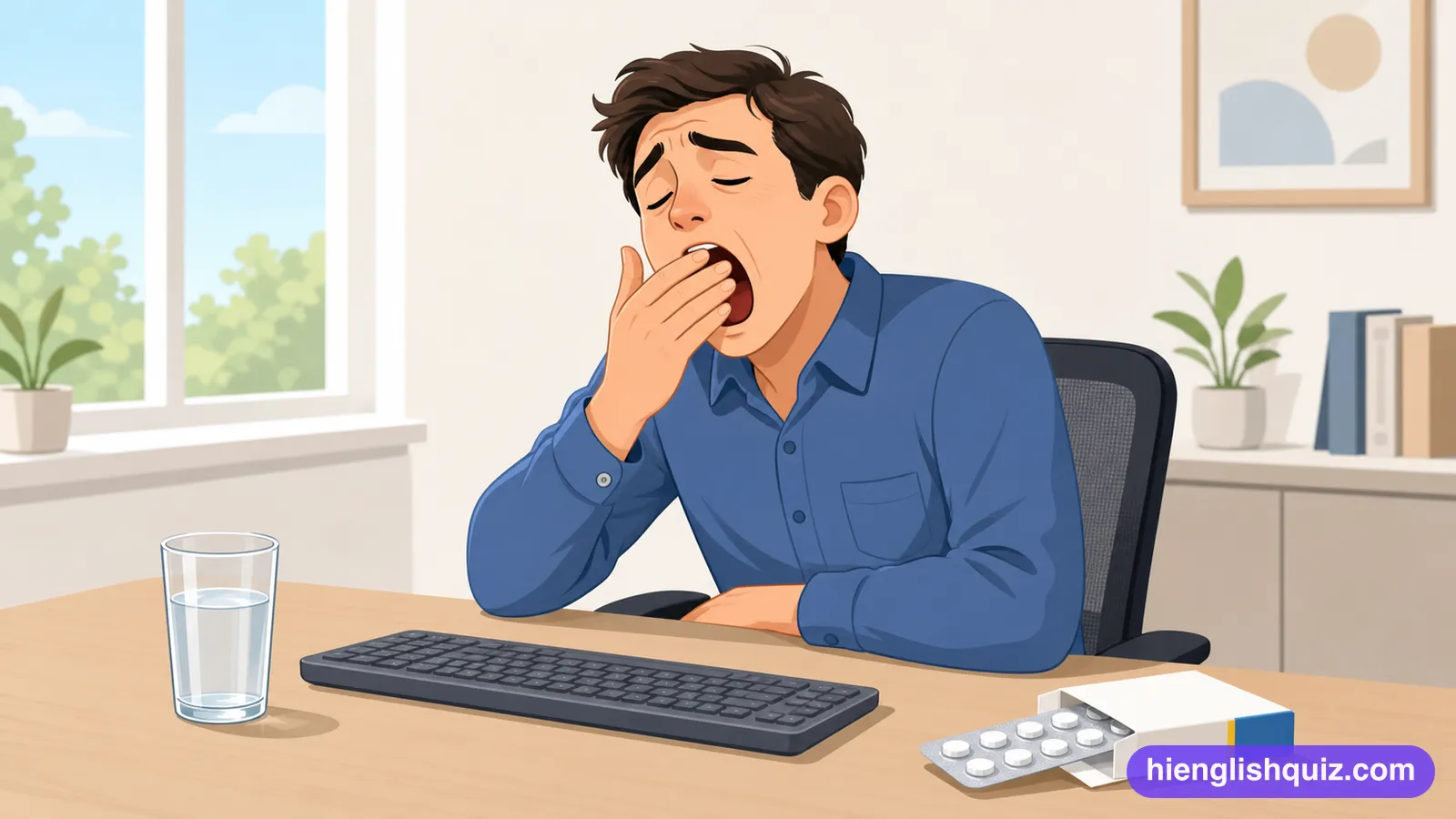
An extra, unwanted result that a medicine can cause besides helping you.
Example: Drowsiness is a common side effect of these tablets.
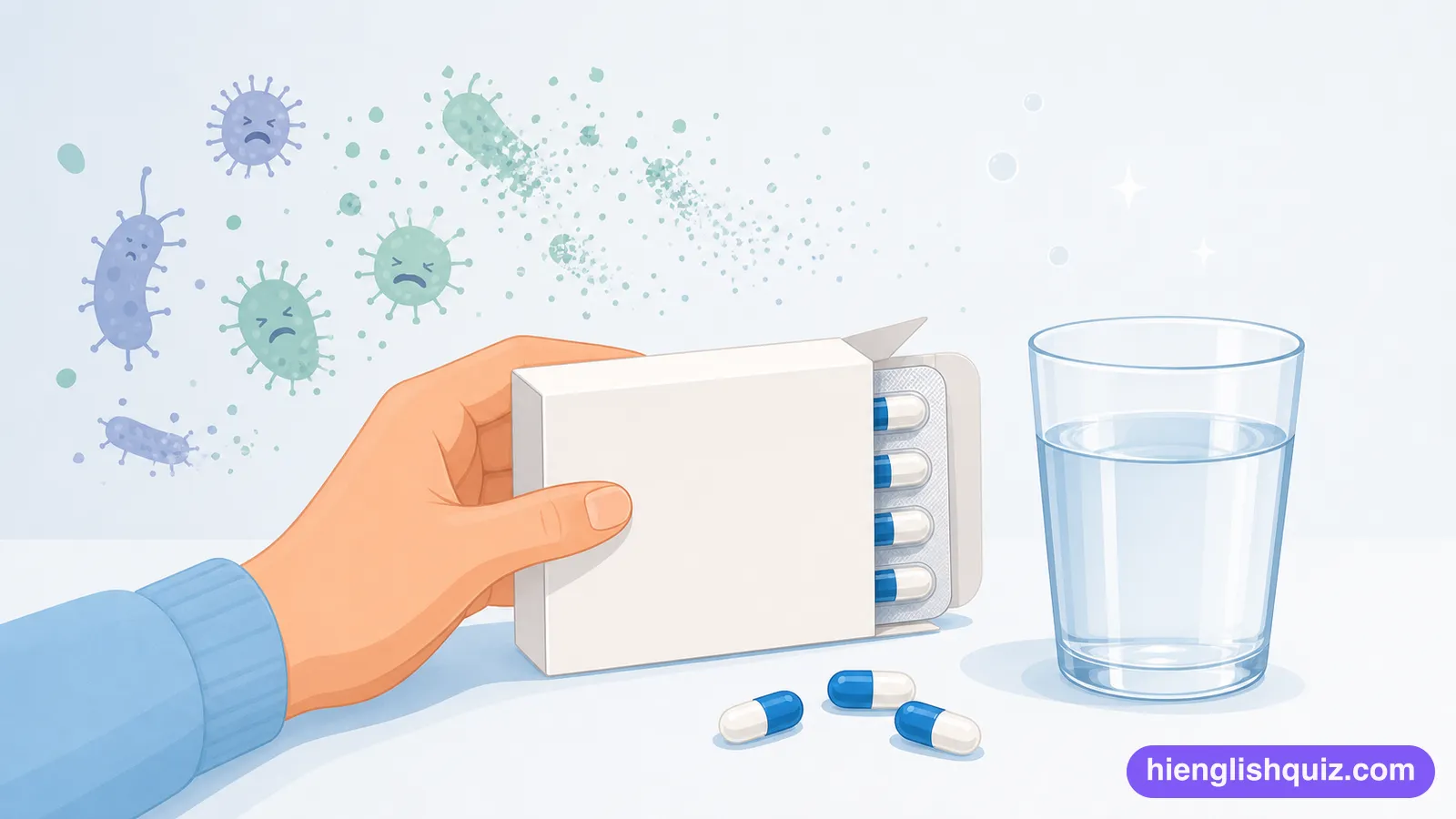
Medicine a doctor gives you to kill the germs that are making you ill.
Example: The doctor put me on antibiotics for a week.
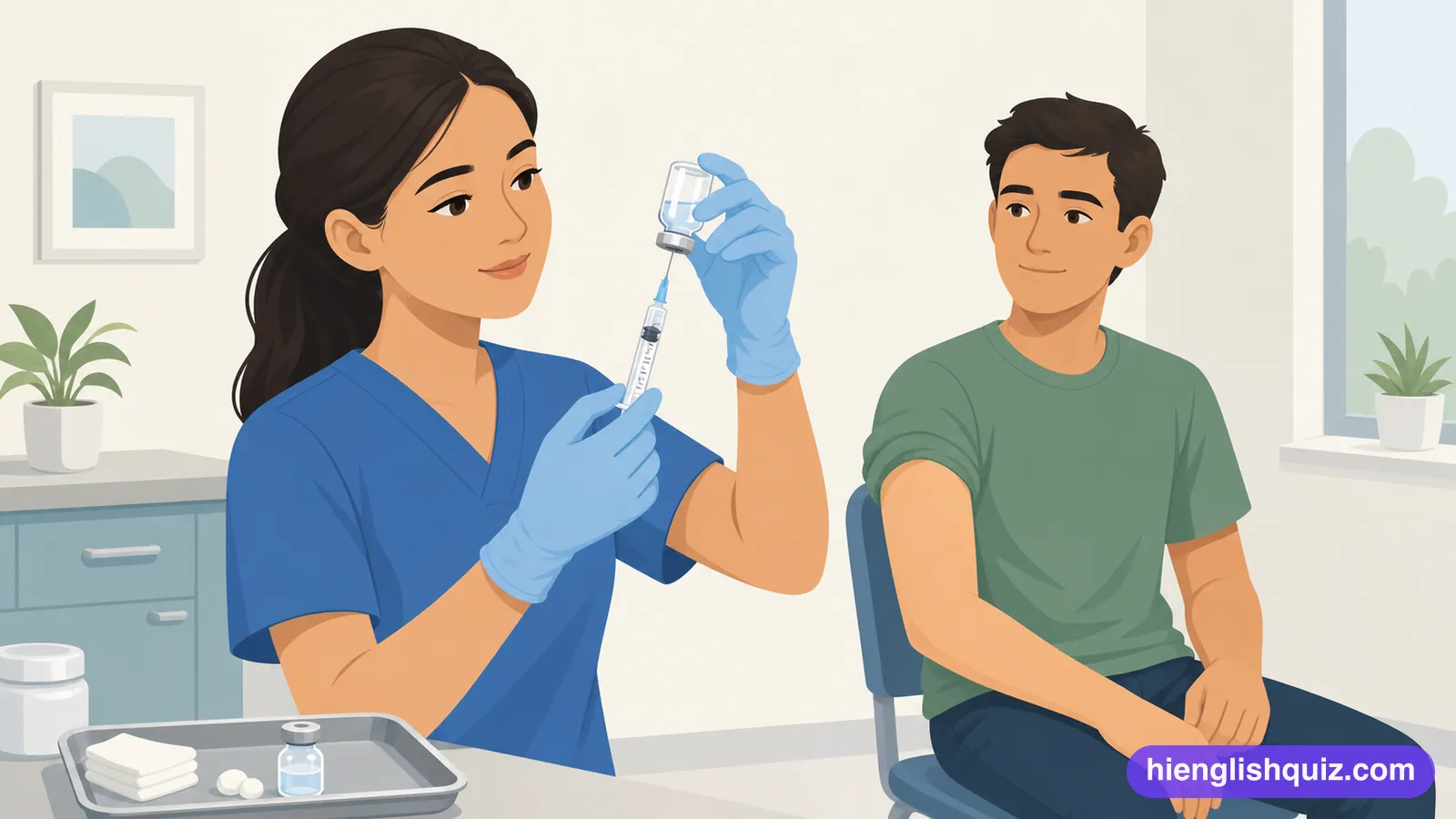
An injection that protects you from catching a disease later.
Example: The flu vaccine is free for over-sixties.
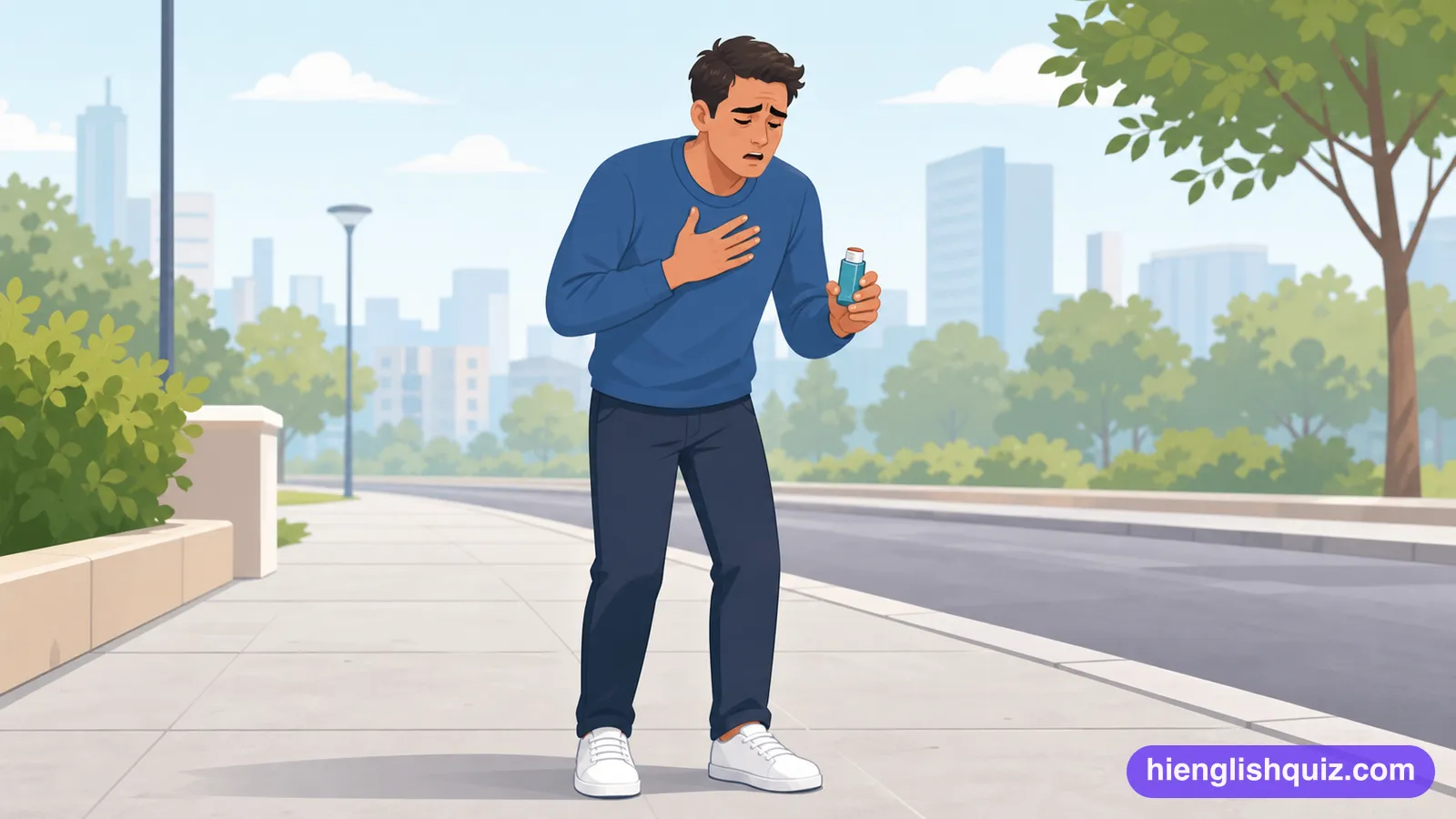
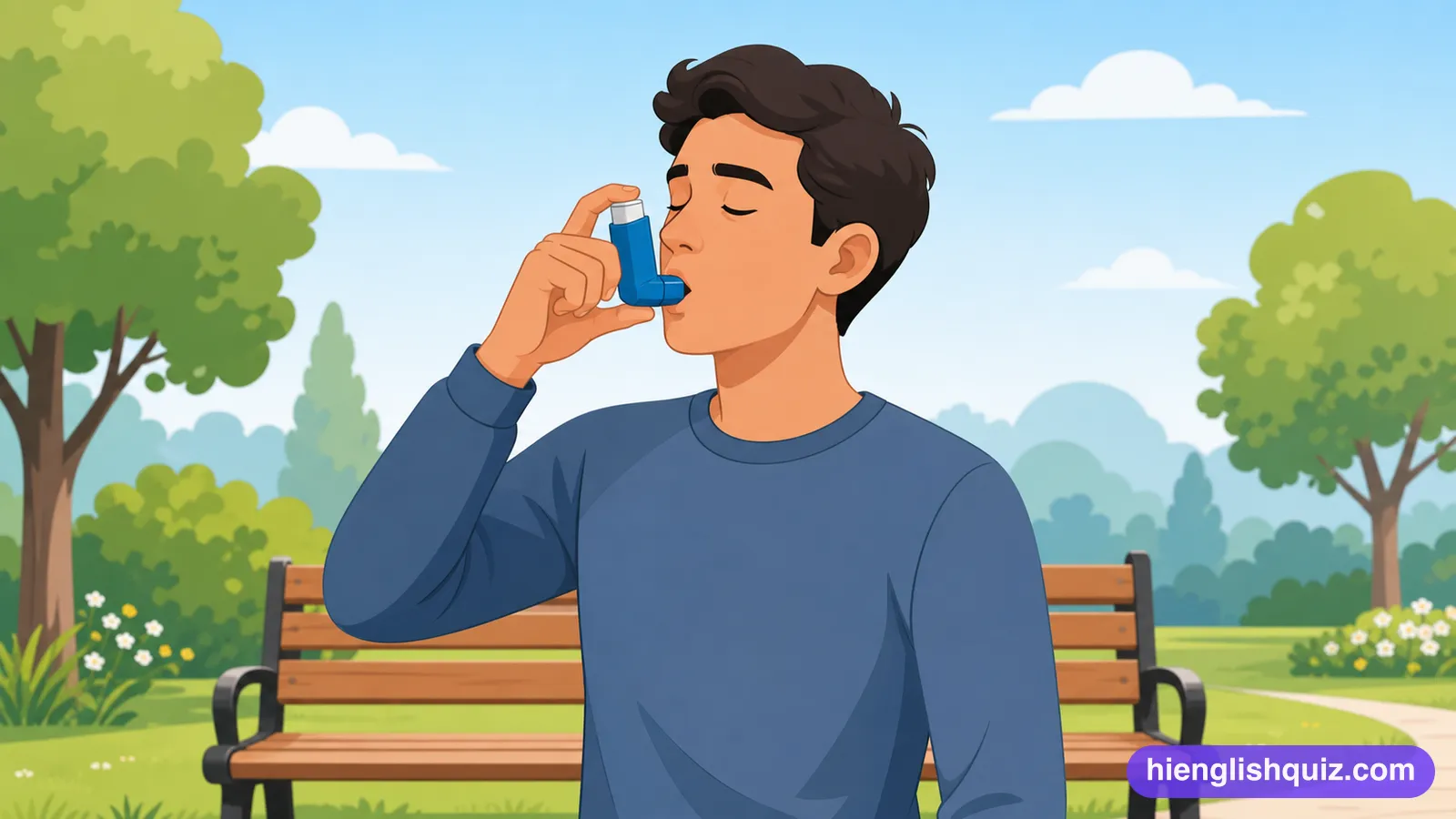
A small device you breathe from to get medicine into your chest quickly.
Example: He never leaves the house without his inhaler.
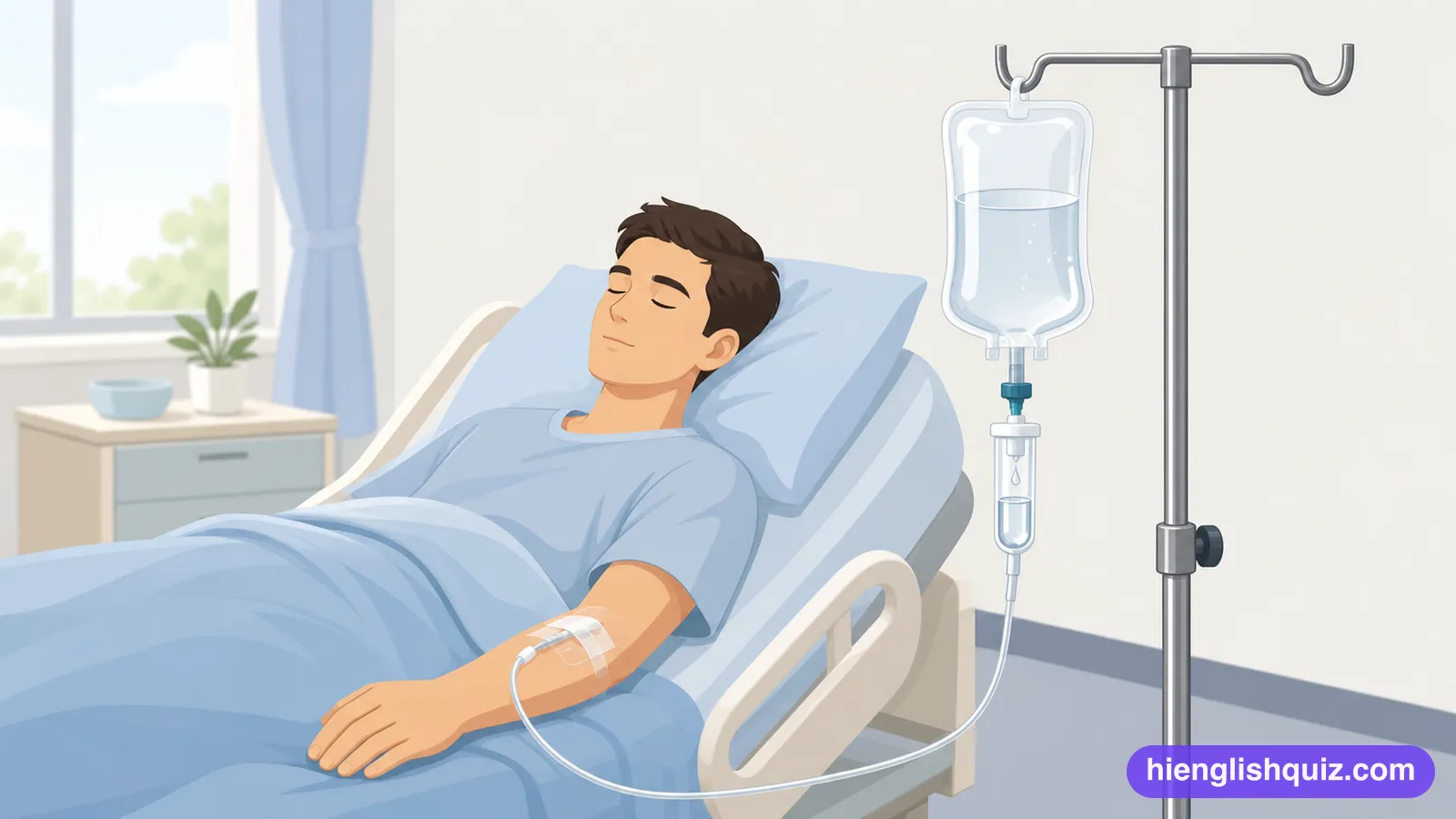
Hospital equipment that slowly puts liquid medicine into a patient through a tube.
Example: She was on a drip for two days after her operation.
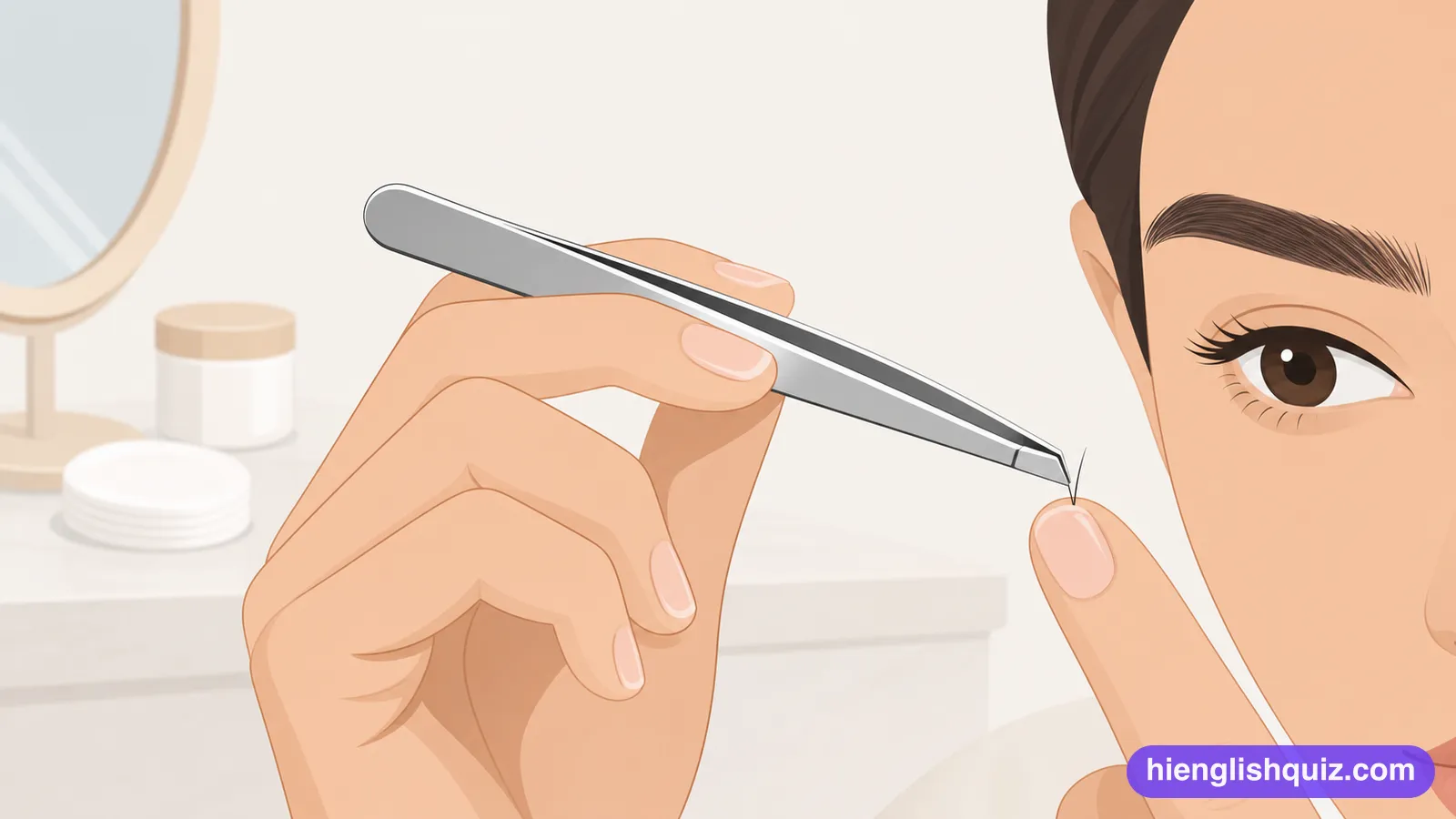
A small tool with two thin arms for pulling out splinters or hairs.
Example: He used tweezers to get the splinter out.
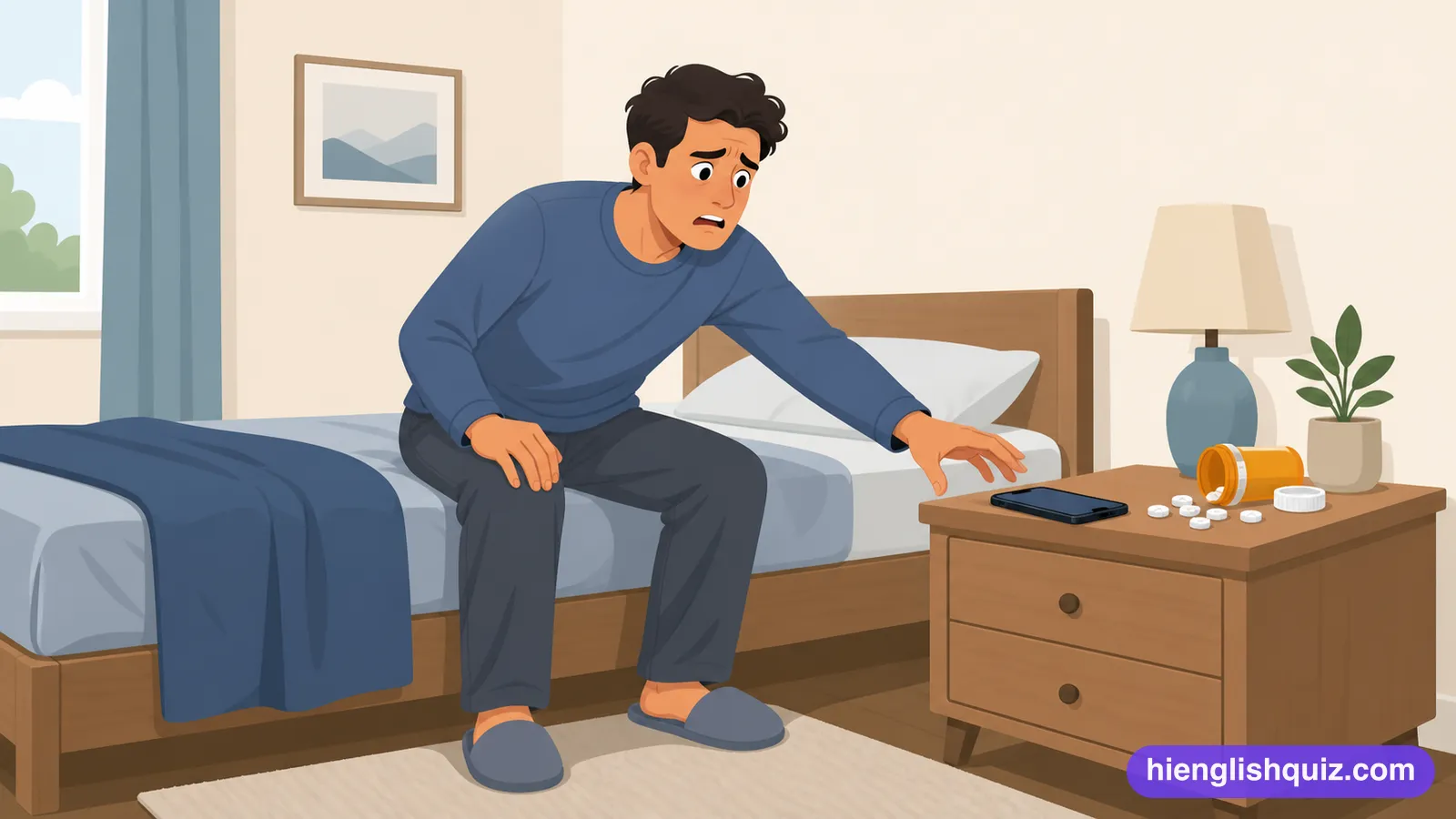
An amount of a drug that is dangerously more than the amount that should be taken.
Example: He was rushed to hospital after taking an overdose.
A feeling of comfort when pain or discomfort becomes less, or something that reduces pain.
Example: The tablets gave her some relief from the pain.

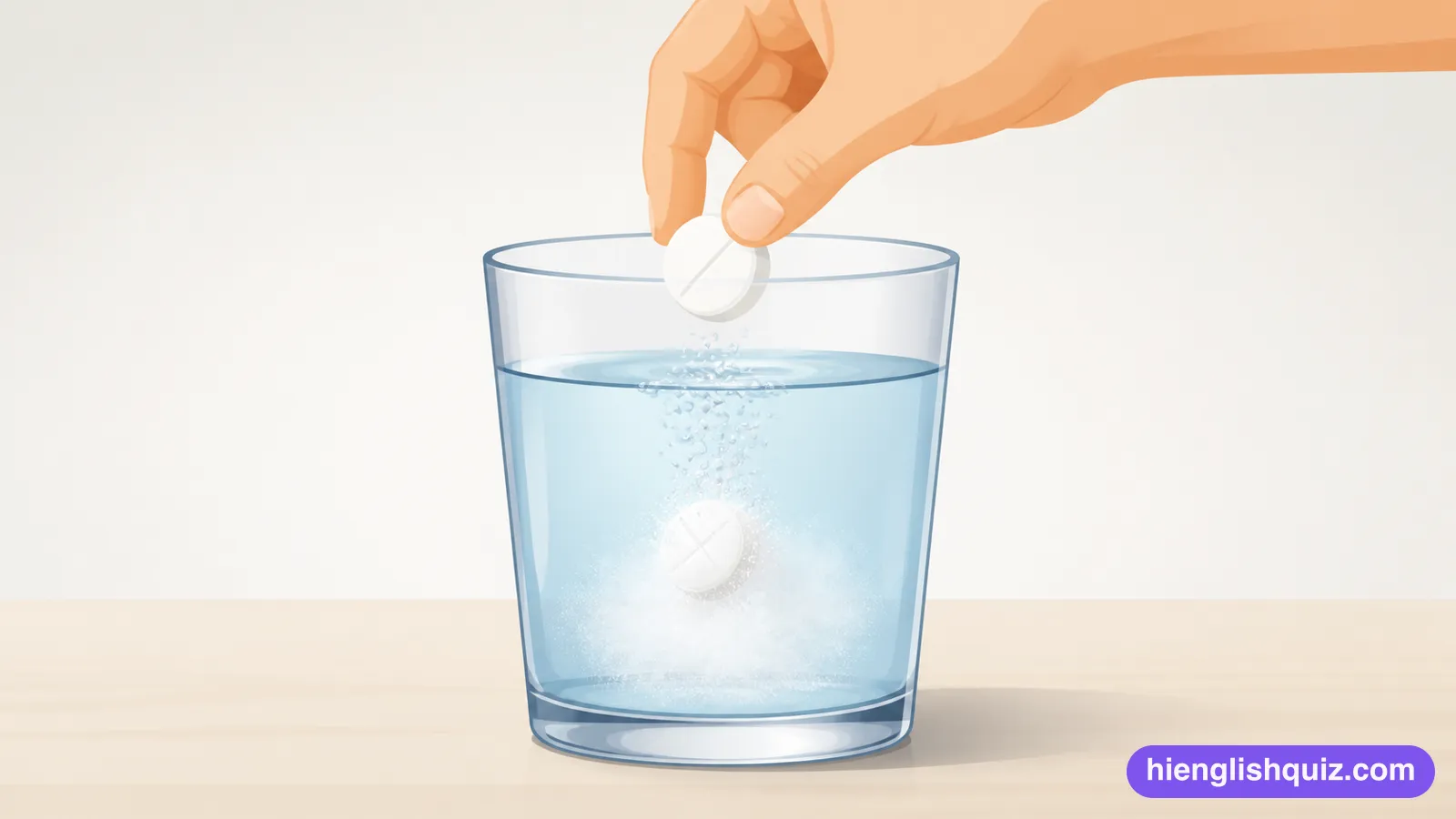
Describing a tablet that can be dissolved in water before you drink it.
Example: Drop the soluble tablet into a glass of water.