flu
/flu/A common illness that gives you a high temperature, body aches, and a blocked nose.
Example: Half the office is off sick with the flu.

 Hi EnglishQuiz
A214 words · Elementary
Illness vocabulary for everyday sickness, including the flu, a cough, a sneeze and feeling poorly, with the words people use to describe catching and spreading a bug.
A common illness that gives you a high temperature, body aches, and a blocked nose.
Example: Half the office is off sick with the flu.
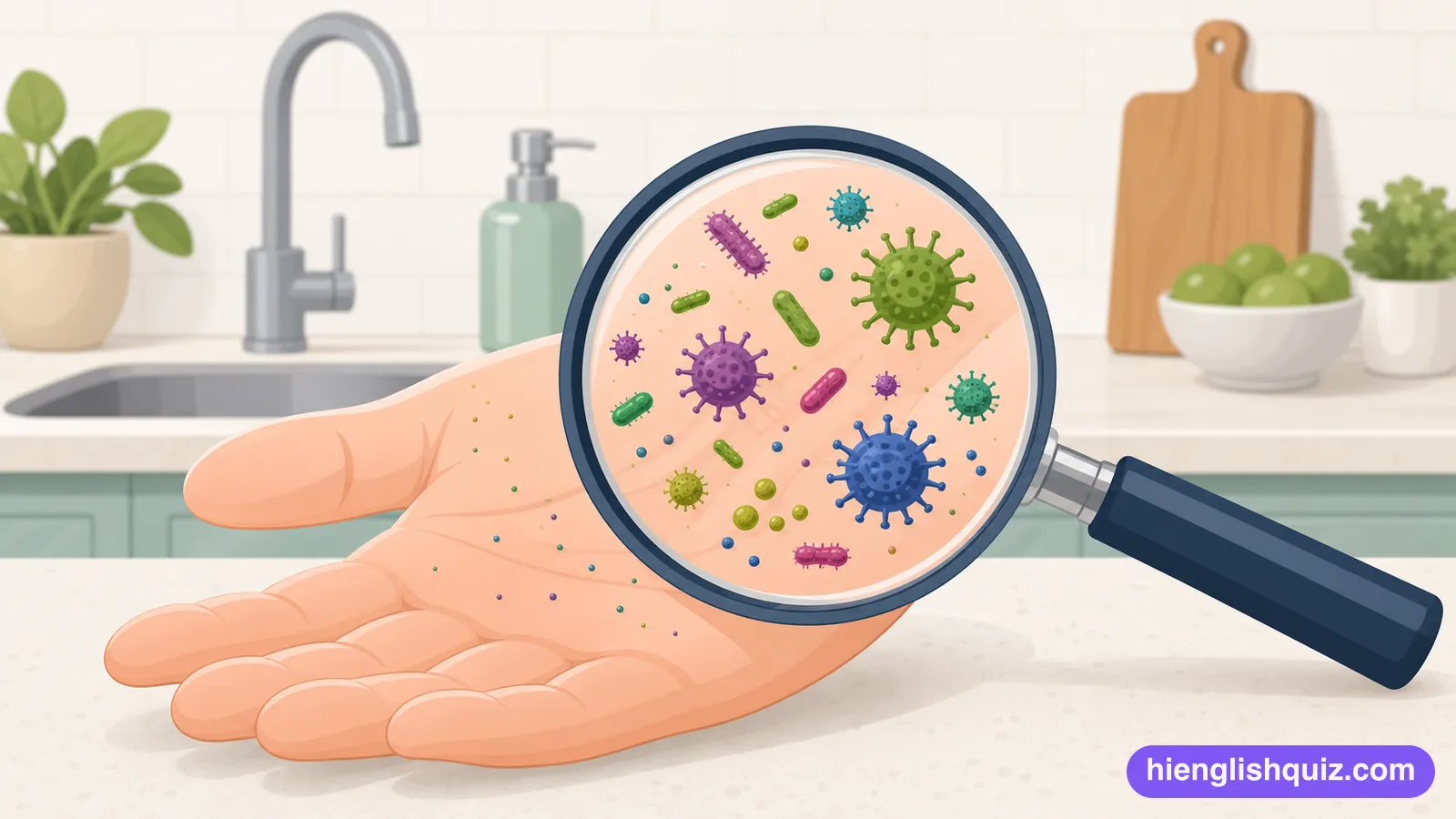
A very small living thing on your hands that can make you ill.
Example: Washing your hands well kills most germs.
A serious illness that a person can have for a long time.
Example: Heart disease is common in older people.

An illness in one part of your body, such as a cut or an ear, caused by germs.
Example: The cut got an infection and needed cream.

To pass from one ill person to many others, as a disease does.
Example: The flu spread quickly through the whole school.

Not able to hear, or not able to hear well.
Example: My grandfather is deaf in one ear.

An illness caused by an infection, usually not serious, that is easily passed from one person to another.
Example: I think I've caught a stomach bug.

Protected against a particular illness so that you do not get it.
Example: She's immune to chickenpox because she had it as a child.
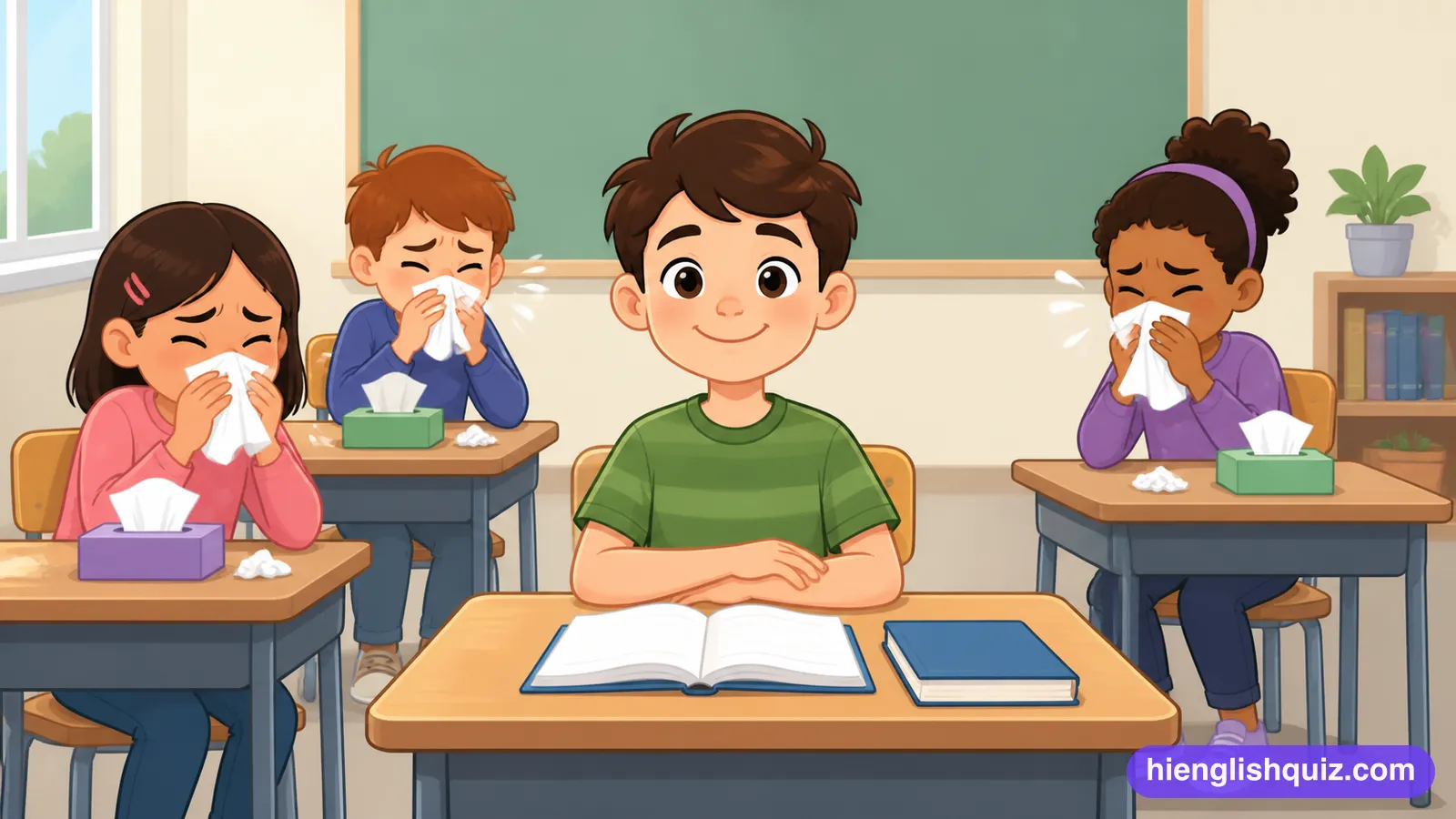
British English, informal: feeling ill.
Example: My son is off school today because he's feeling poorly.

A mild illness, often with shivering, caused by being cold.
Example: Put a coat on or you'll catch a chill.

A sudden, noisy push of air from your throat, often when you are ill.
Example: She had a bad cough that kept her awake all night.

To suddenly blow air out through your nose and mouth with a loud noise.
Example: The dust made me sneeze several times.

Not having much strength in your body.
Example: I felt weak after two days without food.

Making you want to scratch your skin again and again.
Example: This wool jumper feels really itchy.