tailings
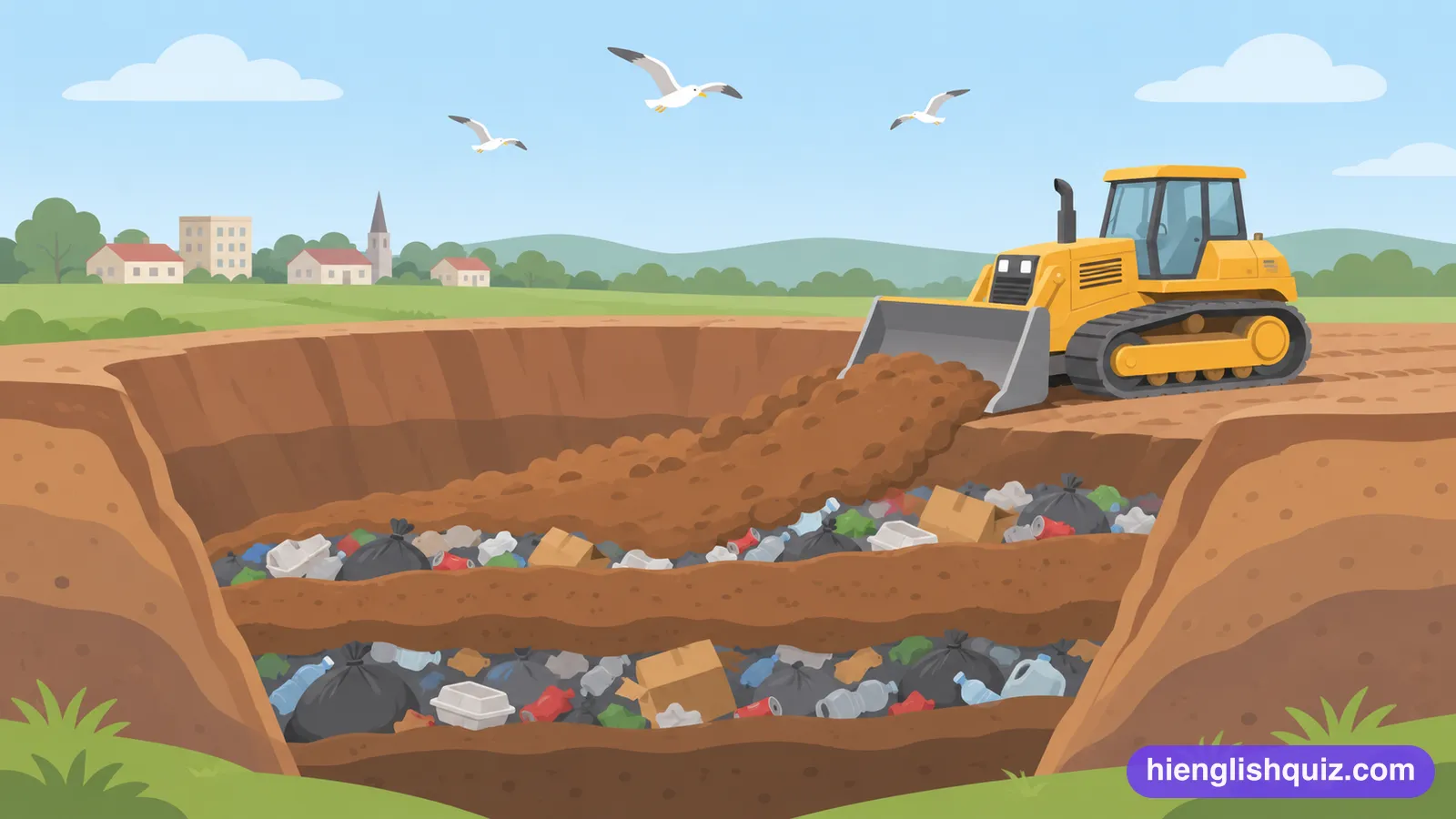
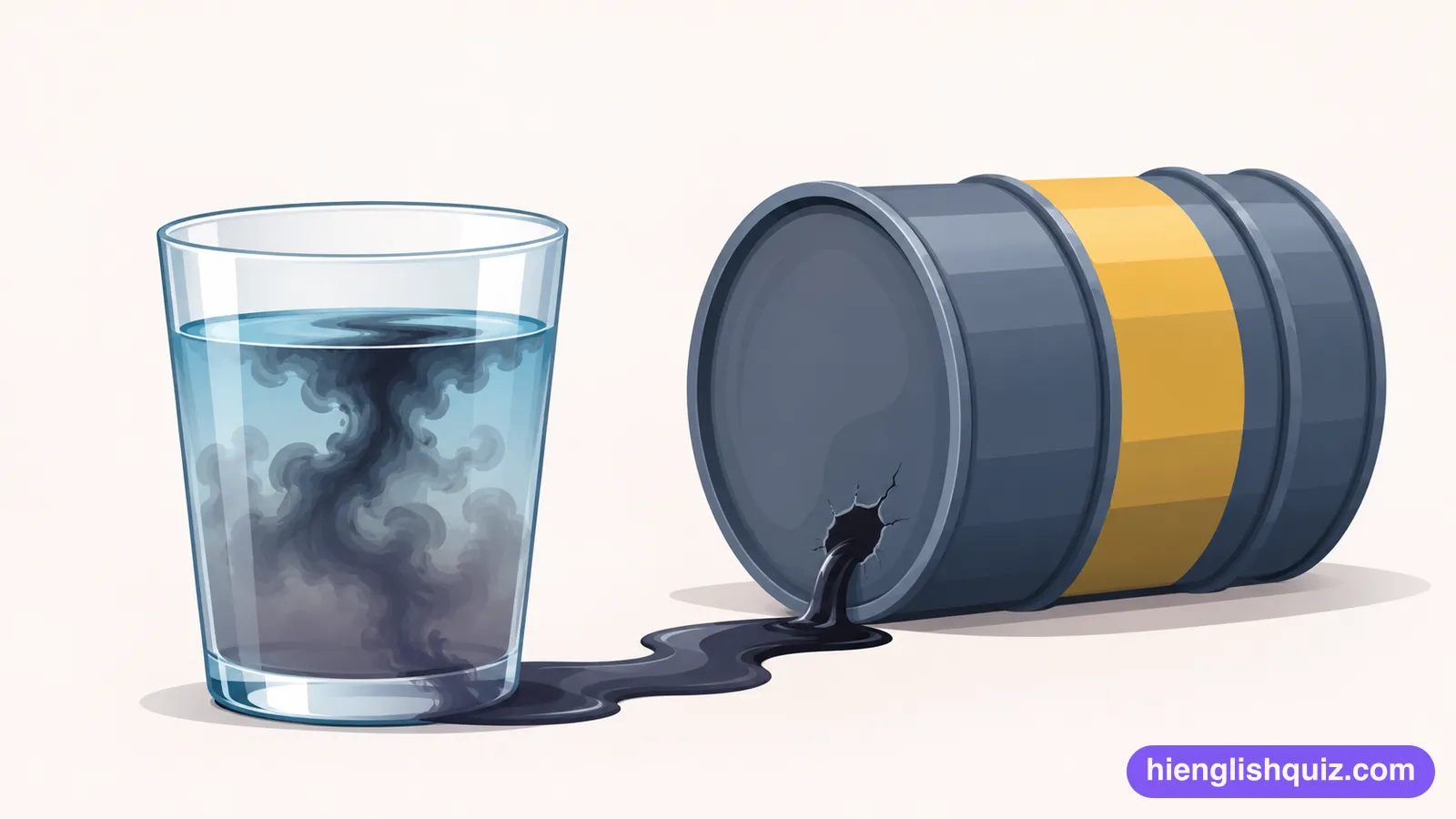
/ˈteɪlɪŋz/The waste material left after valuable minerals have been taken out of rock during mining.
Example: A dam holding back the tailings burst after the heavy rain.
 Hi EnglishQuiz
C225 words · Proficient
Specialist environment vocabulary for pollution, from eutrophication, bioaccumulation and tailings to point-source pollution, cap and trade and greenwashing.
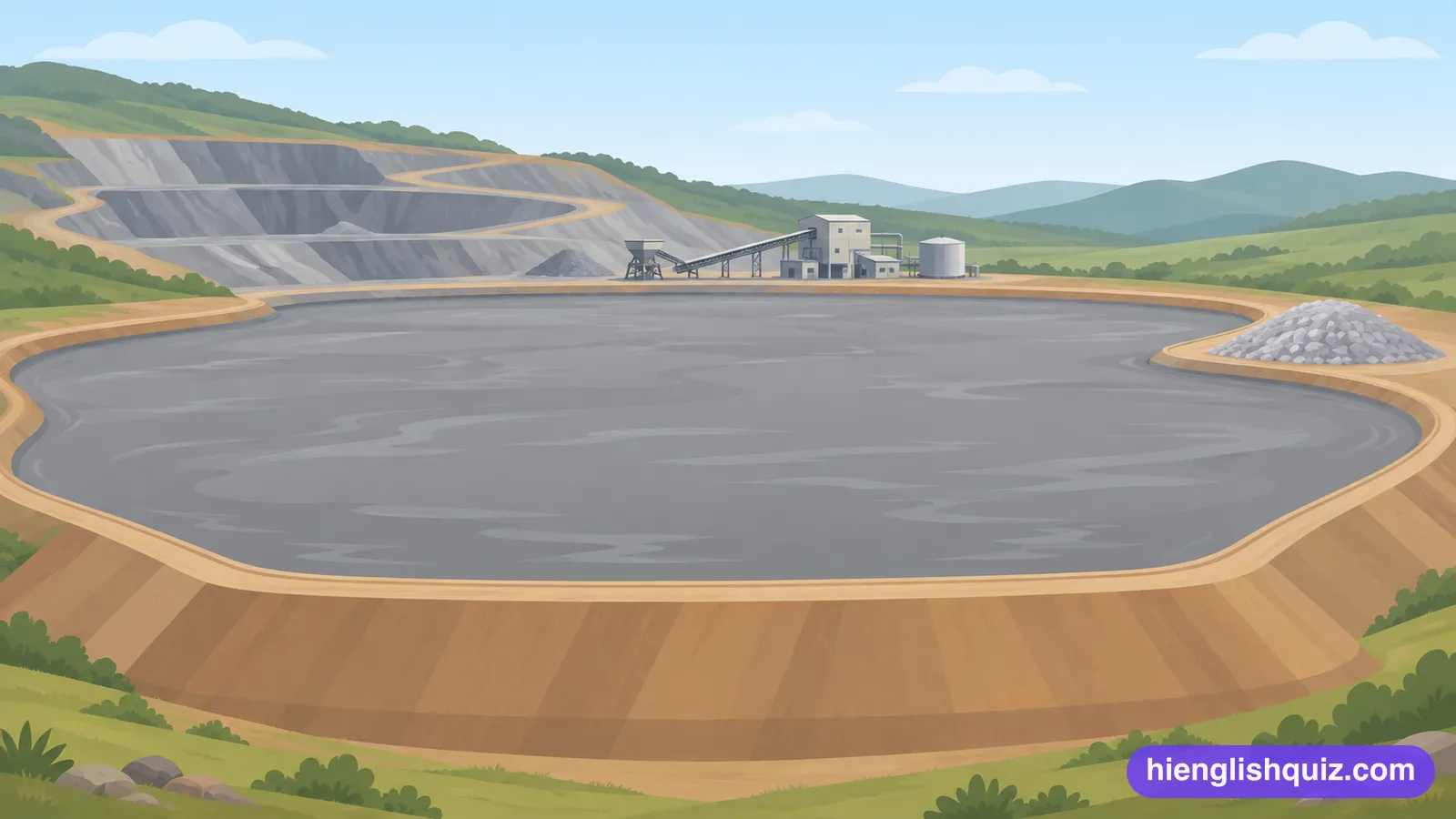
The waste material left after valuable minerals have been taken out of rock during mining.
Example: A dam holding back the tailings burst after the heavy rain.
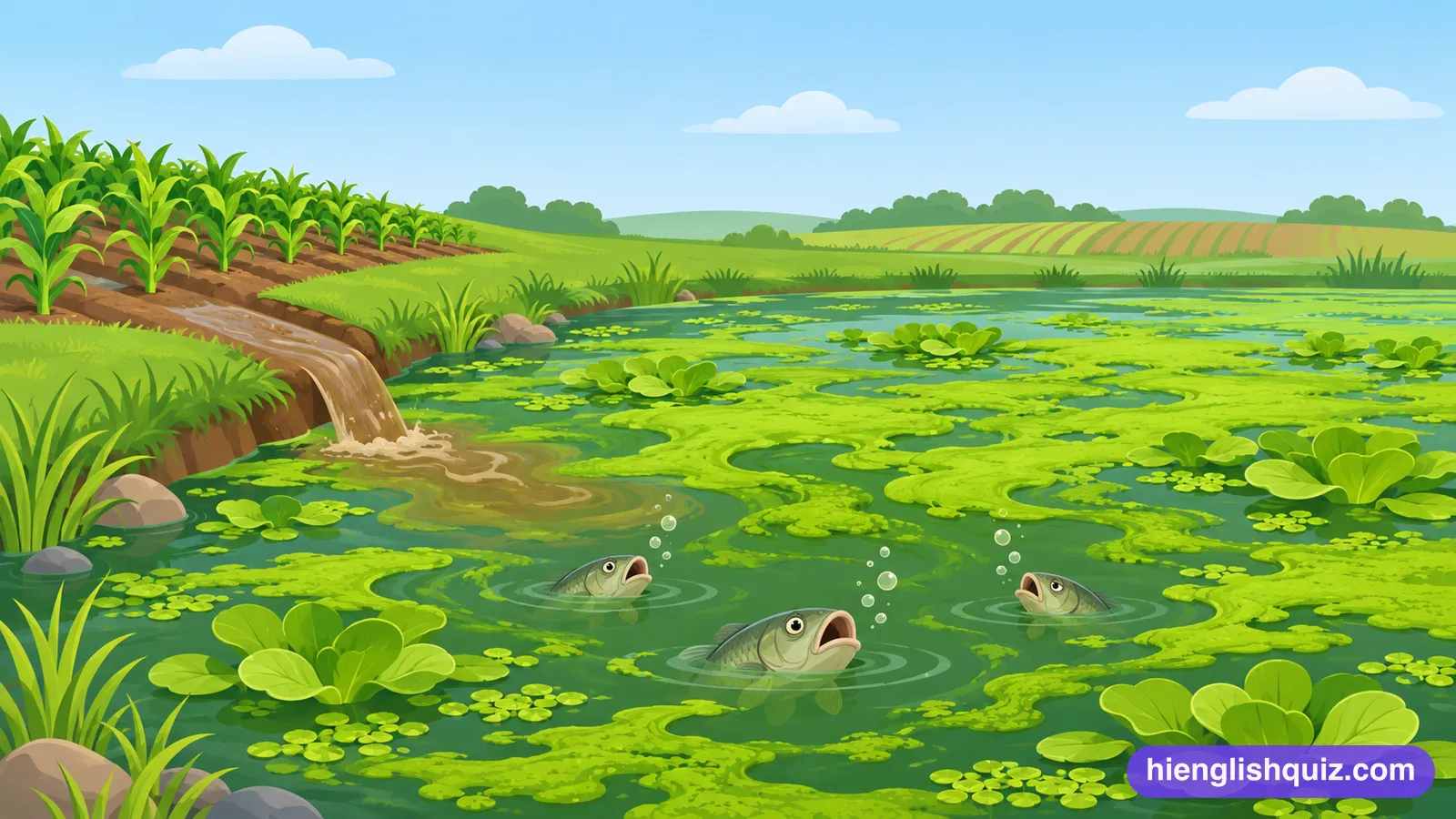
Too many nutrients in a lake or river, usually from farm chemicals, which makes plants grow wildly and use up the oxygen.
Example: Fertiliser run-off is the main cause of eutrophication in the bay.
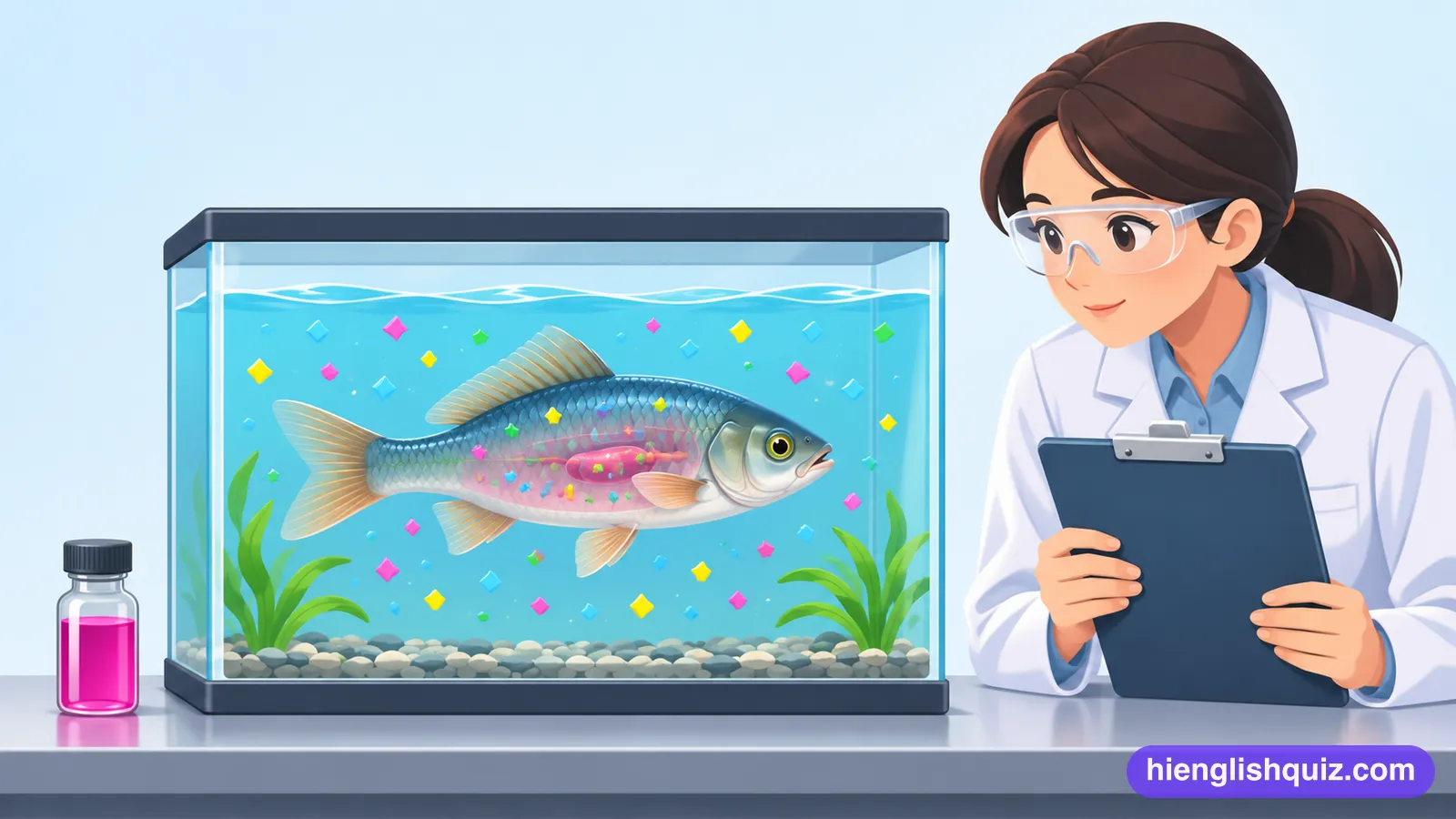
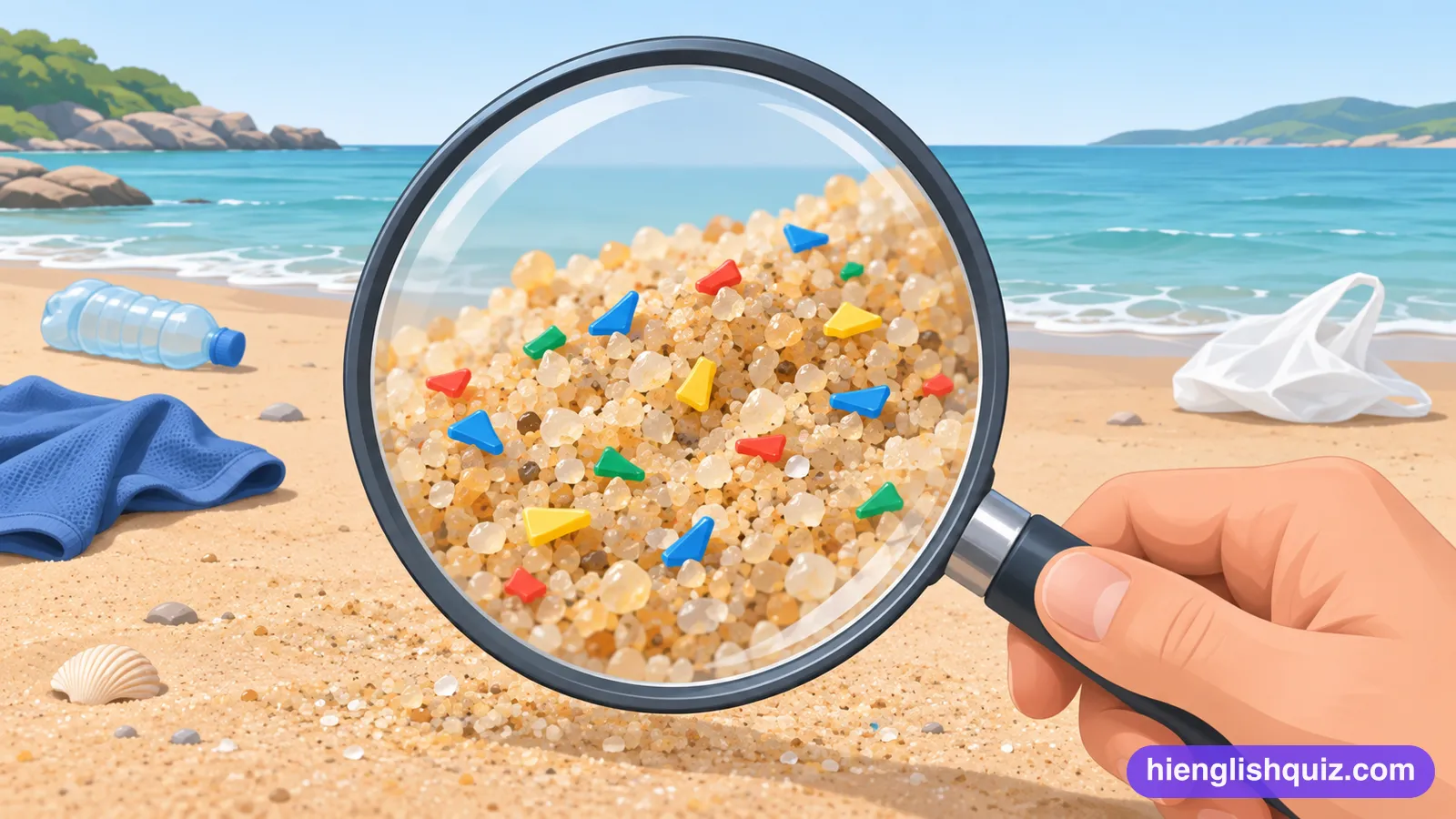
The slow build-up of a harmful chemical inside one living thing because it takes in more than it can lose.
Example: Because of bioaccumulation, old tuna can contain a lot of mercury.
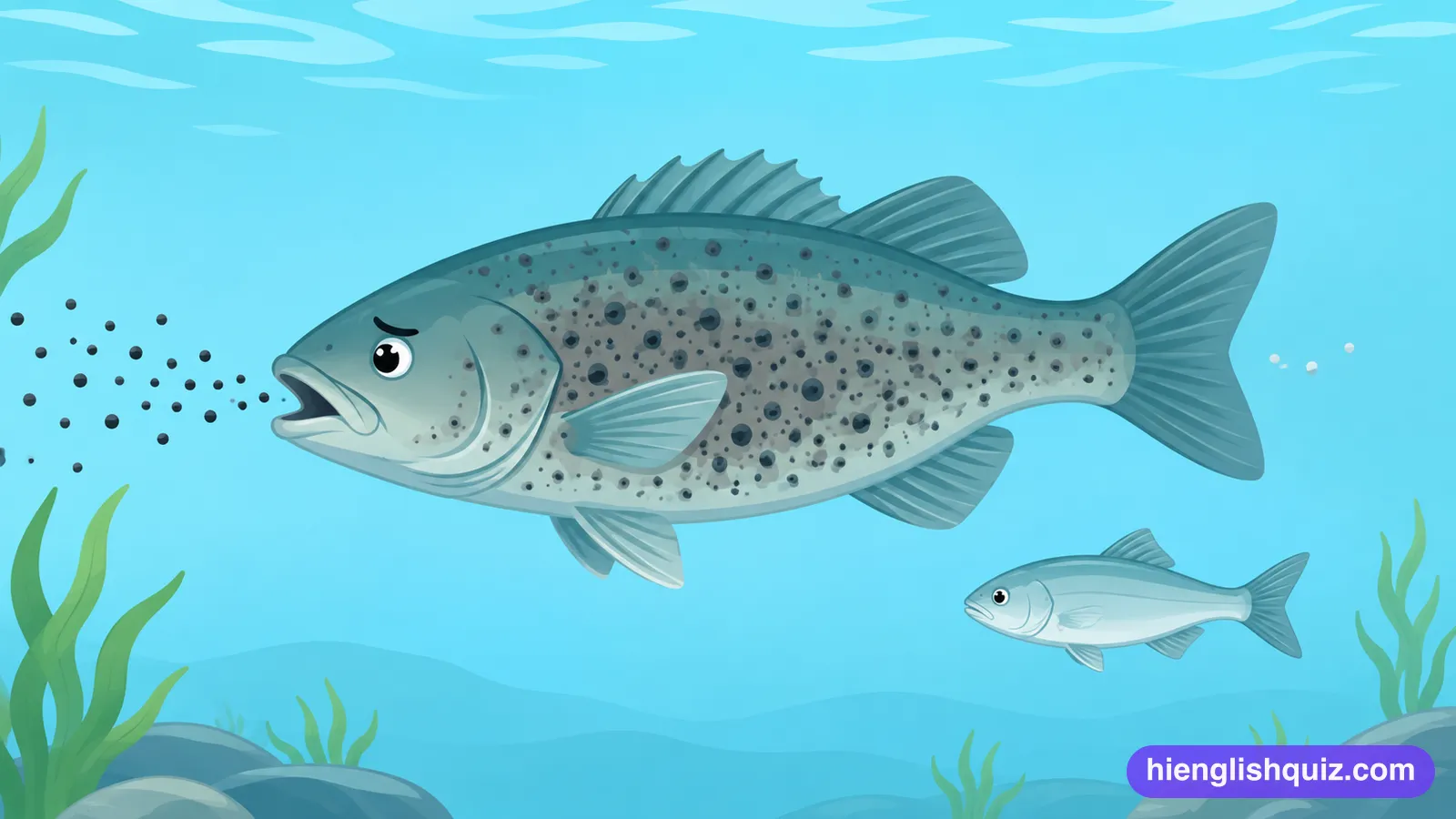
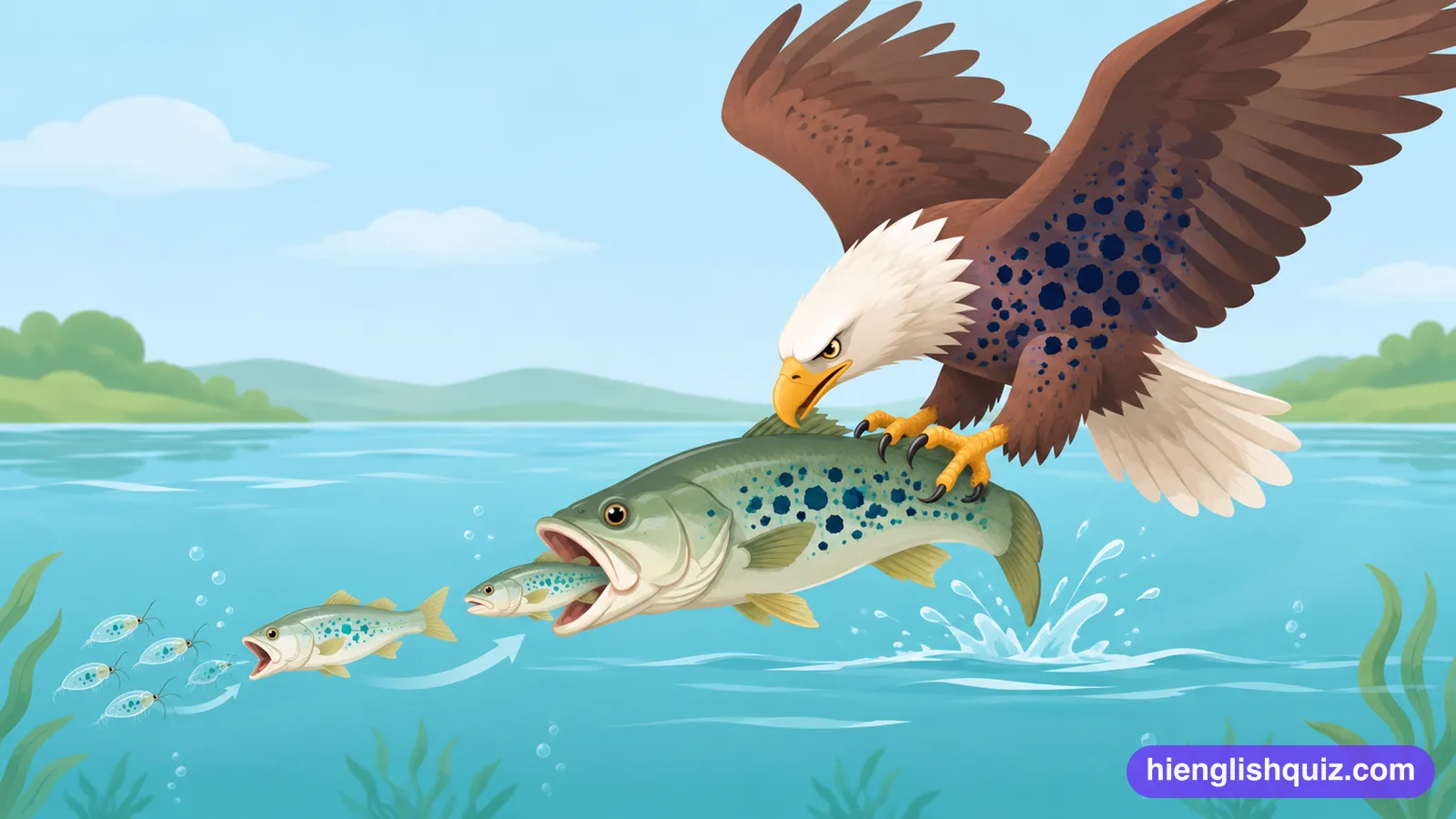
The increase in the amount of a poison at each higher step of a food chain, so top predators carry the most.
Example: Biomagnification explains why eagles were hit hardest by the pesticide.
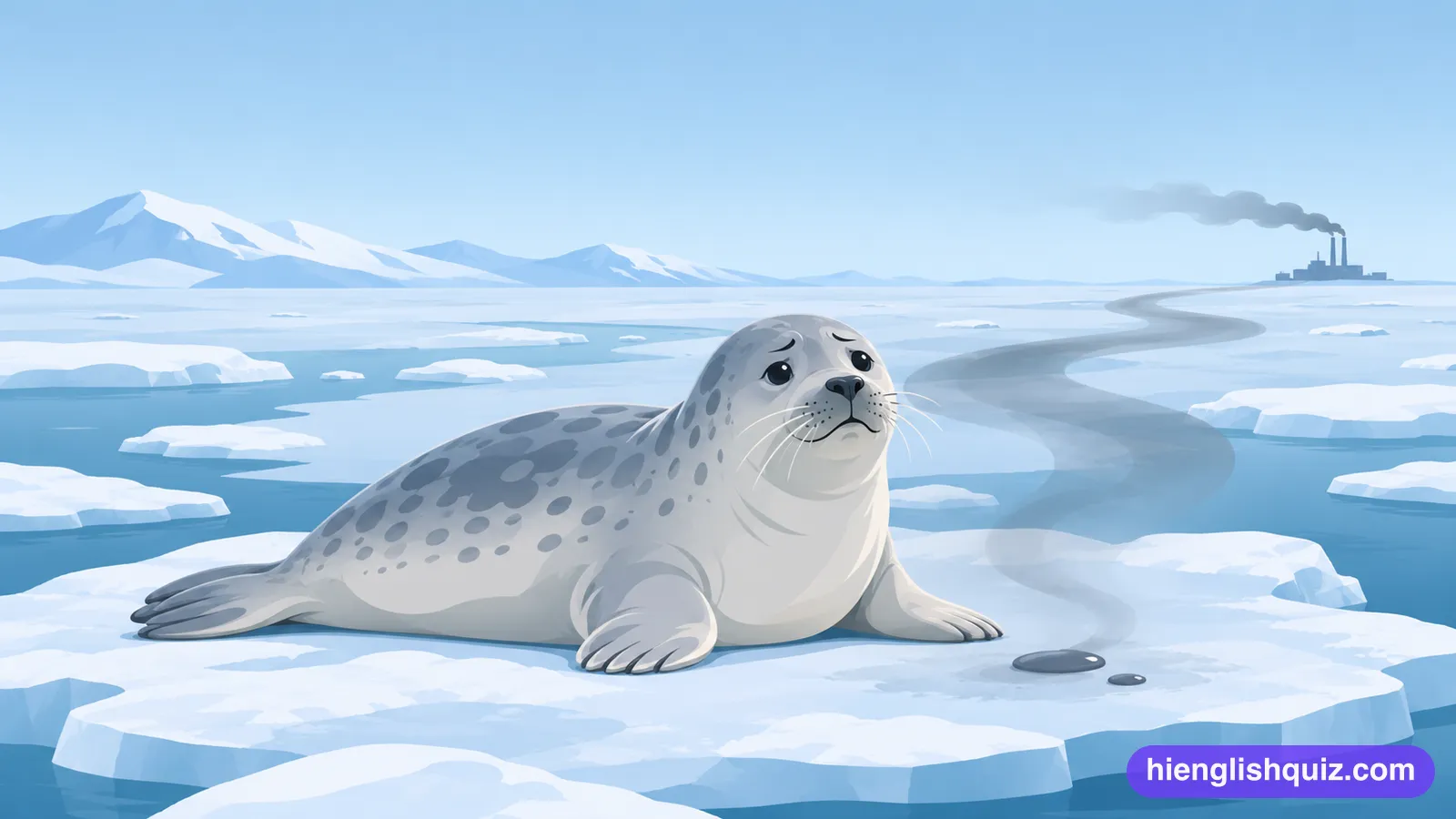
A toxic chemical made by people that breaks down very slowly and can travel far from where it was used.
Example: Traces of a persistent organic pollutant were found in Arctic seals.
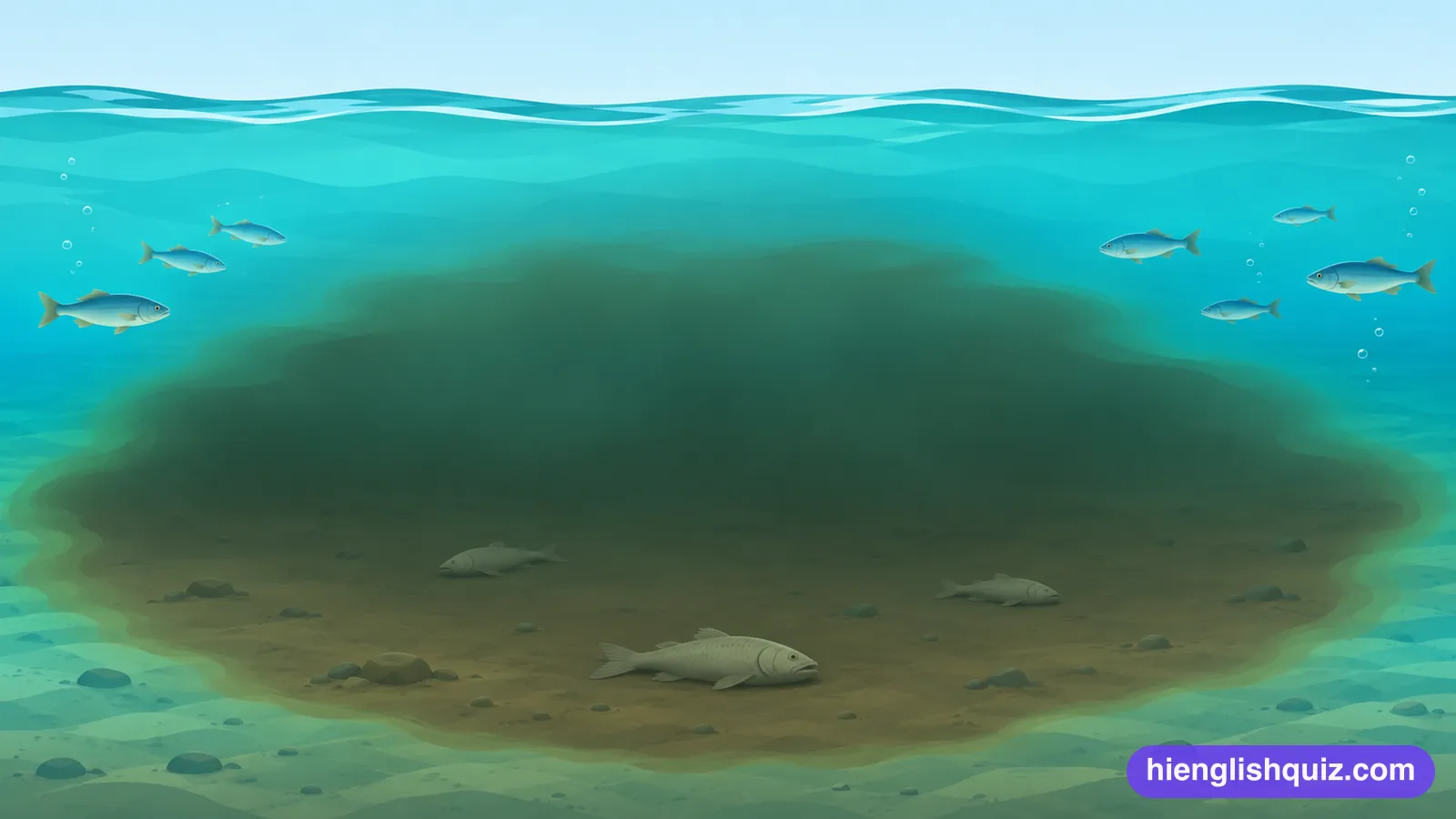
An area of sea or lake with so little oxygen that most fish and other animals cannot live there.
Example: A huge dead zone appears off the coast every summer.
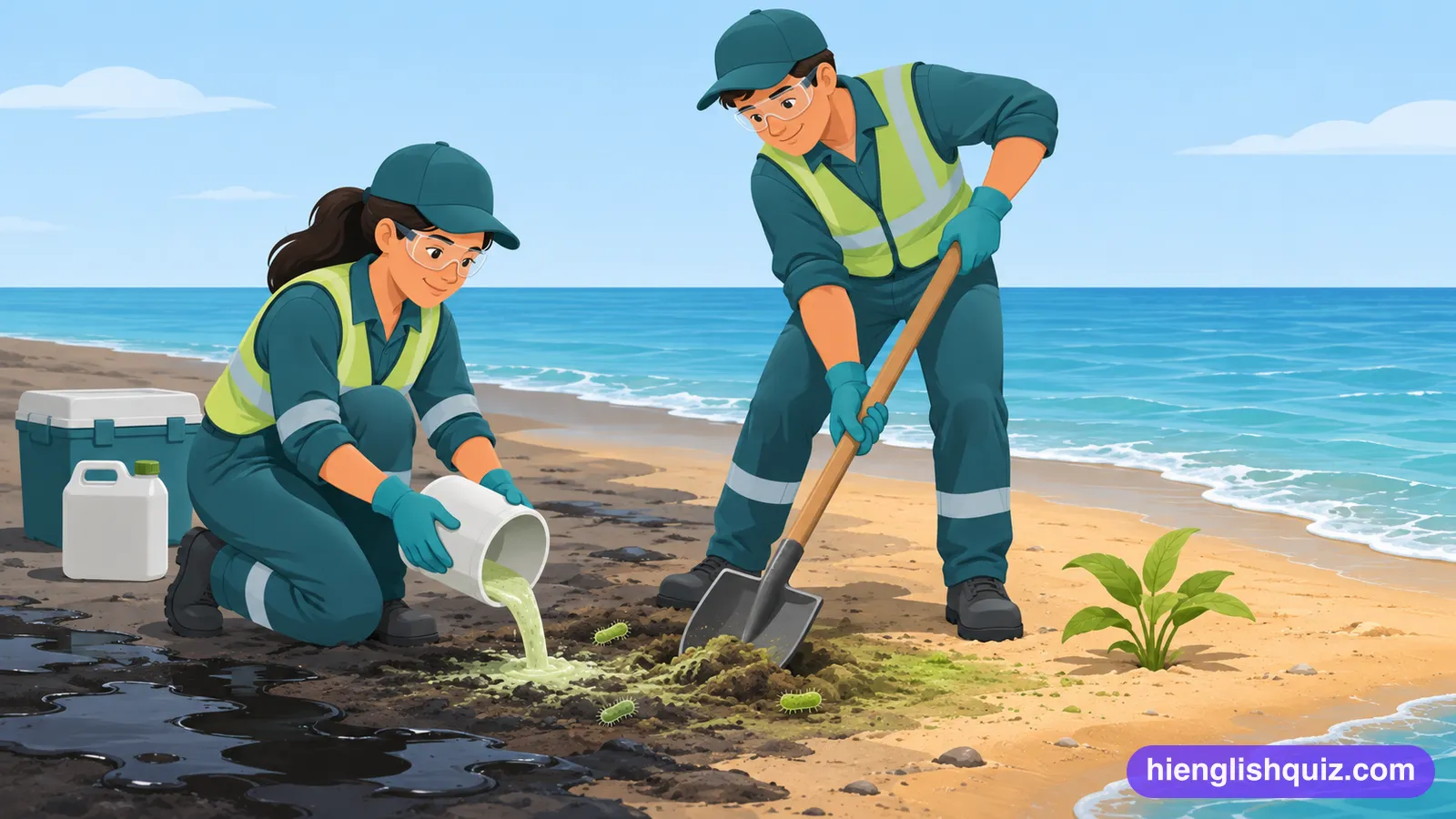
Using bacteria, fungi or plants to break down or soak up harmful substances and clean soil or water.
Example: They used bioremediation to clean the oil-soaked beach without any chemicals.
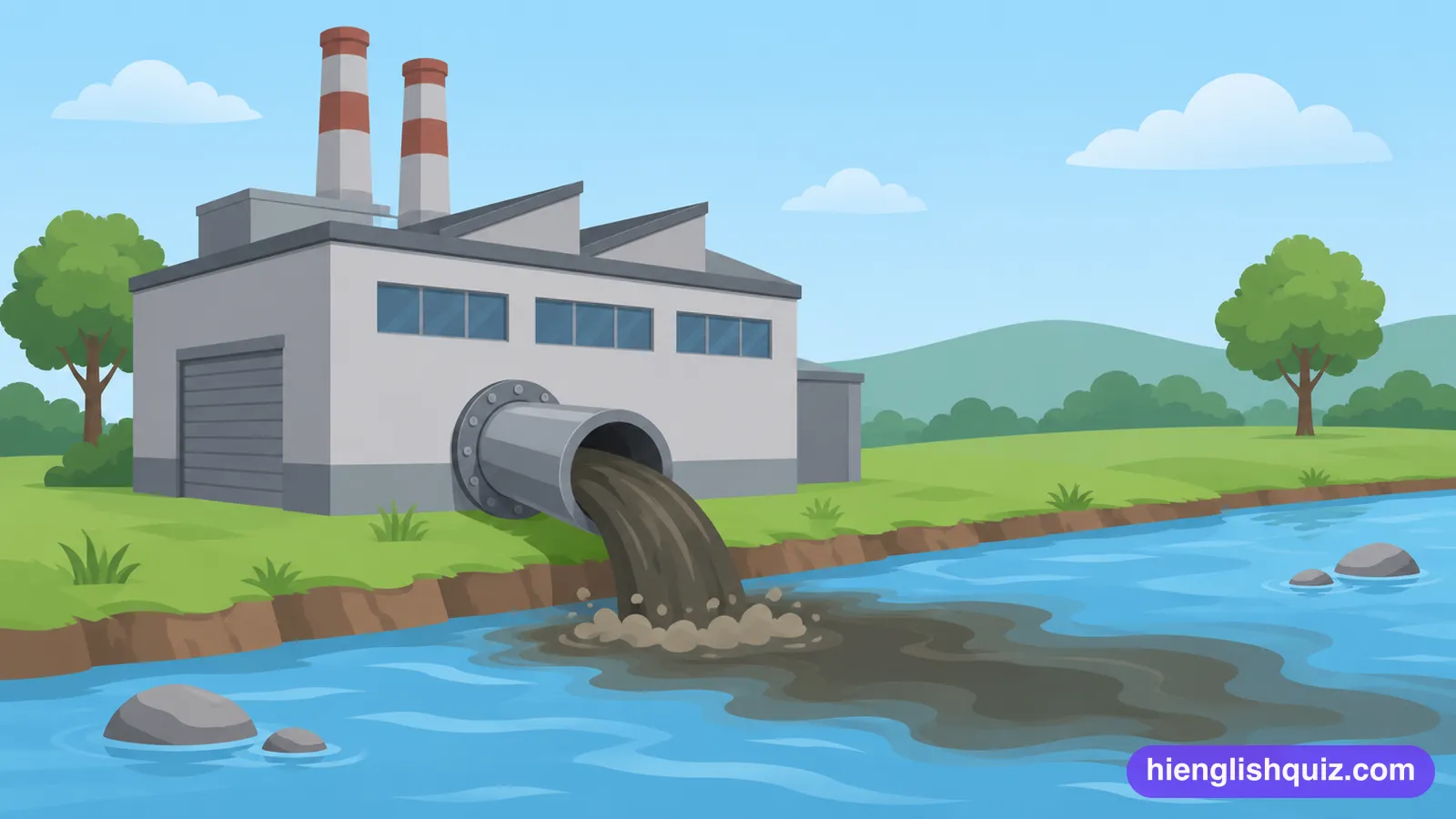
Harm to water or air that can be traced to one single place, such as a factory pipe.
Example: Fining the plant is easier because it is point-source pollution.
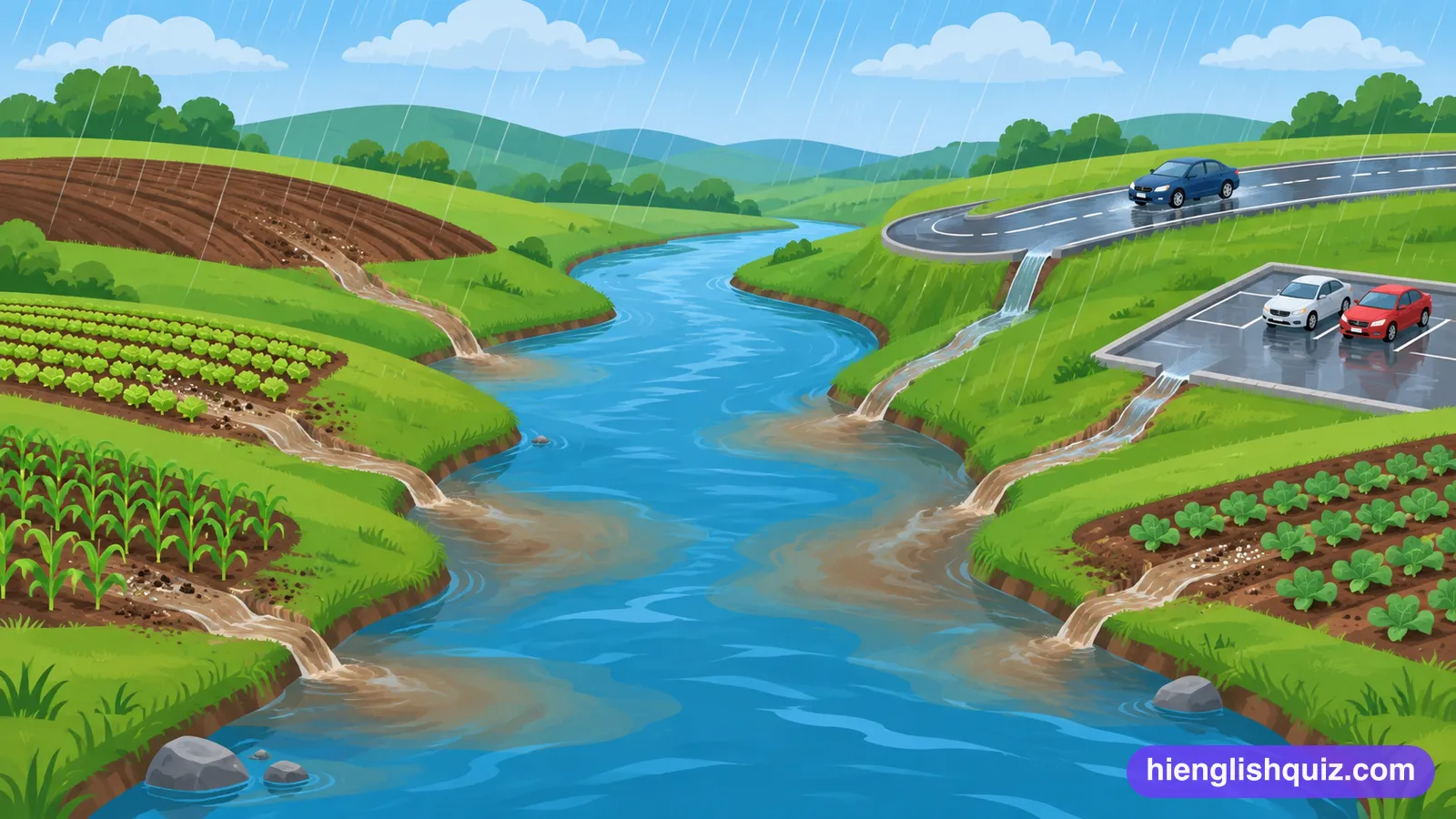
Harm to water that comes from many scattered places at once, such as fertiliser washing off farmland, and cannot be traced to one pipe.
Example: Rain washing off farms and roads is the main non-point-source pollution here.
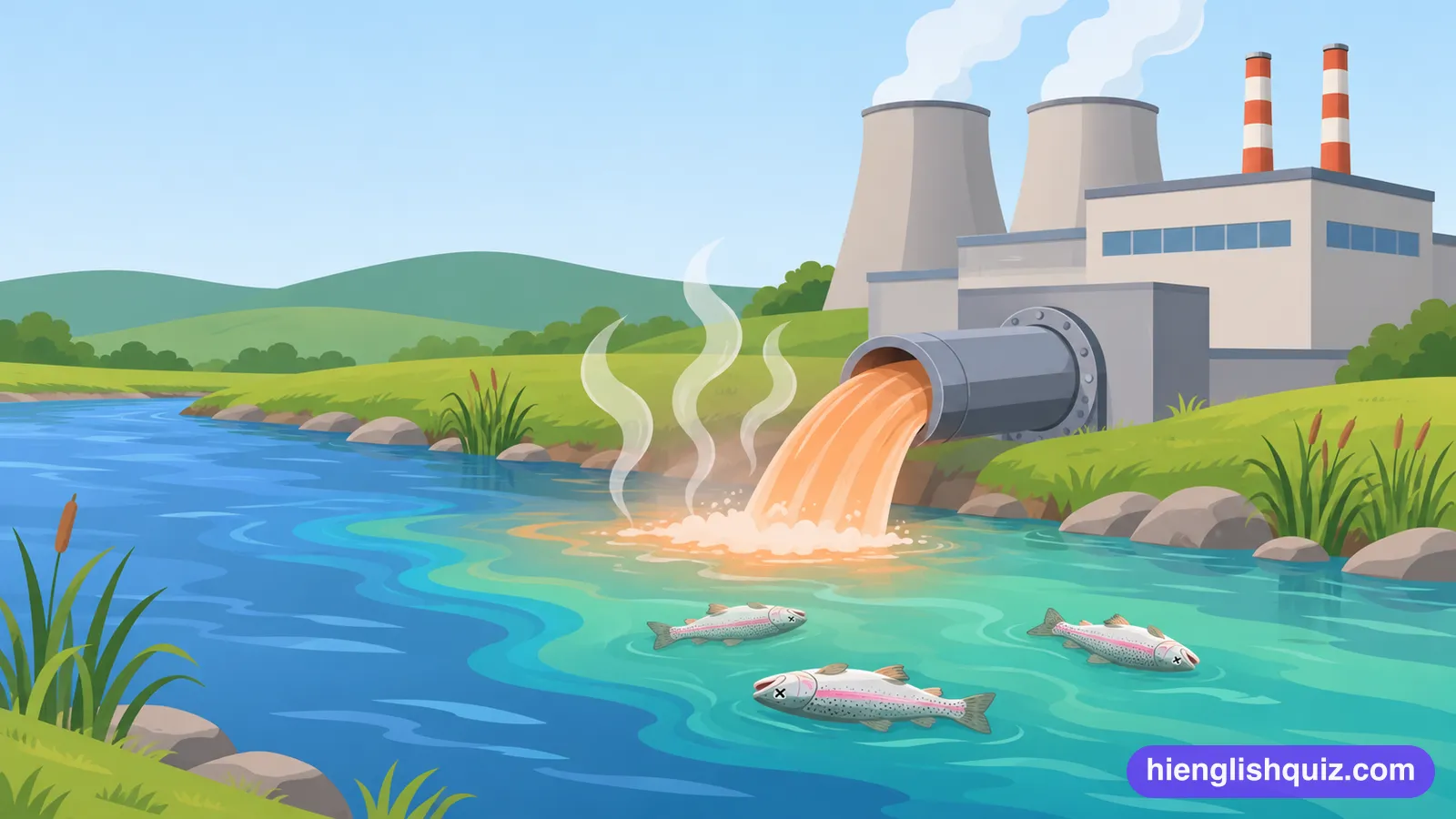
Harm done to a river or lake when a power station or factory pours hot water into it and the water becomes too warm for fish.
Example: Thermal pollution from the power plant has killed off the local trout.
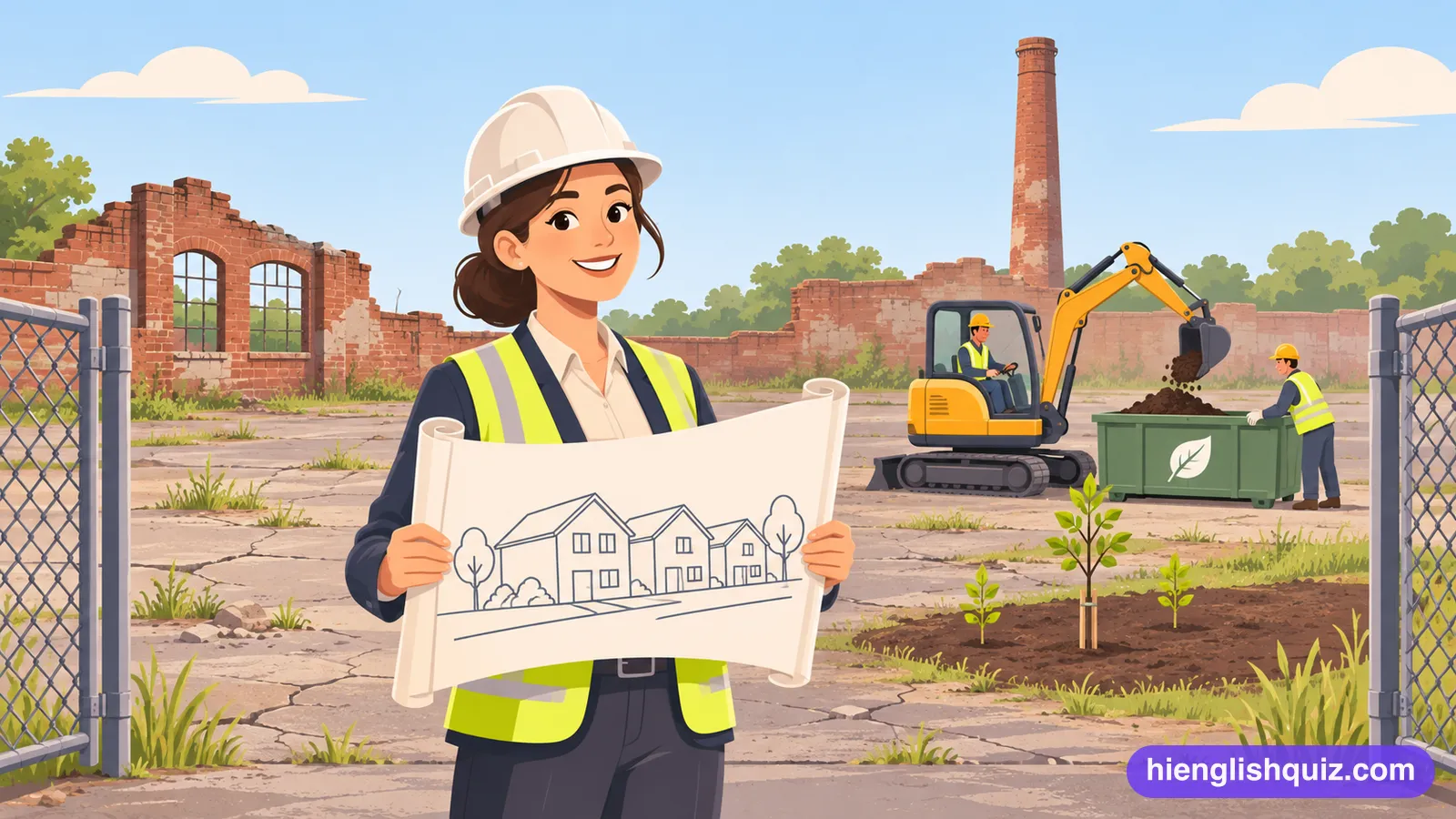
Land that was once used for industry and may be dirty, but could be cleaned and built on again.
Example: The new flats will be built on a former brownfield site by the canal.
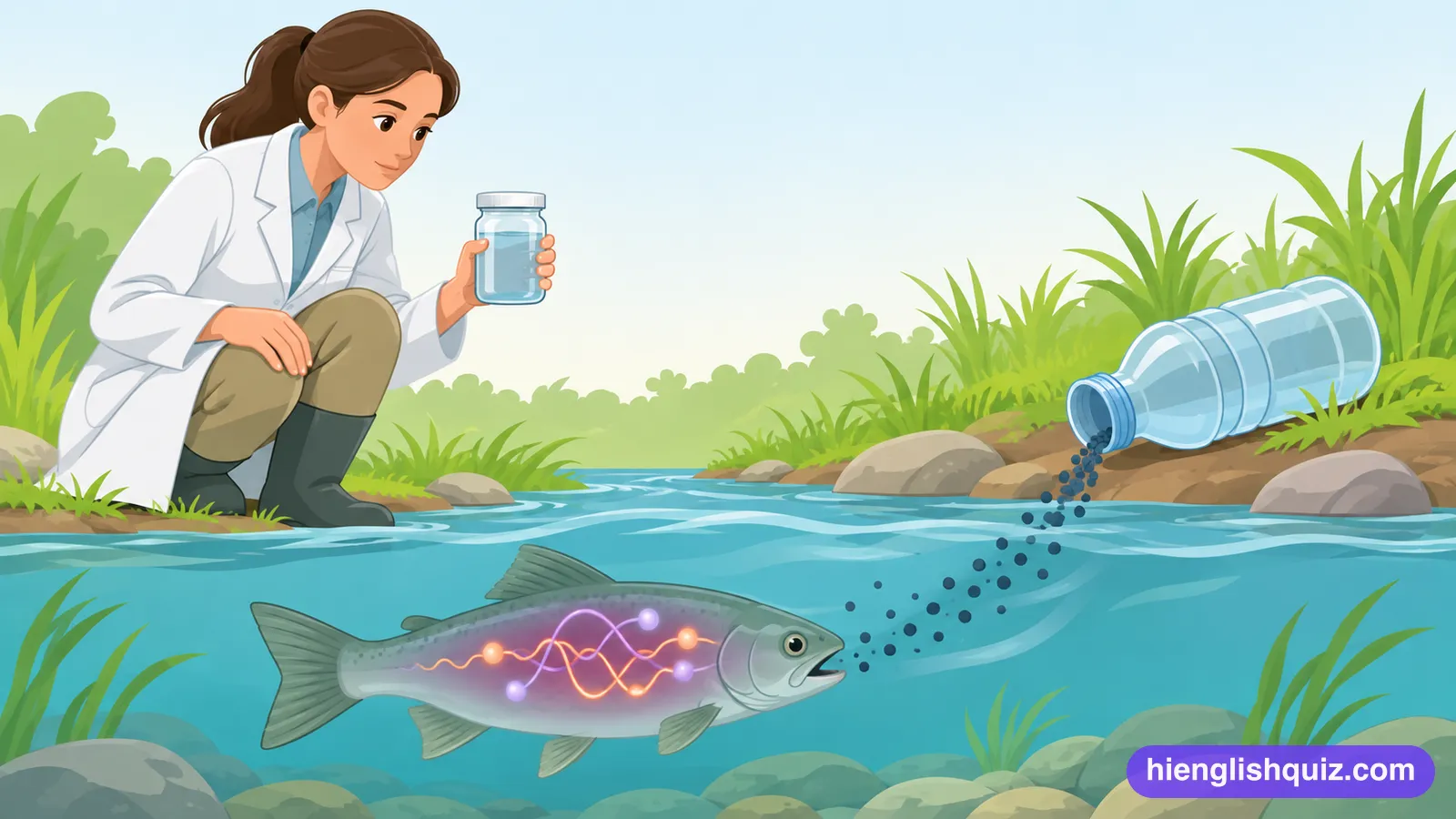
A chemical that interferes with the body's hormones, found in some plastics and pesticides.
Example: Researchers linked the endocrine disruptor in the plastic to fertility problems in fish.
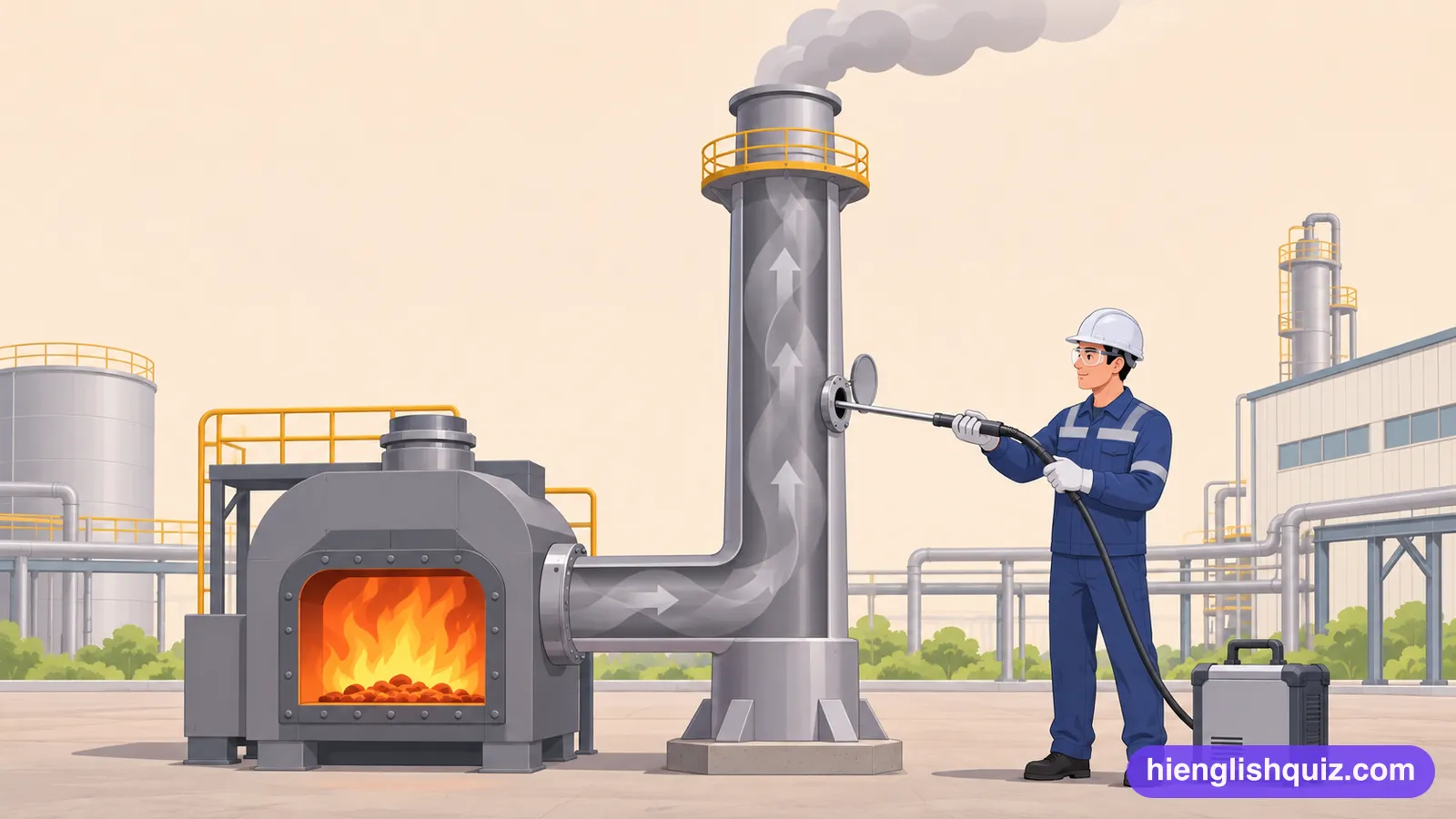
The mixture of waste air and smoke that leaves a chimney or furnace after fuel has been burned.
Example: Engineers test the flue gas daily to check what it contains.
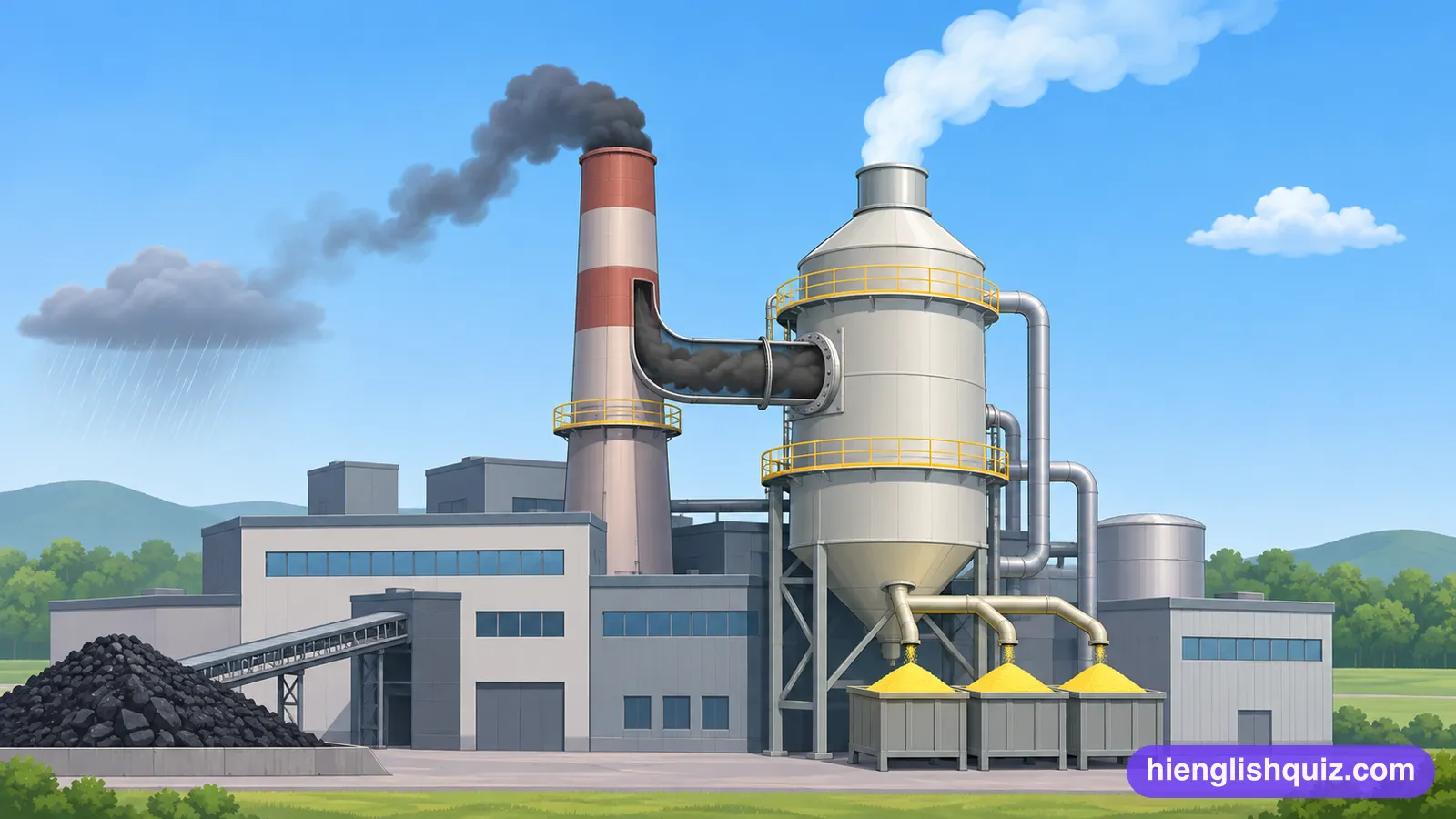
The process of taking a polluting chemical element out of fuel or smoke so that it does not form acid rain.
Example: Desulphurisation equipment cut the plant's sulphur output by ninety percent.
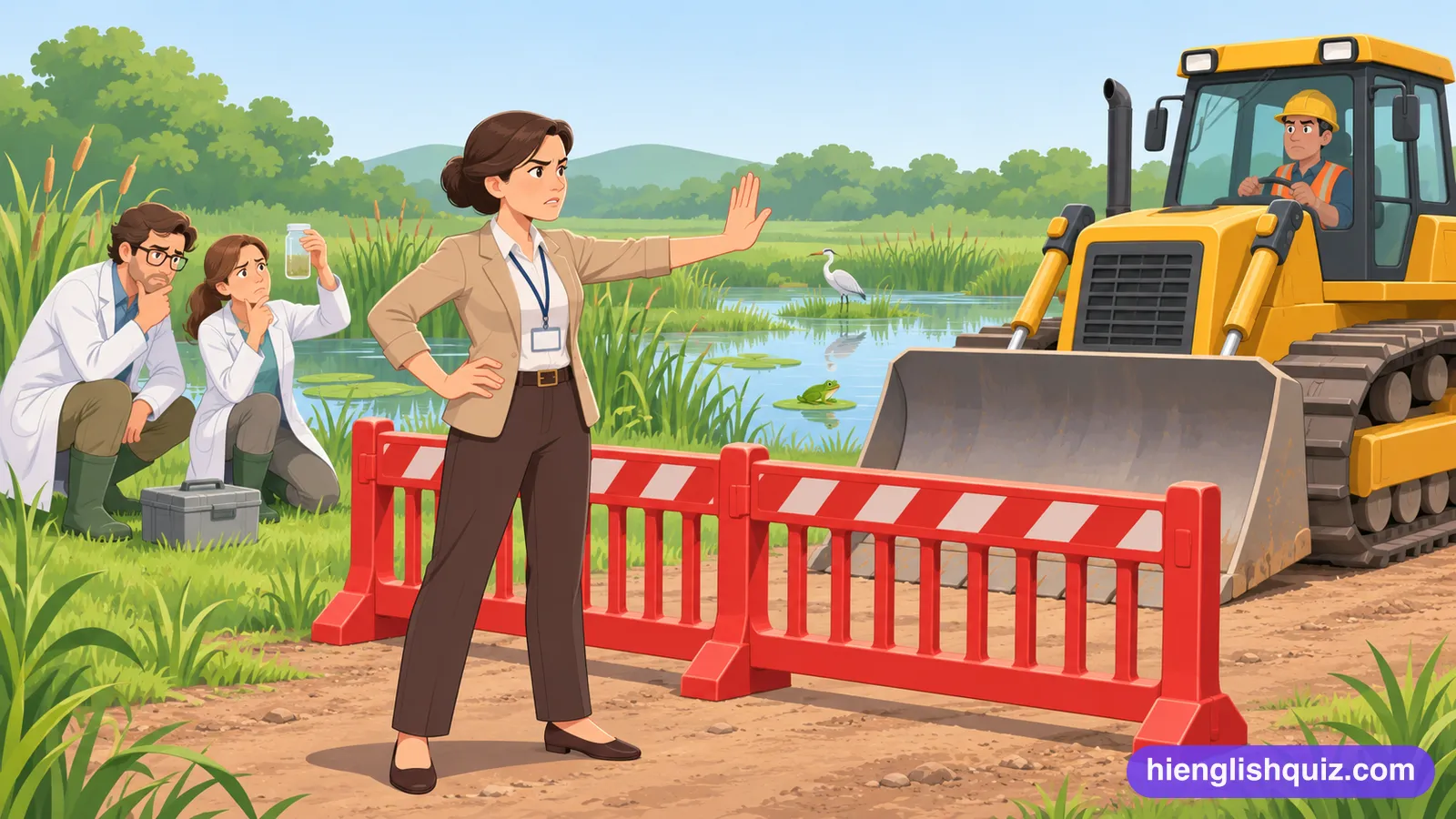
An official study of how a planned project, such as a road or mine, would affect nature, done before work is allowed to begin.
Example: The mine cannot open until an environmental impact assessment is complete.
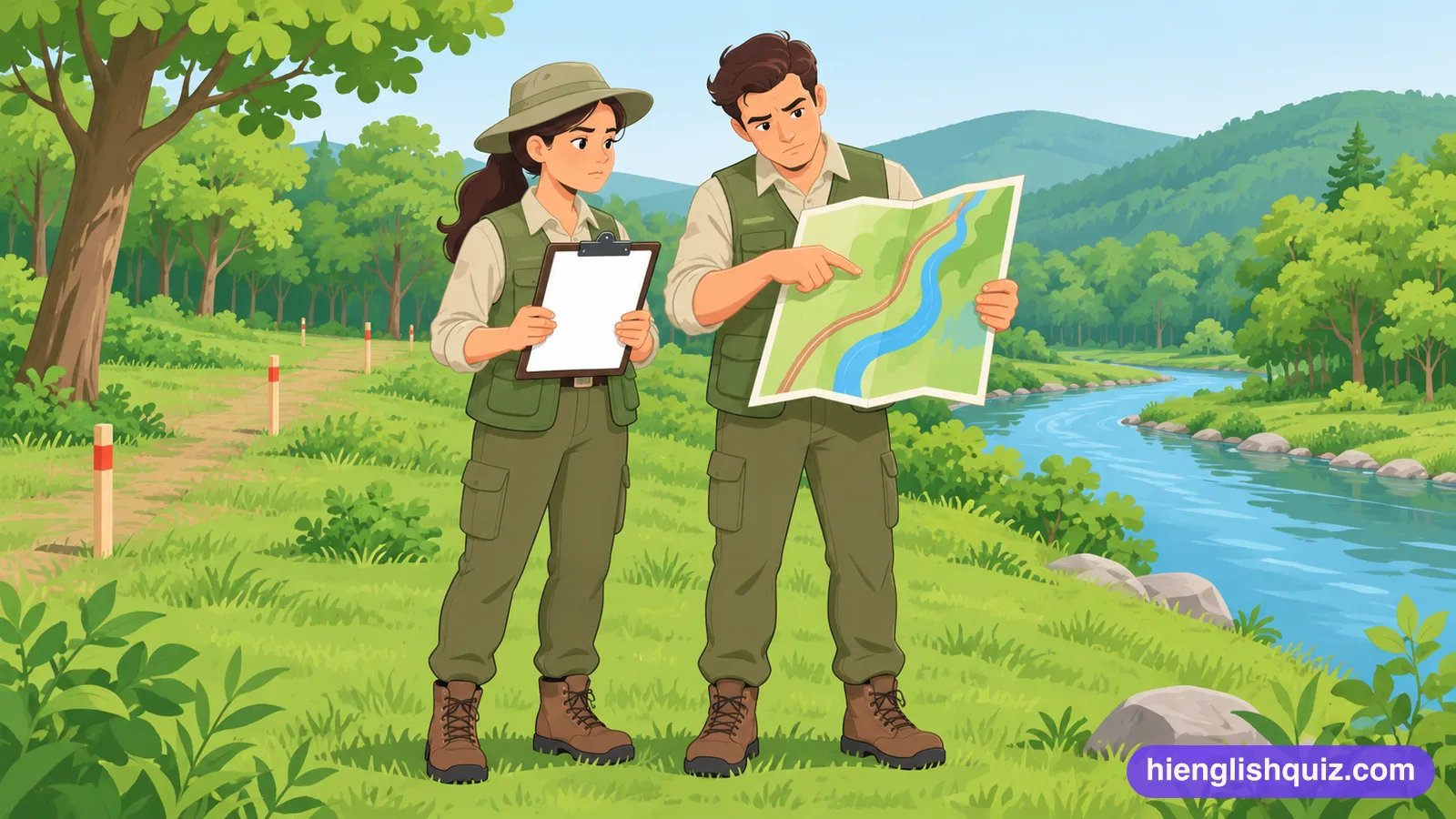
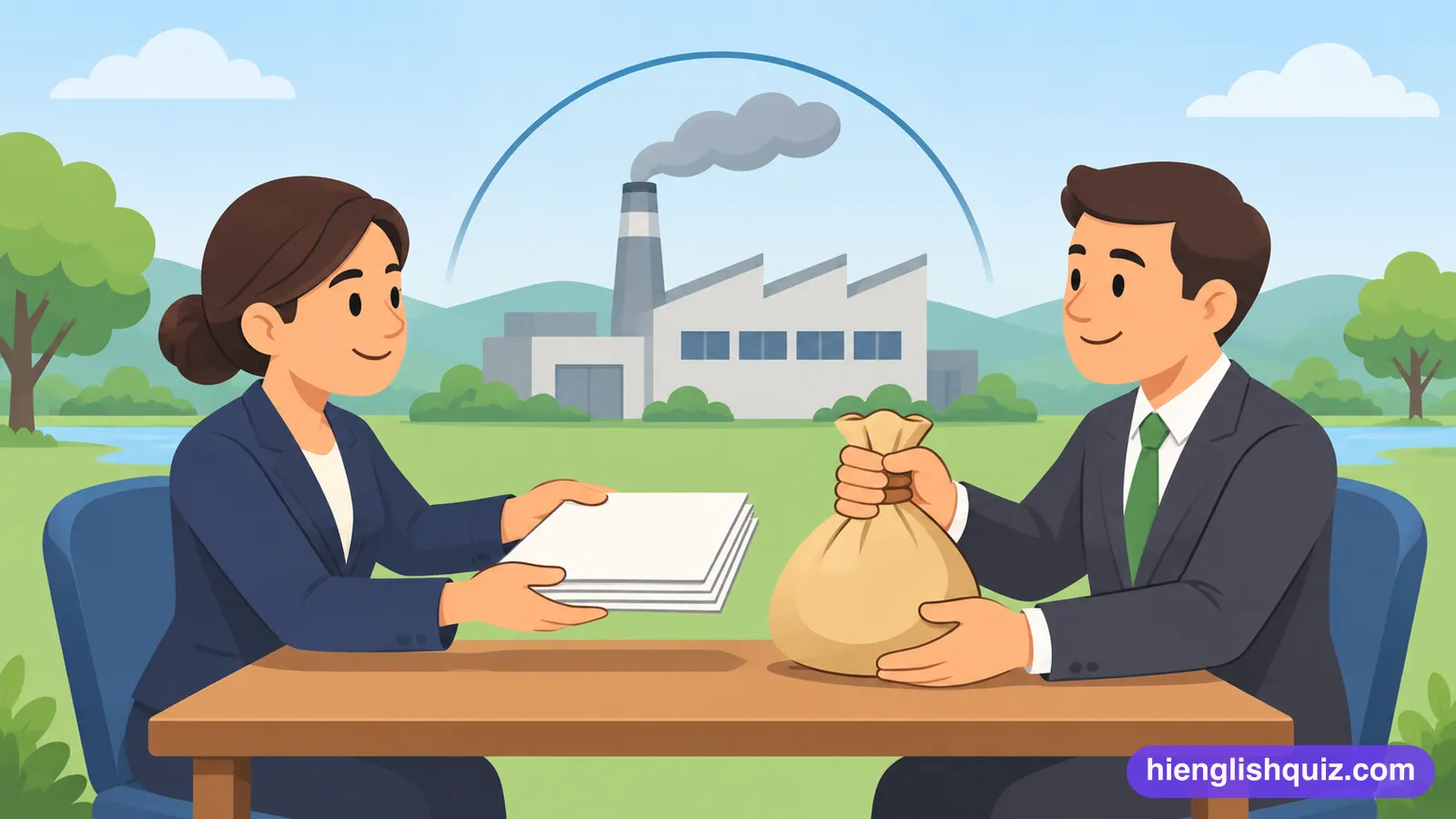
A system that sets a limit on total pollution and lets companies buy and sell permits to release it.
Example: Under cap and trade, a clean firm can sell its spare permits.
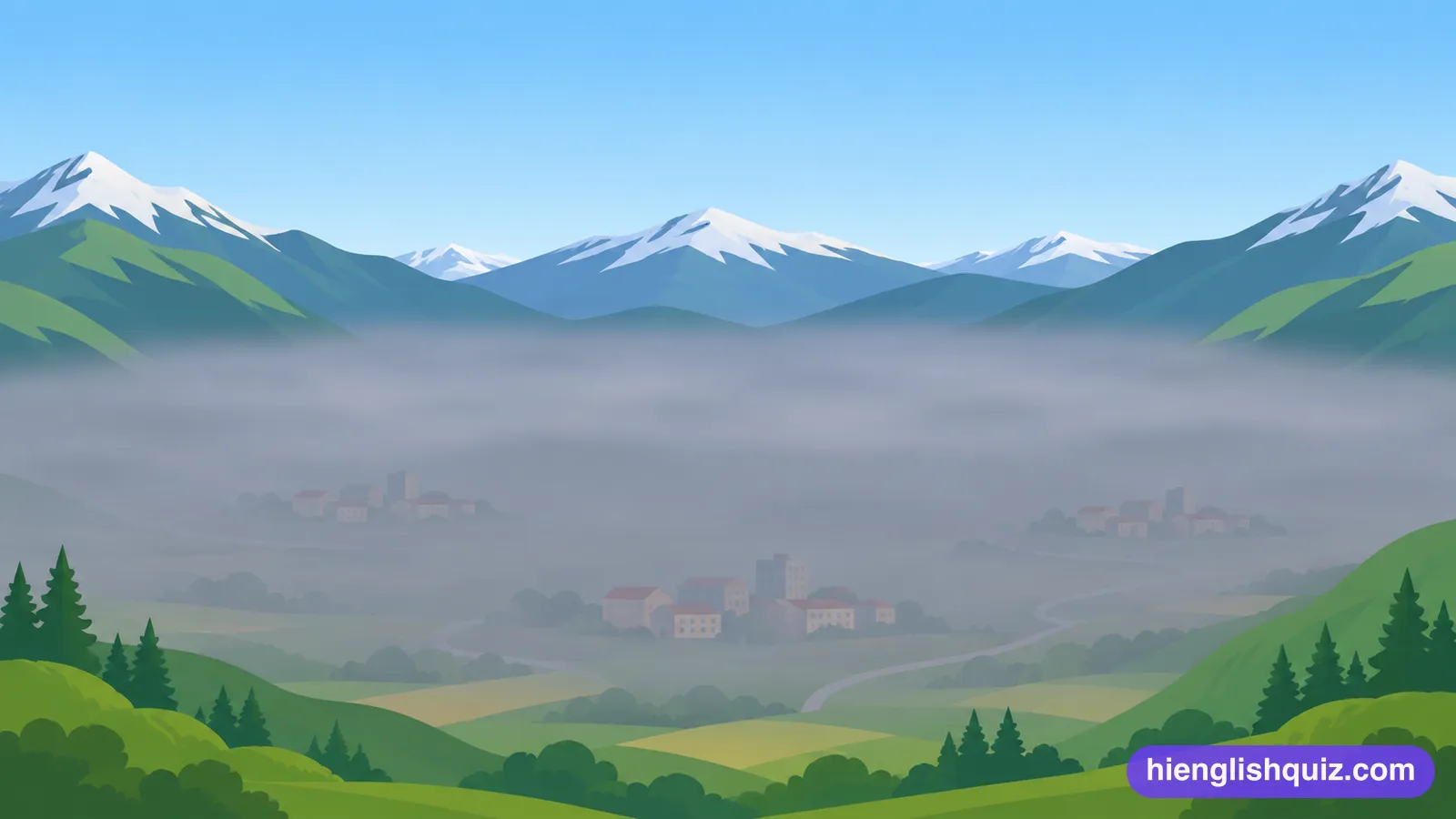
An area of land where mountains or weather keep the air in one place, so its dirty air is managed as one unit.
Example: The valley is a single airshed, so one town's smoke affects all of them.
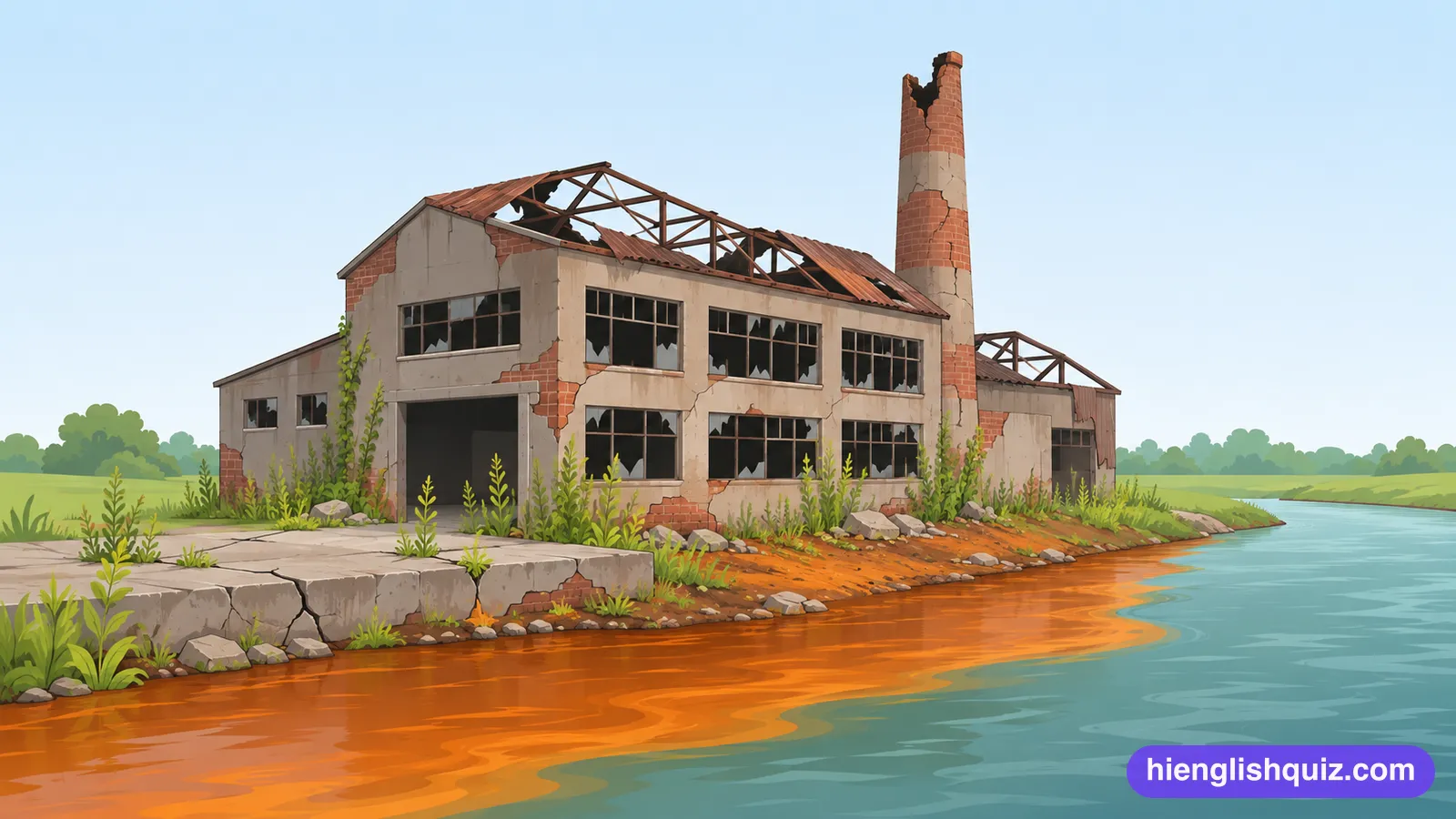
Damage left in soil or water by past industry, long after the factory has closed.
Example: Residents still suffer from legacy pollution left by the old tannery.
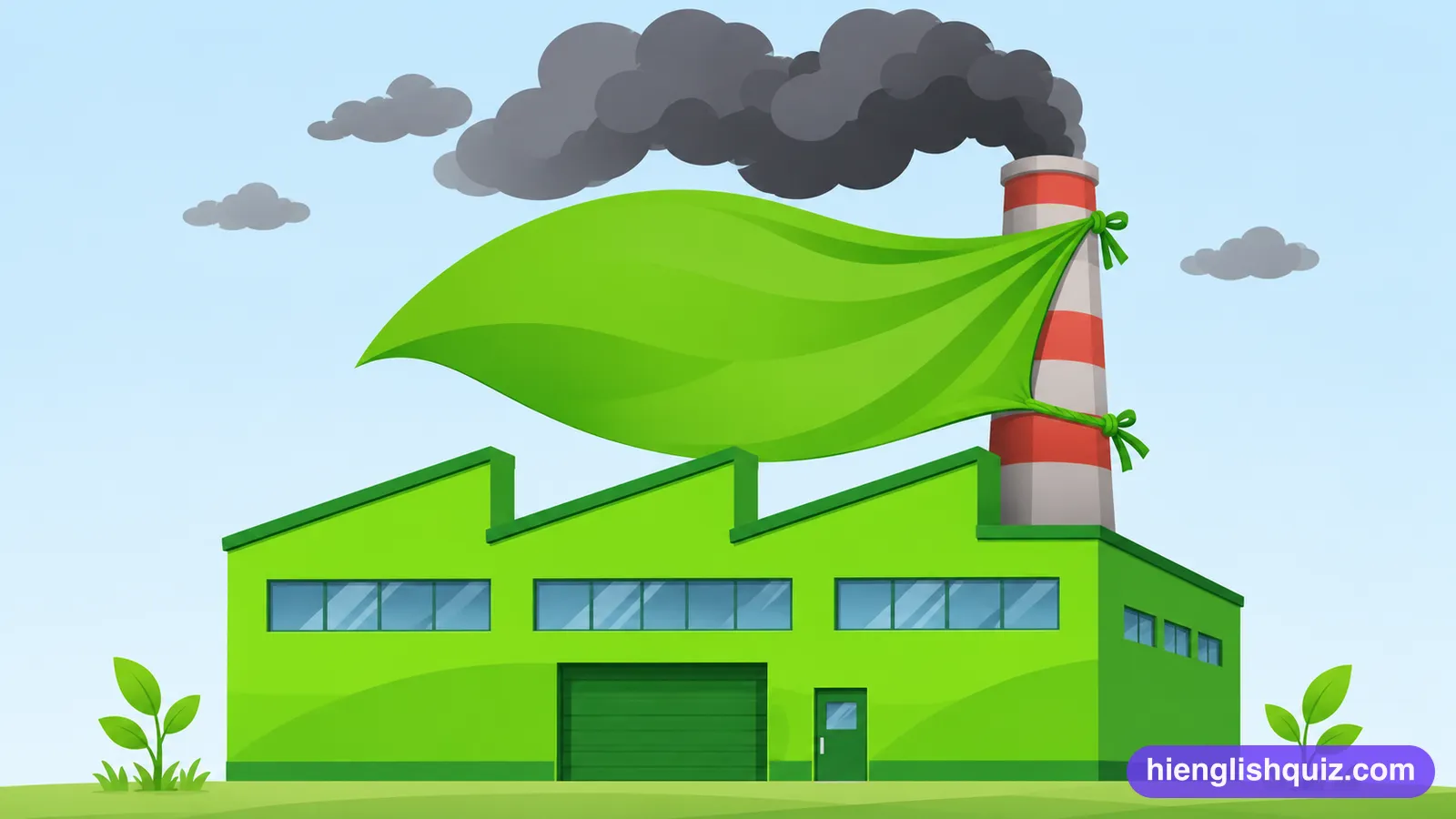
Making a product or company seem more friendly to nature than it really is, usually in advertising.
Example: Critics call the oil company's new advert pure greenwashing.
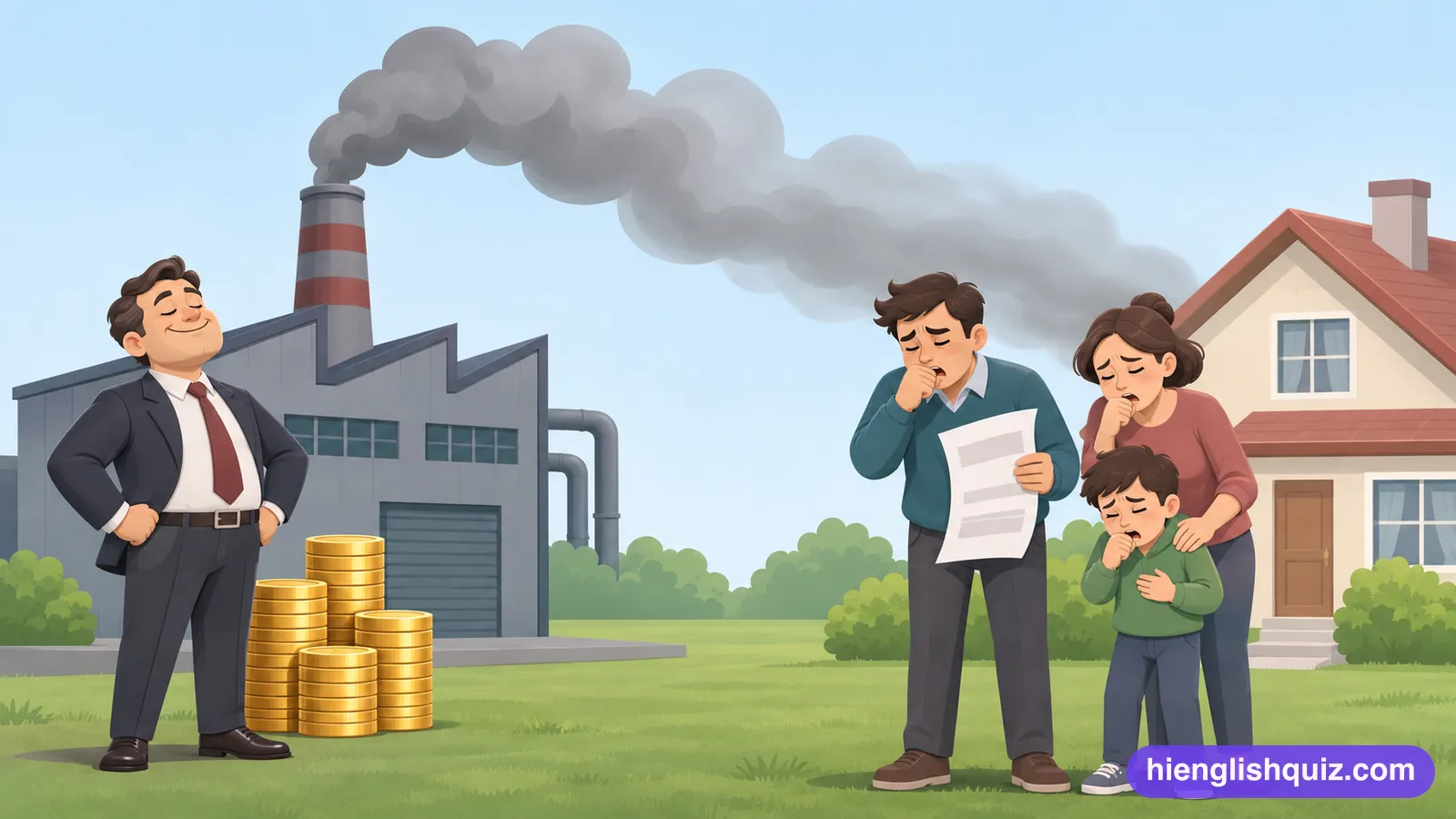
A cost, such as dirty air, that is carried by other people or society and not paid by the business that causes it.
Example: Pollution is a classic externality, since neighbours pay with their health.
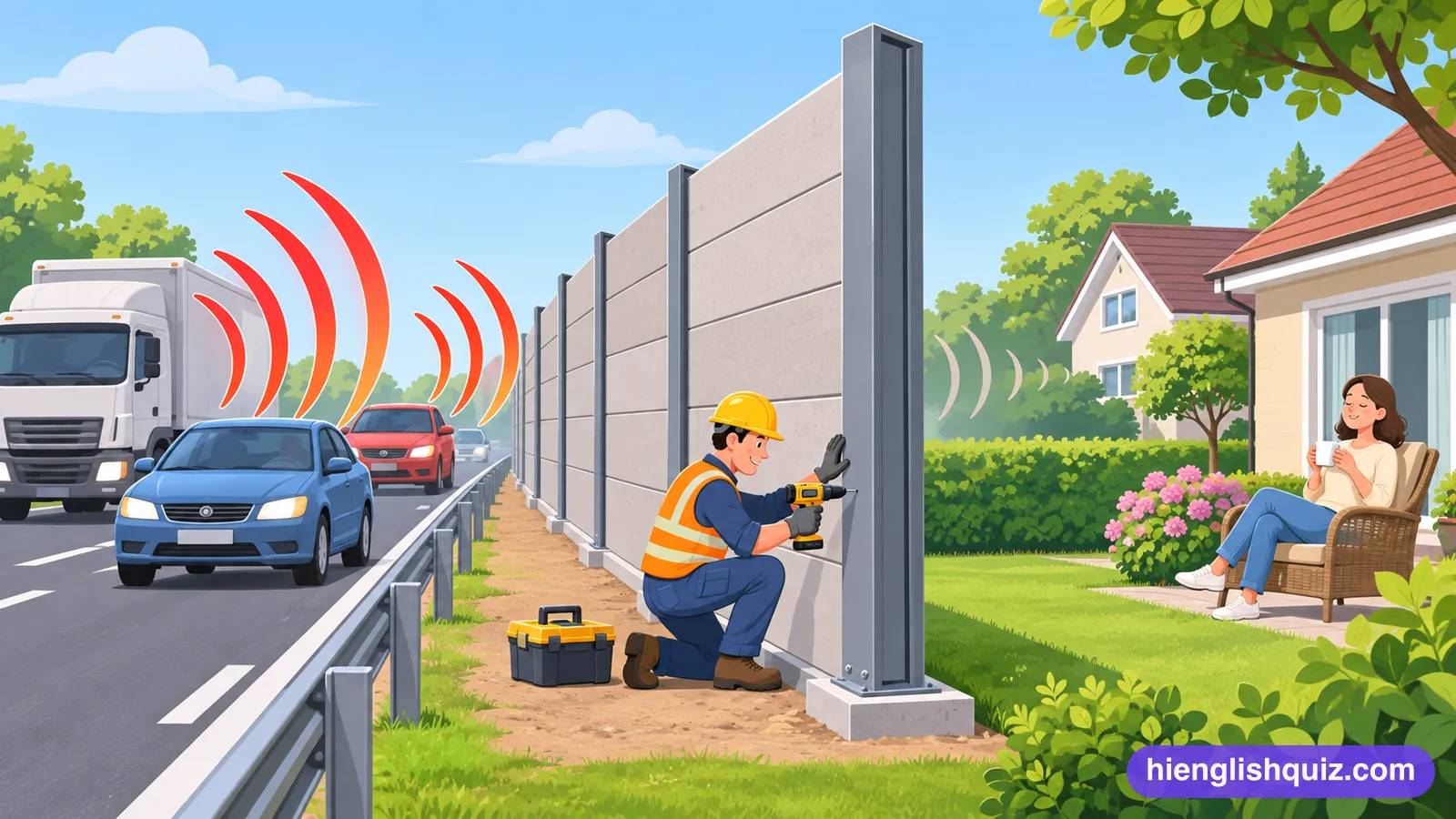
The reduction or stopping of something harmful, such as noise or dirty emissions.
Example: The city spent millions on noise abatement near the airport.
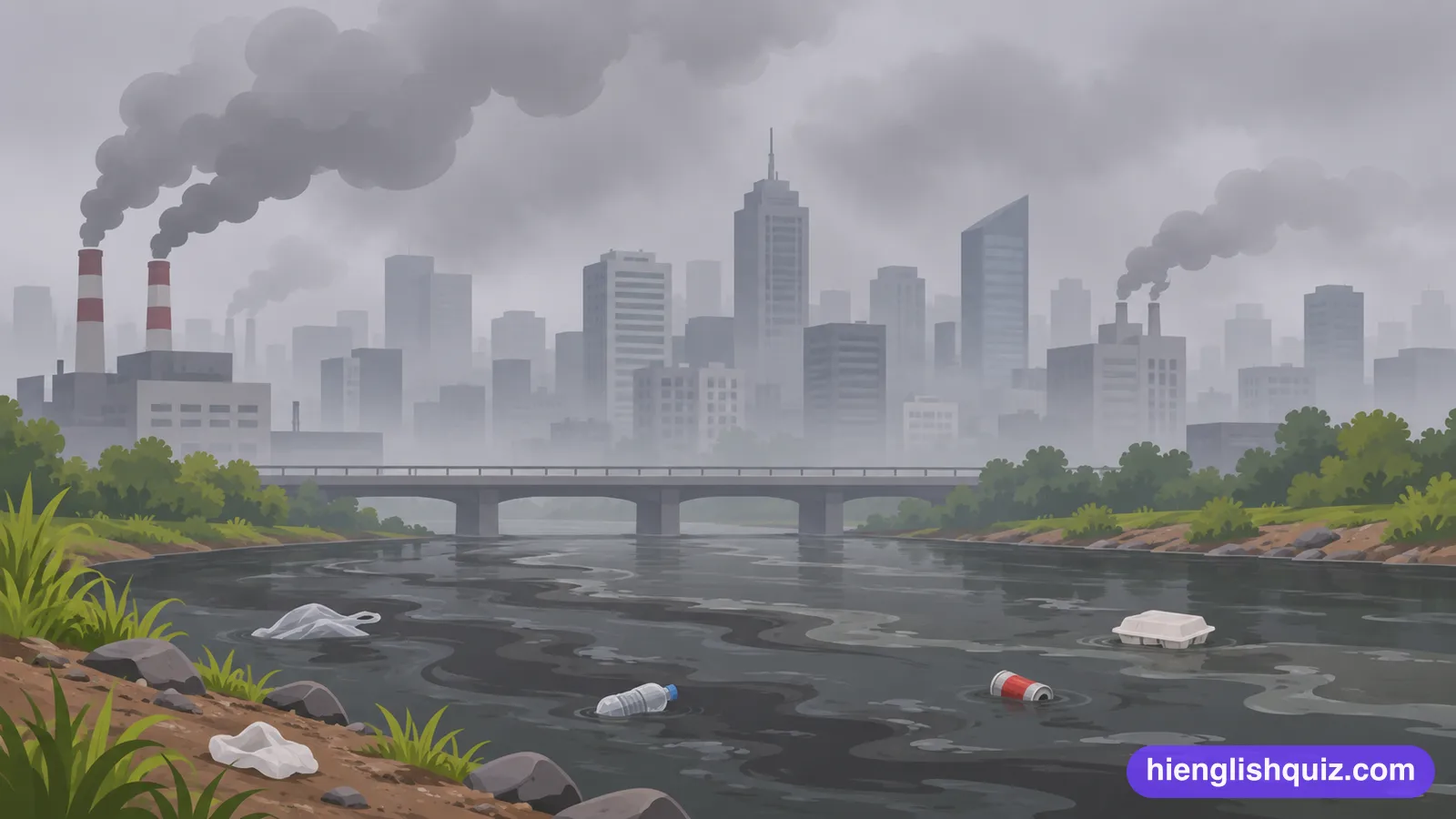
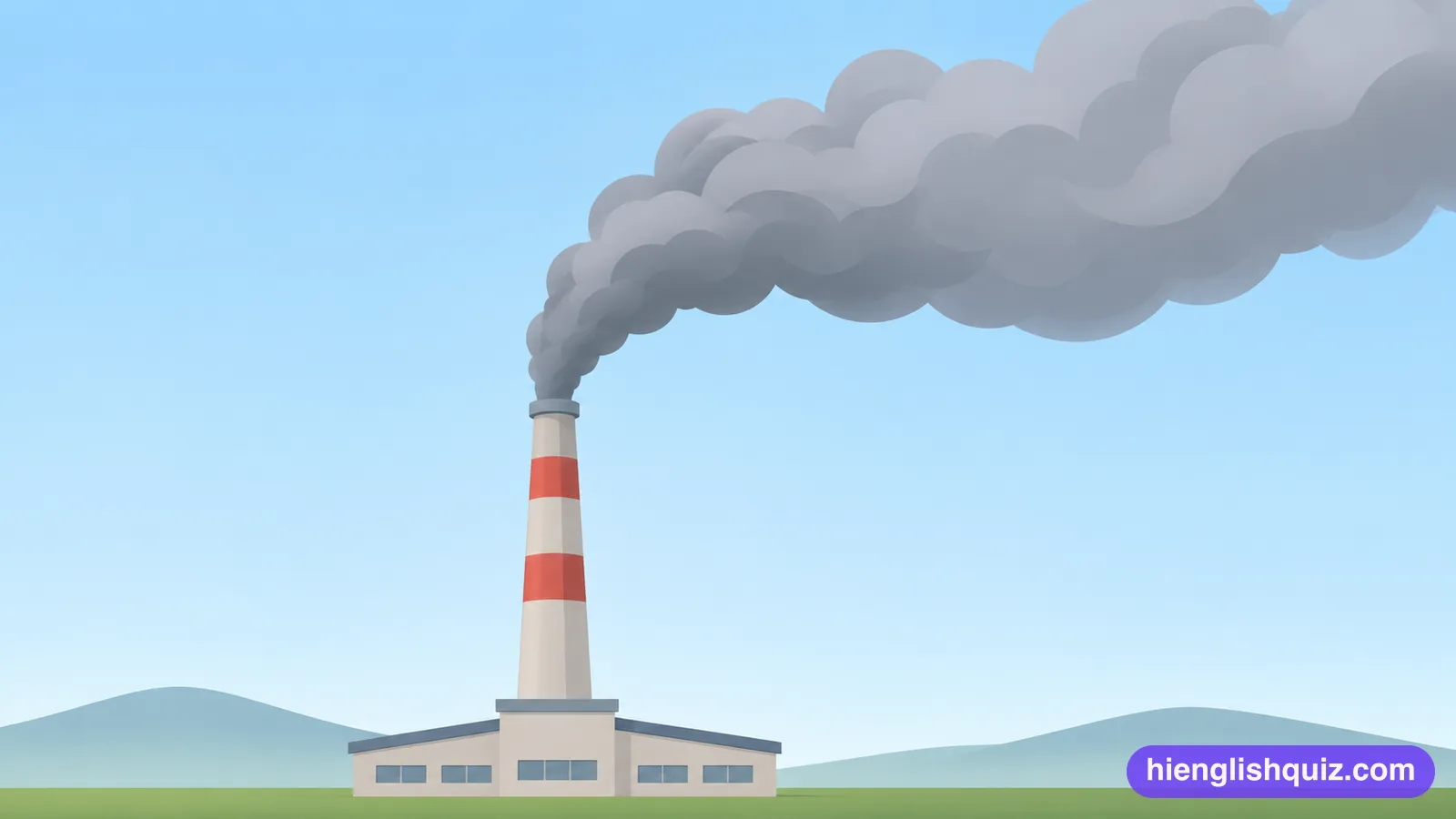
A long cloud of smoke, gas or polluted water that spreads out from its source.
Example: A thick plume of ash drifted across the city.
The idea that if an action might seriously harm people or nature, it should be avoided even if scientists are not yet sure.
Example: Banning the chemical was a case of the precautionary principle in action.
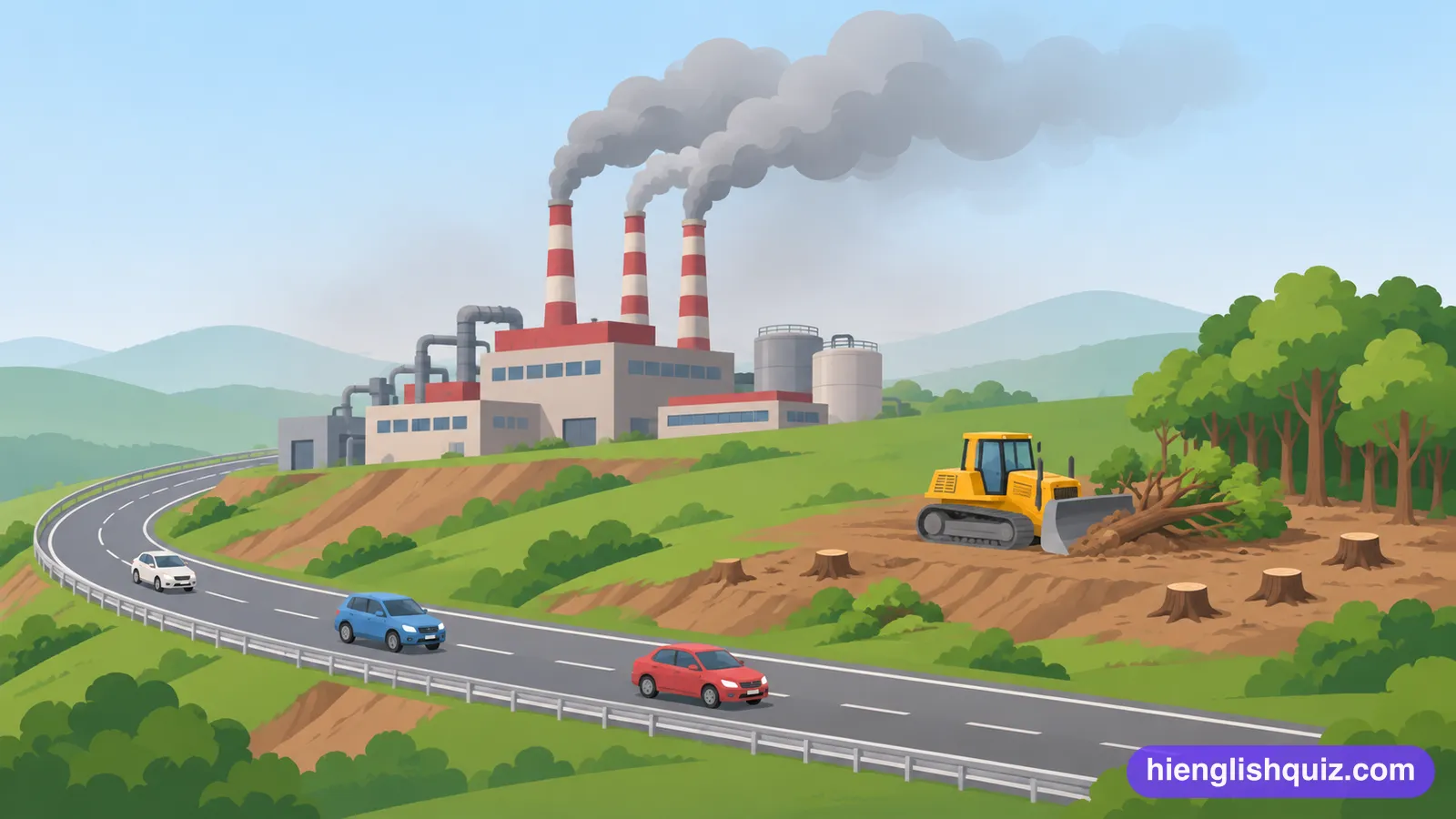
Caused by human activity rather than by natural processes.
Example: Most of the lead in the soil is anthropogenic, not natural.
A chemical found in a living thing that does not belong there naturally, such as a drug or pesticide.
Example: The liver breaks down each xenobiotic before it can do harm.