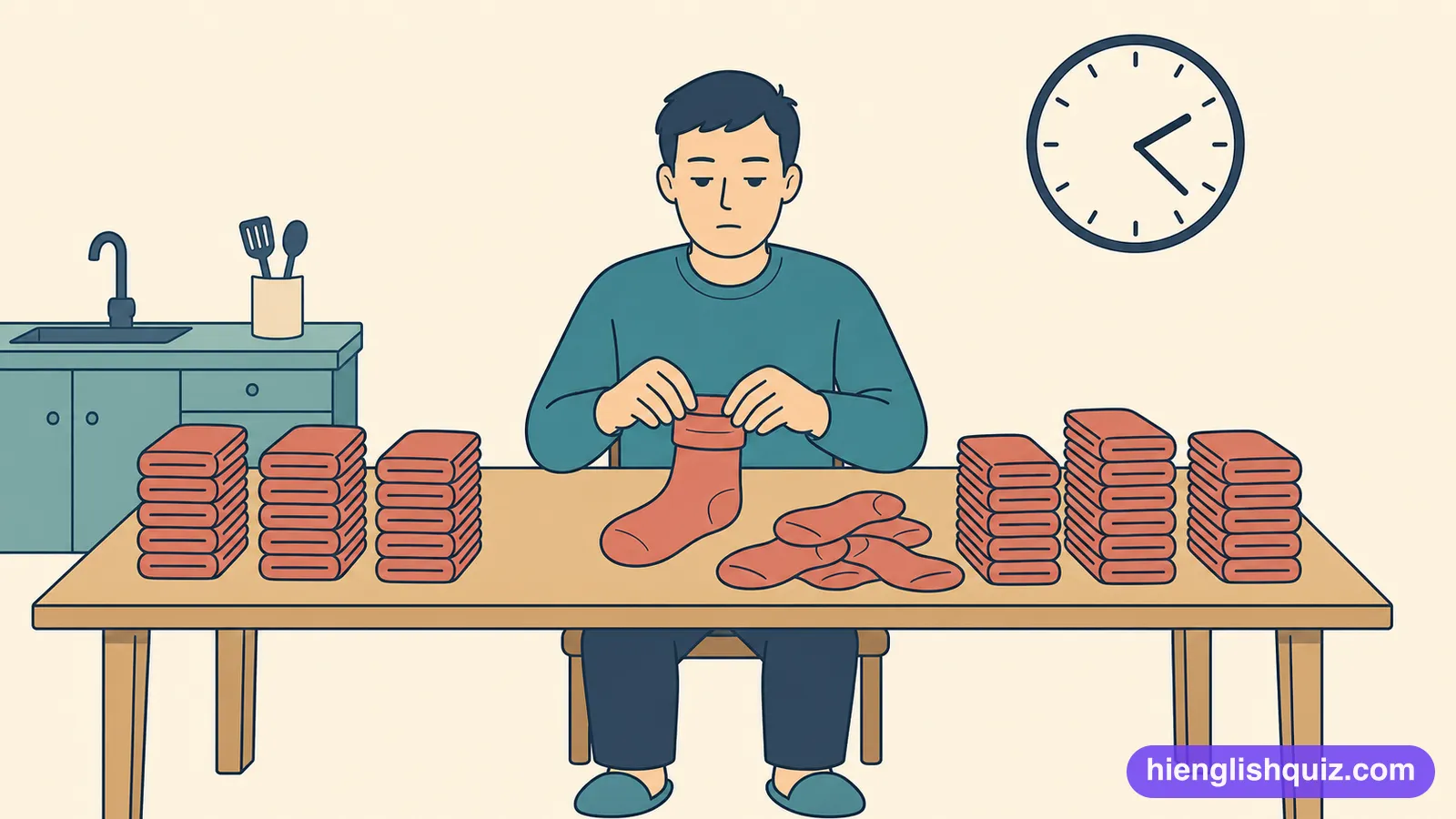
double-book
To promise the same time to two different people by mistake.
Example: Sorry, I seem to have double-booked myself this afternoon.

 Hi EnglishQuiz
C117 words · Advanced
Appointments vocabulary for a diary under strain, including double-book, overrun, diarise and defer — words for scheduling once it stops running smoothly.
To promise the same time to two different people by mistake.
Example: Sorry, I seem to have double-booked myself this afternoon.
To continue past the time when something was supposed to end.
Example: The dentist overran, so I waited forty minutes.
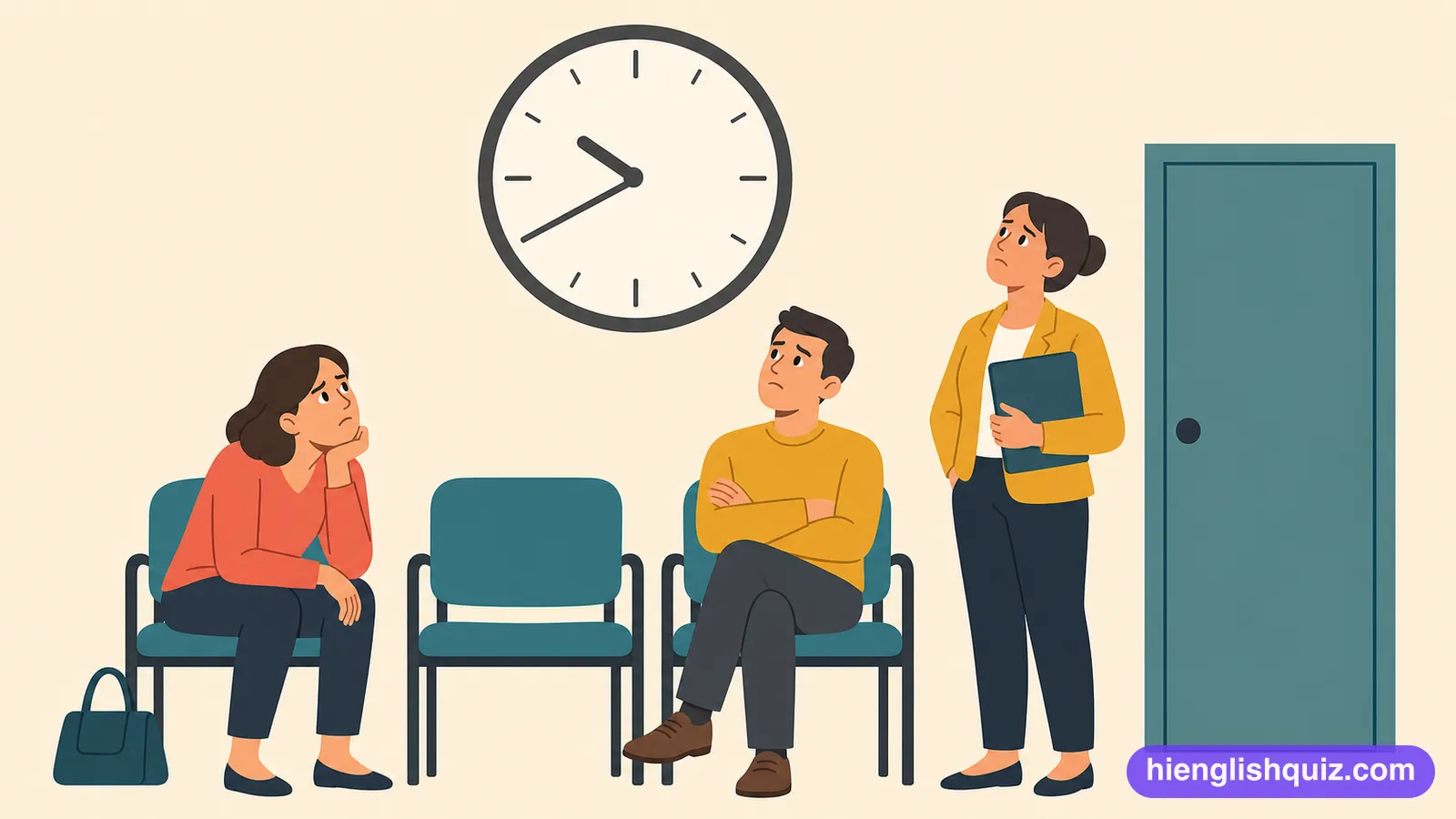
With very little warning before something has to happen.
Example: Sorry to ask at short notice, but can we meet tomorrow?

A promise to be at a particular place or do a particular thing at an arranged time.
Example: I can't come — I have a prior engagement.

Not fixed or certain, and possibly going to change.
Example: We made a tentative plan to meet on Friday.

To keep a period of time free in your schedule for one particular purpose.
Example: I always block out Friday mornings for admin work.

To fail to arrive for a date or meeting you arranged with someone, without warning.
Example: He never turned up — she'd been stood up again.

To write an appointment or event into your diary so you remember it (British English).
Example: I'll diarise the meeting for next Tuesday.

To change the order or timing of a set of arranged things.
Example: They had to reshuffle the whole day's appointments.

To arrange for something to happen at a later time than originally planned (formal).
Example: She asked to defer her interview until next week.

The habit of always arriving at the right time.
Example: Punctuality was the only thing he ever praised anyone for.

Given as an official share of time.
Example: Each patient gets an allotted eight minutes and no more.

The sorting of people by how urgently they need to be seen.
Example: A nurse does the triage before anyone reaches a doctor.

To stop a meeting and arrange to continue it later.
Example: They chose to adjourn rather than vote on it that night.

To arrange times so that they do not all happen together.
Example: The surgery has begun to stagger its morning slots.

To ask someone to come back for a further appointment.
Example: The clinic will recall every patient over sixty this year.

Still not dealt with or completed.
Example: There are two outstanding items from the last visit.