immigrant
/ˈɪməɡrənt/- Nghĩa tiếng Việt
- Người nhập cư
- Định nghĩa tiếng Anh
- A person who comes to live permanently in a country that is not their birthplace.
Ví dụ: Many immigrants in this city work in healthcare.

 Hi EnglishQuiz
B216 từ · Trung cao
Từ vựng về những người di chuyển giữa các quốc gia, gồm immigrant, refugee và cosmopolitan, cùng stereotype và colonial để nói về bản sắc và định kiến văn hóa.
Ví dụ: Many immigrants in this city work in healthcare.
Ví dụ: The festival celebrates the island's musical heritage.
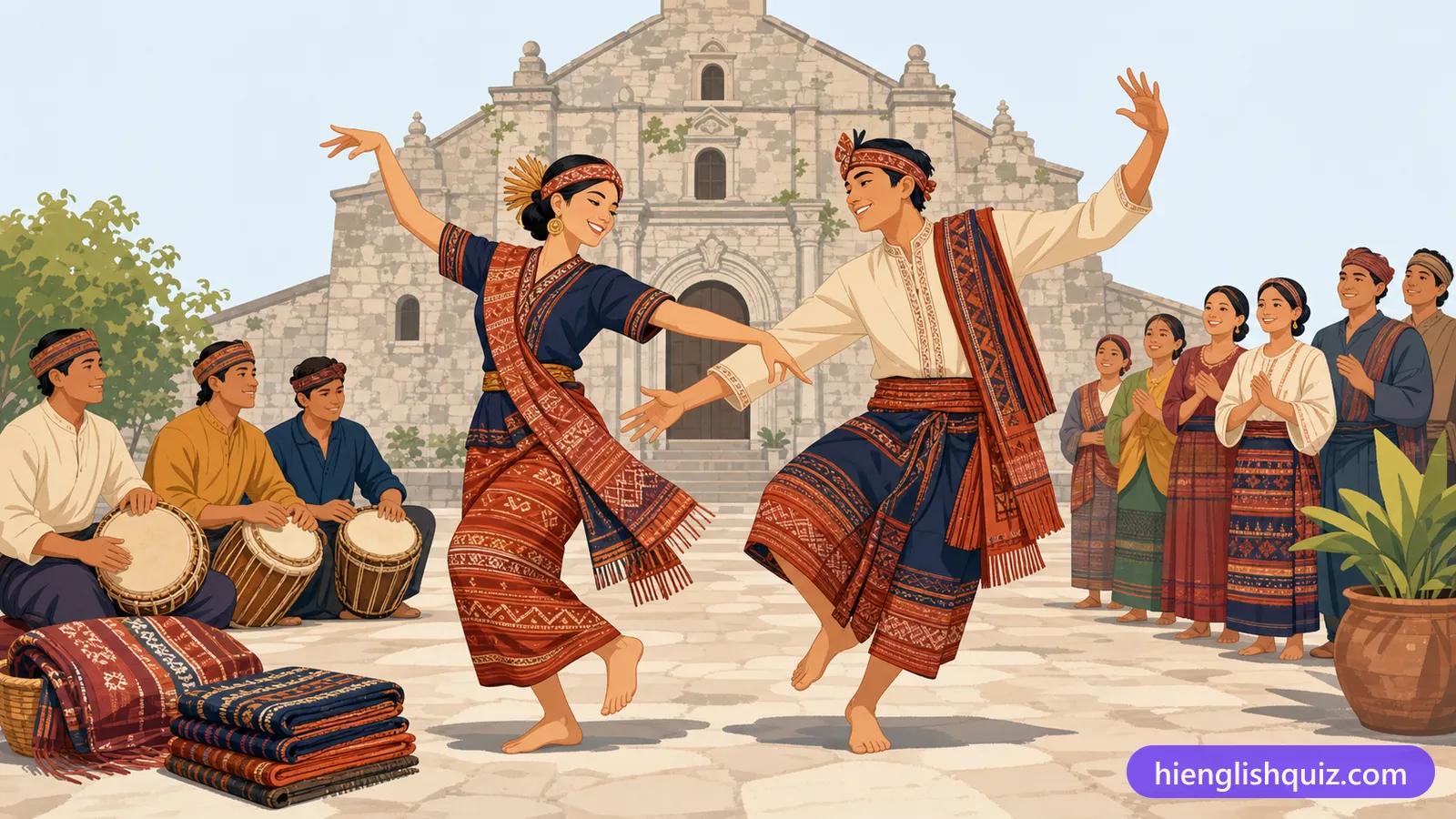
Ví dụ: Our school is proudly multicultural, with students from forty countries.

Ví dụ: The island has a small Portuguese-speaking minority.

Ví dụ: The city has grown fast because of migration from rural areas.
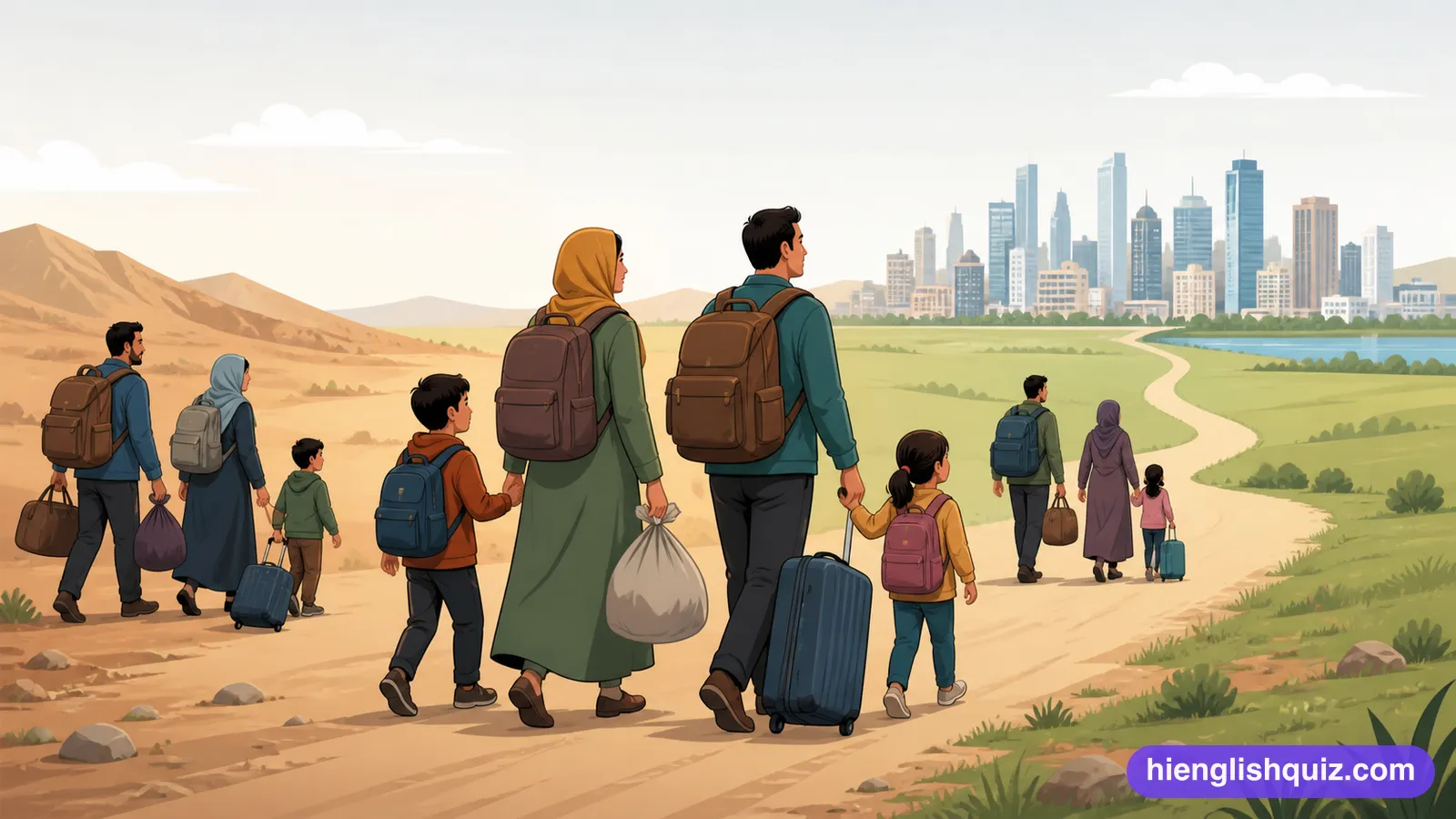
Ví dụ: The charity provides housing for refugees.

Ví dụ: The programme supports the integration of new arrivals into local schools.

Ví dụ: The film was criticised for relying on lazy national stereotypes.

Ví dụ: Thanks to her parents, she holds dual nationality.

Ví dụ: London is famous for being a cosmopolitan city.

Ví dụ: The council published its diversity figures for the first time.
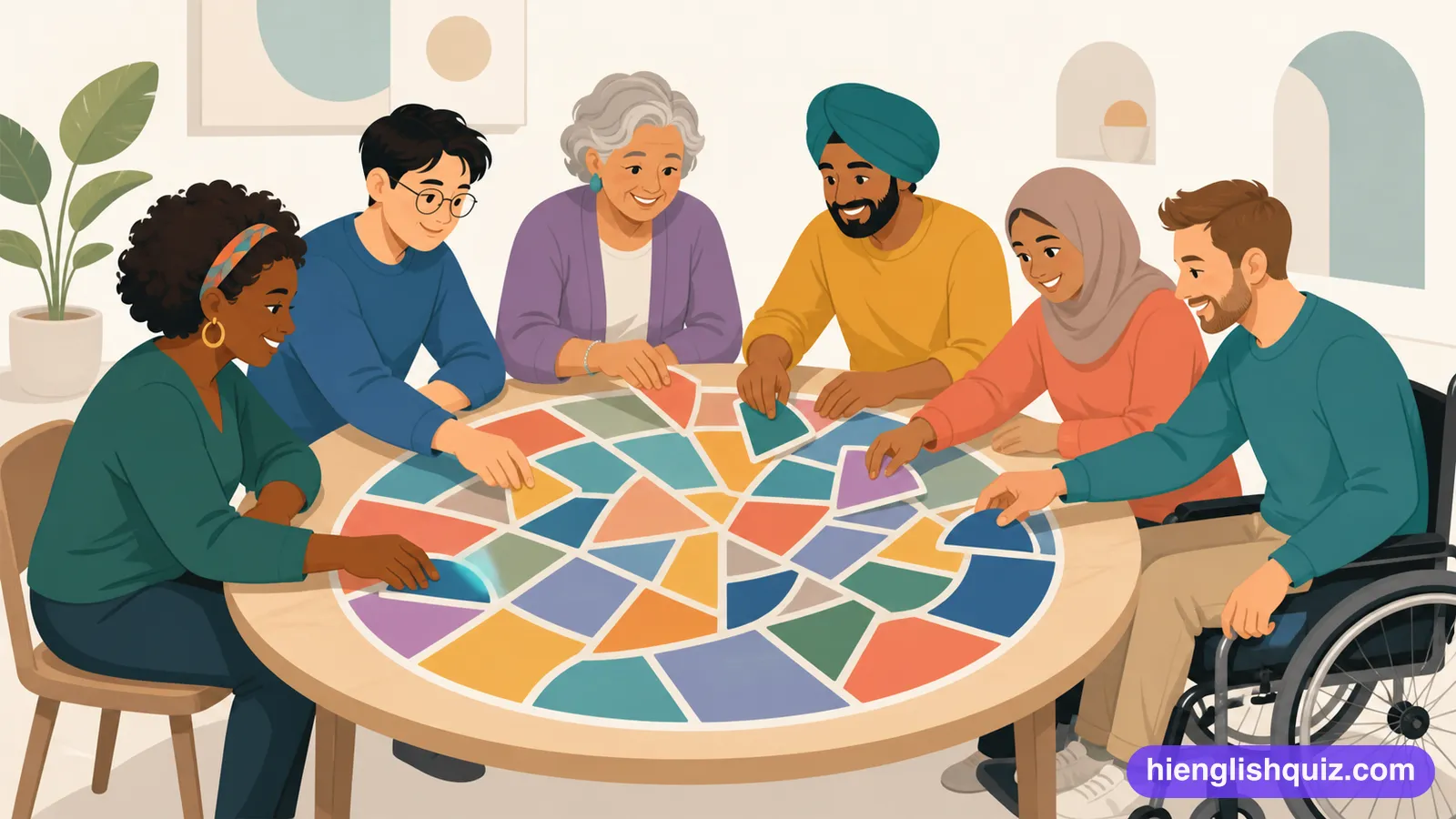
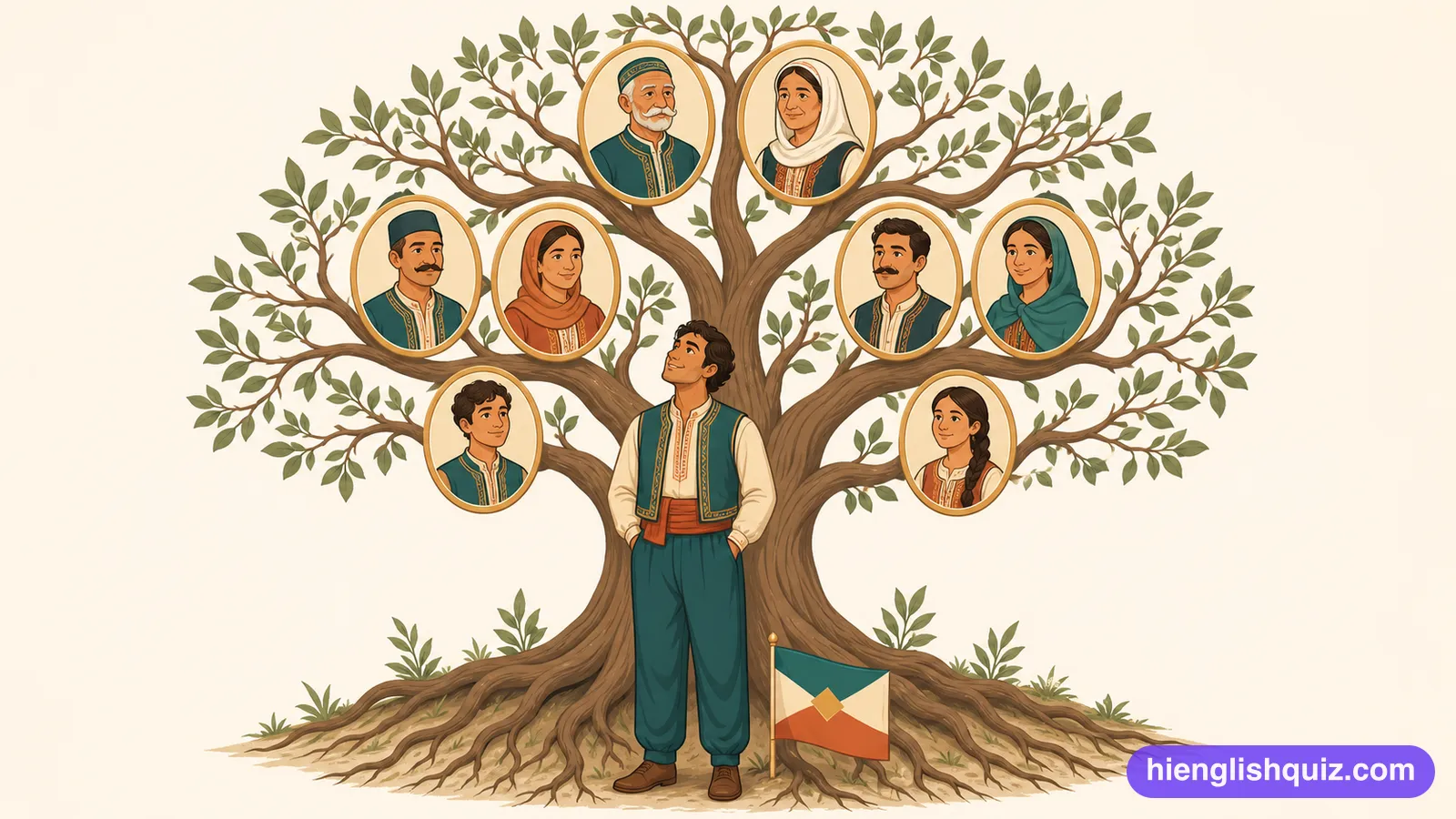
Ví dụ: He has Irish ancestry on both sides going back four generations.

Ví dụ: She is of Nigerian descent but has never lived outside Leeds.
Ví dụ: The first settler families arrived with almost nothing.

Ví dụ: The museum finally addressed its colonial collection openly.

Ví dụ: The crowd was patriotic without being aggressive about it.