What Singular and Plural Nouns Are
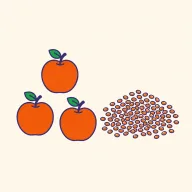
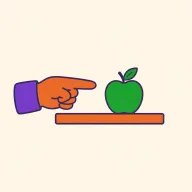
A countable noun in English cannot sit on the fence. It is either one or more than one, and the noun itself changes to say which — even when a number is already standing in front of it.
SINGULARone
One book, so the noun stays exactly as it is.
I have a book in my bag.
One thing, and the article a says so.
PLURALmore than one
Three books, so the noun takes the plural ending.
I have three books in my bag.
Three things, so the noun itself has to carry the -s.
The plural does not stop at the noun: the verb follows it. The cat is asleep becomes The cats are asleep, and getting the noun right usually puts the rest of the sentence in place.
TRY IT
- Question 1
"I have two at home."
- Question 2
"The cats asleep."
The spelling rules
MOST NOUNS
noun+ -s
book → books · pen → pens · house → houses
The default, and by far the largest group.
-S, -X, -Z, -CH, -SH
noun+ -es
bus → buses · box → boxes · watch → watches · dish → dishes
A plain -s would be unpronounceable, so an extra syllable is added: BUS-iz.
CONSONANT + Y
noun − y+ -ies
baby → babies · city → cities · country → countries
Only when a consonant stands immediately before the y.
VOWEL + Y
noun+ -s
boy → boys · day → days · key → keys
A vowel before the y blocks the rule above — never boies.
PLURALS AT A GLANCE
- bookbooks
- busbuses
- babybabies
- boyboys
- familyfamilies
- childchildren
-s, -x, -ch, -sh → -es · consonant + y → -ies · vowel + y → plain -s
-ies happens only after a consonant. baby → babies, city → cities — but boy → boys, day → days, key → keys. A vowel in front of the y protects it, which is why boies is not a word.
One small thing your ear will thank you for: after -s, -x, -ch and -sh the ending becomes its own syllable. Buses is two syllables, watches is two, dishes is two. Saying them as one is the commonest reason a listener hears the singular.
TRY IT
- Question 1
"Five play football in the yard."
- Question 2
"She washes the every evening."
- Question 3
"There are two in the kitchen."
The irregulars you will meet today
MAN → MEN
Two men are waiting outside.
The vowel changes; nothing is added.
Signal words: man · men
WOMAN → WOMEN
Three women work in that office.
Spelled with an o, but said WIM-in — the first vowel is what changes in speech.
Signal words: woman · women
CHILD → CHILDREN
The children are at school.
An old plural ending that survives in only a handful of words.
Signal words: child · children
PERSON → PEOPLE
Ten people are in the room.
Persons exists in legal English; people is the everyday plural.
Signal words: person · people
foot → feet and tooth → teeth. That is the whole of it — six irregular nouns is the A1 list.
Because an irregular plural is already complete, nothing may be added to it: children, not childrens; people, not peoples; feet, not feets.
-ies or a plain -s?
A final y goes two ways, and the letter immediately before it decides which.
| CONSONANT + Y → -IES | VOWEL + Y → PLAIN -S | |
|---|---|---|
| The letter before y | b, t, l… — a consonant | a, e, o… — a vowel |
| Examples | baby → babies · city → cities · family → families | boy → boys · day → days · key → keys |
| The mistake it prevents | citys · familys | boies · daies |
Half a rule is what produces the errors. Both halves have to travel together.
TRY IT
- Question 1
"one city → three "
- Question 2
"one key → two "
Common mistakes
Incorrect:I have two brother.
Correct:I have two brothers.
The number in front does not do the noun's work for it: a countable noun carries its own plural ending.
Incorrect:I have many friend.
Correct:I have many friends.
Many, some and a lot of all take a plural noun after them.
Incorrect:My friends is here.
Correct:My friends are here.
The -s does not stop at the noun: it decides the verb as well.
Incorrect:She washes the dishs every evening.
Correct:She washes the dishes every evening.
A noun ending in -sh takes -es, and that ending is a syllable of its own.
Incorrect:The childrens are playing outside.
Correct:The children are playing outside.
Children is already plural, so it never takes a second -s.
Incorrect:Three peoples are waiting.
Correct:Three people are waiting.
People is the plural of person and is complete on its own.
Incorrect:There are three womans in the office.
Correct:There are three women in the office.
Woman changes its vowel instead of taking an ending: woman → women.
Quick check · 6 questions
Choose the correct form:
I have three sisters.
- A. sisters — Correct
- B. sister
- C. sisteres
Answer: A. sisters
Three already tells you how many, but English marks the noun as well. Both carry the plural, every time.
Choose the correct spelling:
Two boxes are on the table.
- A. boxes — Correct
- B. boxs
- C. box
Answer: A. boxes
A plain -s after box would be unpronounceable, so English adds a whole syllable: BOX-iz. The same happens after -s, -ch and -sh.
Choose the correct spelling:
My families live in Huế.
- A. families — Correct
- B. familys
- C. family
Answer: A. families
The letter before the y in family is l, a consonant, so the y turns into -ies.
Choose the correct spelling:
Seven days a week.
- A. days — Correct
- B. daies
- C. dayes
Answer: A. days
The letter before the y in day is a, a vowel, which blocks the -ies rule. Learning only half the rule is what produces daies.
Choose the correct form:
The children are at school.
- A. children — Correct
- B. childs
- C. childrens
Answer: A. children
Child changes shape entirely rather than taking -s, and because children is already complete it never takes a second -s on top.
Choose the correct verb:
My friends are very kind.
- A. are — Correct
- B. is
Answer: A. are
A plural noun takes a plural verb. This is why the -s matters twice over: it decides the next word as well as its own.