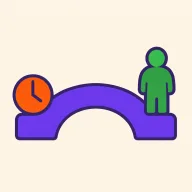
What Just, Already and Yet Are
Just, already and yet are adverbs that often go with the present perfect to say whether something has happened or not, up to the moment of speaking.
JUSTA moment ago
Just: it happened right before now.
I've just cleaned the kitchen.
The kitchen is clean now. I finished a few minutes ago.
ALREADYDone
The kids have already had dinner.
Dinner is over for the kids. They do not need to eat now.
YETNot done — still waiting
The package hasn't arrived yet.
We are still waiting for the package.
A moment ago → just · done → already · not done so far → yet. Just and already go between have/has and the participle; yet goes at the end of a negative or a question. Yet does not make a sentence negative. A not-yet sentence still needs haven't or hasn't.
TRY IT
- Question 1
"Don't call Nam now. He's gone to bed."
- Question 2
"I eaten yet — I'm starving."
The forms
The past participle is the third form of a verb — the third column of an irregular verb table (eat – ate – eaten).
POSITIVE · JUST / ALREADY
Shave / hasjust / alreadypast participle…
She's already paid the bill.
Just and already sit between have/has and the participle.
NEGATIVE · YET
Shaven't / hasn'tpast participle…yet
We haven't booked the hotel yet.
Yet goes at the very end, after the object.
QUESTION · YET
Have / HasSpast participle…yet?
Has the film started yet?
Answers: Yes, it has. · No, it hasn't. · No, not yet.
With a time like ten minutes ago, do not use the present perfect, with or without just. Use the past simple: I called her ten minutes ago.
TRY IT
- Question 1
"Mum has the tea."
- Question 2
" finished your coffee yet?"
- Question 3
"— Has the bus come yet? — No, ."
When to use them
Saying no to food or drink
No, thanks. I've just eaten.
Just gives the reason: you ate a moment ago, so you are not hungry now.
Signal words: just had lunch · just woken up · just got home
Telling someone it is done
Don't buy milk — I've already bought some.
The job is finished, so the listener does not need to do it.
Signal words: already paid · already sent it · already told him
Something you are waiting for
The shop hasn't opened yet — let's wait a bit.
You are waiting for it, but it has not happened so far.
Signal words: hasn't called yet · haven't decided yet · hasn't started yet
Checking on progress
Have you packed your bag yet? We leave at six.
Asking whether a job that needs doing is done.
Signal words: finished yet? · called her yet? · decided yet?
Already vs. yet
These two are easy to mix up because both are about whether something is done. At this level, choose by the kind of sentence: a positive sentence takes already; a negative or a question takes yet.
| ALREADY | YET | |
|---|---|---|
| meaning | done | not done so far · done so far? |
| position | between have/has and the participle | at the end |
| example | Dad has already washed the car. | Dad hasn't washed the car yet. |
TRY IT
- Question 1
"The meeting has finished, so you can go in now."
- Question 2
"Don't tell me the score — I haven't watched the match !"
Common mistakes
Incorrect:I haven't already finished my report.
Correct:I haven't finished my report yet.
Already belongs in positive sentences; a negative takes yet at the end.
Incorrect:I don't read that book yet.
Correct:I haven't read that book yet.
Something not done up to now takes haven't plus the participle, not don't.
Incorrect:I have finished my homework yet.
Correct:I have already finished my homework.
Yet is not used in a positive statement; to say something is done, use already.
Incorrect:I just have woken up.
Correct:I have just woken up.
Just goes after have or has, right before the participle.
Incorrect:He has just left five minutes ago.
Correct:He left five minutes ago.
A time with ago takes the past simple. Ago says when, so just is not needed.
Incorrect:— Have you called Grandma yet? — No, not already.
Correct:— Have you called Grandma yet? — No, not yet.
The short answer for something not done is not yet; already only means done.
Quick check · 6 questions
Choose the correct word:
Sorry, Hà isn't here. She has just left.
- A. just — Correct
- B. yet
- C. ever
Answer: A. just
She left a moment ago, so it is just. Yet is not used in a positive sentence, and ever is for asking about experience.
Choose the correct word:
— Let's buy a present for Hương. — I've already bought one.
- A. already — Correct
- B. yet
Answer: A. already
This is a positive sentence saying the job is done, so it is already. Yet is not used in a positive statement.
You are still waiting for the water to boil. Choose the correct form:
The water hasn't boiled yet.
- A. hasn't boiled — Correct
- B. has boiled
- C. not boiled
Answer: A. hasn't boiled
To say it has not happened, use hasn't plus the participle, then yet at the end. "Not boiled" has no has.
Choose the correct question:
Have you seen the new Doraemon film yet?
- A. Have you seen — Correct
- B. You have seen
- C. Have you saw
Answer: A. Have you seen
A yet question moves have in front of the subject. After have comes the participle seen, not the past simple saw.
Choose the correct reply:
— Has the doctor called you back? — Not yet. Maybe this afternoon.
- A. Not yet — Correct
- B. Not already
- C. Yet not
Answer: A. Not yet
The short reply for something that has not happened is Not yet, with not first. "Not already" is not English.
Choose the correct sentence:
My sister got home an hour ago.
- A. My sister got home an hour ago. — Correct
- B. My sister has just got home an hour ago.
- C. My sister has got home an hour ago.
Answer: A. My sister got home an hour ago.
An hour ago says exactly when, so the sentence uses the past simple, with no just and no has.
See whether it really stuck.
Start the quiz · 12 questions