What This, That, These and Those Are
Four words cover the whole job of pointing. Before you choose one, English asks two questions: how far away is it, and how many are there. Answer both and only one word is left.
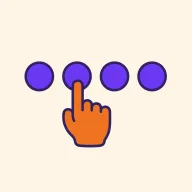
NEAR, ONEthis
Near the speaker: this and these.
This book is very interesting.
The book is in my hands, and there is one of it.
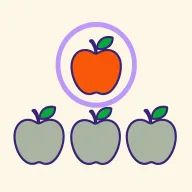
FAR, MANYthose
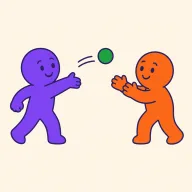
Away from the speaker: that and those.
Those books are yours.
The books are on the far table, and there are several.
TRY IT
- Question 1
" book in my hand is new."
- Question 2
" cars over there are expensive."
The forms
BEFORE A NOUN
this / thesenoun
this book · these books · that house · those houses
A determiner: it takes the slot where a or the would go, in FRONT of the noun.
STANDING ALONE
This / Theseis / are…
This is my phone. · These are my keys.
A pronoun: no noun follows, and the word is the subject itself. A plural subject takes are, never is.
QUESTION
What / Whoseis / arethis / these?
What is this? · What are these? · Are those your shoes?
The same two jobs survive in a question; only the word order moves.
SINGULAR → PLURAL
- this bookthese books
- that carthose cars
- that childthose children
both words change together: this → these, that → those, and the noun takes its own plural — never this books
Because the same four words fill both roles, one sentence can use them twice over: This book is new, and that book is old.
this book → these books · that child → those children. English switches the pointing word itself; it does not add an -s to it, so thises and thoses do not exist.
TRY IT
- Question 1
" shoes on my feet are new."
- Question 2
" is my brother."
- Question 3
"Look at car over there."
When to use them
Pointing at things
Can you pass me those pens?
The pens on the far table — the everyday job of all four words.
Signal words: this book · these keys · that car · those pens
Introducing people
This is my friend Nam.
English presents a person with this, never with he is when you are making the introduction.
Signal words: This is Mai. · This is my sister.
On the telephone
Hello, this is Mai speaking.
You name yourself with this; the other end is at a distance, hence the British Who's that?
Signal words: This is Mai. · Who's that?
Asking
What is this? · Is that your bag?
The first questions any learner needs, and the four words keep their normal jobs in them.
Signal words: What is this? · What are these? · Whose is this?
This/these vs. that/those
| NEAR — this / these | FAR — that / those | |
|---|---|---|
| One thing | this | that |
| More than one | these | those |
| Where it is | Here, next to me, in my hand | Over there, across the room, further away |
| Example | This is my phone. | That is your bag, over by the door. |
Distance is not only about metres: that also handles anything the speaker is standing back from, which is why That was a good film works — the film has finished, so it has moved away in time.
Many languages have one pointing word that never changes, and Vietnamese is one of them: này covers one book and ten books alike, and it sits after the noun. English does neither. The word itself has to switch to the plural, so this books and those book are not variants but errors, and the agreement reaches past the noun to the verb as well: These are my keys, never These is my keys.
this is short and hisses at the end — /ðɪs/. These is long and buzzes — /ðiːz/. If the two sound the same when you say them, a listener has to guess your number from the noun; make the vowel long and let the ending buzz.
TRY IT
- Question 1
" is my phone, here in my pocket."
- Question 2
"What these in your bag?"
Common mistakes
Incorrect:This shoes are new.
Correct:These shoes are new.
Shoes is plural, so the demonstrative in front of it must be plural too.
Incorrect:These is my brother.
Correct:This is my brother.
One person, standing near the speaker, takes the singular this — and is, not are.
Incorrect:Look at those car over there.
Correct:Look at that car over there.
Those belongs with a plural noun; one car takes that.
Incorrect:What is these in your bag?
Correct:What are these in your bag?
These is plural, so the verb has to be are.
Incorrect:Hello, I am Mai speaking.
Correct:Hello, this is Mai speaking.
On the phone English names the speaker with this, not with I am.
Incorrect:This is my books.
Correct:These are my books.
When the noun is plural, both the demonstrative and the verb have to follow it into the plural.
Incorrect:I don't like this trousers.
Correct:I don't like these trousers.
Trousers is permanently plural, so it can only take these or those.
Incorrect:Can you see that mountains?
Correct:Can you see those mountains?
A plural noun needs the plural form of the demonstrative, however far away it is.
Quick check · 6 questions
Choose the right order:
I like this book.
- A. this book — Correct
- B. book this
- C. this a book
Answer: A. this book
This takes exactly the slot a or the would take, so it also rules out using an article as well.
Choose the right word:
These apples are very sweet.
- A. These — Correct
- B. This
- C. That
Answer: A. These
Apples is plural, so the word has to be plural too. English changes the word itself rather than leaving it alone and letting the noun carry the number.
Choose the right word:
Those are my keys, over there on the desk.
- A. Those — Correct
- B. These
- C. That
Answer: A. Those
"Over there" places them at a distance and keys is plural, so the word is those. Here it stands on its own as the subject, with no noun after it.
Choose the right word:
That is Fansipan, the highest mountain in Việt Nam.
- A. That — Correct
- B. These
- C. Those
Answer: A. That
One mountain and far away, so the word is that. These and those are both plural forms.
Choose the right verb:
What is that?
- A. is — Correct
- B. are
Answer: A. is
The agreement runs on into the verb: What is that? but What are those?
You are introducing your mother, who is beside you. Choose the right word:
This is my mother.
- A. This — Correct
- B. That
- C. She
Answer: A. This
English introduces people with this or that rather than with he or she. "She is my mother" tells someone who already knows her; it does not introduce her.