What Countable and Uncountable Nouns Are
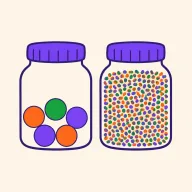
Every English noun belongs to one of two groups, and the group is settled before you say anything else in the sentence. Countable nouns are things you count one by one, so they have a singular and a plural. Uncountable nouns are treated as a mass or a material, so they have exactly one form.
COUNTABLEone, two, three
Separate things you can count: one, two, three.
I want two books yesterday.
A number stands straight in front of it, and the noun takes -s.
UNCOUNTABLEa mass, not pieces
One mass, with no separate pieces to count.
I want some bread yesterday.
No number and no -s. "Two breads" is not English.
There is a quick test. Put two in front of the noun. If two chairs sounds normal, the noun is countable. If two furnitures sounds wrong, it is uncountable — and everything else in this lesson follows from that one answer.
TRY IT
- Question 1
"I need some about the trip."
- Question 2
" very expensive here."
The formulas
COUNTABLE
a / two / threenoun (+s)
a book · three books
The number sits straight in front of the noun.
UNCOUNTABLE
some / a lot ofnoun
some bread · a lot of advice
No a or an, no -s, and never a number in front.
COUNTING IT ANYWAY
numbercounter + sofnoun
three pieces of advice
The counter carries the number and the -s; the noun never moves.
COUNTERS AT A GLANCE
- advicea piece of advice
- watera bottle of water
- breada slice of bread
- ricea kilo of rice
- coffeea cup of coffee
a piece of advice / information / news / furniture · a glass of milk · a loaf of bread · a bar of chocolate · a bag of sugar · a bowl of soup
That piece of is more familiar than it looks. Vietnamese almost never puts a number straight in front of a noun — a classifier goes between them: một cái bàn, một tờ giấy, một lời khuyên. English throws the classifier away for countable nouns (a book, not a cuốn book) but keeps it exactly where the noun is uncountable. So a piece of advice is một lời khuyên with the words in the other order.
Three pieces of advice. Two bottles of water. If you ever find yourself writing advices or informations, the -s has landed on the wrong word.
TRY IT
- Question 1
"Can I have two of water, please?"
- Question 2
"He always gives me good advice."
- Question 3
"I want three of bread."
The nouns that catch everyone out
The hard cases are not exotic words. They are nouns whose Vietnamese equivalents count perfectly freely — một lời khuyên, hai thông tin, ba món đồ, mấy tin mới are all ordinary Vietnamese — and which English refuses to count at all.
ADVICE AND INFORMATION
She gives me some useful advice.
One tip or ten tips — the word never changes and never takes a.
Signal words: advice · information · news · homework
FURNITURE AND LUGGAGE
We have some new furniture.
Three chairs and a table are still furniture, never furnitures.
Signal words: furniture · homework · work
MONEY, WORK AND WEATHER
I don't have much money.
Coins, notes and jobs are countable; money, work and traffic are not.
Signal words: money · work · weather · music
NEWS, DESPITE THE -S
The news is good today.
It ends in -s but it is one uncountable noun, so the verb is is.
Signal words: news — always with is
Food and material words behave the same way: bread, rice, water, milk, sugar, coffee, tea, meat. You can hold a piece of any of them, but the noun names the substance rather than the piece.
A few nouns sit in both groups, with a different meaning in each. That is not an exception — it is the same rule applied to two senses of one word:
Countable vs. Uncountable
| COUNTABLE | UNCOUNTABLE | |
|---|---|---|
| Plural | book → books, city → cities | No plural at all: bread, not breads |
| a / an | a book, an apple, a chair | Never: not "a bread", not "an information" |
| A number in front | three books | Impossible — you count the portions: three slices of bread |
| The verb | The book is new. The books are new. | Always singular: The bread is fresh. |
| some / any | some books · any books | some bread · any bread — the same words for both |
| How much / many | How many books? | How much bread? |
The some / any row is the one to hold on to. Those two words are the bridge between the groups: they sit happily in front of a plural countable noun and in front of an uncountable one. When you are not sure which group a noun is in, some is the safest word you can put in front of it — which is exactly why the rest of this lesson is about some and any.
TRY IT
- Question 1
"I need apple."
- Question 2
"The information very useful."
Some and Any
Some and any answer the question "how many?" by refusing to answer it. They tell the listener that an amount exists without saying what it is, which is why they turn up in almost every conversation: the exact number is rarely the point.
There is some milk in the fridge.
A statement: milk exists, and I am not counting it.
There isn't any milk in the fridge.
The same idea, denied — and the word changes with it.
Both go in front of a plural countable noun (some books, any books) or an uncountable one (some milk, any milk). Neither goes in front of a singular countable noun — that slot belongs to a or an. I need a phone, never I need some phone.
AFFIRMATIVE
SVsomeN
I have some questions.
A plain statement takes some.
NEGATIVE
Sdon't / isn'tanyN
I don't have any questions.
Anything negative takes any.
QUESTION
Do / AreSanyN?
Do you have any questions?
A genuine question takes any.
Those three rows are a good habit rather than a law, and the place they break is one you will hear every day. The moment you offer something or ask for something, a question takes some: Would you like some tea? · Can I have some water, please? · Could you lend me some money?
The reason is worth having, because it makes the choice automatic instead of memorised. Any leaves it genuinely open that there is none at all. Some treats the amount as already there. When you offer tea you are not wondering whether tea exists — the pot is in your hand and you expect the answer yes — so you reach for some.
TRY IT
- Question 1
"I don't have brothers or sisters."
- Question 2
"Would you like more rice?"
Common mistakes
Incorrect:She gives me some good advices.
Correct:She gives me some good advice.
Advice has no plural form, however many separate suggestions you are counting in your head.
Incorrect:I need an information about the train.
Correct:I need some information about the train.
An uncountable noun never takes a or an. Use some, or count it with a piece of information.
Incorrect:We have two new furnitures.
Correct:We have two new chairs.
Furniture takes no number. Name the countable items instead, or say pieces of furniture.
Incorrect:The news are bad today.
Correct:The news is bad today.
That -s belongs to the word itself; news is uncountable, so the verb is singular.
Incorrect:He has a lot of works to do.
Correct:He has a lot of work to do.
Work meaning effort or tasks is uncountable. Works with an -s means something quite different.
Incorrect:I have many homeworks.
Correct:I have a lot of homework.
Homework is uncountable, so it takes neither the -s nor many.
Incorrect:I don't have some time today.
Correct:I don't have any time today.
A negative sentence takes any, not some.
Incorrect:Are there some letters for me?
Correct:Are there any letters for me?
A real question takes any; some belongs to offers and requests.
Incorrect:I have any friends in Đà Nẵng.
Correct:I have some friends in Đà Nẵng.
A plain statement takes some. Any here sounds like a negative that was never finished.
Quick check · 8 questions
Choose the correct form:
I need some information about the course.
- A. information — Correct
- B. informations
Answer: A. information
Information has exactly one form, however many separate facts you have in mind.
Choose the correct phrase:
Can you give me some advice?
- A. some advice — Correct
- B. an advice
- C. advices
Answer: A. some advice
For exactly one, say a piece of advice. When the number does not matter, some advice is the natural phrase.
Choose the correct verb:
The rice is hot.
- A. is — Correct
- B. are
Answer: A. is
Rice is one mass with no separate pieces to count, so the verb is is. The same logic makes "The news is" correct despite the -s on news.
Choose the correct way to order:
Two cups of tea, please.
- A. cups — Correct
- B. cup
- C. teas
Answer: A. cups
The number and the -s both land on the cup while tea stays still. Writing teas or advices means the -s has attached itself to the wrong word.
Choose the correct word:
There are some eggs in the fridge.
- A. some — Correct
- B. any
- C. a
Answer: A. some
Any in a statement sounds like a negative that was never finished, and a needs a singular noun.
Choose the correct word:
I don't have any money with me.
- A. any — Correct
- B. some
- C. a
Answer: A. any
Some belongs to statements and to offers. Once the sentence turns negative, the word is any.
Choose the correct word:
Do you have any brothers?
- A. any — Correct
- B. some
- C. a
Answer: A. any
You genuinely do not know the answer, so this is a real question and it takes any. Some is for offers and requests, where you are already expecting yes.
Choose the correct phrase:
I want an apple.
- A. an apple — Correct
- B. some apple
- C. any apple
Answer: A. an apple
Some and any stand in front of plurals and uncountable nouns. A singular countable noun belongs to a and an.
See whether it really stuck.
Start the quiz · 14 questions