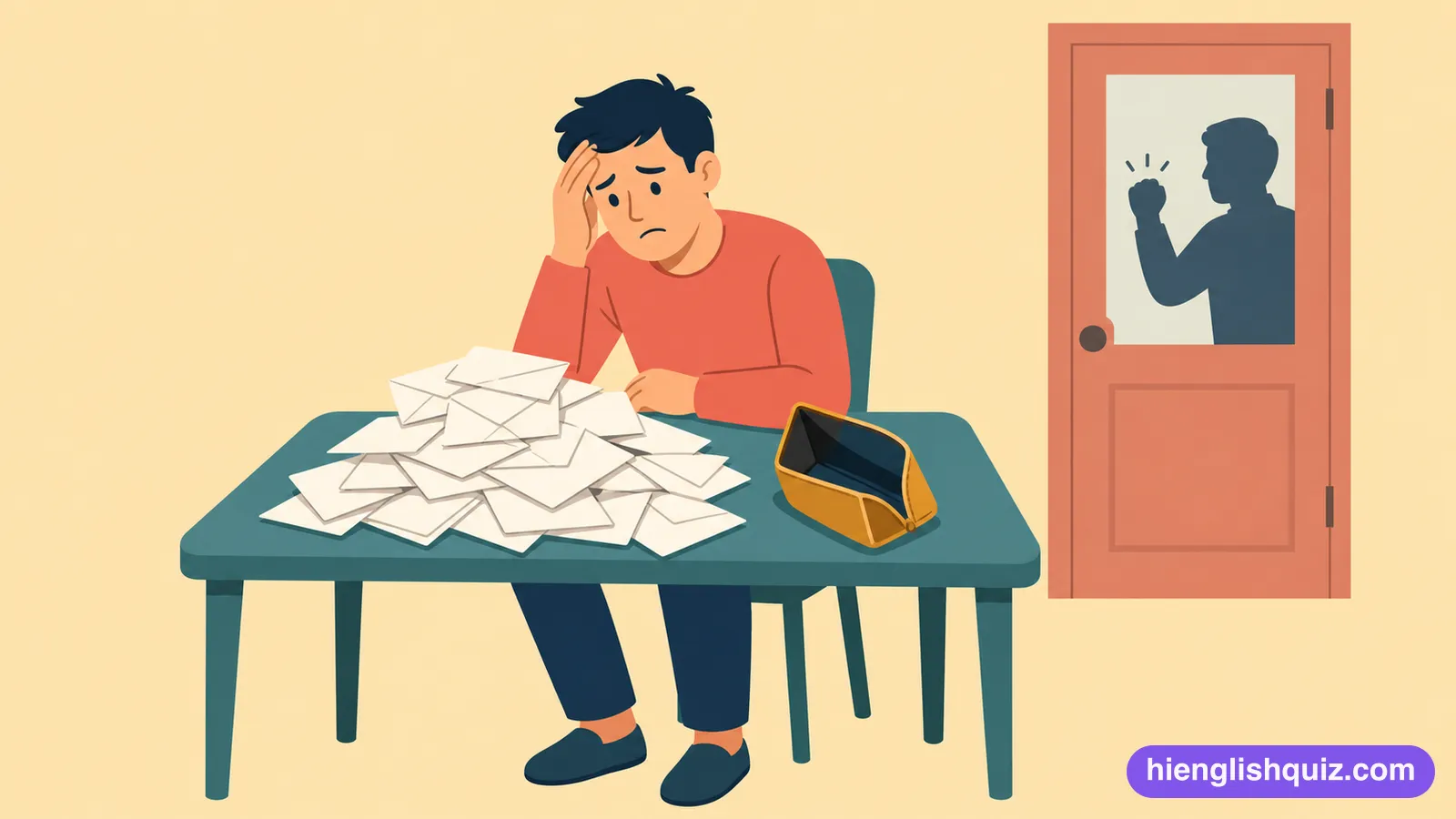
arrears
/ərˈɪrz/Money you now owe because you have fallen behind with regular payments.
Example: They're two months in arrears and the landlord wants them out.
 Hi EnglishQuiz
C220 words · Proficient
Finding a Home vocabulary for property in formal and literary language, including arrears, dispossess, squatter and tumbledown — words for the state of a dwelling and the legal claims on it.
Money you now owe because you have fallen behind with regular payments.
Example: They're two months in arrears and the landlord wants them out.
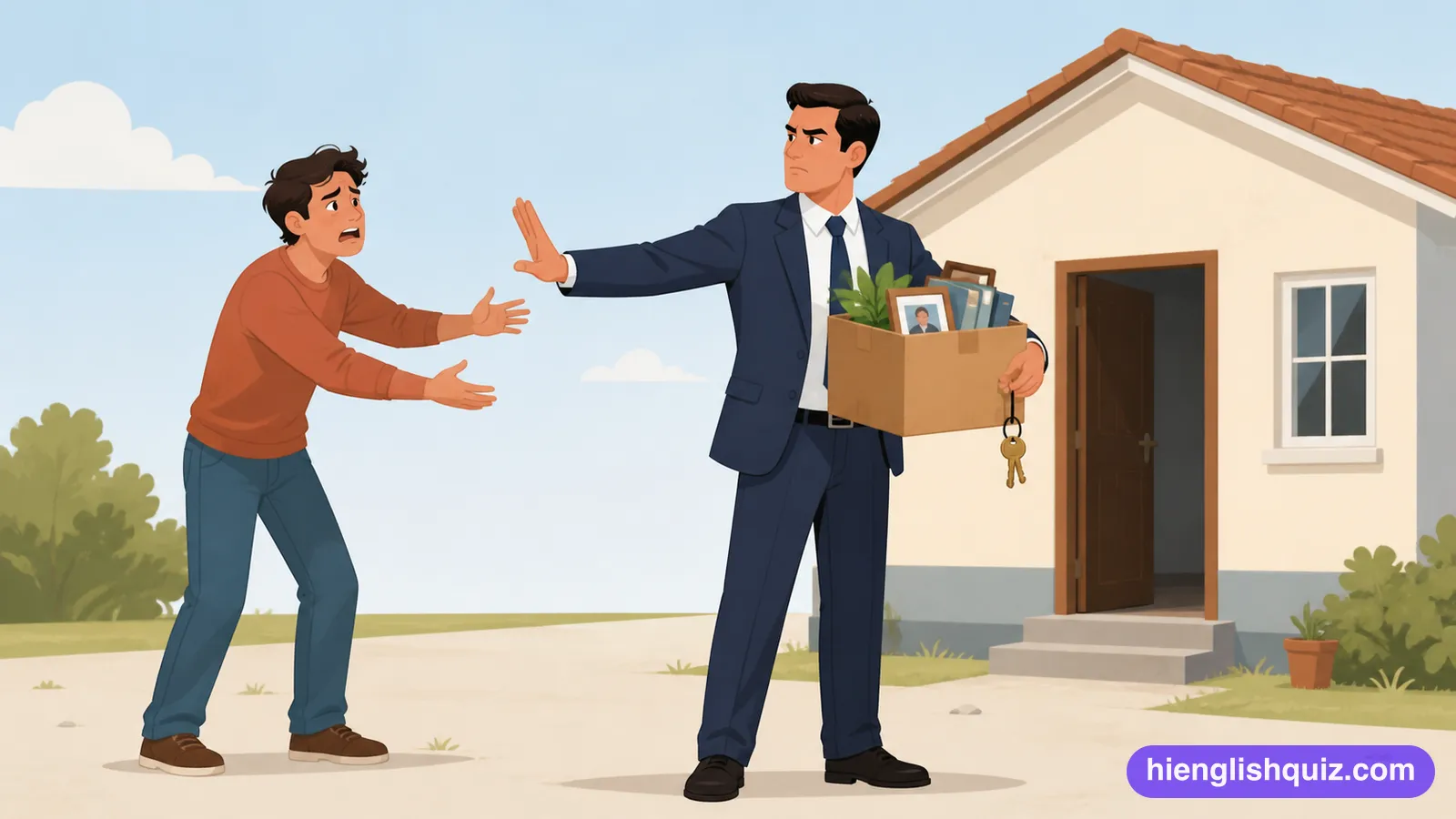
To formally take a home or property away from someone (formal).
Example: Families were dispossessed when the building was sold.
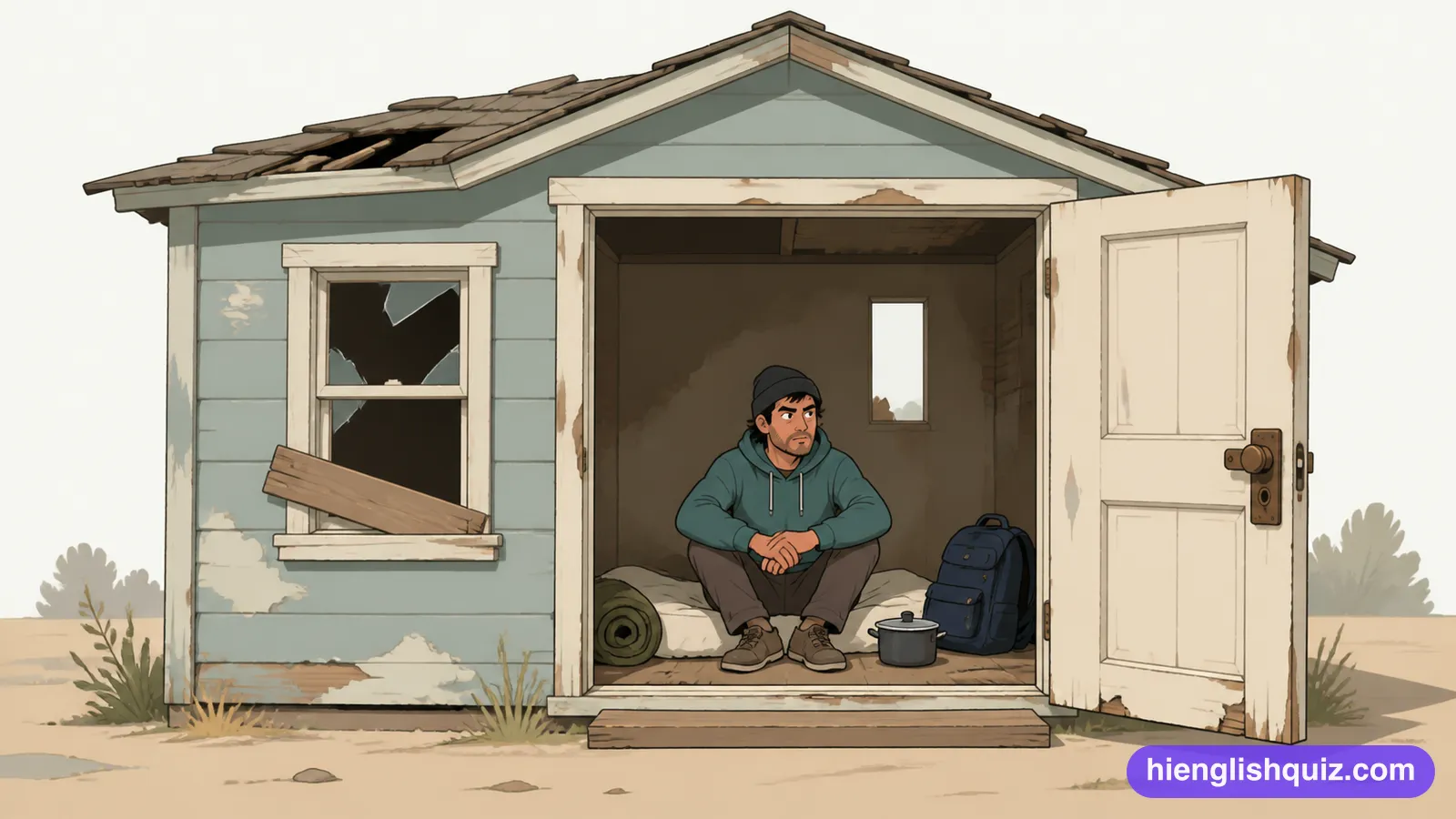
A person who lives in an empty building without permission or paying rent.
Example: Squatters moved into the abandoned house last winter.
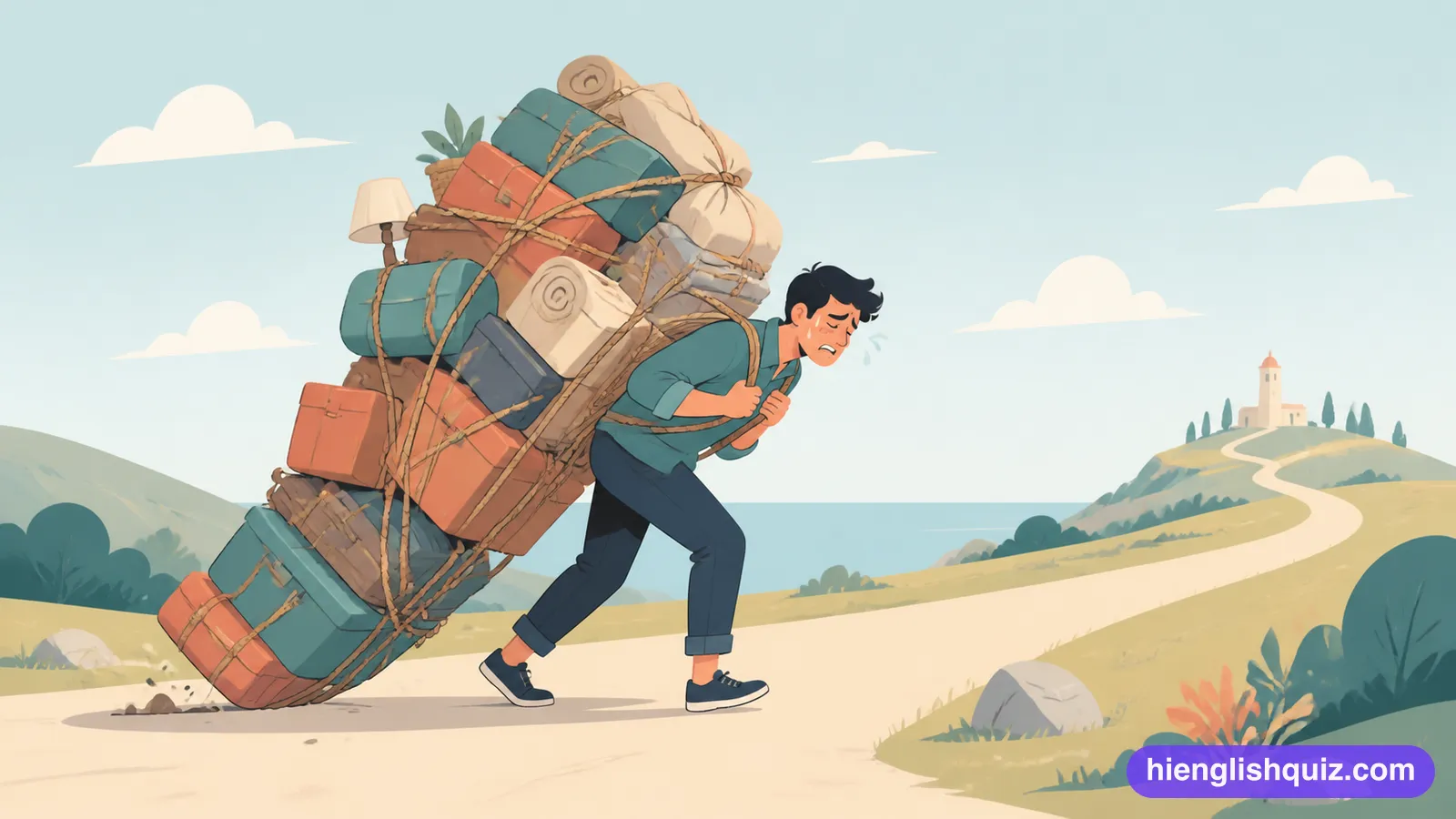
A legal claim or restriction attached to a property (formal/legal).
Example: The sale was delayed by an encumbrance on the title.
A formal word for the place where someone lives (formal/legal).
Example: The court asked for proof of his permanent domicile.
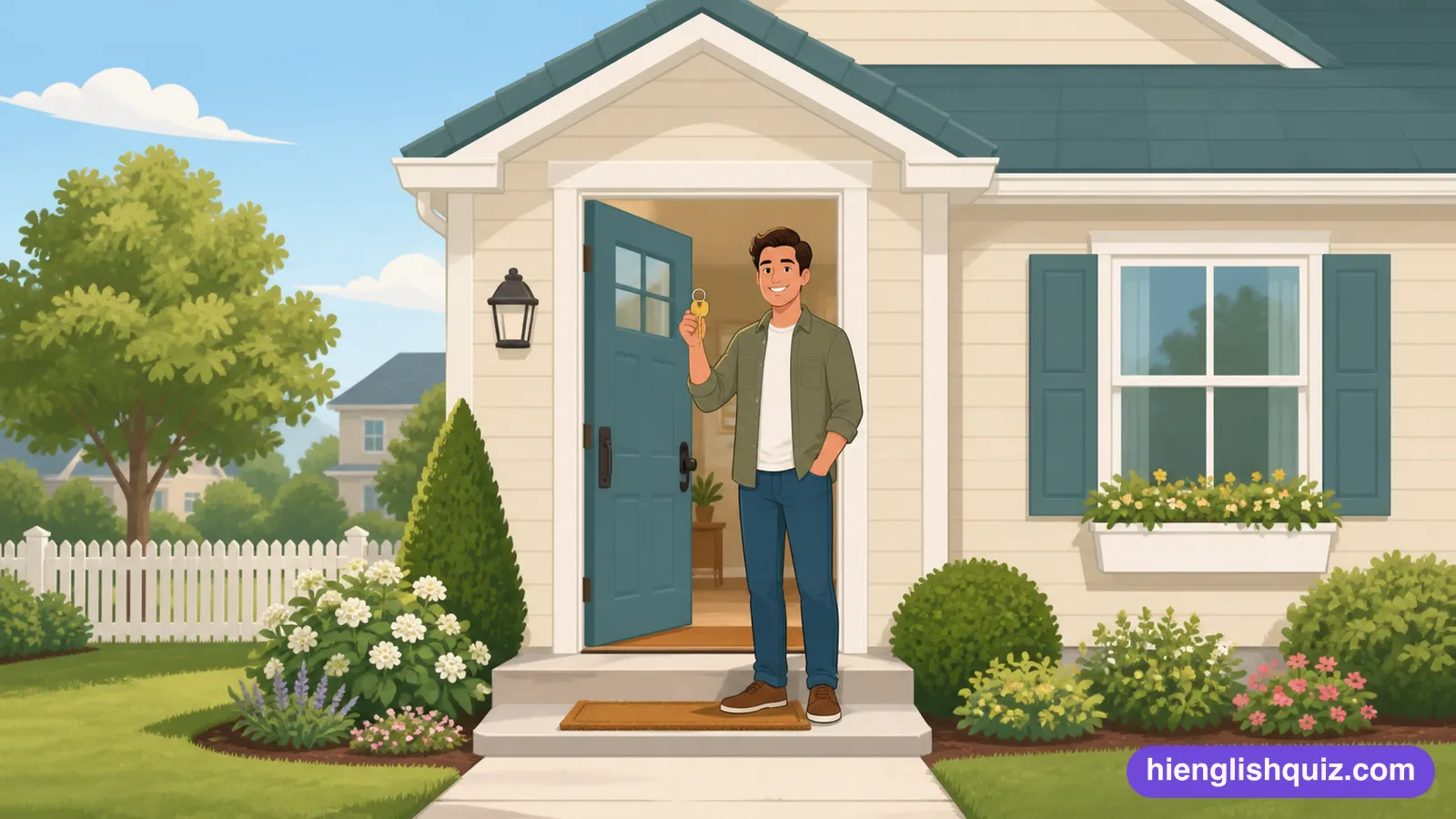
A formal or literary word for someone's home.
Example: Welcome to my humble abode.
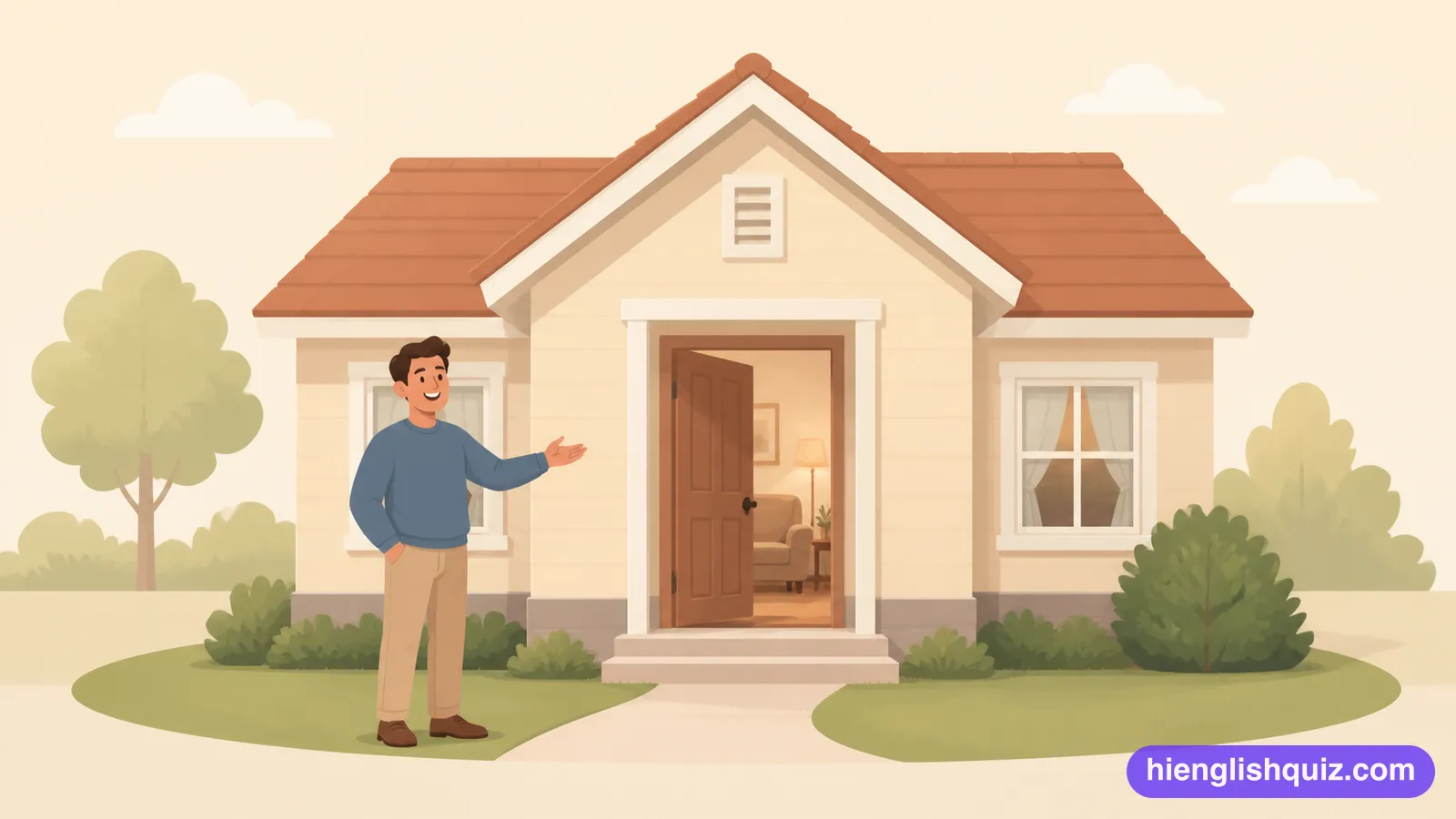
The act of living in or using a building or room.
Example: The lease begins on the date of occupancy.

The legal state of a property being empty and ready for a new owner or tenant to move in.
Example: The flat is sold with vacant possession.
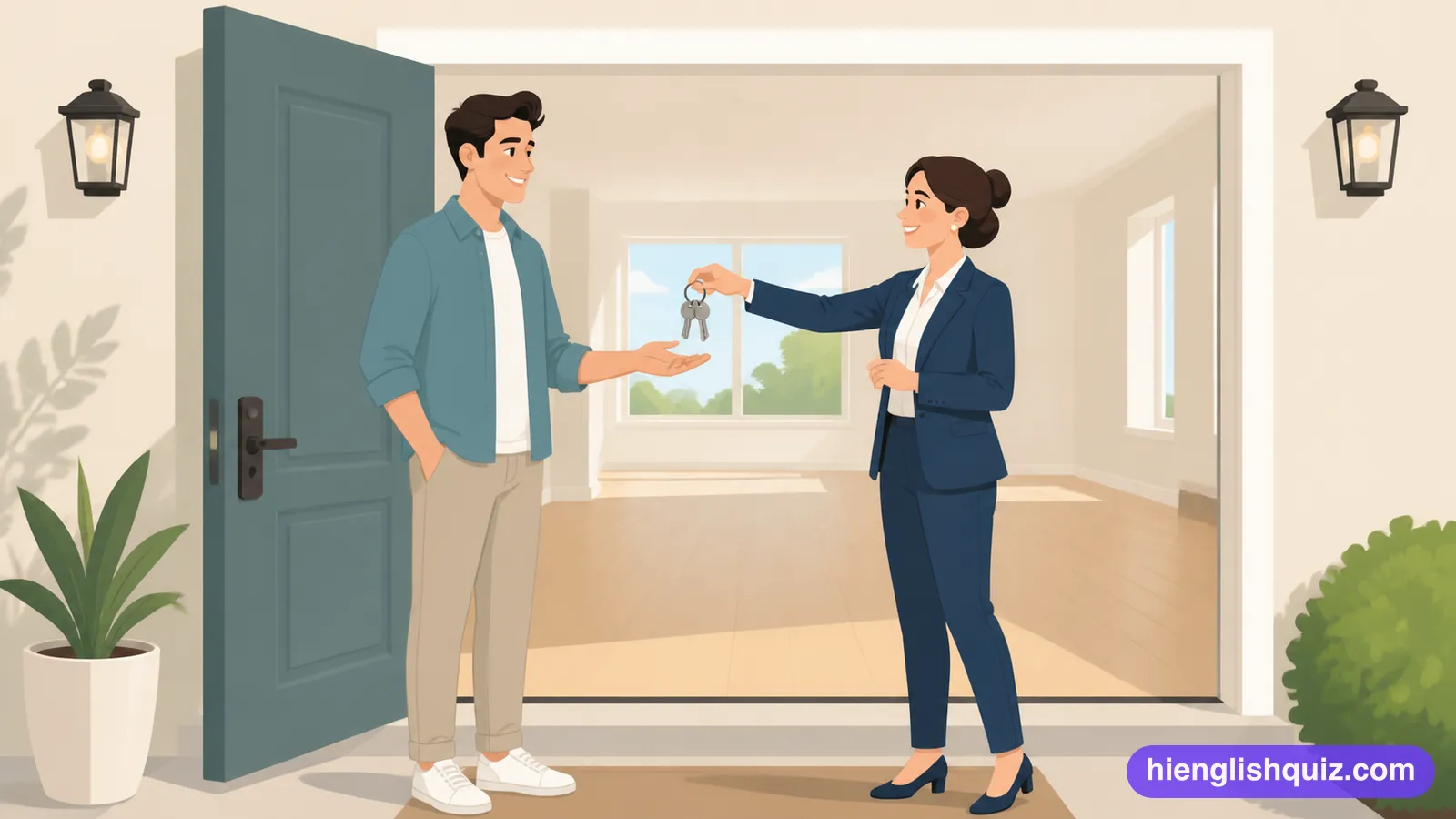
A person who earns income mainly from letting out property they own (formal, economics).
Example: Critics accused the rentier class of driving up housing costs.
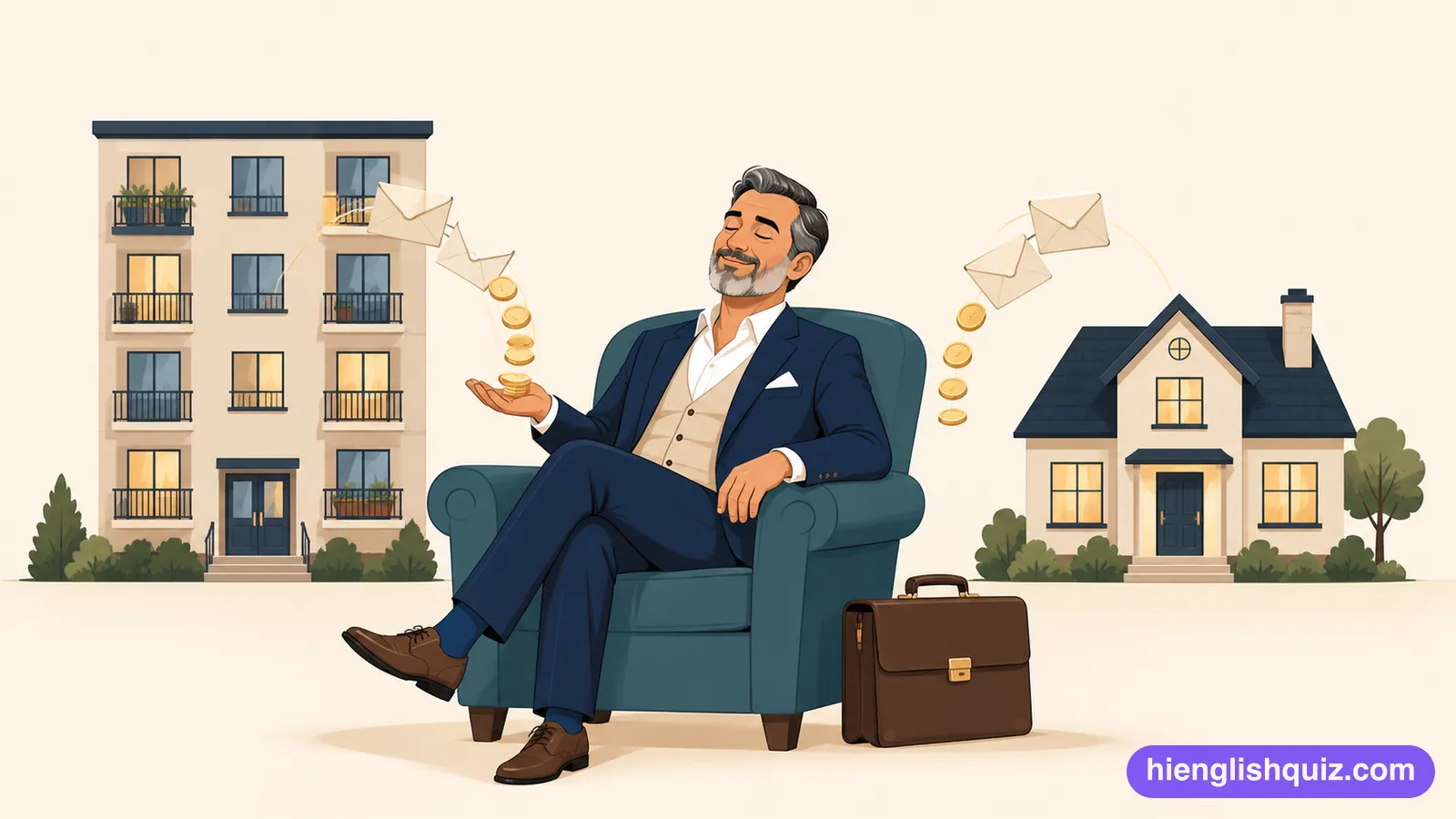
A landlord who owns a property but does not live near it or manage it directly.
Example: Repairs are slow because the flat has an absentee landlord.
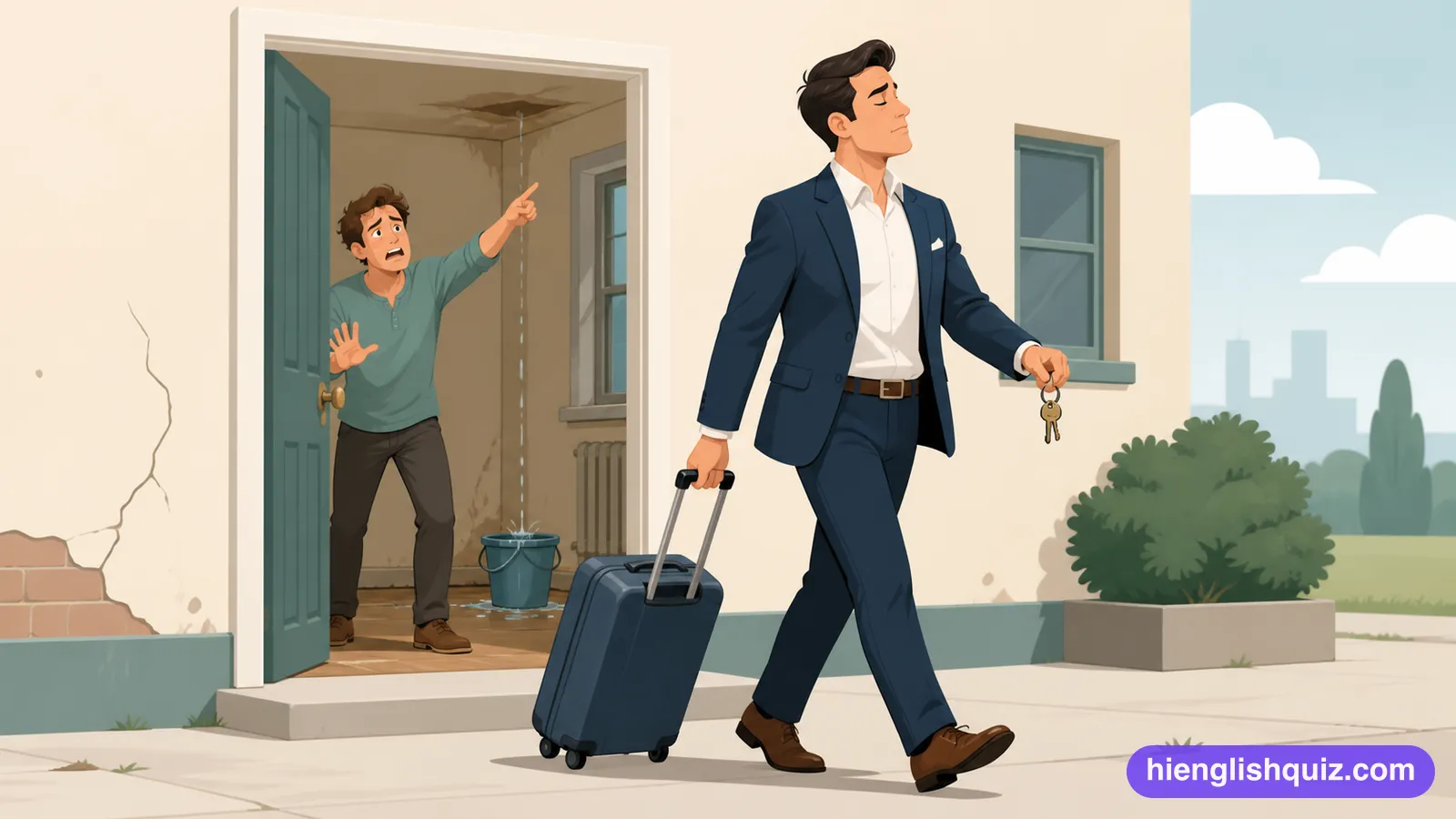
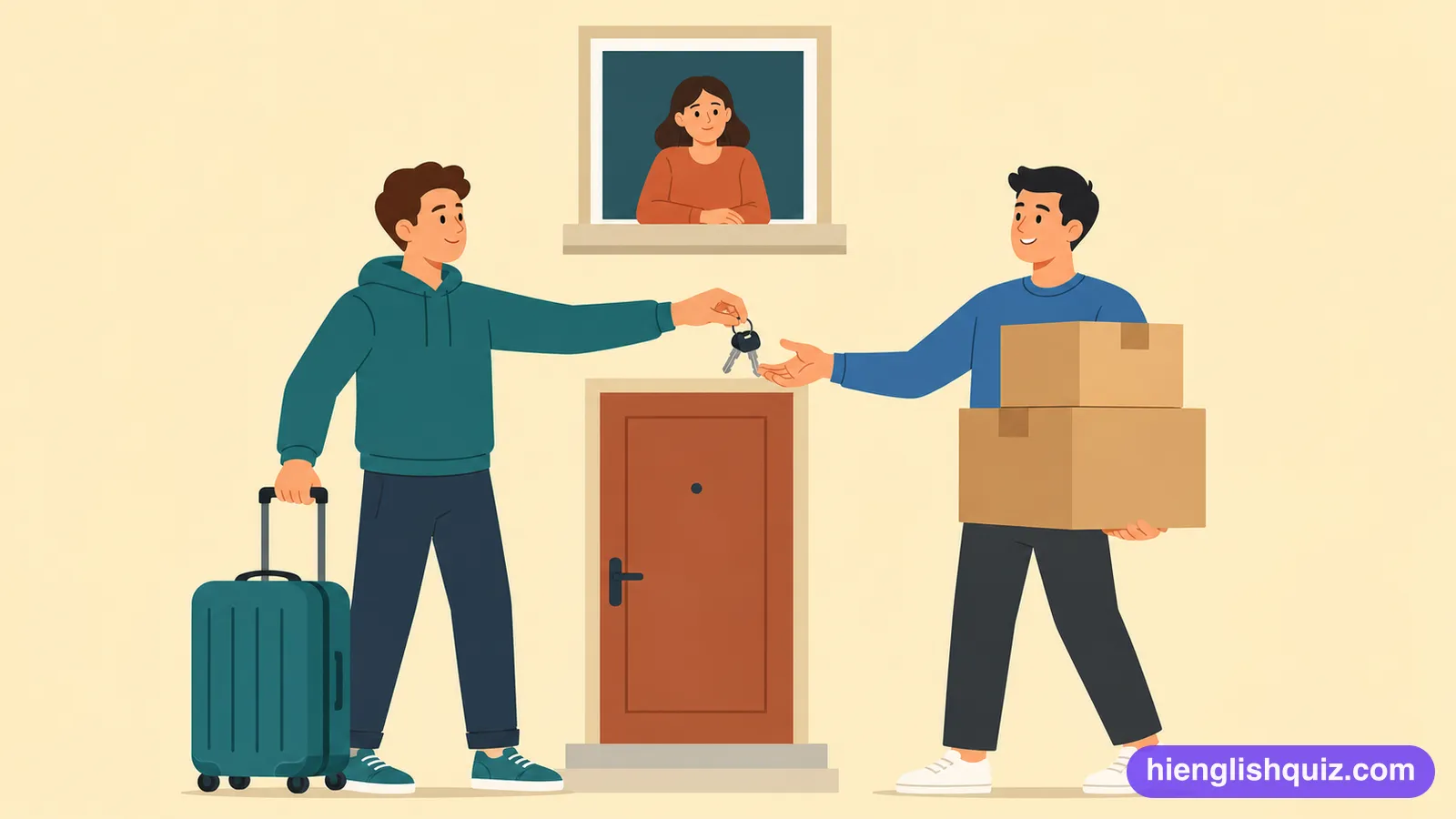
The period during which someone rents a property.
Example: The tenancy runs to the end of March and not a day more.
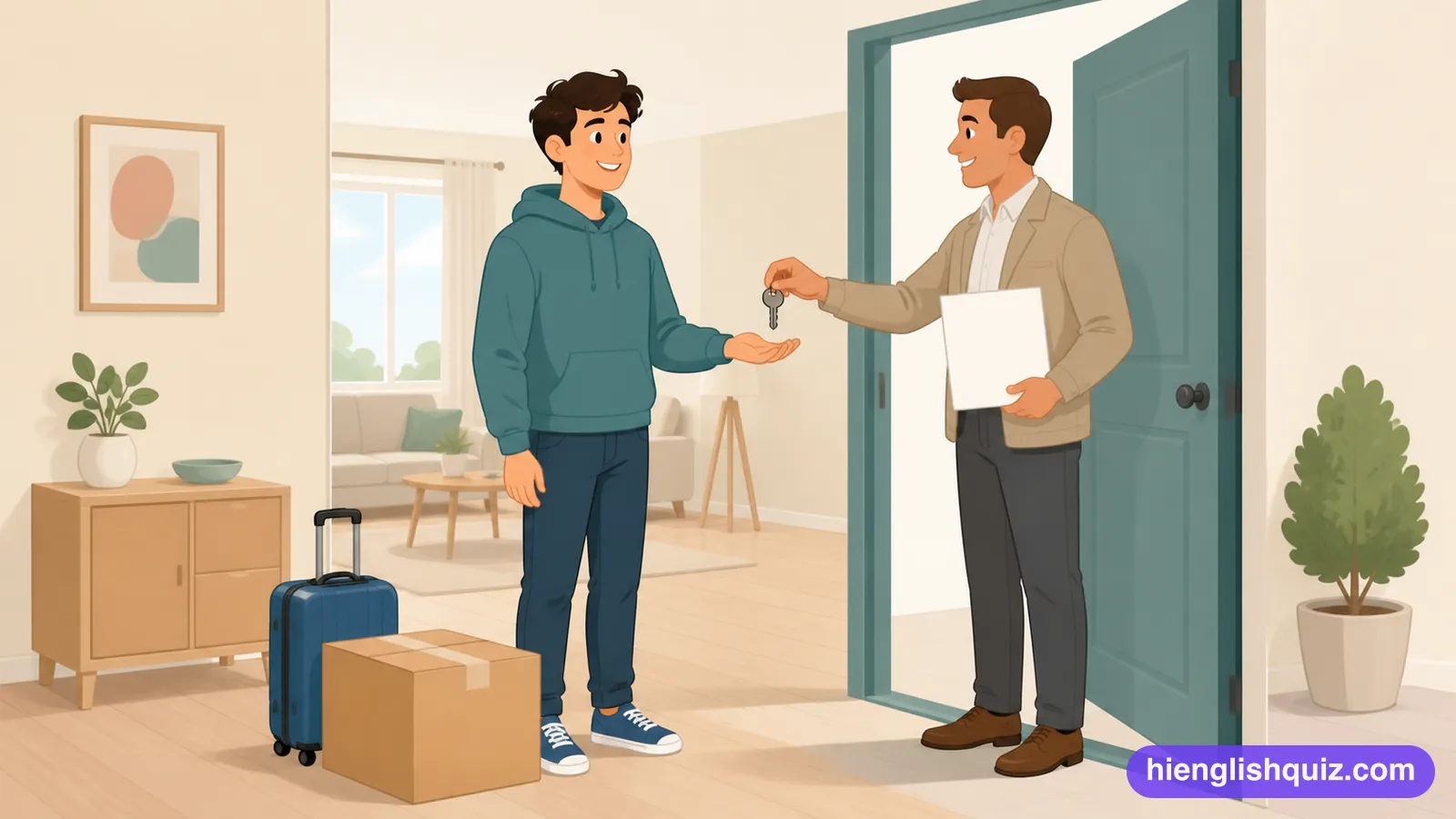
Very dirty and unpleasant, usually through poverty or neglect.
Example: Families were living in squalid conditions with no clean water.
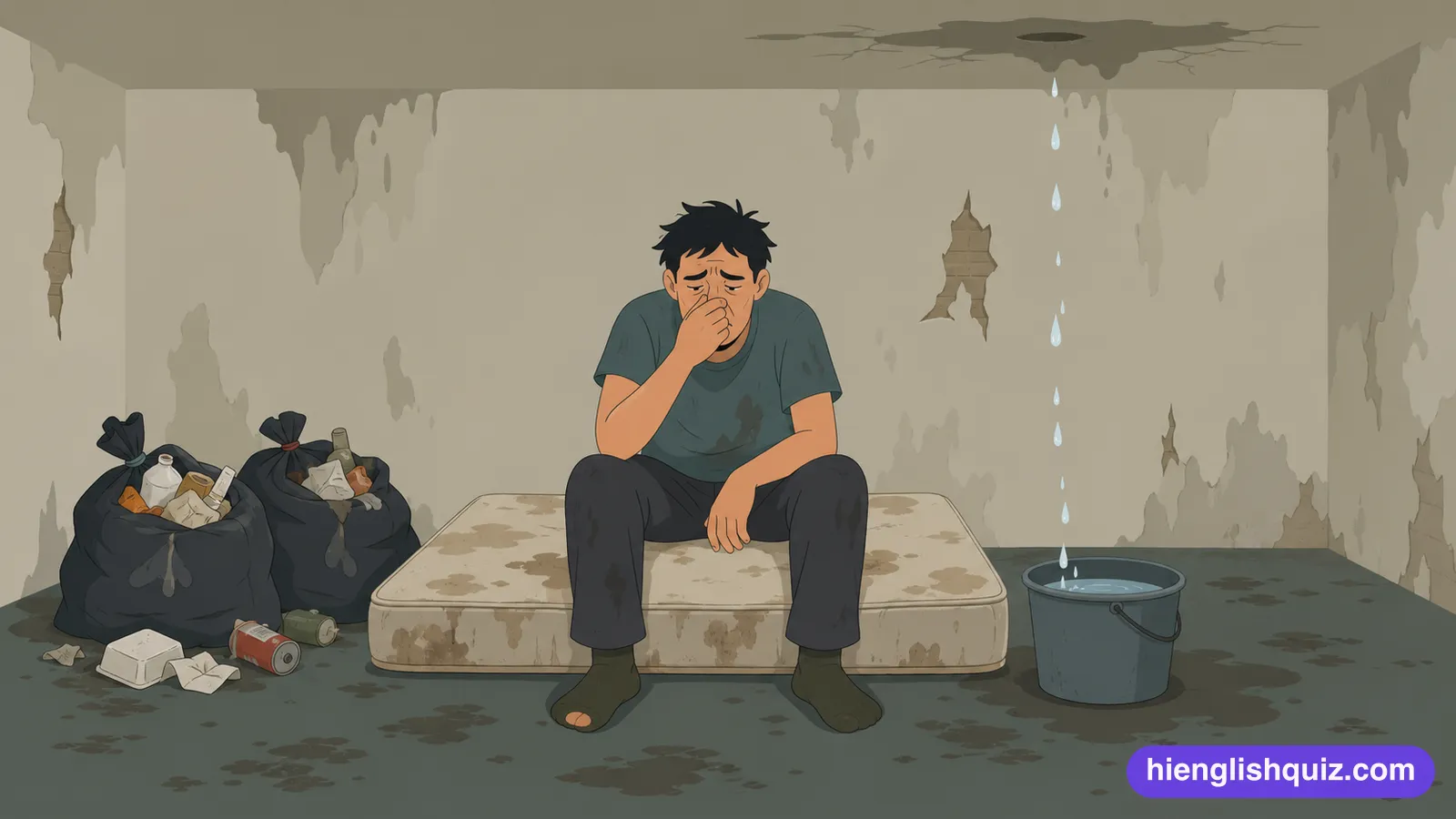
Pleasant, healthy and good to live in (formal).
Example: They moved from a salubrious suburb to a livelier part of town.

Changed by wealthier people moving in and renovating an area that was previously poorer.
Example: The once run-down street is now fully gentrified.
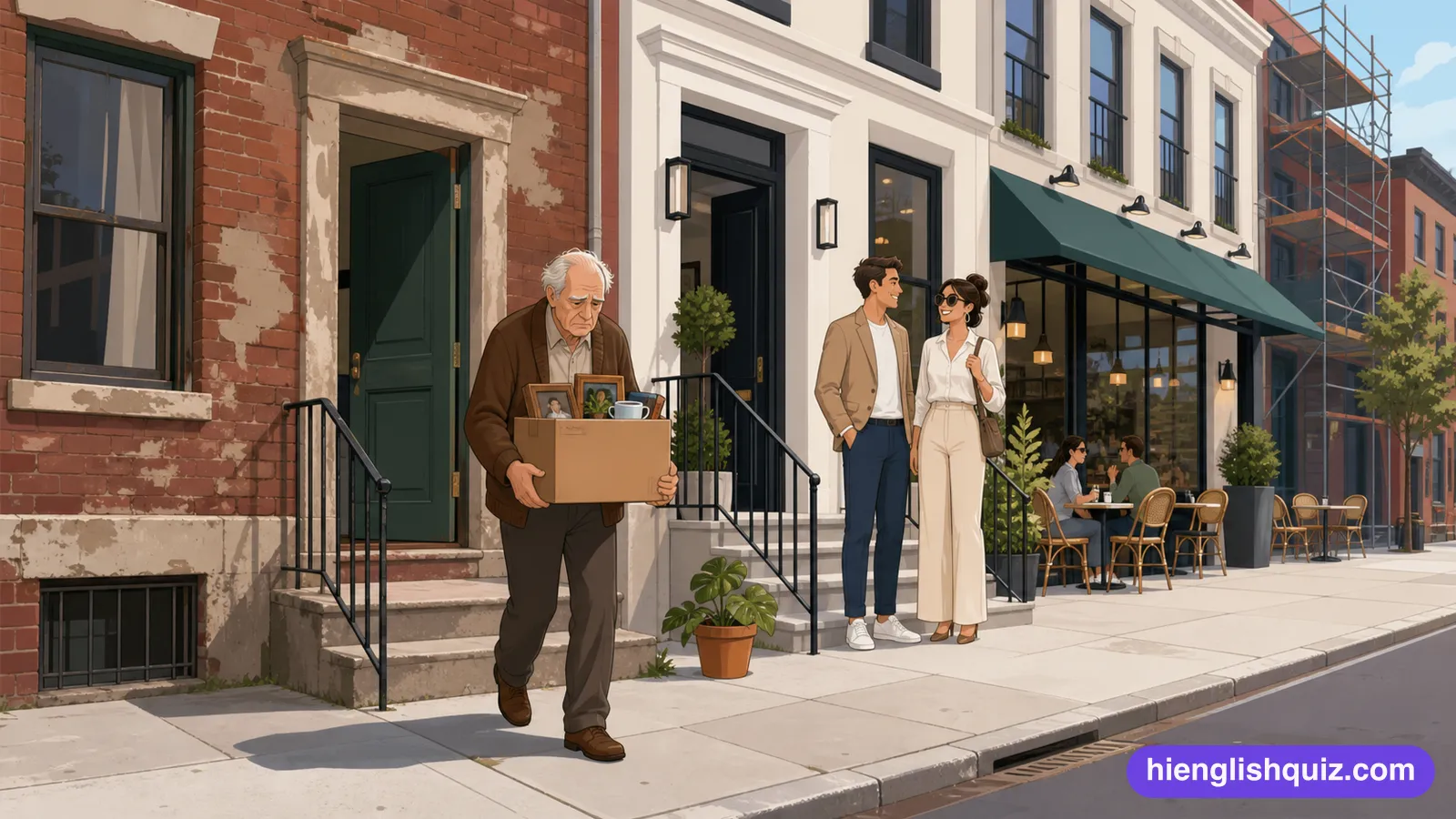
Falling apart because of age and neglect (literary).
Example: An old tumbledown barn stood at the edge of the field.
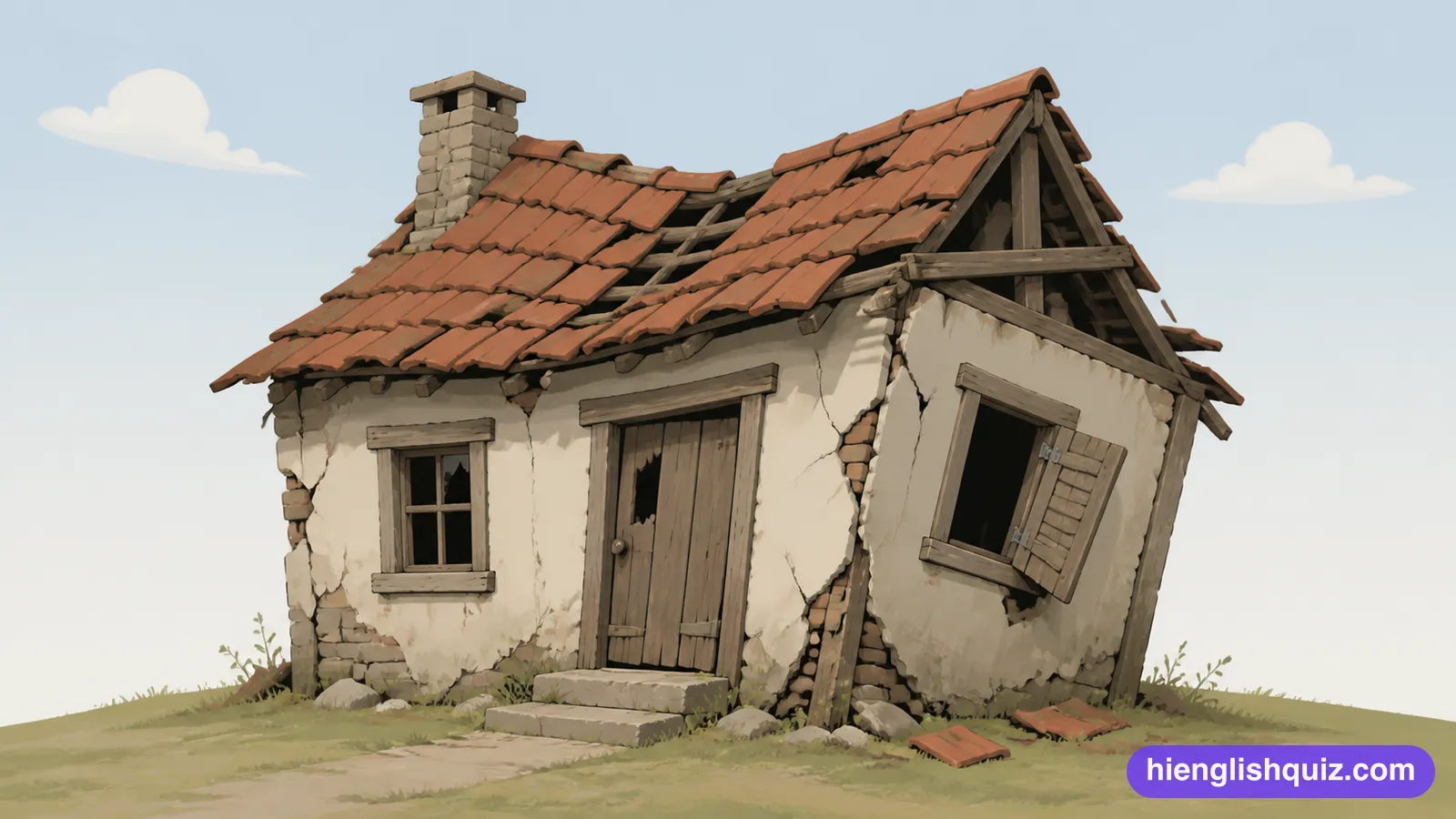
Slowly rotting or falling apart over time.
Example: The decaying mansion had been empty for decades.
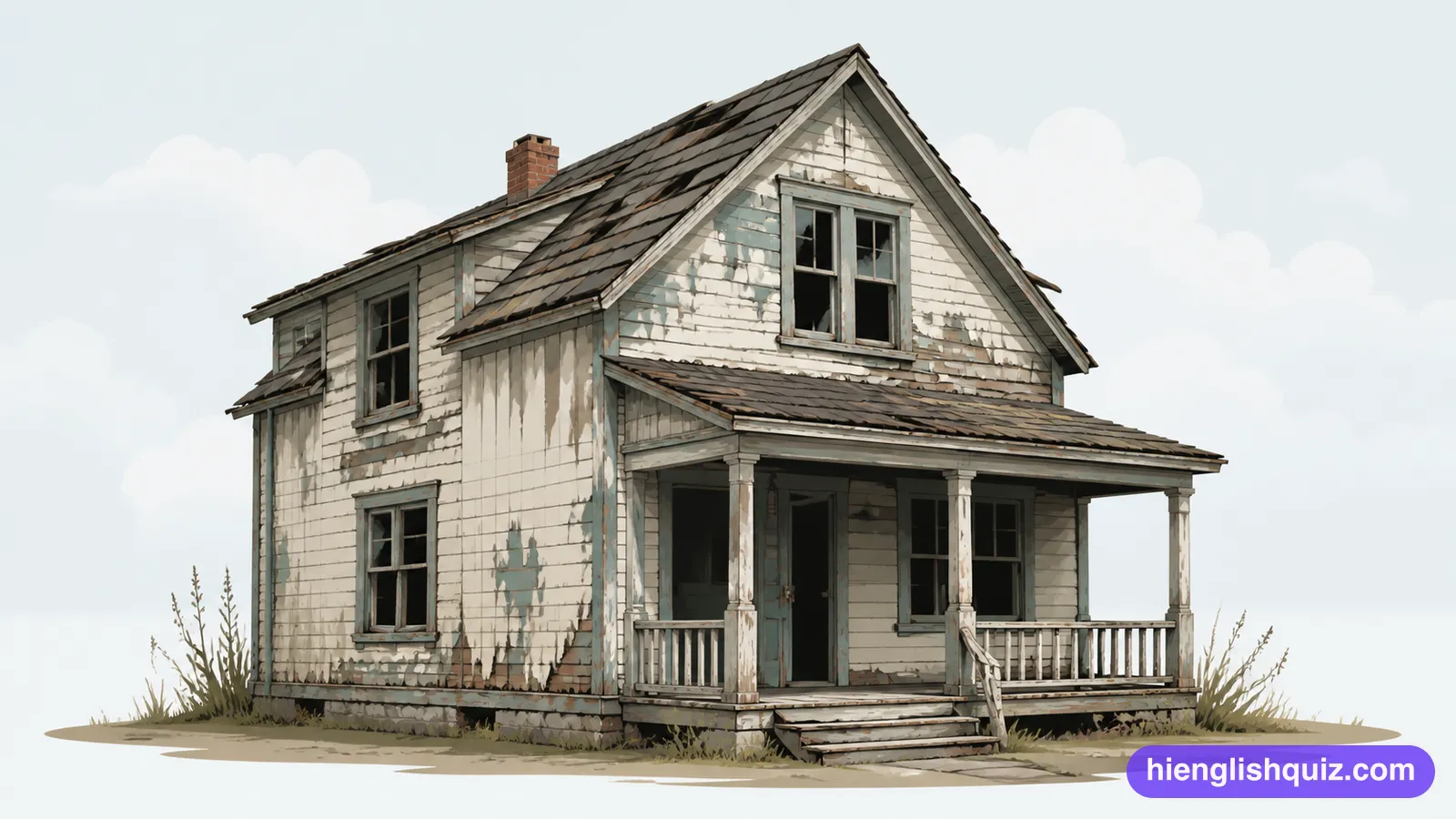
Not fit for people to live in.
Example: The flood left the ground floor uninhabitable.
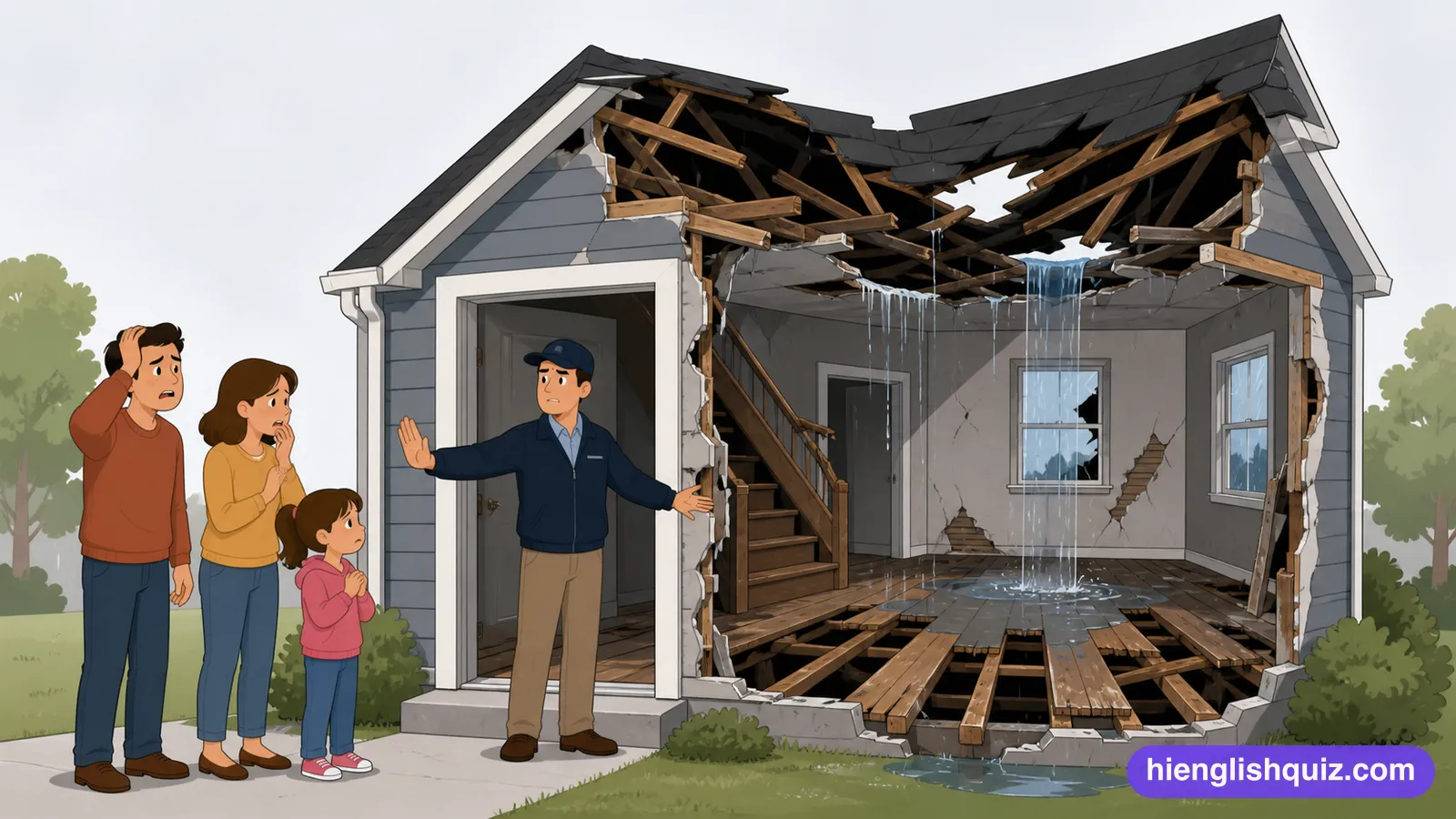
Lacking any interesting or individual features; plain and forgettable.
Example: The new flats all looked identical and characterless.

Small and stylish, often used to describe a tiny but attractive home (informal, from French).
Example: They sold their house for a bijou flat in the city.
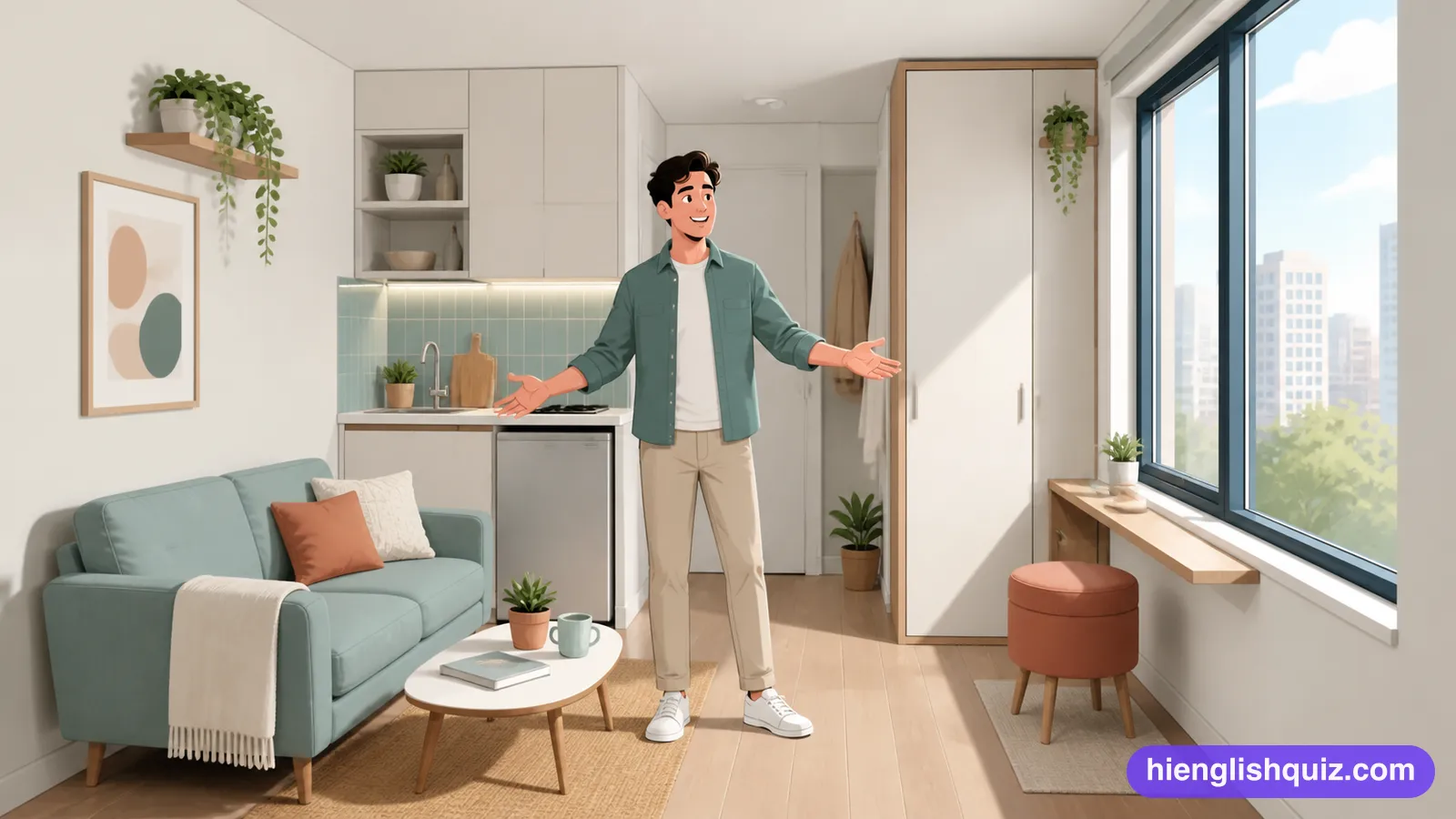
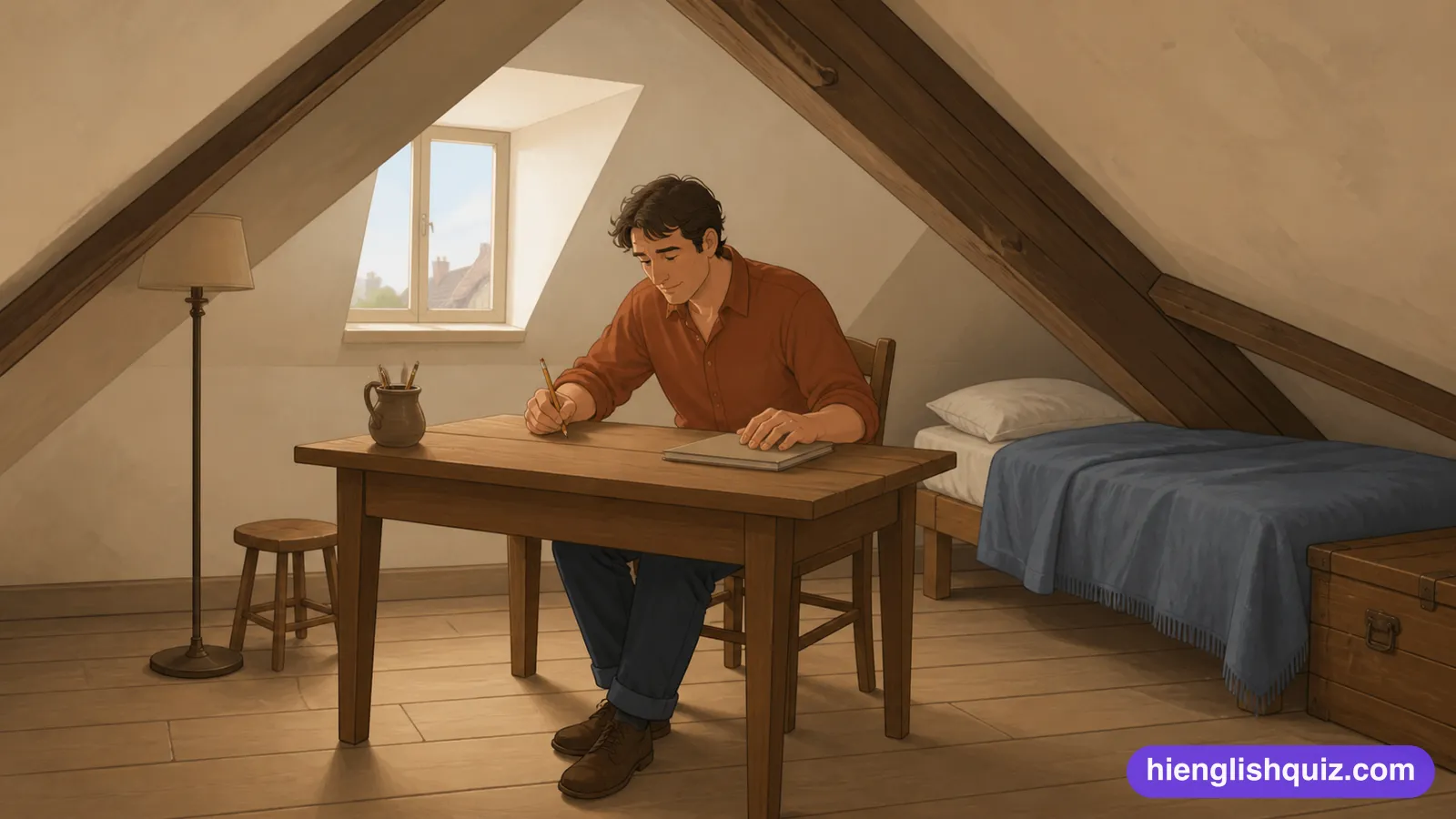
A small uncomfortable room at the very top of a house.
Example: He wrote the whole book in a garret with one window.