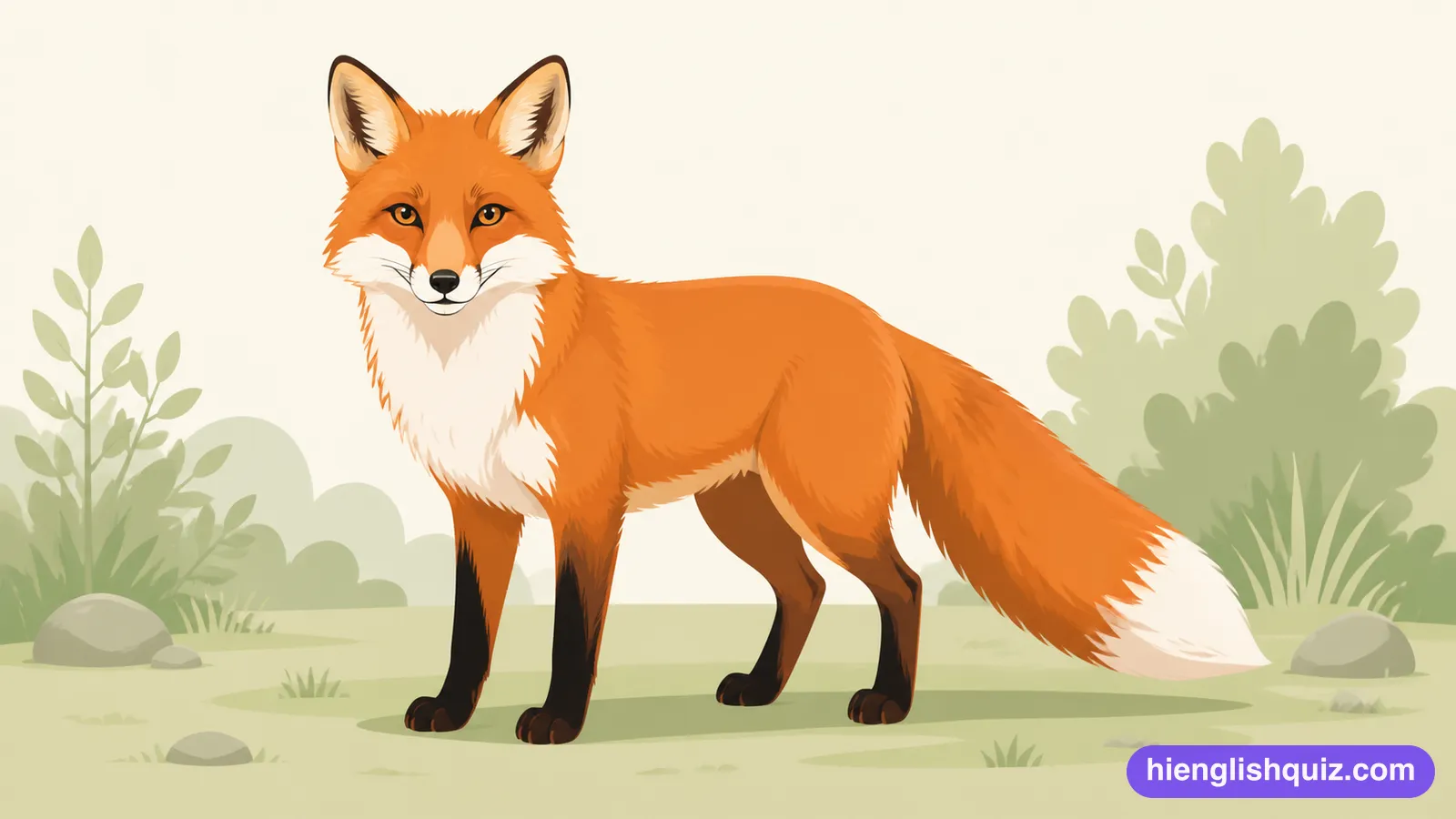
fox
/fɑks/A wild animal with red fur and a thick bushy tail.
Example: A fox was sitting in the middle of the road at midnight.
 Hi EnglishQuiz
A212 words · Elementary
Wild mammal vocabulary that introduces animals such as the fox, wolf, kangaroo and panda, the everyday names learners need when they talk about wildlife.
A wild animal with red fur and a thick bushy tail.
Example: A fox was sitting in the middle of the road at midnight.
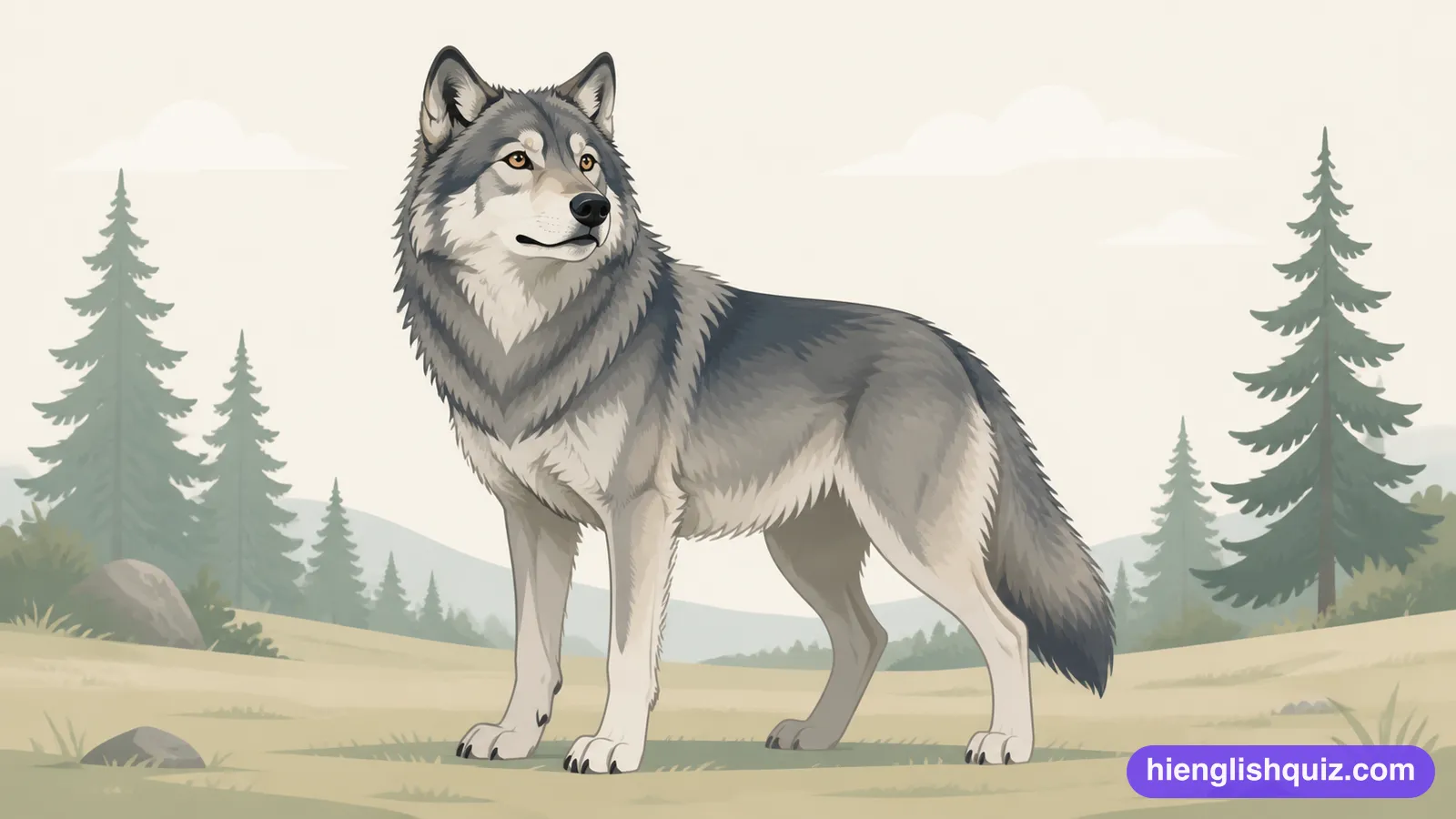
A wild grey animal like a large dog that hunts in a pack.
Example: You can hear a wolf howling right across the valley.
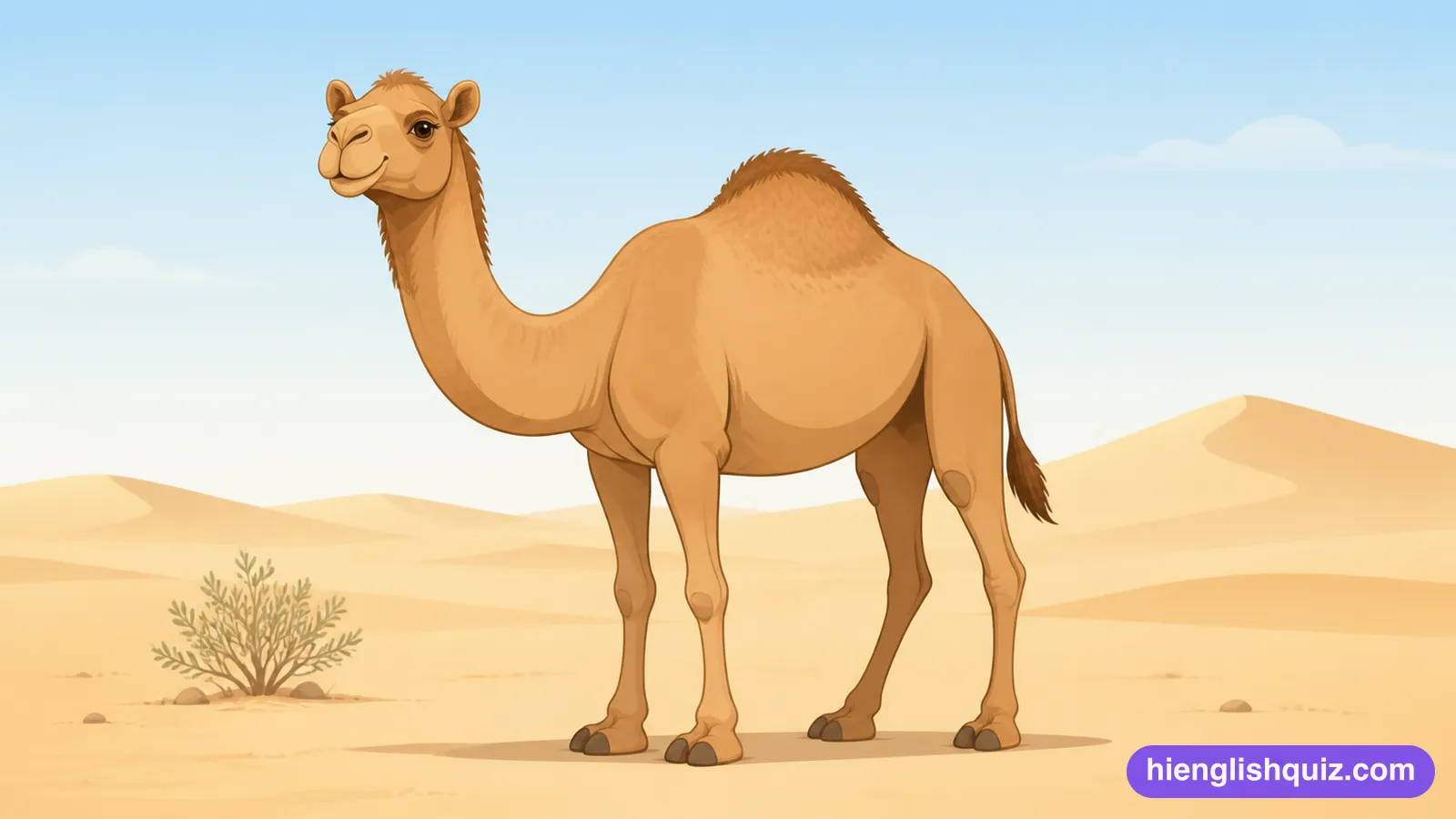
A desert animal with one or two humps on its back.
Example: The camel knelt down so we could climb on.
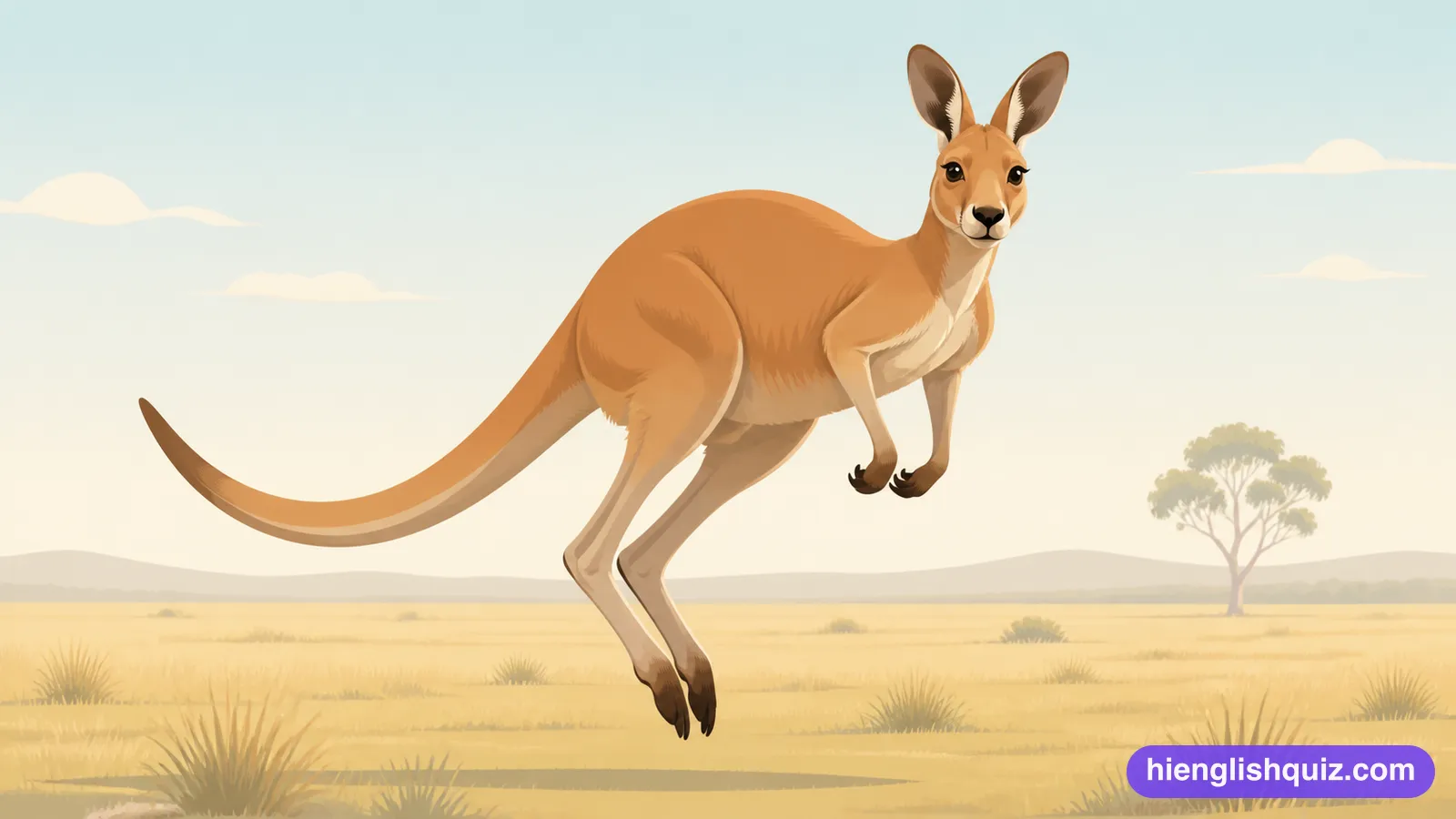
An Australian animal that hops on strong back legs and carries young in a pouch.
Example: A kangaroo crossed the road in three enormous bounds.
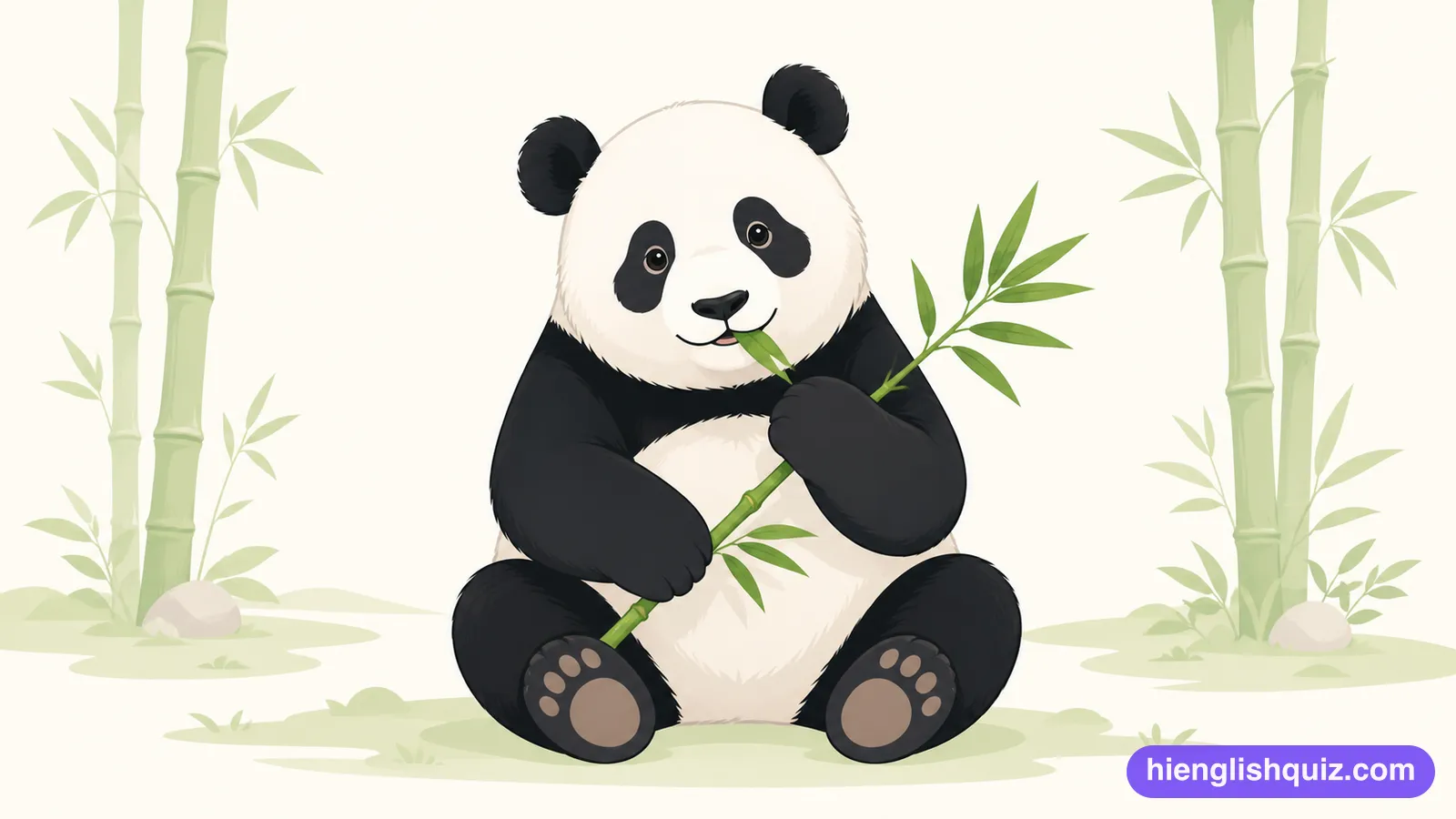
A black and white bear from China that eats almost nothing but bamboo.
Example: The panda sat back on its bottom and kept on chewing.
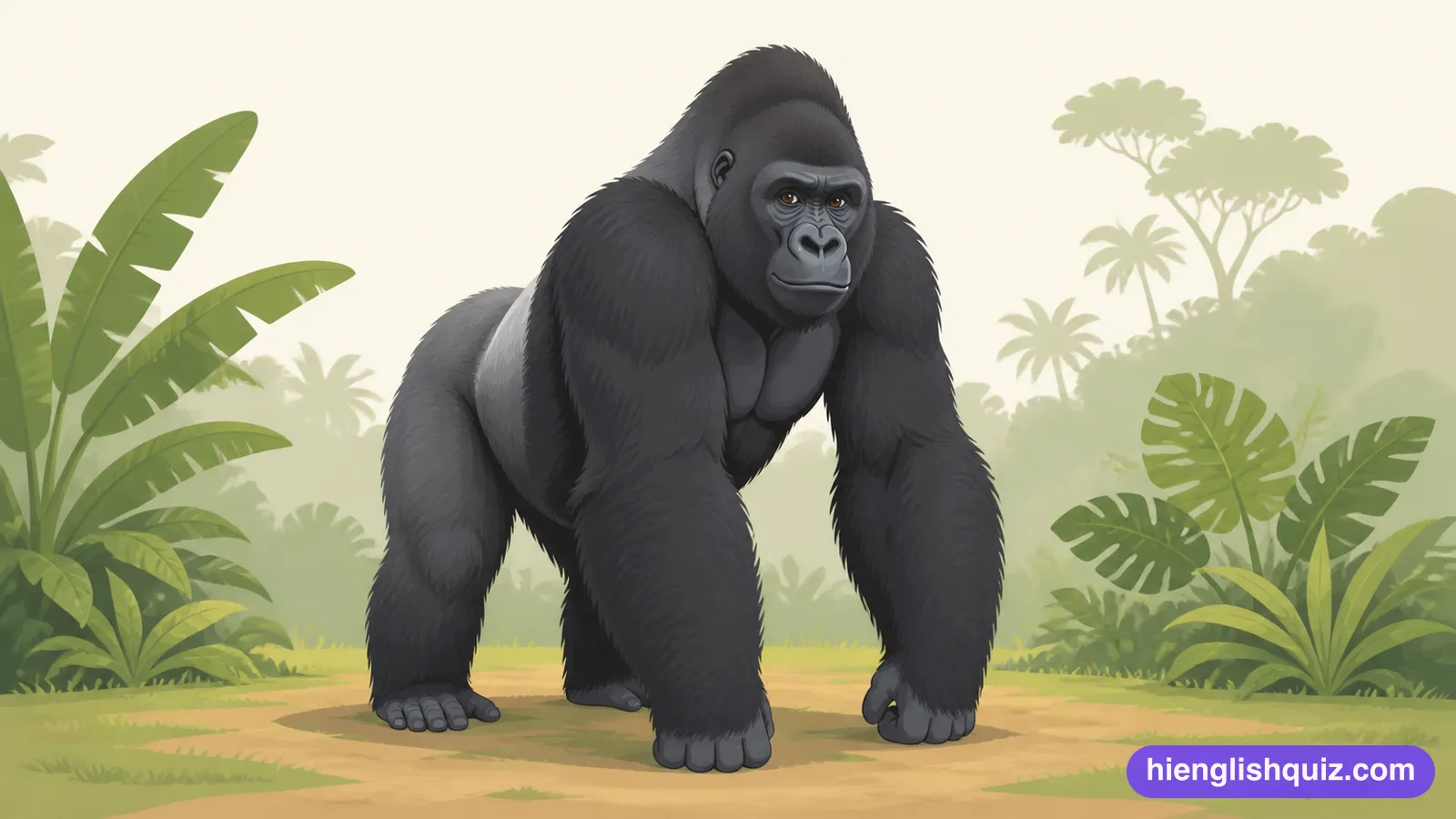
The largest ape, black-haired and hugely strong, living in African forest.
Example: A young gorilla kept turning somersaults in front of the glass.
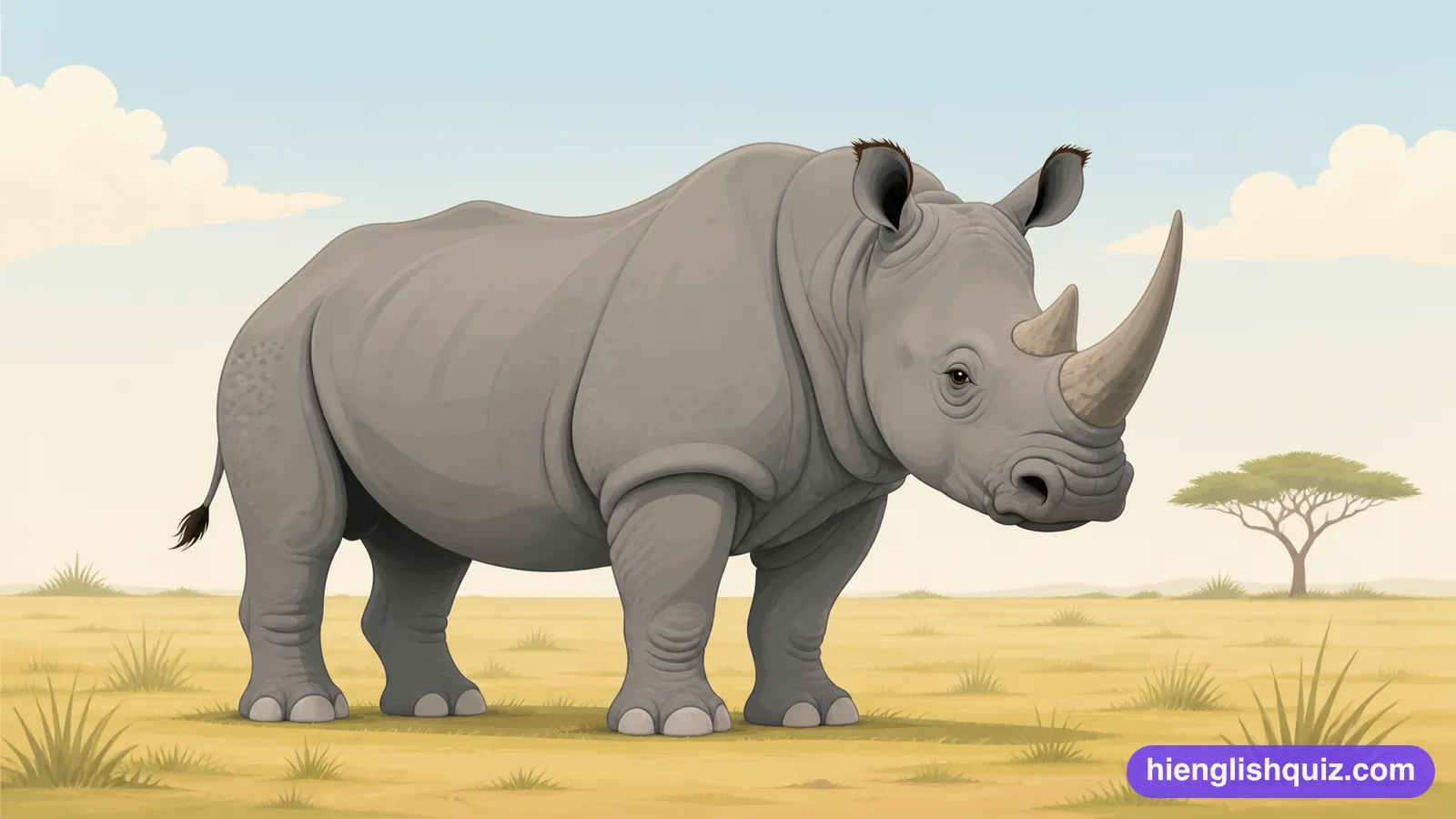
A huge grey animal with thick skin and a horn on its nose.
Example: The rhino stared at the jeep and then lost interest.
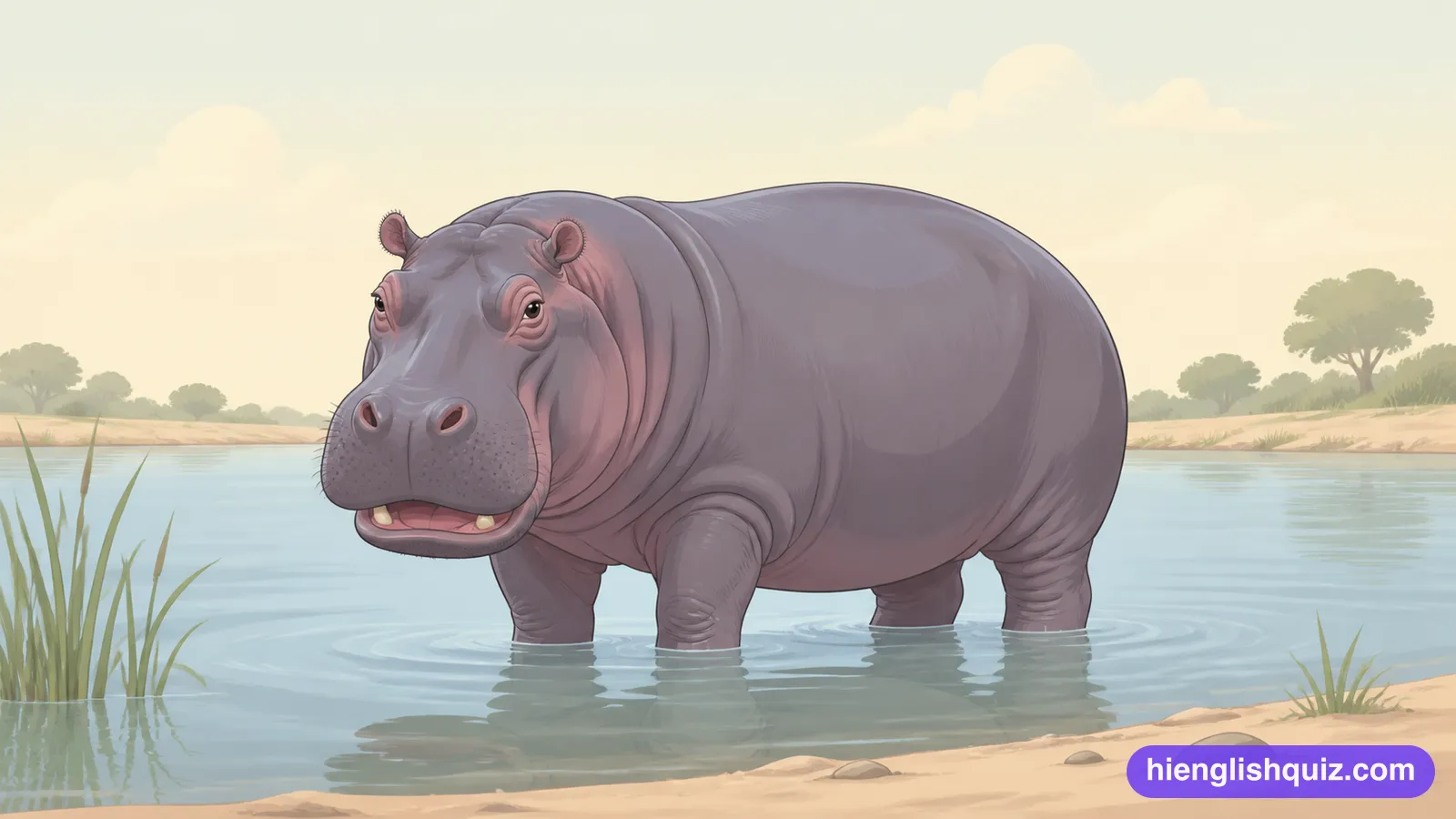
A huge river animal with a wide mouth that spends the day in water.
Example: A hippo opened its mouth so wide the whole boat went quiet.
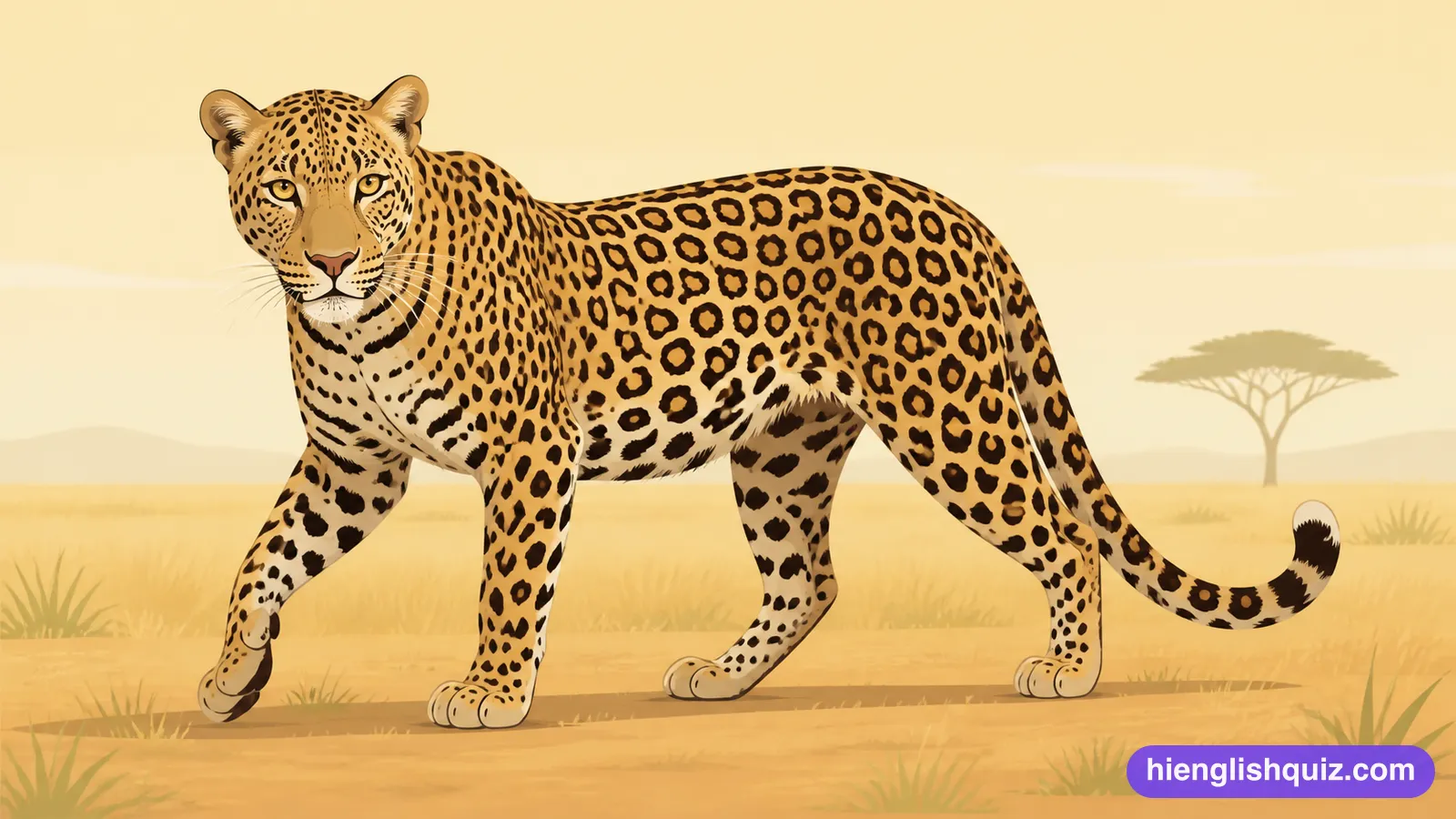
A spotted African cat that drags its kill up into a tree.
Example: A leopard had left half a carcass wedged in the branches.
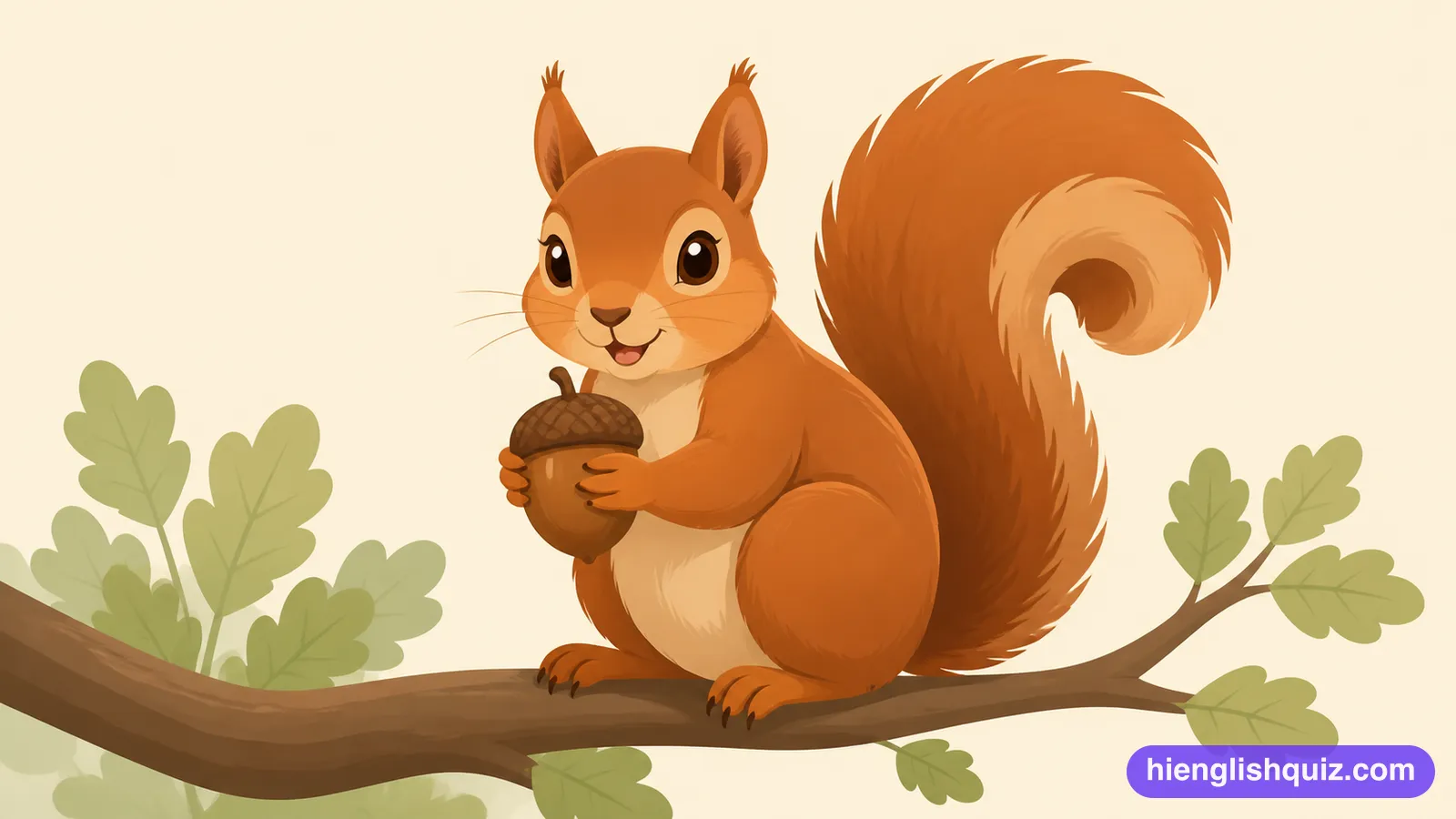
A small bushy-tailed animal that buries nuts and lives in trees.
Example: A squirrel ran along the fence with half a biscuit.
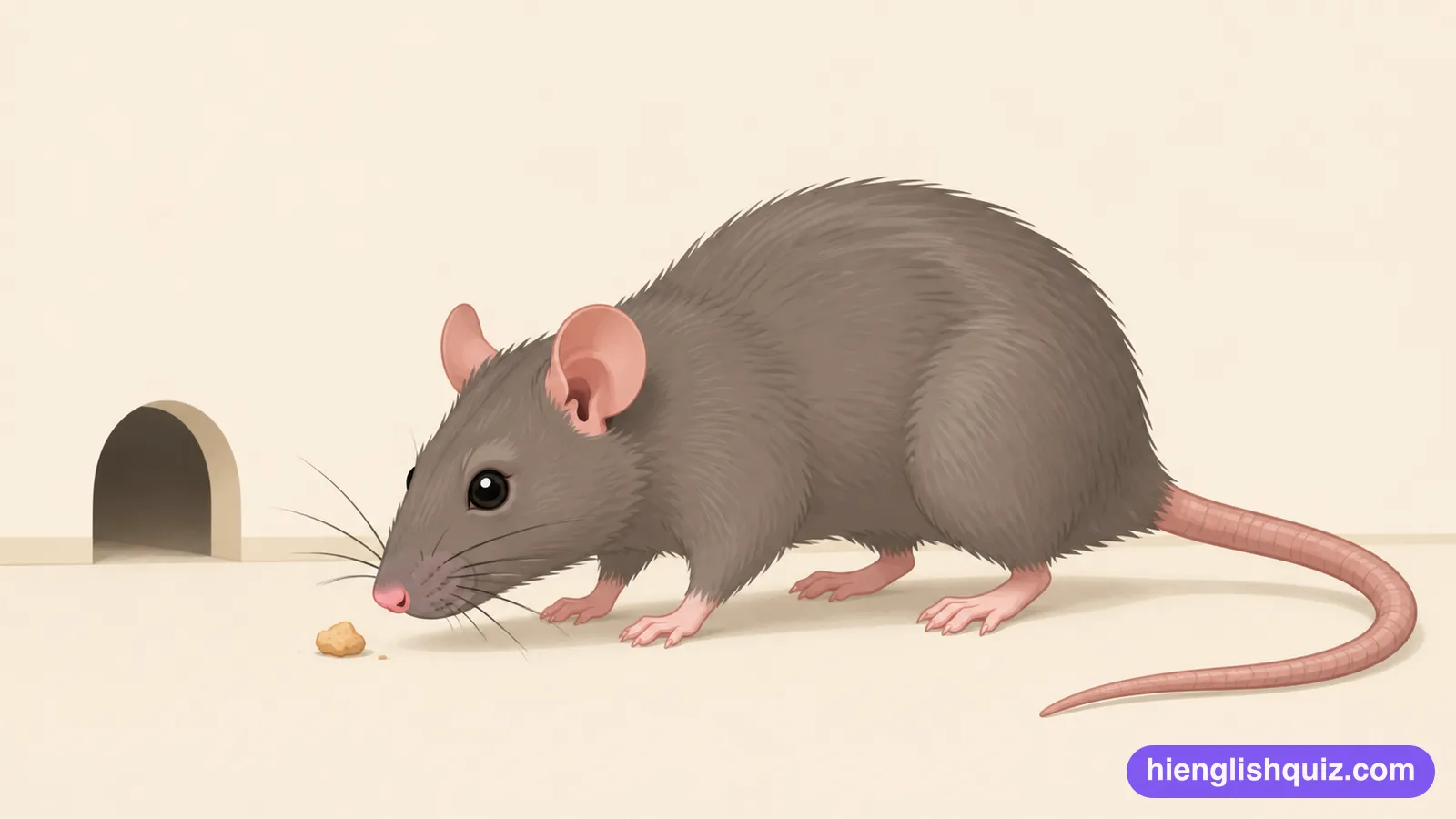
A large grey rodent with a long bare tail, found near rubbish.
Example: A rat ran along the platform edge and everyone jumped.
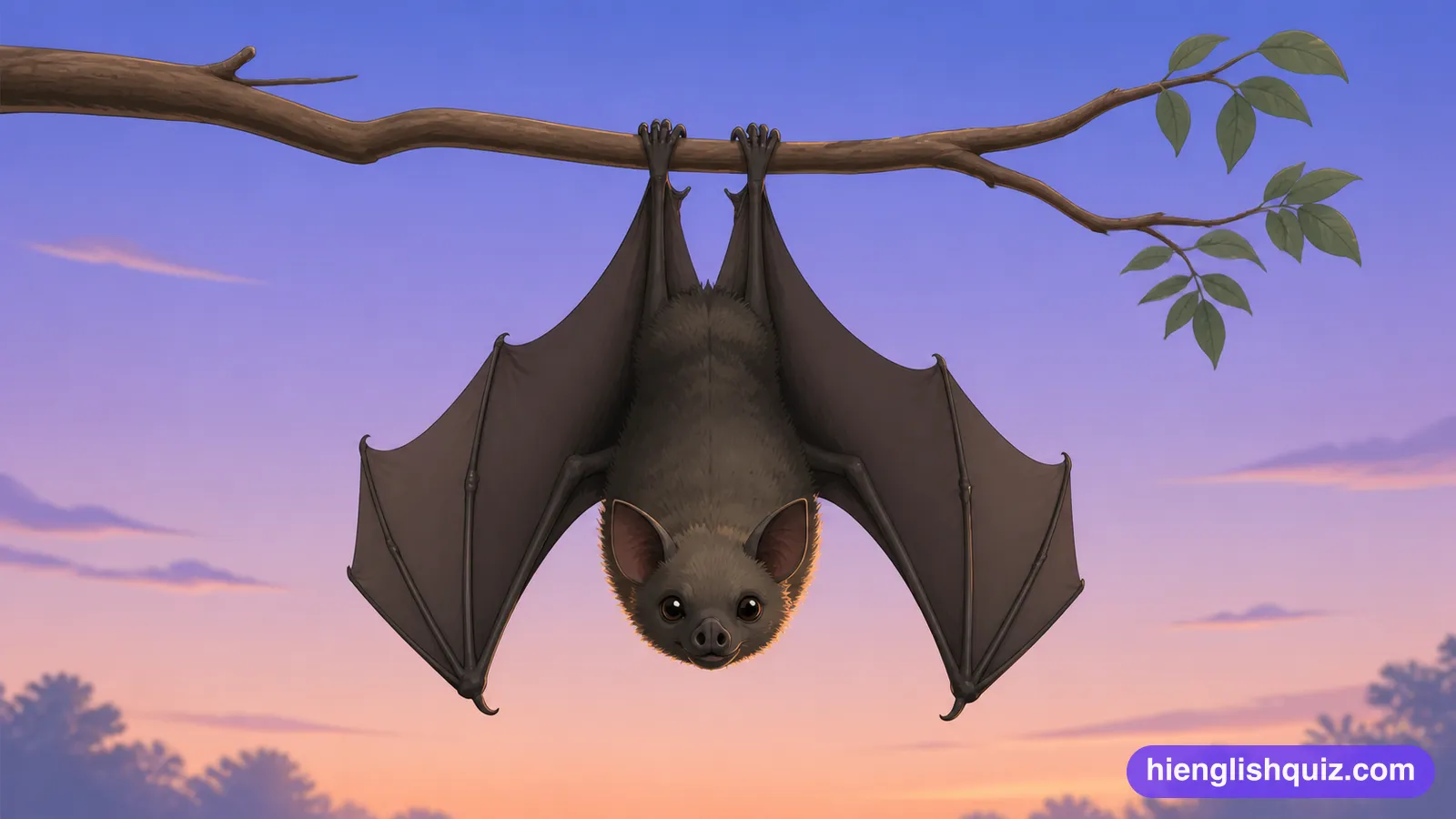
A small flying animal that hunts at night and hangs upside down.
Example: A bat flitted across the garden just as it got dark.