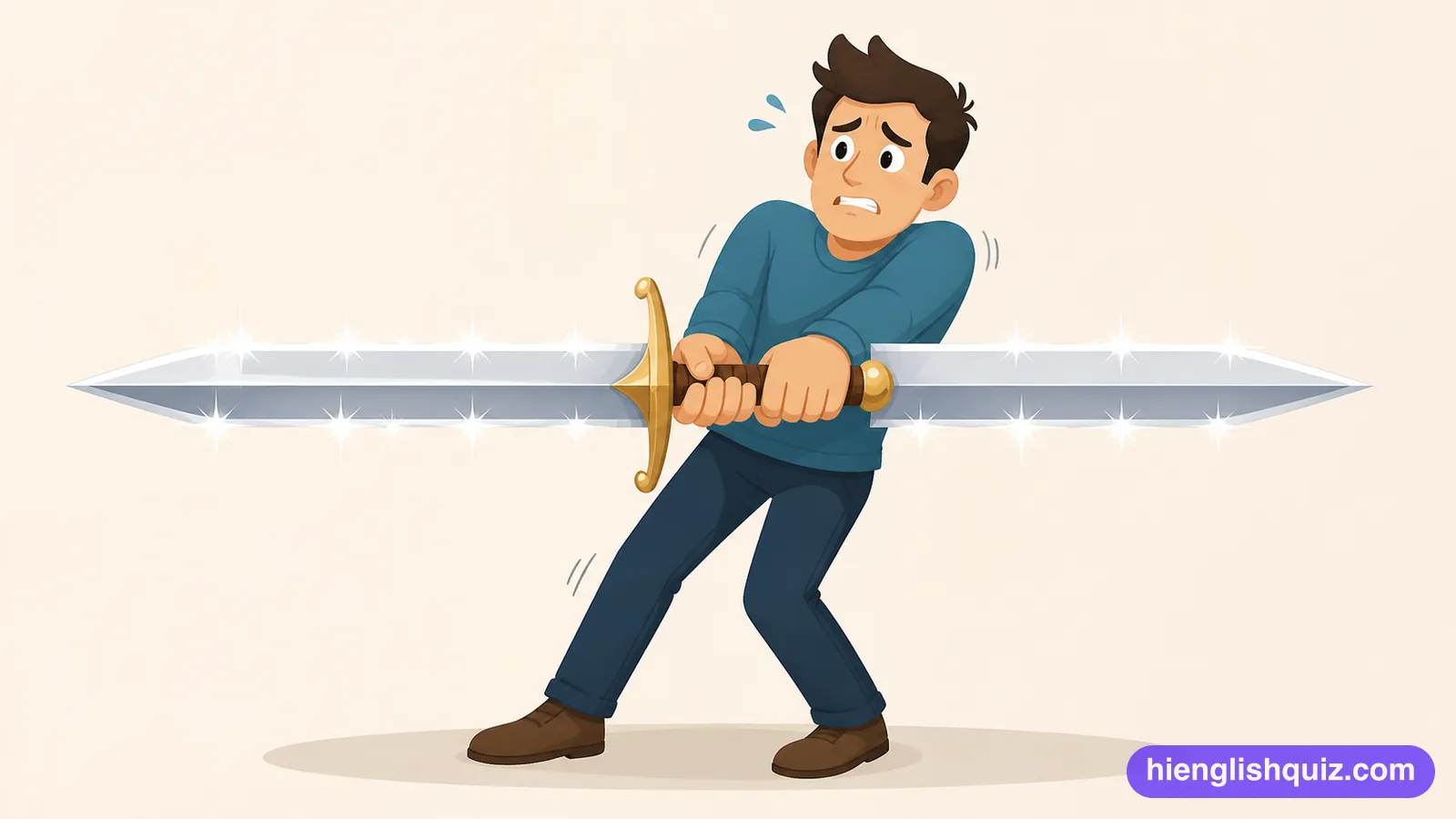
a double-edged sword
Something that has both clear advantages and serious disadvantages at the same time.
Example: Social media fame can be a double-edged sword.
 Hi EnglishQuiz
C120 words · Advanced
Fixed expressions and sayings used in formal speech and writing, with phrases like a double-edged sword, a catch-22 and a slippery slope.
Something that has both clear advantages and serious disadvantages at the same time.
Example: Social media fame can be a double-edged sword.
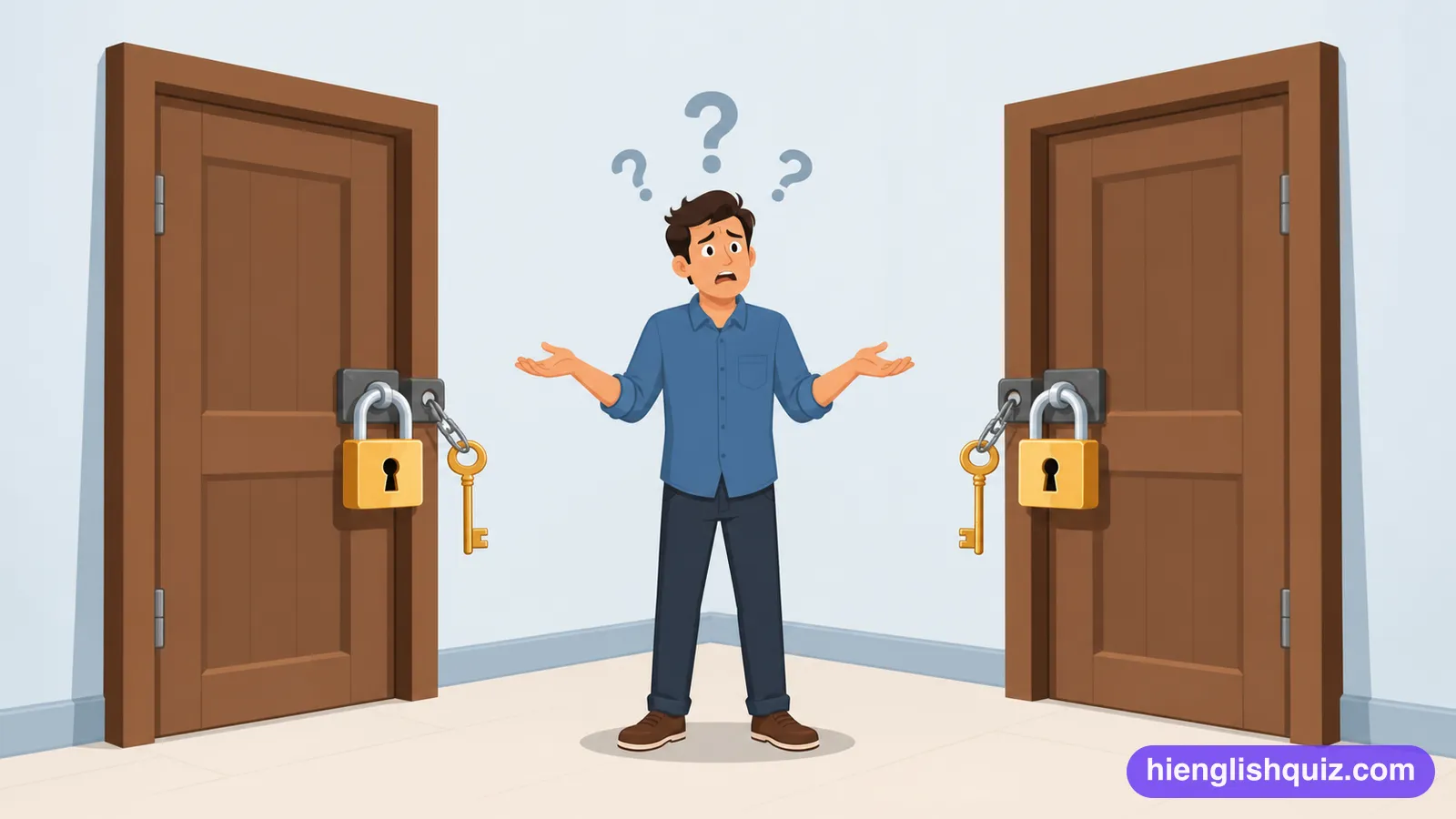
A frustrating situation where solving one problem is impossible without first solving another one that depends on it.
Example: You need experience to get the job, but you need the job to get experience — it's a Catch-22.
Being the best or most typical example of its kind.
Example: He is a diplomat par excellence, admired across the region.

Very clearly and directly, with absolutely no room for doubt.
Example: She told him, in no uncertain terms, that the plan was cancelled.

Something that seems unfortunate at first but turns out to bring an unexpected benefit.
Example: Losing that job turned out to be a blessing in disguise.

Something done not for its own value but simply to achieve a further goal.
Example: For her, the boring internship was just a means to an end.

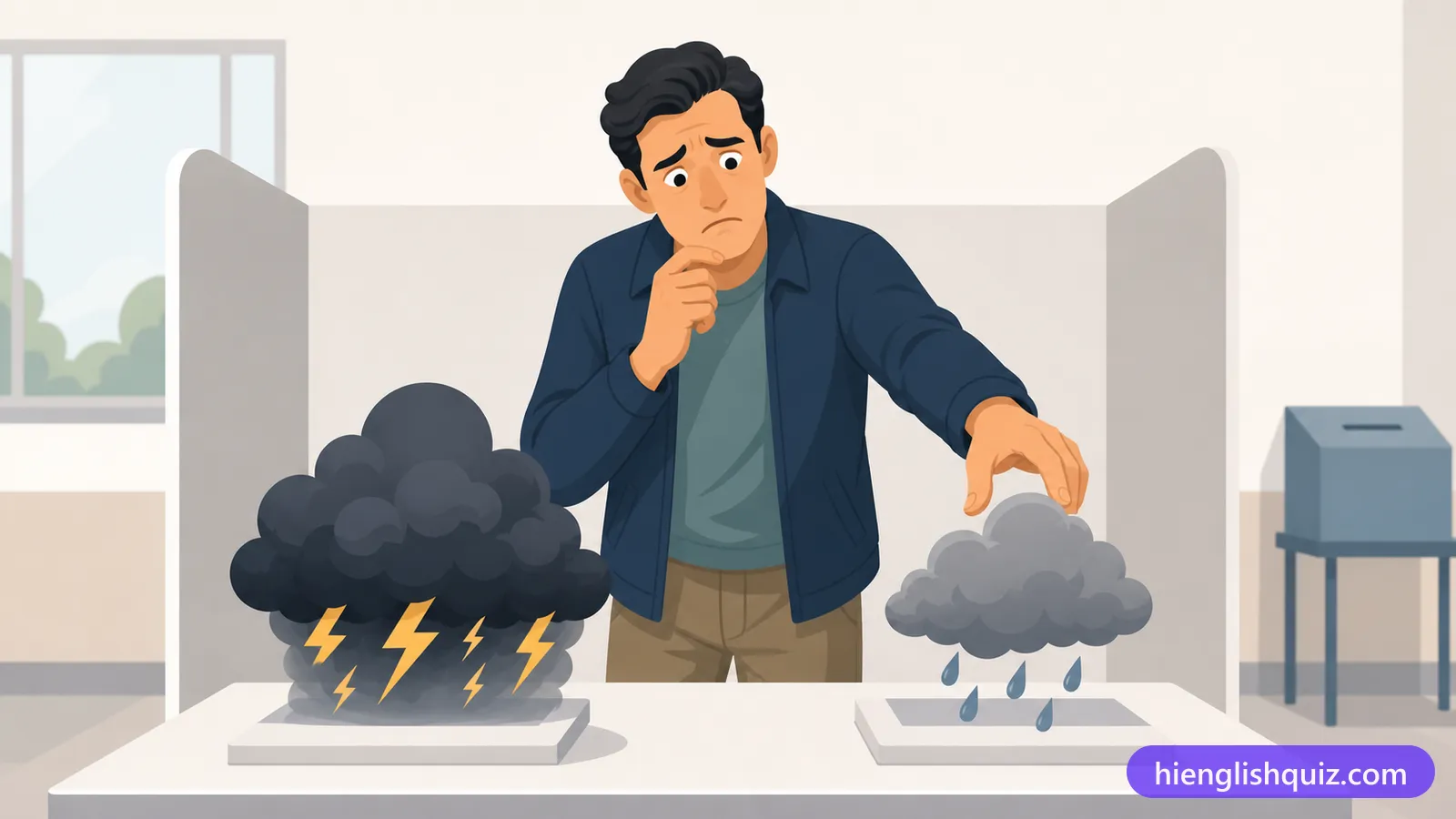
The less harmful choice between two bad options.
Example: Neither candidate was great, but he seemed the lesser of two evils.
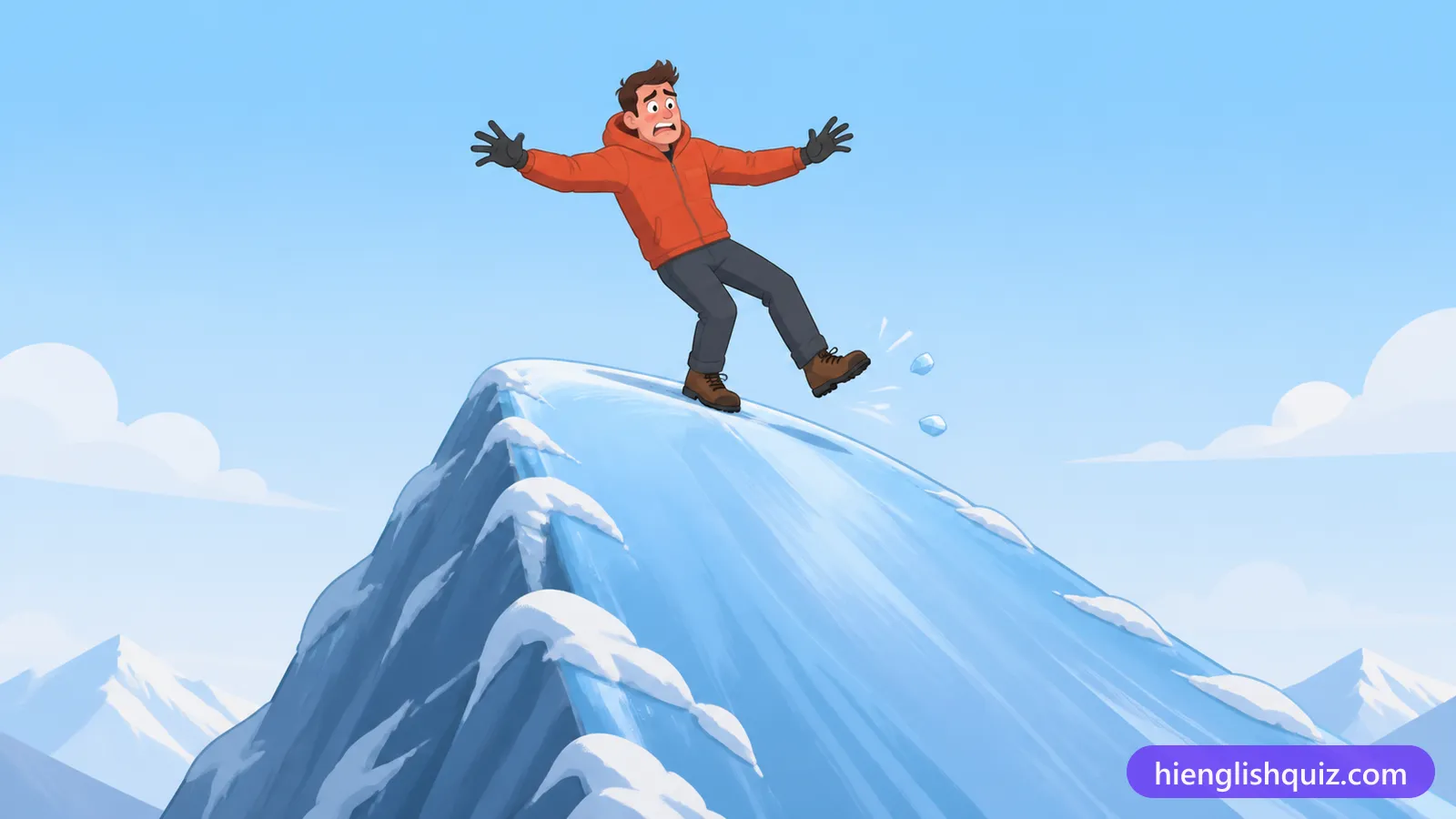
A course of action likely to lead step by step to something worse.
Example: Allowing one exception could be a slippery slope.
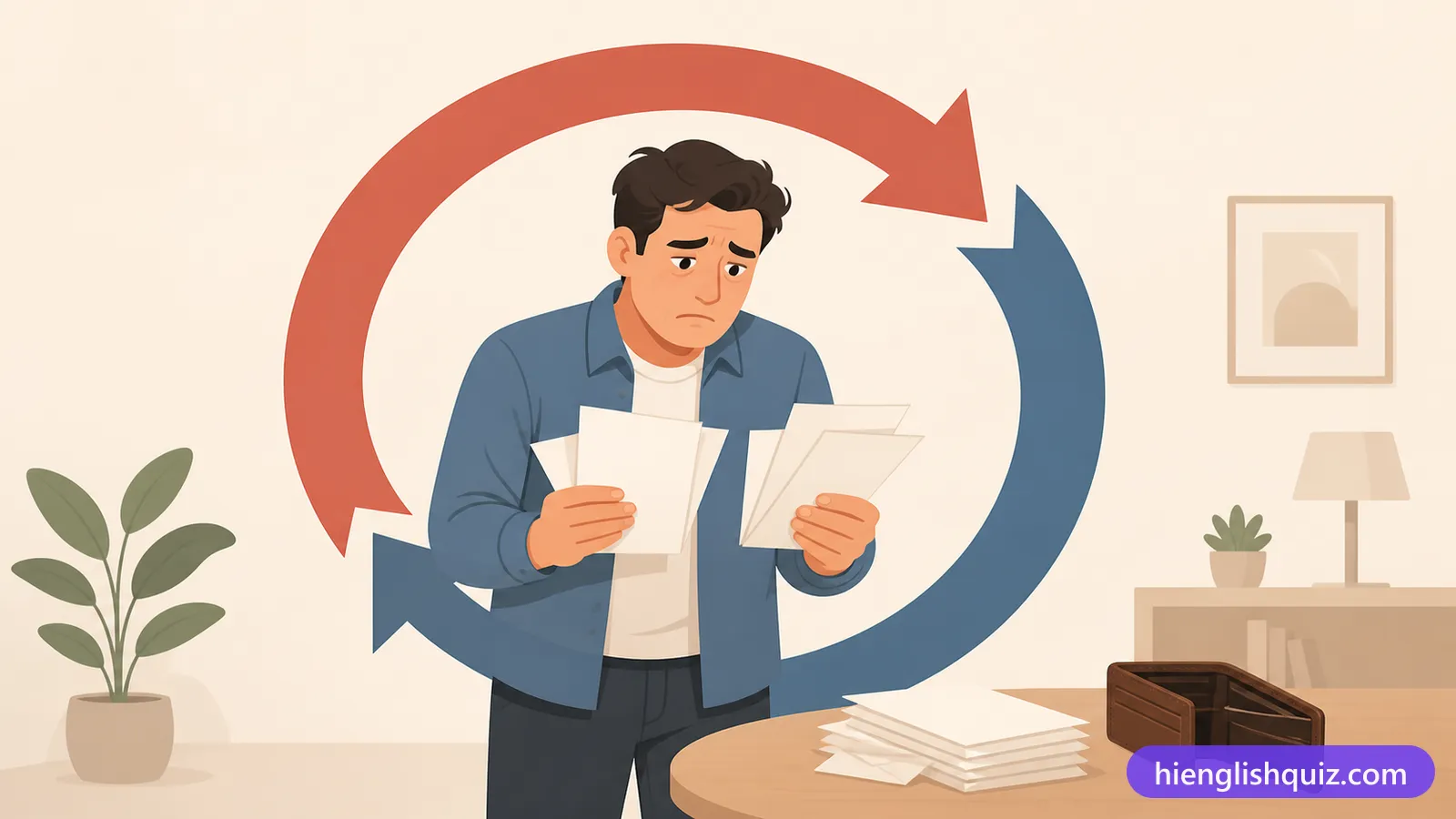
A situation in which one problem causes another problem, which then makes the first one worse.
Example: Debt and stress became a vicious circle for the family.
Following the same style, idea or manner as something already mentioned.
Example: The next chapter continues in the same vein as the first.

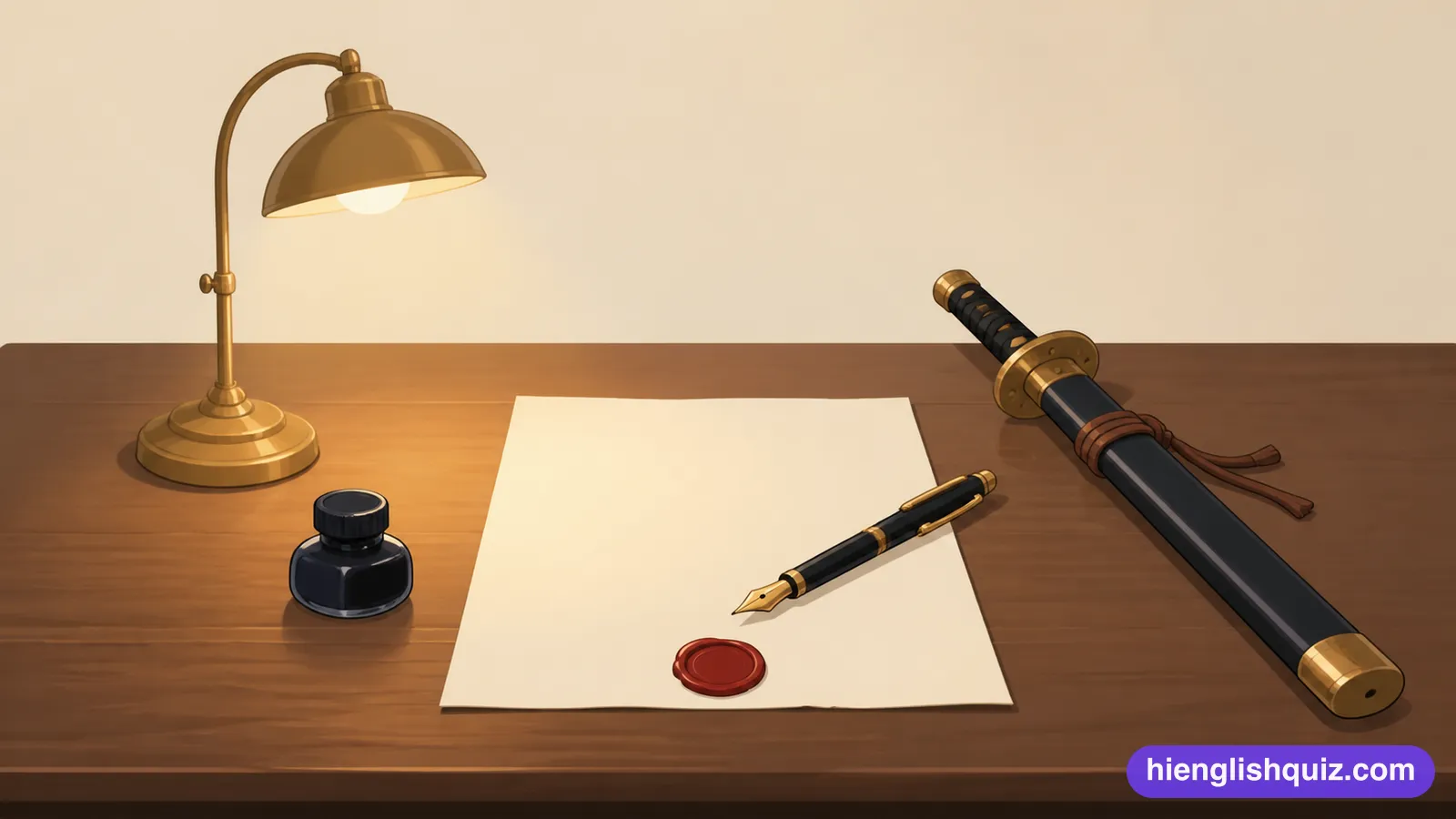
A traditional saying meaning that ideas and words can bring about more lasting change than violence or force.
Example: The journalist's article achieved more than any protest — the pen is mightier than the sword.
A saying advising against changing something that is already working perfectly well.
Example: The old system still works fine — if it ain't broke, don't fix it.

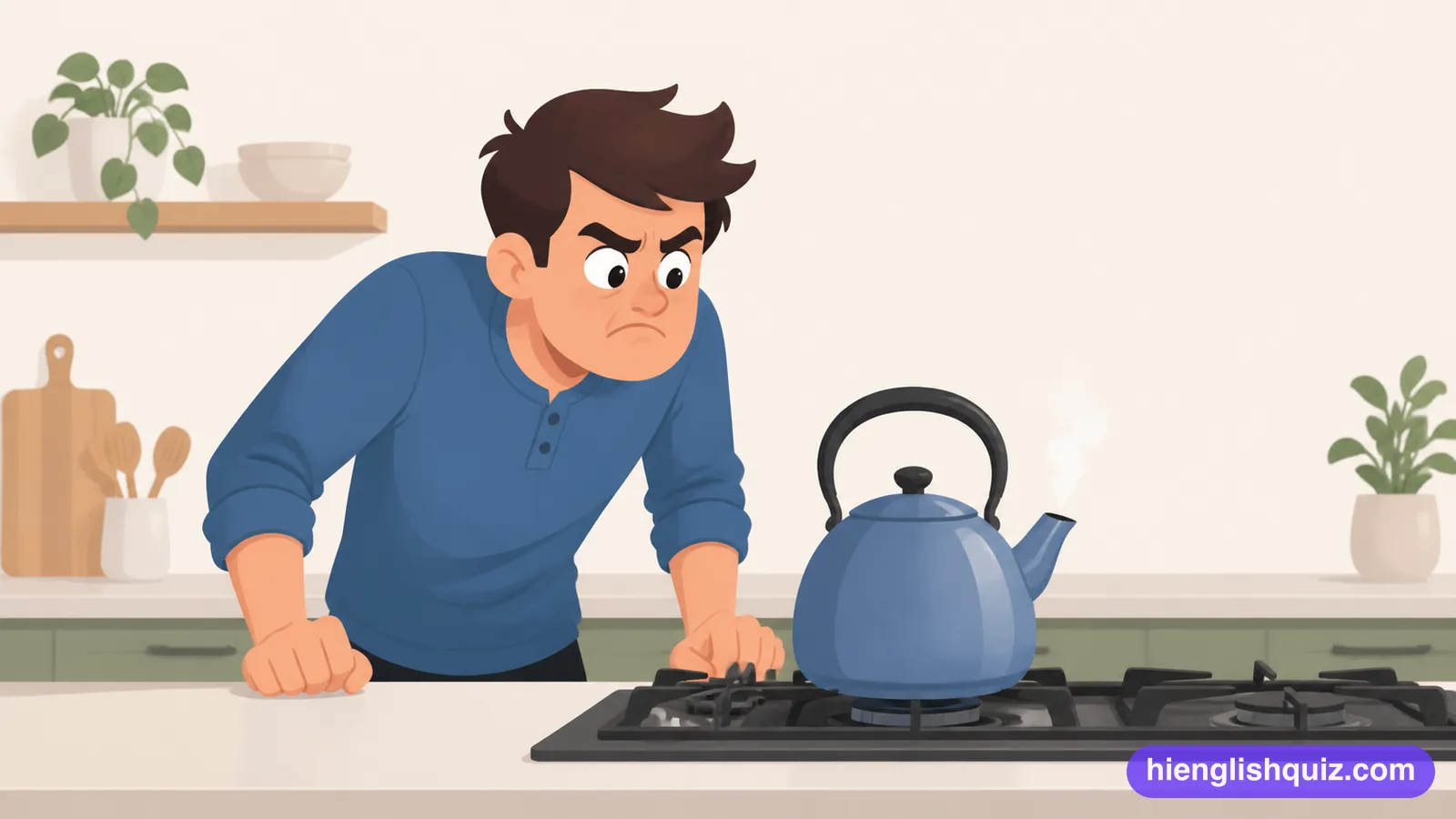
A well-known saying meaning that time seems to pass more slowly when you are anxiously waiting for something.
Example: Stop checking your phone every minute — a watched pot never boils.
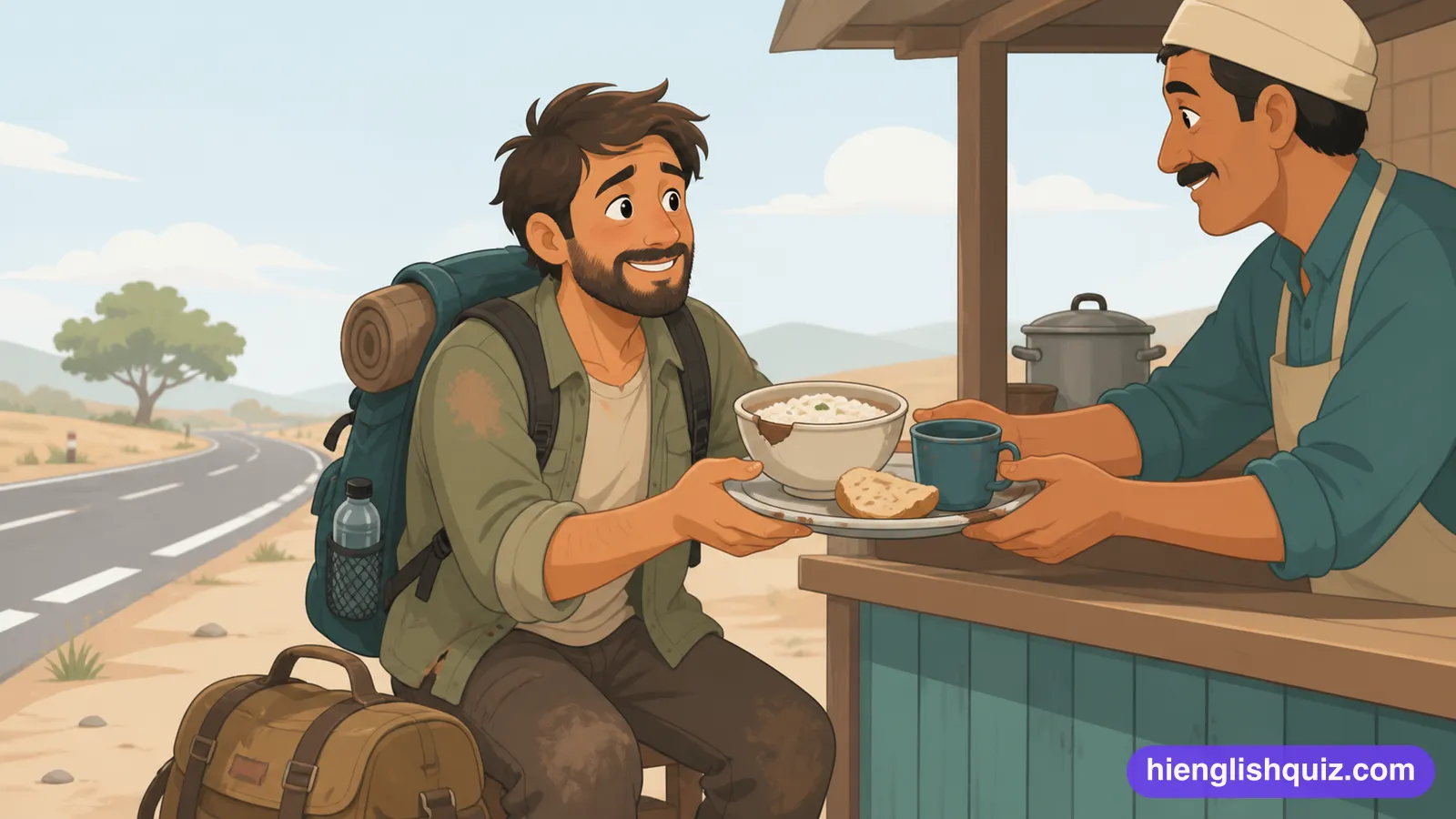
An old saying meaning that people who depend on others' generosity should accept what they are given without complaint.
Example: The shelter only had one spare bed, but beggars can't be choosers.
A common saying meaning that the person who complains most noticeably is the one who receives attention or help first.
Example: After weeks of emails, his request was finally handled — the squeaky wheel gets the grease.
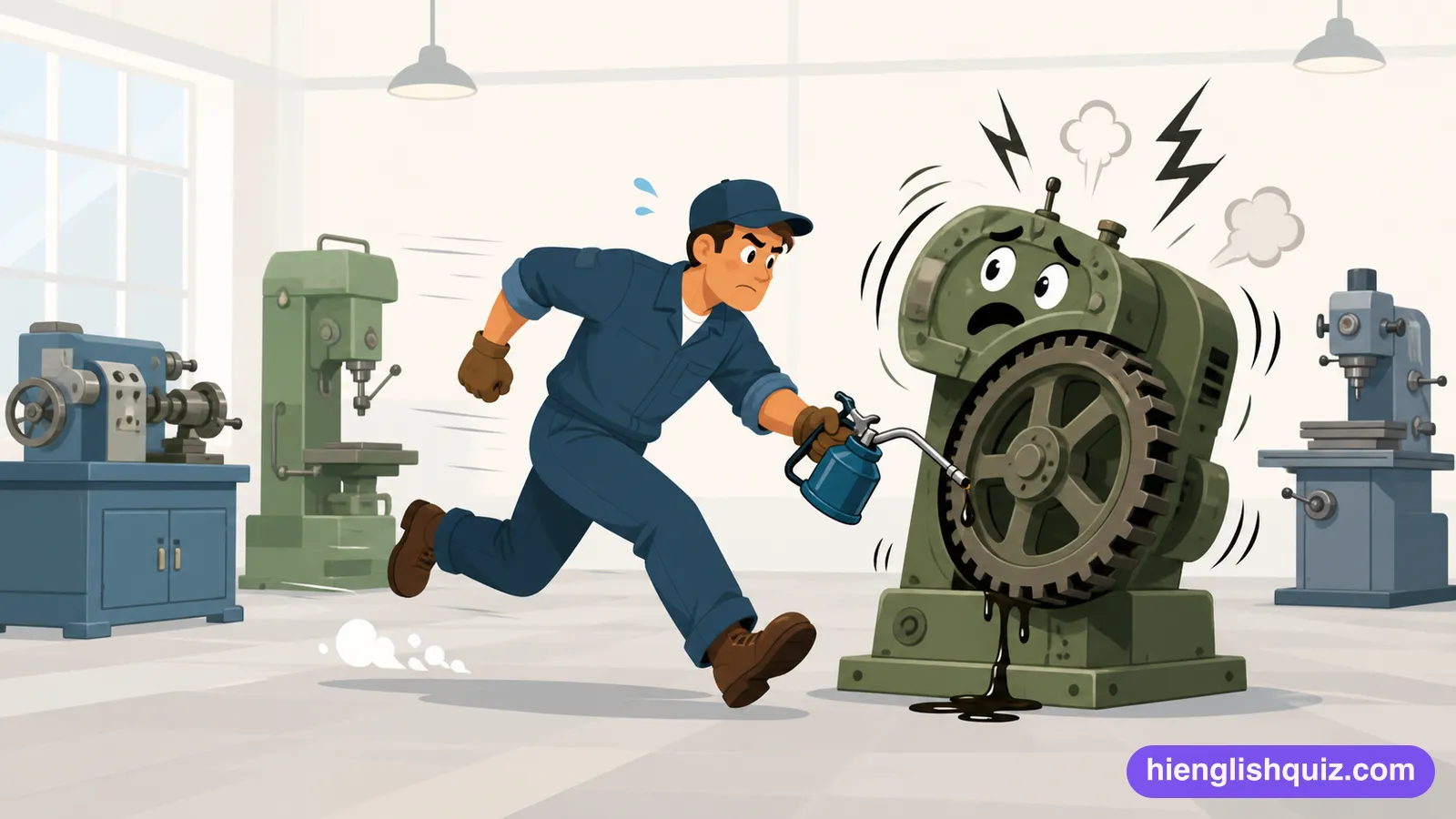
An old saying meaning that strong, determined people work hardest exactly when a situation becomes difficult.
Example: The team trained even harder after the injury — when the going gets tough, the tough get going.
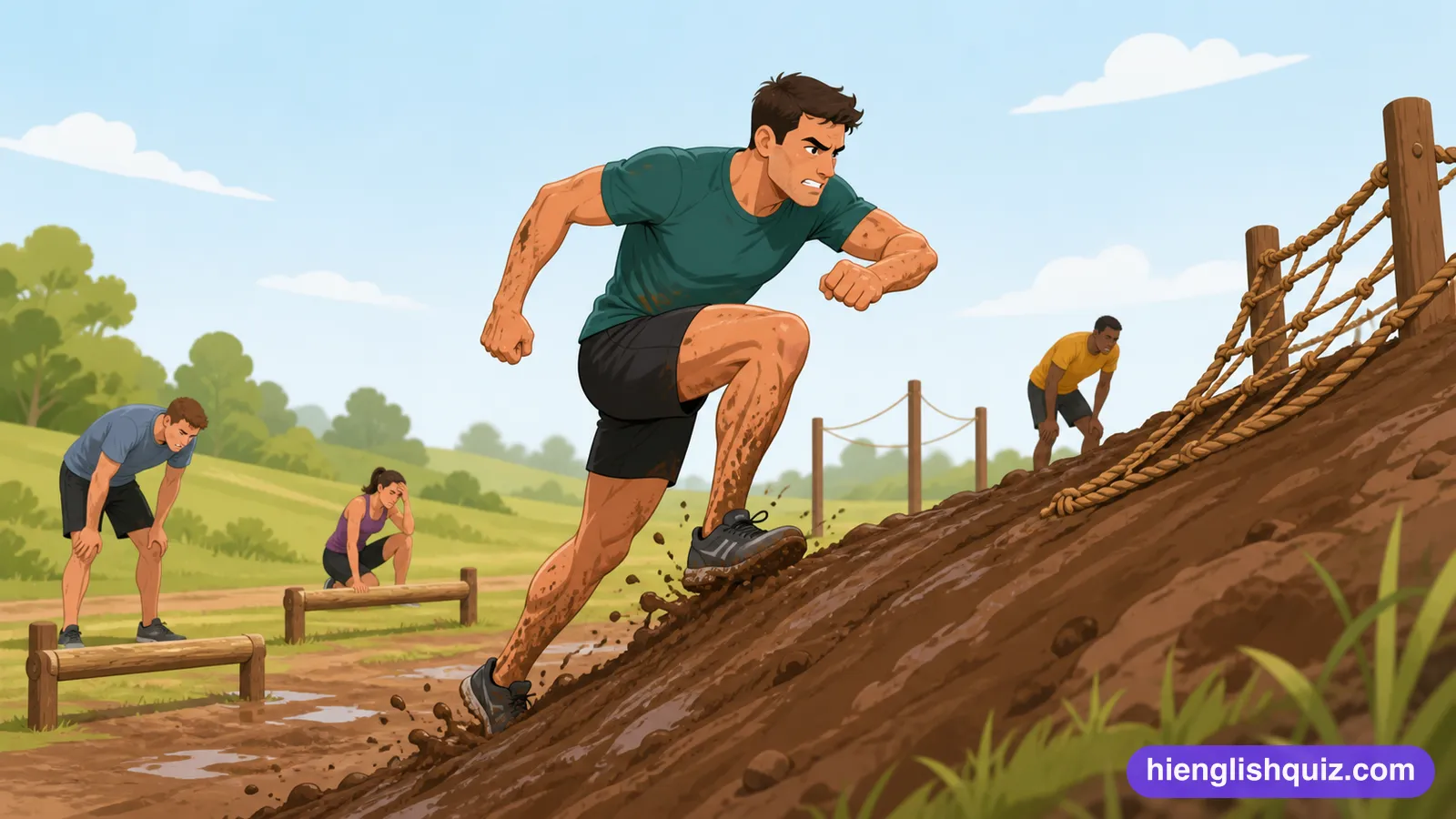
A common saying meaning that a person's basic character does not really shift, however much they claim otherwise.
Example: He promised to be more careful with money, but a leopard can't change its spots.

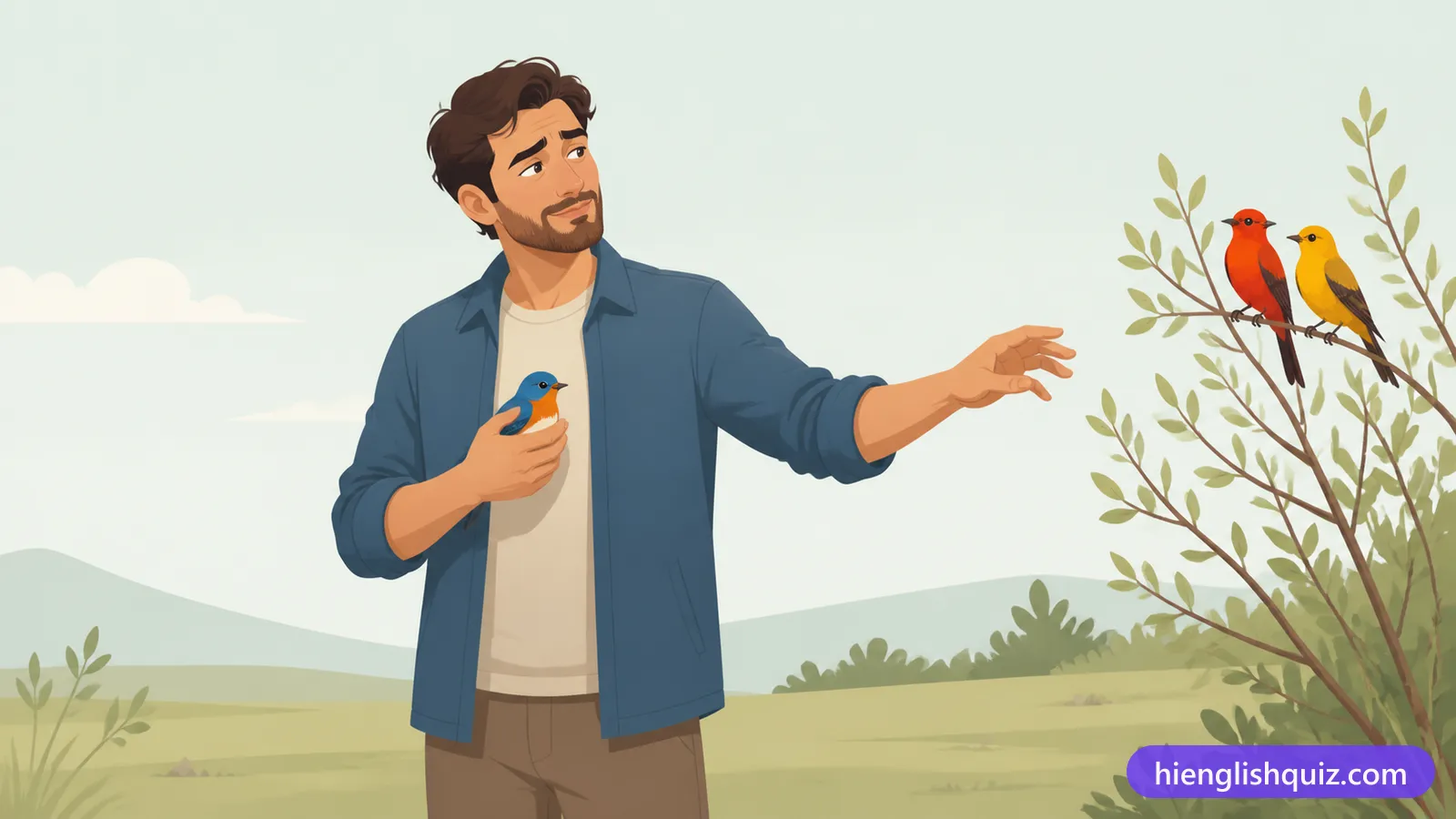
It's better to keep something you already have than risk it for something better that is uncertain.
Example: I'll take the guaranteed offer — a bird in the hand is worth two in the bush.
Well-meaning plans alone often fail to lead to good results, and can even cause harm.
Example: He meant to help, but the road to hell is paved with good intentions.

It's difficult to make someone change their long-established habits or ways, especially as they get older.
Example: Grandpa still refuses to use a smartphone — you can't teach an old dog new tricks.