What Too and Enough Mean
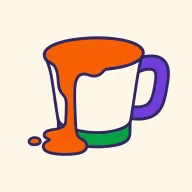
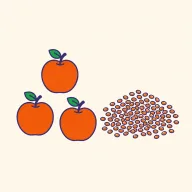
Too and enough both say how much. Too means more than is right, so there is a problem. Enough means as much as you need. Not … enough means less than you need.
TOOMore than is right — a problem
The shoes are smaller than your feet.
These shoes are too small.
The shoes don't fit.
ENOUGHJust what you need
The jacket is as warm as I need.
My jacket is warm enough.
I don't need a warmer jacket.
NOT … ENOUGHLess than you need — a problem
The bag is smaller than I need.
This bag isn't big enough.
My things don't fit in it.
Too comes before the adjective, and enough comes after it: too hot, but hot enough.
TRY IT
- Question 1
"I can't carry this box. It's ."
- Question 2
"We can all sit at this table. It's ."
The four forms
TOO + ADJECTIVE
tooadjective
It's too late.
Too goes straight before the adjective, with no much.
ADJECTIVE + ENOUGH
adjectiveenough
Is your coffee sweet enough?
Enough follows the adjective. Negative: isn't / aren't + adjective + enough.
ENOUGH + NOUN
enoughnoun
Do we have enough eggs?
With a noun, enough moves to the front.
TOO MUCH / TOO MANY + NOUN
too much / too manynoun
There's too much salt in this soup.
Much with uncountable nouns, many with plural countable nouns.
To say what you can't do, add to + base verb: The river is too dangerous to cross. Enough also takes to + base verb: old enough to drive. To say who has the problem, add for + person: This test is too difficult for me.
TRY IT
- Question 1
"There isn't in the fridge."
- Question 2
"I can't study here. There's noise."
- Question 3
"My little sister is too short the light switch."
When to use them
Explaining why you couldn't
We couldn't swim. The sea was too cold.
It often comes with a sentence with can't or couldn't.
Signal words: too cold · too late · too far
Checking someone is comfortable
Is the room warm enough for you?
A polite question for a guest or an older relative.
Signal words: warm enough? · enough time? · enough chairs?
Saying no politely
Sorry, it's too expensive for me.
You say the thing is the problem. It is softer than a plain no.
Signal words: too big · too spicy · too expensive for me
Age and ability
My son isn't old enough to stay home alone.
Common when talking about what children can and can't do yet.
Signal words: old enough to vote · tall enough · strong enough
Too vs. very
Very only makes an adjective stronger. Too also says it is more than is right, so there is a problem.
| TOO — more than is right | VERY — a lot | |
|---|---|---|
| Meaning | Past the limit | Strong, but it can still be fine |
| Example | This curry is too spicy. I can't eat it. | This curry is very spicy, but I love it. |
| As praise | No — it sounds like a complaint | Yes: The photos are very beautiful! |
TRY IT
- Question 1
"Wow, your new flat is !"
- Question 2
"Tom is to play with the big kids."
Common mistakes
Incorrect:Ha isn't enough tall for the team.
Correct:Ha isn't tall enough for the team.
Enough goes after an adjective, not in front of it: tall enough.
Incorrect:This phone is too much expensive.
Correct:This phone is too expensive.
Before an adjective, use too on its own. Too much goes with uncountable nouns, like too much sugar.
Incorrect:There are too much cars on this street.
Correct:There are too many cars on this street.
Cars is a plural countable noun, so it takes too many.
Incorrect:Your garden is too beautiful!
Correct:Your garden is very beautiful!
Too usually points to a problem, so as praise it sounds like a complaint.
Incorrect:It's too cold for swim today.
Correct:It's too cold to swim today.
After too + adjective, an action takes to + base verb. For comes before a person: too cold for me.
Incorrect:The soup is too hot to eat it.
Correct:The soup is too hot to eat.
The soup is the thing you eat, so don't add it after eat.
Quick check · 6 questions
Choose the right phrase:
I can't hear the teacher. Her voice is too quiet.
- A. too quiet — Correct
- B. quiet enough
- C. enough quiet
Answer: A. too quiet
You can't hear her, so her voice is a problem. That is what too says. Quiet enough means "as quiet as it needs to be", and enough quiet has the words in the wrong order.
Choose the correct phrase:
Are these trousers long enough for you?
- A. long enough — Correct
- B. enough long
- C. too enough long
Answer: A. long enough
With an adjective the order is adjective first, enough second: long enough, not enough long.
Choose the correct phrase:
Sorry, we don't have enough cups for everyone.
- A. enough cups — Correct
- B. cups enough
- C. enough of cups
Answer: A. enough cups
With a noun, enough goes in front, and no of is needed: enough cups, enough money.
Choose the right word:
There were too many people at the market this morning.
- A. too many — Correct
- B. too much
- C. too
Answer: A. too many
Too many goes with plural countable nouns and too much with uncountable ones. Too on its own goes with adjectives, not straight in front of a noun.
Choose the correct form:
Grandpa was too tired to walk home.
- A. to walk — Correct
- B. walk
- C. walking
Answer: A. to walk
To say what a person can't do, add to and the base verb. Too tired to walk home means he was very tired and couldn't walk home.
You want to praise a friend. Choose the right sentence:
Your English is very good!
- A. very good — Correct
- B. too good
- C. too much good
Answer: A. very good
Too usually points to a problem, so too good sounds as if something is wrong. Very just makes the adjective stronger. Too much does not go before an adjective.
See whether it really stuck.
Start the quiz · 12 questions