What Prepositions of Place and Time Are
A preposition is the small word that puts something somewhere — in a space, or in time. English does both jobs with the same three words, in, on and at, and it chooses between them by size: the biggest container takes in, a surface or a single day takes on, and one exact point takes at.
PLACEWhere something is
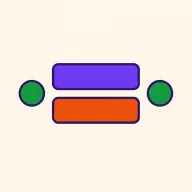
For place: in is inside a space, on is touching a surface, at is a single point.
The keys are on the table.
They are touching the top of it, not inside it.
TIMEWhen something happens
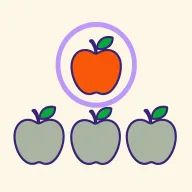
For time: in is a long period, on is a day, at is a clock time.
The class starts at 8 o'clock.
A time on the clock is the narrowest kind of time there is.
The two rows are the same ladder. Many languages, Vietnamese among them, cover the whole of the first one with a single word — ở — which is exactly why in, on and at feel arbitrary at first. They are not: ask whether the thing is inside something, touching something, or at a point, and the word follows.
They take at and no article — at home, at work, at school — never in home or at the work. And an address splits by size the same way the ladder does: at 12 Le Loi Street, but in Huế, in Vietnam.
TRY IT
- Question 1
"The milk is the fridge."
- Question 2
"The film starts seven."
The patterns
PLACE
Sbein / on / atplace
Your bag is under the seat.
The whole phrase — preposition plus place — answers the question Where?
TIME
SVat / on / intime
The shop opens at nine on Sundays.
A sentence can carry two of them: the narrower time usually comes first.
QUESTION
Where / Whenbe / doS…?
Where are my keys? · When does it start?
Answer with the phrase alone if you like: On the desk. · At nine.
TIME AT A GLANCE
- 7:00at 7 o'clock
- Mondayon Monday
- 5 Mayon 5 May
- Julyin July
- the morningin the morning
clock times → at · days and dates → on · months, years, seasons and parts of the day → in
anything built with next, last, this or every — next week, last year, this morning, every day — and today, tomorrow, yesterday. Say See you next week, never See you on next week.
TRY IT
- Question 1
"I get up six every day."
- Question 2
"My birthday is 5 May."
- Question 3
"I will call you ."
Six words that place one thing against another
Once in, on and at are settled, the rest of the place words are easy: each is one picture and has no second meaning to learn.
UNDER
The shoes are under the bed.
Below something, often hidden by it.
Signal words: under the table · under the chair
BEHIND
The garden is behind the house.
At the back of something.
Signal words: behind the door · behind me
IN FRONT OF
A car is in front of the gate.
At the face of something — three words, and the of never drops.
Signal words: in front of the school
NEXT TO
The lamp is next to the sofa.
Right beside it, with nothing in between.
Signal words: next to me · next to the door
BETWEEN
The bank is between the café and the shop.
With one thing on each side — between always needs two.
Signal words: between A and B
NEAR
I live near the market.
Close to it, but not touching and not exactly beside it.
Signal words: near the station · near my house
Much of the difficulty here is spelling rather than meaning: in front of keeps its of, next to keeps its to, and between joins its two places with and, never with of. One last habit worth copying early — transport picks its own word: in a car or a taxi, but on a bus, a train or a plane.
Any of them answers a Where question on its own, which is how the two halves of that exchange fit together: Where is my bag? — Under the seat. · Where do you live? — Near the market.
Place vs. time — the same three words, mirrored
Put the two jobs side by side and the rule stops being two rules.
| PLACE — WHERE | TIME — WHEN | |
|---|---|---|
| The idea | a space → a surface → a point | a long period → a day → a moment |
| in | in the box · in Hà Nội · in Vietnam | in July · in 2026 · in the morning |
| on | on the table · on the wall · on page 12 | on Monday · on 5 May · on my birthday |
| at | at the door · at the bus stop · at home | at 7 o'clock · at midnight · at night |
| No preposition | here · there · home (go home) | next week · last year · this morning · every day · today |
Two exceptions. When a day and a part of the day are joined, the day wins: in the morning, but on Monday morning. And at night is a fixed phrase that keeps at while its neighbours take in.
TRY IT
- Question 1
"She lives Hà Nội."
- Question 2
"We have a class Monday morning."
Common mistakes
Incorrect:She lives at Da Nang.
Correct:She lives in Da Nang.
cities, countries and districts are areas with edges → in
Incorrect:The class starts in 8 o'clock.
Correct:The class starts at 8 o'clock.
a clock time is one point → at
Incorrect:I am waiting in the bus stop.
Correct:I am waiting at the bus stop.
a bus stop is a point on a route, not a space you stand inside
Incorrect:I was born on July.
Correct:I was born in July.
a month is a long period → in
Incorrect:See you on next week.
Correct:See you next week.
next, last, this and every take no preposition
Incorrect:There is a photo in the wall.
Correct:There is a photo on the wall.
the photo touches the surface; in the wall means inside the bricks
Incorrect:The taxi is in front the house.
Correct:The taxi is in front of the house.
in front of is three words and the of is not optional
Incorrect:The school is between of the park and the river.
Correct:The school is between the park and the river.
between takes its two places joined by and, with no of
Quick check · 7 questions
Choose the right preposition:
My phone is in my bag.
- A. in — Correct
- B. on
- C. at
Answer: A. in
A bag has sides and a bottom, so the phone is inside it. On is a surface and at is a point.
Choose the right preposition:
Wait for me at the bus stop.
- A. at — Correct
- B. in
- C. on
Answer: A. at
A bus stop is a point on a route rather than a space you stand inside, so it takes at.
Choose the correct phrase:
My mother is at home now.
- A. at home — Correct
- B. in home
- C. at the home
Answer: A. at home
All three take at and no article at all: at home, at work, at school. Adding the changes the meaning or breaks the phrase.
Choose the right pair:
The party is on … at Saturday ___ 7 pm.
- A. on … at — Correct
- B. at … on
- C. in … at
Answer: A. on … at
One sentence can carry two time phrases, and each picks its own preposition by its own size: Saturday is a day, 7 pm is a point.
Choose the right preposition:
My father's birthday is in March.
- A. in — Correct
- B. on
- C. at
Answer: A. in
Months, years, seasons and parts of the day all take in. Only a named date takes on: on 5 March.
Choose the correct phrase:
I play football every Sunday.
- A. every Sunday — Correct
- B. on every Sunday
- C. in every Sunday
Answer: A. every Sunday
Phrases built on next, last, this and every stand bare, and so do today, tomorrow and yesterday.
Choose the right place word:
The bank is between the post office and the school.
- A. between — Correct
- B. next to
- C. behind
Answer: A. between
Between always needs two things, joined by and. Next to needs only one neighbour, and behind puts the bank at the back of something.
See whether it really stuck.
Start the quiz · 12 questions